MENU
Close





The final chapter of Madrid Fashion Week SS27 brings together heritage, comeback stories, family businesses and EGO’s newest names in one last dense sweep through the city.
The final chapter of Madrid Fashion Week SS27 brings together heritage, comeback stories, family businesses and EGO’s newest names in one last dense sweep through the city.
September 21, 2026
Advertisement

Advertisement



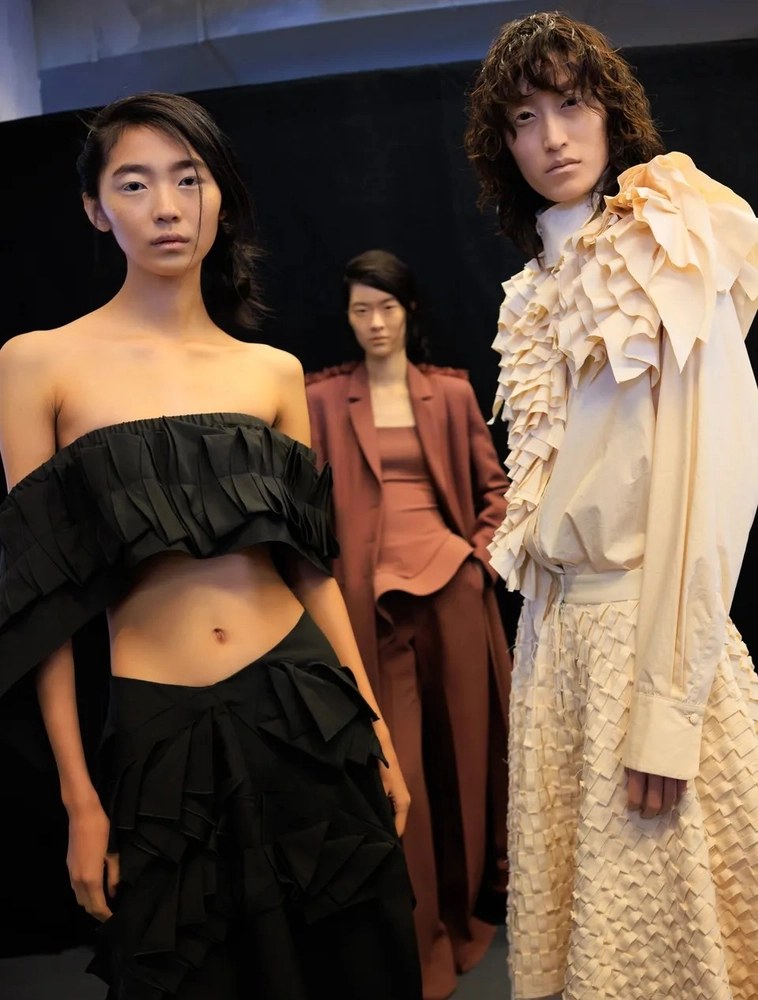
The final two days of Madrid Fashion Week brought together houses with decades of memory, labels deep into retail expansion, returning designers, and six EGO names still building the first chapters of their professional lives. That spread gives the calendar an unusual elasticity. A brand can arrive with a forty-year archive, a five-year absence, a family company, a master’s project or a material experiment made from pig cartilage, and still occupy the same city-wide conversation.
September 18 stayed with the main schedule before Alvarno moved the evening toward the Royal Collections Gallery. September 19 belonged to EGO, celebrating twenty years as the platform through which Madrid has repeatedly introduced emerging designers to the industry.
Juan Carlos Mesa designed Last Dance at the Grand Hotel as a single night unfolding through 33 looks.
The collection draws from the mythology of European grand hotels, dance marathons and the psychological atmosphere of They Shoot Horses, Don’t They?, while David Bowie’s Never Let Me Down adds another layer of decadent eighties glamour. Even the invitation entered the fiction as a hotel key card.
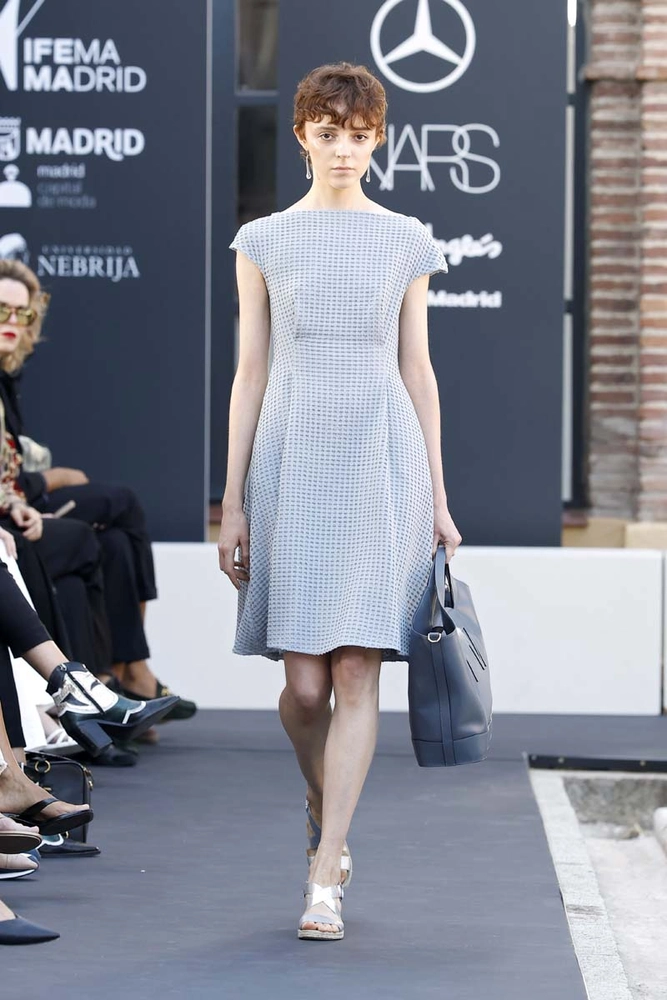
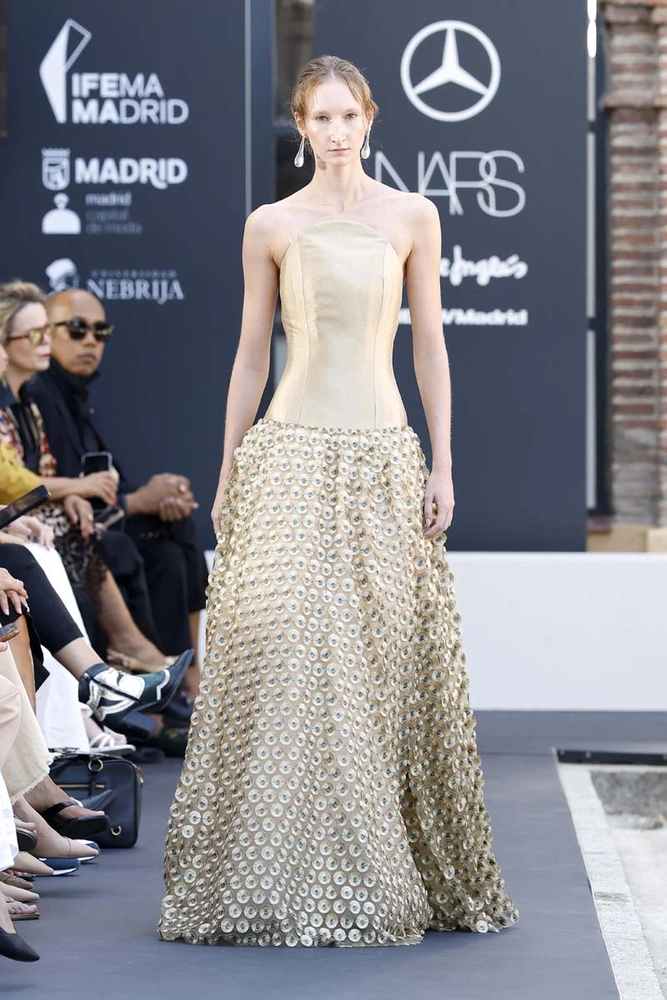
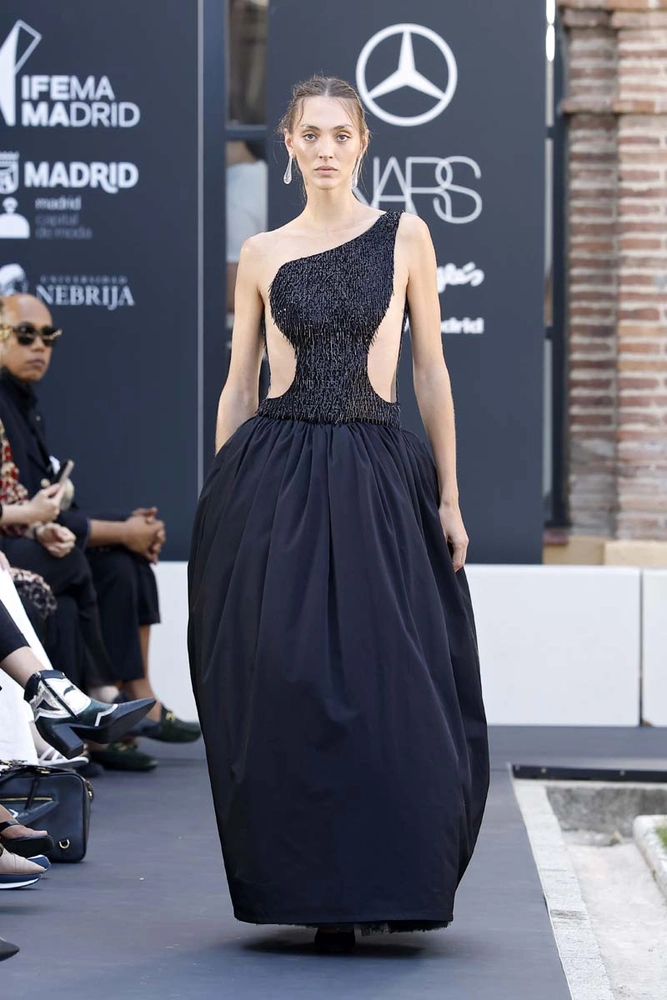
The early looks feel composed: geometric tailoring, controlled lines and Bauhaus-inflected graphics. As the imaginary night progresses, the wardrobe loosens. Sequins arrive. Gold bugle beads catch the light. Embroidered crepes carry the mood toward dawn.
Custo Barcelona called the collection Unexpected, yet the visual energy reaches back to a story that began decades ago.
Custo and David Dalmau built the label after travelling through California in the 1980s, absorbing surf culture, psychedelic graphics and the expressive potential of the printed T-shirt. That early encounter still lives inside the brand’s instinct for color and surface.
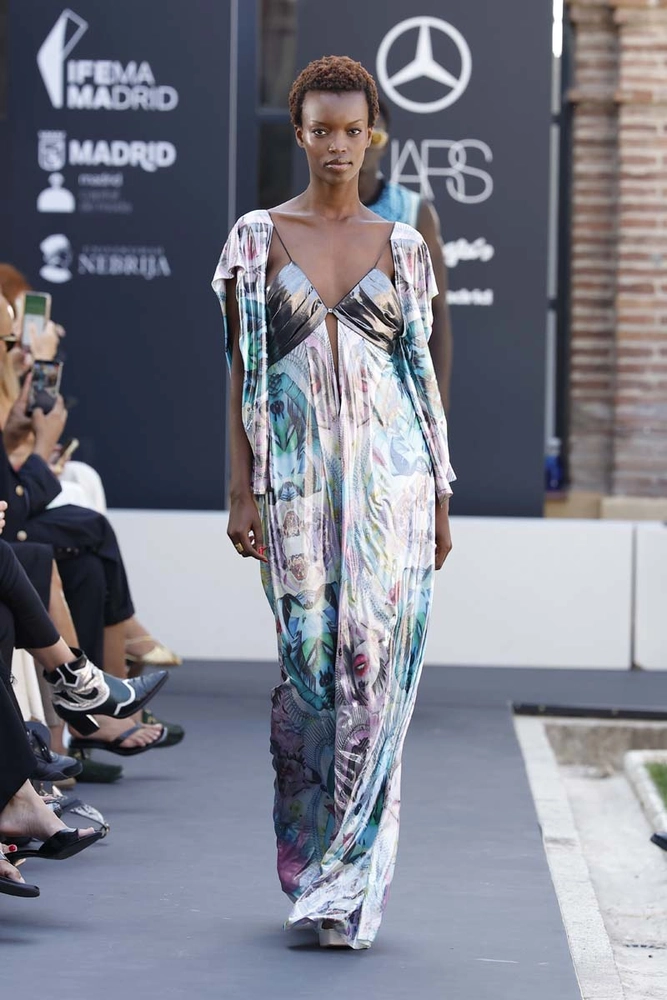
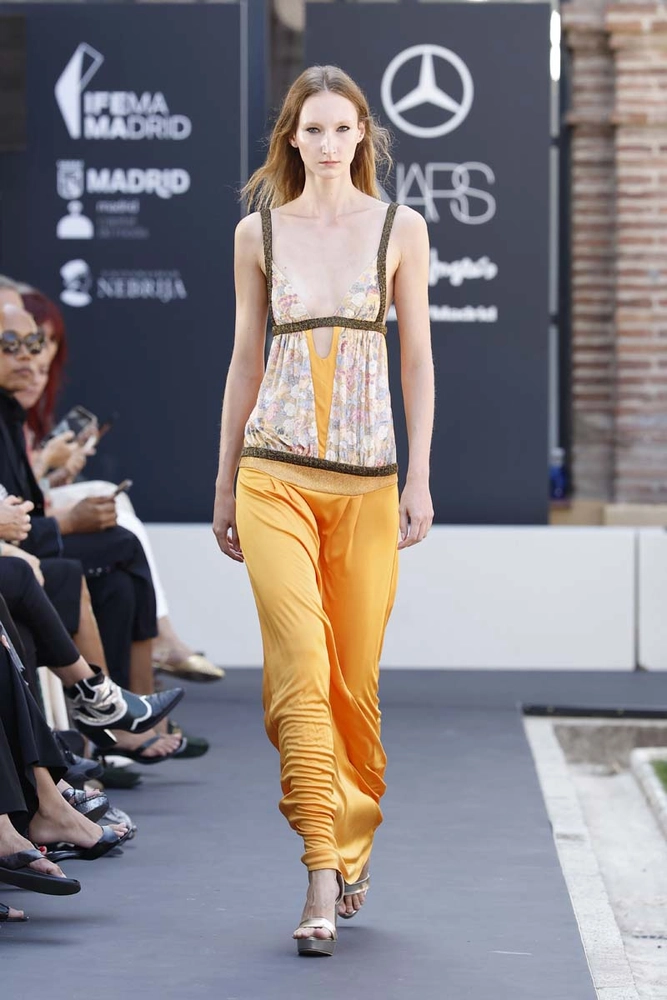

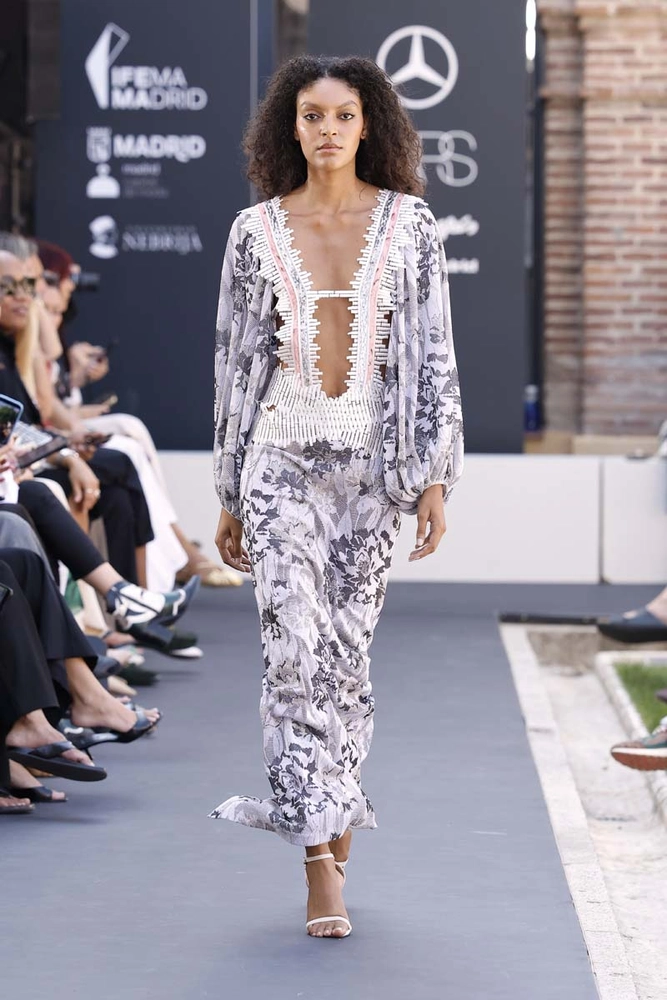
For Spring 2027, sheer fabrics, lurex, fluid dresses, ruffles, low-rise proportions and wide sleeves carry the collection through soft earth shades and pastels. Layering creates its own kind of visual static, with shine appearing and disappearing as the clothes move.
This season also coincides with 30 years of Custo showing in New York, a milestone that makes the brand’s persistence particularly interesting. The signatures remain instantly legible because the house has spent decades treating color and graphic intensity as a language with room for endless mutation.
Few stories at Madrid Fashion Week begin as intimately as Lola Casademunt’s.
The company started in 1981 when its founder, recently widowed and raising four children, began making bows, headbands and hair accessories by hand in the basement of her home in Cardedeu. Forty-five years later, her daughter Maite Casademunt leads a business with an international footprint and a much broader wardrobe.
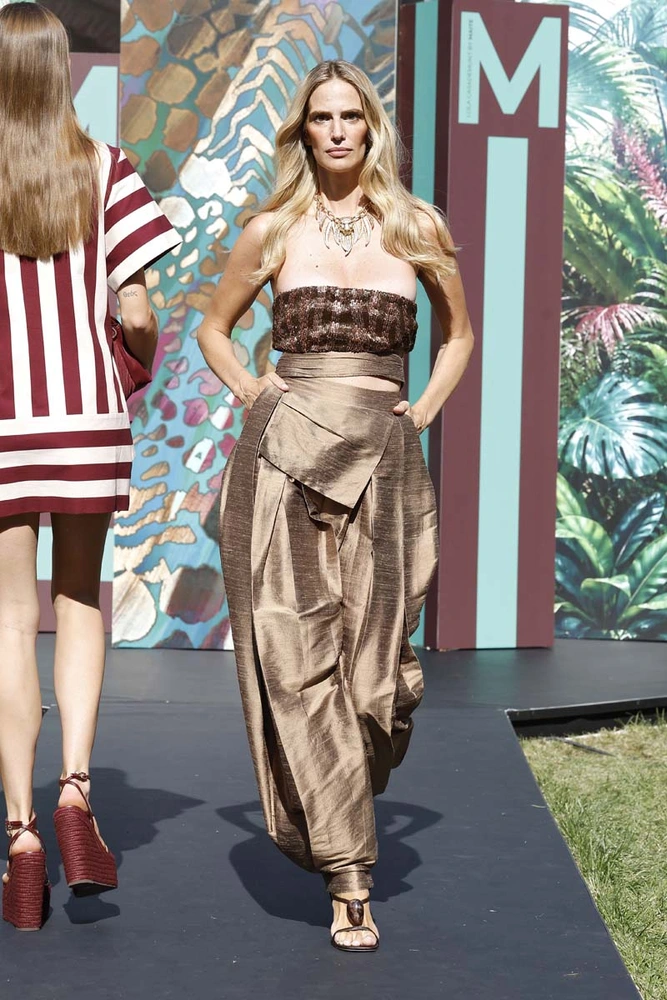
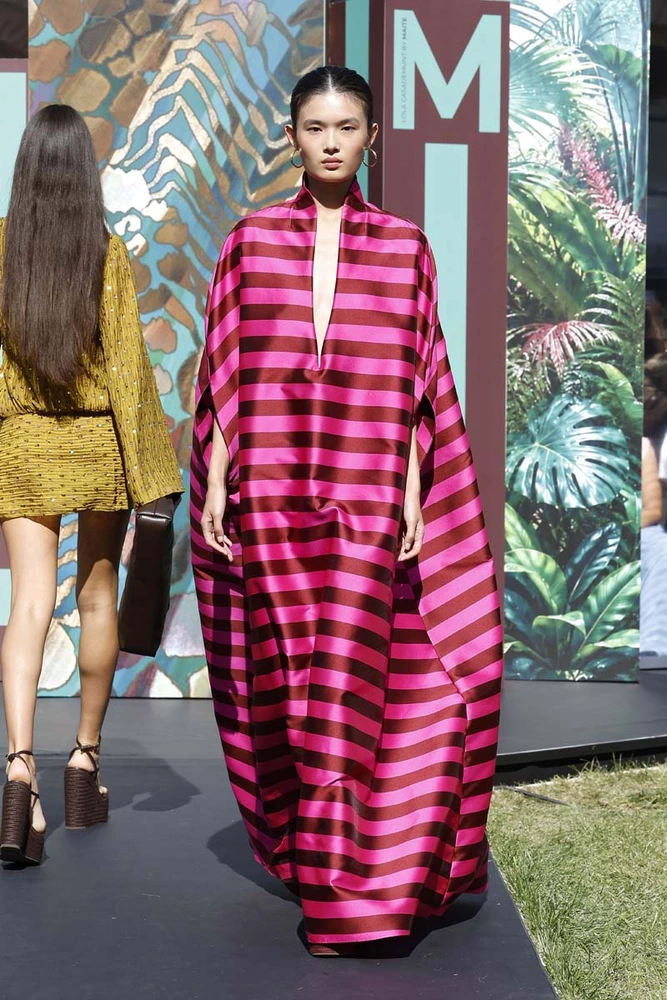
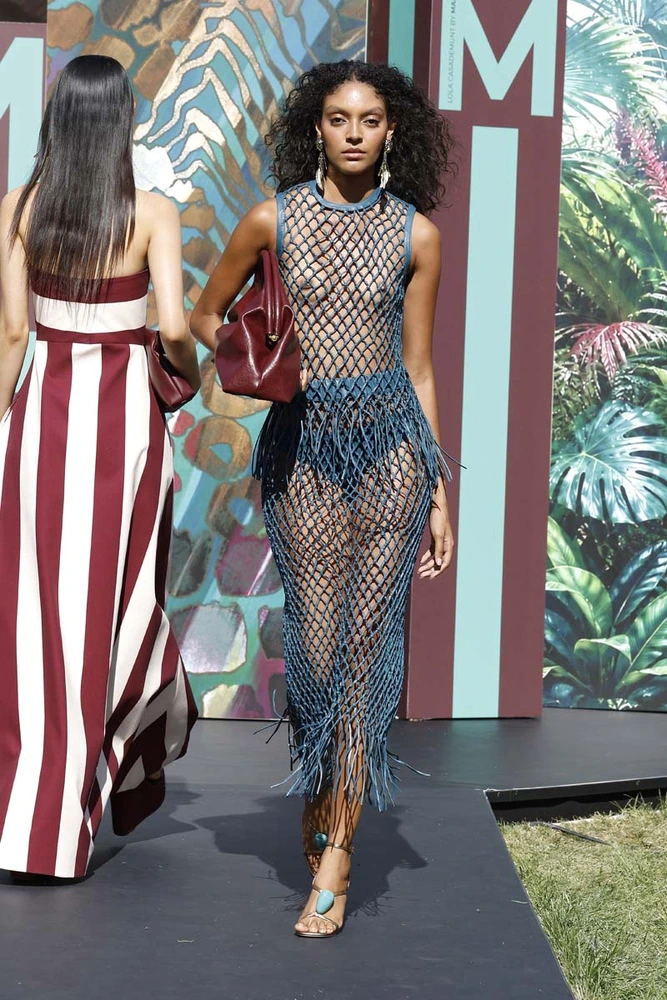
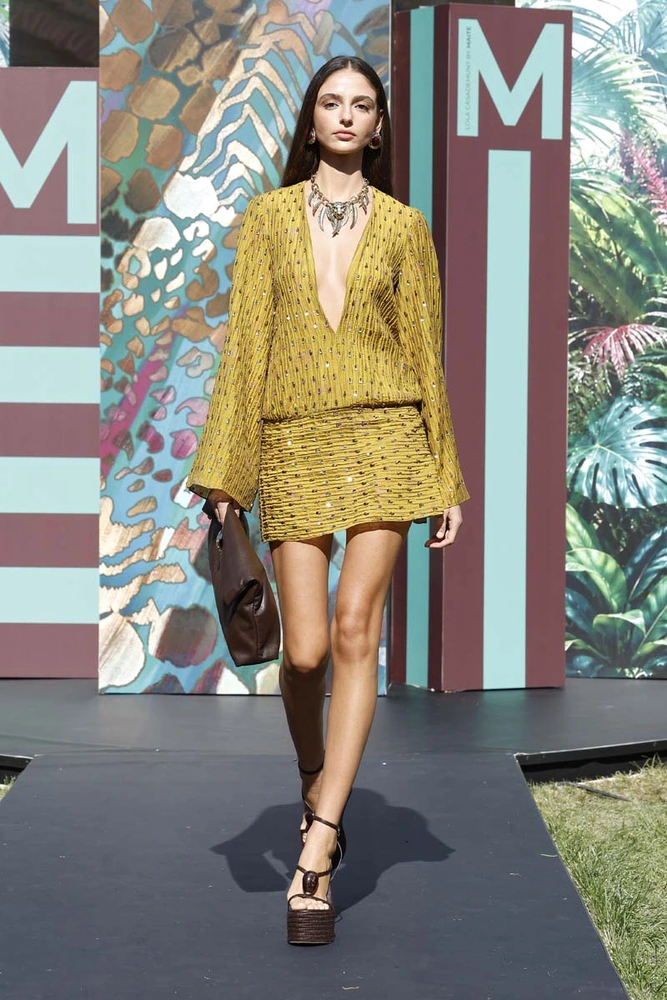
Spring 2027, titled City Oasis, imagines brief moments of relief inside metropolitan life.
Relaxed tailoring, draped minidresses, balloon trousers, denim and suede move through coral, fuchsia, lime and chocolate. Floral graphics collide with animal print, while silk, organza and satin bring polish into the mix. Vanesa Lorenzo opened and closed the show, giving the runway a composed confidence.
Yolanda Pérez approached flowers as construction for Ophelia.
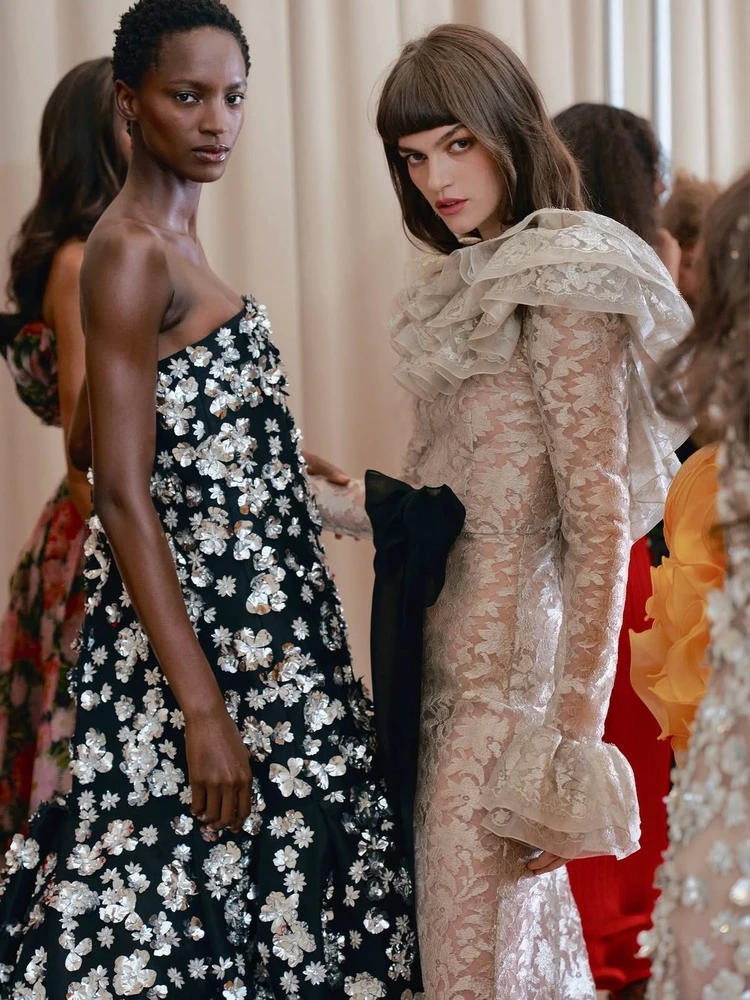
Botanical illustration moved across jacquards, embroidery and three-dimensional appliqué. Organza, lace, washed silk, crepe and textured surfaces allowed petals to rise physically from garments, creating dresses that reveal their labor from several distances.
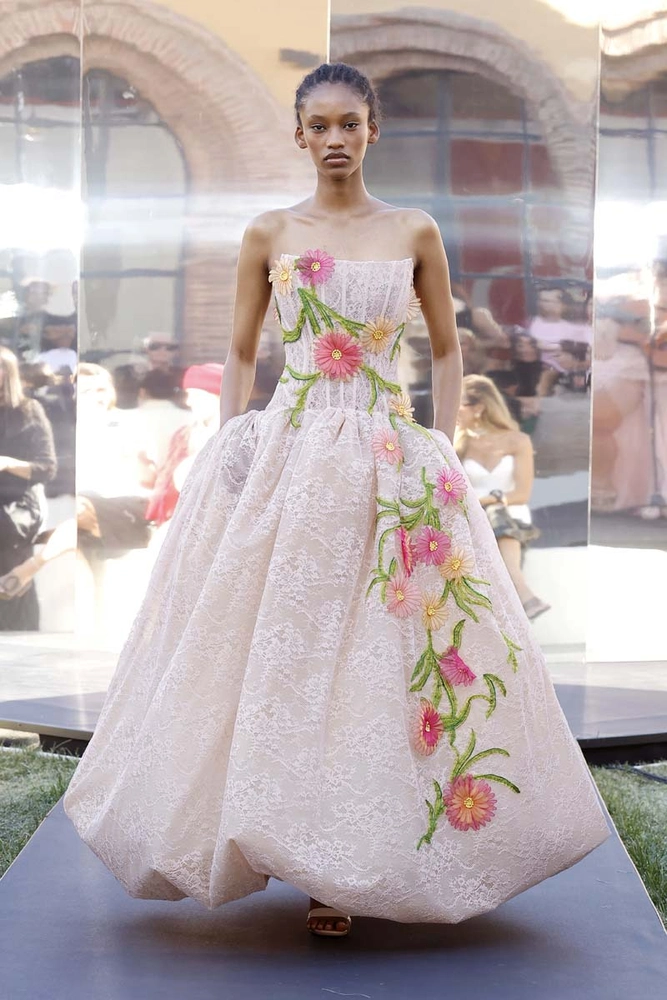
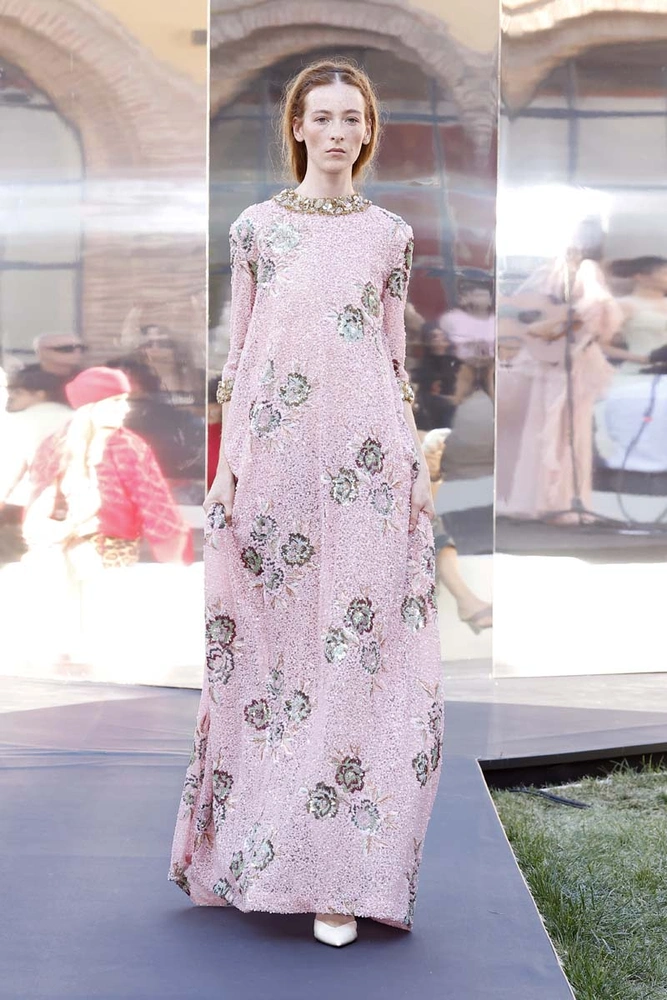
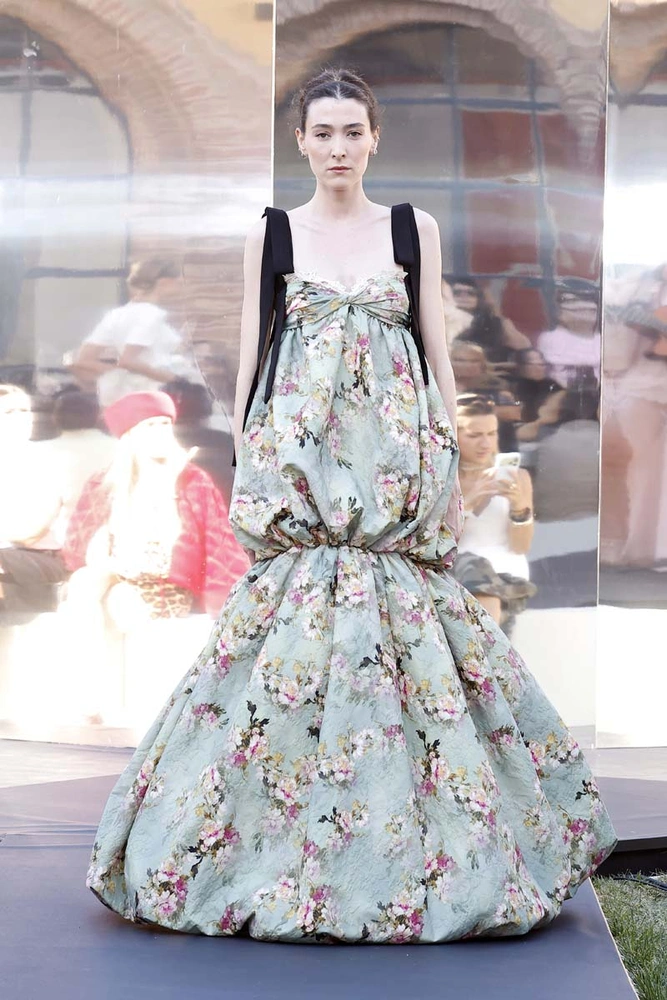
One green guipure piece carried red poppies across its surface as though the flowers had rooted themselves directly into the cloth. Elsewhere, a blurred floral image resolved into a bouquet as the eye moved away from the garment.
That optical play suits Yolancris, whose history comes from a family bridal business begun by the founders’ mother in 1985. The Barcelona atelier now operates internationally across dozens of markets while maintaining a strong relationship with hand technique.
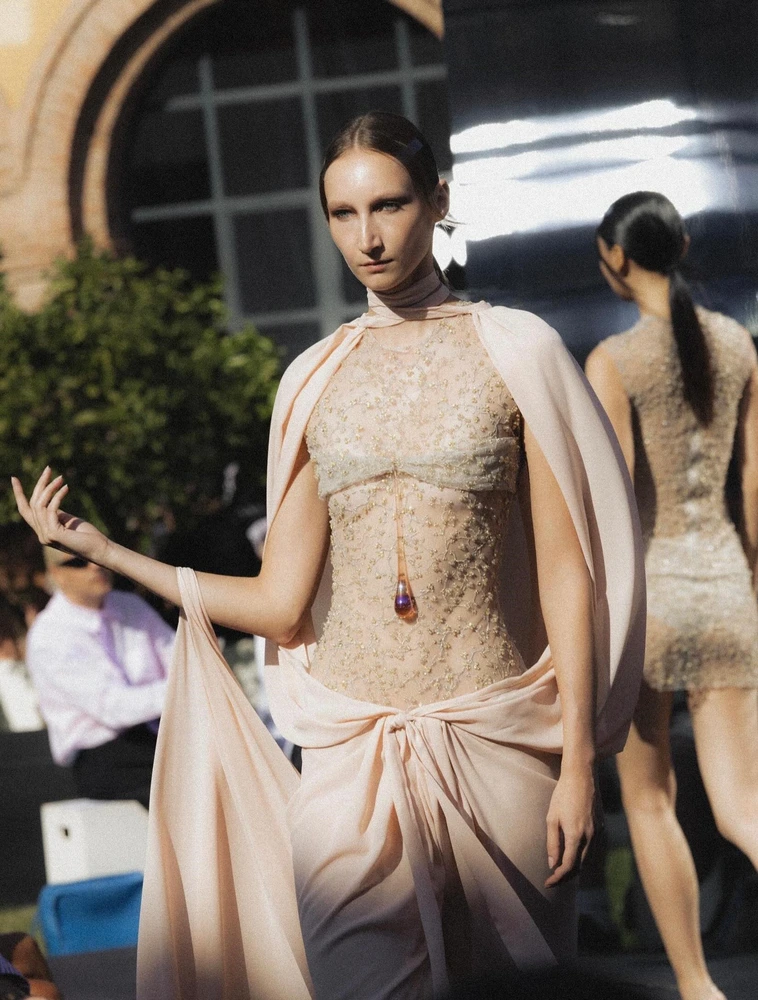
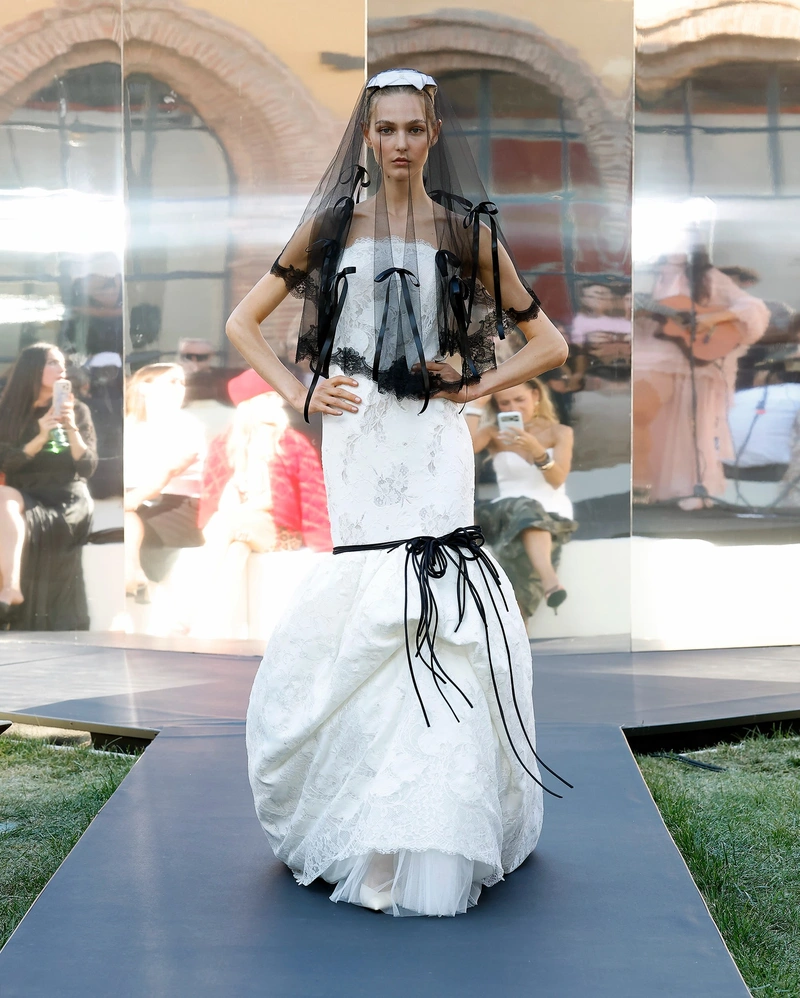
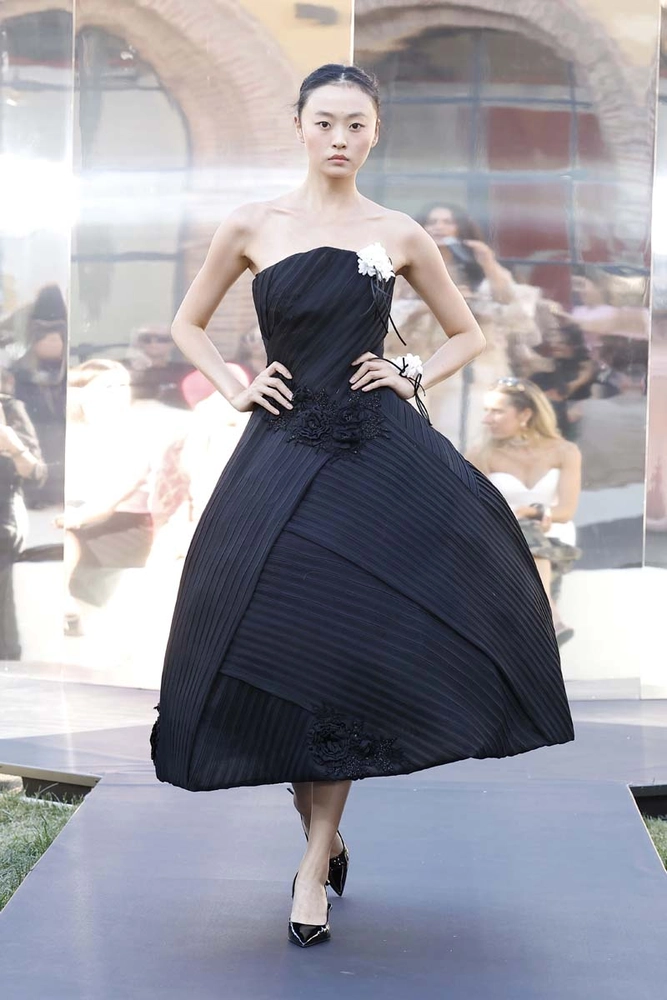
Arnaud Maillard and Álvaro Castejón returned to the runway after five years and chose the terrace of the Galería de las Colecciones Reales, beside Madrid’s Royal Palace, for the occasion.
The setting suited their long-standing phrase: “The Light of Madrid, the Spirit of Paris.”
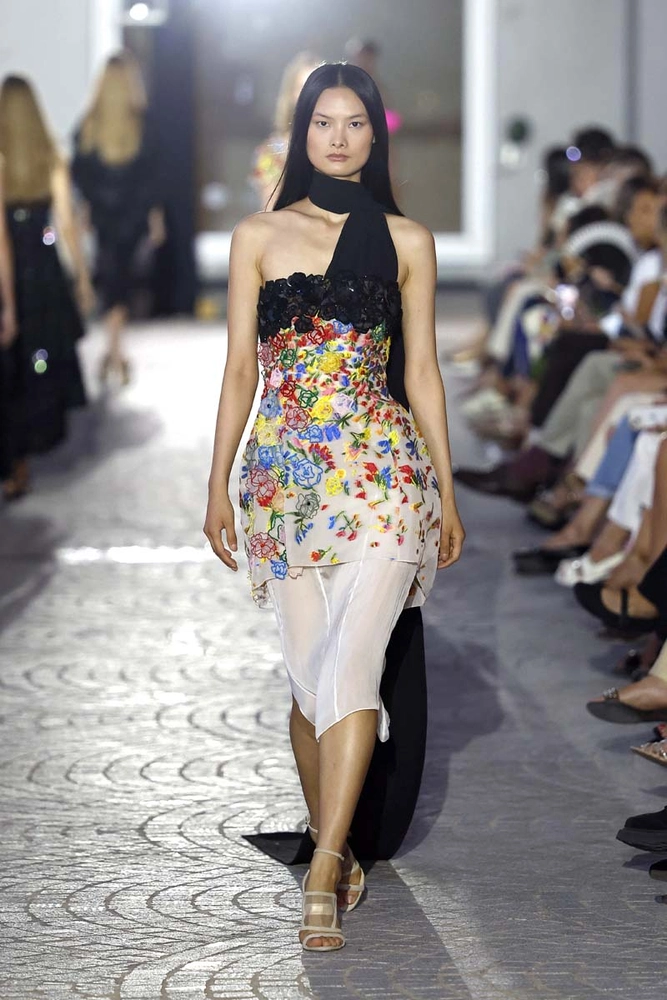
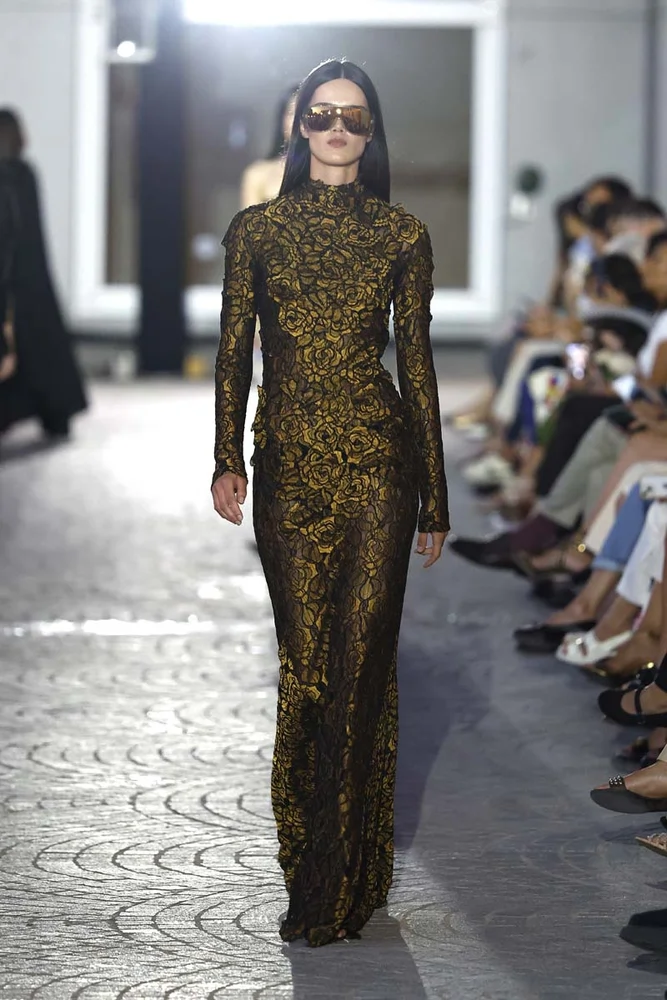
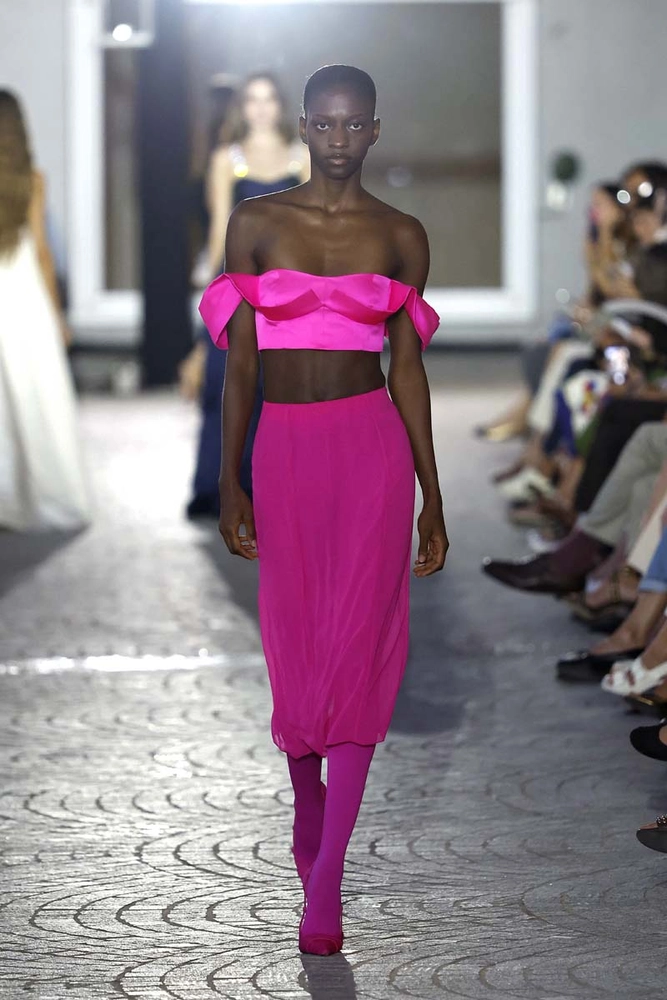
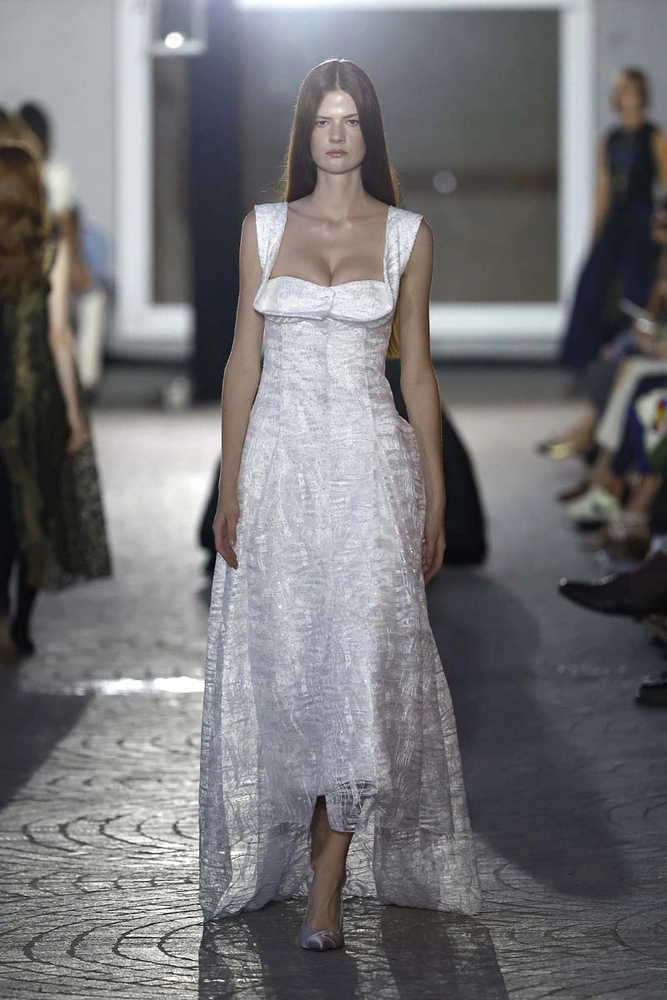
Their Spring 2027 vocabulary moves through hand embroidery, deconstructed lace, taffeta ruffles, crystal fringe, technical fabrics, black brocade, satin and reused materials from earlier collections. The designers describe their language as baroque minimalism, a phrase that captures the tension between a controlled silhouette and surfaces built for impact.
Black carried a historical charge through references to the Spanish court under Philip II, when Spanish black became a powerful signal across European dress.
With cocktail and eveningwear accounting for much of the collection, Alvarno returned through the category its clientele already associates with the house.
EGO opened its twentieth-anniversary day with Javier Comesaña’s HERDANZA, the Galician word for inheritance.
The collection begins with two forms of invisible labor: Galician shellfish gatherers working through demanding coastal conditions to collect luxury food, and ballet dancers rehearsing through physical strain before reaching the polished image seen onstage.
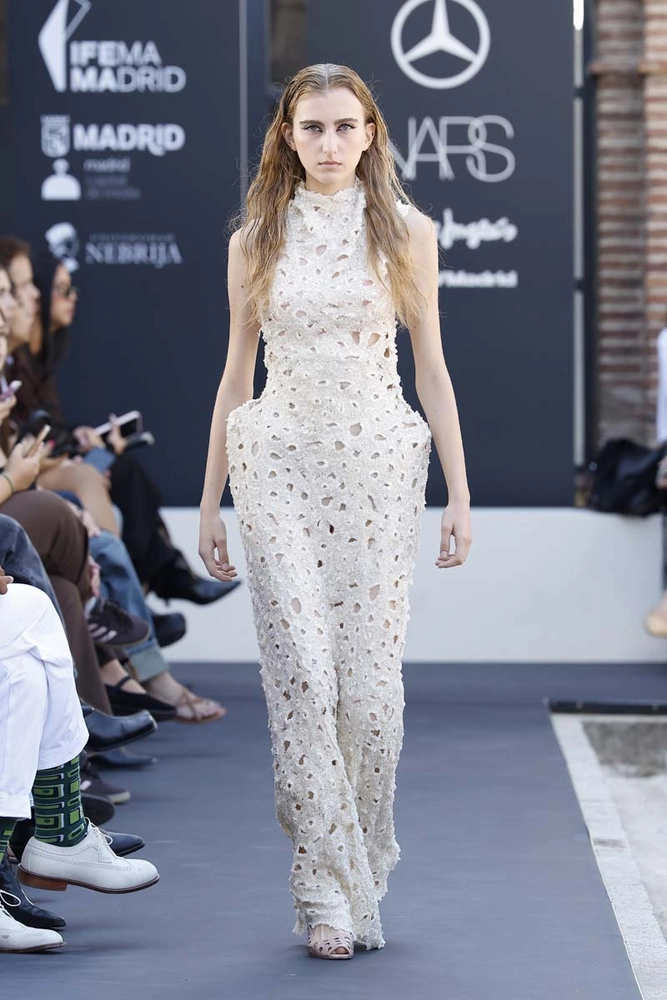
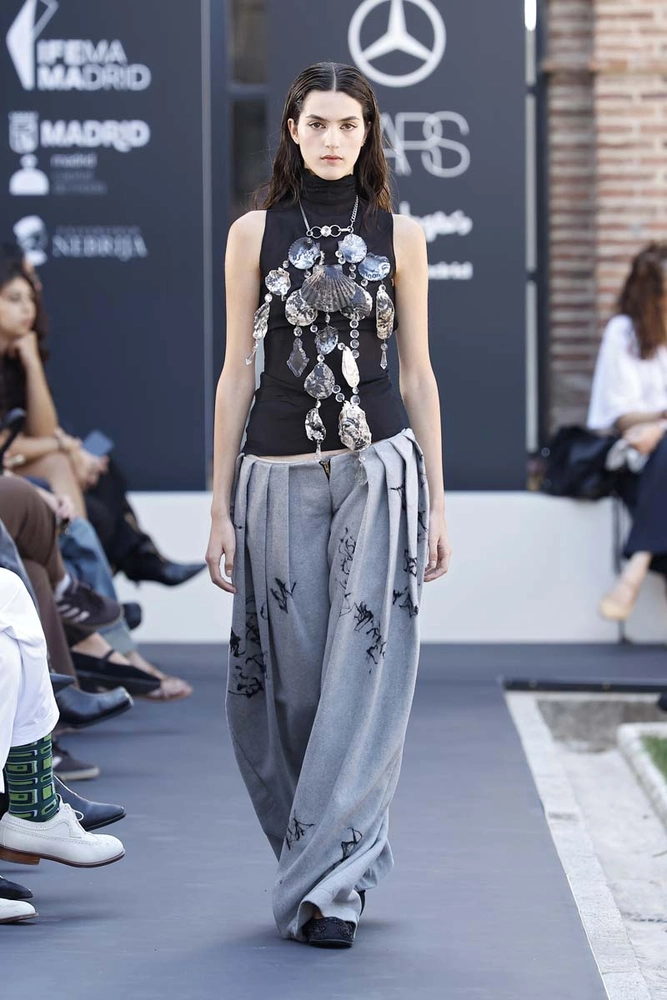
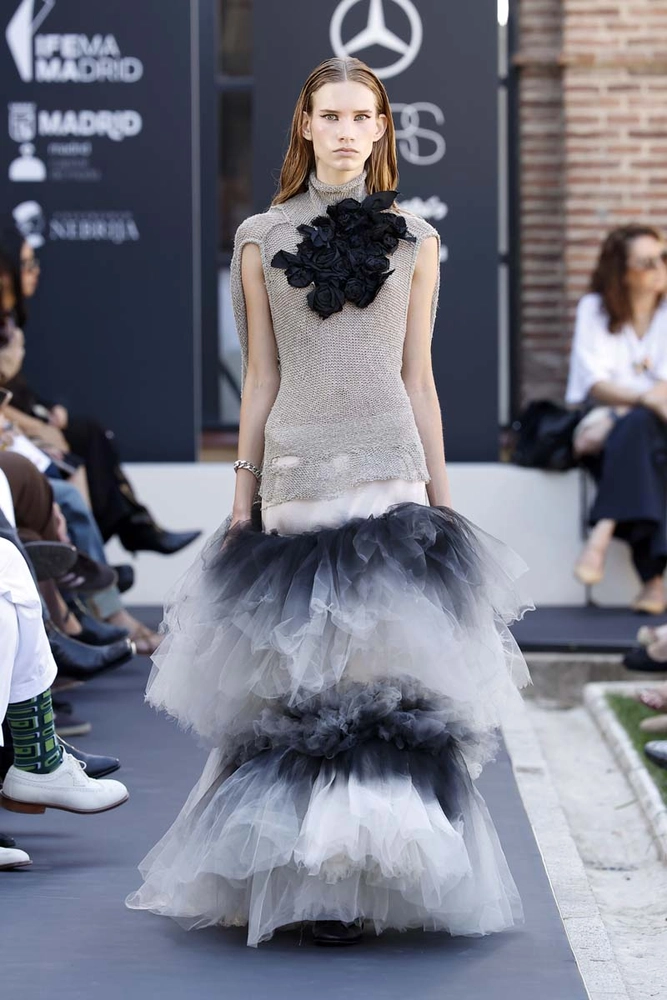
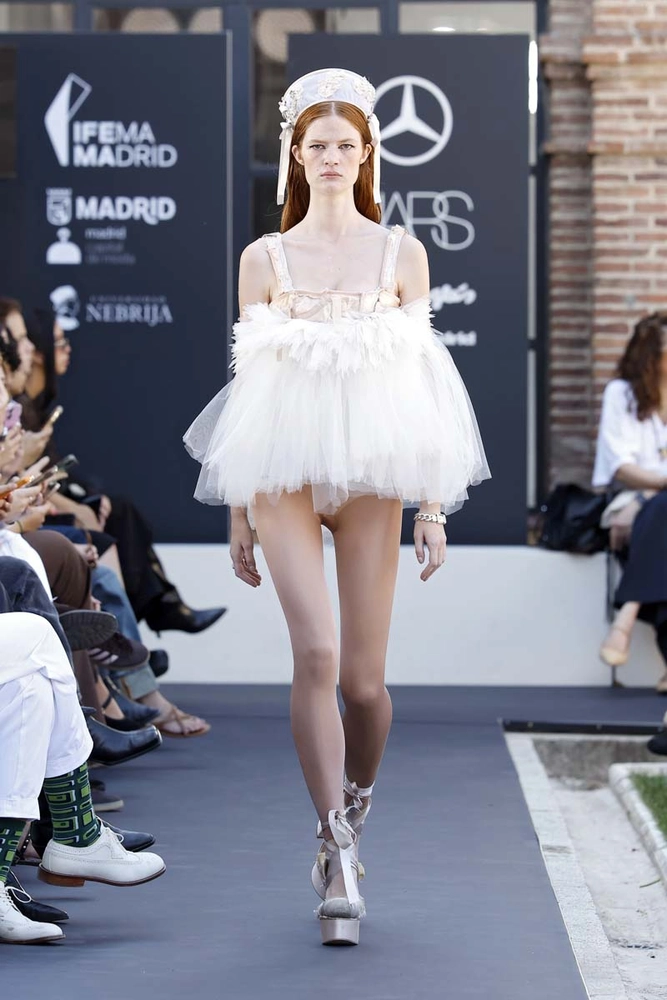
Comesaña translated that tension through purple for bruising and octopus, red for blood, gray for Vigo skies, wool and Galician knitwear, deadstock textiles and recycled materials.
A necklace made from scallop shells turned one of Galicia’s most recognizable coastal objects into jewelry.
Antonio Cotes arrived at fashion through civil engineering, and Galerie d’Été makes that background surprisingly visible.
The collection draws from minerals, superstition and nineteenth-century Victorian cabinets of curiosities, those rooms where objects were collected because they seemed to contain scientific knowledge, mystical power or both.
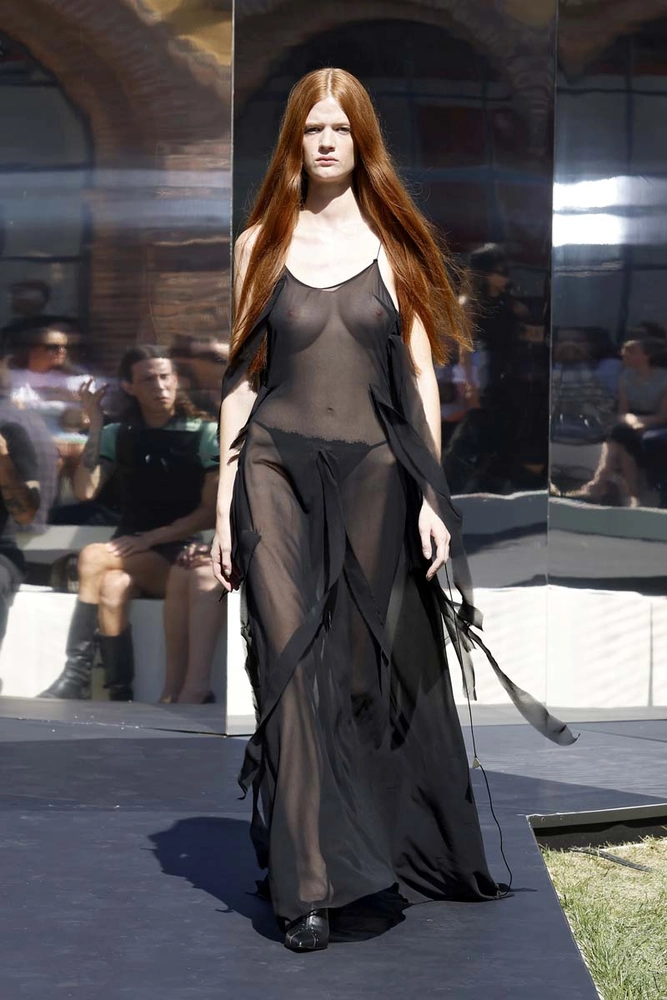
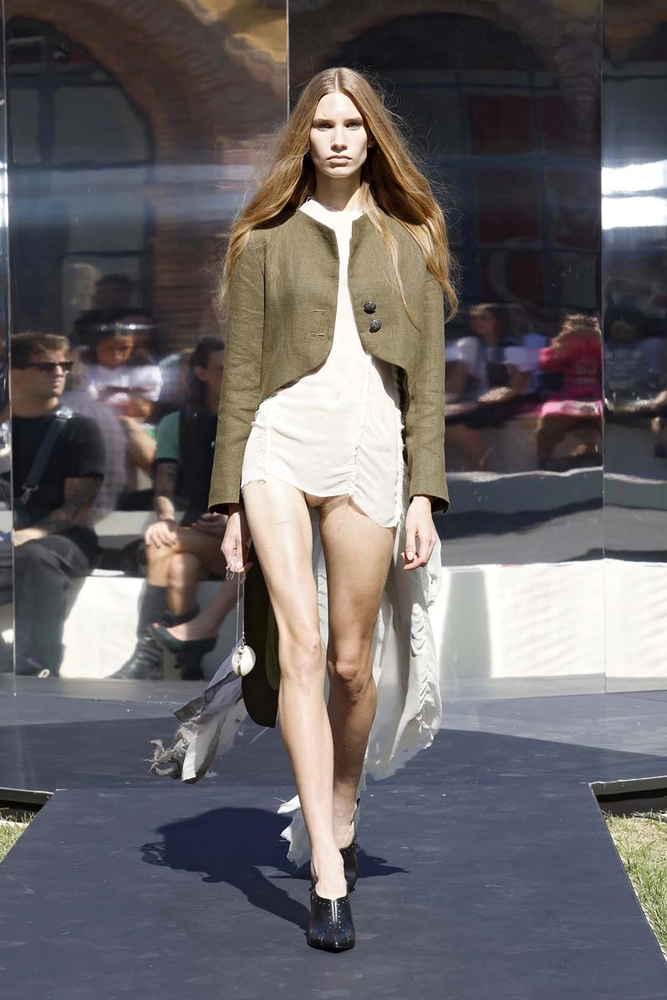
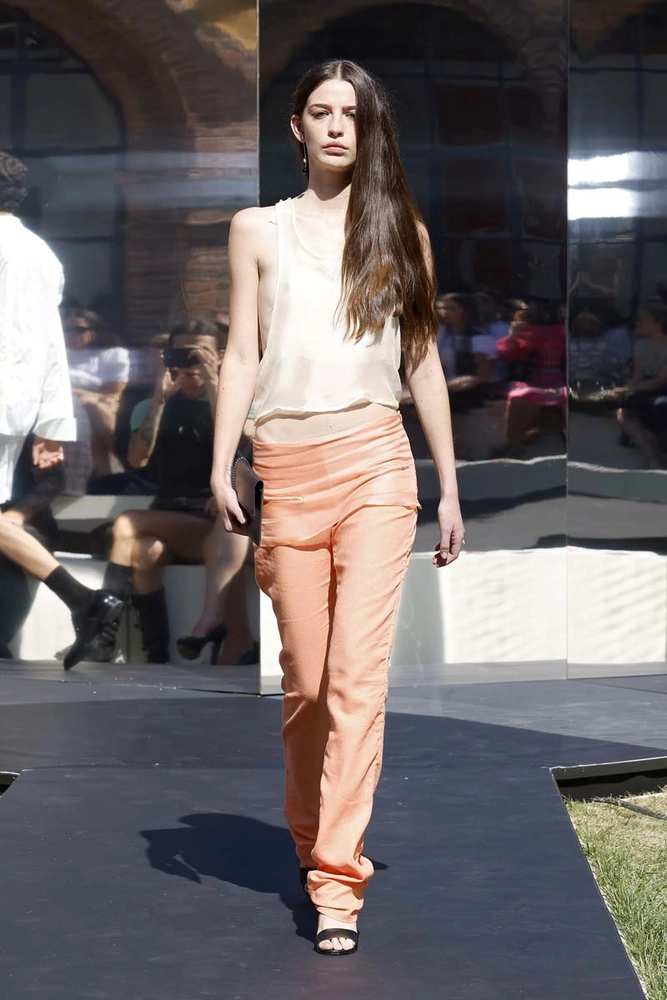
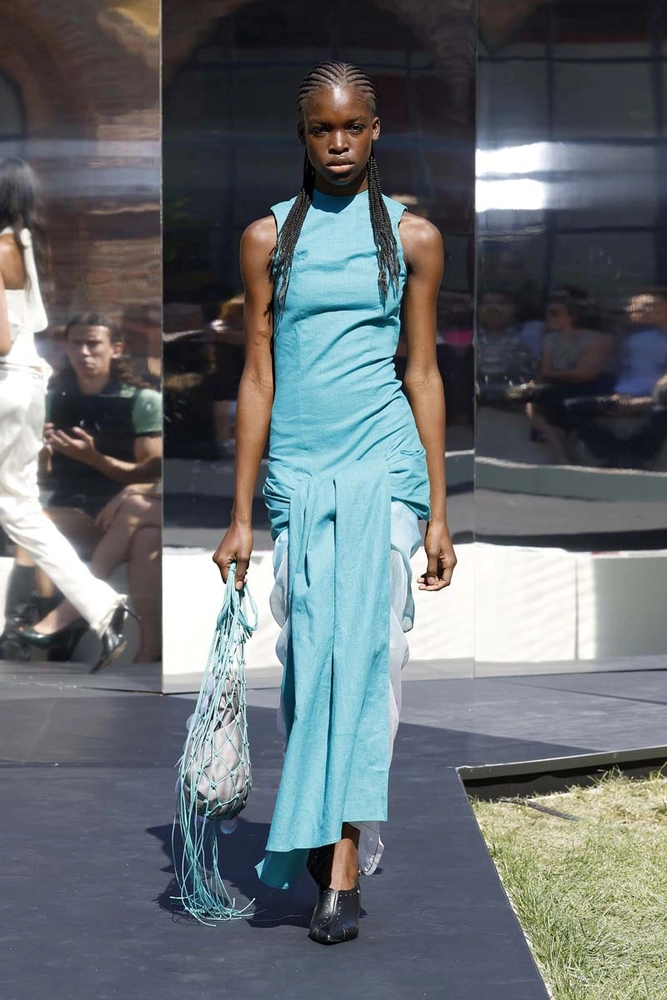
Structured tailcoats and Napoleon jackets meet slim early-2000s silhouettes, transparent silk, organza and pleated shirting. Stones cascade across garments, while jewelry and art pieces by Beatriz Palacios add another layer of object-making.
French seams reveal a designer deeply interested in what happens inside the garment as well as on its surface.
Cotes even identifies amethyst as his personal stone, tied to his Sagittarius sign.
Chilean designer Isabel Peña and Argentine designer Mauricio Quiñones built Conservación Afectiva around the emotional life of garments.
Old baby clothes, handmade tablecloths, shawls and domestic textiles become source material through their Hybrid Upcycling System. Pieces are dismantled and reconstructed while preserving visible traces of their earlier lives.
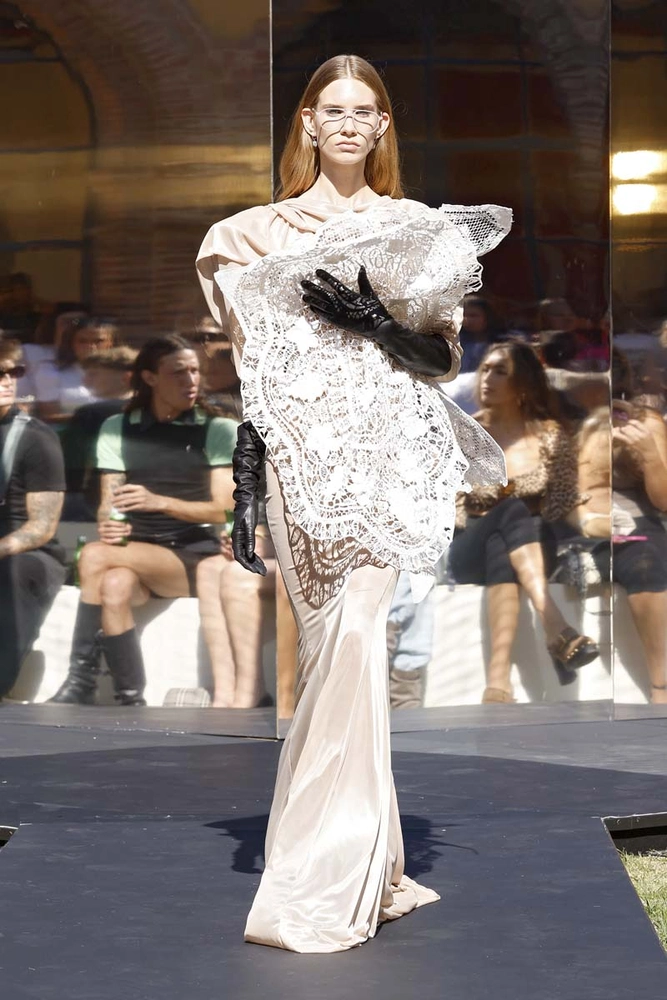
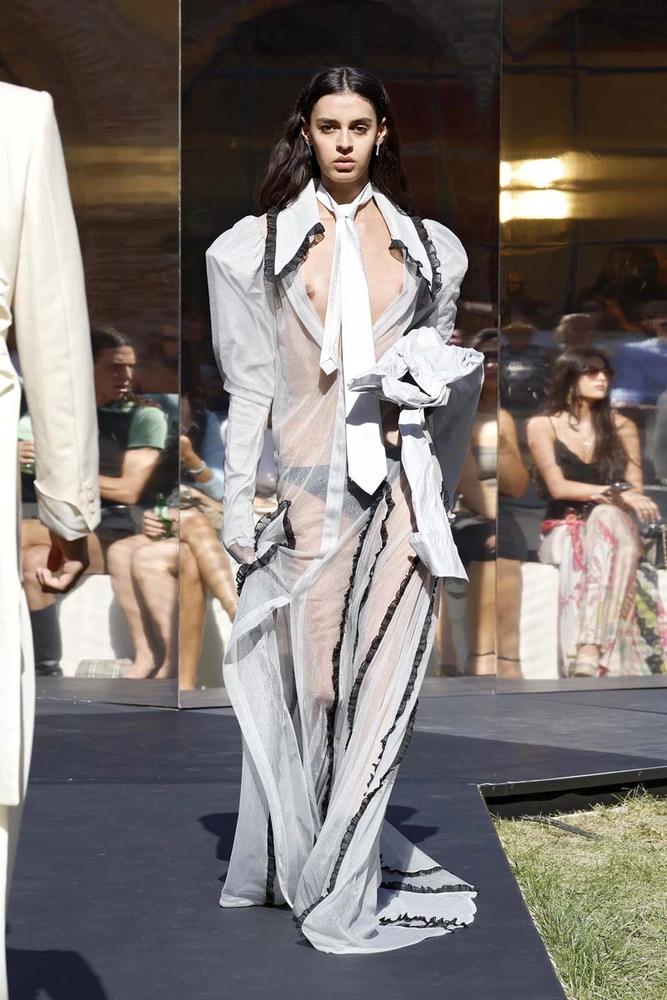
Some new garments are conceived as “point zero” pieces, made with the intention that they can enter another cycle of transformation later.
One blouse is hardened in resin and carried against the chest like a relic.
That gesture turns sustainability into something intimate. A garment has value because somebody touched it, kept it, remembered it and decided it deserved another form.
Twenty-four-year-old Karla Aguilar presented AMORFO, a collection examining dissociation, protection and the unstable relationship between body and exterior shell.
The silhouettes move through forms that conceal the body and gradually open toward exposure.
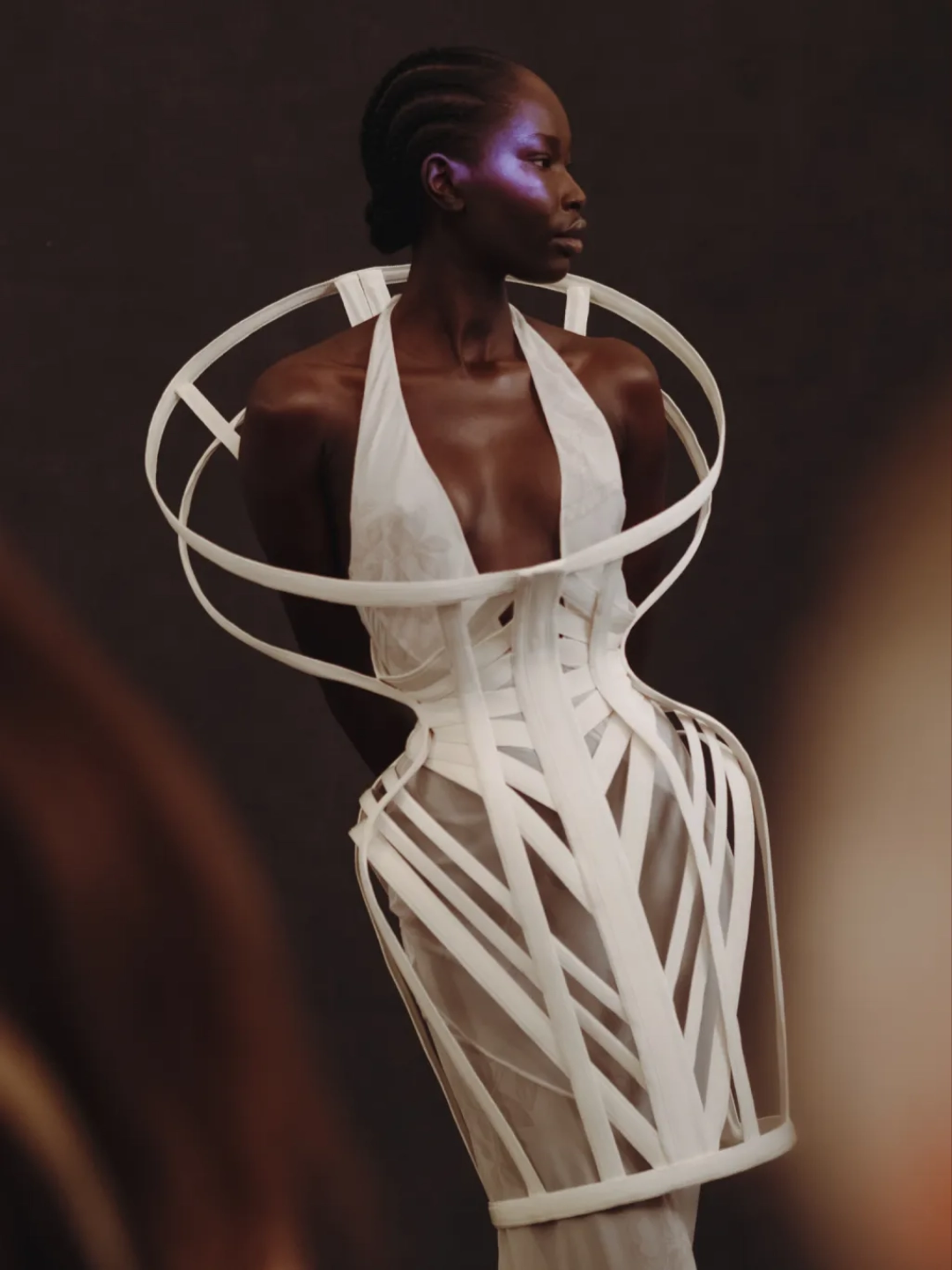
Her most striking material experiment uses pig cartilage, which Aguilar treats as a biodegradable plastic-like substance. One sculptural dress was molded and corseted directly on the mannequin, allowing the material itself to influence the final architecture.
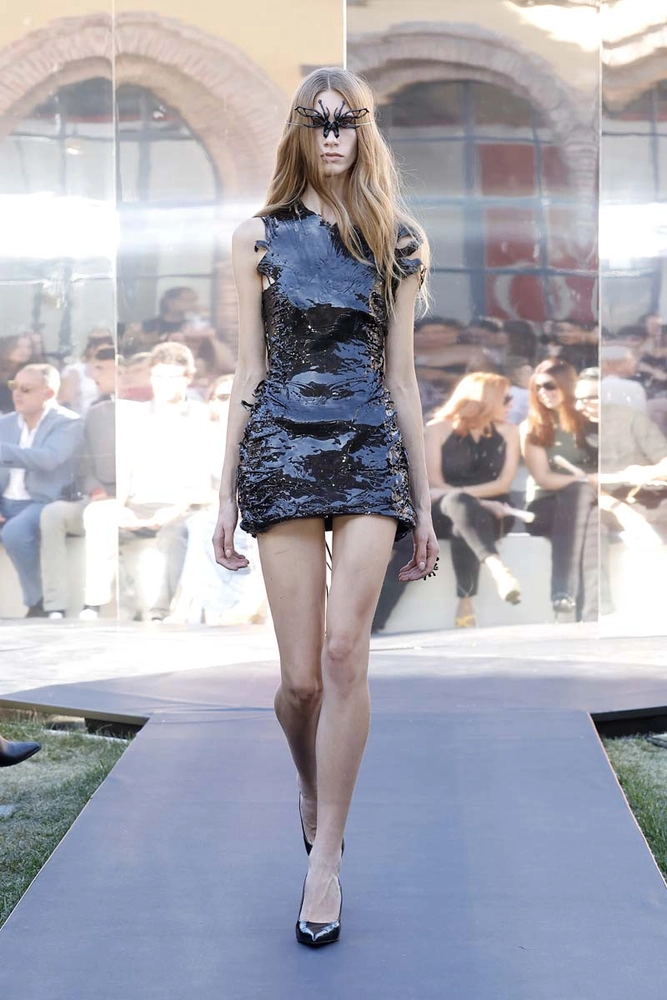
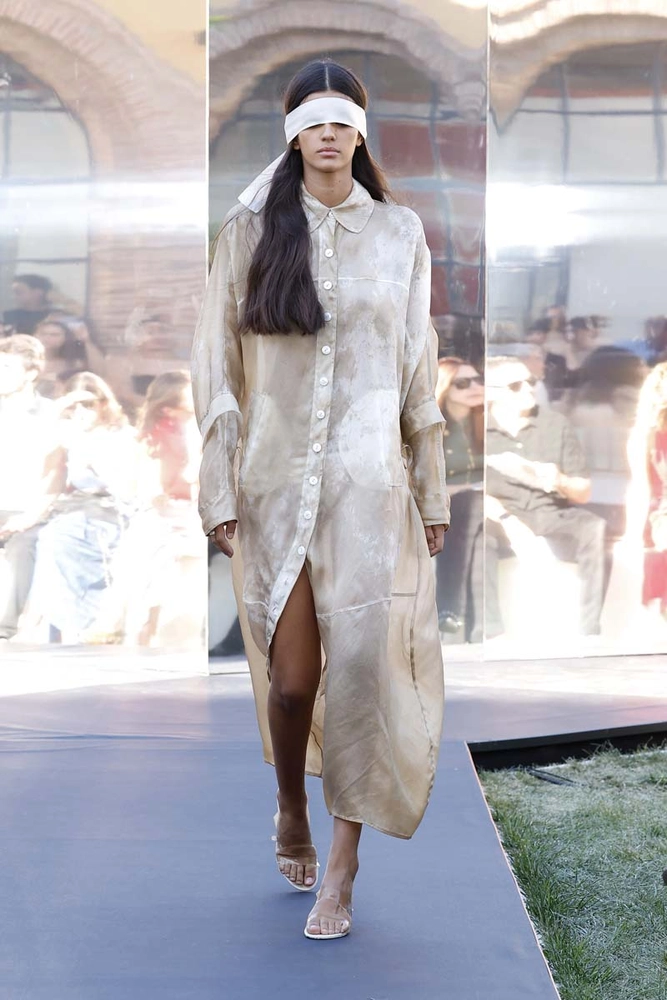
Cochineal dye appears elsewhere across a top and Bermuda shorts, continuing the collection’s investigation of natural substances and transformation.
The work earned Aguilar the Pelonio New Talent Award, with the jury highlighting craft, sustainability, natural materials and sculptural volume.
Portuguese designer Matilde Bliebernicht Passanha Guedes, born in 2003, brought Té de las 5 – How I Love Being a Woman to EGO after developing the project from her master’s work.
British afternoon tea becomes a ritual around women sharing time, conversation and private experience.
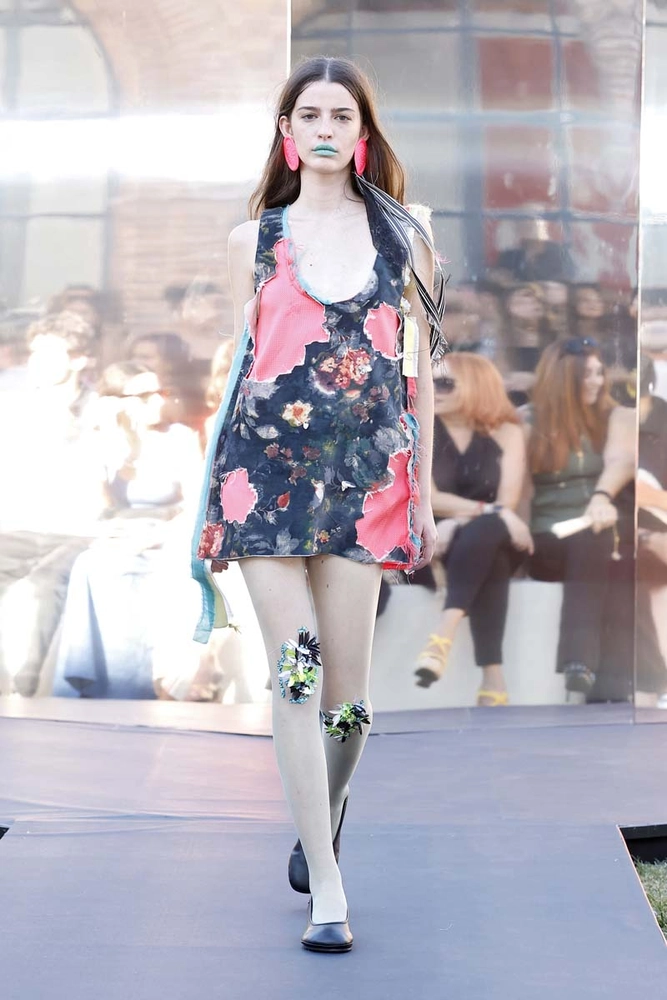
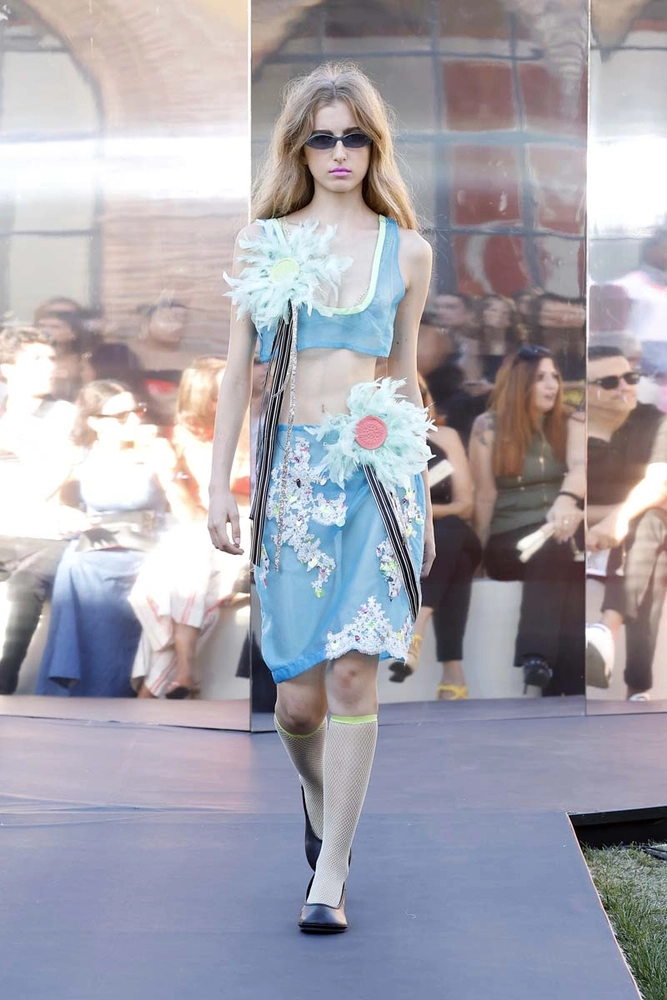
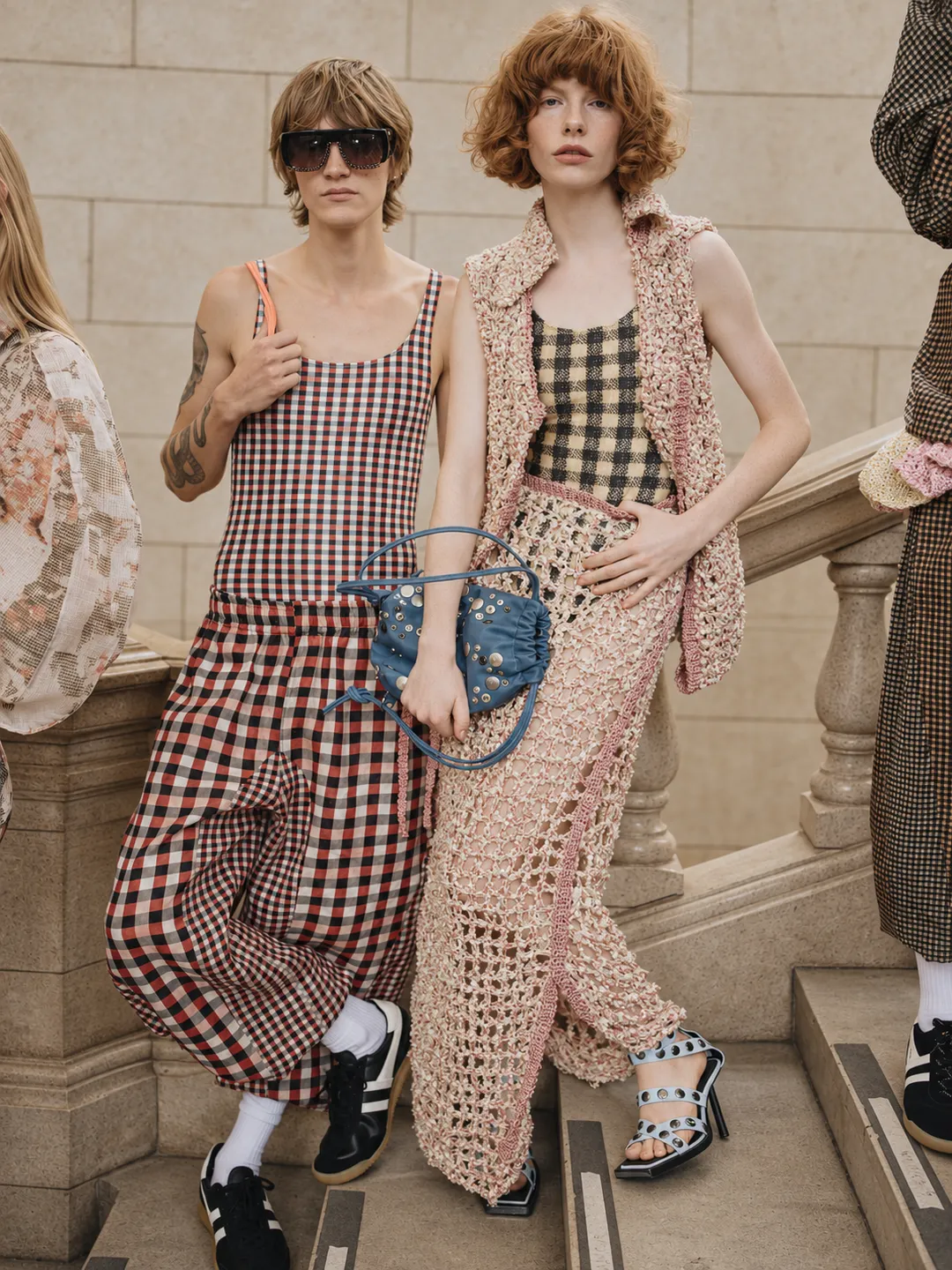
Checks, stripes, saturated color, shiny surfaces and matte textures create deliberate friction. Frayed edges remain visible. Construction occasionally looks interrupted. Imperfection becomes part of the garment’s character.
Guedes treats errors, insecurity and vulnerability as legitimate stages of creative development, allowing pieces to retain evidence of experimentation.
IFEMA Madrid runs MBFWMadrid with support from Madrid City Council, and the city is backing the fashion calendar with serious money. Its 2026 commitment to the wider fashion-week ecosystem approaches €2 million, including €1.3 million in grants helping designers take part, alongside funding for MBFWMadrid and OMODA Madrid es Moda.
The city also estimates around €1.4 million in additional advertising and institutional promotion, while the combined economic and media impact of the wider programme is valued at almost €100 million. Across ten days, more than 60 designers appear through roughly 45 shows and presentations, alongside exhibitions, open days and performances.
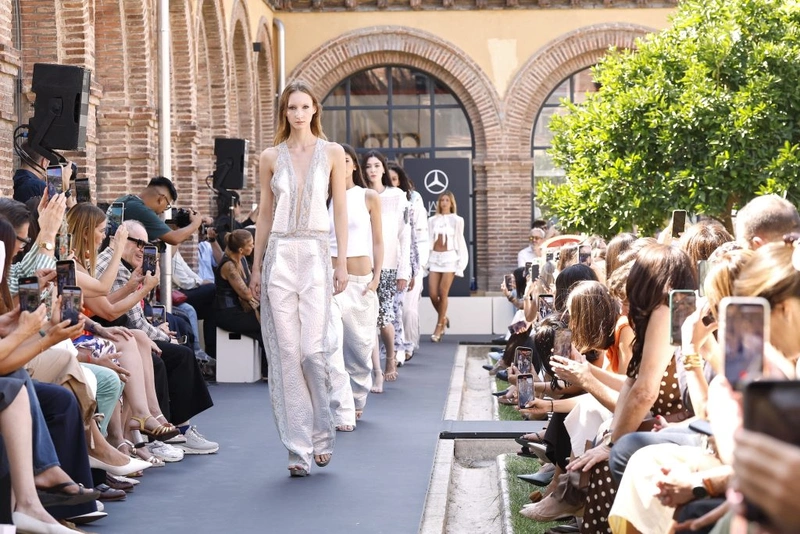
The runway also comes with prizes that can actually move a young business forward. Spring 2027 offered 13 awards and recognitions worth more than €120,000 in total. Three designers receive access to Maison Pyramide’s international showroom during Paris Fashion Week, while all six EGO designers get six months of mentoring through Pelonio and one takes home the Pelonio New Talent cash prize. ICEX Spain Trade and Investment supports the international buyer programme, meaning the applause can lead directly toward mentoring, export contacts and commercial opportunities.
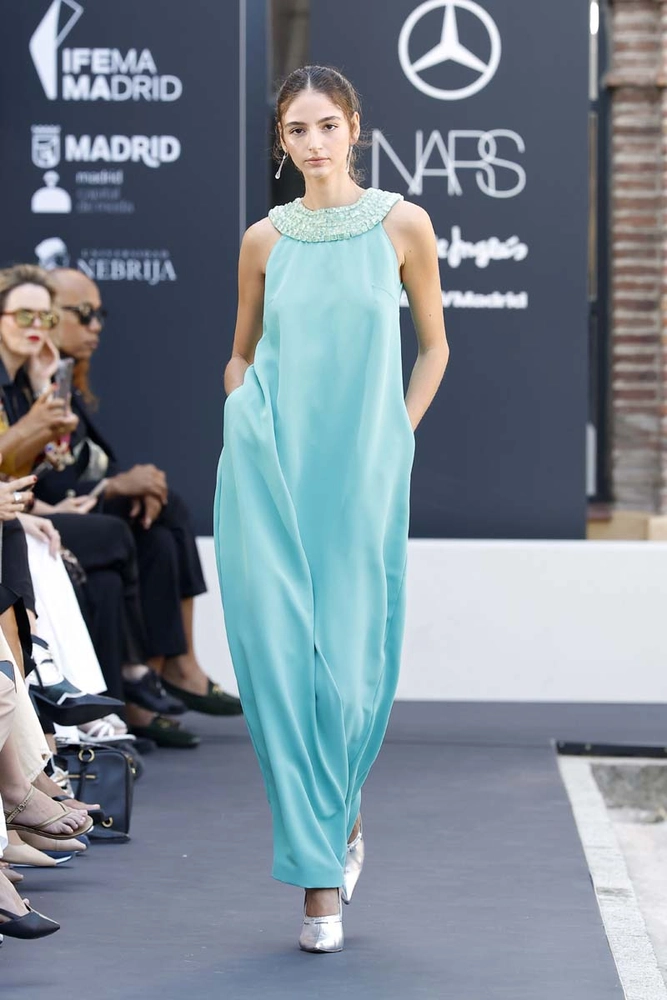
Then there is the machinery surrounding the shows. The 84th edition worked with four main sponsors, seven collaborators and two participating organisations, with Mercedes-Benz, NARS and El Corte Inglés among the most visible names.
PYRATEX developed textiles directly with five runway brands, Substack joined as a content partner, and MBFWMadrid introduced a corporate hospitality programme that turns fashion-week access into a networking and client-relations tool for companies. What looks like six days of clothes on a runway is actually a much bigger system of grants, sponsors, buyers, prizes, media and business deals keeping Madrid Fashion Week in motion.
Advertisement