MENU
Close





This is not the story of women trying to dress like men. That reading is too small, too lazy, too convenient. 80s power dressing was women dressing like women who intended to win.
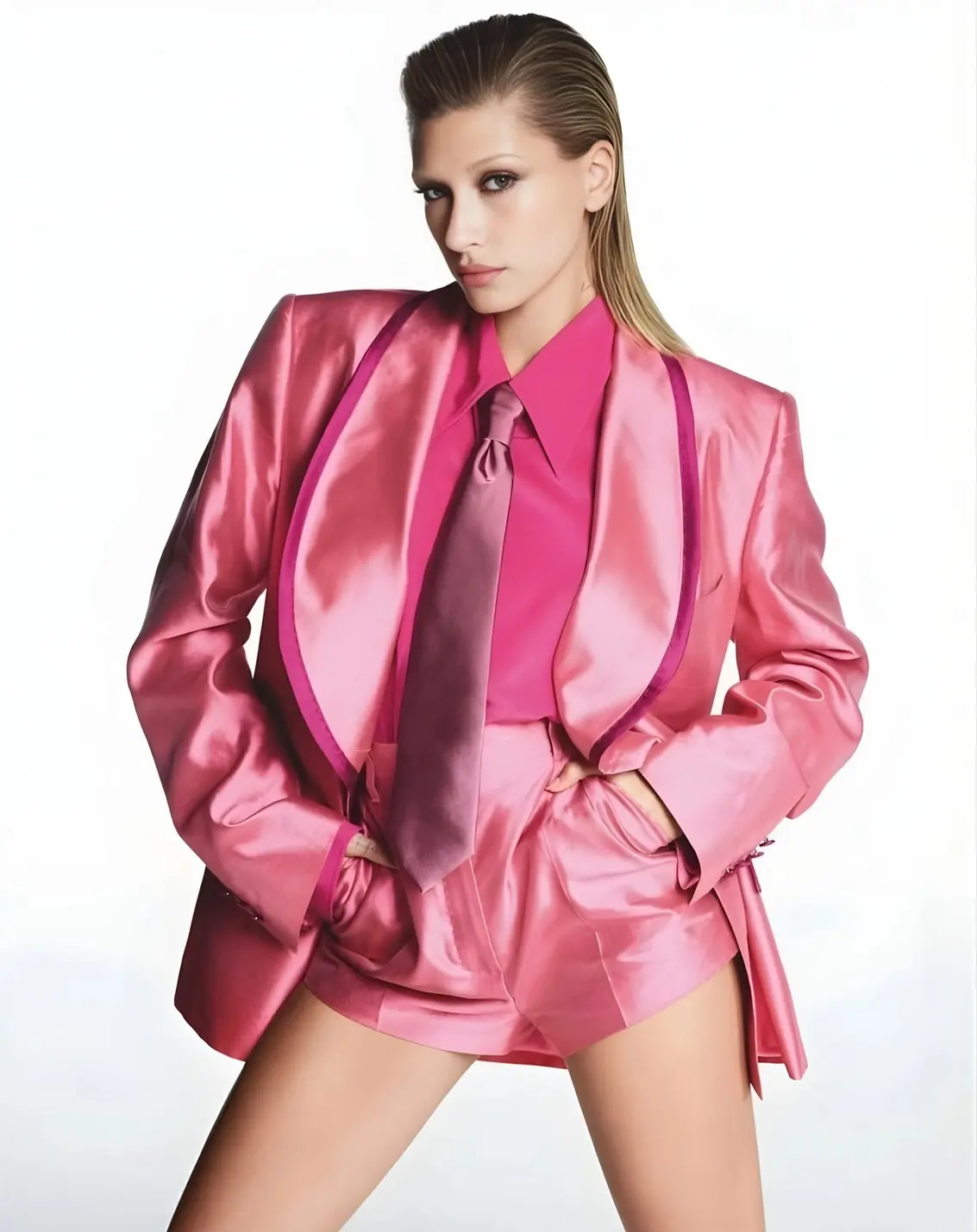
This is not the story of women trying to dress like men. That reading is too small, too lazy, too convenient. 80s power dressing was women dressing like women who intended to win.
December 15, 2025
Advertisement
Advertisement



This is the first rule of power dressing: the room reads you before it hears you.
In the 1980s, women entered corporate skyscrapers that were built like fortresses, designed by men, staffed by men, ruled by men. The air itself felt gendered: the hush of closed-door meetings, the tight smiles, the unspoken expectation that a woman should be agreeable, supportive, decorative, grateful. Power dressing arrived as a refusal. It did not ask to be included. It announced presence.
The power suit was not merely fabric arranged into a jacket and skirt. It was a strategy. It was a silhouette with an agenda. A woman in a strong-shouldered suit could walk into a boardroom and make the architecture flinch. She could appear larger than the doubts around her. She could turn her body into punctuation: decisive, deliberate, impossible to ignore.
Power dressing is a visual language of authority.
In its 1980s form, it is the art of turning tailoring into command: structured shoulders that widen your territory, lapels that feel like clean-edged decisions, a waist shaped not for softness but for clarity, a line that says you are here to be taken seriously, without surrendering the fact that you are a woman.
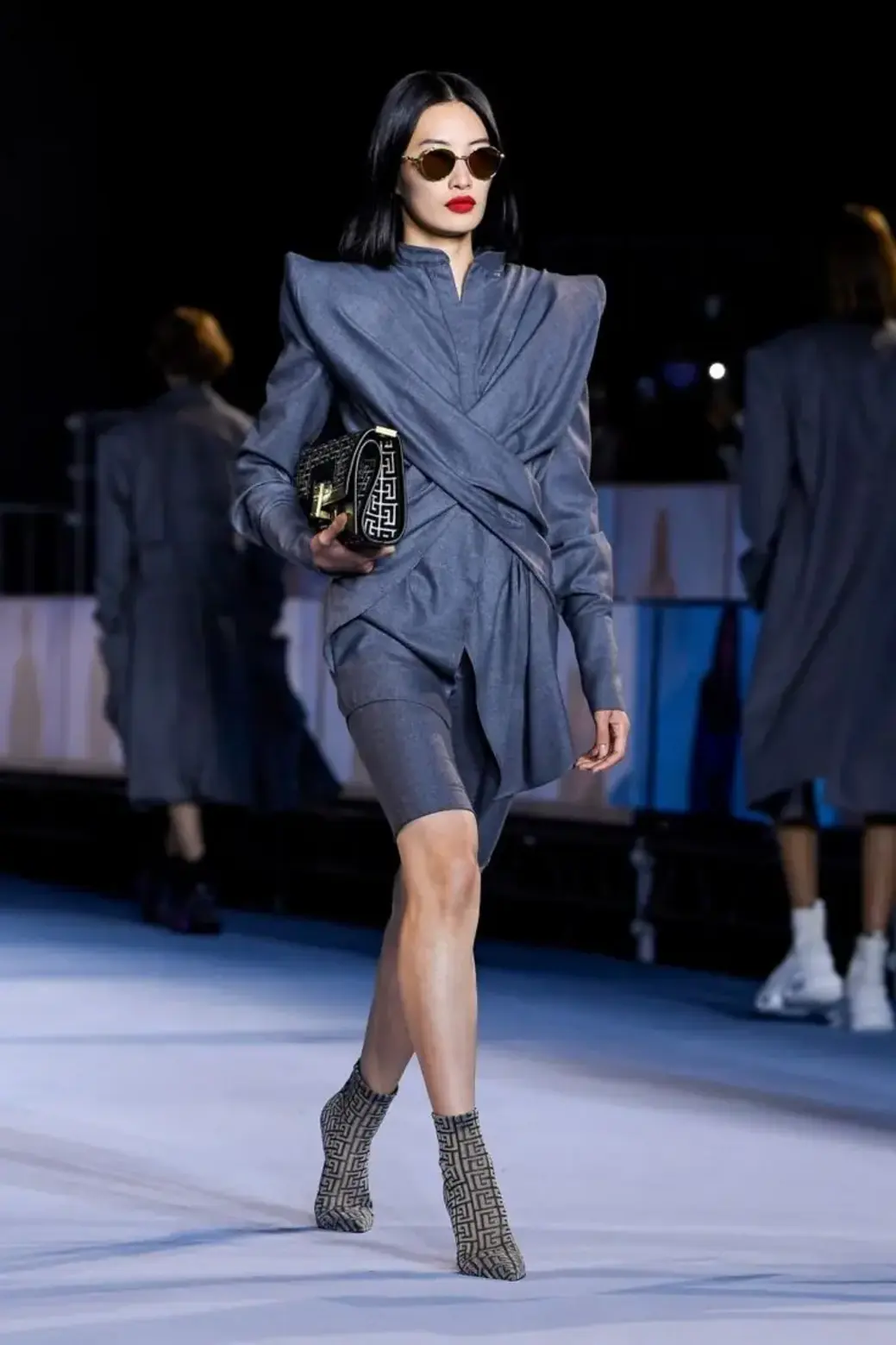
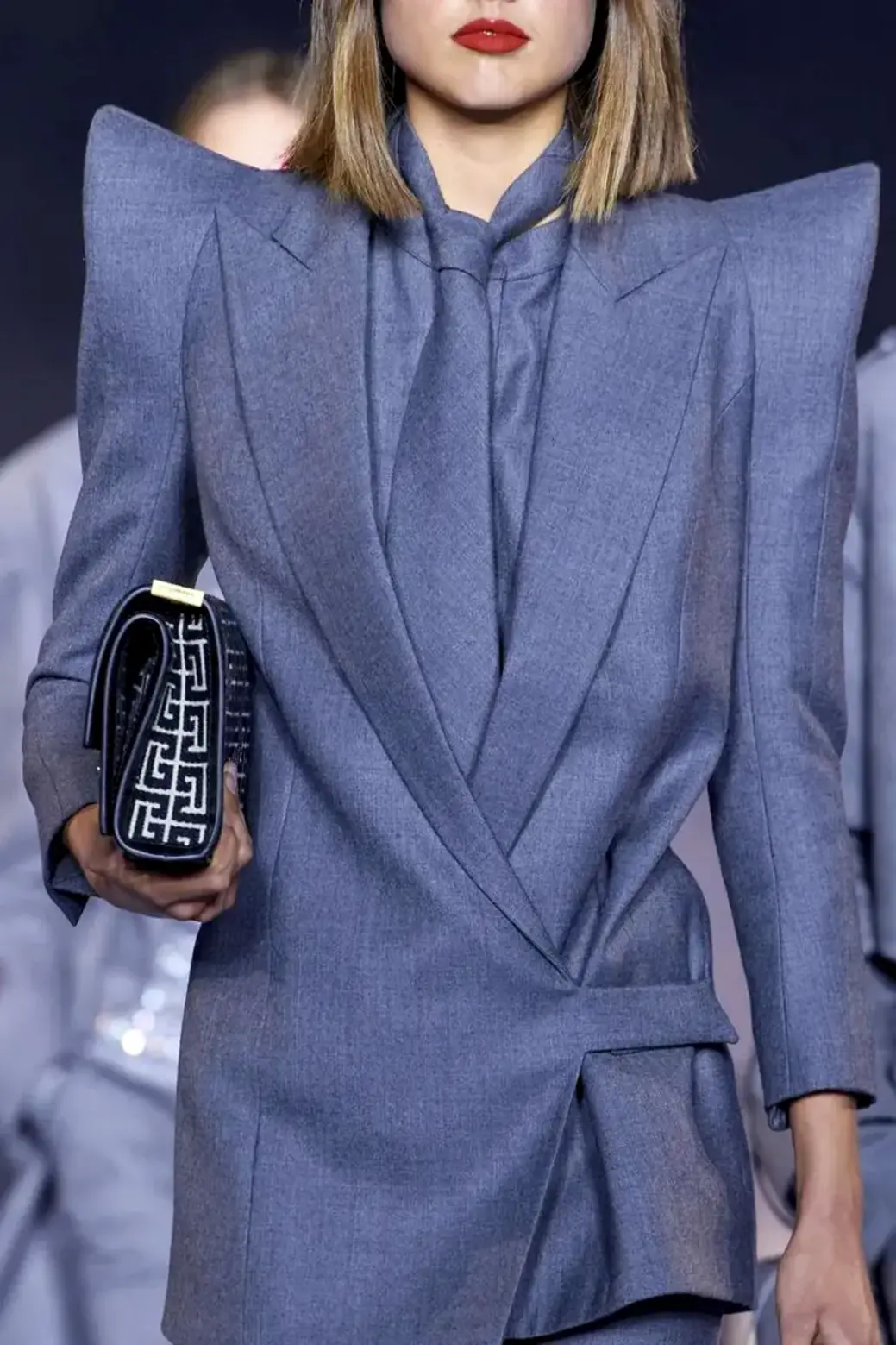
The power suit is the iconic sentence in this language. Its grammar is architectural: shoulder pads, strong lines, crisp symmetry, double-breasted confidence, a silhouette that occupies space the way a leader occupies time. In the workplace, where women were often expected to be quiet, the suit did something radical, it made quiet impossible. It gave women a presence that arrived before permission did.
Power dressing isn’t simply “workwear.” It is not just what you wear to an office. It is the deliberate use of clothing to project competence, authority, and control in spaces that test you, measure you, and sometimes try to shrink you. It’s about dominance and desire in the same breath: intelligence made visible, ambition made elegant.
And crucially: power dressing does not mean erasing femininity. The 1980s did not produce a generation of women trying to disappear into masculinity. It produced women who understood that femininity could be fierce—and chose to express it with structure, scale, and intention.
The rise of power dressing is inseparable from the reality that more women were entering the workforce in the late twentieth century, especially through the decades leading into the 1980s. Women’s labor force participation rose sharply from the 1960s through the 1980s, reshaping what “professional life” looked like and who it included.
But presence does not guarantee acceptance. The corporate world can let you in and still treat you like an exception. The 1980s office was a theatre of credibility: who is allowed to lead, who is expected to assist, who is assumed to be competent before speaking. In that theatre, clothing becomes more than aesthetics, it becomes evidence.
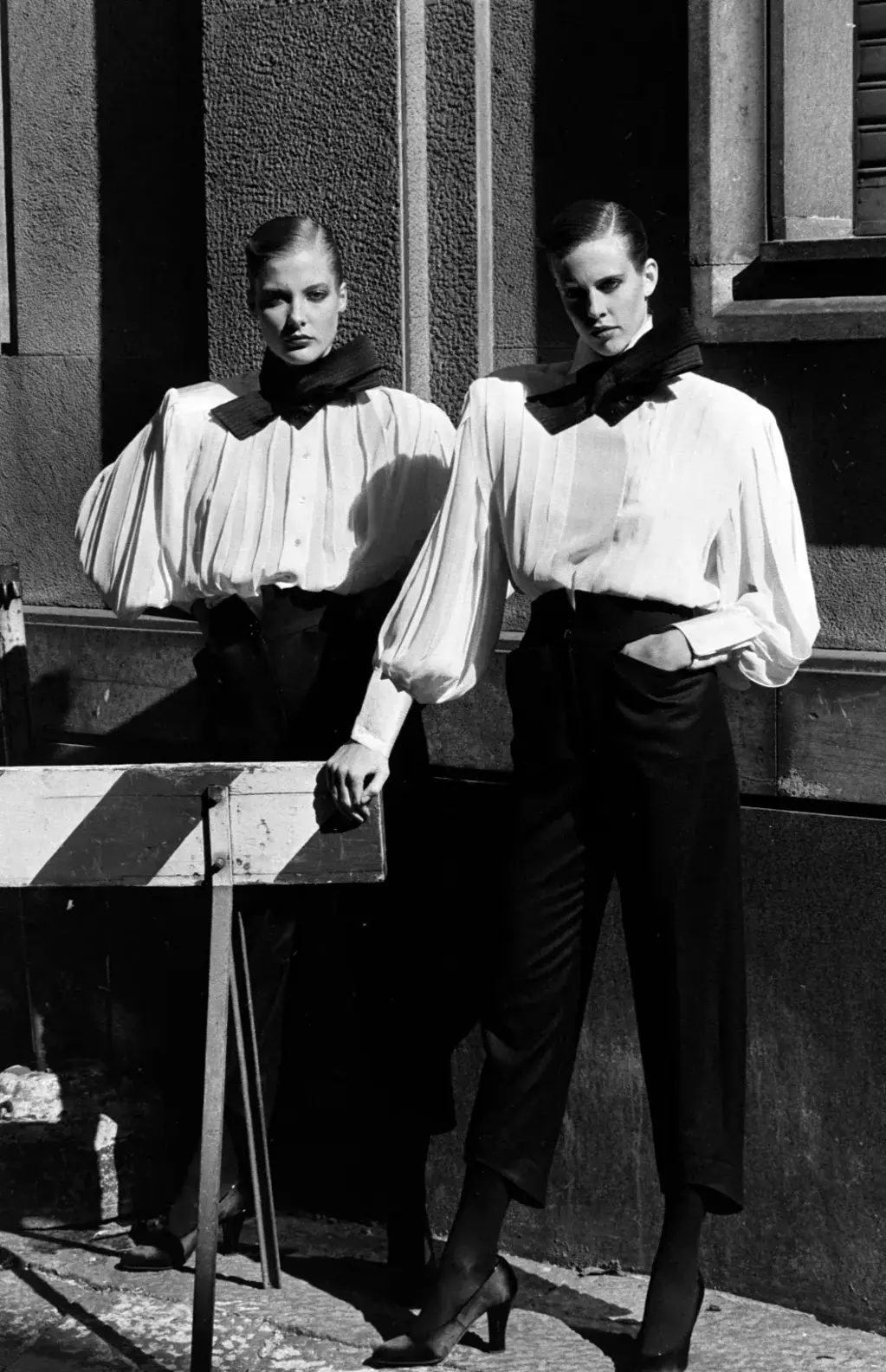
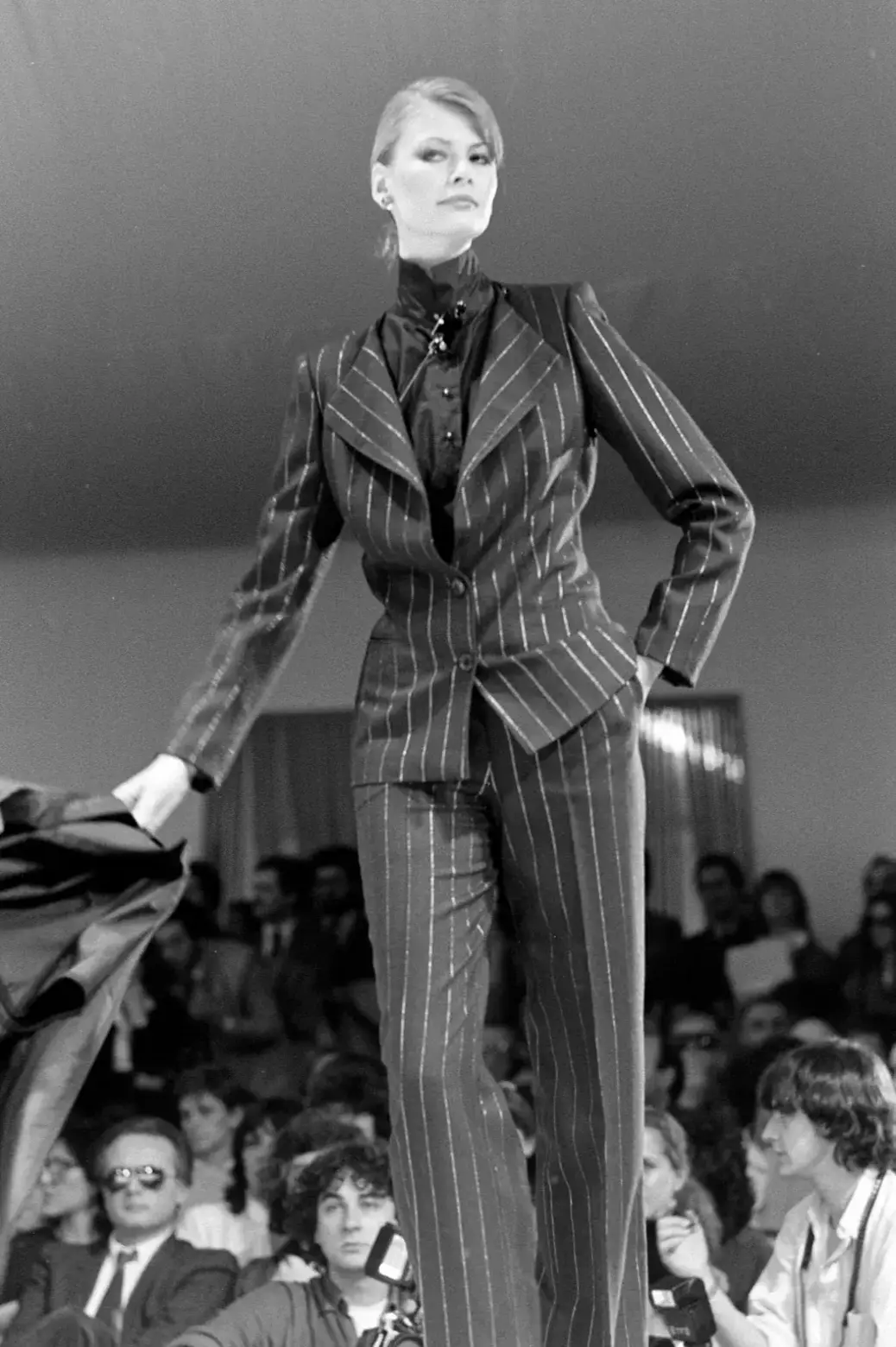
Women didn’t power dress because they were vain. They power dressed because they were being read.
A suit could be an argument. A jacket could be a shield. A strong shoulder could become a visual refusal to be interrupted. When you are constantly assessed, too emotional, too soft, too “not leadership material”, you learn that authority must be communicated in multiple languages at once. Voice. Skill. Results. And, yes, silhouette.
Power dressing was not invented in a single moment. It grew from pressure: the pressure of being visible and still underestimated. The pressure of needing to appear capable twice over. The pressure of wanting the corner office in a building that had never imagined you in it.
There is a reason the power suit feels like an era of momentum. In the 1970s and beyond, legal and economic shifts helped change women’s autonomy—how they could build independent financial lives, how they could access credit, how they could plan futures not tethered to someone else’s signature. The Equal Credit Opportunity Act (ECOA), for example, prohibited discrimination in credit transactions on the basis of sex and marital status, among other factors.
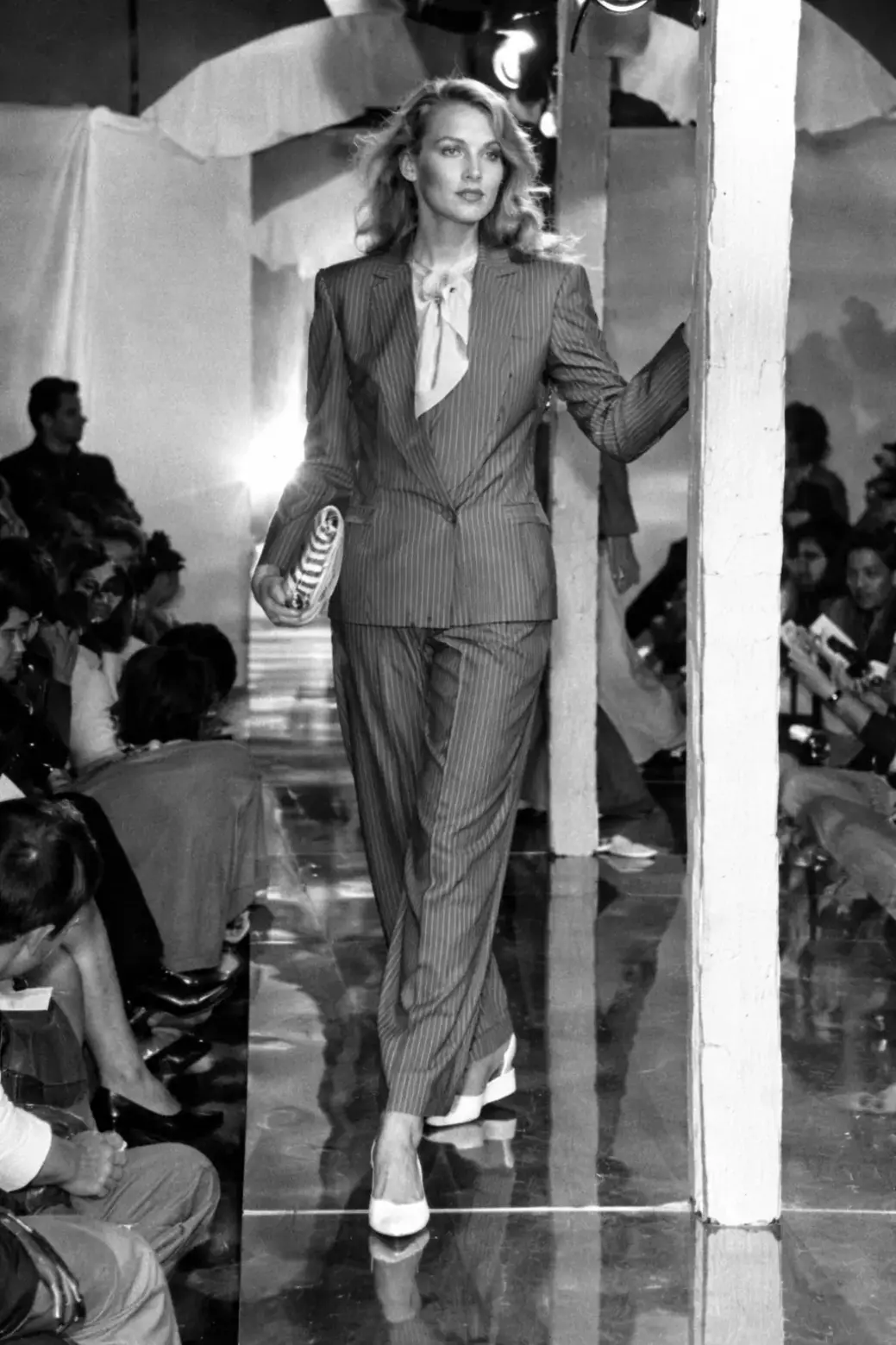
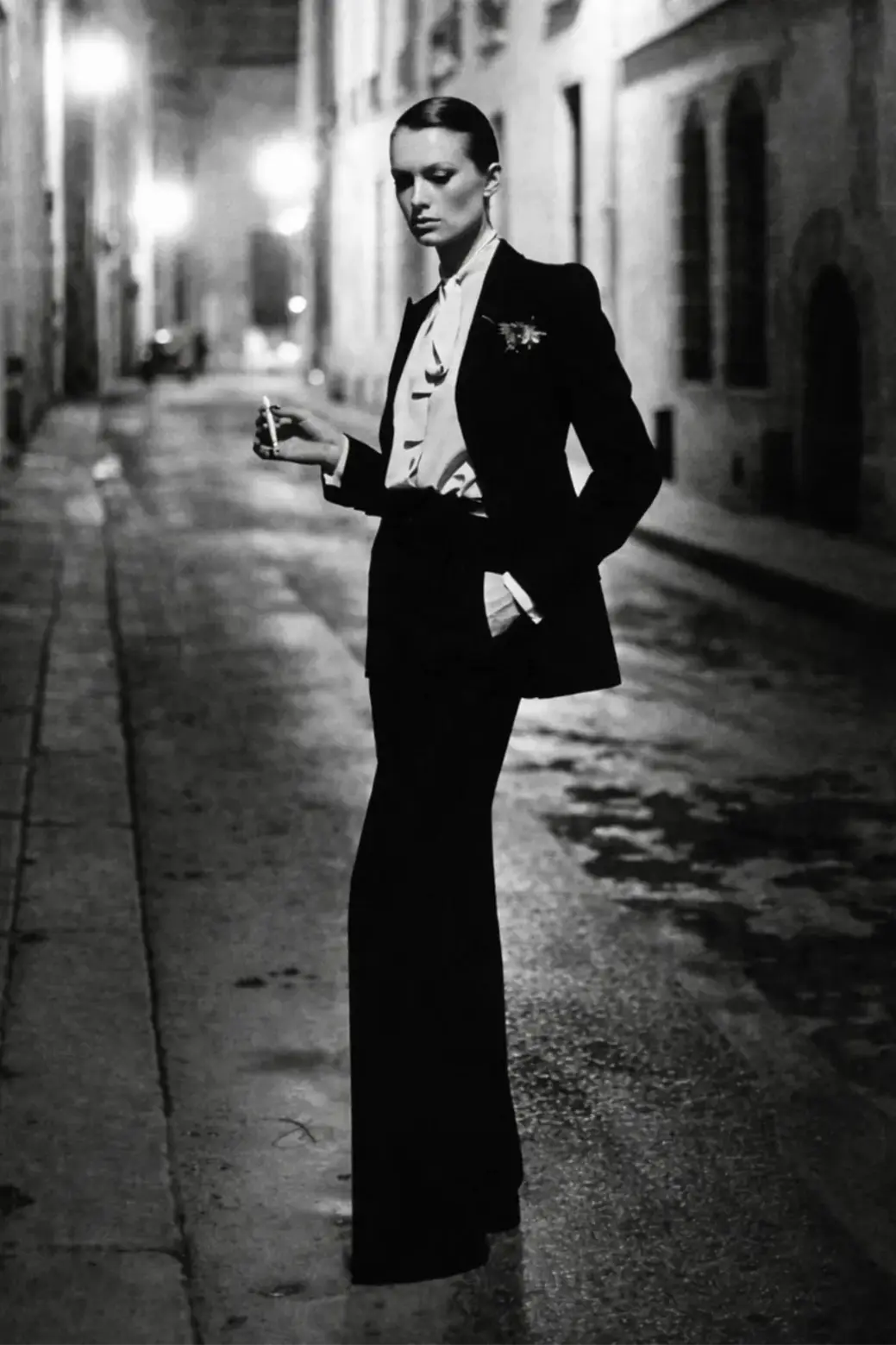
You can’t separate fashion from the conditions that make ambition plausible. A woman with her own money and her own credit history walks differently. She invests differently. She makes long-term decisions. She has a different relationship with risk, with mobility, with desire.
The suit becomes more than an outfit. It becomes a uniform for a new kind of selfhood.
The 1980s sold a particular dream: that ambition was glamorous, that money could be visible, that success should not be subtle. Corporate culture wasn’t just a workplace, it was a myth of superiority, an aesthetic of achievement.
This is the atmosphere in which the power suit becomes inevitable.
Tailoring always carries status, but in the 1980s it carried conquest. The broad shoulder became a symbol: not simply “strong,” but strategically strong, engineered strong. It suggested command over your environment, as if your very outline could negotiate on your behalf.
The suit wasn’t trying to make a woman look like a man. It was trying to make a woman look like the person who decides what happens next.
To understand how power dressing became iconic rather than niche, you have to look at what the 1980s did better than almost any decade before it: broadcast aspiration.
Television didn’t just entertain, it taught the world how wealth and power should look.
Shows like Dynasty turned fashion into drama and drama into fashion. The shoulder became a spectacle: bold, structured, impossible to miss. Costume designer Nolan Miller has spoken directly about his work on Dynasty and the introduction of some of the series’ most recognizable choices, including shoulder pads.
In the cultural imagination, those looks were not merely “pretty.” They were authority rendered in fabric. They suggested that a woman could be commanding, lavish, and untouchable at the same time. The corporate fantasy became personal. The boardroom became a stage. Women watched and absorbed not only the clothes, but the attitude stitched into them.
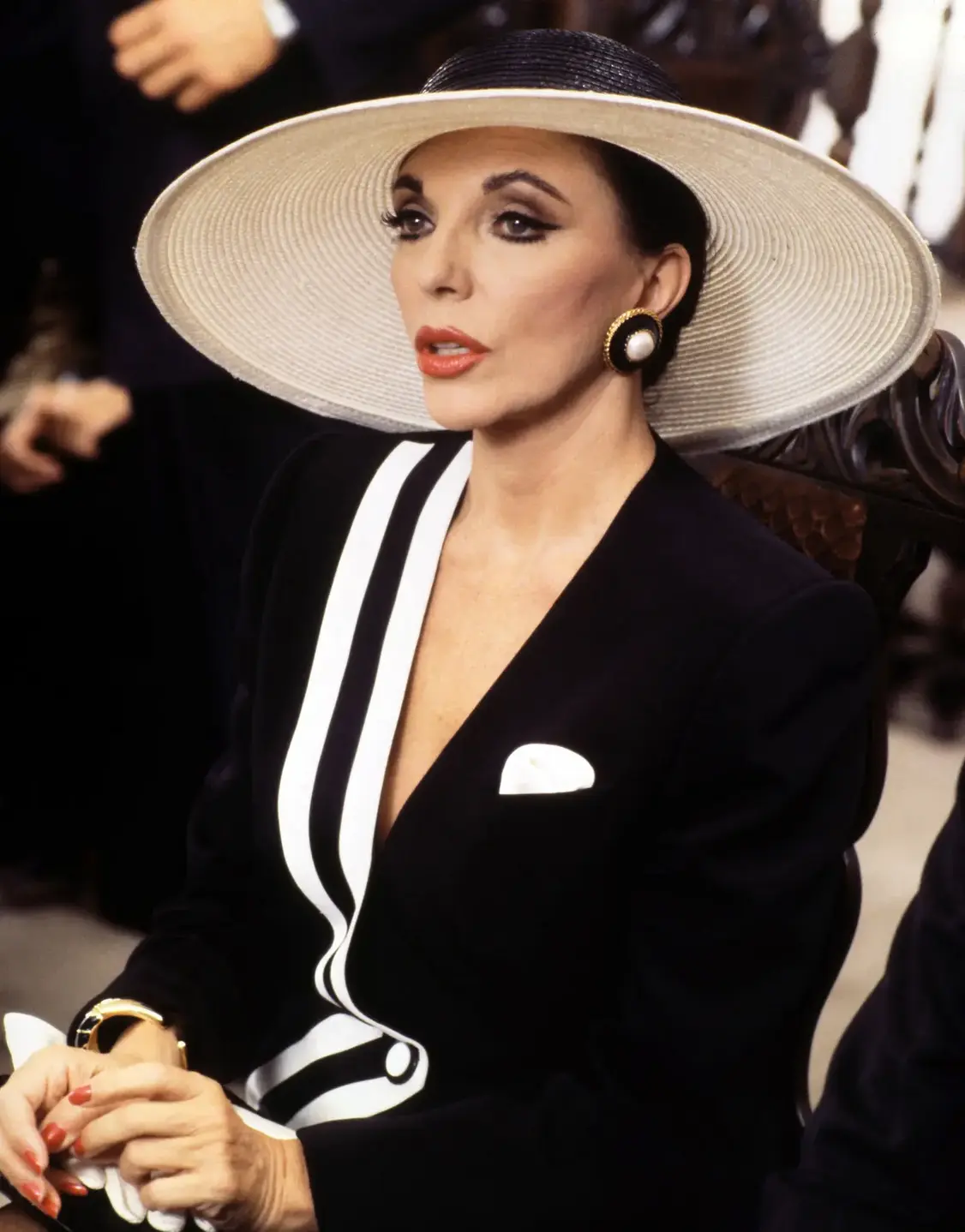
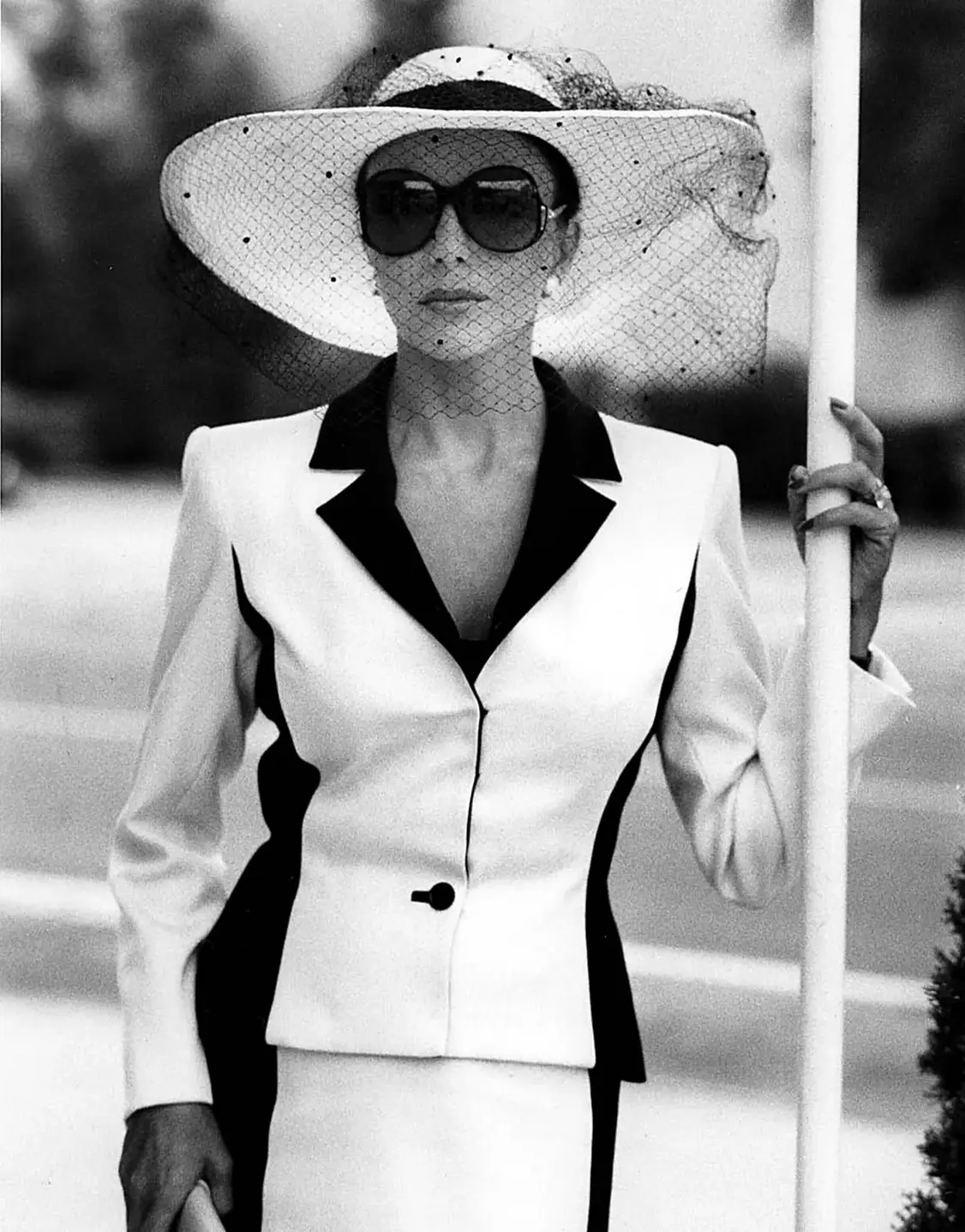
The genius of 1980s power dressing is that it crossed boundaries. It moved between executives and dreamers, between the office and the screen, between real ambition and imagined dominance. It blurred the line between who you were and who you intended to become.
If pop culture amplified the silhouette, designers engineered it.
This is where power dressing becomes fashion history rather than office practicality. Designers turned the suit into architecture, sharp, sculptural, sometimes severe, always intentional. The 1980s power suit could feel like armor not because women wanted to hide, but because they wanted to endure and conquer. It was clothing designed for women who had to be unstoppable.
And yet, it was not sexless. It wasn’t about disappearing into neutrality. The most potent power suits of the era understood that femininity could be part of power, not a weakness to be concealed. The suit could be cinched, shaped, stylized, dramatic. It could be strict and seductive in the same sentence.
Donna Karan’s “Seven Easy Pieces,” introduced in 1985, crystallized the idea that women needed wardrobes built for their real lives, moving between roles, environments, expectations. Her brand history describes the capsule clearly, emphasizing an intuitive understanding of women’s needs and the idea of clothing that carries a woman from day to night, home to office, weekday to weekend. (Donna Karan) The power dressing woman was not dressing for a single moment. She was dressing for a whole day of being underestimated and still winning.
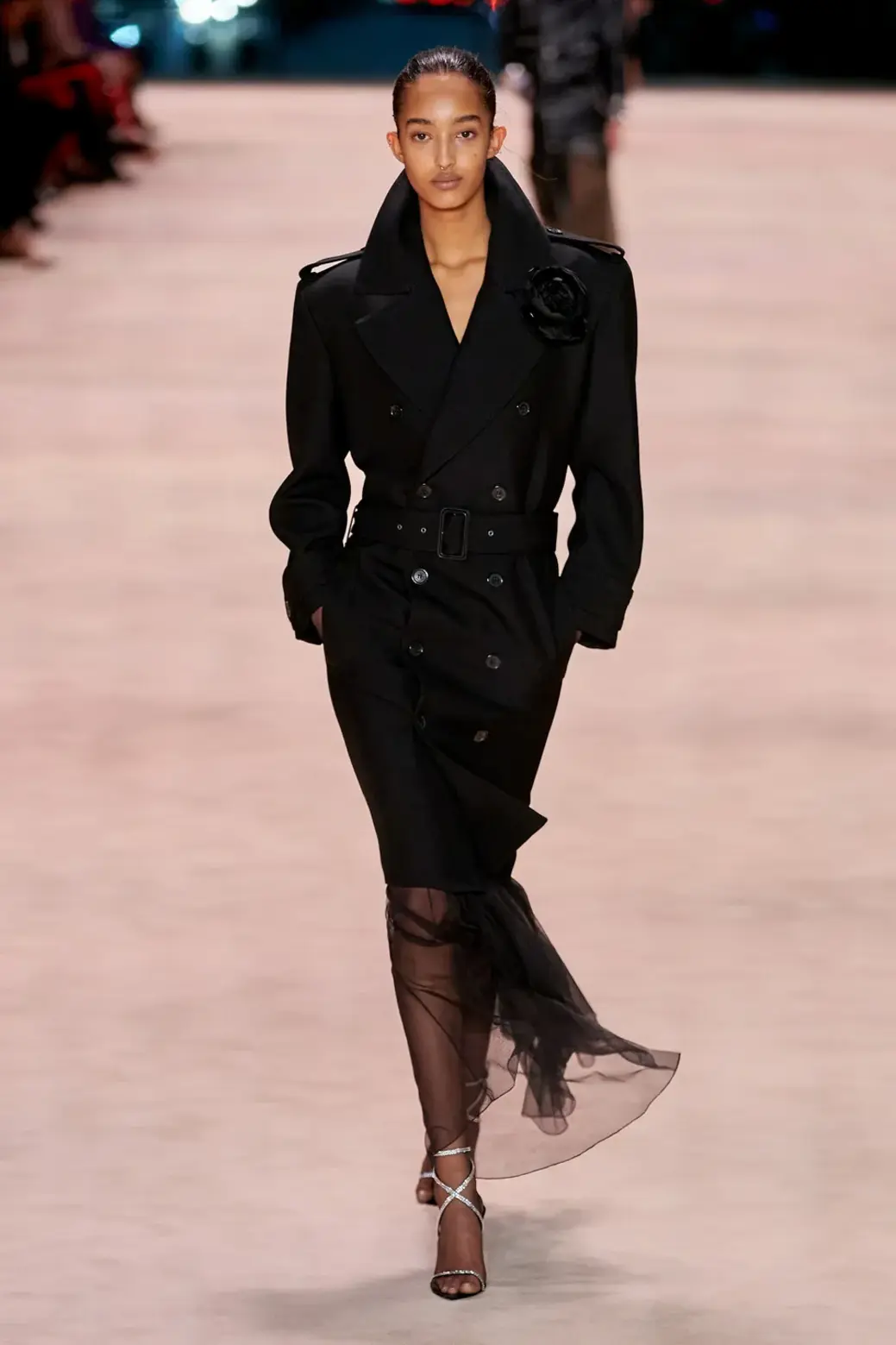
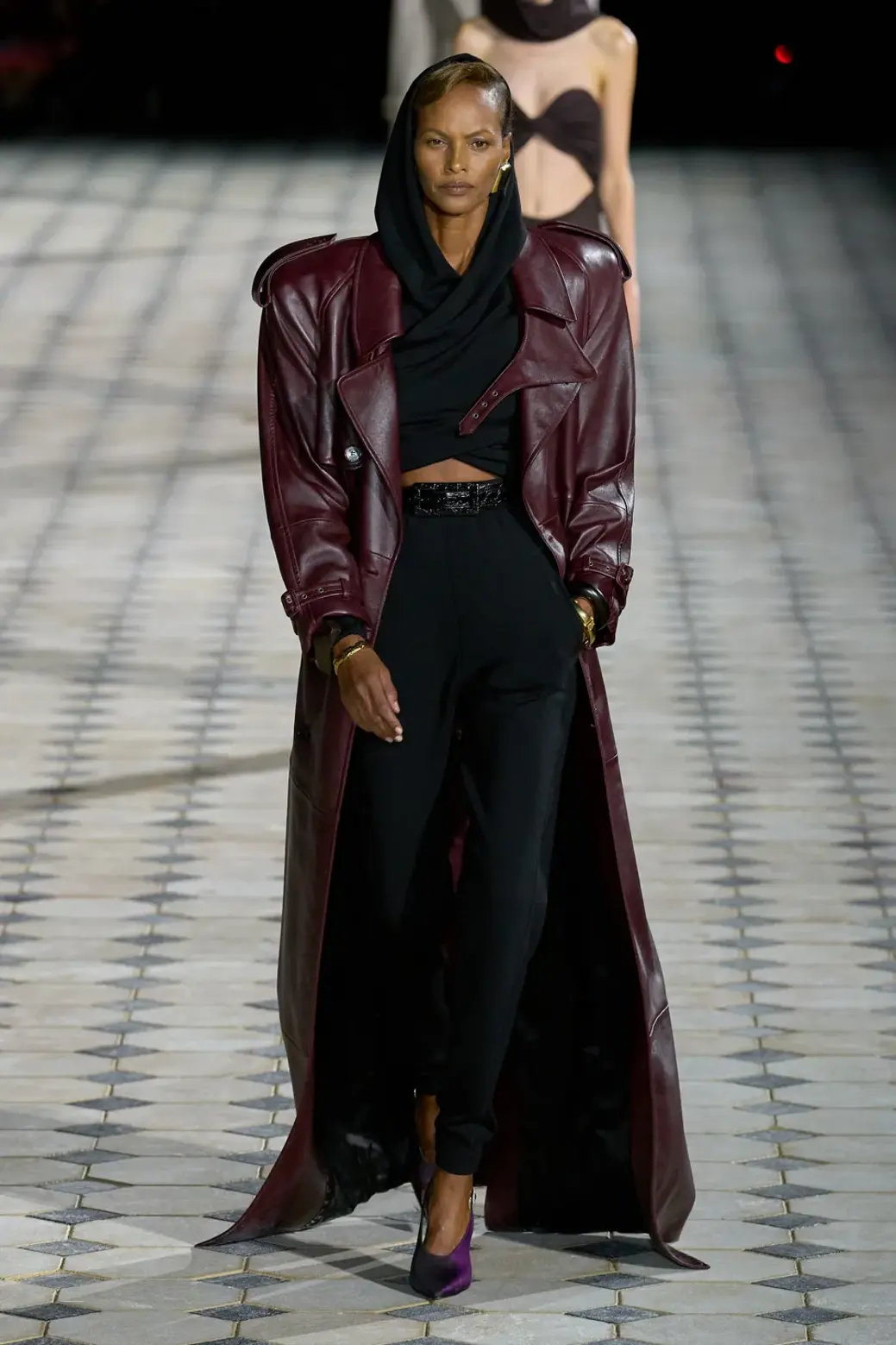
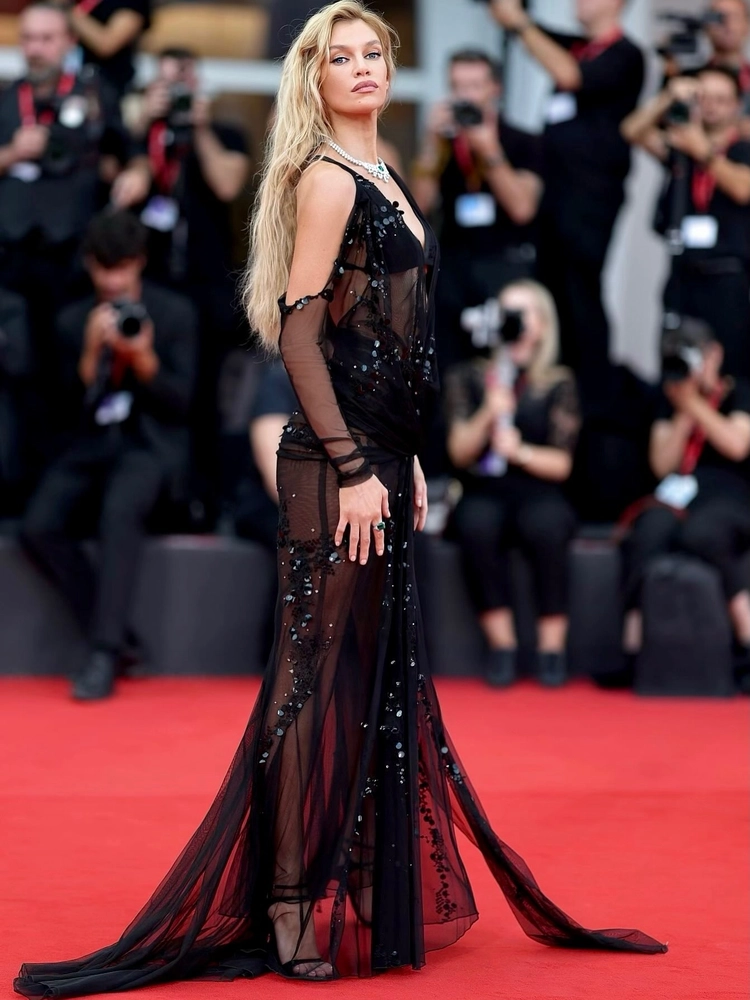
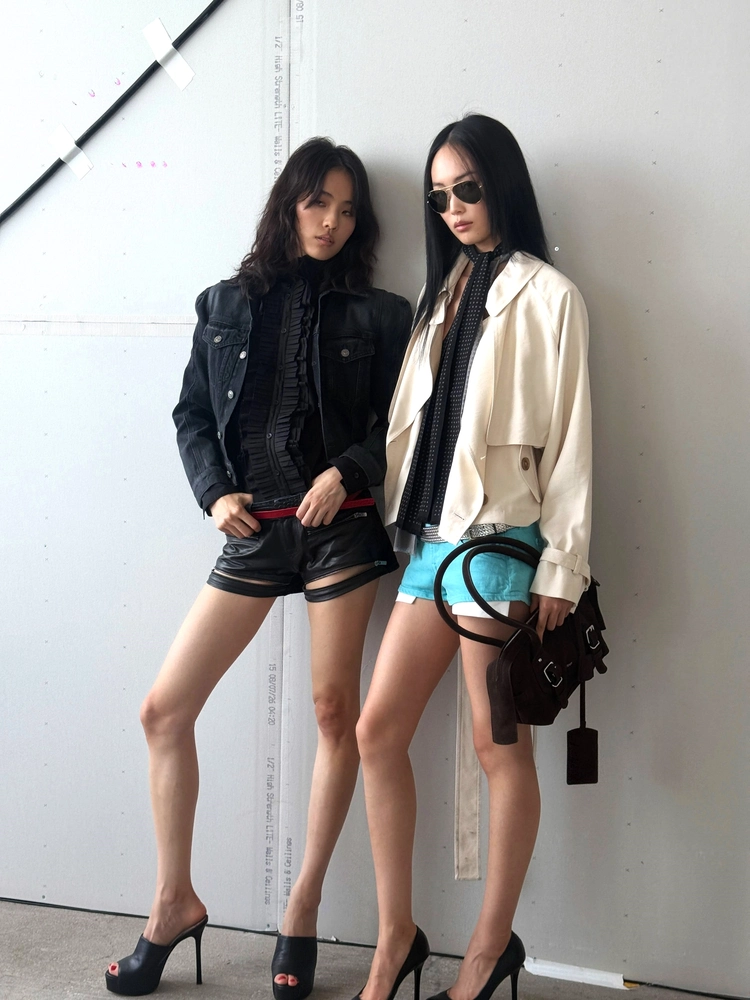
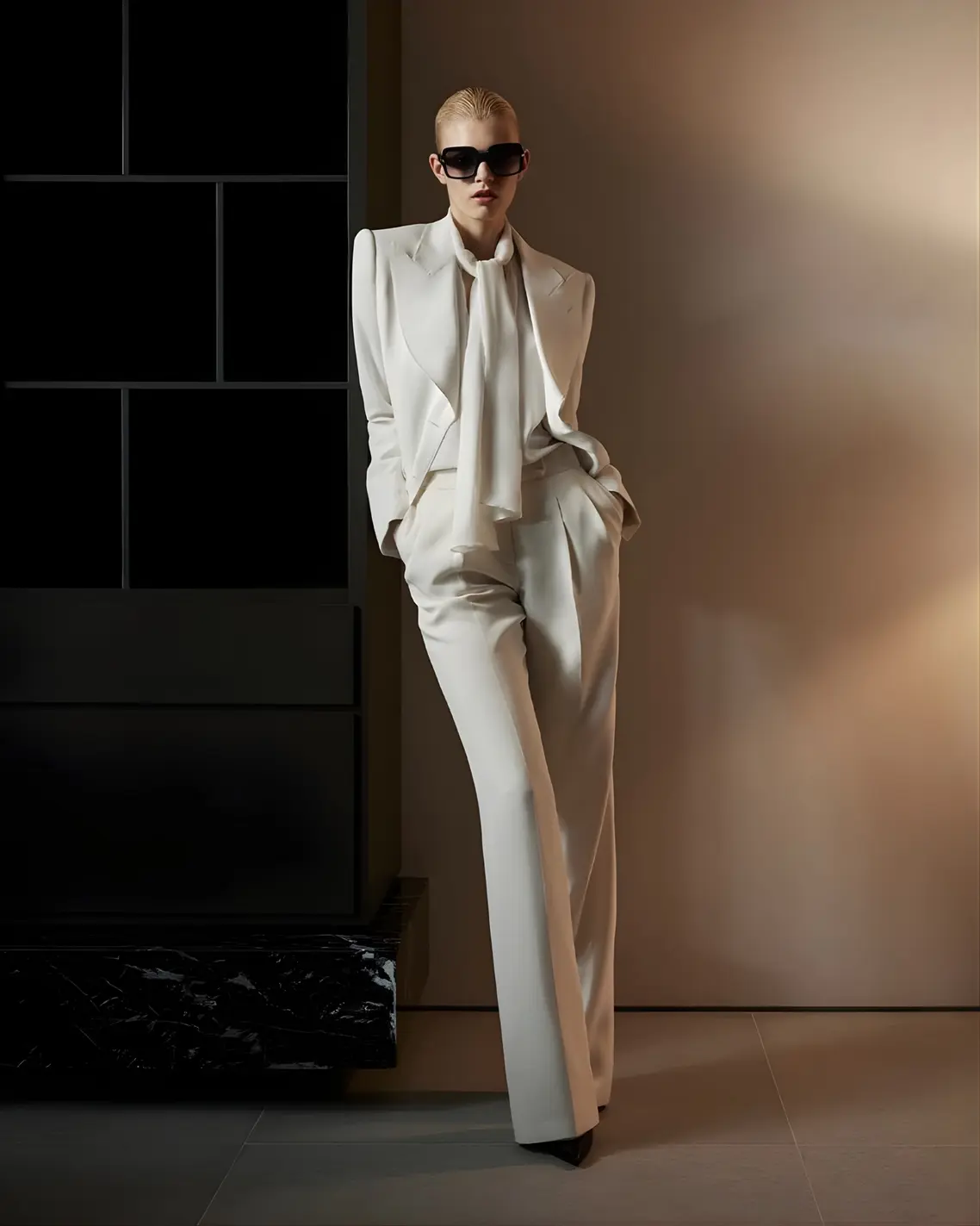
Saint Laurent distills 80s power dressing into pure control: shoulders sharpen, the silhouette turns into authority you can see. Everything stays sleek, nocturnal, and quietly dangerous, power delivered through restraint.
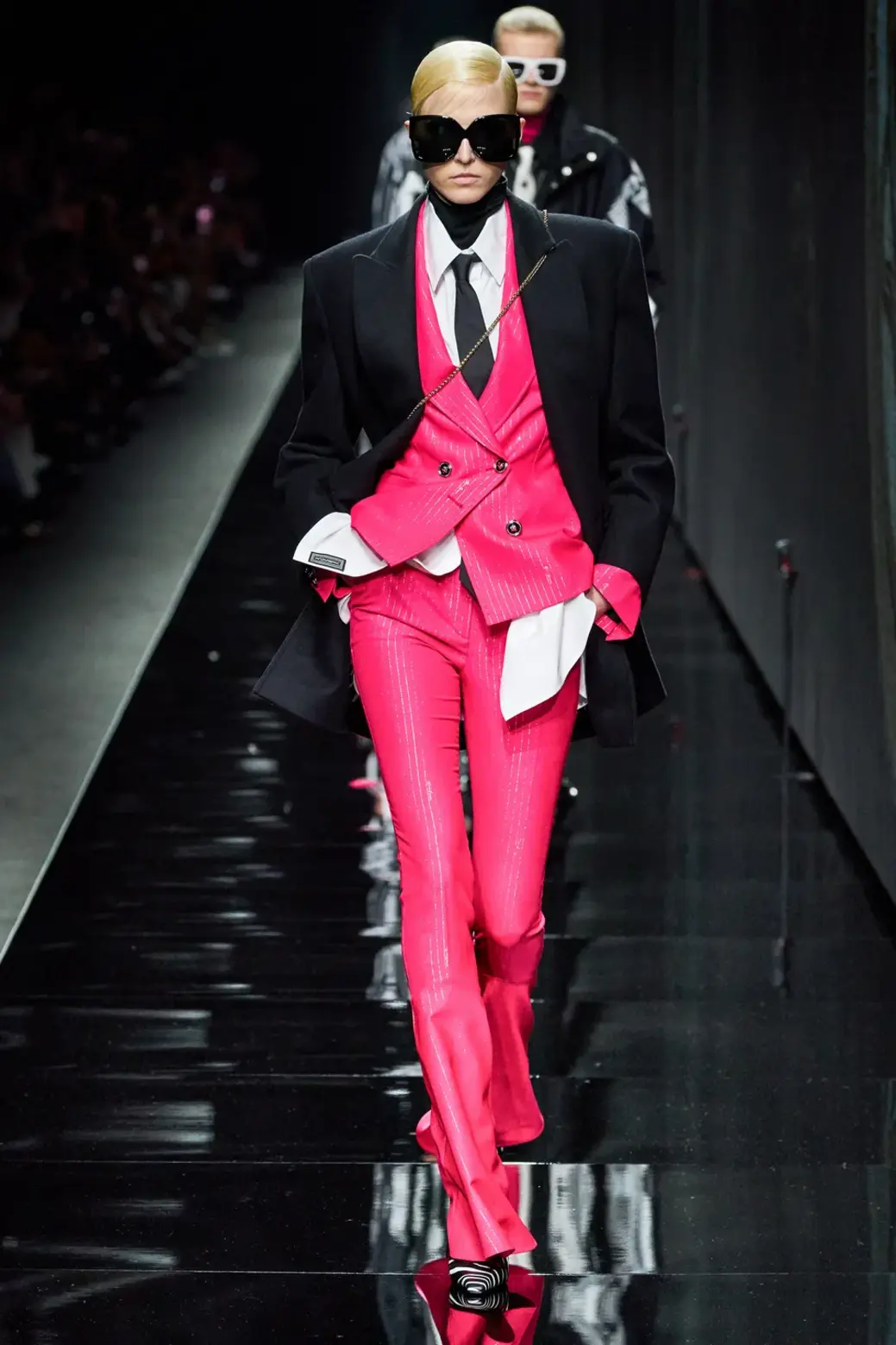
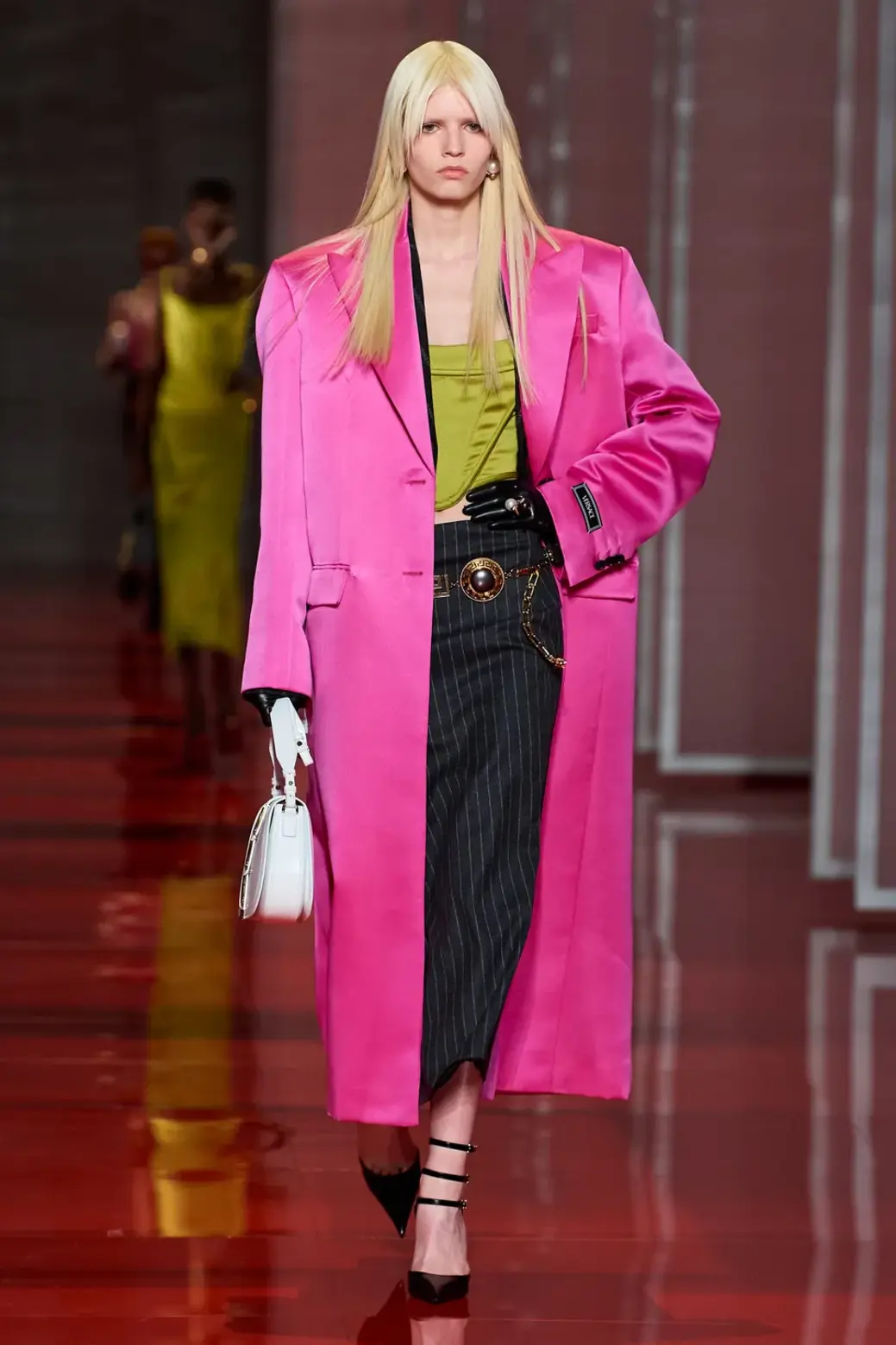
Versace turns the power suit into high-voltage glamour, where structure meets attitude and the room feels smaller. The house signs it with bold confidence and body-aware energy, like victory worn in daylight.
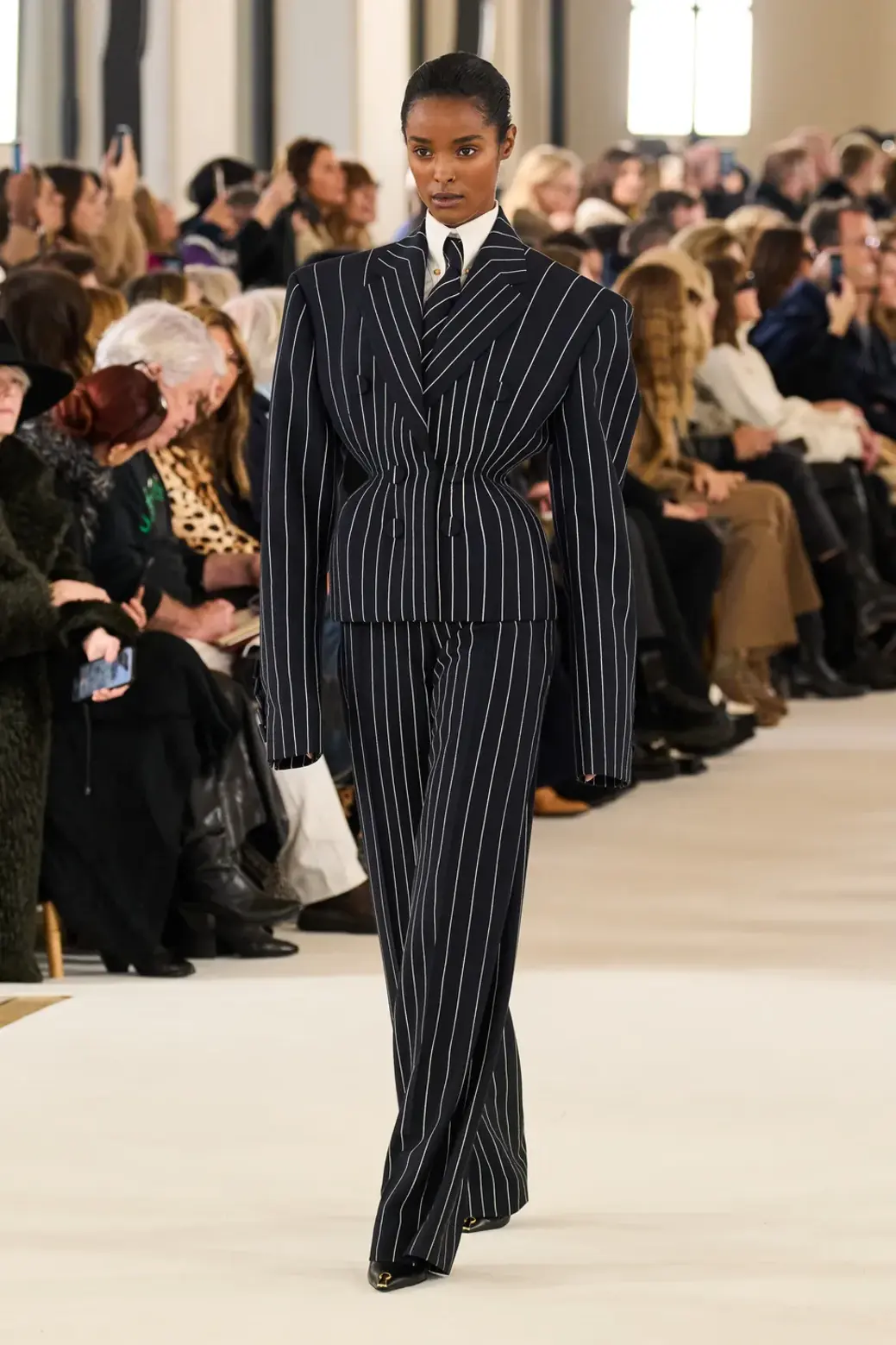
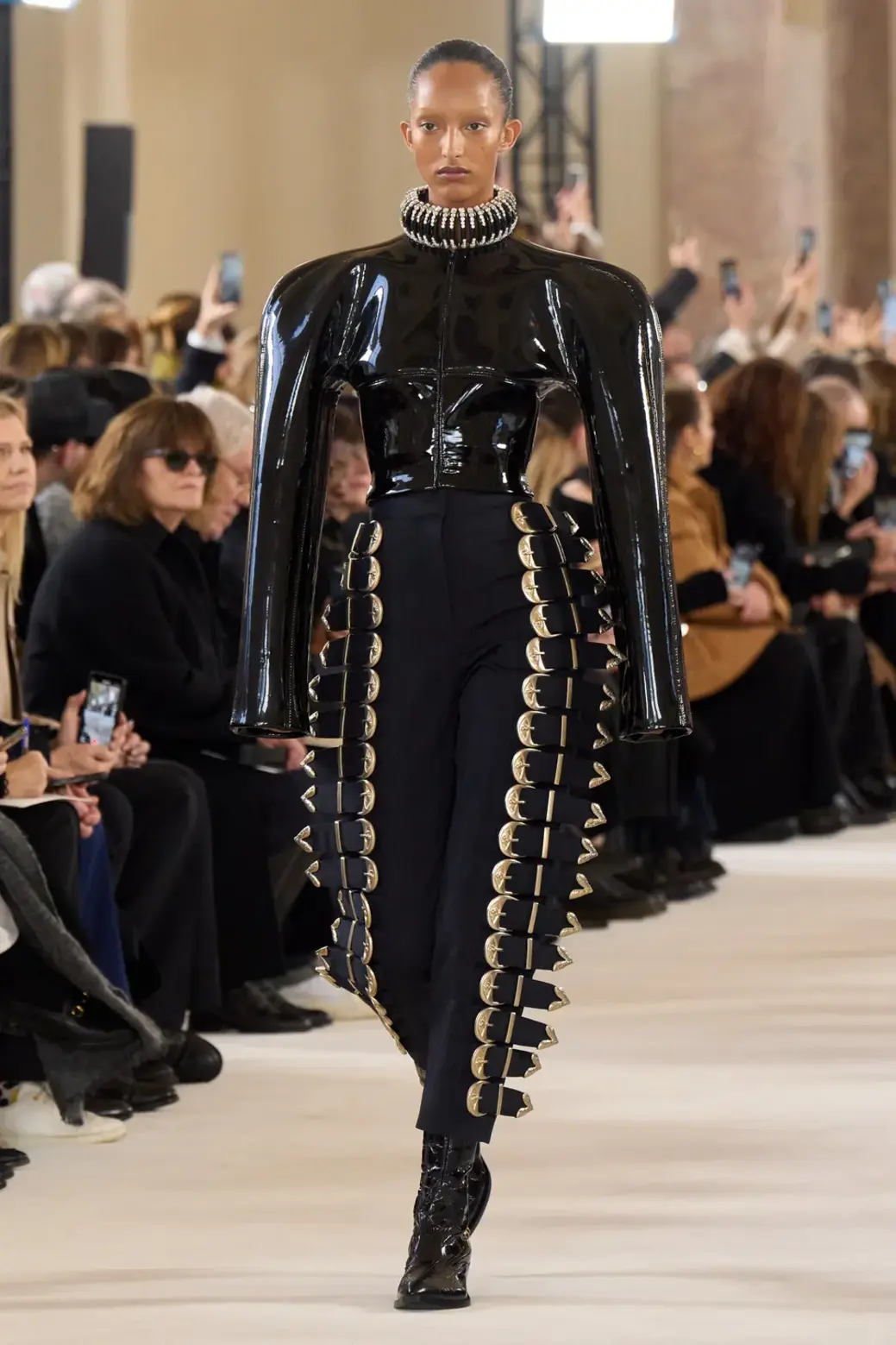
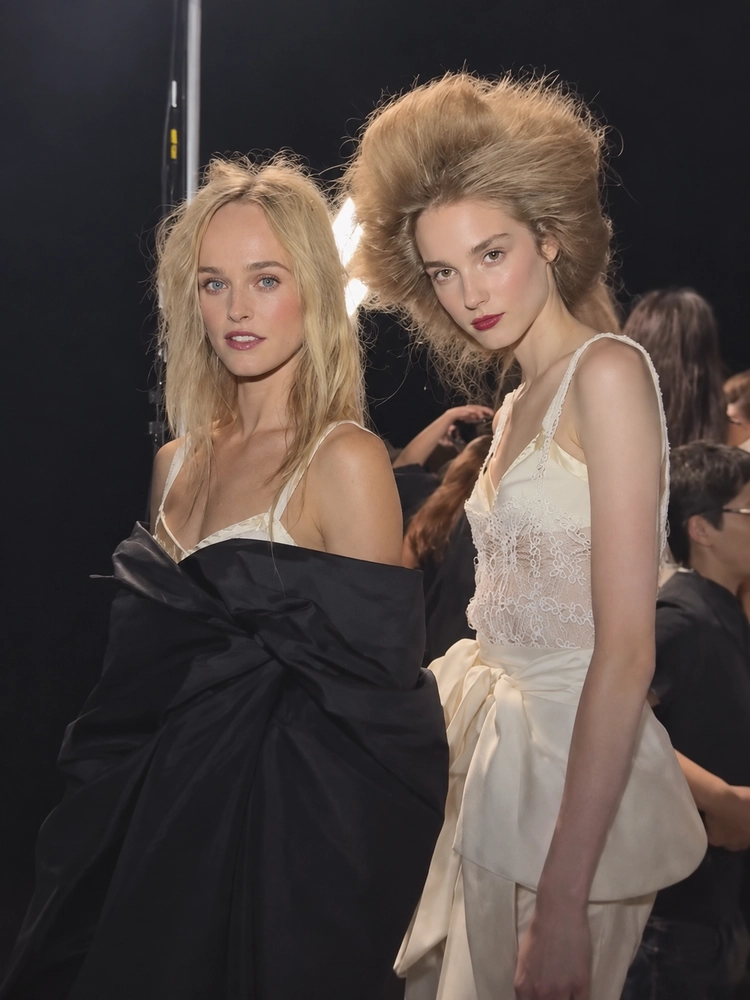
Schiaparelli lifts 80s power dressing into couture theatre, sculpting shoulders until the suit becomes a statement piece. Surrealist details push it beyond corporate and into myth—commanding, extravagant, unforgettable.
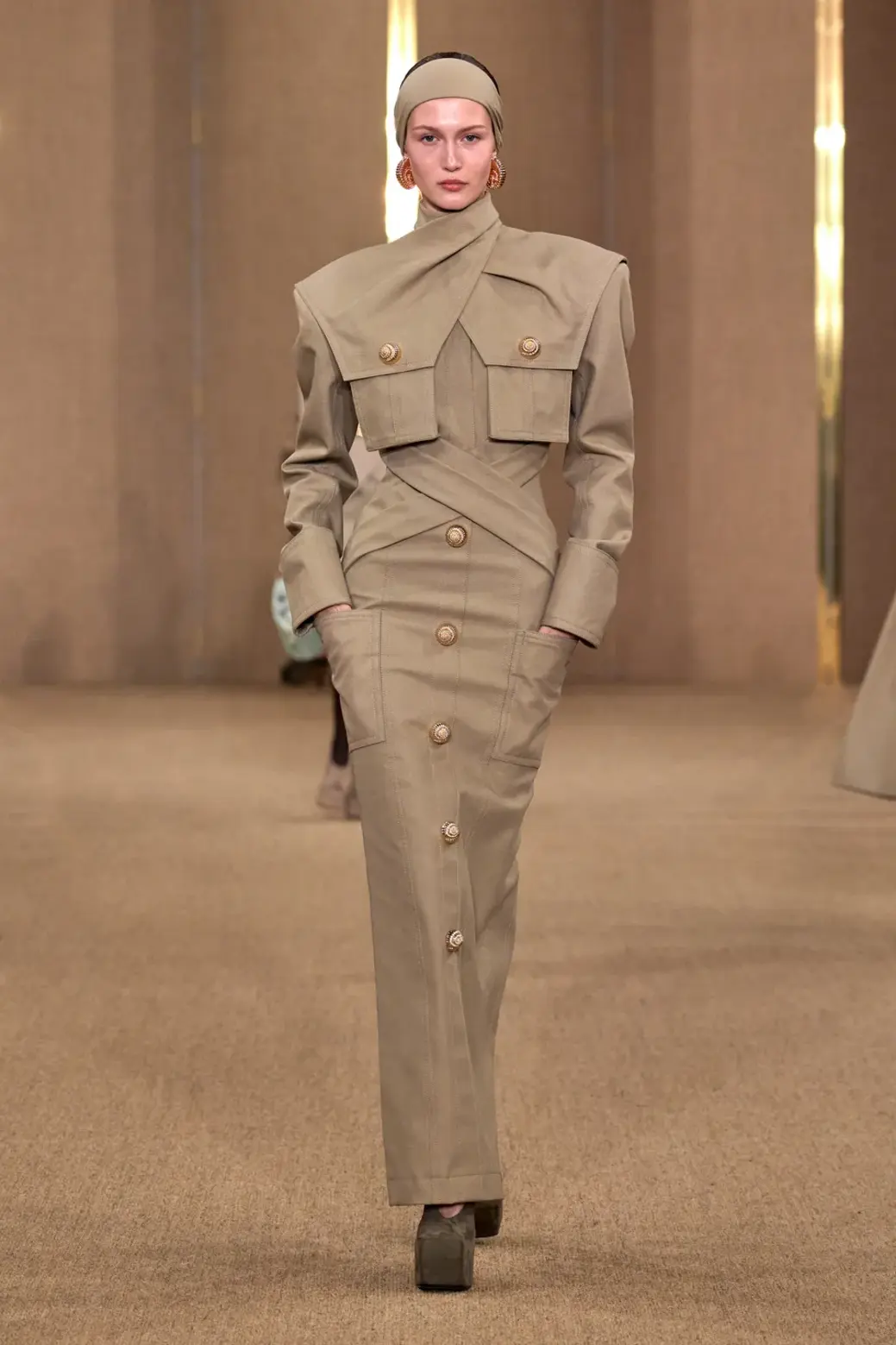
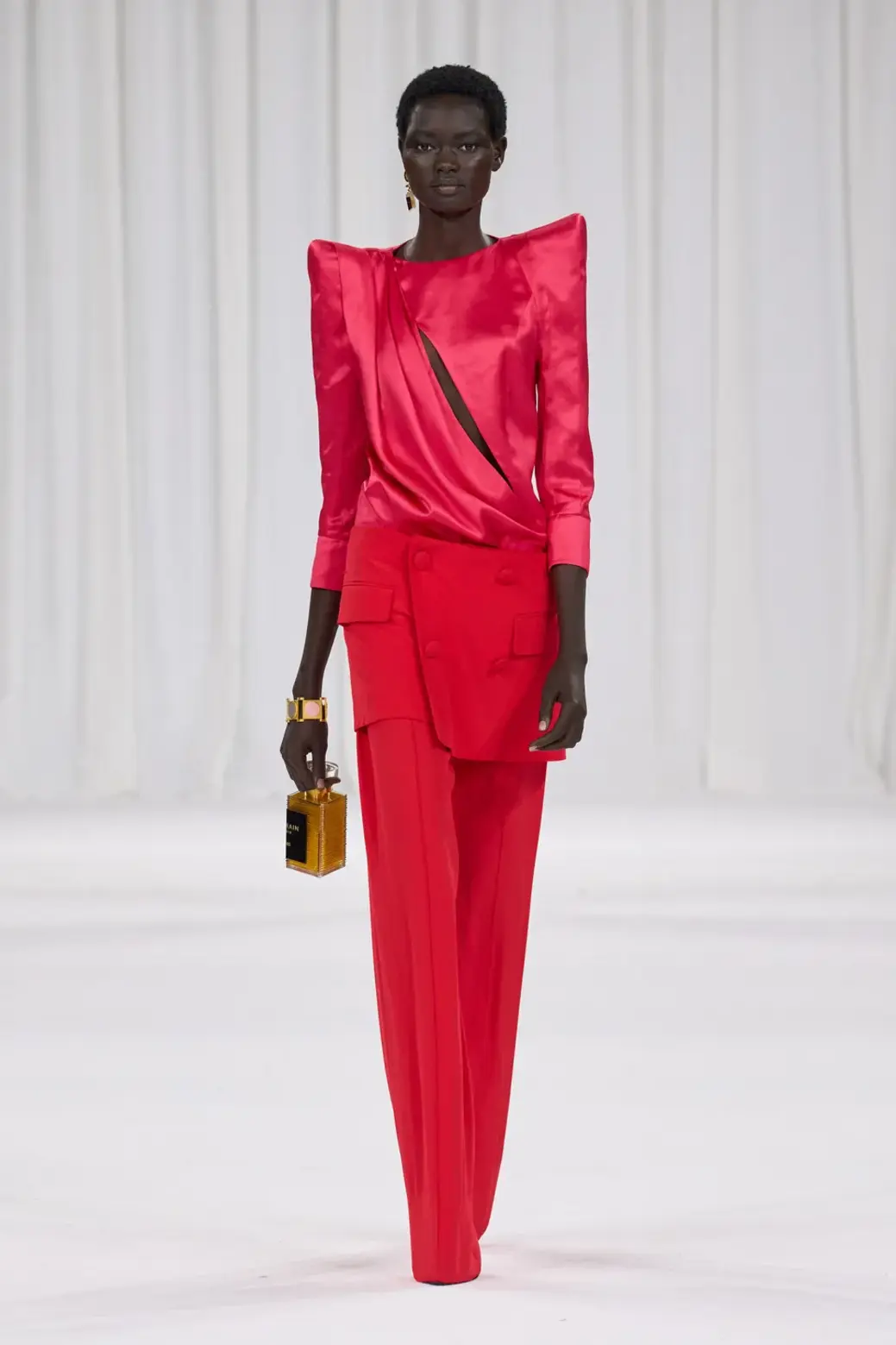
Balmain amplifies the 80s silhouette into a modern uniform of dominance: sharp lines, strong shoulders, a posture built into the cut. It reads like glamour engineered as armor for women who enter to win.
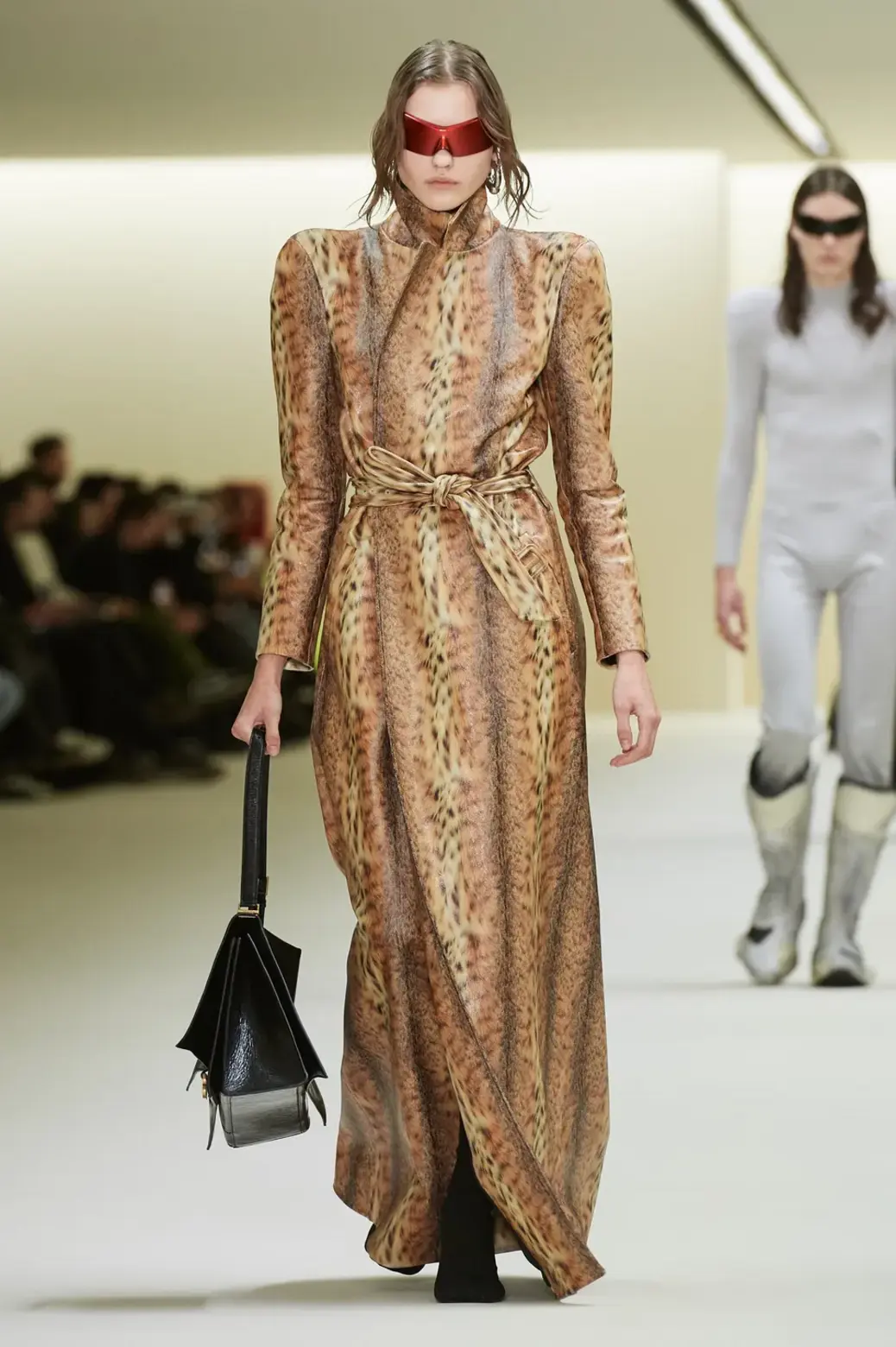
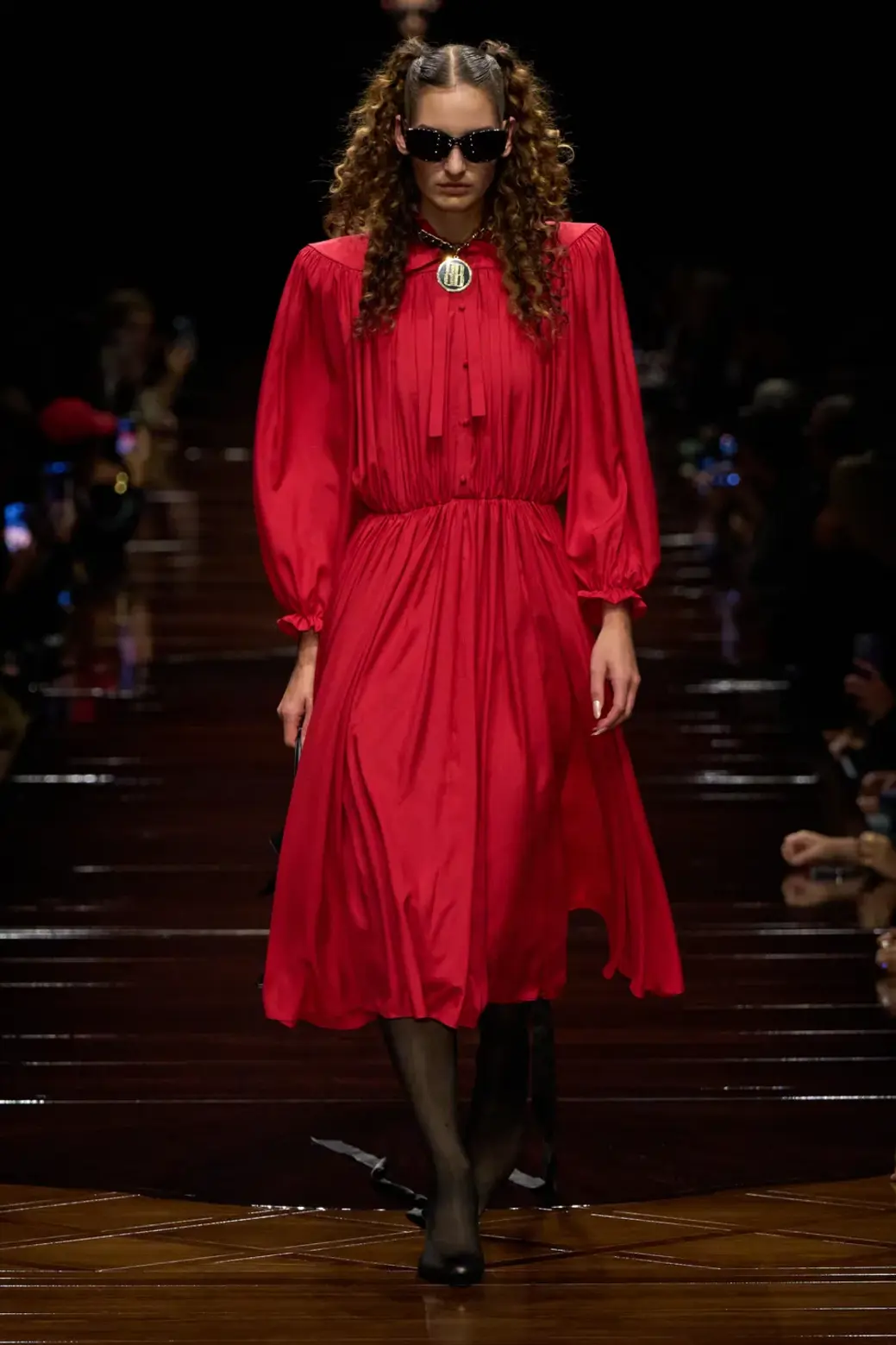
Balenciaga uses power dressing to comment on systems, office codes, hierarchy, the performance of authority. The suit grows exaggerated and confrontational, turning corporate language into a fashion manifesto.
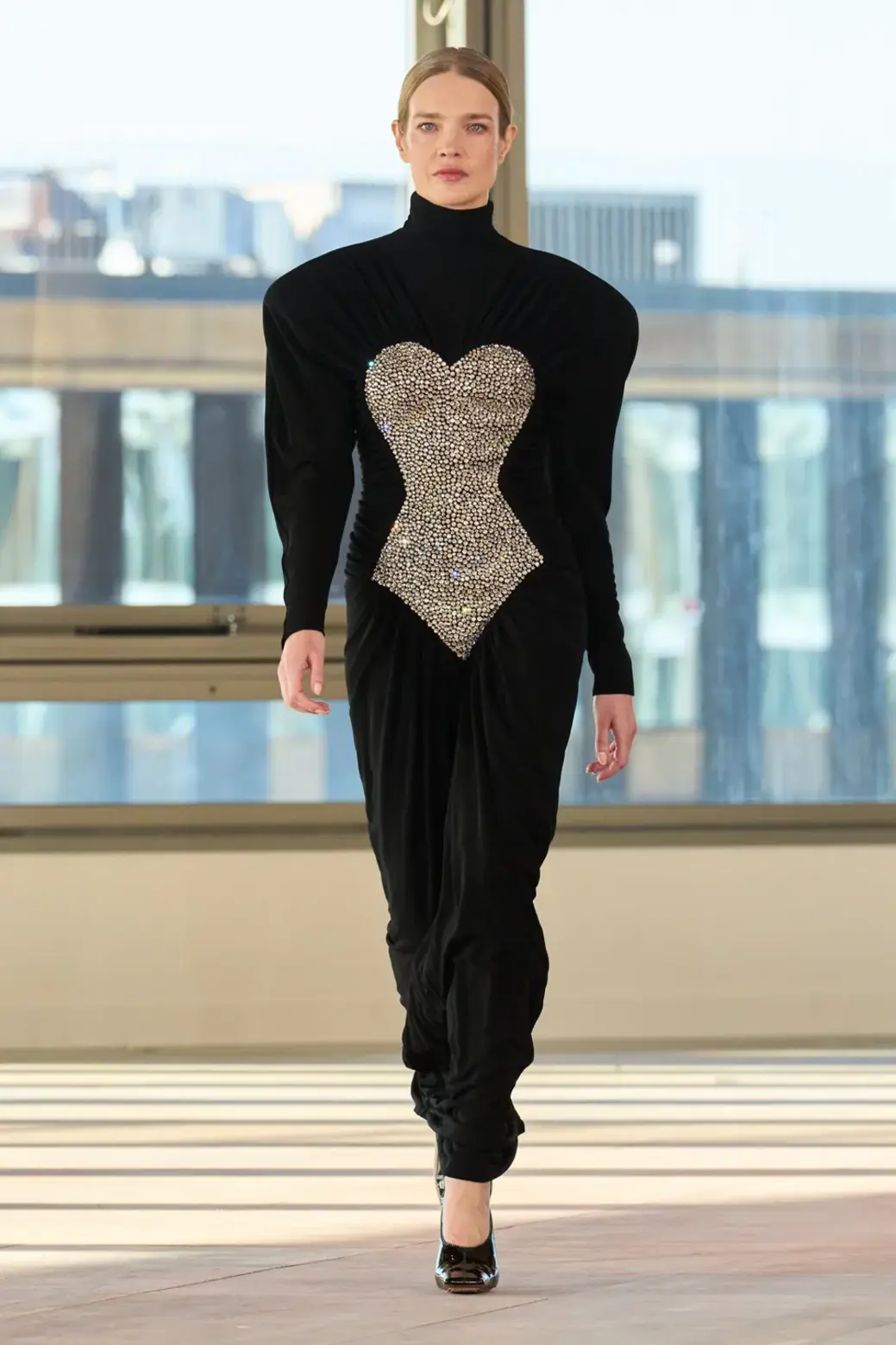
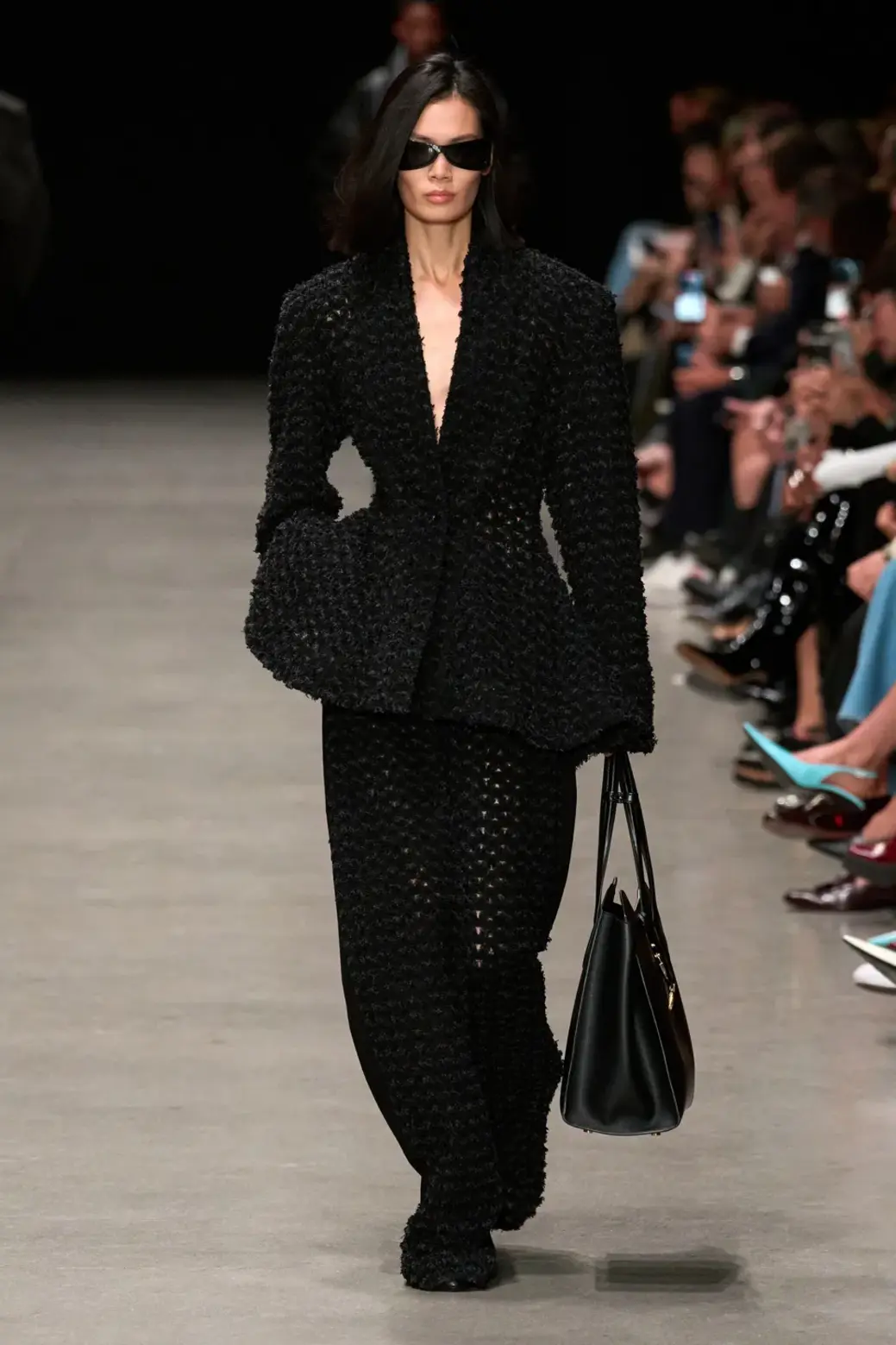
Stella McCartney frames power dressing as modern capability: shoulders that signal strength, tailoring that moves with a life in motion. The effect feels purposeful and wearable, ambition made clean and contemporary.
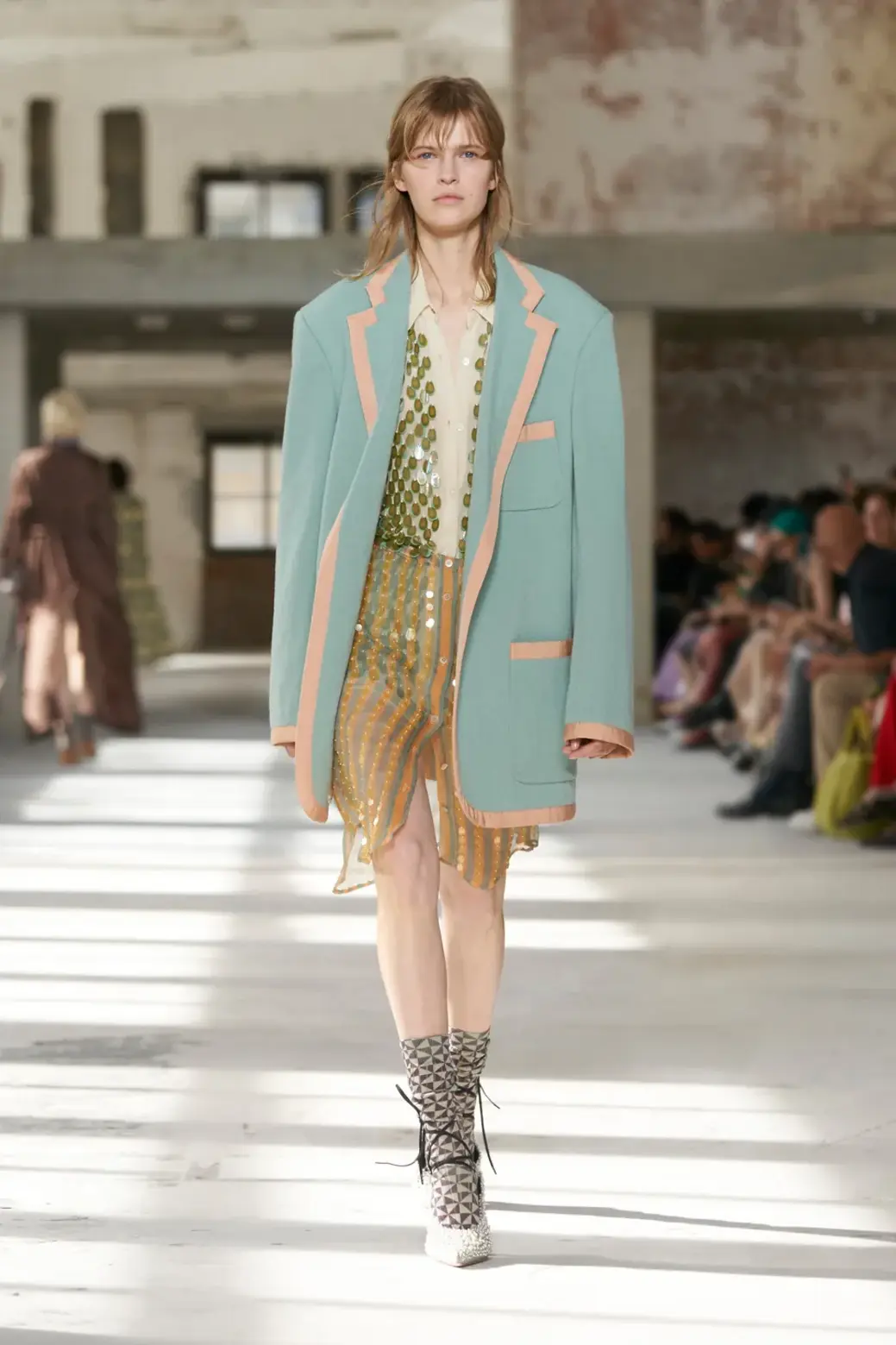
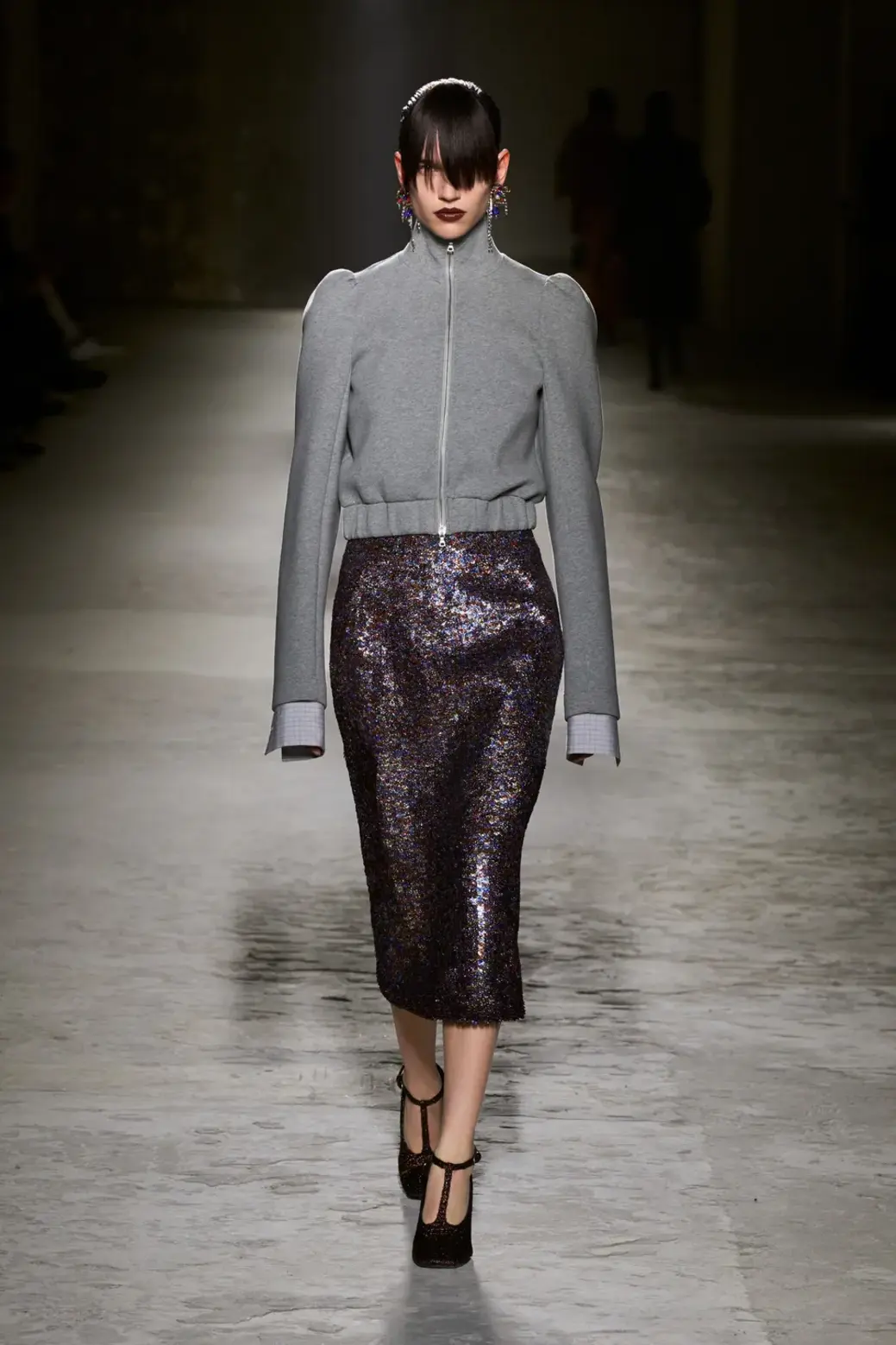
Dries Van Noten approaches power dressing through proportion and artistry, letting tailoring speak while texture and color add emotion. It’s presence with culture, command that feels expressive rather than severe.
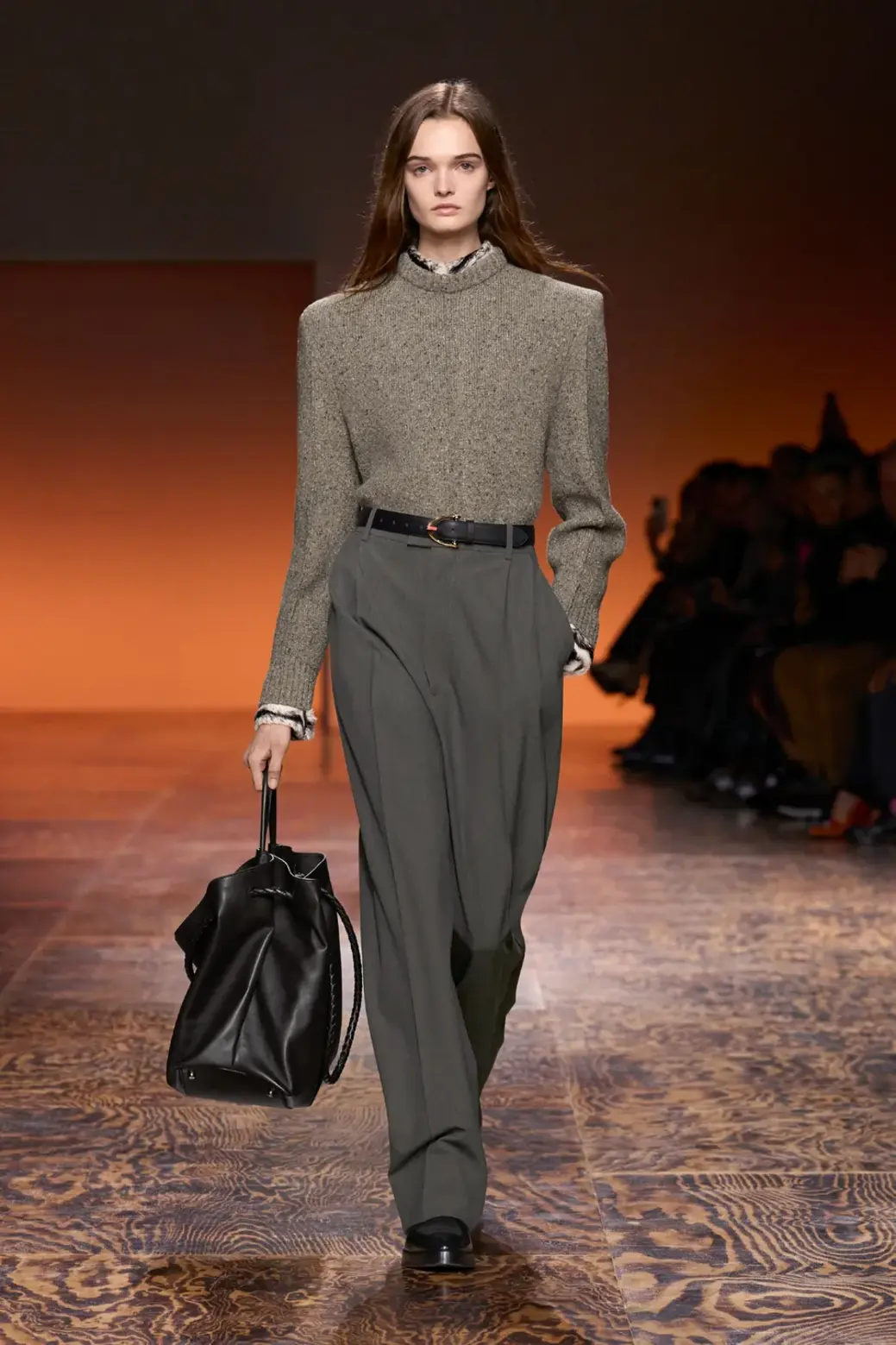
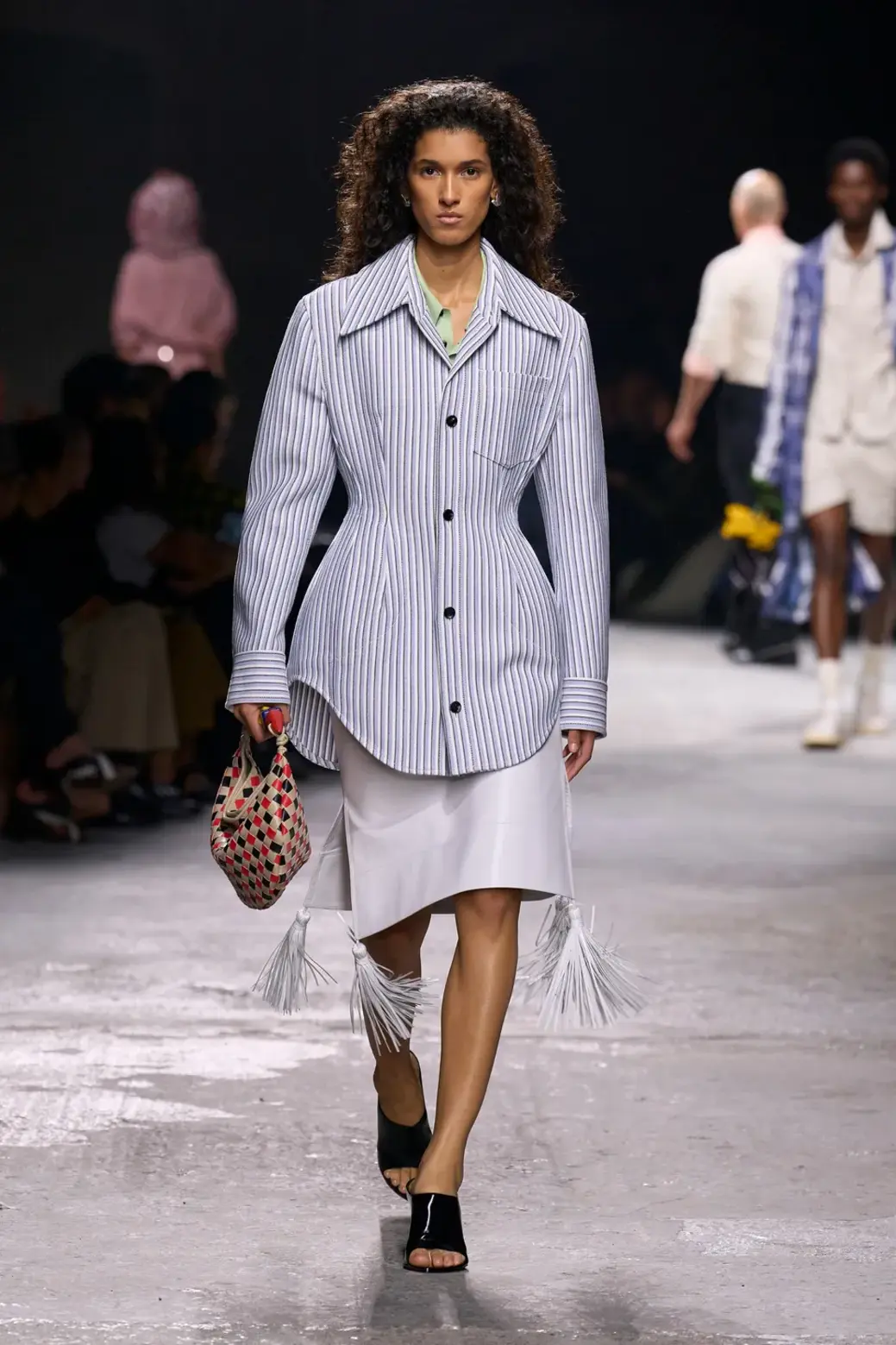
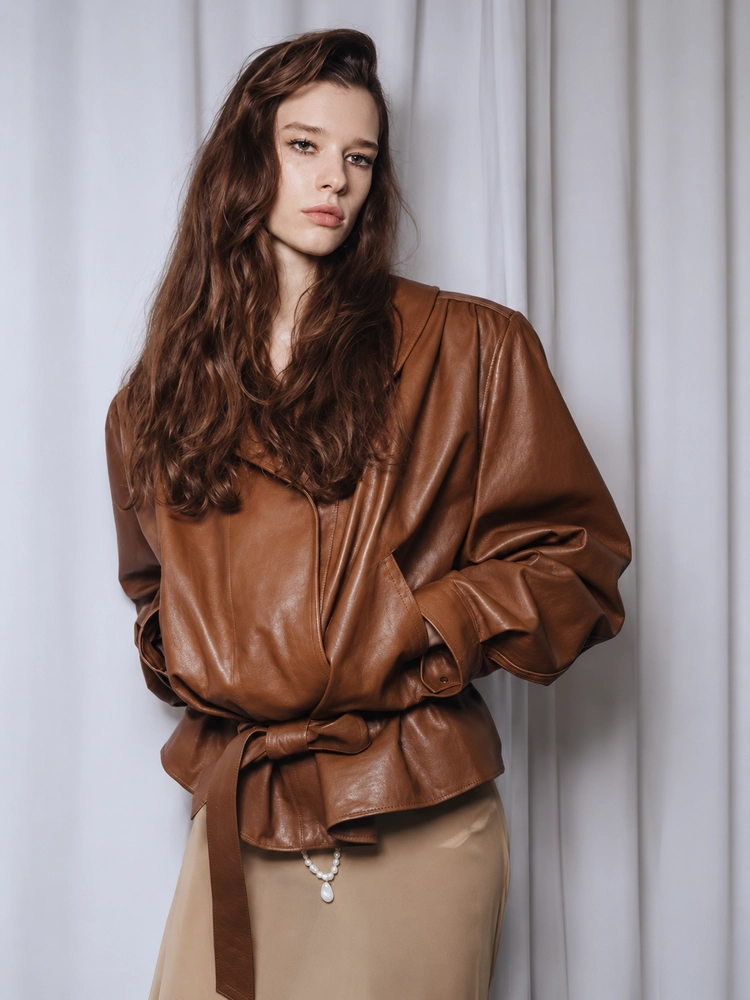
Bottega Veneta modernizes 80s power dressing with precision: refined shoulders, pure lines, confidence without noise. The result feels tactile, understated, and deeply assured.
Power dressing was not about blending in. It was about arriving.
Picture her again, stepping into the boardroom. The men are already seated. They’ve been talking in that low, casual register that assumes the room belongs to them. They don’t stop when she enters. They don’t need to. This is how the world has trained them: the default is male.
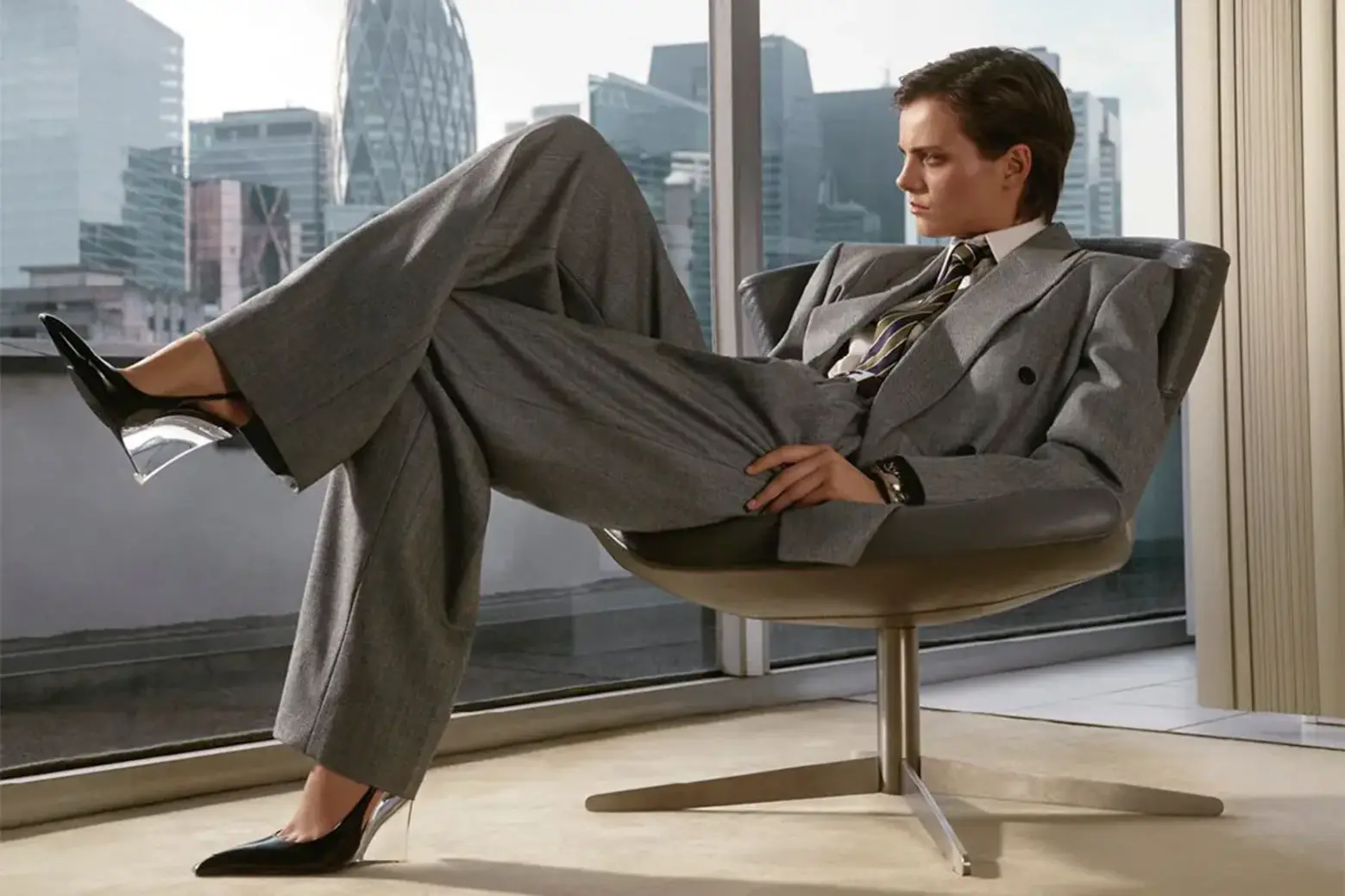
But she has learned something sharper: you do not wait for silence. You do not wait for invitation. You take the floor the way you take a breath, because it is necessary.
She sits. She opens her notebook. She doesn’t soften her voice to be liked. She doesn’t sharpen it to imitate anyone. She speaks as herself—intellectual, precise, hungry for the position she knows she deserves. The suit does not give her competence. The suit makes her competence legible to people who would otherwise pretend not to see it.
This is what 1980s power dressing represented: women taking space in rooms that did not plan for them.
Not behind men. Not as supporting characters. Not as ornaments. Beside them, sometimes above them, because a woman can lead with the same authority, and sometimes with more.
The corporate world becomes her playground, not because it is kind, but because she refuses to be intimidated. She does not power dress to be granted power. She power dresses because she has already claimed it internally, and she is done pretending otherwise.
The 1980s power dressing woman is often misunderstood as aggressive, as hard, as cold. But look closer and you’ll see the real emotion underneath: devotion. Devotion to her future. Devotion to her self-respect. Devotion to the life she intends to build.
Her suit is not a mask. It’s a promise.
And because it is a promise, it has a particular kind of beauty, one that doesn’t beg to be adored, but is still undeniably desirable. A woman who owns her space is always desirable. Not because she performs softness, but because she performs certainty. She is glamorous because she is not asking permission to exist loudly.
That is the spirit of power dressing.
Fierce. Fearless. Controlled. Unapologetic.
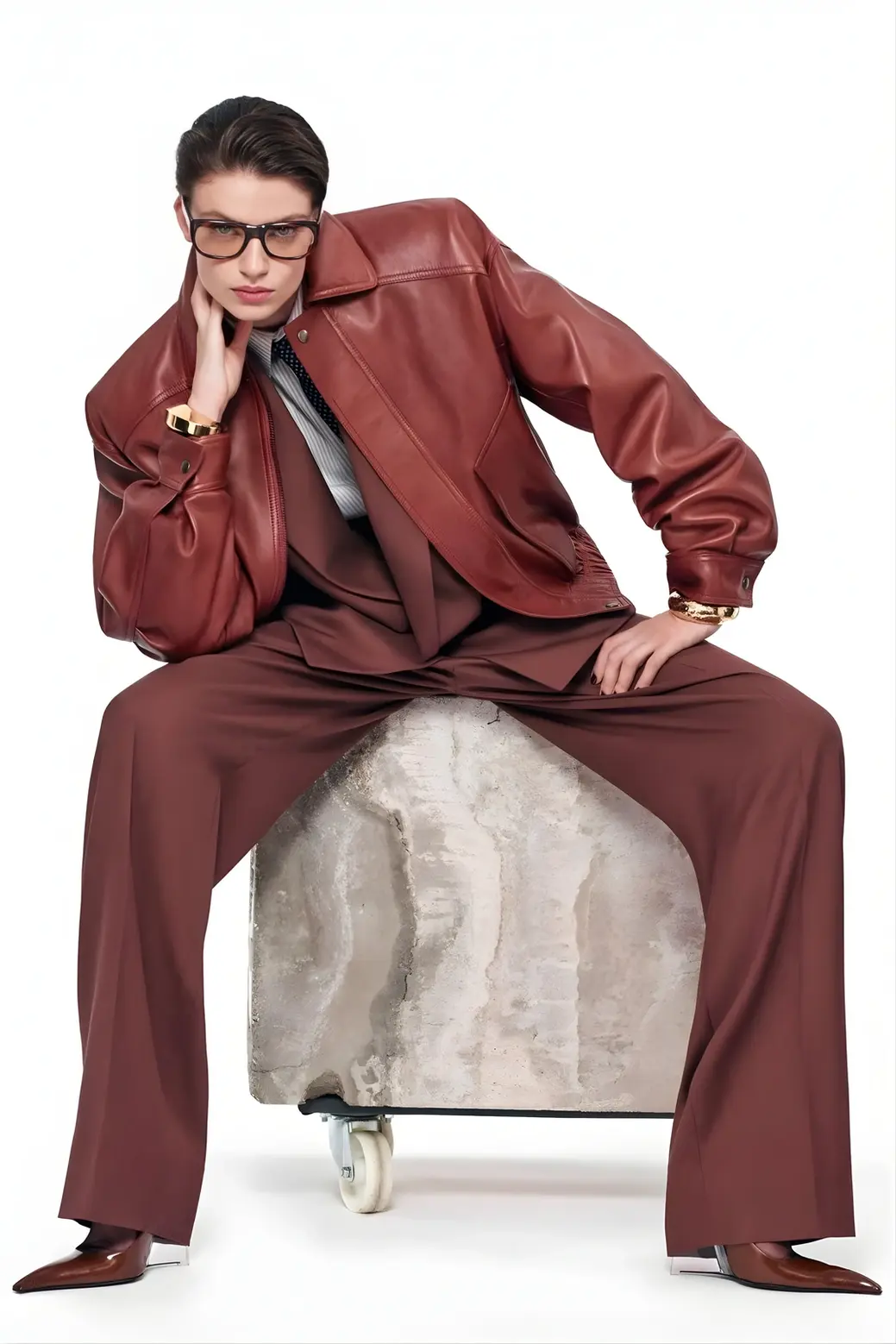
Power dressing, at its most intelligent, is philosophy you can wear.
It begins with a reality: the world reads bodies. It assigns meaning before asking questions. In professional spaces, this reading can be brutal. A woman might be seen as “too young,” “too pretty,” “too emotional,” “too intimidating,” “too ambitious,” “too much.” The point is not the accuracy of these judgments. The point is their inevitability.
Power dressing responds to inevitability with intention.
It is not imitation of male authority. It is the redesign of authority.
Architecture does not apologize for existing. It has edges. It has scale. It occupies space without asking whether it is welcome.
That is what the 1980s suit does. It turns the body into architecture: shoulders as beams, lapels as clean lines, structure as a refusal to collapse under pressure. The suit says: I am not here to be agreeable. I am here to be effective.
And yet it does not erase femininity. It clarifies it. It reframes it as strength.
Armor is not only for war. Armor is also for endurance.
A woman can be brilliant and still be questioned. She can be competent and still be doubted. She can be right and still be interrupted. Armor does not mean she is weak. Armor means she is aware.
The power suit is a form of armor that remains beautiful. It is protection designed as elegance. It is the ability to walk through a hostile room without shrinking.
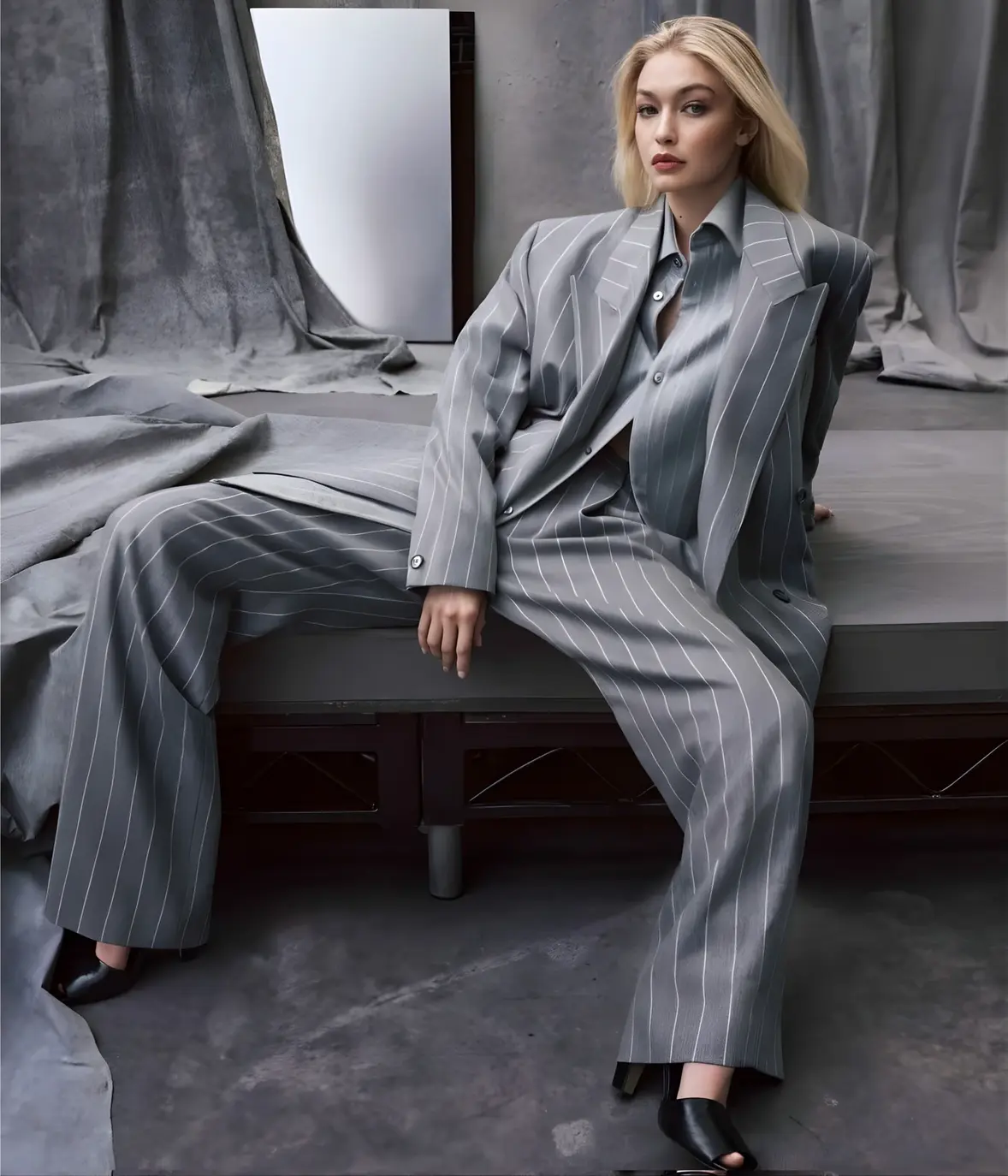
The most dangerous thing about power is that people project fantasies onto it. They decide who deserves it. They decide who looks like it.
Power dressing is a woman taking control of that narrative. If the room insists on reading her, she gives it a text that favors her. Not because she is dishonest, but because she understands the politics of perception.
This is why the suit becomes iconic: it is the meeting point of selfhood and society. It is a woman declaring, visually, that she will not be reduced.
And perhaps the most important philosophical point is the one you asked me to hold firmly:
She power dresses like a woman, because a woman is strong too.
The suit does not have to masculinize to empower. It can sharpen femininity into authority. It can make glamour feel intelligent. It can make desire feel commanding. It can turn “woman” into the thing the room has to respect.
If the 1980s boardroom was one theatre of power dressing, then the Met Gala is another, arguably the most visible runway of cultural symbolism in modern fashion. And in 2025, the Met didn’t just flirt with tailoring. It centered it.
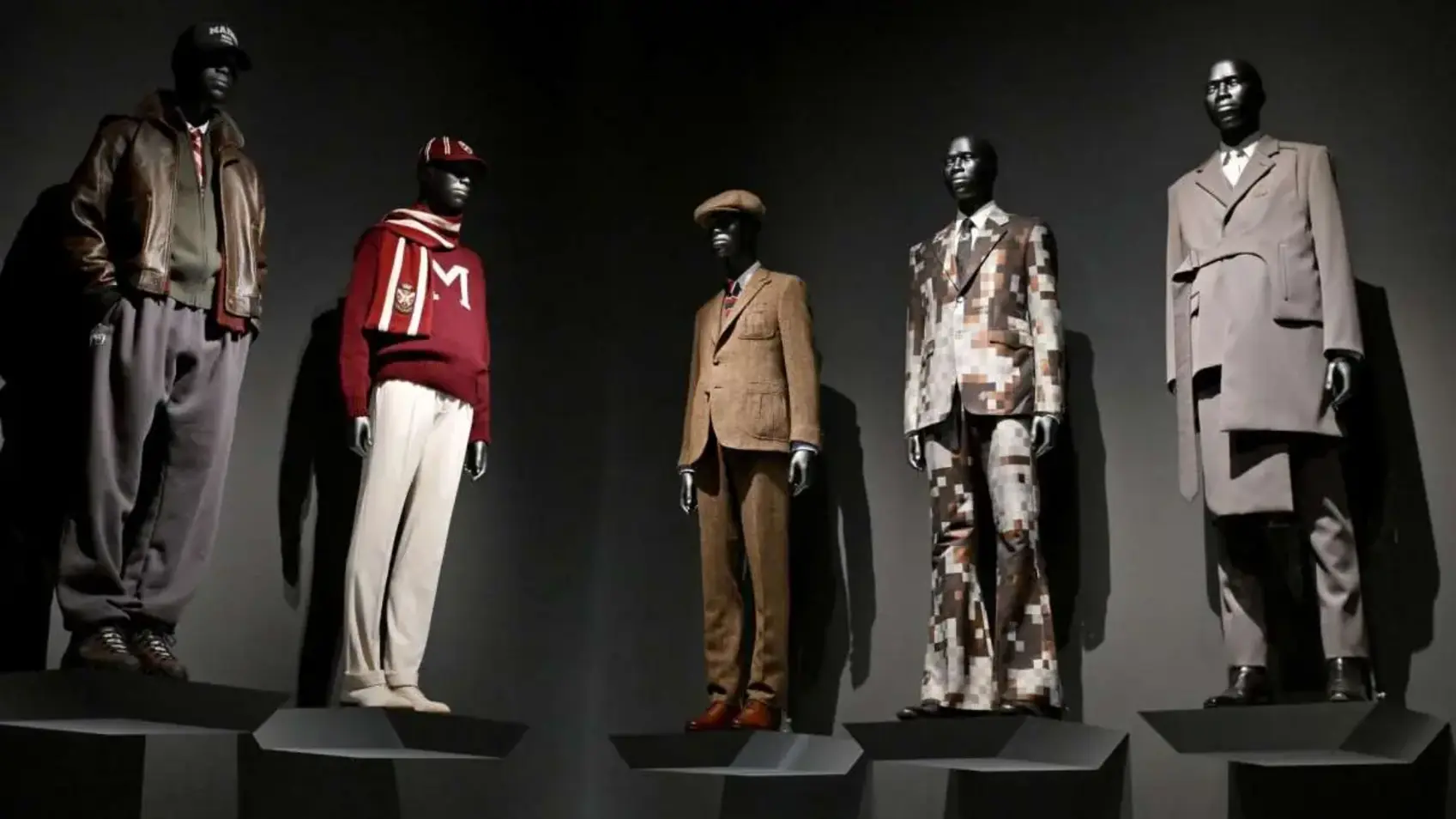
The Costume Institute’s Spring 2025 exhibition, “Superfine: Tailoring Black Style,” examined Black style over three centuries through the concept of dandyism, exploring how dress can shape identity, critique power, and imagine new possibilities. Vogue described the exhibition’s focus and noted its inspiration from Monica L. Miller’s book Slaves to Fashion: Black Dandyism and the Styling of Black Diasporic Identity.
And the dress code for the 2025 Met Gala, “Tailored for You”, made the point personal. Not “tailored for the rules.” Not “tailored for tradition.” Tailored for you.
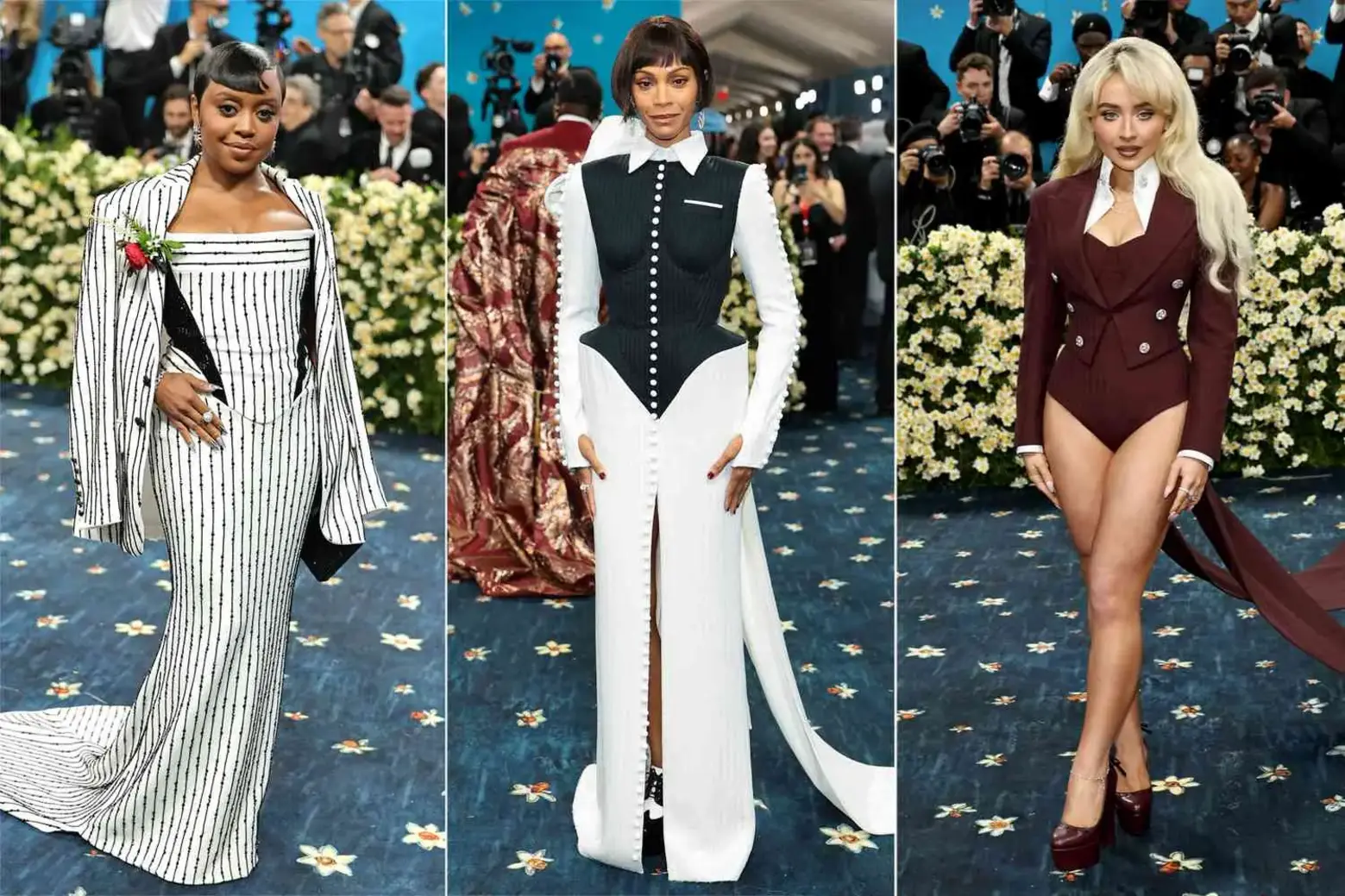
This is where the conversation about power dressing becomes richer than nostalgia.
Because tailoring is not only corporate. Tailoring is cultural. Tailoring is identity. Tailoring is the art of deciding how you will be seen, and refusing to let the world write your outline for you.
The Met’s framing matters because it reminds us that the suit is not just a symbol of office authority. It is a symbol of self-authorship. It has been used, especially within Black style histories the exhibition foregrounds, as personal expression and cultural critique, as a way to transform identity under systems that try to define you from the outside.
So when you look at power dressing through the lens of Met Gala 2025, you see something important:
The power suit is not only about women learning to survive the boardroom.
It’s about people using tailoring to claim dignity, presence, and possibility.
Across global politics, women leaders keep returning to the suit as shorthand for seriousness, discipline, and command, especially inside institutions shaped by masculine codes.
There are still rooms where a woman’s competence is questioned before it’s tested. There are still workplaces where authority feels gendered. There are still moments where ambition in a woman is treated like a personality flaw rather than a professional asset.
So the suit returns, not always with the same shoulder, not always with the same drama, but with the same purpose: to take space.
But the future of power dressing is not a single silhouette. The future is choice.
The next era of power dressing will be defined by how freely women can decide what power looks like on them. Some will choose structure that reads like architecture. Some will choose minimalism that reads like control. Some will choose softness with sharp edges. Some will reject the suit entirely and still embody power, because the ultimate evolution is not the garment, but the freedom to define the garment’s meaning.
Still, when women do return to tailoring, it will not be because they want to become men. It will be because they want to become inevitable.
A woman does not wear a power suit to borrow authority.
She wears it to reveal what was already hers.
Back in the elevator, the doors close. Her reflection stares back at her—calm, composed, almost frightening in its certainty. Above the city, the office hums like a machine built for other people’s dreams. She adjusts her sleeve, not nervously, but deliberately, like a person setting a boundary.
In the meeting, someone will try to talk over her. Someone will underestimate her because it’s easier than admitting she is brilliant. Someone will smile as if leadership is a joke when it comes from her mouth.
She lets them.
And then she speaks anyway.
The power suit doesn’t make her the boss. It simply makes her impossible to pretend she isn’t.
And that, in the end, is what 1980s power dressing truly was: a woman taking up space, visually, intellectually, unapologetically, until the world learned to live with it.
Advertisement