MENU
Close





Beneath the ballerina silhouette's fluttering tulle lies the discipline of desire, the ache of becoming weightless through struggle. It dances between fragility and fire. But what do we truly chase, its grace, or the beautiful suffering that keeps it suspended?
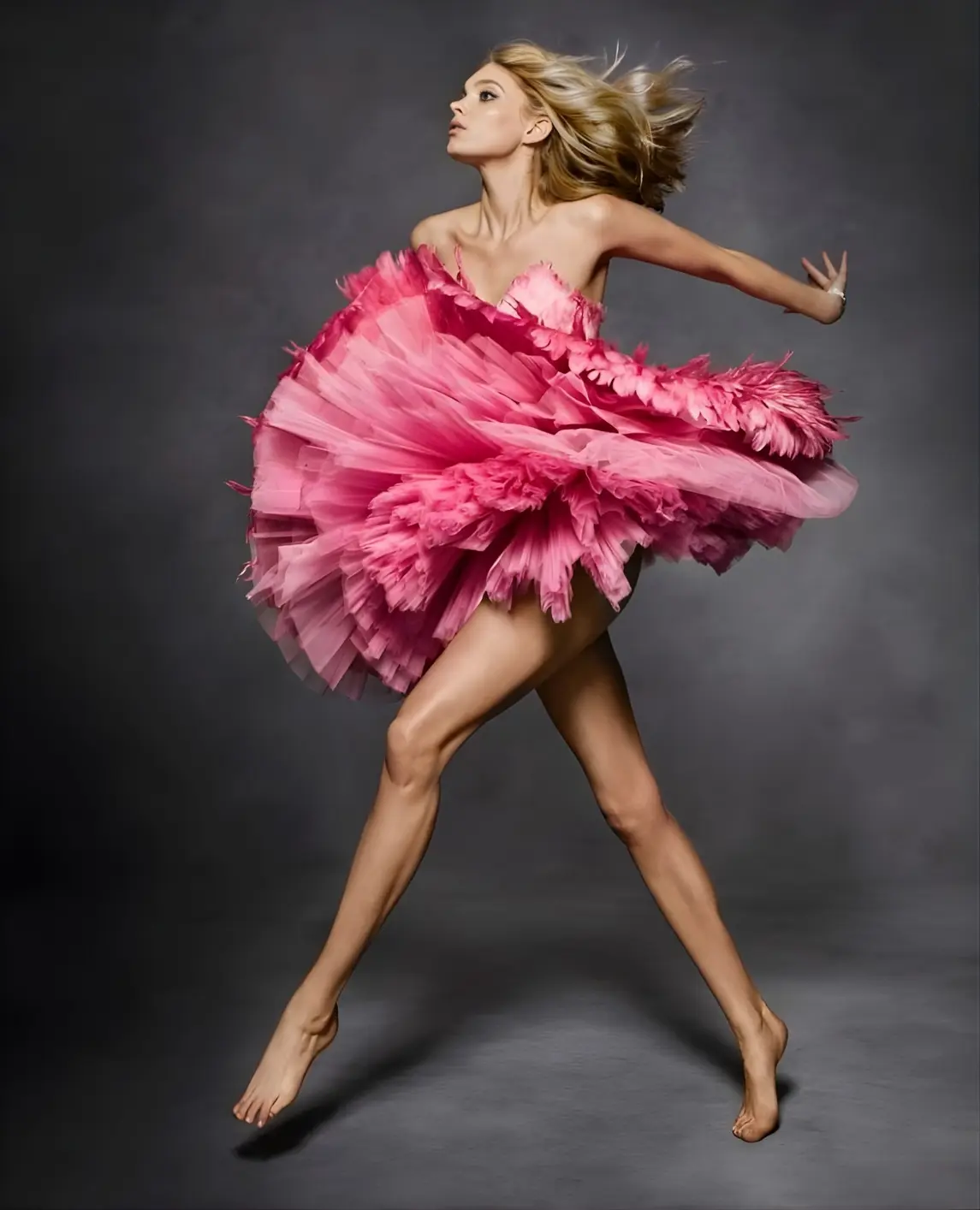
Beneath the ballerina silhouette's fluttering tulle lies the discipline of desire, the ache of becoming weightless through struggle. It dances between fragility and fire. But what do we truly chase, its grace, or the beautiful suffering that keeps it suspended?
December 17, 2025
Advertisement
Advertisement
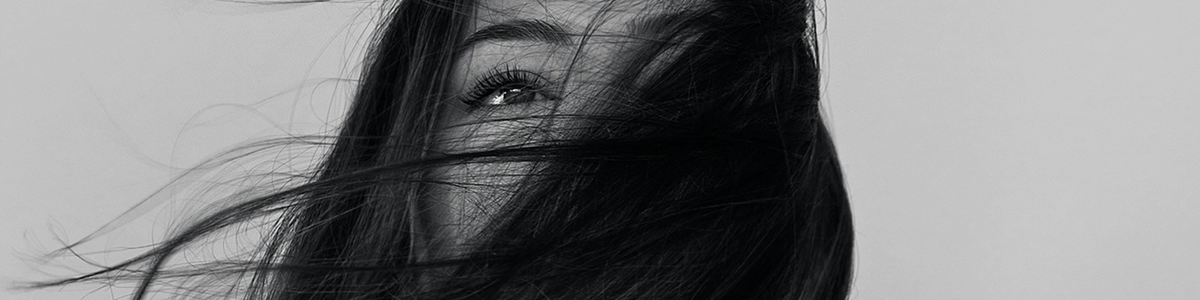


The ballerina silhouette was born not in a sketchbook, but in motion, in the whisper of satin shoes on stage, in the breath of tulle lifted by light. It emerged during the Romantic era of ballet in the early 19th century, when women like Marie Taglioni redefined the stage as a floating dreamscape. Her performance in La Sylphide in 1832 was more than choreography; it was revelation. The gauzy white tutu she wore, cut to mid-calf, exposing the curve of her ankle, became an emblem of otherworldly femininity. The world saw not just a dancer, but an apparition suspended between air and flesh.
This was the genesis of the ballerina silhouette: a shape that seemed to deny gravity. It fused structure and softness, the corseted bodice framing the ethereal volume of the skirt, creating a balance between discipline and abandon. The early tutus were heavy with layers of stiffened fabric, but their visual message was flight. They suggested effortlessness built upon labor, beauty achieved through control.

As ballet evolved, so did its costume. By the late 19th century, the classical tutu shortened, baring the leg to celebrate technical prowess. The silhouette became lighter, freer, yet remained anchored in that same paradox: fragility built upon strength. Artists like Edgar Degas captured it endlessly, women in pastel tutus bending, stretching, adjusting ribbons. His brush revealed the truth beneath the grace: the sweat, the repetition, the fatigue. Through his lens, the ballerina silhouette was no longer fantasy but discipline disguised as delicacy.
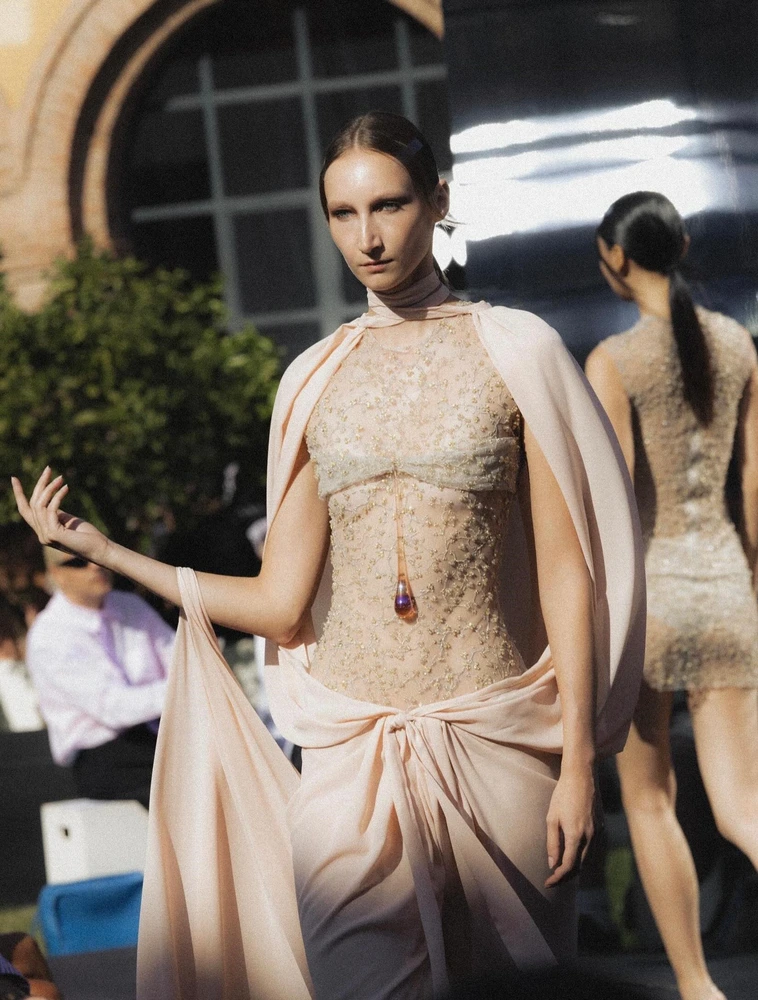
The ballerina silhouette drifts through time like a melody that never fades. Once born to shimmer beneath chandeliers, she now wanders through city lights and runways, gathering new meanings with every step. The tulle holds whispers of discipline, yet breathes with longing. The corset hums with control, yet trembles with desire. In today’s hands, the ballerina moves for herself, her dance is a declaration.
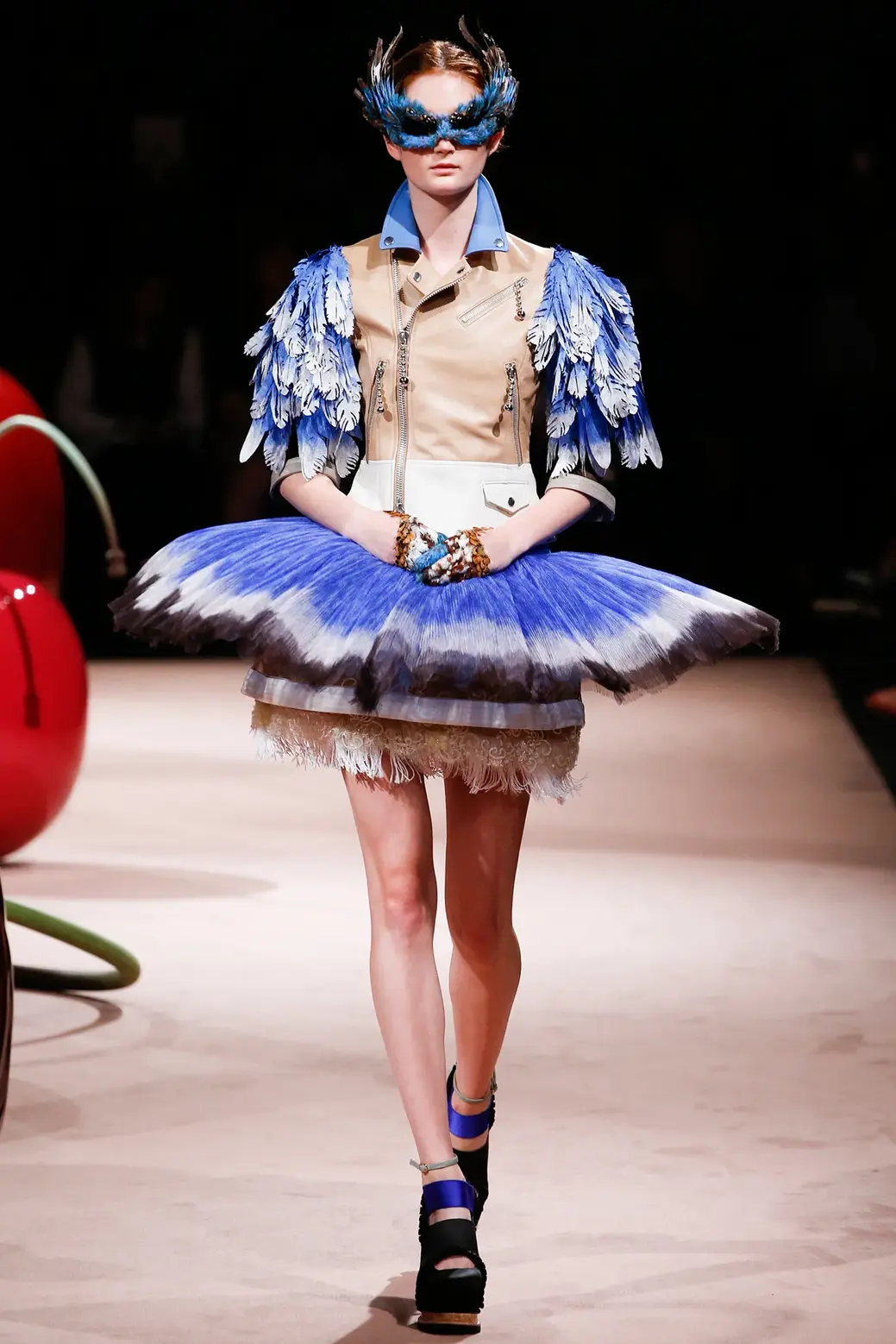
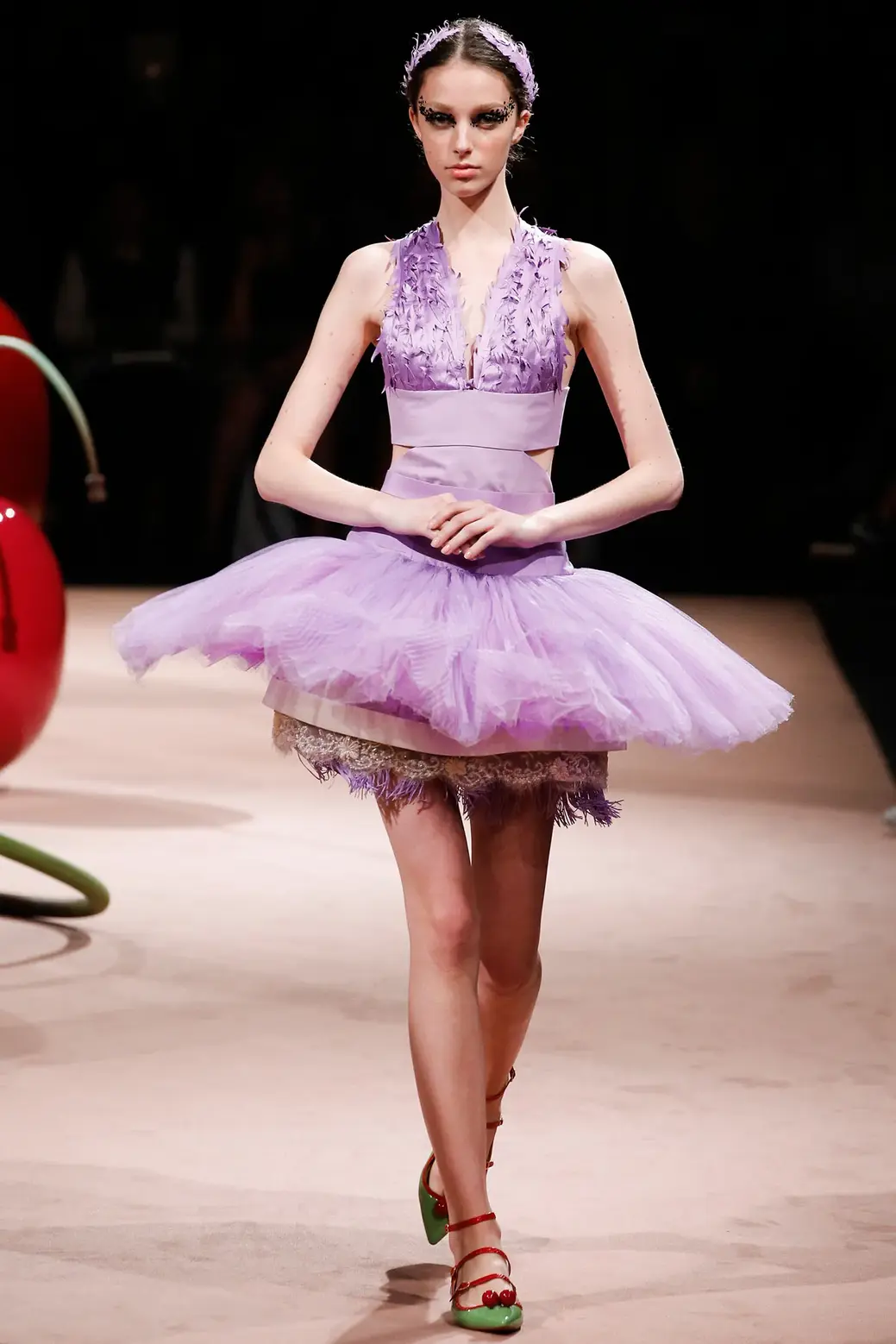
At Undercover, the ballet silhouette is reengineered into something sharp and forward, classical lines disrupted by daring cuts, technical fabrics, and a restless modern spirit. It feels cerebral and fearless, where grace is no longer nostalgic but experimental, moving boldly toward what ballet can become rather than what it once was.
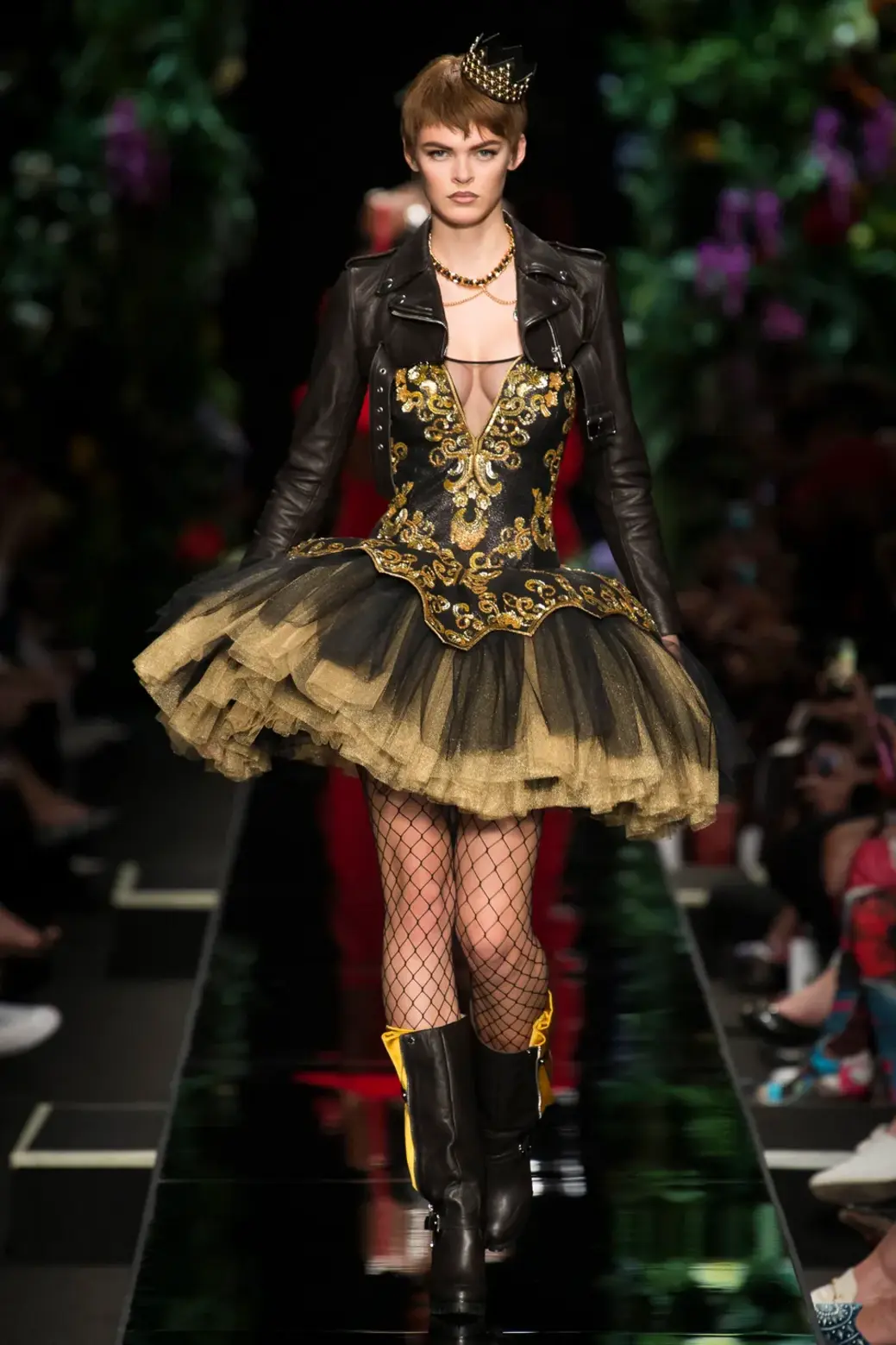
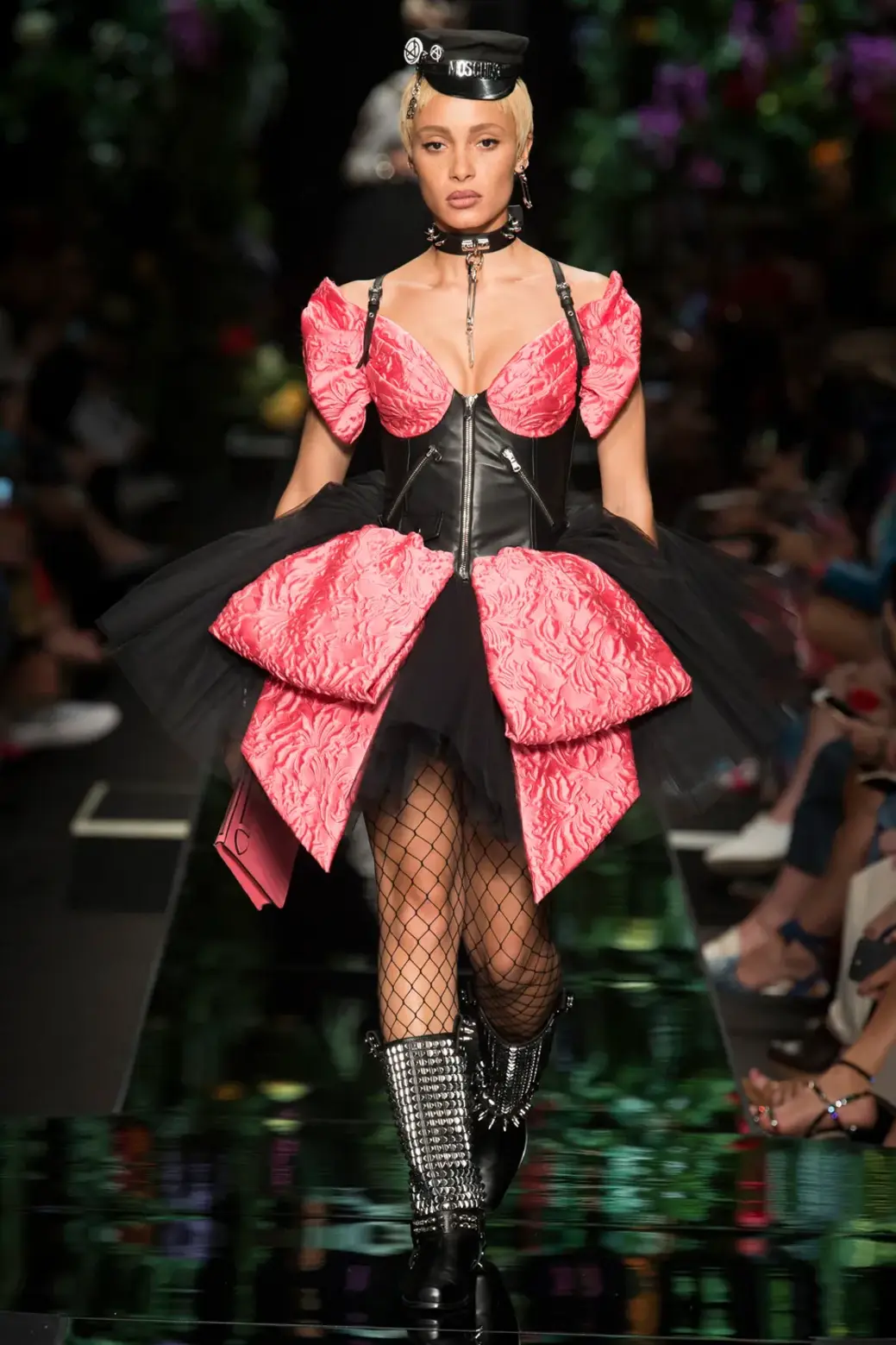
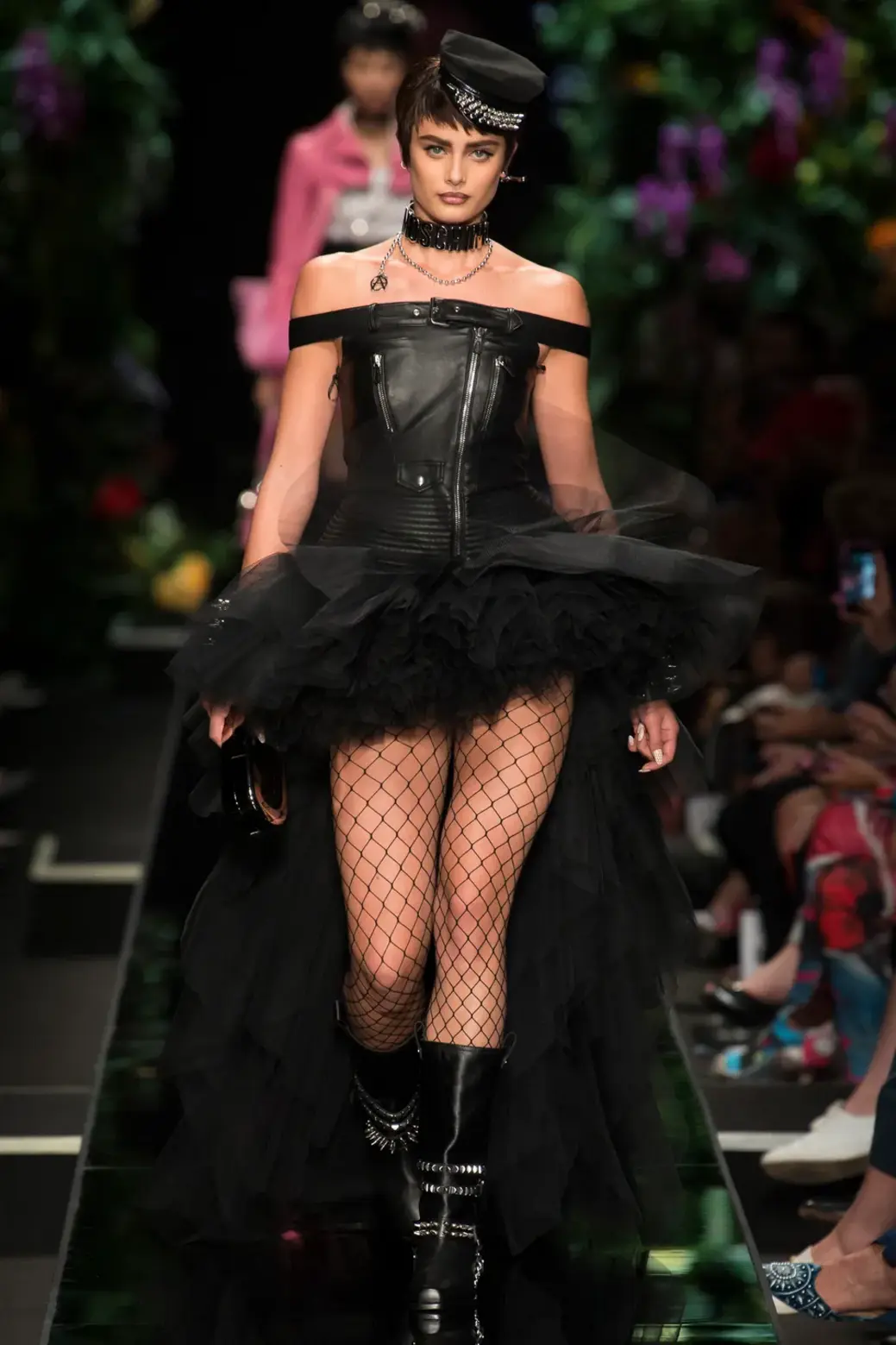
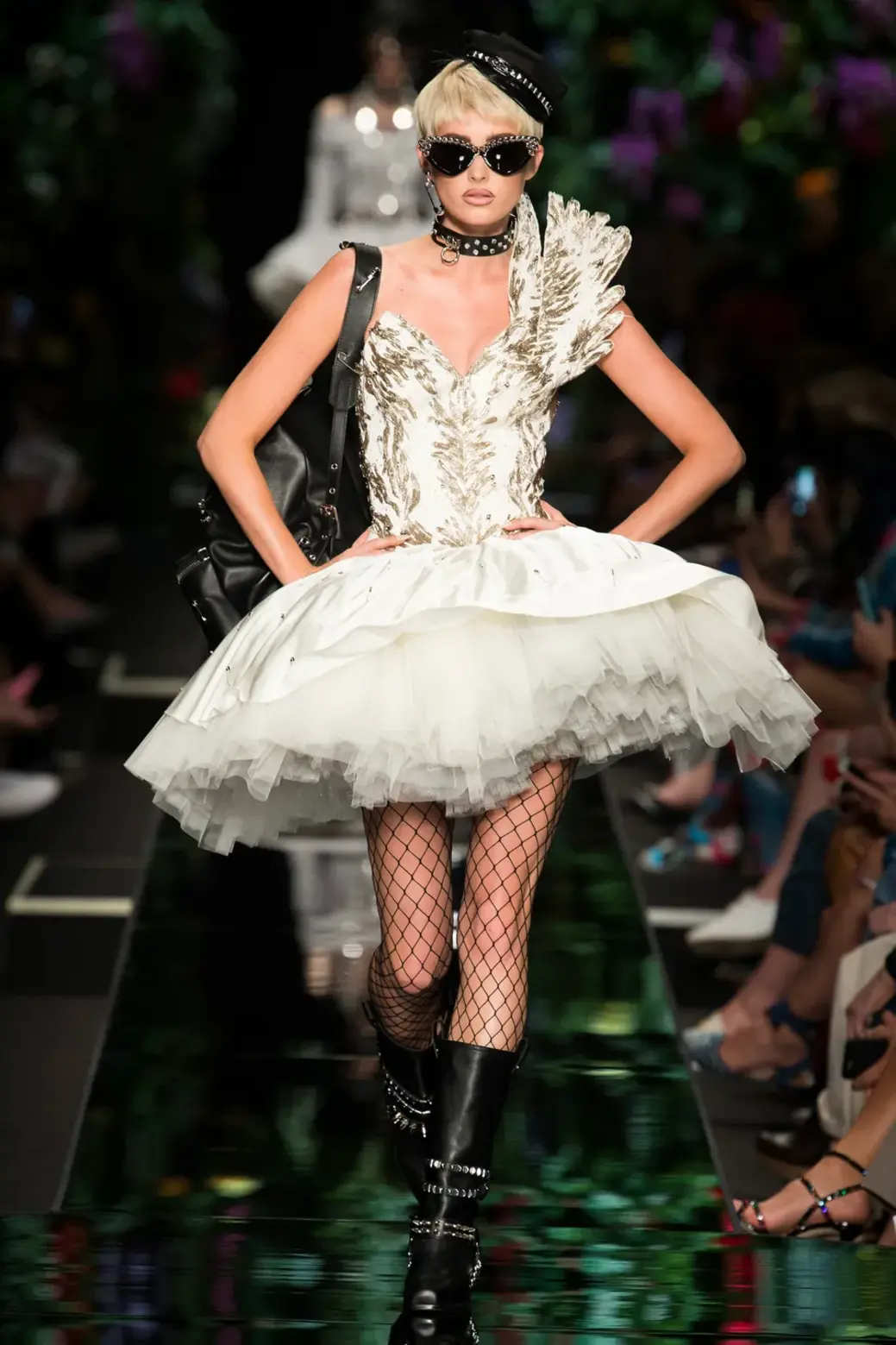
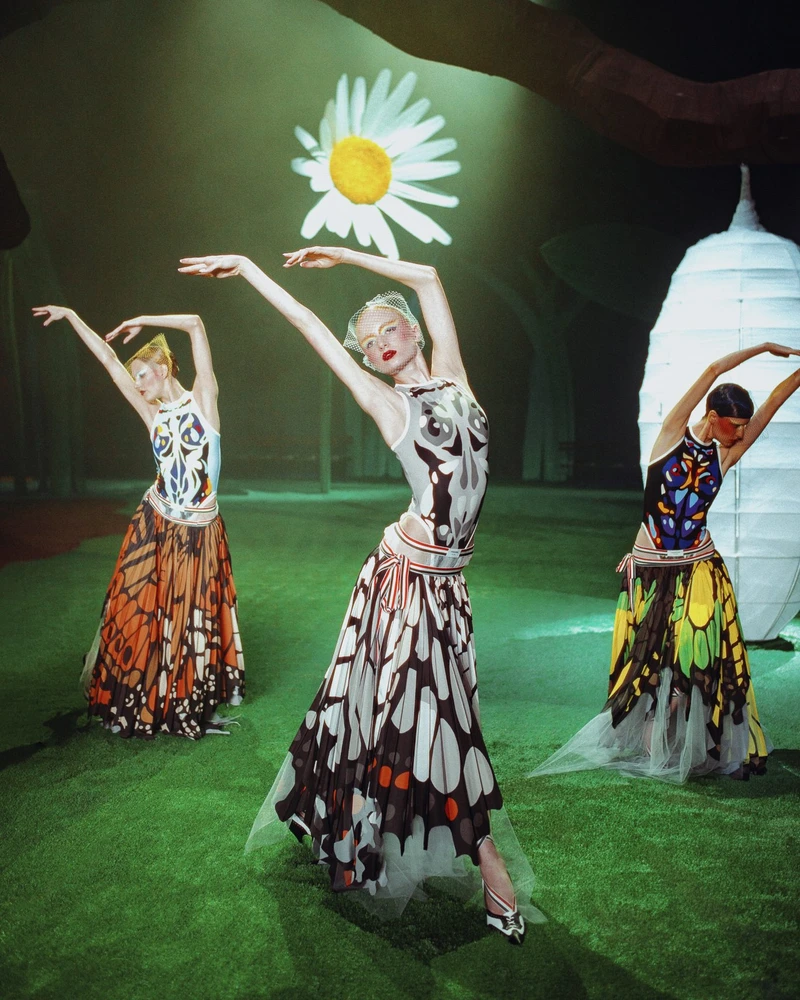
At Moschino, she turns playful and daring, a good girl with wild intentions. Jeremy Scott dresses her in bubblegum dreams and leather storms, a ballet of sweetness and spark. Her tutu twirls into laughter; her ribbons curl into rebellion. She is soft mischief, sugar spun with fire, a pirouette of joy unruly and bright.
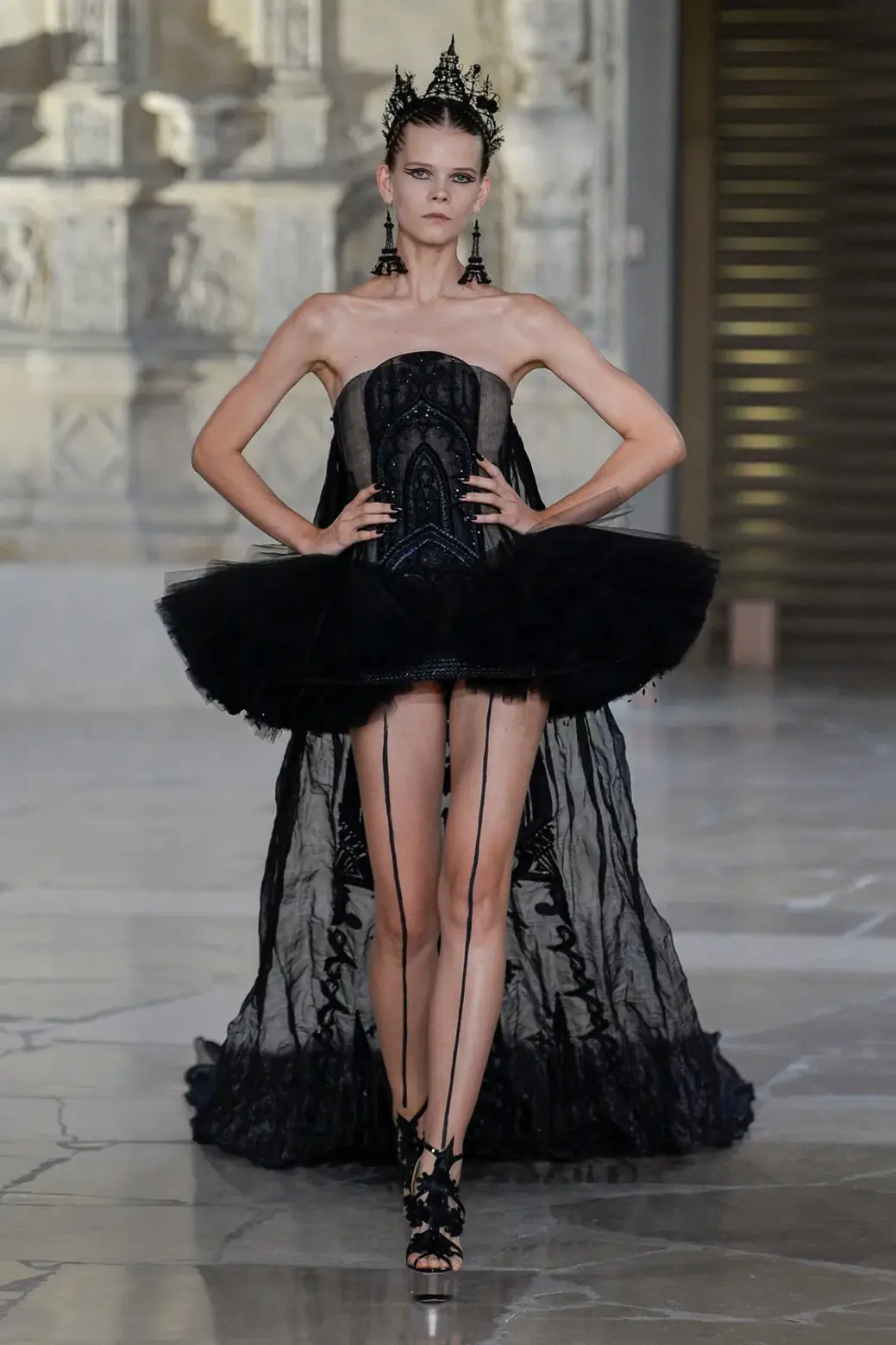
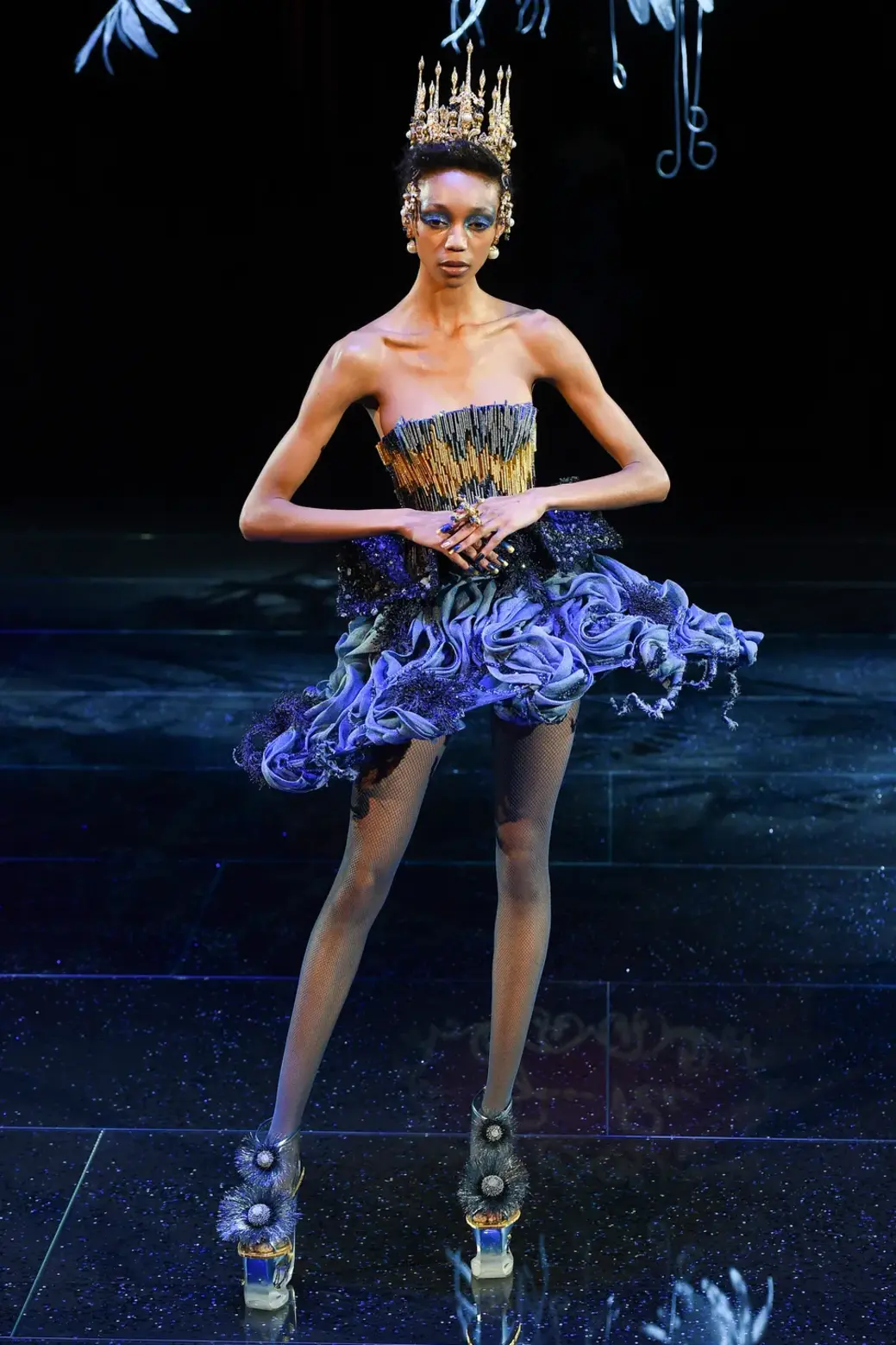
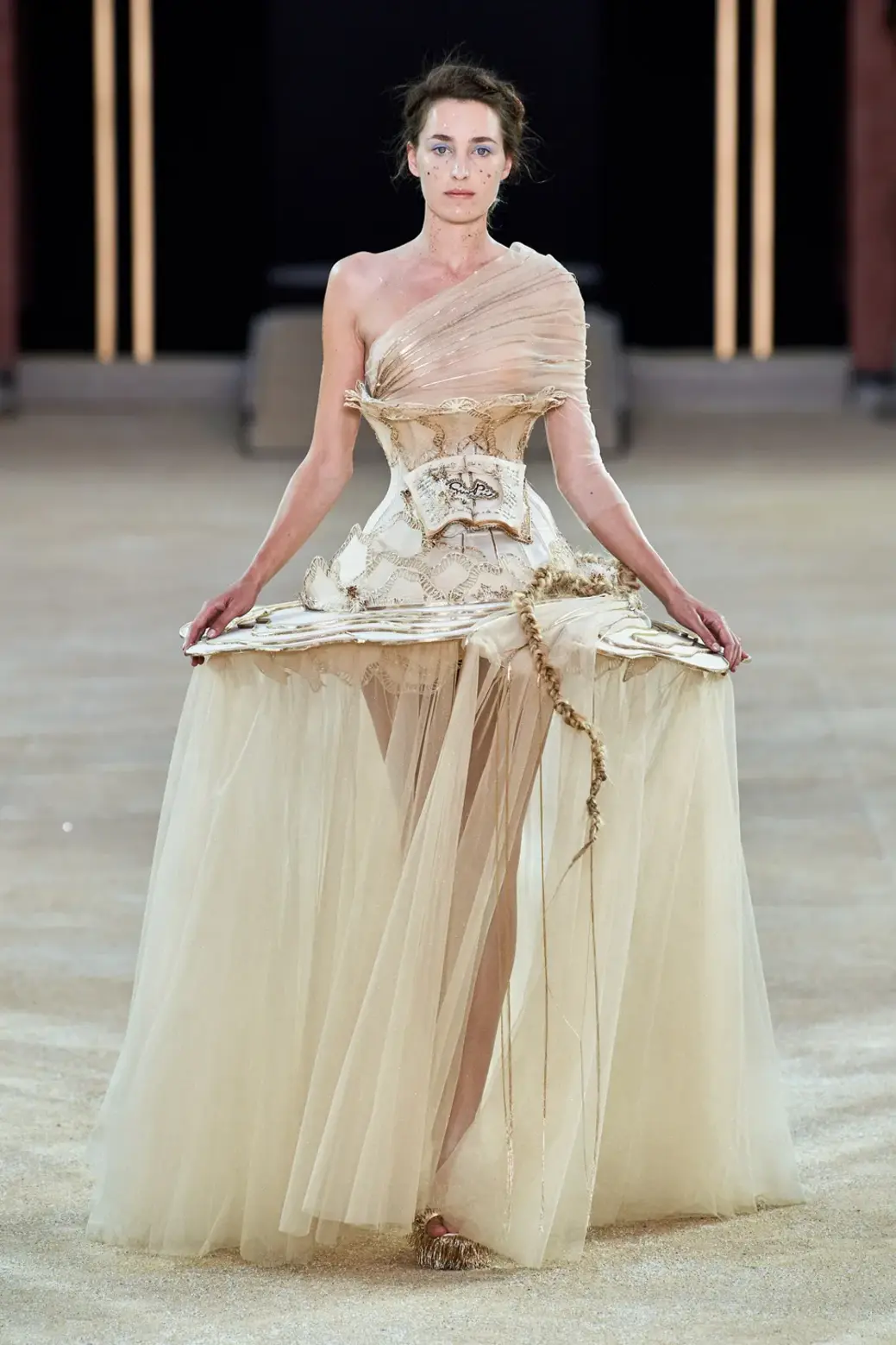
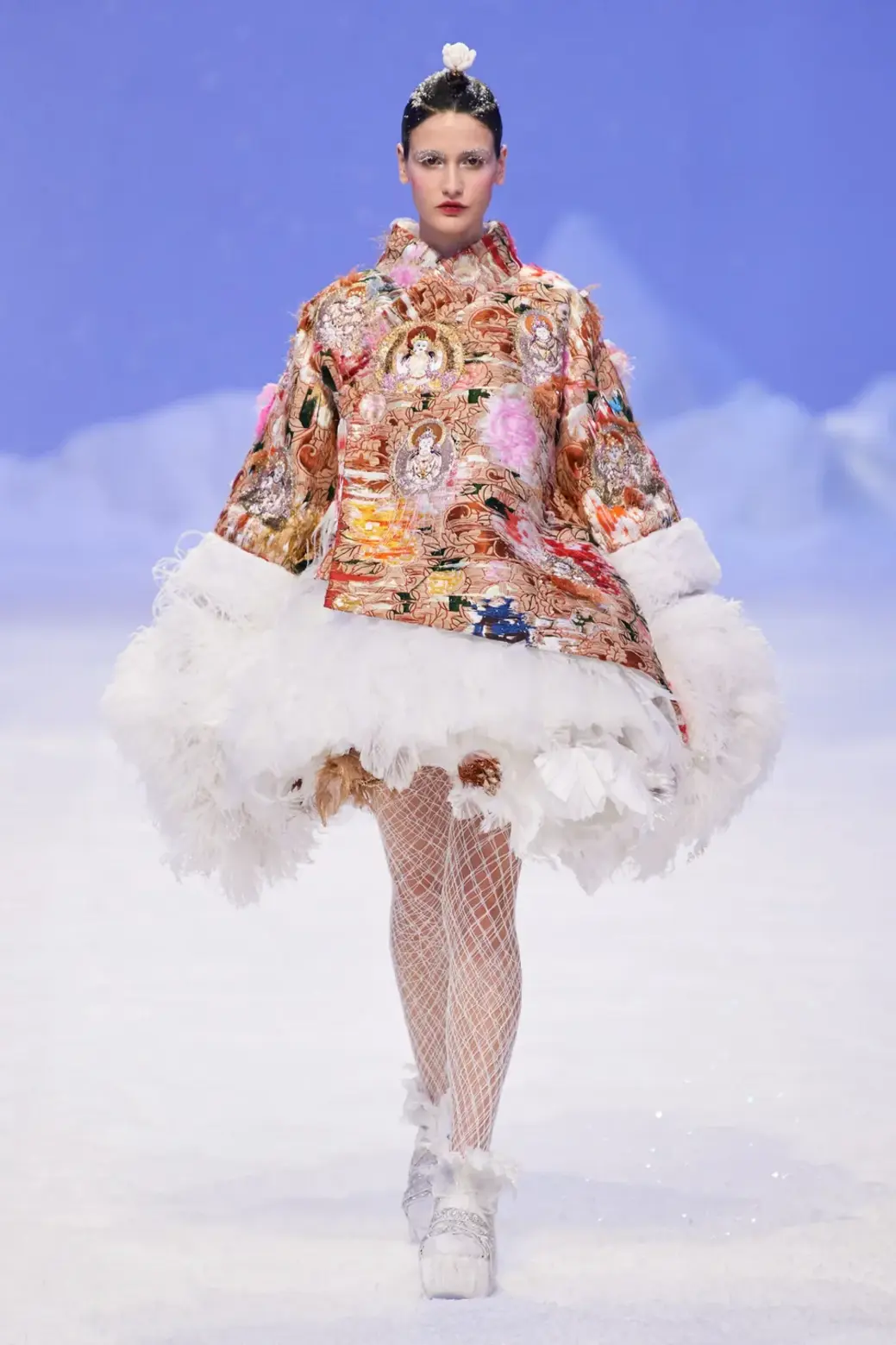
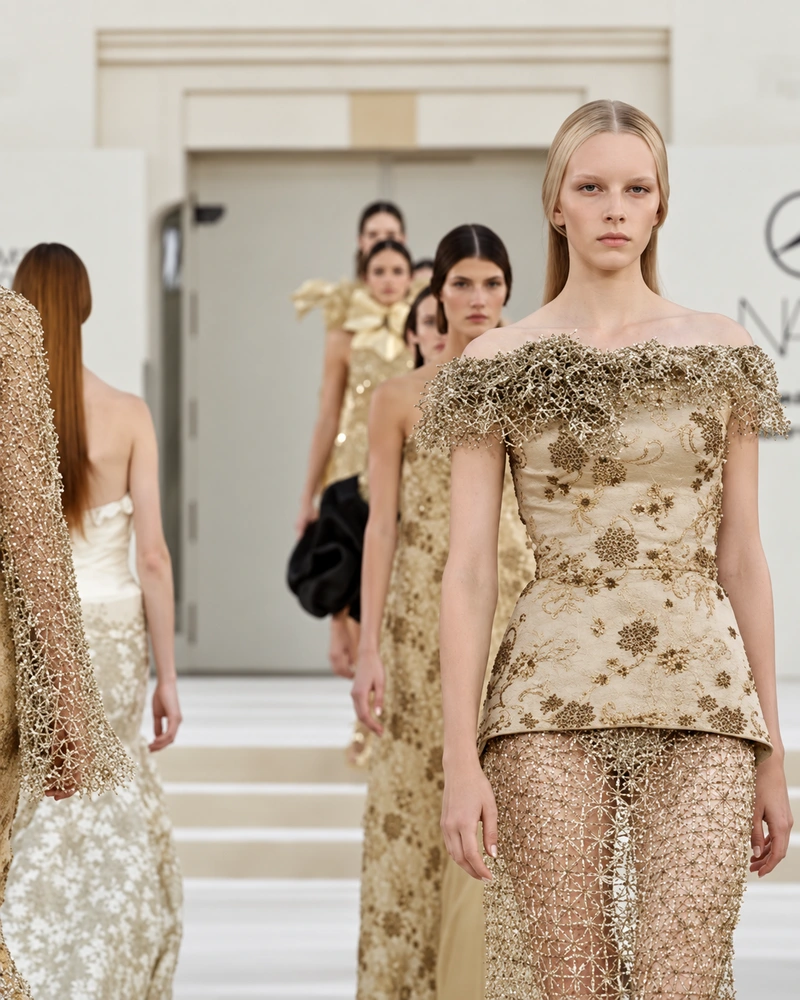
At Guo Pei, she floats beyond touch. The silhouette turns celestial, the body dissolves into art. Layers of gold, silk, and cloud shimmer in quiet majesty. Her dance belongs to another realm, where couture becomes devotion and every thread holds a prayer. She moves as if eternity were stitched into her hem.
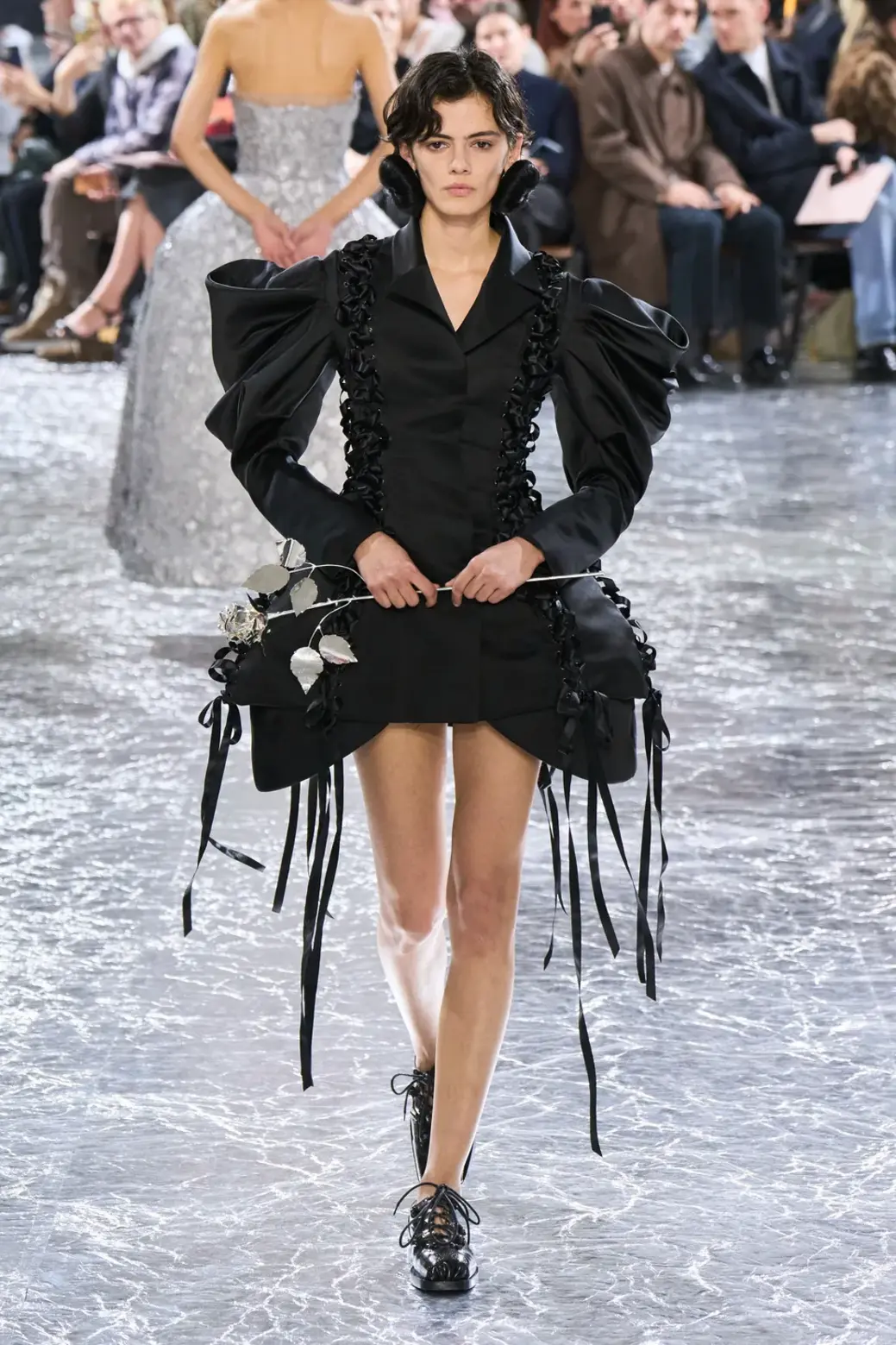
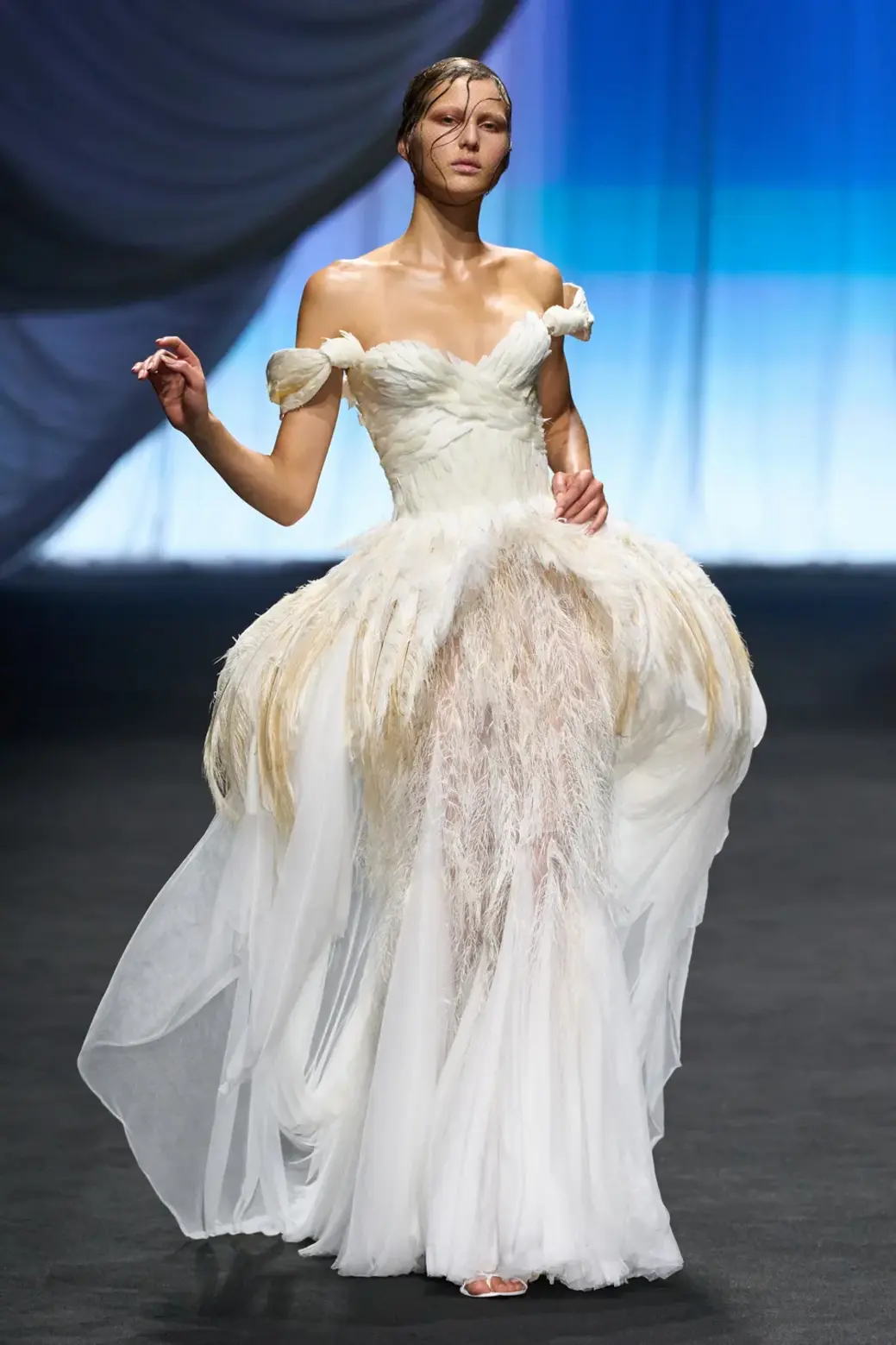
At Jean Paul Gaultier, she burns darker, a vision of smoke and velvet. Lace brushes against metal, corsets lace into confession. The ballerina steps from cathedral to nightclub, a gothic muse in motion. Her beauty is temptation, her rhythm a spell. She pirouettes through shadows, carrying both grace and sin in the same breath.
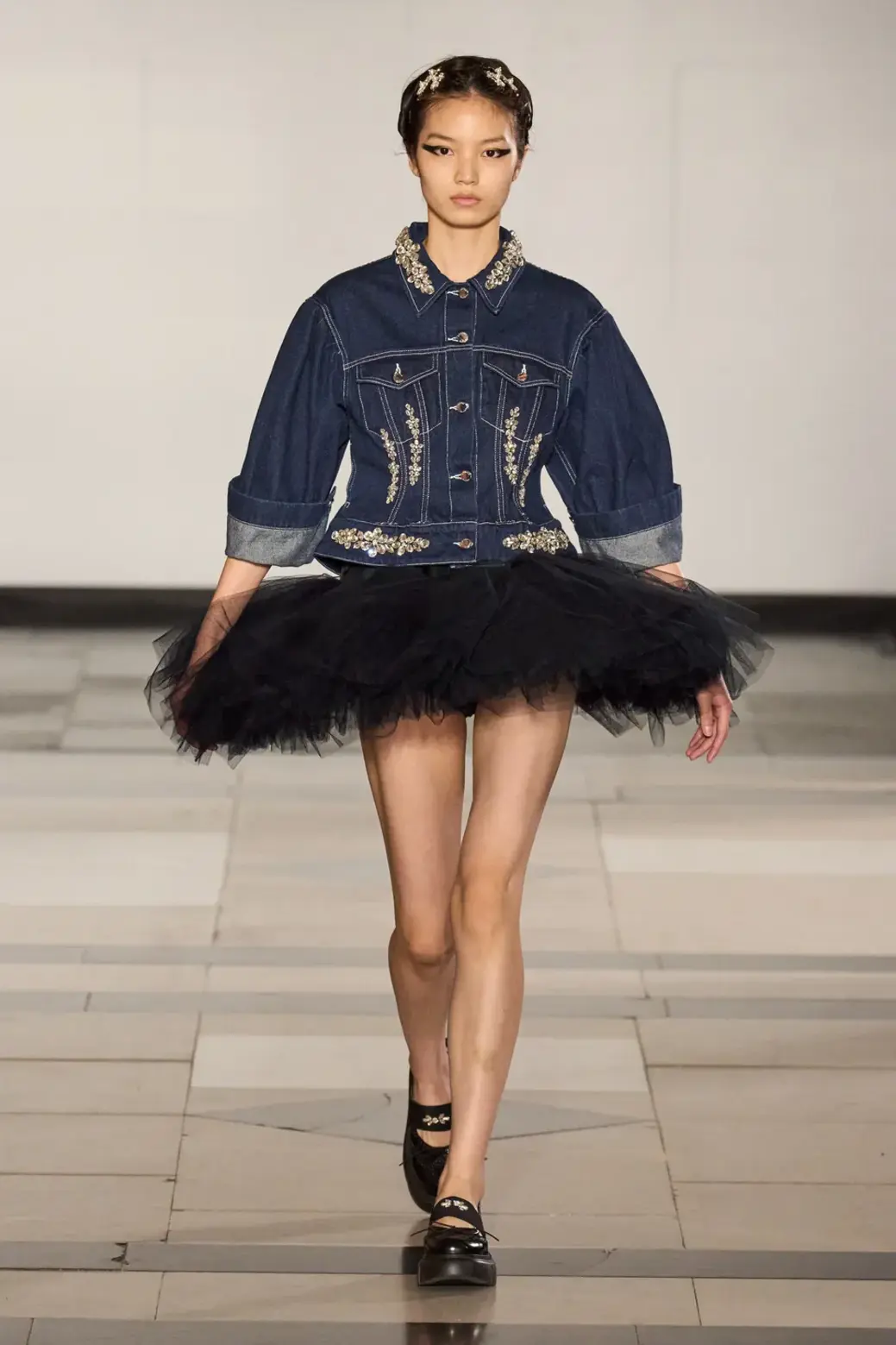

Then comes Simone Rocha, who brings her home to the heart, to the street, to the softness of now. Her ballerina wears tulle and tenderness, boots and resolve. Pearls glint beside PVC; dreams walk beside noise. She carries her poise through chaos, her skirts fluttering like quiet rebellion. In Rocha’s world, the ballerina is alive, romantic, real, and unafraid to bruise.
Once a costume of performance, now a vessel of emotion, she dances across centuries and moods. Her skirts remember every leap, of faith, of passion, of pain. She spins through the rooms of history, gathering stories in her tulle. And wherever she drifts, palace, street, or stage, the air still trembles, as if beauty itself were breathing through her.
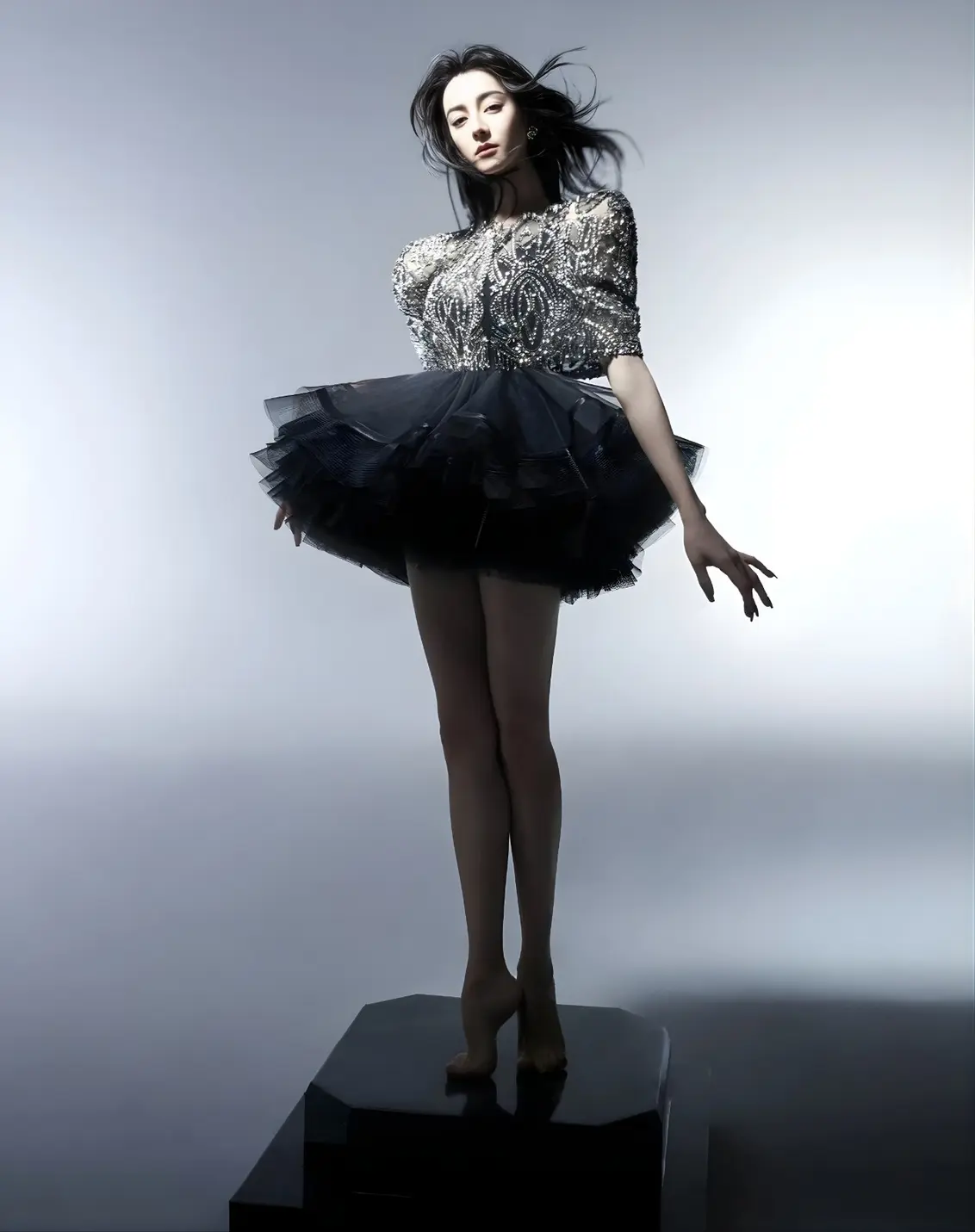
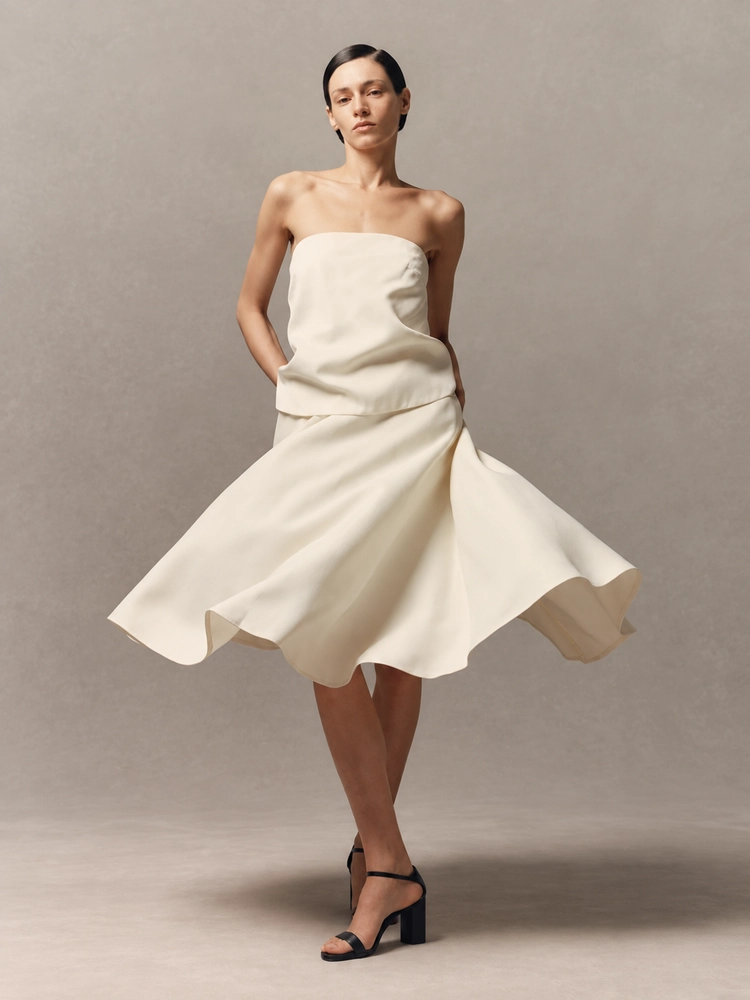
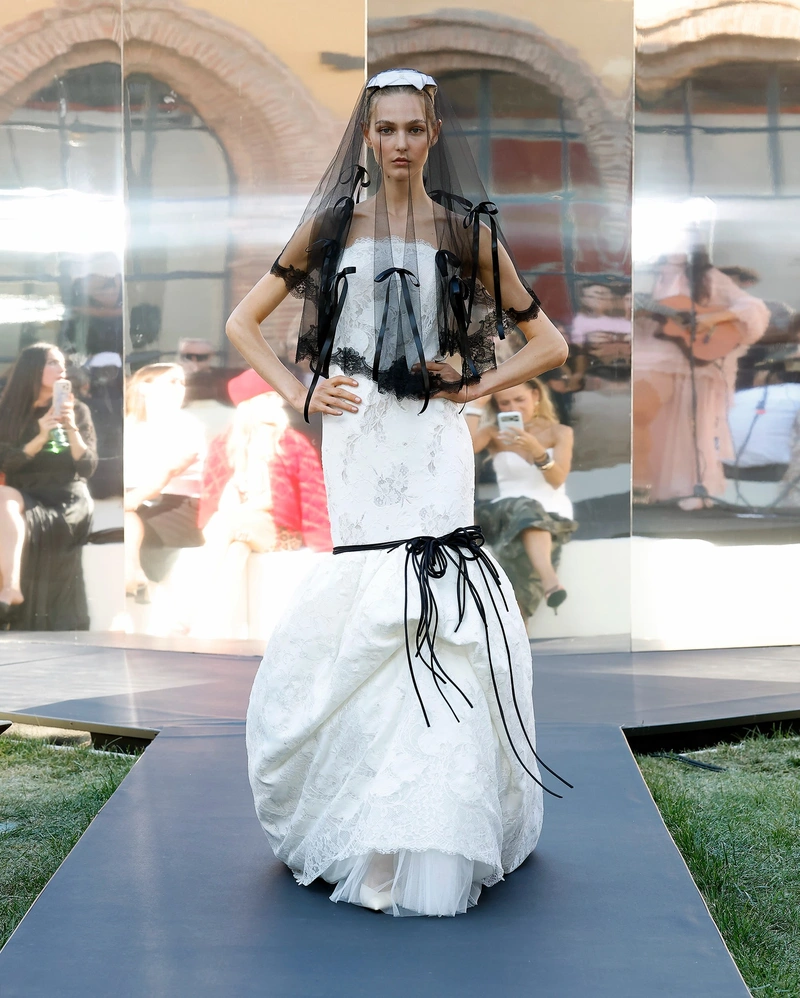
To see the ballerina silhouette glide down the runway is to witness motion captured in fabric. It bounces, it floats, it slides, and yet, it commands. Its presence is not loud but magnetic; it draws attention by defying logic. How can something so voluminous feel so weightless? How can layers upon layers of tulle or organza whisper instead of shout?
Designers return to this question with every generation. The ballerina shape offers them a paradox to play with: the illusion of ease crafted from precision.
The impression the ballerina silhouette leaves is emotional before it is visual. It is nostalgia and freedom, but also control. It lures us into believing in transcendence, that the body can move beyond itself. Watching it sway and bloom on the runway, the audience is reminded of the discipline beneath beauty: the countless pirouettes before perfection, the hours of pain beneath the satin. Fashion, like ballet, hides its scaffolding. What we see is the dream. The modern ballerina is not a fragile muse waiting in the wings; she is her own choreographer, her own story.
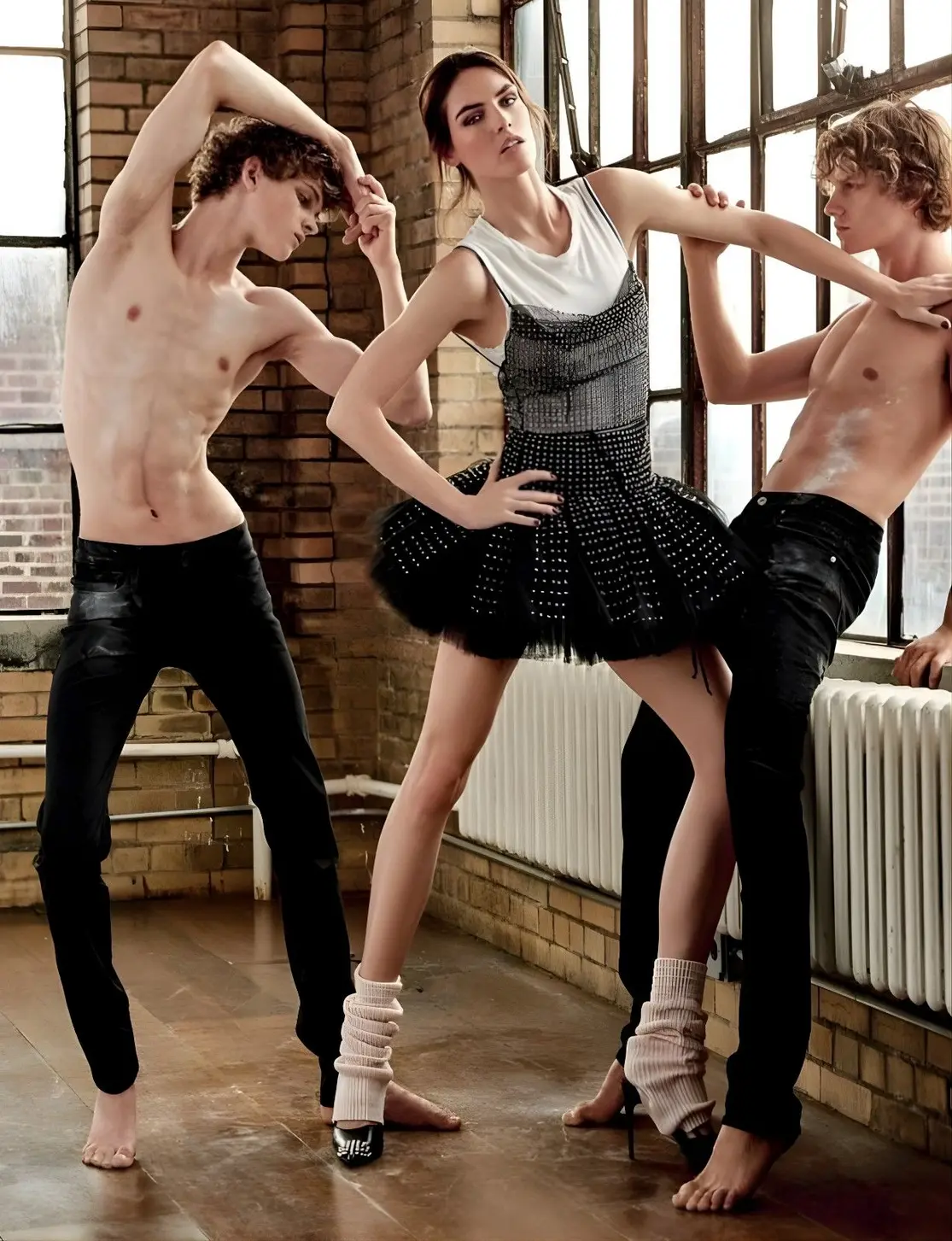
The silhouette leaves behind not only the impression of lightness, but also of labor, a quiet respect for the body’s endurance. In that layered skirt, one can almost hear the sound of practice, the breath caught mid-turn, the echo of applause that comes after pain. The ballerina silhouette, even when stripped of stage and music, carries its rhythm within its folds.
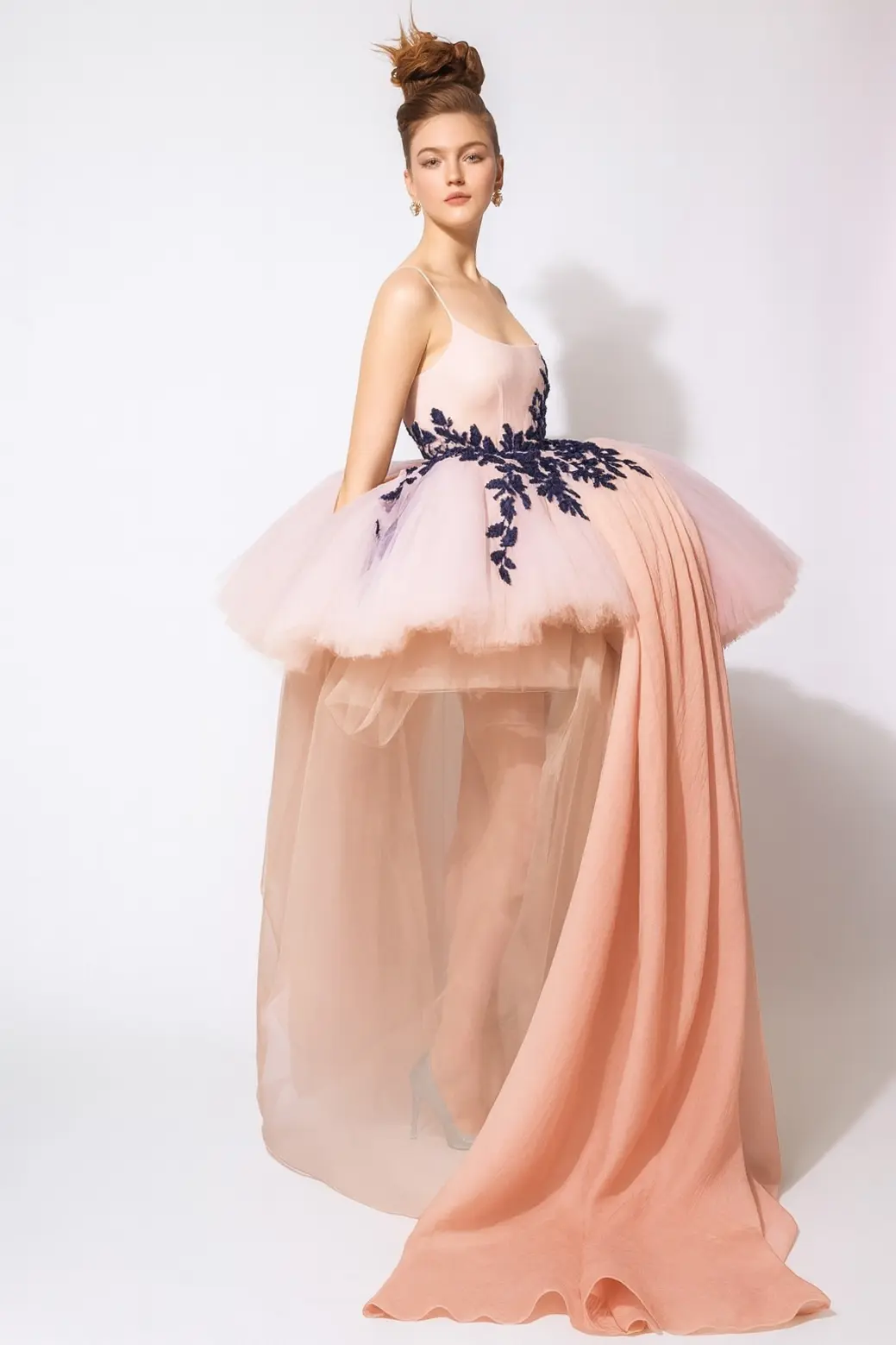
To understand the spirit of the ballerina silhouette, one must look beyond its prettiness. It has often been mistaken for a symbol of softness, but at its core lies steel. Behind every floating tutu is muscle memory behind every airy step, years of rigor and repetition. The ballerina’s world is one of constant balance between surrender and command, and the silhouette mirrors that truth with precision.
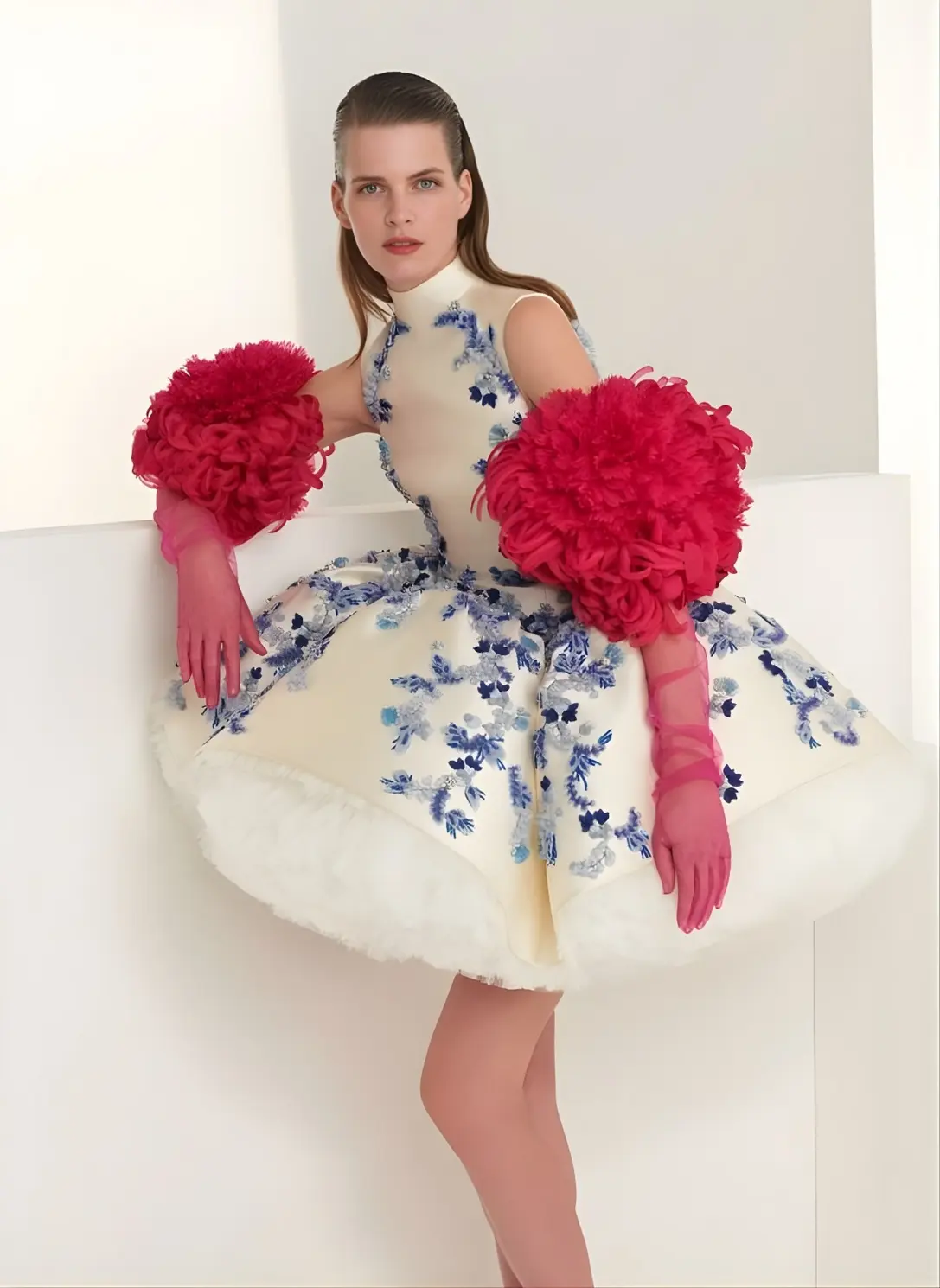
It is the shape of control disguised as ease, of endurance hidden behind illusion. In a sense, it is the female condition made visible. Society has long asked women to appear effortless while bearing immense pressure to glide gracefully while standing on pointe. The ballerina silhouette exposes this tension, turning it into art.
The ballerina silhouette’s spirit is not one of submission, but transformation. It reminds us that fragility can be a performance, a costume that conceals tenacity. The tulle, though light, becomes armor. The corset, though restrictive, becomes spine. The dancer’s movement, whether in a theatre or on a catwalk becomes testimony to the will to rise again and again.
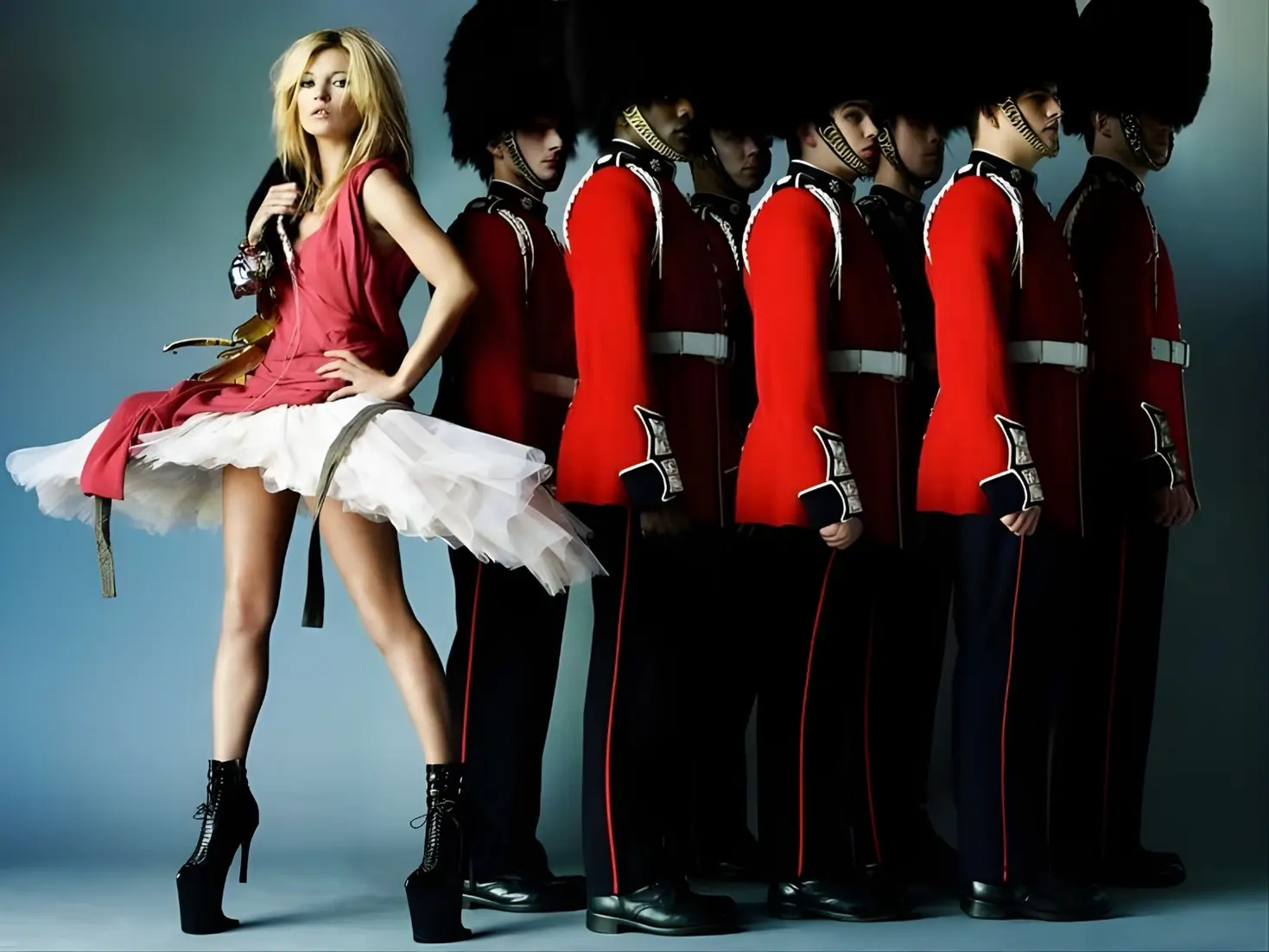
This is why the silhouette endures: it symbolizes the human capacity to strive, to reach, to transcend. It holds within it the universal rhythm of ambition and fatigue, hope and exhaustion. The ballerina silhouette whispers of pain, but never lets it show. It glows with the dignity of persistence.
The ballerina is the embodiment of what it means to turn effort into elegance, to make the impossible seem natural. And in fashion, this spirit resonates deeply. Every designer knows the long nights, the discipline, the obsessive detail required to make something appear effortlessly beautiful. The ballerina silhouette is their mirror, a shape born from the same devotion.
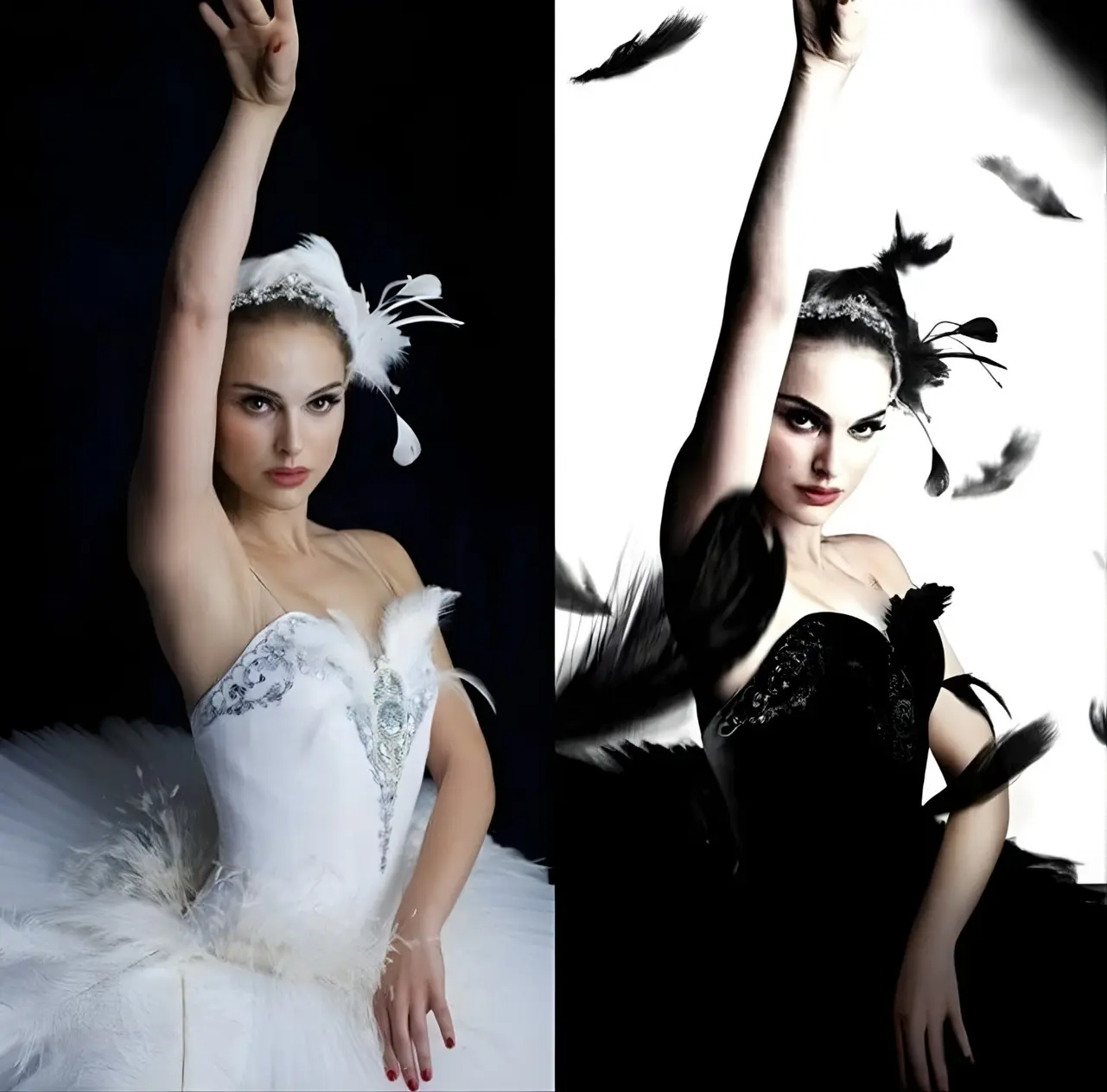
In cinema, the ballerina silhouette reaches one of its most psychologically charged expressions in Black Swan (2010), carried by Natalie Portman in what became one of the most iconic performances of her career. Her Oscar-winning role transformed the ballerina’s elongated line and disciplined posture into a visual language of obsession, control, and internal fracture. The silhouette tightens as the character unravels, grace sharpened into torment, beauty pressed against the edge of collapse, redefining ballet on screen as a metaphor for ambition’s cost.
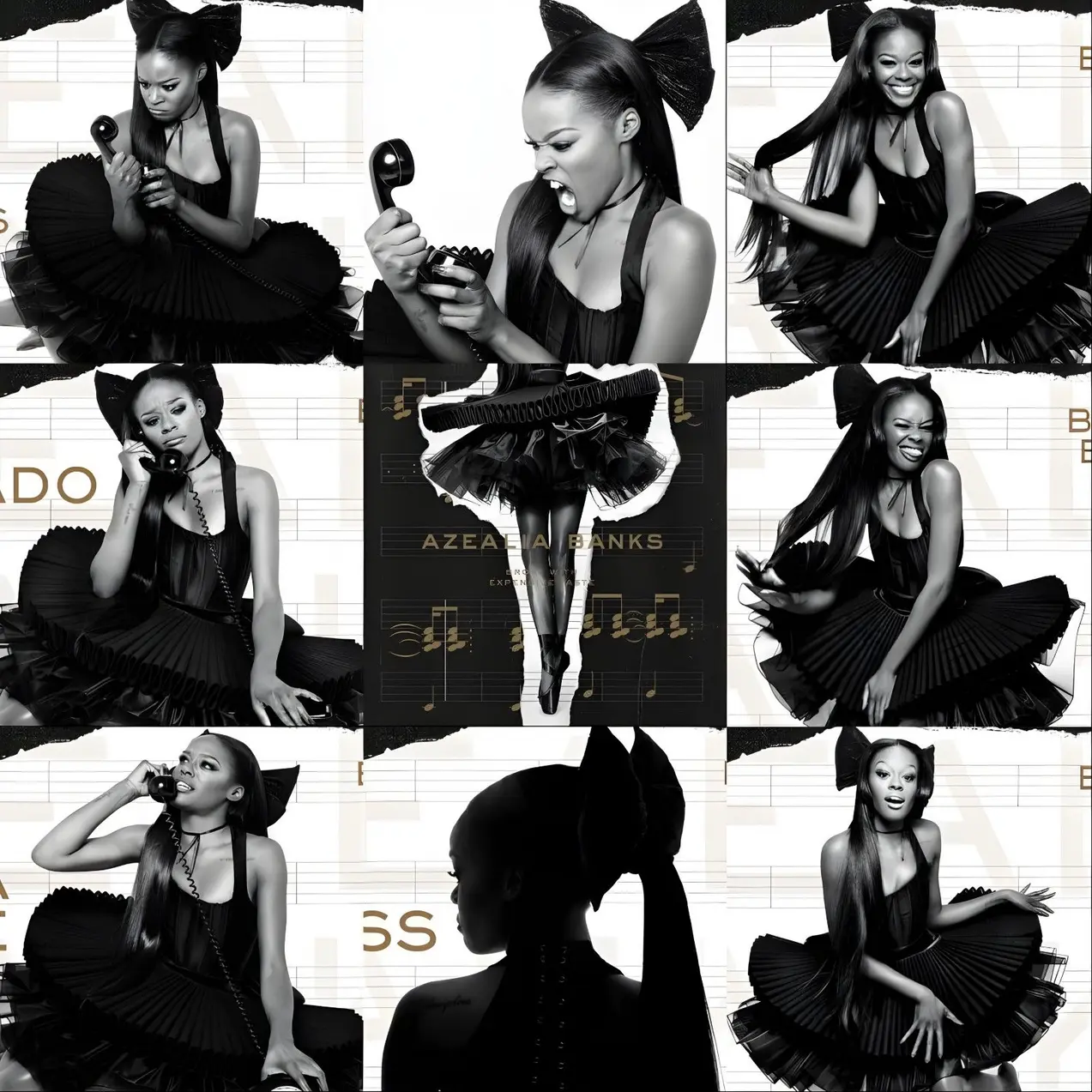
In music and visual culture, the ballerina silhouette is radically reclaimed on the cover of Broke with Expensive Taste (2014) by Azealia Banks. Posed en pointe, she rewrites ballet’s codes with confidence and provocation, turning a symbol of delicacy into one of dominance and intellectual swagger. The image accompanied one of the most influential female rap albums of the 2010s and mesmerized figures beyond music, including Karl Lagerfeld, who recognized in the pose a rare fusion of discipline, rebellion, and modern femininity. Here, the ballerina silhouette no longer performs, it asserts, confronts, and owns its power.
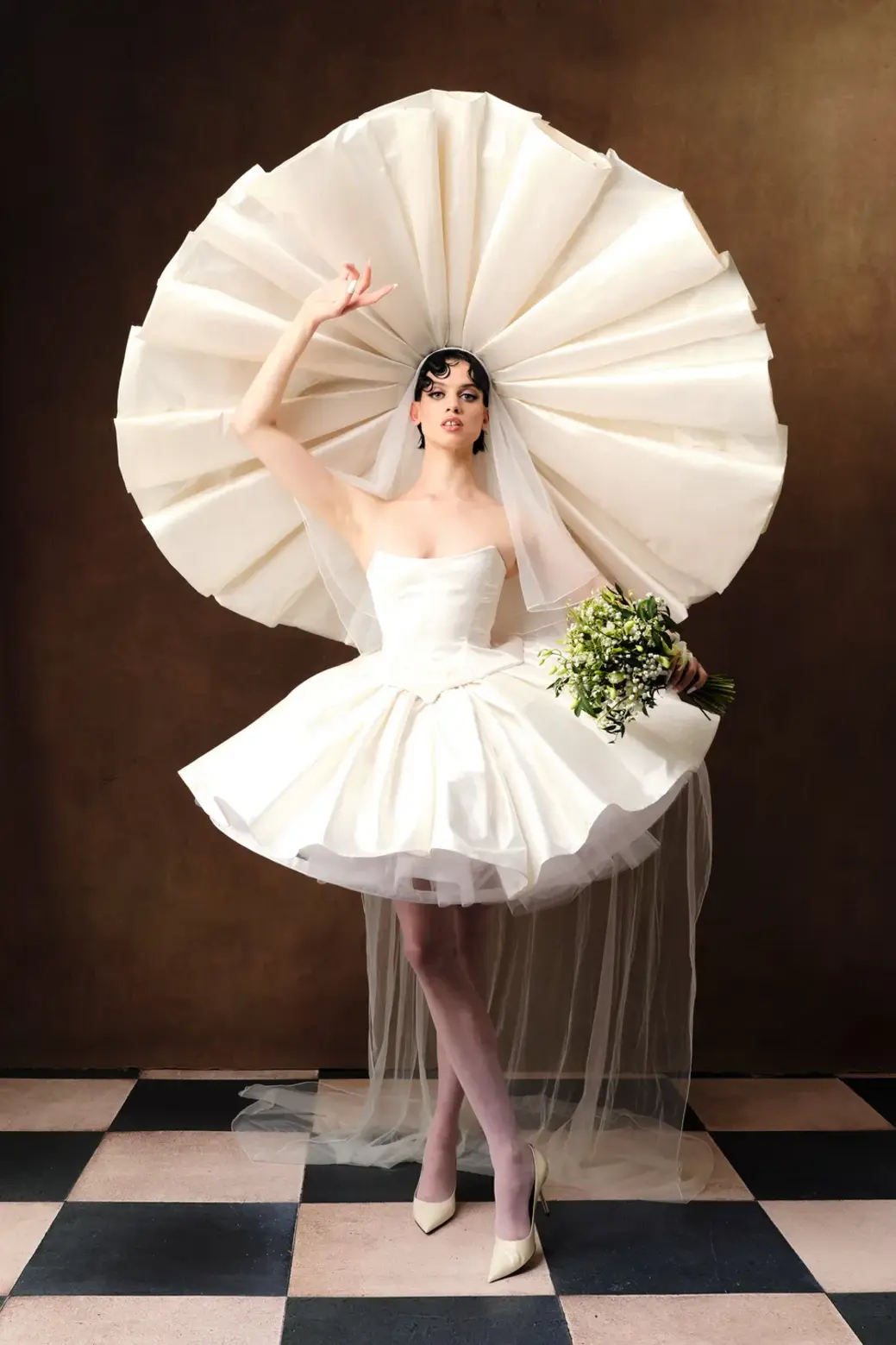
Trends may change with every season, but the ballerina silhouette remains timeless because it speaks to something deeper than fashion: the eternal human desire to rise above gravity. In every era of upheaval, artists return to the image of the ballerina as a reminder that beauty is both fragile and fierce.
The reason it never goes out of inspiration is that it embodies motion itself. Fashion, like dance, is a dialogue between the body and imagination. The ballerina silhouette refuses to be static. Even on a mannequin, it seems to breathe. Its architecture narrow waist, expansive skirt, invites the air to participate. It transforms the wearer into both sculpture and storm.
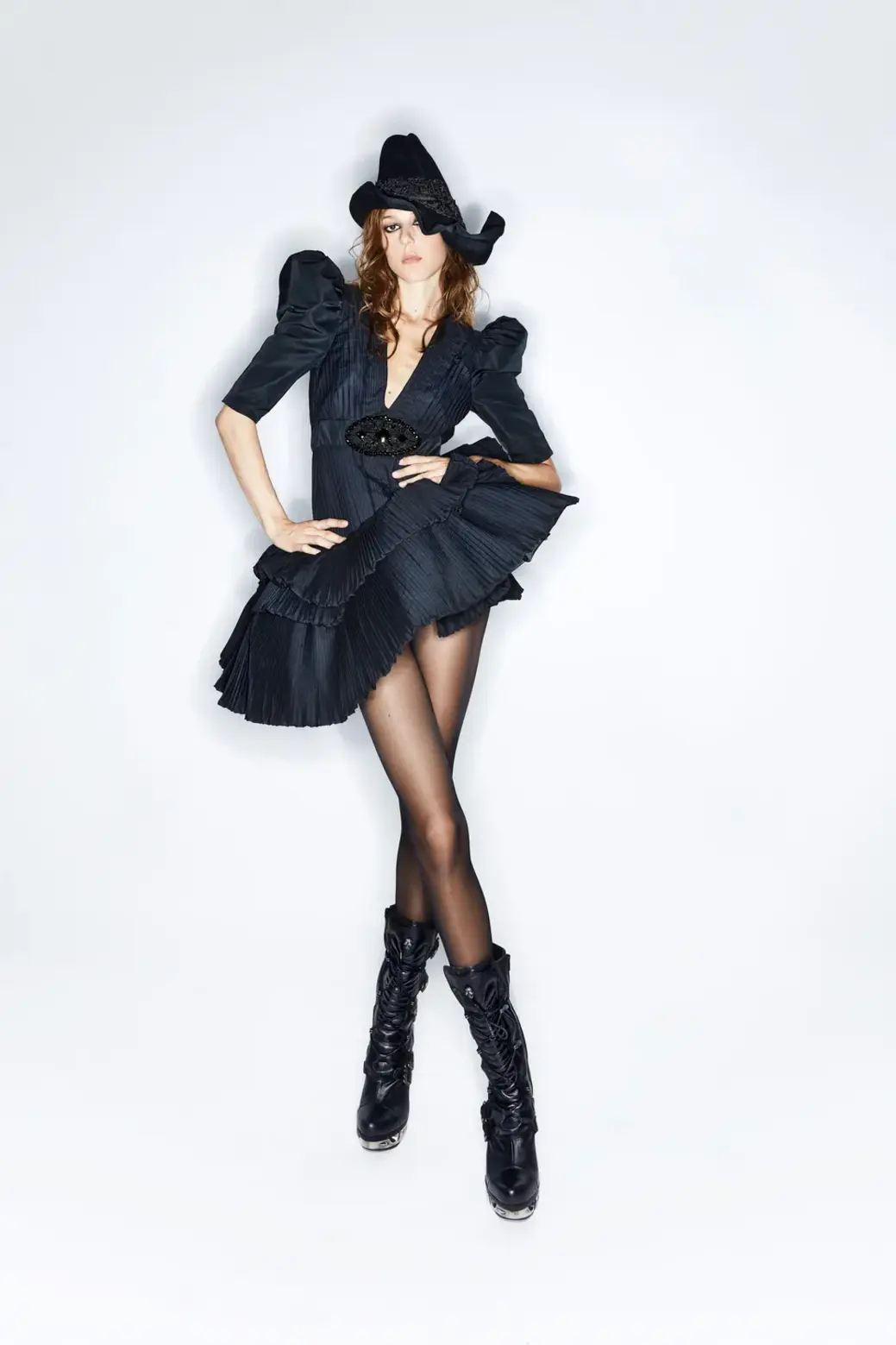

But beyond aesthetics, the ballerina silhouette remains relevant because it encapsulates what femininity has come to mean in the modern world. It acknowledges the layers, the softness, yes, but also the rigor, the hunger, the rebellion. It is not about being delicate; it is about redefining what delicate can endure.
When the ballerina silhouette appears on the runway today, it no longer represents a woman waiting to be admired. It represents a woman who knows the weight of her own discipline. She moves, she trains, she breaks, she rebuilds, and through it all, she remains graceful, not because it is easy, but because she has made peace with effort.
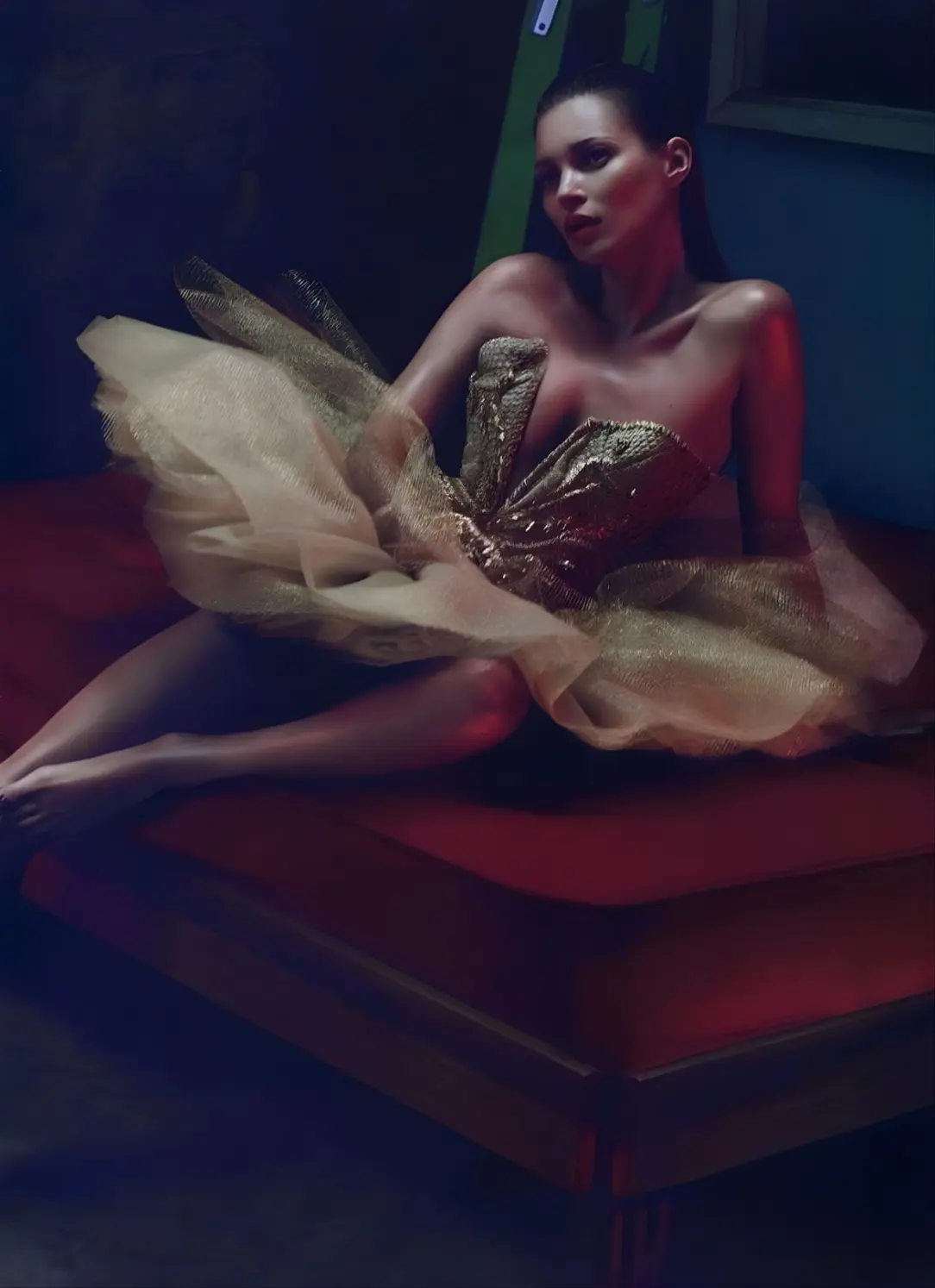
The silhouette is timeless because it tells a story that never ends: the story of transformation. Every generation of designers and dancers rediscovers it, finding in its curve a reflection of their own aspirations. It speaks to the human longing to be both anchored and free, to feel the floor yet defy it.
And so, the ballerina silhouette continues to dance across stages, across seasons, across centuries. It bounces, it floats, it slides, leaving behind a trail of light and shadow. It reminds us that femininity is not weakness cloaked in silk, but strength disguised in grace. It is the body turned into poetry, the discipline turned into dream.
In every pirouette of fabric, in every whisper of tulle, there lives the same pulse that has driven dancers and designers alike: the desire to become more than flesh, to give motion to meaning. The ballerina silhouette is not a relic of nostalgia, but a living choreography, forever rehearsing the art of endurance, forever returning to the stage of imagination.
It will never go out of inspiration because it is not merely a shape.
It is a heartbeat in fabric.
It is a reminder that even the softest things can carry the weight of strength.
It is the proof that grace is born not from ease, but from effort.
And so it floats endlessly between body and dream.
Advertisement