MENU
Close





Hip-hop's story began with women standing on the edges of a stage built for men. It ends with women running the stage, the lights, and the headlines.
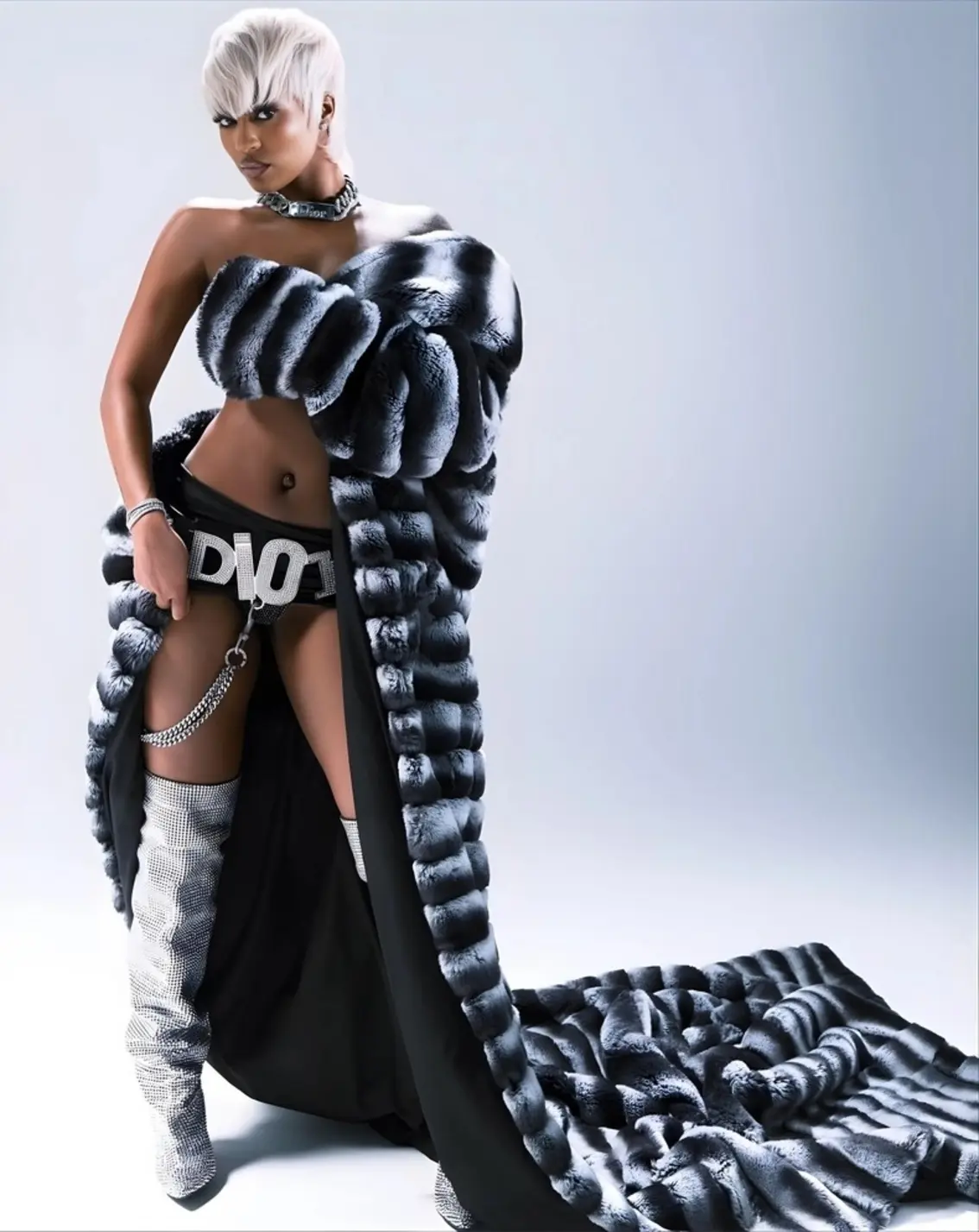
Hip-hop's story began with women standing on the edges of a stage built for men. It ends with women running the stage, the lights, and the headlines.
February 9, 2026
Advertisement

Advertisement



The Bronx in the 1970s did not smell like new clothes. It smelled like heat, iron, and a stubborn kind of hope. Apartment blocks were crumbling, trains rattled like tired lungs, and the city turned its face away. But down in the basements, in the parks, on cracked sidewalks and basketball courts, a sound was forming. It was rough and rhythmic, a pulse that came from the speaker stacks and settled into people’s bones. Men picked up the microphones first, carving out their own kind of legend. But just outside that spotlight, the girls stood watching. Their hands on their hips, their hoops glinting under streetlights, their sneakers tapping along to beats they already knew would change everything. Hip-hop wasn’t a runway then, but the street was a stage, and the girls were learning how to dress like they belonged at the center of the noise.
Before the fashion editors, before the stylists, before the brands started begging for a piece of the culture, there was only resourcefulness and attitude. Young Black and Latina women built their looks with whatever they had. They didn’t care for dainty rules or suburban neatness. They wanted presence. They layered oversized jackets over tight tees, turned hoodies into armor, cuffed jeans just right, and slid their feet into sneakers so spotless they reflected the streetlamps. Their gold hoops swung like punctuation marks, their nameplates flashed like headlines, and their eyeliner drew invisible battle lines around their eyes.
When hip-hop began to rise, its sound spoke of rebellion, but its fashion shouted. These women, standing between danger and desire, carved their own silhouette without a mood board, without a luxury reference. Their inspiration came from living. They stitched their resilience into their outfits. They moved through a city that often tried to erase them and instead left a trail of glitter, sweat, and defiance.
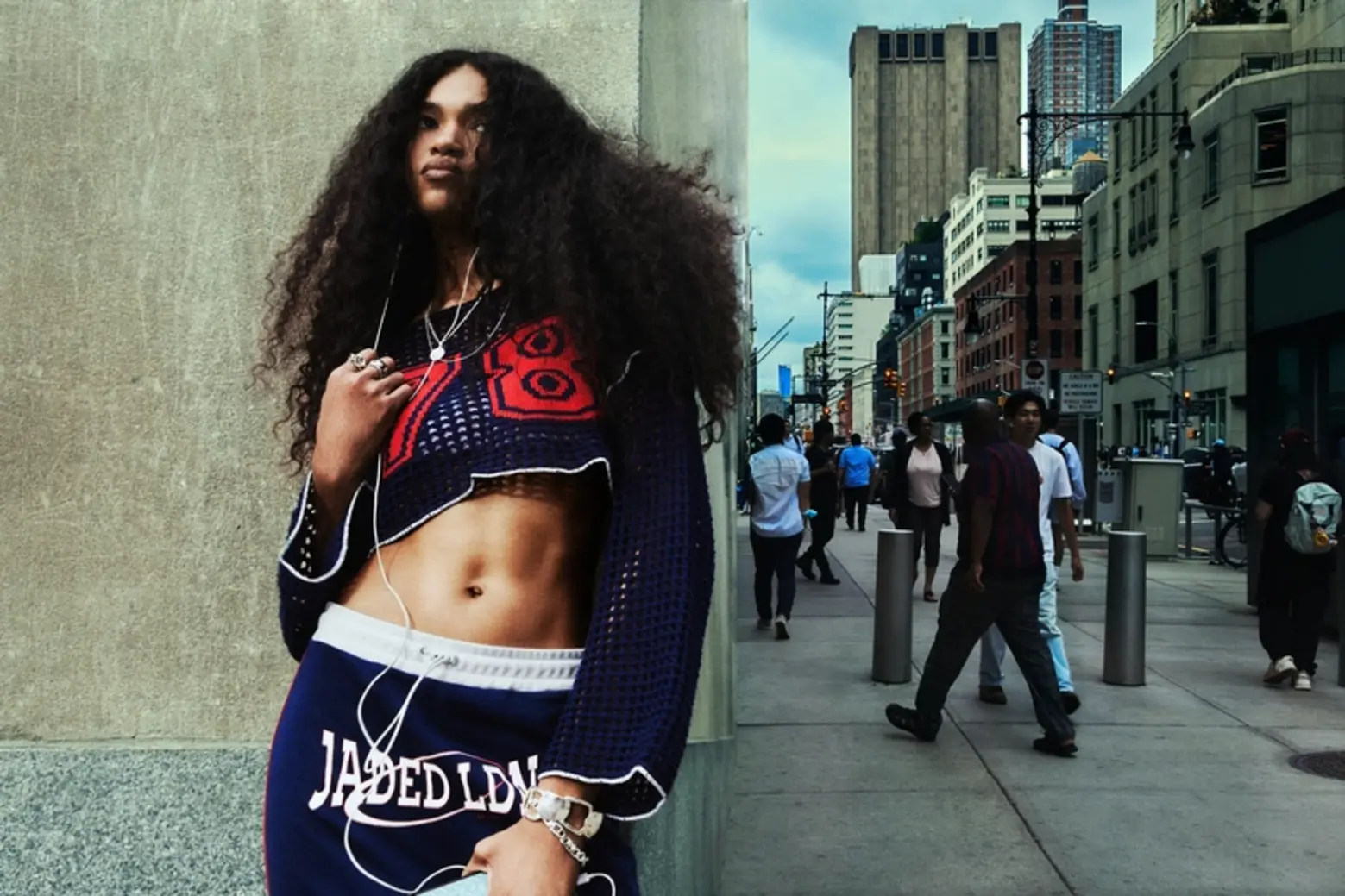
While men rhymed about the streets, the women wore them. When the beat broke, their hips caught the rhythm. When the bass dropped, their outfits caught the light. The earliest women in the scene, girls on corners, MCs just finding their voices, dancers spinning until the world blurred, were not polished or polished over. They were raw and electric. They wore clothes that said they were not waiting for permission. And that, more than any press clipping or brand endorsement, was the beginning of women’s hip-hop fashion: born of grit, raised by rhythm, baptized in the flash of gold hoops under sodium lights.
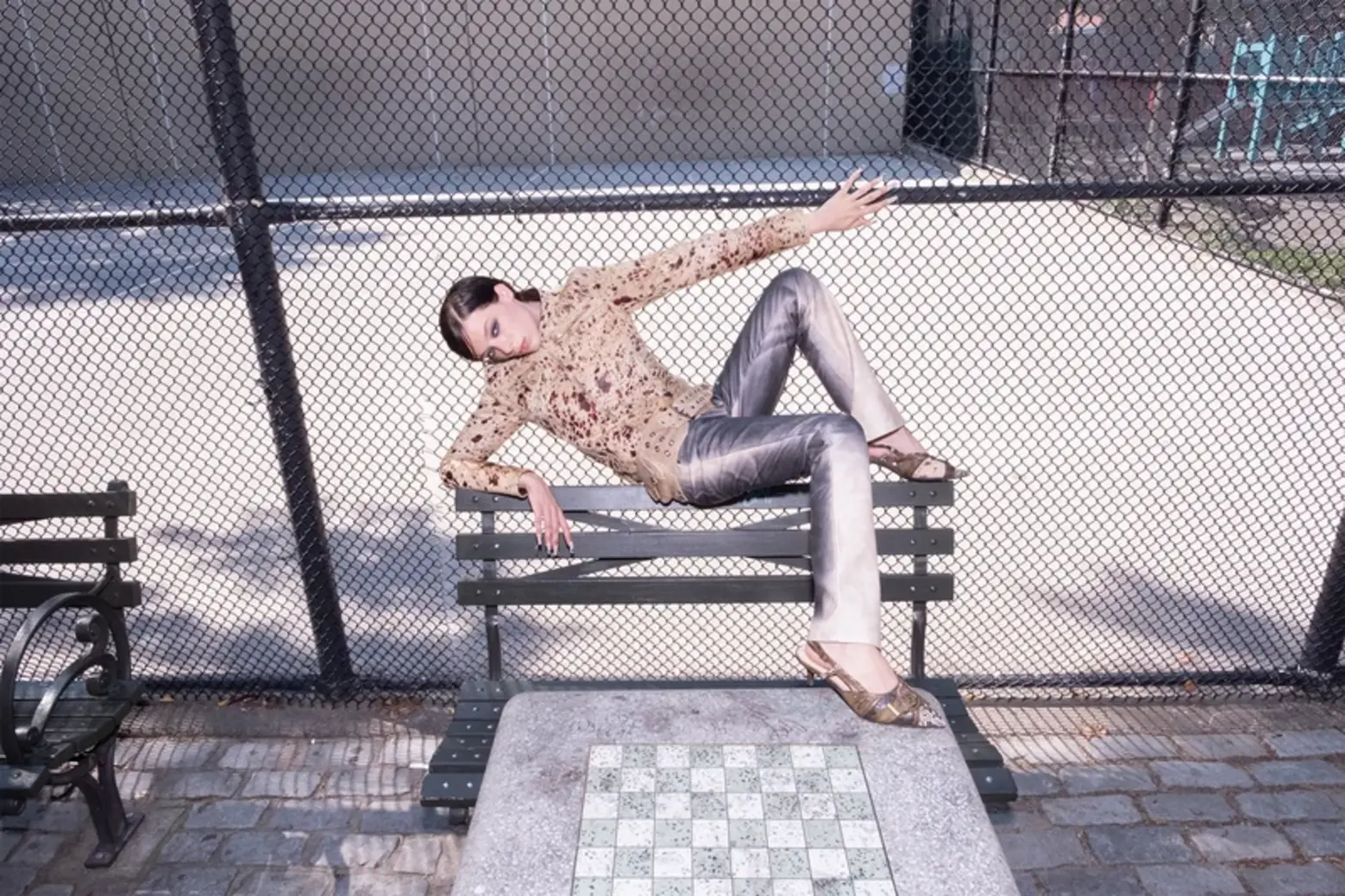
As hip-hop marched into the 1980s, that raw energy started to sharpen. What had been improvised on street corners became a style with rules of its own. Baggy silhouettes, big jackets, caps tilted just right, but always, always a streak of feminine voltage. MC Lyte walked on stage in an oversized jacket that looked like it could swallow her whole, yet she made it look royal. Queen Latifah crowned herself with bold prints and Afrocentric colors, wrapping Black pride into every thread. Salt-N-Pepa lit up the scene with cropped leather jackets, loud colors, and a sense of fun so fearless it became a uniform for girls who refused to shrink.
They weren’t trying to dress like men. They were rewriting what power looked like on women. At first, the baggy silhouettes were shields, a way to move through male-dominated spaces without being cornered or underestimated. But soon those silhouettes stopped being protection and started being performance. The girls who once needed to dress hard to be heard began dressing loud because they knew they already were. Fashion became their microphone. They built their looks the way DJs built beats, looping streetwear, adding Afrocentric accents, sneaking in shine, layering gold on gold.
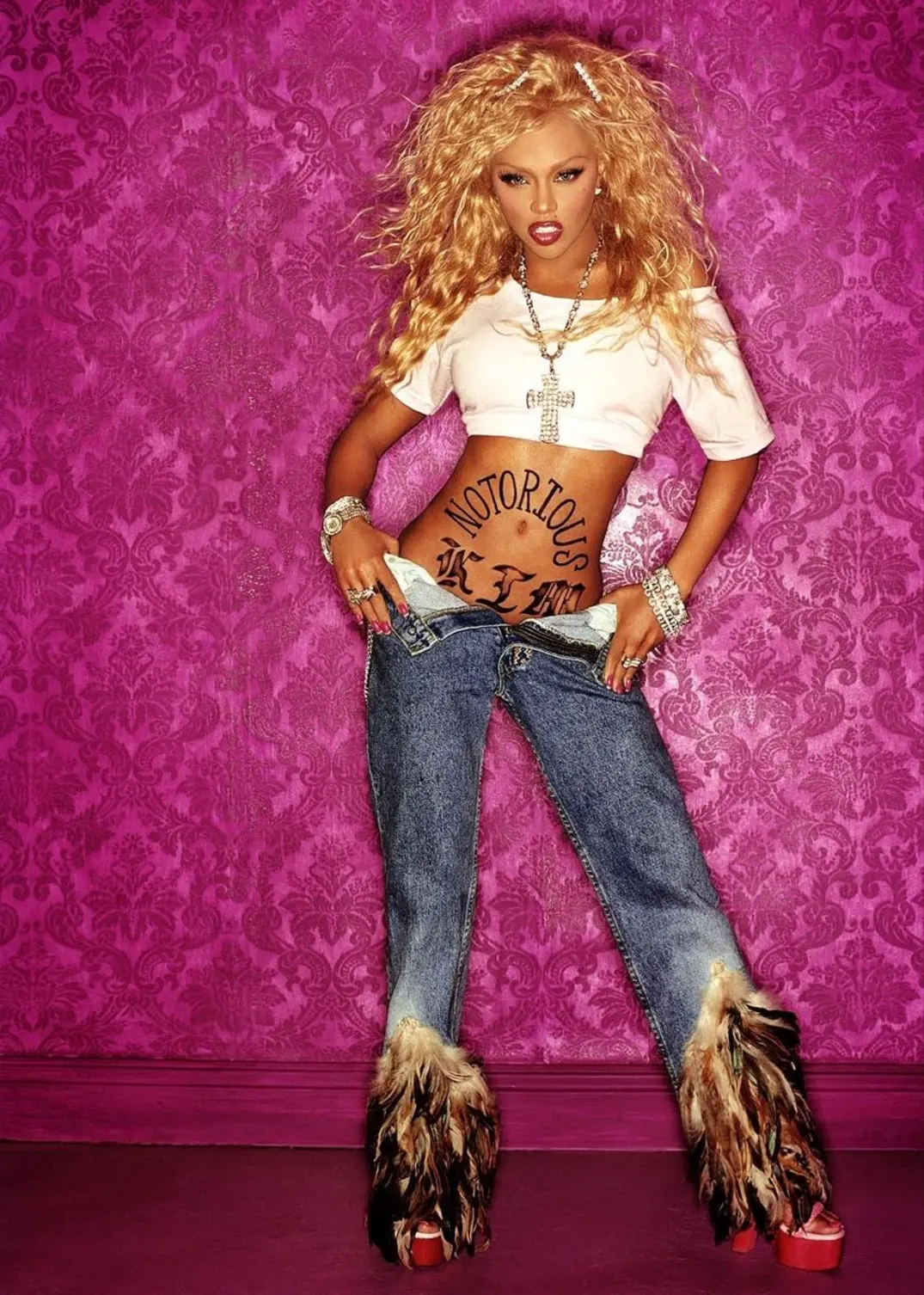
By the 1990s, the street runway had exploded into the mainstream. Hip-hop was no longer an underground whisper; it was pulsing through club speakers, music videos, red carpets, and award shows. And with this new stage came new queens. Lil' Kim. She wore furs that brushed the floor, wigs in every neon shade known to humankind, and corsets that gleamed under stage lights. She weaponized femininity with a grin sharp enough to cut glass.
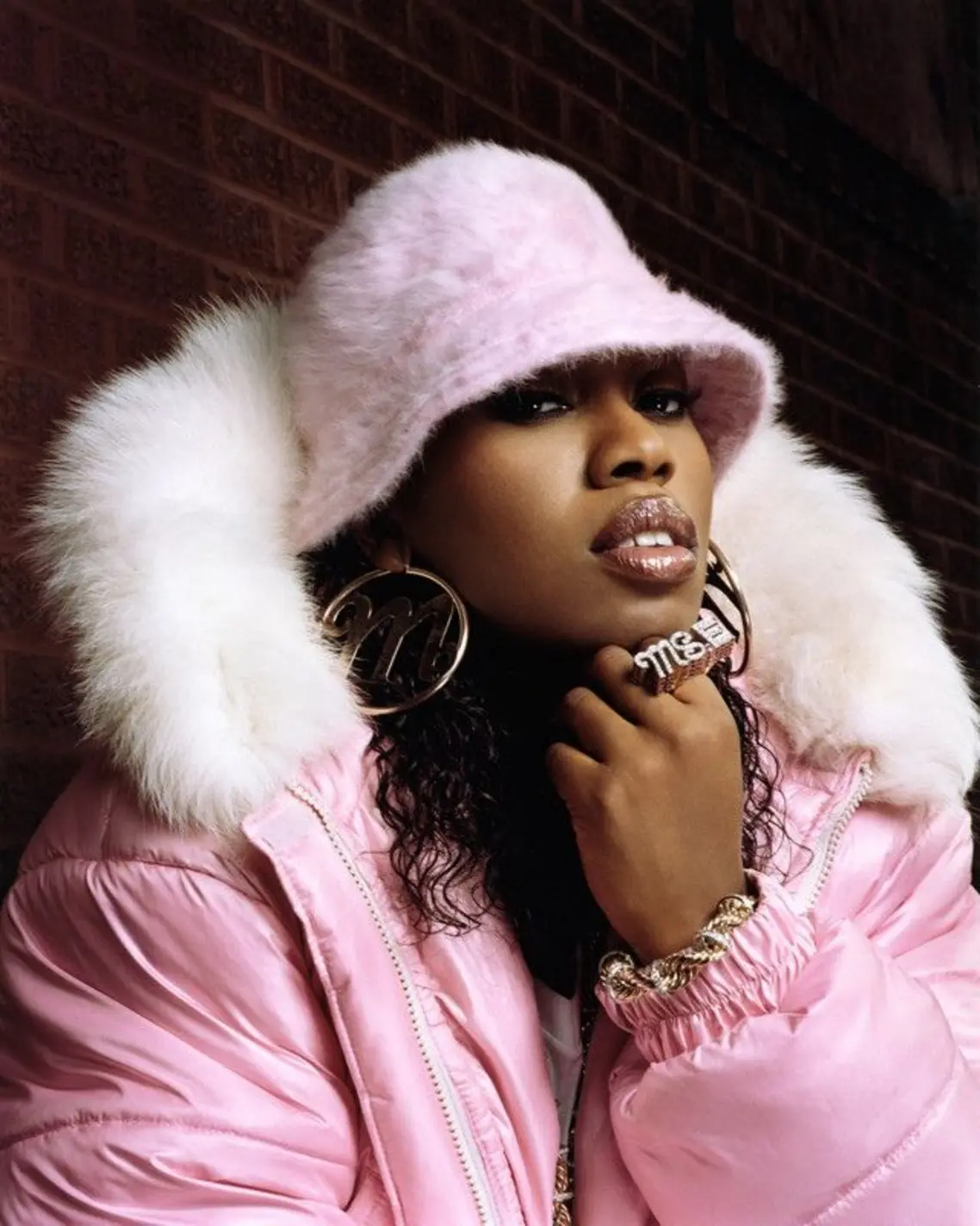
Beside her, Aaliyah and Missy Elliott merged street edge with soul glamour, pairing Timberlands with miniskirts and fur coats that turned the pavement into a catwalk. Women no longer needed to borrow power from male silhouettes. They turned their own curves into thrones. They took sex appeal, that so often had been a trap, and flipped it into a weapon. They looked at a world that preferred them quiet and wrapped themselves in fabrics that roared.
The world called their fashion too loud, too much, too ghetto. They called it fabulous. They knew exactly what they were doing. They had already been flipping luxury logos on the streets of Harlem, crafting jackets and tracksuits with Gucci and Louis Vuitton patterns long before those brands thought the Bronx was worth their time. Women in hip-hop took those bootlegged luxuries, wore them with pride, and made them divine.
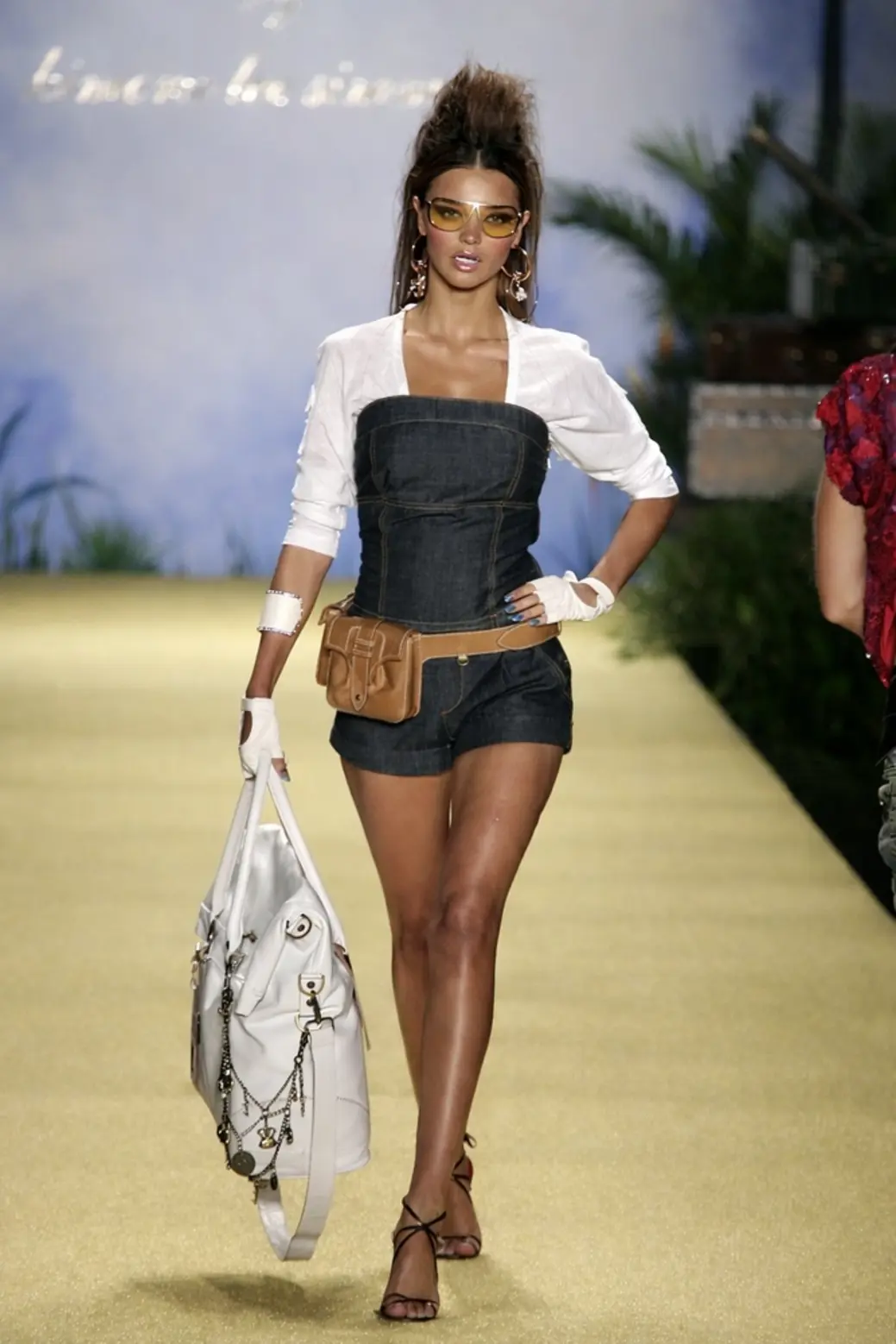
The early 2000s rolled in like a gold rush. Hip-hop was no longer on the outside banging on the door; it had the keys, the house, and the chandelier. The women who had once been sidelined were now moguls in stilettos. Fashion wasn’t a side story anymore; it was empire-building. Kimora Lee Simmons turned Baby Phat into a shimmering pink juggernaut that wrapped the world in rhinestones.
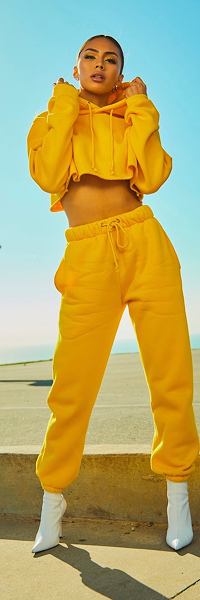
Baby Phat was more than a brand. It was a statement that hood and haute could live in the same breath. It was velour tracksuits that clung to the body like a secret weapon. It was fur-trimmed hoodies that turned parking lots into catwalks. It was glossy lip gloss, slick ponytails, gold bangles stacked high, and a walk that could shake a city block. Girls from the Bronx to Paris wore it. It was power-dressed in blush pink.
These years were a kind of delirious triumph. The same aesthetics that the fashion establishment once mocked became the blueprint for global trends. Hip-hop women didn’t adapt to luxury; luxury adapted to them. Rhinestones bloomed on couture. Gold hoops appeared on runways. High fashion tried to smooth out the grit, but the real ones knew where it came from. Every velour stitch carried the bass of a block party. Every logo spelled out the names of women who made glamour look dangerous and delicious.
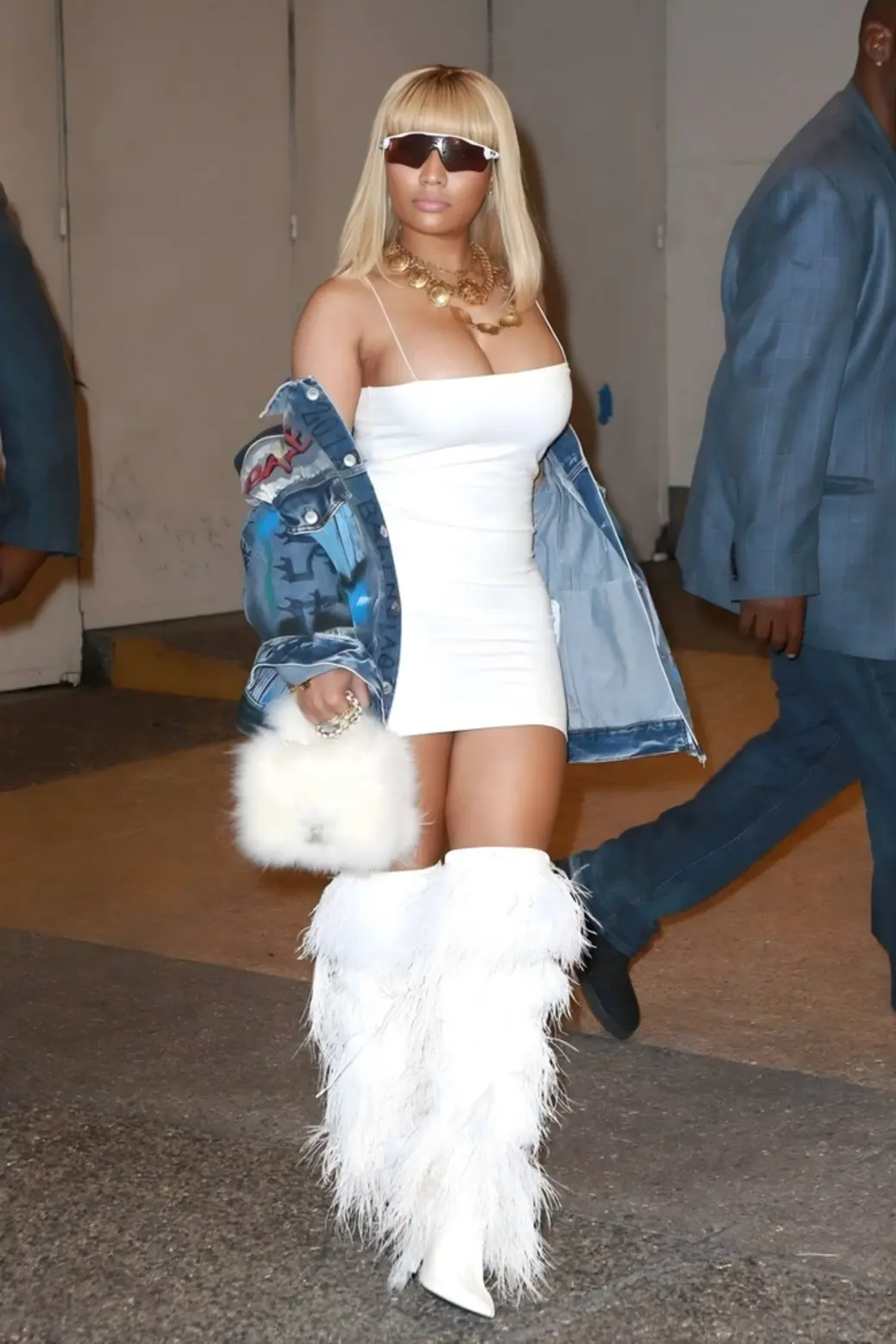
The digital age cracked the world open even wider. Platforms turned looks into currency. Nicki Minaj arrived in a blaze of pink wigs, cartoon silhouettes, and a tongue sharp as a diamond edge. Her fashion wasn’t shy; it was chaos and genius. She wore outfits like punchlines, turning every appearance into a headline.
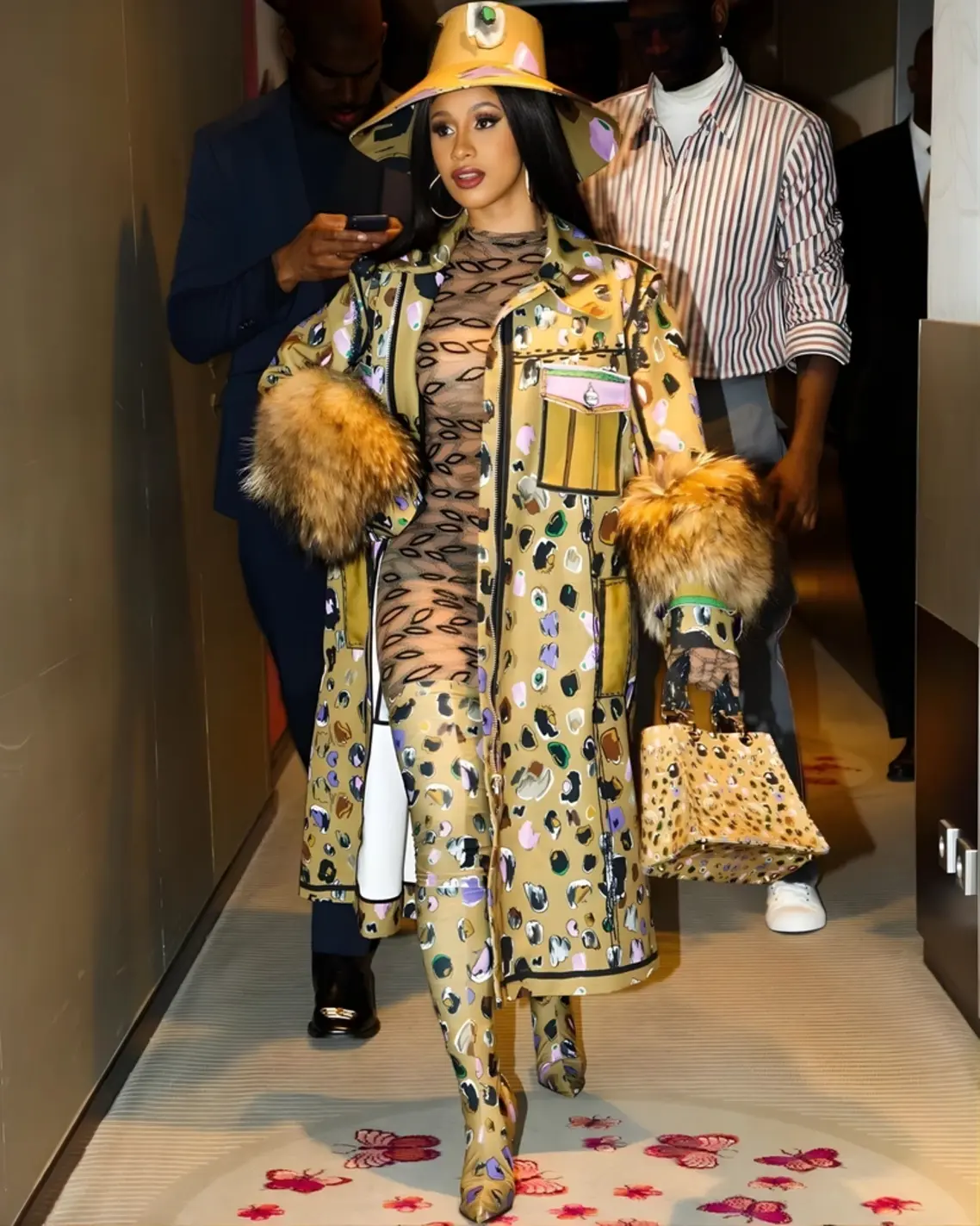
Then came Cardi B, who transformed her Bronx strip club style into high-gloss runway spectacle, stepping onto red carpets in Mugler gowns that swirled like liquid sin.
Unlike the early days, these women didn’t need to ask for a seat at the table. They sat front row in Versace, Schiaparelli, Balenciaga. Their looks weren’t borrowed. They were built, custom, electric. Social media turned every fit into a flashpoint, and these women ruled the feed. Their stylists understood that fashion was not an accessory to music; it was a verse of its own.
Doja Cat arrived and erased the line between performance and fashion entirely. She walked into events like a fever dream, covered in crystals, latex, or feline prosthetics, giving no explanation because none was needed. Ice Spice and GloRilla brought the raw Bronx and Memphis pulse, proving that the street never dies, it just evolves, slicker and shinier.
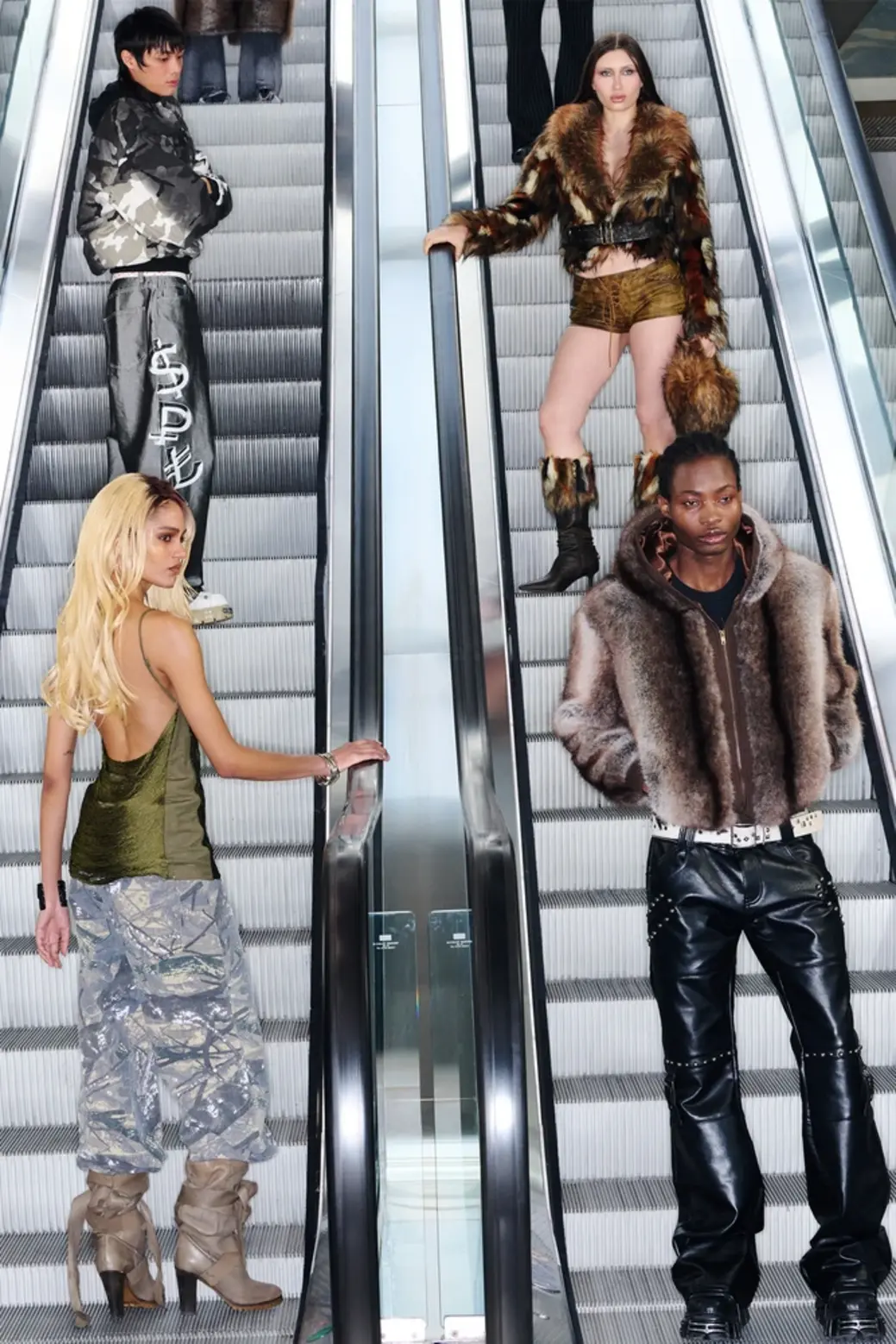
What started as rebellion had become the trend luxury houses chased. What once was too loud had become the sound of money. But through it all, the spirit of women’s hip-hop fashion stayed the same: loud, proud, impossible to ignore.
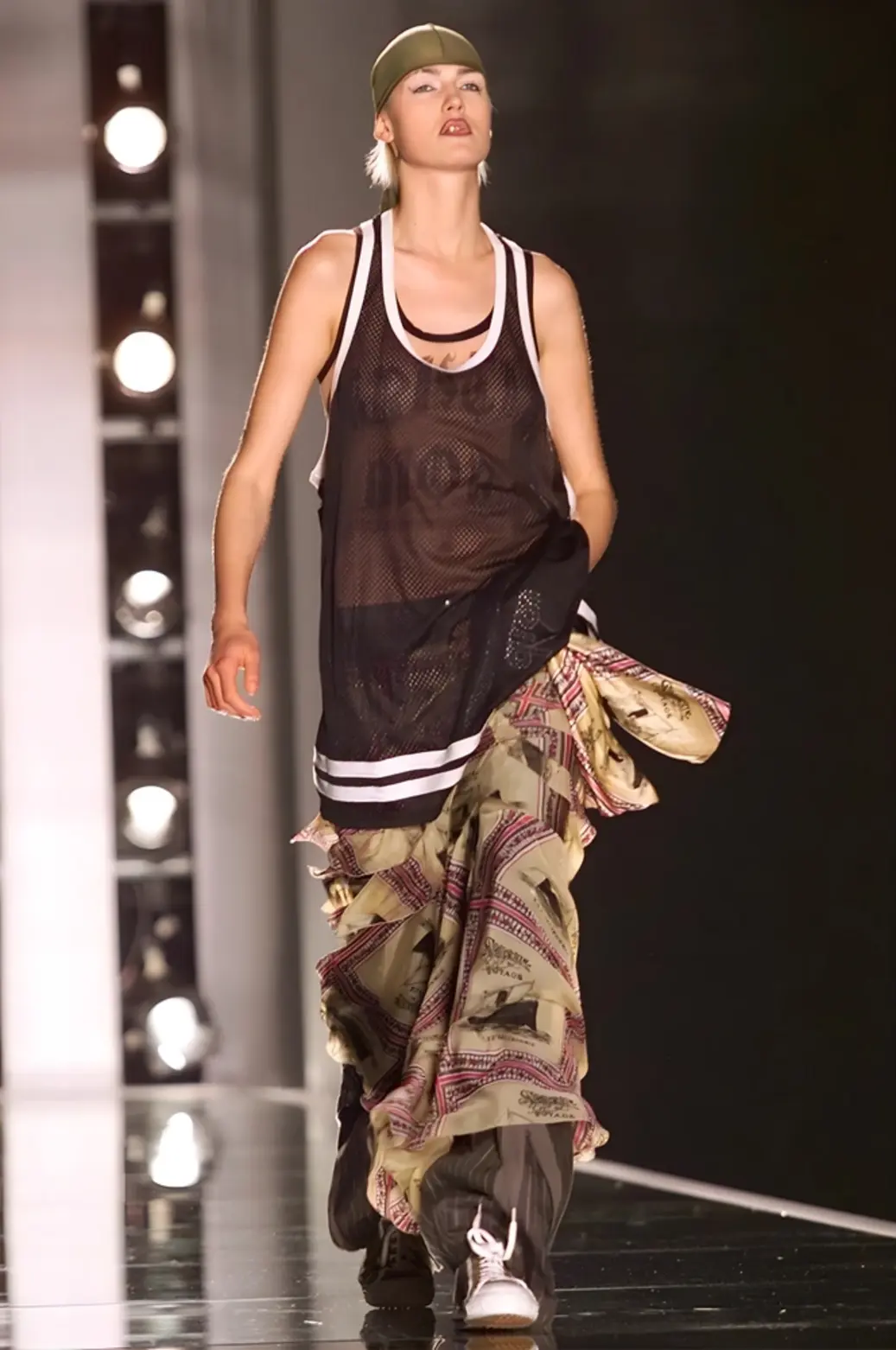
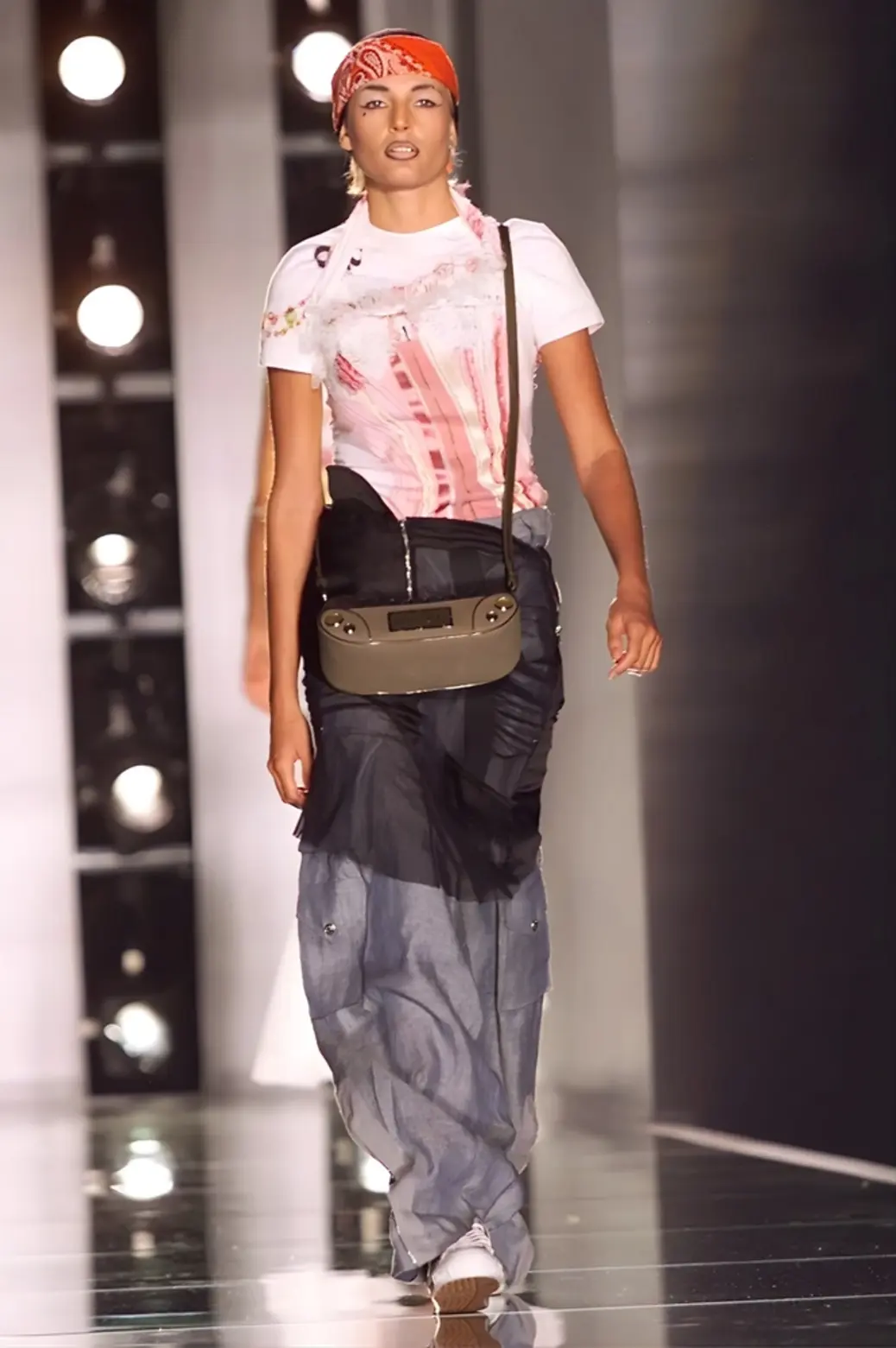
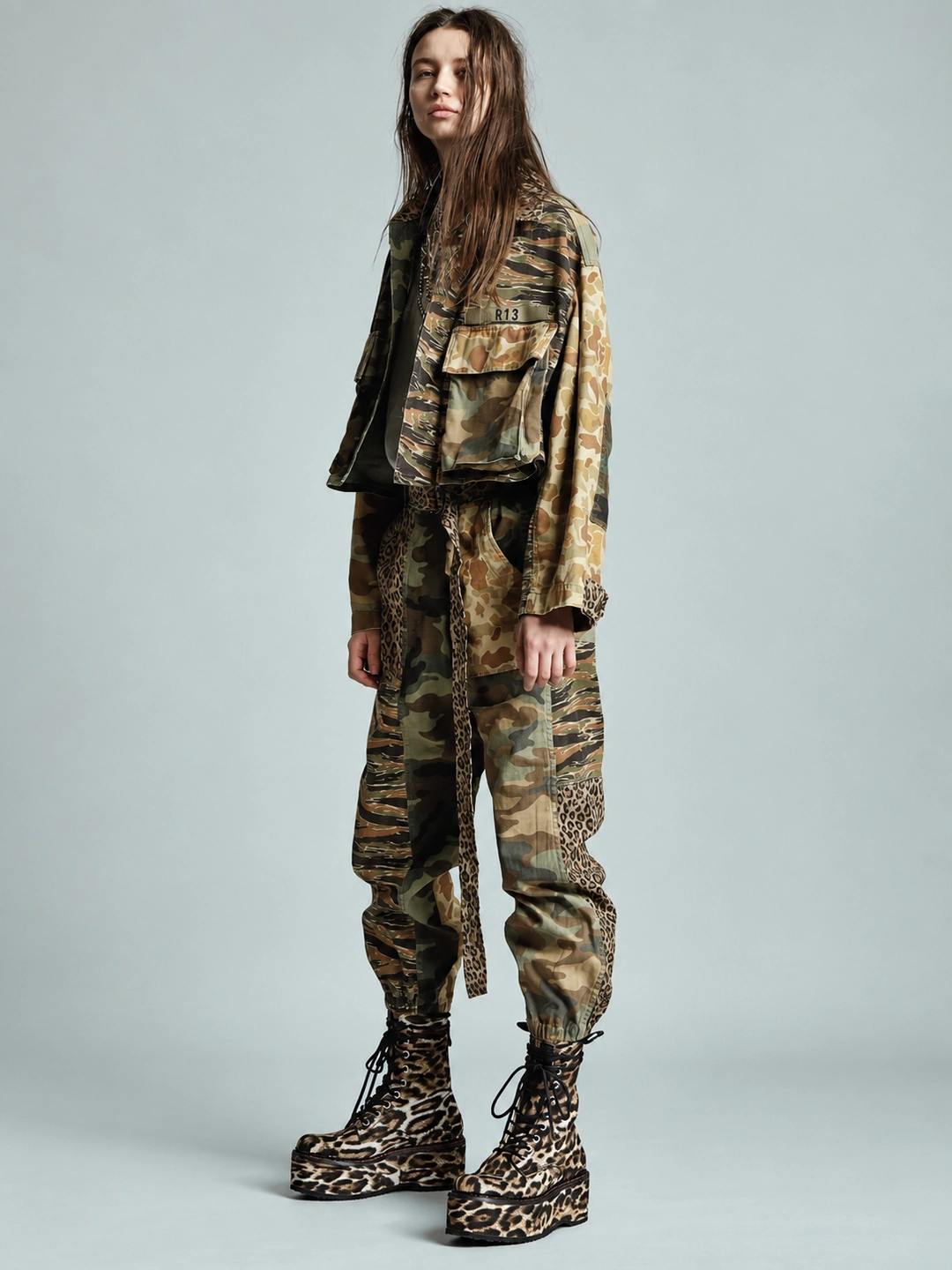
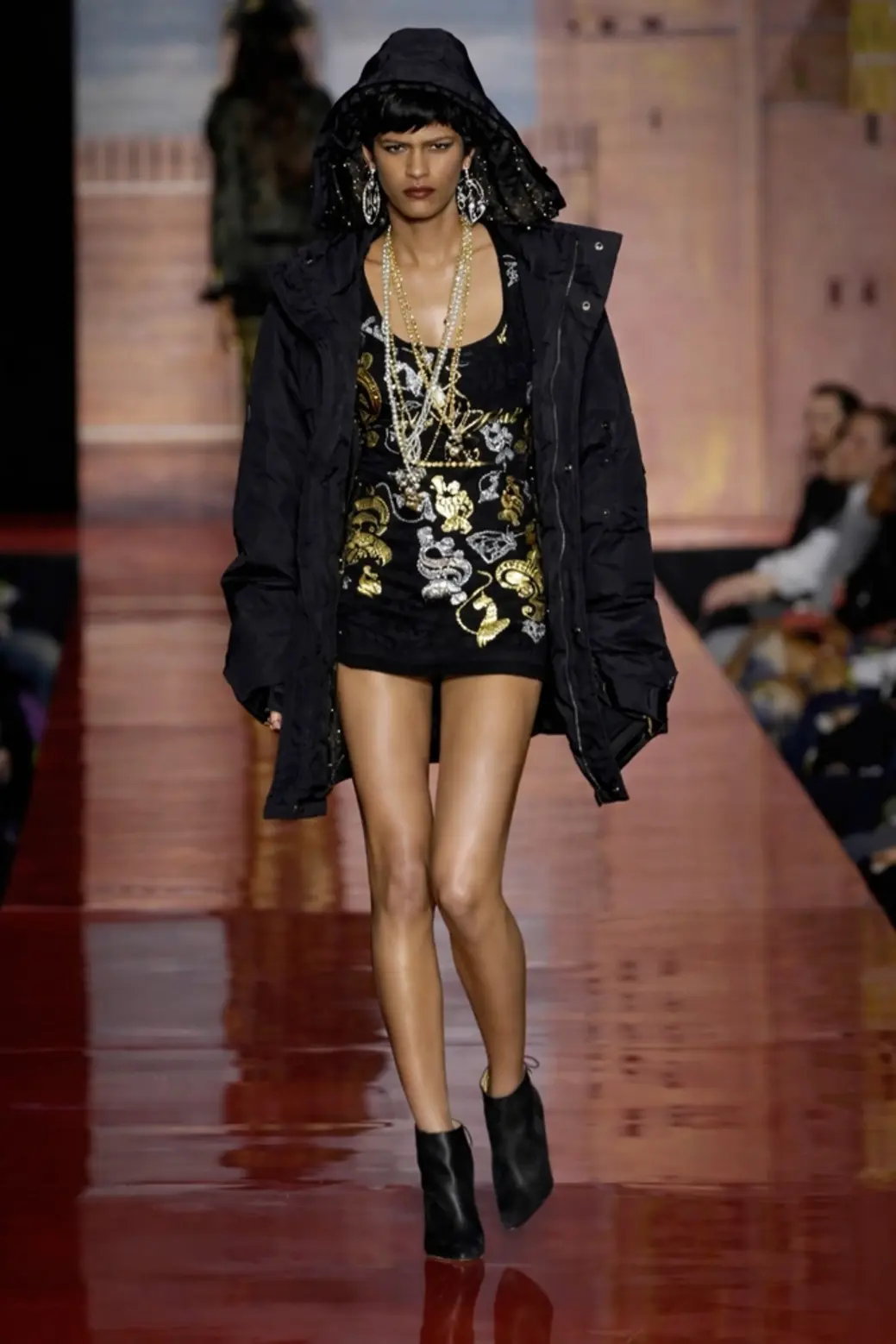
John Galliano’s Dior fused hip-hop bravado with globe-trotting fantasy, turning the “girl in the hood” into a street-chic heroine wrapped in couture swagger. Even at his most urban, Galliano injected as always, a burst of theatrical, high-octane energy into his ethnic-inspired excursions.
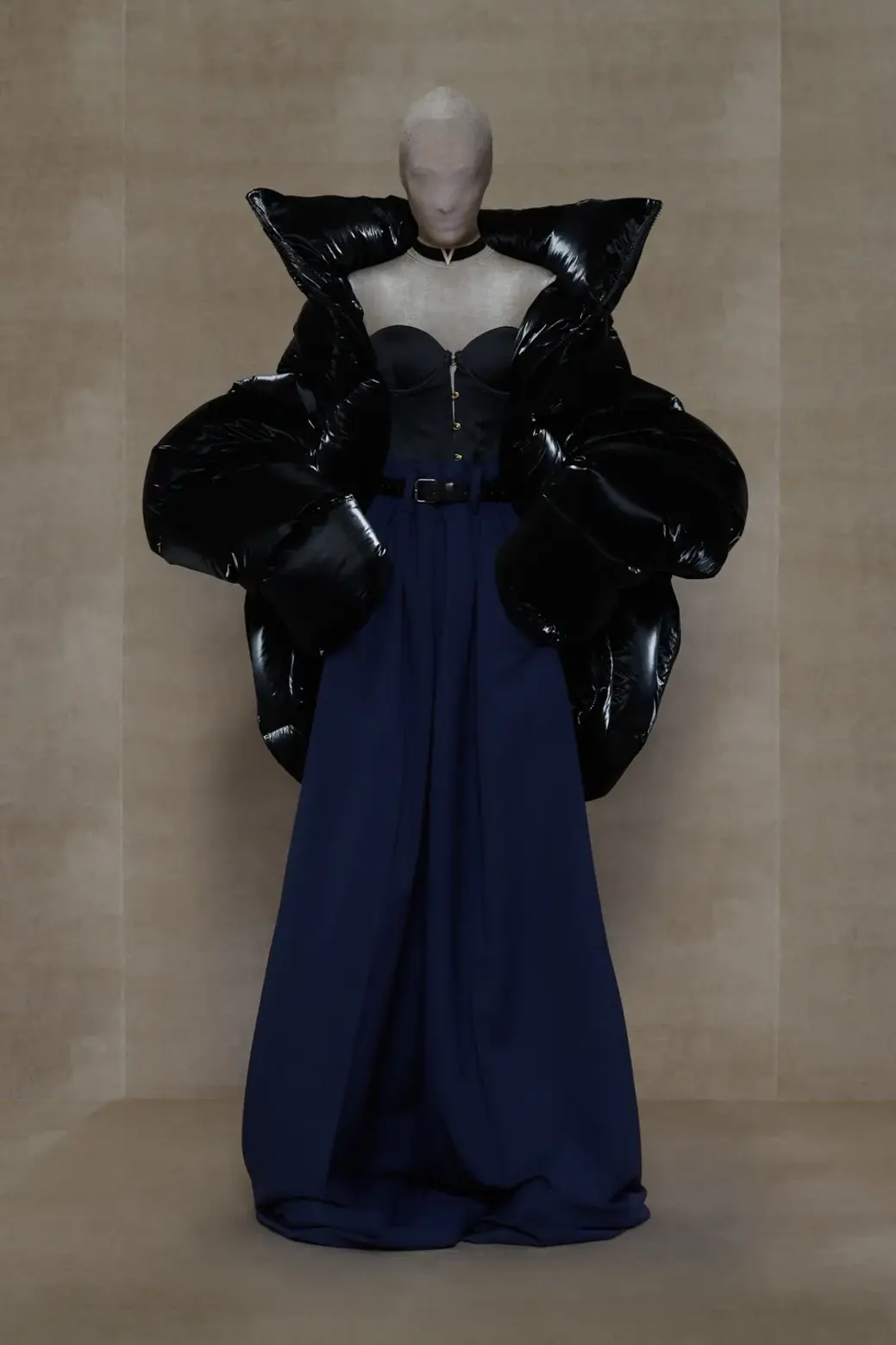
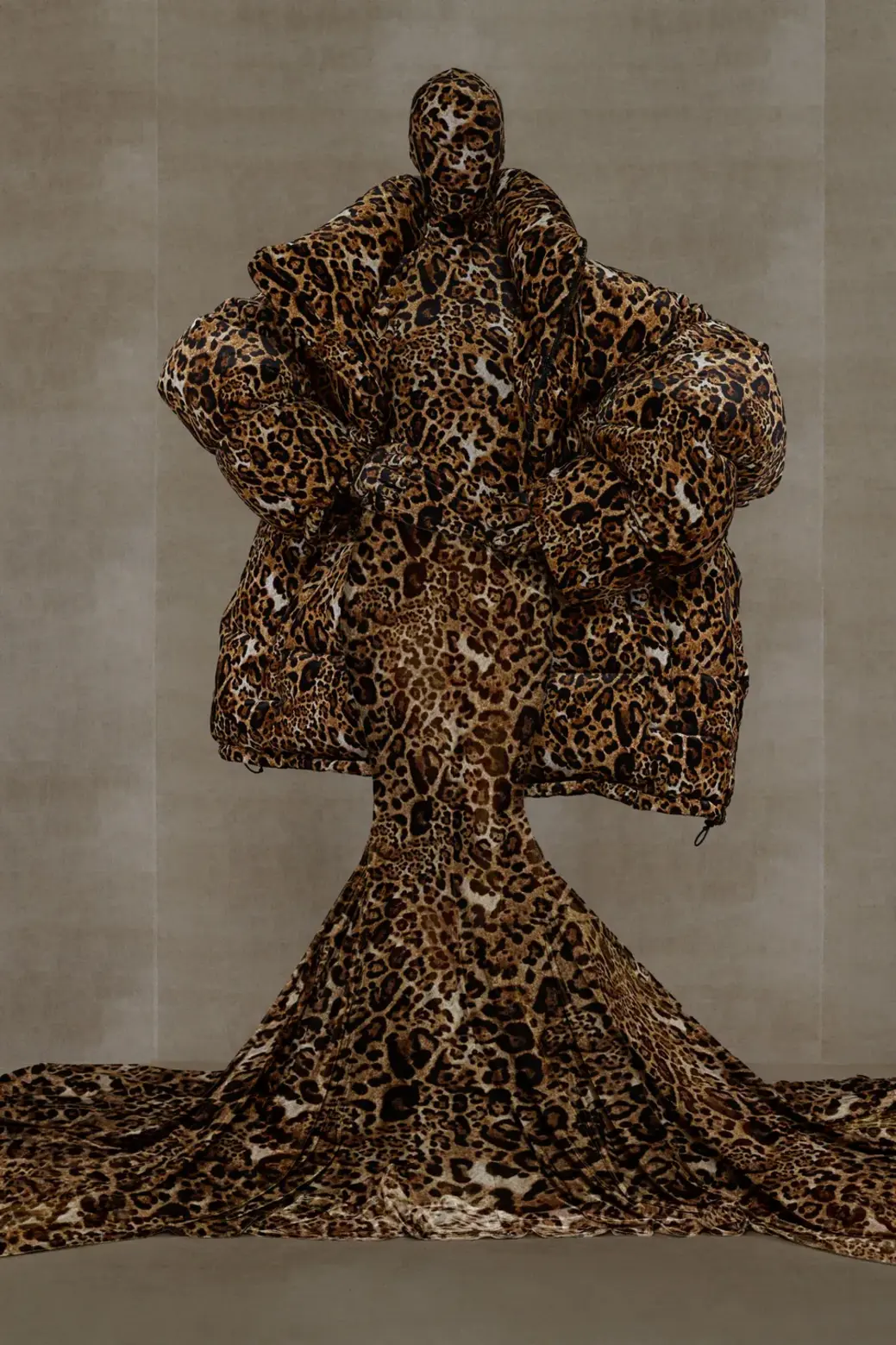
Modern hip-hop struts through luxury houses like a storm wearing lip gloss. Vetements puffs up the night with an obsession for volume—puffer jackets swelling like they’ve got secrets stitched inside, sleeves swallowing hands, zippers flirting with danger. It’s street armor with a smirk, heavy, loud, always ready to crash the velvet ropes.
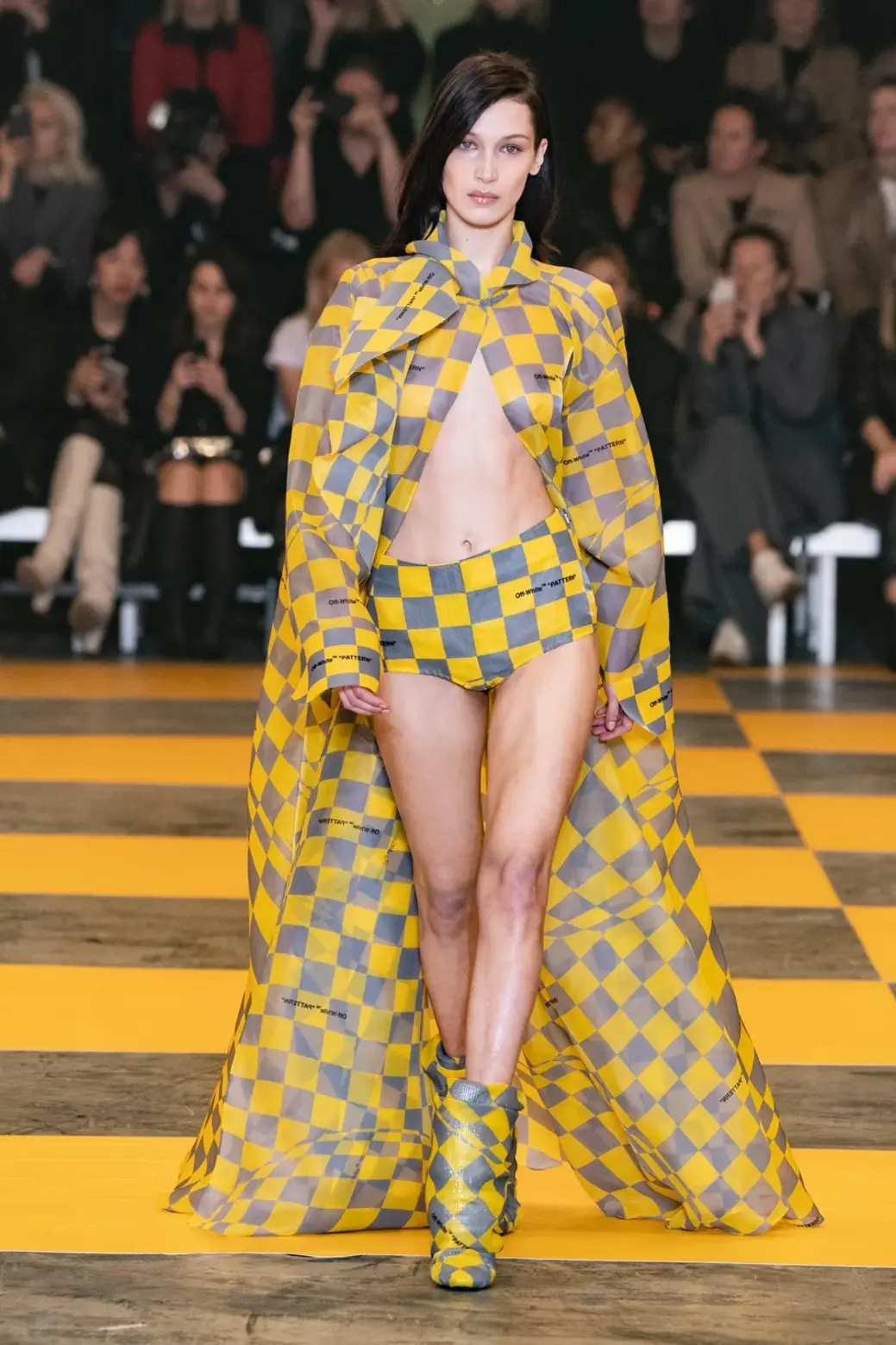
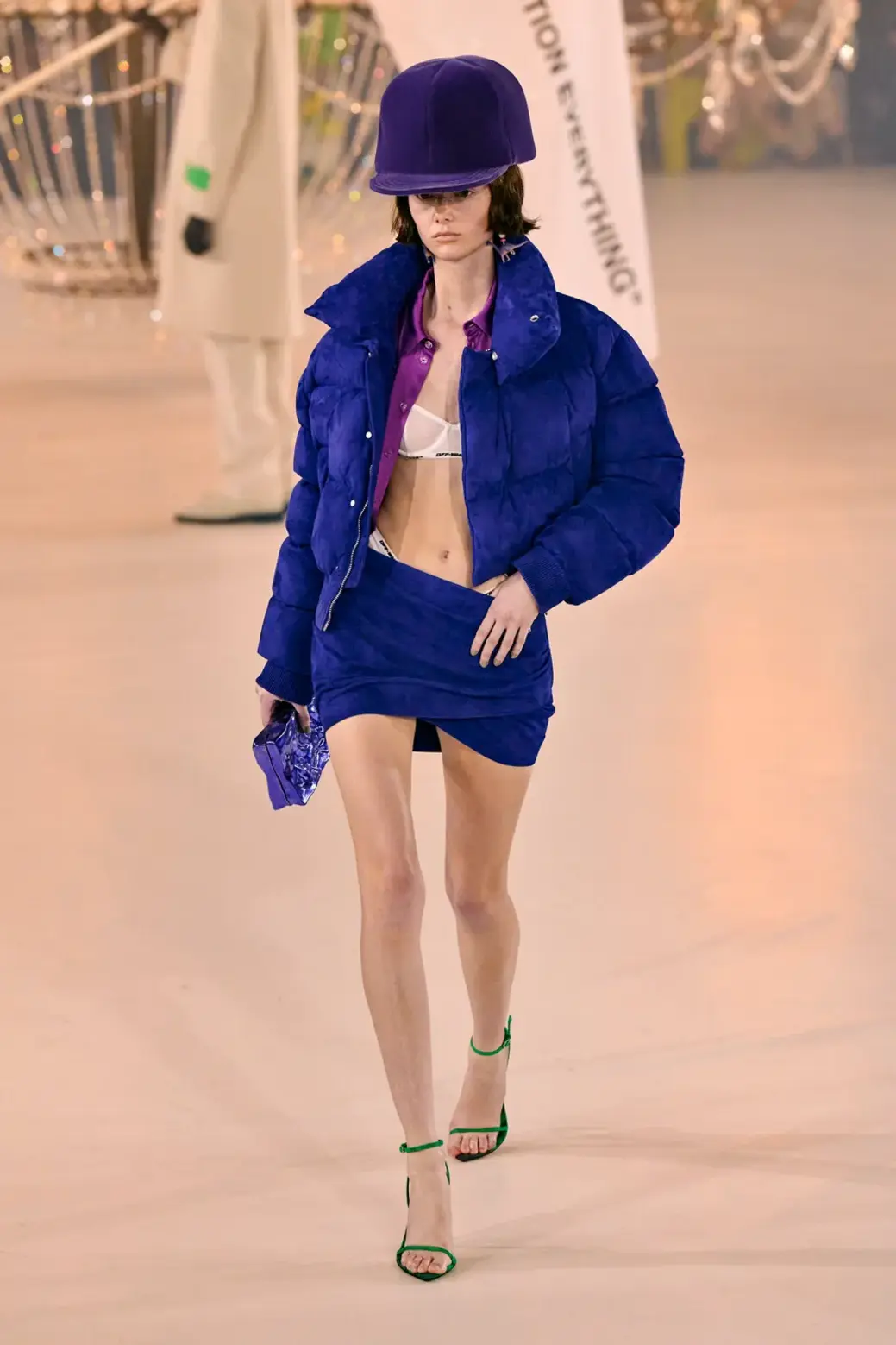
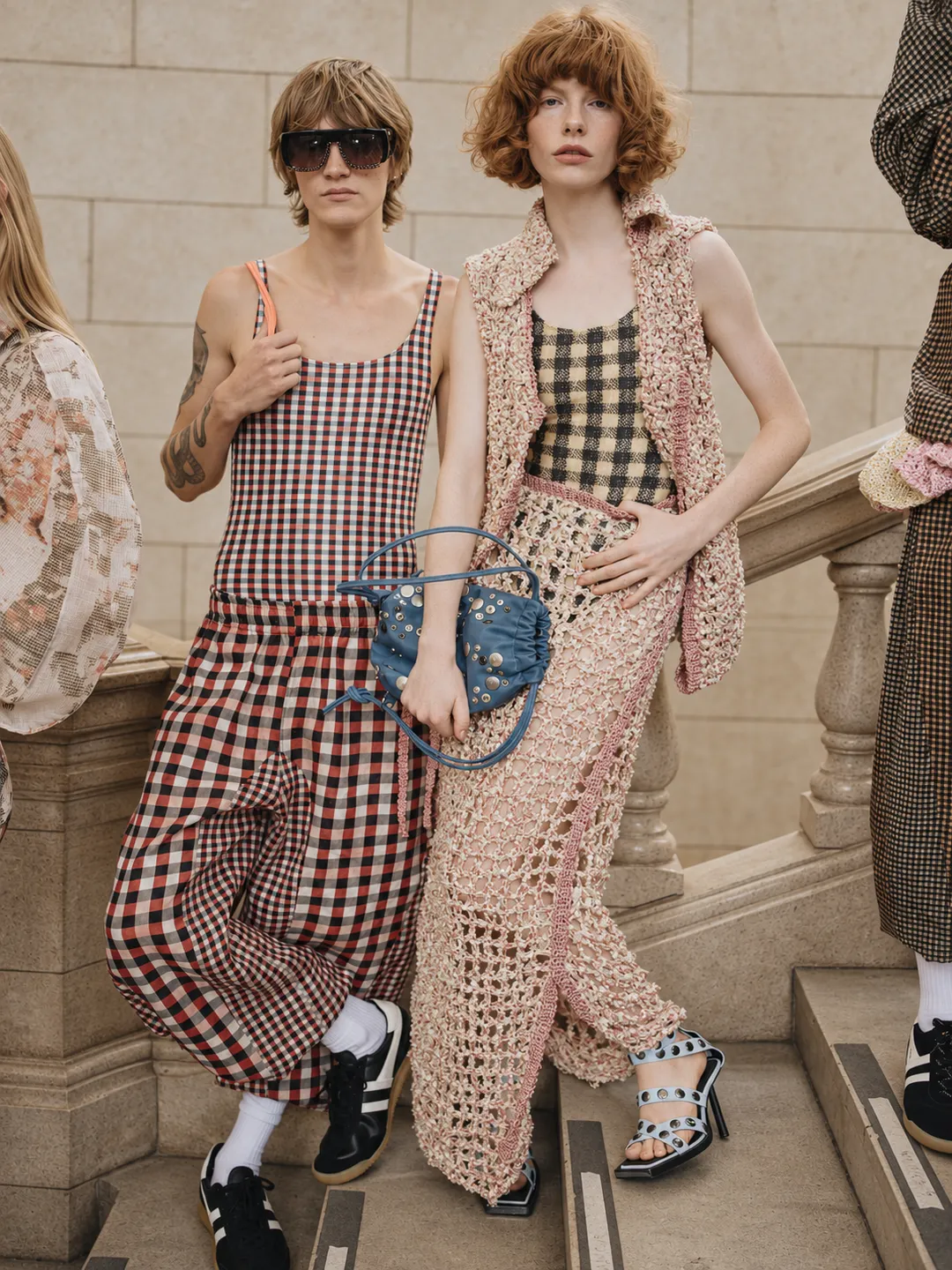
Off-White plays the rebel sweetheart—crop jacket sets clipped tight, skinny jorts slicing the silhouette, mini skirts swinging with that don’t-touch-me sway. Every line and strap feels like a beat drop in fabric form, clean but electric, casual but never quiet.
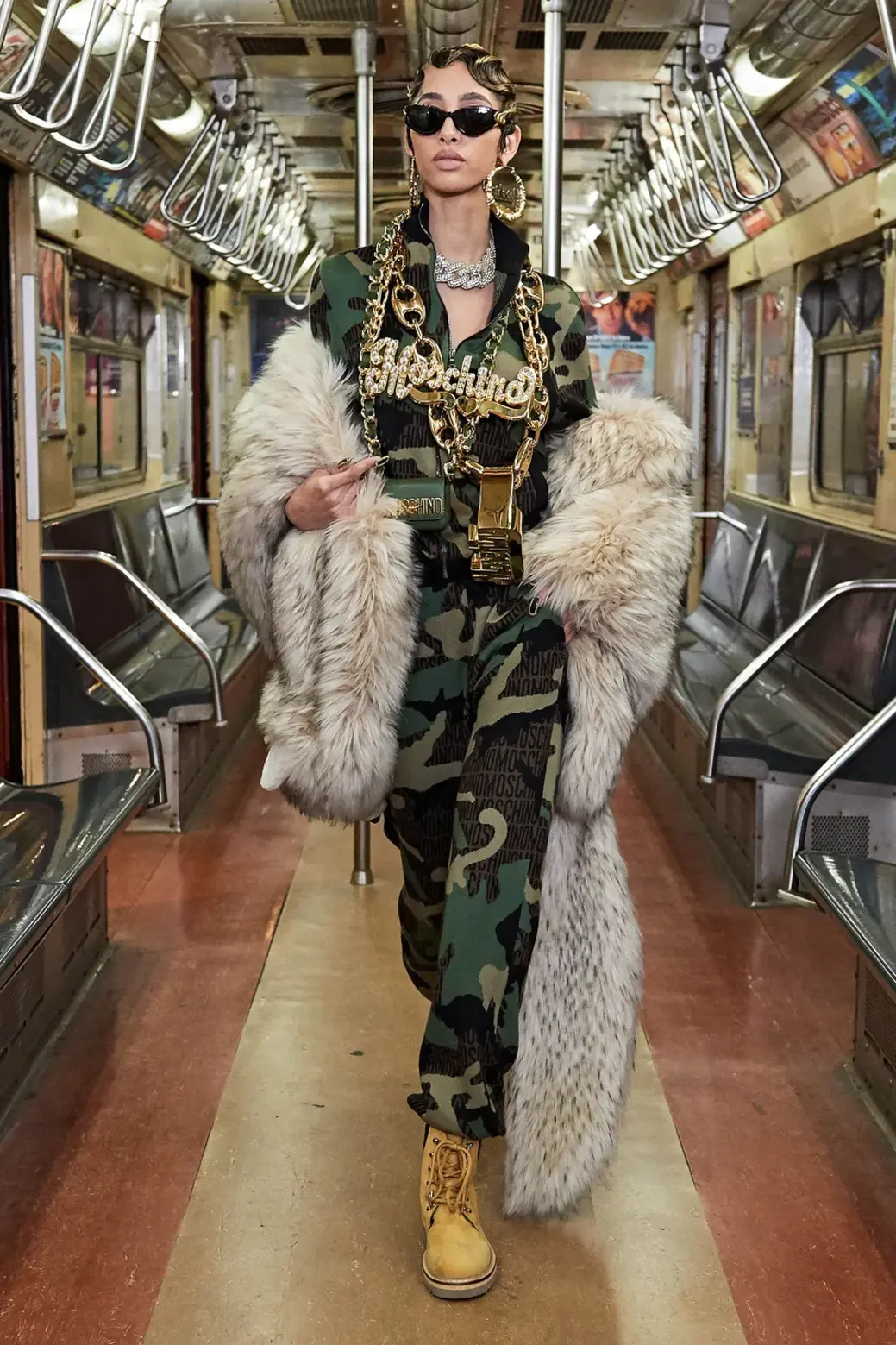
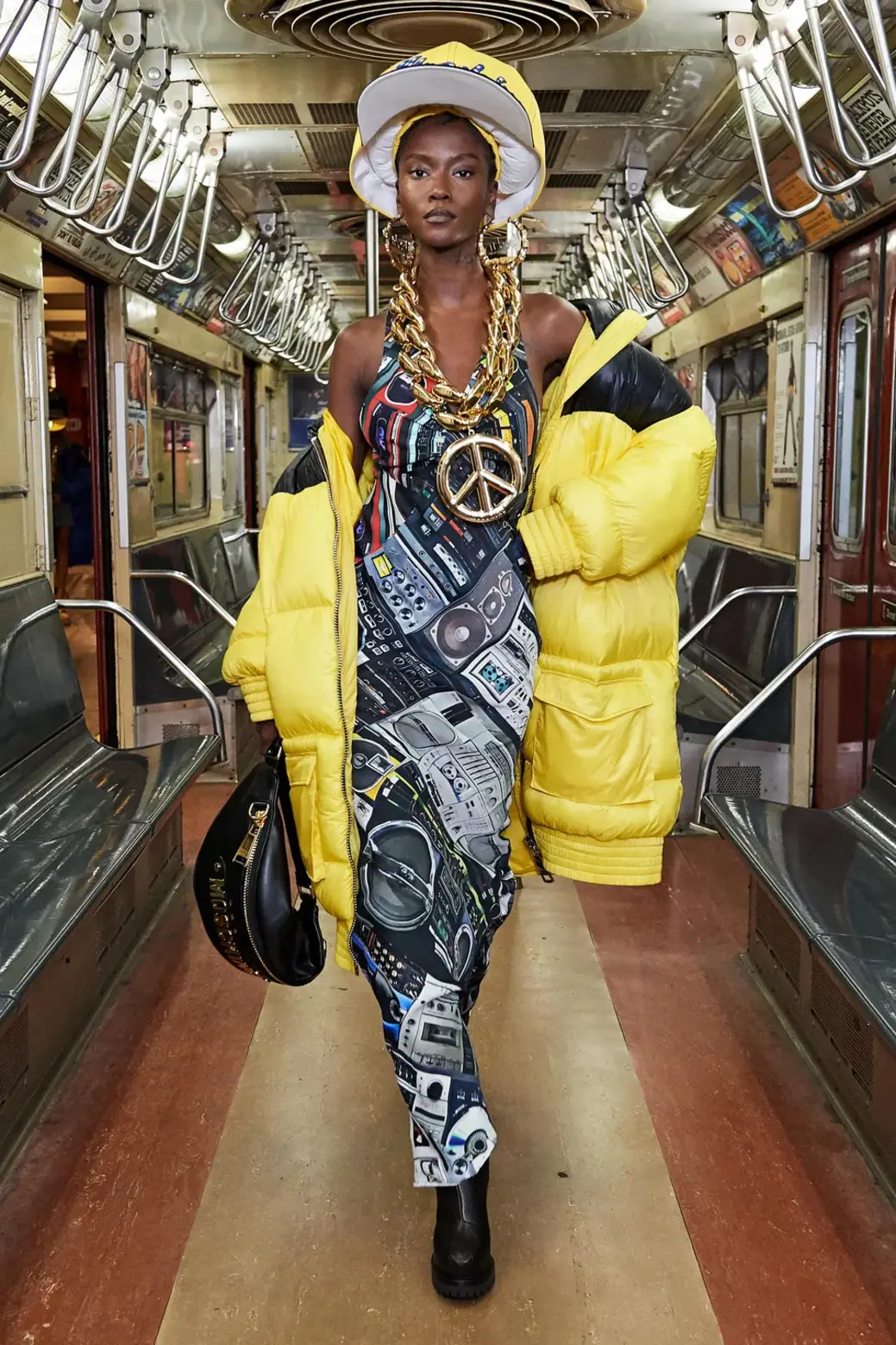
Moschino bursts in like glitter grenades, bling dripping from collars, chains talking louder than words, colors screaming like graffiti at midnight. It’s joy on steroids, sassy to the bone, a fashion wink that hits like a punch.
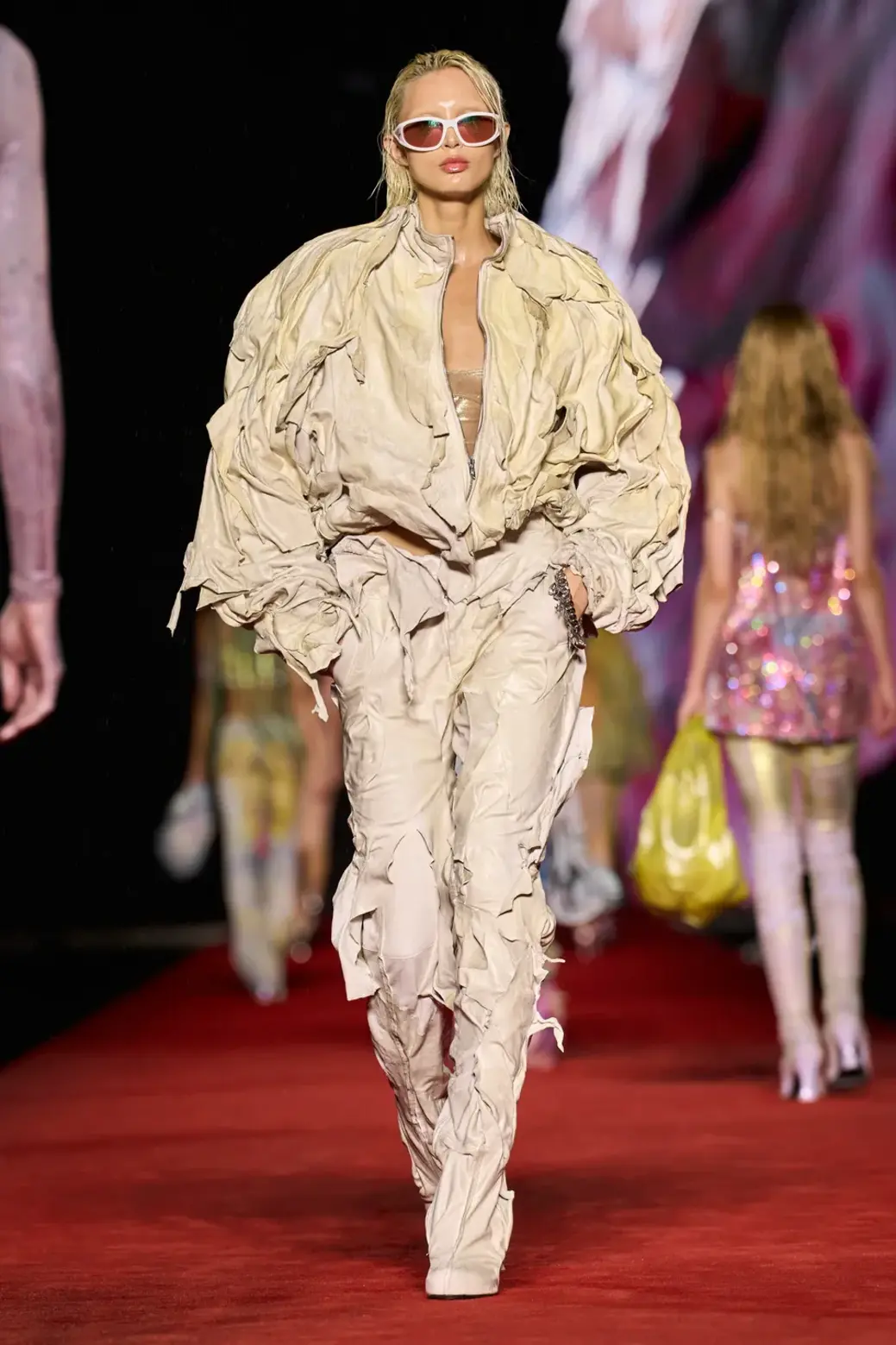
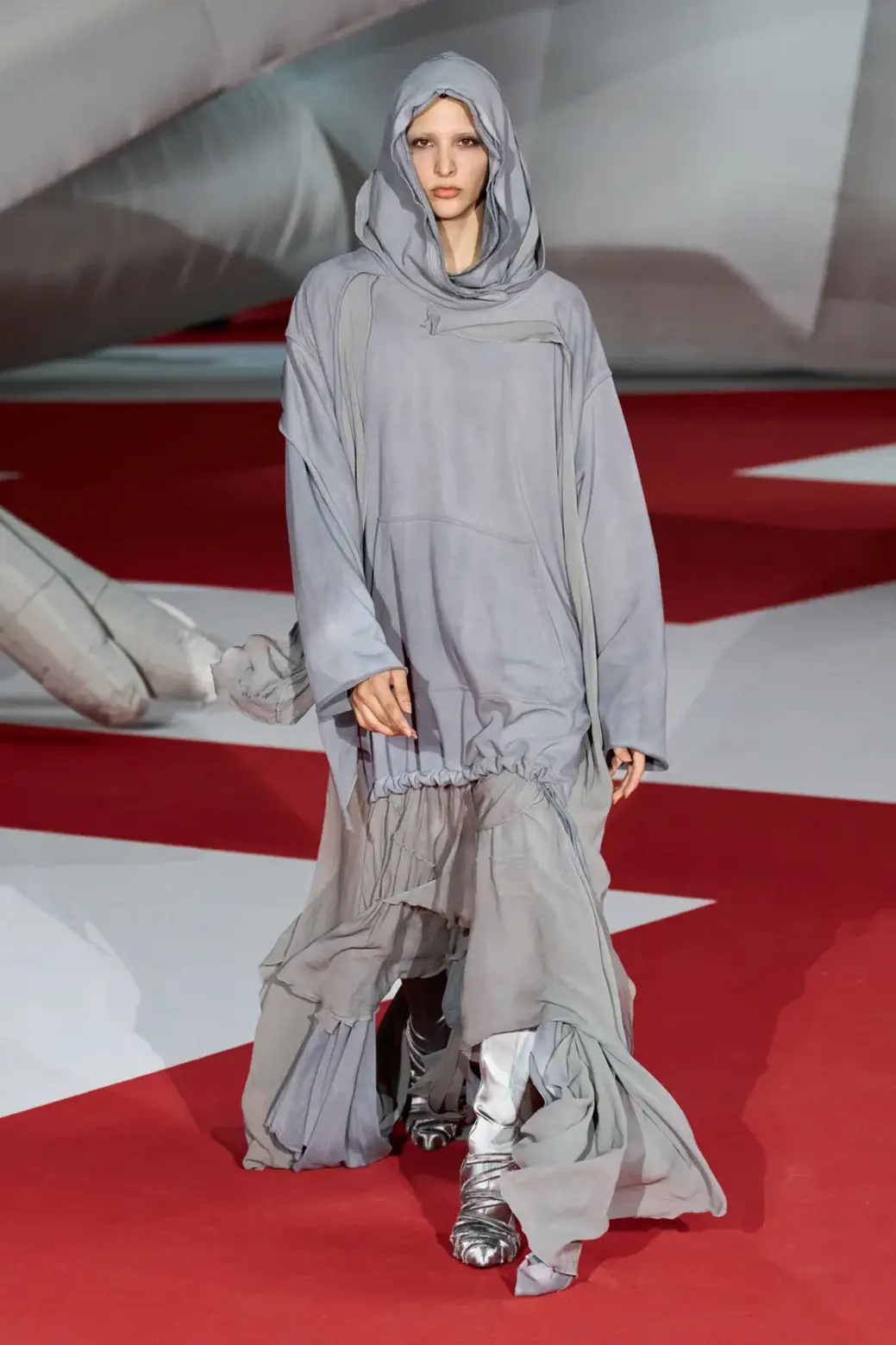
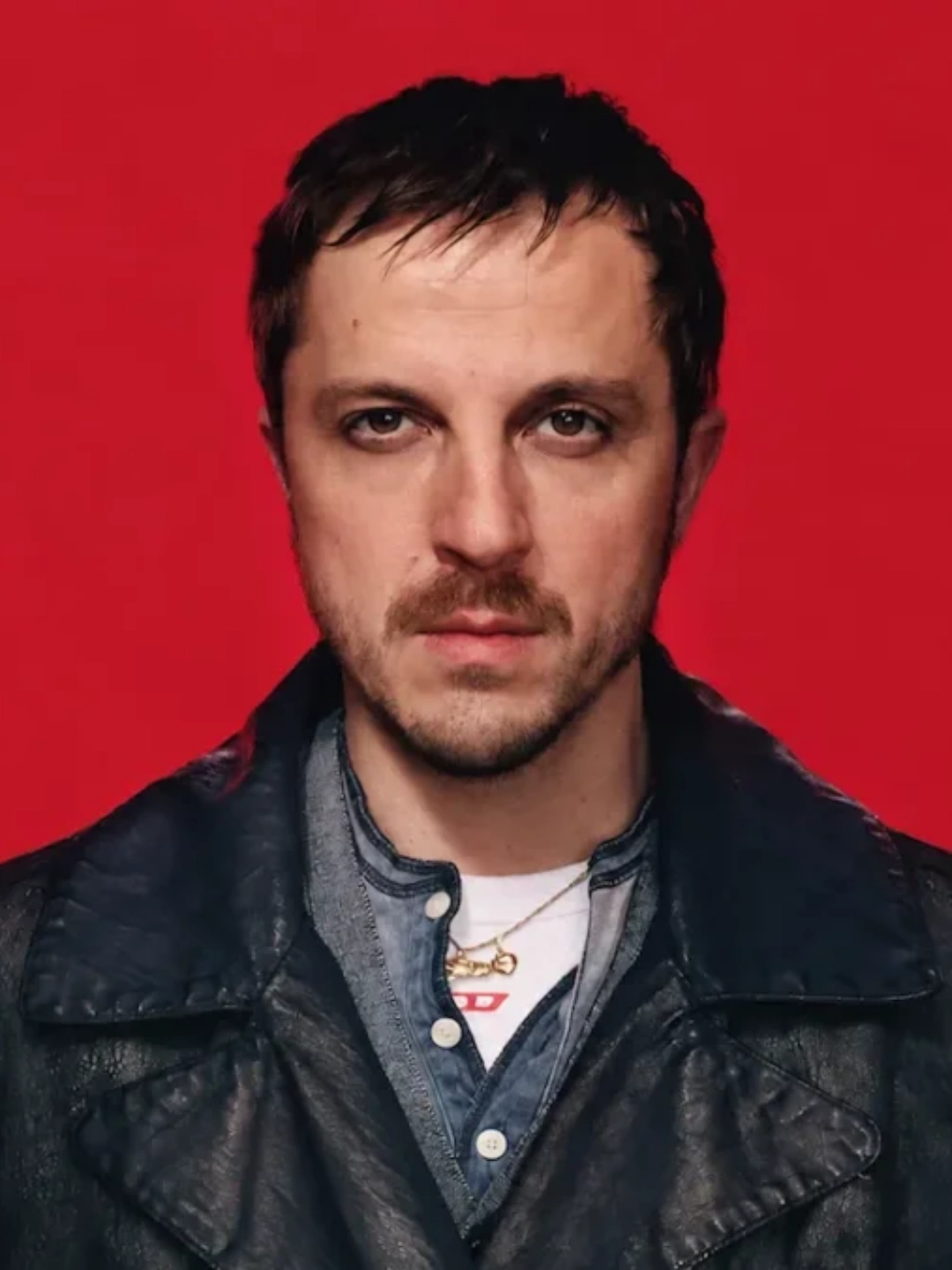
And Diesel? It slices through with daring cuts, wicked drapes, stitches that bite. Denim becomes a weapon, fabric folds like attitude, seams pull tight like a bassline ready to explode.

Every piece of women’s hip-hop fashion carries a story.
The internet made hip-hop fashion borderless, but the core remains exactly where it started: on the street, in the hands of women who refuse to be small. Fashion in hip-hop is never neutral. It is political without speeches, revolutionary without slogans. For Black and Brown women, dressing up loud is a refusal to be erased. When Lil' Kim wore lavender wigs and deep necklines, they called her vulgar. When luxury fashion mimicked her years later, they called it avant-garde. When Cardi B arrived at the Met Gala in full Mugler, the fashion world gasped as if it had never seen a Bronx girl shine before. But the girls had been shining for decades. The only difference was who controlled the narrative.
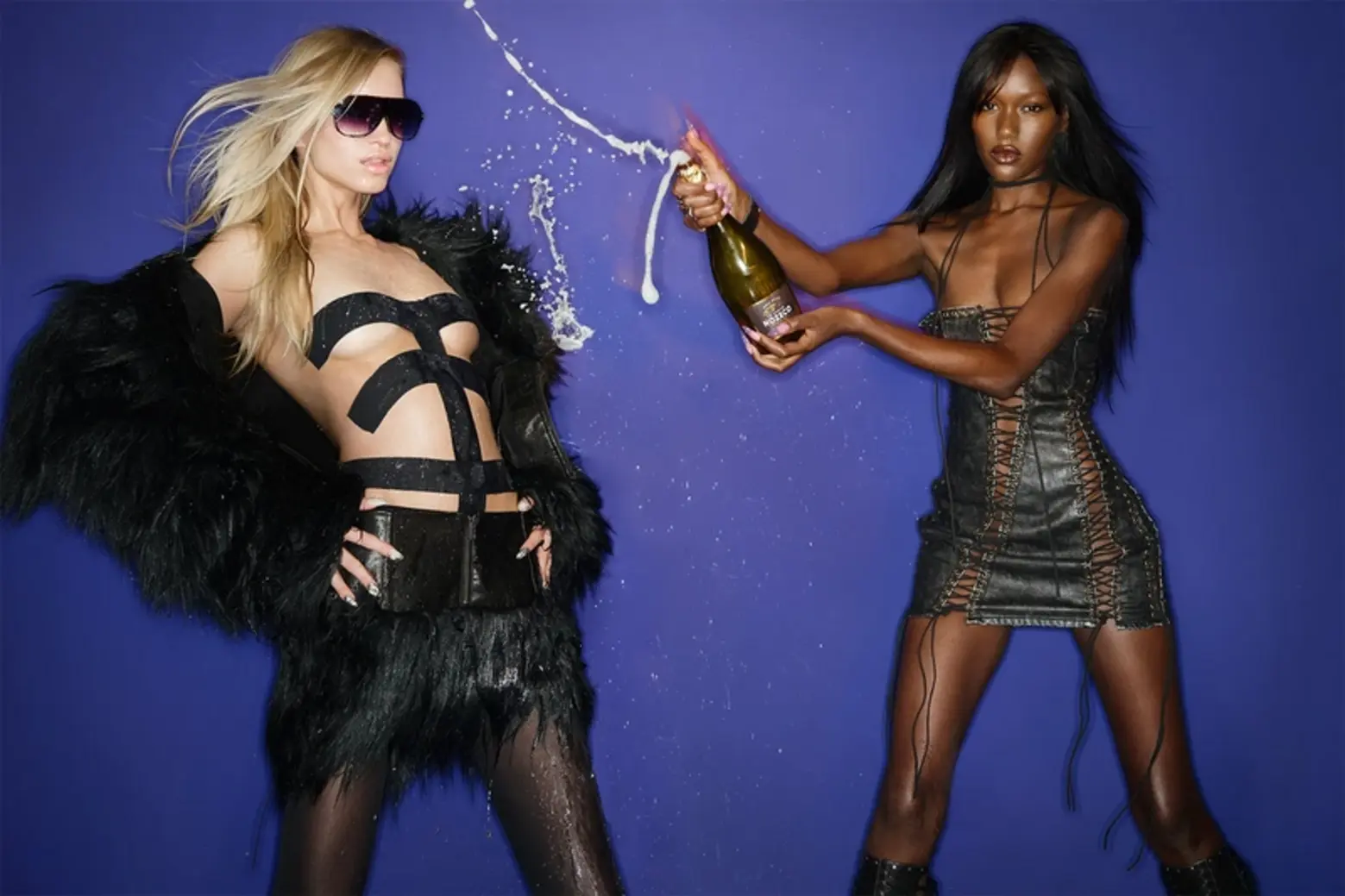
Hip-hop fashion gives that control back. It hands the mic and the mirror to the woman wearing it. It says: you set the tone. You decide what is elegant. You decide what is divine. The world can borrow the look, smooth out the rough edges, package it into campaigns. But the origin, the pulse, the grit, the gold, those belong to the women who built it in the dark, with nothing but instinct and audacity.
This story began with women standing on the edges of a stage built for men. It ends with women running the stage, the lights, and the headlines. It began with hoodies and hoops. It became furs and couture.
The gold hoop is still swinging. The beat is still dropping. The story is still being written, loud, electric, and unapologetically hers.
Advertisement