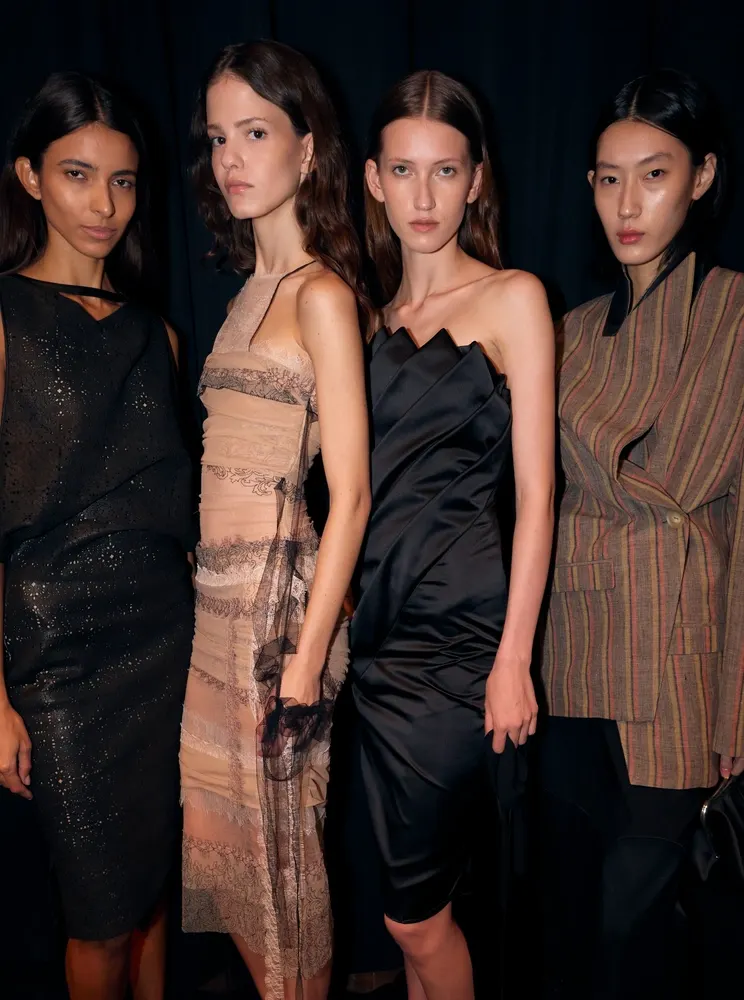
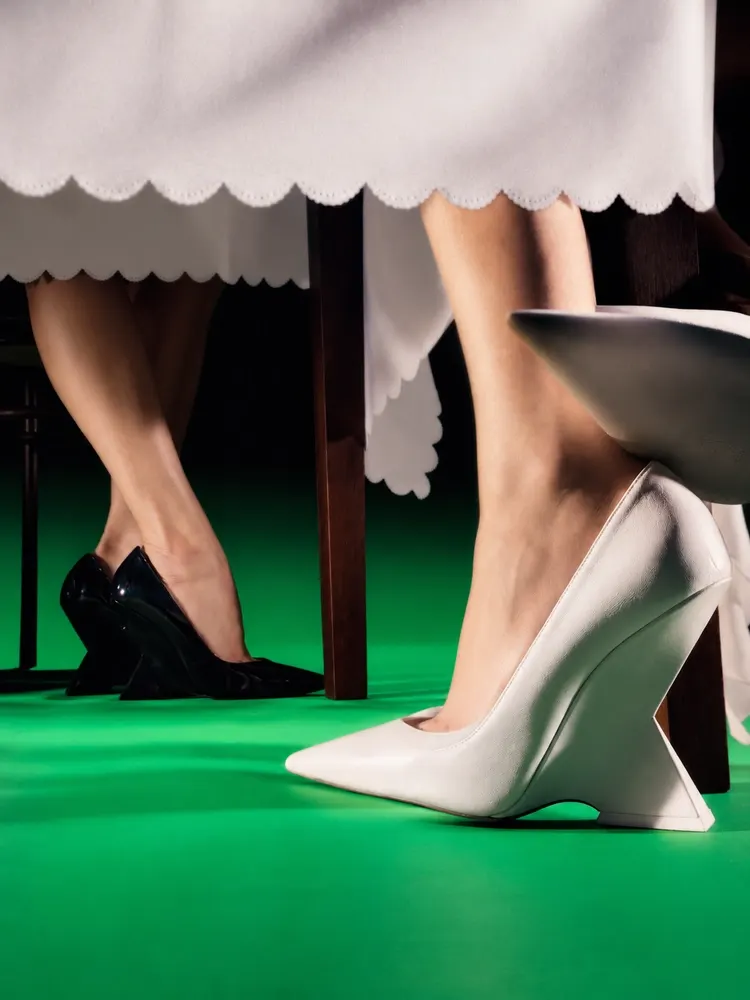
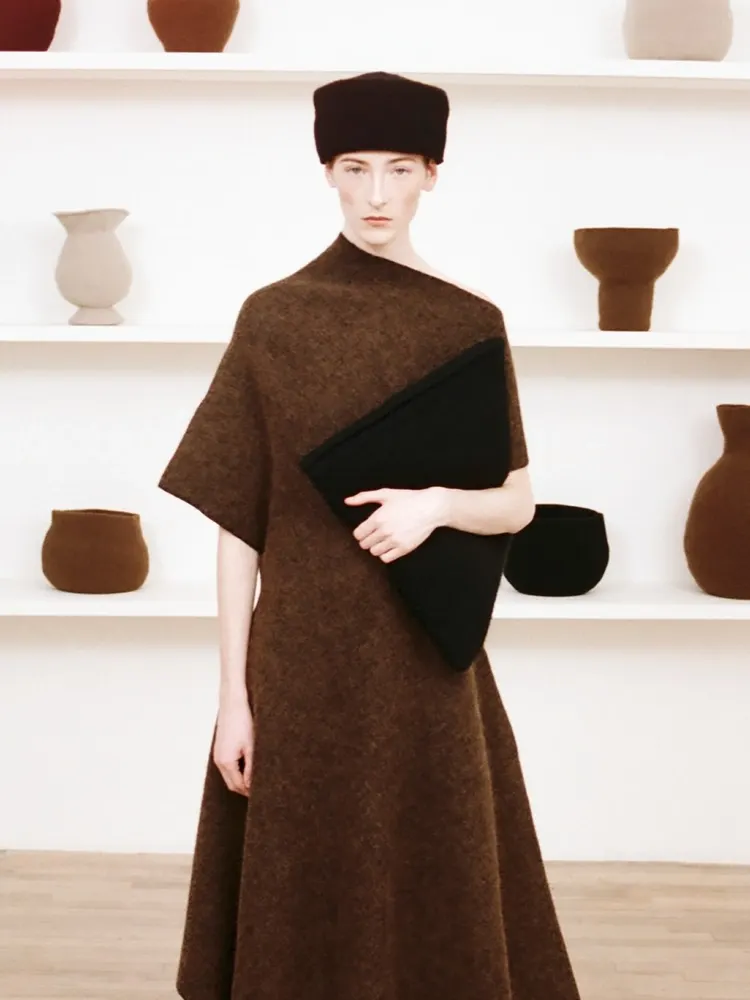
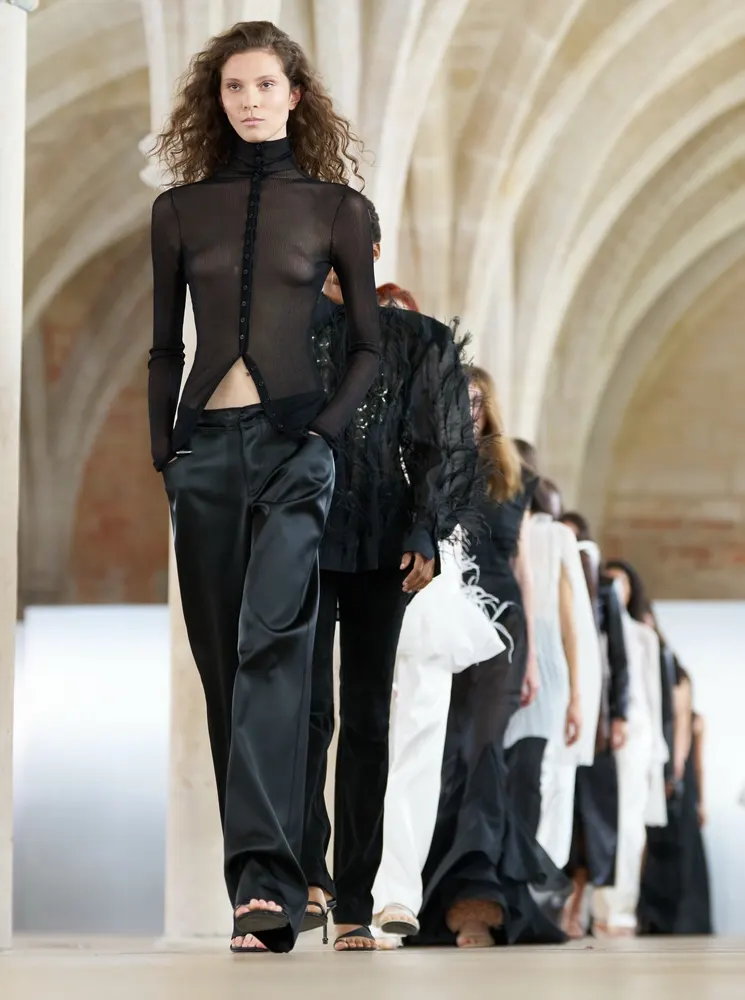
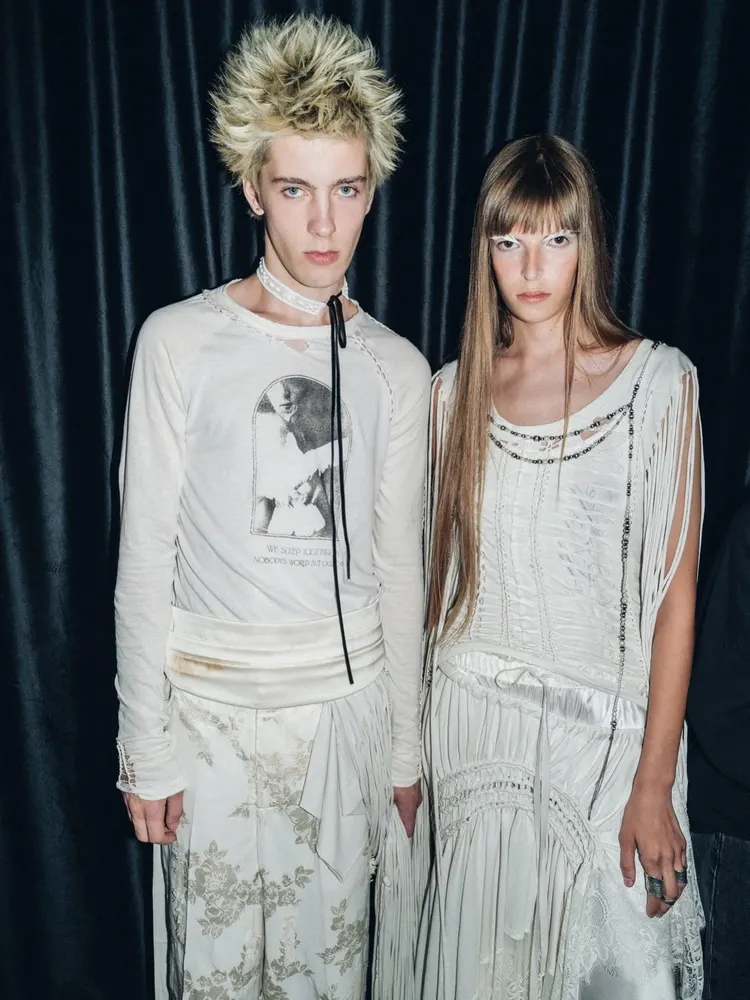
At Barcelona Fashion Week SS27, even the court jester seemed to know exactly who held the power.

Barcelona Fashion Week SS27: Identity Games (Part 2)
At Barcelona Fashion Week SS27, even the court jester seemed to know exactly who held the power.
November 2, 2026


The stage at Marina Vela had already witnessed two days of reinvention. By October 22, the conversation had begun to acquire a sharper edge. The clothes arriving on the runway carried questions about the people permitted to wear them, the identities society chooses to celebrate and the peculiar authority of appearance itself.
For the closing half of the 38th edition of Barcelona Fashion Week SS27, designers continued to draw upon personal histories and familiar cultural narratives. Yet some of their references possessed uncomfortable implications. Beneath the fantasy of theatrical costumes lay centuries of social exclusion, while seemingly ordinary garments revealed the complicated relationship between protection and vulnerability. The runway, with all its carefully constructed freedom, became an interesting place to examine those contradictions.
Acceptance Letter
The court jester enjoyed an unusual privilege in medieval society. His costume granted him permission to ridicule the powerful, allowing criticism to circulate beneath the protection of entertainment. Jeakyong Sim, the South Korean designer behind Acceptance Letter, returned to this peculiar social arrangement for The Jester's Prayer.
Drawing upon historical court dress and Federico Fellini's 1970 film I Clowns, Sim developed a collection in which humour acquired a melancholy undertone. Layers accumulated across wearable silhouettes, with deliberate clashes of proportion and styling interrupting familiar clothing conventions. The theatrical references operated through the construction of complete outfits, allowing the garments to retain their everyday associations.


The jester's position within the hierarchy of power offered an especially interesting foundation for fashion. His freedom depended entirely on the authority he was supposedly mocking. That paradox gave the collection considerable intellectual potential, particularly when exaggerated styling disrupted the respectable appearance of conventional clothing.
Sim's approach also suggested that subversion can emerge from the arrangement of familiar garments. The challenge lay in ensuring the visual irregularities carried the same precision as the historical argument. Humour becomes politically meaningful when its target is identifiable, and The Jester's Prayer invites viewers to consider who was laughing, and at whose expense.
Benavente
The walls of an ageing building provided Paco Benavente with the starting point for Nomeolvides, his Spring/Summer 2027 collection. Peeling wallpaper and deteriorating surfaces revealed the colours and patterns that previous inhabitants had left behind, inspiring a study of memory through textile construction.
Benavente translated those architectural observations into layered garments, allowing contrasting fabrics to emerge from beneath one another. Materials recovered from previous collections returned in new combinations, giving the designer's own archive a visible presence within the season. Sculptural construction and precise tailoring supplied the discipline necessary to sustain irregular surfaces.
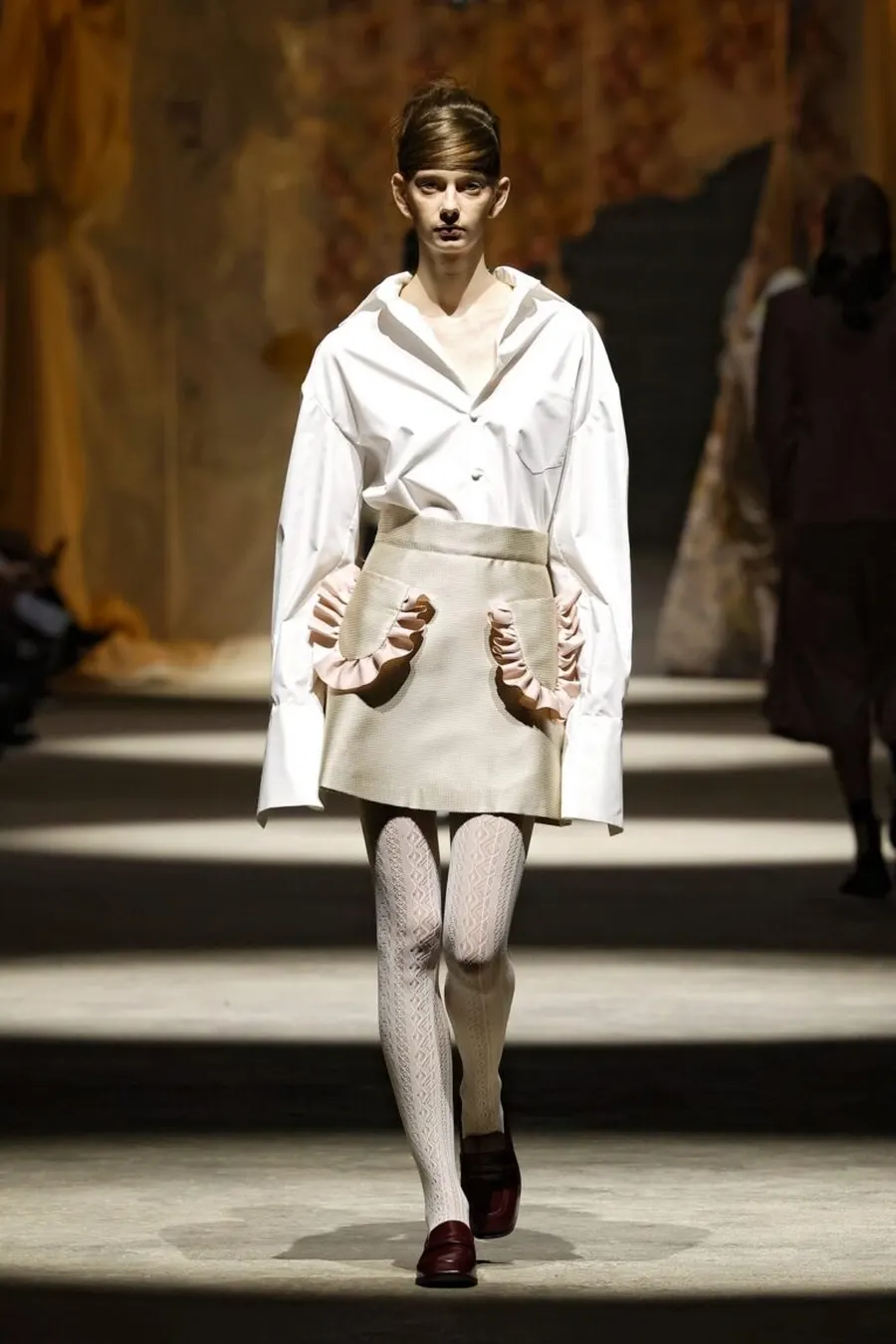
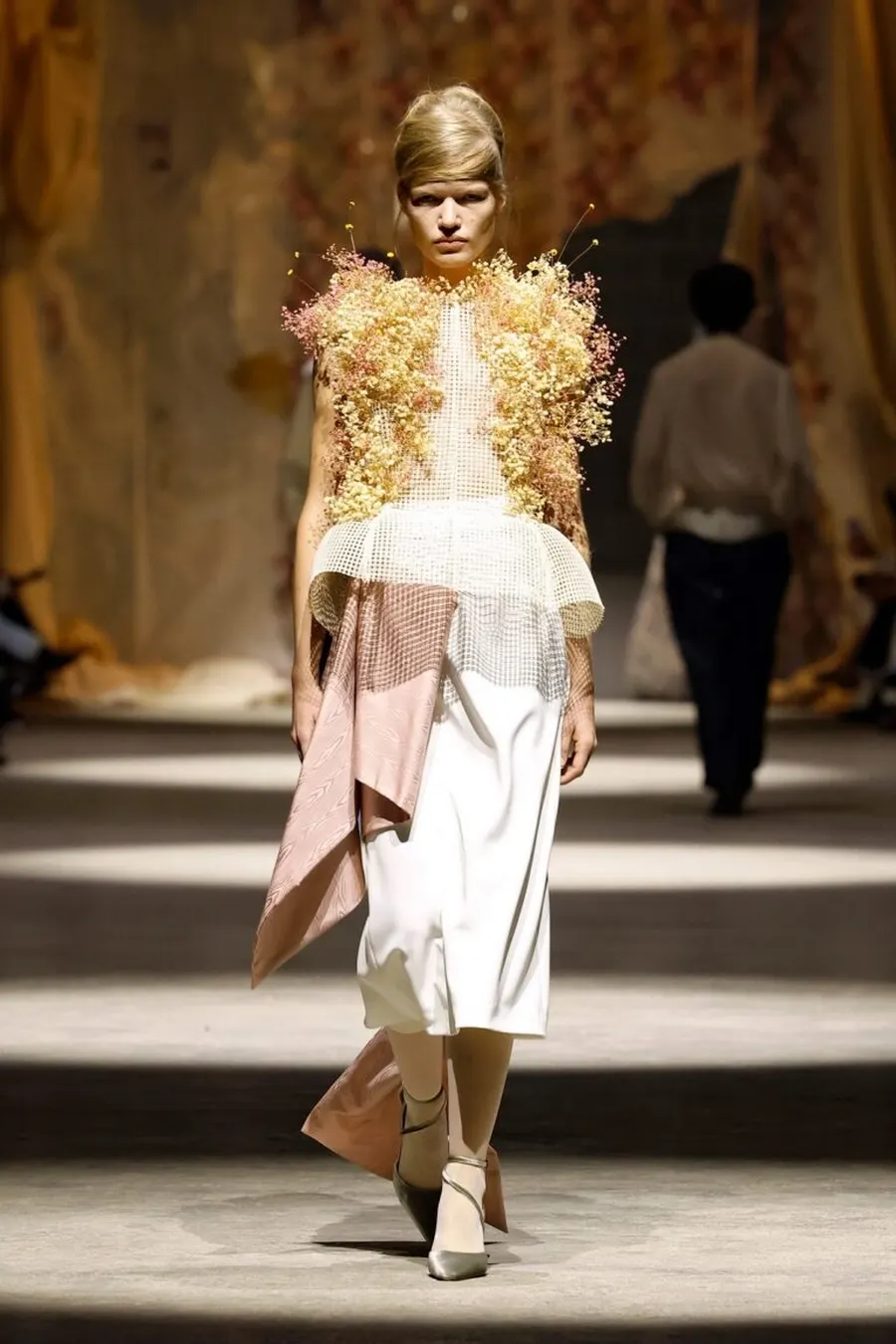
The treatment of fabric suggested a compelling relationship between clothing and architecture. Both preserve traces of earlier decisions, even as their outward appearances change. For Benavente, the construction of a new collection became an opportunity to examine the creative history already embedded within his practice.
Yet nostalgia can become an aesthetic comfort, particularly when ageing and deterioration are transformed into beautiful textures. Nomeolvides found a convincing response to the physical reuse of previous materials. Its interest in memory extended into the actual making of garments, allowing the concept to shape their construction.
Outsiders Division
David Méndez Alonso has spent years cultivating a wardrobe for adults unwilling to surrender their childhood imagination. Under the name Outsiders Division, his exaggerated proportions, playful colours and the perfect mixture between preppy and punk have established an unmistakable visual identity.
For SS27, the fictional characters inhabiting this universe entered adolescence. Groomed and Horny introduced tighter silhouettes, provocative graphics and references to the visual culture of sex clubs. The familiar absurdity remained, although clothing began to acknowledge physical attraction and the uncomfortable discoveries associated with growing up.

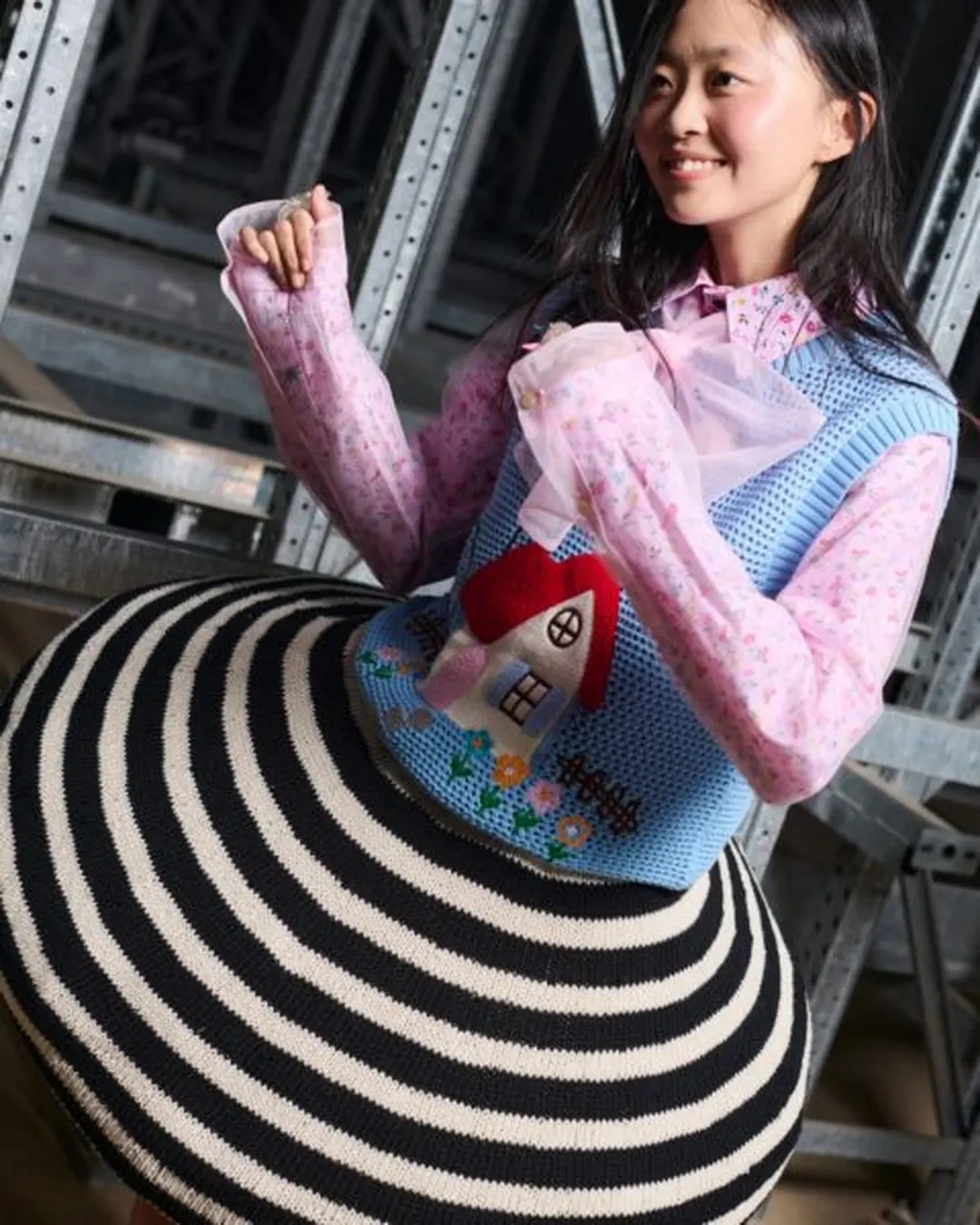

The premise carried an intriguing contradiction. Outsiders Division has long relied on the innocence of childhood as a source of creative freedom. Introducing sexuality into that universe required the designer to reconsider the relationship between playfulness and maturity.
Its provocative title made the transition especially contentious. Adolescence and the visual codes of adult nightlife occupy a sensitive intersection, and irony alone cannot resolve the implications of placing them together. The collection's success consequently depended on clothing's ability to communicate psychological change through silhouette and proportion.
Méndez Alonso has a distinctive talent for making absurdity desirable. Here, ambition extended beyond maintaining that eccentricity. His imaginary characters were beginning to acquire adult bodies, and the collection faced the challenge of giving them an equally developed interior life.
Compte Spain
The creature in Jean Cocteau's 1946 film La Belle et la Bête exists between terror and tenderness. His appearance inspires fear, yet the story gradually exposes the prejudices hidden within conventional ideas of beauty. Santi Mozas found considerable material in that contradiction for Compte Spain's La Bête.
The designer's established fascination with fairy tales returned through sculptural silhouettes, pronounced shoulders and theatrical volumes. Bows, ribbons and floral prints accompanied transparent fabrics, sequins and crystal embroidery. Pistachio, orange, blue and pink introduced an almost confectionery sweetness to the collection, while satin and embellished surfaces amplified its romantic extravagance.


Mozas approached the beast through a visual language already associated with heightened femininity. The decorative codes of romantic fashion became increasingly exaggerated, bringing familiar notions of prettiness into contact with the unsettling.
Yet La Bête also confronted an artistic dilemma. Transforming the monstrous into an exquisitely constructed fashion image risks domesticating the very strangeness the collection seeks to defend. Its most interesting possibilities emerged where proportion threatened the harmony of the silhouette, giving the garments an unfamiliar physical presence.
The beast has spent centuries being judged by his exterior. Fashion, an industry built upon the authority of appearances, offers an appropriately complicated stage for his return.
SOHUMAN
During periods of displacement, clothing can become one of the few possessions people carry across borders. Its practical necessity exists alongside an intimate attachment to identity, preserving memories of places and circumstances that may no longer be accessible.
Javier Aparici developed SOHUMAN's Chapter 6 around this relationship between migration and material memory. The collection reinterpreted essential wardrobe pieces through experimental textile development, incorporating bio-based materials derived from natural resources.
Organic textures and cellular structures informed the garments, while enveloping volumes suggested protection. Weathered surfaces introduced signs of vulnerability, giving the clothing the appearance of objects adapting to changing environments. The materials themselves carried much of the collection's narrative ambition.


The research offered a compelling approach to sustainability, especially through its attention to the physical properties of textiles. Yet the decision to address migration introduced responsibilities extending beyond material innovation.
Displacement involves political circumstances, human relationships and the loss of familiar surroundings. Translating those experiences into texture and silhouette requires considerable sensitivity. Fashion can communicate vulnerability with remarkable visual immediacy, but the experiences informing that imagery deserve their own complexity.
Chapter 6 was strongest as an investigation of how garments acquire emotional significance through prolonged use. Its broader social commentary invited continued reflection on the people whose experiences make such design narratives possible.
Aleixandri Studio
Corsetry and Victorian orthopaedic references acquired an unexpected theatrical exuberance under Marc Aleixandri. His collection CIRCA drew upon freak shows, club-kid culture and the history of bodies subjected to public scrutiny.
The designer imagined a travelling spectacle inhabited by people traditionally excluded from respectable society. References to historical undergarments and corrective devices appeared alongside the excesses of nightlife, while dramatic styling challenged established conventions of physical presentation.
The juxtaposition carried considerable historical weight. Corsets and orthopaedic apparatus have both participated in attempts to control the body's appearance, even as their meanings have shifted across different cultural contexts. Aleixandri reclaimed those associations through a fashion vocabulary that celebrated bodily difference and theatrical self-expression.


His experience in pattern cutting, including previous involvement with Palomo Spain, gave the collection an important technical foundation. The construction of the garments allowed historical references to enter a contemporary conversation about gender and representation.
Yet the imagery of the freak show remained deliberately uncomfortable. Historically, such spectacles transformed marginalised bodies into objects of public fascination. Reclaiming their visual language requires a change in the relationship between performer and spectator.
CIRCA approached that challenge by granting its characters an exaggerated sense of agency. Its celebration of difference also carried a demanding question: can a fashion spectacle truly dismantle the gaze that makes unusual bodies spectacular?
The answer extends beyond the garments themselves. Aleixandri's collection was compelling precisely because its theatrical exuberance refused to make that tension disappear.
David Catalan
The final show of 080 Barcelona Fashion arrived with an unsettling title: CRISIS SS27. David Catalán turned towards vintage safety equipment, protective garments and coastal environments, examining the visual language through which society communicates security.
Denim and frayed cottons appeared alongside technical materials, reflective surfaces and iridescent finishes. Relaxed silhouettes incorporated utilitarian details, while deep indigo and weathered white established the collection's foundation. Holographic flashes interrupted the familiar palette, recalling the visibility required of protective equipment.
The garments borrowed the reassuring appearance of functionality. Their references suggested clothing designed to respond to danger, although their relaxed proportions introduced an atmosphere of ordinary leisure. This contradiction formed the collection's most persuasive idea.


Safety equipment is ordinarily defined by the circumstances in which it becomes necessary. Catalán removed those objects from their intended contexts, transforming their visual codes into everyday clothing. The resulting wardrobe retained the suggestion of an emergency even when no immediate threat was present.
The concept carried particular relevance in a period marked by persistent social uncertainty. Contemporary clothing frequently borrows the language of protection, from technical outerwear to increasingly elaborate utility details. These garments promise preparedness through their appearance, regardless of the dangers their wearers might actually encounter.
Catalán's closing presentation left an appropriately unresolved impression. Security had become an aesthetic, while anxiety remained embedded in clothes.
Barcelona Fashion Week SS27 And The Privilege of Being Visible
The court jester could mock the king only for as long as the king permitted it. By the final two days at Marina Vela, that uneasy relationship with authority had acquired a distinctly physical dimension. Exposed skin, erotic suggestions and unconventional bodies challenged the boundaries of acceptable self-expression.
While Part 1 explored the relatively safe territory of reinvention, where designers revisited familiar signatures and creative histories, Part 2 ventured into desire, sexuality and the politics of being seen. The question shifted from what fashion could become to what the human body was permitted to express.
Eroticism has always occupied a curious position within fashion. The industry celebrates provocation under the flattering lights of a runway, yet the freedom to express desire remains unevenly distributed beyond it. What appears daring within an artistic spectacle can still invite judgment in ordinary life.
Barcelona's provocation ultimately extended beyond the clothes themselves. Fashion can make almost any body an object of fascination. Granting that same body the authority to define its own image remains a far greater challenge.