MENU
Close





A pair of jeans seems simple enough. In 2026, denim is quietly becoming one of the most inventive materials in the wardrobe.

A pair of jeans seems simple enough. In 2026, denim is quietly becoming one of the most inventive materials in the wardrobe.
October 6, 2026
Advertisement

Advertisement



Across current collections, designers are working with post-consumer jeans, textile waste, recycled cotton, regenerative agriculture, biotechnology-assisted indigo, active surface treatments and reconstruction systems.
The shared objective stretches far beyond creating one sustainable jean. Denim is becoming a platform for redesigning how a garment moves through its entire material life.
Mechanical cotton recycling starts by sorting textile waste and removing components such as buttons, zippers and labels. The material is cut into smaller pieces, then machines open and shred the cloth until it returns to loose fibre. Those fibres can enter spinning again and eventually become new yarn and fabric.
This apparently straightforward process involves precise fibre engineering. Cotton yarn relies on thousands of fibres overlapping and twisting together. Shredding reduces fibre length, so recyclers have to preserve enough usable length for stable spinning.


Stella McCartney Fall 2026 collection takes this challenge directly into luxury denim. The collection introduced styles made with RCO100 recycled cotton technology alongside garments described by the house as 100% recycled denim. RCO100 developer Säntis Textiles processes textile waste through mechanical opening and fibre refinement, preparing recycled cotton for new yarn production. The company states that its fibre-refinement stage uses zero water and zero chemicals.
Coach approached the same circular principle through post-consumer garments. Stuart Vevers stated that all denim in the house’s 2026 collection came from post-consumer material. Coach also developed a retail capsule built from recovered clothing, including trench coats reconstructed from old chinos.

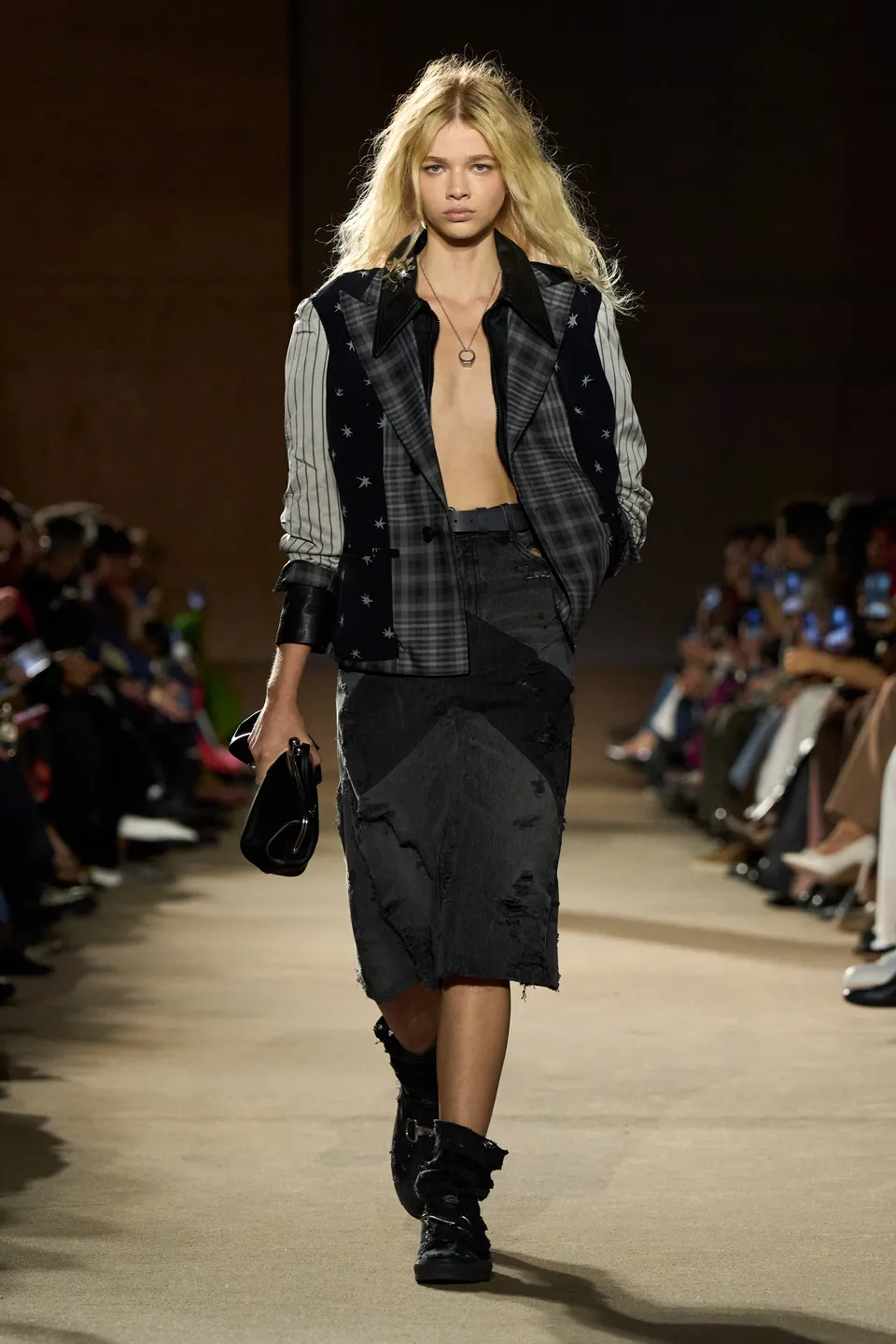
The term post-consumer is important here. It identifies material that has already completed one consumer life. Old clothing becomes feedstock for another production cycle, turning wardrobes and collection systems into potential fibre sources.
Mechanical recycling preserves cotton as fibre. Another technology takes textiles apart at a deeper material level.
Circ specialises in processing polycotton, one of the industry’s challenging waste streams because polyester and cotton are blended together inside a single fabric. Its system separates the cellulosic cotton component from the polyester component, allowing each material stream to return to textile production.
That technology entered commercial denim through a 2026 project involving Circ, Lenzing, AGI Denim and H&M.
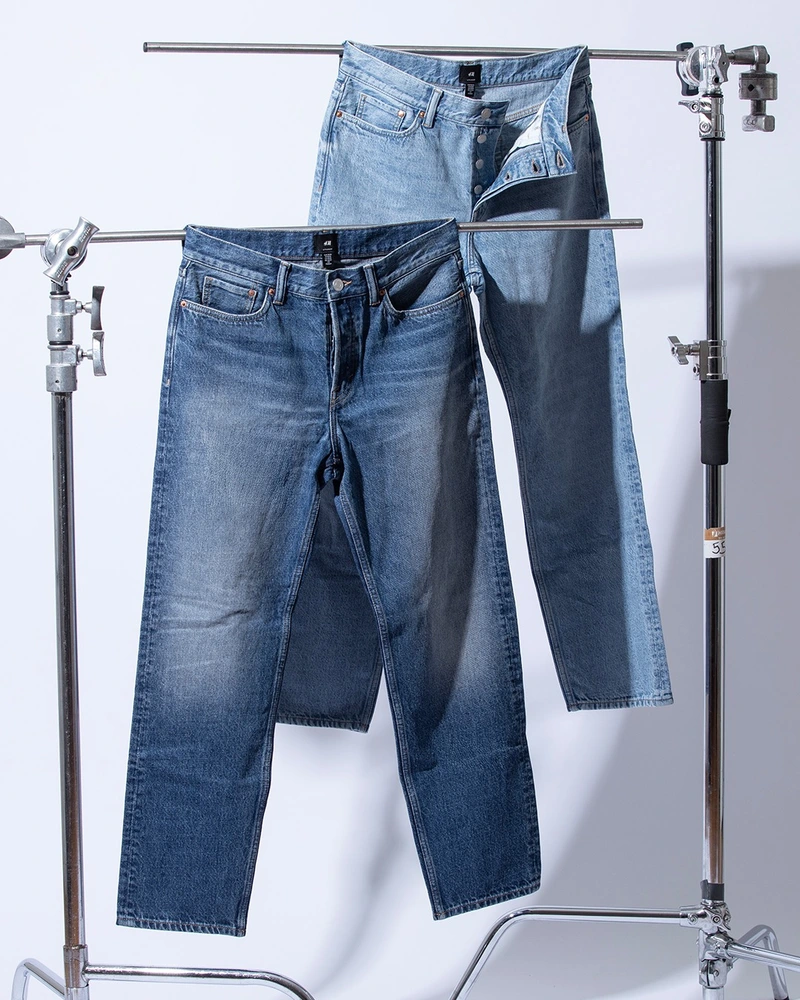
The supply chain works in stages:
textile waste → recycled pulp → new cellulosic fibre → denim manufacturing → retail
Lenzing produced TENCEL Limited Edition Lyocell containing 30% Circ pulp recycled from textile waste. AGI Denim manufactured the garments, and H&M introduced two menswear styles across markets in Europe, North America and the Middle East.
The project is particularly useful because each company handles a distinct technical stage. Circ recovers material. Lenzing converts recycled pulp into fibre. AGI Denim turns that fibre into garments. H&M connects the material innovation with a global customer base. Circular denim therefore becomes a supply-chain exercise as much as a design exercise.
Fibre represents one part of a jean. Colour creates another major field of development.
Indigo gives denim its identity, from rigid dark blue to washed pale finishes. In 2026, Maria McManus and AGOLDE explored this stage through a 16-piece capsule that combined denim tailoring with regenerative material sourcing and Eco-Indigo technology.
Eco-Indigo connects colour production with biotechnology. Developer Pili works with renewable plant-derived feedstocks and fermentation processes to produce intermediates used in indigo manufacture. Microorganisms transform renewable sugars during fermentation, followed by purification and chemical conversion into colourant suitable for textile dyeing.
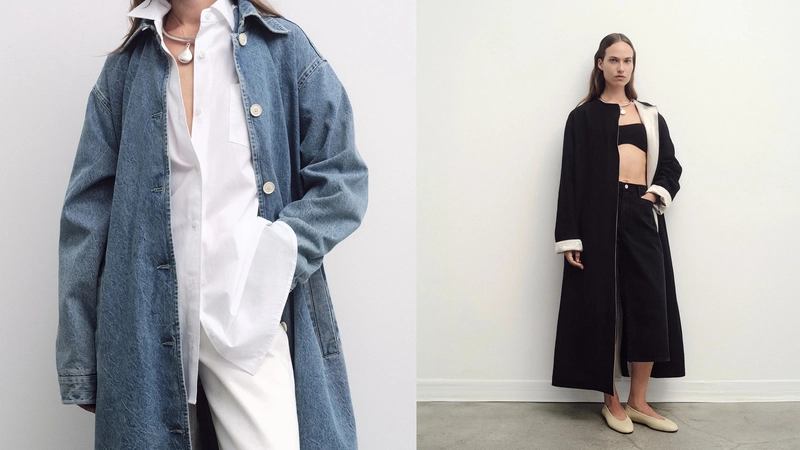
The principle can be understood as:
renewable feedstock → fermentation → colour-building molecules → indigo pigment → denim dyeing
AGOLDE states that renewable sources account for around 90% of its Eco-Indigo composition.
This approach places sustainability inside the dye tank. Regenerative cotton addresses agricultural sourcing; fermentation-derived indigo addresses colour chemistry. One garment can therefore contain several environmental interventions operating at different production stages.
Stella McCartney Summer 2026 collection pushed denim into another category entirely: fabric designed to perform a function after manufacture.
The collection introduced PURE.TECH, which the house describes as a programmable material that absorbs and neutralises atmospheric pollutants including CO₂ and nitrogen oxides. The technology appeared in organic-cotton deconstructed jeans and a denim jacket sold commercially.
According to Stella McCartney’s product documentation, PURE.TECH interacts with those pollutants while the garment is being worn and converts them into harmless substances. The jeans retained familiar five-pocket construction while carrying the treatment through the cotton textile itself.

The same collection used another circular strategy through physical reconstruction. Upcycled denim waistbands were collaged into jeans, shoes, vegan bags and a dress.
One collection therefore treated denim through two routes: technological surface engineering and direct material reuse.
MUJI Labo also approached fabric performance through construction and dye control. Its Spring 2026 line introduced recycled-polyester denim produced with core dyeing, a process designed to establish the familiar indigo appearance while supporting colourfastness. Menswear received a light one-wash finish, while womenswear remained unwashed to preserve defined twill lines.
Recycling can also happen while the original fabric structure remains visible.
Berlin label Avenir developed one of 2026’s clearest examples through TALIS. Old, worn denim was cut into narrow strips and arranged across a temporary base material. The strips were stitched together in bias and criss-cross formations. Water then dissolved the supporting foundation, leaving an interconnected web of original denim behind.


That new textile became body-skimming tanks, skirts and dresses. The process preserves the old cloth as cloth. Shape changes through cutting, placement and stitching.
Ksenia Schnaider takes denim through an even wider range of experiments in Denim Workshop. The collection presents denim as knitted structures, prints, quilts, reconstructed garments and patchworks. Knitted jeans reproduce familiar jean construction through yarn. Technical outerwear carries hyper-real printed denim imagery. Recycled Cubic Denim develops the label’s box-like construction into new patchworked forms.


The collection also introduces BROD-X, a textile developed from recycled denim waste. Here, production leftovers become input for a new material surface, placing waste recovery directly inside the collection-development process.
Technical experimentation gains another kind of significance when it reaches large production systems.
Diesel offers one example. For its SS26 denim collection, 85% of production quantities complied with OTB’s Responsible Product Guidelines. The brand’s cotton procurement also reached a 42% share of OTB-defined preferred cotton, including certified, recycled and regenerative options.
DAWN Denim connects European brand development with recycling infrastructure in Asia. Its Spring/Summer 2026 collection includes styles made with Recover recycled cotton sourced from Recover’s Vietnam facility. The fibre comes from post-industrial textile waste processed through mechanical recycling before entering new yarn blends.
Recover also photographed the campaign inside its Vietnam factory, making the recycling facility part of the collection’s visual story.
Across 2026, denim is increasingly defined by the systems built around it: where its fibre comes from, how colour reaches the yarn, what happens to production waste and where the material travels after its first life. That makes the category one of the clearest places to watch the next generation of textile technology take shape.
Advertisement