Shearling leather proves that softness can have a hard shell. Beneath its rugged exterior sits a thick wool fleece, turning a practical material into one of fashion’s most tactile contradictions.
Shearling Leather: Two Sides of the Same Skin
Shearling leather proves that softness can have a hard shell. Beneath its rugged exterior sits a thick wool fleece, turning a practical material into one of fashion’s most tactile contradictions.
November 19, 2026


There is something unusually satisfying about a shearling leather jacket left open in the cold. A heavy leather exterior folds away to reveal a thick interior of wool, its softness gathering around the collar, cuffs, and seams. The garment possesses an almost contradictory character, with an exterior that looks rugged and an interior that feels unexpectedly indulgent.
Much of this character comes from the material's natural construction. Wool and leather remain connected within a single skin, allowing designers to expose, conceal, or reverse their contrasting textures. What appears to be an elaborate combination of materials is often the result of preserving a relationship that already existed in nature.
What Is Shearling Leather?
Shearling leather is tanned sheepskin or lambskin with its natural wool fleece retained and trimmed to a relatively uniform length. The leather and wool form two surfaces of the same hide, creating a material valued for its warmth, softness, and distinctive texture. The International Organization for Standardization defines shearling through this combination of tanned sheepskin and attached, evenly cut wool.
The leather side can be finished to resemble suede, with a soft, finely textured surface, or treated to produce a smoother appearance associated with nappa leather. Meanwhile, the wool side retains the density and natural crimp of sheep fleece, providing insulation while allowing moisture vapour to move through the fibres.
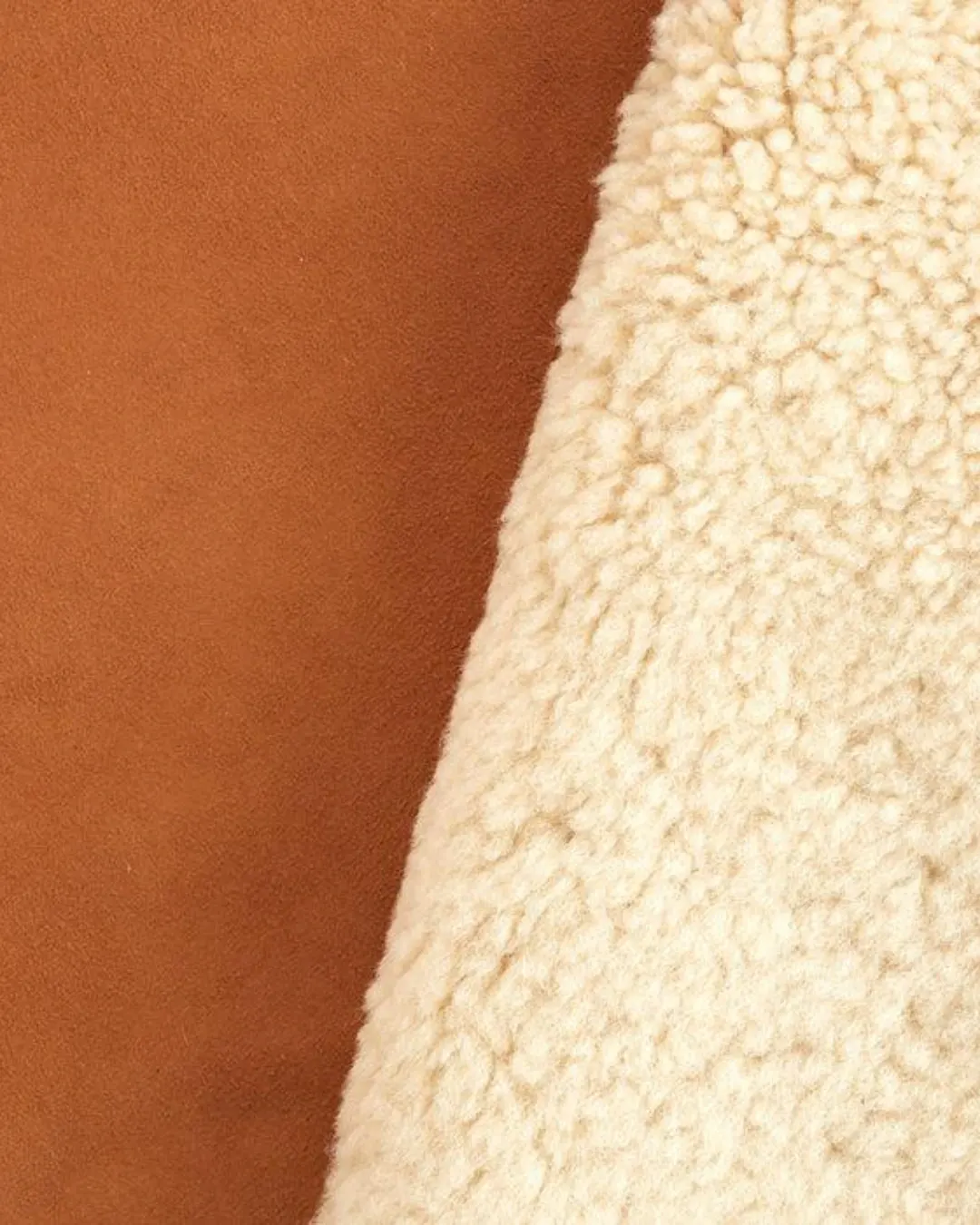
Shearling is closely related to sheepskin, although the terms carry slightly different meanings. Sheepskin describes animal skin and may refer to products with or without their wool. Shearling specifically identifies wool-on sheepskin prepared with a relatively even fleece. Suede, by contrast, describes a leather surface finish and does not inherently contain attached wool.
The distinction becomes especially important when identifying genuine shearling. Synthetic alternatives commonly combine a fabric backing with polyester or acrylic pile to imitate the characteristic appearance. Genuine shearling retains the physical connection between wool follicles and the underlying animal skin, giving the material its distinctive two-sided structure.
How Shearling Leather Is Made
Producing shearling leather requires careful treatment of both the skin and its attached wool. Unlike conventional leather production, in which hair or wool is generally removed, shearling manufacturing preserves the fleece throughout tanning and finishing.
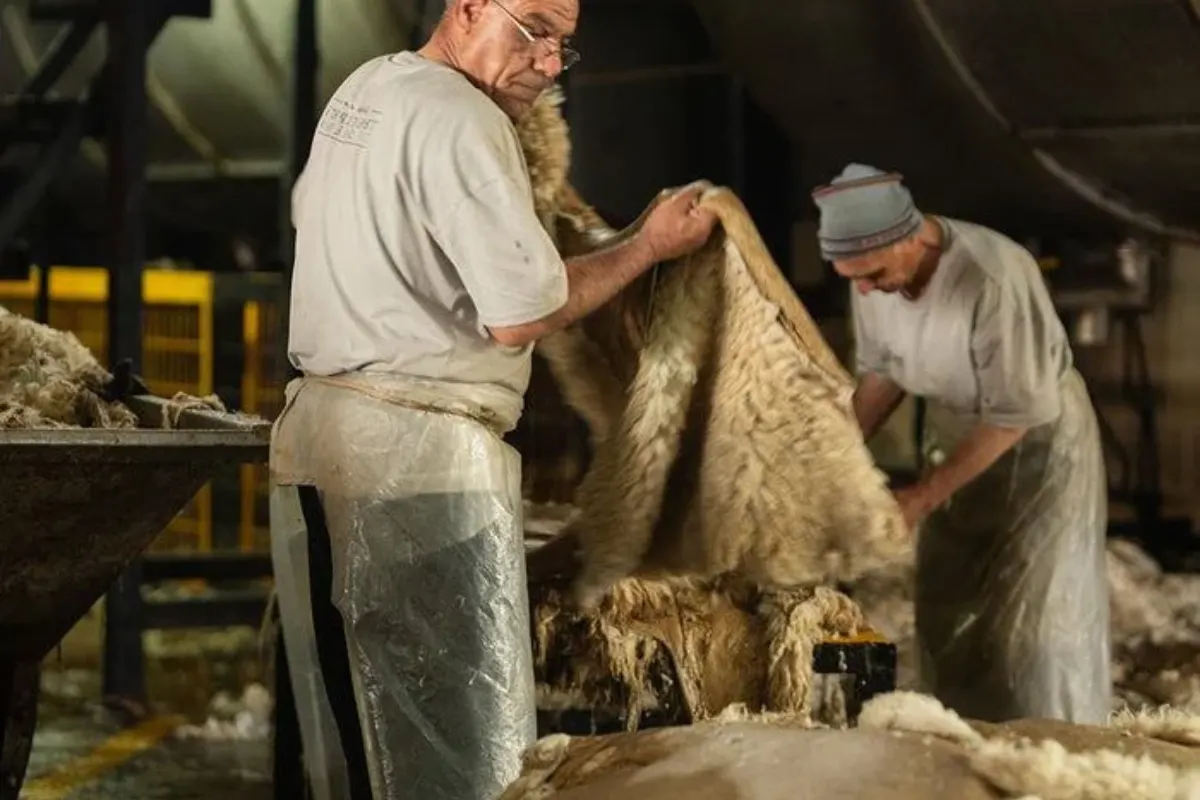
The process begins with the selection and preservation of suitable sheep or lamb pelts. Manufacturers assess the quality of the hide, the density of the wool, and the consistency of its surface. The skins are cleaned and prepared for tanning, while excess tissue and fat are removed from the flesh side. Wool-on processing requires particular attention to avoid damaging the attached fibres.
Tanning stabilises the skin's collagen structure, protecting it against deterioration and giving the leather the flexibility needed for garment construction. Different tanning and subsequent treatment methods influence its softness, colour, strength, and finished appearance.
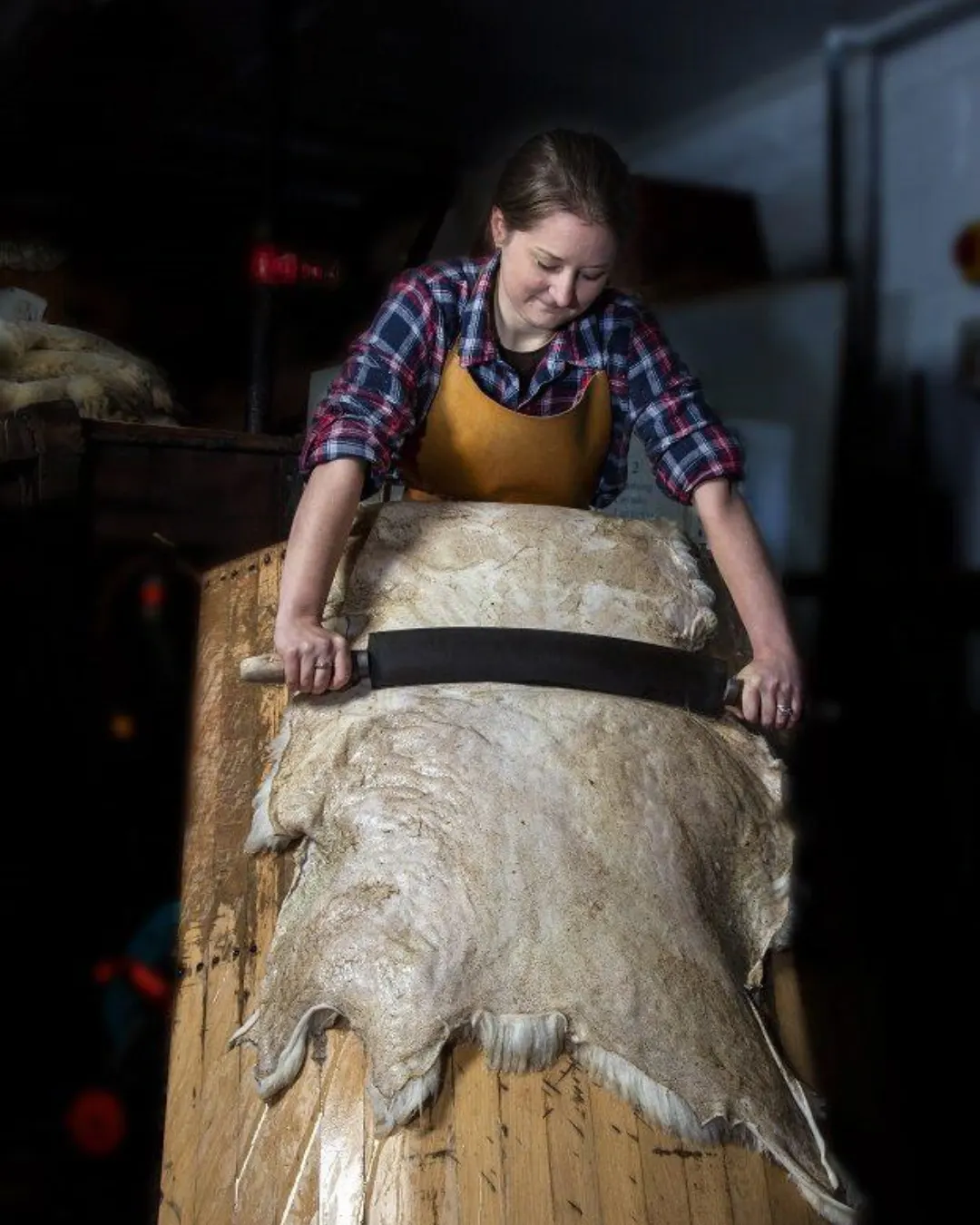
Following tanning, the material undergoes additional treatments to refine both surfaces. The leather side may be buffed to create a suede-like texture or finished with a smooth coating. Meanwhile, the fleece is cleaned, combed, and trimmed to achieve the desired length and consistency.
The length of the wool makes a considerable difference to the finished material. A short, dense fleece creates a compact interior suitable for structured jackets and close-fitting garments. Longer wool produces a more voluminous appearance, particularly when exposed along collars, cuffs, and hems.
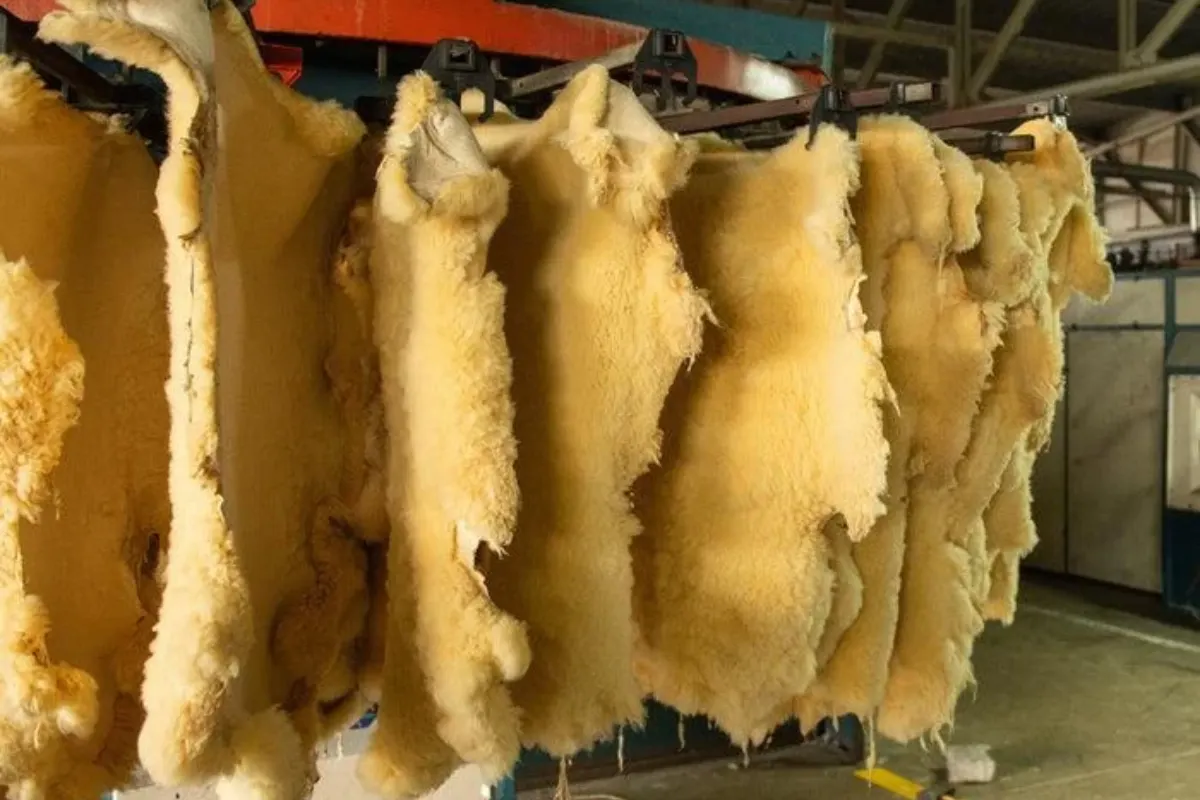
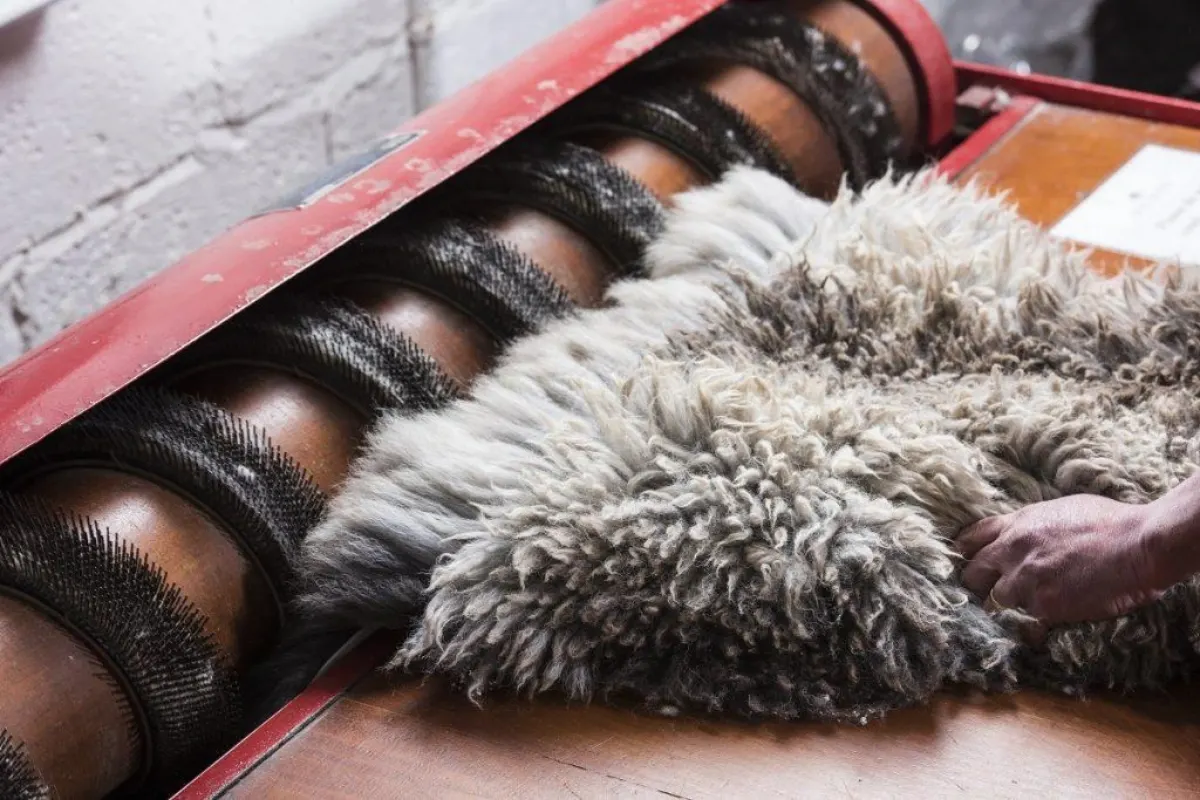
Some shearling is prepared as double-face leather, with both surfaces finished to a standard suitable for visible use. This allows designers to construct reversible garments, exposing either the leather or fleece as the exterior. The result depends on precise finishing, as both sides must retain their appearance and flexibility through repeated wear.
The manufacturing process ultimately preserves shearling's defining characteristic: a naturally connected combination of two textures whose physical properties remain distinct, even as they move together.
From the Flight Deck to the Fashion Wardrobe
Sheepskin has been used for protective clothing across different cultures for centuries, particularly in environments where warmth and durability were essential. Yet the modern shearling jacket acquired one of its most recognisable identities through the development of military aviation during the early twentieth century.
Pilots operating in open cockpits and unheated aircraft required clothing capable of providing insulation at high altitudes. Sheepskin flying jackets offered a practical solution, combining a weather-resistant exterior with thick natural wool against the body.
In Britain, the Irvin flying jacket became closely associated with Royal Air Force pilots during the 1930s and the Second World War. Its substantial construction, wide collar, and exposed fleece established a silhouette that would influence civilian outerwear for decades.
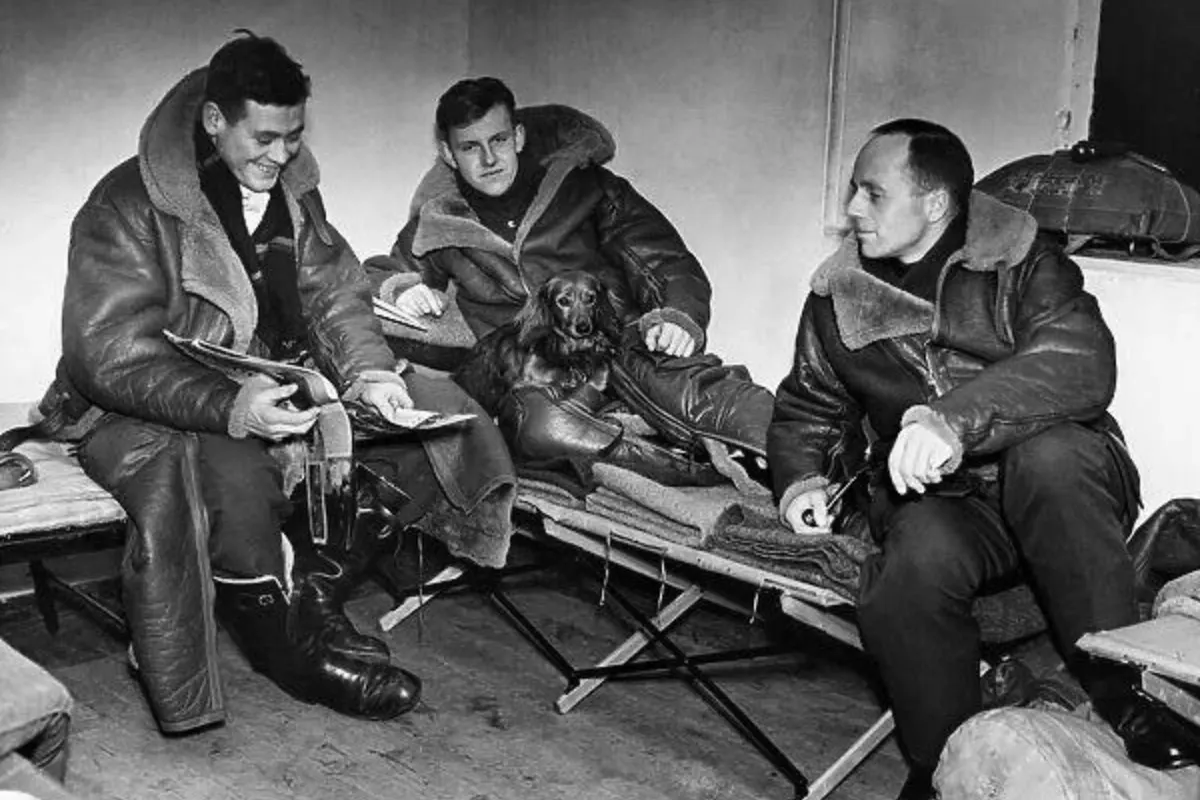
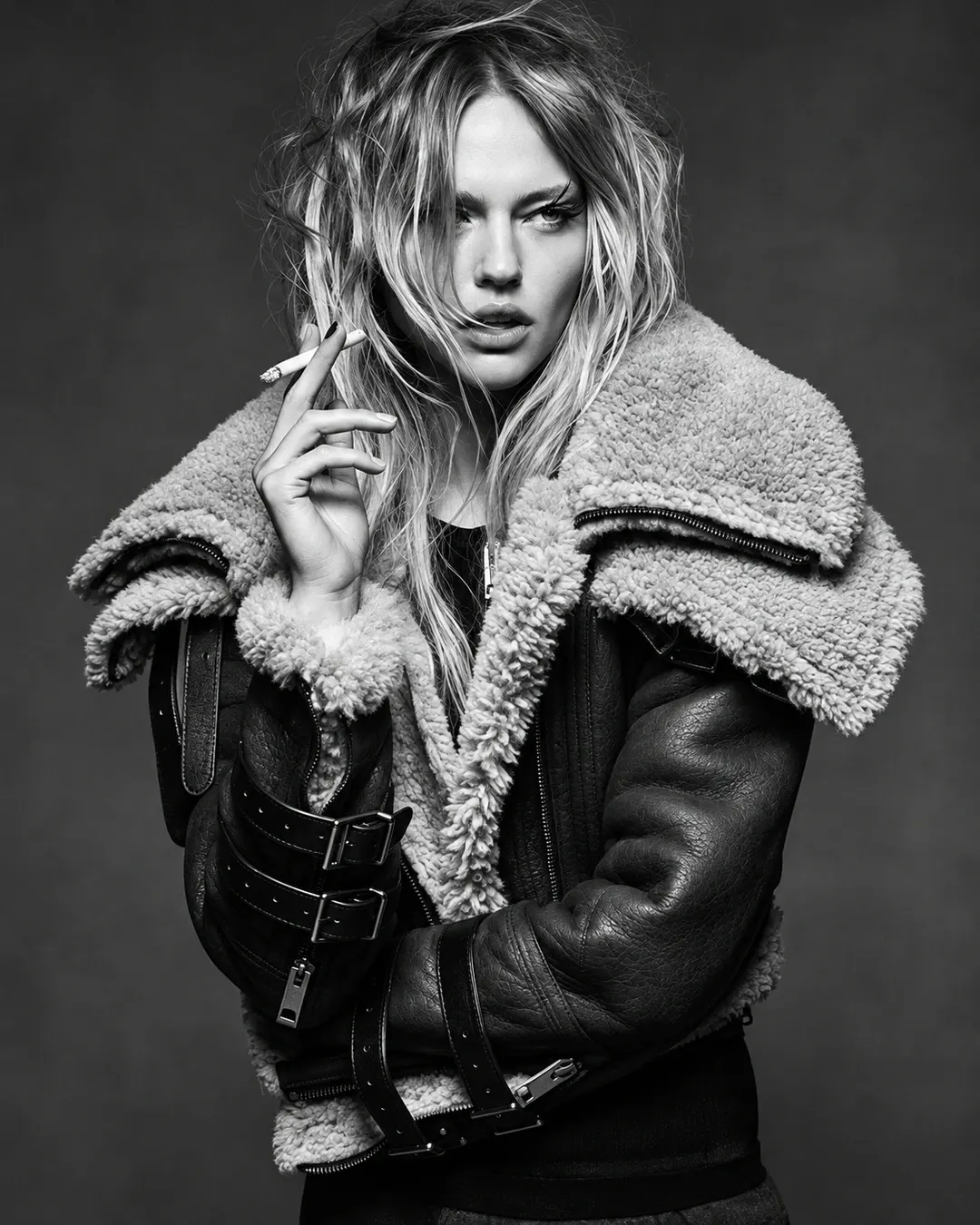
The American Type B-3 flying jacket, officially introduced by the United States Army Air Corps on May 8, 1934, featured shearling throughout the body, sleeves, and high collar. Its leather straps, sturdy fastenings, and generous proportions reflected the practical demands of aviation.
The jacket eventually travelled beyond its military origins, acquiring new associations with adventure, masculinity, and rebellious youth culture. Its functional construction remained recognisable even as designers began adapting the silhouette for civilian fashion.
During the late 1960s and 1970s, sheepskin outerwear developed another identity within bohemian dressing. Afghan coats, often decorated with embroidery and generous fur trims, became particularly popular among musicians and countercultural figures. The Victoria and Albert Museum records their introduction to London's fashion scene in 1966.
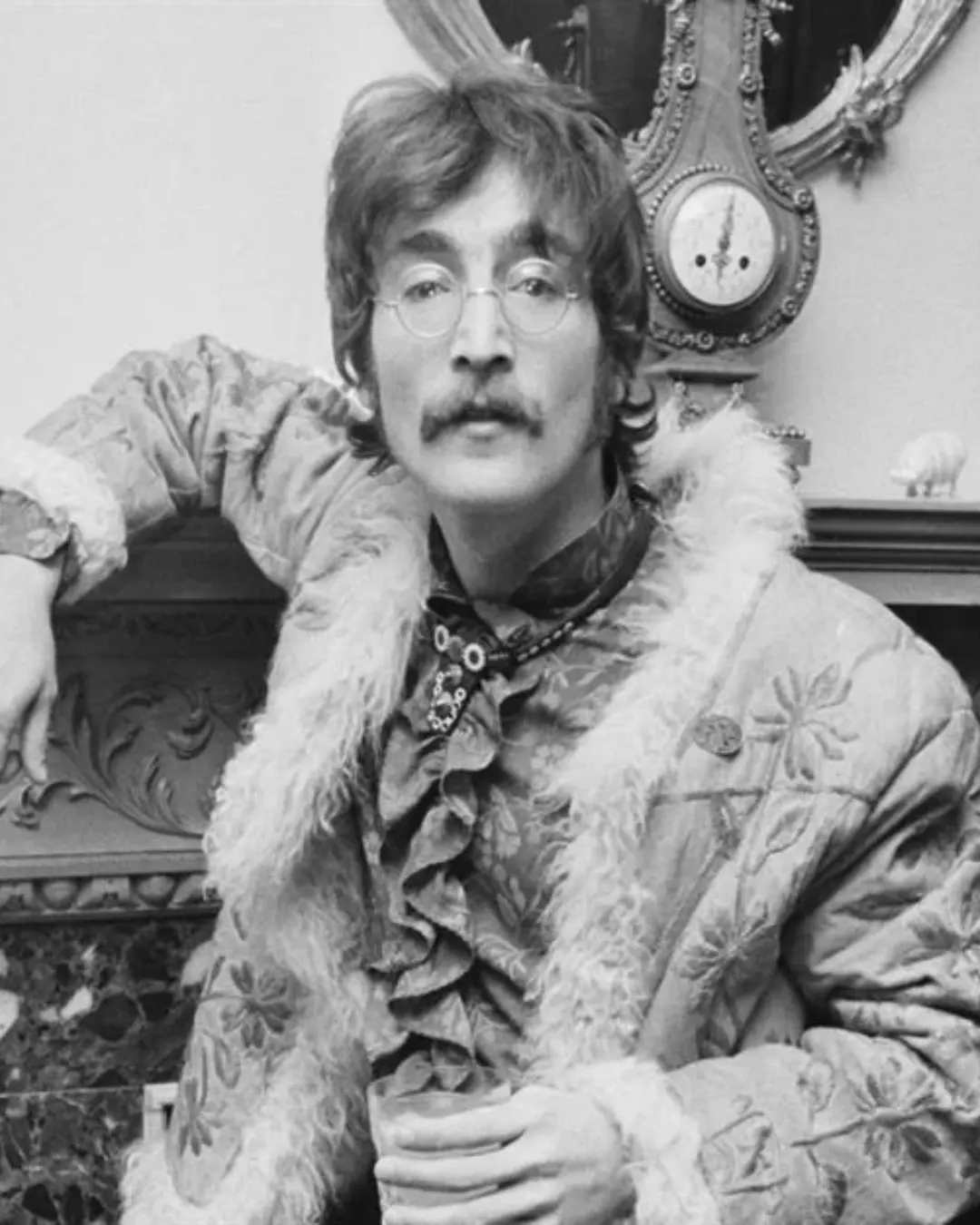
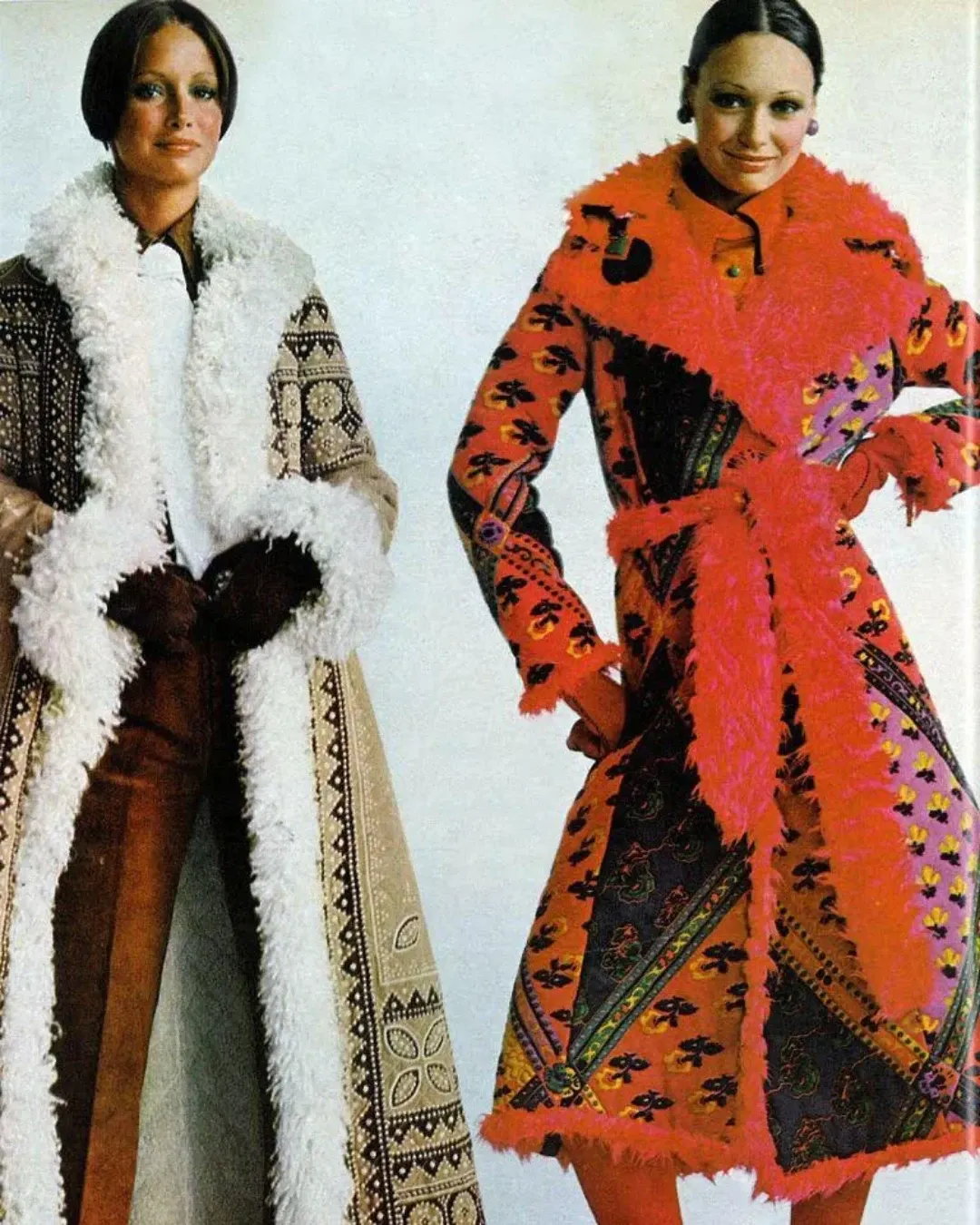
These coats belonged to a wider tradition of wool-on sheepskin clothing, although their materials and fleece finishes did not always correspond to the narrower technical definition of shearling. Their influence nevertheless helped establish the romantic, shaggy aesthetic that continues to shape shearling-inspired fashion.

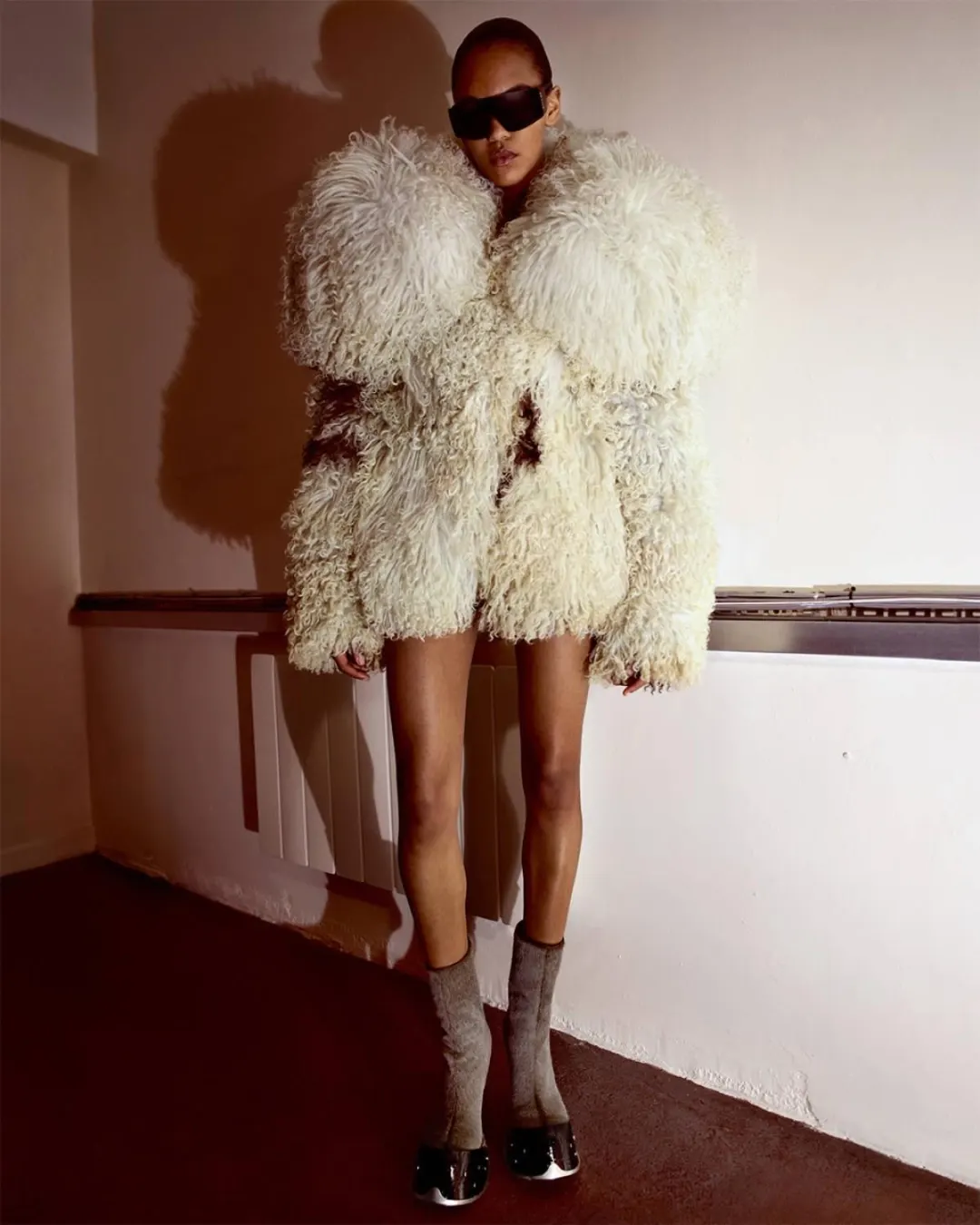
By the late twentieth century, shearling had acquired a diverse wardrobe of associations, from the rugged aviator jacket to the expansive bohemian coat. Luxury designers increasingly approached it as a material with both practical and expressive potential, experimenting with proportions, finishes, and the dramatic contrast between leather and wool.
The Different Faces of Shearling Leather
Shearling leather can take on distinct appearances according to how its leather surface and wool fleece are treated. These variations affect the material's texture, visual weight, and suitability for different garments.
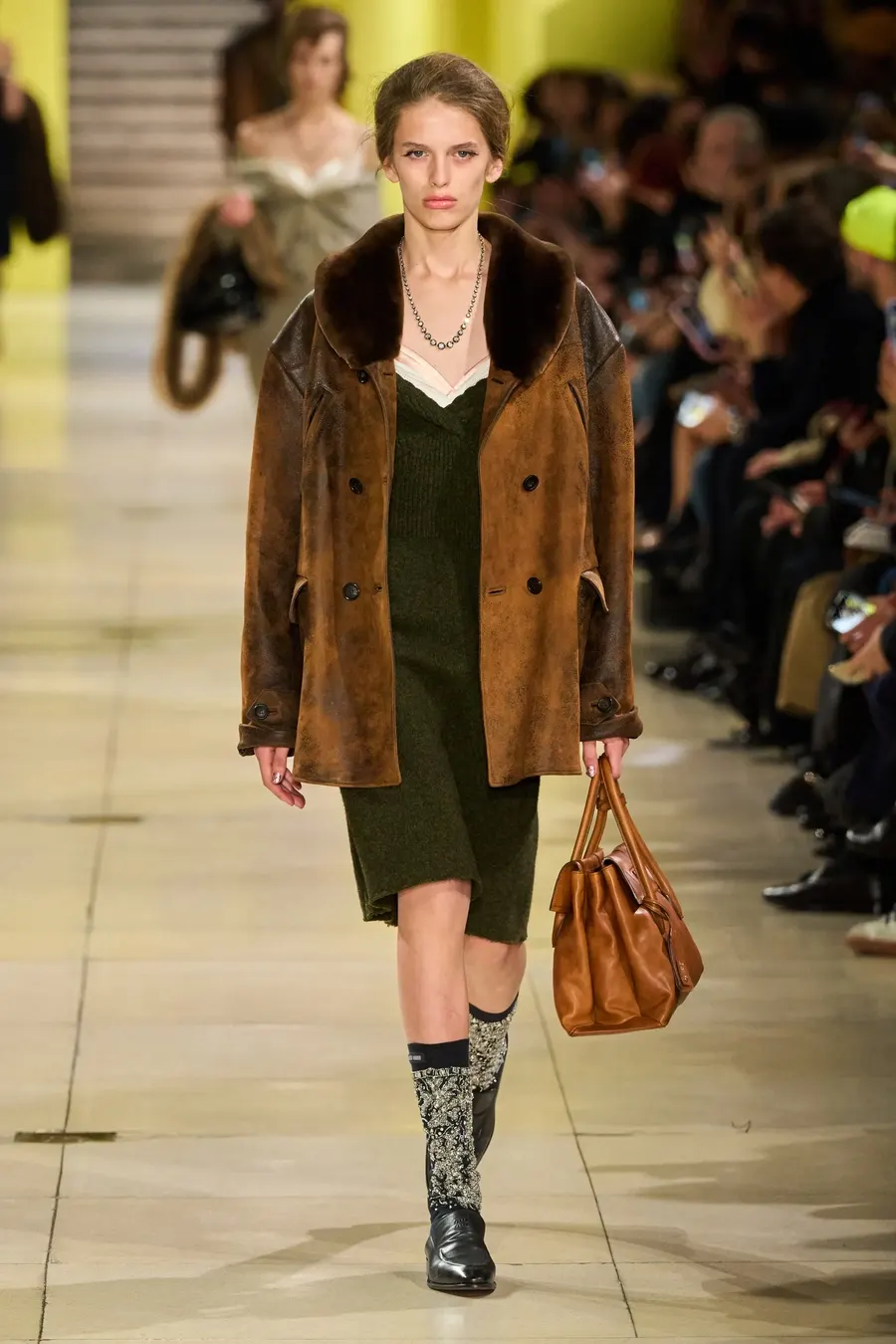
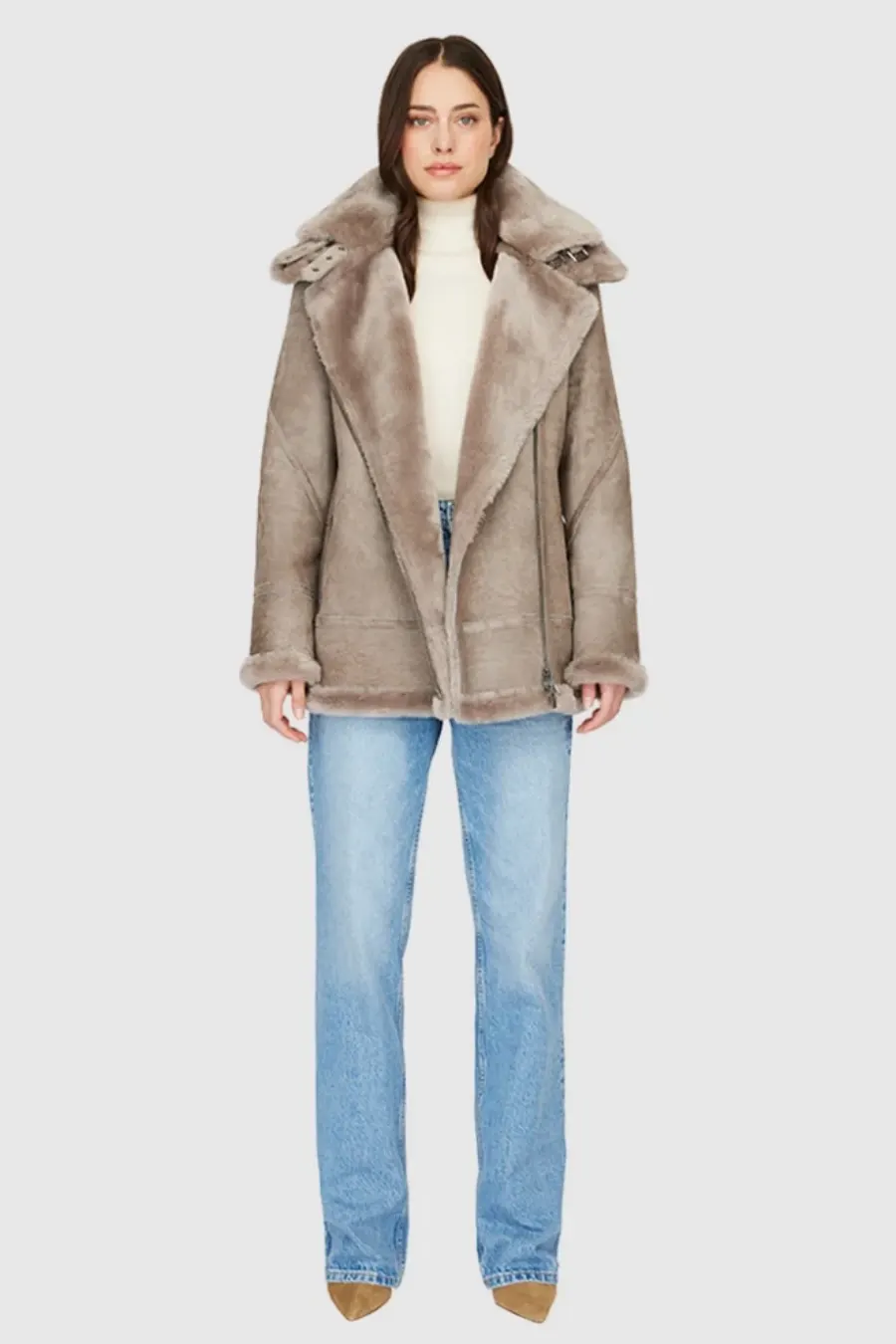
Suede-finish shearling features a softly buffed leather exterior with a characteristic matte surface. The contrast between the fine suede nap and the dense interior wool creates the familiar appearance of traditional aviator jackets. Its texture absorbs light gently, making folds and natural surface variation particularly noticeable.
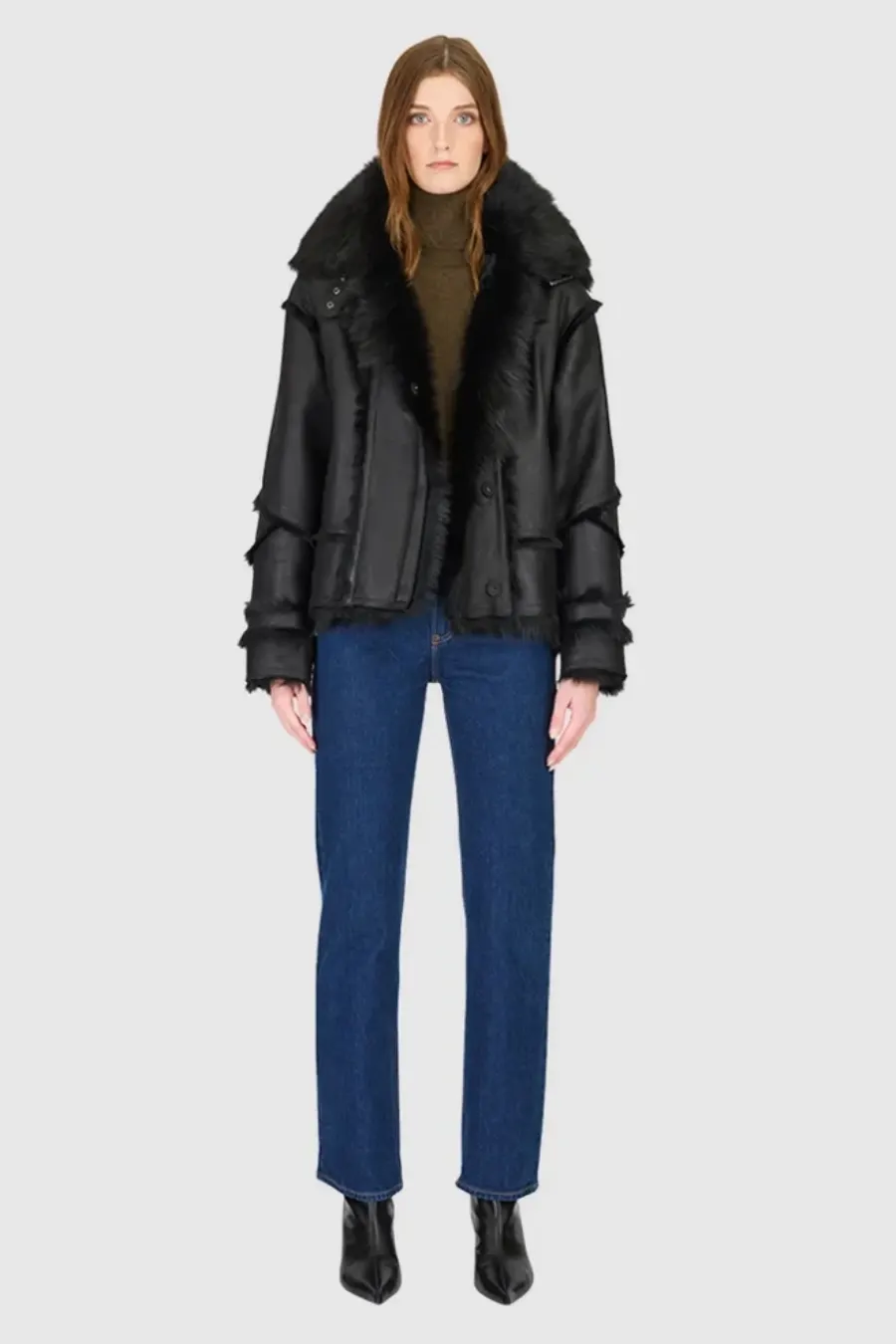
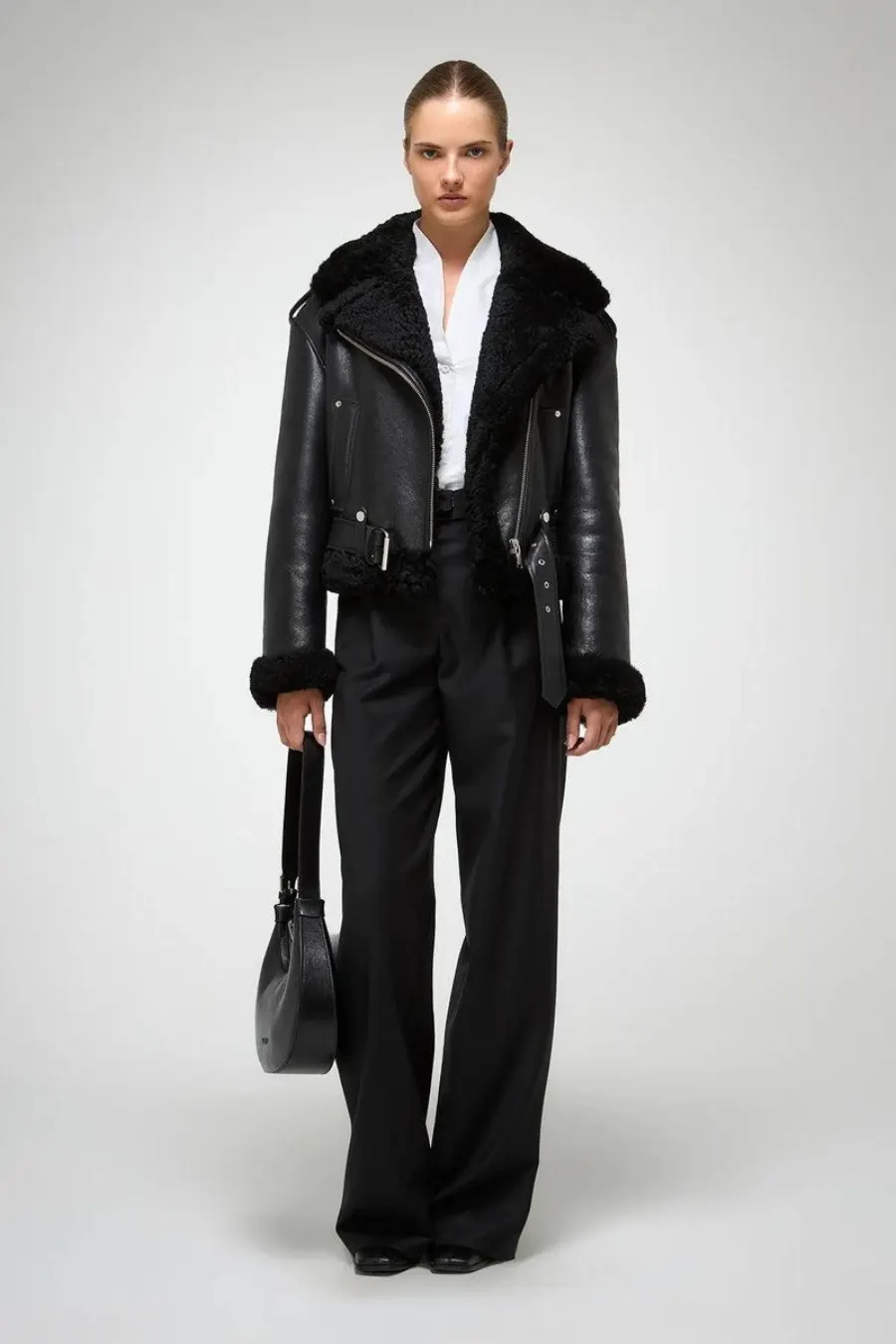
Nappa-finish shearling has a smoother leather exterior, sometimes treated with a thin protective or pigmented finish. The surface can range from softly matte to lightly glossy, lending a more polished appearance to structured jackets and coats. The wool remains attached beneath the leather, preserving the material's insulating properties.

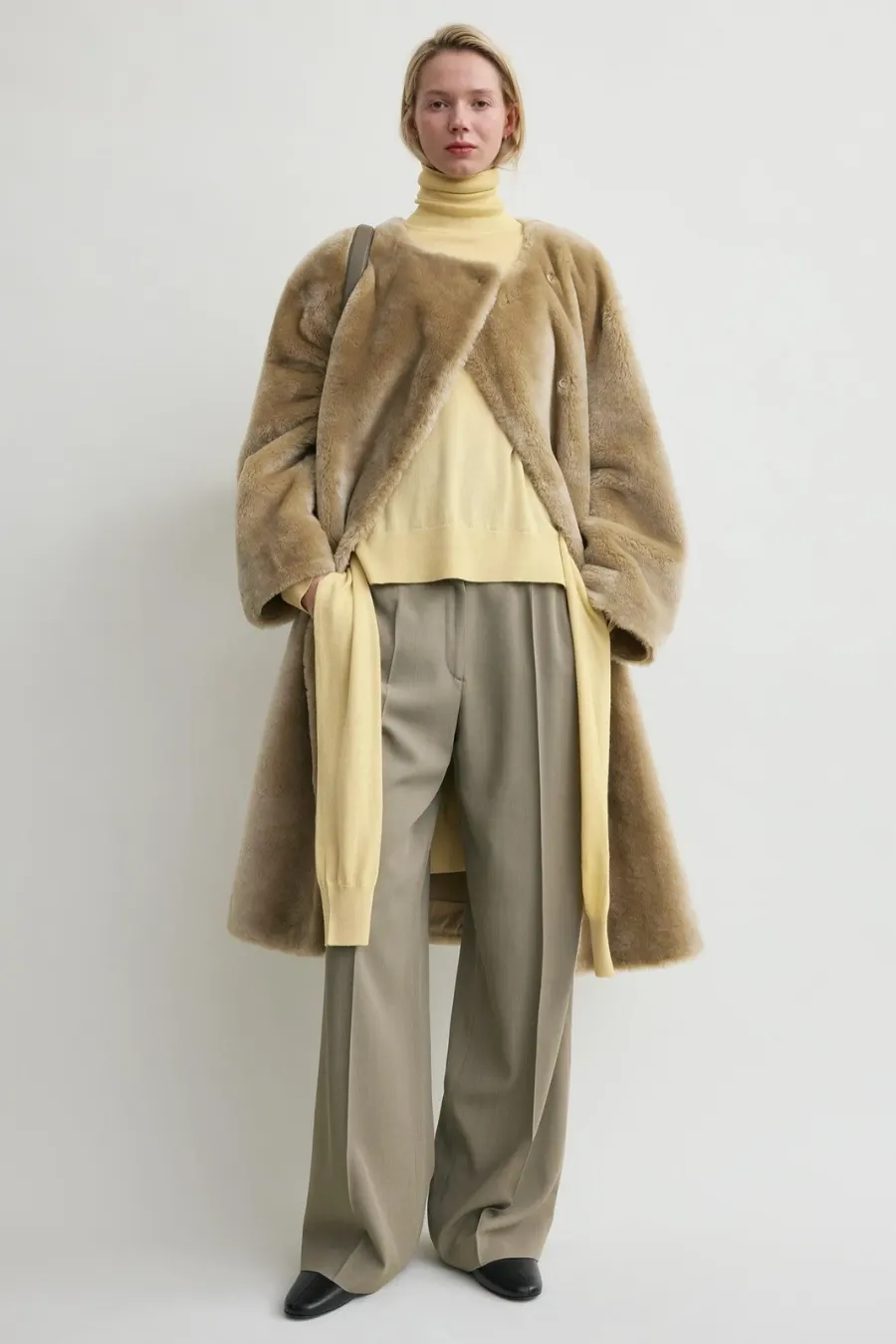
Short-wool shearling is distinguished by a closely trimmed fleece that creates a compact, even texture. Its reduced bulk makes it suitable for cleaner silhouettes, tailored outerwear, and garments requiring greater control over volume. The wool can remain visible as a narrow border along collars and cuffs.
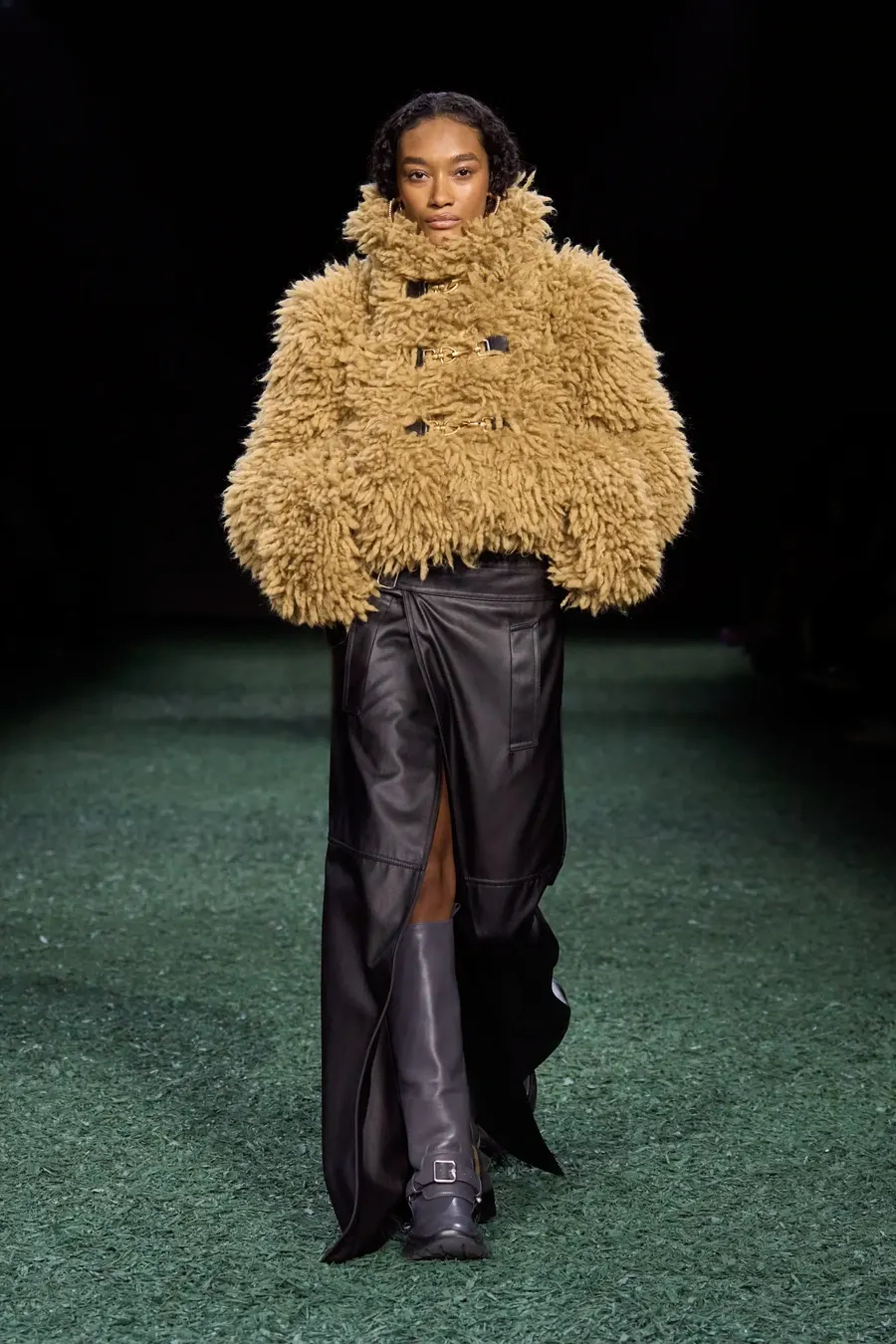
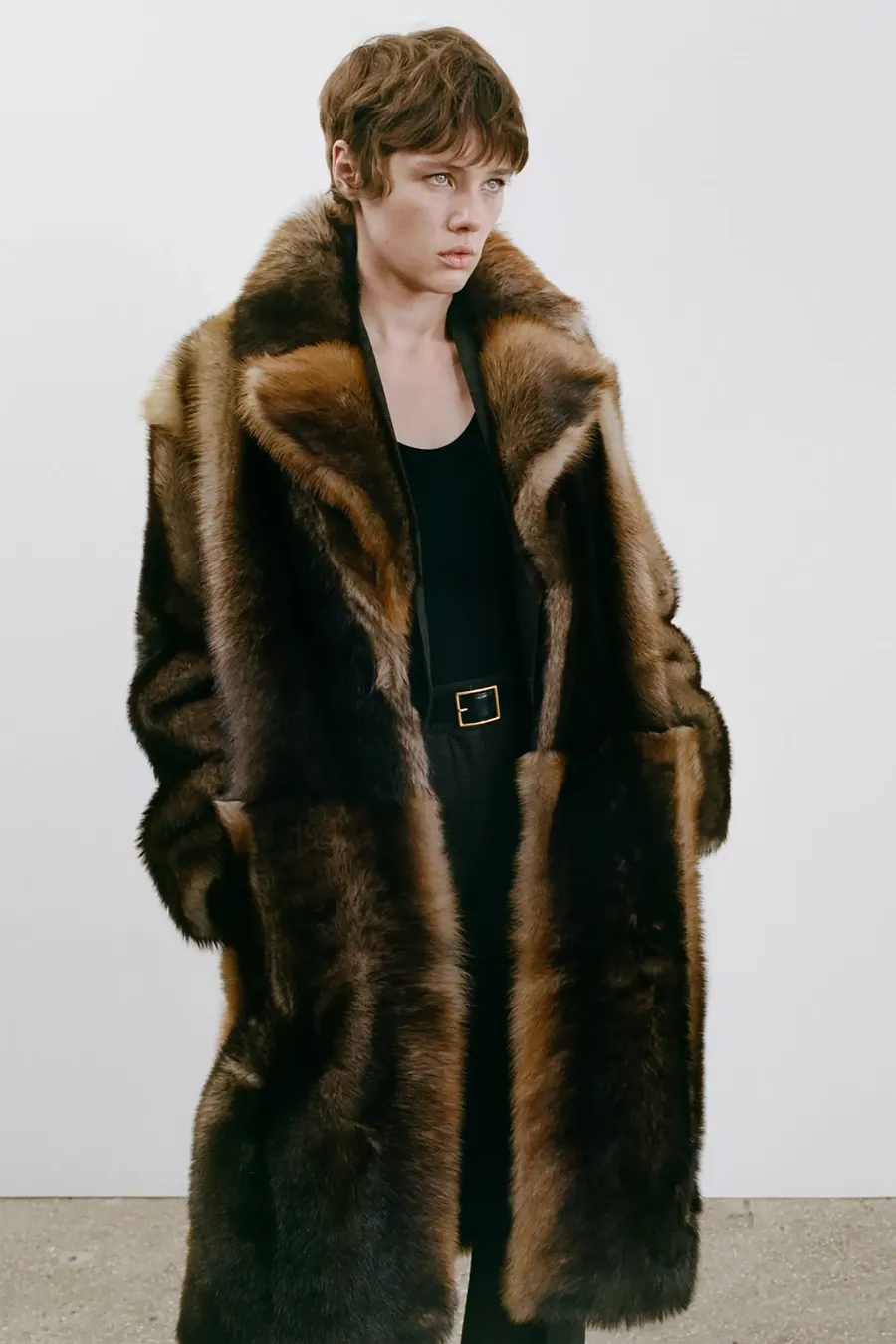
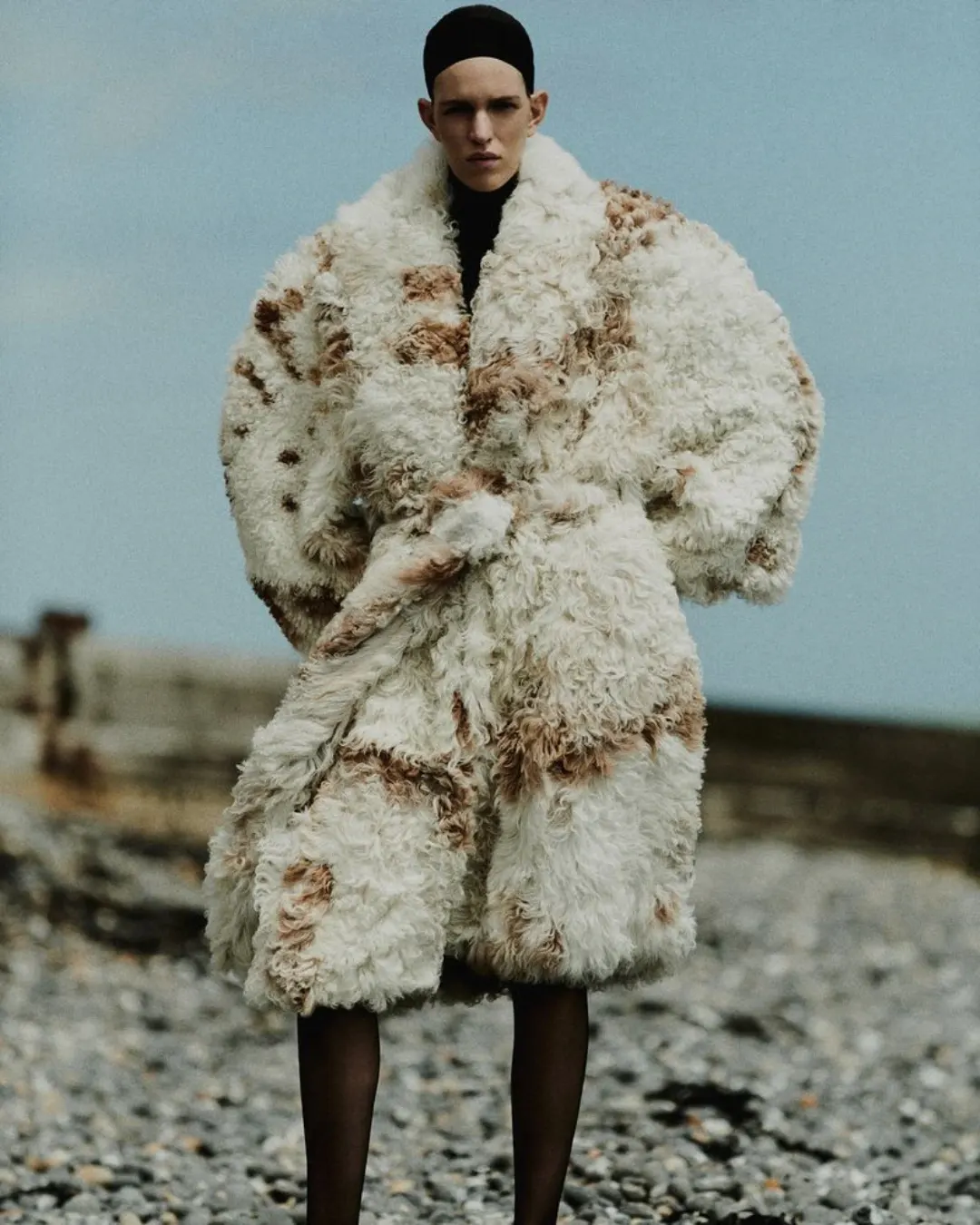
Long-wool and curly shearling emphasise the natural character of the fleece. Longer fibres create greater visual volume, while tightly curled wool introduces a textured, almost sculptural surface. Depending on its finishing, the material can resemble a shaggy fur coat or an irregular fleece garment, with wool becoming the dominant element of the design.
These categories describe practical differences in finish and fleece presentation. A single shearling pelt may combine several characteristics, such as a suede exterior with short curly wool or a smooth nappa finish with a longer fleece.
Shearling Leather in Fashion
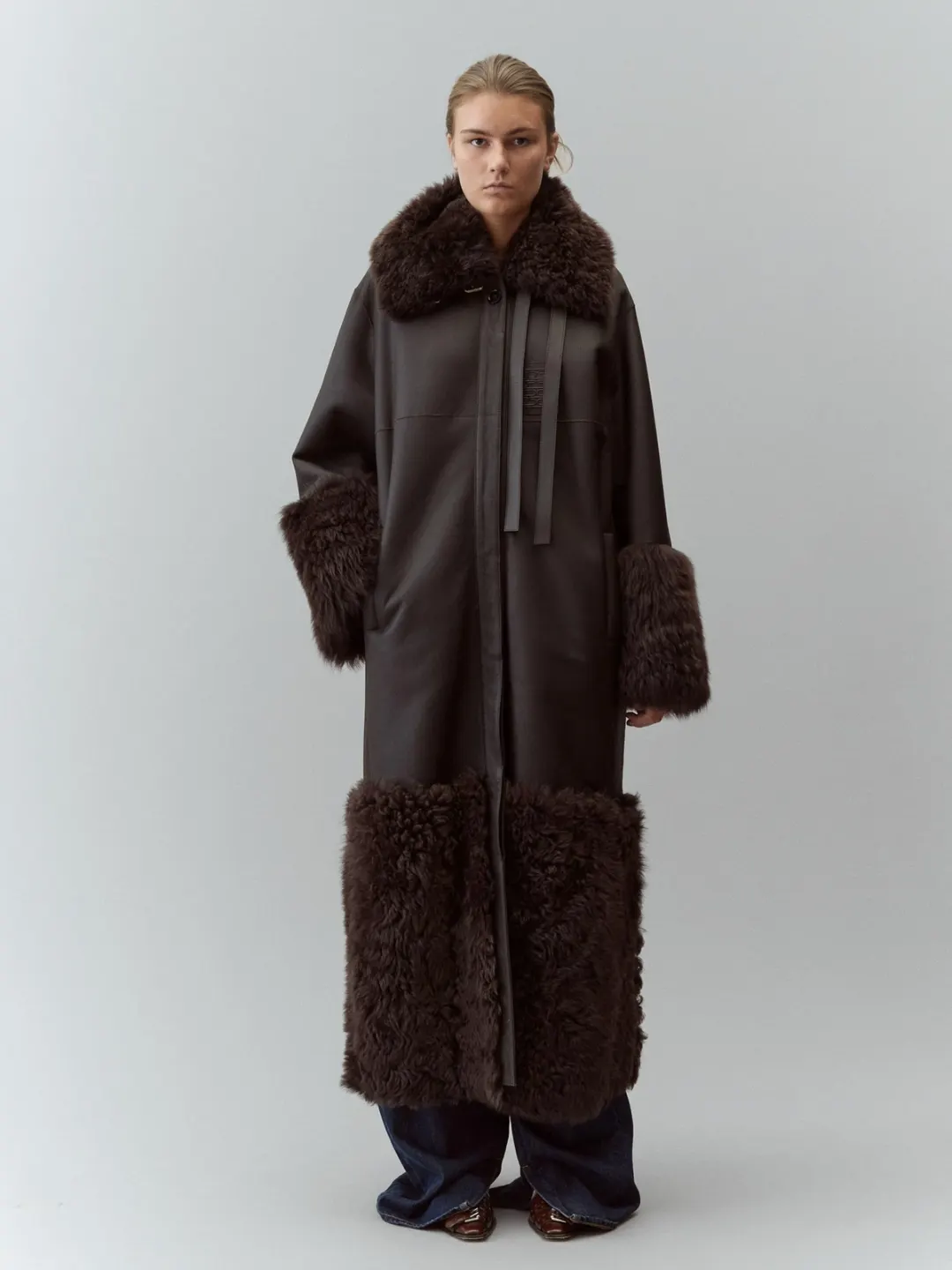
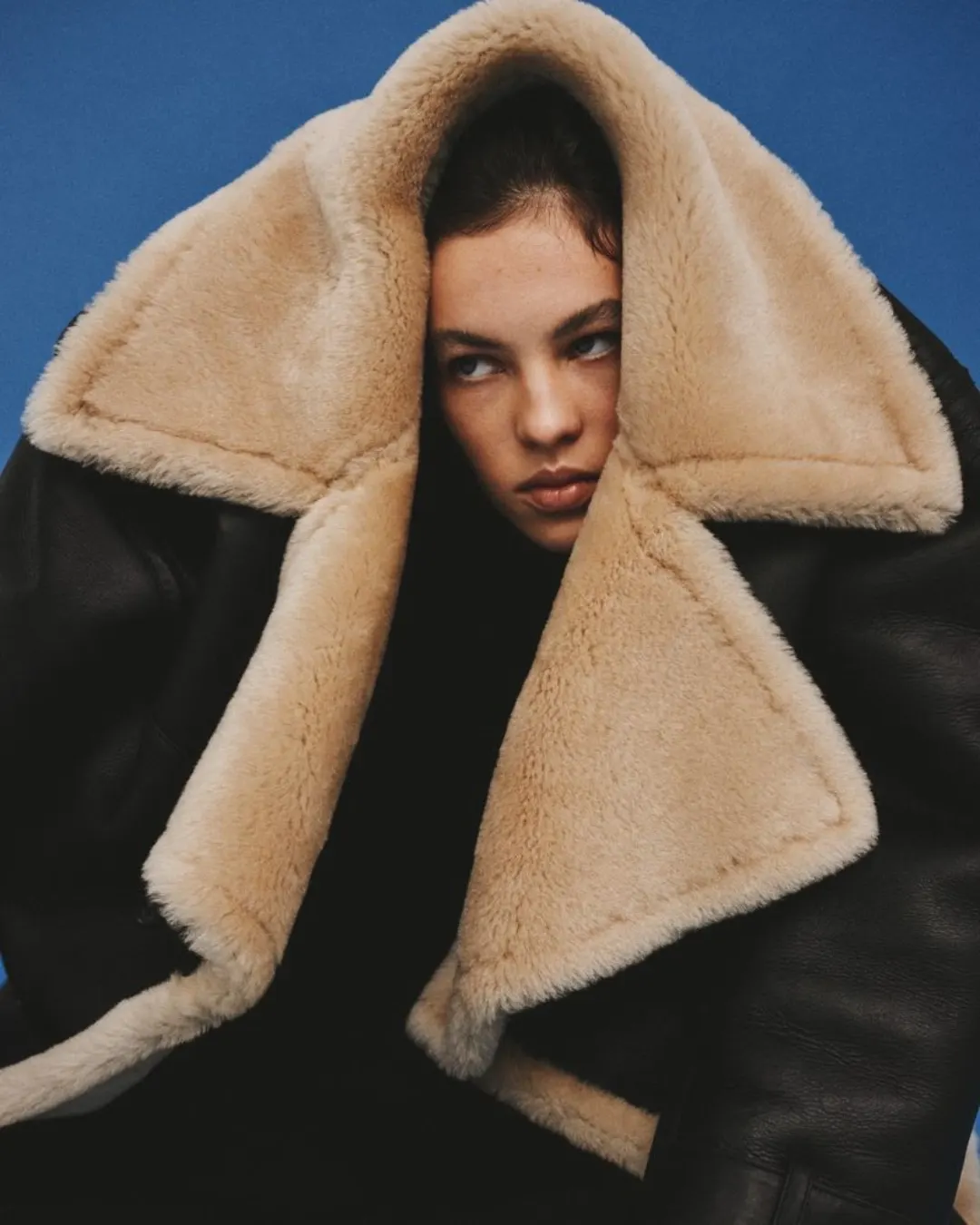
Shearling leather brings an unusual sense of dimension to clothing, allowing texture to shape a garment as decisively as its cut. Thick fleece can soften the outline of structured outerwear, exaggerate the width of a collar, or create volume around the shoulders. Where the leather folds outward, its wool interior becomes part of the design, introducing a striking contrast between two naturally connected surfaces.
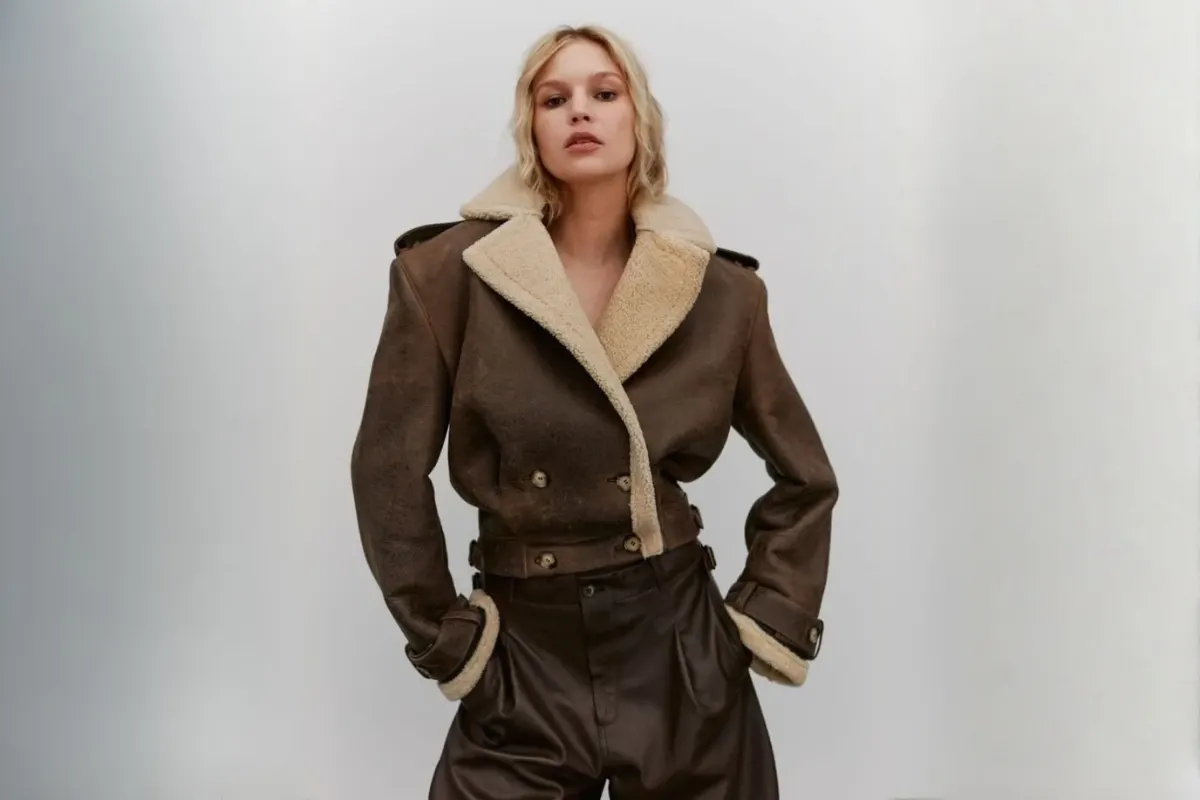
The classic aviator jacket remains one of shearling's most recognisable expressions, but contemporary fashion has pushed the material into increasingly varied silhouettes. Cropped jackets gain a sense of exaggerated proportion through oversized fleece collars, while floor-length coats use the weight and density of shearling to create commanding shapes. Reversible constructions offer another possibility, allowing the soft wool surface to become the exterior and transforming the garment's entire character.
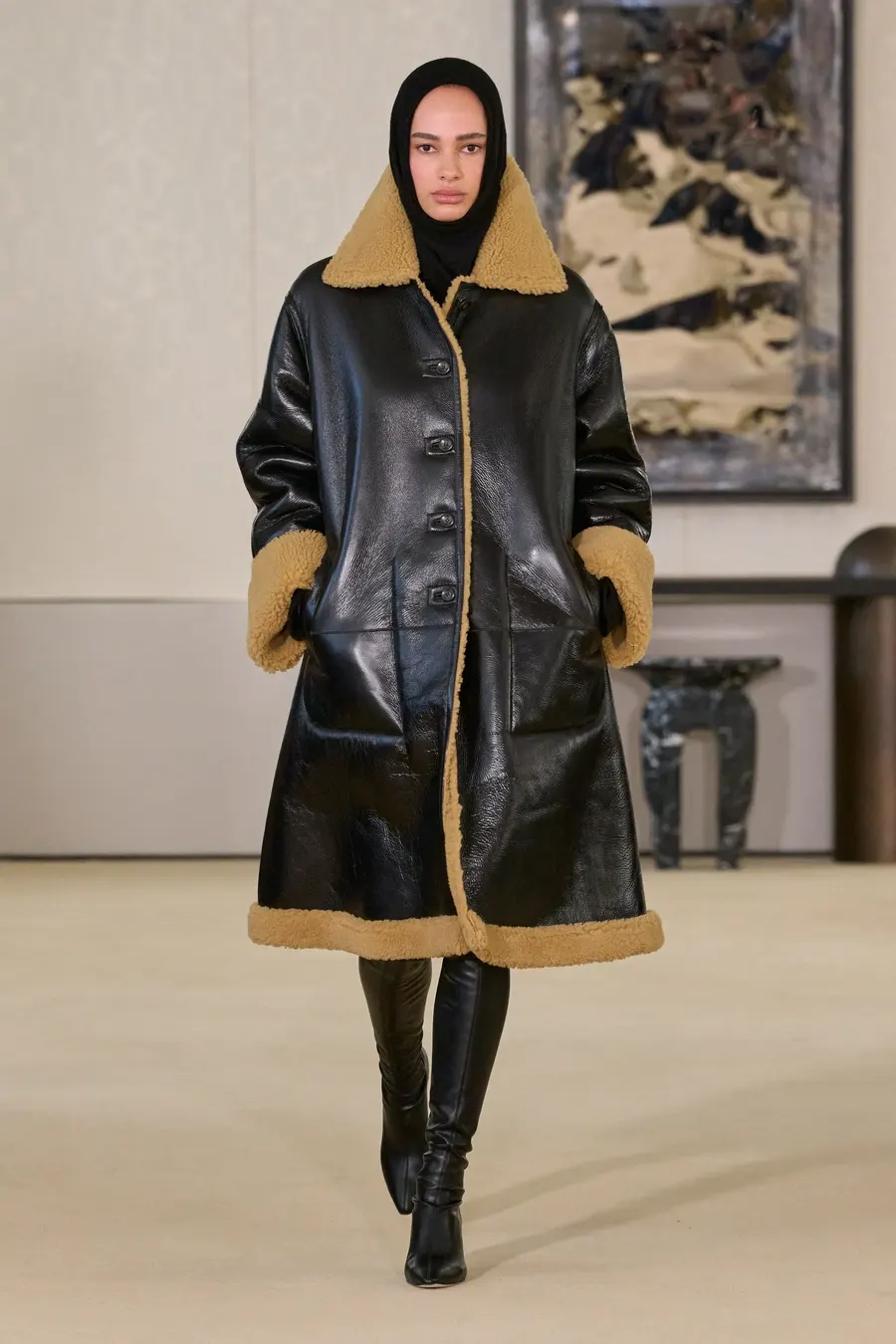
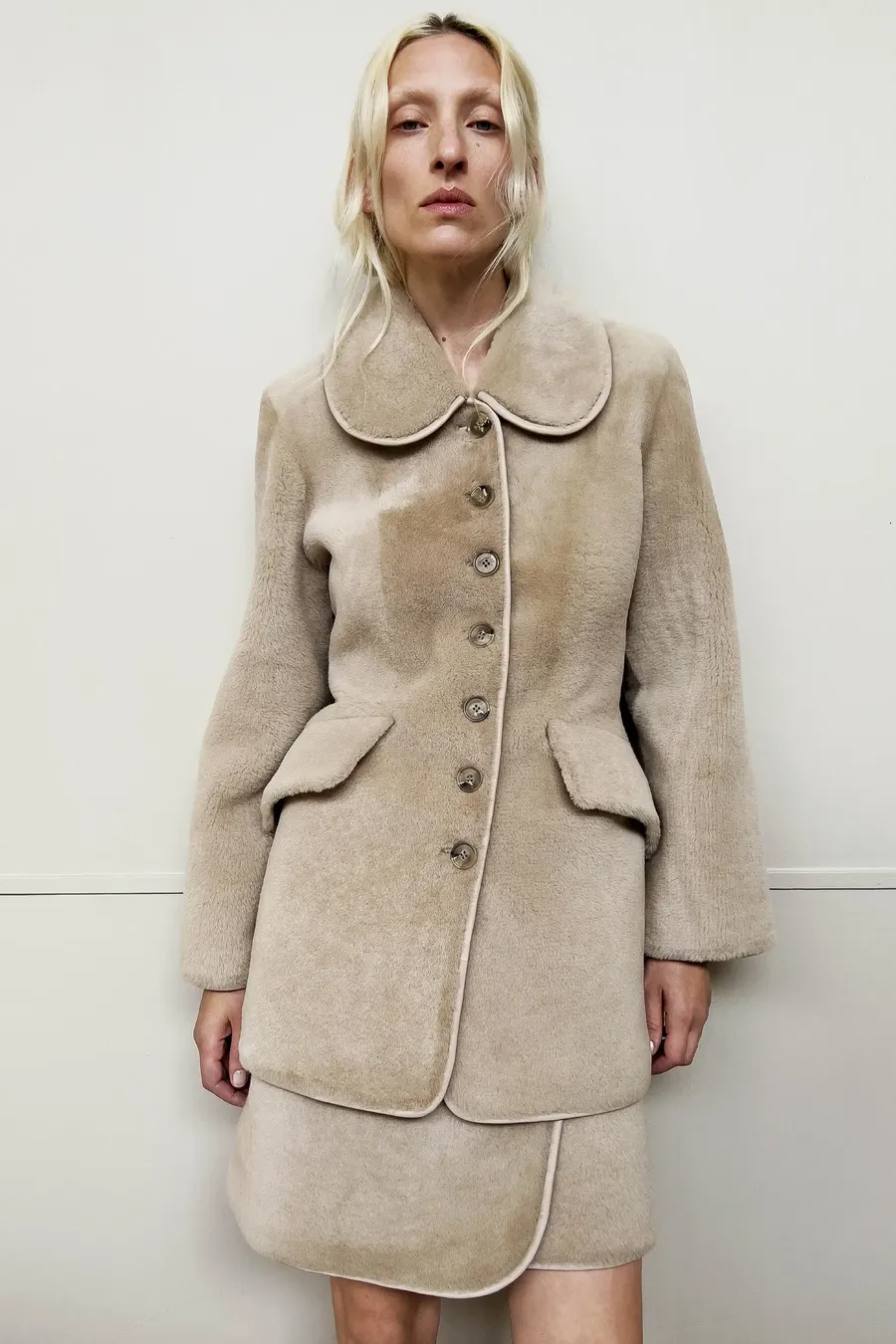
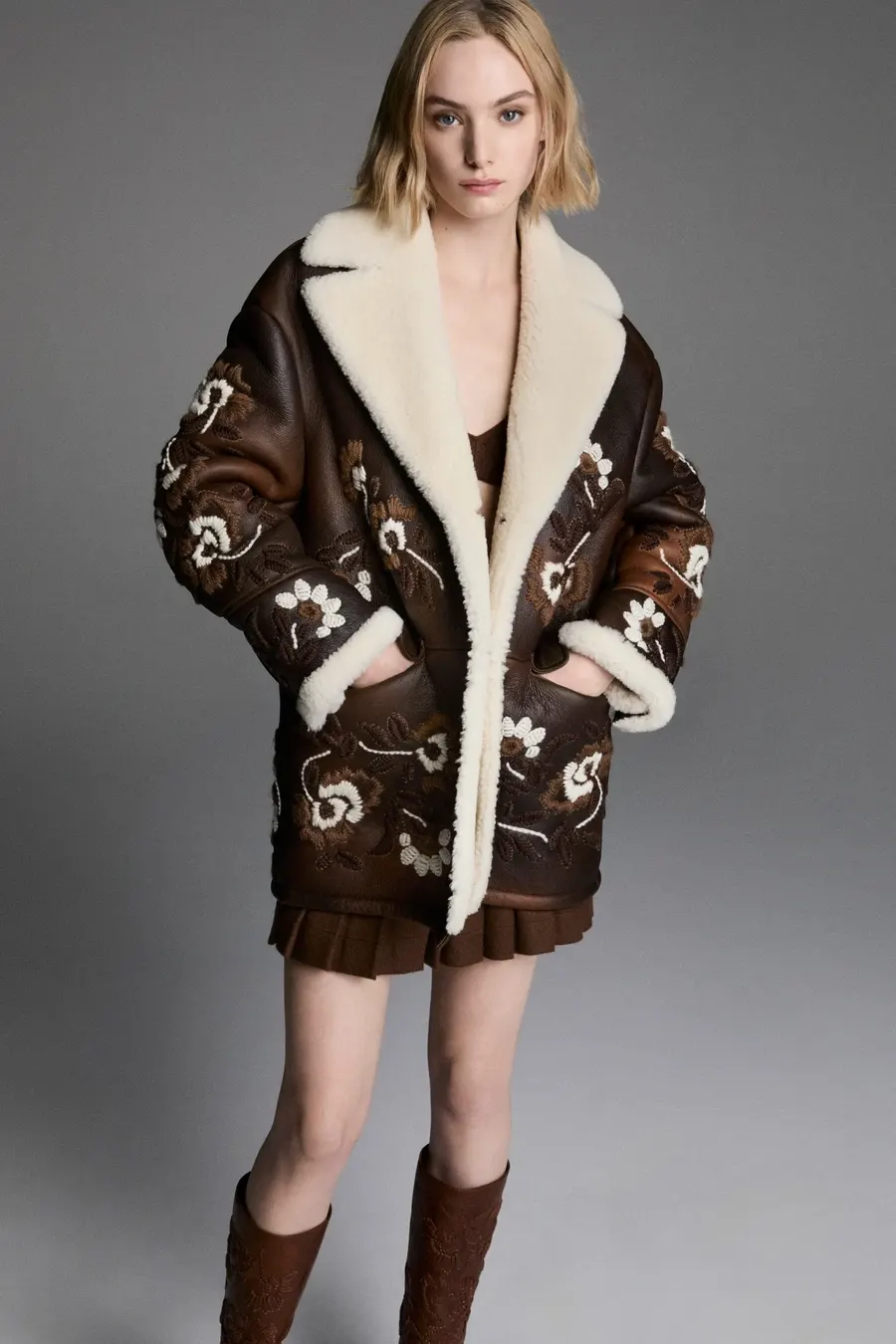
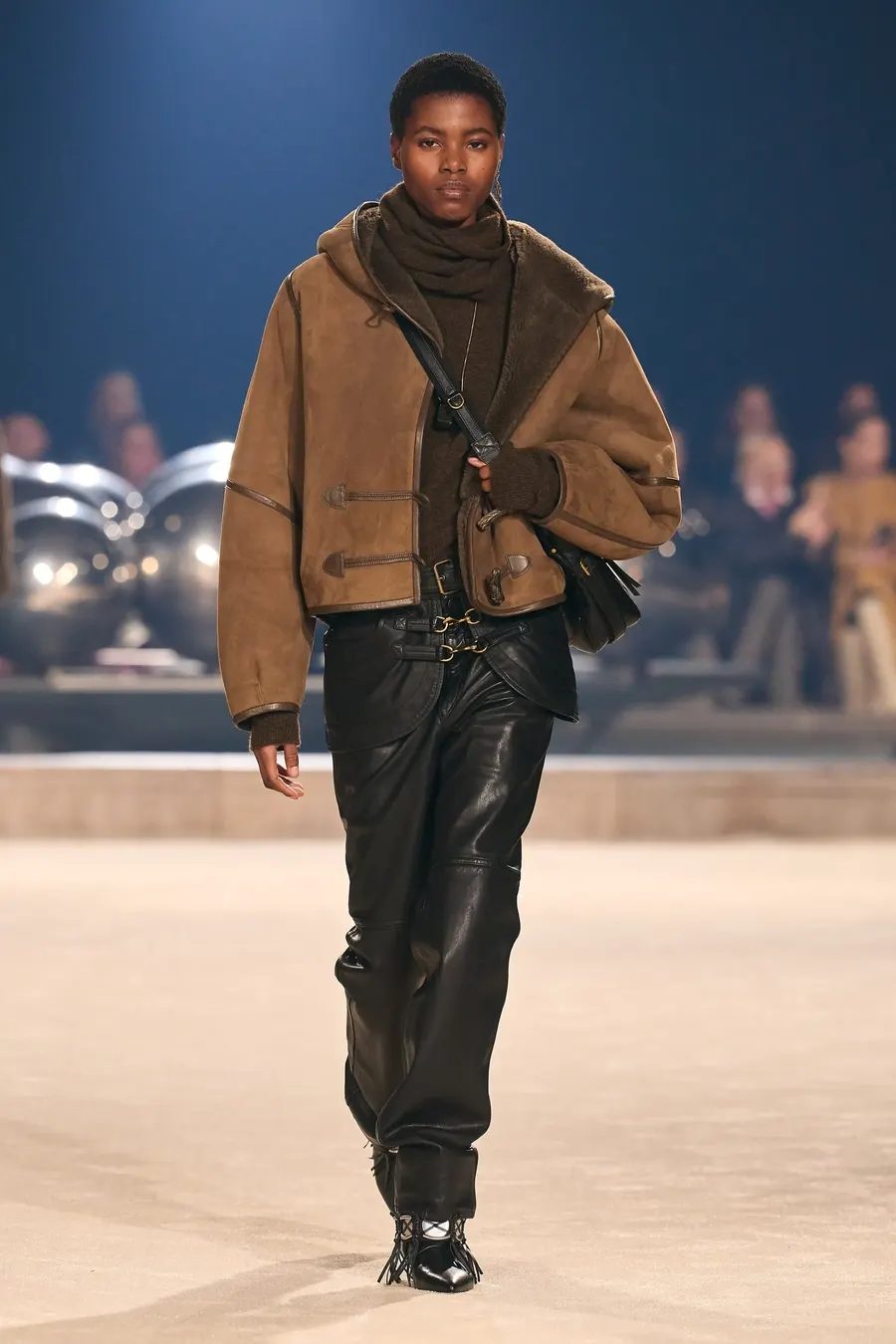
Surface finishing further expands its visual vocabulary. Matte suede lends shearling a rugged, weathered appearance, while smooth nappa finishes introduce a more polished quality. Long, curly fleece creates shaggy, sculptural volumes, whereas closely trimmed wool supports cleaner tailoring and restrained silhouettes. Colour can heighten these effects, from natural cream and tobacco to deep black, saturated shades, and contrasting panels.
On the runway, shearling's appeal often emerges through the tension between structure and softness. Its substantial texture gives even minimal silhouettes a strong physical presence, while exposed fleece introduces movement and irregularity. The material can appear rugged, luxurious, playful, or deliberately excessive, depending on how designers manipulate its proportions and reveal its contrasting surfaces.
How to Identify, Buy and Care for Shearling Leather
Genuine shearling is best identified by examining the connection between wool and leather. The fleece should emerge directly from the skin, forming a continuous natural structure. A separate textile backing or visibly attached synthetic pile generally indicates a shearling-effect alternative.
When purchasing shearling leather, attention should be given to the flexibility of the hide, the density of the wool, and the consistency of the finishing. Quality shearling should bend comfortably without excessive stiffness, while its fleece should feel firmly attached and appropriately even for the intended design.
Care depends on the exterior finish. Suede-finish shearling benefits from gentle brushing when dry, while smoother nappa surfaces can be maintained with a soft cloth and products specifically recommended for the material. Excessive moisture, aggressive cleaning, and prolonged exposure to direct heat can damage both leather and wool.
If a shearling garment becomes wet, allow it to dry naturally at room temperature, away from radiators or direct sunlight. Structured jackets and coats should be stored on broad hangers to preserve their proportions, while significant stains are best handled by professional leather or sheepskin cleaners.
The appeal of shearling leather has always been tied to its capacity to transform protection into something visually desirable. Yet its most interesting quality emerges when designers challenge the expectations surrounding the material itself. A hide historically associated with warmth and practical survival can acquire an unexpectedly sophisticated, exaggerated, or even futuristic presence.
The wool remains attached to the leather, but what fashion chooses to do with those two surfaces continues to evolve.