At the loom, a swirl becomes a vine and a thread becomes a flower. Jacquard fabric carries a whole garden of imagination inside its patterned surface.

Jacquard Fabric: When the Loom Begins to Bloom (Part 2)
At the loom, a swirl becomes a vine and a thread becomes a flower. Jacquard fabric carries a whole garden of imagination inside its patterned surface.
November 5, 2026


The production of jacquard fabric combines traditional weaving principles with specialized pattern-control technology. Each stage contributes to the textile's structural integrity, decorative precision, and final appearance.
How Is Jacquard Fabric Made?
The process begins with pattern development, during which textile designers create decorative compositions ranging from botanical illustrations to geometric arrangements. Historically, these designs were translated into technical drawings on squared paper, with individual squares representing the placement and interaction of yarns. Contemporary manufacturers employ computer-aided design software to establish weaving structures, color arrangements, and repeating patterns.
Once the design is finalized, manufacturers select the appropriate yarns. Silk contributes natural luster and fluidity, while cotton offers breathability and versatility. Wool introduces warmth and body, whereas polyester and other manufactured fibers provide additional possibilities for texture, stability, and finishing. Yarn thickness, twist, color, and composition collectively influence the final appearance of jacquard fabric.
The next stage involves preparing the loom. In woven textiles, two fundamental yarn systems interact: the warp, consisting of threads running lengthwise, and the weft, which travels horizontally across them. Warp threads are arranged under controlled tension and connected to the loom's lifting mechanism.
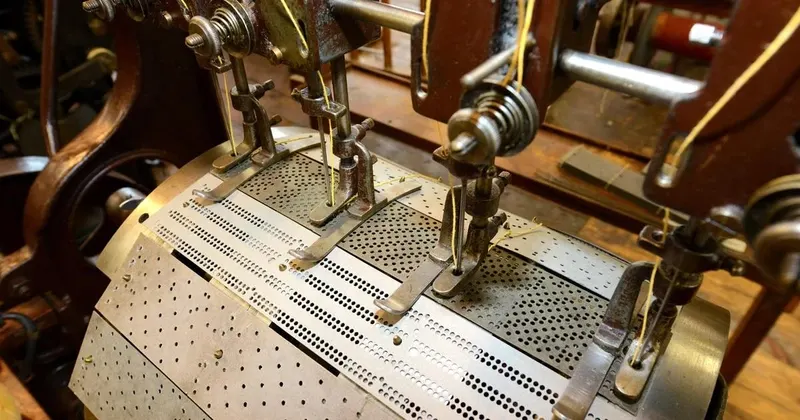
The defining feature of jacquard fabric production is the Jacquard mechanism, which determines which warp threads rise during each weaving cycle.
Traditional Jacquard machines employed interconnected punched cards to encode weaving instructions. Each card represented a sequence of thread selections, allowing the machine to reproduce elaborate patterns through repeated mechanical operations. Modern electronic Jacquard systems perform similar functions using digitally controlled components.
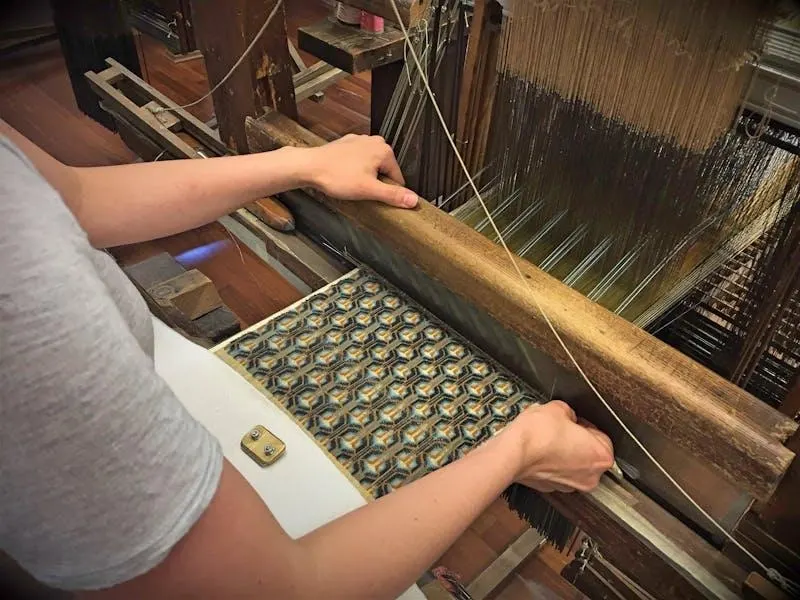
During weaving, selected warp threads rise to create an opening known as the shed. A weft yarn passes through this opening before being secured against the previously woven fabric. The mechanism subsequently changes the arrangement of raised threads, producing the next section of the pattern.
Repeating this process thousands of times allows intricate designs to emerge directly through the interlacing of yarns. Different weave structures can produce contrasting surfaces, raised motifs, and variations in light reflection within the same textile.
After weaving, jacquard fabric undergoes inspection and finishing. Manufacturers examine pattern consistency, identify weaving irregularities, and apply appropriate treatments such as washing, steaming, softening, or dimensional stabilization.
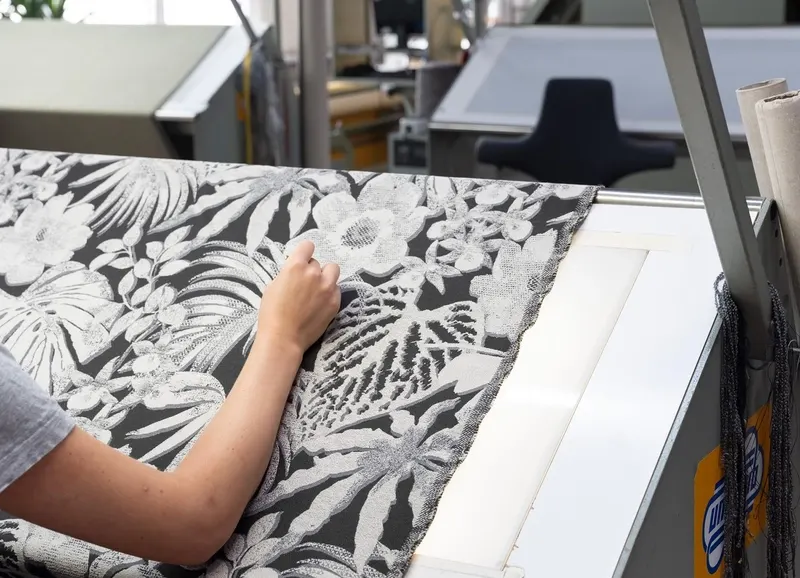
These finishing processes influence the fabric's drape, texture, and durability. The completed material can then be prepared for cutting, tailoring, or further decorative applications.
The History and Origins of Jacquard Fabric
The history of jacquard fabric begins centuries before the invention that gave the material its modern name. Intricate patterned textiles had already emerged across ancient China, the Middle East, India, and Europe, where skilled weavers developed sophisticated methods of combining colored yarns and complex weaving structures.
Among the earliest technologies used for elaborate patterned weaving was the drawloom. This specialized loom allowed selected groups of warp threads to be manipulated independently, enabling the creation of detailed motifs. Production frequently required an assistant known as a drawboy, who operated the pattern-selection system while the principal weaver controlled the weaving process.

During the eighteenth century, French inventors began developing mechanical solutions that would transform this labor-intensive practice.
In 1725, Basile Bouchon introduced a system using perforated paper to control thread selection on a loom. The arrangement of holes represented instructions for producing woven patterns, establishing an early form of programmable machinery.
Around 1728, Jean-Baptiste Falcon advanced this technology through interconnected punched cards. His system allowed weaving instructions to be arranged into extended sequences, facilitating the production of increasingly elaborate designs.
Further developments followed in 1745, when French engineer Jacques de Vaucanson constructed an improved mechanism for automating thread selection. His experiments contributed important mechanical principles that would influence subsequent weaving innovations.

Against this background, Joseph Marie Jacquard was born on July 7, 1752, in Lyon, France. The city had long occupied a prominent position in European silk manufacturing, with its workshops producing luxurious textiles for aristocratic and fashionable clientele.
Jacquard's familiarity with the local weaving industry encouraged his interest in mechanical improvements. During the late eighteenth century, he began exploring methods of simplifying the production of complex woven patterns.
In 1801, Jacquard presented an early weaving invention at the French industrial exhibition in Paris, receiving recognition for its technical potential. His subsequent work incorporated and refined earlier developments in mechanical pattern selection.
Between 1804 and 1805, the Jacquard mechanism emerged in a form that would become influential throughout the textile industry. Its punched-card system controlled the selection of warp threads, allowing elaborate woven designs to be produced through a programmable sequence.
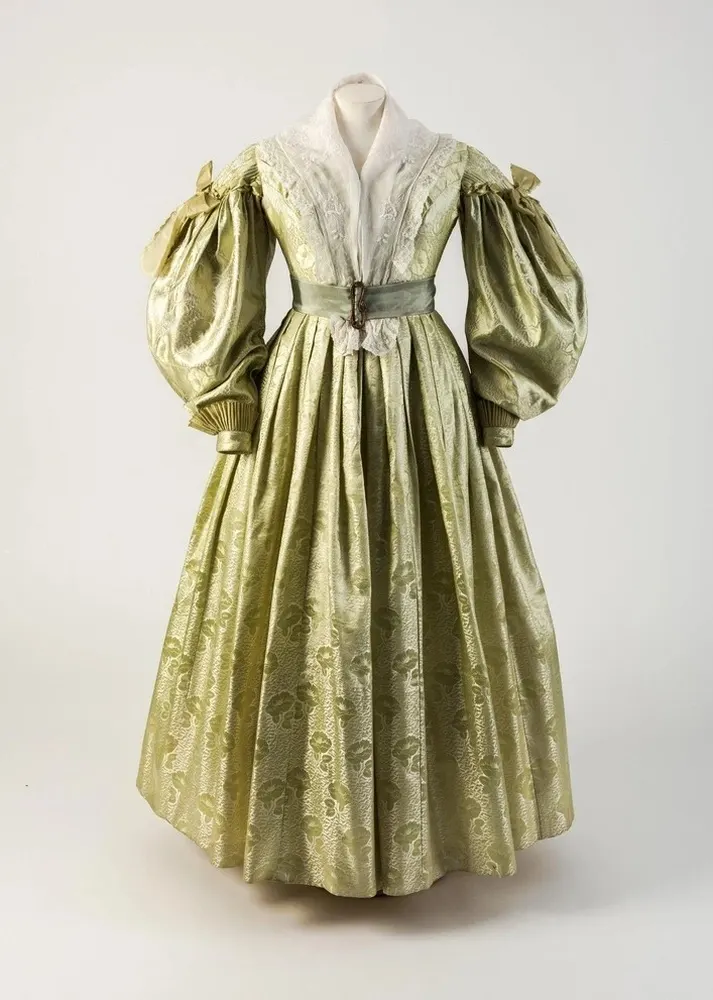
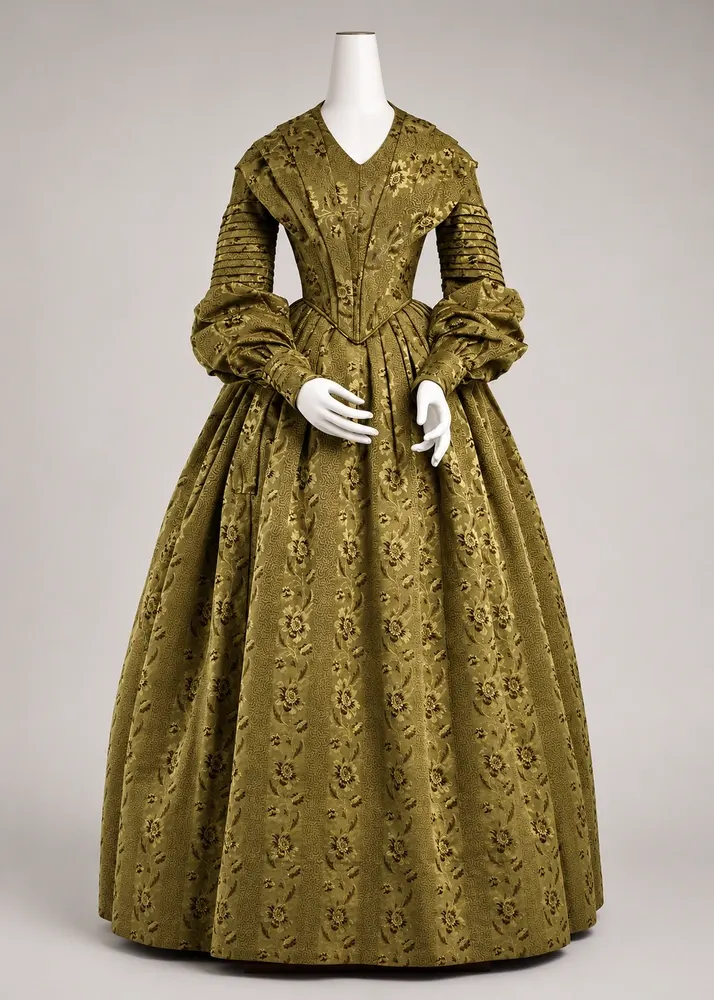
On April 12, 1805, Napoleon Bonaparte and Empress Joséphine visited Lyon, where Jacquard's weaving technology attracted imperial attention. The invention subsequently gained recognition as an important contribution to French manufacturing. During the Victorian era, Jacquard technology spread beyond France into other European textile centers. By the 1820s, Jacquard-equipped looms were being adopted in Scotland, particularly in the production of patterned shawls and damask textiles.
The technology also demonstrated extraordinary artistic possibilities. In 1839, silk manufacturer Michel-Marie Carquillat produced an intricate woven portrait of Joseph Marie Jacquard, based on a painting by Jean-Claude Bonnefond. Approximately 24,000 punched cards were used to create its remarkably detailed imagery.
The portrait illustrated how woven threads could reproduce complex pictorial compositions with precision approaching that of traditional graphic techniques.

Jacquard's invention also influenced the development of mechanical computing. During the 1830s, British mathematician Charles Babbage incorporated punched-card concepts into his plans for the Analytical Engine, a proposed programmable mechanical computer. The relationship between encoded weaving instructions and mechanical computation became an important chapter in the history of technology.
Throughout the twentieth century, Jacquard weaving evolved alongside industrial machinery. Mechanical systems gradually incorporated electrical and electronic controls, improving production efficiency and expanding design possibilities.
By the late twentieth century, computerized Jacquard systems allowed manufacturers to translate digital artwork directly into weaving instructions. Contemporary textile technology continues to expand these possibilities through sophisticated software, electronic thread selection, and experimental fabric structures. Today, jacquard fabric embodies more than two centuries of mechanical innovation while preserving the ornamental traditions of earlier weaving cultures.