Three crimson threads, a golden legacy, and a scent that whispers of leather. Saffron carries centuries of desire into the invisible world of perfume.
Saffron: The Spice With a Leather Fetish
Three crimson threads, a golden legacy, and a scent that whispers of leather. Saffron carries centuries of desire into the invisible world of perfume.
November 9, 2026


On a wall in ancient Akrotiri, young women bend toward purple crocuses, gathering flowers that conceal three slender red stigmas. Their movements survive in painted fragments from the Bronze Age, while the ingredient they handled still commands extraordinary attention.
Saffron has colored textiles, flavored feasts and accompanied rituals across centuries. Yet its latest transformation occurs inside perfume, where the golden spice takes on the surprising character of leather, warm metal and radiant amber. How did a flower so closely associated with color acquire such an intriguing invisible identity?
Saffron, the Color of Power
Around the seventeenth century BCE, artists in Akrotiri, on the Aegean island of Thera, decorated the building known as Xeste 3 with scenes of crocus gathering. Women carry baskets through a rocky landscape filled with blossoms. Nearby imagery has prompted interpretations involving healing, fertility and ceremonial activity. Scholars debate the precise meanings, but the prominence of the flower reveals its importance to the community.
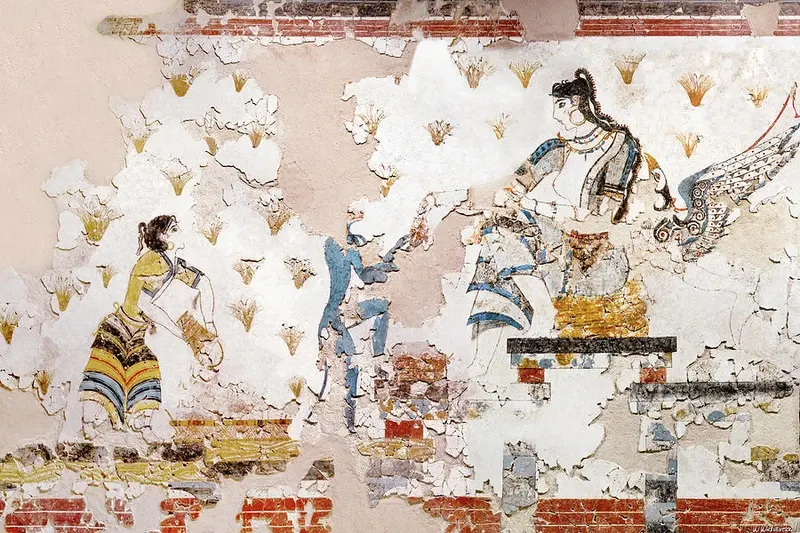
Ancient saffron belonged to a world where beauty, medicine, ceremony and commerce frequently overlapped. Its brilliant yellow dye could transform cloth, while its intense pigment gave artists and craftspeople a precious color. Crocus imagery also appears in Bronze Age Crete. Botanical and genetic research points toward an Aegean origin for domesticated saffron, although its subsequent cultivation developed across many regions.
In Persia, saffron became part of an established culture of culinary fragrance, dyeing and fragrant preparations. Its association with costly textiles and lavish hospitality helped sustain a reputation for refinement.

Across South Asia, saffron orange also acquired powerful religious symbolism, particularly through garments associated with asceticism and renunciation. The symbolic color deserves distinction from the actual dye: saffron colored fabric can be produced with other materials.
The ingredient crossed cultural boundaries while gathering different meanings. One society might prize its luminous color; another its medicinal reputation or fragrant culinary presence. Such varied uses explain why saffron became a marker of exceptional value long before anyone placed its aroma in a modern perfume bottle.
Three Red Threads and a Small Fortune
The flower responsible for this prestige is Crocus sativus, an autumn blooming plant with violet petals and three vivid red stigmas. These delicate structures become the spice after careful harvesting and drying. Each blossom yields a tiny amount, so an entire field of flowers can produce a modest weight of finished saffron.
A commonly cited estimate requires roughly 150,000 flowers for one kilogram of dried threads, although yields vary by cultivation and processing conditions. The labor begins during the short flowering season. Pickers gather blossoms at the appropriate moment, then separate the stigmas by hand. Speed matters because fresh flowers deteriorate, while careful handling protects the threads from unnecessary damage.

Drying follows, demanding attention. Excess moisture threatens quality, and unsuitable heat can alter the finished material. Producers therefore balance temperature, ventilation and timing to preserve its valued properties. Quality assessment considers coloring strength, bitterness, aroma and other characteristics. The work requires botanical knowledge alongside disciplined practical skill.
Iran is the leading center of contemporary saffron production, while Kashmir, Greece and Spain maintain their own celebrated growing traditions. Soil, climate, harvest practices and processing methods influence the finished spice. The phrase red gold becomes understandable here: wealth is concentrated into an astonishingly small harvest, measured in fragile threads and hours of patient work.
Why Saffron Smells of Leather
Open a jar of dried saffron and the aroma may suggest hay, warm spices, dry wood and a sharp medicinal edge. Some people detect a faint metallic impression, while others notice honeyed warmth. Its aromatic identity has surprising distance from the sweetness suggested by its golden color.
Three chemical groups help explain its sensory complexity. Crocins are pigments responsible for saffron's strong yellow orange coloring. Picrocrocin contributes the characteristic bitter taste. Safranal is an important volatile compound responsible for much of the recognizable fragrance. These substances perform roles, allowing one plant to offer a complete experience of color, flavor and smell.
The drying stage is influential. During processing, reactions involving aroma precursors, including picrocrocin, contribute to the formation of safranal. Differences in temperature and duration can change the final aromatic profile. The distinctive perfume of the dried spice is therefore partly developed after the stigmas have been removed from their flowers.
In fragrance descriptions, saffron often appears alongside words such as leathery, smoky or mineral. Those terms describe a recognizable effect rather than a single chemical released by the plant. Natural saffron contains numerous volatile compounds, and their interactions create nuances that resist a simple definition. Understanding that complexity helps explain why perfumers find the ingredient so creatively useful.
How Perfumers Make Saffron Wear Leather
Perfumers approach saffron as a collection of aromatic possibilities. A formula might emphasize its dry spicy warmth, build a suede impression around it or sharpen its almost metallic edge. The note can provide texture within an amber composition, give rose a darker atmosphere or introduce tension against a sweet accord.
Much of this artistry depends on constructed fragrance accords. A saffron note listed in a perfume description does not automatically establish that natural saffron extract appears in the formula. Perfumers may instead assemble the desired effect from selected aroma materials, sometimes combining them with natural extracts.
One material is Safraleine, developed by fragrance manufacturer Givaudan. This synthetic molecule offers spicy, leathery, woody and tobacco facets, with floral nuances reminiscent of saffron. It gives perfumers precise control over an impression that might otherwise vary with botanical harvests or extraction conditions.
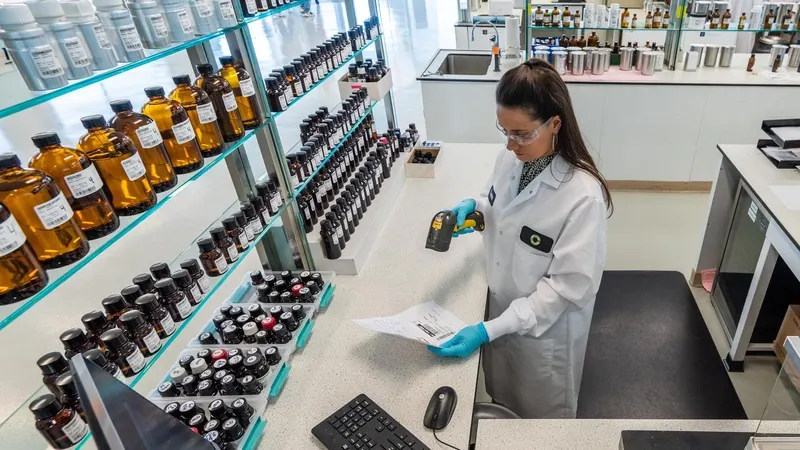
Safranal and Safraleine are separate substances. The former occurs naturally in saffron and contributes to its aroma; the latter is a designed perfumery ingredient offering its own character. Distinguishing them illustrates how fragrance making moves between studying nature and constructing new sensory experiences.
Aromatic ingredients also change character through their companions. With rose, saffron can feel plush and romantic. With dry woods, its sharper facets become architectural. Combined with musks and sweet amber materials, it can convey warmth that seems to radiate directly from the skin.
Saffron's Second Life in Luxury Perfume
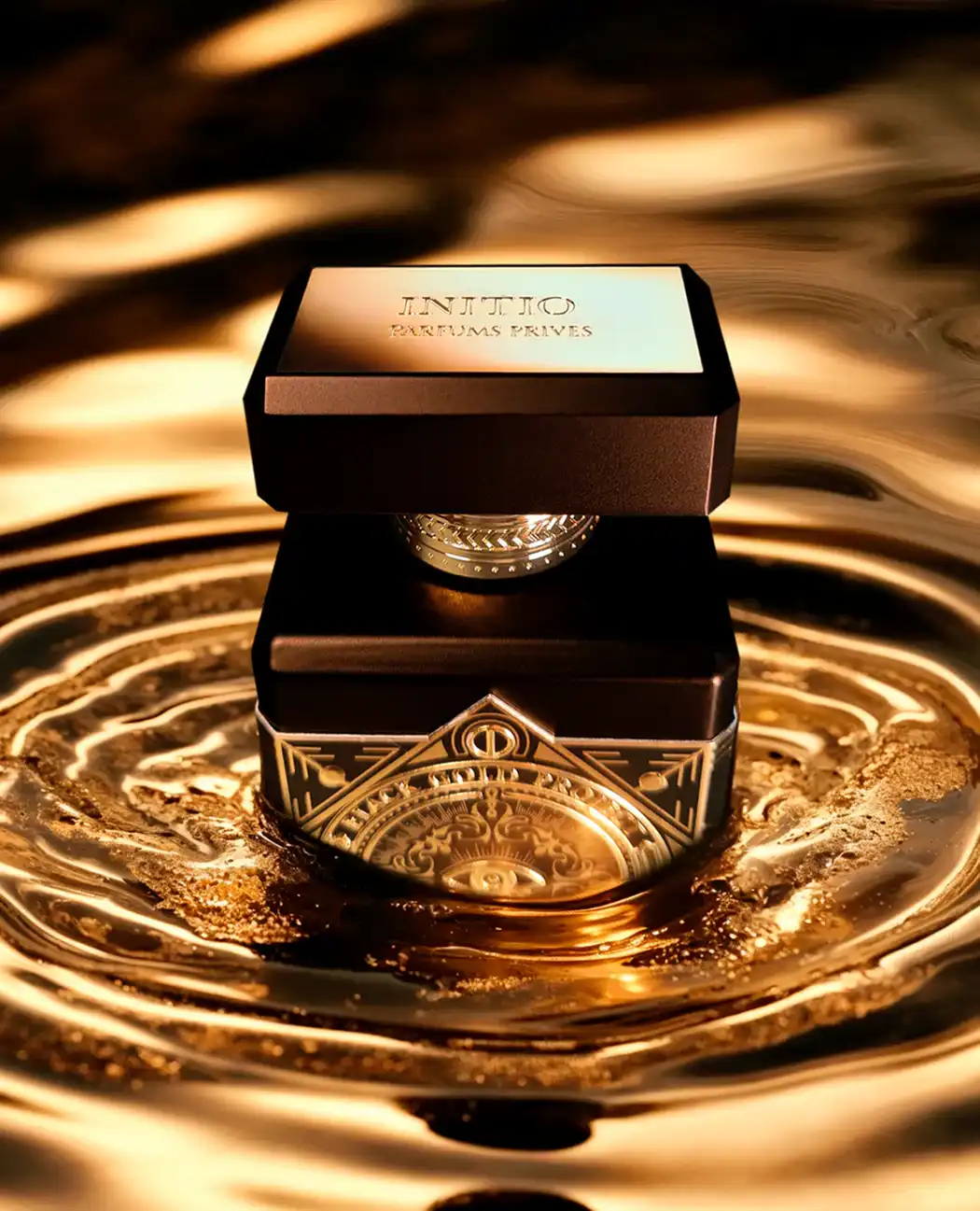
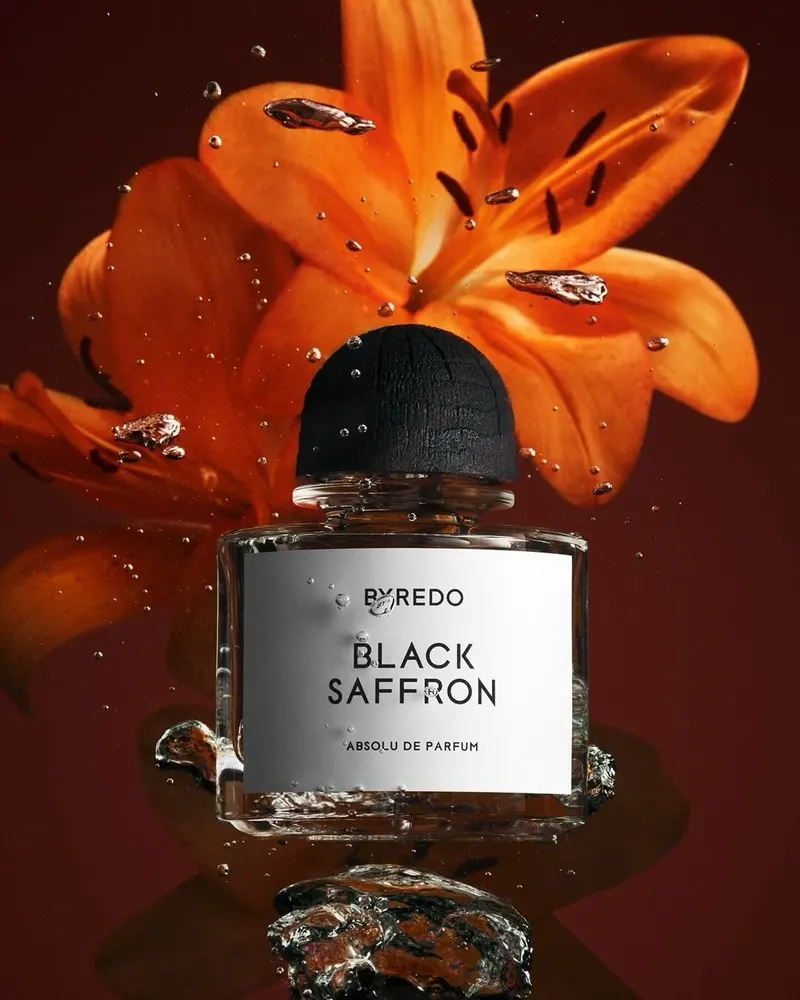
Byredo Black Saffron provides a revealing cultural interpretation. Founder Ben Gorham drew upon saffron's place in his Indian upbringing, including the spiritual significance of saffron colored garments. Juniper berries and pomelo introduce freshness, while black violet, a leather accord, raspberry and vetiver create a darker, richly textured impression.
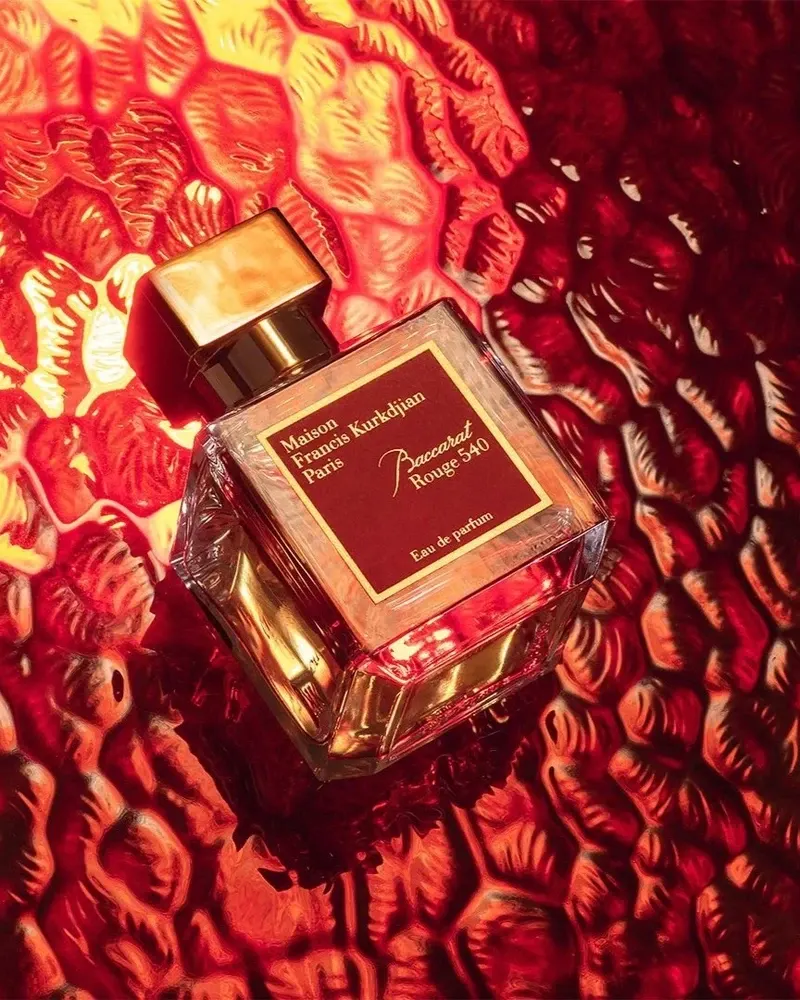
Maison Francis Kurkdjian Baccarat Rouge 540 explores a different visual language. Developed in connection with Baccarat crystal, the fragrance references the process by which crystal turns red through the addition of gold and heat. Francis Kurkdjian arranged three aromatic impressions around that idea: airy jasmine effects, mineral woody Ambroxan and a fiery combination of saffron accord and ethyl maltol, whose sweetness suggests caramelized sugar.
Here saffron contributes radiance and a slightly sharp edge within a diffusive fragrance. Its role demonstrates how an ancient spice can participate in an abstract composition inspired by contemporary luxury craftsmanship. Together, these two perfumes show the note moving between cultural memory and modern fragrance experimentation.