MENU
Close





Legend has it that Queen Cleopatra soaked her ship's sails in Egyptian jasmine oil, so that the very wind that carried her to Mark Antony would bewitch him with an invisible, intoxicating cloud. Whether myth or history, the tale underscores a timeless truth: jasmine is the scent of seduction, a weapon of desire so potent it could conquer a warrior's heart before a first glance.
Legend has it that Queen Cleopatra soaked her ship's sails in Egyptian jasmine oil, so that the very wind that carried her to Mark Antony would bewitch him with an invisible, intoxicating cloud. Whether myth or history, the tale underscores a timeless truth: jasmine is the scent of seduction, a weapon of desire so potent it could conquer a warrior's heart before a first glance.
December 13, 2025
Advertisement

Advertisement



If the rose is the undisputed queen of perfumery, then jasmine is its king. Both hold thrones in the olfactory pantheon, but where the rose whispers of feminine allure, jasmine speaks in stranger, more potent tones. It is a living scent more vibrant than any other floral, describable in countless contradictory shades: sensual and bizarre, intense and narcotic, warm, tenacious, dreamlike, and amorous. Across cultures, jasmine evokes the memory of a summer evening, where a lazy breeze carries a sweetness that melts the body into a pool of secret, tender emotions. While many essences are used in carnal fragrances, jasmine's fascination lies in its refusal to be merely physical. It stirs genuine emotion and vibration, elevating sensuality into the most complete form of love.
There is almost no scent with which jasmine cannot harmonize. It can "marry" them all, blending into every note and imparting a miraculous, beautiful layer. Perfumers often place jasmine in the heart note—the central pillar of a fragrance that anchors the top notes and elegantly guides the journey to the base. This middle layer conveys warmth and fullness in the art of blending, expressing the passion and talent of its creator. It is no accident this stratum is called the "heart."
To examine this scientifically, we turn to the foundational olfactory system created by George William Septimus Piesse in his 19th-century masterpiece, The Art of Perfumery. Piesse devised a numbered scale for perfumers from 1 to 100: 1-15 for top notes, 16-69 for heart notes, and 70-100 for base notes. Jasmine absolute holds position 43 on this scale, alongside lily and rose.
Jasmine originated in the Far East—India and China—before migrating to Spain, France, Egypt, Algeria, Morocco, and beyond. Its name derives from the Persian "Yasameen," meaning "Gift from God." Spanish sailors brought it to southern France in 1560, and by 1700, it flourished in Grasse, the legendary perfume capital of France, where it became a defining cultural emblem for centuries.
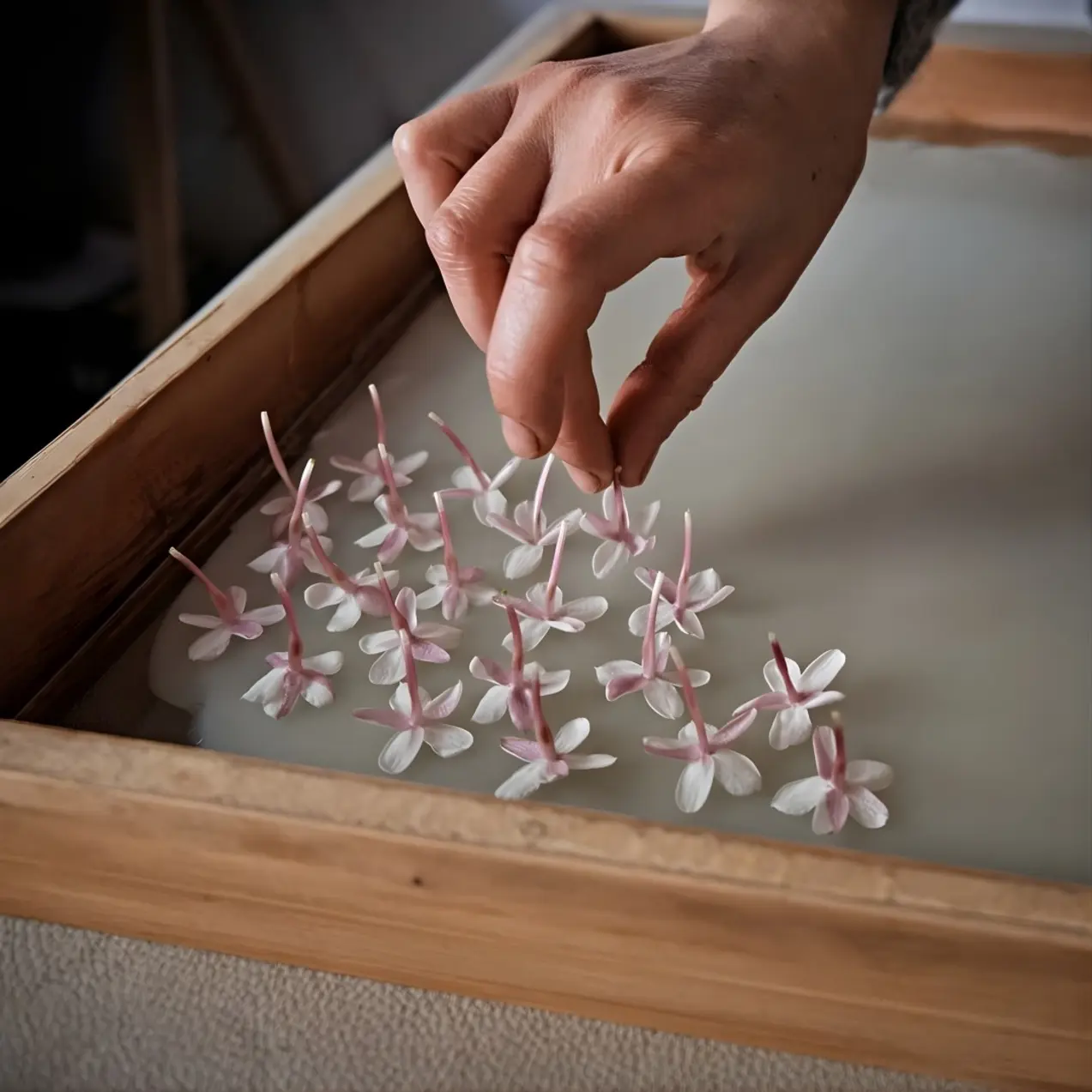
The traditional enfleurage and distillation methods of Grasse are so refined that from one ton of fresh flowers, only about 2.5 kg of jasmine concrete (a waxy essence) is obtained. The resulting jasmine absolute is a dark, precious nectar. However, its legendary status is mirrored by a staggering modern price tag. Due to climate vulnerability, minuscule yields, and artisanal labor costs, Grasse Jasmine Grandiflorum Absolute now commands between €60,000 to well over €100,000 per kilogram, cementing its status as one of the most expensive raw materials on Earth.
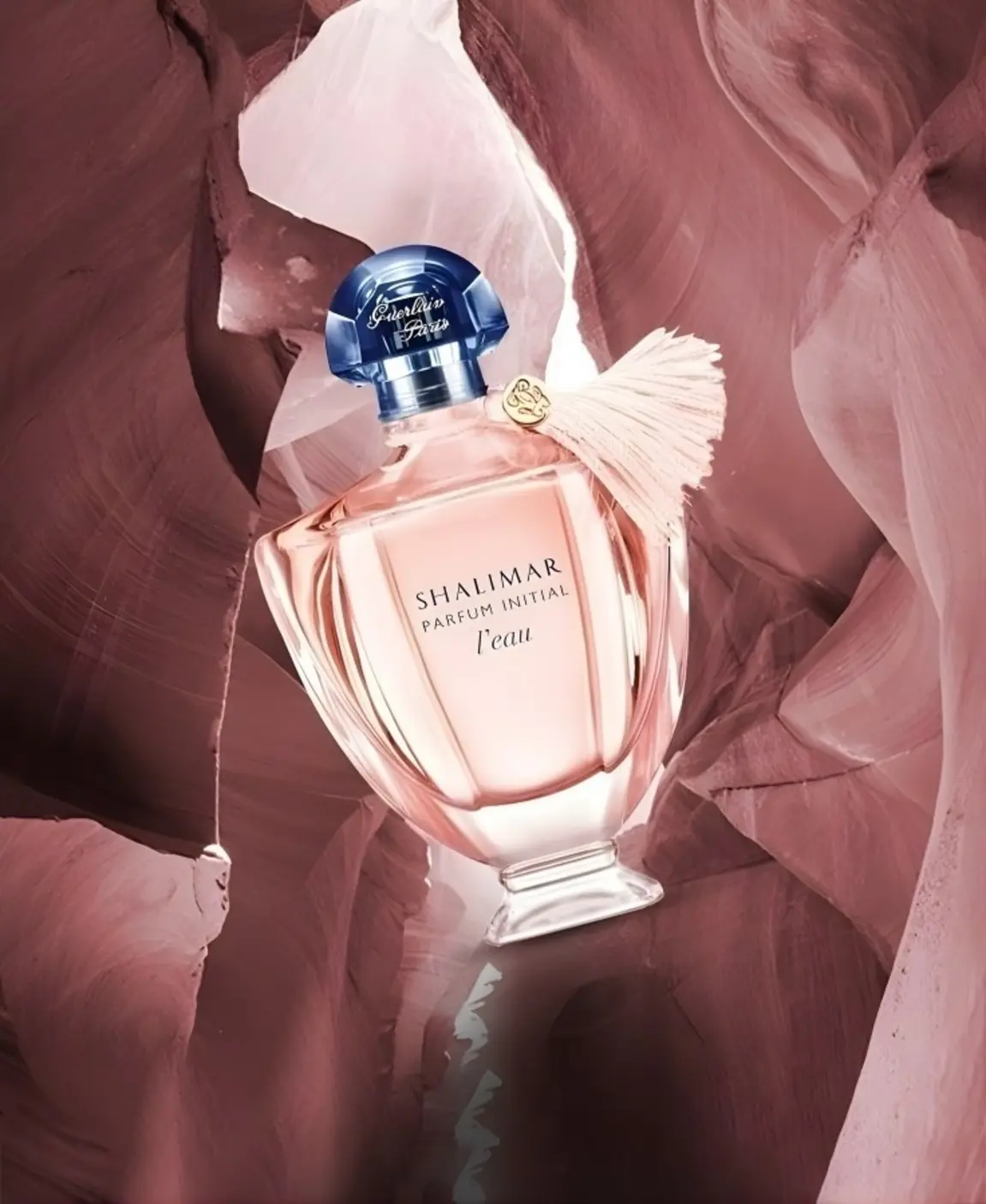
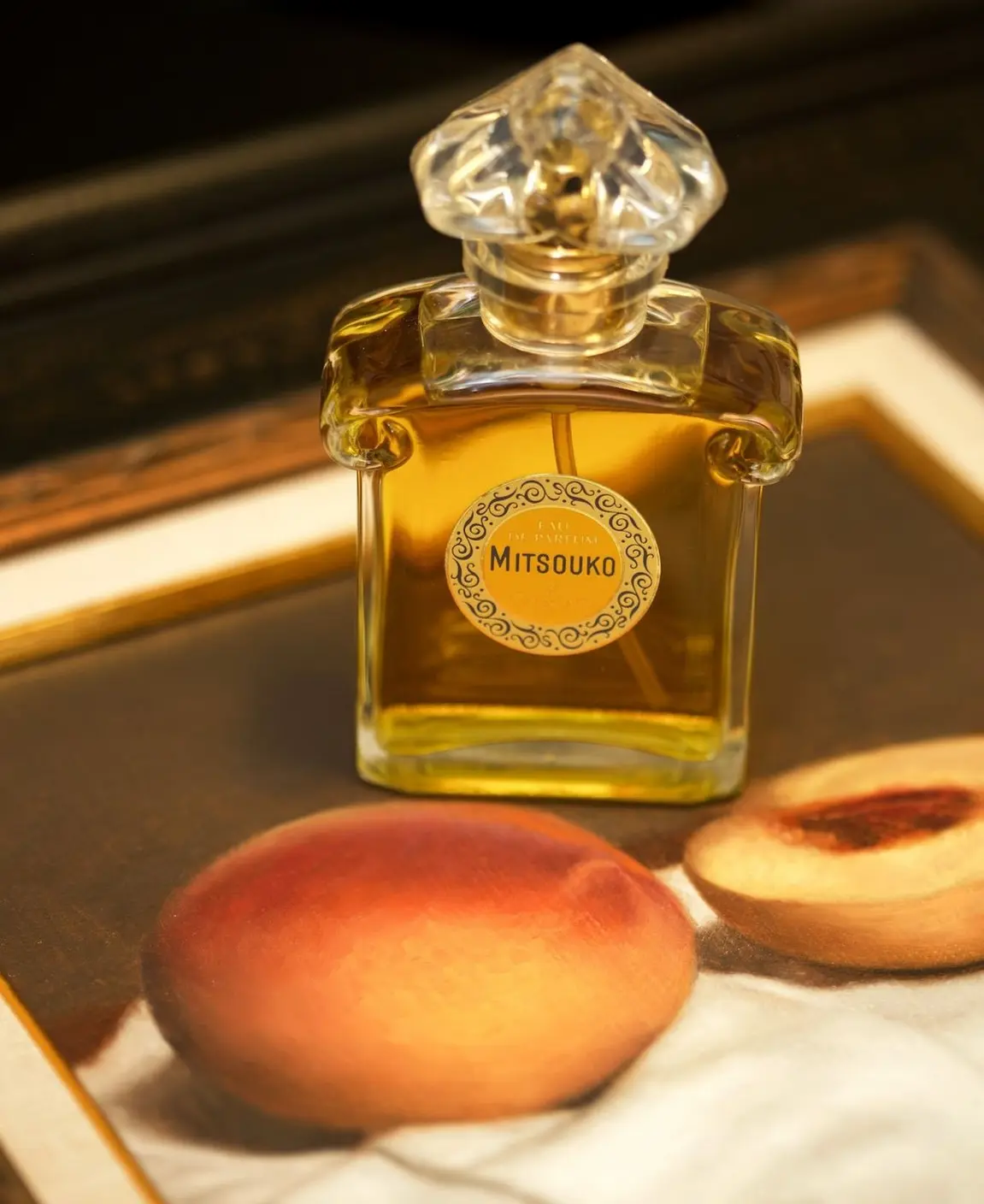
It is often said that a single ounce of Jean Patou's legendary Joy, created in 1930, required 10,600 blossoms of this very jasmine. This precious essence also defined classic Guerlain masterpieces like L'Heure Bleue, Mitsouko, and Shalimar.
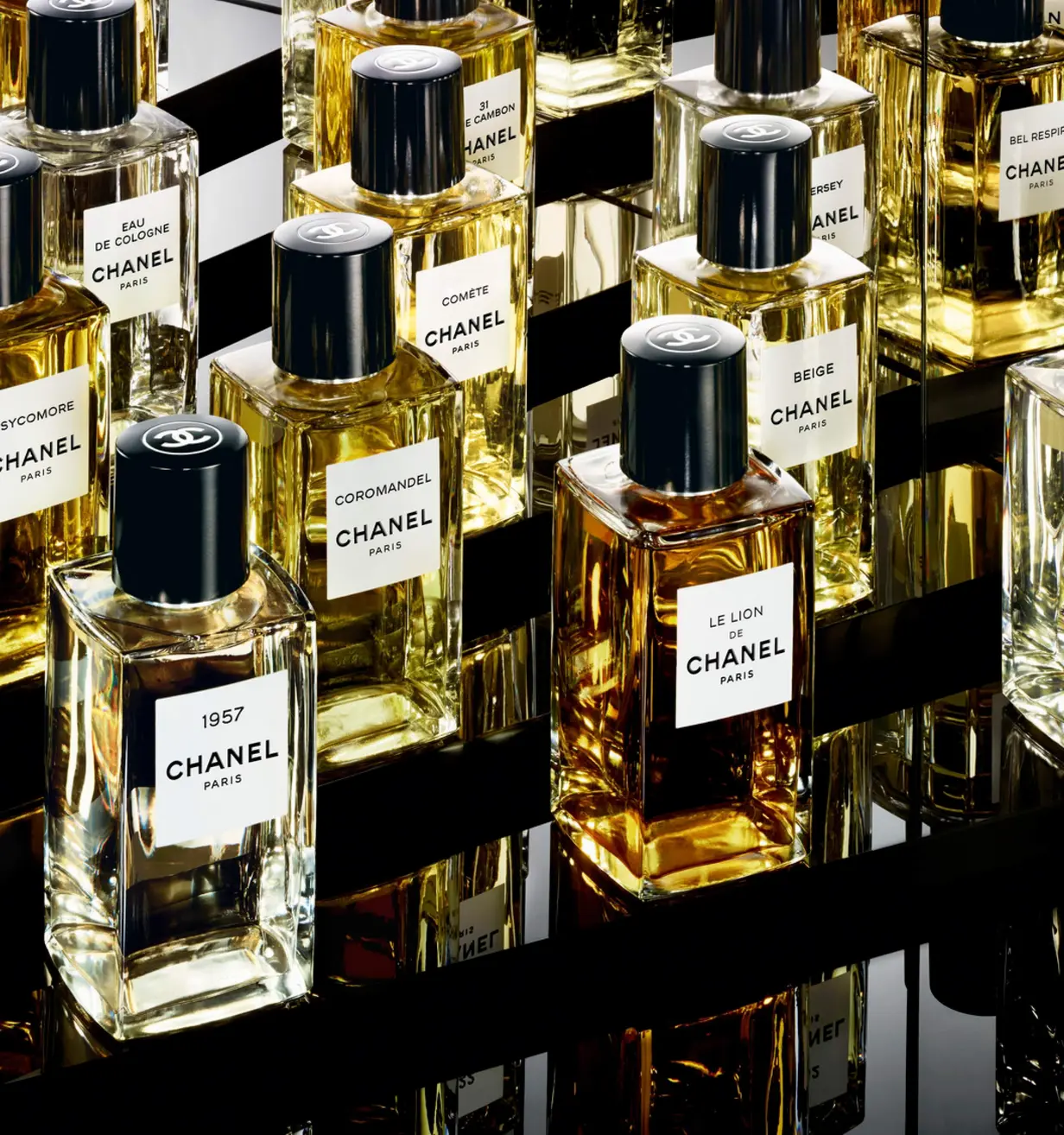
Today, the annual output from Grasse is vanishingly small—often just a few hundred kilograms. This scarcity has turned it into a strategic reserve for luxury conglomerates. Chanel, through its subsidiary Marcel Frères, and Dior, via its artisanal perfumery arm, maintain their own protected fields in the region. They reserve this liquid gold almost exclusively for their most prestigious lines—such as the Les Exclusifs de Chanel or Dior Privée collections—where it acts as the undeniable hallmark of luxury.
While approximately 80% of global perfumery relies on the beautiful and more accessible jasmine from India (Sambac), Morocco, and Egypt, Grasse jasmine remains the olfactory benchmark for its uniquely delicate, honeyed sweetness and profound complexity.
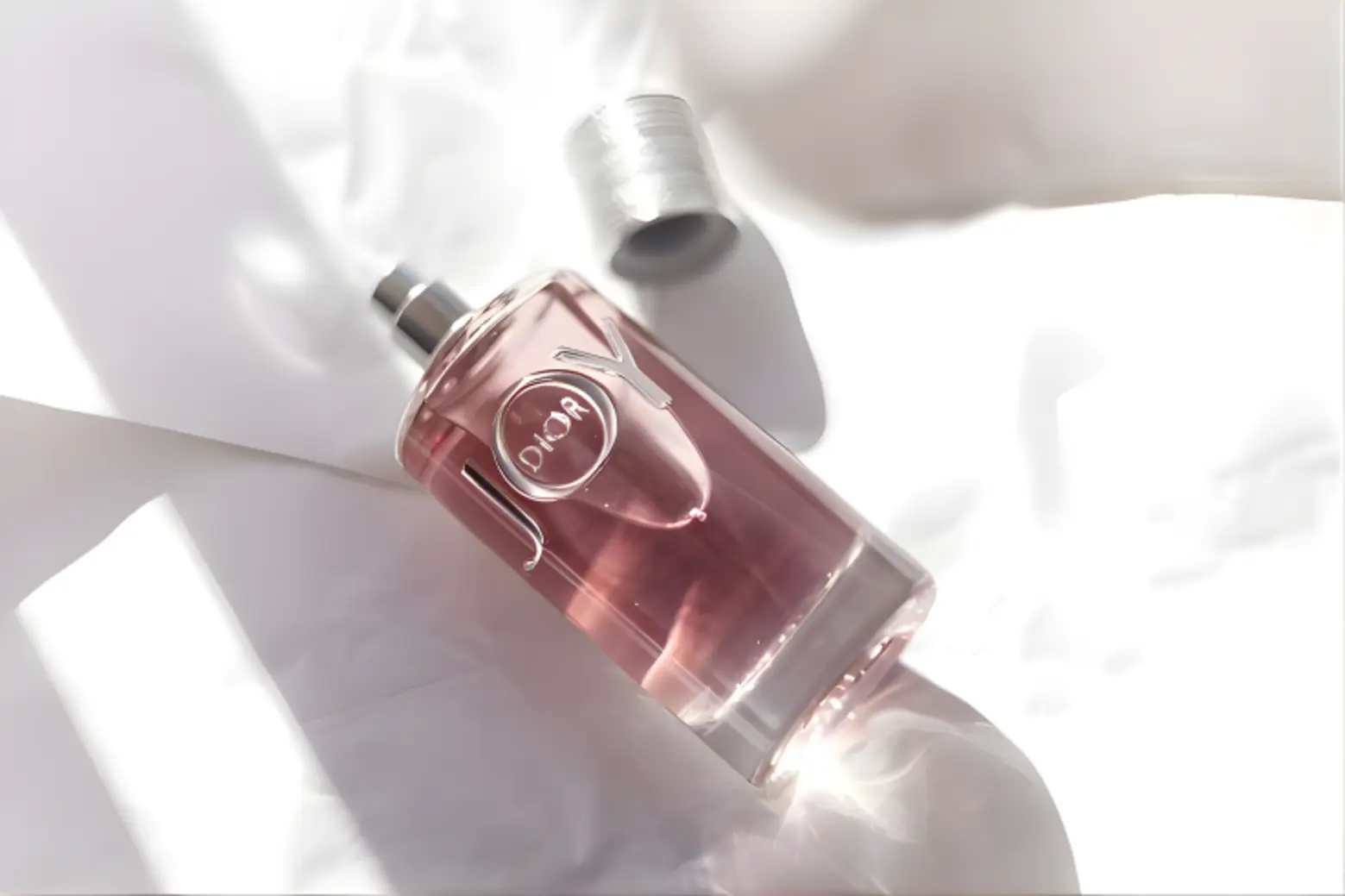
The rarity of natural jasmine necessitated the creation of synthetic versions, sparking a parallel history of olfactory innovation. One of the first, benzyl acetate (1855), offered a sweet, fruity caricature. The quest for realism led to alpha amyl cinnamic aldehyde ("Flosal") in 1923 and Maurice Chevron's more nuanced "Jasmin 231" in 1933, used in classics like Joy.
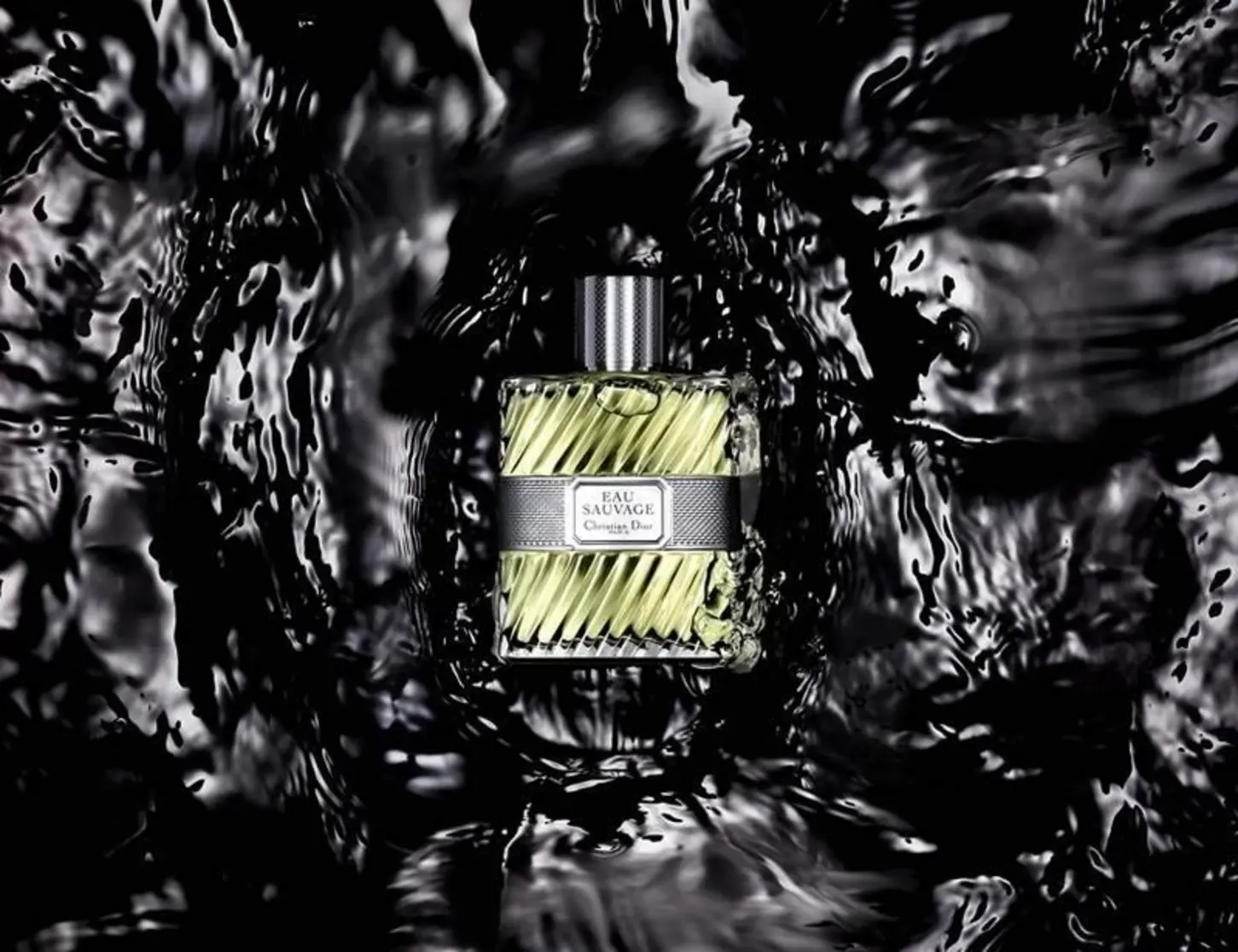
A paradigm shift occurred in 1962 when Firmenich developed Hedione. This molecule captured jasmine's fresh, dewy, airy aspect without its animalic weight. Its revolutionary use in Christian Dior's Eau Sauvage changed perfumery forever, making Hedione a ubiquitous tool for creating diffusion and luminous floralcy.
Modern analysis has identified over 300 distinct components in natural jasmine absolute. The creative synthesis continues, not just in pursuit of accuracy but also of sustainability. Next-generation molecules like Jasmonol® (green, fruity) and Jasmal® (floral-green) are now joined by research into bio-based analogues—synthesized from renewable sugars rather than petrochemicals—aiming to reduce the environmental footprint of this beloved scent.
According to master perfumers, even 1% of natural jasmine absolute can illuminate an entire composition. But in its absence, how is the illusion built?
"The architecture of a grandiflorum jasmine accord is like assembling a mosaic," explains a renowned perfumer. "You start with the skeleton: Benzyl Acetate for the sweet, fruity core, Benzyl Benzoate for balsamic warmth, and Jasmone for the intimate, tea-like skin scent. Then, you paint with florals—a stroke of rose, a hint of orange blossom, perhaps using Phenylethyl Alcohol and Methyl Anthranilate. No bouquet is complete without the stem and leaves, so you add the green crispness of Cis-3-Hexenyl Benzoate."
"To steer the character, you make crucial choices. For a sensual, animalic depth, you introduce Indole. For a sun-drenched, narcotic sweetness, you might blend in Hedione and a touch of Linalool. The final, secret glaze could be a minuscule amount of a powerful enhancer like Veltol, which magnifies creamy-sweet perceptions, or a radiant amber material. This is the alchemy behind the jasmine that lives in bottles around the world."
From Cleopatra's sails to the perfumer's precise vial, jasmine remains the king of scents—a divine gift whose essence lies in its magical ability to bridge myth and molecule, ancient desire and modern science, the fleeting harvest of a Grasse dawn and the promise of an eternal, unforgettable breath.
Advertisement