MENU
Close





On 13 February 2026, Victoria Miro’s Wharf Road space opens a portal: Isaac Julien’s All That Changes You. Metamorphosis arrives as a five-screen film installation, staged inside a mirrored environment that multiplies viewpoints and turns looking into movement.

On 13 February 2026, Victoria Miro’s Wharf Road space opens a portal: Isaac Julien’s All That Changes You. Metamorphosis arrives as a five-screen film installation, staged inside a mirrored environment that multiplies viewpoints and turns looking into movement.
February 13, 2026


Julien’s project began as a commission for the 500th anniversary of Palazzo Te in Mantua, and it still carries the palazzo’s frescoed heat: myth as architecture, architecture as weather. At Victoria Miro, that Renaissance inheritance meets a future-facing question: How life adapts in an era shaped by climate volatility, shifting species relations, and new technologies of perception.
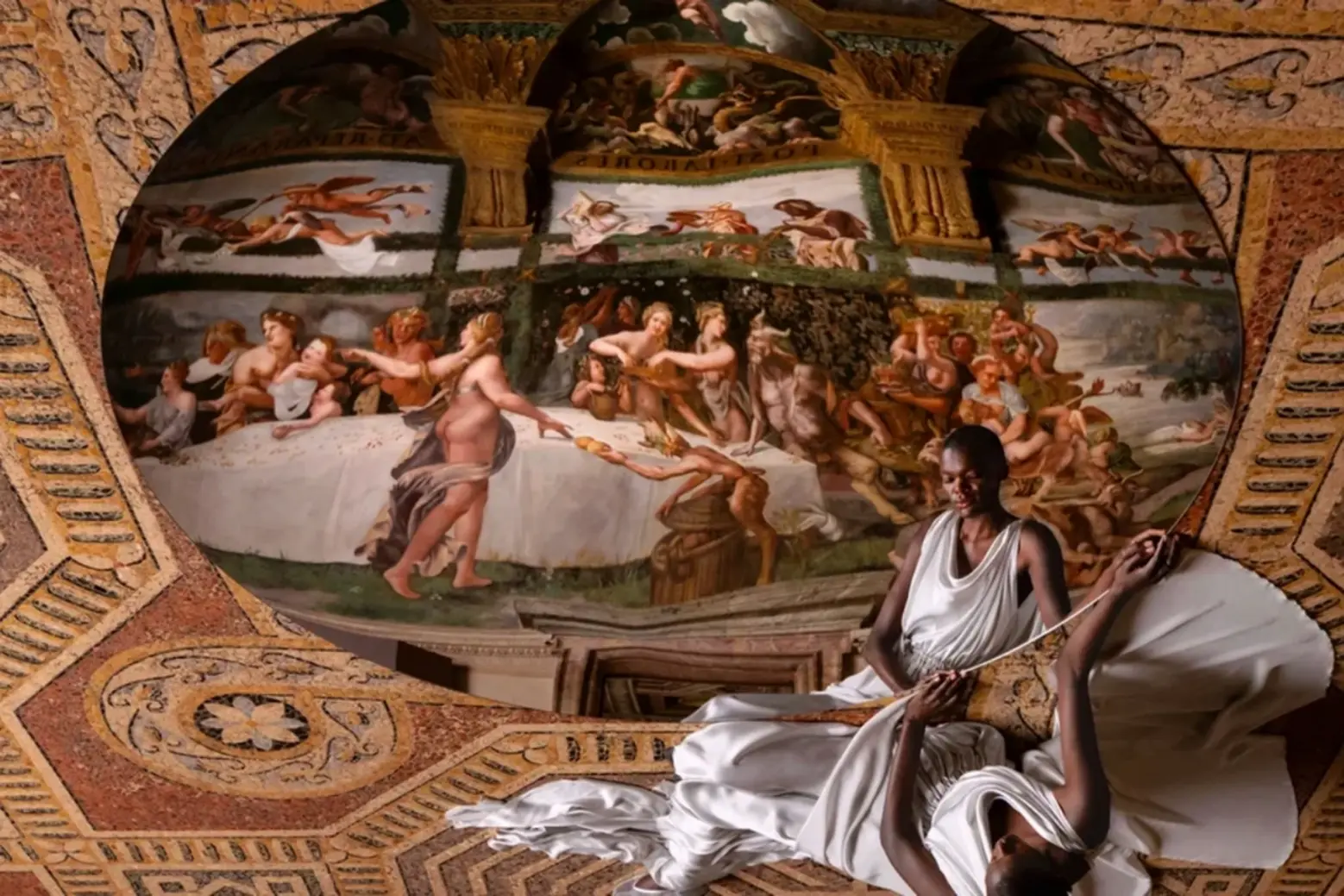
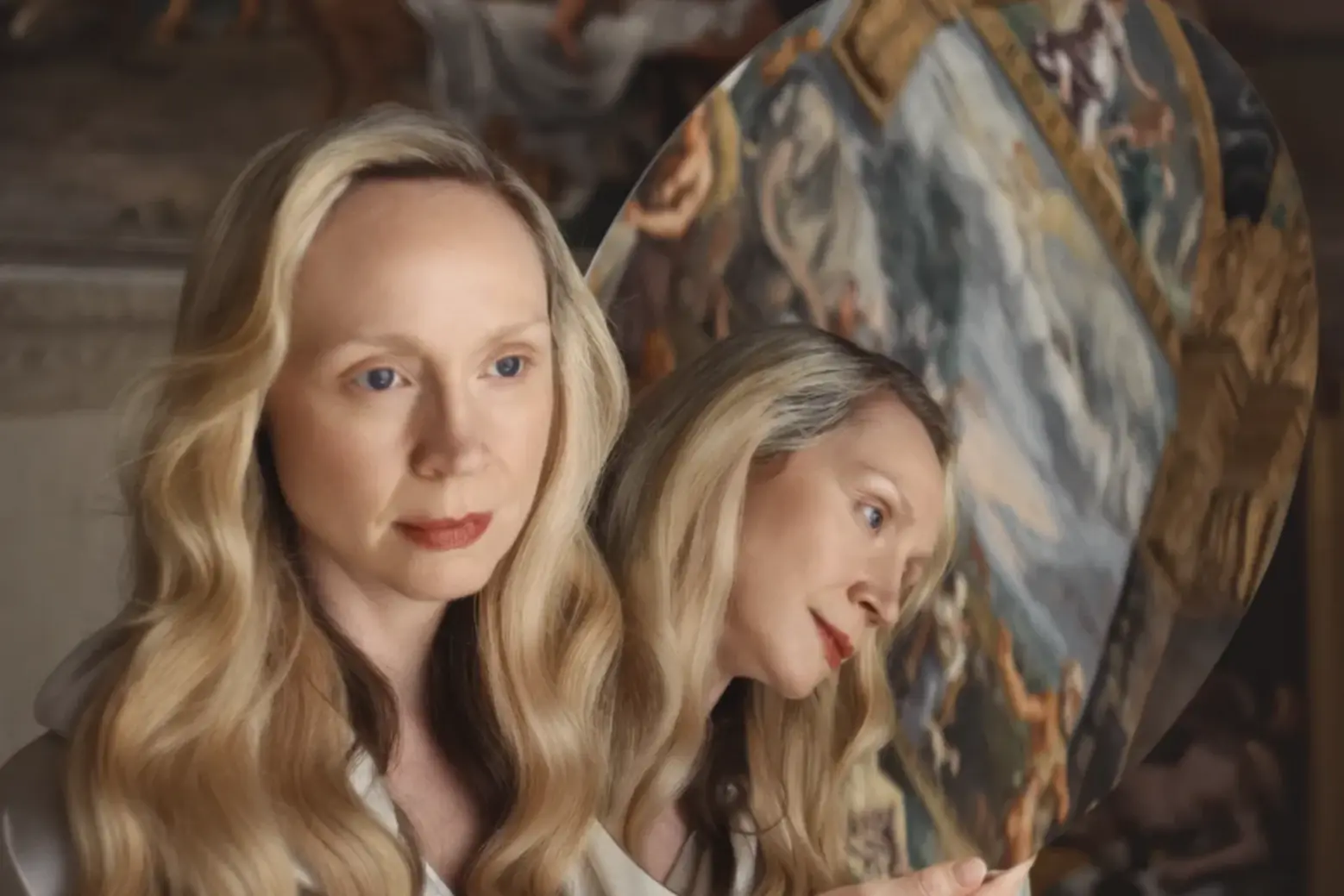
The film’s emotional engine is a duet. Sheila Atim plays Lilith, a mythic figure stitched from Octavia Butler’s visionary heroines; Gwendoline Christie appears as Naomi, a traveller-poet inspired by Naomi Mitchison’s Memoirs of a Spacewoman. Their dialogue moves like verse, guided by ideas of “becoming-with” and shared survival, Donna Haraway’s voice sets the tone early, grounding the work in an ethics of entanglement.
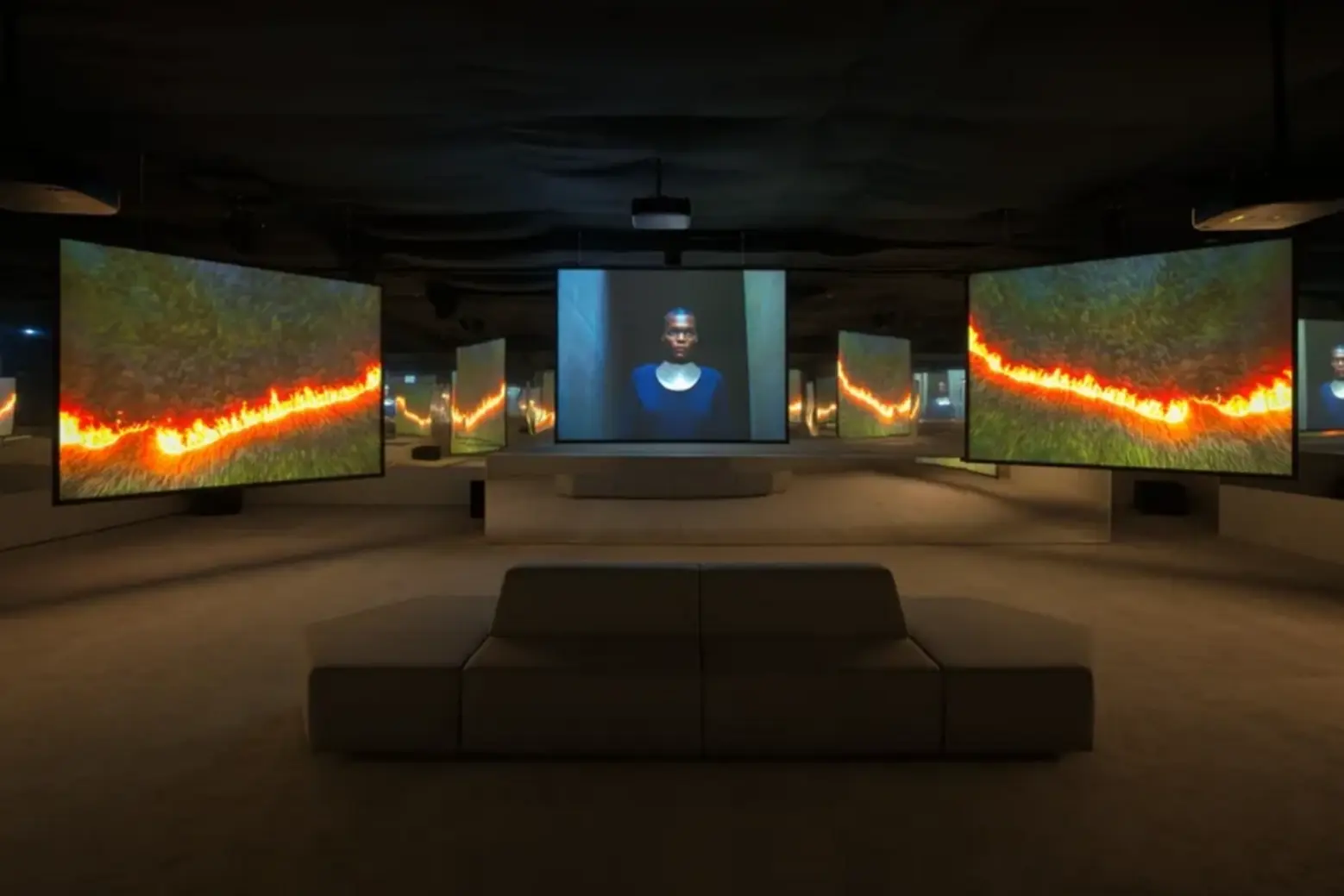
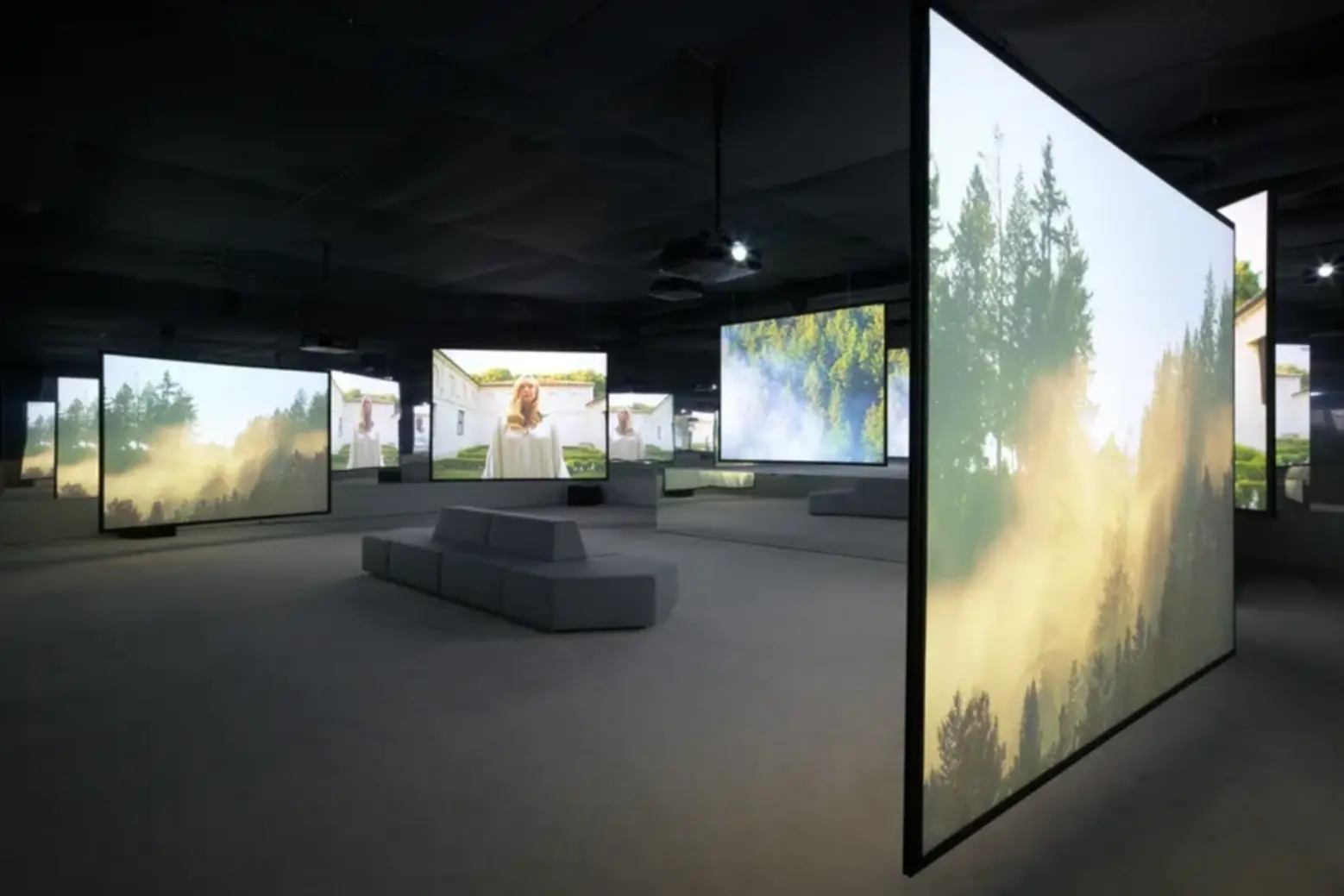
Across five synchronized screens (23 minutes, 36 seconds; 4K; 5.1 sound), scenes overlap, dissolve, and return through reflection. Mirrors extend the image beyond the frame, so time feels braided. Palazzo Te’s Room of the Giants flickers against other charged sites: Charles Jencks’s Cosmic House in London, a glass “spaceship” pavilion by Herzog & de Meuron, and landscapes that register Earth as both sanctuary and alarm system — redwoods, luminous jellyfish, solar flares, and the burn of forest fire. The installation’s choreography invites drifting, re-centering, and re-reading, as if meaning arrives through accumulation.
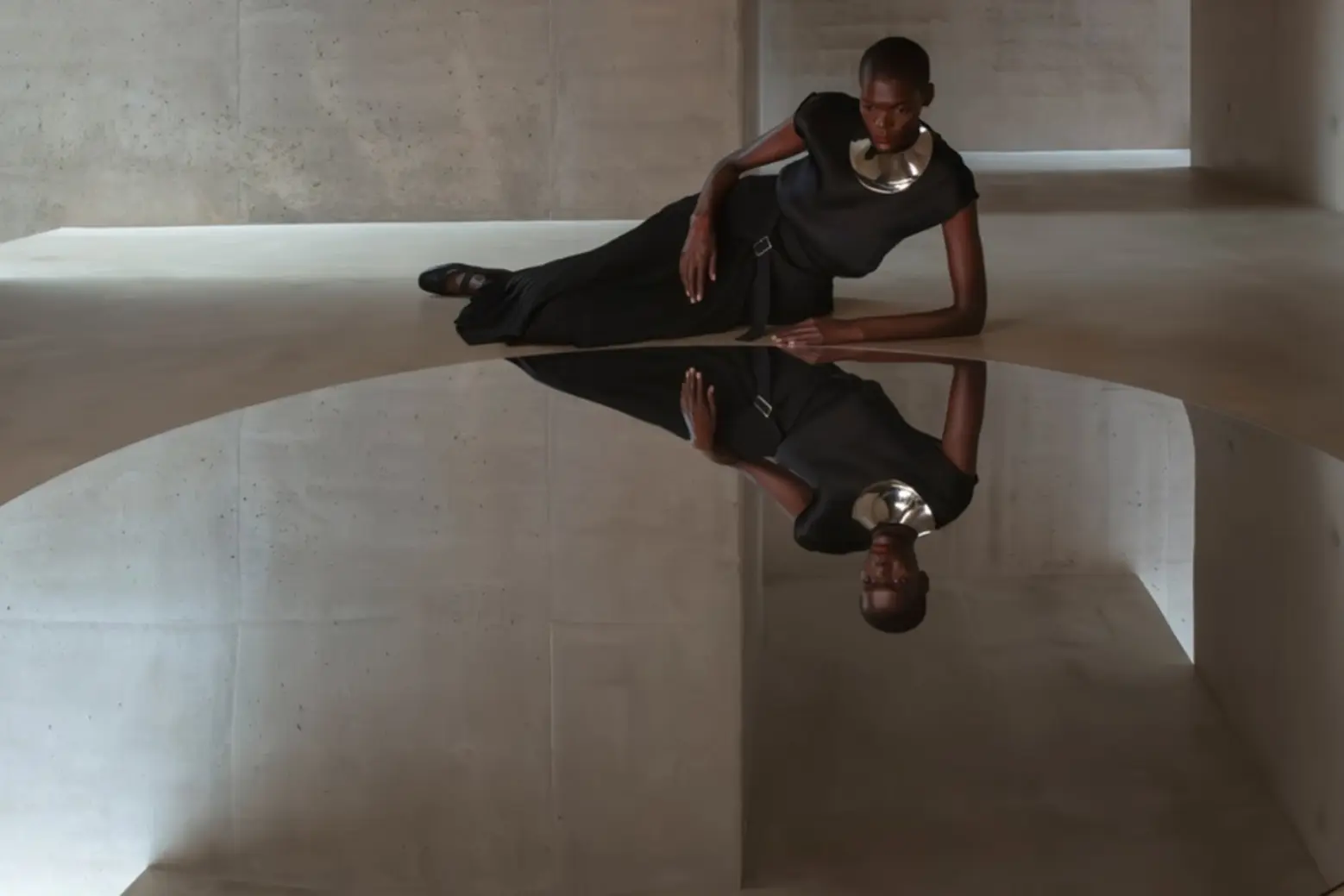
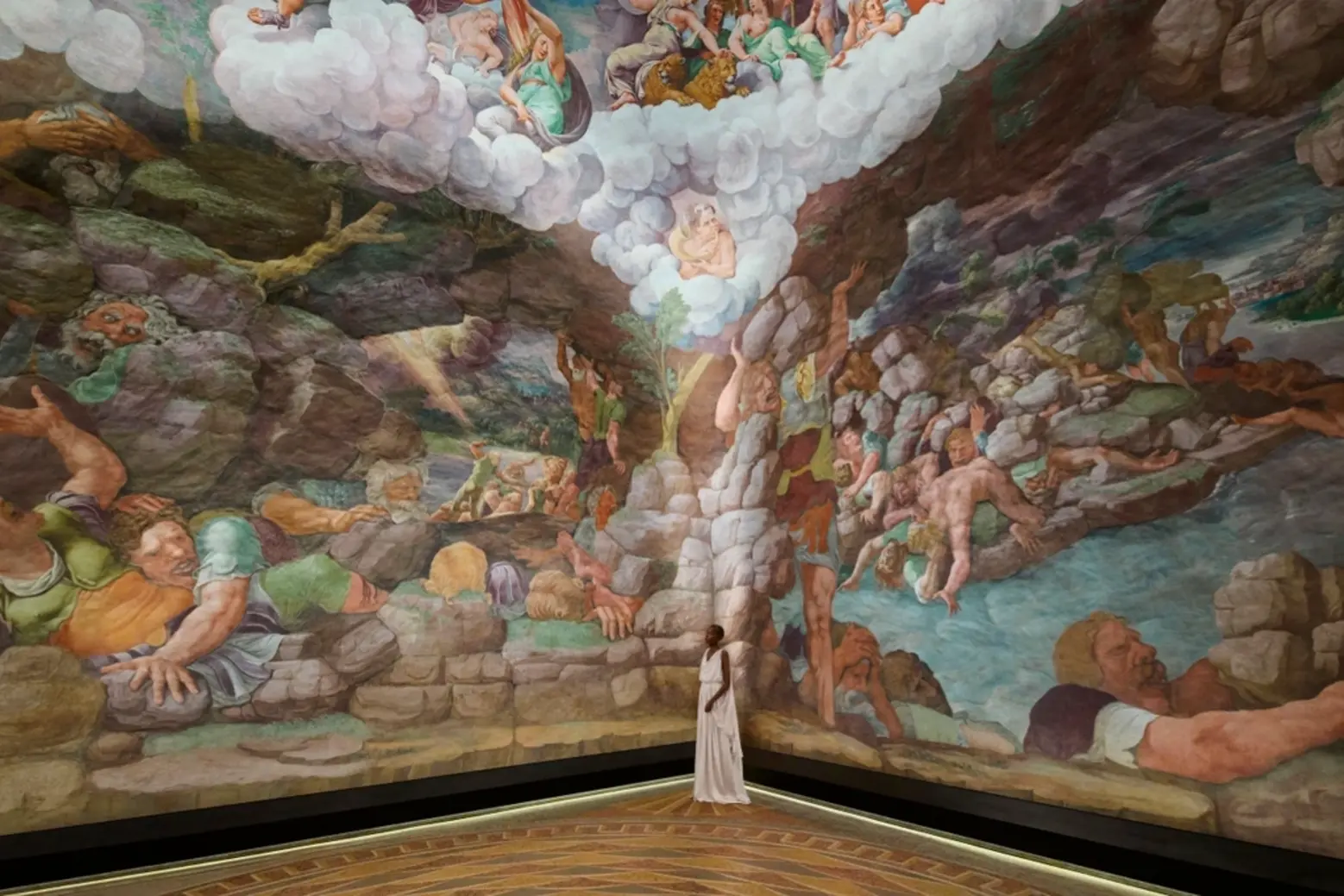
Around the film, Julien’s photographic works act as crystalline pauses, monumental inkjet prints on Ilford Gold Fibre Gloss mounted on aluminium, some waxed to deepen their glow. Titles read like chapters of a modern myth: Giants – After the Fall, Cosmic Narcissus, Satellite – Orpheus, Satellite – Eurydice, After Eros, Lilith’s Moon, and Metamorphosis I. Together, they translate the moving image into still iconography, proof that transformation can live in a single frame, and still feel tectonic.
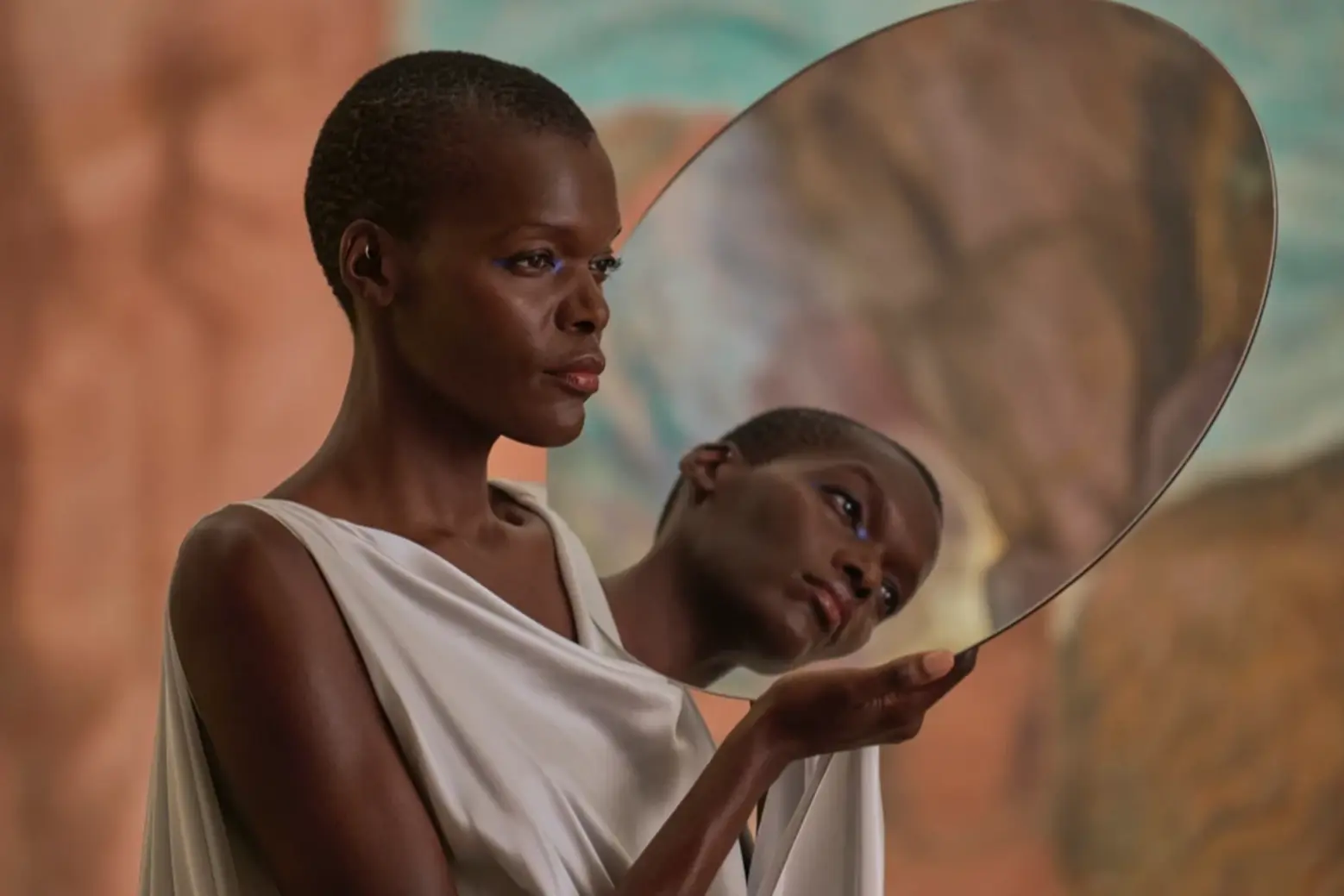
In the end, All That Changes You. Metamorphosis leaves the gallery feeling like a living instrument, one that measures attention, empathy, and responsibility in the same breath. Julien’s mirrors refuse a single vantage point, so the work gathers meaning through repetition, overlap, and return.