MENU
Close





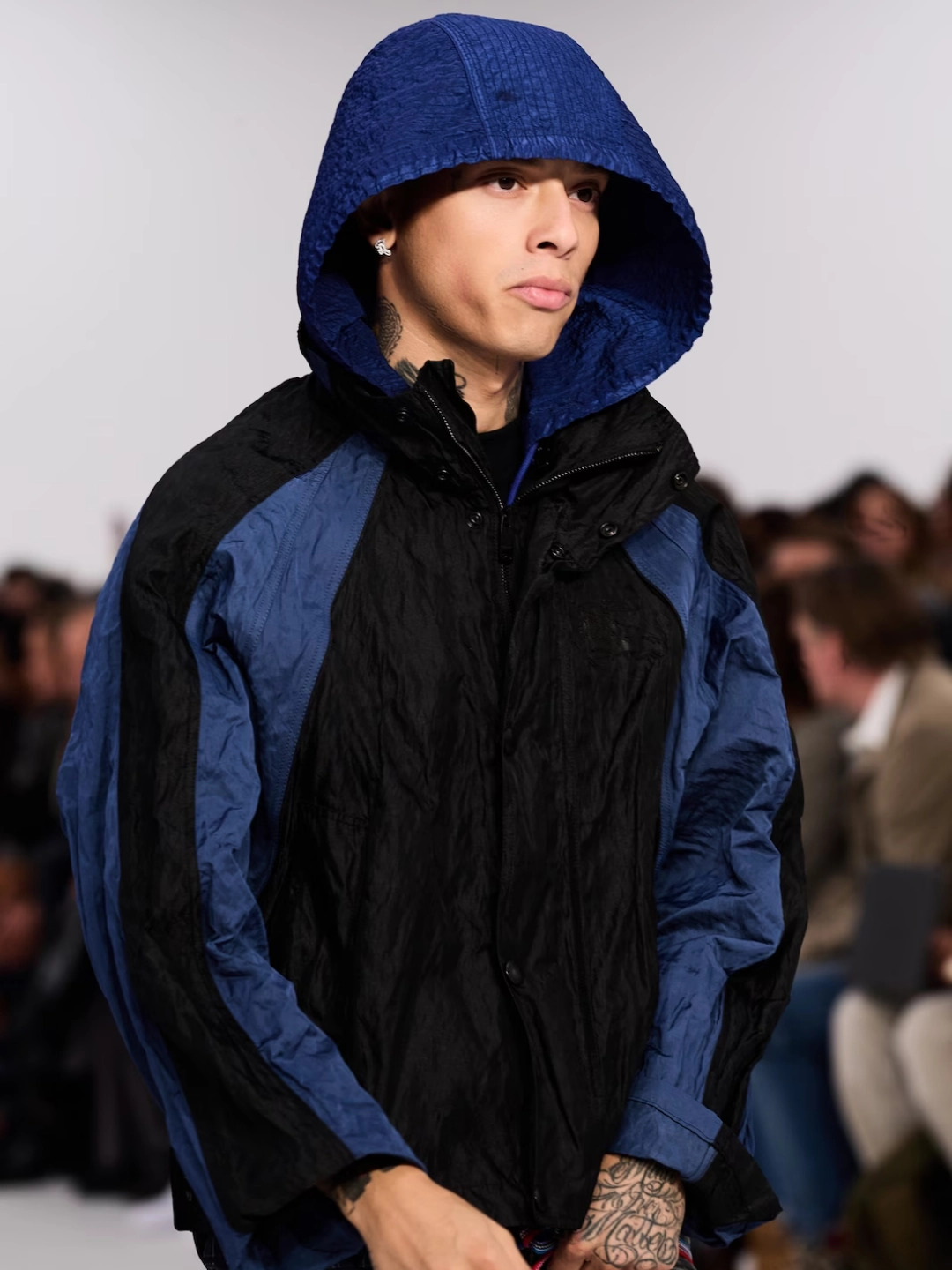
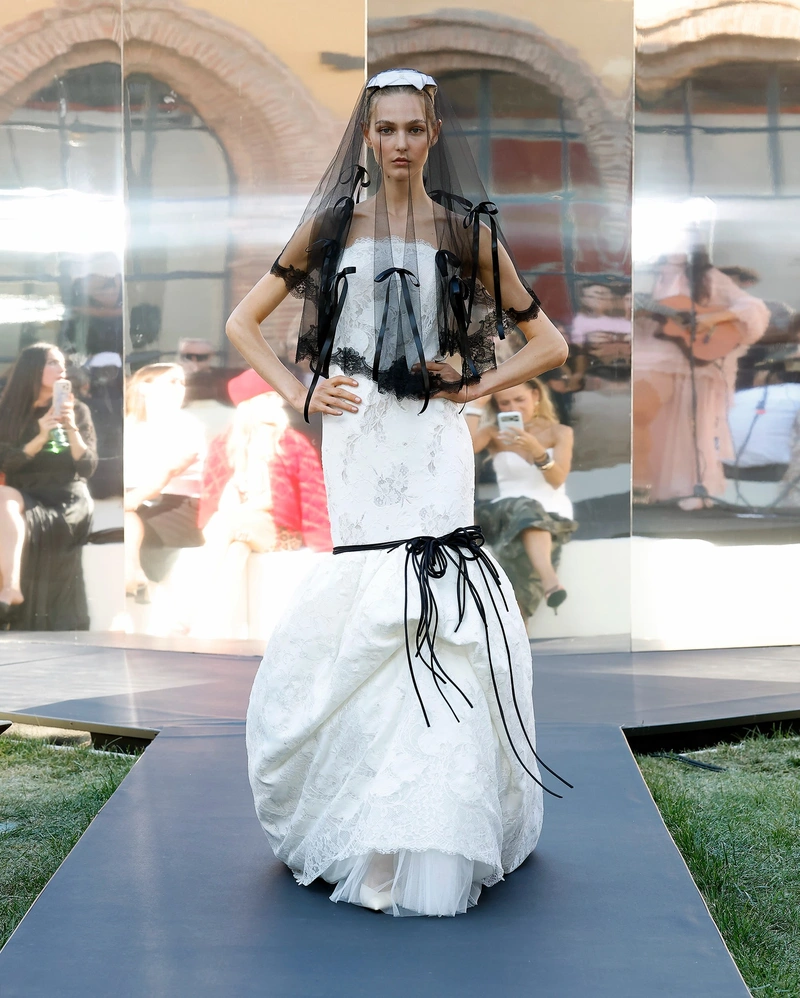
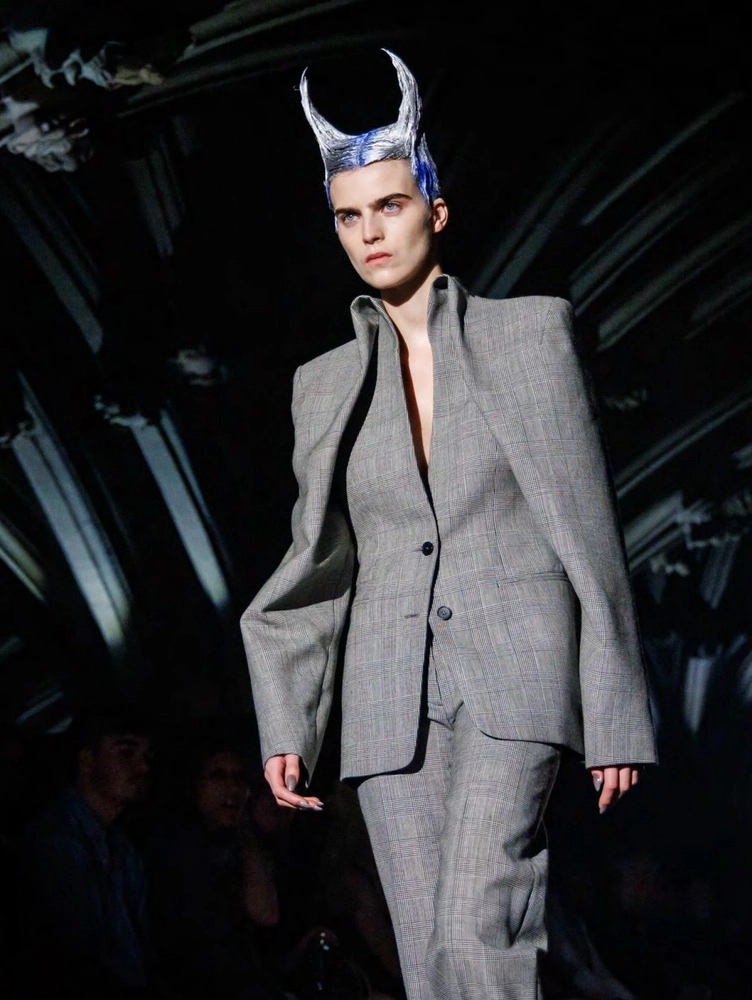
Before cut, color or silhouette enters the conversation, leather material already has presence. Its surface alone can make a garment feel charged.
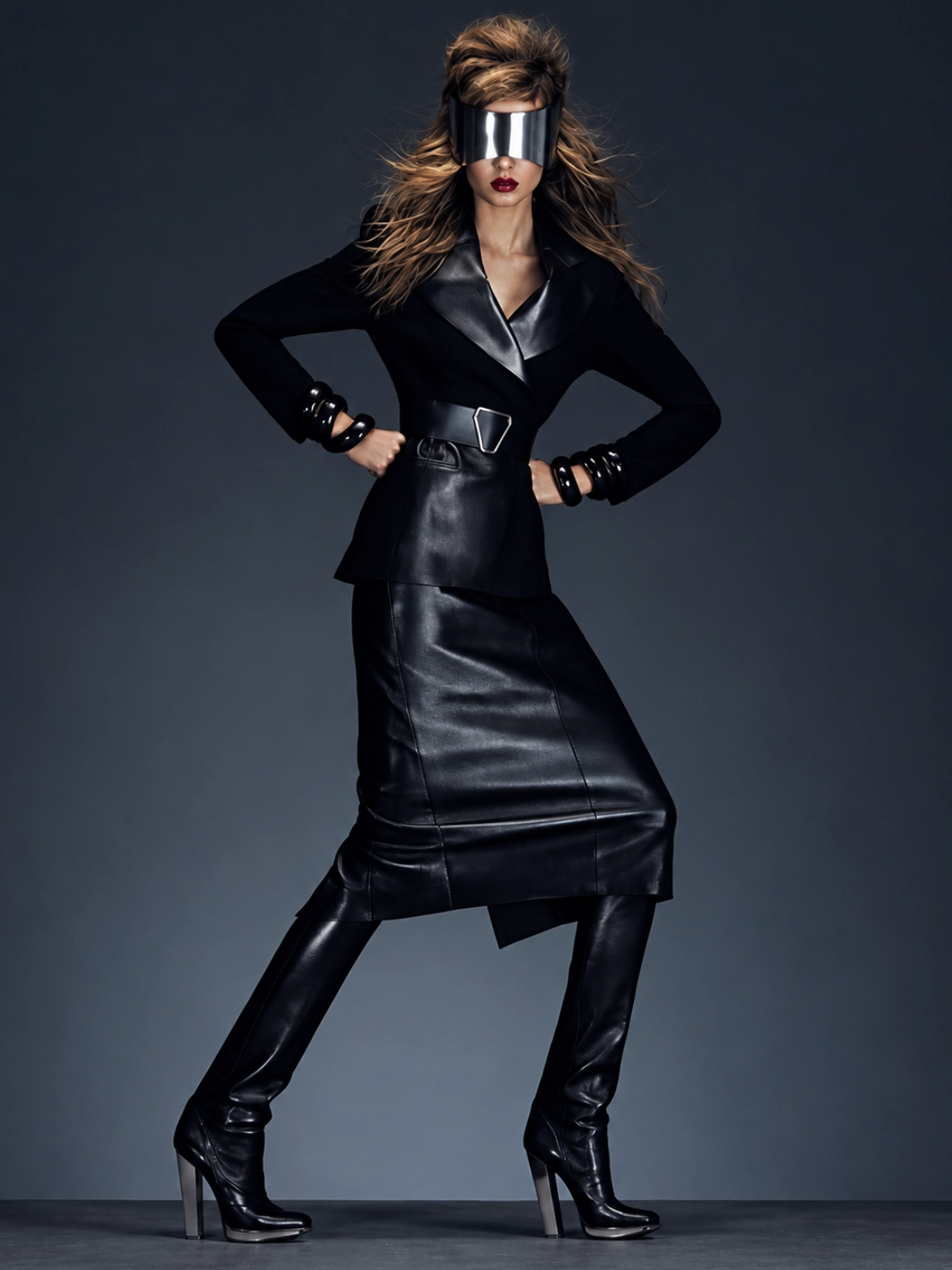
Before cut, color or silhouette enters the conversation, leather material already has presence. Its surface alone can make a garment feel charged.
September 15, 2026
Advertisement
Advertisement
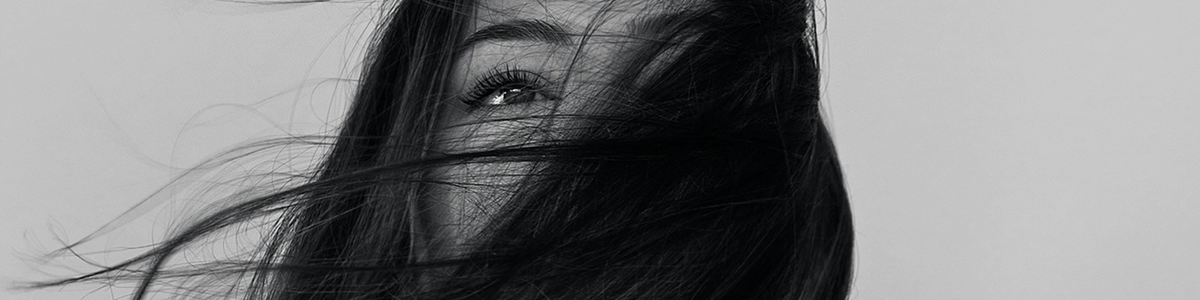


Leather never stays visually still. It softens where the body keeps bending, deepens where hands return to the same place, and catches light differently once the surface has been worn for a while. Even a pristine piece seems to carry the possibility of becoming personal.
Leather material can hold tension while slowly yielding to movement, keeping just enough memory of the body to make each garment feel less anonymous over time. The fascination starts there, in a surface that seems capable of recording contact.
Leather belongs to a different material family from woven or knitted cloth. Its structure comes from animal hide or skin, whose dense network of collagen fibres is stabilised through tanning so the material can resist decay while retaining flexibility.
The outer surface is known as the grain side. Depending on the hide and how heavily it has been finished, this may reveal pores, wrinkles, scars and irregularities left by the animal’s life. Beneath it sits a looser fibrous structure that becomes increasingly open toward the flesh side. This internal architecture gives leather qualities that textiles achieve through yarn and construction: strength, stretch, body and the ability to mould gradually around movement.
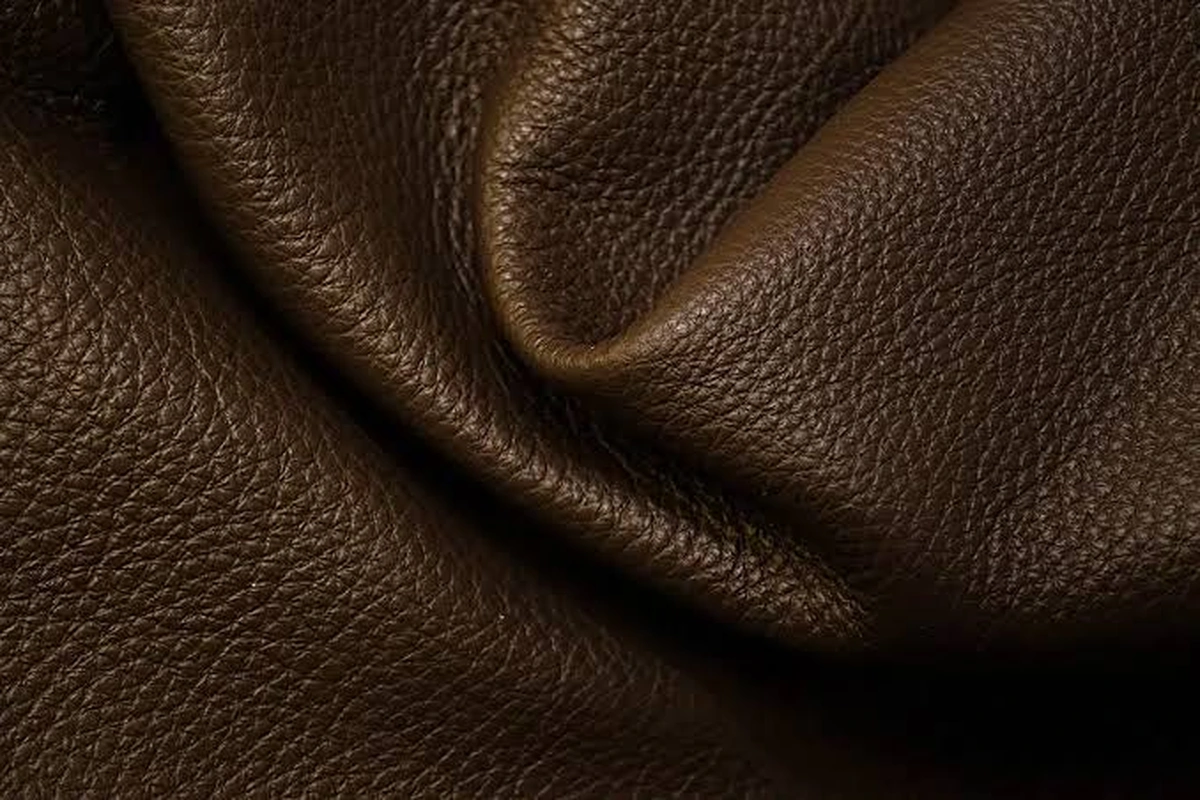
Hide and skin are related terms with slightly different traditional uses. “Hide” usually refers to larger, heavier animal skins such as cattle, while “skin” is often used for smaller animals including sheep, goats and calves. Fashion frequently uses “leather” as the umbrella term once either has been processed.
Thickness changes its personality dramatically. A substantial hide can hold the geometry of a coat or boot. Thin leather can fold, gather and drape surprisingly close to cloth. Surface treatment adds another layer: matte, polished, pebbled, brushed, embossed, coated or patent finishes can make two pieces of the same base material appear almost unrelated.
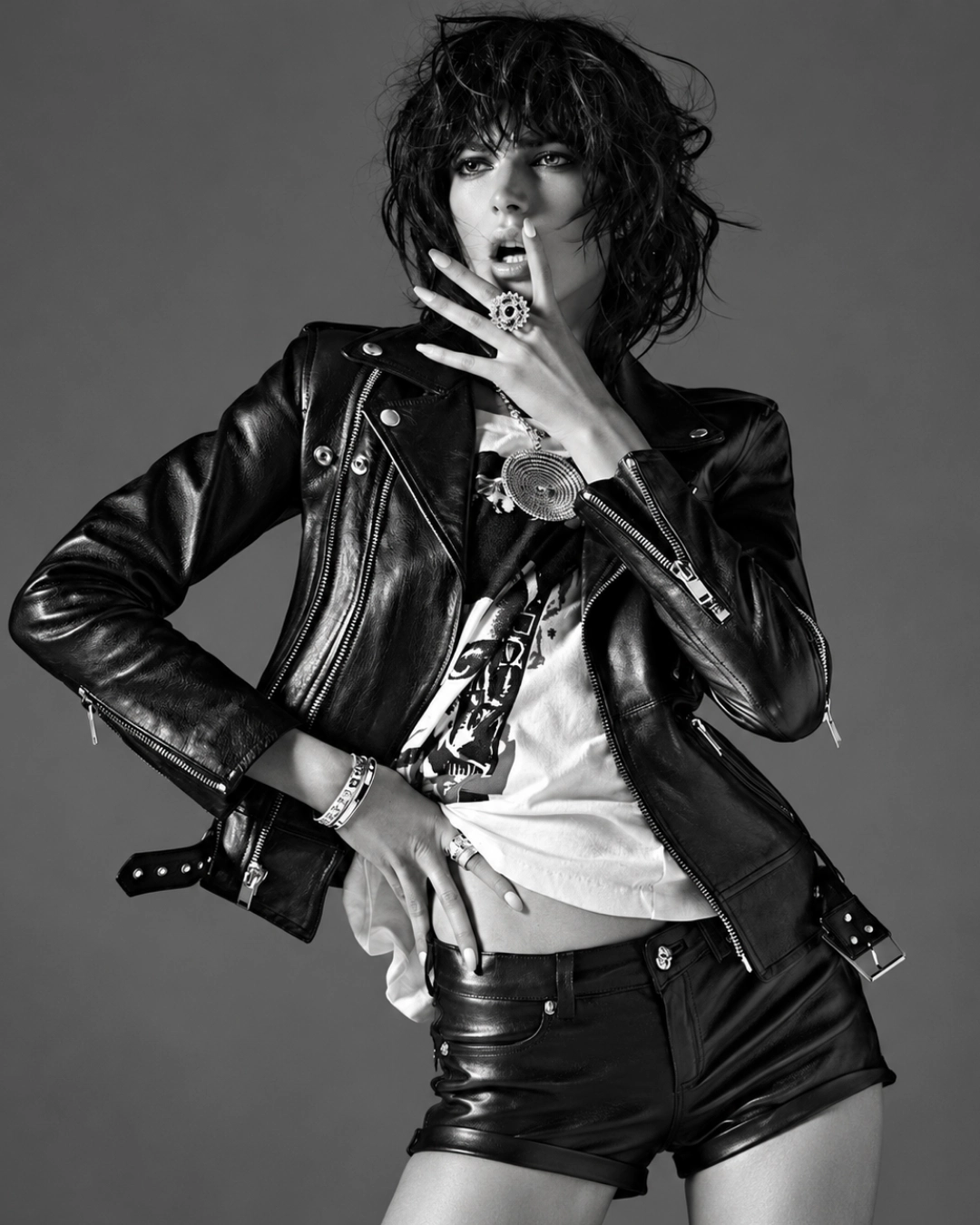
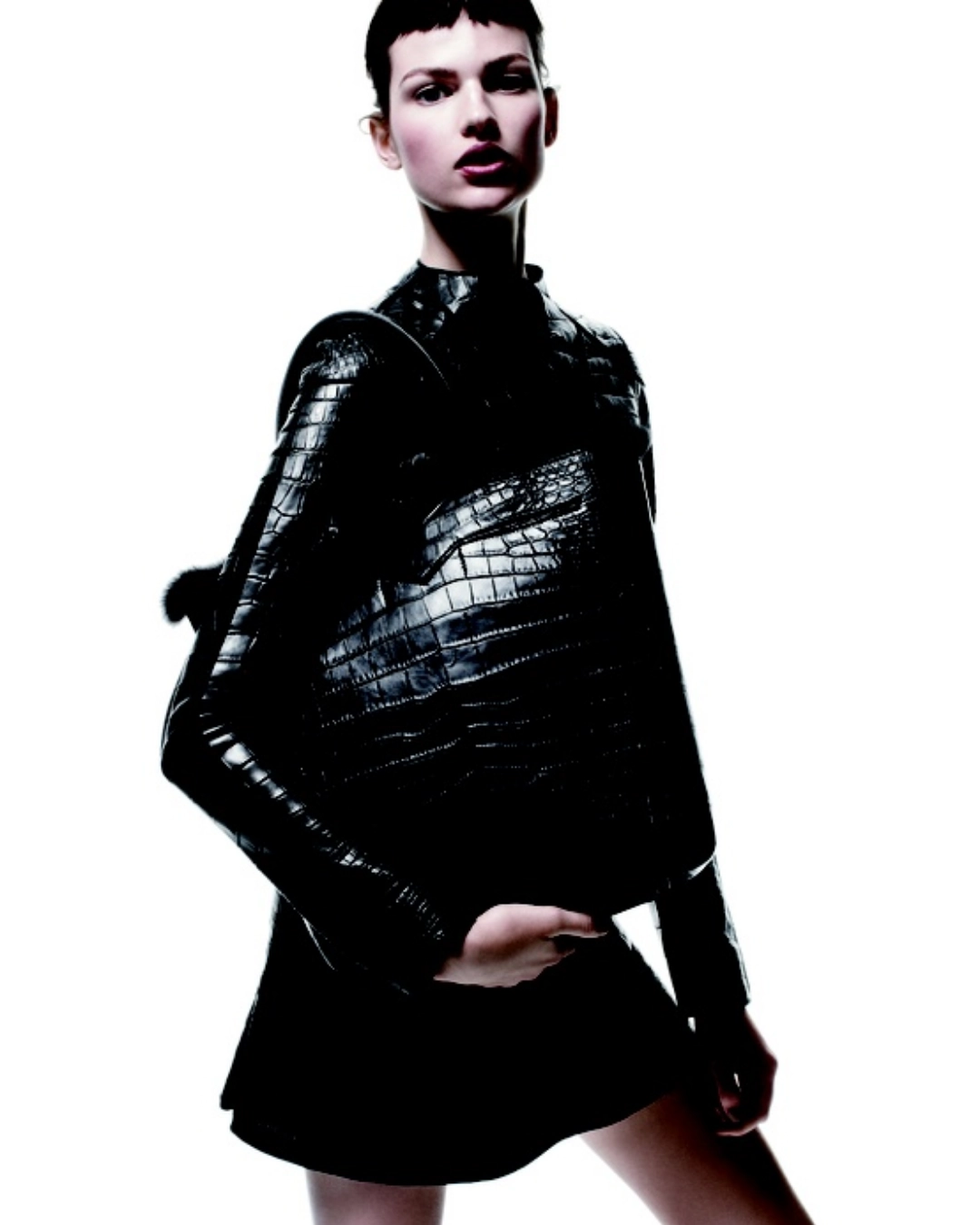
Leather also responds to time. Oils from the hand, light, friction and repeated bending gradually modify the surface. On suitable leathers, this creates patina: a deeper, softer-looking character built through wear instead of printed onto the material from the start.
Fresh hide is rich in moisture and proteins, so it needs to be stabilised before it can become usable leather material. The early stages focus on cleaning and preparing the hide: soaking restores moisture, hair and residual tissue are removed, and the fibre structure is opened so tanning agents can penetrate evenly.
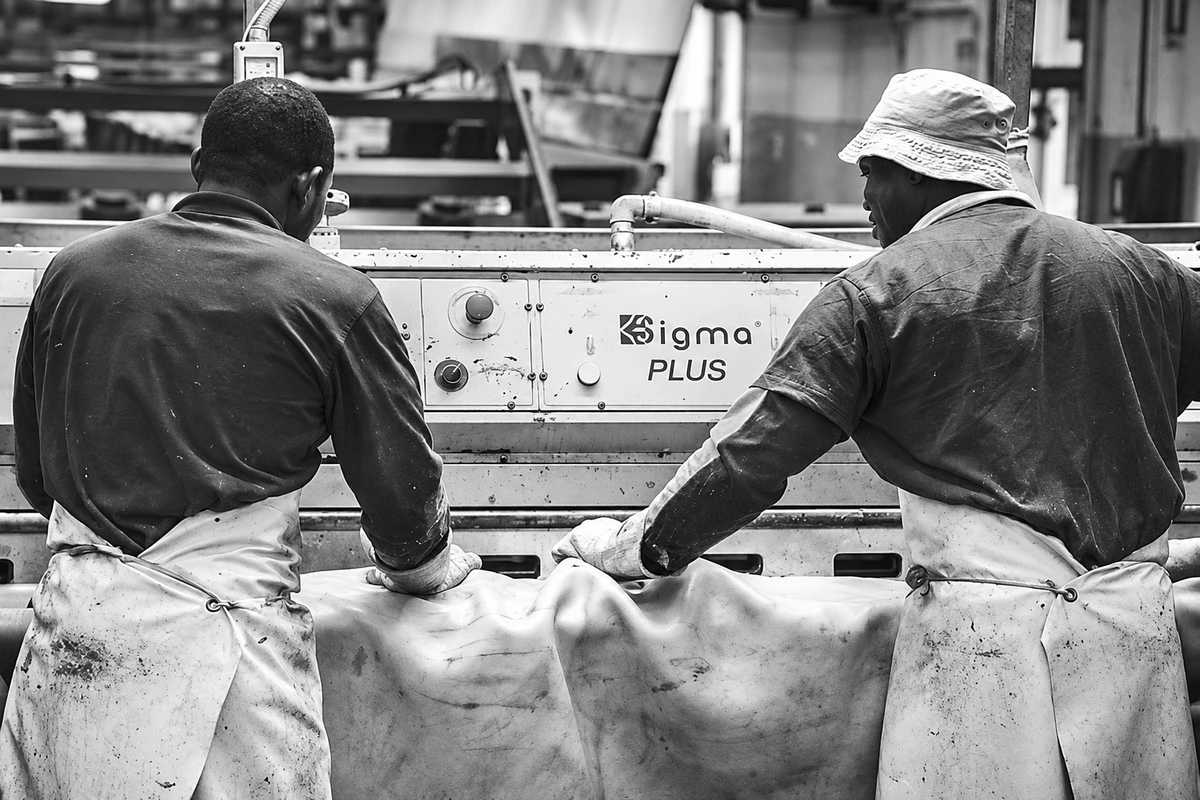
Tanning is the key transformation. Vegetable tanning uses plant-derived tannins and often creates firmer leather with strong ageing potential, while chrome tanning usually produces softer, lighter and more flexible leather suited to clothing and accessories. Other tanning systems can be used to adjust colour, softness and technical performance.
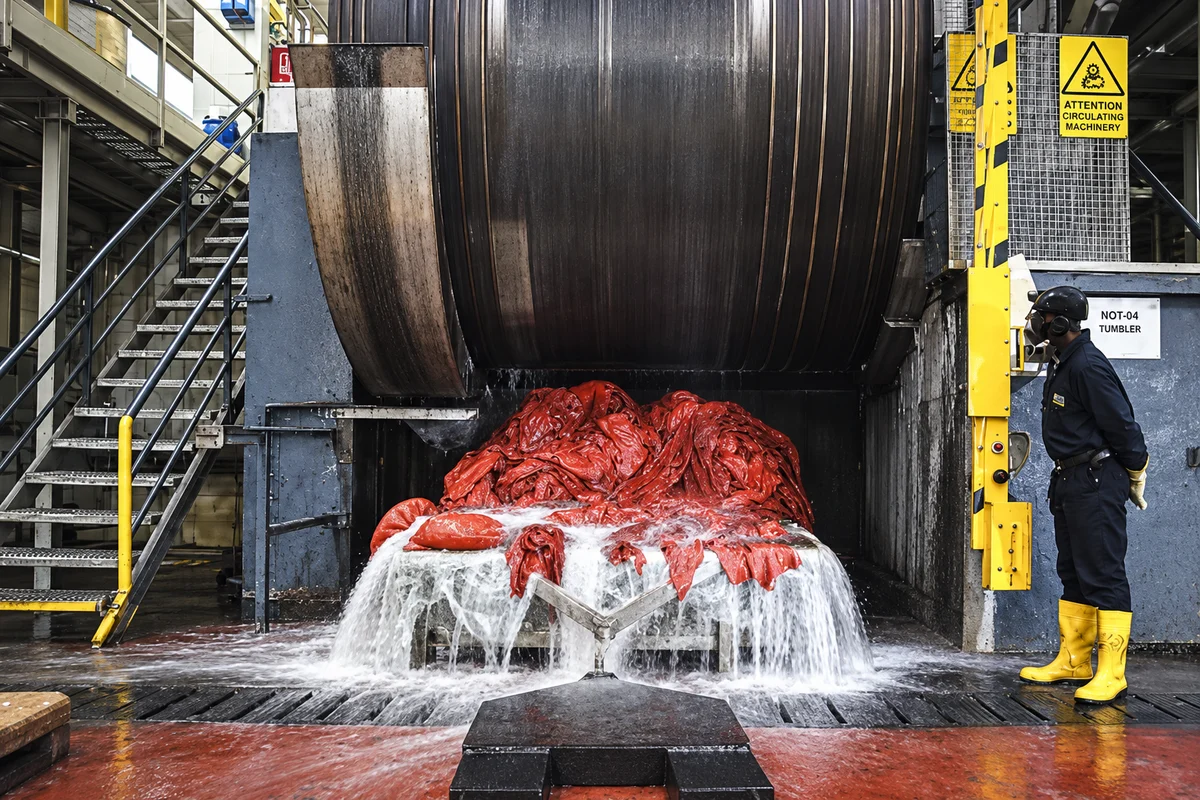
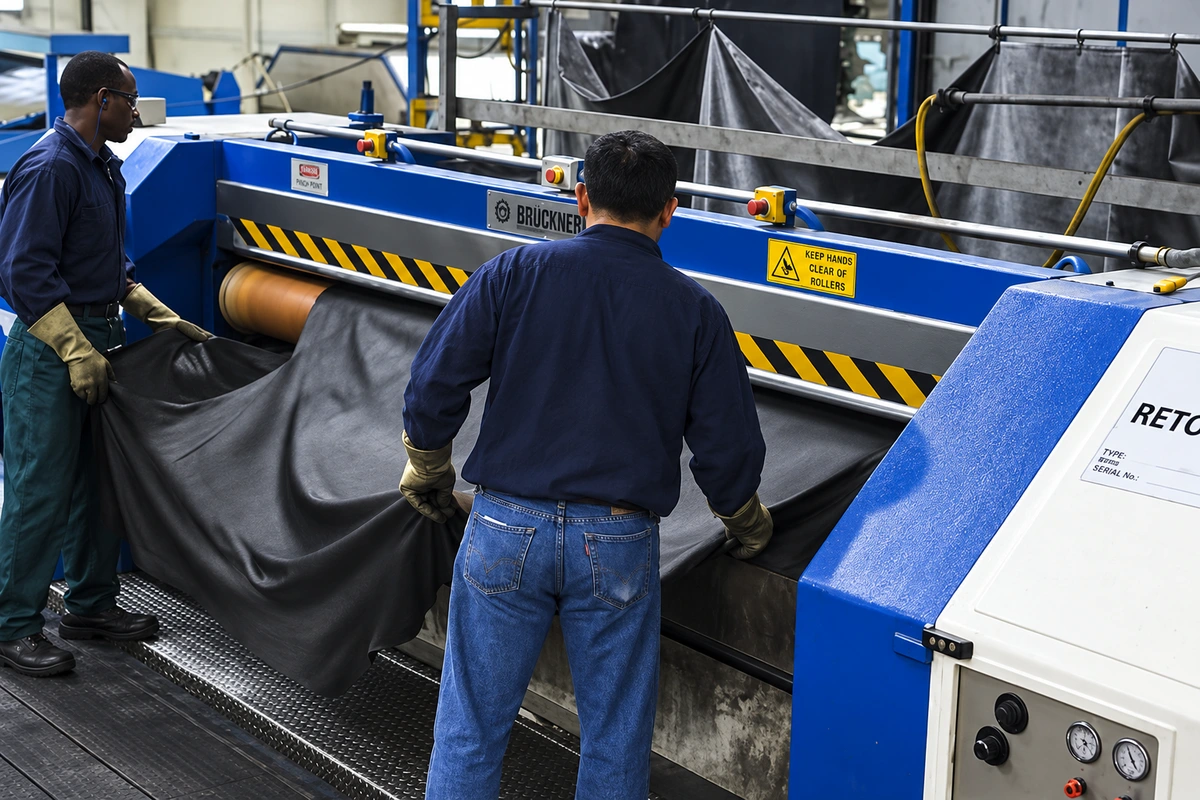
After tanning, the hide may be split or shaved to control thickness, then dyed and treated with oils that help preserve flexibility. Drying and mechanical softening further influence how the leather feels and moves.
The final surface is shaped through finishing. Leather can be polished, buffed, embossed, waxed or coated, which changes its texture, shine and visual character before it enters fashion production.
Because leather in fashion is usually recognized by surface, the clearest categories are the ones the eye can identify immediately. On a runway, what matters most is whether the leather reads polished, velvety, glossy, textured, or still connected to its original hair or fleece. That visual distinction is what shapes the mood of a garment long before anyone asks what animal or treatment produced it.
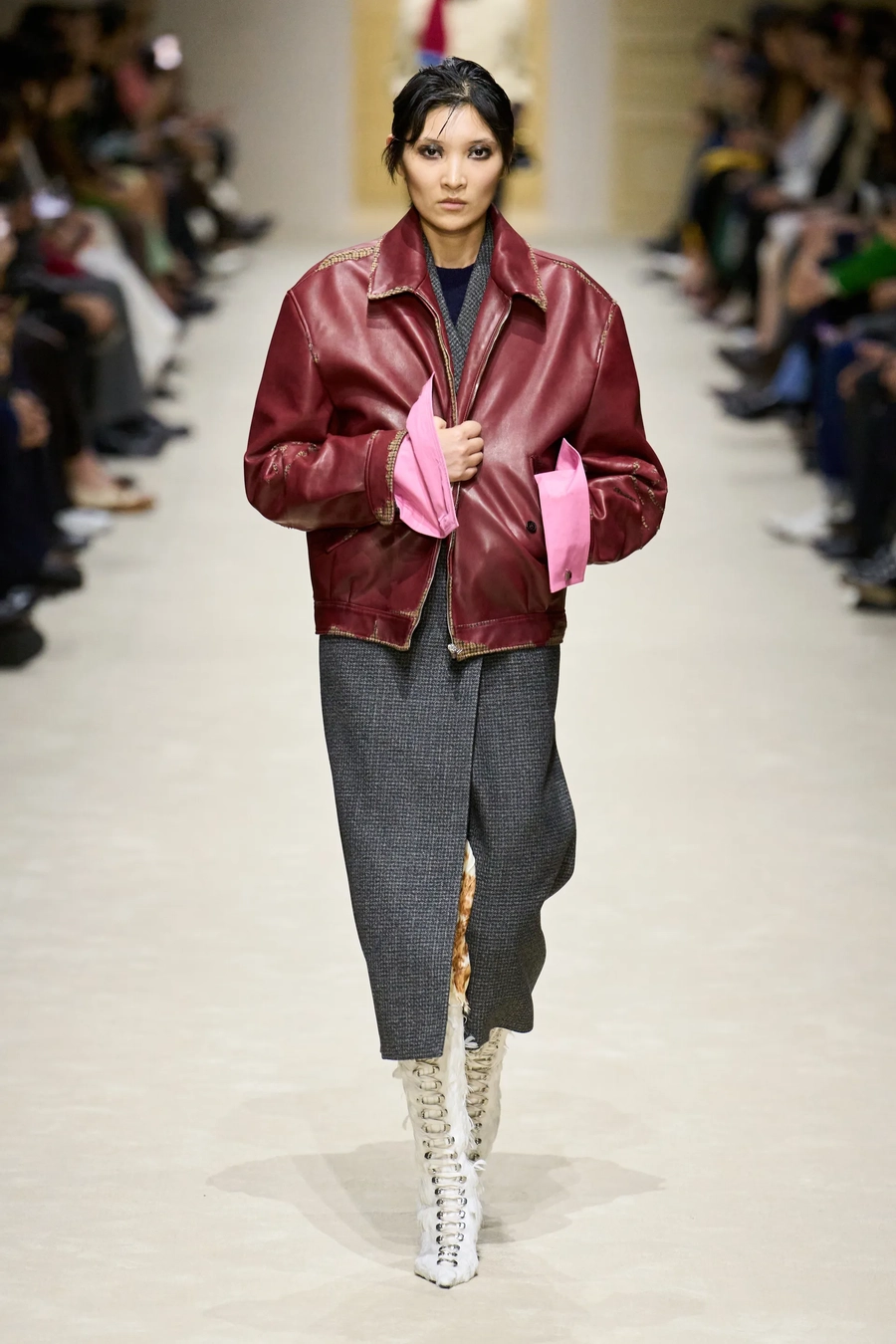
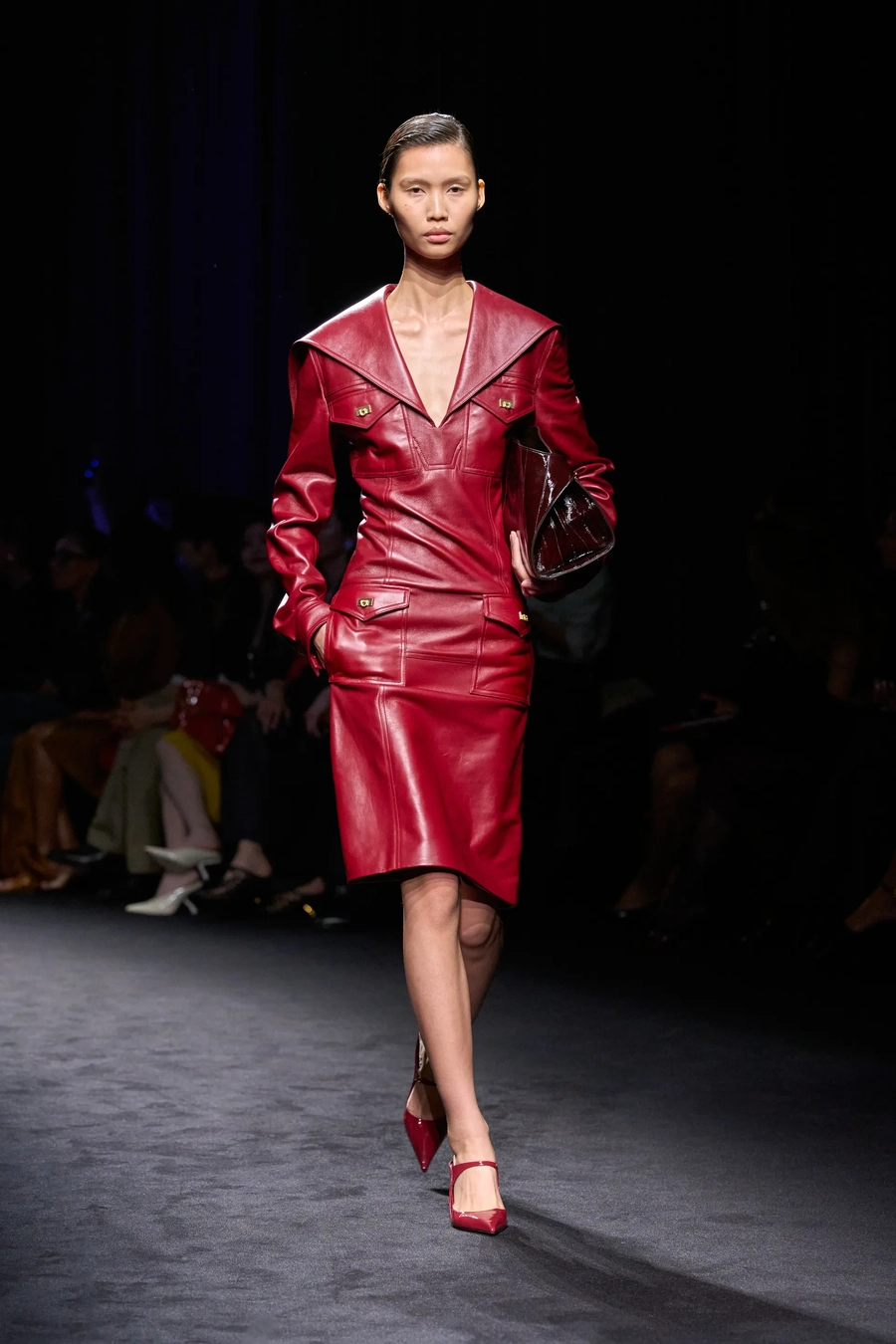
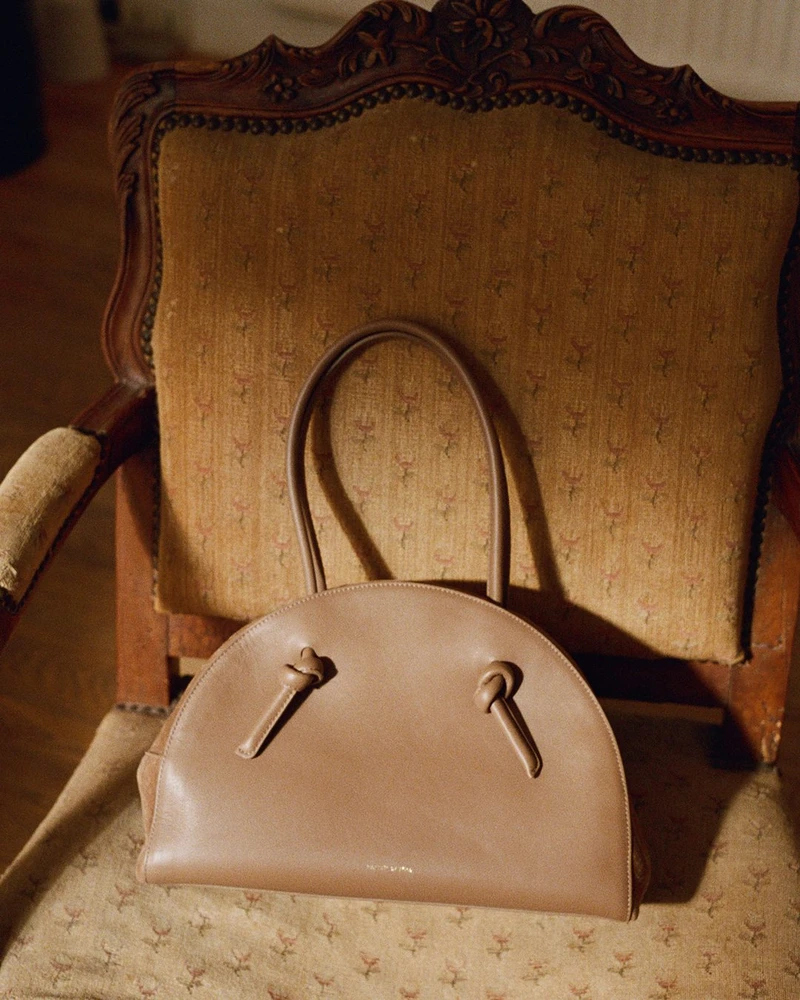
Smooth leather is defined by a clean, uninterrupted surface that lets the cut of a garment take the lead. Its polish sharpens seams and edges, while softer versions such as nappa allow that same sleek finish to move more easily with the body. Because the surface stays visually quiet, even small changes in proportion or construction become more noticeable, which is why smooth leather can feel both precise and understated.
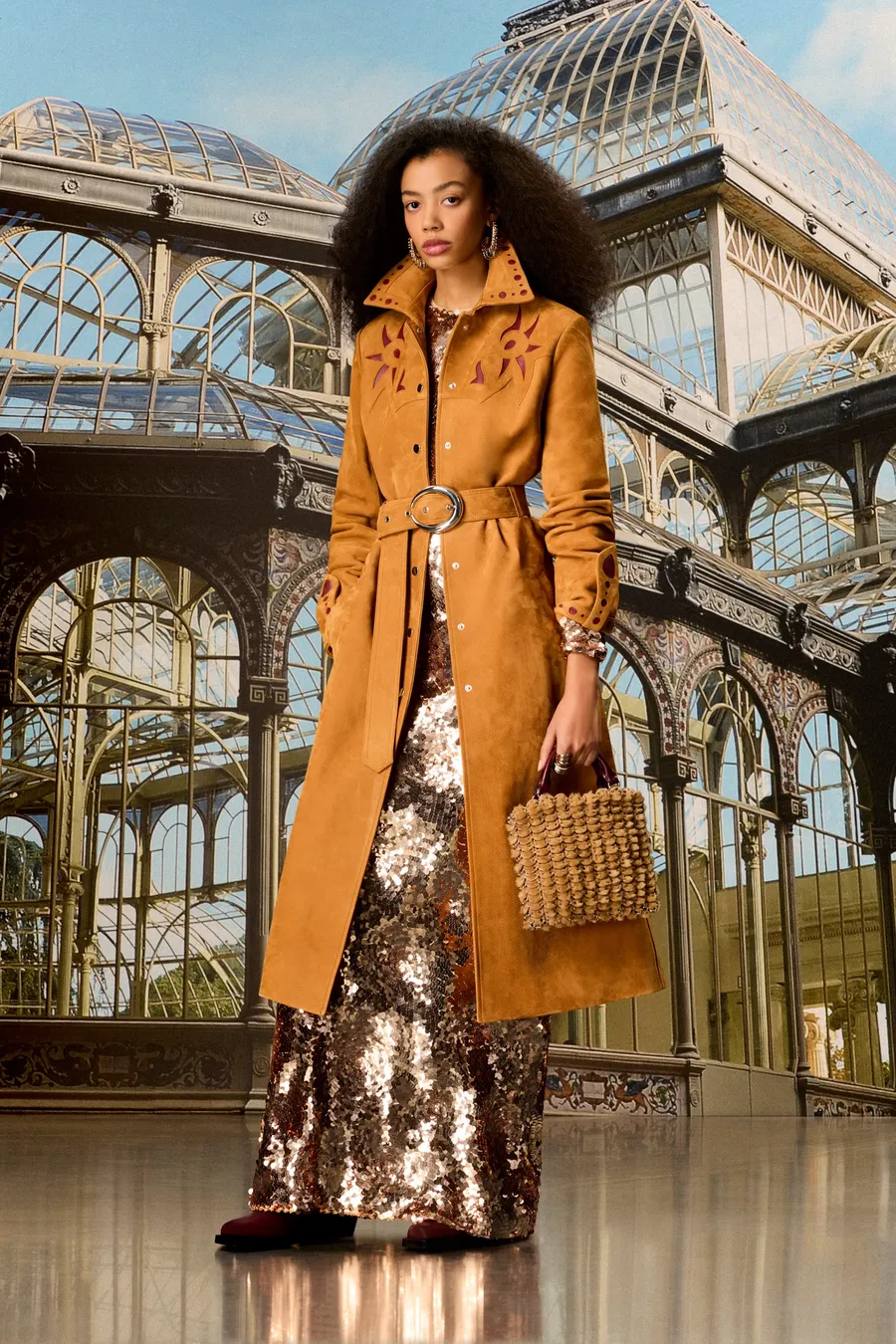
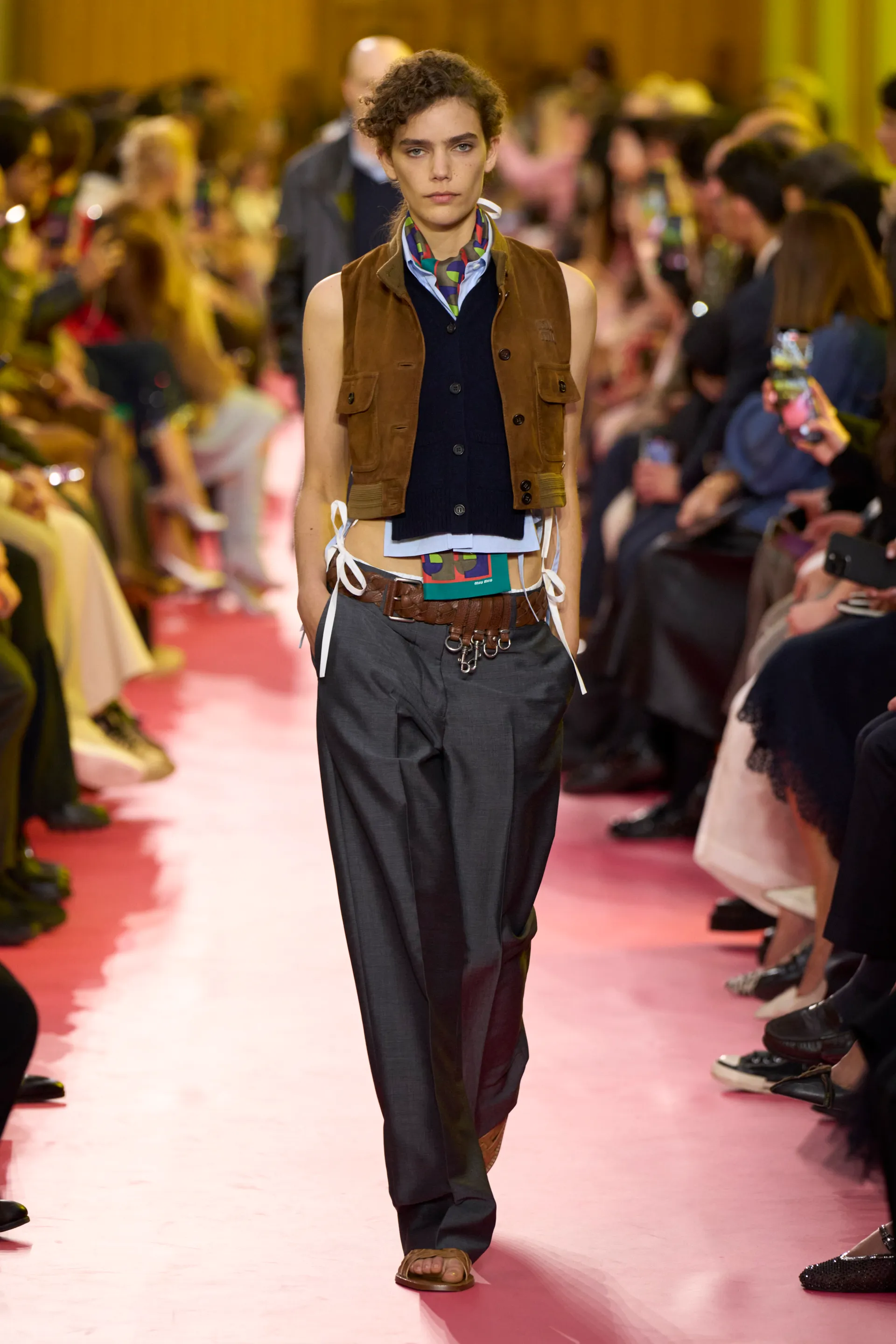
Suede is recognised by its soft nap, which diffuses light and gives colour a deeper, more muted character. That velvety surface makes leather feel immediately softer in mood, with less visual hardness and more warmth against the body. On the runway, suede often brings a relaxed sensuality to a silhouette, especially when designers want texture to carry the look without relying on shine or heavy structure.
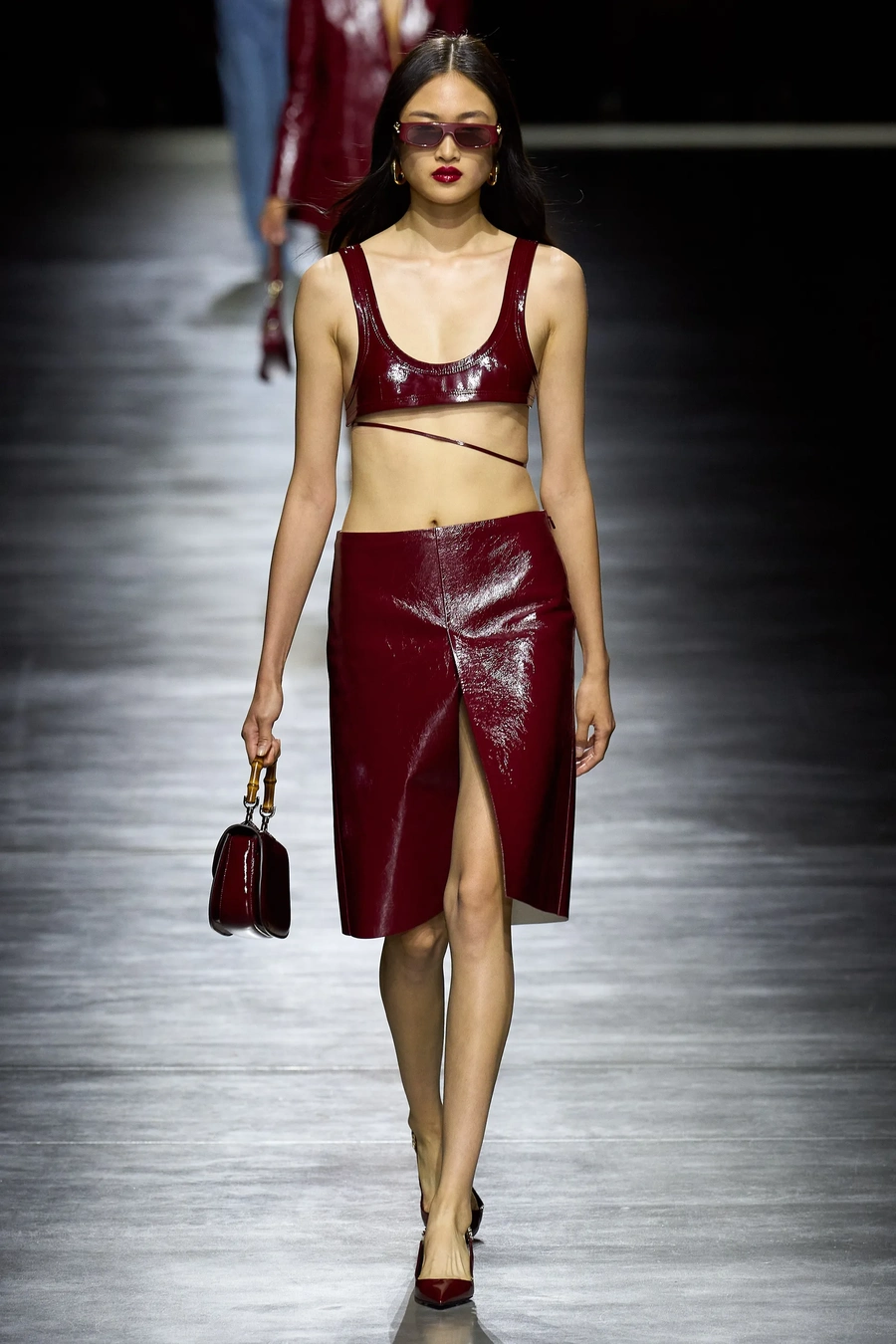
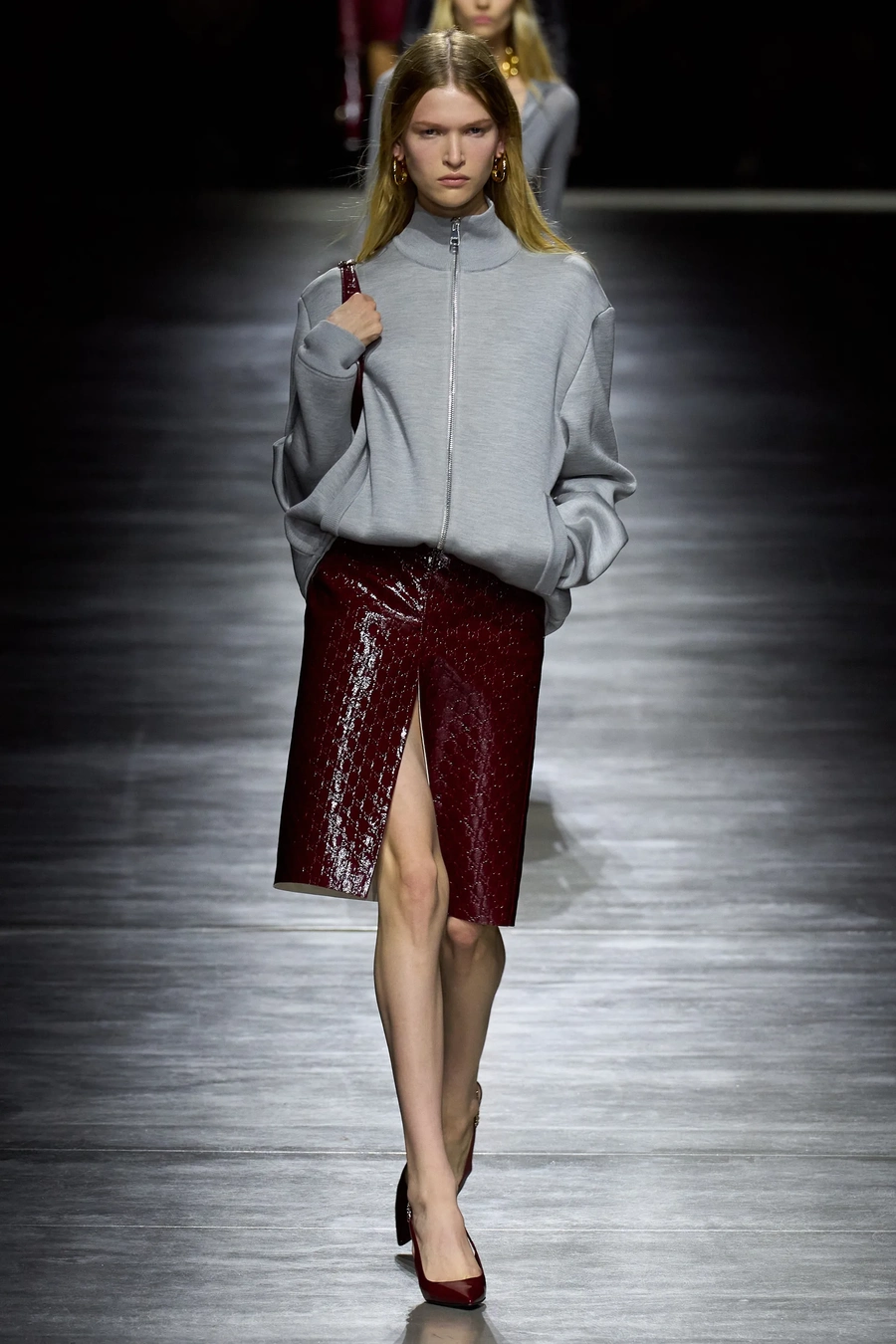
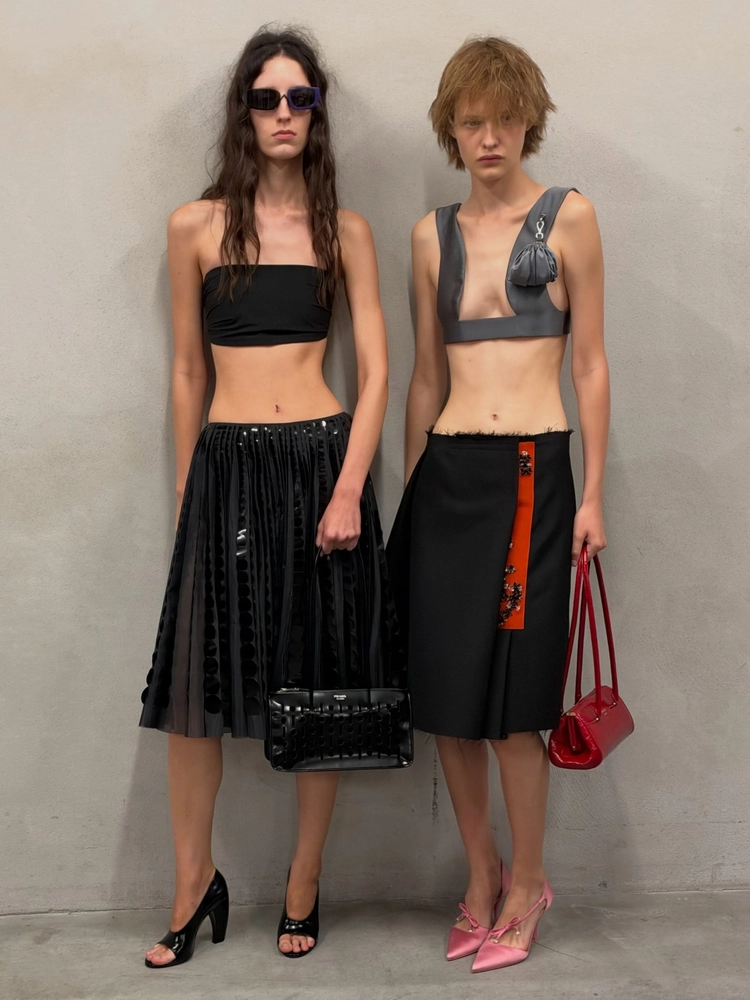
Patent leather is leather coated to create a glossy, reflective finish. It catches light immediately, which makes it one of the most theatrical leather surfaces in fashion. Because of that shine, patent leather often appears in pieces meant to punctuate a look: boots, pumps, belts, bags, skirts, and the occasional sharply cut coat. It brings a high-impact attitude and often pushes leather closer to eveningwear or fetish-inflected dressing.
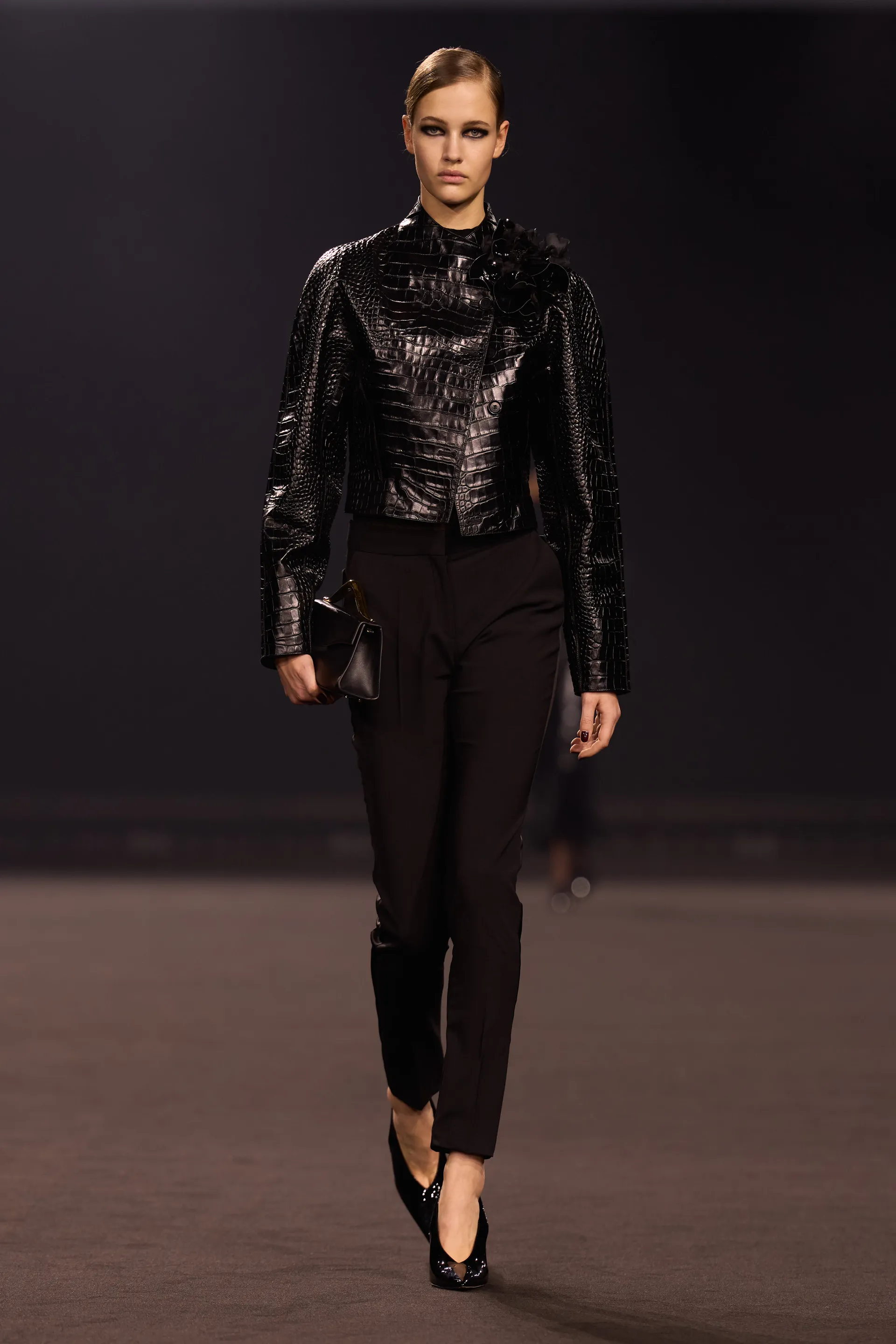
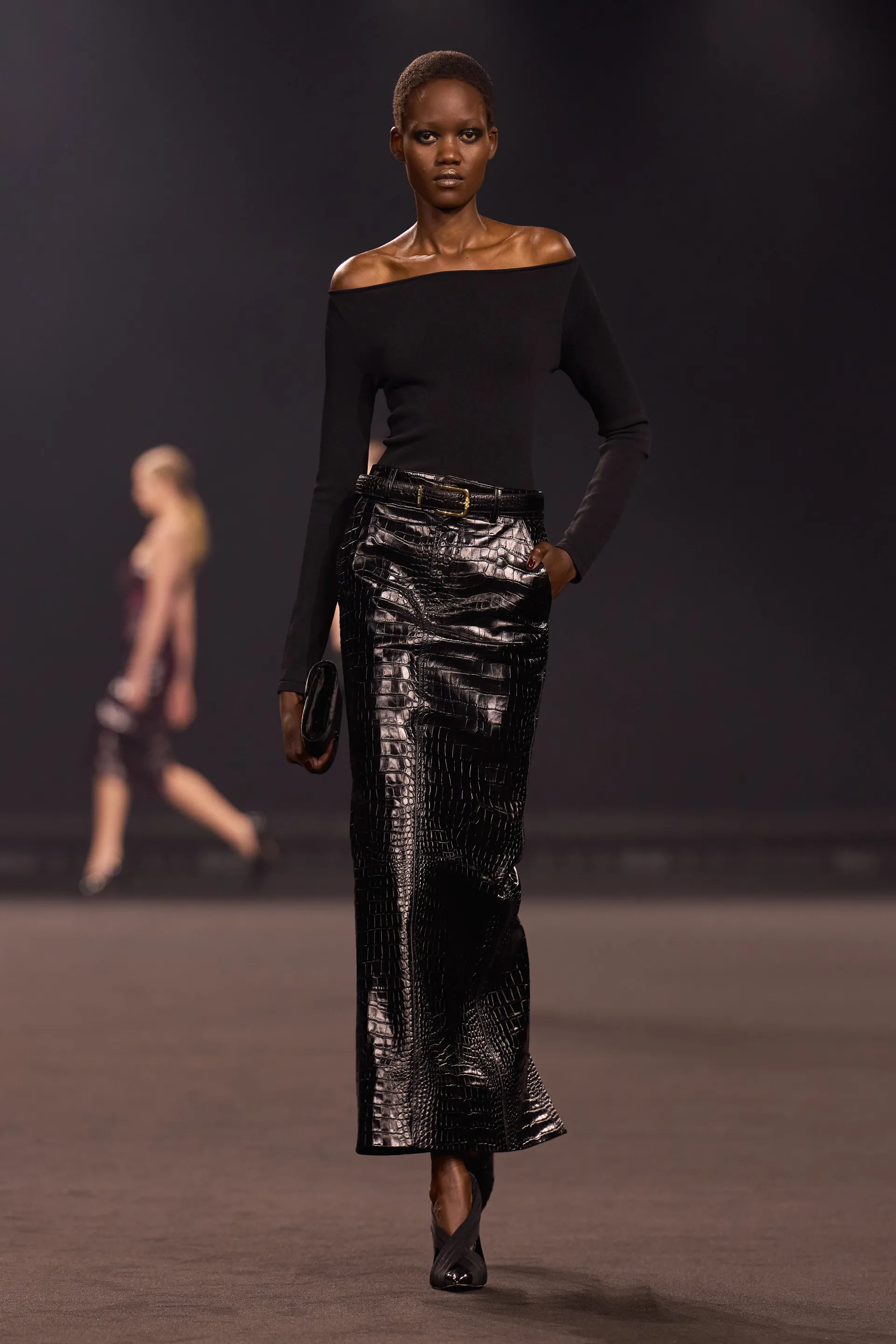
Croc-effect or reptile-textured leather gains its character from a raised, graphic surface that catches light differently across each scale or embossed ridge. The texture can come from genuine exotic skin or from leather pressed to imitate reptile patterning, but visually the effect is similar: the surface becomes part of the design itself. It gives leather a sharper, more decorative presence, making even a simple silhouette feel more deliberate and luxurious.
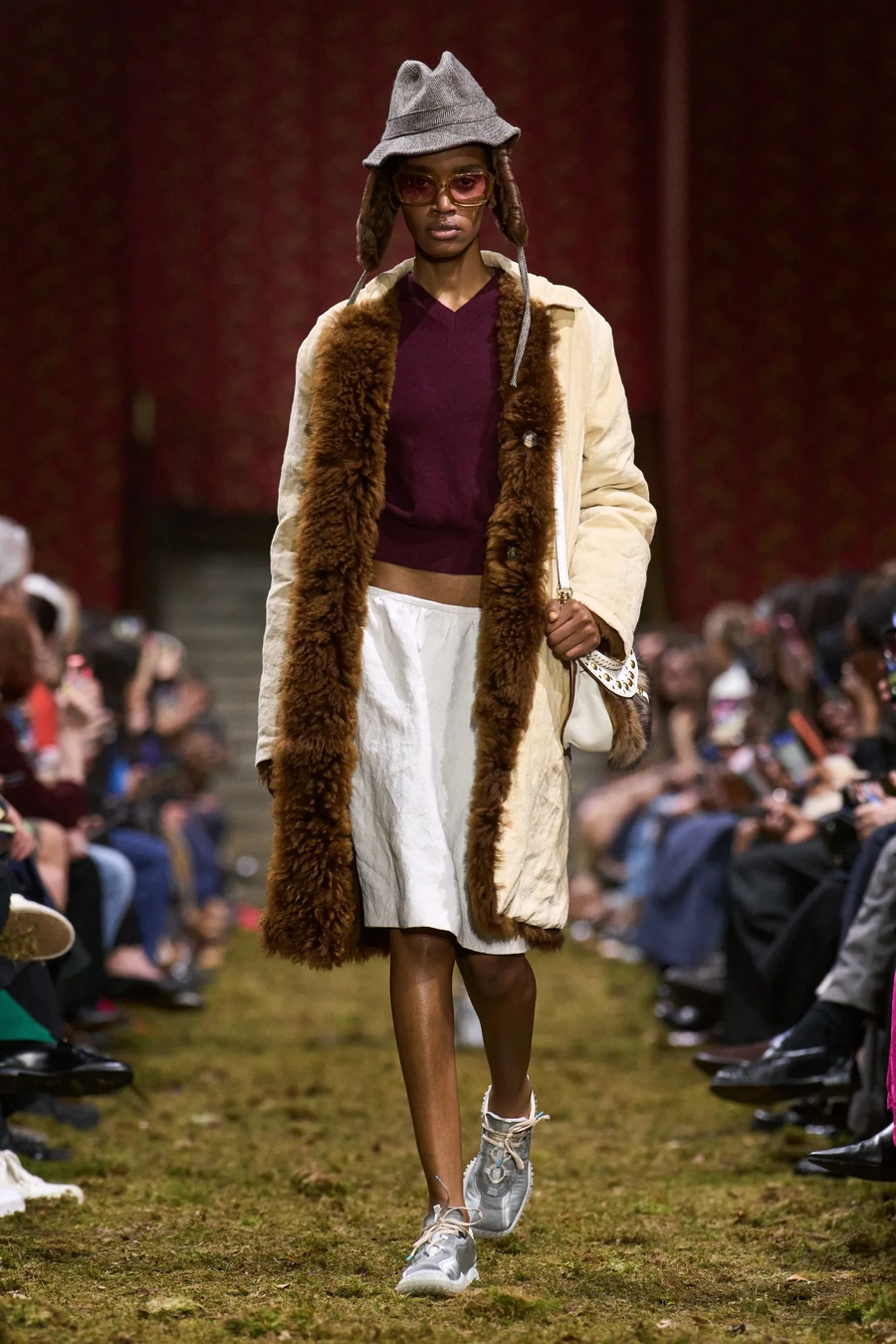
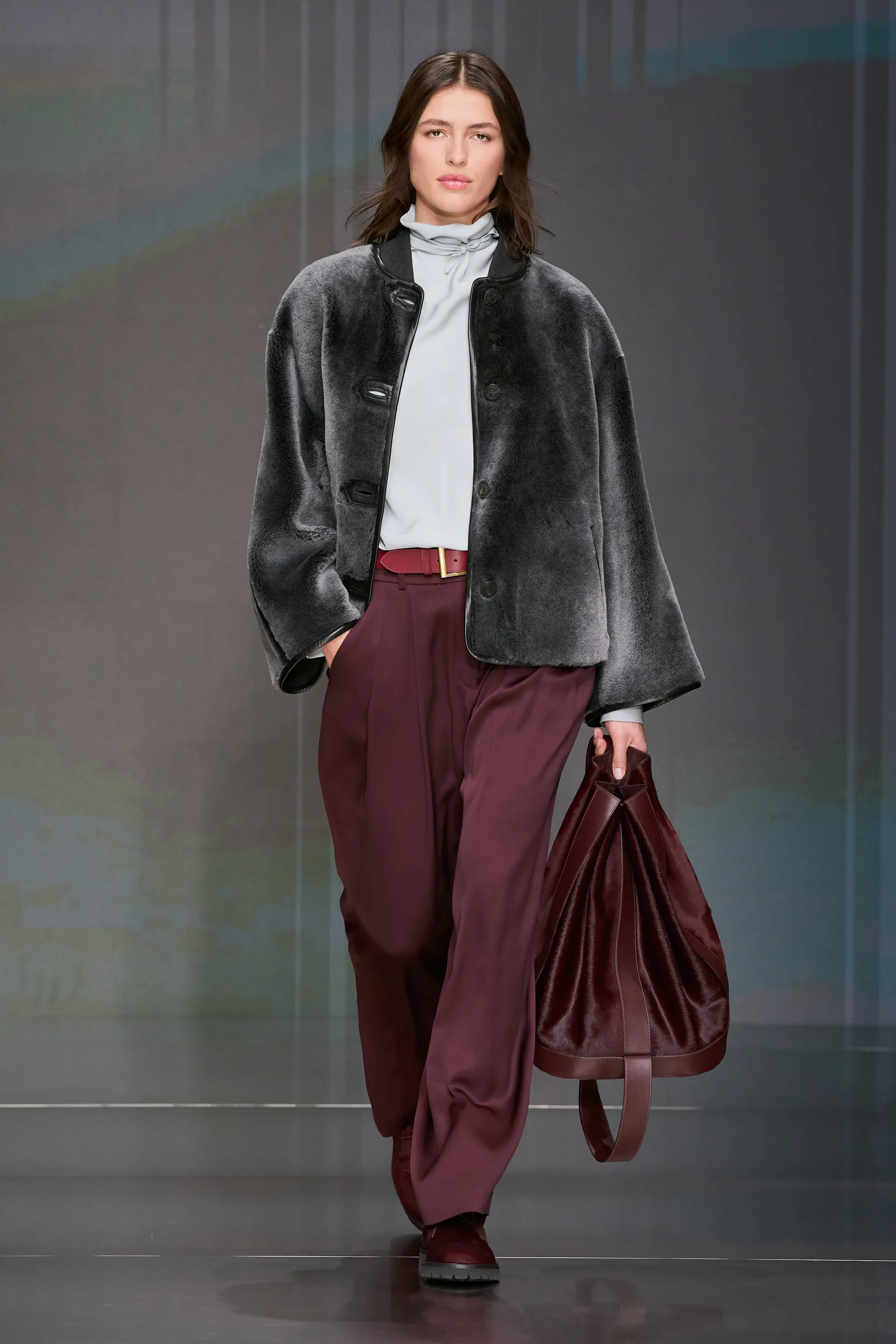
Shearling and hair-on leather preserve the animal’s fleece or hair on the surface, giving the material an immediate sense of depth and softness. Unlike suede, whose nap comes from a worked leather surface, these finishes still carry a visible natural pile. That extra volume changes the way a garment occupies space, especially in outerwear, where leather can feel softer, fuller and almost enveloping instead of sleek or sharply polished.
Humans wore animal hides long before clothing had anything resembling a fashion system. Leather provided insulation, footwear, containers, straps and protection because the material offered something immediately useful: durability combined with flexibility.
As specialised leatherworking developed, different trades learned to manipulate those qualities with increasing precision. Saddlers needed strength and resistance. Glovemakers wanted softness and dexterity. Shoemakers balanced structure against movement. Leather armour, military equipment, belts and harnesses all reinforced its connection with protection and utility.
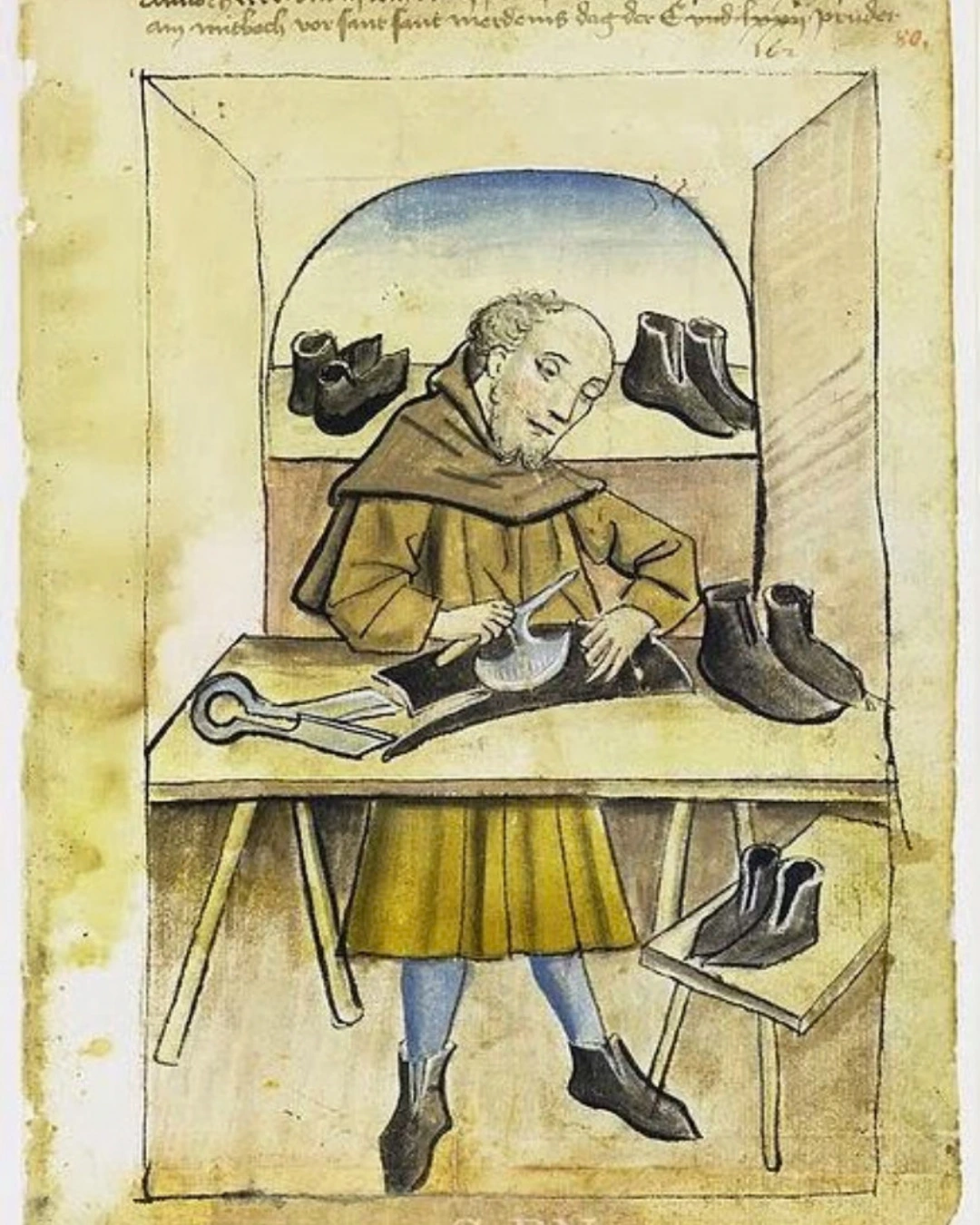
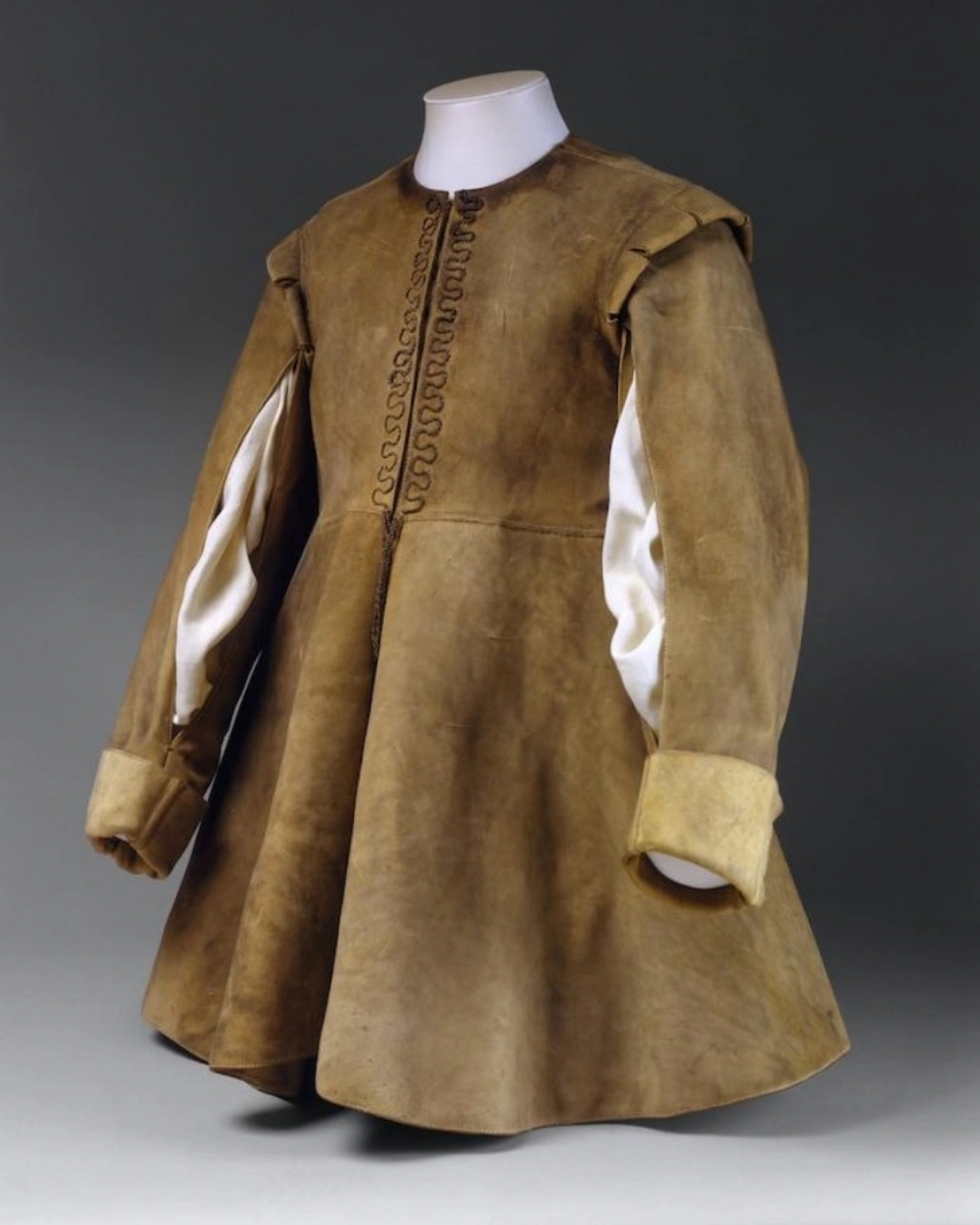
Industrialisation altered both production and image. Improved machinery made leather easier to cut, stitch and standardise, while transport created new demands for hard-wearing clothing.
The motorcycle brought one of leather’s most consequential visual transformations.
Early riders needed a barrier against wind, cold and abrasion. In 1928, Schott introduced the Perfecto motorcycle jacket, combining heavy leather with an asymmetric front zip, waist belt and metal hardware. Every feature answered a practical requirement, yet together they created an unexpectedly powerful silhouette.
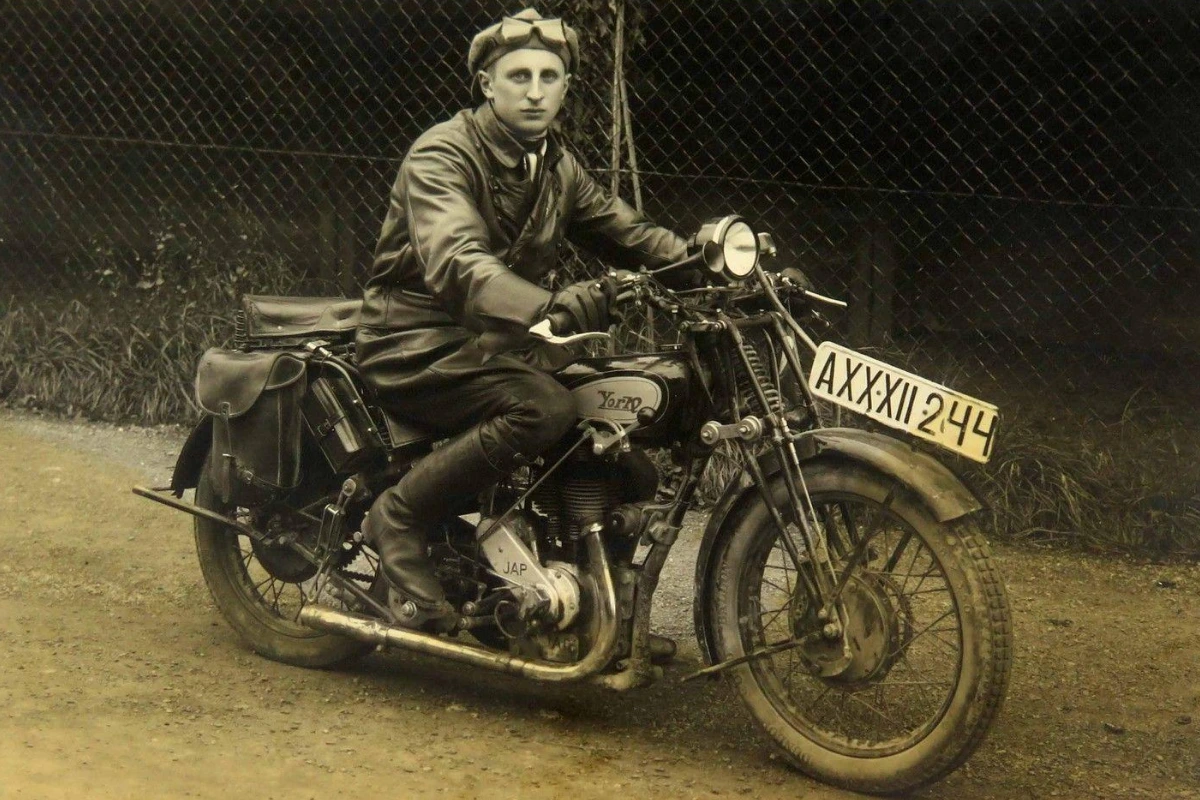
The body looked armoured. Metal flashed against black hide. The jacket seemed prepared for impact even while standing still.
Fashion would spend decades chasing that attitude.
Marlon Brando’s appearance in The Wild One in 1953 helped turn motorcycle leather into a shorthand for youthful defiance. The material did much of the visual work before the character spoke. Black leather catches light sharply, stiffens the body’s outline and makes hardware impossible to ignore.
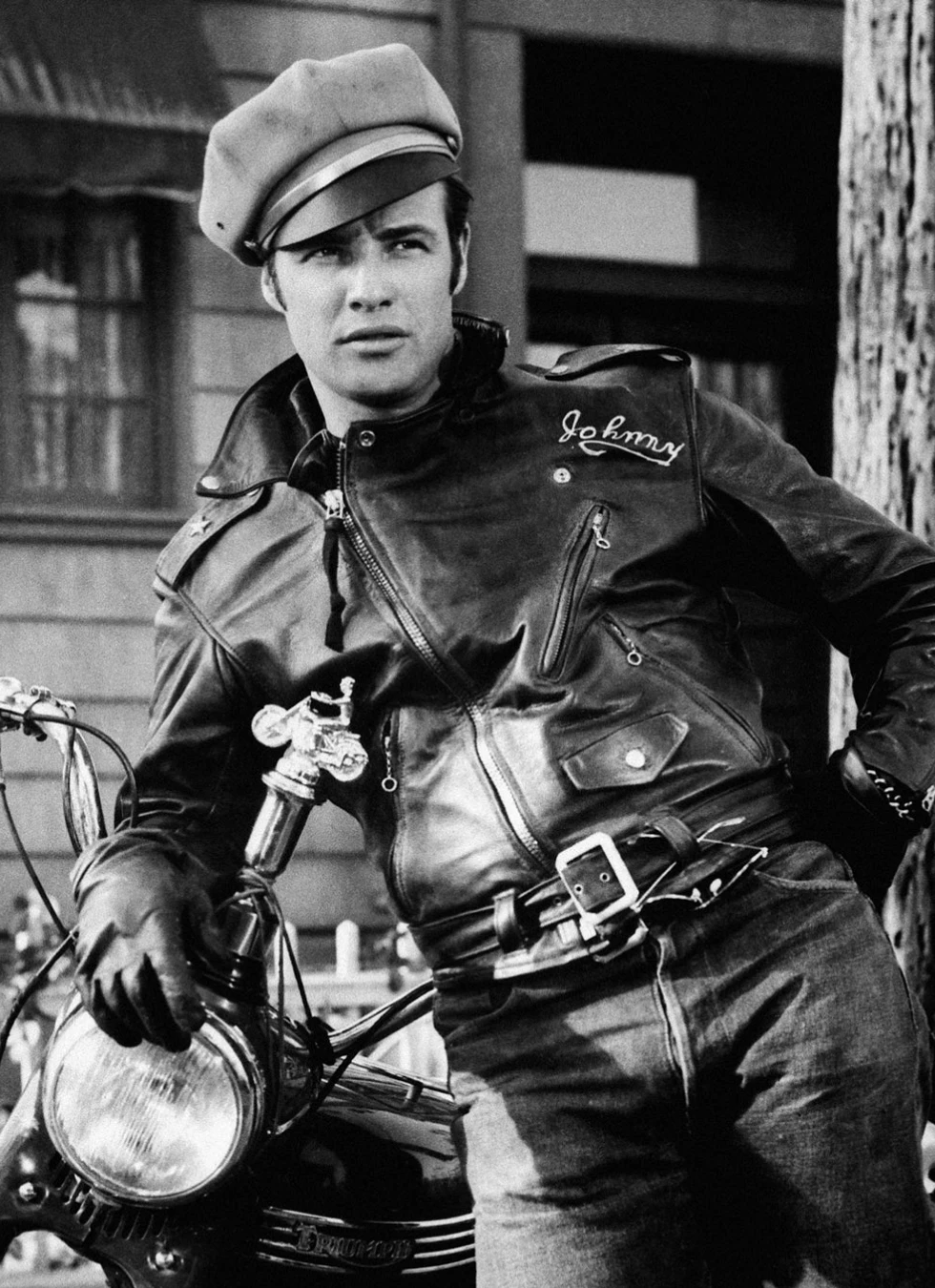
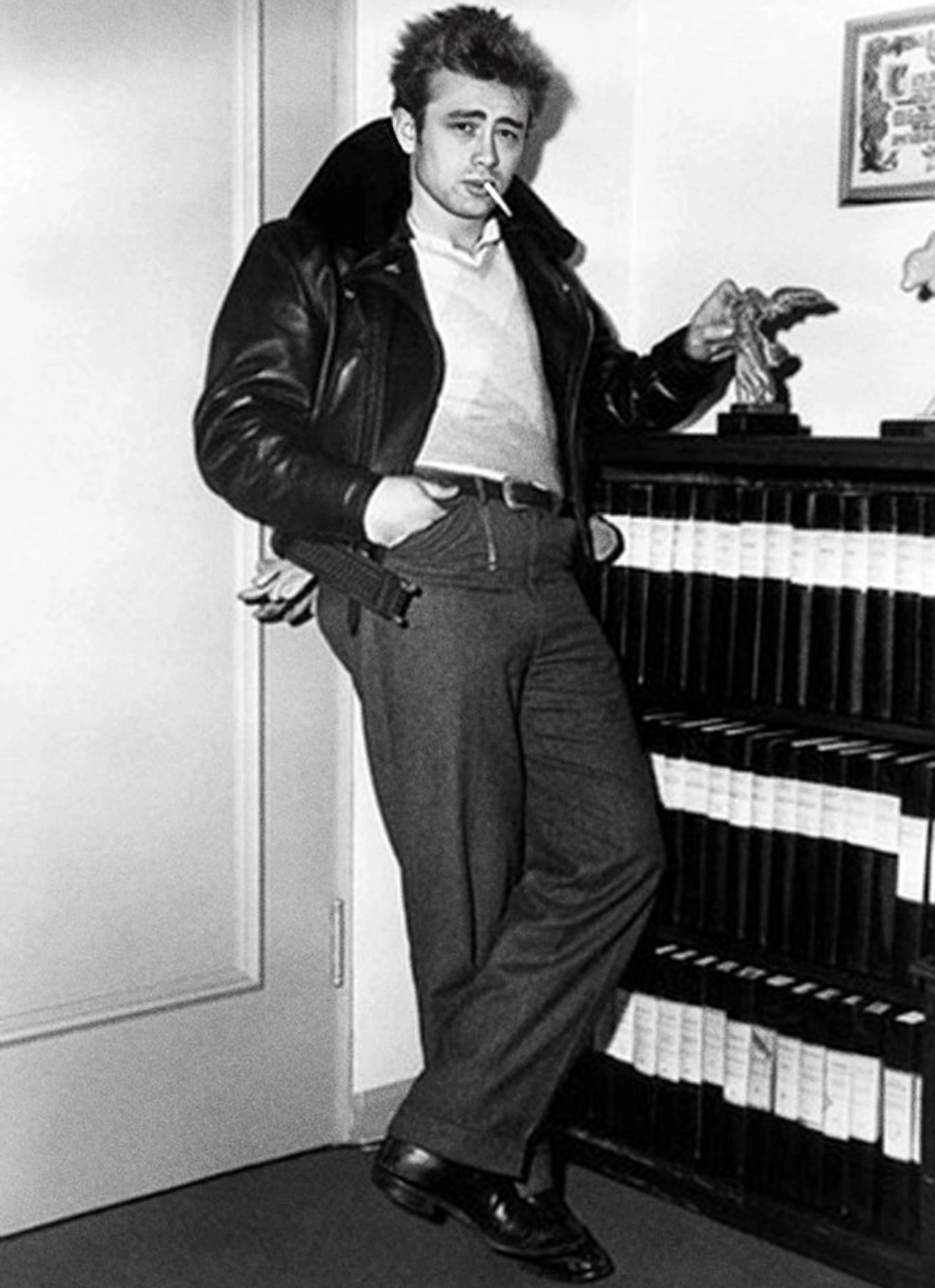
Rock carried the image forward and expanded it beyond the jacket. Leather trousers narrowed the legs into graphic lines onstage. Boots extended the material to the floor. Gloves, belts and cuffs scattered smaller pieces of toughness across the body.
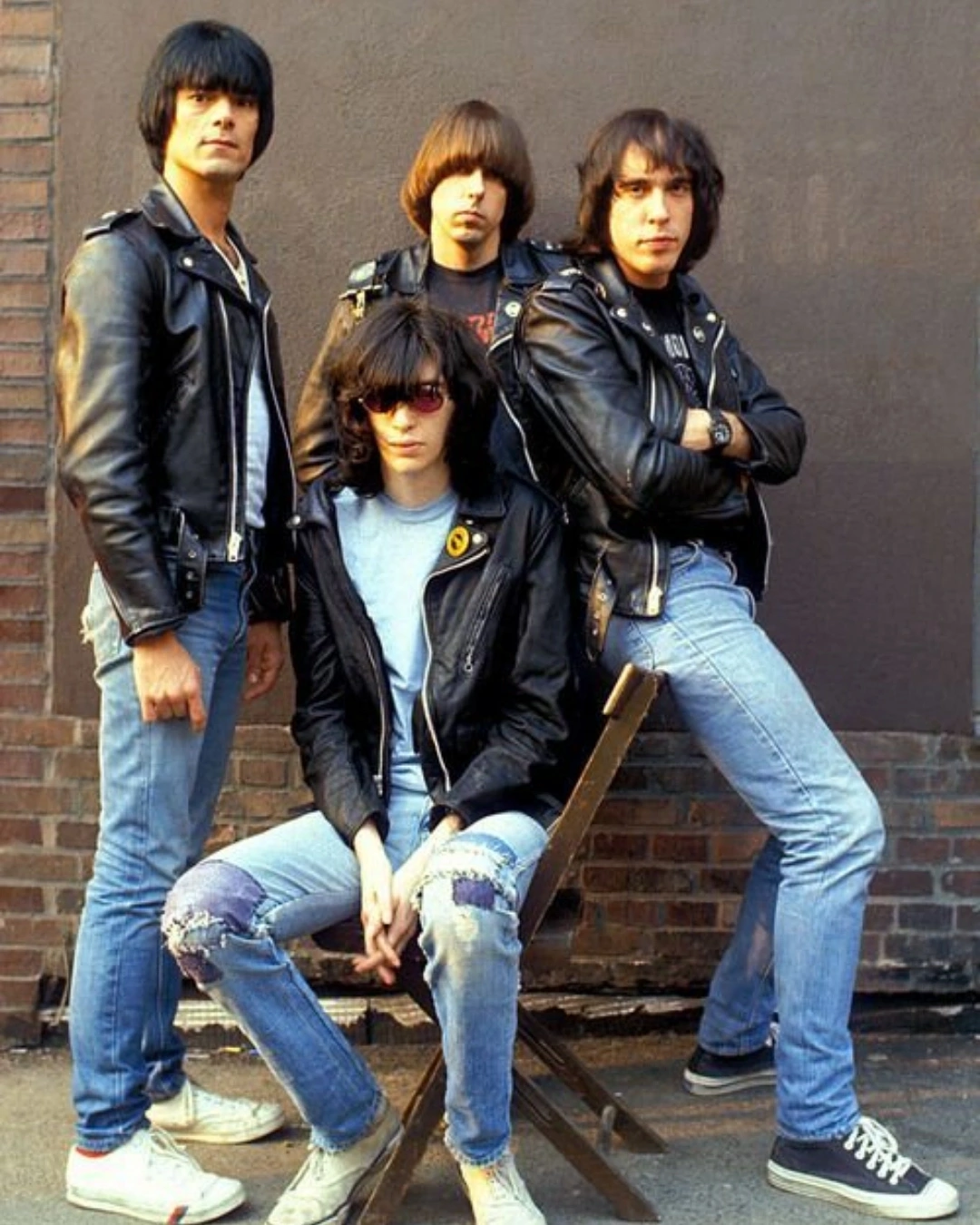
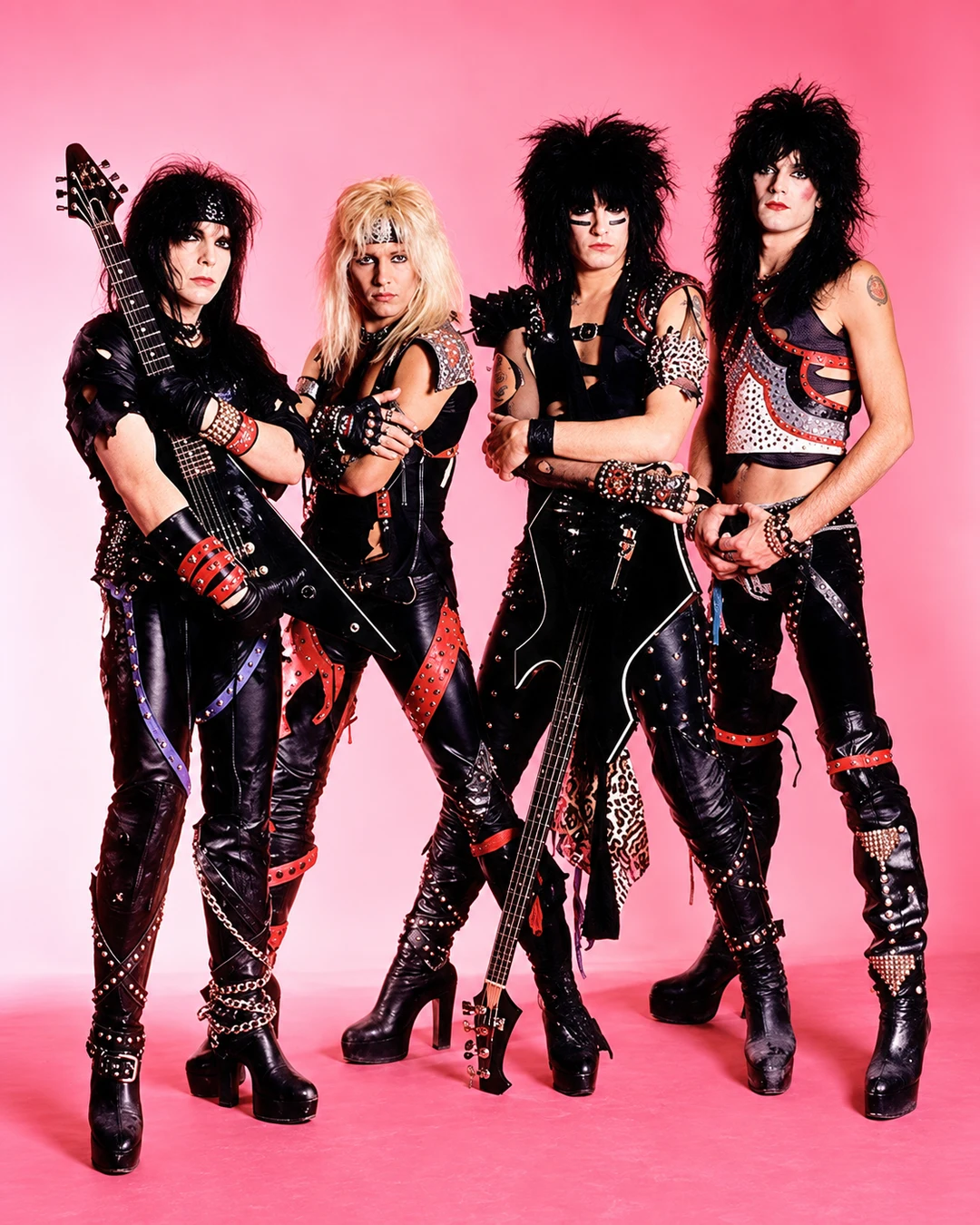
Then punk attacked the surface itself.
Leather jackets were pierced with studs, covered in patches, painted with band names and dragged through enough clubs to make pristine condition almost beside the point. Damage became biography. A scratch could stay. Paint could crack. Metal could tarnish. Leather absorbed intervention without losing its identity.
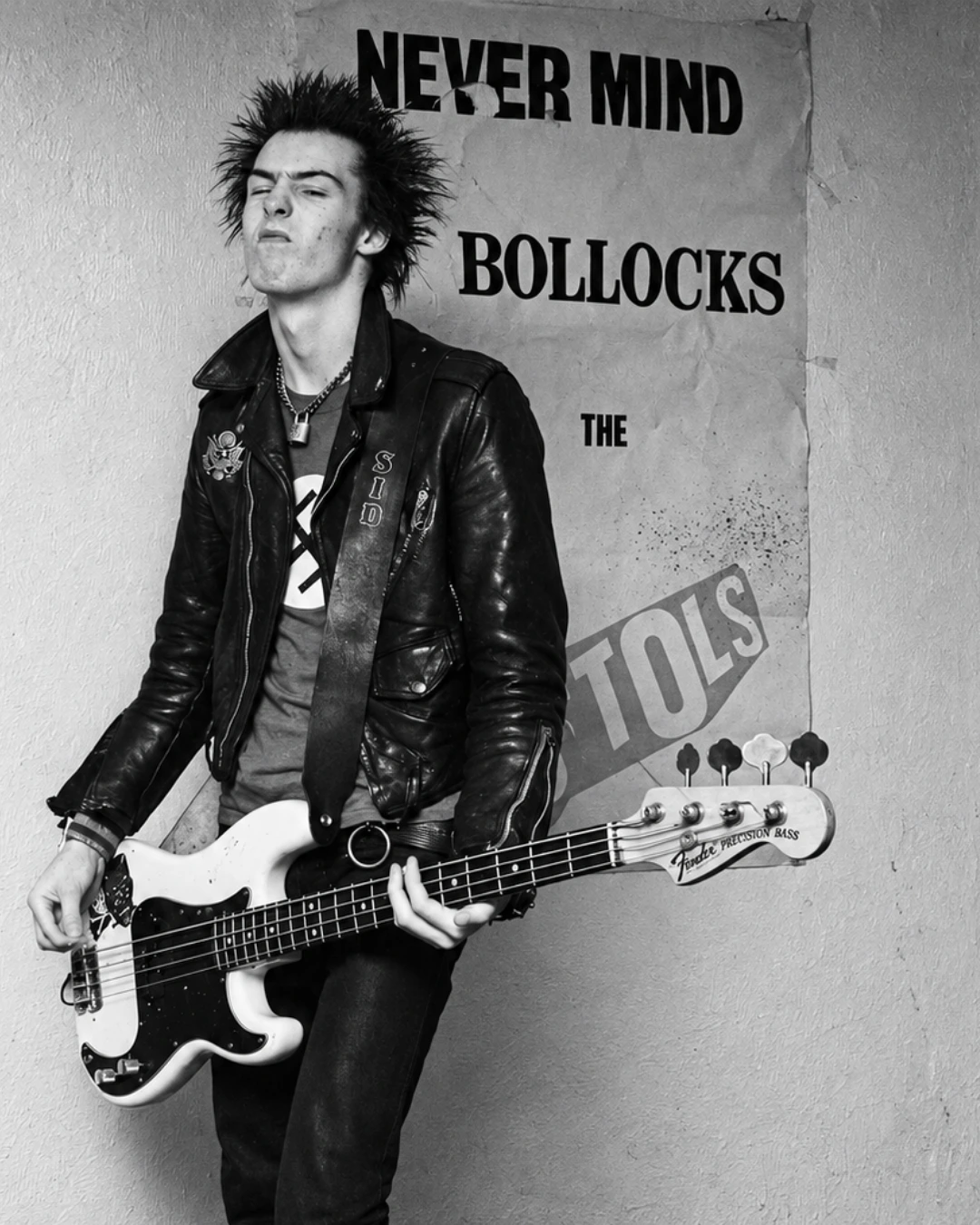
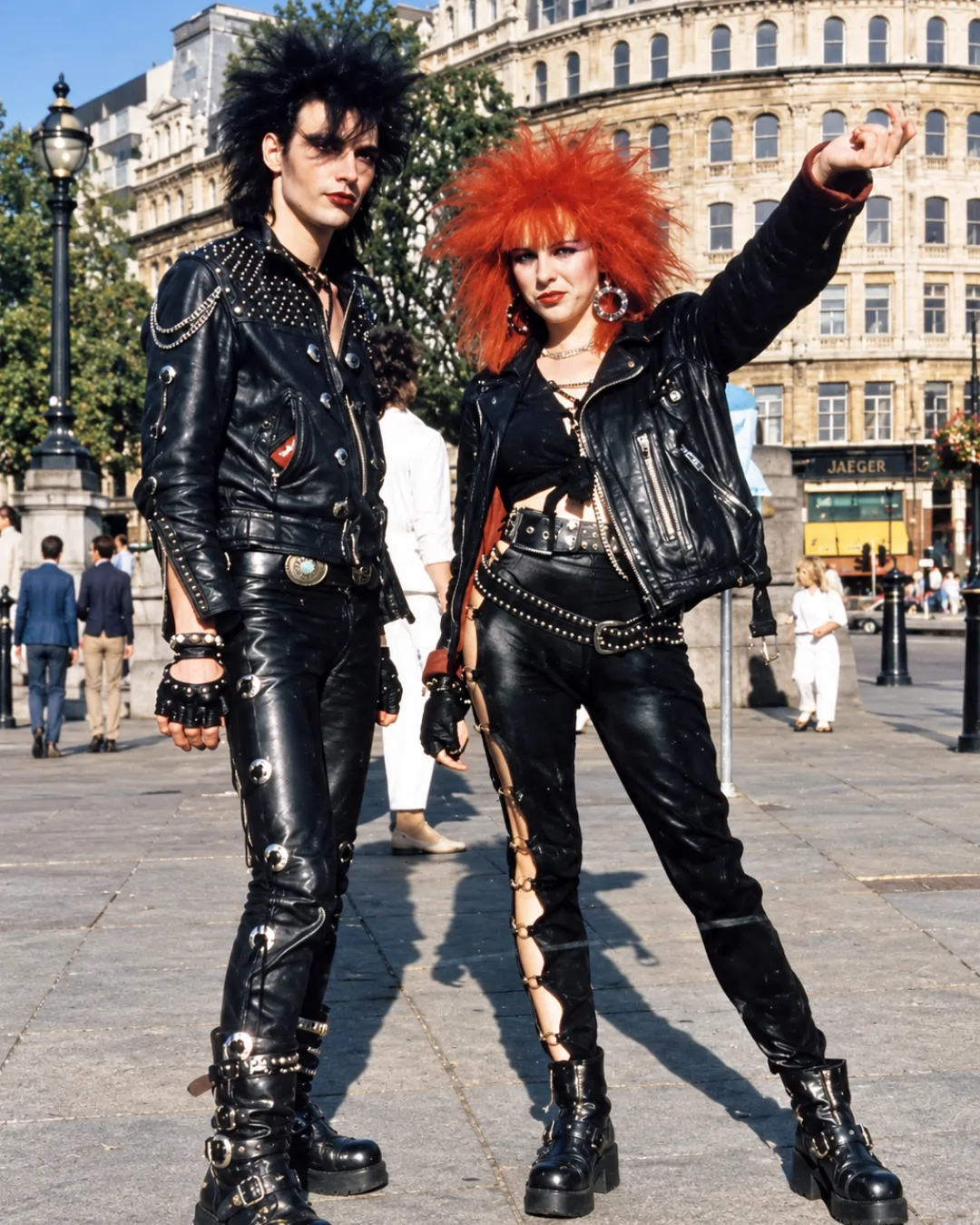
Women pushed those codes further. Suzi Quatro’s leather jumpsuits made toughness and sexuality coexist inside one continuous black silhouette. Joan Jett made leather feel inseparable from guitar-driven rock. Through female bodies, leather gained another tension: armour could be seductive, and exposure could exist inside a garment associated with protection.
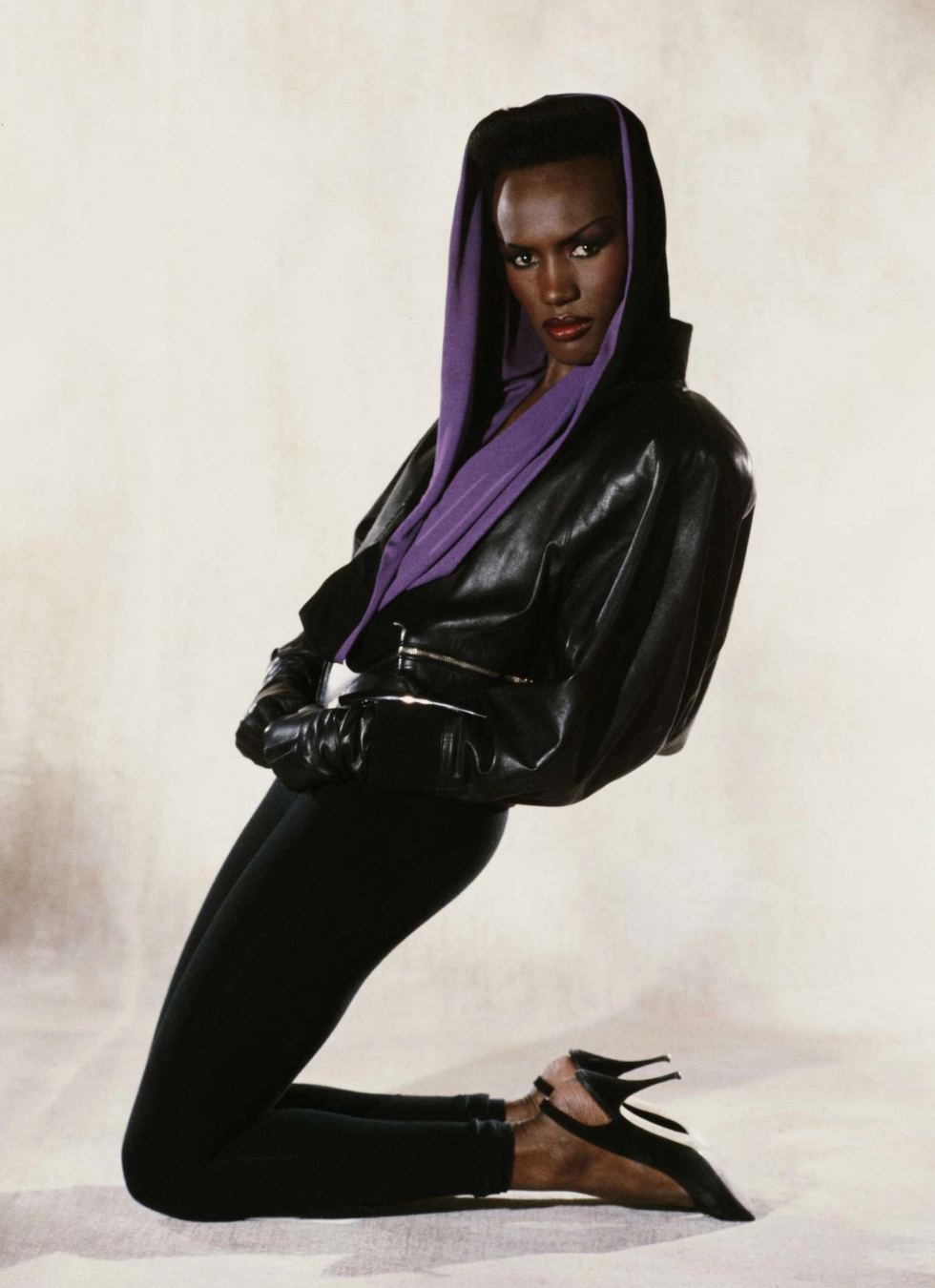
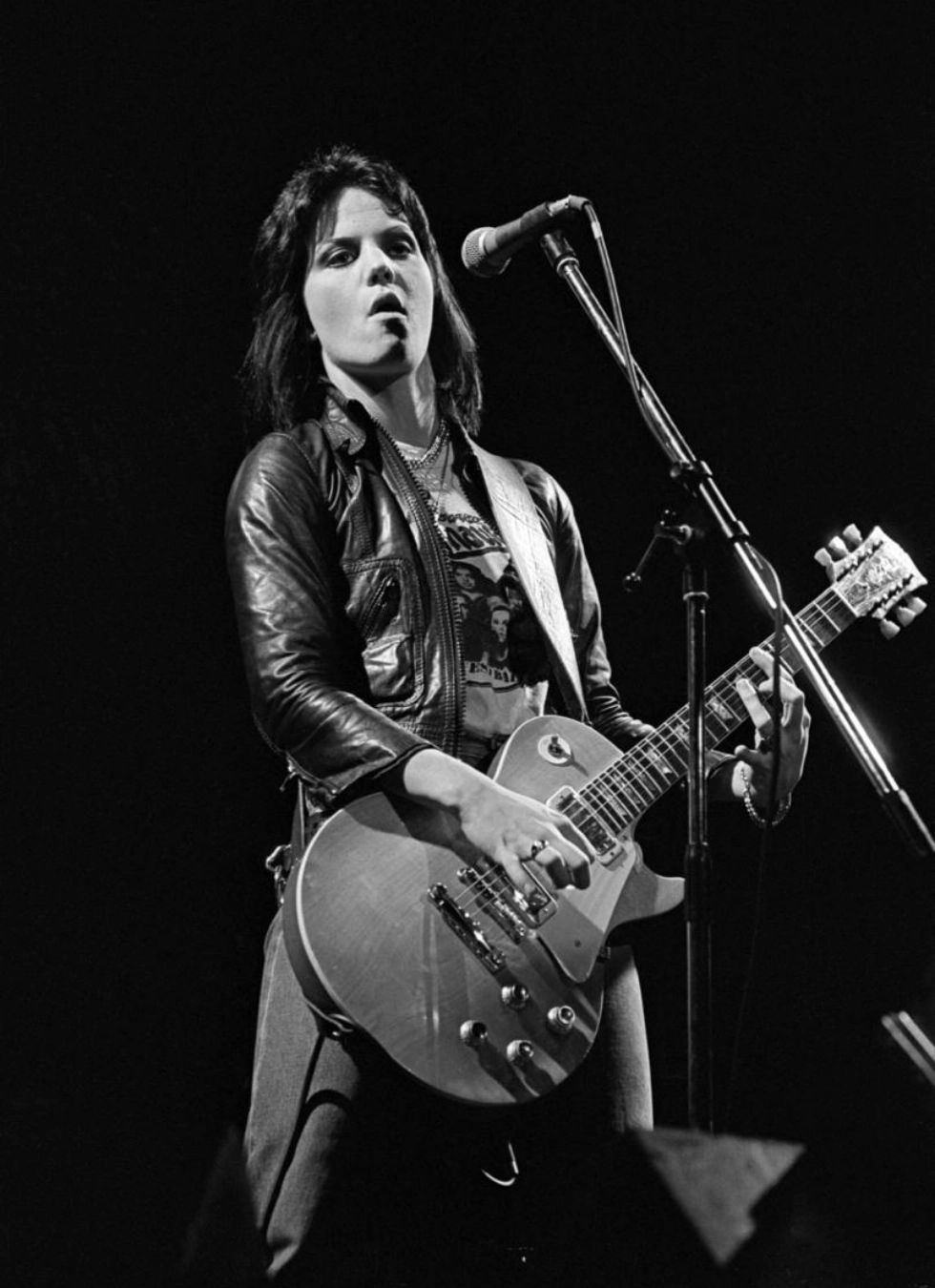
Queer leather cultures developed their own sophisticated systems of dress and recognition, particularly through gay male communities in the second half of the twentieth century. Leather trousers, caps, harnesses, boots and vests became bound up with hypermasculinity, erotic identity, S&M aesthetics and community.
Fashion eventually inherited all of these references.
By then, leather carried far more than physical weight.
High fashion started translating those codes long before biker dressing became a familiar runway reference.
In 1960, Yves Saint Laurent’s “Chicago” jacket for Dior reworked motorcycle imagery in black crocodile trimmed with fur. Street toughness entered couture through materials associated with extreme expense. The tension between the two worlds gave leather a new possibility: rebellion could become meticulously constructed.
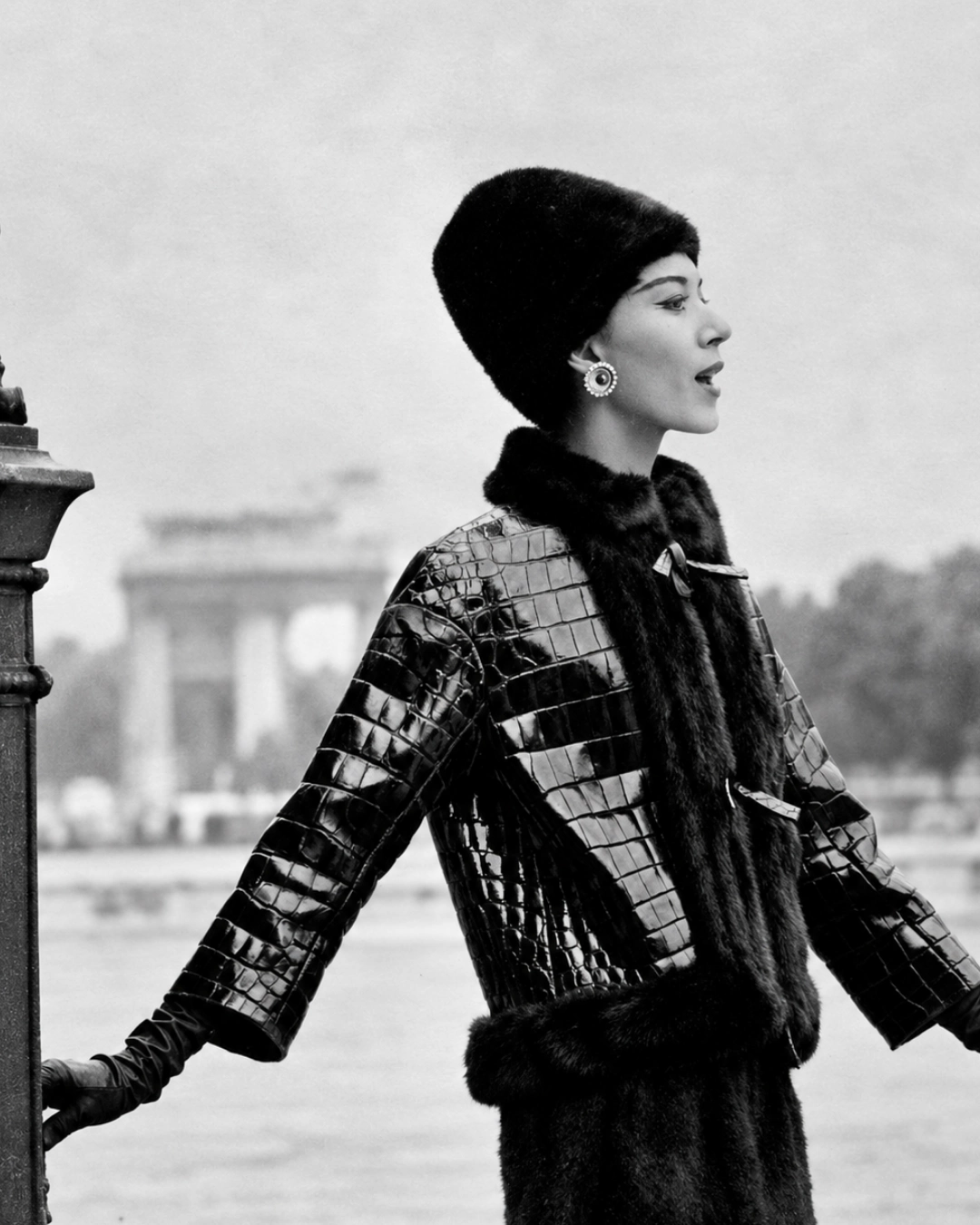
The 1980s expanded that possibility across the body. Claude Montana used leather to build monumental shoulders, controlled waists and sharply engineered silhouettes. Azzedine Alaïa pulled leather close, sculpting dresses, skirts and corseted forms until the material seemed almost anatomical.
One direction treated leather like architecture. Another treated it like a second skin.
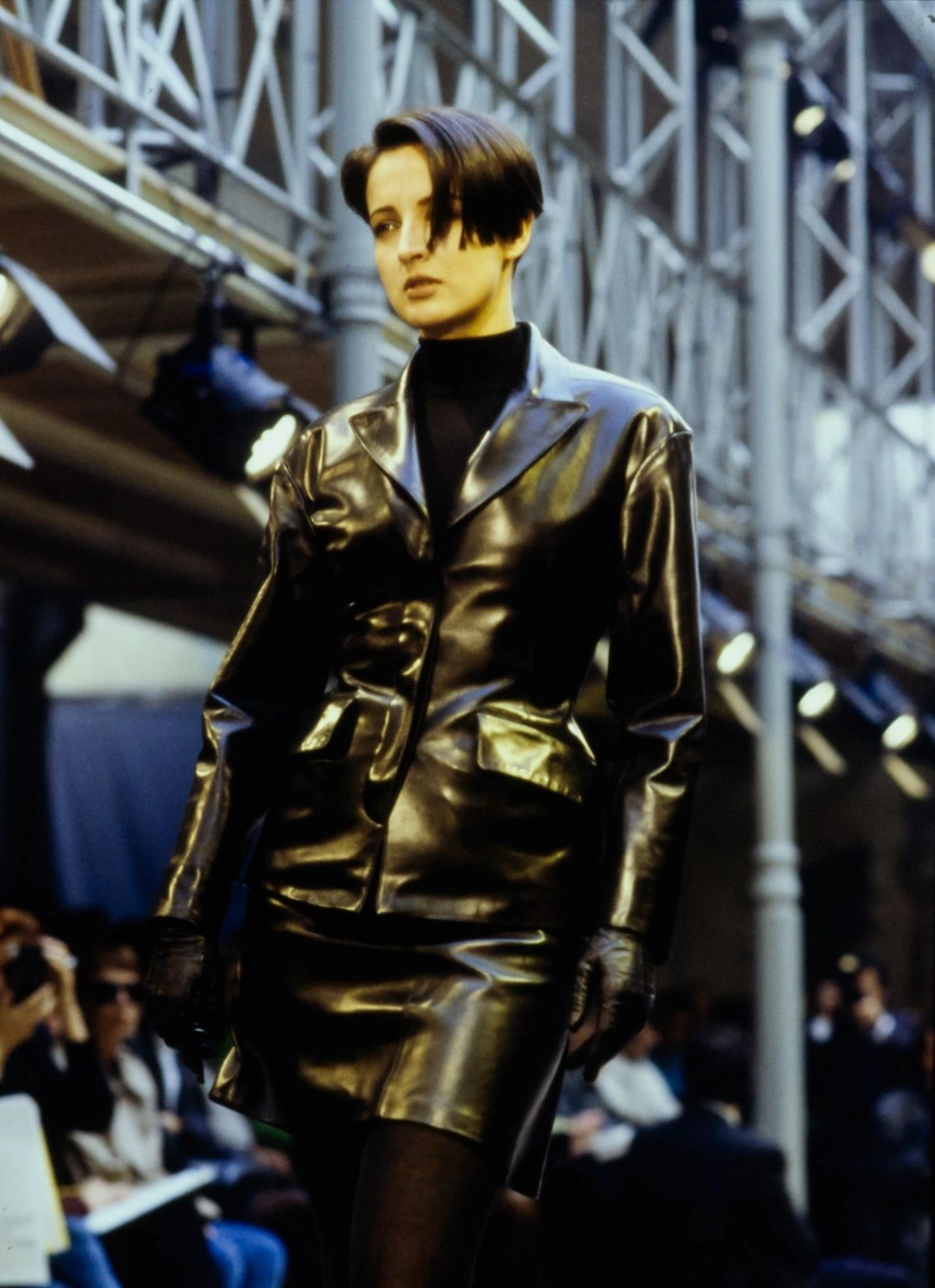
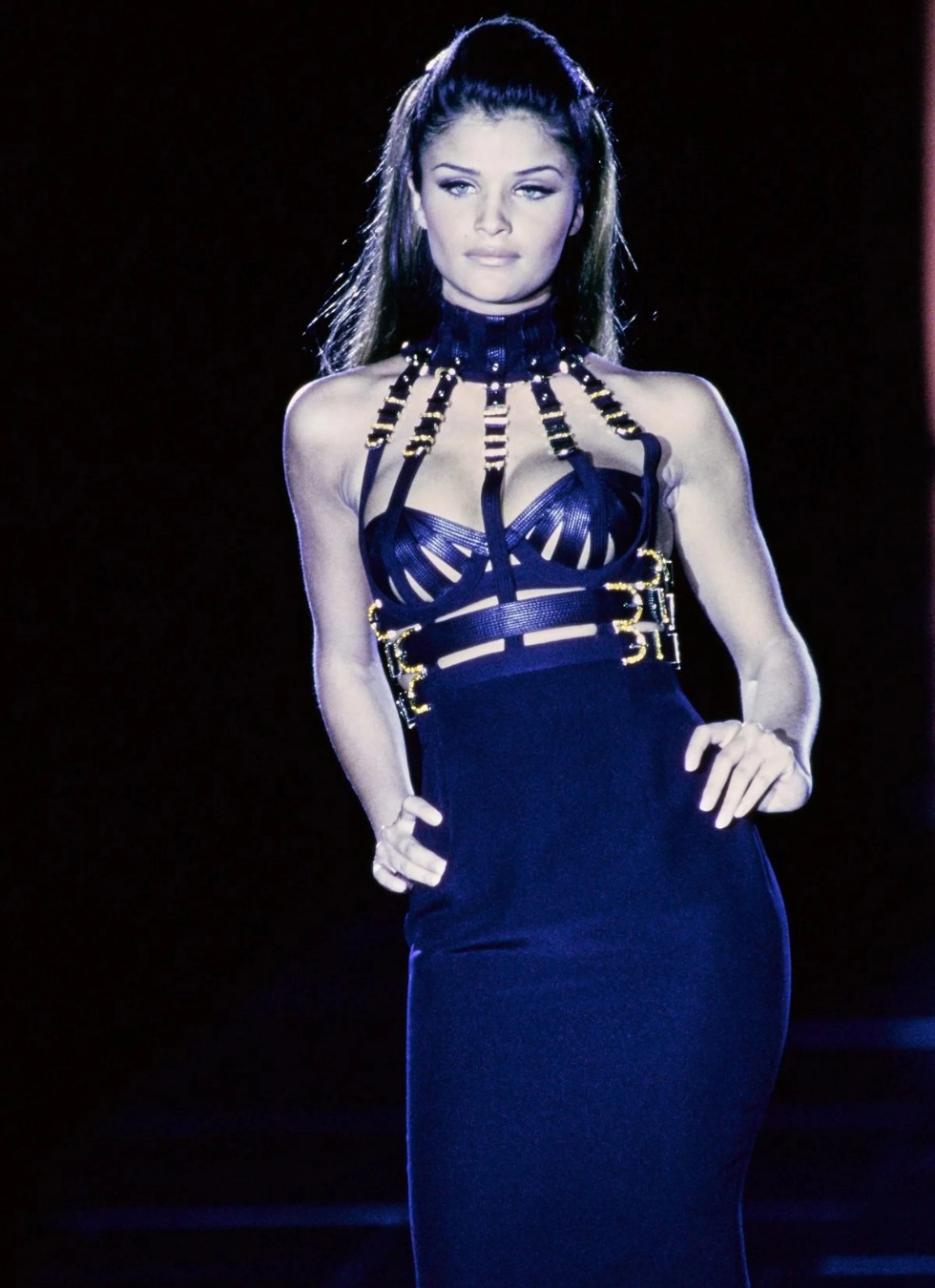
By the early 1990s, Versace pushed straps, buckles, harnesses and bondage references directly into luxury fashion. Leather’s erotic and subcultural associations remained visible, which gave the polish its tension.
Technique continued opening new territory. Thin hides could be manipulated into gathers and drapes. Perforation introduced air and transparency. Laser cutting produced lace-like edges. Quilting added loft. Embossing could imitate crocodile, lizard or abstract textures. Distressing made new leather look decades old.
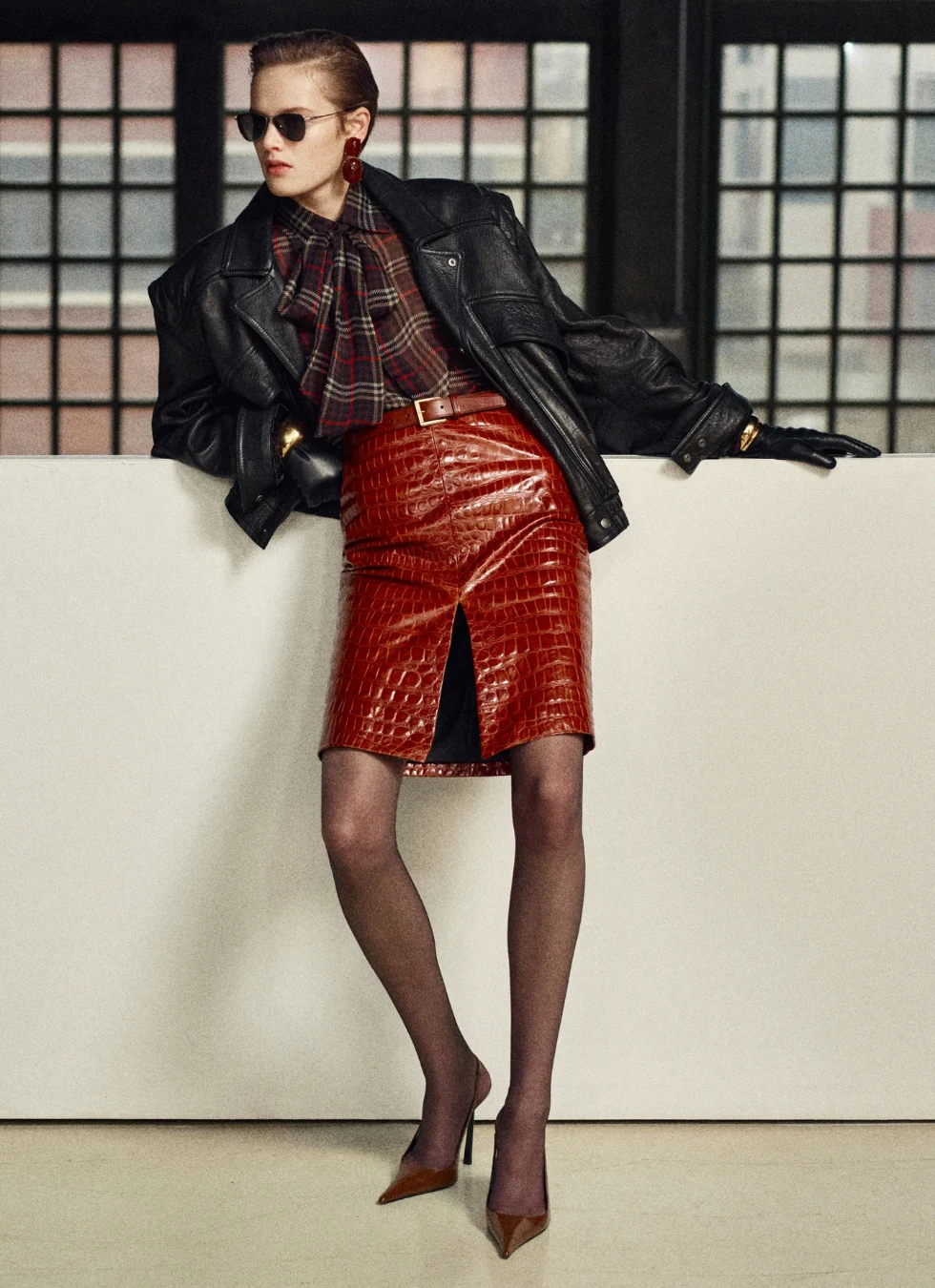
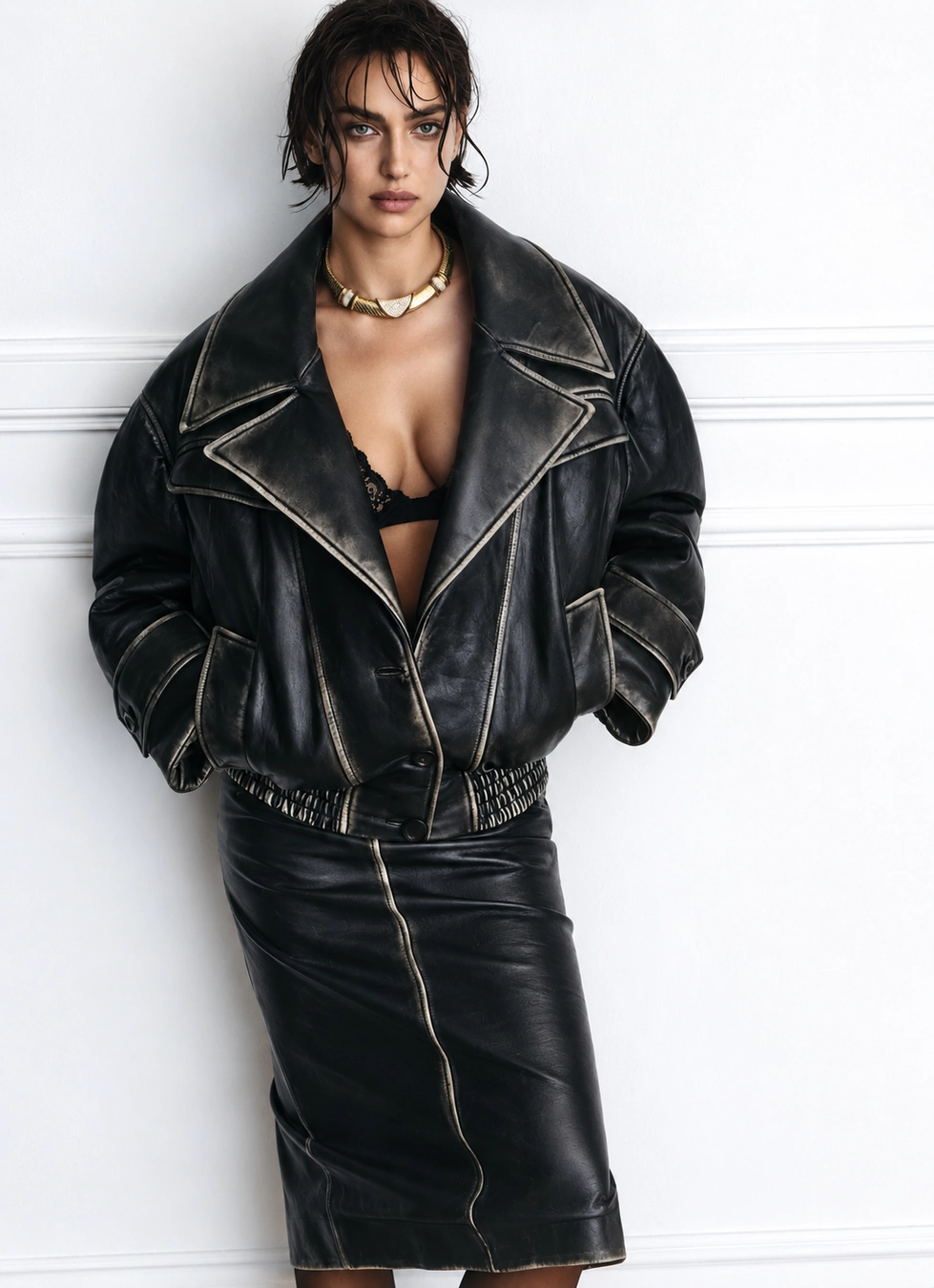
Luxury even changed the definition of a desirable surface. Immaculate hides remained valuable, yet washed finishes, faded black, cracks and engineered patina became desirable too. Considerable craftsmanship could go into making an expensive garment appear as though it had already spent years acquiring stories.
Leather had entered luxury without becoming entirely respectable.
That lingering friction remains part of its value.
Leather changes character according to how closely fashion asks it to follow the body. Its natural density gives a garment presence before decoration enters the picture, yet that same material can be thinned, softened and manipulated until the weight almost seems to disappear.
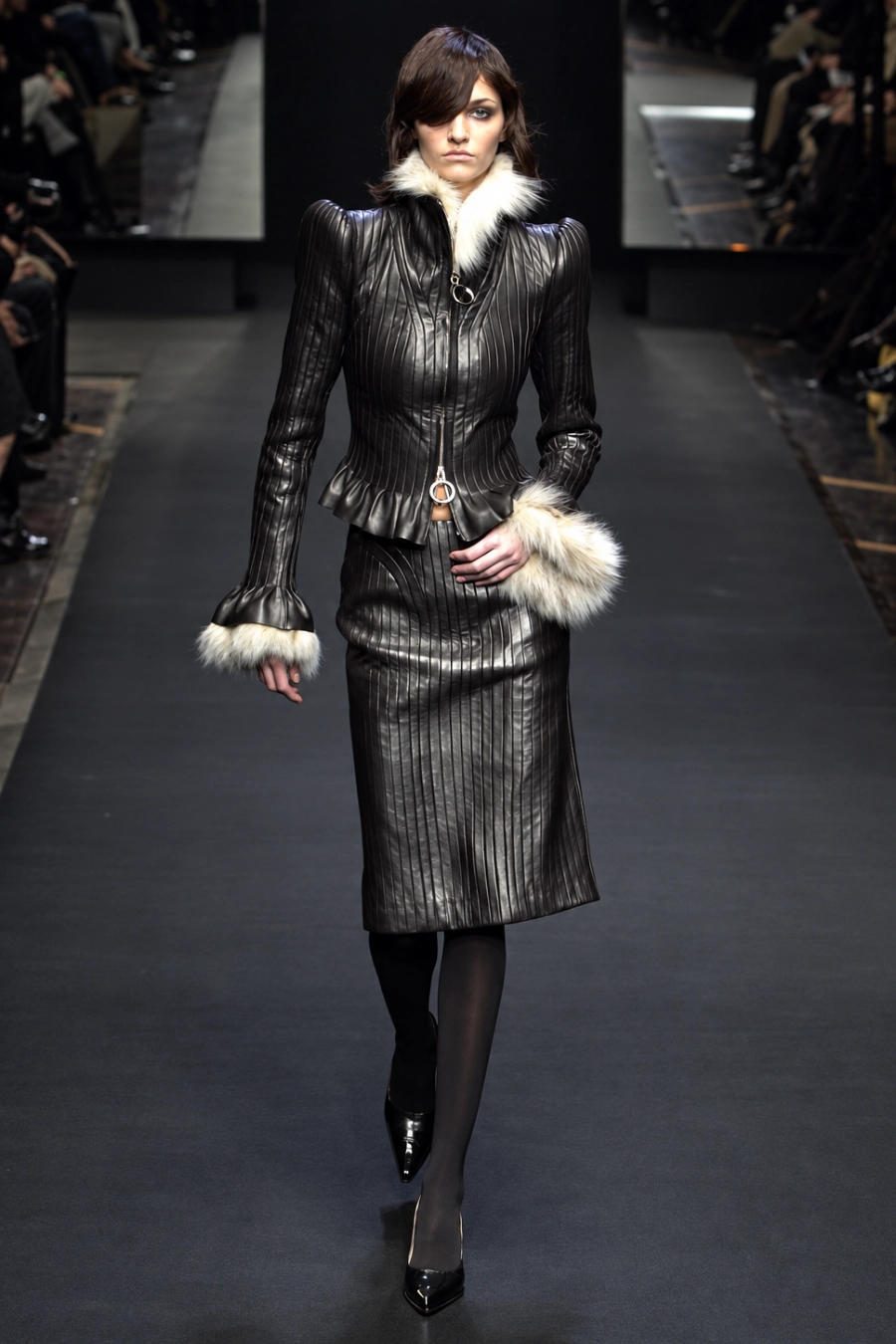
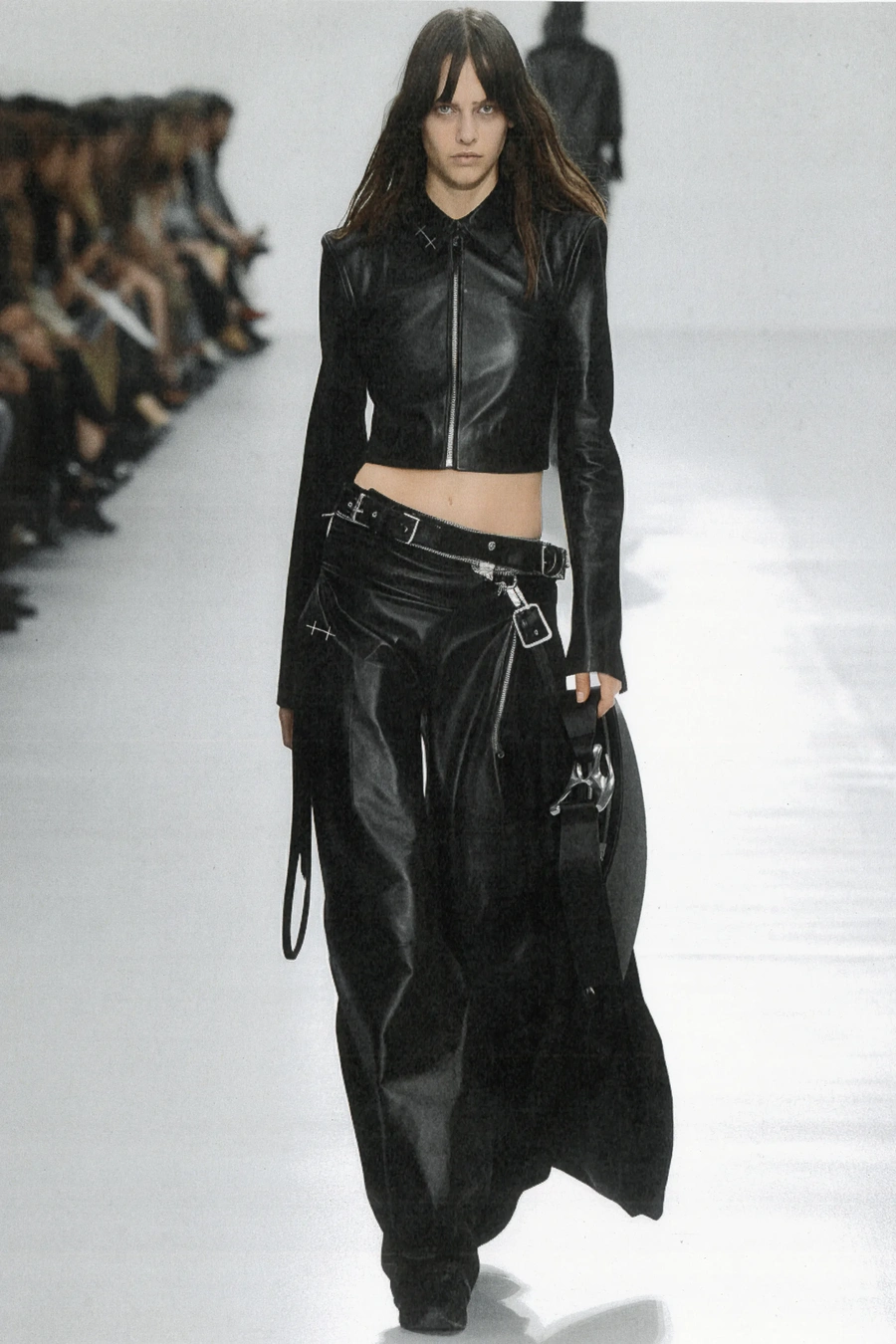
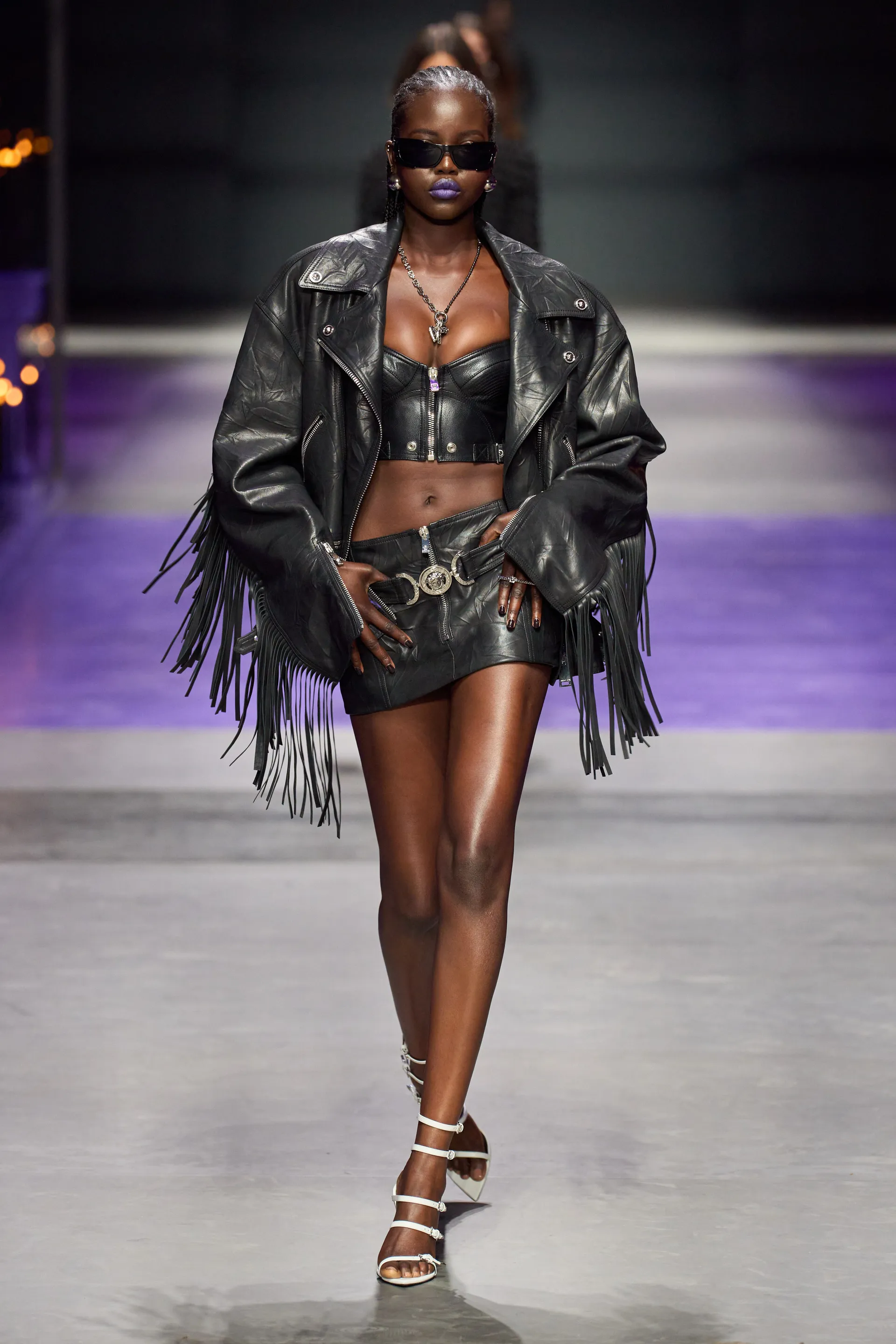
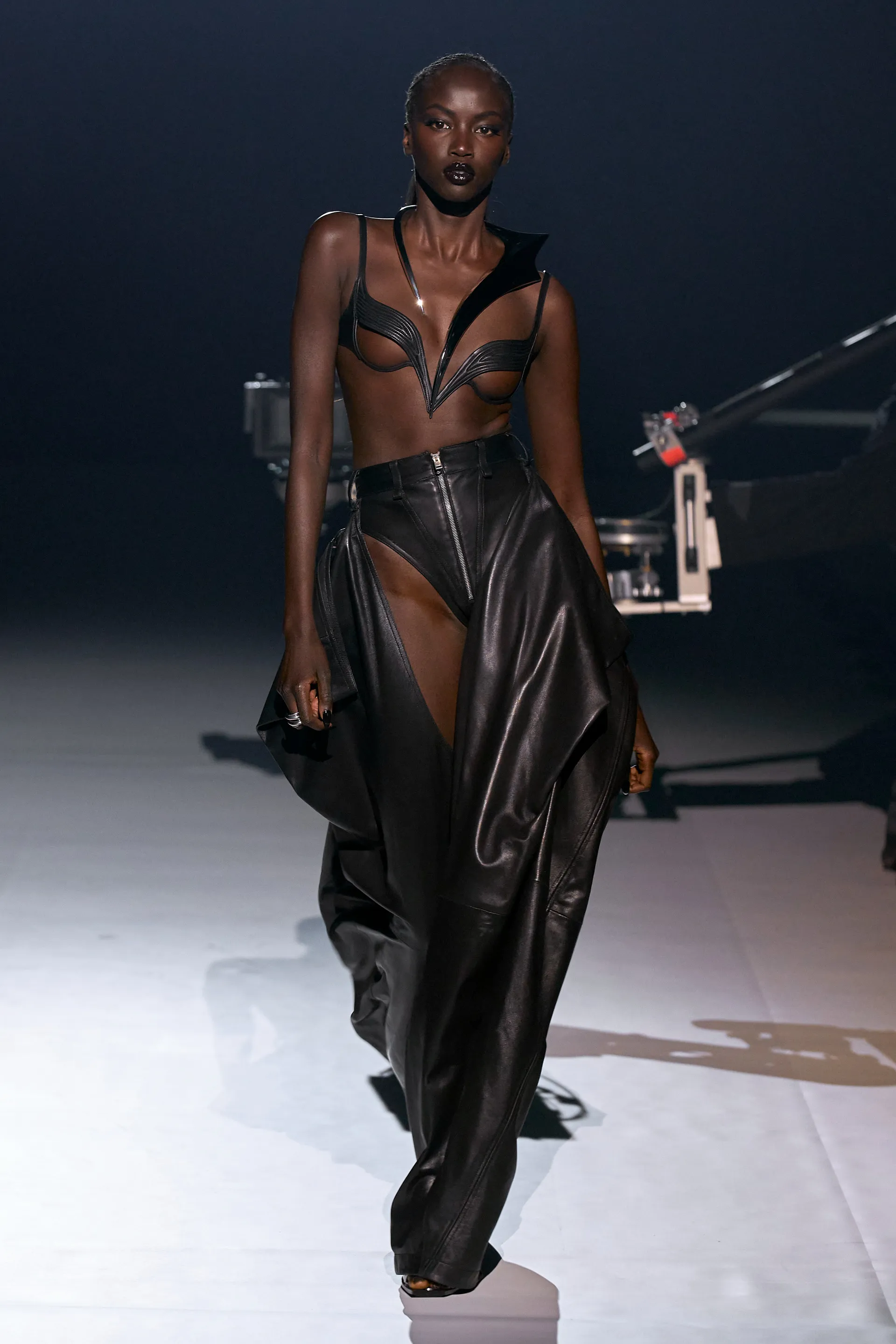
In ready-to-wear, leather usually works through clarity. The material gives familiar clothes a stronger outline and makes proportion easier to read from a distance. Even when the silhouette is simple, leather introduces enough tension between body and garment to keep the look visually active. Creases settle into sleeves, knees soften, and the surface slowly loses the anonymity of something newly made.
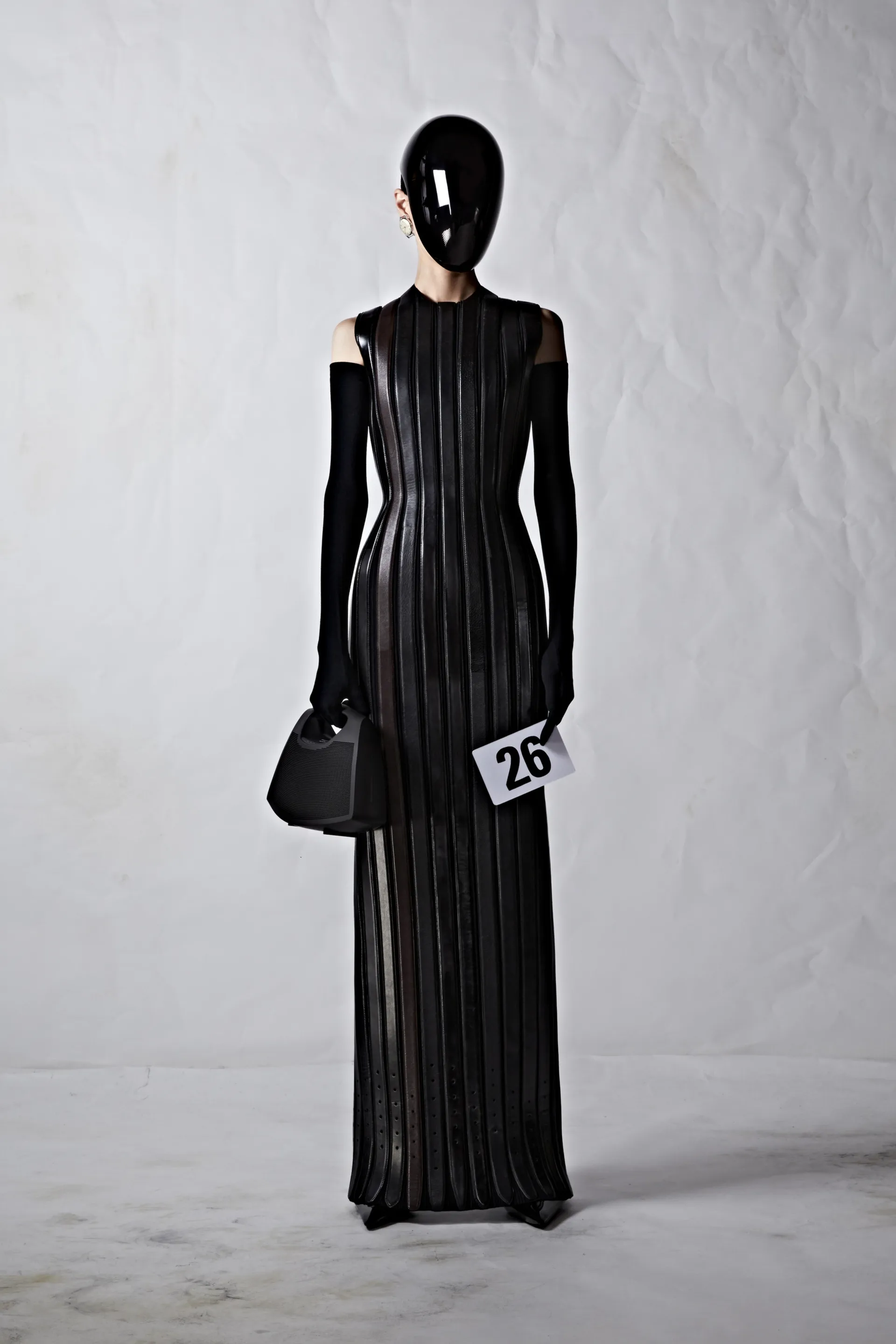
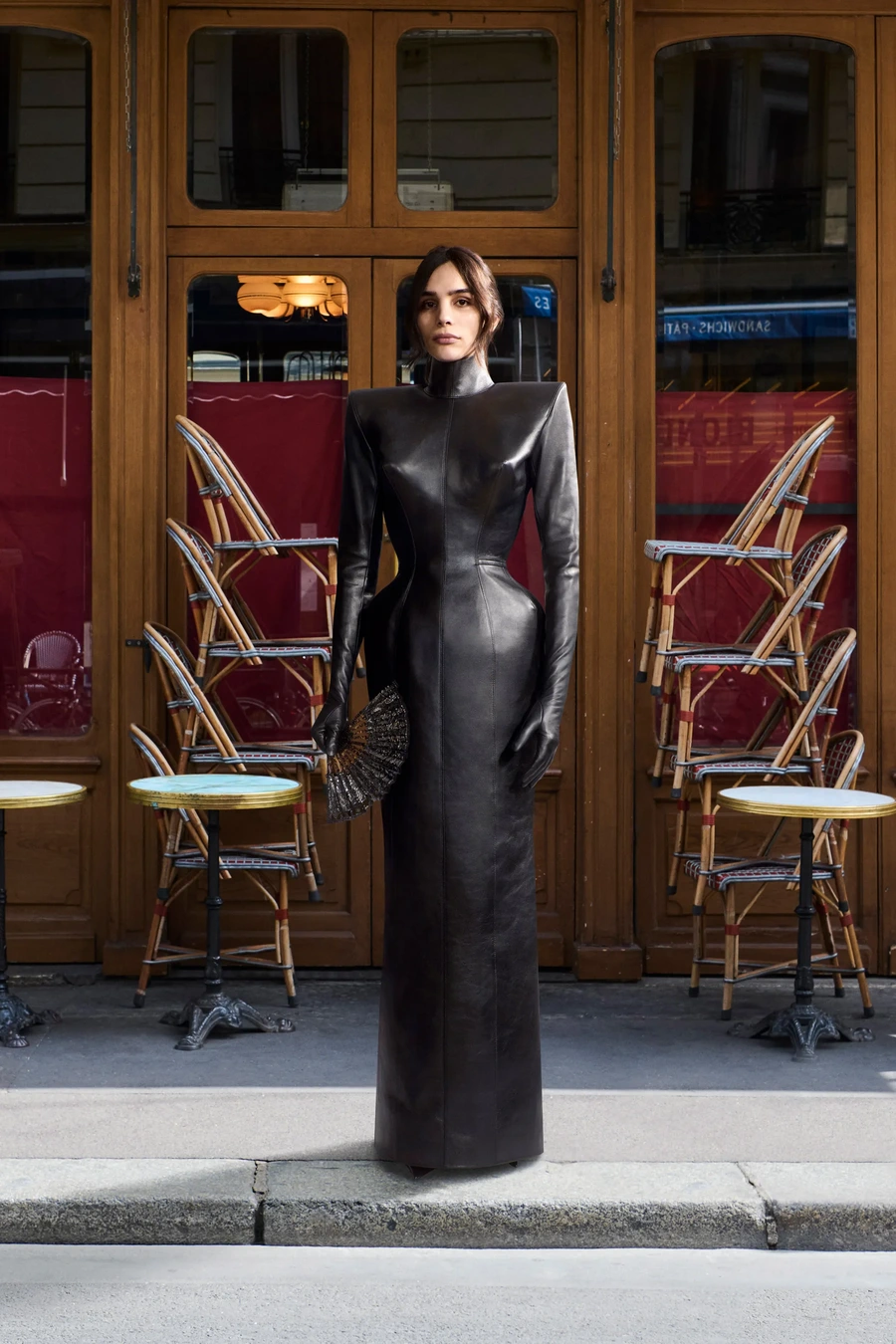
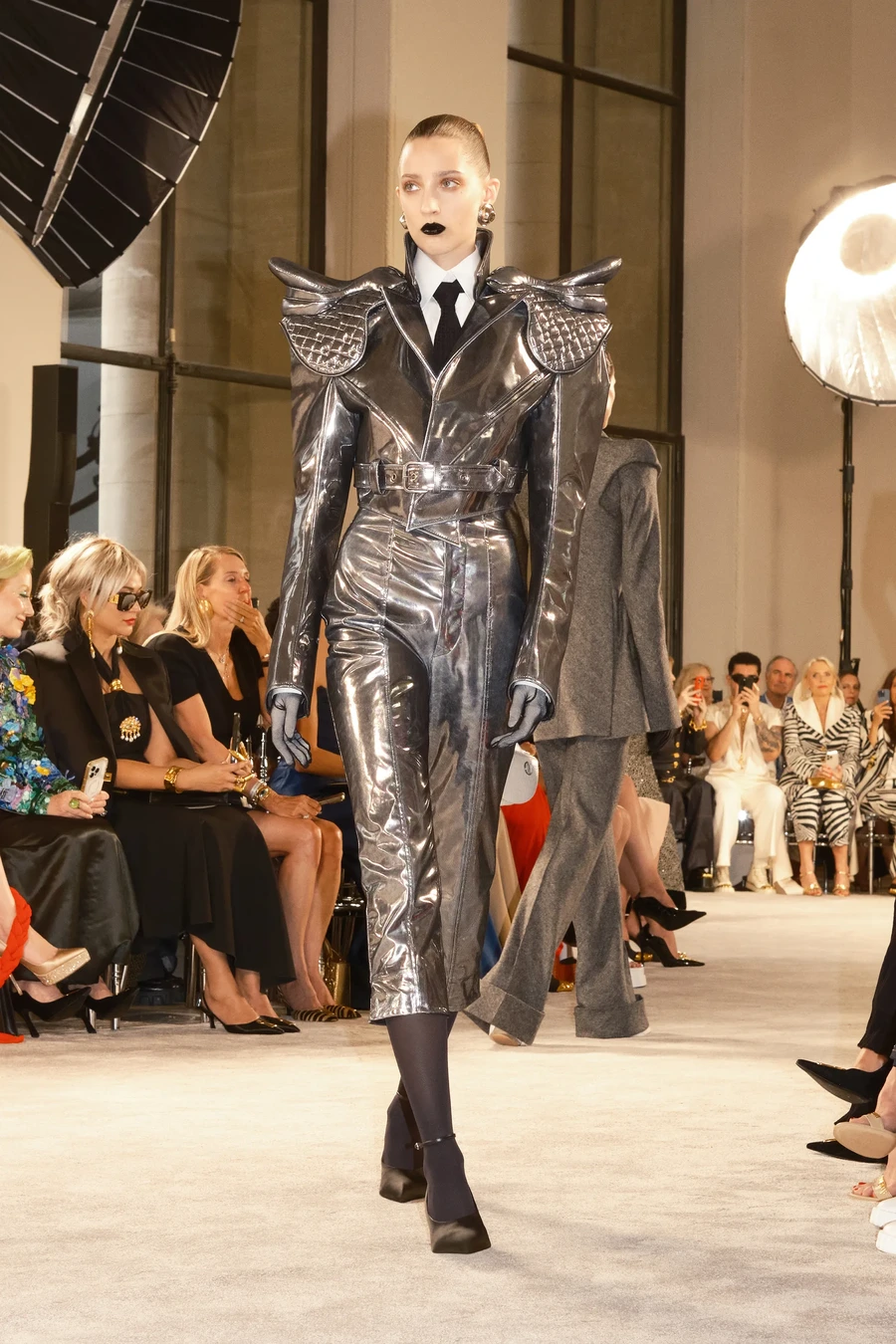
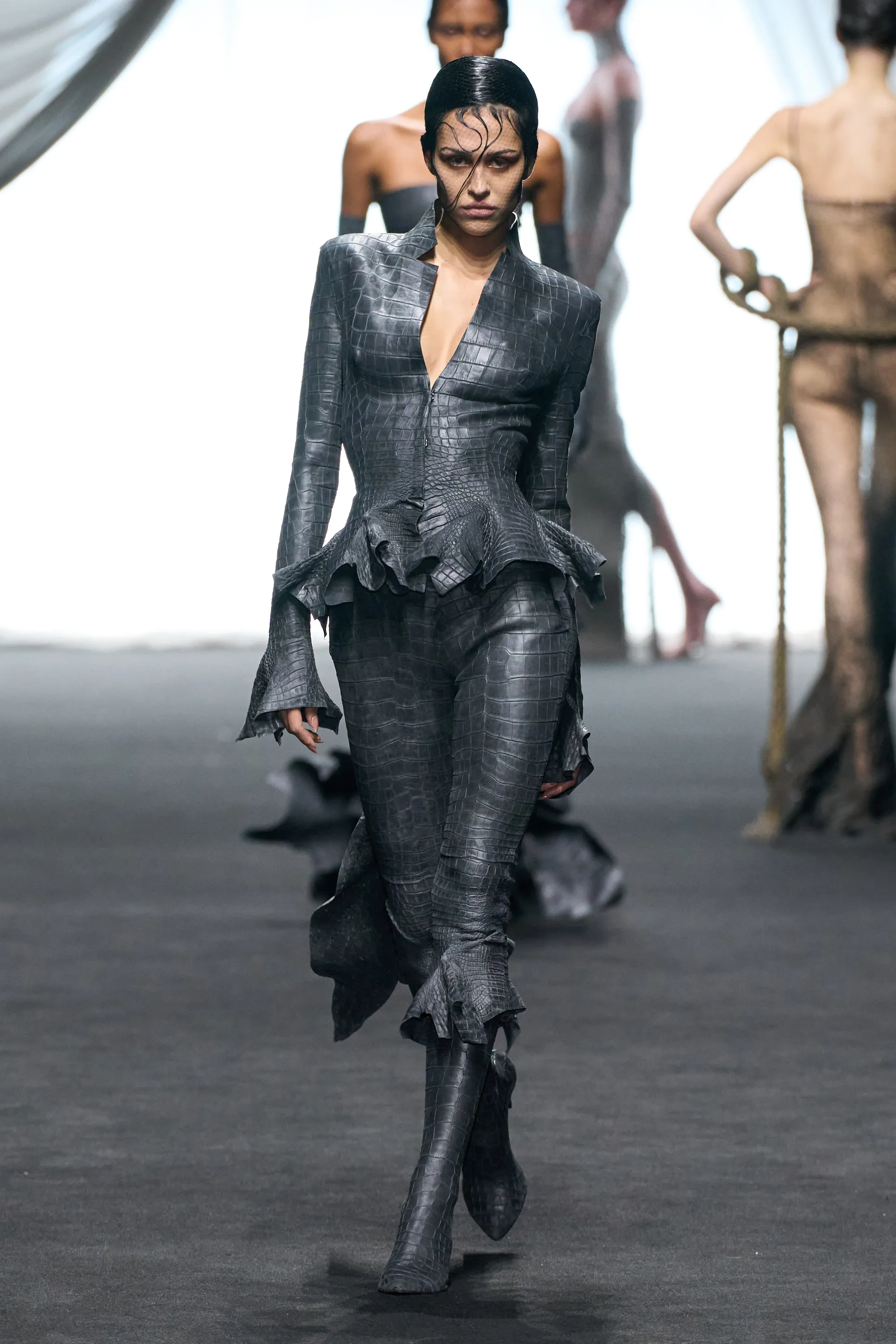
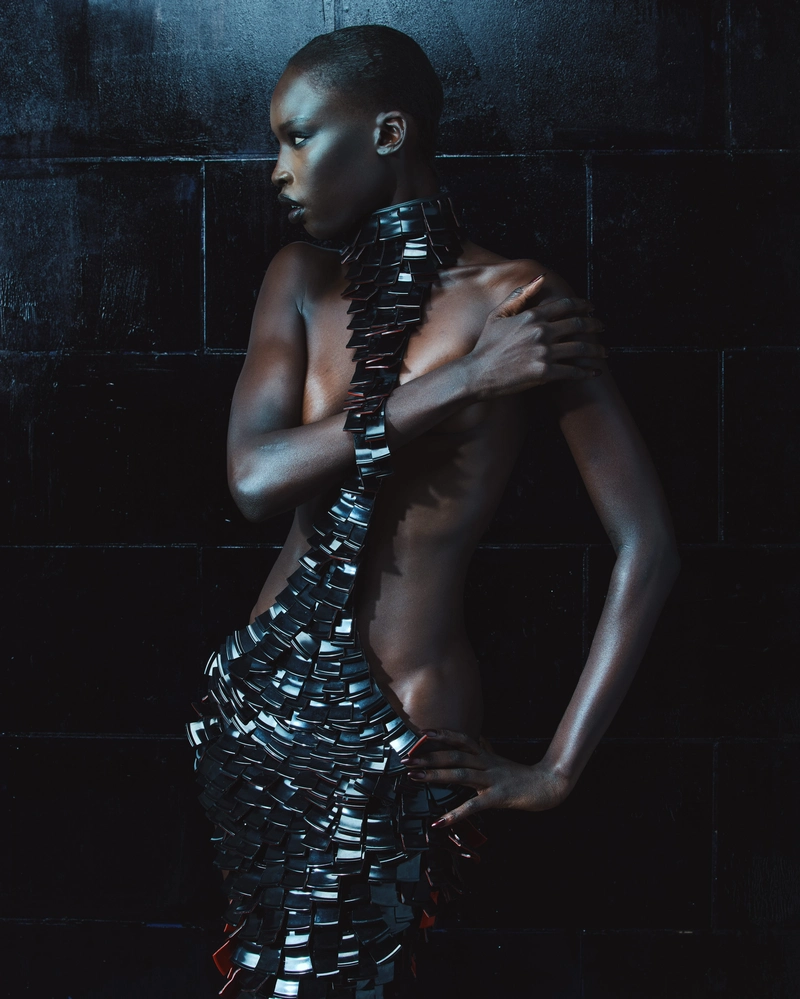
In couture, that physicality becomes more theatrical. Leather can be treated almost like a sculptural medium, shaped away from the body in one moment and pulled closely around it in the next. The interest comes from pushing against what the material appears capable of doing: making something dense look delicate, giving a rigid surface movement, or turning a skin associated with protection into something unexpectedly fragile. Construction becomes part of the spectacle because every curve, fold and edge has to negotiate the leather’s resistance.
Start with the surface and the way the leather moves. Natural grain often shows small variations in pores and texture, while heavily corrected leather tends to look more uniform. Flex the material gently and notice how it creases, whether the surface feels overly coated, and whether the weight suits the garment it has been used for.
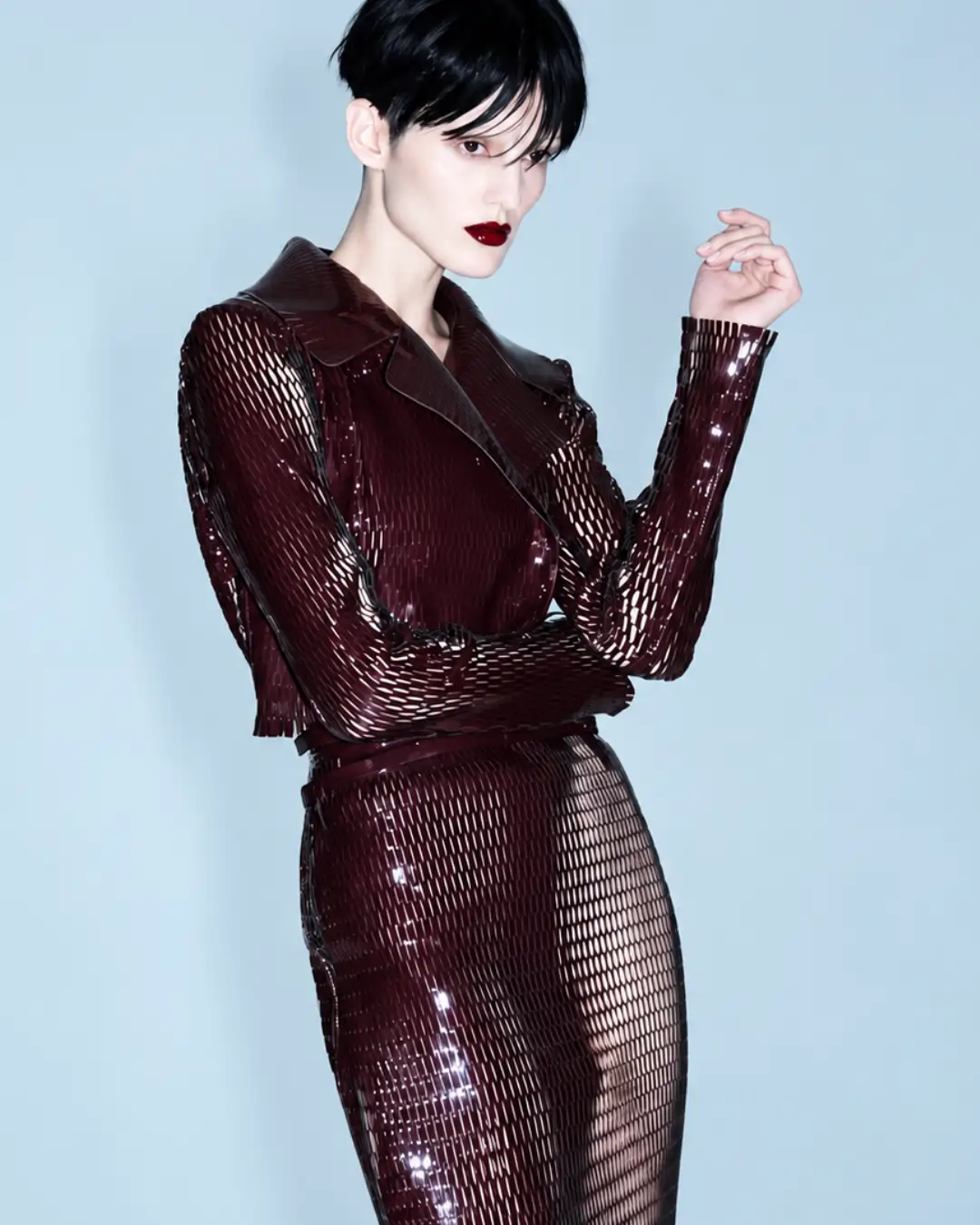
When buying, match the leather to its purpose. Soft lambskin suits clothing that needs movement, while firmer leather works better for structured bags, belts or outerwear. Construction matters just as much as the material itself, so check stitching, lining and stress points around pockets, straps and fastenings.
Care should stay simple. Keep leather away from prolonged moisture and direct heat, condition smooth leather only when it starts to feel dry, and let wet pieces dry naturally. Suede and nubuck need specialist brushes, while patent leather should be stored carefully to avoid colour transfer.
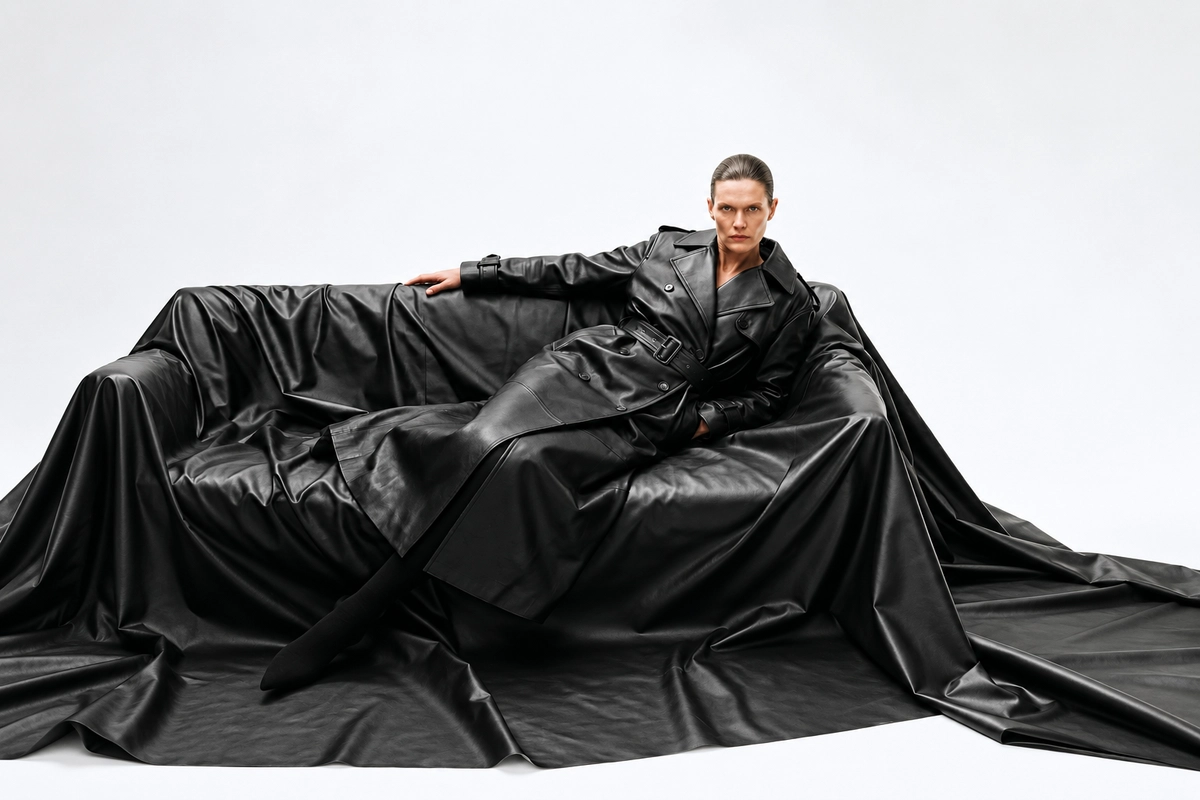
Good leather usually needs less intervention than people expect. Its surface is meant to change slowly with wear, so maintenance works best when it protects that process instead of constantly trying to erase it.
Over time, good leather starts to feel less like a finished surface and more like something still in progress. The folds deepen where the body moves most, the colour settles unevenly, and familiar points of contact slowly become visible. That quiet accumulation of wear is part of what gives leather material its lasting pull: the object keeps changing long after the design itself is complete.
Advertisement