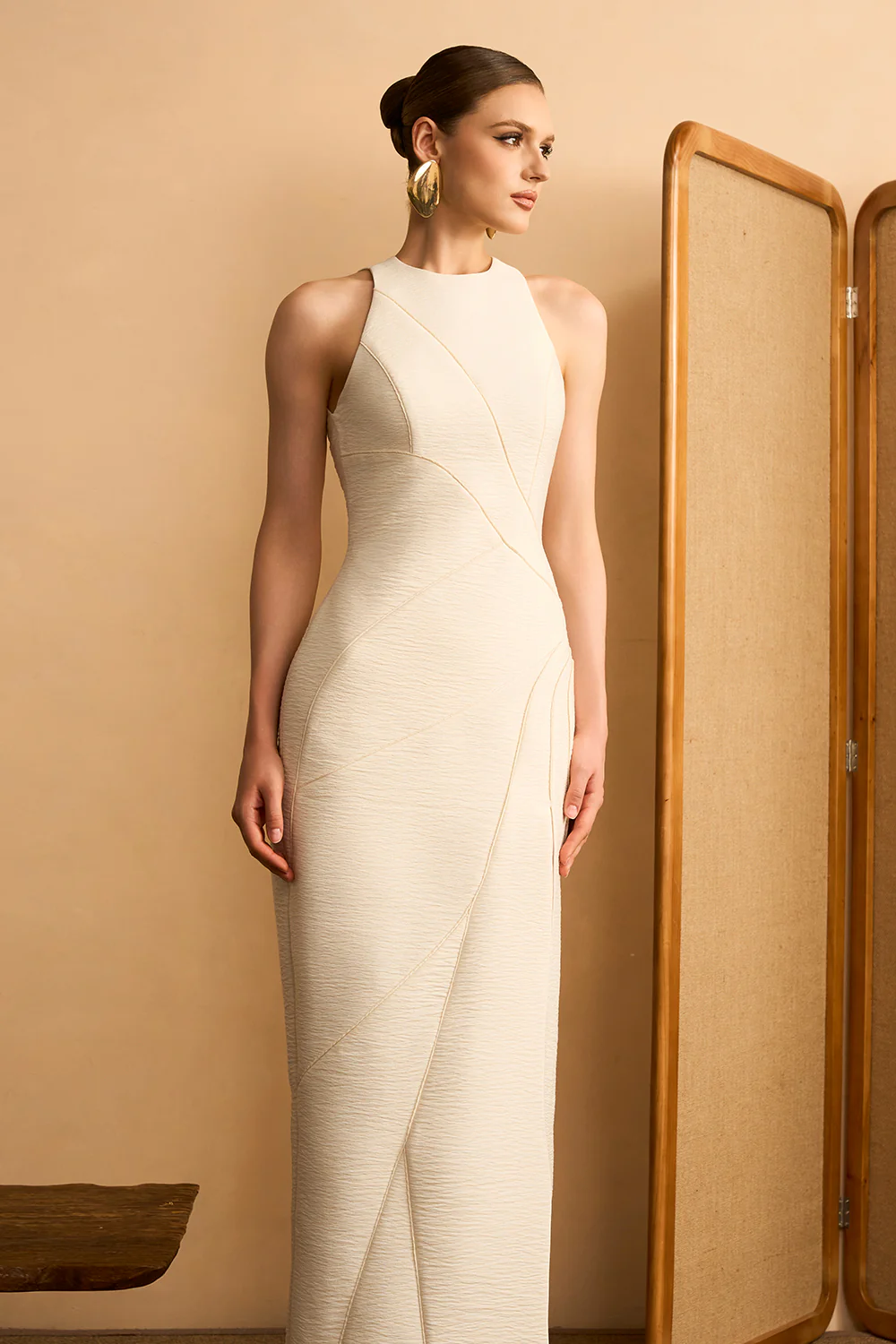
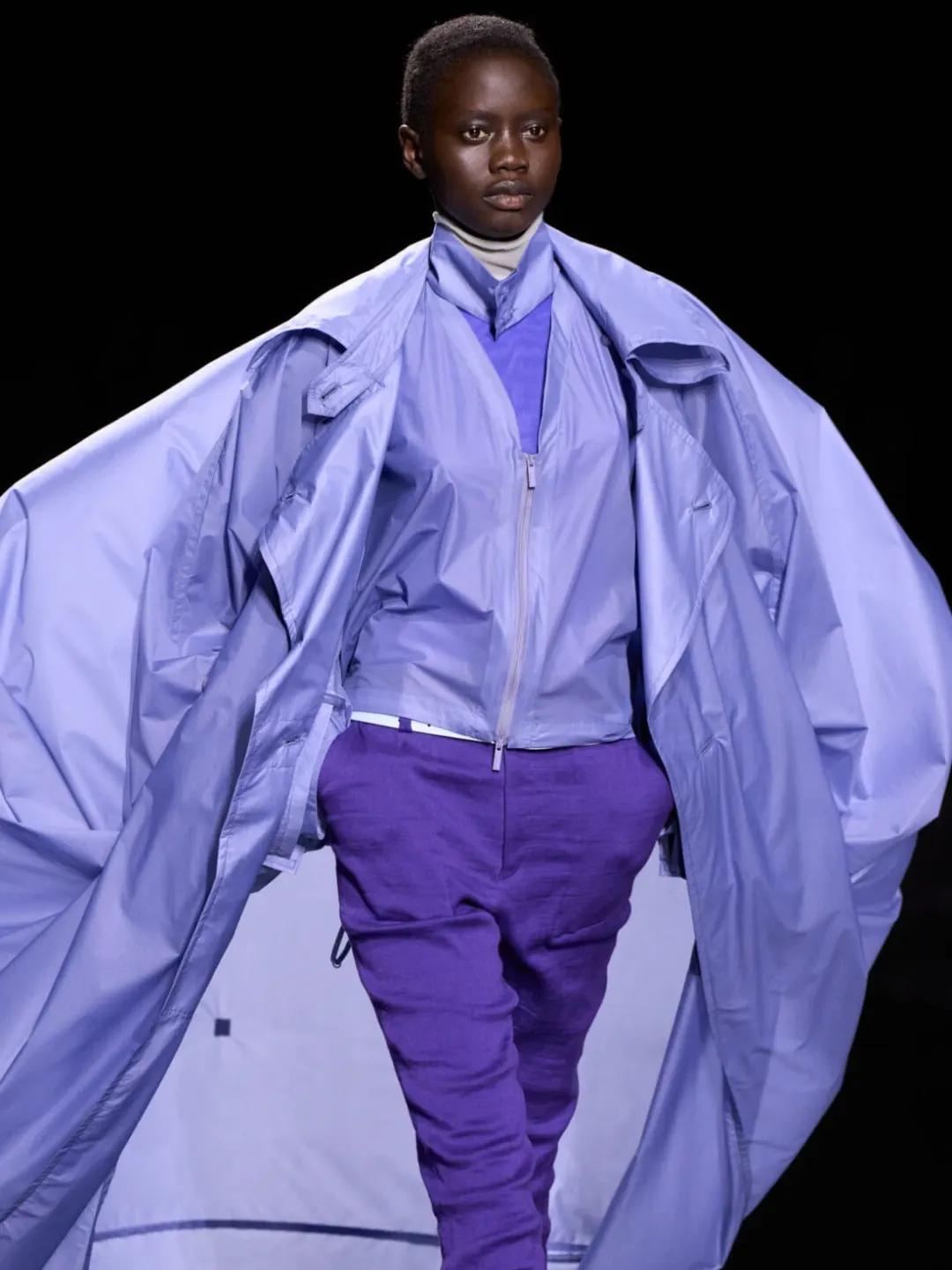
Quilted fabric carries warmth in every stitched hollow, as though the cloth remembers every hand, winter, and shelter that shaped it.
Quilted Fabric: The Earthbound Art of Quiet Strength
Quilted fabric carries warmth in every stitched hollow, as though the cloth remembers every hand, winter, and shelter that shaped it.
July 23, 2026
Advertisement
Advertisement


Open the pages of any fashion archive, and the recognizable appearance of quilted fabric immediately catches the eye. Soft, raised areas divided by precise lines of stitching create geometric grids, parallel channels, and elaborate decorative patterns. This material serves multiple purposes, moving far beyond a warm, padded medium meant exclusively for winter jackets.
Quilted fabric provides vital thermal insulation, bodily protection, architectural volume, structural support, and stunning surface decoration. Quilting represents the active technique of joining the materials. Quilted fabric identifies the finished, layered textile itself. Quilting fabric refers to the flat cloth selected specifically for traditional quilt-making.
What Is Quilted Fabric? Understanding Its Definition
Quilted fabric exists as a textile construction formed by joining two or more layers together using repeated stitching, bonding, or another controlled attachment method. The standard structure features three distinct layers working in absolute harmony.
A visible face fabric sits on top, presenting the primary aesthetic. A middle layer of batting, wadding, padding, or insulation provides the voluminous core. A backing fabric or lining completes the reverse side, resting closest to the wearer. Certain variations bypass conventional padding entirely. Designers create these specific types by stitching several layers of cloth together, relying on the bulk of the combined textiles to achieve a beautifully padded effect.
To understand this material fully, one must view it separately from elemental textile categories. It exists distinctly outside fiber classifications like cotton, wool, silk, or polyester. It also remains entirely separate from weave structures such as satin, twill, plain weave, or jacquard.
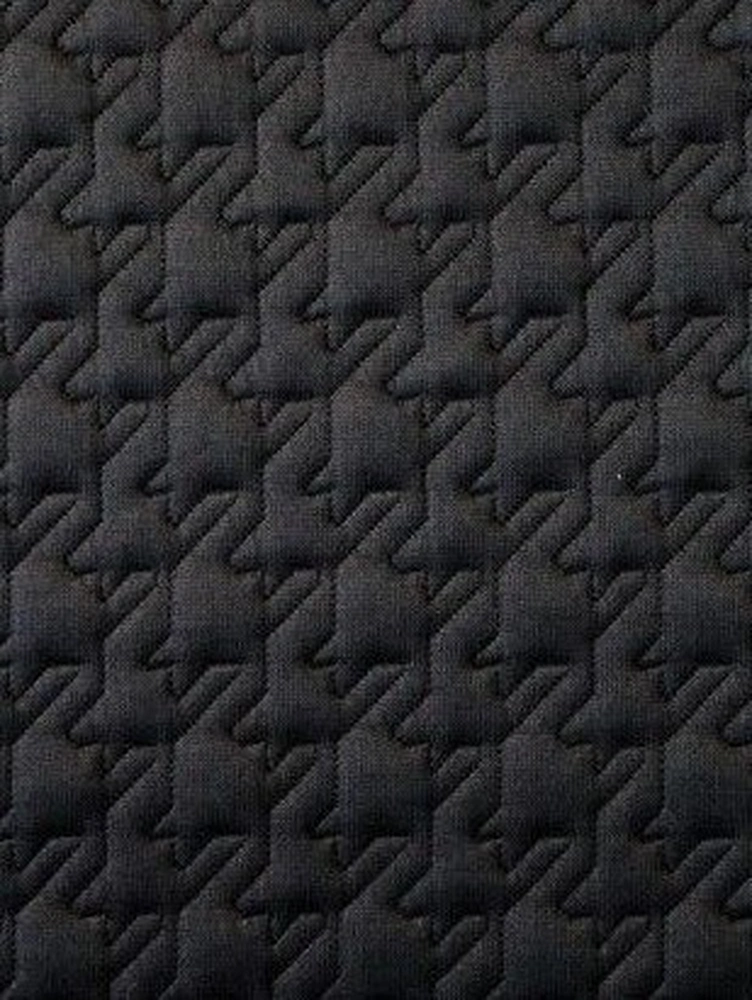
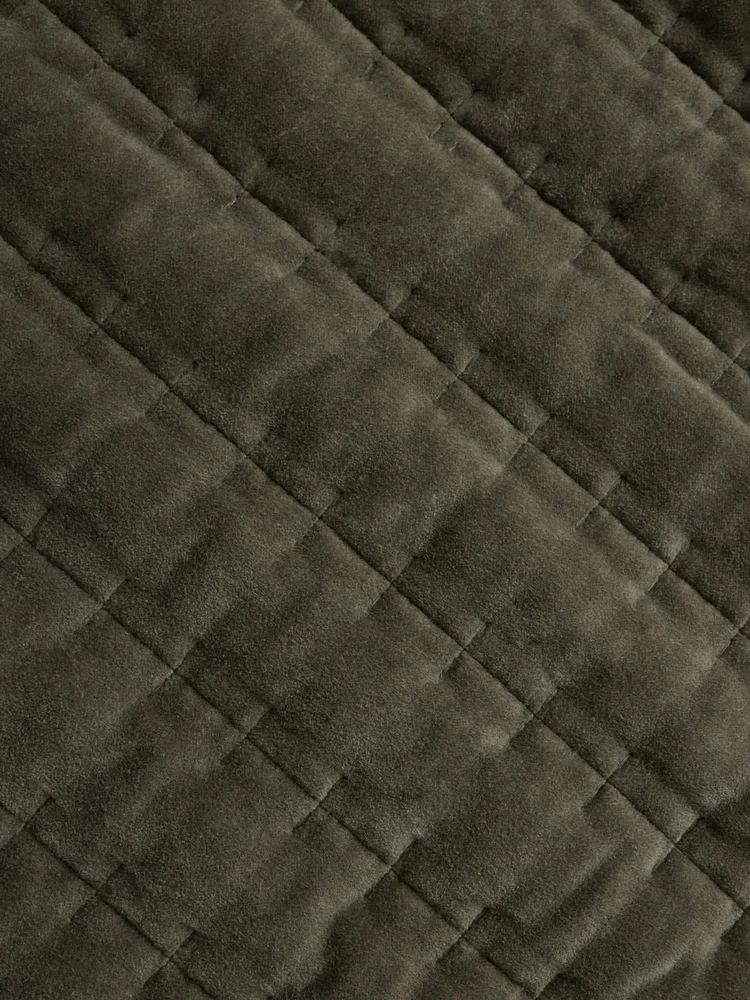
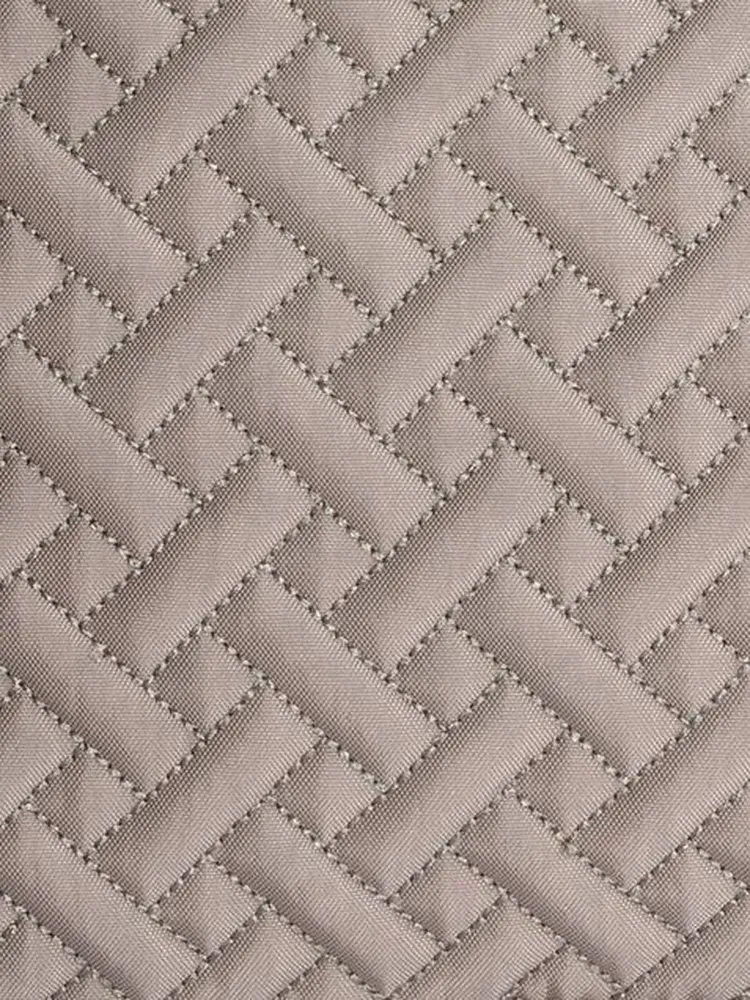
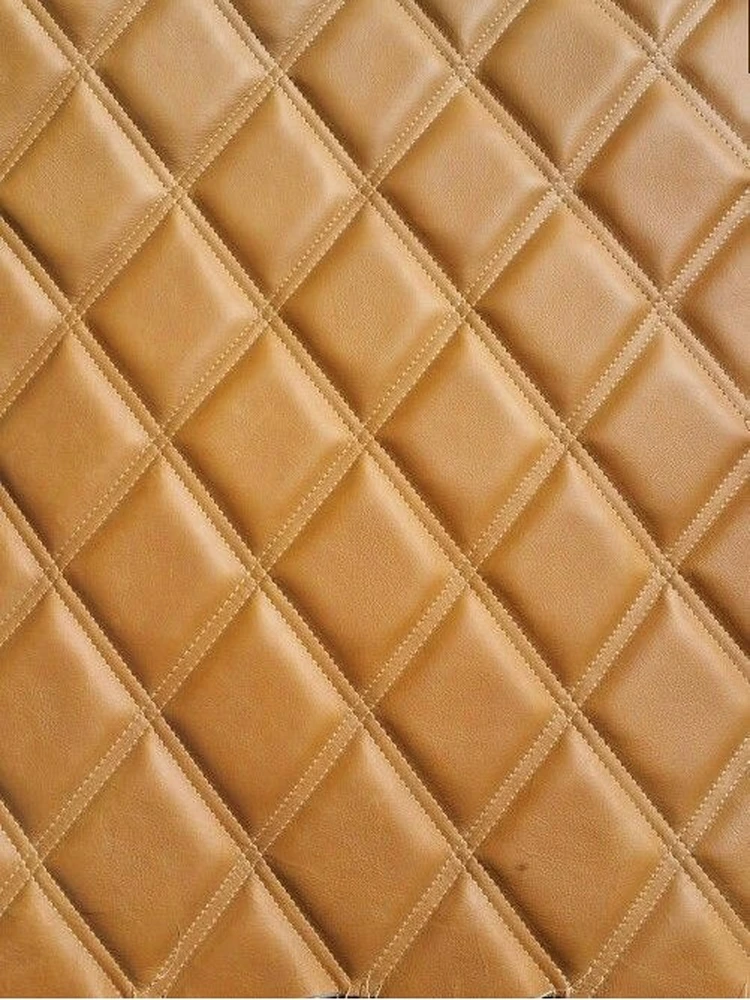
Almost any suitable material possesses the potential to become quilted fabric. Creators frequently utilize cotton, silk, wool, nylon, polyester, denim, velvet, jersey, leather, and synthetic leather to craft their pieces. The finished qualities depend entirely on the specific combination of face material, padding, backing, thread, and the chosen quilting pattern.
Distinguishing quilted fabric from related terms ensures absolute clarity in fashion terminology. Quilting fabric identifies flat cloth intended for making traditional quilts. Patchwork describes a surface made by joining separate fabric pieces together at their edges. A patchwork textile may subsequently undergo the quilting process, yet patchwork and quilting remain distinct, separate processes. In a dictionary context, quilted fabric translates to a layered textile construction united by patterned stitching or bonding to create dimensional texture, thermal insulation, and structural volume.
How Quilted Fabric Is Made
Production begins by deciding the exact intended performance of the finished material. Each layer plays a highly specialized role in the final garment. The face layer determines the visible color, ambient shine, surface texture, and abrasion resistance.
Designers select this top layer to be lightweight and flexible or firm and architectural, depending on their final vision. The middle layer introduces essential warmth, softness, thickness, and volume. Makers craft this central core from polyester, cotton, wool, recycled fibers, foam, down, or highly engineered synthetic insulation. The backing layer stabilizes the entire three-part structure. This base layer protects the internal padding and creates a cleaner, smoother inner surface for the wearer.
Makers arrange these elements carefully into a fabric sandwich. The layers require secure stabilization before the stitching process begins, ensuring they remain perfectly smooth, aligned, and entirely free of wrinkles.
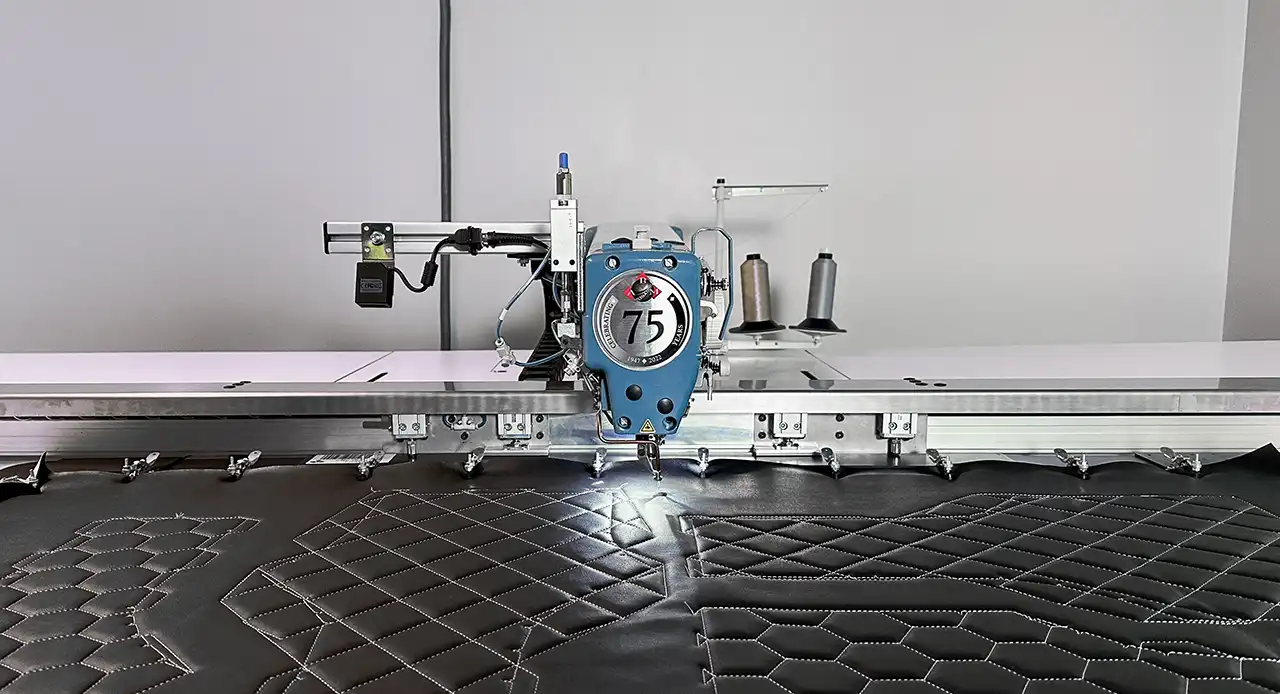
Industrial manufacturers typically quilt continuous rolls of yardage prior to any garment cutting. Conversely, couture ateliers frequently quilt individually cut garment panels so the motifs align precisely with the bespoke design of the piece.
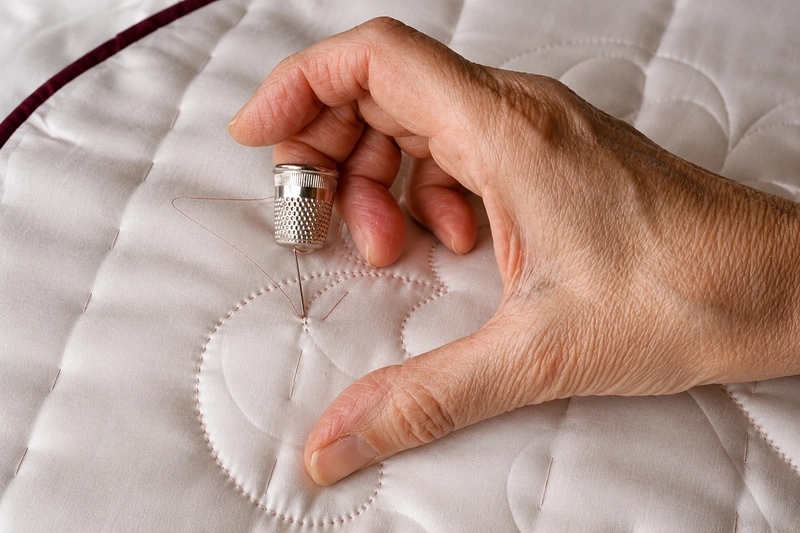
The main production methods span centuries of technological evolution. Artisans execute hand quilting with tiny, precise running stitches, valuing the human touch. Practitioners utilize domestic or industrial machine quilting for greater speed and tension control. Multi-needle quilting machines sew several parallel rows simultaneously, expediting commercial production.
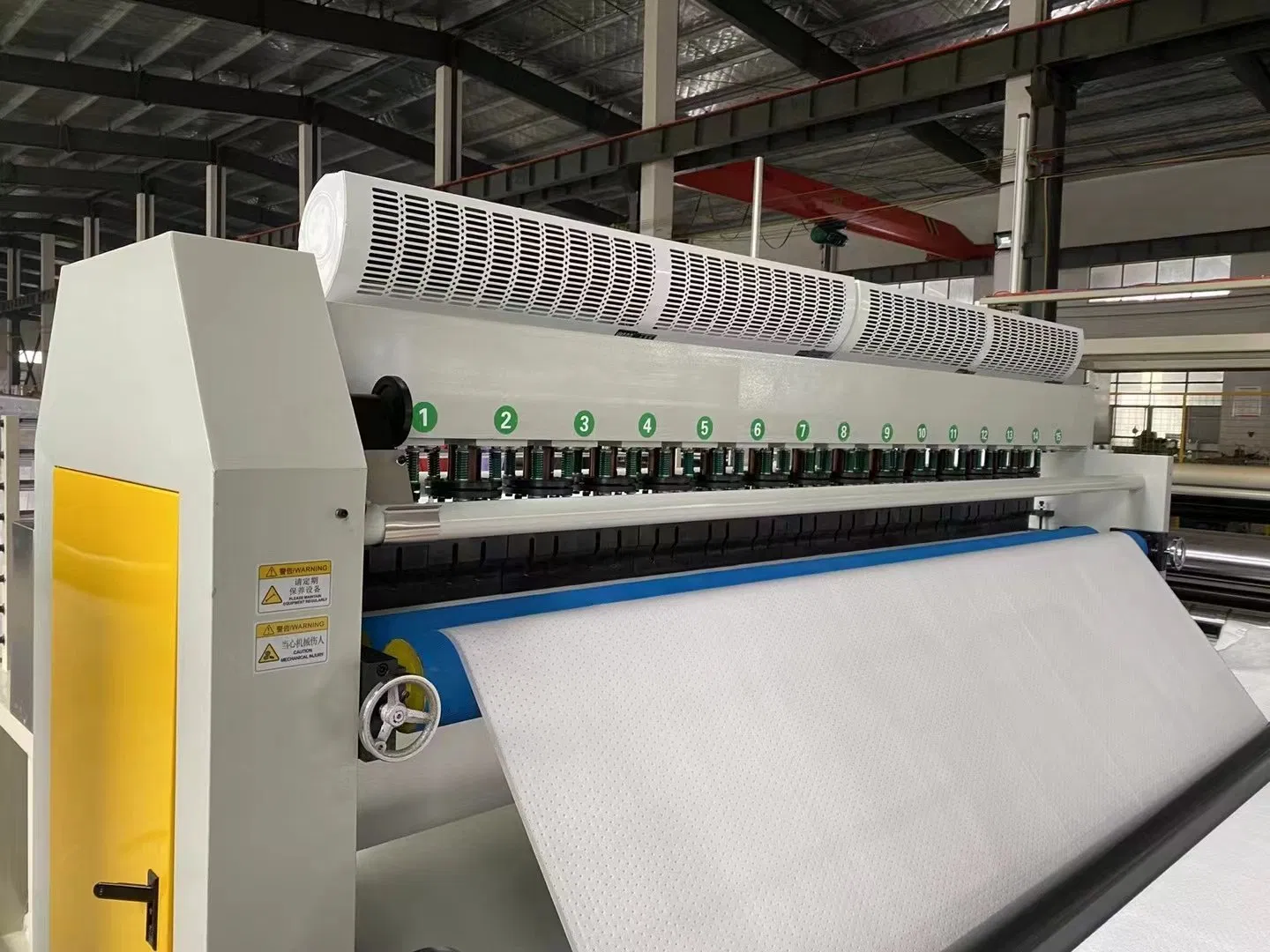
Computerized quilting executes complex, repeating geometric patterns flawlessly across massive rolls of cloth. Free-motion quilting allows the creator to guide the fabric manually under the needle, producing irregular, pictorial, or wildly curved designs. Ultrasonic quilting bonds synthetic layers using high-frequency energy, replacing conventional thread completely.
Each stitch or bond compresses the padding along the determined line. The spaces between the stitching remain raised, creating the famously dimensional appearance of the material. Pattern scale directly alters the physical result. Small cells create a flatter, firmer surface. Large cells preserve maximum loft. Dense stitching reduces bulk, while wide spacing creates a softer, fuller, highly voluminous effect.
What Are the Main Characteristics of Quilted Fabric?
The three-dimensional surface stands as the most recognizable characteristic of this material. The raised sections catch ambient light beautifully, while the stitched areas create deep shadows and recessed lines. This technique decorates a plain material brilliantly, relying exclusively on structural manipulation to replace print, embroidery, beads, or appliqué.
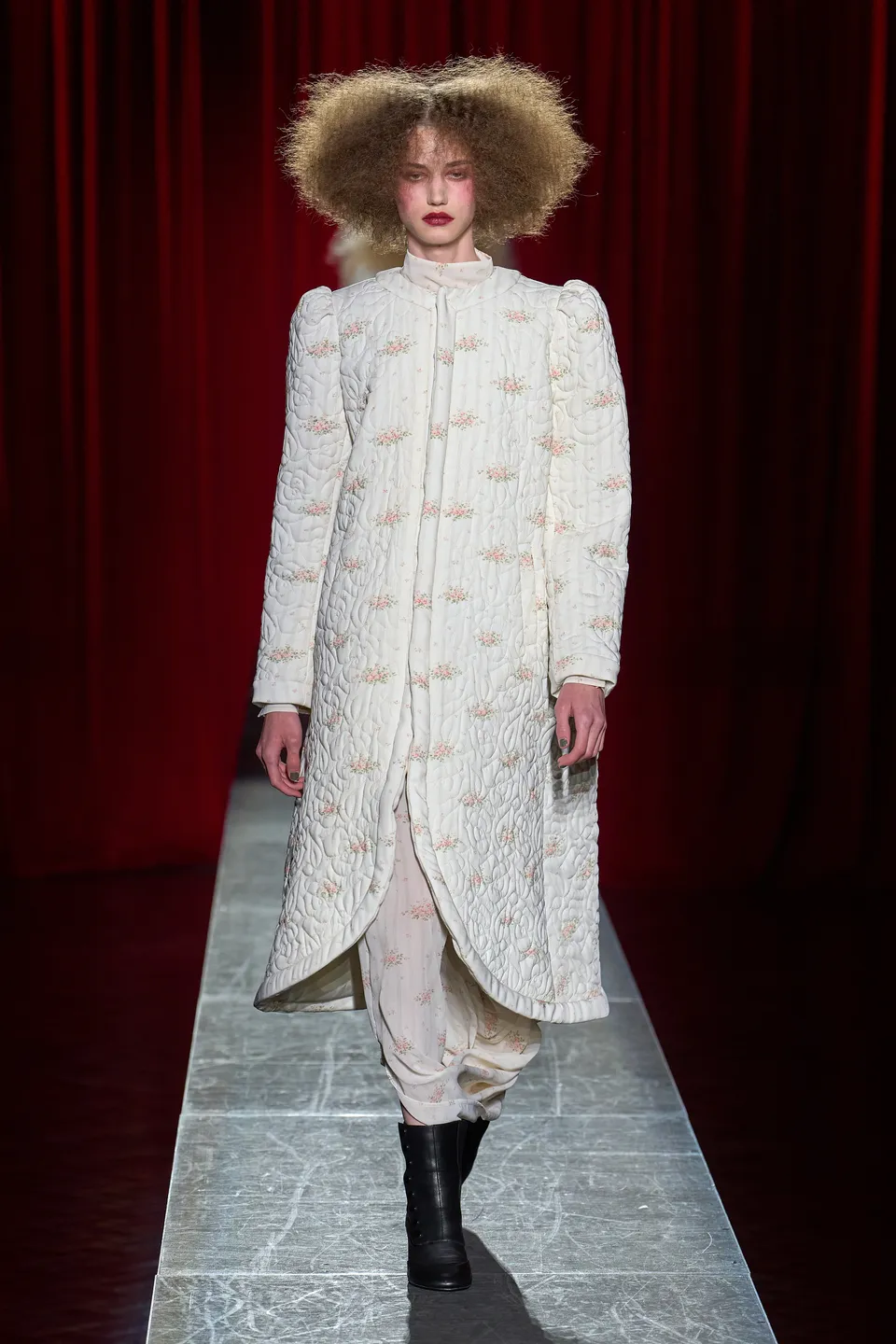
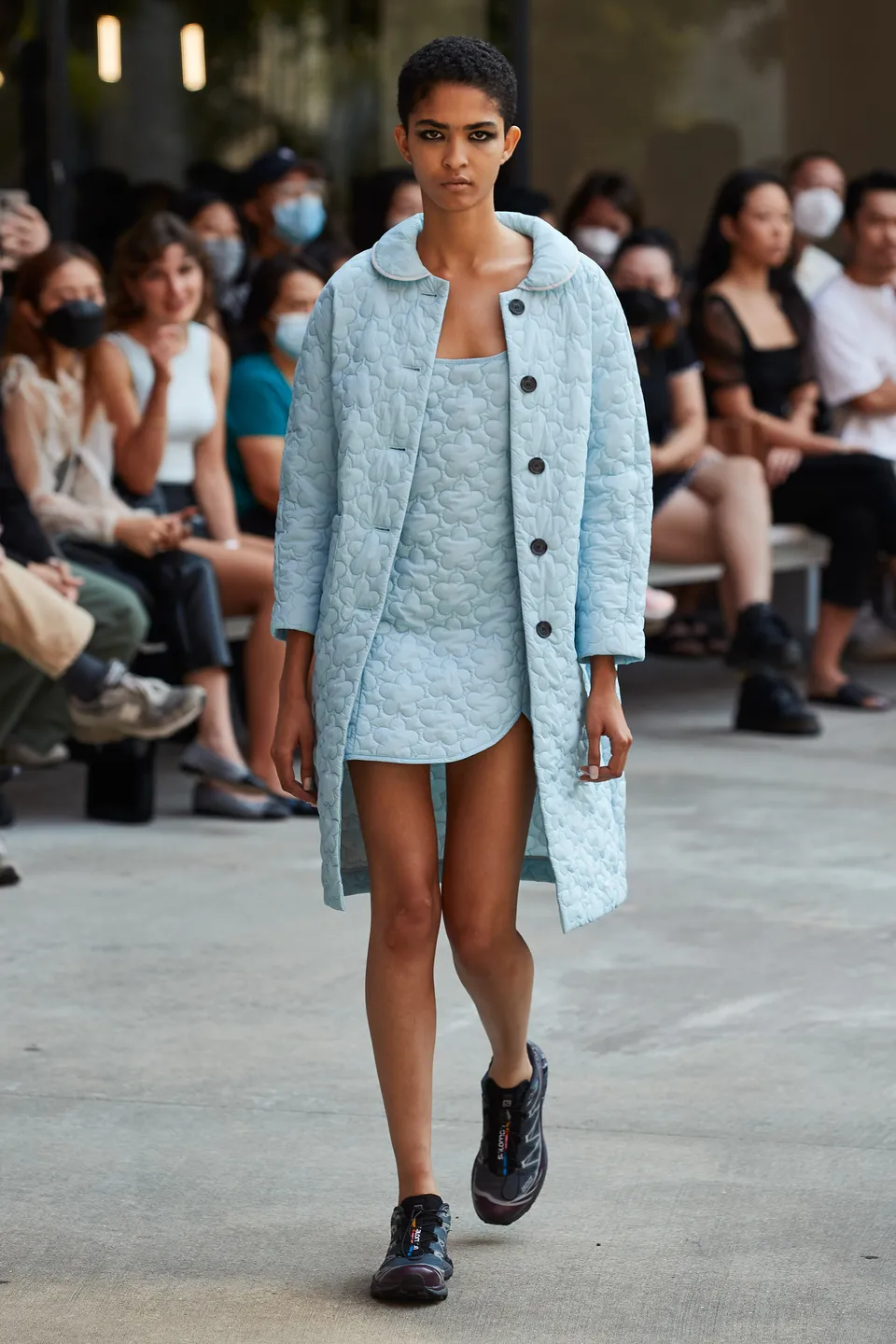
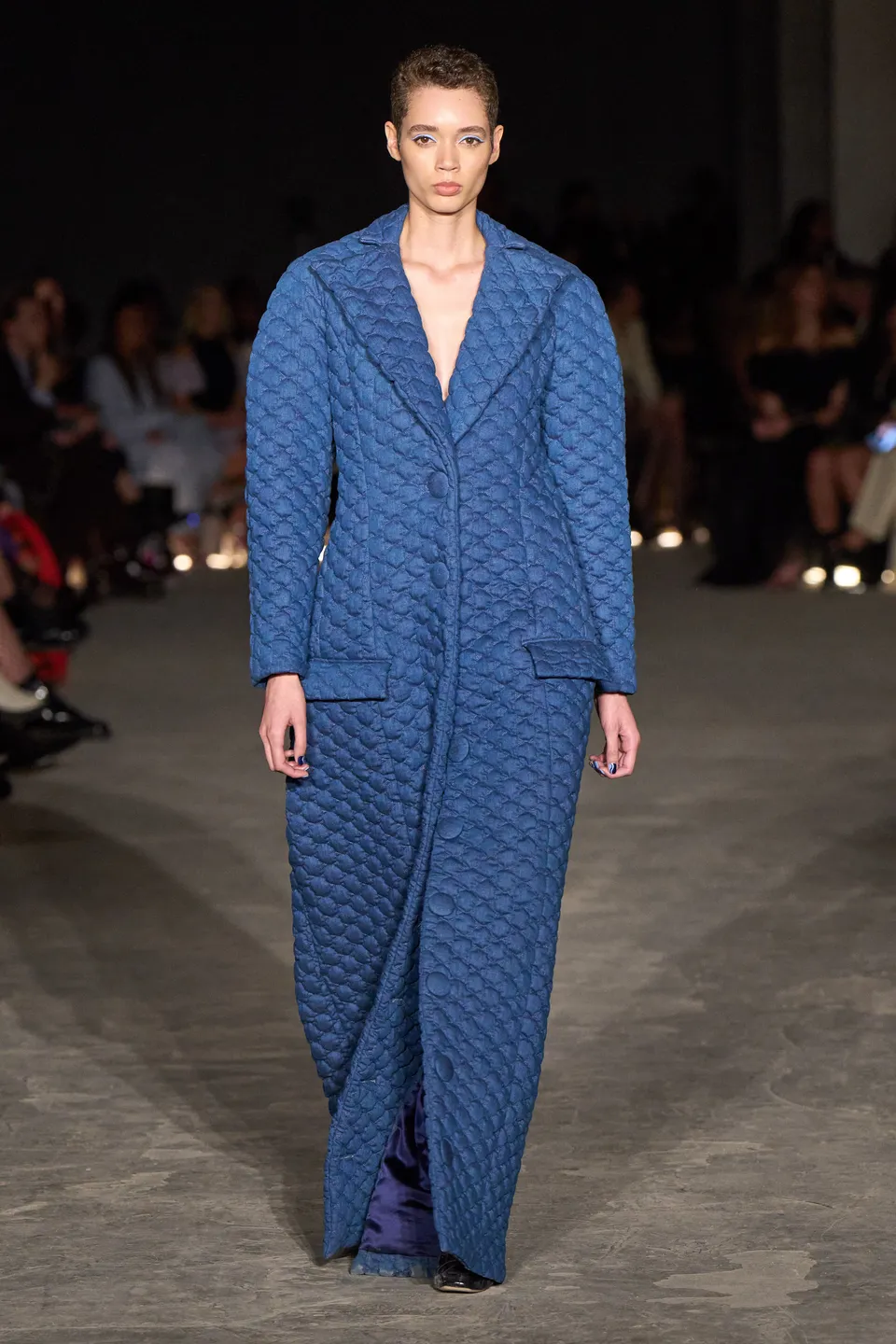
Insulation remains a primary functional characteristic. The padding traps air between the layers, and this trapped air slows heat transfer effectively. The level of warmth varies directly according to the chosen filling, the overall thickness, and the stitch density. Creators design many lightweight versions specifically for surface texture, material reinforcement, or visual structure, prioritizing these elements over winter protection.
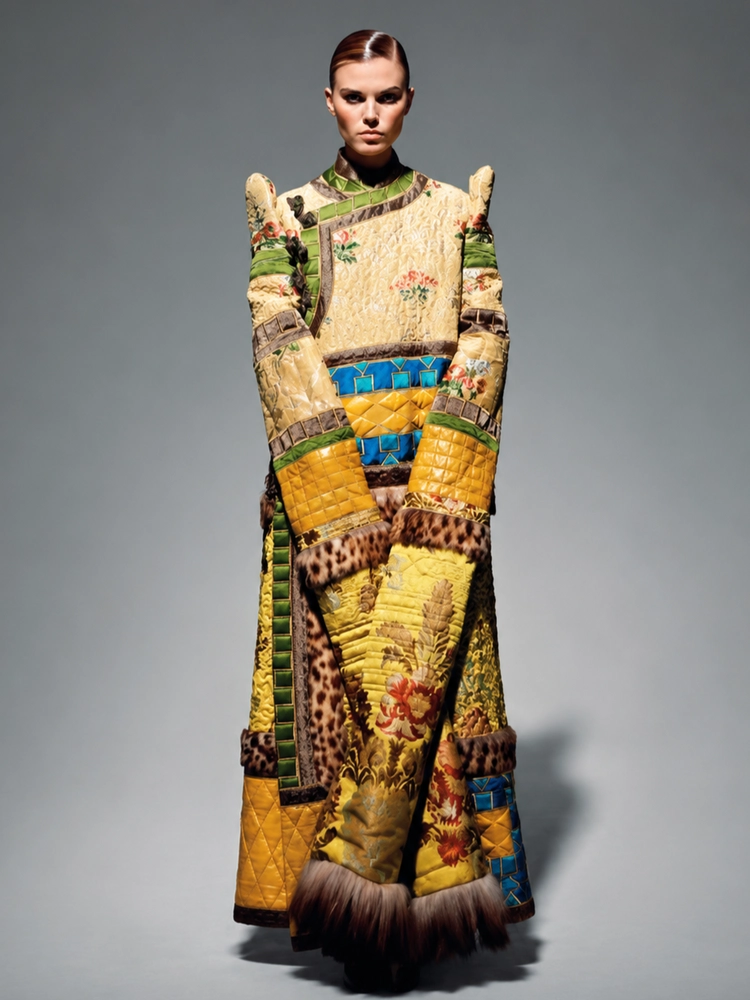
This fabric offers a brilliant balance between softness and control. The padding creates luxurious, pillowy cushioning. Simultaneously, the stitching keeps the filling securely anchored in its designated place. Quilting inherently increases material thickness, adding substantial volume to any design. Designers use this characteristic to enlarge shoulders, expand sleeves, widen skirts, or amplify the entire silhouette dramatically. Padded layers alter the behavior of the original textiles. A highly fluid face fabric becomes significantly more structural when quilted.
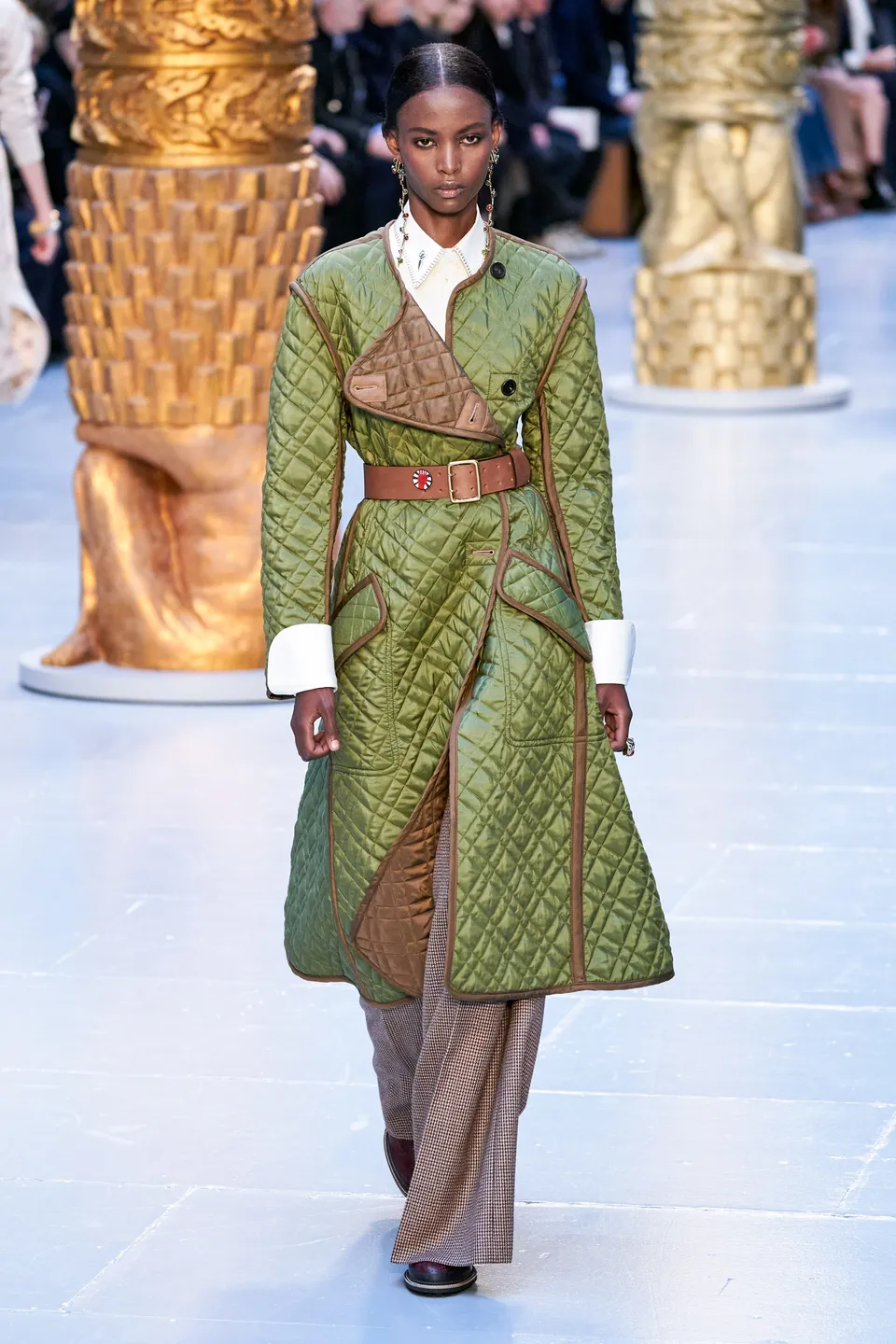
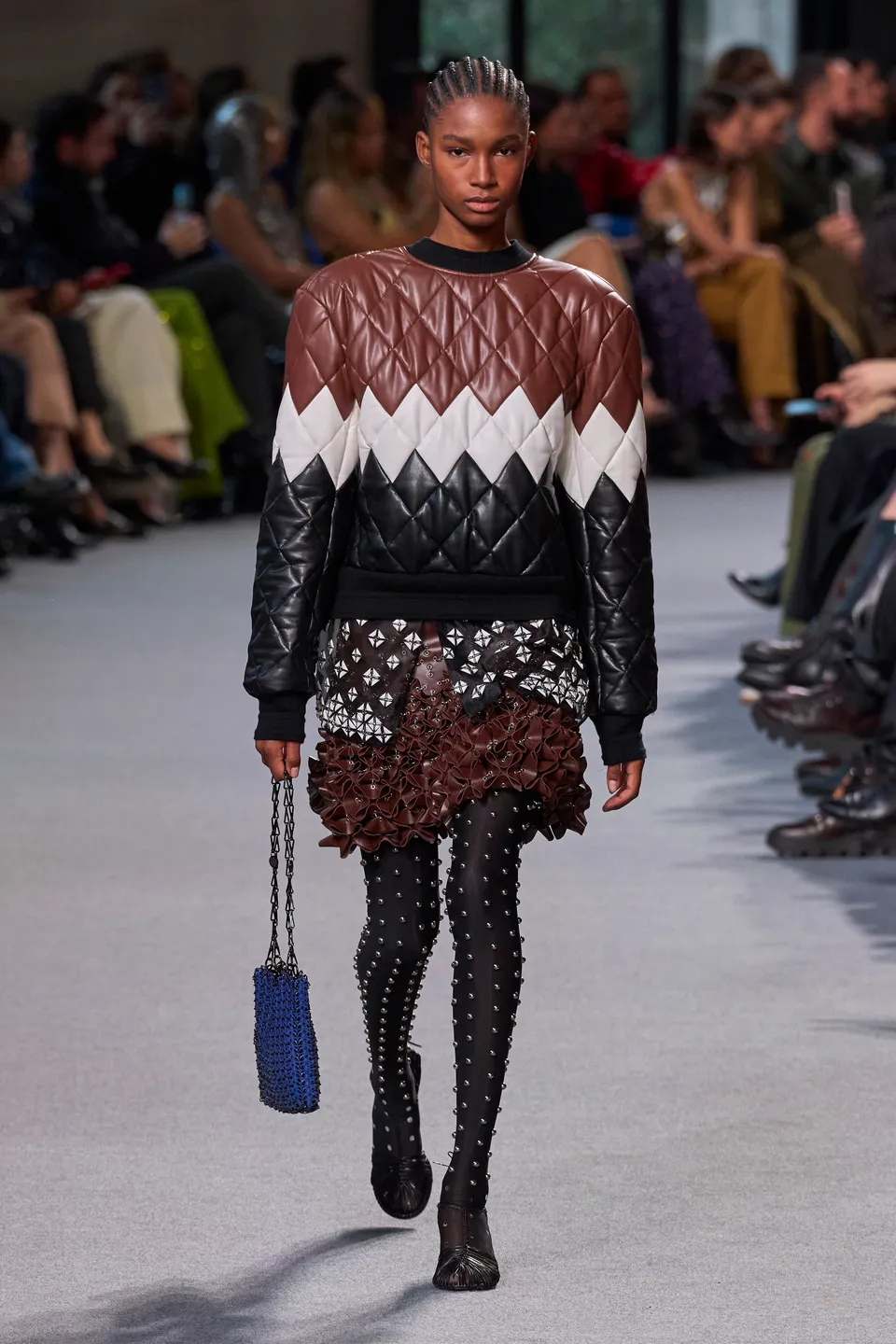
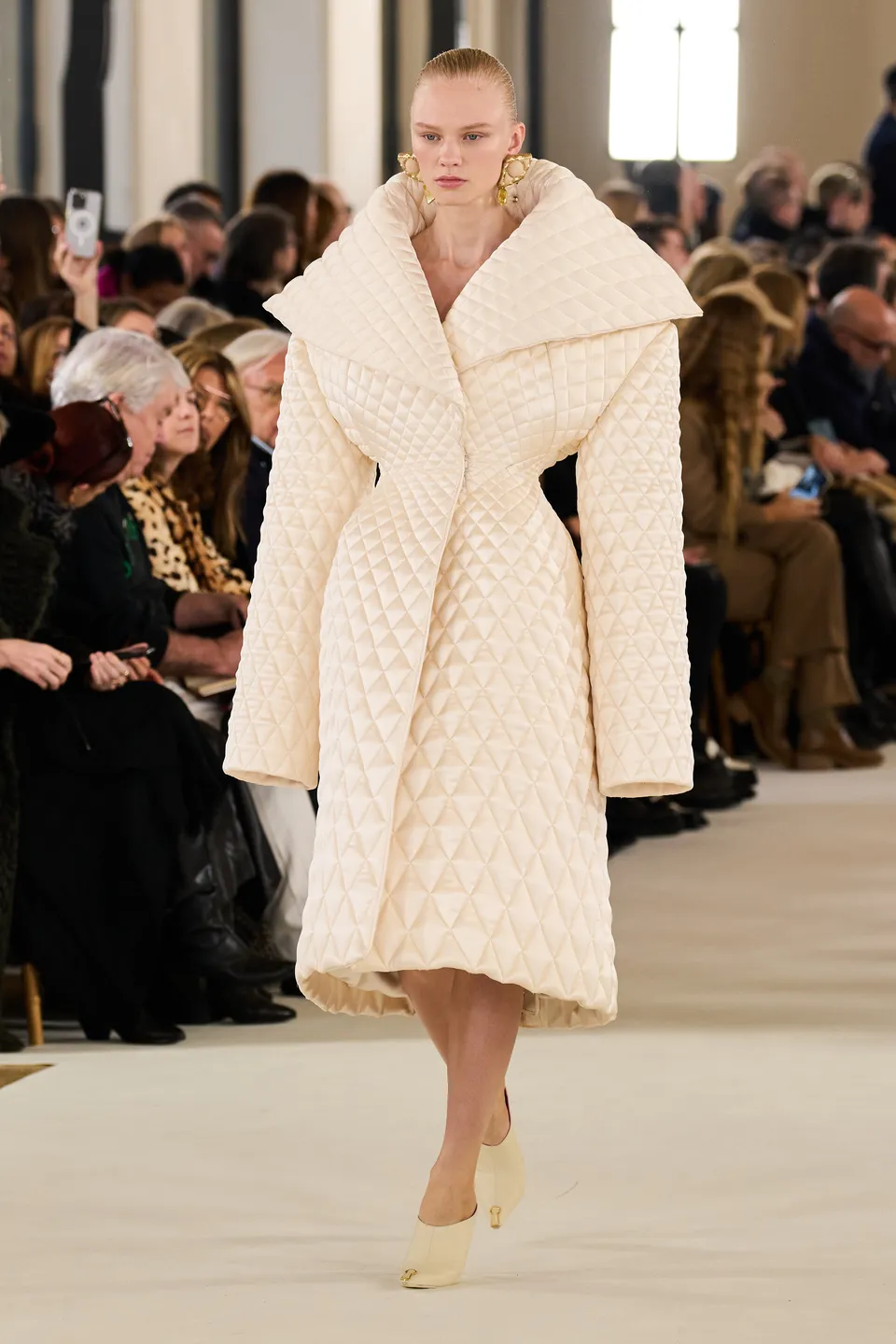
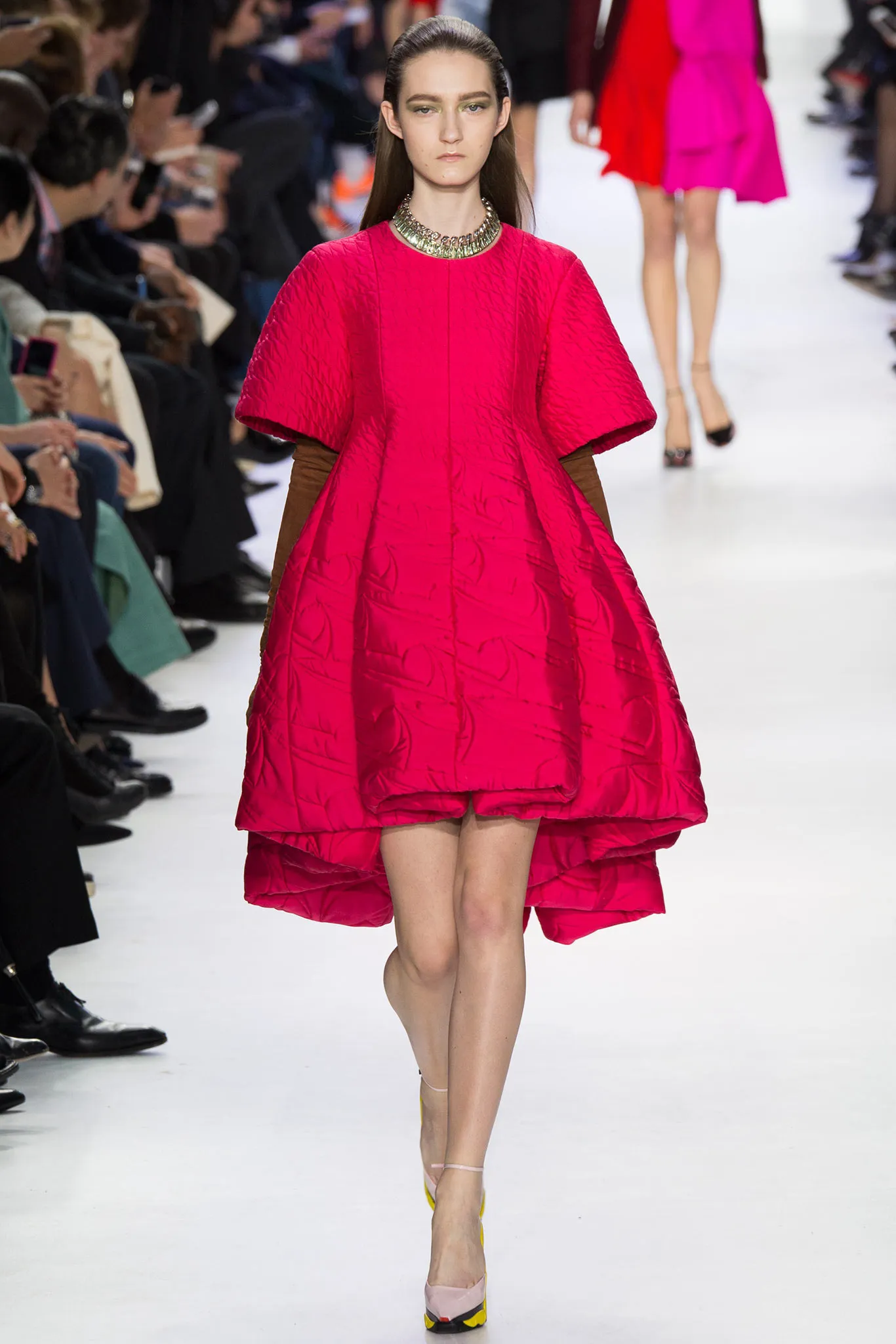
Materials like leather or denim transform into firm, sculptural mediums. The resulting material ranges from extremely light to wonderfully heavy. Lightweight nylon liner fabric feels airy, while dense quilted wool, velvet, or leather carries substantial, luxurious weight. Durability, breathability, resilience, and compressibility all vary based entirely on the specific material combination selected by the designer.
Where Did Quilted Fabric Come From? Its History Through Time
The technique originated simultaneously across diverse global cultures because layered and stitched textiles met universal human needs. Ancient peoples sought warmth, bodily protection, material reinforcement, comfort, and intelligent material reuse in harsh climates.
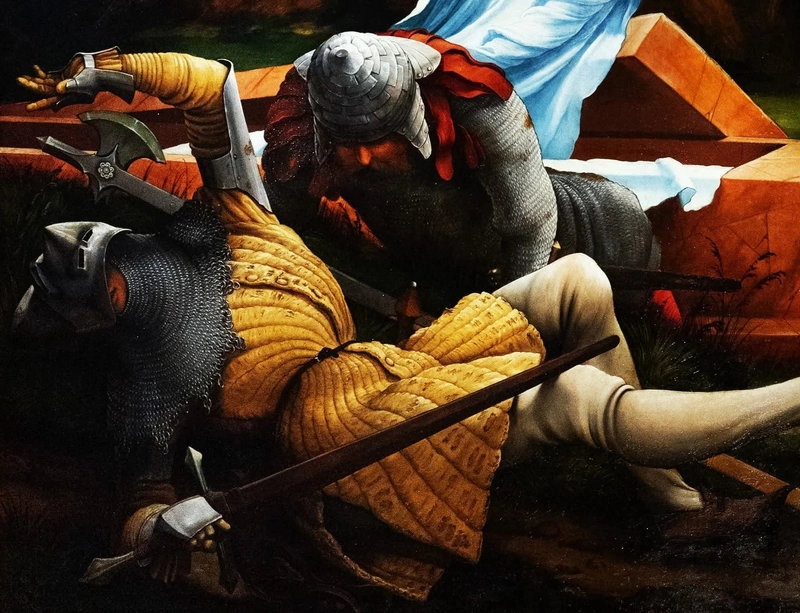
Early padded clothing served primarily as bodily armor and vital insulation. The medieval gambeson exemplifies this history beautifully. Knights wore this thick padded garment alone or beneath heavy metal armor. The gambeson demonstrates the technique functioning as vital physical protection, prioritizing defense over superficial decoration.
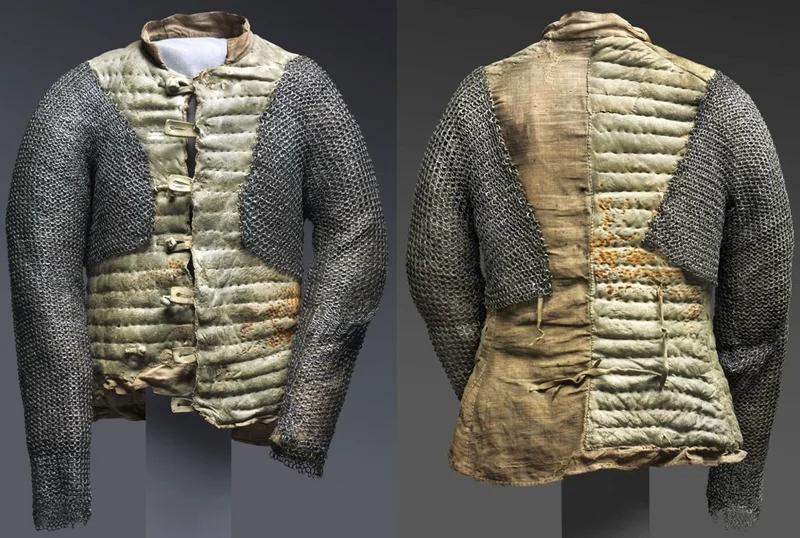
Surviving medieval decorative quilts and bedcovers show a parallel evolution in domestic spaces. By the late Middle Ages, the craft had evolved into a highly sophisticated form of textile imagery and surface design. Global trade connected Asia, India, the Middle East, and Europe, accelerating the exchange of techniques. Imported cotton, vibrant chintz, and fine needlework deeply influenced European clothing and interior furnishings.
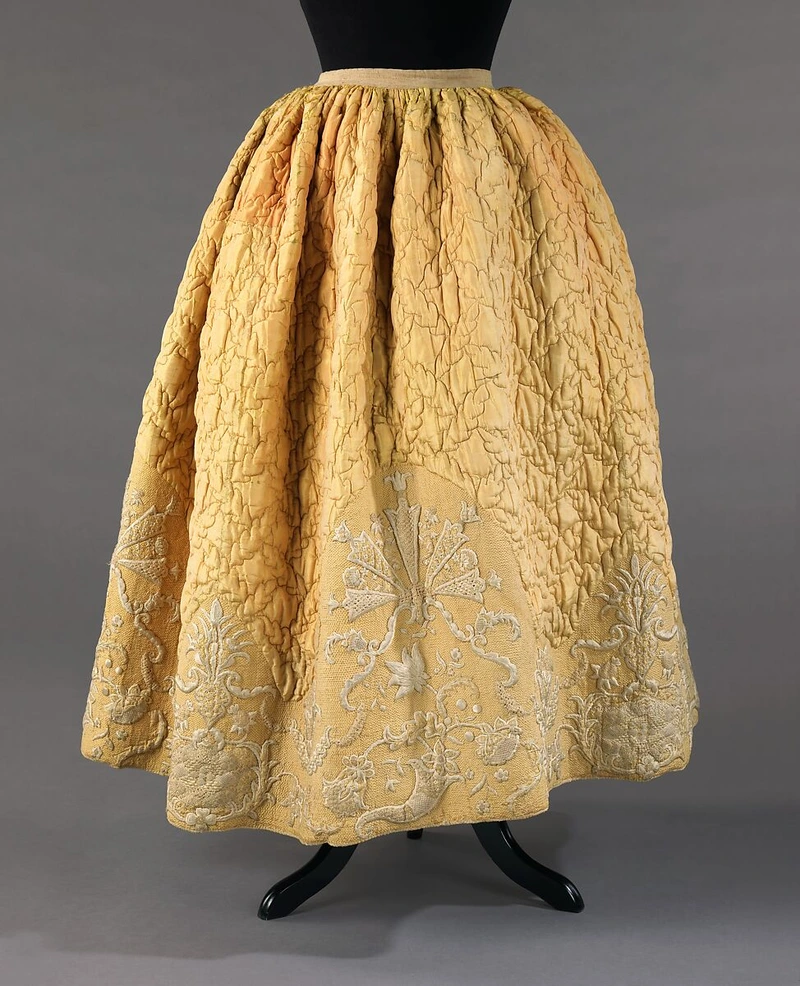
During the seventeenth and eighteenth centuries, the technique flourished in everyday wardrobes. People wore quilted petticoats, waistcoats, jackets, and elaborate silk or cotton garments. Quilted petticoats proved exceptionally practical in the Rococo era. They added essential warmth, supported the wide skirt silhouette, and allowed the beautiful decorative fabric to remain visible to admirers.
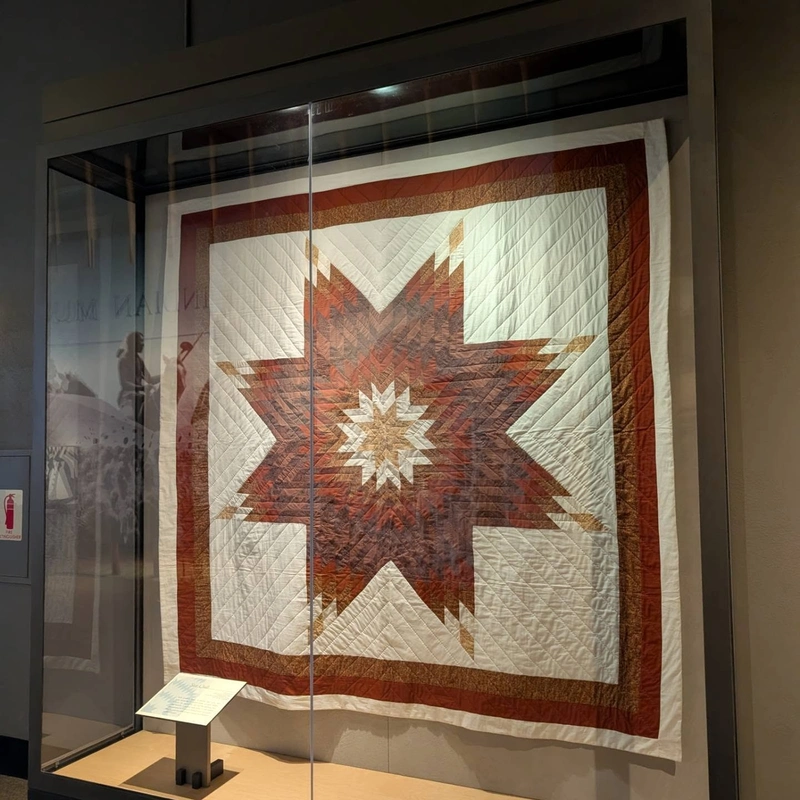
Concurrently, South Asian kantha traditions utilized old sarees and worn cloth layers joined with running stitches. Kantha remains deeply associated with material reuse, family history, and intimate domestic storytelling.
The nineteenth century, particularly the Victorian era, brought massive technological change. Mechanized textile production increased cloth availability exponentially. Sewing machines made the joining process faster and far more consistent. Patchwork bed-coverings became closely associated with domestic craft in North America and Europe. This handmade tradition developed alongside industrial fabric production.

The twentieth century introduced military and workwear liner jackets, ski clothing, and highly technical padded outerwear. Coco Chanel embraced diamond-quilted leather as a luxury code, introducing the iconic Chanel 2.55 handbag in 1955 as a monumental fashion milestone.
The Main Types of Quilted Fabric
Experts classify this material by layer construction, stitch pattern, padding method, and visual effect. Wholecloth quilting utilizes one continuous face fabric. It bypasses patchwork surfaces entirely, deriving all visual interest from stitched motifs and raised relief. Patchwork quilted fabric features separate fabric pieces joined to form the top layer. Artisans attach this completed patchwork surface to the padding and backing to finish the textile.
Channel quilting features parallel lines creating long padded compartments. These lines run vertically, horizontally, or diagonally, appearing frequently in liner jackets and minimalist outerwear.
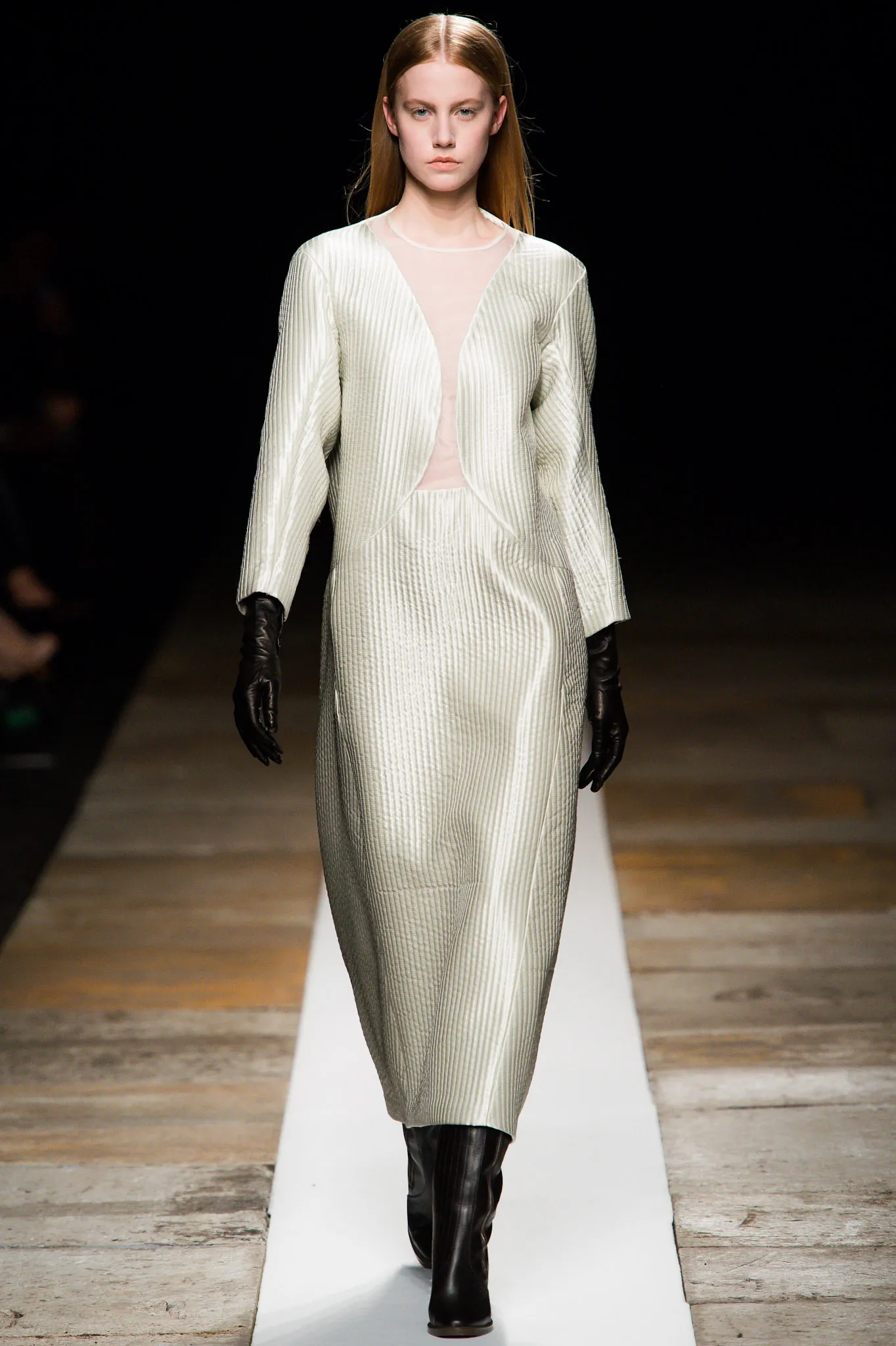
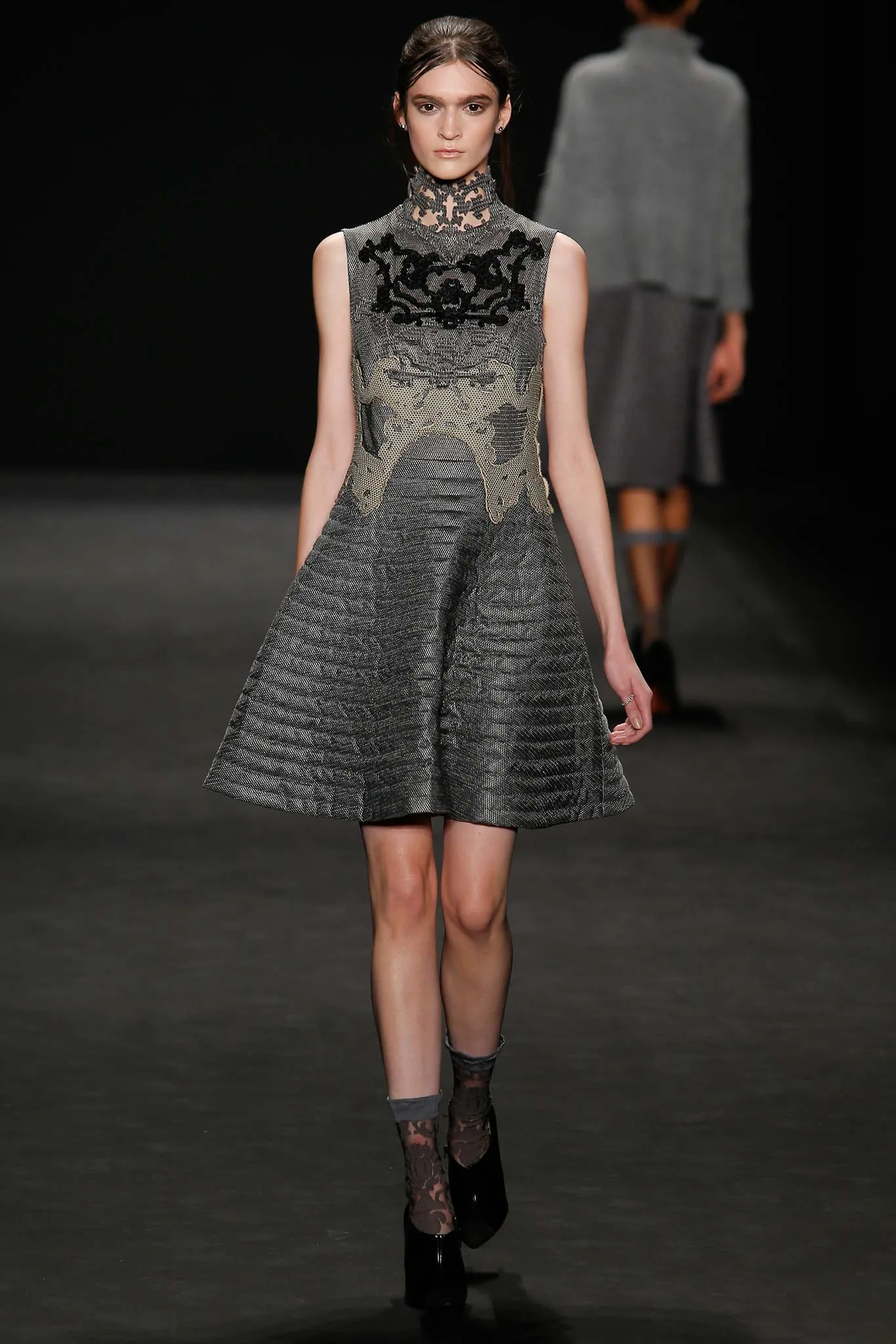
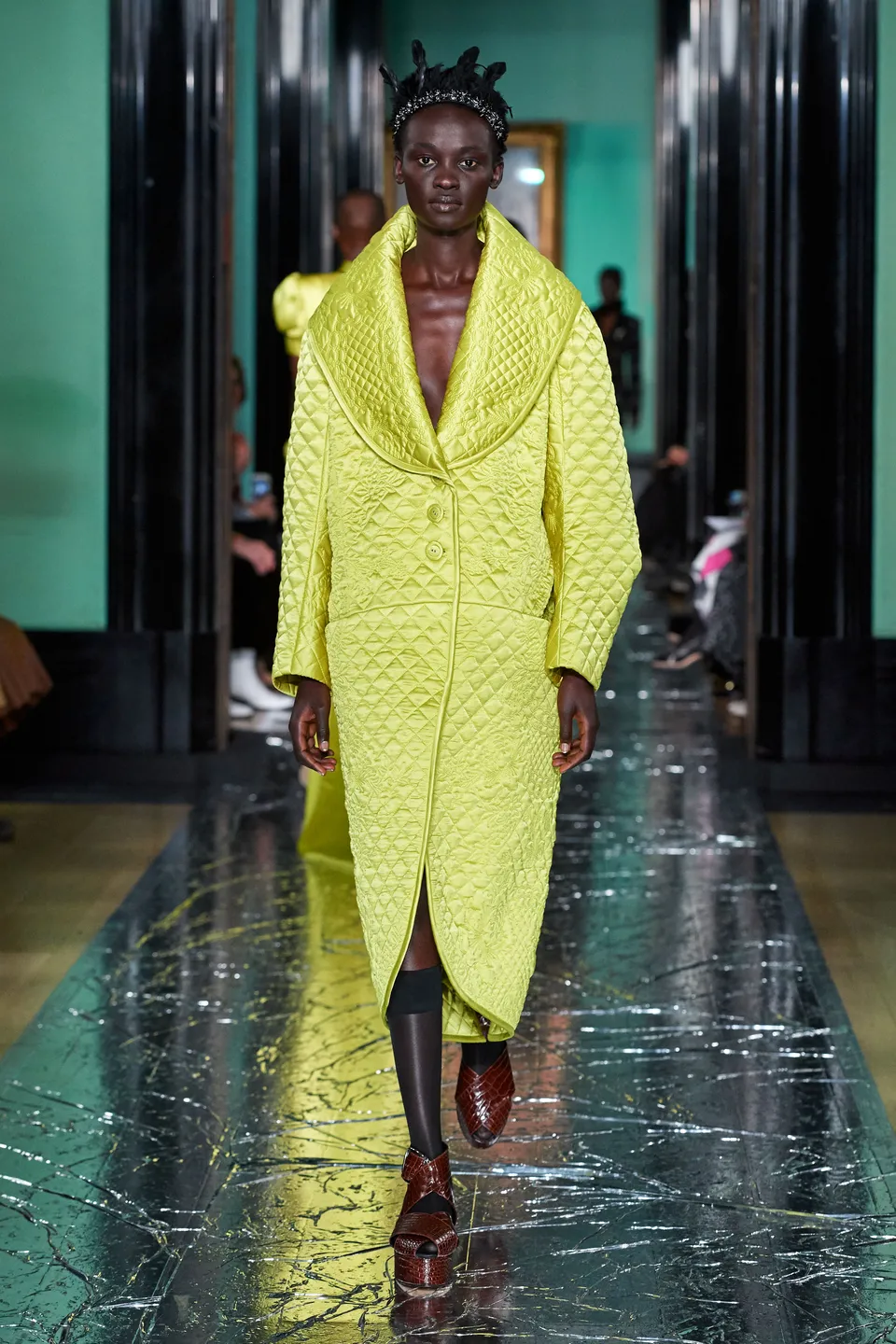
Diamond quilting intersects diagonal lines into elegant diamond shapes, remaining a staple in heritage jackets, equestrian clothing, and luxury accessories.
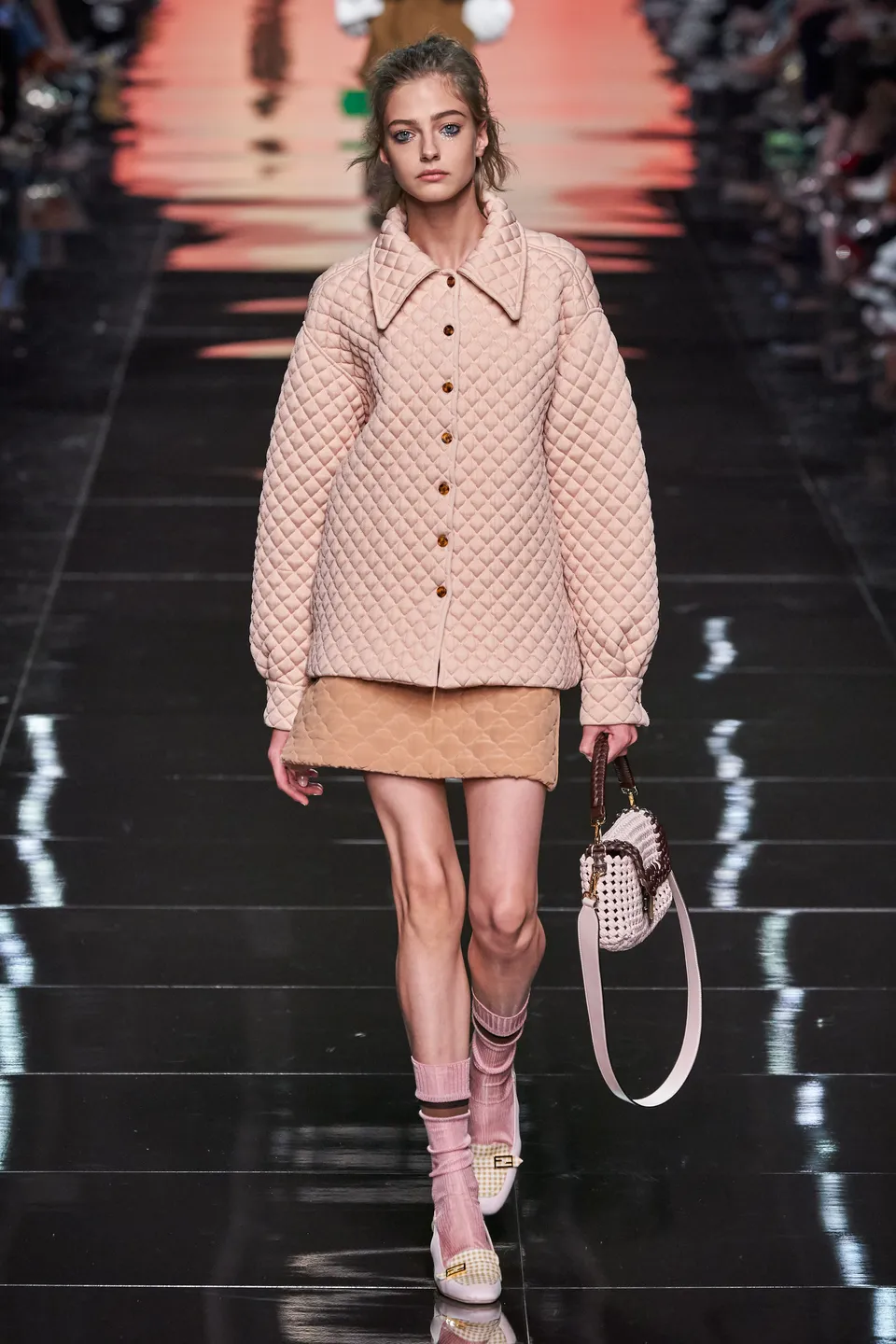
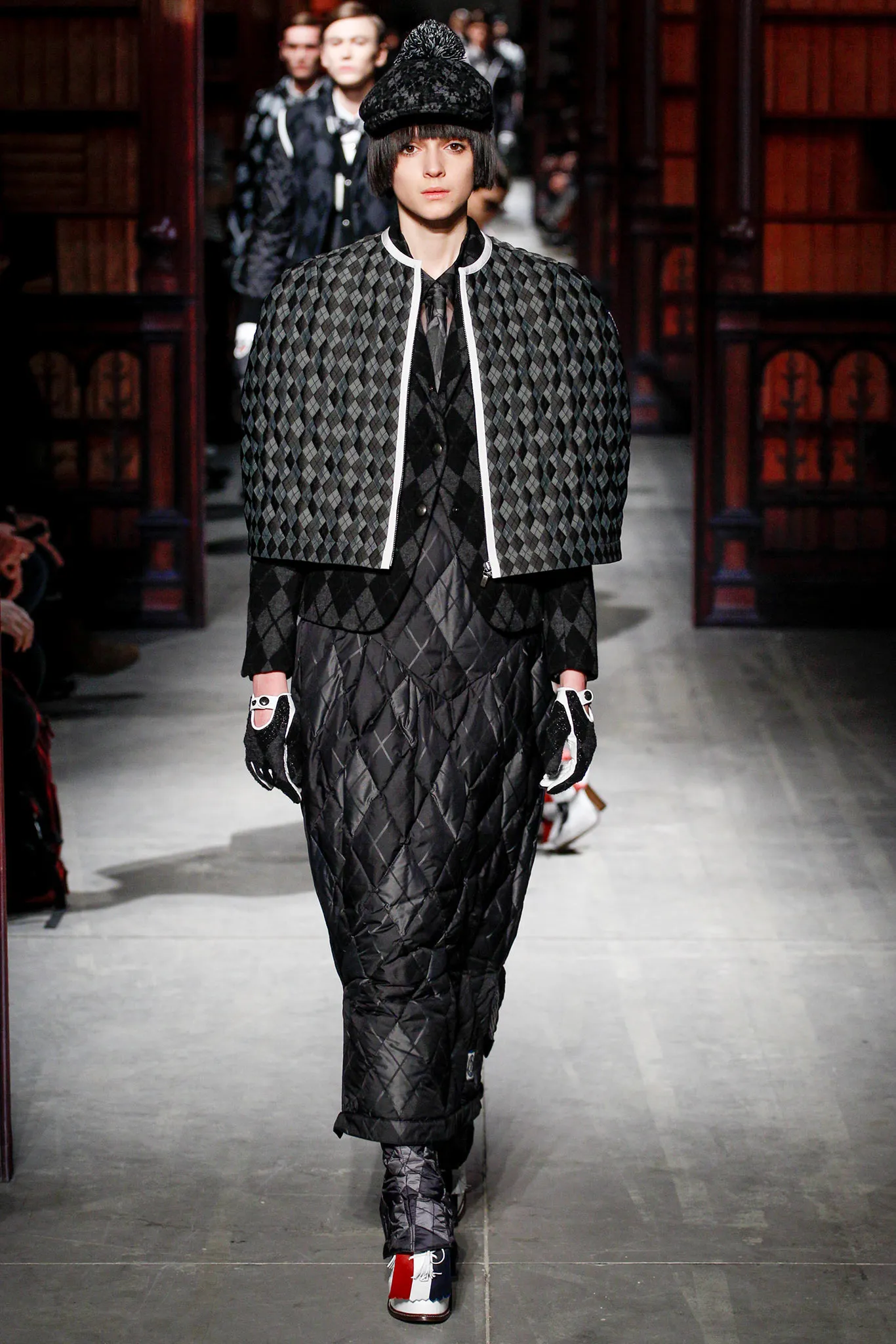
Grid or box quilting utilizes straight horizontal and vertical lines to create squares or rectangles, producing a highly controlled, architectural appearance.
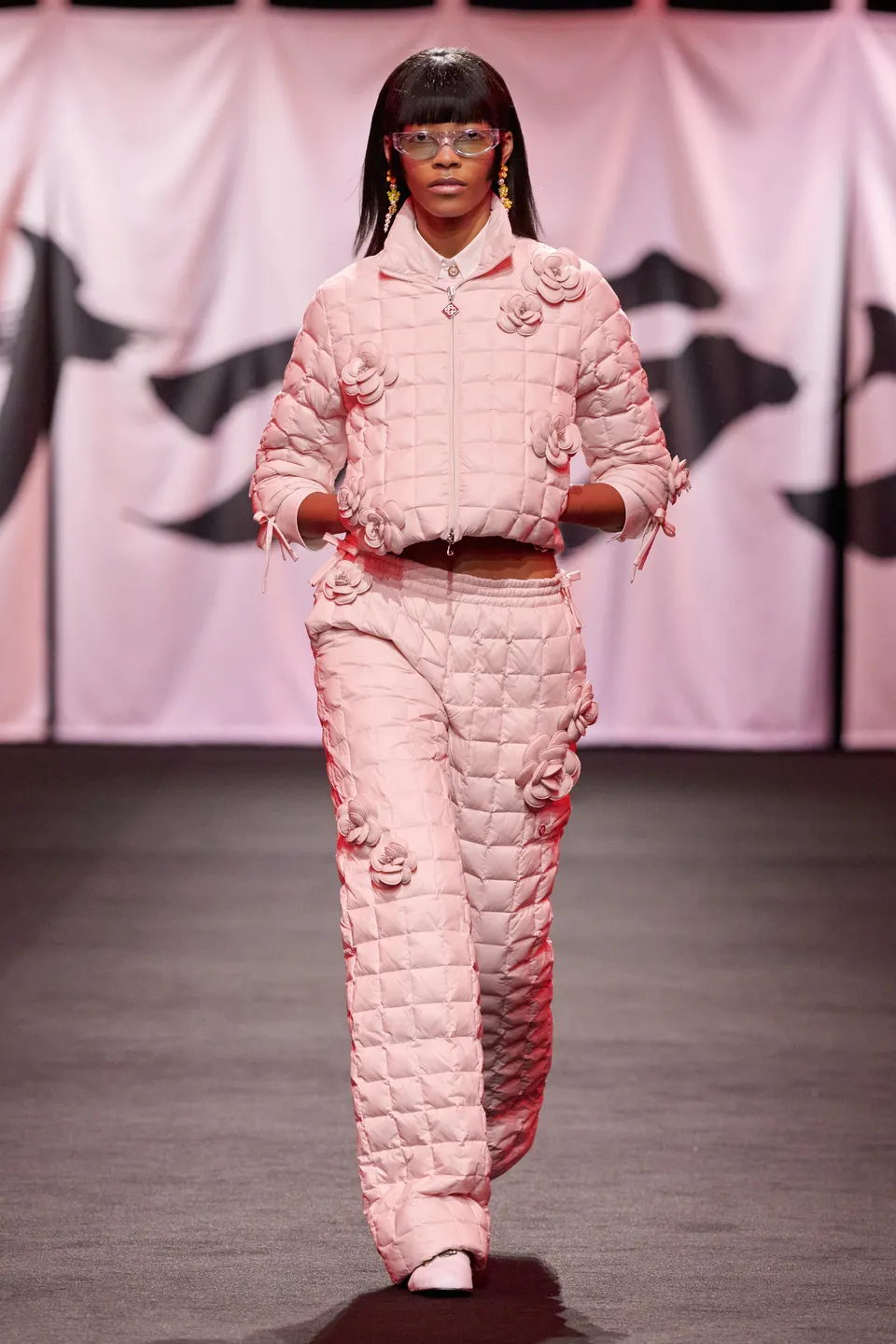
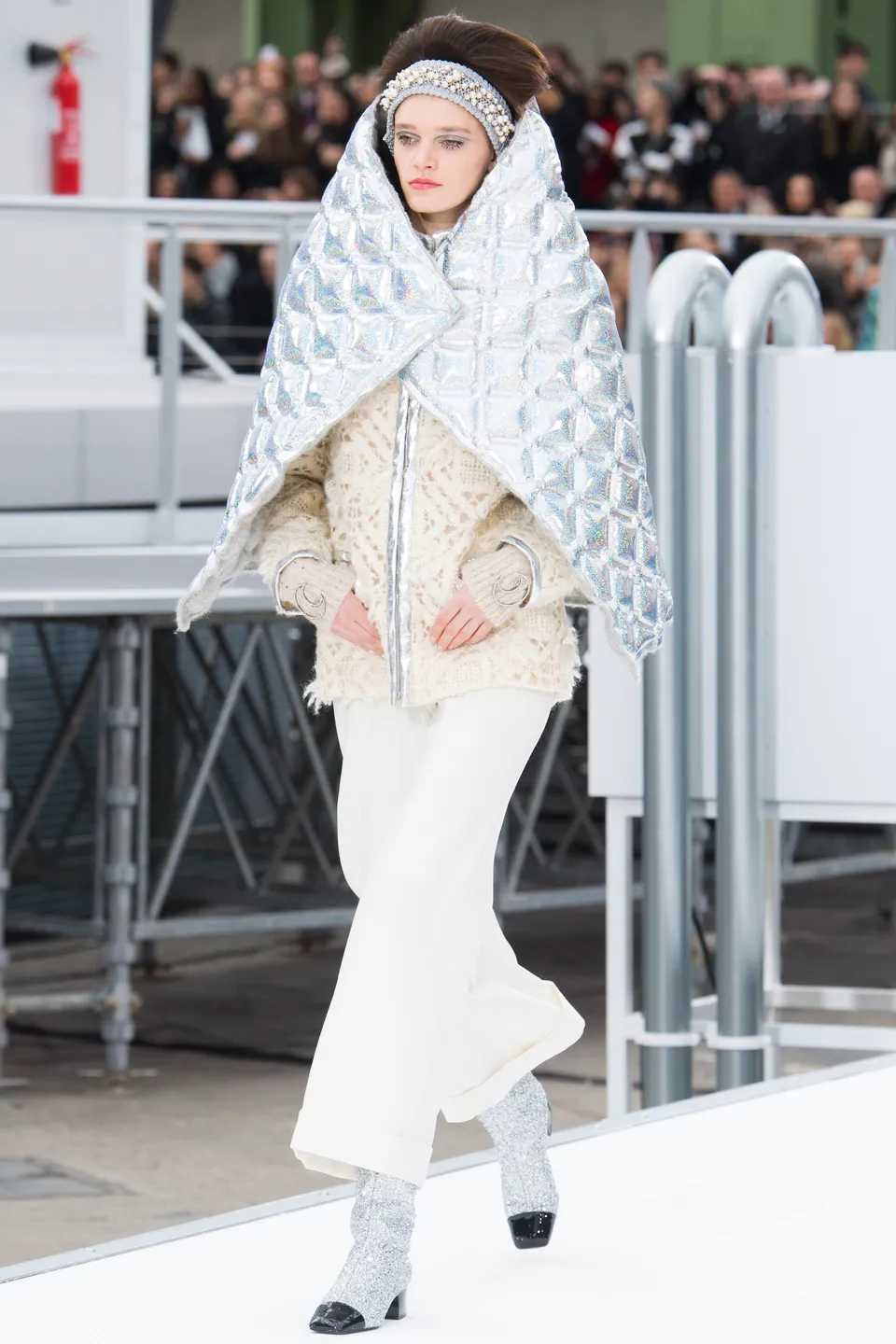
Wave, onion, shell, and scallop quilting feature curved repeating motifs. Industrial machines produce these variations frequently, creating a softer, highly decorative surface.
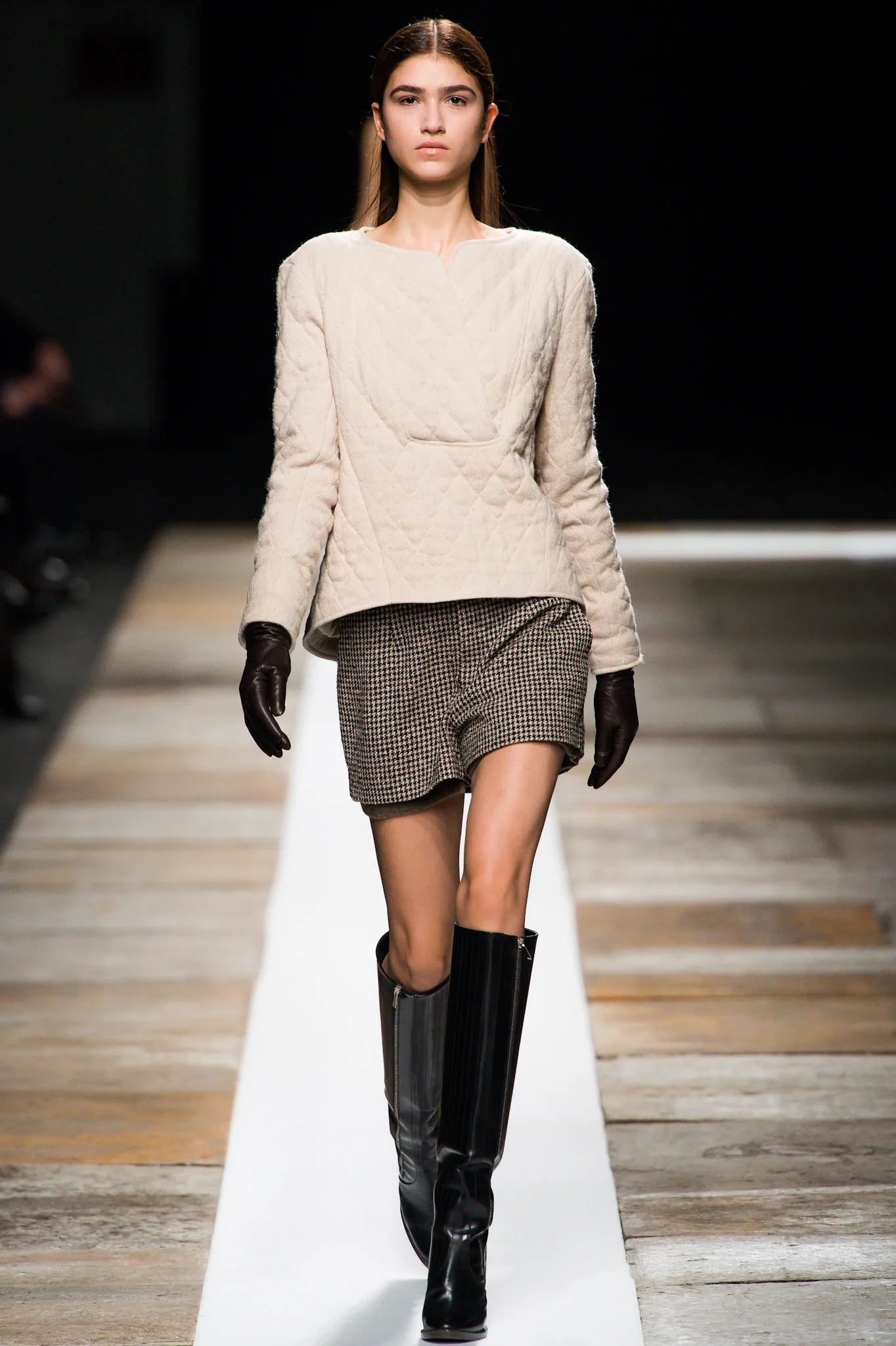
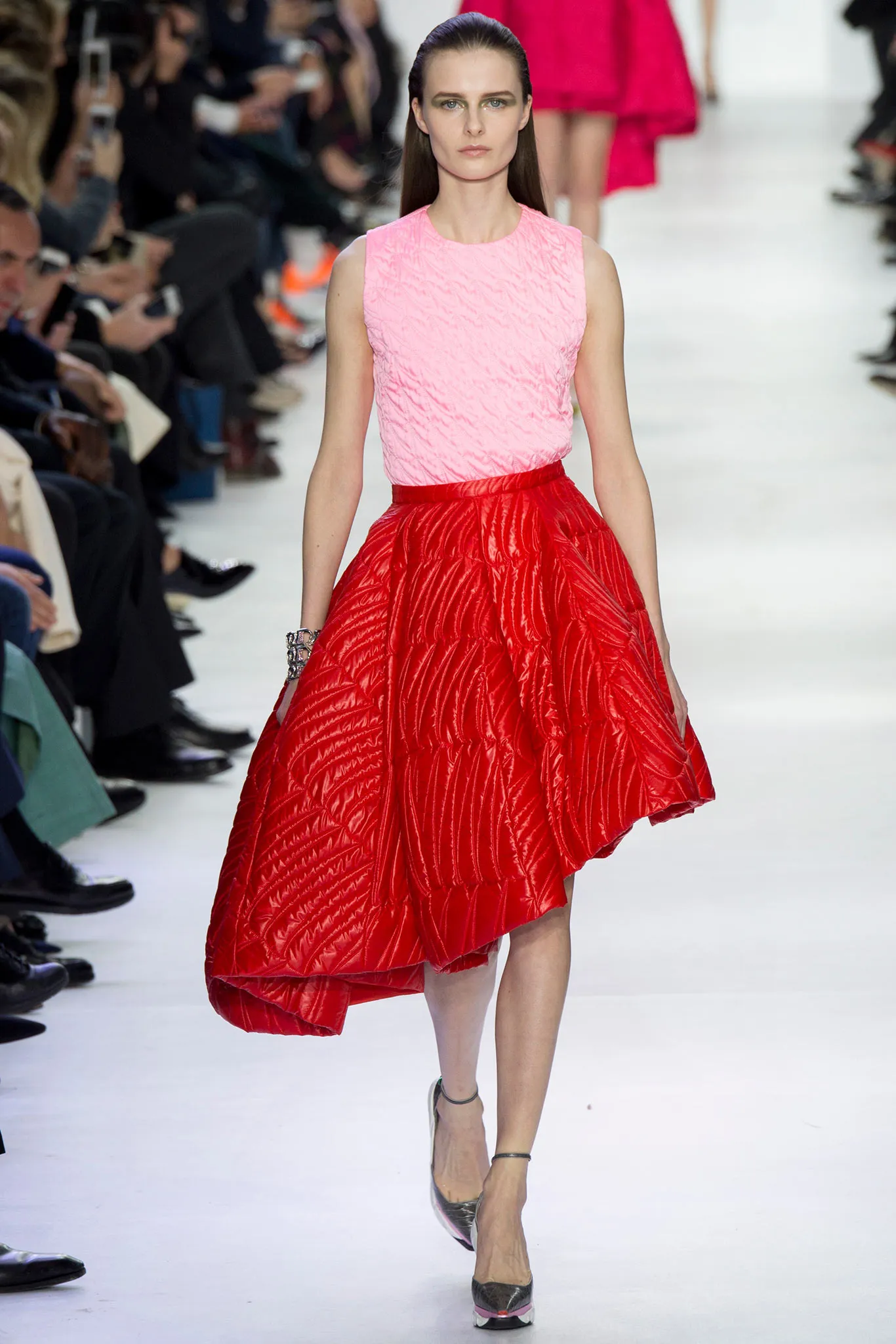
Trapunto requires artists to add extra stuffing into selected areas. Individual flowers, shapes, or borders rise dramatically above the surrounding surface.
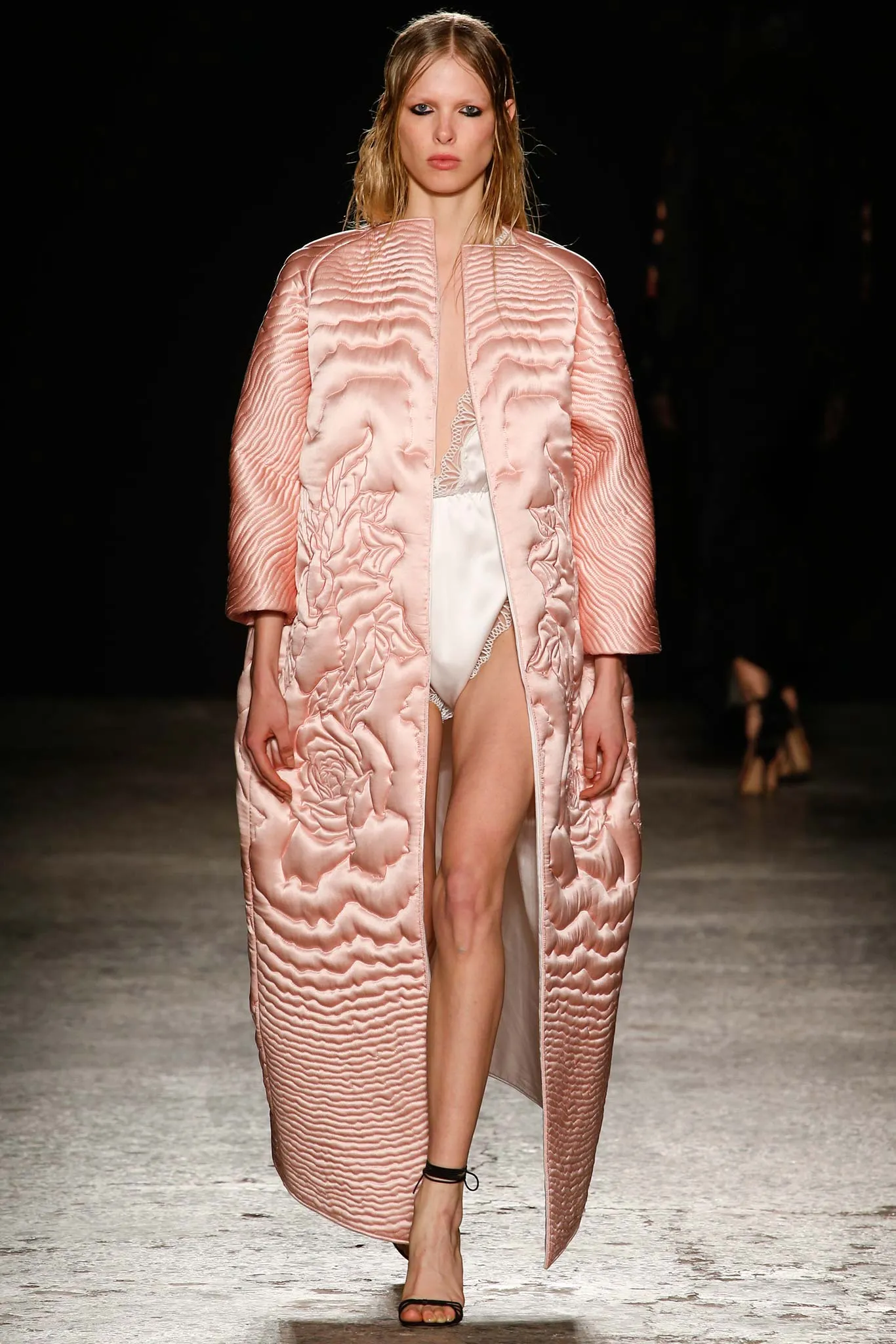
How Quilted Fabric Is Used in Fashion and Garment Construction
Outerwear represents the most familiar application of this material. The fashion industry produces countless quilted jackets, liner jackets, vests, coats, parkas, puffer jackets, and specialized ski clothing. The stitched compartments keep the filling perfectly and evenly distributed across the body. A standard quilted jacket differs slightly from a puffer. The former remains relatively flat or moderately thick, whereas a puffer is defined precisely by its highly inflated volume and extreme insulation.
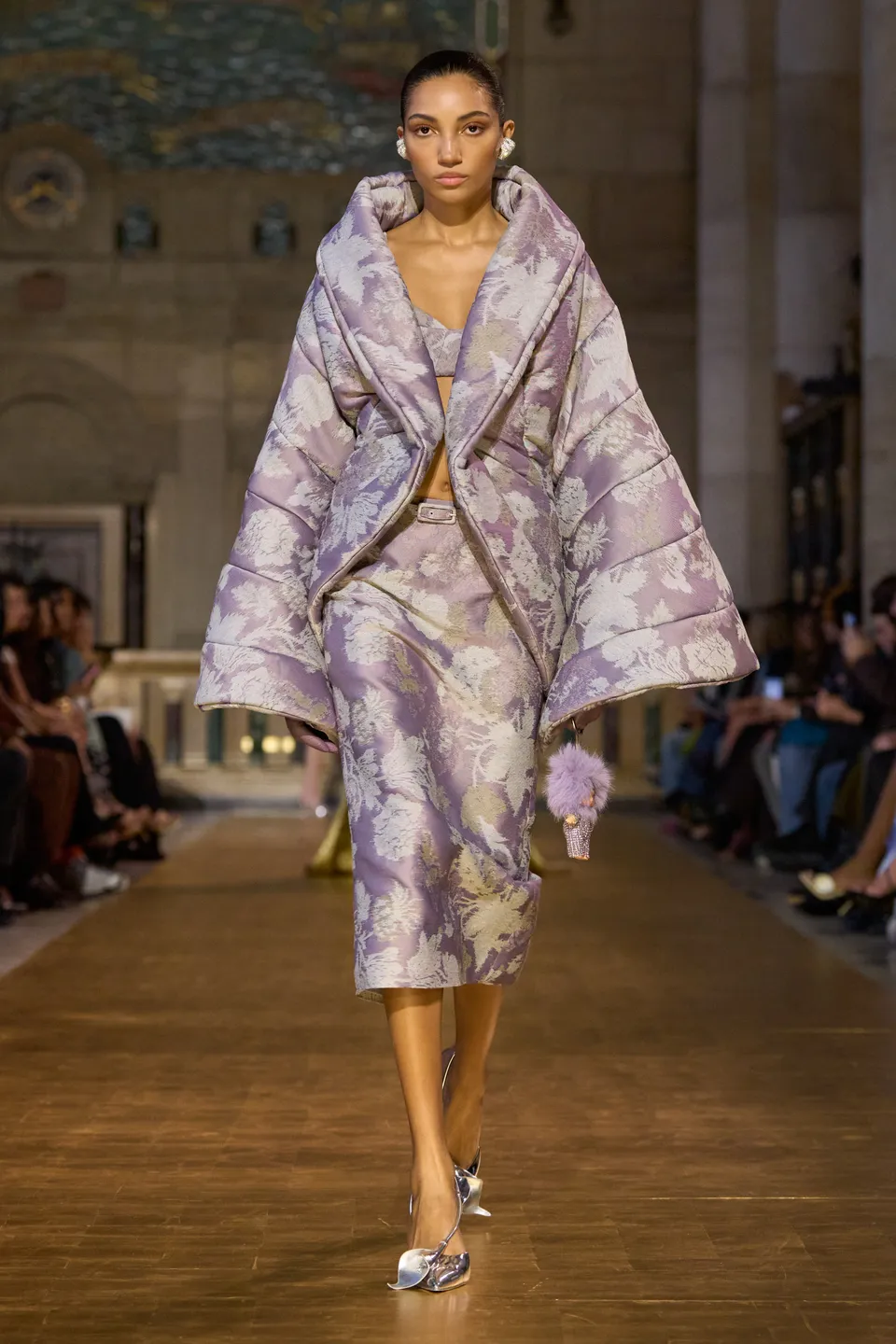
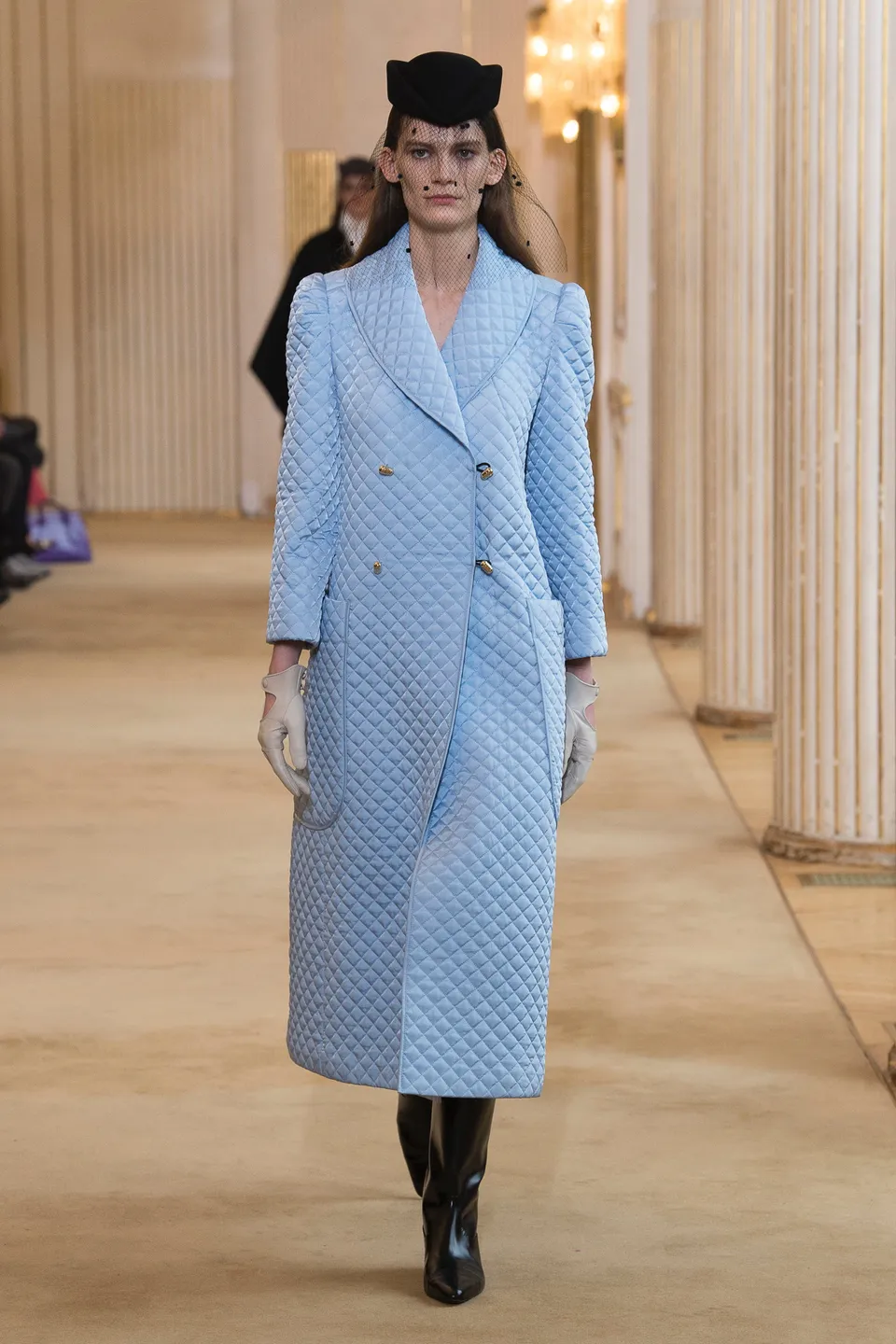
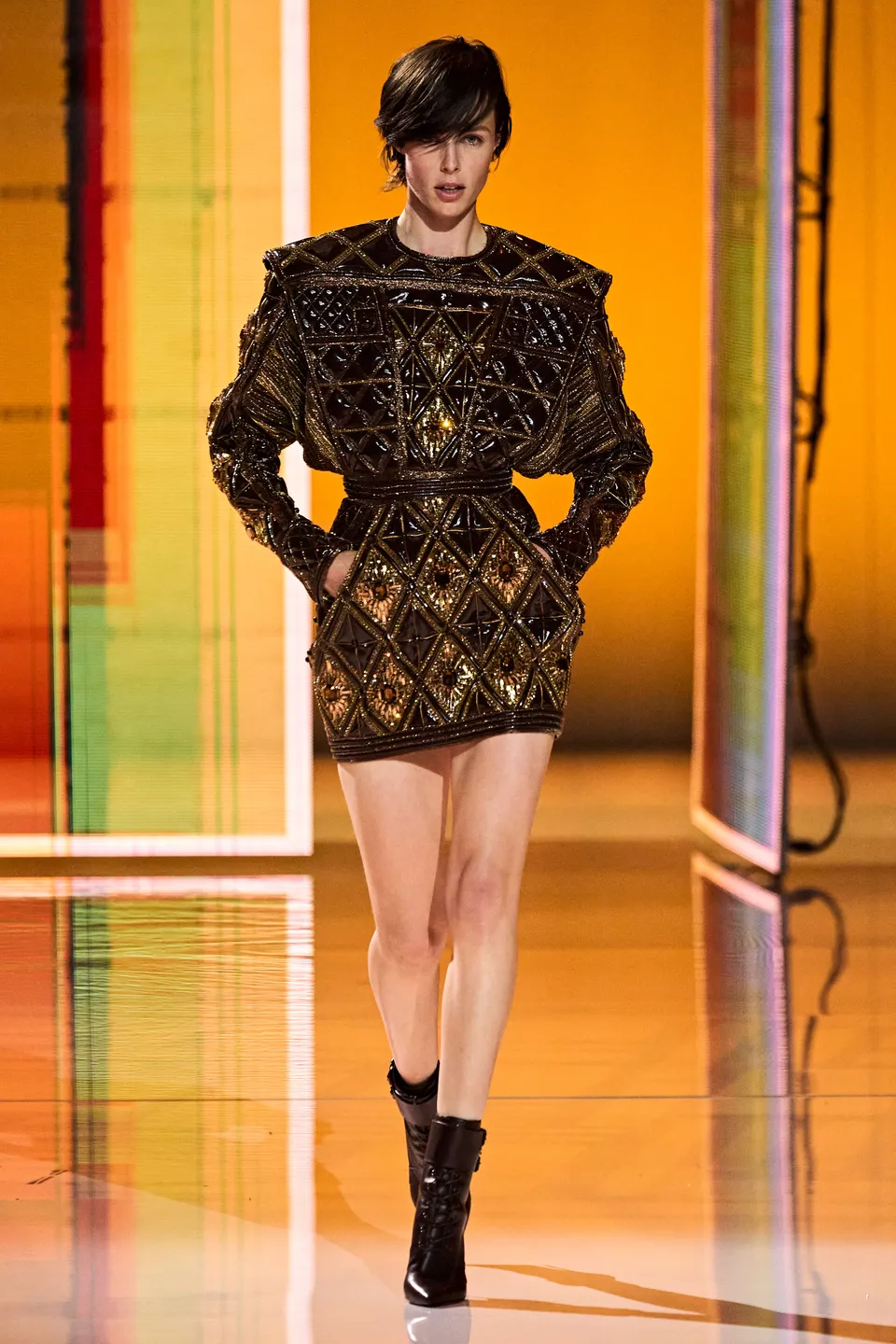
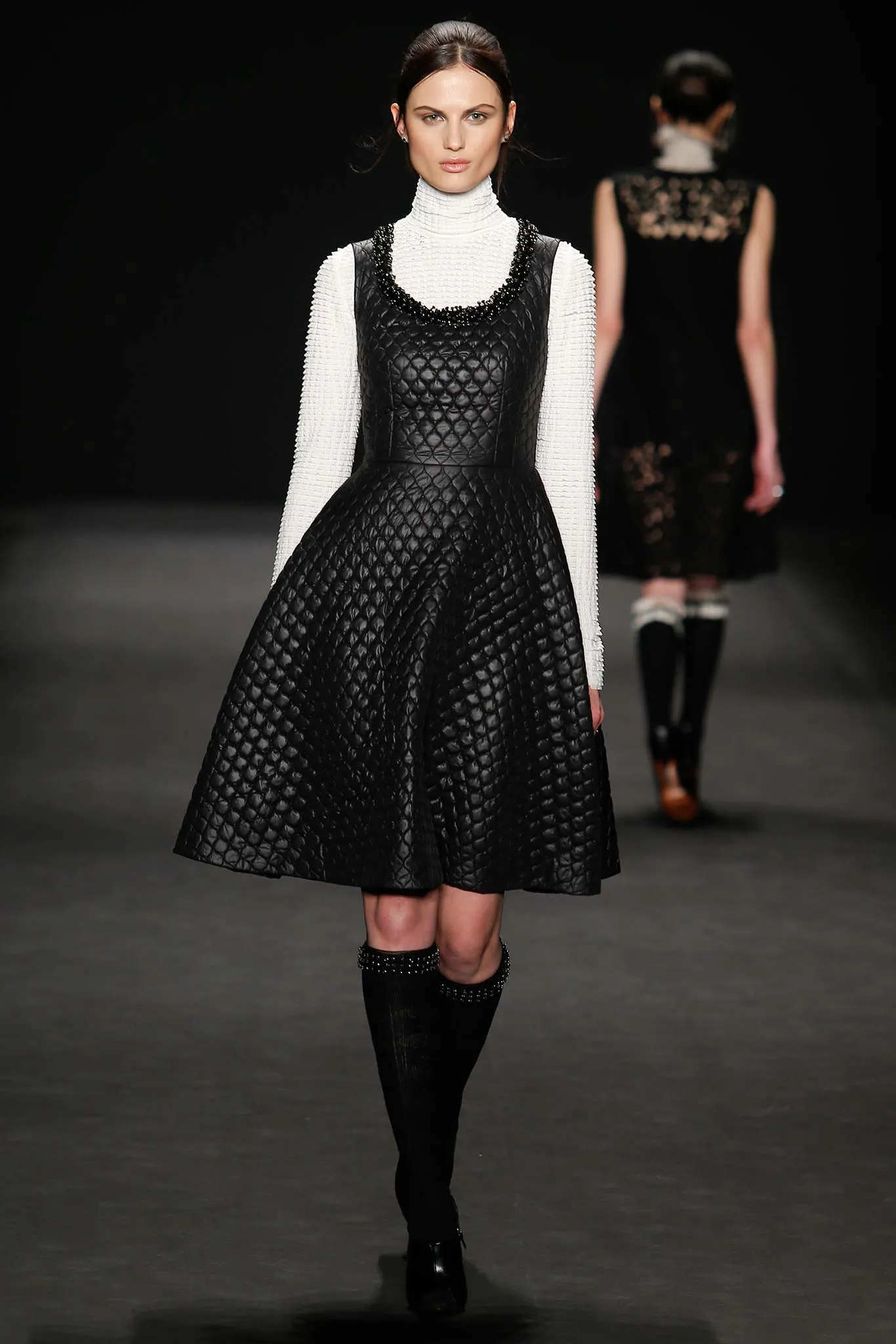
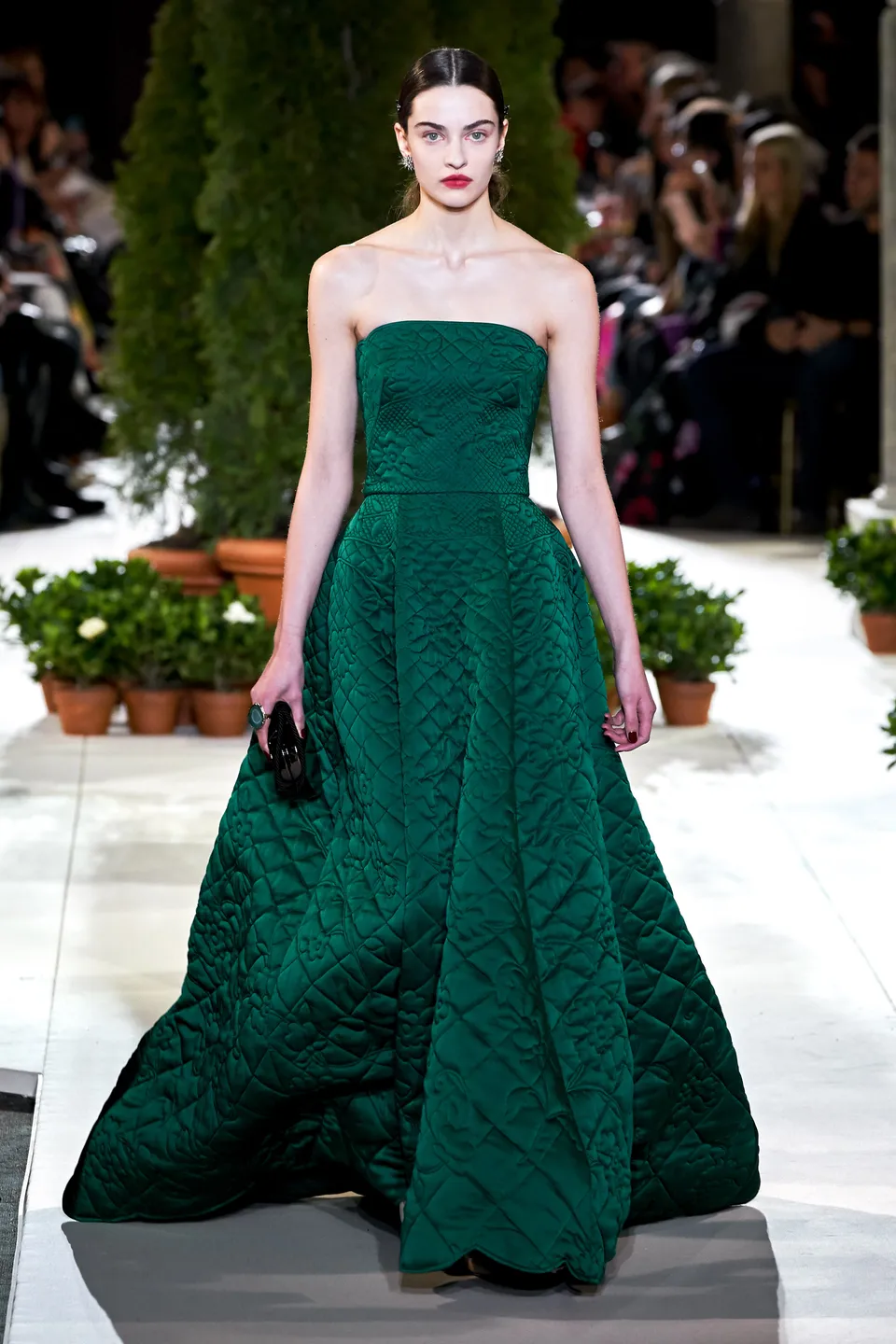
Designers expand the application far beyond outerwear. Collections frequently feature padded dresses, miniskirts, flare skirts, tailored jackets, trousers, bodices, bustiers, capes, sleeves, and avant-garde eveningwear. Thin variations add subtle texture while preserving the natural silhouette. Thick padding creates rounded shoulders, exaggerated hips, sculptural sleeves, and completely rigid geometric forms.
Accessories also rely heavily on this technique. Brands produce iconic handbags, clutches, wallets, belts, hats, gloves, boots, and slippers. Treating leather this way softens its appearance, creates a highly tactile surface, and makes specific geometric patterns instantly recognizable. Chanel serves as the clearest example of this signature, though the technique boasts a vast cultural history across countless fashion houses.
Padding thickness, cell size, and stitch direction dramatically affect the body silhouette. Vertical channels visually lengthen the figure. Horizontal lines emphasize width. Large cells create dramatic, theatrical volume. Dense stitching creates a firmer, flatter material.
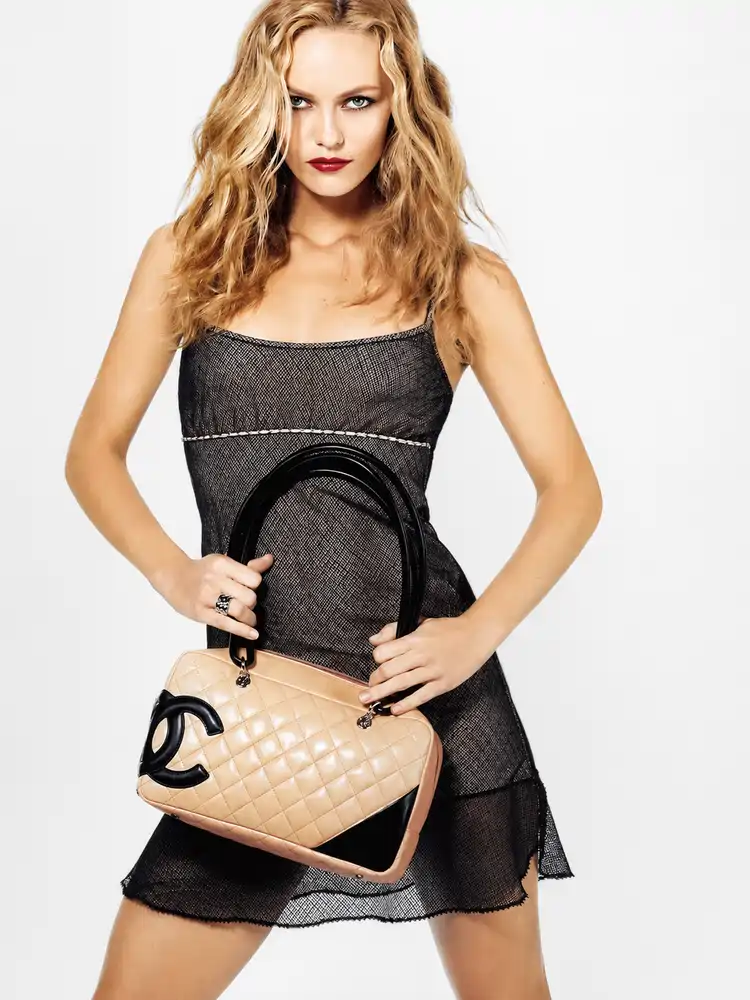
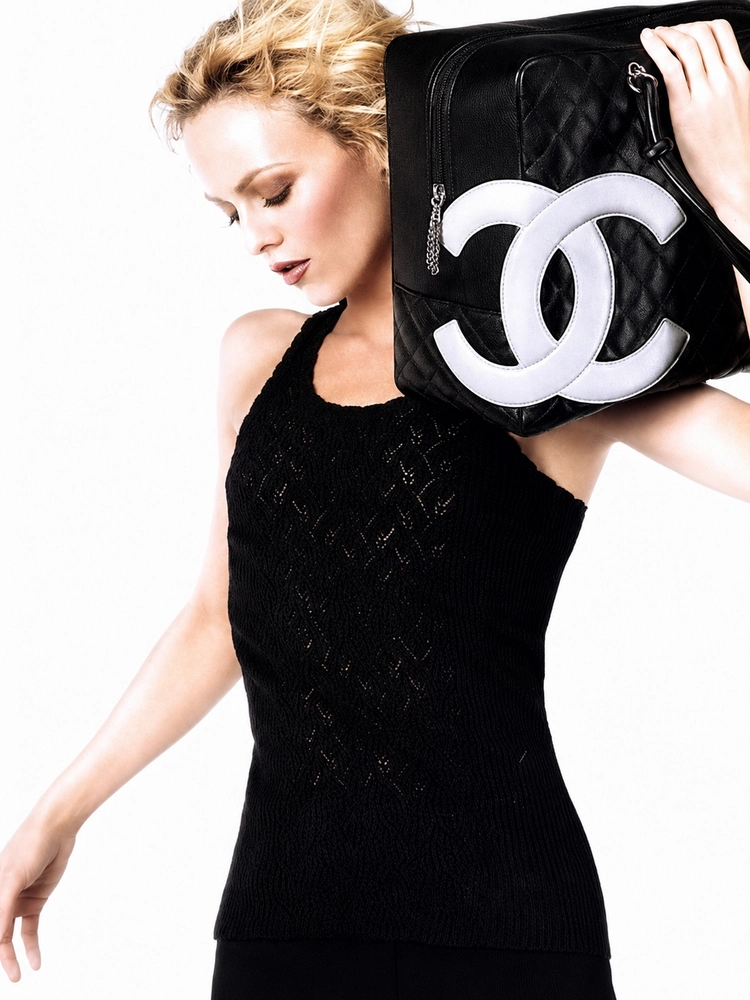
Working with this material requires highly specific garment-construction techniques. Creators must align patterns meticulously across center fronts, side seams, and pockets. The stitching process shrinks the material slightly, meaning artisans must quilt the yardage before cutting the final pattern pieces. Tailors remove batting from seam allowances to reduce excessive bulk. Binding finishes raw edges cleanly. Needles and thread must match the total fabric thickness perfectly. Excessive heat damages or flattens the internal filling. Some variations include a beautifully finished backing, while others require the addition of a separate, comfortable lining to complete the garment.
How to Choose and Care for Quilted Fabric
Selecting this material requires careful attention to garment function over pure appearance alone. For lightweight jackets and liners, makers choose thin padding, flexible face fabric, and closely controlled stitching patterns. For winter outerwear, buyers evaluate insulation quality, wind resistance, breathability, and how quickly the filling recovers its loft after compression. Sculptural garments demand resilient batting, a face material strong enough to support volume, and rigorous testing of how the material bends around seams and curves.
For handbags and accessories, creators look for extremely firm backing, exceptional abrasion resistance, and absolute certainty that the padding maintains its shape over time. Garments worn directly against the body require a wonderfully soft backing, high breathability, and premium skin comfort.
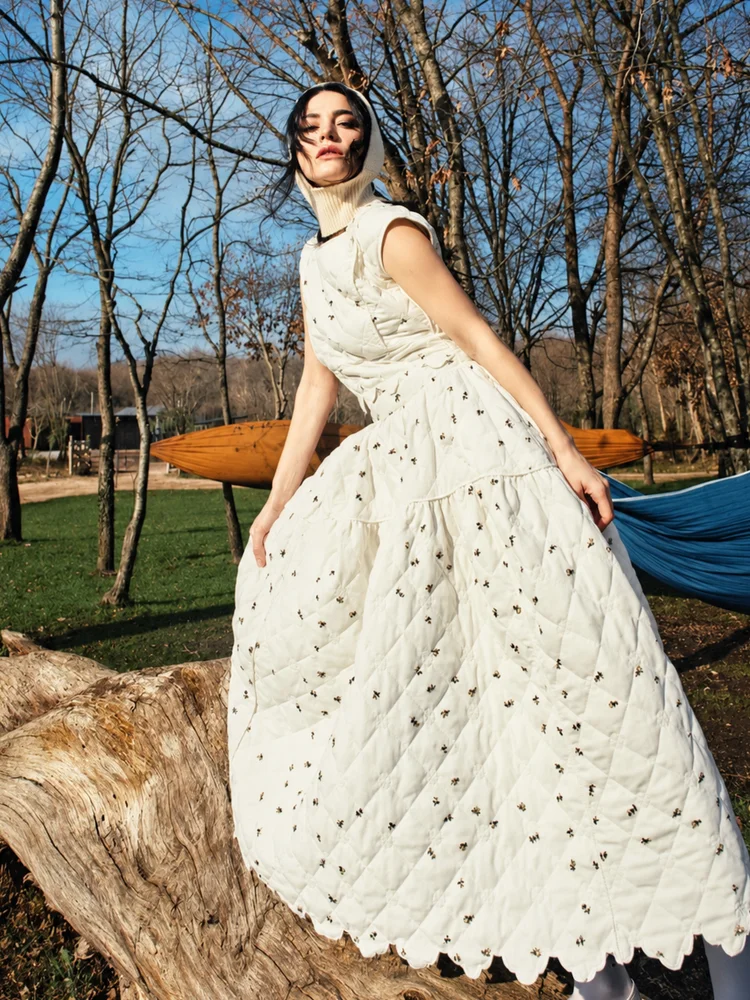
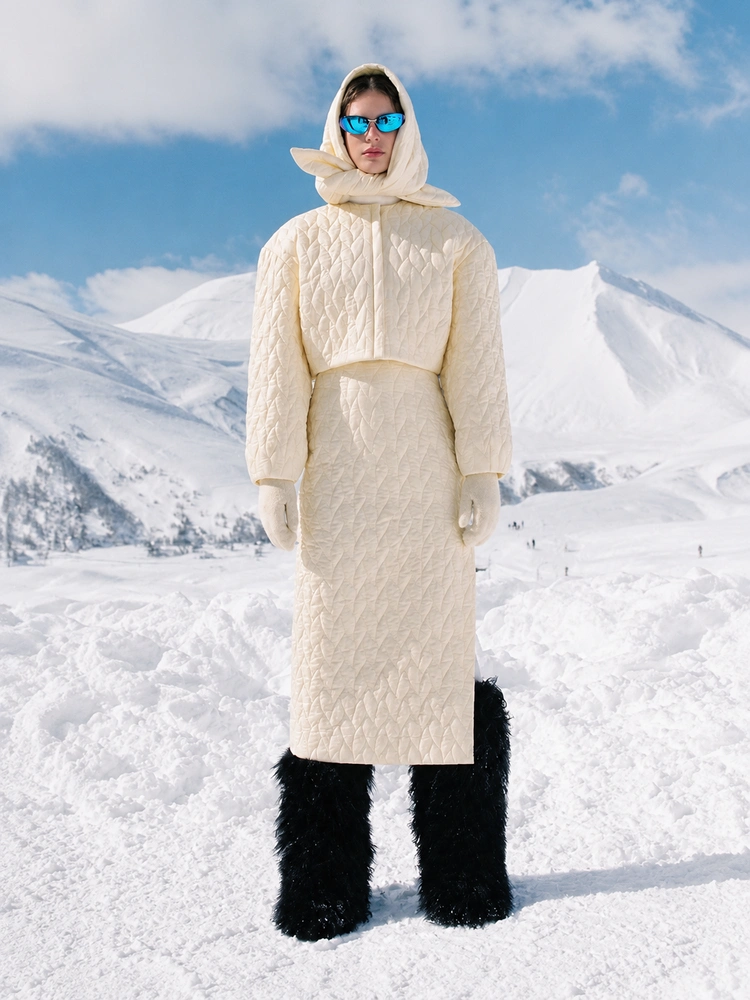
Buyers must examine the full material composition thoroughly. This includes evaluating the face-fabric fiber, the padding material, the backing, the stitch quality, the overall weight, the loft, the pattern consistency, the recovery, and the long-term durability. A beautiful face material requires equally high-quality internal layers to perform beautifully. Constructing garments requires extra purchasing allowance. Large diamonds and grids demand extra yardage for precise pattern matching, and thick material inherently creates more cutting waste.
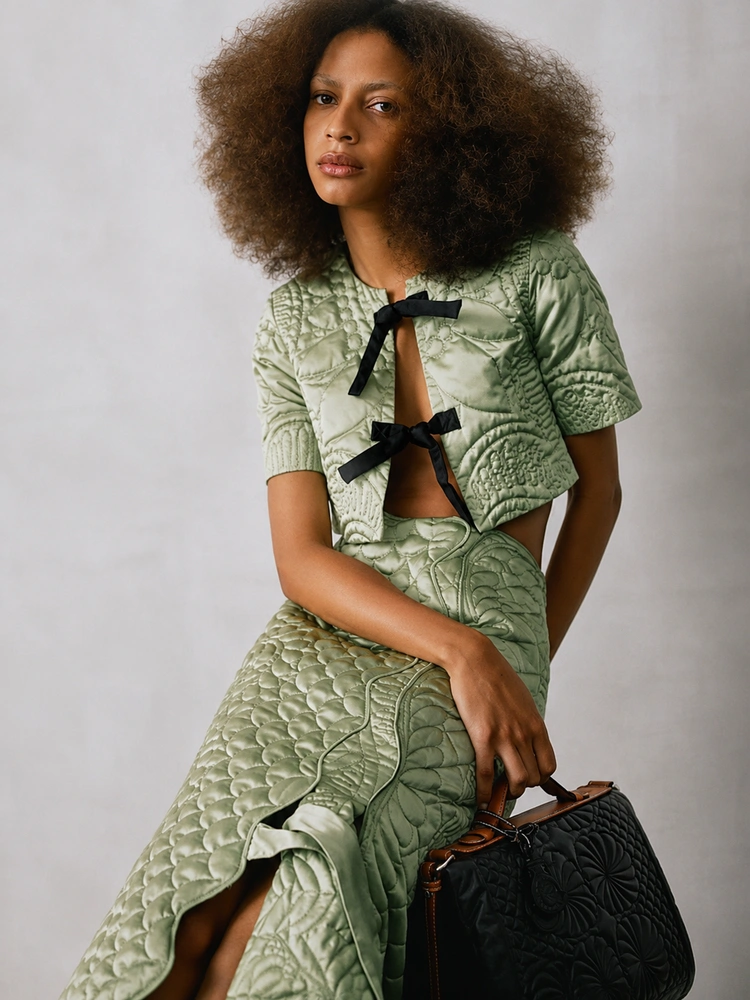
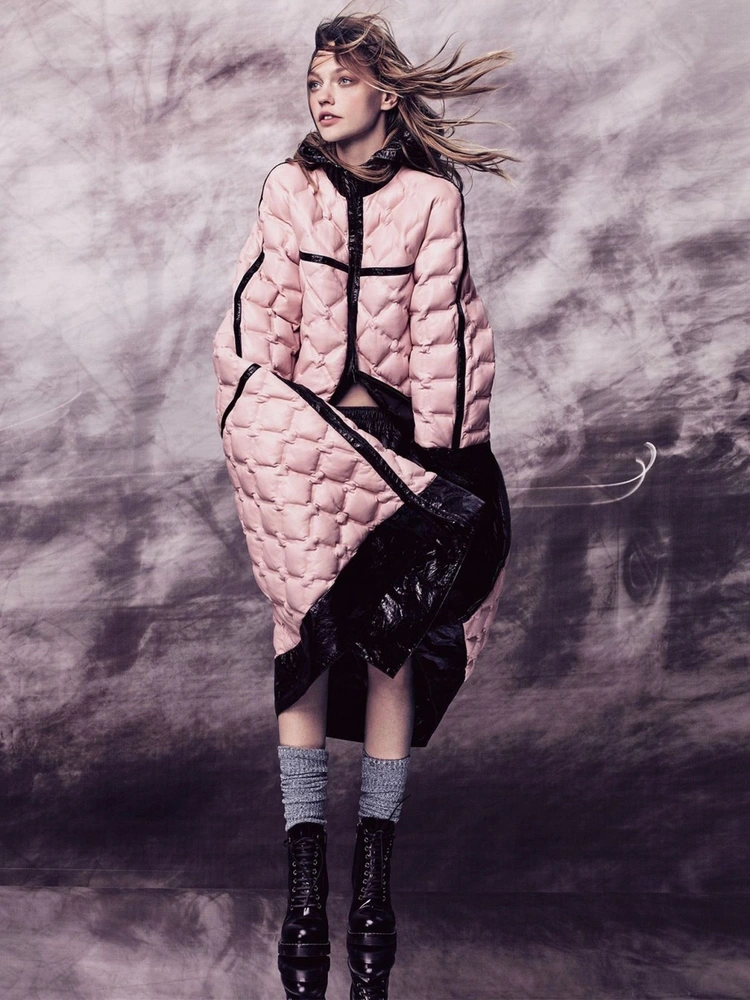
Proper care instructions cater strictly to the most delicate layer within the sandwich. Remind readers to look beyond a durable cotton outer face when determining washability, as the inner batting requires equal consideration. Complete drying remains absolutely essential because moisture easily stays trapped deep inside the internal layers.
Experts advise storing garments loosely to maintain the internal loft over time. Gentle pressing works best, as excessive ironing pressure flattens the dimensional relief permanently. Mend broken stitch lines immediately before the internal filling begins to shift out of place. Highly constructed garments, alongside silk, velvet, and leather variations, require specialized professional cleaning to preserve their beauty.
Why Quilted Fabric Holds a Unique Place in Fashion
Quilted fabric holds a unique place in fashion because it embodies a deeply rustic yet intellectually complex spirit. This material carries the tactile memory of vintage hardship, born directly from eras of survival, agricultural resilience, and absolute necessity. Every stitched layer tells a vivid story of hands working by firelight, transforming humble, earth-worn materials into vital, life-sustaining warmth. Today, that exact same rustic soul translates seamlessly into modern, avant-garde garments, offering a profoundly grounding connection to our shared past.
The complex, mathematical geometry of the stitching elevates these raw, earthy origins into structural art. By wearing quilted fabric, fashion lovers embrace a rich, physical lineage of human endurance. The layered cloth protects the body while honoring the quiet, steadfast strength of generations who relied on this wonderfully textured construction to weather the harshest seasons.
Advertisement