MENU
Close





Can polyester in fashion be both the industry’s favorite villain and its most useful accomplice, when 59% of global fibre production now depends on the cheap, durable logic of synthetic clothing?

Can polyester in fashion be both the industry’s favorite villain and its most useful accomplice, when 59% of global fibre production now depends on the cheap, durable logic of synthetic clothing?
May 13, 2026
Advertisement

Advertisement



Polyester in fashion is often treated like an accusation. Say the word online and the comment section immediately knows what to do: call it cheap, call it plastic, call it a betrayal of luxury, taste, and the planet. The reaction has a point. Polyester is made from fossil-fuel-based compounds, sheds microfibres, resists biodegradation, and has helped fashion produce more clothing than wardrobes, landfills, and oceans can reasonably absorb. Yet the outrage also hides an uncomfortable truth. Fashion does not simply use polyester because it is careless. Fashion uses polyester because it is useful.
That usefulness is exactly what makes the material so difficult to judge. Polyester can be the sweaty lining inside a badly made dress, the glossy trick that lets a fast-fashion blouse photograph better than it feels, and the technical reason a Pleats Please Issey Miyake garment can hold its architectural folds through washing, travel, and years of wear. It can be a cheap substitute, a design technology, a performance textile, and a sustainability claim. The same fibre can look like evidence of laziness in one garment and engineering intelligence in another.
The scale makes this conversation impossible to dismiss as a fabric-snob debate. Textile Exchange reported that global fibre production reached 132 million tonnes in 2024, up from 125 million tonnes in 2023; polyester alone held roughly 59% of global fibre production, with about 77.7 million tonnes produced. Recycled polyester did grow, from about 8.9 million tonnes in 2023 to 9.3 million tonnes in 2024, yet its share still slipped from 12.5% to 12% because virgin polyester grew faster. That is the whole crisis in miniature: the “better” version is expanding, while the old machine expands faster.

The first mistake is to imagine polyester as a bad material sitting outside “real” fashion. It is inside fashion. It is the cheap dress, the activewear set, the swimsuit, the lining, the zipper tape, the thread, the care label, the faux satin, the tulle, the lamé, the coated outerwear, the wrinkle-resistant travel piece, and the performance fleece. It is often visible, but it is just as often disguised by language. A customer may read “satin” and imagine silk, even though satin is a weave structure and can easily be polyester. The problem is not only the fibre. It is the industry’s talent for turning fibre content into theatre.
Changing Markets Foundation puts the dependency in blunt terms. Synthetic fibres, most of them fossil-fuel-derived, account for 69% of textile production and are projected to reach 73% by 2030. Its report also notes that polyester costs about half as much per kilogram as cotton, which helps explain why brands built on speed, volume, and constant newness keep returning to it. In another earlier investigation of more than 4,000 clothing items, Changing Markets found that 67% contained synthetic materials.
That number changes the moral frame. Polyester in fashion is not a rogue ingredient. It is the operating system of modern clothing production. Fast fashion uses it because it protects margins. Sportswear uses it because it performs. Luxury uses it more selectively, or more quietly, because it can create finish, volume, structure, shine, and resilience. Even brands that speak the language of natural fibres often rely on polyester for the less glamorous details that hold a garment together.
Polyester allowed fashion to scale fantasy. It made clothing cheaper, faster, more colour-stable, more wrinkle-resistant, easier to ship, and easier to photograph. It also helped train consumers to expect endless novelty at low prices. That is where the material becomes politically interesting. Polyester is blamed as a villain, but its real role is more intimate. It made fashion’s appetite feel efficient.
Recycled polyester sounds like the perfect compromise. It lets fashion keep the fibre it already knows while replacing virgin fossil input with recycled material. It speaks fluent sustainability without asking consumers to abandon stretch, sheen, quick-dry function, or low prices. It sounds circular. It sounds modern. It sounds like a solution designed by a marketing department that also had access to a chemistry lab.
And sometimes, it is genuinely useful. The problem is that recycled polyester often solves one part of the crisis while leaving the larger system intact. Much recycled polyester has historically come from plastic bottles, not old clothes. That can reduce reliance on virgin polyester, but it also risks pulling bottles out of bottle-to-bottle recycling streams and turning them into garments that are harder to recycle again. Fashion gets a greener label. The polyester economy continues.

The microfibre question also complicates the halo. In its Spinning Greenwash study, Changing Markets tested 51 garments from Adidas, H&M, Nike, Shein, and Zara and reported that recycled polyester garments released around 12,000 fibres per gram on average, about 55% more than virgin polyester garments, which released 8,028 fibres per gram. The report also found recycled polyester lost 50% more fibre mass than virgin polyester in another test.
This does not make every recycled polyester claim meaningless. It makes the claims incomplete. If a brand says “made with recycled polyester,” the next question should be: recycled from what, under what process, with what shedding profile, at what durability, and into what end-of-life system?
Several brands and suppliers are now trying to move from bottle-to-textile recycling toward textile-to-textile recycling. Ganni signed a four-year agreement with Ambercycle to use Cycora, a recycled polyester made from post-consumer textile waste; Ganni pledged to replace 20% of its annual virgin and bottle-recycled polyester use with Cycora against its 2024 baseline. Ambercycle has also worked with companies including Inditex, Arc’teryx, Reformation, and Gap Athleta.
H&M Group has gone bigger with Syre, a venture co-founded with Vargas Holding to scale textile-to-textile polyester recycling. H&M secured an offtake agreement worth $600 million over seven years, aimed at covering a significant share of its long-term need for recycled polyester, which it said was then primarily sourced from bottle-to-textile rPET. Reuters later reported that Syre plans to produce more than 3 million metric tons of polyester in 2032 by recycling used garments, with Gap planning to use 10,000 tons per year of Syre’s polyester chip and Target incorporating the material into selected products.
Unifi’s REPREVE shows the scale of the older recycled-polyester model. The company says REPREVE has transformed more than 46 billion plastic bottles and 1 billion T-shirts’ worth of textile waste into recycled fibre. That sounds impressive because it is impressive. But Wired’s reporting on REPREVE captures the contradiction: bottle-based recycled polyester can support factories, supply chains, and lower-impact claims, while environmental critics argue it extends fashion’s dependence on plastic and diverts PET from more closed-loop recycling uses.
Recycled polyester, then, is neither fraud nor salvation. It is a hinge. It can move fashion toward a better system, or it can let fashion keep overproducing with a cleaner conscience. The difference depends on whether recycling is paired with reduction, design discipline, durability, and real collection systems. Without those, recycled polyester becomes a moral costume worn by the same old business model.


Luxury has its own polyester problem, and it is not simply environmental. It is psychological. Many consumers can accept polyester in a rain jacket, a swimsuit, a running top, or a pleated Issey Miyake garment because the function is legible. They become less forgiving when polyester appears in a luxury dress whose price seems to depend more on aura than engineering.
The old luxury bargain was material romance: silk, wool, cashmere, leather, cotton poplin, handwork, rarity, texture, time. Polyester complicates that bargain because it exposes the difference between cost and price. A polyester garment can be beautifully designed, carefully finished, and legitimately expensive to produce. But it can also be a cheap textile carried upward by brand mythology. The consumer, staring at the care label, is learning to ask which one is happening.
This is where transparency becomes a luxury value, not a sustainability footnote. If polyester is being used for a sculptural effect, say so. If it creates permanent pleating, weather resistance, technical stretch, colour brilliance, durability, or a mono-material construction that improves recyclability, explain it. If it is there because margins look better, the garment will eventually confess on its own.
The future luxury customer may become less impressed by fibre purity and more interested in fibre honesty. That shift could be healthy. Natural fibres have their own environmental burdens, from water and land use to chemical processing and animal welfare concerns. Vogue’s reporting makes this point clearly: the debate cannot simply become natural equals good and synthetic equals bad. Polyester carries severe problems, but cotton, viscose, leather, and cashmere also come with costs.
We love technological rescue stories because they allow the industry to keep moving while promising that science will clean up the trail behind it. Textile-to-textile recycling, enzymatic recycling, bio-based polyester, mono-material design, improved filtration, and lower-shedding yarns all deserve attention. Developments such as enzymatically recycled polyester from Carbios and bio-based polyester from Kintra Fibers as part of the future landscape, while also noting that scalability remains the unresolved question.
But technology cannot carry the whole moral weight. A better polyester system still collapses if fashion keeps producing too much. The most important data point may be the simplest one: fibre production keeps rising. If global fibre production has already reached 132 million tonnes and is moving upward, a more circular polyester supply chain may still be overwhelmed by volume. The industry is trying to make better materials while preserving a business model built on excess. That is like redesigning a bathtub while leaving the tap running.
Polyester in fashion should probably have a stricter future, not a vanished one. There are places where it makes sense: performancewear, swimwear, rainwear, long-lasting pleated structures, technical outerwear, garments engineered for durability, and designs created with clear end-of-life logic. There are also places where its presence deserves more suspicion: disposable party tops, ultra-cheap dresses, poor-quality satin marketed as luxury fantasy, unnecessary blends that make recycling harder, and garments produced mainly to feed the algorithm for a week.
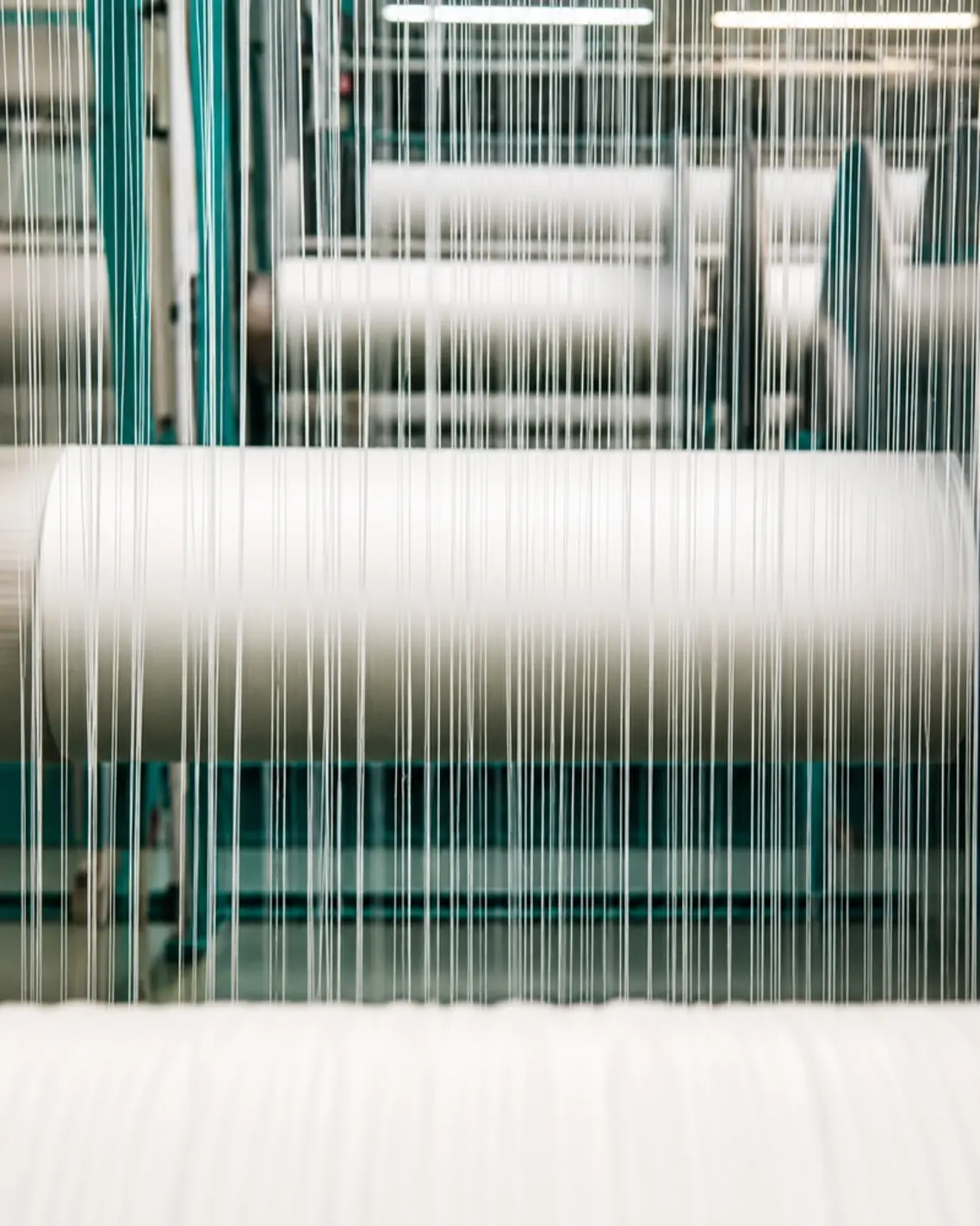
A serious polyester ethic would ask brands to publish a kind of material justification. Why polyester here? Why this blend? How long should the garment last? Can it be repaired? Can it be recycled? Does the fibre provide performance, structure, or longevity, or does it simply lower cost? These questions would not solve everything, but they would move the conversation from shame to accountability.
The most honest conclusion is also the least comfortable. Polyester is not fashion’s enemy because it is artificial. It is fashion’s problem because it made excess feel rational. It gave the industry a fibre that was cheap enough for overproduction, durable enough to outlive desire, and versatile enough to disguise itself as almost anything. That is a dangerous combination.
So perhaps the future is not a clean breakup. Fashion and polyester are too entangled for that. The future is a trial separation with rules. Use it where it earns its place. Name it clearly. Design it for longevity. Avoid unnecessary blends. Build recycling systems that handle actual textile waste. Reduce virgin fossil-based polyester. Produce fewer garments. Stop treating recycled content as a moral bath for overconsumption.
Polyester in fashion is a mirror, and the reflection is not flattering. It shows an industry that wants innovation without restraint, sustainability without sacrifice, and technical performance without admitting dependency. The fabric itself is not the whole scandal. The scandal is how much fashion still needs it, how quietly luxury uses it, and how easily recycling can beautify it.
Advertisement