MENU
Close





Is sportswear protecting the body, perfecting the body, or quietly exposing the body to the invisible cost of performance?

Is sportswear protecting the body, perfecting the body, or quietly exposing the body to the invisible cost of performance?
May 8, 2026
Advertisement

Advertisement



Most of us think about sportswear through performance: how well they stretch, how fast they dry, how tightly they hold the body, how flattering they look in a mirror, how efficiently they survive sweat. A pair of leggings is judged by squat-proof opacity; a sports bra by support; a running vest by how quickly it wicks moisture. But the more uncomfortable question is rarely asked with the same intensity: what exactly is touching the skin while the body is hot, damp, compressed and in motion?
Activewear has become one of the most intimate forms of fashion we own: worn tight, worn repeatedly, worn while the body heats, sweats and rubs against fabric. That makes sportswear different from a coat, a handbag or a decorative dress. Its chemistry does not merely sit near the body; it is pressed against the body under conditions that make exposure harder to dismiss.
In recent years, scientific and commercial attention around the skin microbiome has grown dramatically. Skin is no longer understood as a passive surface. It is a living, porous, microbial environment, involved in protection, excretion, absorption and immune signalling. Like the gut, it hosts an immense community of microorganisms, and that community can be influenced by sweat, friction, hygiene, cosmetics, climate and, crucially, clothing.
Sportswear creates an unusually intense contact zone. It is often synthetic, elasticated, tight and worn during periods of heavy sweating. Workouts also increase abrasion: fabric rubs across the shoulders, chest, waist, thighs and underarms. To perform the way modern consumers expect, many activewear pieces are treated with finishes designed to wick moisture, reduce odour, resist stains, repel water, maintain colour, improve stretch or survive repeated laundering. In production, textiles may also encounter antimicrobials, heavy metals, chlorine bleach, formaldehyde-based finishes and other chemical systems that are rarely visible to the shopper.
The very features that make sportswear desirable, compression, stretch, sweat-wicking, odour control, stain resistance and fast drying, also create a hidden chemical infrastructure. Consumers are sold the feeling of a second skin, but are rarely told what has been used to make that second skin behave so obediently. The care label may disclose polyester, nylon or elastane; it usually does not tell the full chemical biography of the garment.

Concerns around PFAS, often called “forever chemicals”, have made this conversation more urgent. PFAS have been used in clothing for water resistance, stain resistance and durability, while phthalates are used as plasticisers to increase flexibility and resilience. Research has raised concerns about certain chemicals in these families because of links to carcinogenicity, reproductive toxicity and endocrine disruption. More recently, research from the University of Birmingham has added another crucial layer: some PFAS are capable of crossing the skin barrier. For years, clothing-related PFAS concern was often treated as an environmental issue first: chemicals released in production, washing, disposal and water systems. But if dermal absorption is possible, then the body itself enters the equation. The responsible argument is not that every sports bra or pair of leggings is a health emergency; it is that fashion has under-investigated a route of exposure that is especially relevant to garments worn close to warm, sweating skin.
PFAS, however, should not become the only villain in the story. The deeper problem is chemical substitution. Once one chemical class becomes publicly embarrassing, brands may move to another additive, another finish, another performance enhancer with a cleaner-sounding name and less consumer scrutiny. In that sense, the sportswear question is not simply “does this contain PFAS?” but “what entire chemical system has been used to make this garment stretch, dry, resist odour, survive washing and flatter the body?”
The microbiome issue complicates things further. Synthetic materials can behave differently from natural fibres when exposed to sweat and skin bacteria. Some textile scientists have argued that synthetics may harbour more persistent odour-causing or pathogenic bacteria, which can then transfer back onto the body. This is why activewear can sometimes smell “set in” even after washing, and why odour-control finishes have become so commercially attractive. The microbiome argument is more than wellness language. A worn garment becomes a small ecosystem: sweat, skin cells, fibre structure and bacteria interacting after each workout. Polyester and cotton do not behave identically in that ecosystem, and odour is not only a hygiene issue but a material issue. If synthetic fabrics encourage more persistent odour, the industry then reaches for more anti-odour chemistry, creating a loop in which one performance problem invites another chemical solution.
Yet the answer cannot be as simple as rejecting every synthetic fibre. The 20th century’s great textile revolutions genuinely changed the way people move. Gore-Tex made waterproof performance lighter. Lycra and spandex transformed stretch. Nylon helped create quick-drying, sweat-wicking, durable sportswear. These materials helped make modern active life more comfortable, accessible and technically sophisticated. Few people want a sports bra without support, a wetsuit that fails at insulation, or a running vest that stays heavy with sweat. Modern sportswear has trained consumers to expect garments that are cheap, sculpting, sweatless, odourless, friction-proof, soft, durable and trend-responsive all at once. Toxicity may be one of the consequences of asking fabric to perform too many bodily miracles at too low a price.

That is why the search for alternatives is so complex. One promising area is biopolymers: polymers derived from naturally occurring sources rather than fossil fuels. In sportswear, brands have begun experimenting with materials derived from castor beans, corn, sugarcane and agricultural waste. These alternatives may reduce reliance on petroleum-derived nylon and polyester, and they may offer a better planetary profile, even when they still require chemical intervention during processing. Bio-based, however, should not be allowed to become a moral shortcut. A polymer derived from corn, castor beans, sugarcane or agricultural waste may reduce dependence on fossil fuels, but origin alone does not prove safety. The harder questions remain: what additives are used, what finishes are applied, how does the fabric age against skin, how long does it last, and what happens to it at the end of life? A greener feedstock is progress, but it is not the same thing as a fully accountable sportswear garment.

Scale remains one of the biggest obstacles. Cleaner or bio-based materials often cost more to produce because they have not yet reached the economies of scale enjoyed by petroleum-based fibres. For decades, synthetic performance fabrics have benefited from massive industrial infrastructure, cheap feedstocks and global demand. Newer materials face the expensive early stage of development: limited production, higher prices, and performance standards that must match or exceed familiar fabrics. Under the EU’s broader textile and circularity agenda, policy is moving toward eco-modulation and extended producer responsibility. That means brands could eventually face different costs depending on how durable, recyclable, repairable or chemically problematic their products are. That could change the economics of sportswear faster than consumer taste alone. If brands are charged more for products that are difficult to recycle, poorly designed for longevity or dependent on problematic chemistry, cheap performance wear may begin to carry a regulatory cost. In other words, the future of cleaner sportswear may not depend only on shoppers choosing better leggings; it may depend on policy making bad design more expensive.

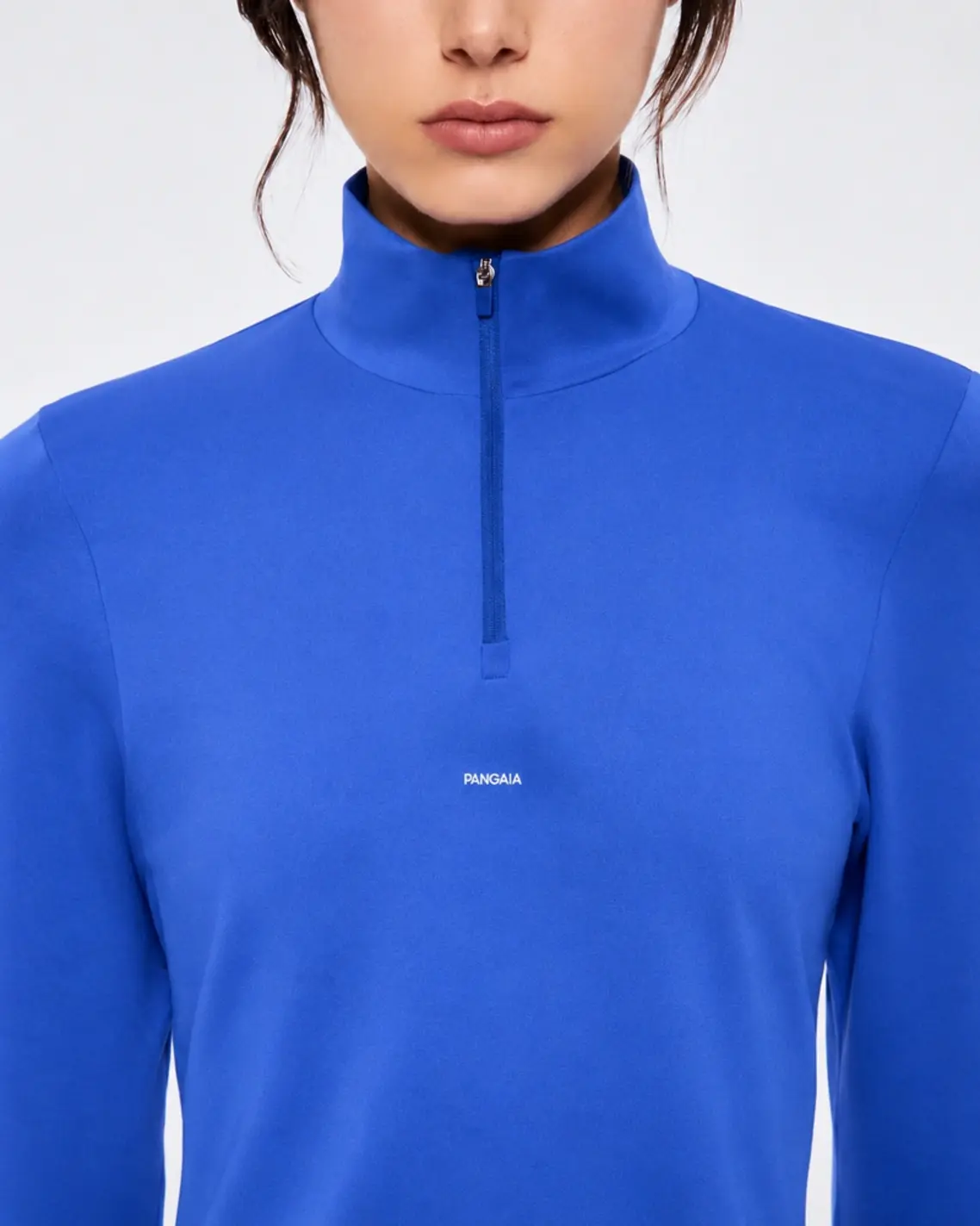
Several material solutions are already moving beyond concept language and into named products, fibres and finishing systems. Pangaia’s 365 Seamless Activewear, for example, uses Fulgar’s EVO® Nylon, a bio-based nylon made from renewable raw materials including castor beans and industrial corn, together with Hyosung’s regen™ BIO Max elastane, which Pangaia describes as 98 per cent bio-based. The same stretch problem is being addressed from another direction by Hyosung TNC and Lenzing, which have presented a yoga collection combining Hyosung’s regen™ BIO Elastane with Lenzing’s wood-based fibres, including the TENCEL™ and ECOVERO™ families. In the race to replace nylon and petroleum-heavy fleece structures, Goldwin’s collaboration with London-based J.L-A.L offers a more experimental example. The Goldwin J.L-A.L fleece jacket uses Spiber’s Brewed Protein™ fibre, silk fur and PlaX, a plant-derived biomass plastic, while Goldwin also describes the use of SYN-GRID algorithmic pattern-making to reduce fabric waste by about 50 per cent. Patagonia has moved its wetsuits, gloves, booties and hoods to Yulex® natural rubber, made from an 85 per cent Yulex natural rubber and 15 per cent synthetic rubber blend by polymer content, and says it became the first surf company to go neoprene-free in 2016. Finisterre also uses Yulex® natural rubber as a lower-impact alternative to traditional neoprene, describing its Yulex products as using 85 per cent Yulex Pure natural rubber and 15 per cent synthetic rubber by polymer content.

Shoes are far harder. A running shoe is not just a textile product; it is a complex object made from foams, adhesives, textiles, rubber, reinforcements and structural components. Durability, cushioning, rebound, grip and stability all matter. Brands such as Vivobarefoot, Allbirds and Circle Sportswear have experimented with bio-based foams, eucalyptus uppers, natural rubber outsoles, wool and plant-derived materials, but the category remains one of the most difficult to simplify. The more functions a product must perform, the more tempting it becomes to hide complexity inside chemistry.

Some of the most ambitious experiments go beyond reducing harm and imagine textiles that could actively support skin health. Brands such as Skin Series are exploring yarns made from soya protein and seaweed fibres, with claims that native bacteria can become activated on contact with skin, helping to prevent odour and support the skin’s own ecosystem. Stretch is achieved through knitting and panelling rather than elastane, resulting in garments designed to be natural, close-fitting and microbiome-aware. Any claim that clothing can improve the skin’s immune system or encourage cell renewal should be treated carefully. The idea of probiotic or prebiotic textiles is fascinating, but it sits in the same marketing landscape that has already blurred the line between wellness, science and fantasy. If the older sportswear industry hid behind performance claims, the newer one must avoid hiding behind biological romance. The most radical future may not be a single miracle fibre. It may be disclosure. Until brands reveal more about finishes, additives, antimicrobial treatments, water repellents, plasticisers and end-of-life pathways, consumers are being asked to make ethical choices from incomplete information.
Laboratories are clearly not short on ideas. Non-Newtonian materials, for instance, suggest another frontier: soft gels or films that remain flexible during normal movement but harden on impact. In theory, that could transform protective sportswear, making shin pads, cricket pads, helmets or even supportive garments lighter and more comfortable. The future sports bra may come not from one cleaner fibre, but from a new relationship between textile science, body protection and chemical accountability. But the larger answer may be less glamorous than any single invention: fewer mystery finishes, fewer miracle claims, more chemical disclosure, and a sportswear industry willing to admit that performance has never been just about movement. It has always been about what we allow to touch the body in the name of improvement.
Advertisement