MENU
Close





What does the bouquet purse say about modern brides who want tradition, but only on their own terms?
What does the bouquet purse say about modern brides who want tradition, but only on their own terms?
May 9, 2026
Advertisement

Advertisement



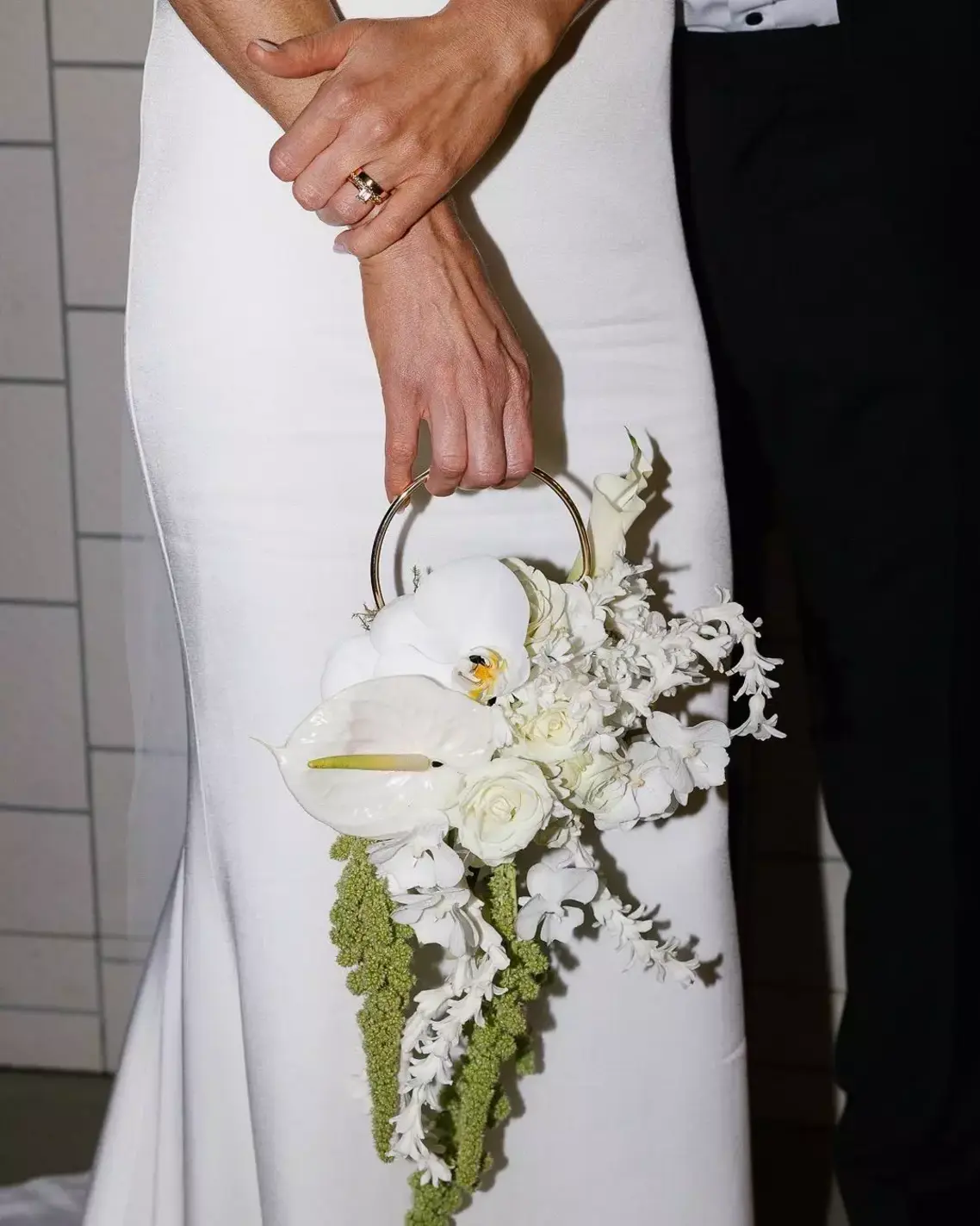
The bouquet purse is not rising because brides suddenly need another thing to hold. It is rising because the traditional bouquet has started to feel visually exhausted. Round white flowers, soft greenery, polite ribbon, hands folded at the waist, beautiful, yes, but also overly familiar. The bouquet purse offers a different focal point. It says the bride is not content to be styled by inheritance alone.
Lara Bamgbose of Iyawo Flowers says brides are leaning into personalization; her floral purse bouquets were around $300, made up about 40 percent of bouquet orders, and inquiries had tripled since the start of 2026 compared with the previous year. Pinterest’s own 2026 wedding trend report gives the trend a louder signal: searches for bouquet purse rose 1,015%, sitting among other alternative bouquet ideas such as fuzzy wire bouquets, book flower arrangements, bedazzled flowers, and note bouquets.
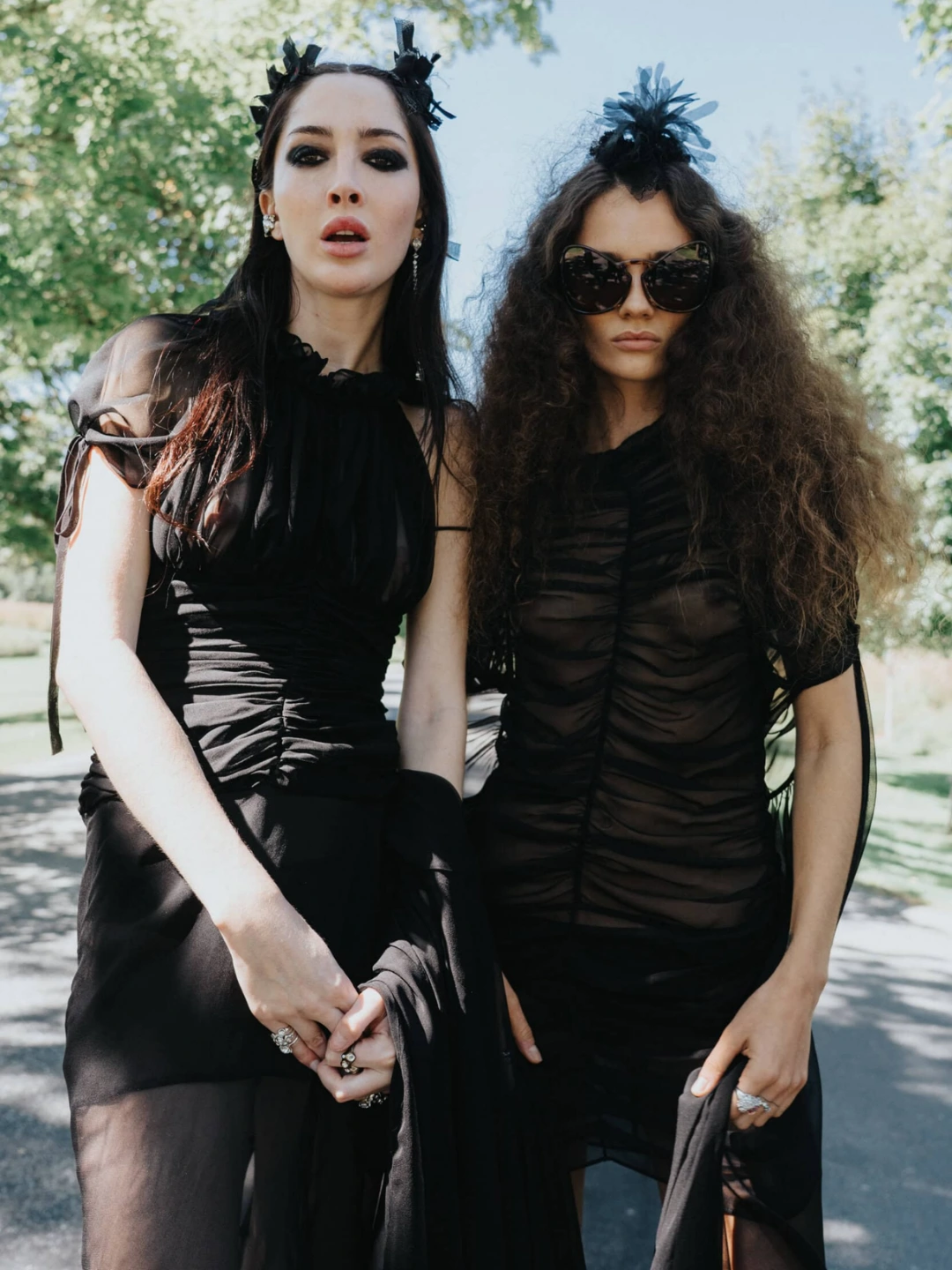
That data gives the trend weight, brides are not only searching for bouquet purses because they are cute. They are searching because the bouquet is one of the few bridal objects that can still be radically personalized without frightening the relatives. A bride may hesitate before wearing a black gown, a feathered veil, or a sculptural hat. But a bouquet purse? It slips the rebellion through the side door, covered in flowers. That is the genius of it. It is experimental while still looking romantic. It is strange while still being wedding-appropriate. It can be burgundy and chartreuse, shell-shaped, orchid-heavy, mossy, tropical, gothic, powdery, or almost ridiculous, yet it remains protected by the innocence of flowers.
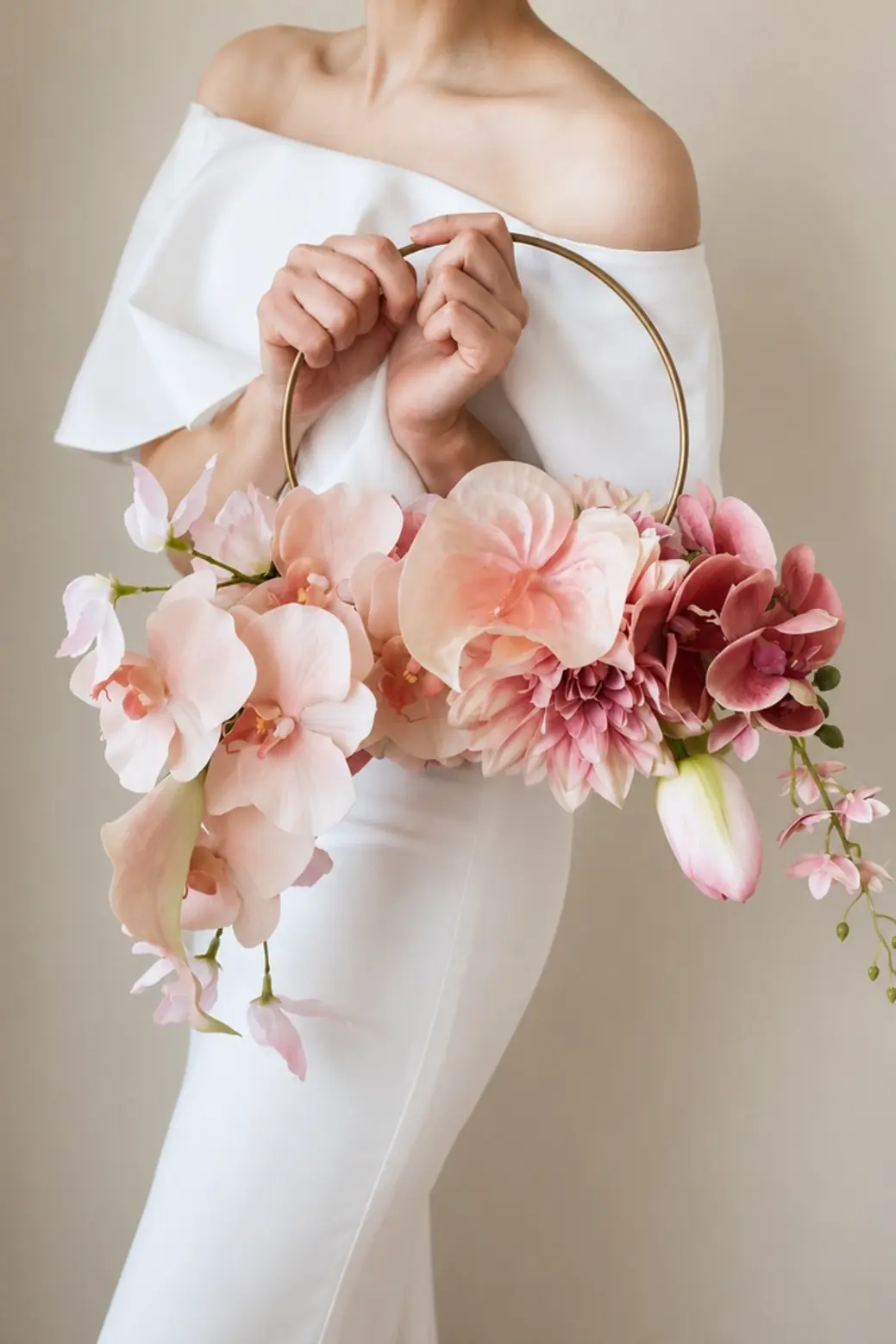
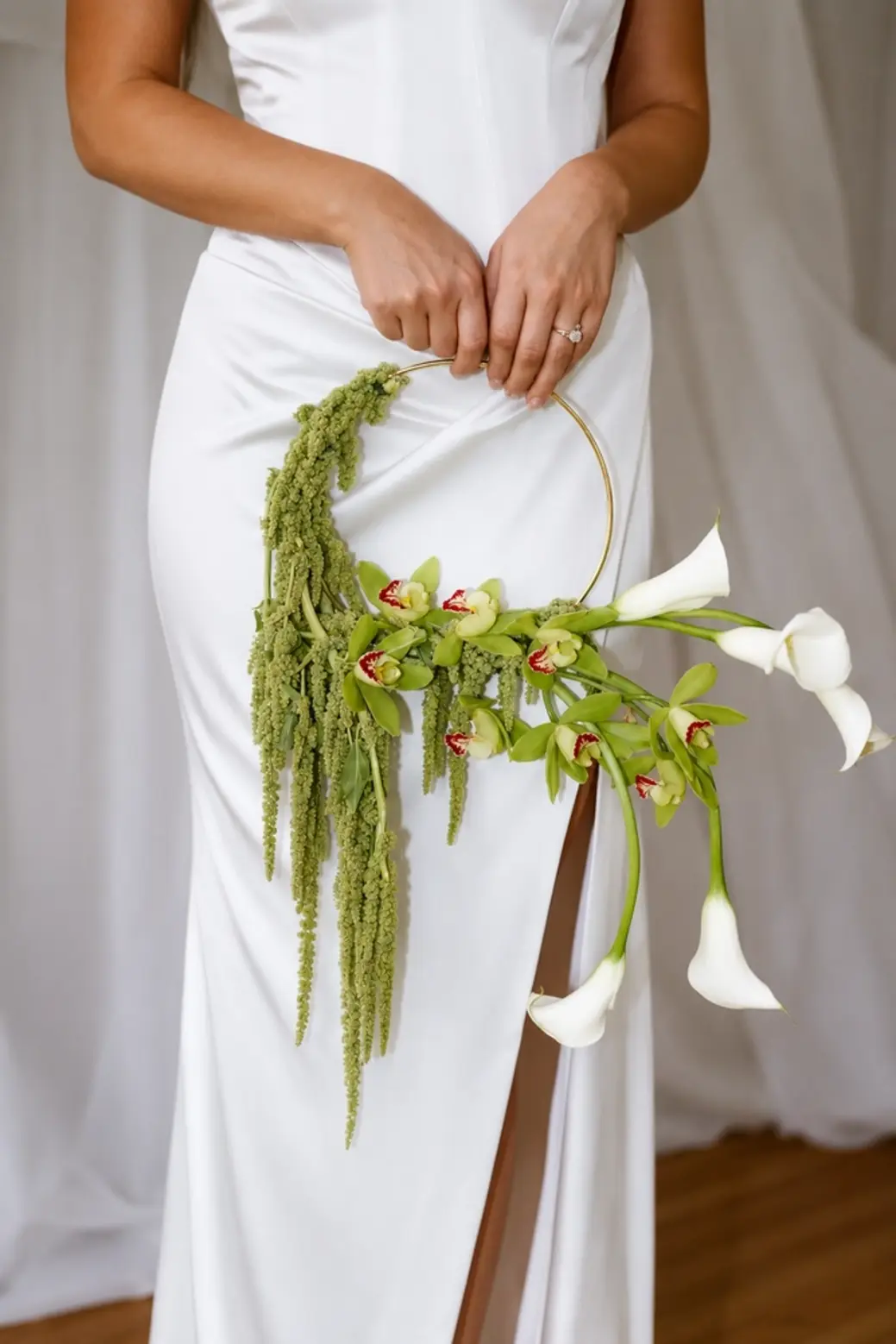
A traditional bouquet has long carried the ritual of being thrown away from the bride and into the crowd, as if its meaning must be transferred to the next woman. The bouquet purse feels far less willing to leave her hand. It is too designed, too personal, too expensive, too emotionally loaded. It does not want to be tossed. It wants to be kept. That small refusal says a lot. The bouquet purse turns the bridal flowers from a communal superstition into a private possession. It shifts the bouquet’s purpose from predicting another woman’s future to preserving this woman’s present. And perhaps that is why it feels so right now. The 2026 wedding mood is increasingly personal, expressive, and impatient with formula. Vogue’s 2026 wedding trend report describes a shift away from algorithm-shaped weddings and toward celebrations that feel individual, mood-driven, and expressive, with statement accessories and alternative bridal styling gaining cultural force. The bouquet purse lives exactly there: between the personal and the performative, between the intimate keepsake and the social-media object.
Weddings have always been performances; social media simply made the stage visible. The bouquet purse is not guilty because it understands the camera. It is powerful because it understands that a bride today is building both a memory and an image.
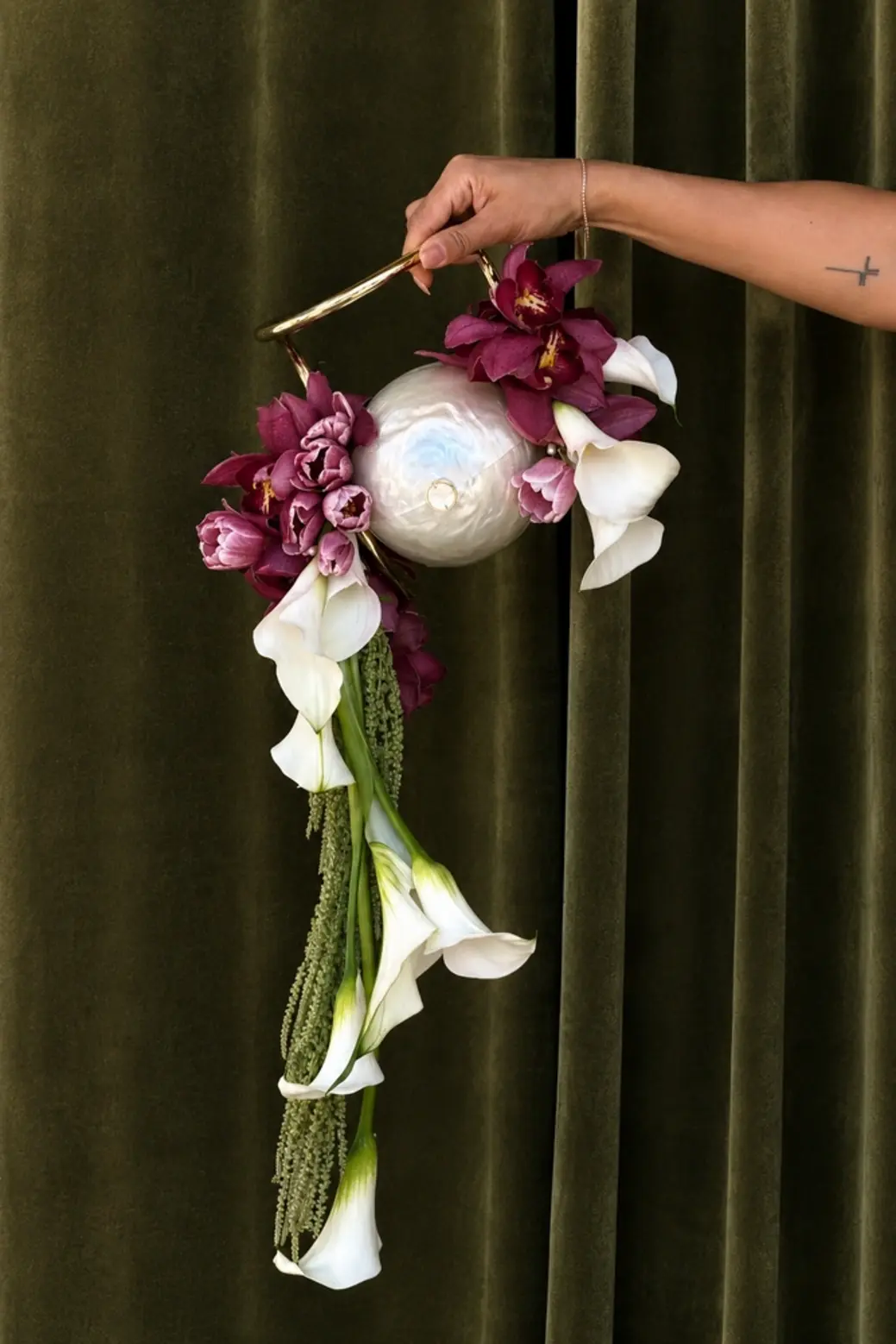
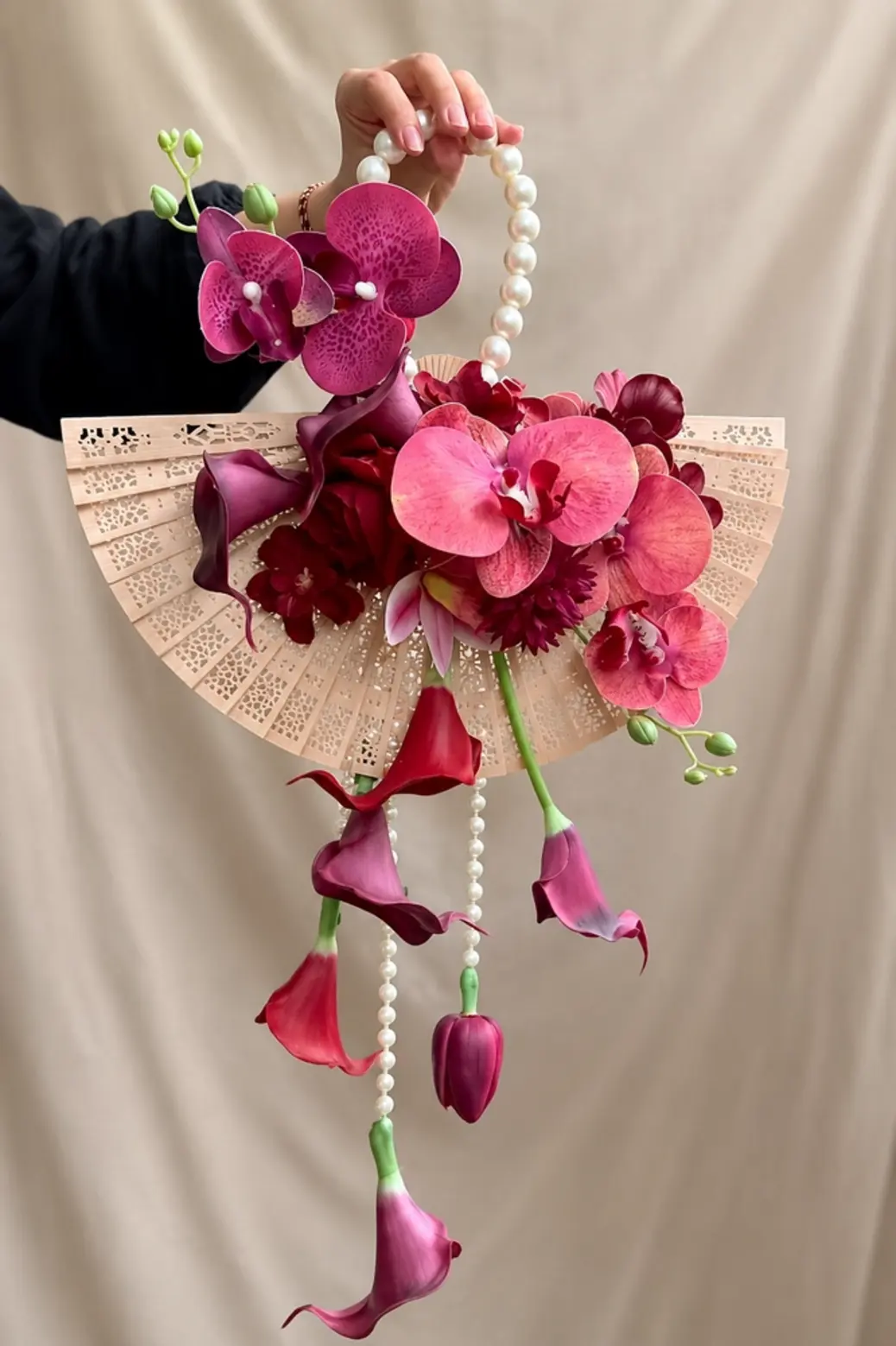
But the wedding bouquet purse only looks effortless from a distance. Up close, it is one of the most technically demanding bridal accessories because it has to satisfy two industries at once. As a bag, it needs balance, scale, a handle, a visible silhouette, and enough polish to belong beside a wedding dress. As a floral object, it needs hydration, freshness, stem support, temperature control, and a careful understanding of which flowers can survive being carried like fashion instead of displayed in a vase. The strongest wedding bouquet purse starts with structure. The base can be a real handbag, a wicker basket, a pearl-handled clutch, a metal frame, a transparent vessel, a vintage evening bag, or a custom floral armature. Each base changes the whole mood.
Where does the visual weight sit? Will the bag tilt when flowers are added? Can the bride hold it without crushing petals? Will the handle rub against the blooms? Will the arrangement photograph clearly from the aisle, the side, and the close-up portrait? The wedding bouquet purse must be designed for movement, not just a still-life table shot.
The mechanics matter as much as the flowers. Some designs use hidden water tubes, taped stems, wire support, floral cages, moss-based mechanics, or carefully concealed foam. The floral foam question is increasingly sensitive. Sustainable floristry groups have raised concerns about traditional floral foam because it can crumble into tiny plastic fragments and complicate composting of plant material. Research published in HortTechnology also found that while traditional phenol-formaldehyde floral foam maintained vase life longer for many tested flowers, alternatives such as basalt floral fiber still kept all tested flowers alive for more than seven days, showing that foam-free or lower-impact mechanics are becoming more viable. That sustainability issue gives the wedding bouquet purse a sharper contemporary meaning. It can be a decorative object, but it can also become a design test: can a florist create something beautiful, wearable, and lower-waste without relying on the usual hidden plastics? The best answer is usually not ideological purity, but smarter construction: reusable bases, removable flower inserts, water tubes only where needed, hardy blooms, and mechanics that allow the flowers to be repurposed after the ceremony.
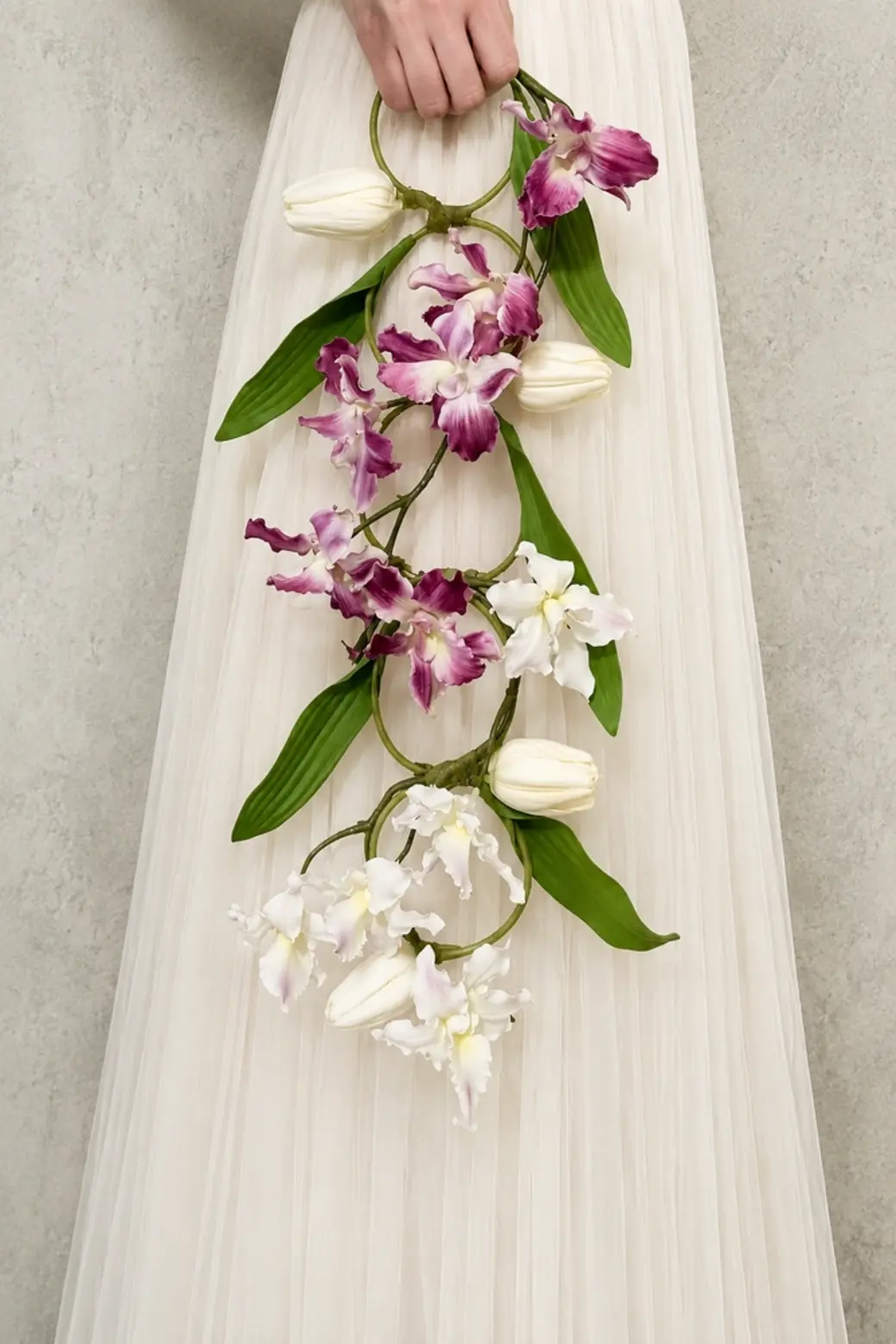
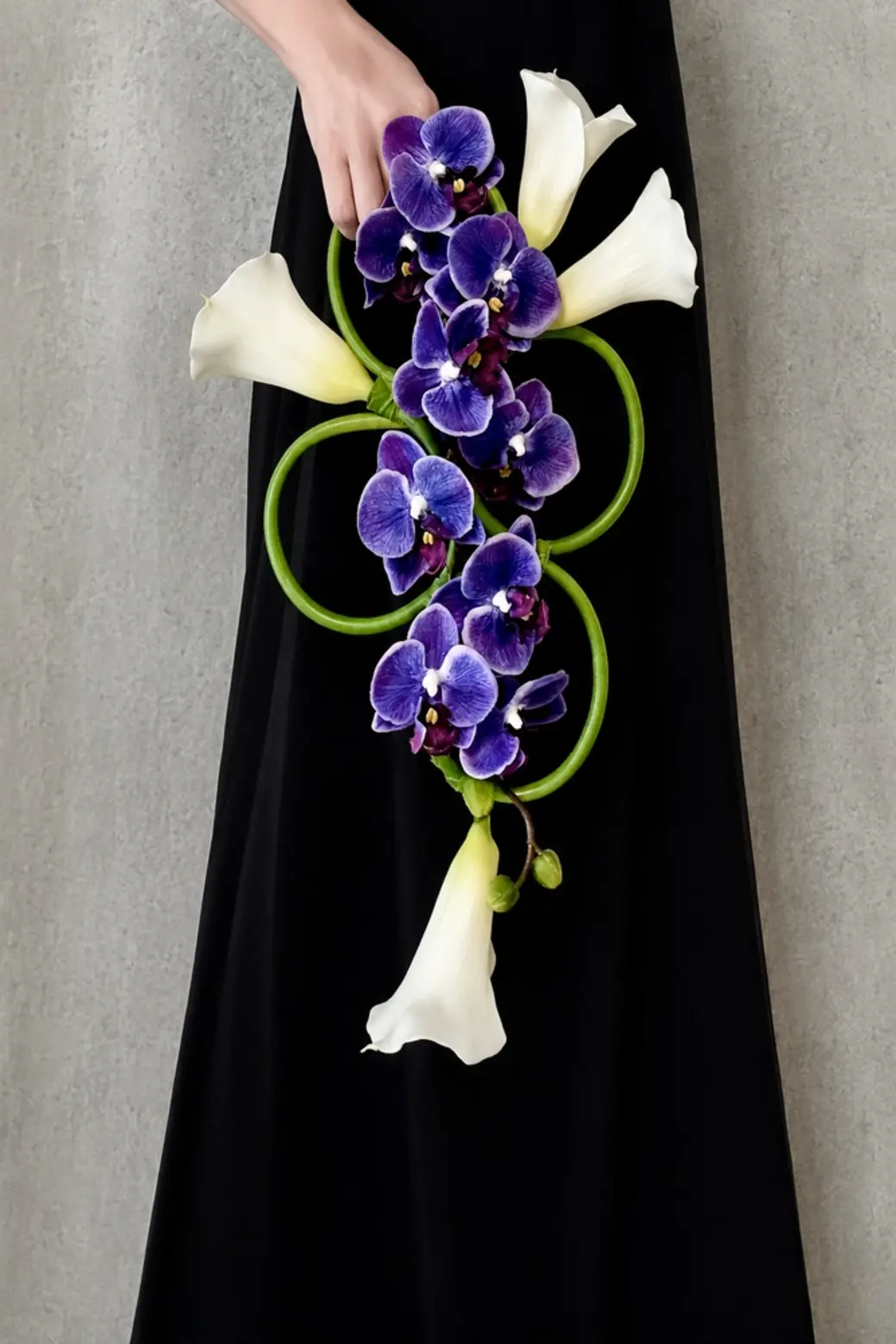
A wedding bouquet purse is more exposed. It swings, brushes against fabric, sits near body heat, and may be handled during photos, ceremony transitions, and reception styling. That means flower choice becomes strategic. The labor sits in the hidden details: sourcing the base, testing the weight, prepping the flowers, wiring delicate stems, taping mechanics, concealing water sources, styling the cascade, checking the handle, transporting the piece upright, and possibly refreshing it before the ceremony. Compared with a regular bouquet, the designer is working with less tolerance for error because the purse has to read as both accessory and arrangement. This is why pricing can feel surprising. Wedding florals already involve far more than flowers. The Knot’s Real Weddings Study places the average cost of wedding flowers in the U.S. at about $2,800, while Poppy Flowers, using its own wedding consultation and order data, reports an average closer to $3,500, with many couples spending between $2,285 and $4,215. Those numbers include more than bouquets; they include personal flowers, centerpieces, ceremony flowers, and other floral pieces. The wedding bouquet purse belongs to the category where labor can outrank stem count. Wedding-specific arrangements may carry higher labor charges, with bouquet labor sometimes around 35% of the selling price, and hand-wired or taped pieces reaching up to 50%. In other words, the cost is not only the lilies, roses, orchids, or pearls. The cost is the hand that makes the purse look inevitable.
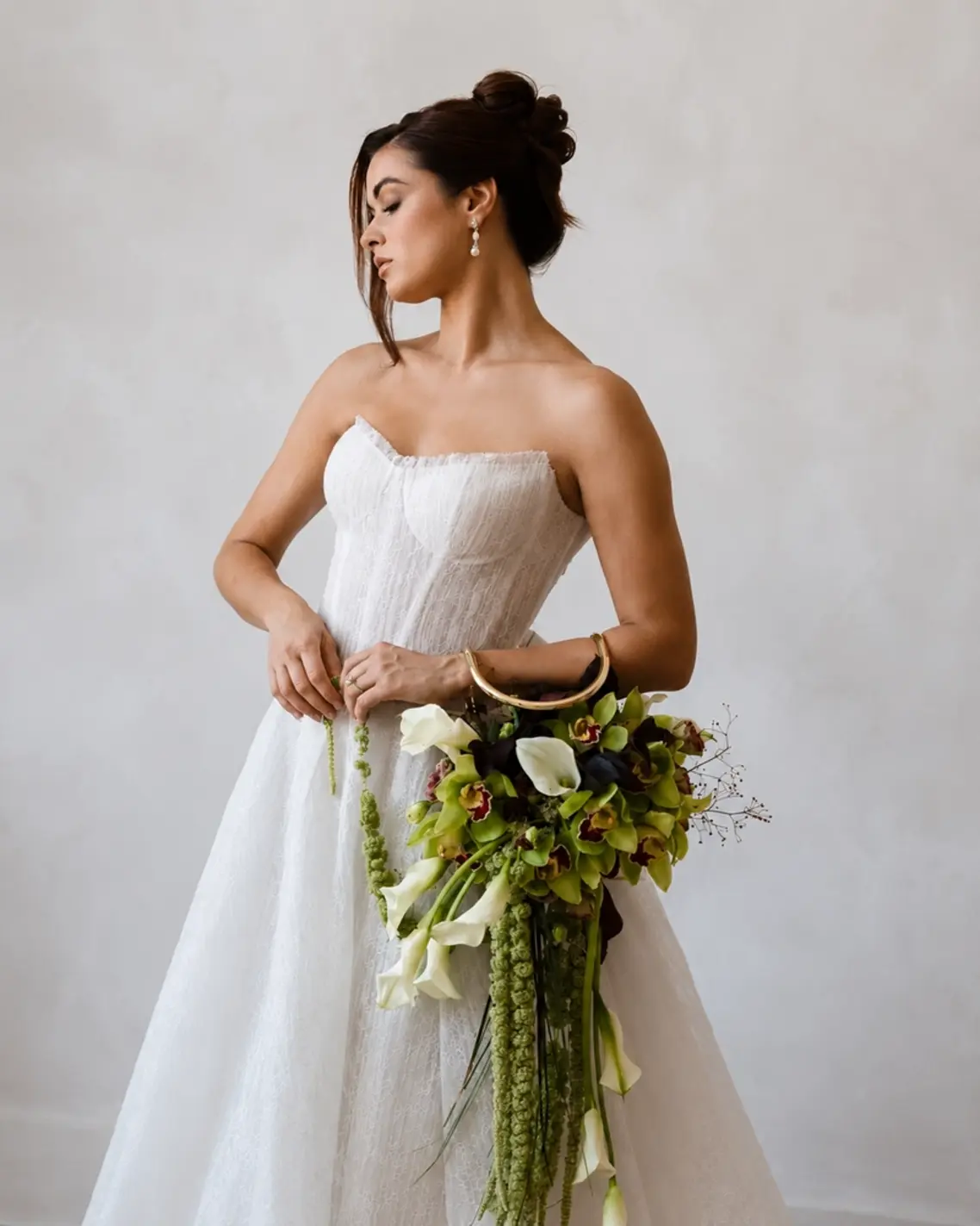
The deeper fascination of the bouquet purse is that it turns a bridal object into a miniature social theory. A wedding is already a rite of passage, the moment a woman crosses from one public identity into another, and the bouquet has always been one of the symbols placed in her hands during that transformation. But when the bouquet becomes a purse, it stops acting like inherited ritual and starts behaving like edited identity. It becomes what sociologist Erving Goffman might call a tool of self-presentation: a prop, a gesture, a camera-aware object through which the bride manages how she is seen. It also works like an extended self, because the bride’s taste, memory, mood, and private mythology move outside the body and bloom through an accessory.
The bouquet purse lets the bride keep tradition close while reshaping it into something personal, photographable, and socially legible. Even the fact that it feels too precious to toss says something about modern weddings: the bouquet is shifting away from communal superstition and toward private archive. In a culture where individuality is often discovered through Pinterest, performed through Instagram, and preserved through keepsakes, the bouquet purse becomes a strangely perfect bridal object, soft enough to satisfy romance, structured enough to signal control, and distinctive enough to whisper that this bride wants the old ritual, but only after it has passed through her own hand.
Advertisement