MENU
Close





When Chanel had the chance to introduce Bhavitha Mandava to the world as a fully realized fashion force, why did it choose to make her a lesson in humble beginnings?

When Chanel had the chance to introduce Bhavitha Mandava to the world as a fully realized fashion force, why did it choose to make her a lesson in humble beginnings?
May 7, 2026
Advertisement

Advertisement



At the 2026 Met Gala, Bhavitha Mandava did not simply wear a controversial Chanel look. She became the site of a much uglier argument: who gets glamour, who gets symbolism, who gets protection, and who is forced to be grateful while everyone else gets to be magnificent.
The official defense is neat, almost too neat. The look was Chanel by Mathieu Blazy. It was not actually denim. It was a trompe-l’œil couture construction: a beige half-zip, a white top, and muslin trousers designed to mimic jeans, reportedly crafted over 250 hours. It referenced the outfit Mandava wore when she was discovered in a New York subway station, and therefore, according to its defenders, it was meaningful, personal, poetic, and full-circle.
The Met Gala 2026 dress code was “Fashion is Art,” tied to the Costume Institute exhibition Costume Art, which explores the dressed body and the relationship between garments, art, identity, politics, and representation. That should have given Chanel endless possibilities. Bhavitha Mandava could have been framed as sculpture, icon, goddess, apparition, insurgent beauty, new house mythology. Instead, Chanel dressed its first Indian house ambassador in an elevated memory of being discovered.
How sentimental. How convenient. How violently small.
The issue is not whether a woman can wear trousers to the Met Gala. Of course she can. The issue is not whether casualness can be couture. Of course it can. The issue is not even whether trompe-l’œil denim belongs on those stairs. Vogue has already argued that jeans and denim effects can challenge red-carpet expectation, and Bhavitha’s look sits inside that broader 2026 conversation.
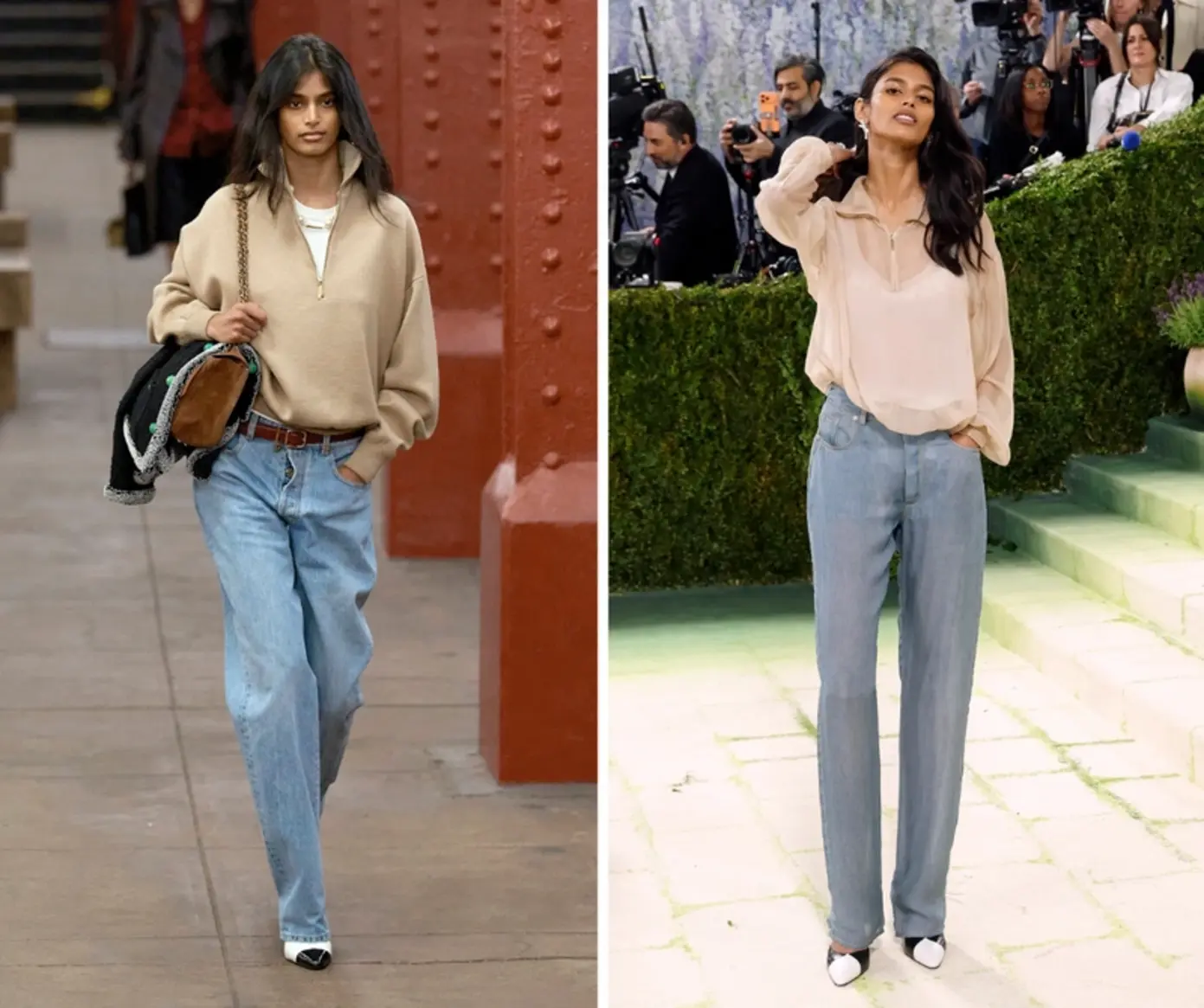
Bhavitha Mandava has already made history. Chanel named her a house ambassador in March 2026, after she became the first Indian model to open a Chanel show. That is not a footnote. That is not a charity case. That is not a sweet little origin story to be endlessly repackaged for institutional romance. That is a professional achievement inside a system that rarely opens its most guarded doors to South Asian women. So why does the narrative around her keep returning to the subway? Why must the miracle always be “she was found,” instead of “she worked her way up”?
Chanel’s opportunities for Bhavitha Mandava are being read less like collaboration and more like charity, with Matthieu Blazy positioned as the giver and Bhavitha as the beneficiary. Emphasizing her life-changing moment risks erasing her agency and turning her into a symbol of someone else’s generosity. That is the real scandal. Not denim. Not muslin. Not minimalism. The scandal is authorship. Who owns Bhavitha Mandava’s story: Bhavitha, or the house that discovered how useful her story could be?
There is a difference between honoring someone’s past and trapping her inside it. A reference can be tender once. Twice, it begins to look like branding. By the third repetition, it starts feeling like a cage with better lighting.
Chanel’s defenders can repeat “it is couture” until the silk frays. Craft alone does not absolve concept. A garment can take 250 hours and still say the wrong thing. A look can be technically impressive and visually underwhelming. A trompe-l’œil trick can be intellectually clever and emotionally ungenerous. The most damning thing about Bhavitha’s Met look is that the craftsmanship requires explanation. On the carpet, it did not read first as wit, power, or provocation. It read as casual. It read as subdued. For many viewers, it read as if the most prestigious fashion house in the world had decided that its first Indian ambassador should arrive at fashion’s loudest ritual dressed like the prologue to her own career.
And why? For contrast? For virality? For the thrill of ordinary clothes at an extraordinary event? That might work for an already overprotected celebrity whose glamour has been confirmed a hundred times. Minimalism hits differently when the system has already crowned you. Understatement becomes power when the audience knows you could have had everything.
But what happens when understatement is given to the person whose place at the table is still being publicly negotiated? What happens when the woman representing a long-underrepresented fashion community is asked to embody restraint while others are allowed fantasy? What happens when her symbolic debut looks less like arrival and more like evidence that she should remain grateful?
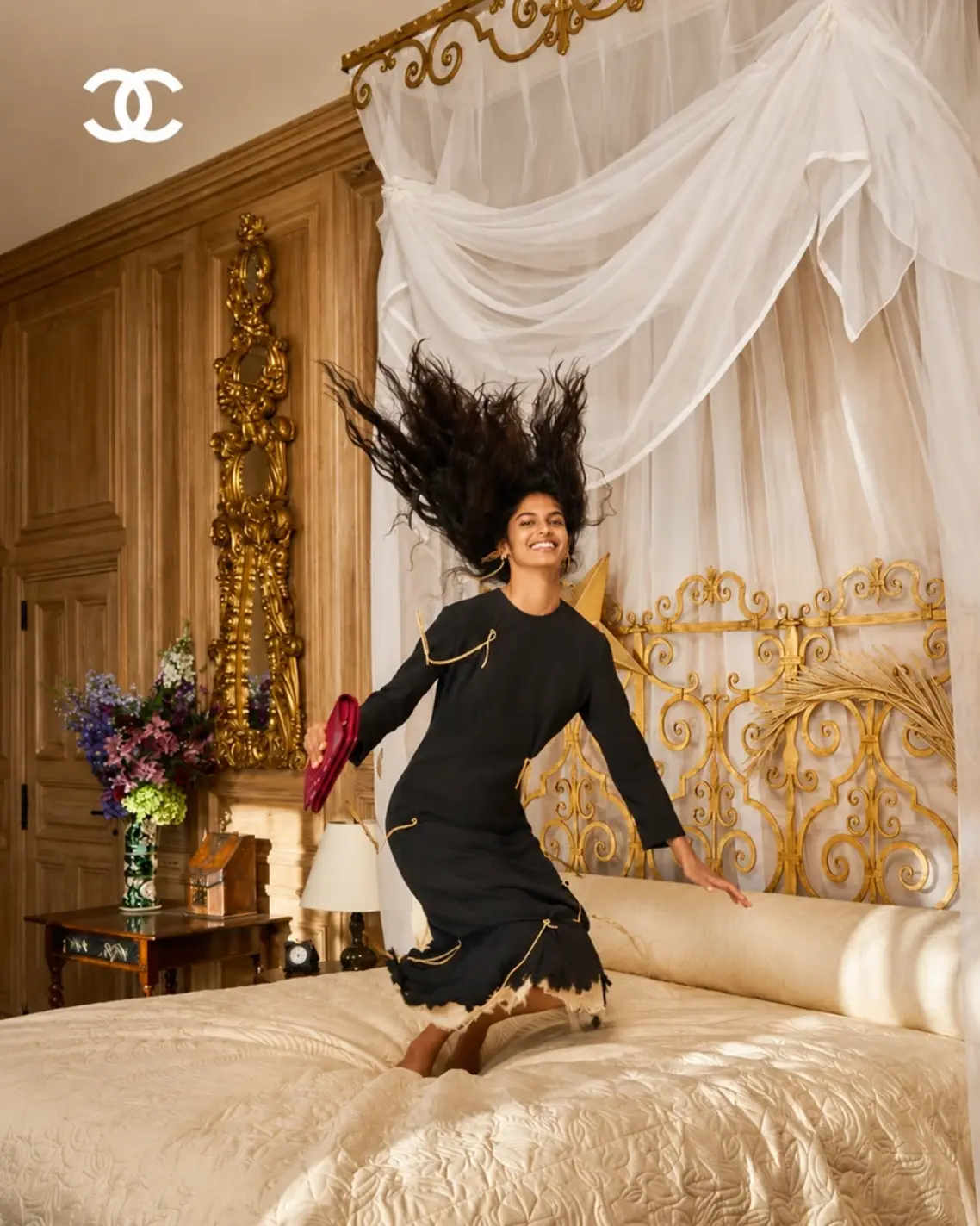
That is why the race conversation matters. Racism in fashion rarely announces itself like a villain in a bad film. It often arrives as taste. As authenticity. As rawness. As natural beauty. As “we wanted her to be herself.” These phrases sound tender until you notice who receives them.
Did Chanel see Bhavitha Mandava as a woman to mythologize, or as a story to aestheticize?
Because those are different things.
To mythologize a model is to expand her. To give her scale. To let her become larger than biography. To let her body become an argument, a monument, a fantasy. To aestheticize her story is to keep pointing at the subway platform, the discovery, the lucky break, the before-picture. It says: remember where we found her. Remember who lifted her. Remember who gave her access.
That is not empowerment. That is luxury paternalism.
Even worse, the public defense of the look has leaned heavily on fashion literacy: people simply do not understand the piece, people mistake silk for denim, people crave bling, people are too basic for conceptual dressing. That argument is smug, and frankly, weak. The Met Gala is a visual event. It is built for immediate symbolic impact. If a look requires a press release, a comment-war lecture, atelier trivia, and moral guilt to function, perhaps the look has failed part of its job.
Fashion people love to pretend that criticism comes only from ignorance. Sometimes it comes from seeing too clearly.
Yes, the pants are not jeans. Yes, the sweater is not a mall sweater. Yes, trompe-l’œil has a legitimate history in fashion. But the public reaction is still useful because fashion does not live only in material fact. It lives in perception. The eye sees first; the explanation arrives later with a security detail. When thousands of viewers saw Bhavitha and thought “why did Chanel do this to her?”, that response became part of the garment’s meaning. A brand as powerful as Chanel knows this. It cannot claim innocence after staging a look at the most surveilled fashion event on Earth.
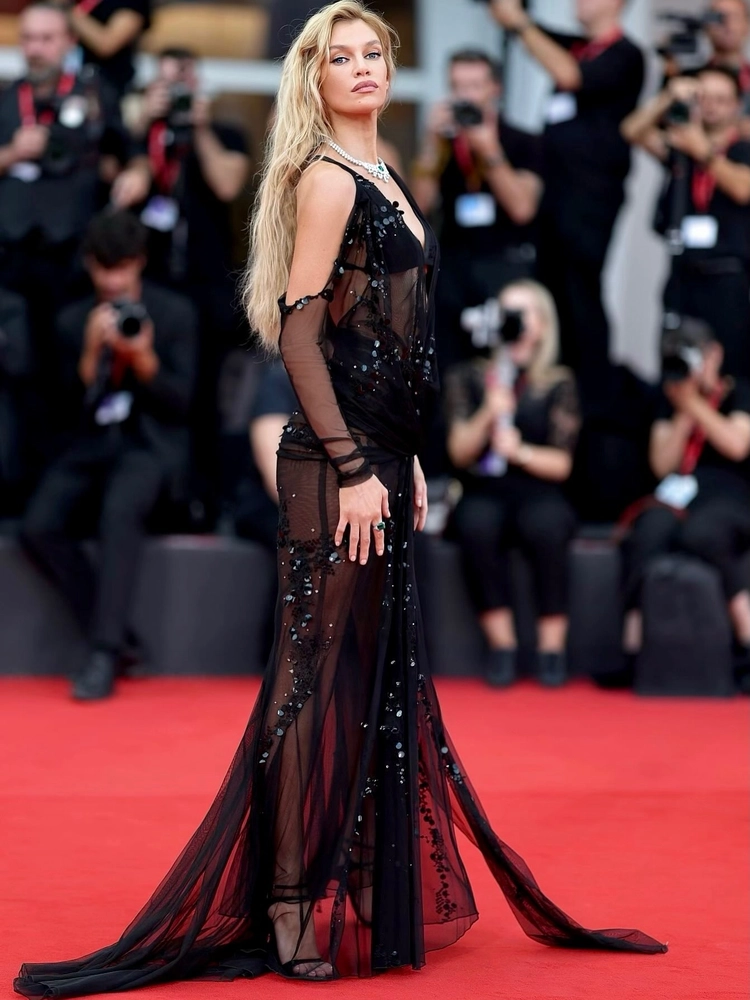
Chanel understands spectacle when it wants to. Nicole Kidman, a 2026 Met Gala co-chair, wore a custom red sequin-and-feather Chanel look by Matthieu Blazy, widely framed through radiance and red-carpet glamour. So Chanel can produce grandeur. Chanel can produce cinematic fantasy. Chanel can protect an image when the wearer’s mythology already fits the institution’s comfort zone.
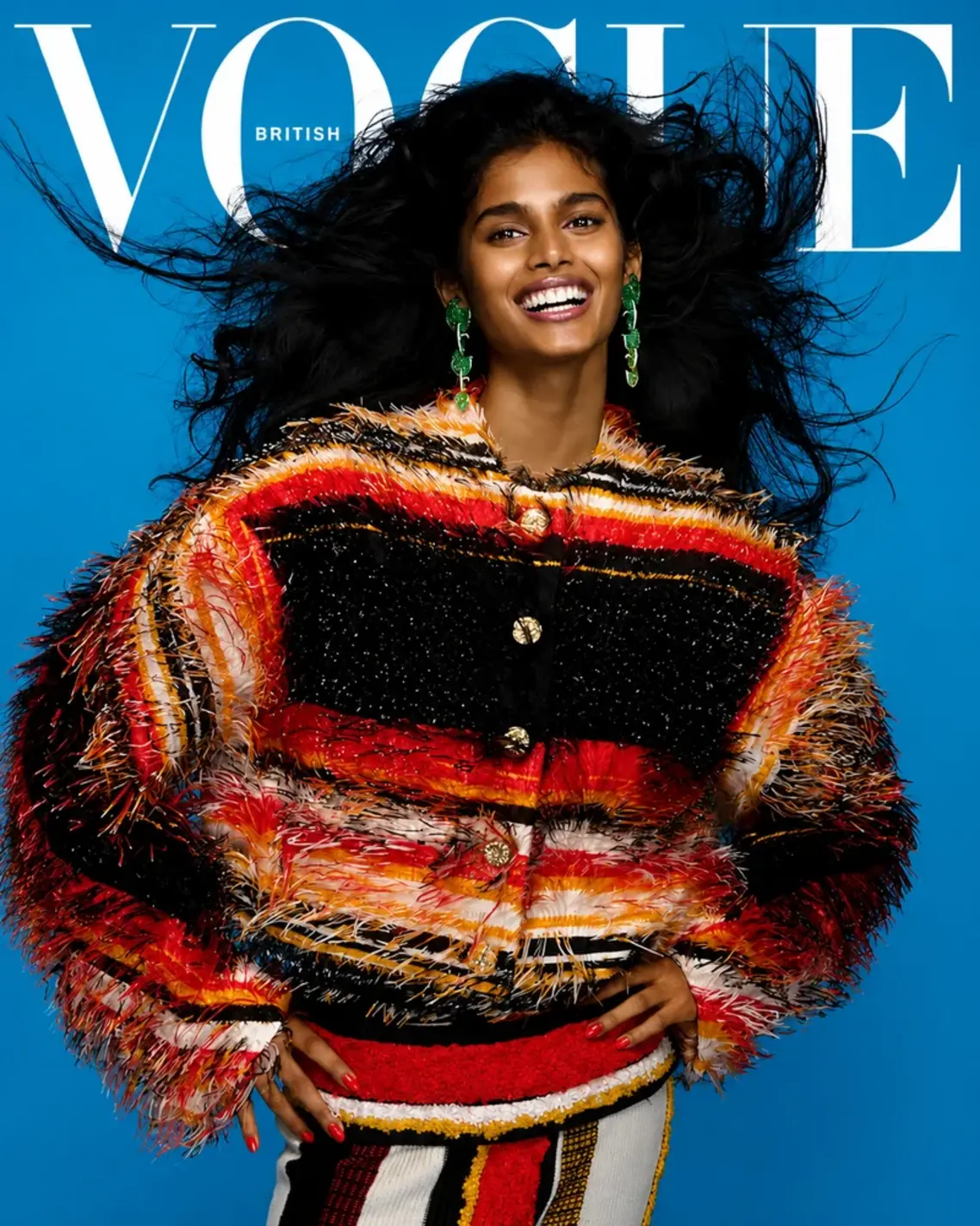
Who does Chanel believe deserves protection from looking underdressed?
Maybe Bhavitha herself loved the look. Maybe she found it meaningful. Maybe she wanted to show up as herself. Her personal feeling matters. But personal consent does not erase institutional optics. A young model can love a story while a brand still mishandles the politics of repeating it. A woman can be proud of where she came from while the world still deserves to ask why the luxury machine keeps showing us the before instead of building the after.
The model should not become the target of the critique. Bhavitha Mandava looked poised. She carried an impossible amount of discourse on her body with more dignity than the discourse deserved. The target is Chanel’s framing, Chanel’s priorities, and the fashion industry’s bad habit of confusing access with care.
Because access is not care. A seat at the Met is not care. An ambassadorship is not care. A viral moment is not care. Care is image strategy. Care is context. Care is asking whether a young model will be protected once the internet turns cruel. Care is giving her a look that can survive both the fashion nerd’s close reading and the public’s first glance. Care is making sure the world sees not merely the girl who was discovered, but the woman who belongs.
Instead, the look forced Bhavitha into a debate where every defense somehow made the problem clearer.
“It references her discovery.” Exactly. Why is that the main story?
“It is ordinary clothes made extraordinary.” Fine. Why must her extraordinariness be hidden inside ordinariness?
“It is a middle finger to spectacle.” Lovely. Why is the first Indian Chanel ambassador the one asked to give the middle finger while others enjoy the tiaras, trains, feathers, jewels, and god-complex gowns?
Fashion loves a rebel, but it often chooses the least protected person to do the rebelling.
There is also a broader fatigue here with the muse narrative. The muse is beautiful, yes, but she is rarely granted authorship. She inspires. He creates. She appears. He transforms. She is discovered. He is visionary. How modern. How ancient. How boring.
Chanel, of all houses, should know the danger of that story. This is a brand built on the myth of a woman who constructed herself through clothes, commerce, performance, discipline, and control. Yet the new narrative around Bhavitha seems less interested in what she constructs and more interested in what has been constructed around her. The language of discovery can easily become a luxury fairy tale where the institution becomes prince, fairy godmother, and kingdom at once.
But Bhavitha Mandava is not Cinderella at the Met Gala. She is not a charity miracle wrapped in silk denim. She is not a walking thank-you note to Matthieu Blazy. She is a model, an ambassador, an image-maker, and a professional standing inside one of the most political rooms in fashion. The industry should speak about her with the same seriousness it gives to its preferred stars.
The tragedy of this look is that it could have been brilliant in another context. On a runway, the subway reference had charm. In an editorial, it could have been clever. In a campaign about transformation, it might have landed with tenderness. But the Met Gala is a different beast. It is not merely a place to wear clothes; it is a place where fashion declares hierarchy. The carpet tells us who is to be worshipped, who is to be studied, who is to be photographed from every angle, who is to be remembered.
For Bhavitha’s first Met, Chanel should have given her a coronation. Instead, it gave her a callback. A callback is cute. A coronation is history.
And that is the priority problem. Luxury fashion wants diversity, but often on narrative terms that still flatter the house. It wants new faces, but it wants to remind us who opened the door. It wants global representation, but it panics when representation demands extravagance, equality, and myth-making power.
So, the question is not “was the Bhavitha Mandava look racist?” as a simple yes-or-no verdict. The more serious question is: what racial logic made this look seem safe, poetic, and appropriate to Chanel in the first place? What assumptions allowed the house to believe that humility was the strongest message for her? What hierarchy decided that her first Met Gala did not require the full armor of glamour?
That is where the criticism should stay: not on Bhavitha, but on the machinery around her.
Because in the end, Chanel did not just dress a model. It dressed a story. And the story it chose was suspiciously flattering to Chanel itself: look how far she has come; look where we found her; look what we made possible. But the story Bhavitha Mandava deserved was the opposite. Give her opportunity, not charity. Give her fashion, not folklore. Give her a look that does not need pity, explanation, or institutional self-congratulation to survive. Give her the same dangerous glamour, the same visual protection, the same mythic budget of imagination that fashion reserves for the women it already believes in. Because if Chanel’s first Indian ambassador can make history, then Chanel’s job is not to keep reminding us that she was discovered underground. Its job is to dress her like she has already risen.
Advertisement