MENU
Close





Glowing with the warmth of Indian heritage, the Saree carries a beauty that feels both intimate and eternal, as though each drape has learned how to hold light, history, and the spirit of generations.
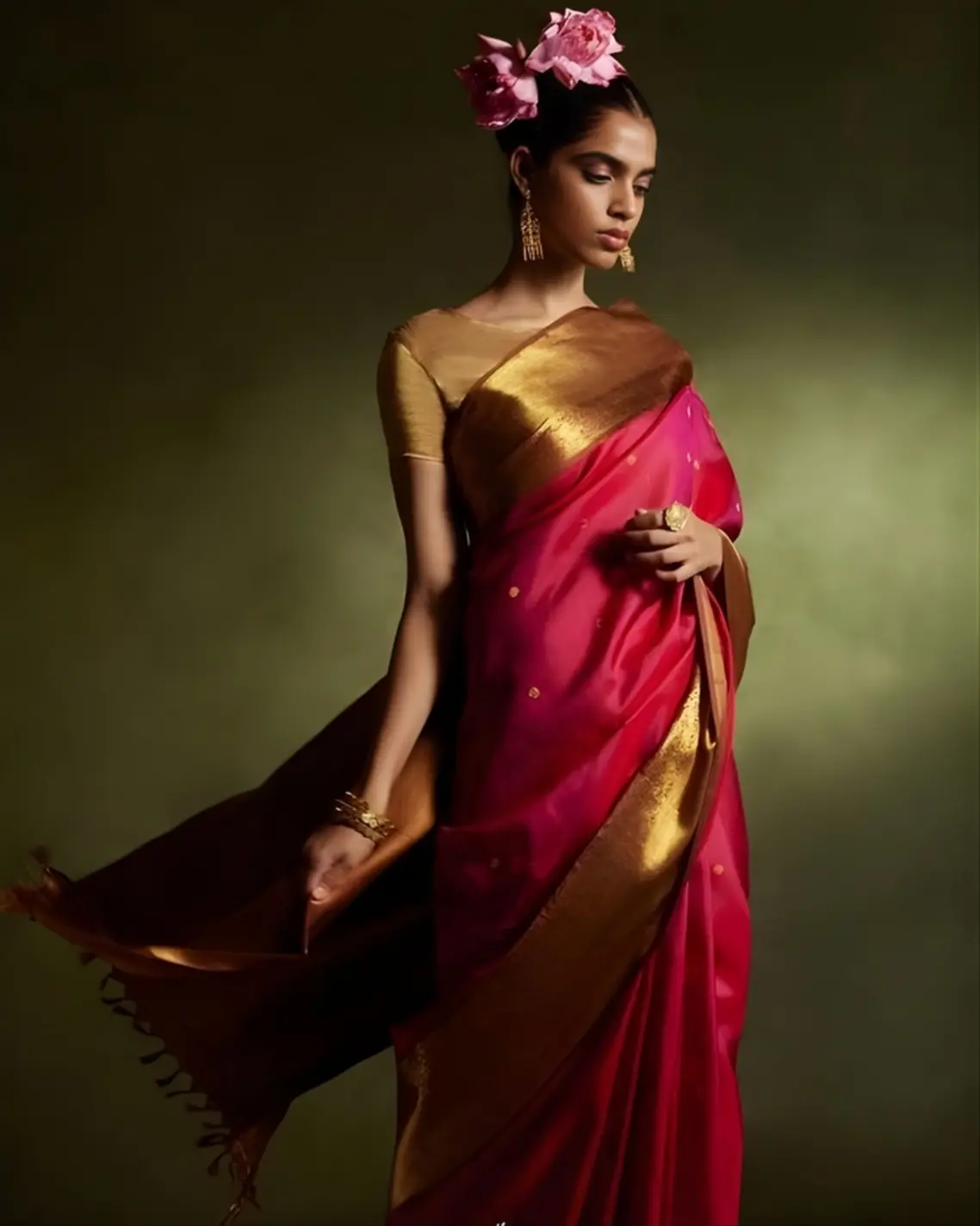
Glowing with the warmth of Indian heritage, the Saree carries a beauty that feels both intimate and eternal, as though each drape has learned how to hold light, history, and the spirit of generations.
April 17, 2026
Advertisement

Advertisement



Evening unfurls across festive India in a slow spill of gold and perfume, and suddenly everything feels touched by celebration: lanterns breathe amber light into carved balconies, marigold garlands pour their sunlit petals over thresholds, fireworks embroider the sky with brief jeweled astonishments, and the air itself seems dusted with sandalwood, rose attar, jasmine, vermilion, and the soft velvet trace of powder lingering on wrists, throats, and dressing tables. In that glowing hour, behind a half-drawn curtain, the saree ensemble begins its private little love story with the body, and every gesture carries the sweetness of ritual, the thrill of anticipation, the pleasure of being adorned with care.
Once that initial spark of wonder settles, the saree ensemble begins to breathe, revealing just how lavishly articulate it truly is. Every inch feels like a conscious choice, a soft pulse of mood, a small shard of a woman’s soul pinned to her shoulder. It starts with the blouse, which might climb high to the neck like a jewel-encrusted collarbone or curve into a tender neckline that coaxes the throat and shoulders to glow under the warmth of lamplight. Its sleeves tell their own story, sometimes skimming the arm with a polished, courtly grace, sometimes stretching long and fitted like a whisper of winter royalty, and other times ending in a short, playful clip, ready for the rhythm of dancing, laughter, and the bright rustle of bangles. Tucked away beneath is the petticoat, the secret architecture of the whole affair. It is the silent supporter, sometimes crisp enough to lend a silk drape its majestic structure, and other times so soft that chiffon or georgette can simply melt and sway against the body. Whether it is cut to hold a sharp, disciplined line of pleats or crafted to let the saree float around the ankles like perfumed smoke, it is the foundation upon which the magic rests.
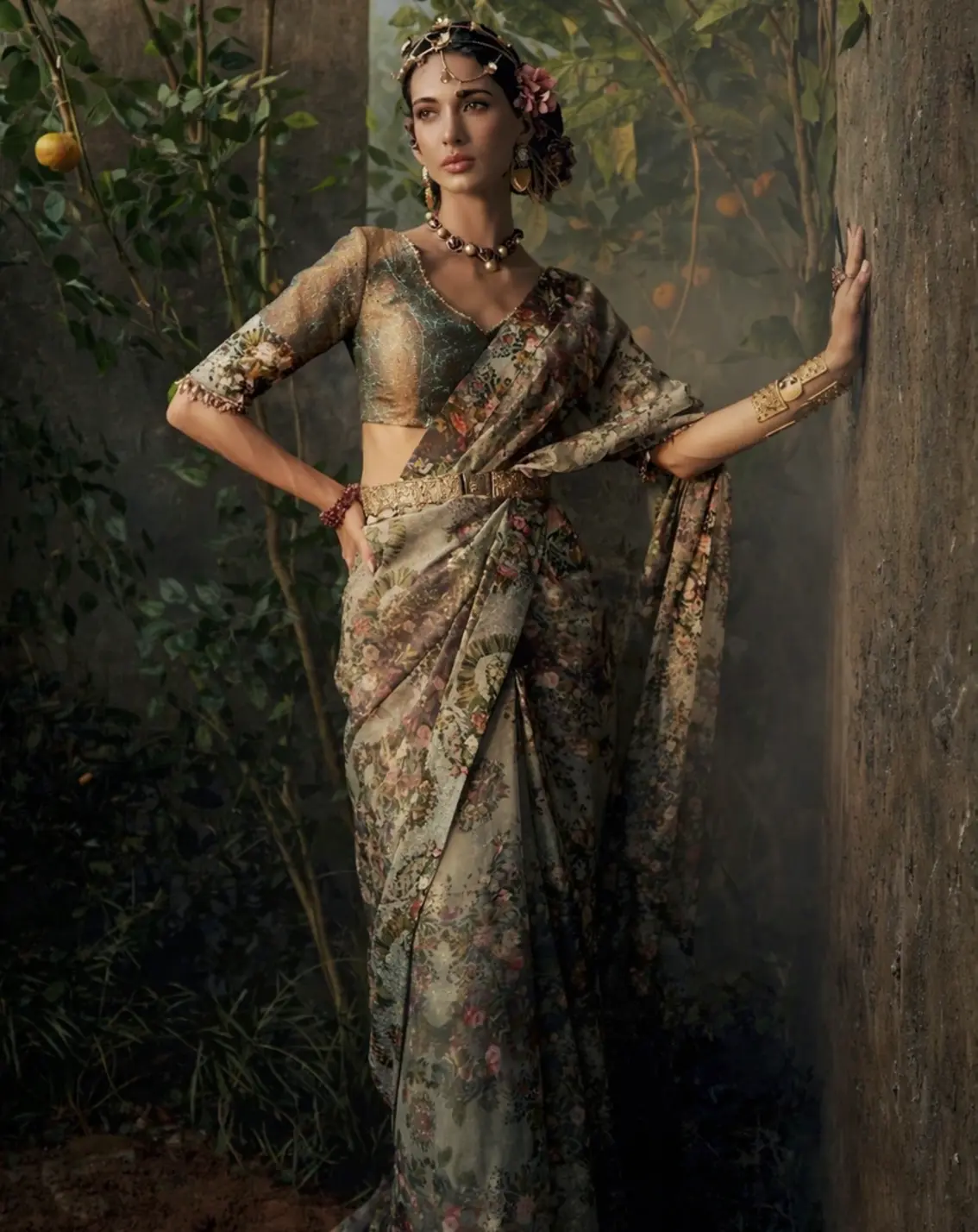
Then, the saree itself unfurls, a vast universe of texture and sensation that feels almost alive against the skin. There is Mulberry Silk glowing with the quiet grandeur of a temple, and Banarasi Brocade, heavy and handsome with its rivers of woven gold and silver zari. You feel the pride of a Kanjeevaram rich in jewel tones, the airy luminosity of a Chanderi that feels like wearing light, and the poised elegance of a Maheshwari with its clever, reversible borders. The fabrics transition from the lush, peacock-laden vines of a Paithani to the delicate, blooming motifs of a Jamdani that seem to grow directly from the loom. There is the rhythmic song of a Patola’s double ikat, the tiny, vibrant constellations of Bandhani tie-dye, and the featherlight checkered breeze of a Kota Doria. Organza holds the light like a crystal veil, while Chiffon and Georgette slip over the curves with a flirtatious, liquid fluidity, turning every mundane step into a line of spontaneous poetry.
Patterns deepen this narrative, trailing florals like garden walls after a spring rain, or paisleys that curl with an old-world, heavy sensuality. Checks and stripes provide a crisp, modern rhythm, while tiny butis are scattered across the fabric like whispered blessings. These symbols, birds, leaves, lotuses, and stars, transform the cloth into a silent, ancient language of grace.
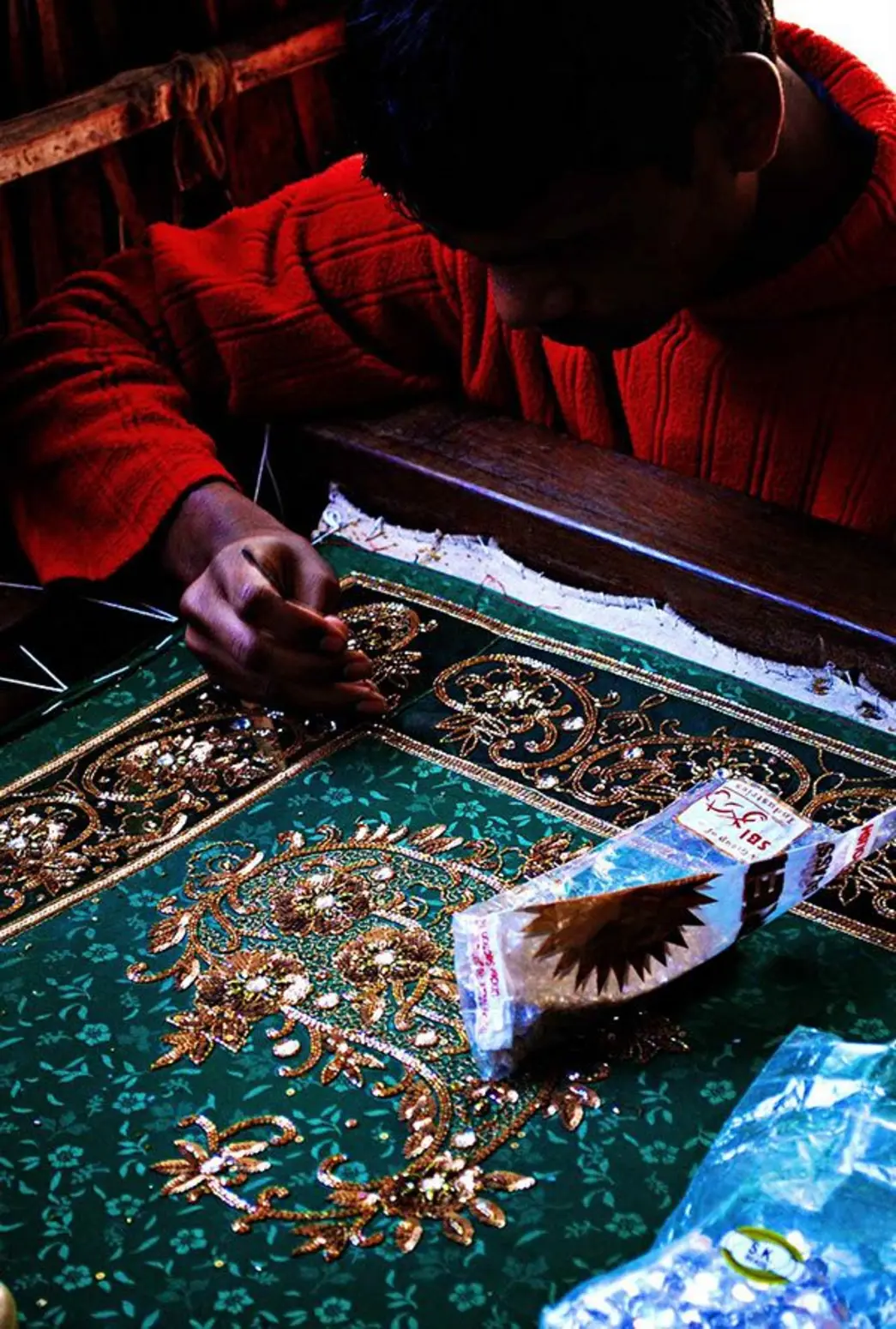
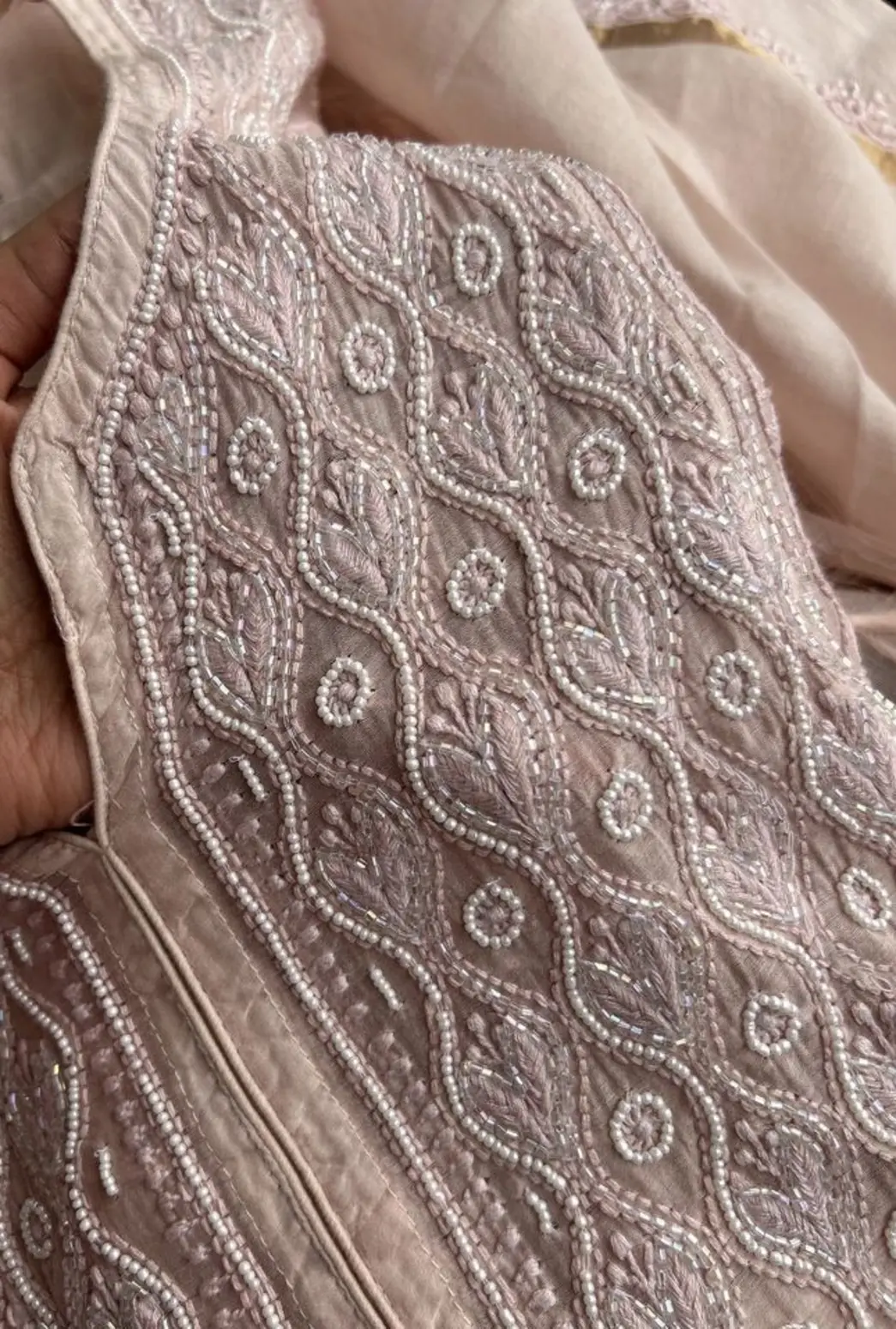
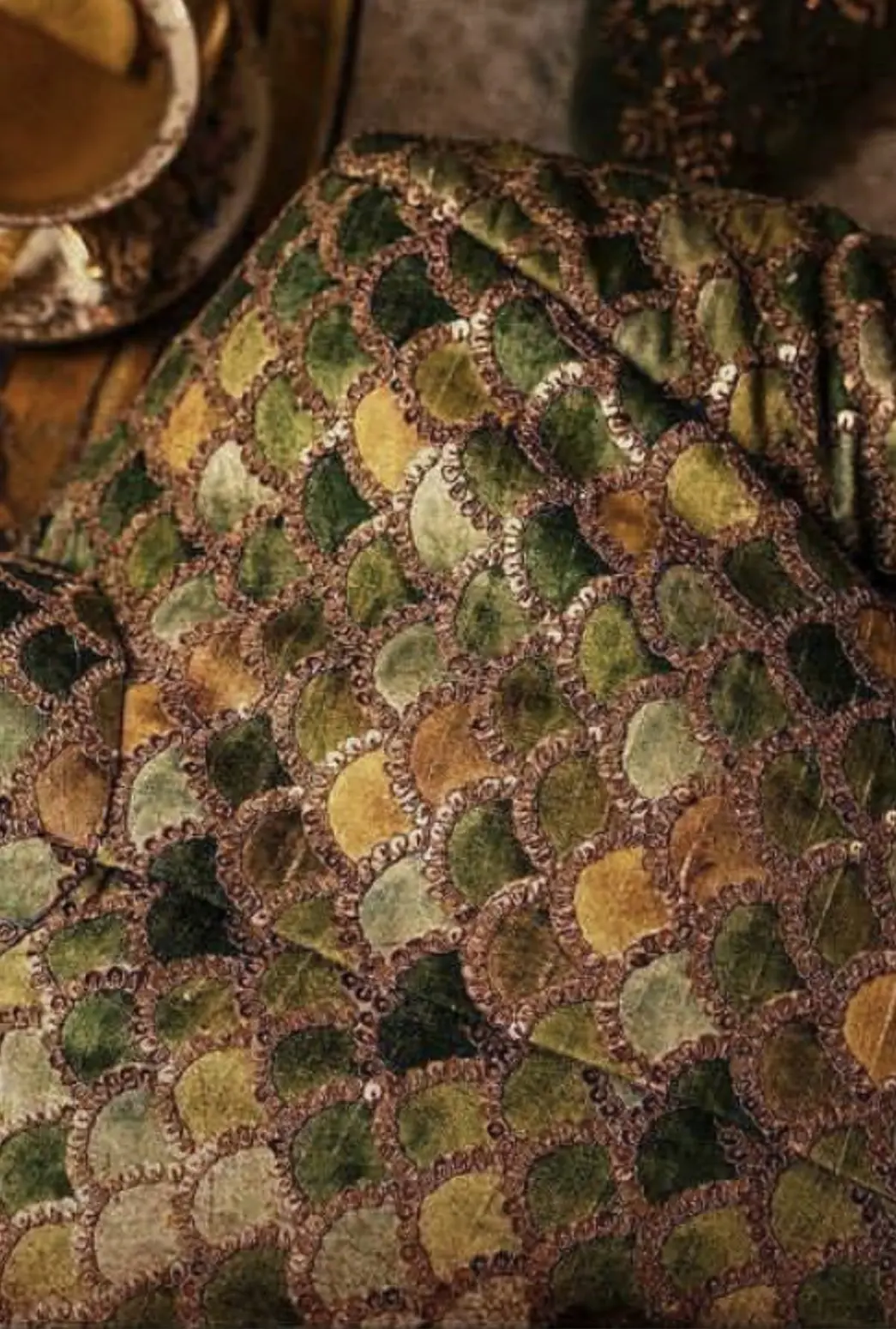
The finishing touches are those wickedly charming luxuries that refuse to let the eye wander. You see the gleaming, raised richness of Zardozi and the soft bloom of Resham threadwork. Chikankari floats like a pale, graceful dream across the fabric, while Gota Patti flashes like strips of captured moonlight. Mirrors wink with a bit of mischief, sequins flicker like low-burning lanterns, and delicate pearl embroidery traces the edges with a tactile, quiet delight. There are scalloped borders that soften the silhouette and tassels that sway at the pallu with the wit of a dancer. Every fringe that trembles at the hem and every crystal that pricks the cloth with a glamorous spark suggests a garment that has been cherished, handled, and deeply loved.
The final attitude of the ensemble is found in the drape, where the silk is given its voice. Pleats can stand with the neat, priestess-precise discipline of a ritual, or they can fan open with a dramatic, generous flourish. The pallu might be swept long and regal over the shoulder, pinned close for a moment of composure, or wrapped around the arms in a gesture of ceremonial splendor. It can be drawn over the head in a veil of bridal radiance or left to flow free, trailing behind the body like a banner of confidence and perfume. Each occasion seems to pull a different personality from the fabric. A wedding demands the opulence of heirloom silks and jewel-box blouses that command the room; a festival invites a sunnier charm, with flowers in the hair and weaves that dance through feast and prayer. A daytime affair finds its breath in airy cottons and fresh pastels, while a grand evening longs for the saturated glow of metallic tissue and velvet-trimmed edges that shine under a chandelier like a secret finally shared.
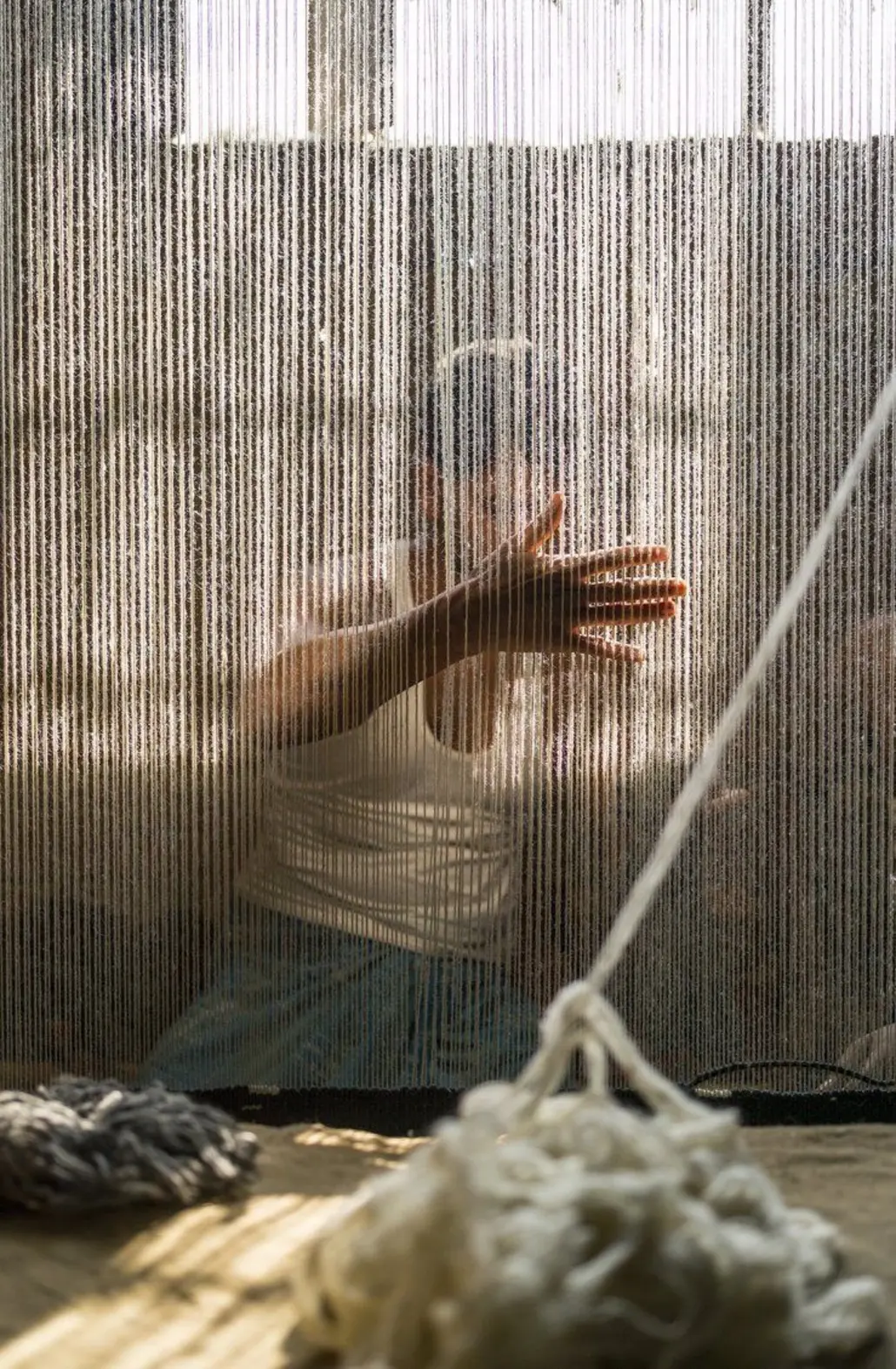
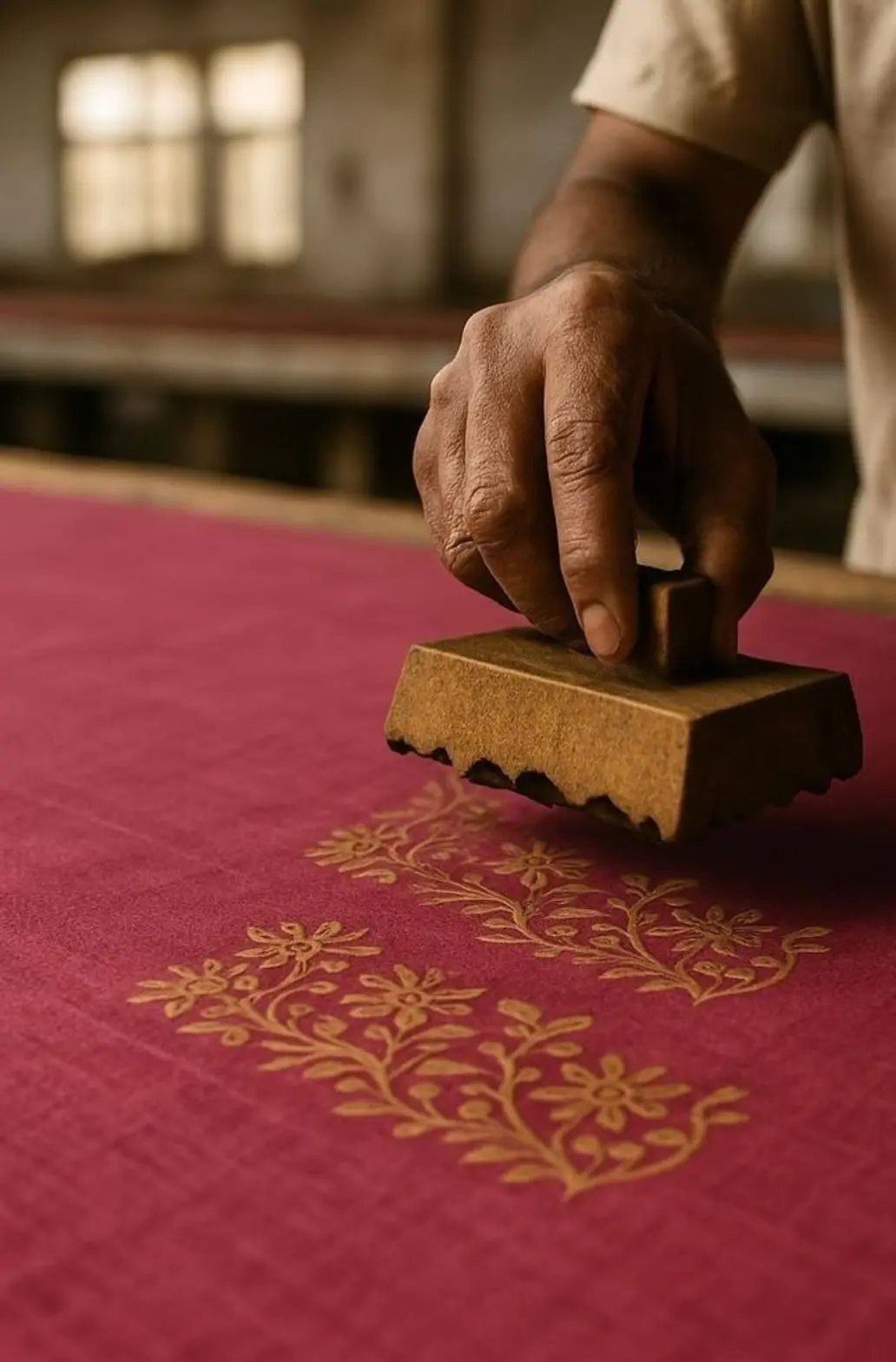
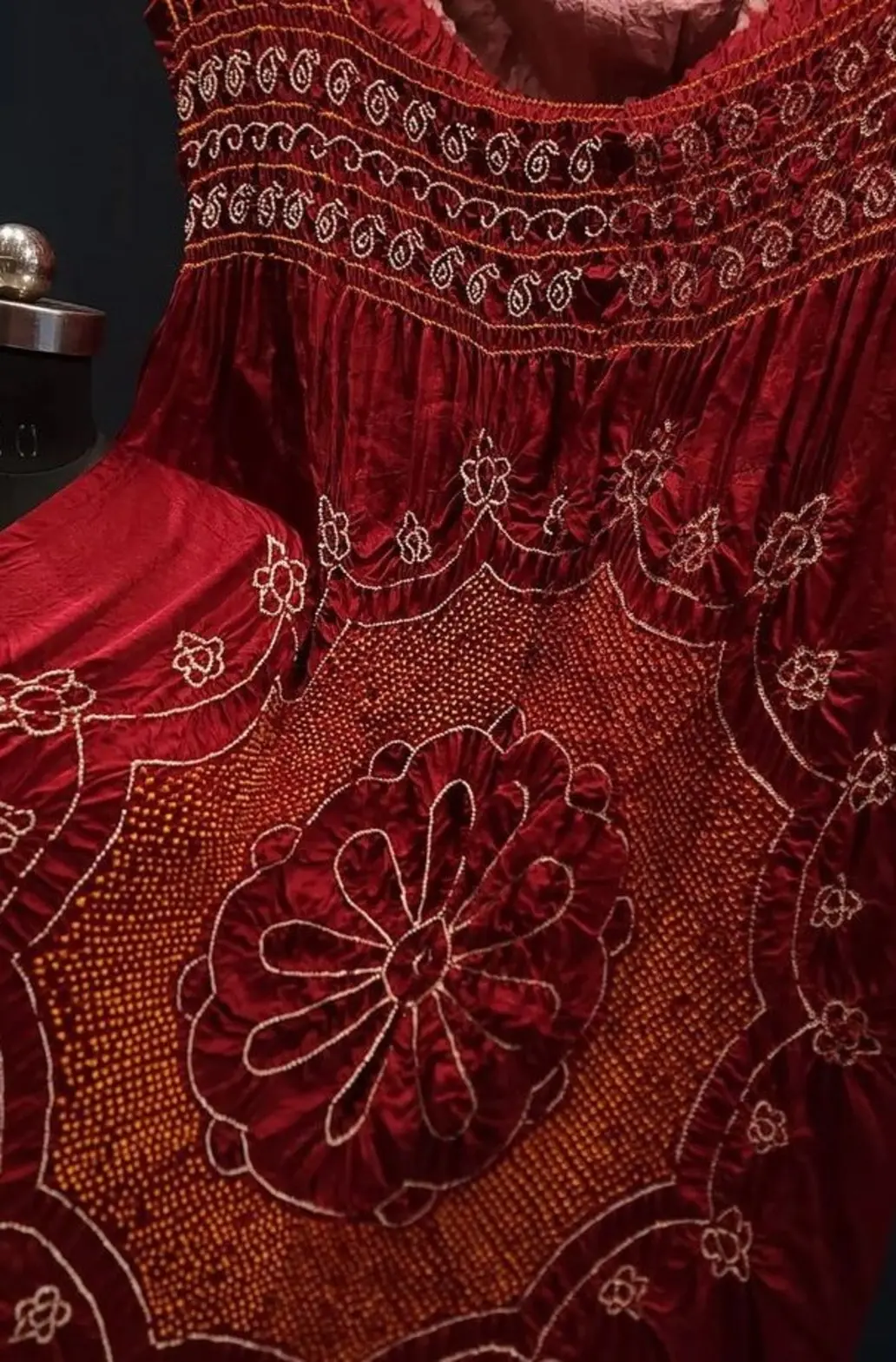
Across every region, the saree gathers new accents, allowing the heritage of a whole subcontinent to speak in a beautiful, multi-layered chorus. It is the stately weight of a Tamil Nadu Kanjeevaram, the molten artistry of a Varanasi Banarasi, the poetic fineness of a Bengal Jamdani, and the tie-dyed exuberance of a Rajasthani Bandhani. This is why being near a saree ensemble feels so intoxicating. Its beauty isn't just on the surface; it lives in the layers of intention, in the hush of a handwoven field, the precision of a border, and the romance of silk catching the light. It is the marvelous, unfolding truth that every detail, from the hidden petticoat to the very last embroidered edge, conspires to create a woman who enters the room already dressed in story, seduction, and soul.
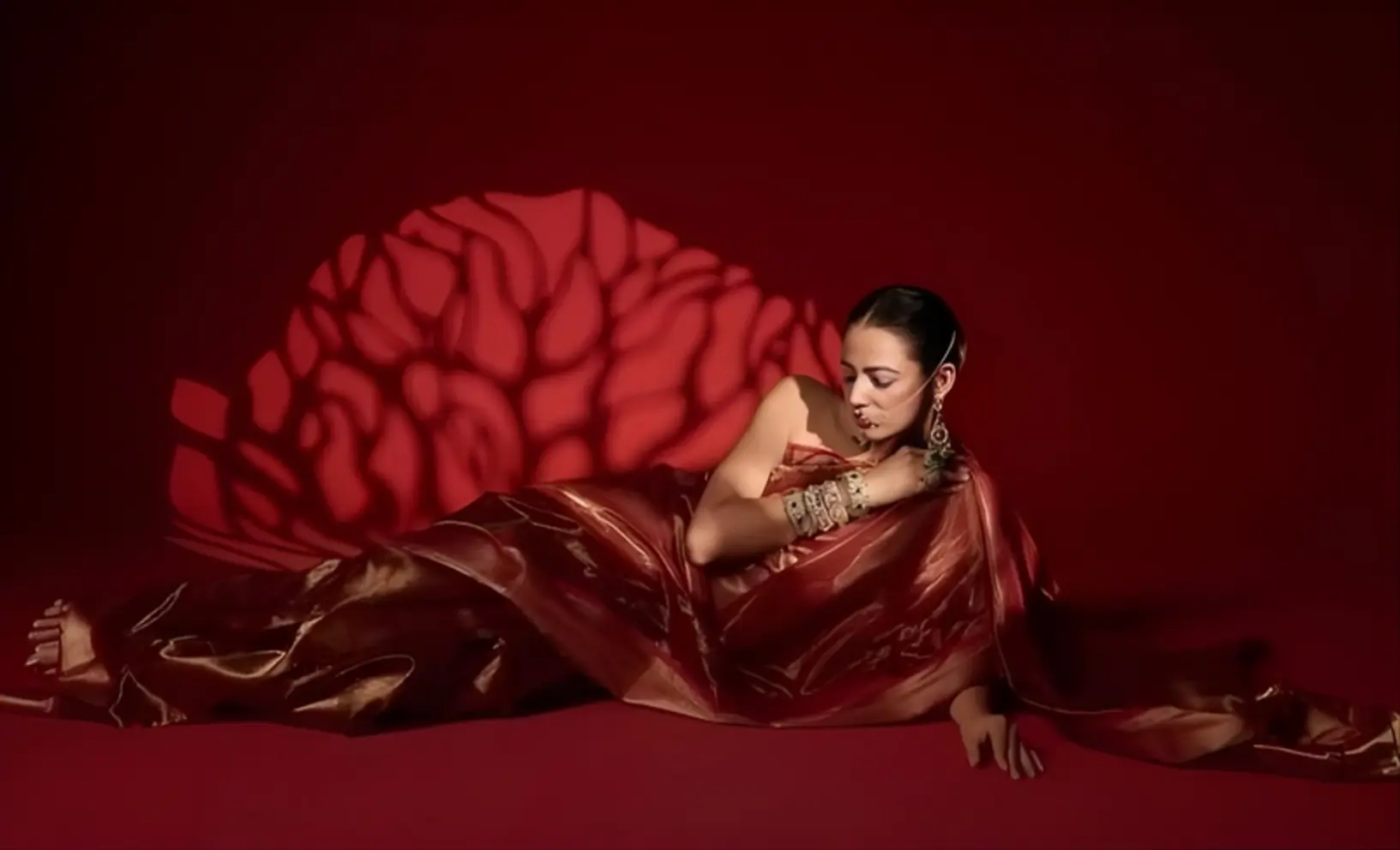
The history of the saree ensemble doesn’t arrive with a neat date or a single founding signature; instead, it whispers to us through a trail of clues, fragments, and haunting images, carrying a mythic authority from its very first breath. While the textile traditions of the Indian subcontinent stretch back at least 6,000 years, fabric itself leads a fragile, fleeting life in a tropical climate, meaning the earliest chapters of this story must be read through the lens of sculpture, art, and the innate logic of the drape. We see its ancestral form deep in the ancient past, captured in stone reliefs from the 2nd century BCE where men and women are depicted with unclothed torsos, their hips wrapped in long, elegant spans of cloth drawn between the legs and folded at the front.
As the centuries unfolded, that simple, draped logic grew more intricate, blossoming into a vivid map of India written entirely in cloth. Dress practices evolved with the rhythm of the times; for instance, the 12th century brought a shift toward fuller coverage of the body under Muslim rule in north and central India, a change that enriched the ensemble’s relationship with upper garments and layered modesty. Simultaneously, the subcontinent’s weaving centers were dreaming up their own splendid vocabularies. From the molten, brocaded silks of Varanasi and the lustrous, peacock-woven Paithanis of the Deccan to the gossamer finess of Bengal’s Jamdani and the mathematical, double-ikat precision of Gujarat’s Patola, the saree became a textile language of place and prestige. These styles evolved in response to the soil and the work, appearing in forms that could move through the labor of the fields, the quietude of domestic life, or the high drama of courtly display.
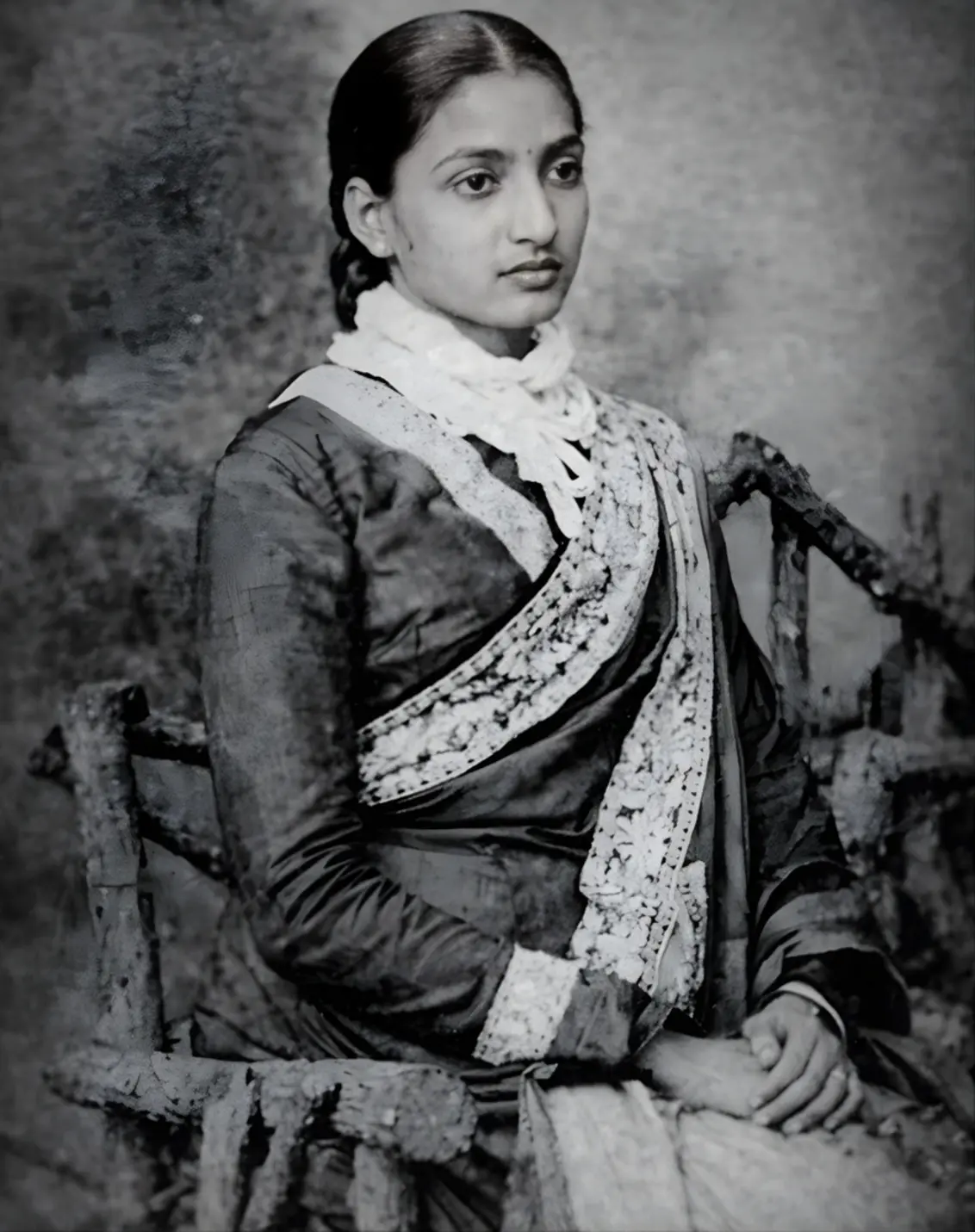
The modern silhouette we recognize today, the one that feels so effortlessly iconic, actually solidified quite recently, emerging from the complex intersection of colonial modernity and elite self-fashioning in the late nineteenth century. Before this period, many saree traditions existed beautifully without the now-standard blouse and petticoat, but the pressures of Victorian propriety and public life began to reframe how a woman draped herself. At the heart of this transition stands the figure of Jnanadanandini Devi, whose role in dress history feels almost like a character from a novel. After traveling through western India and absorbing Parsi influences, she reimagined the saree for a new, public-facing era, reworking the cloth with frontal pleats and a pallu drawn over the left shoulder. This "Nivi" drape, from the Bengali word navin, meaning new, soon became the default form of the saree, paired with the stitched blouse and petticoat that were once unfamiliar to the subcontinent. This transformation is a powerful reminder that the ensemble we often view as timeless is actually a story of survival and social negotiation.
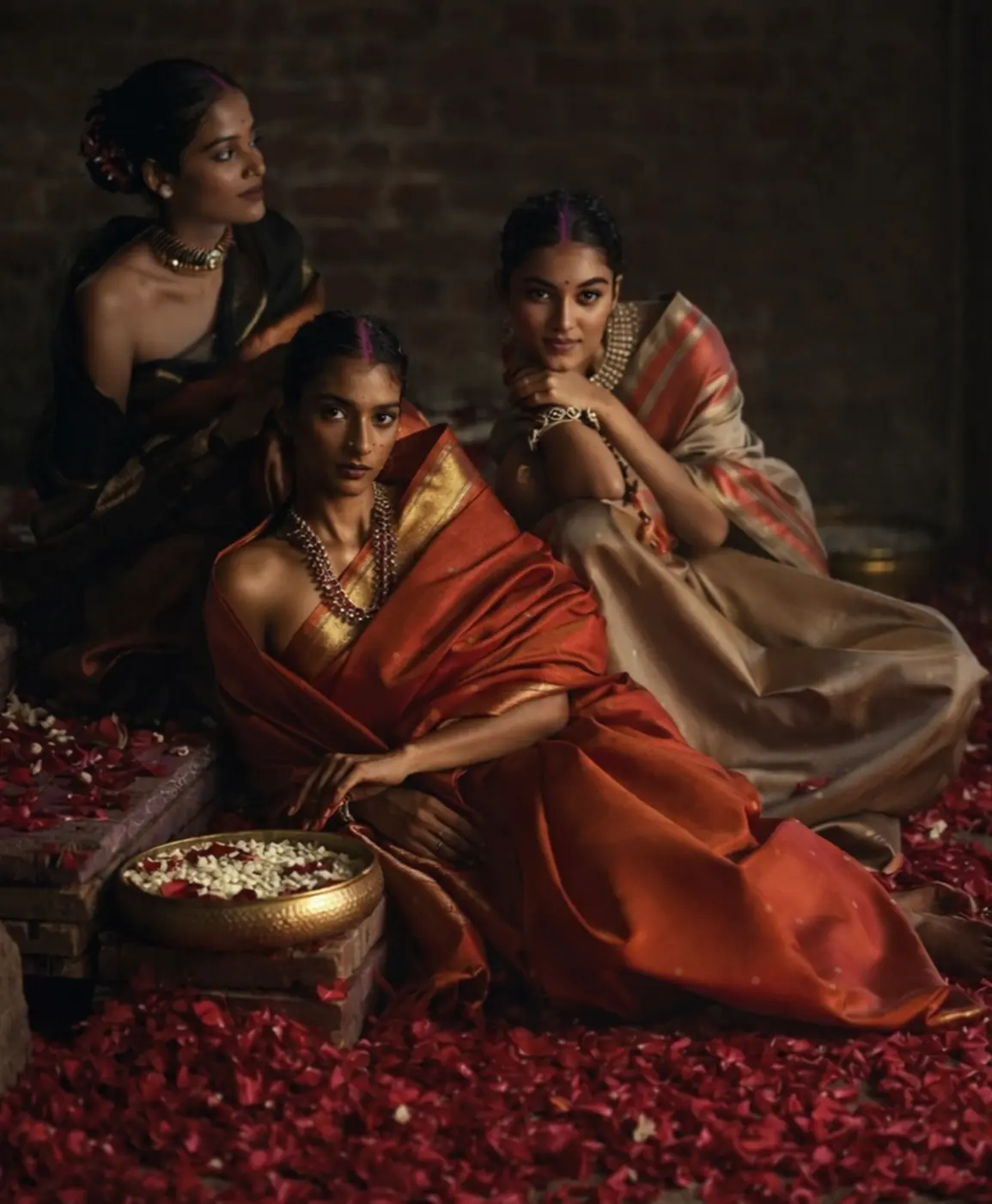
From that turning point, the saree moved into the twentieth and twenty-first centuries with a remarkable, quiet assurance, carrying both national symbolism and intimate family memories in its folds. It became a banner of identity; hand-spun cotton represented the fierce struggle for independence, and leaders like Indira Gandhi used the saree as both a political statement and a deeply personal expression of grace. Yet, even as it became a national symbol, it refused to be narrowed into a single formula.
Today, more than 100 distinct drape styles are still worn across the subcontinent, and many more likely exist in the quiet corners of rural memory, passed down from mothers to daughters as heirlooms that carry the blessings of generations. By the time the saree reached the heights of contemporary couture and global fashion, it had already survived temple ruins, imperial encounters, and social revolutions. This is the secret of its longevity: it has endured because every era was allowed to leave its mark. One century enriched the weave, another refined the drape, and another added the blouse or politicized the thread. Through every shift, its soul stayed gloriously intact.
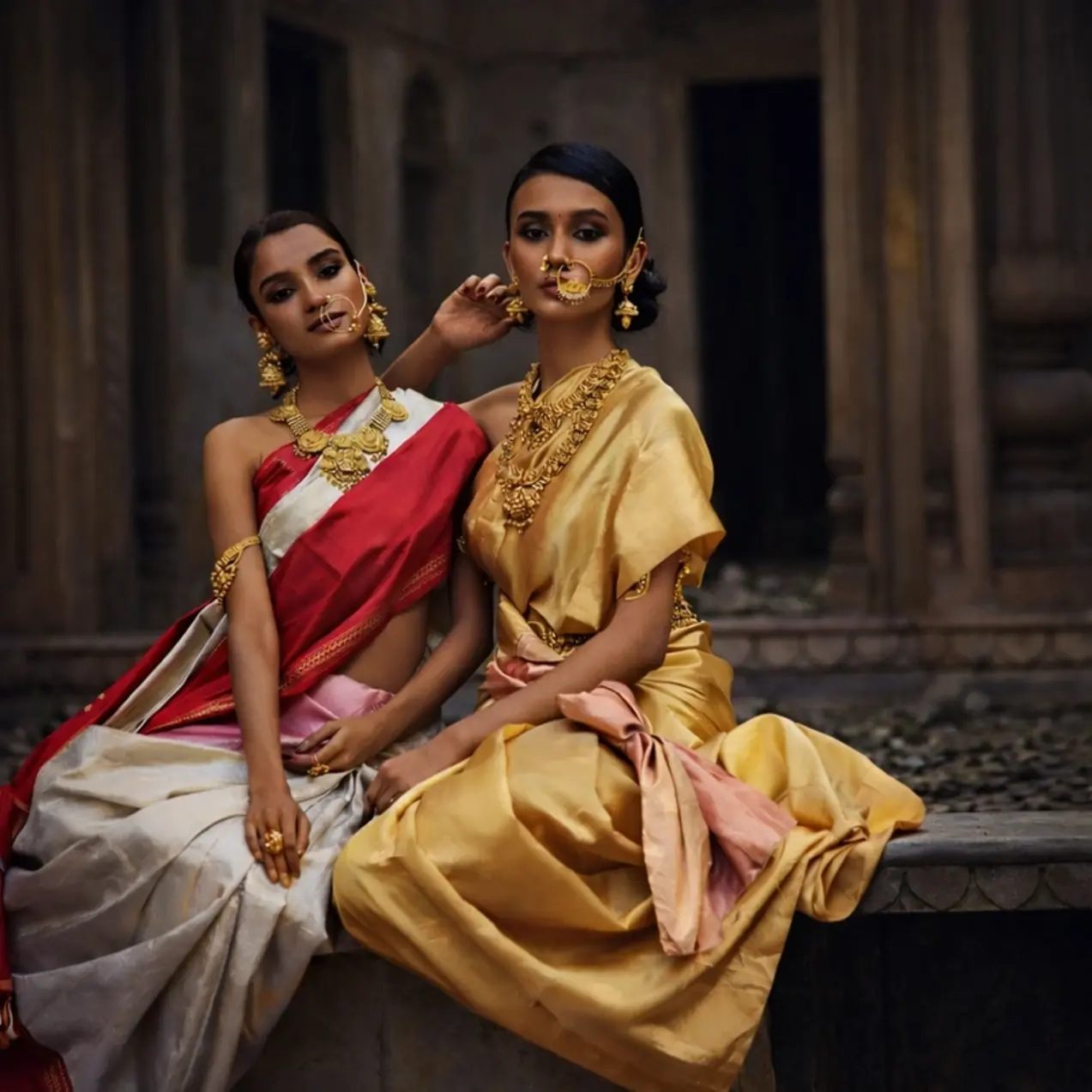
To understand the saree is to understand that it is far more than a garment; it is a six-yard meditation on the nature of infinity and the beauty of the unstitched. In the ancient spiritual philosophy of the subcontinent, a cloth that remains uncut is considered pure, a singular, whole entity that mirrors the integrity of the universe itself. There is a quiet, sacred rebellion in its refusal to be defined by a needle or bound by a permanent seam. Instead, the saree exists as a state of potential, a long, flowing river of silk or cotton that waits for the human form to give it shape, purpose, and breath. This lack of structure is its greatest strength, offering a philosophy of fluidity where nothing is rigid and everything is adaptable. When a woman drapes a saree, she is engaging in a ritual of transformation, co-authoring the garment’s final form with her own movements. It is an exercise in mindfulness, where the tension of a tuck and the weight of a fold create a balance between the earth and the air, making the wearer feel simultaneously grounded in her heritage and light enough to dance through the present.
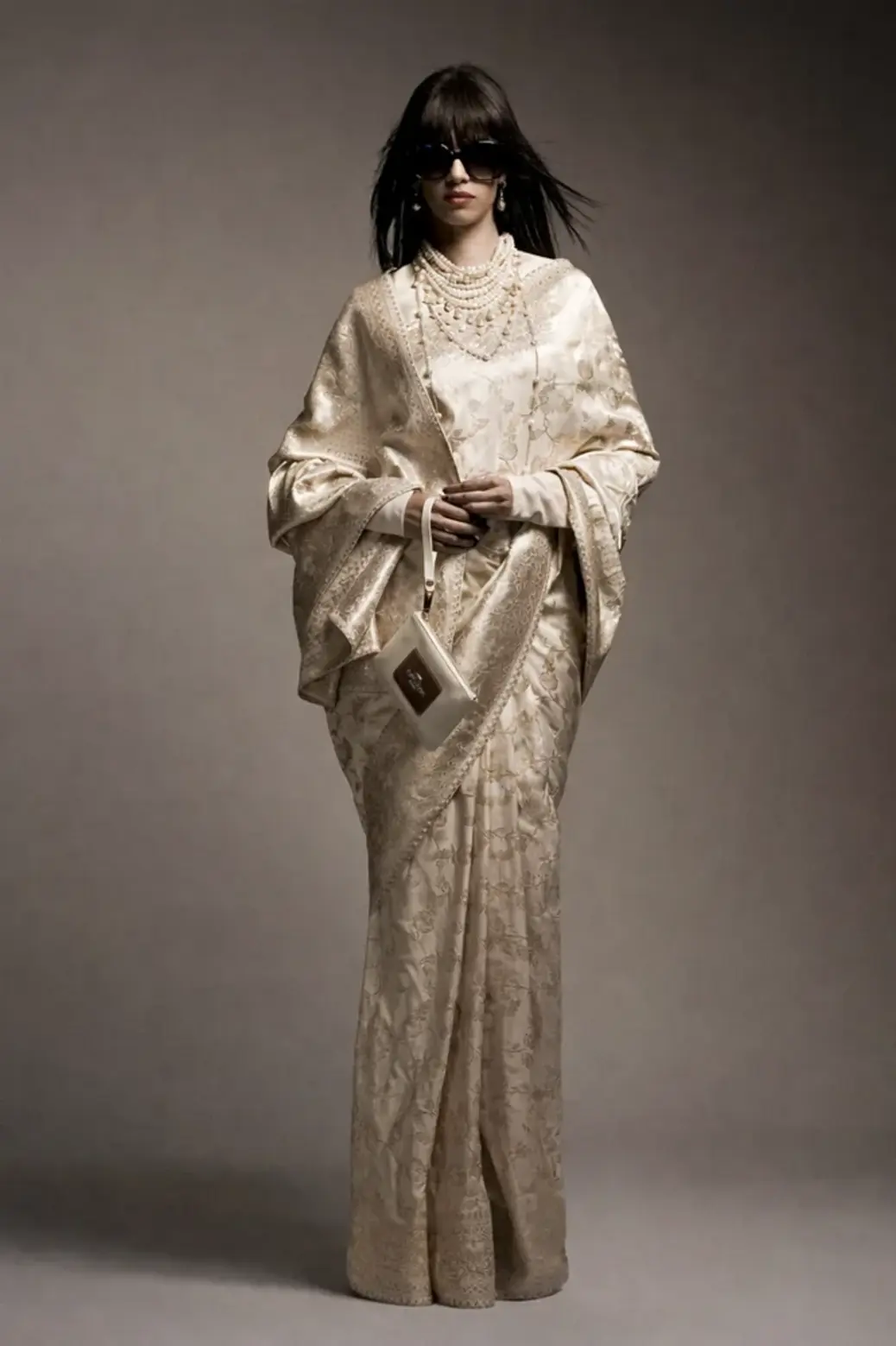
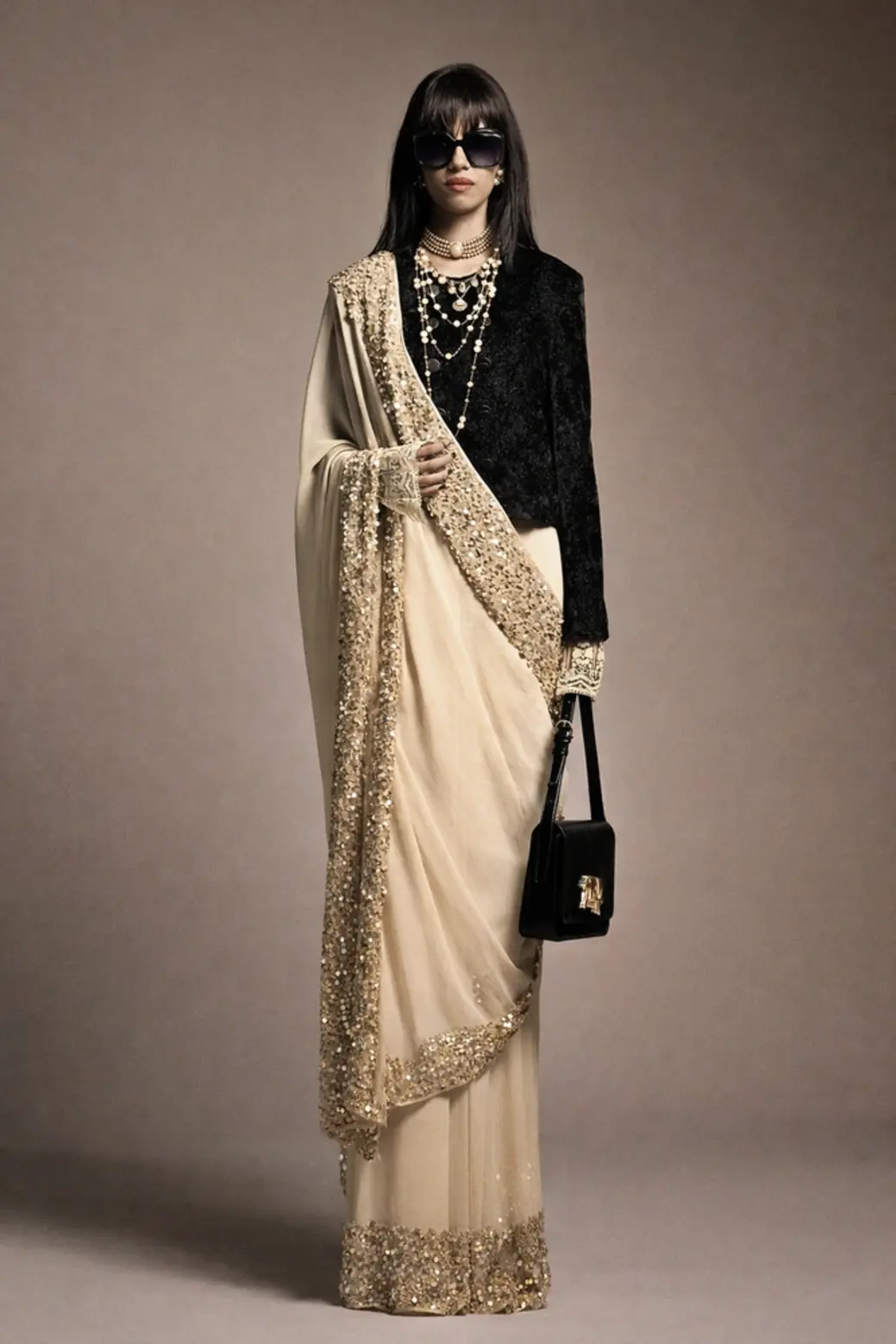
Beyond its physical presence, the saree functions as a living vessel for memory and the "spirit of the hand." Because it is so often handwoven, every inch of the fabric carries the heartbeat of the weaver, the rhythmic thud of the loom, the focused intention of the dyer, and the ancestral knowledge passed down through generations like a whispered secret. This gives the saree a soulful resonance that mass-produced clothing can never mimic; it feels warm, even before it touches the skin, because it is already saturated with human story. It is a garment that breathes with the wearer, absorbing the scents of jasmine, incense, incense, and the salt of the air, eventually becoming a soft, tactile archive of a life well-lived. There is a profound tenderness in the way a saree is passed down from mother to daughter; it is an inheritance of grace, a way of wrapping a loved one in the same protection and beauty that sheltered the women who came before. To wear an heirloom saree is to feel the presence of one’s lineage in the gentle weight upon the shoulder, a reminder that we are all part of a continuous, shimmering thread of existence.
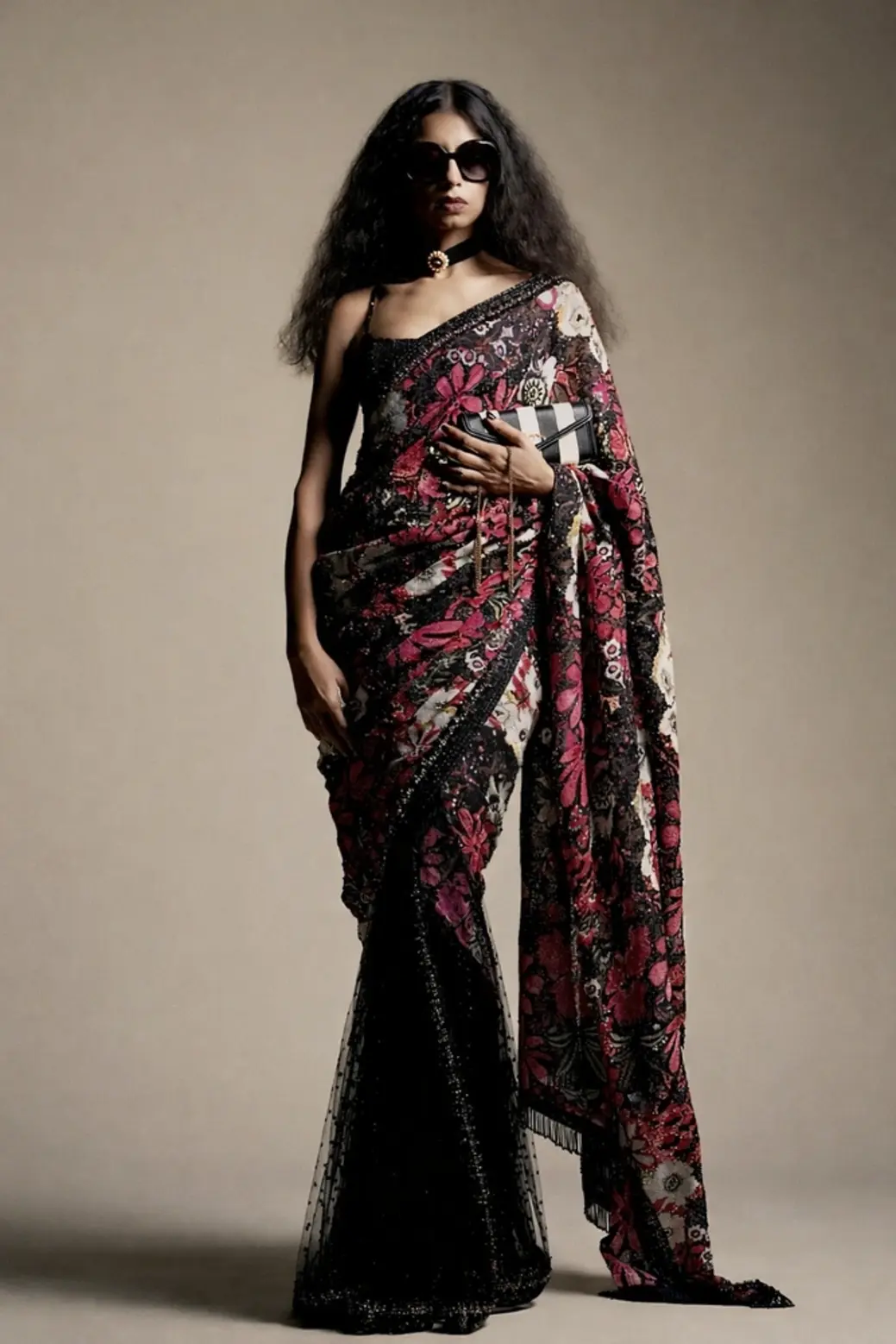
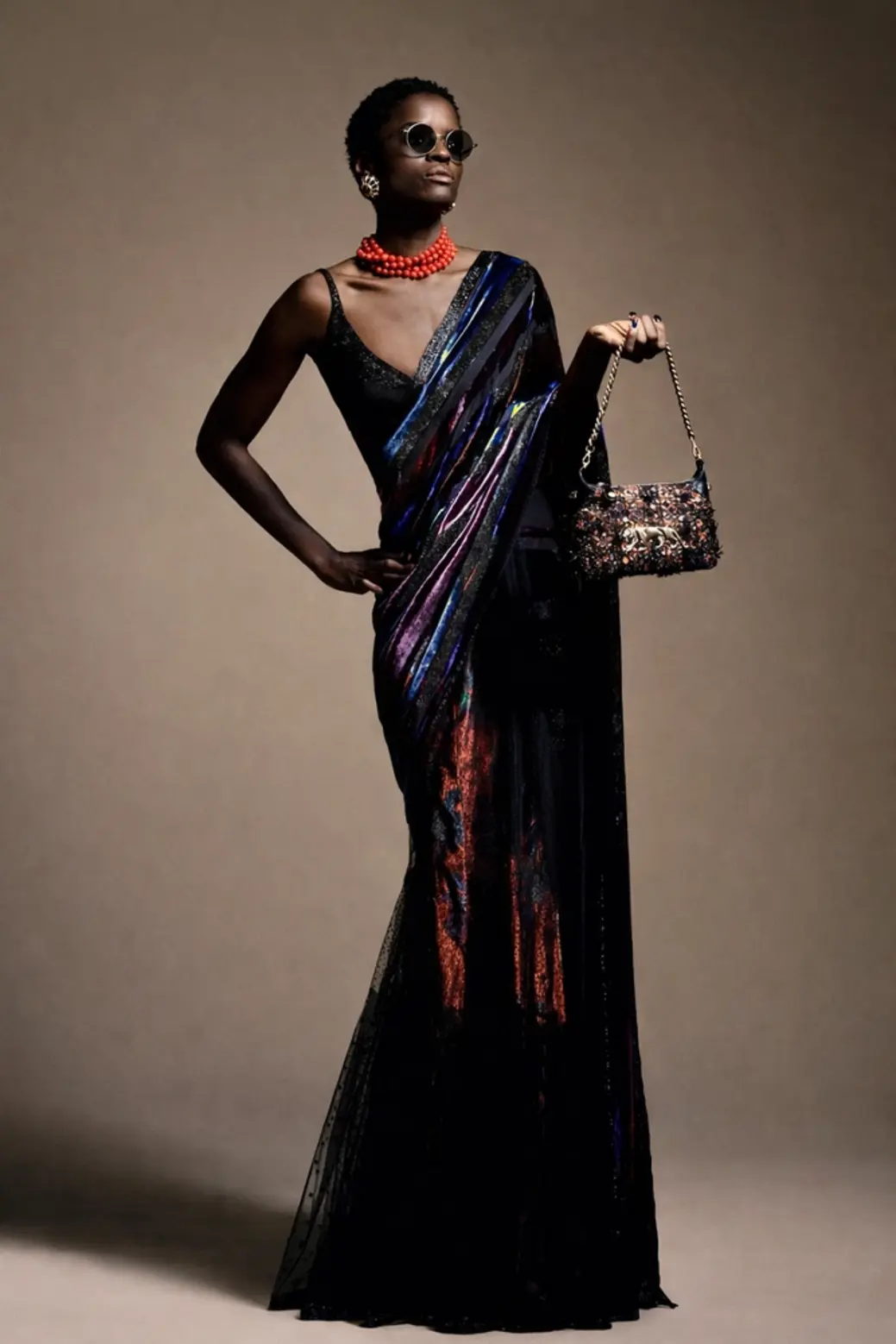
Ultimately, the spirit of the saree lies in its invitation to embrace the contradictions of being human, it is both a fortress of dignity and a veil of vulnerability. It offers a unique kind of empowerment that doesn't come from constriction, but from the freedom of movement and the confidence of mystery. There is an ethereal inspiration in the way the pallu catches a stray breeze, acting like a banner of one’s internal mood, or how the pleats fan out to accommodate a stride, a laugh, or a moment of quiet reflection. It teaches us that beauty is not found in perfection or static lines, but in the way we flow through the world and how we handle the drape of our own lives. The saree doesn’t demand that the body change to fit the cloth; instead, the cloth honors the body exactly as it is, celebrating every curve and every season of life with a compassionate, luminous embrace. It is a reminder that we are all works of art in progress, endlessly versatile, deeply rooted, and forever unfolding.
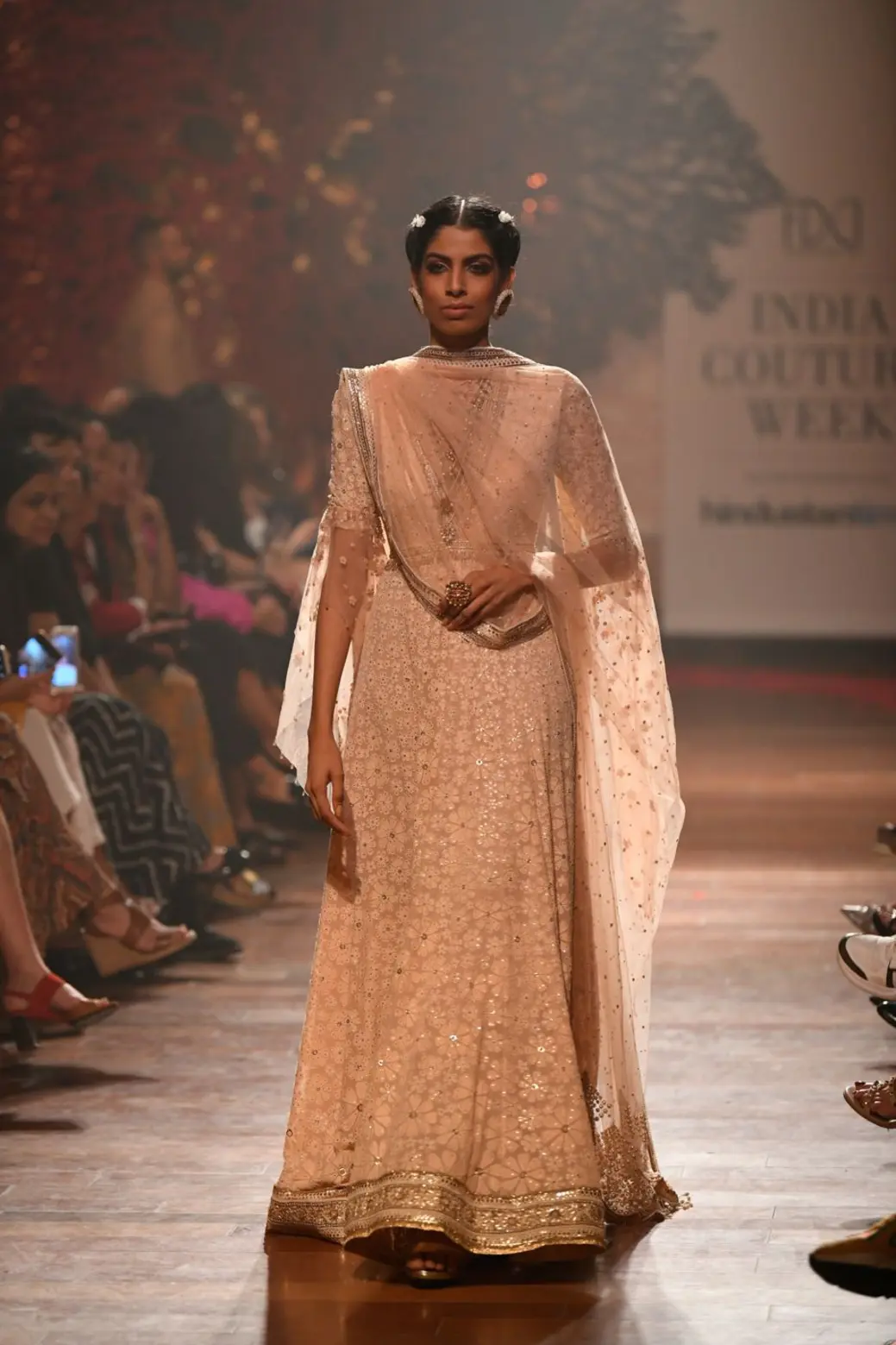
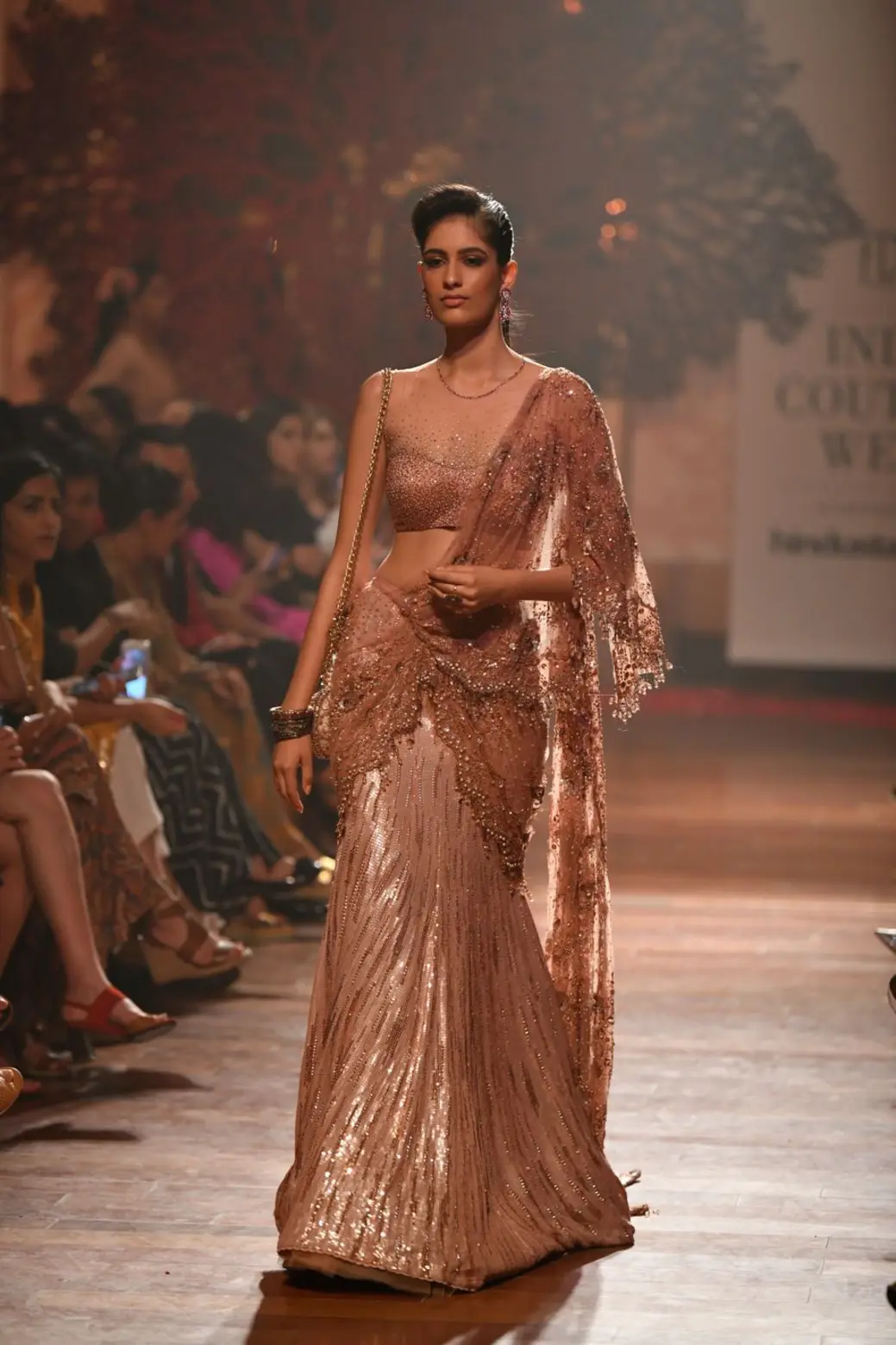
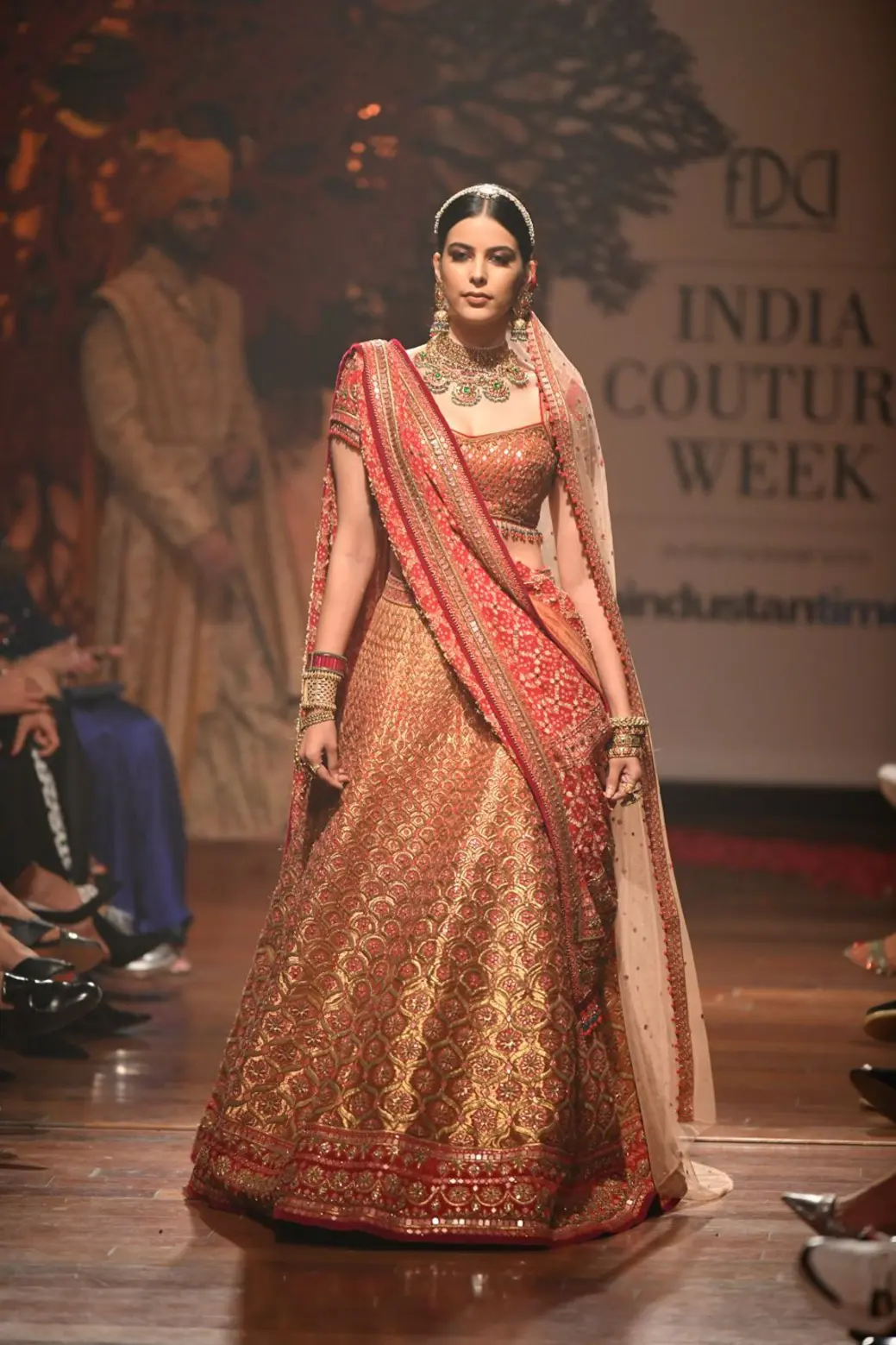
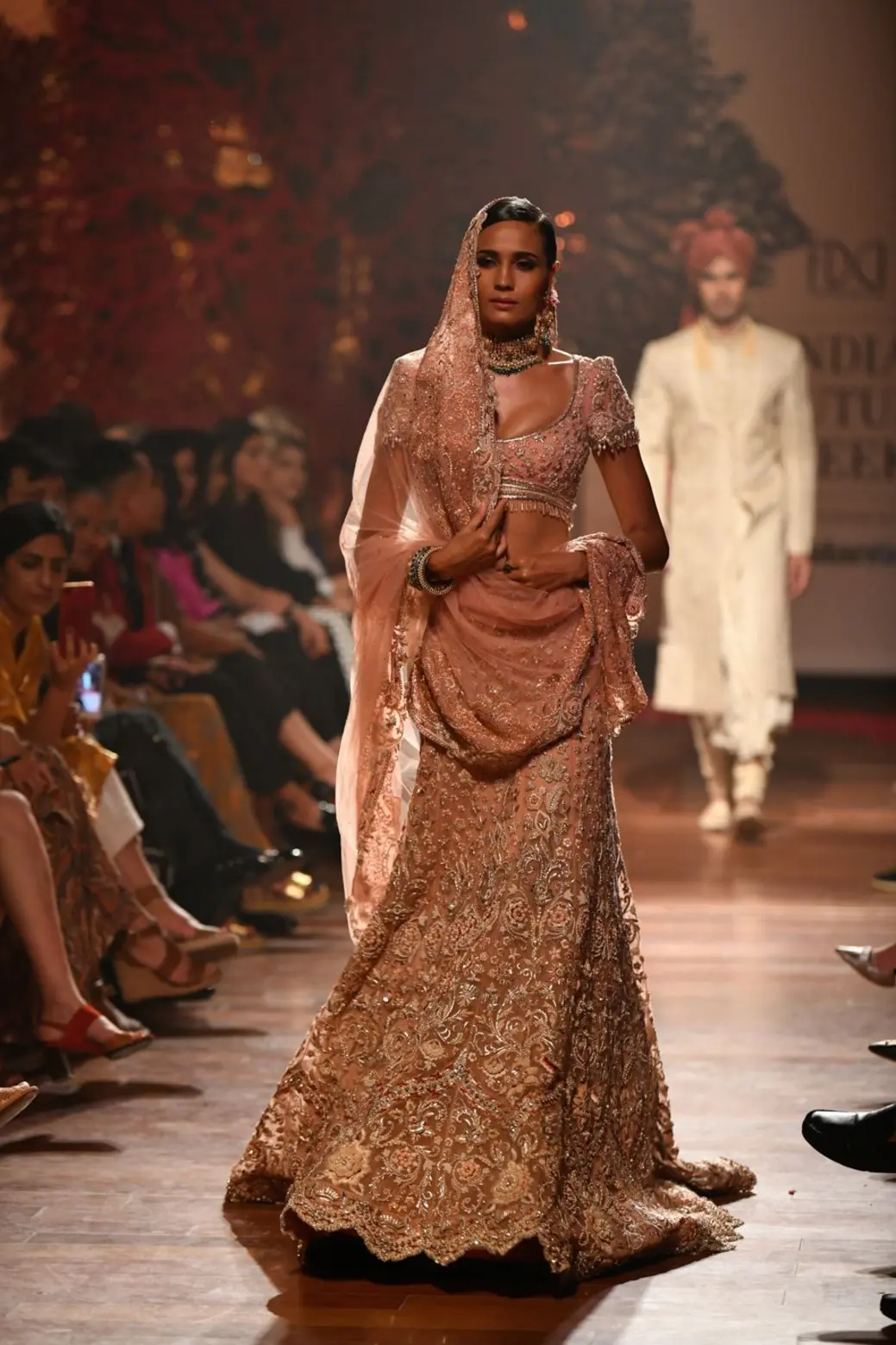
On the runway, the saree carries itself with the rare confidence of something that never needed fashion’s approval in the first place. It entered modern show spaces through Indian designers who understood it from the inside, from its intimacy with the body, its discipline of pleats, its sensual intelligence, its power to turn a length of cloth into presence, ritual, and radiance.
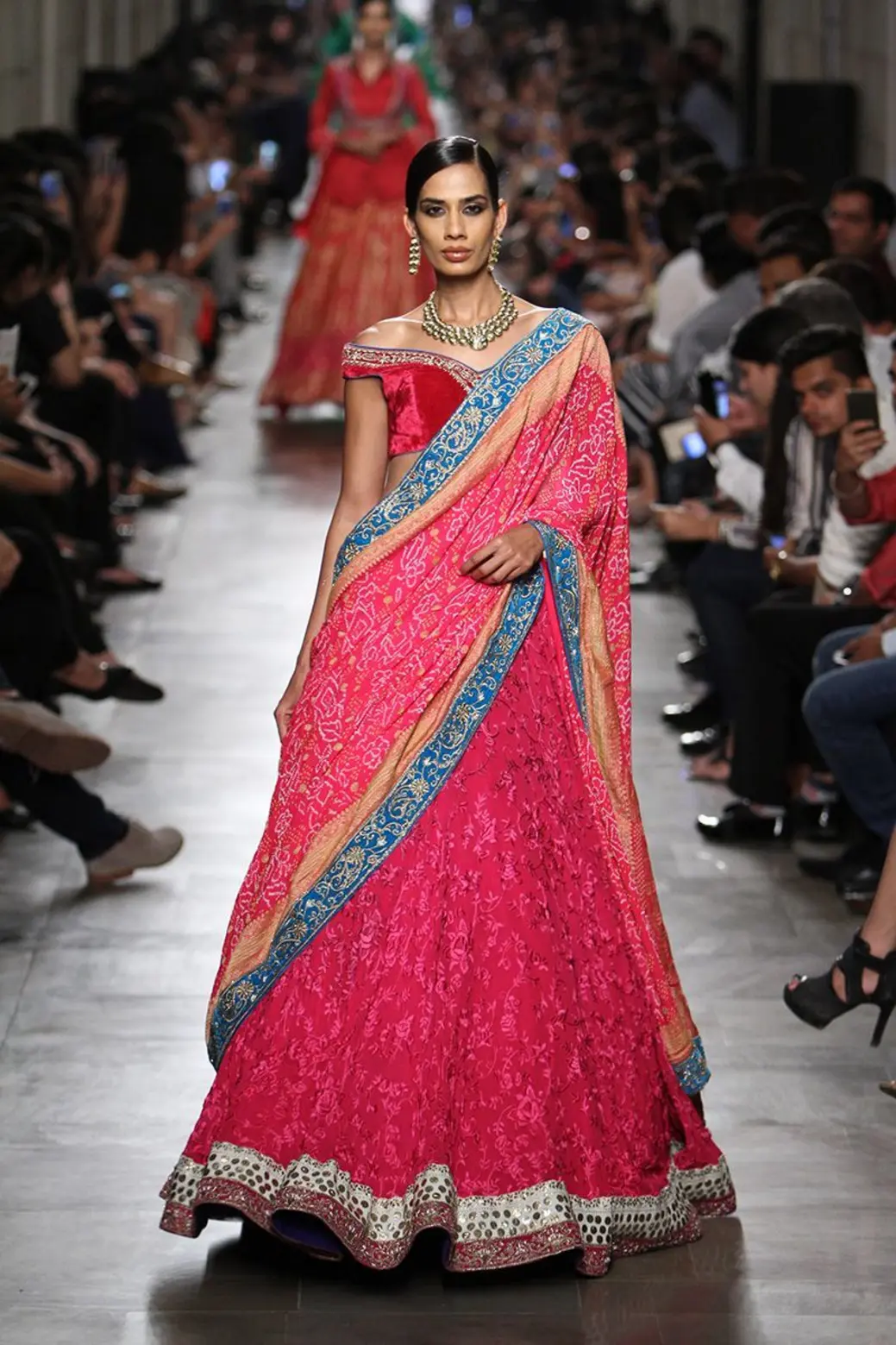
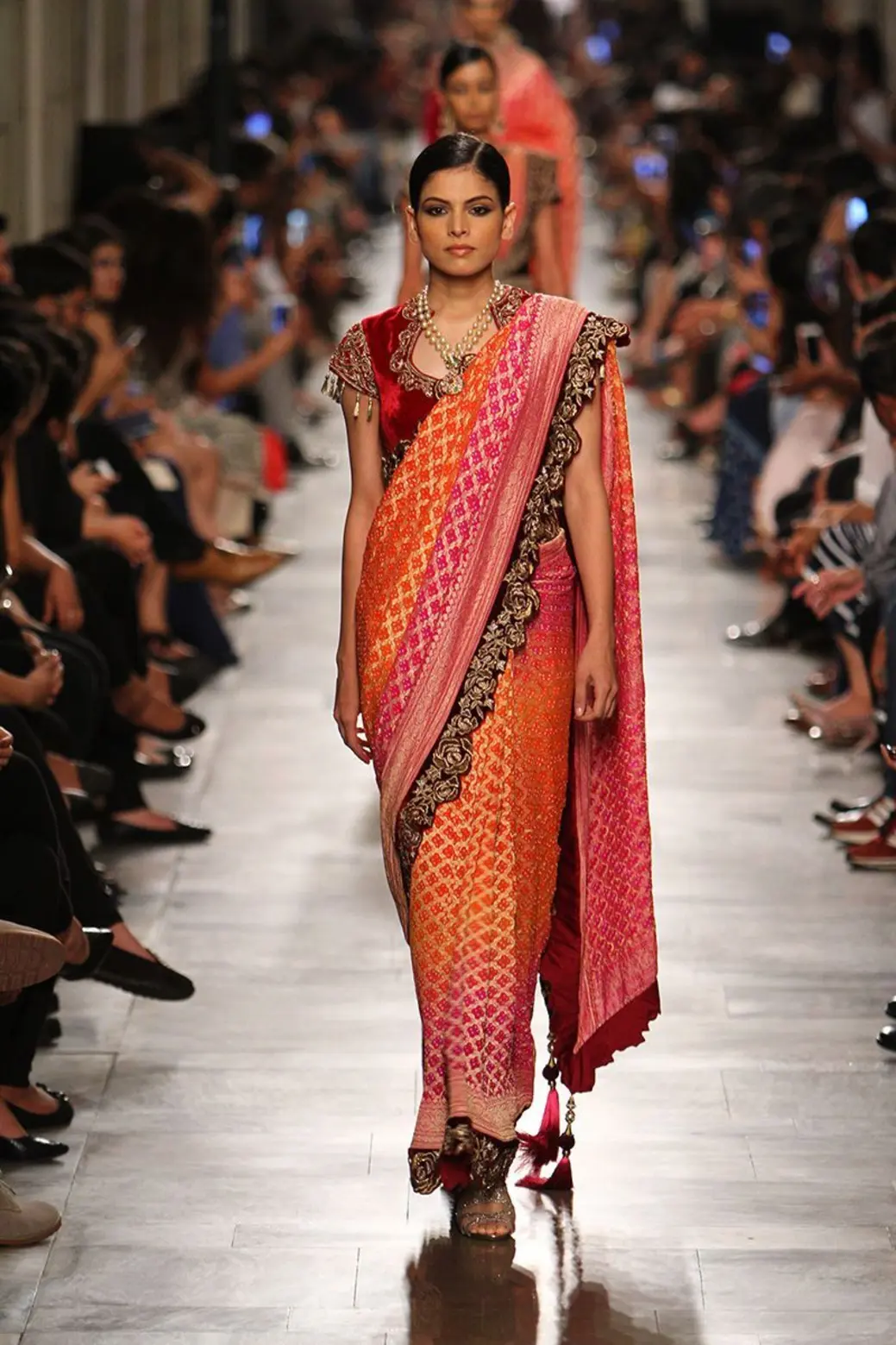
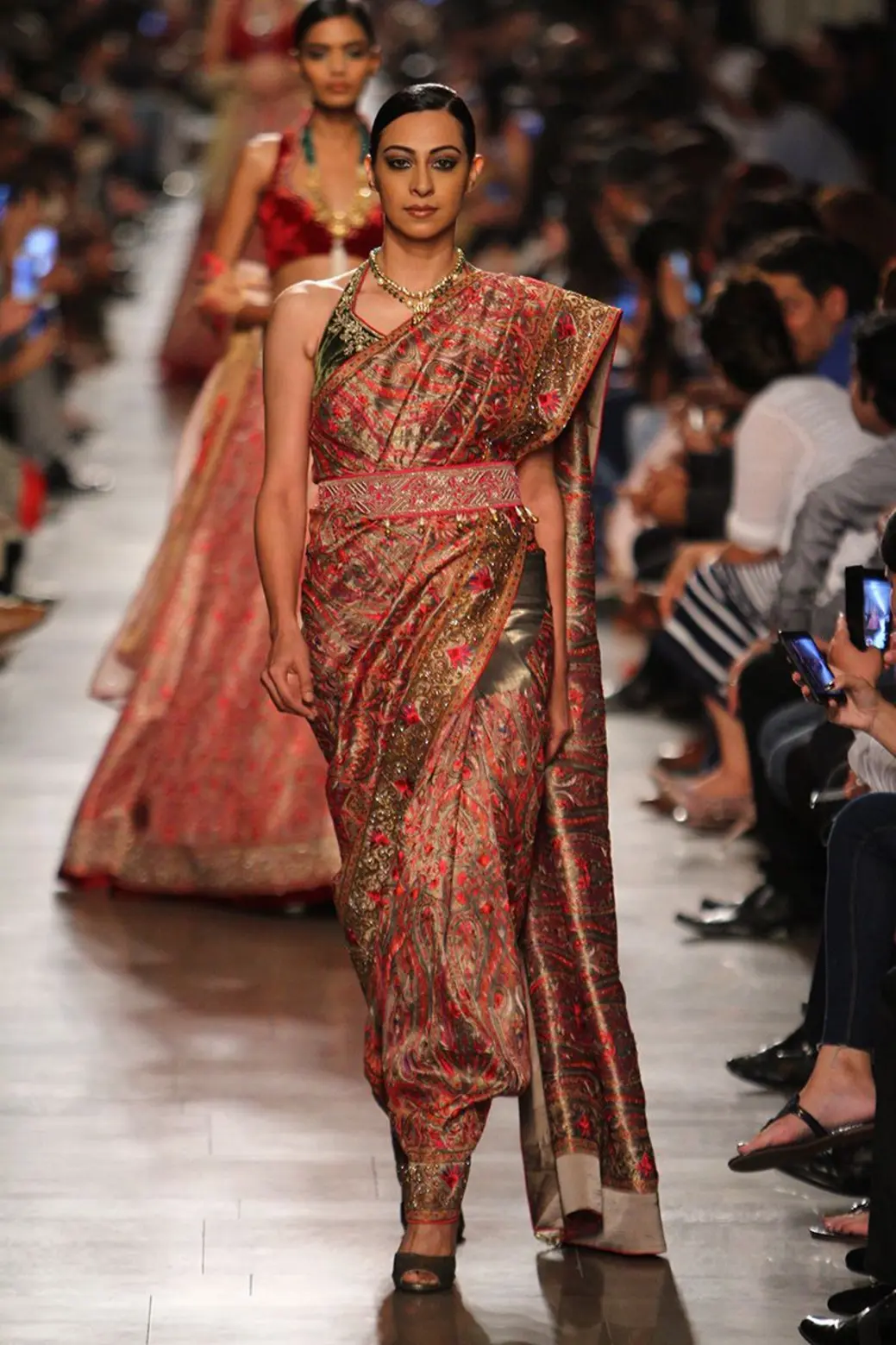
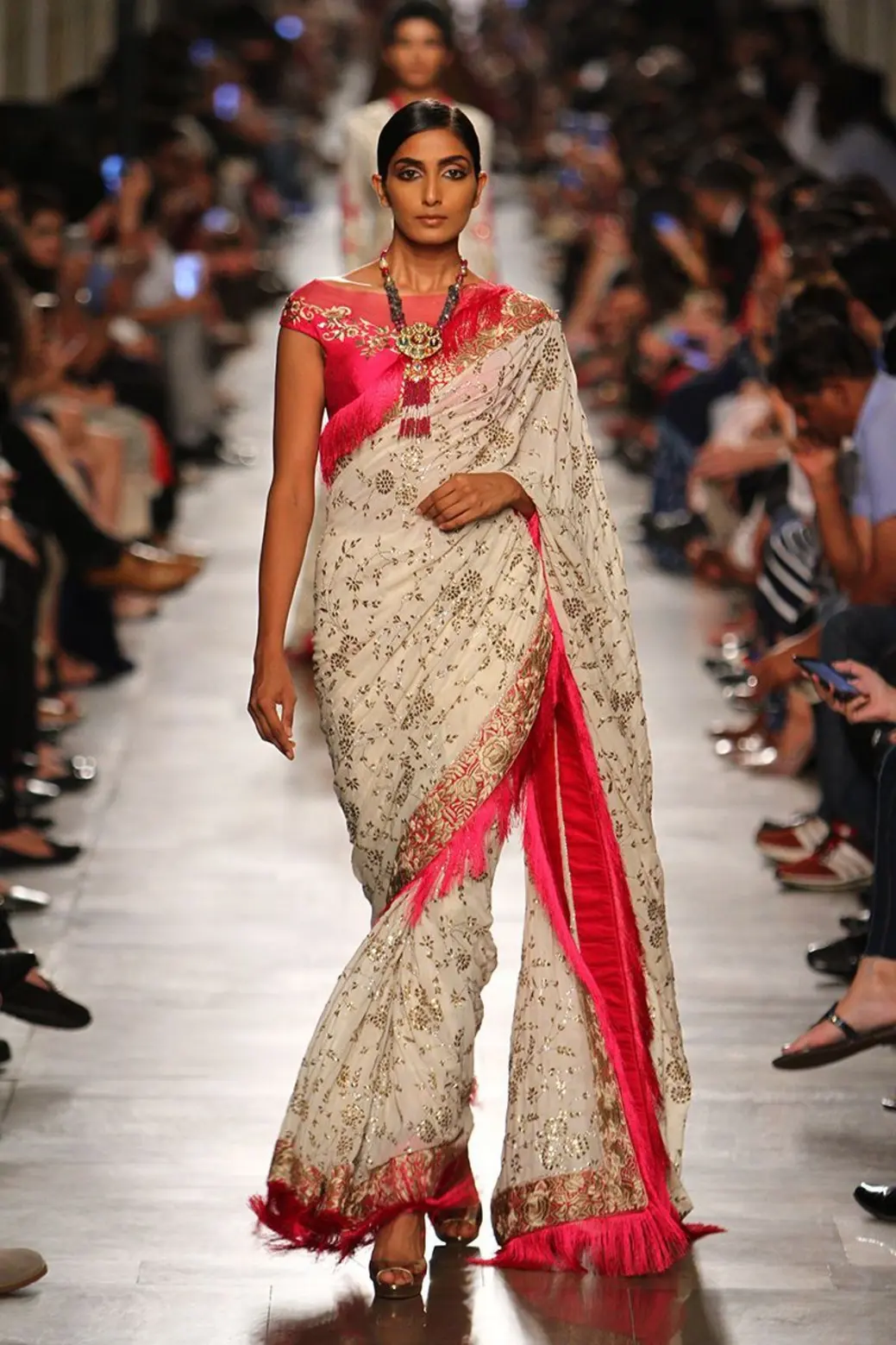
In their hands, the saree became one of the great engines of reinvention in Indian couture, sometimes sharpened into a cleaner, faster silhouette for contemporary life, sometimes expanded into a more theatrical vision of glamour, sometimes preserved in all its handwoven poetry with the grace of something already complete. What matters is that these designers brought the saree onto the runway with authorship; they knew its weight in culture, its place in memory, its relationship to womanhood, ceremony, and self-fashioning.
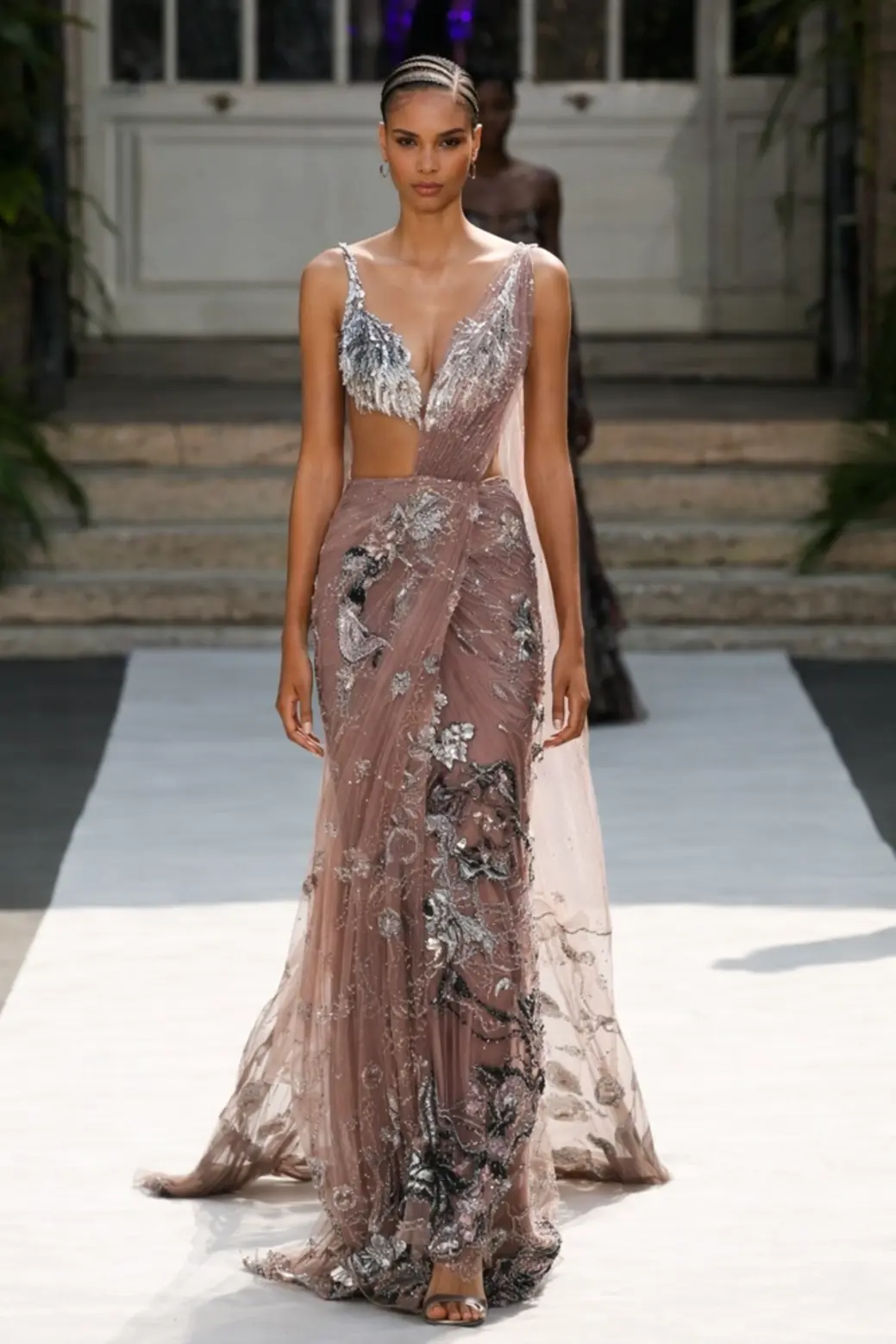
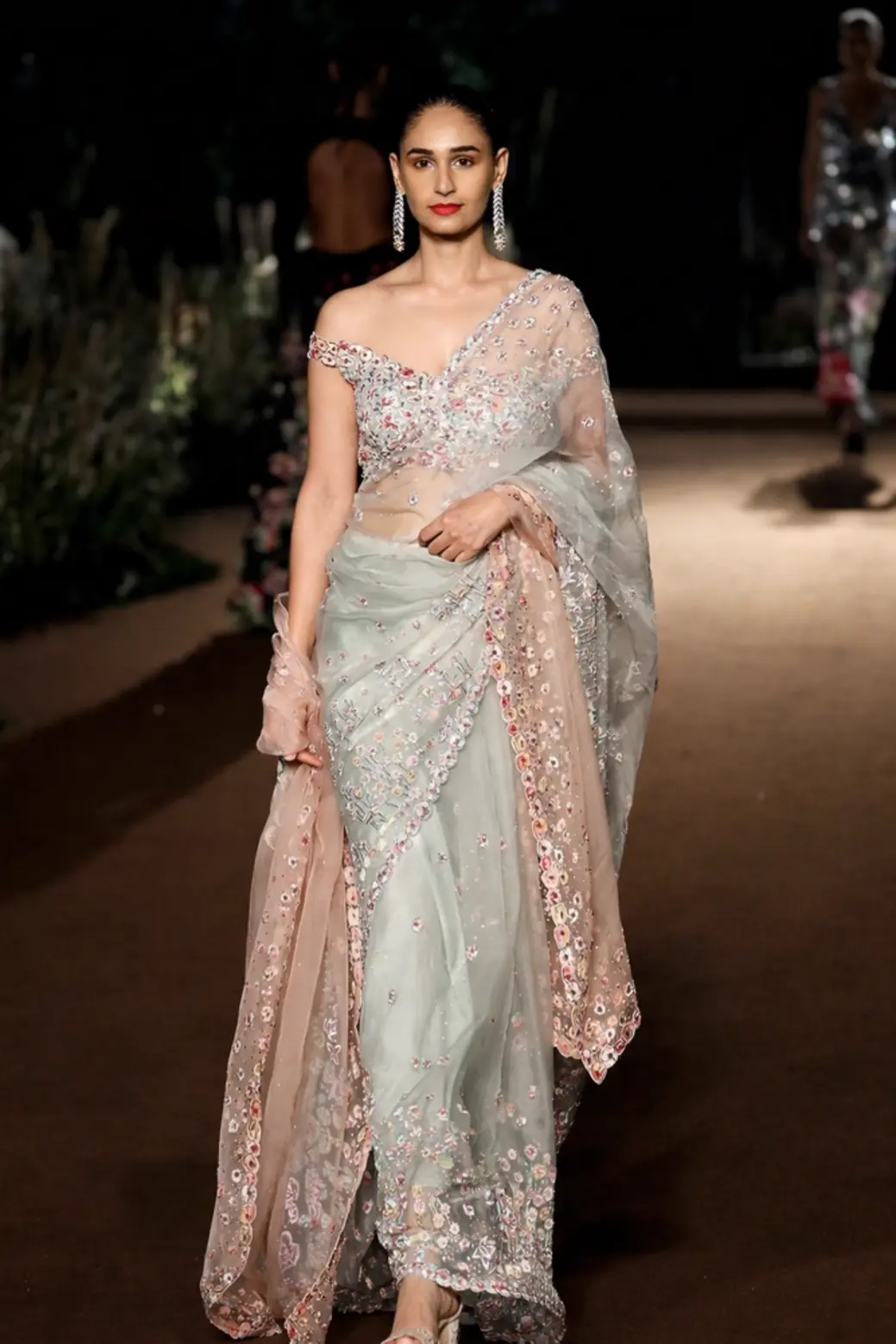
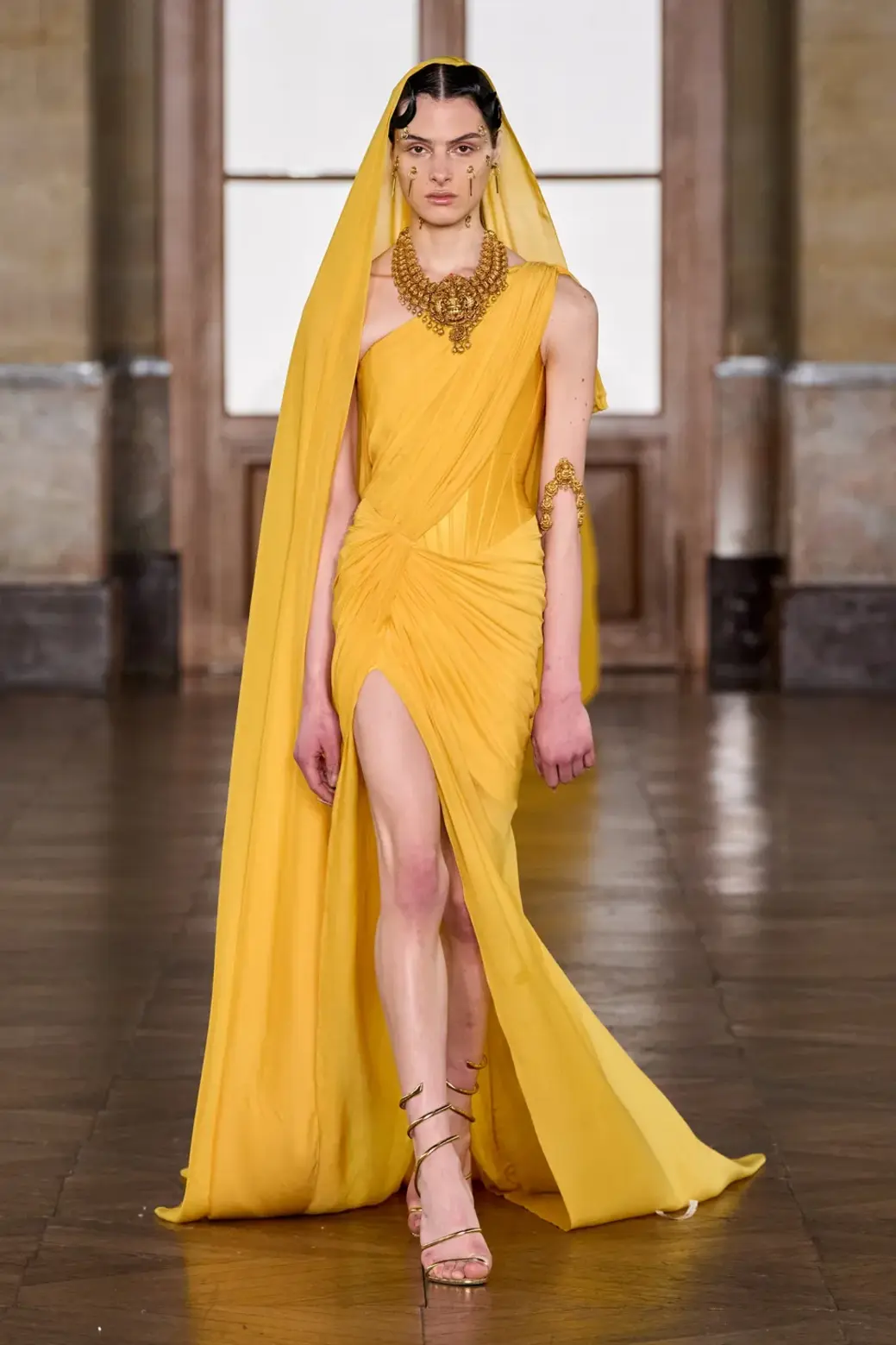
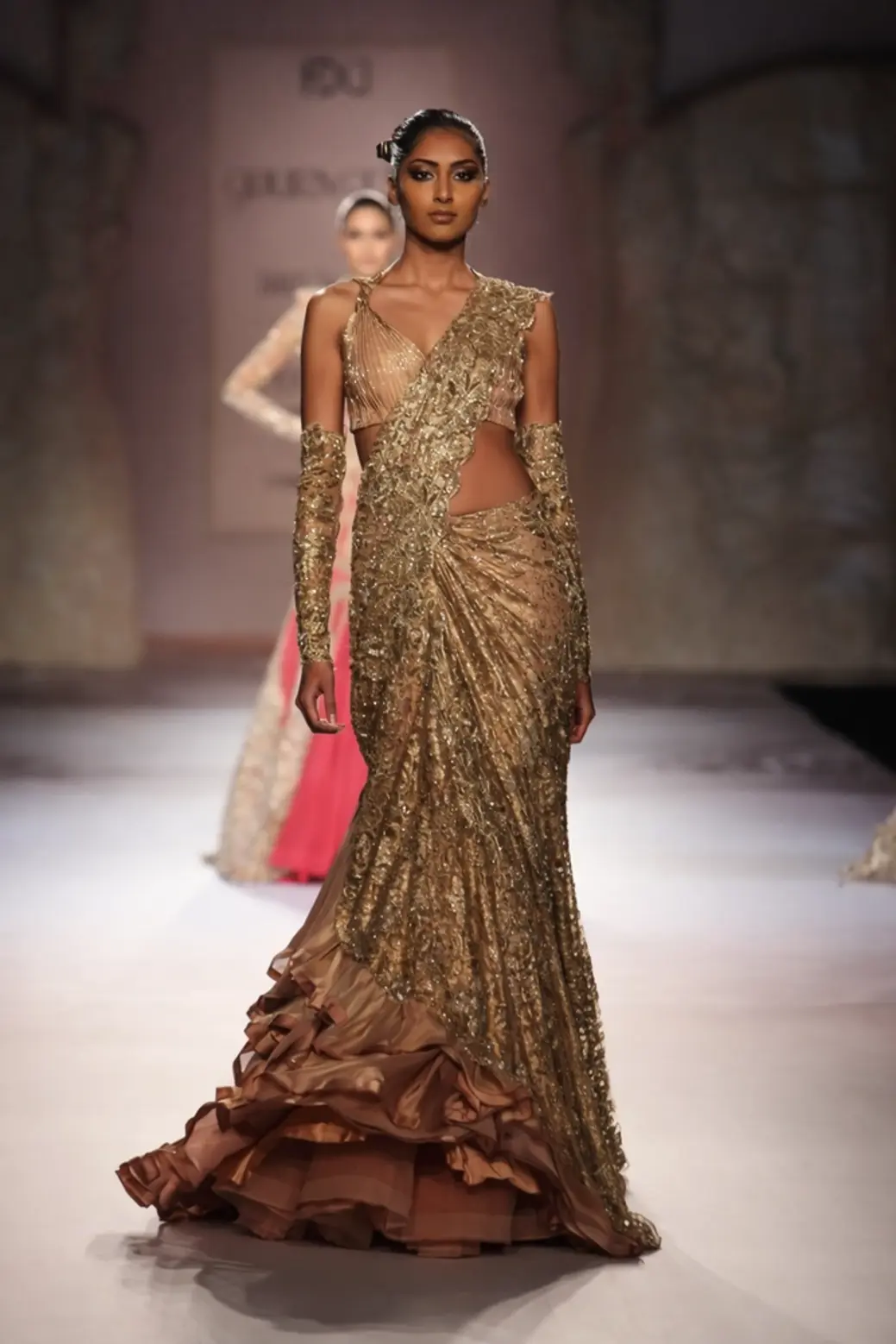
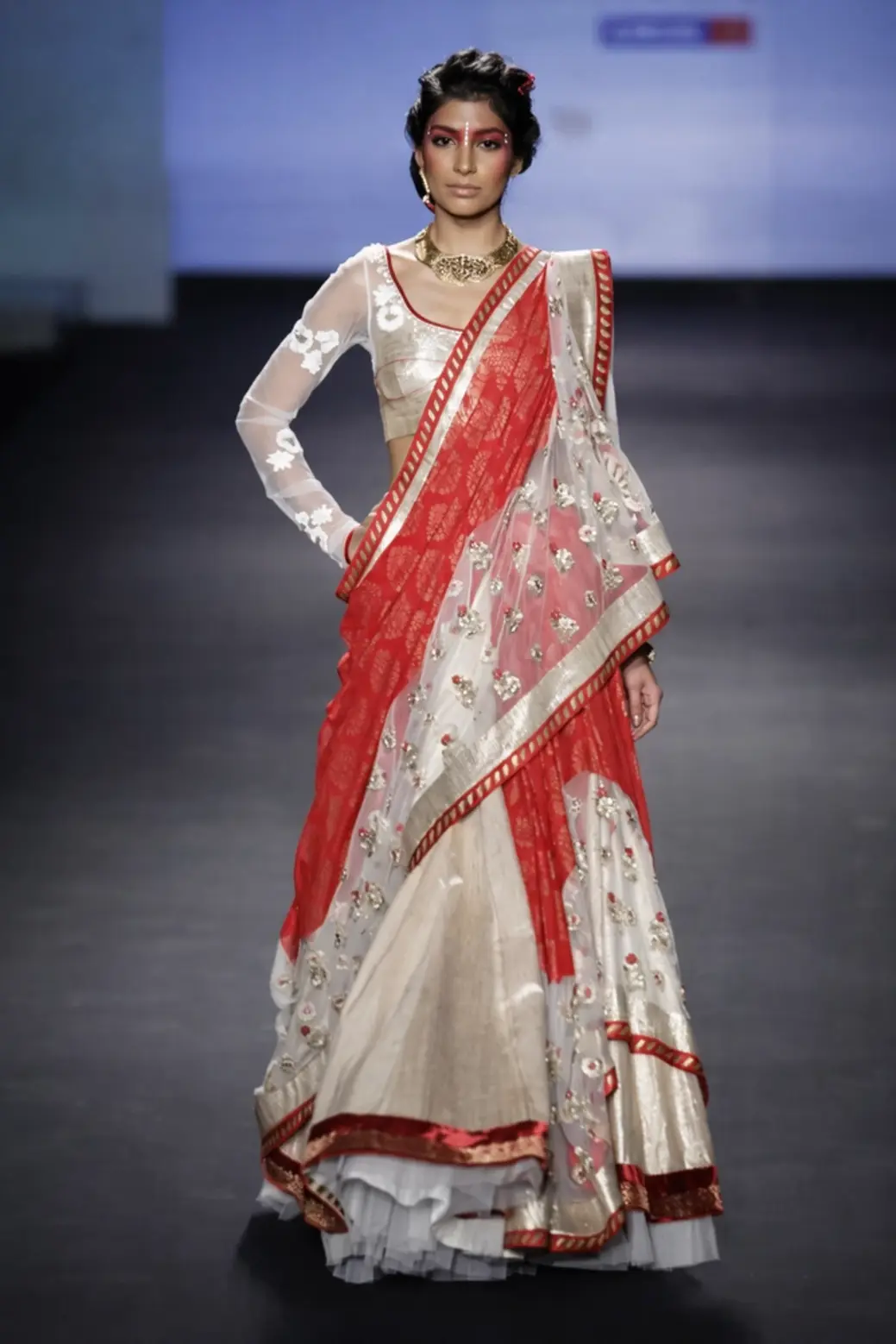
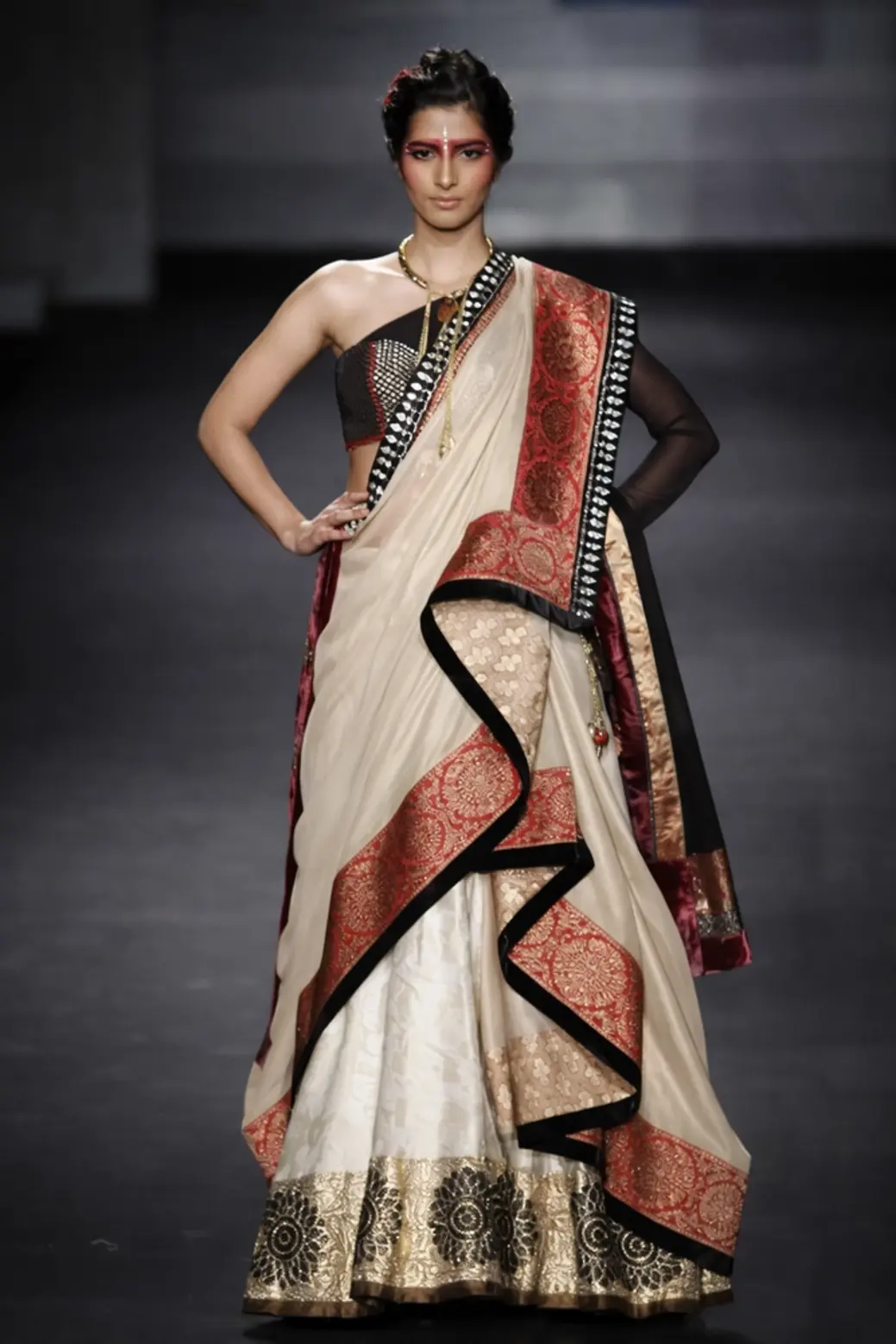
From there, the silhouette began to travel outward, and Western houses found themselves drawn to its fluidity, its asymmetry, its draped sensuality, its regal ease. Designers such as Jean Paul Gaultier and John Galliano approached it through the heightened language of haute couture, where the saree’s long sweep, wrapped movement, and charged elegance could be translated into fantasy, spectacle, and exotic romance.
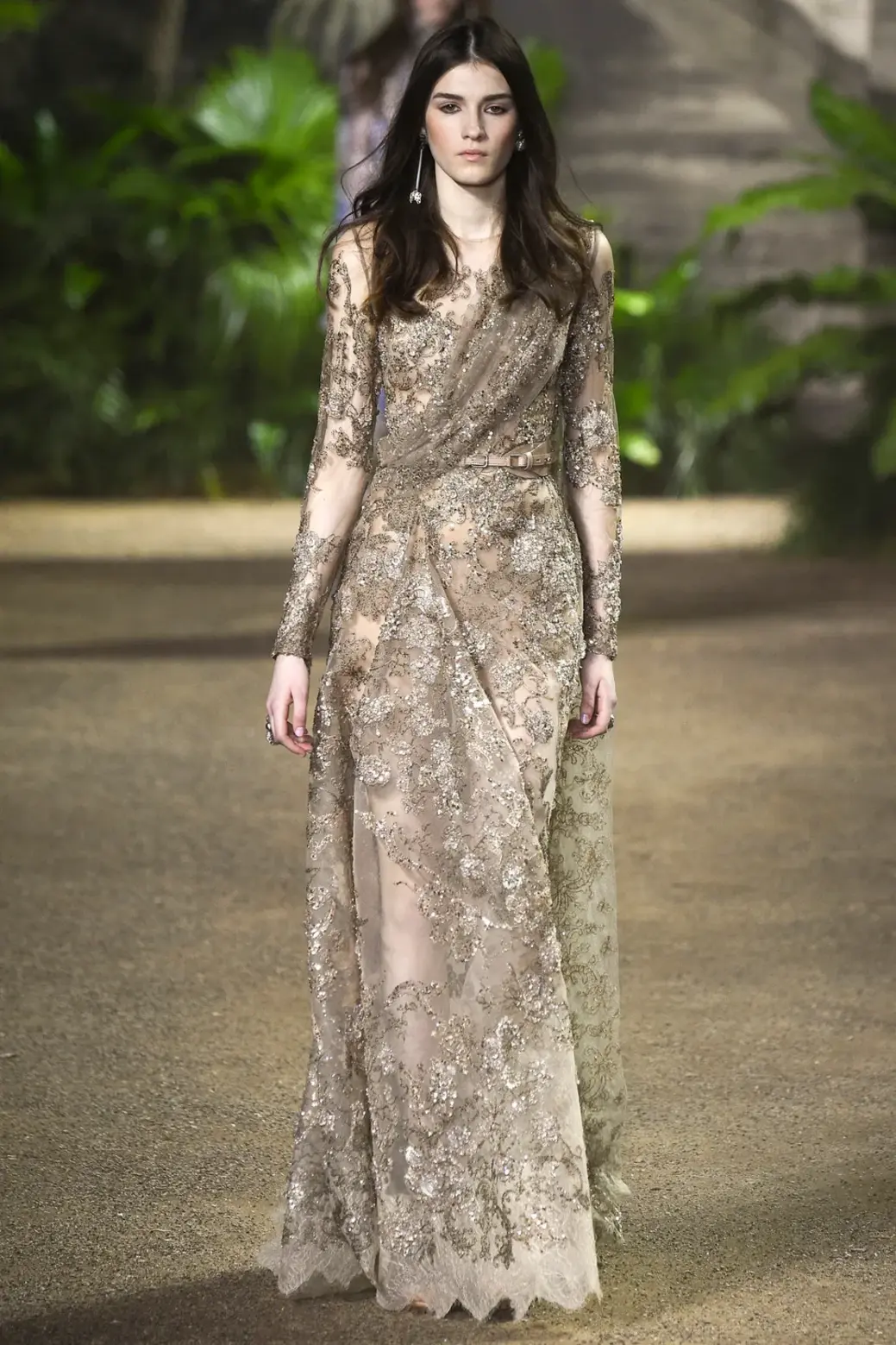
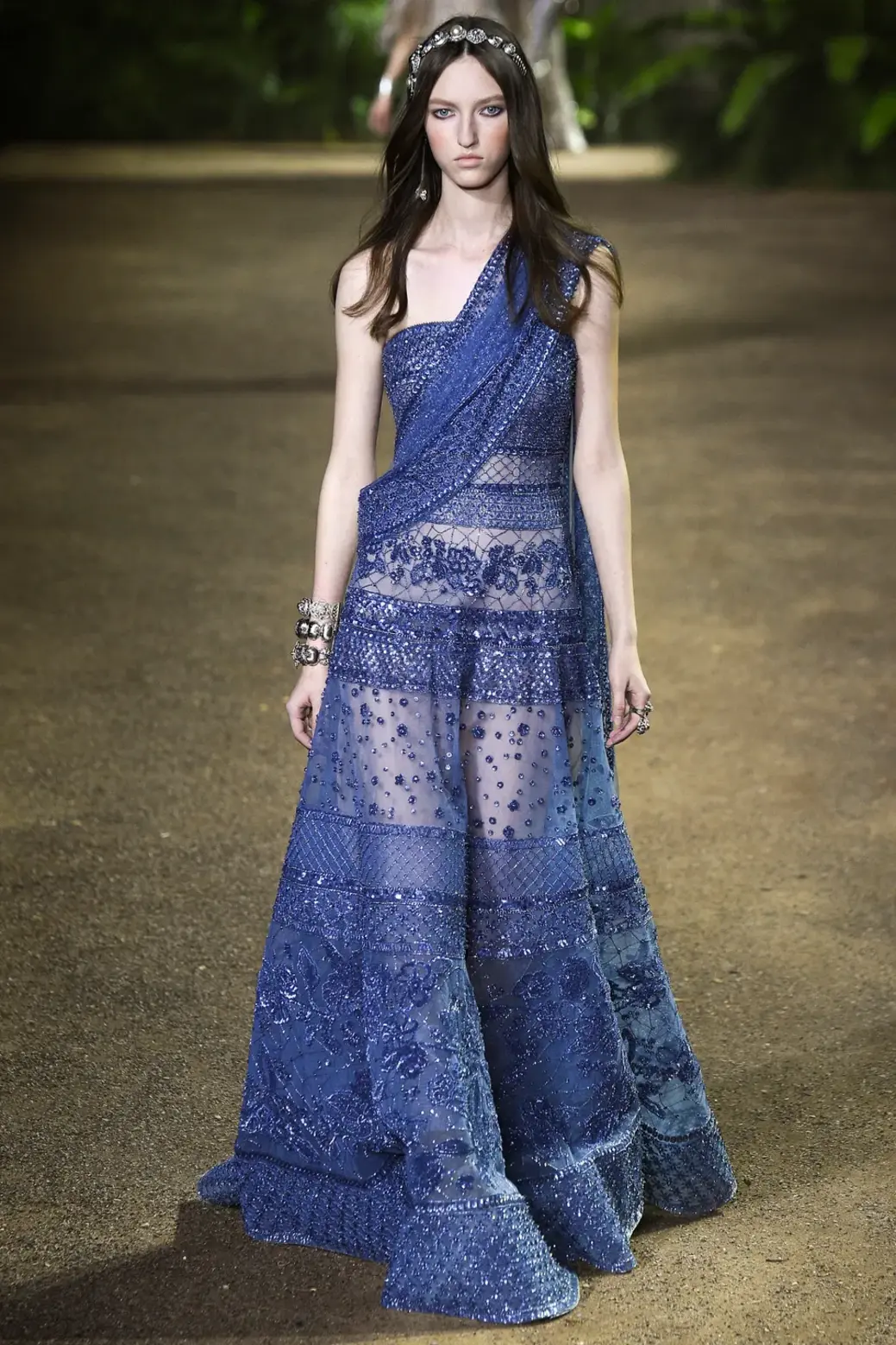
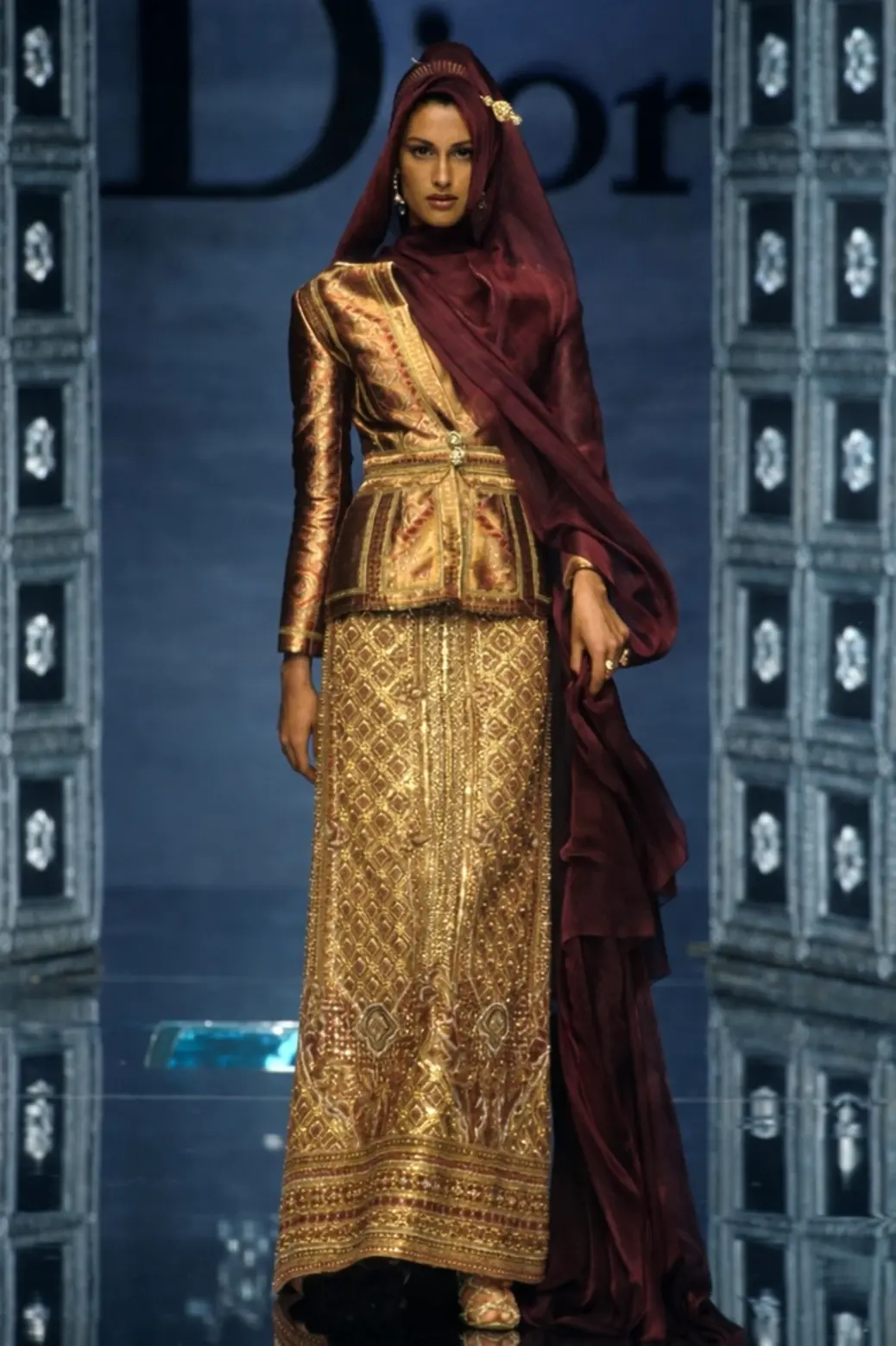
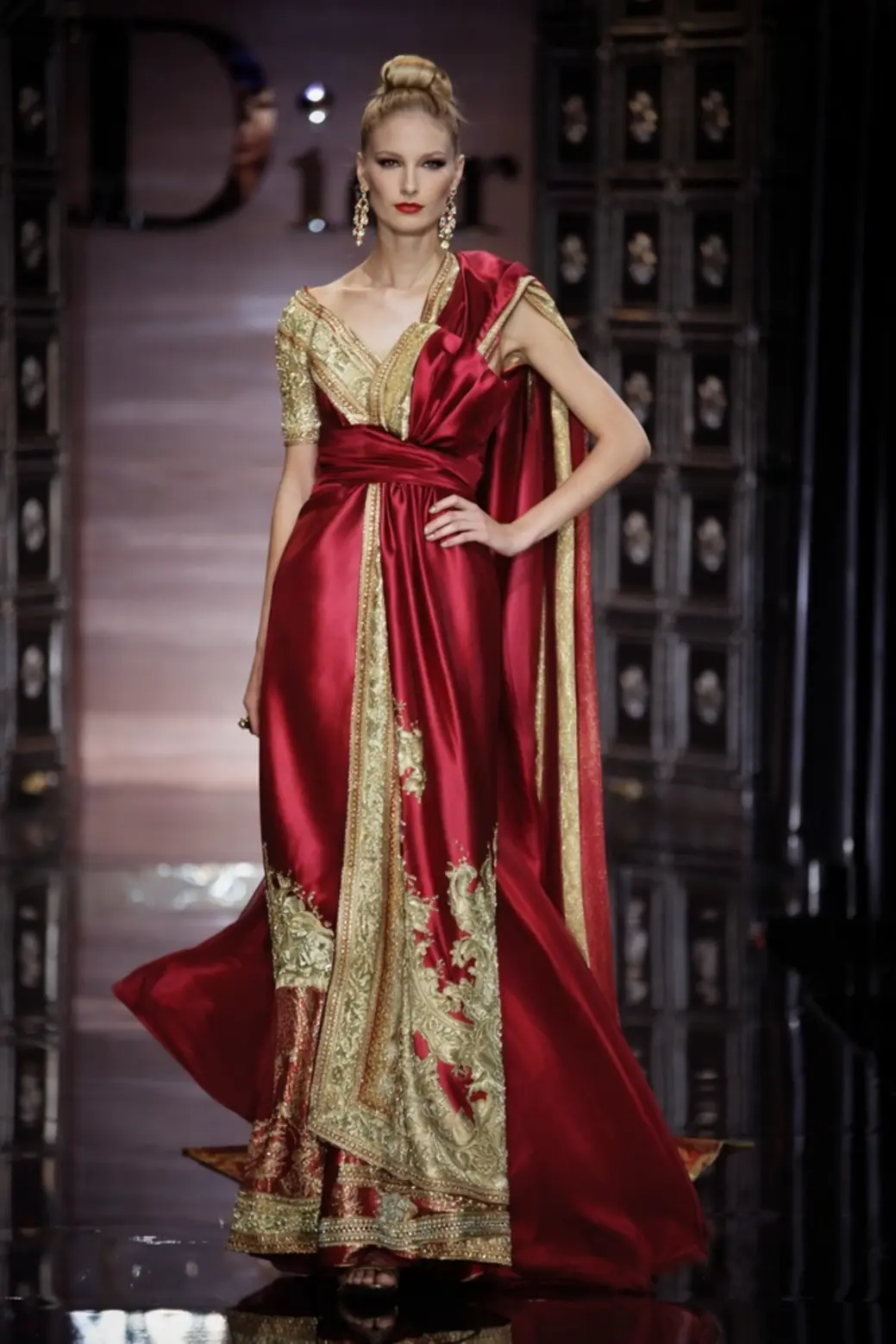
Yet even inside those Western interpretations, the saree still holds the room in its own way. It remains unmistakable, because its essence runs deeper than styling. That is what makes its runway history so compelling: the saree moves from Indian designers who speak it as a first language to Western designers enchanted by its poetry, and across that journey it never loses its soul, only gathers new accents, new lights, and new stages on which to shimmer.


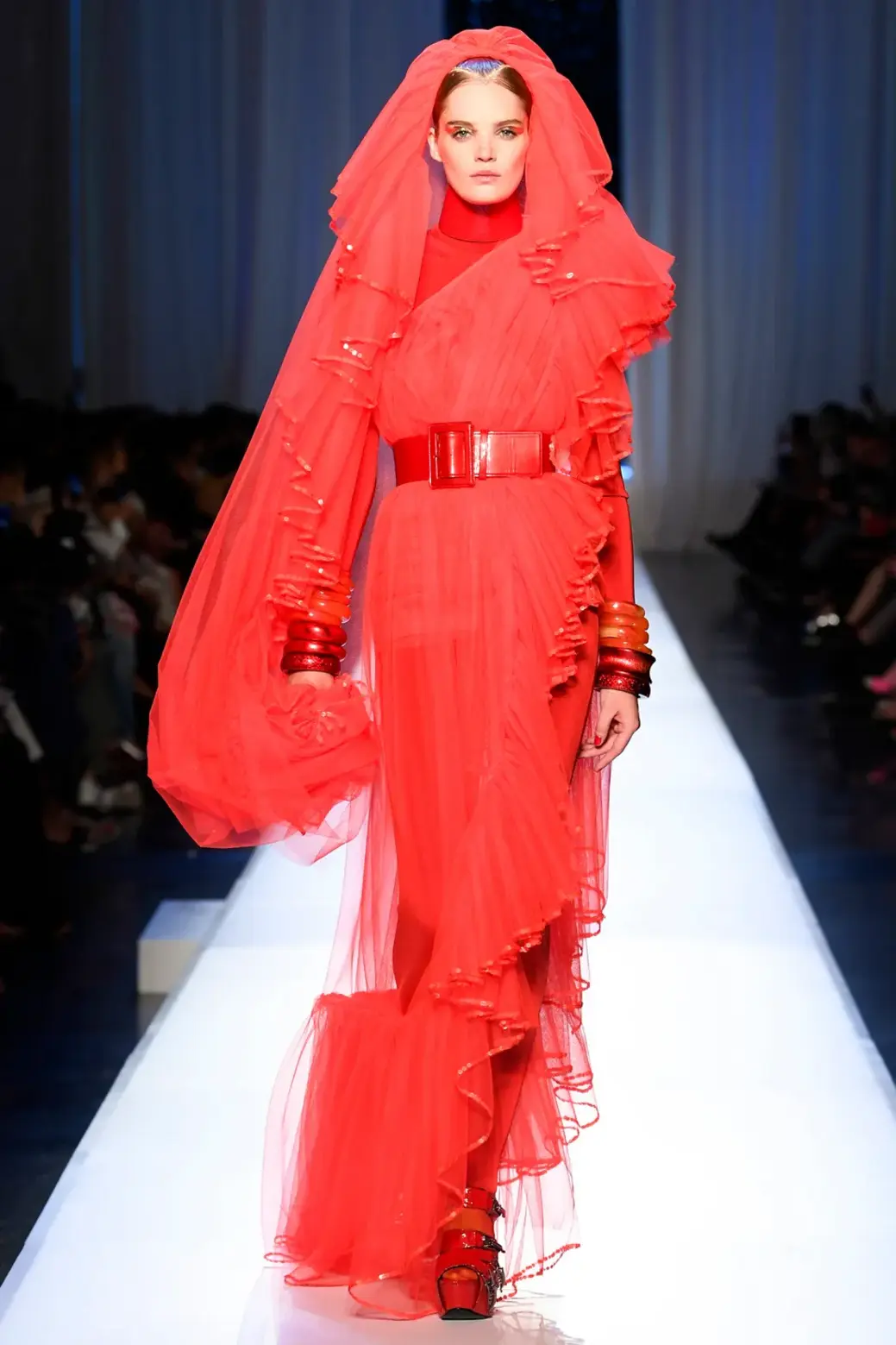

By refusing the needle, the saree honors the integrity of the textile, allowing the cloth to exist in its most liberated state. This is why it has never left us: it is not a garment that goes out of style because it is not a "style" at all, it is a landscape. It functions as a bridge between the ancient and the immediate, a six-yard sanctuary that feels as relevant in a skyscraper as it did in a sun-drenched courtyard centuries ago. It has endured because it possesses a kind of sovereign grace that doesn't compete with trends; instead, it waits for the world to come back to it, offering a sense of permanence in an era of disposable beauty. It is the steady heartbeat of a culture that understands that some things are too beautiful to be broken by a pair of scissors.
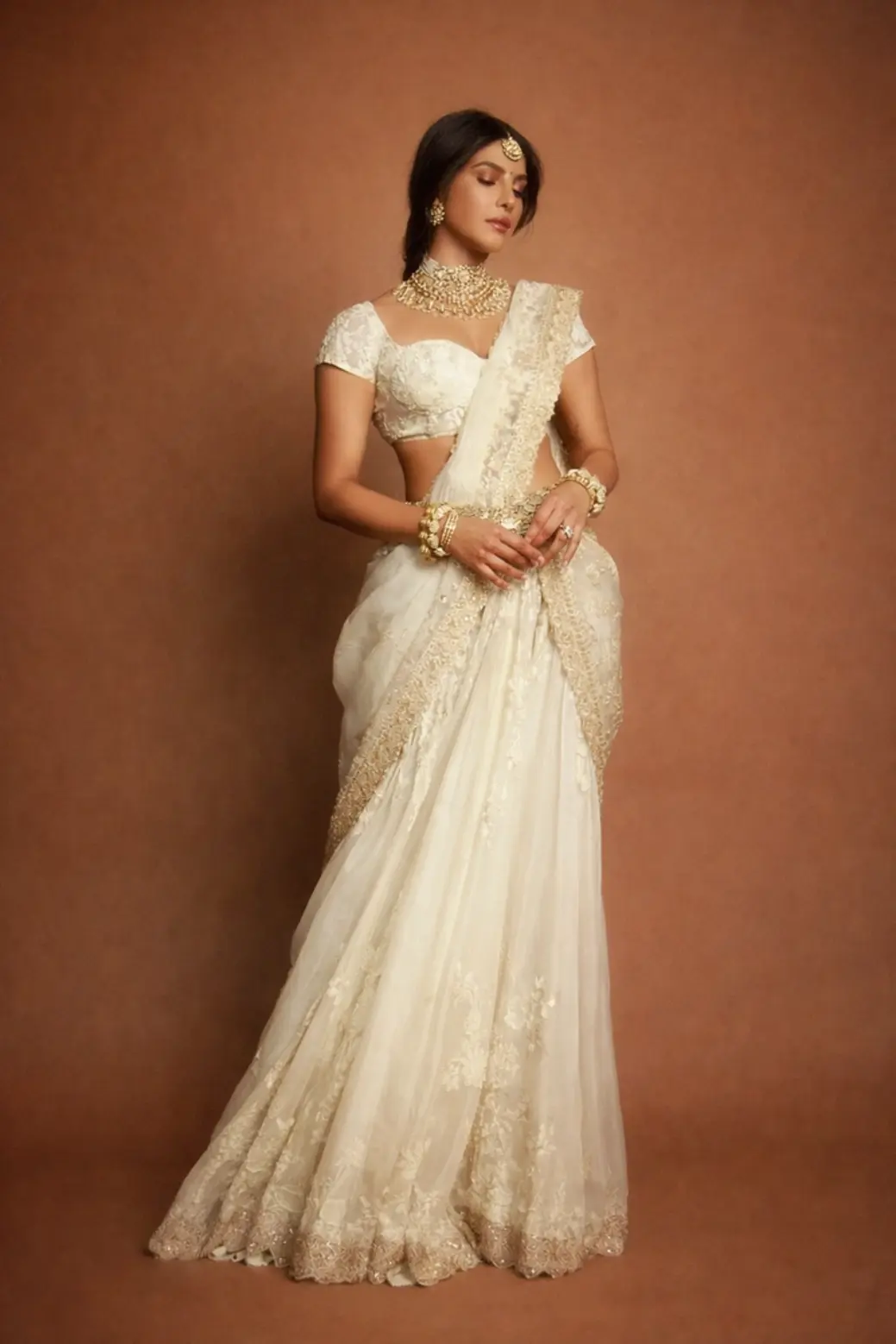
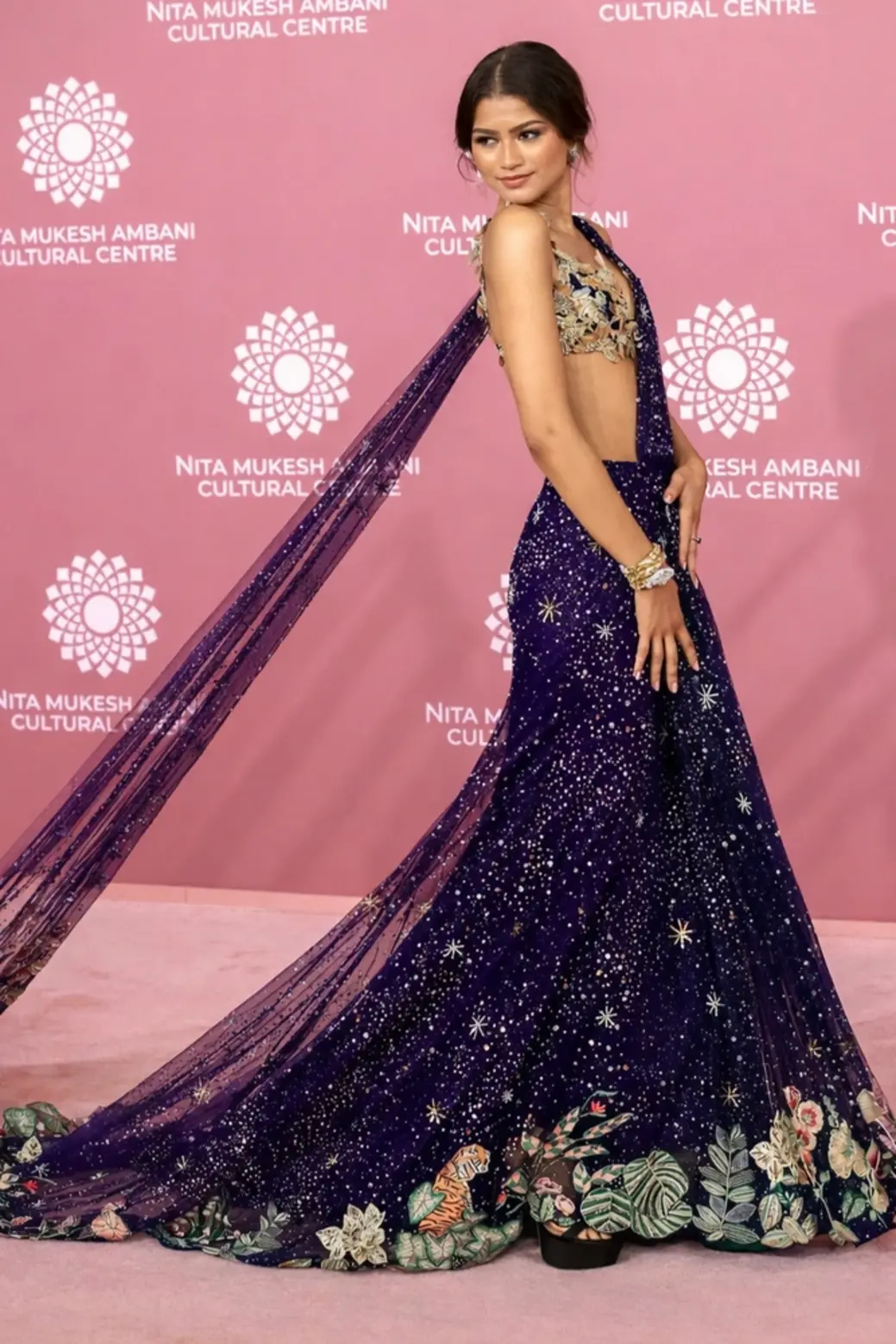
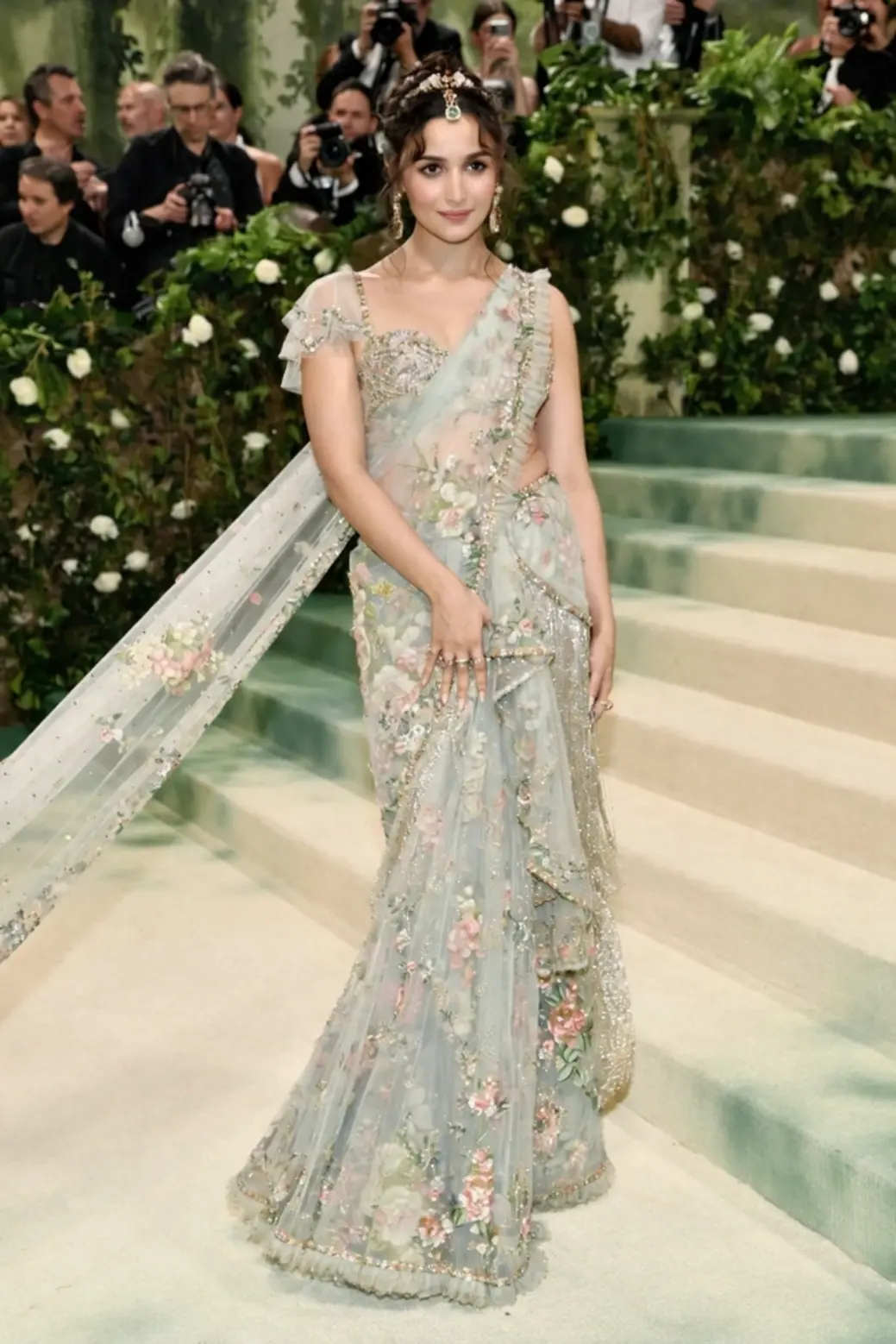
The secret to its longevity lies in its radical adaptability, a quality that feels almost like a living, breathing intelligence. It is a compassionate witness to the seasons of a woman’s life, effortlessly accommodating the soft changes of youth, the fullness of motherhood, and the quiet dignity of age without ever losing its composure. Because the drape is recreated every single morning, it is never the same garment twice; it is a daily act of self-invention. It is an anchor in a shifting world, a piece of home that you can wrap around your shoulders, carrying the scent of ancestral memory and the warmth of identity wherever you go.
Ultimately, the saree remains an icon because it transforms the act of dressing into an act of poetry. There is an ethereal, almost spiritual inspiration in the way a simple length of cloth can turn a walk into a glide and a gesture into a prayer. The saree is iconic because it represents the perfect marriage of vulnerability and power; it is delicate enough to be pulled through a finger ring, yet strong enough to define a nation’s spirit. It is the story of a civilization that decided, thousands of years ago, that a single, flowing thread was enough to hold the weight of the world.
Advertisement