MENU
Close





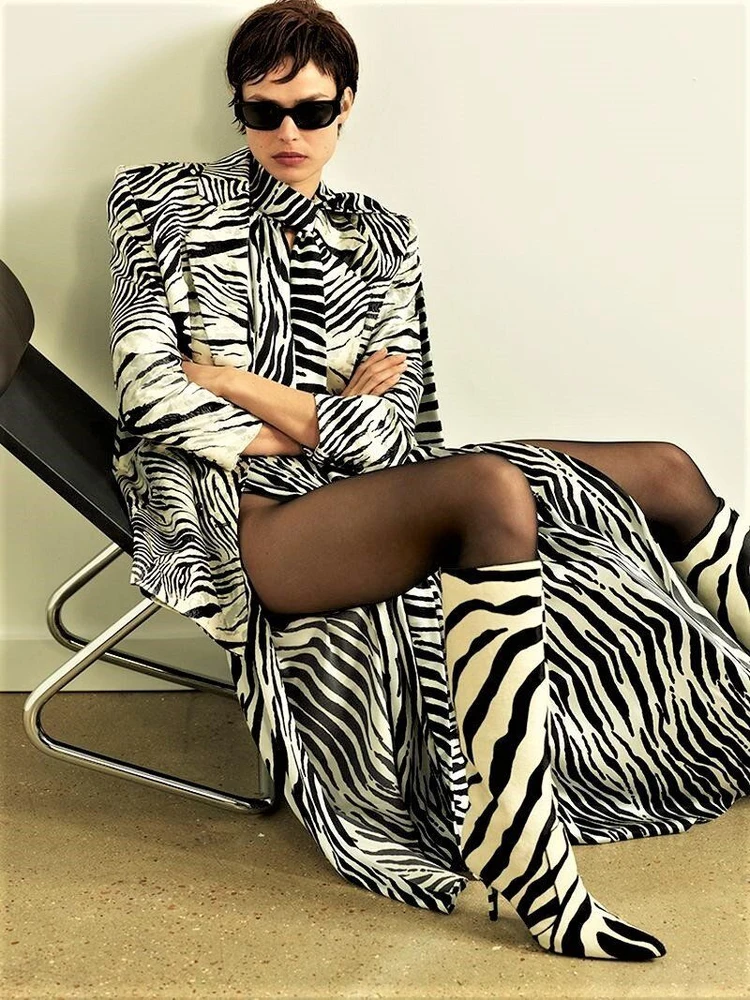
What happens when a dress loses its sense of direction and becomes more interesting because of it? The asymmetric silhouette has spent centuries proving that imbalance can seduce harder than symmetry ever could.
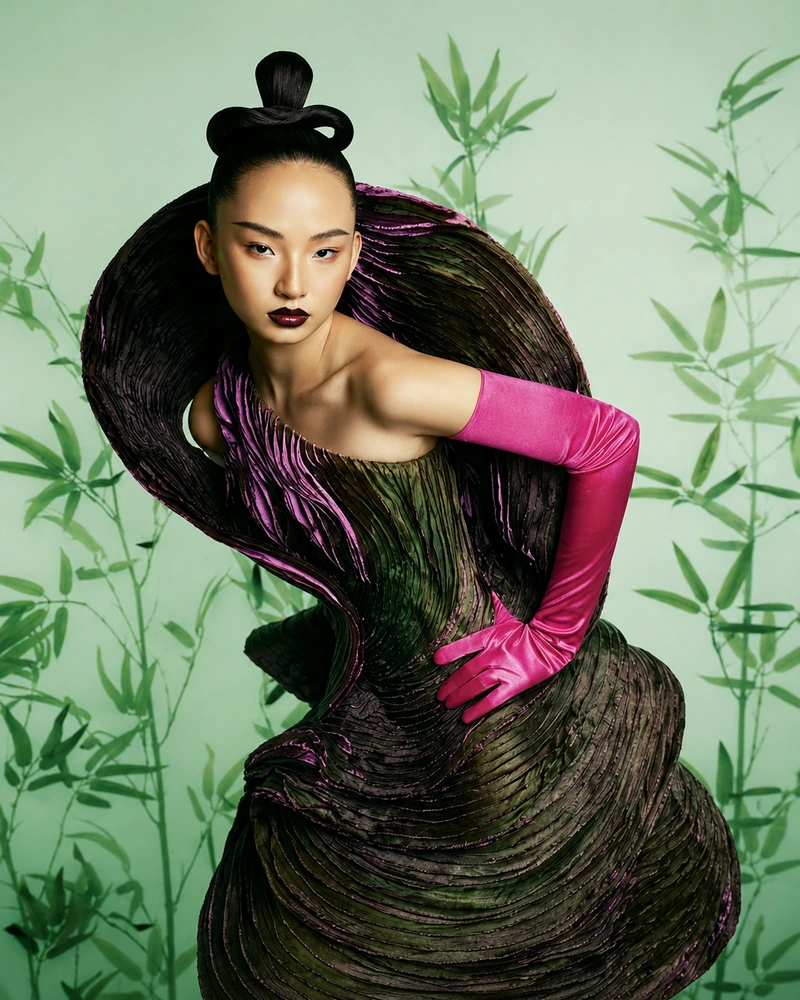
What happens when a dress loses its sense of direction and becomes more interesting because of it? The asymmetric silhouette has spent centuries proving that imbalance can seduce harder than symmetry ever could.
May 30, 2026
Advertisement
Advertisement


Fashion has always been a dialogue between order and disruption. For centuries, symmetry was the visual grammar of elegance, mirroring left and right sides, balancing neckline to hemline, creating garments that felt safe, steady, and eternal. And yet, lurking beneath the obsession with balance, there has always been another instinct: the attraction to imbalance, the pull toward the unexpected line that slices across the body, the hem that dips and rises like a wave, the neckline that slips from one shoulder in defiance of its twin. This is the story of the asymmetric silhouette: a language of design that has existed for millennia, resurfacing again and again in forms both radical and refined, each time reminding us of fashion’s most essential truth, that perfection is rarely symmetrical.
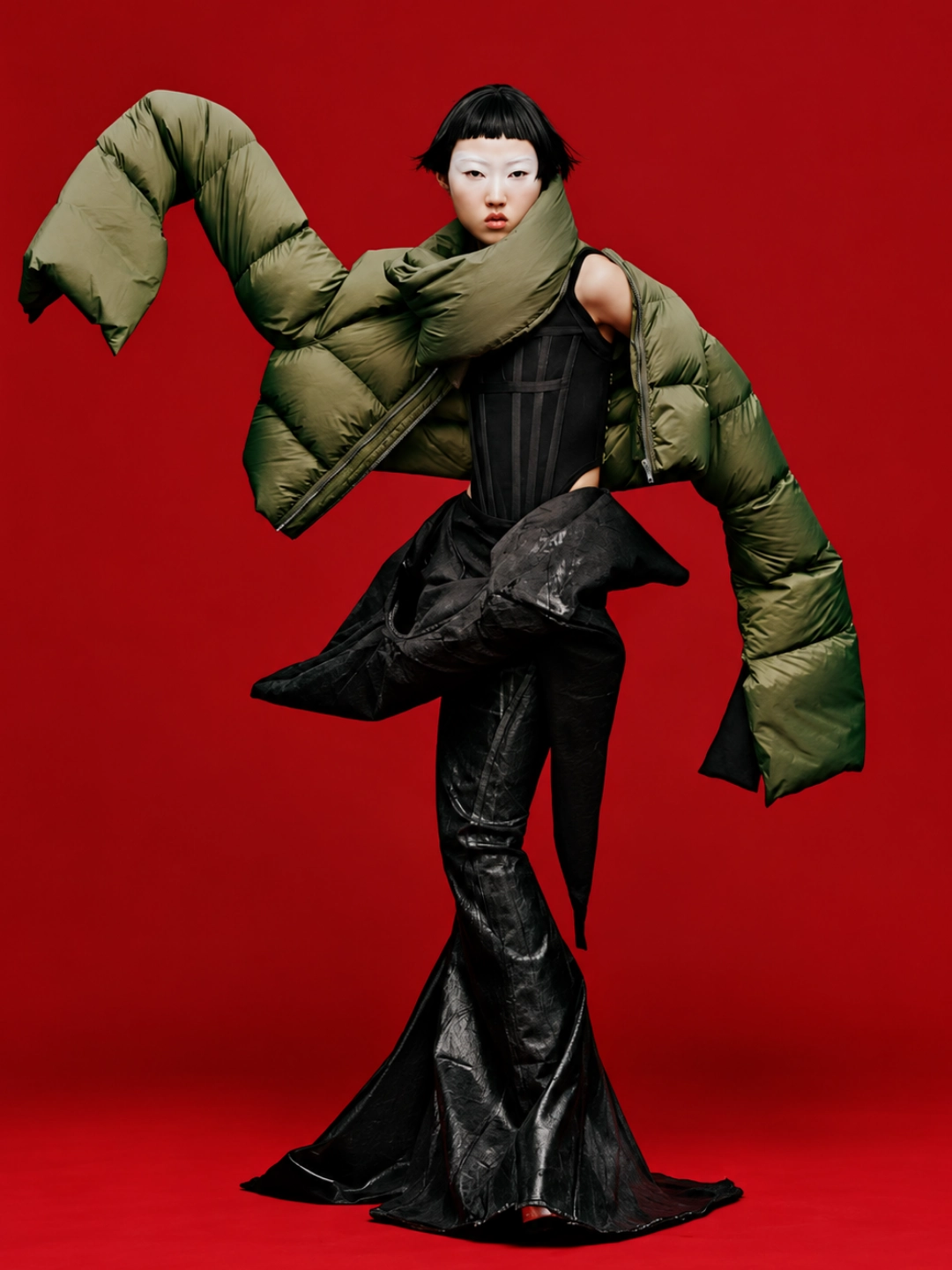
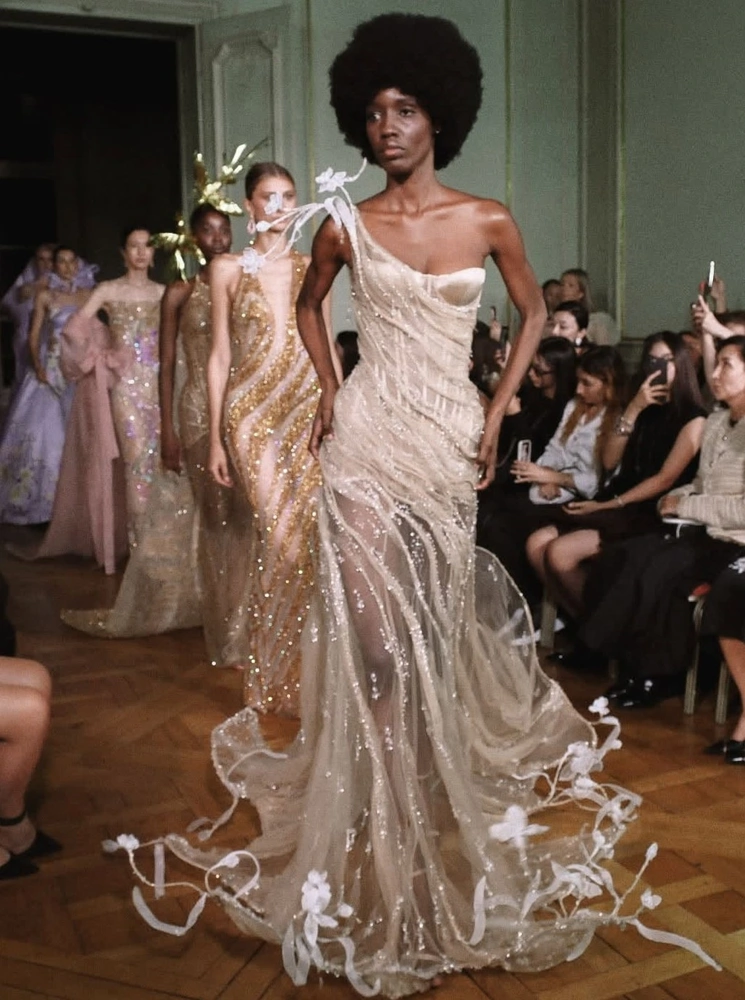
The asymmetric silhouette is a garment shape built from deliberate imbalance, where the left and right sides of the body are designed to behave differently. At its clearest, it can appear as a one-shoulder dress, a diagonal neckline, a single sleeve, a slanted hem, a skirt that falls longer on one side, a draped panel crossing the torso, or a bodice where fabric gathers from one hip and escapes toward the opposite shoulder. Its drama comes from unequal visual weight. One side carries exposure, the other carries structure. One side may feel bare and sharp, the other may feel folded, wrapped, or armored. The body is still centered inside the garment, but the eye is invited to travel sideways, downward, upward, across the figure like it is following a secret route. That is the core of the asymmetric silhouette: balance is still present, yet it is hidden beneath tension, so the garment looks tilted, alive, and slightly unpredictable.
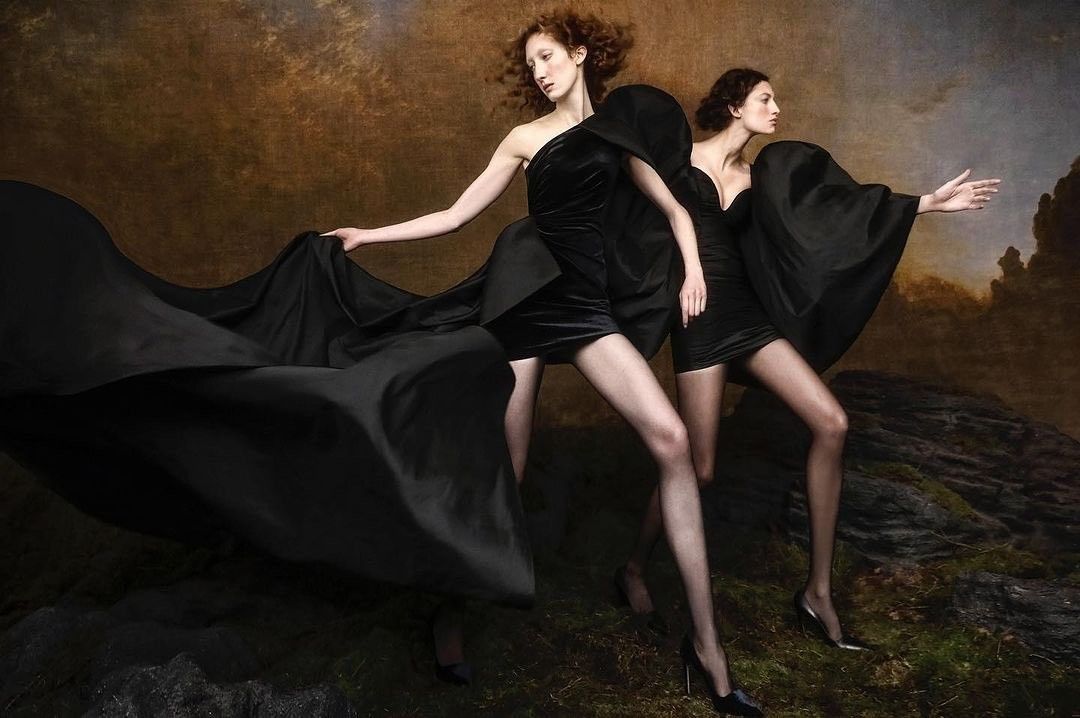
The making process usually begins with a conventional bodice or dress block, then the designer starts breaking its polite little mirror. A normal dress block gives equal shoulders, equal armholes, a centered neckline, a straight waistline, and a balanced hem. To create an asymmetric silhouette, the pattern maker first chooses the “axis of disruption,” meaning the main diagonal direction of the design. It could run from the right shoulder to the left hip, from the left underarm to the opposite thigh, or from one side waist down into an uneven hem. Once that line is chosen, darts are rotated toward it, seams are moved off-center, and the neckline is redrawn so one shoulder may be exposed while the other becomes the anchor. The cut is less about random weirdness and more about choreography: every tilted line needs a reason, every missing sleeve needs support, every falling drape needs a hidden point of control.
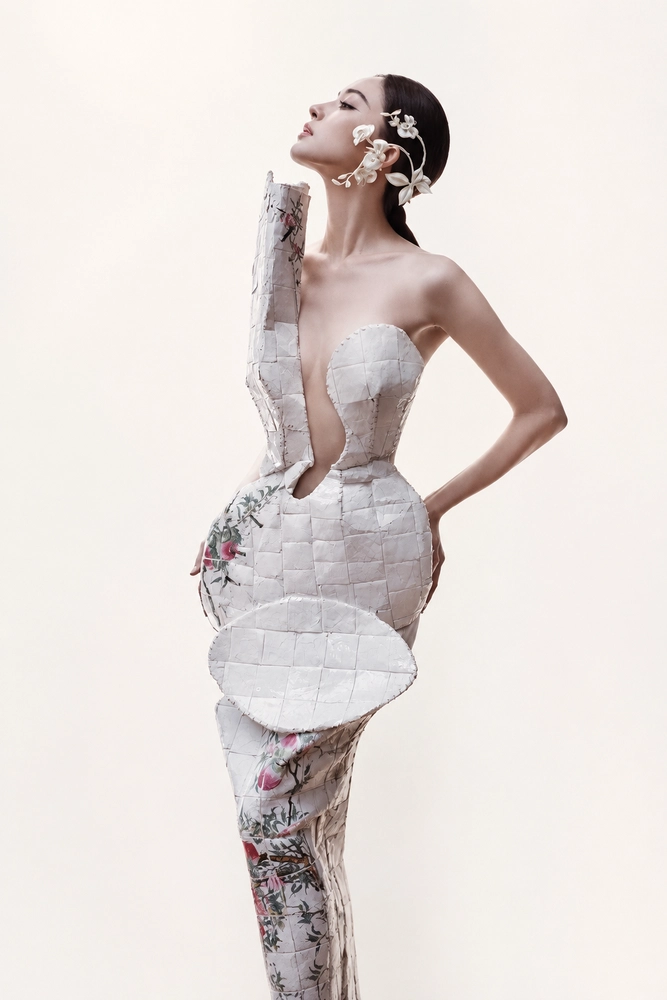
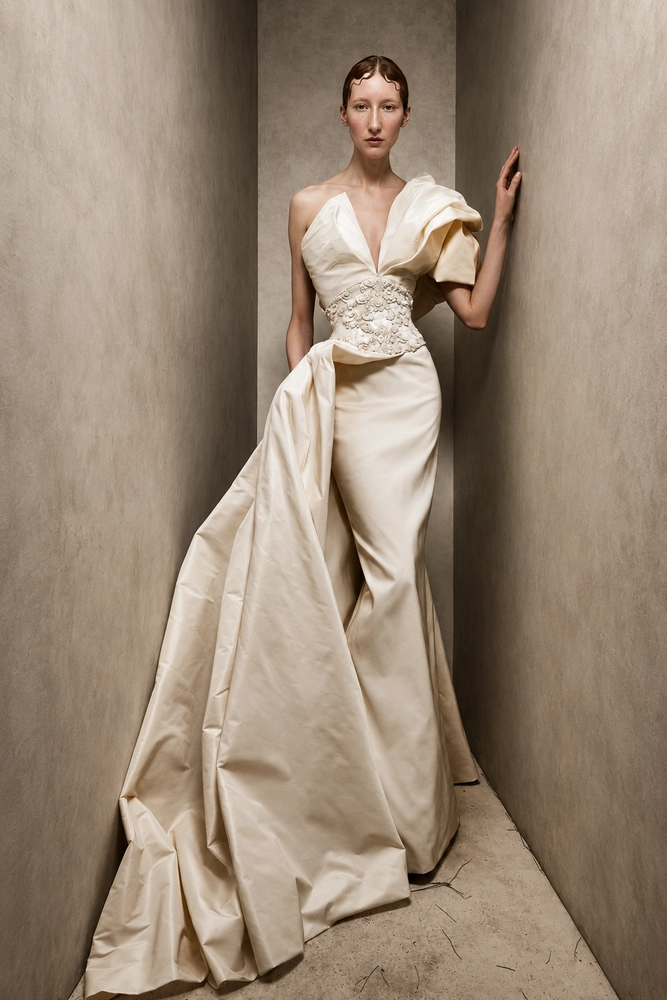
Structurally, the asymmetric silhouette is a small engineering trick dressed as flirtation. Since both sides are unequal, the garment has to fight gravity in clever ways. A one-shoulder bodice often needs hidden boning, an inner waist stay, silicone grip tape, or reinforced facing along the neckline so the exposed side stays secure. A diagonal drape may need to be cut on the bias so the fabric can stretch and fall around the body with liquid movement. A heavy gathered panel might be anchored into a side seam, shoulder seam, or internal corset, so it looks effortless from the outside while quietly doing serious backstage labor underneath. If the design has an uneven hem, the fabric is usually left to hang before final hemming, because bias-cut or draped cloth can drop over time. Only after the fabric settles can the maker trim the hem into that deliciously uneven line.
When one shoulder is bare, the opposite side may receive a sleeve, knot, flower, cape, or heavy fold. When one hem rises, the other side may fall into a train. When one side of the bodice is tight, the other may bloom into drapery. This is why asymmetry feels so satisfying when done well: the design appears unstable, yet the composition secretly knows how to hold itself. The maker is constantly asking where the eye should land first, where it should move next, and where the garment should end its little act of rebellion. The beauty sits in that controlled misbehavior. The asymmetric silhouette looks like it has lost its compass, but the pattern has a map hidden inside.
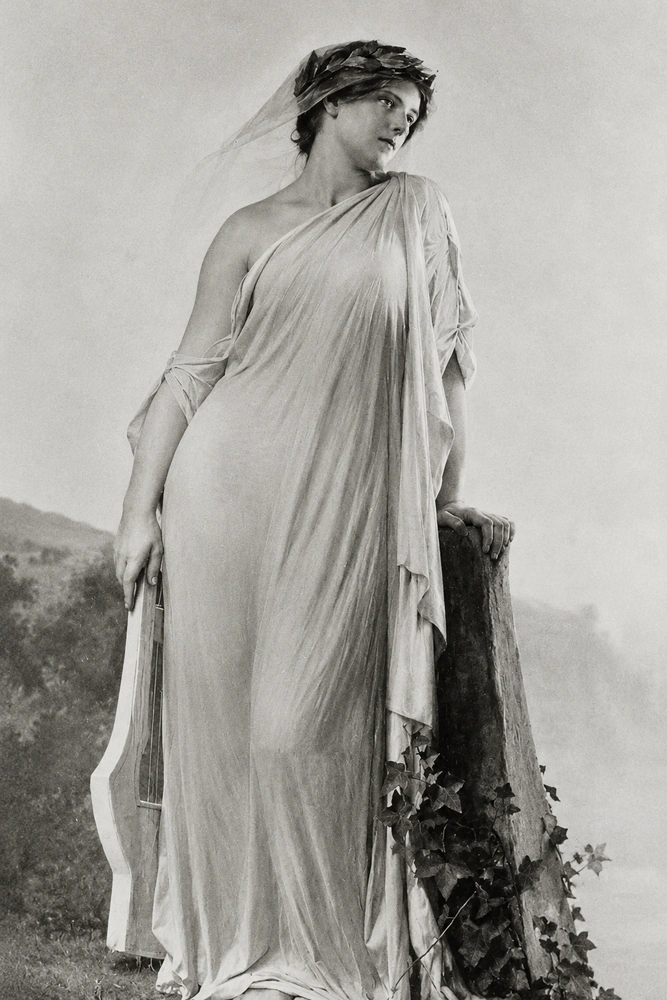
The origin of the asymmetric silhouette in dress can be traced back to antiquity, long before the concept was ever codified in fashion magazines or runway gloss. In ancient Greece, the chiton and himation often fell across the body with deliberate irregularity, pinned at one shoulder and cascading diagonally across the torso. Rome continued the tradition with togas that, when draped, produced folds more sculptural than symmetrical. This was not asymmetry for shock value but asymmetry born from life: the way fabric moved with the body, the way drape refused to obey rigid geometry. It was functional freedom, yet it carried a spirit of liberation, showing that clothing did not have to obey rules of mirror-image perfection to feel powerful. Gender lines blurred too, as both men and women wore garments that revealed one shoulder, reminding us that asymmetry’s earliest symbol was not simply style but fluidity.
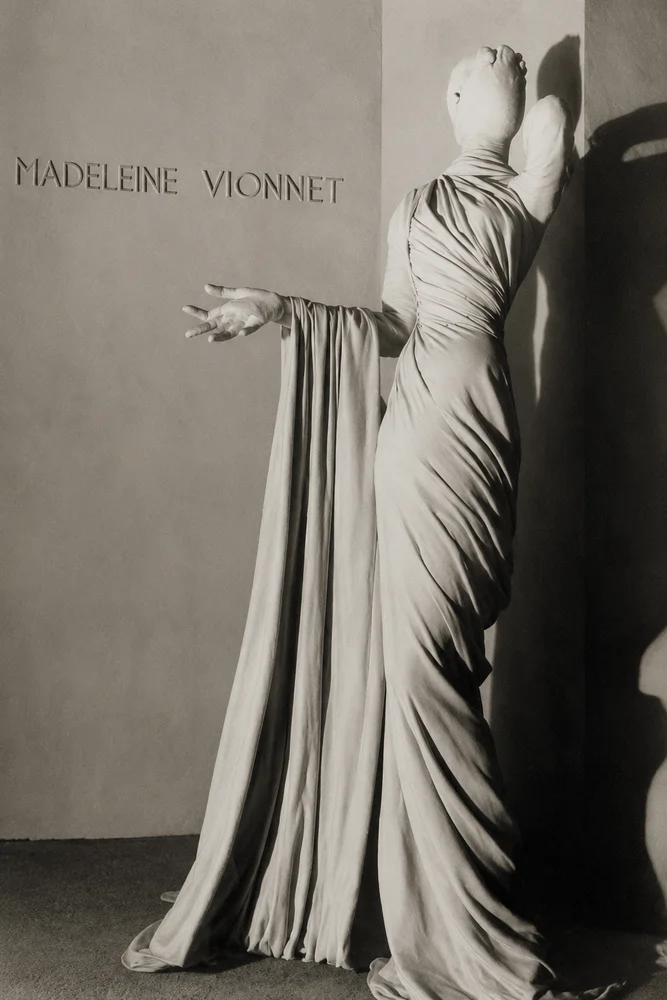
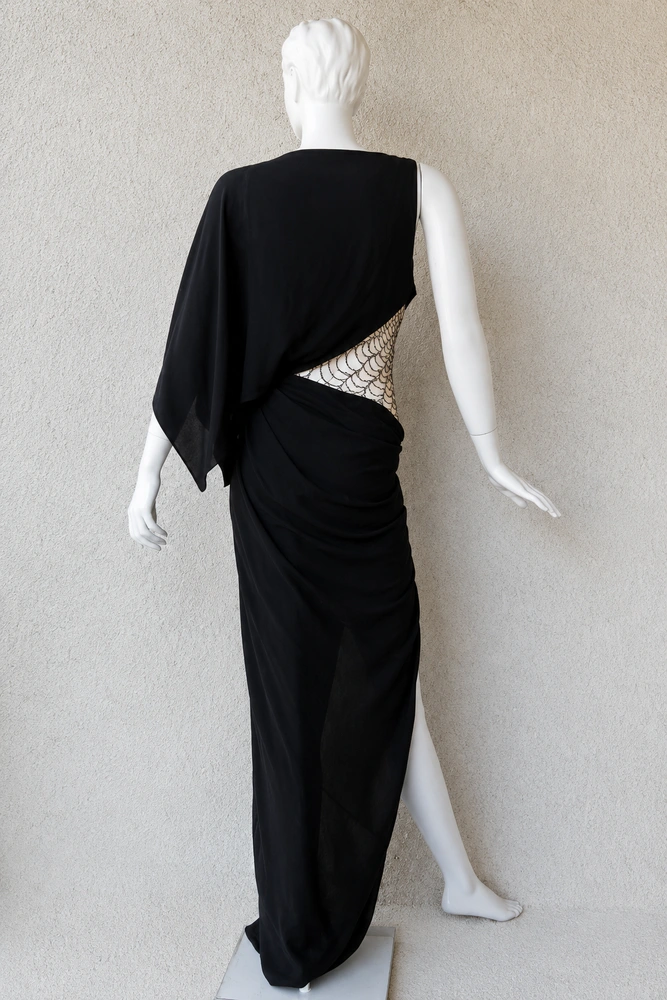
Madeleine Vionnet Gowns
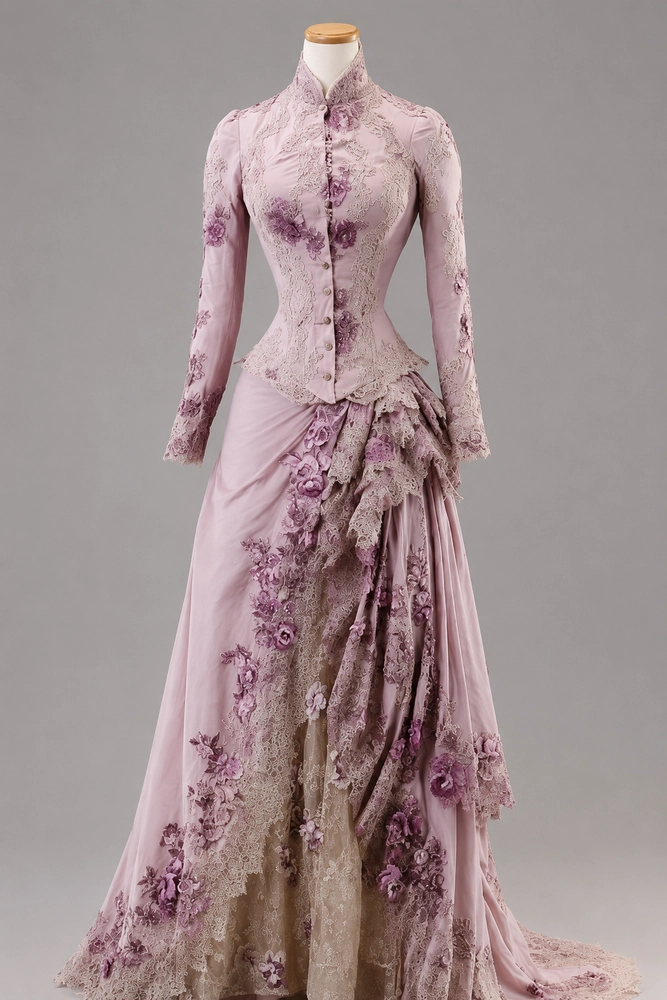
Centuries later, the fascination with imbalance reemerged in subtler ways. During the Victorian period, the fishtail hem made its debut, creating skirts that dipped dramatically behind while cutting shorter in front. This was asymmetry tied to movement and spectacle, dresses that looked alive when women walked, hems that announced motion before stillness.
By the 1920s and 30s, asymmetric silhouette became a flirtatious detail in flapper dresses and bias-cut gowns, their angled lines celebrating modern women who danced, smoked, and moved with a new autonomy. Madeleine Vionnet, queen of the bias cut, understood that diagonal seams liberated the female body, creating a sensual flow that symmetry could not. For Vionnet, asymmetry was not disorder but geometry at its most intelligent, where fluidity was planned with razor-sharp precision.
At its core, asymmetric silhouette symbolizes tension and freedom. It whispers rebellion against rigid systems, whether of art, politics, or the body itself. Symmetry reassures us; asymmetry challenges us. To wear an asymmetrical dress is to accept imbalance and transform it into beauty. That is why asymmetry so often surfaces during cultural upheaval: in the ancient world, it expressed fluidity of gender and drape; in the 20s, liberation of women; in the 80s, rebellion against Western order; in today’s world, individuality in an age of mass production. The spirit of asymmetric silhouette is refusal. It refuses to mirror, refuses to balance, refuses to be easy. Instead, it insists on personality, dynamism, and motion. In this sense, asymmetry is more than a silhouette. It is an attitude.
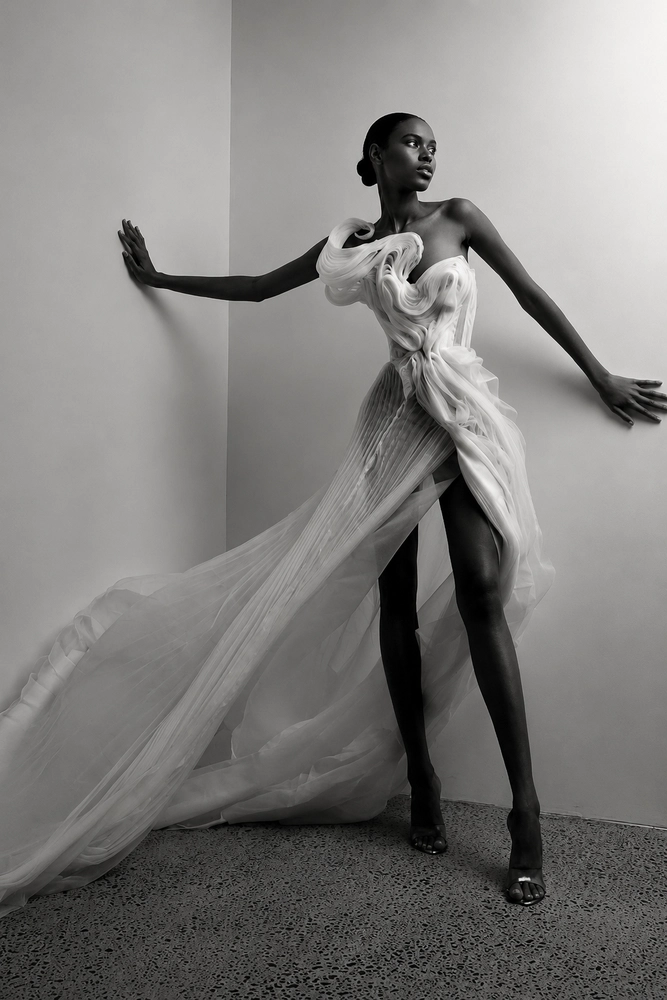
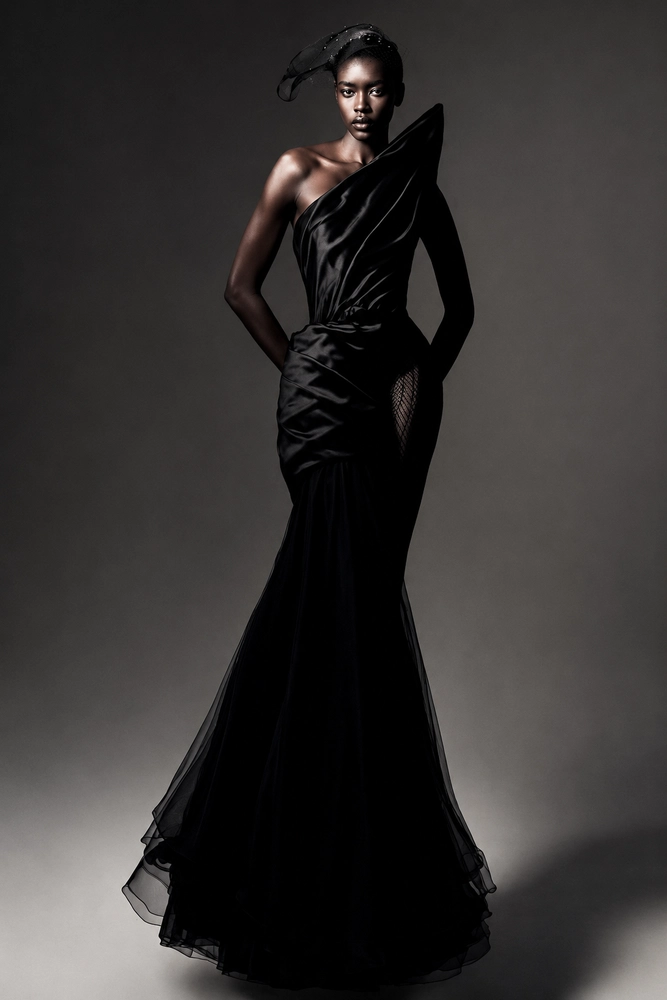
There is also a psychological element to asymmetric silhouette appeal. The diagonal is inherently dramatic. When a line cuts across the body from shoulder to hip or from hem to ankle, the eye is forced to follow it, creating length and rhythm. Asymmetry creates movement even when the wearer is still. It flatters by redirecting attention, elongating, slimming, or emphasizing depending on where the line falls. Unlike symmetry, which anchors, asymmetry propels. It makes the body appear to be in motion, alive. And this vitality is perhaps its most seductive power: the asymmetrical silhouette does not just adorn the body, it animates it.
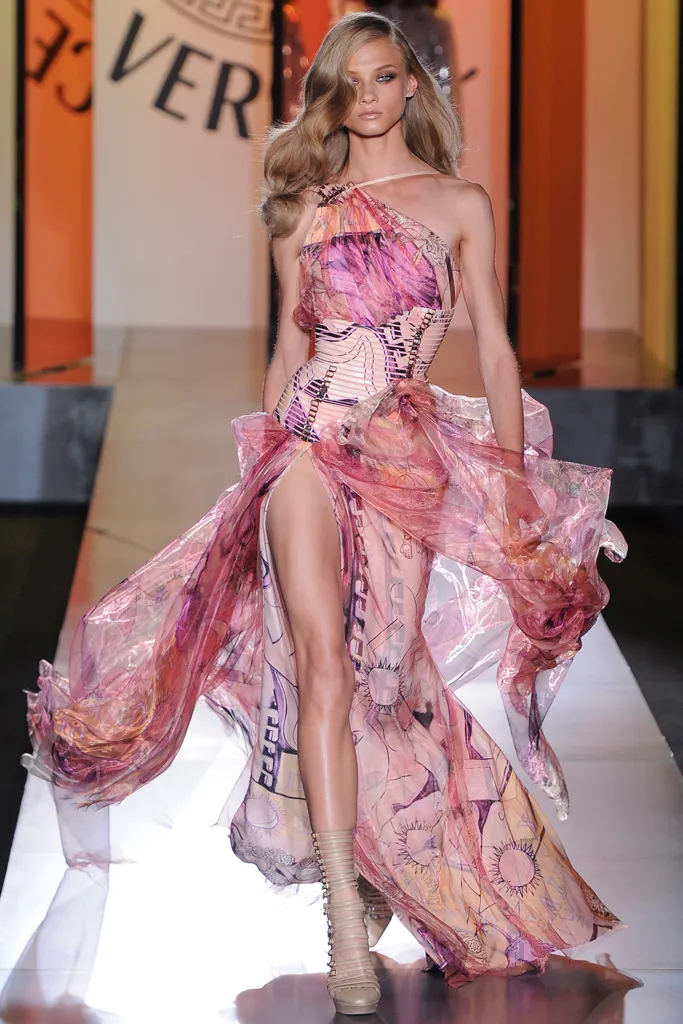
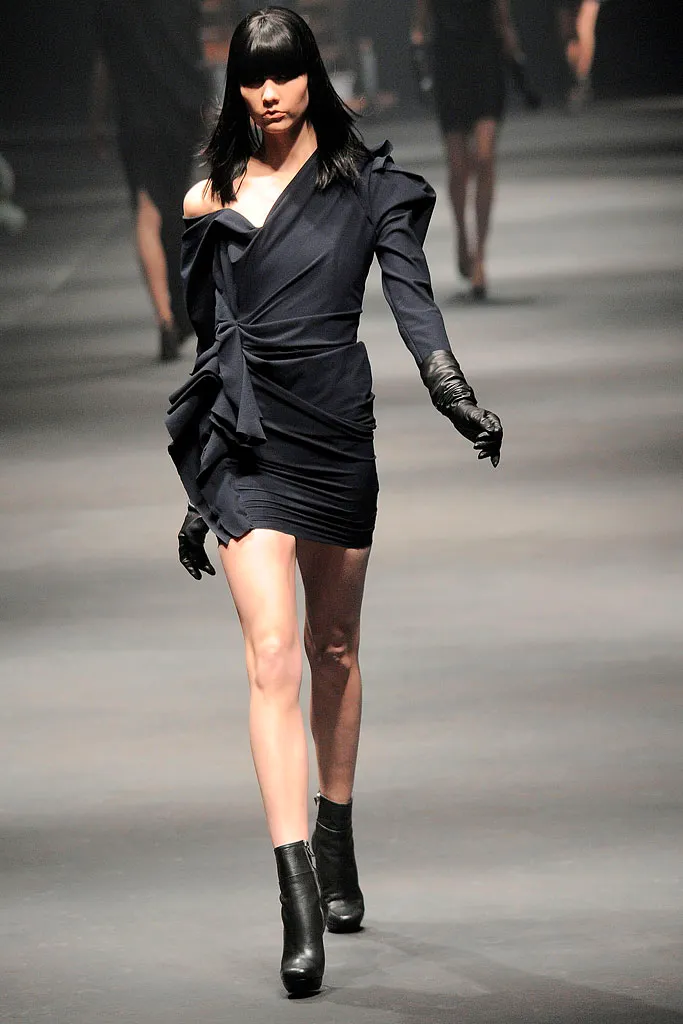
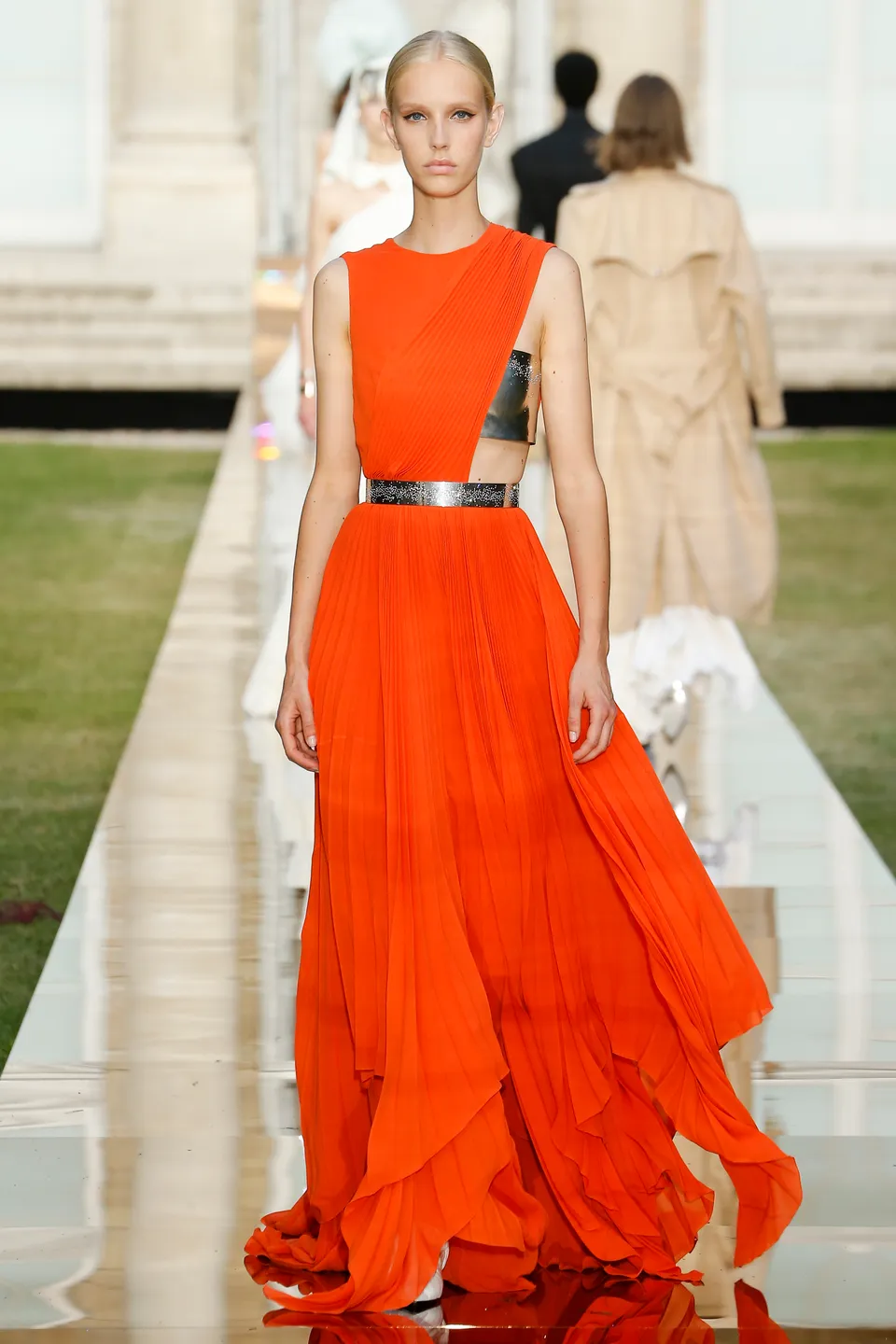
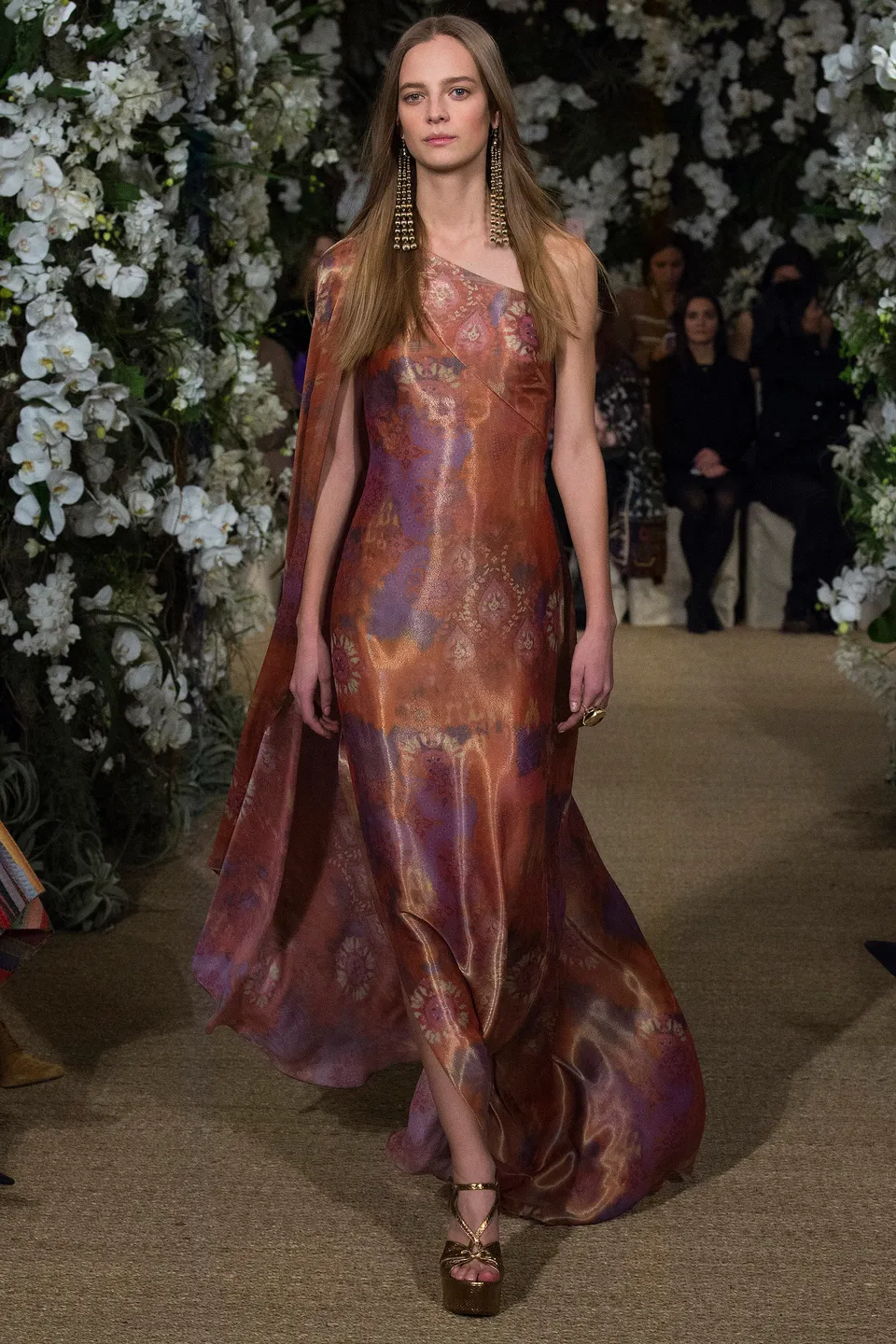
Versace staged asymmetric silhouette with power: corseted dresses slashed at the thigh and shoulder, silk tails streaming behind, each cut a balance of sensual exposure and aerodynamic flow. At Lanvin, Alber Elbaz rendered asymmetry intimate and urbane, dresses cut roomy at the shoulder before tapering to clutch the hips, a single sleeve drawn long, each diagonal turned into a sophisticated dialogue between restraint and ease. At Givenchy, Clare Waight Keller sharpened asymmetry into armor, slicing gowns across the chest to flash metallic understructures, a juxtaposition of steel and softness. Ralph Lauren reworked the asymmetric silhouette into a single-shoulder drape cascading into a cape, where warm neutral tones balanced exposure with timeless sensuality.
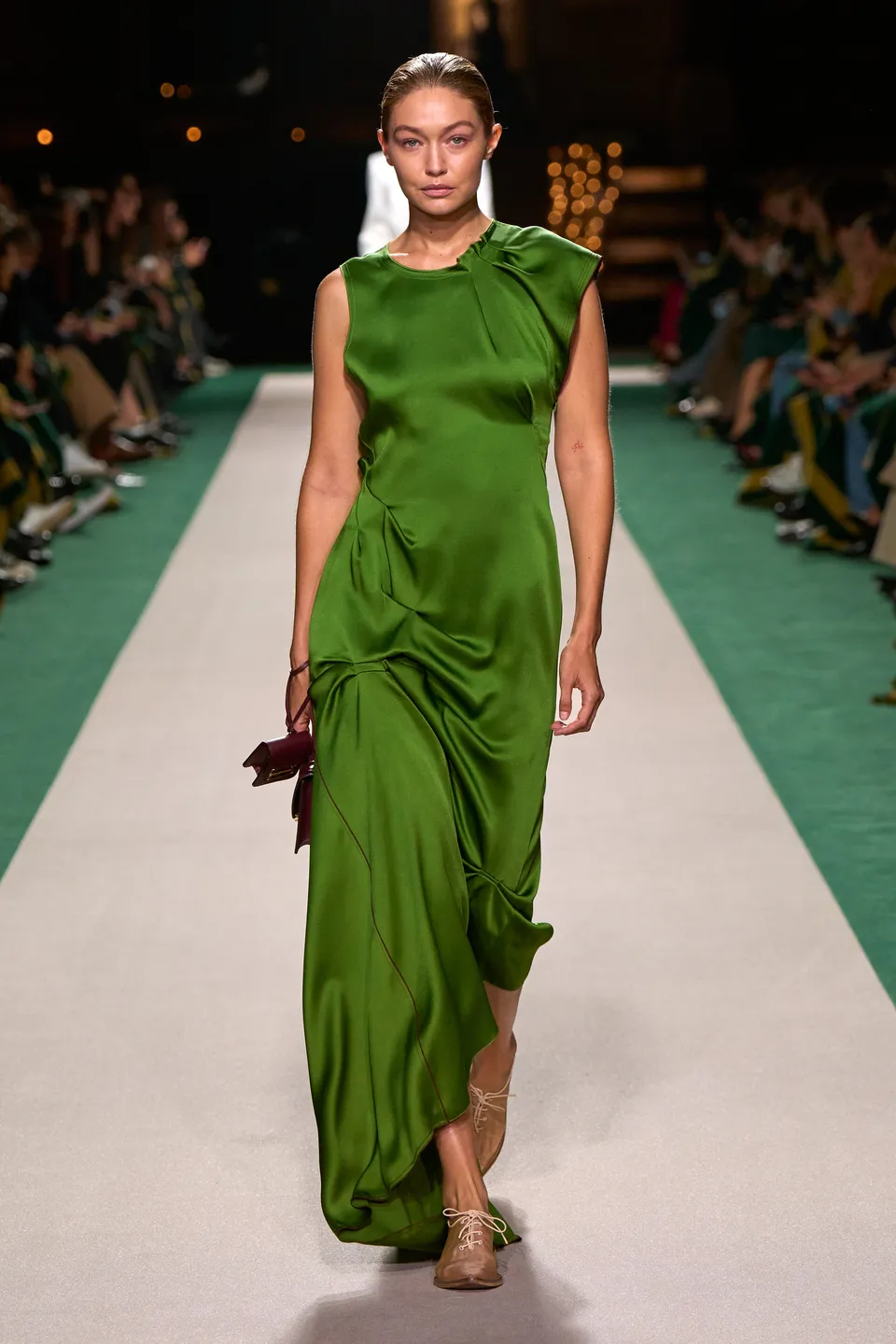
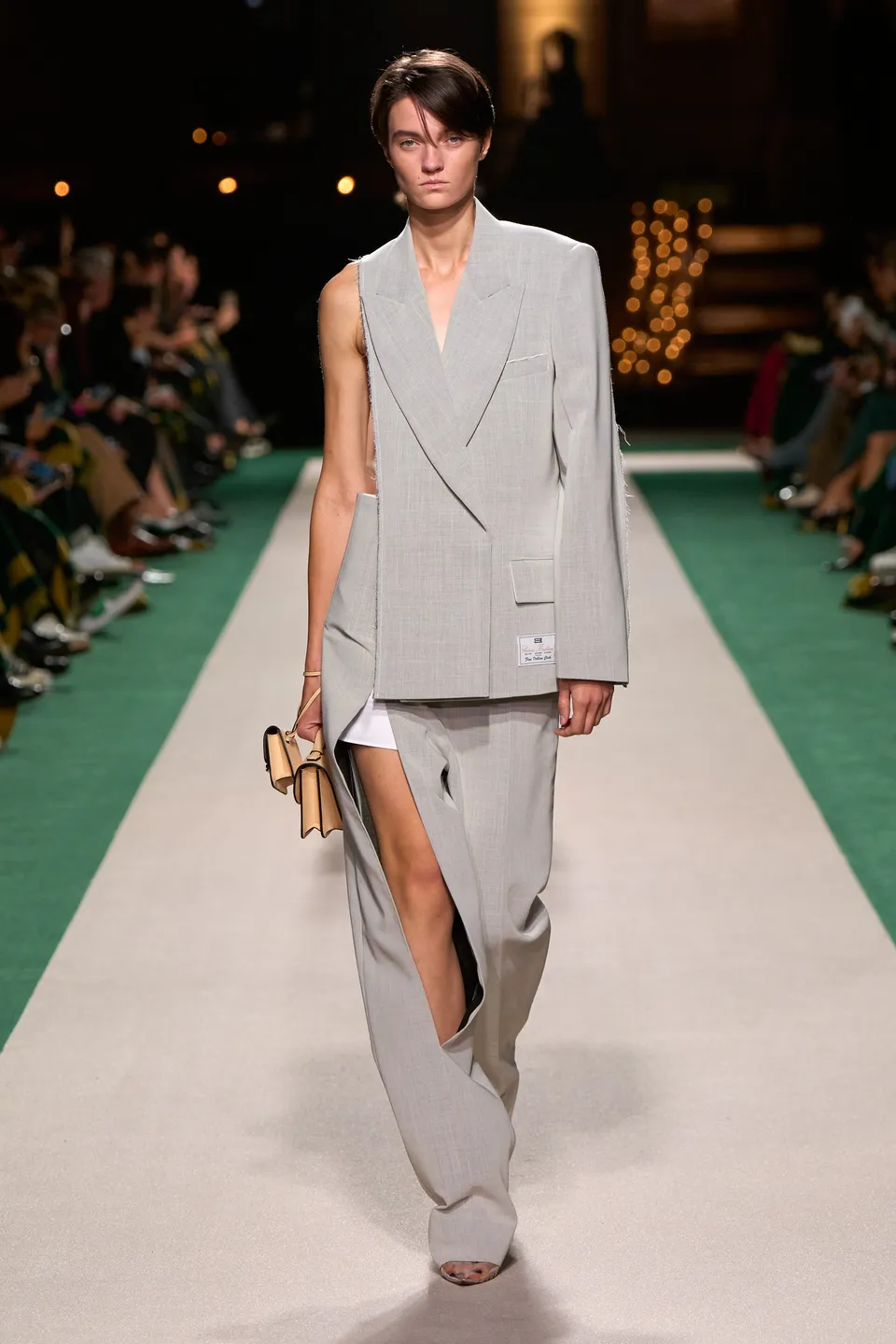
Victoria Beckham Spring 2025
In the early 2020s, asymmetric silhouette became the recipe every house had to learn by heart, a formula so versatile it could be translated into endless textures, weights, and moods. Victoria Beckham applied it with her disciplined precision, slicing diagonal lines into clean tailoring to give control a touch of surprise.
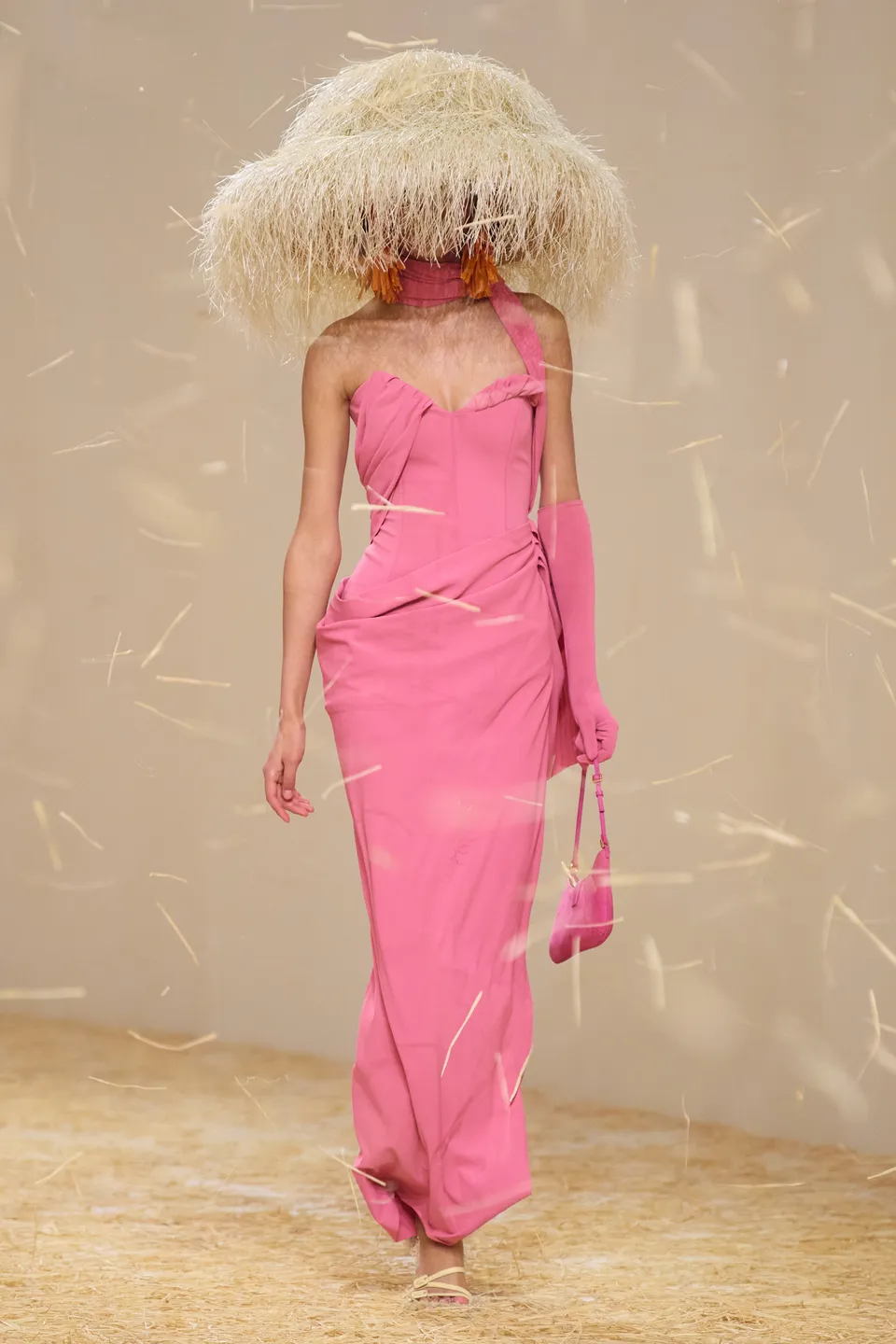
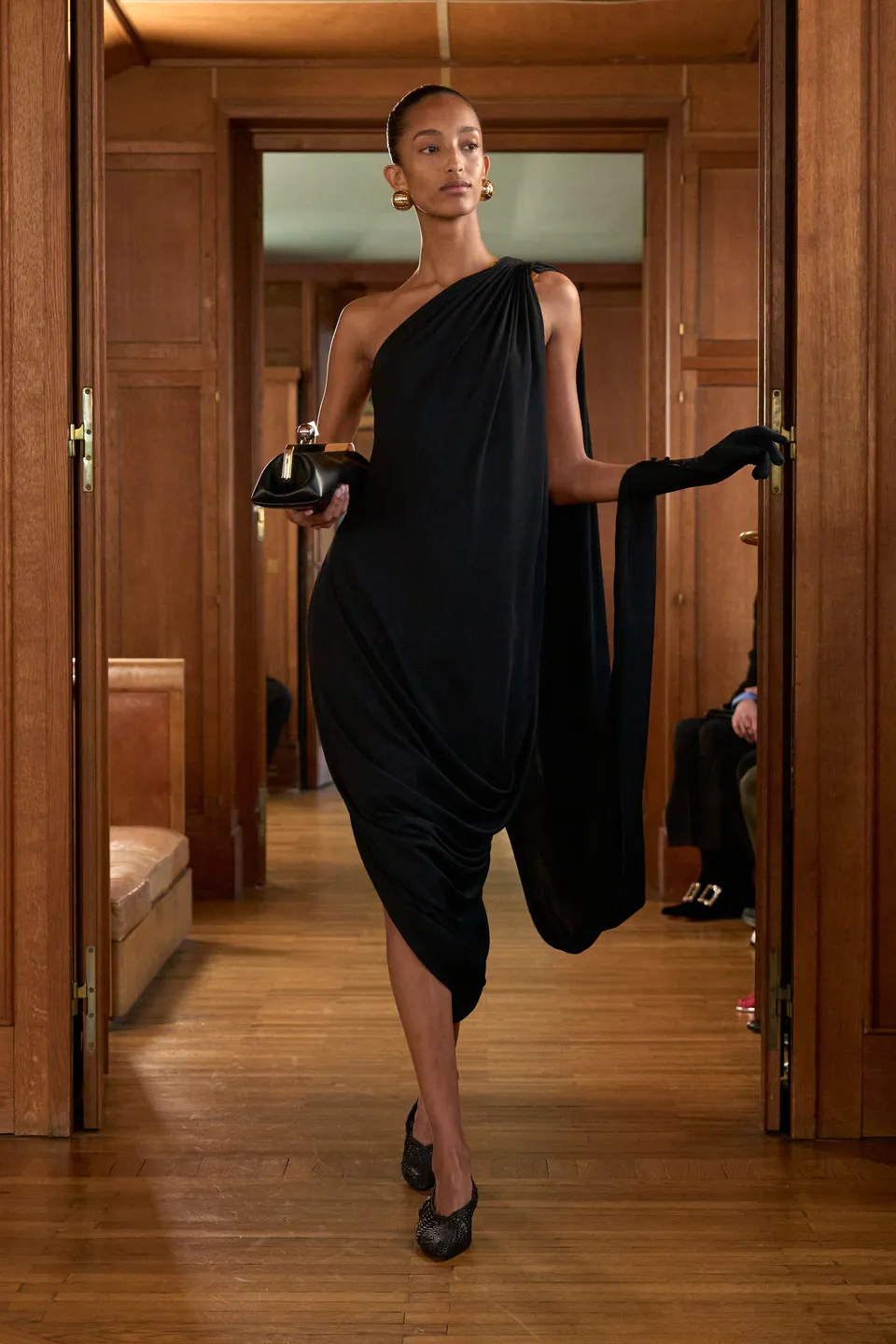
Jacquemus made it playful and sensual, straps sliding, hems askew, garments cut as if caught mid-motion, imbalance turned into youth and spontaneity.
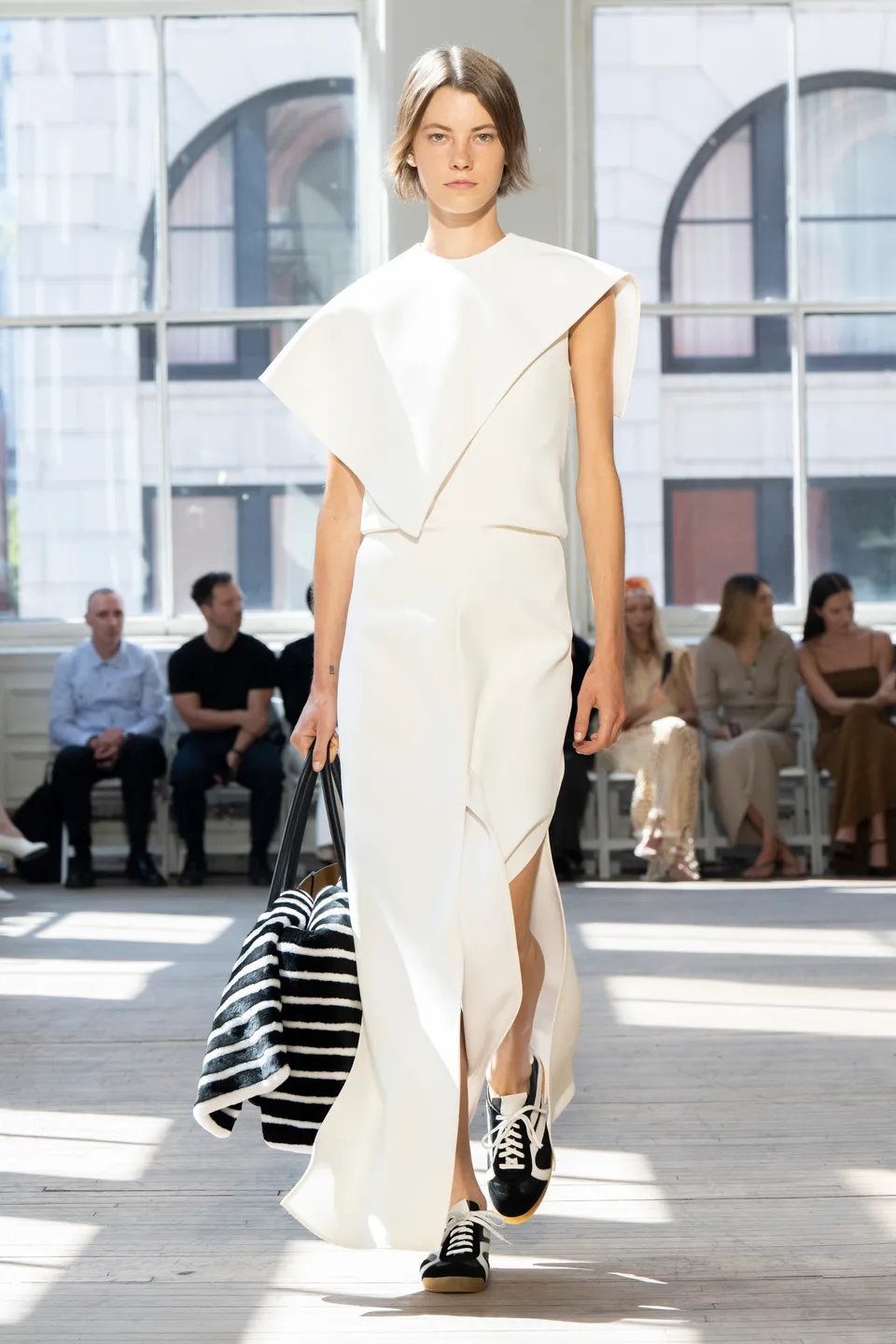
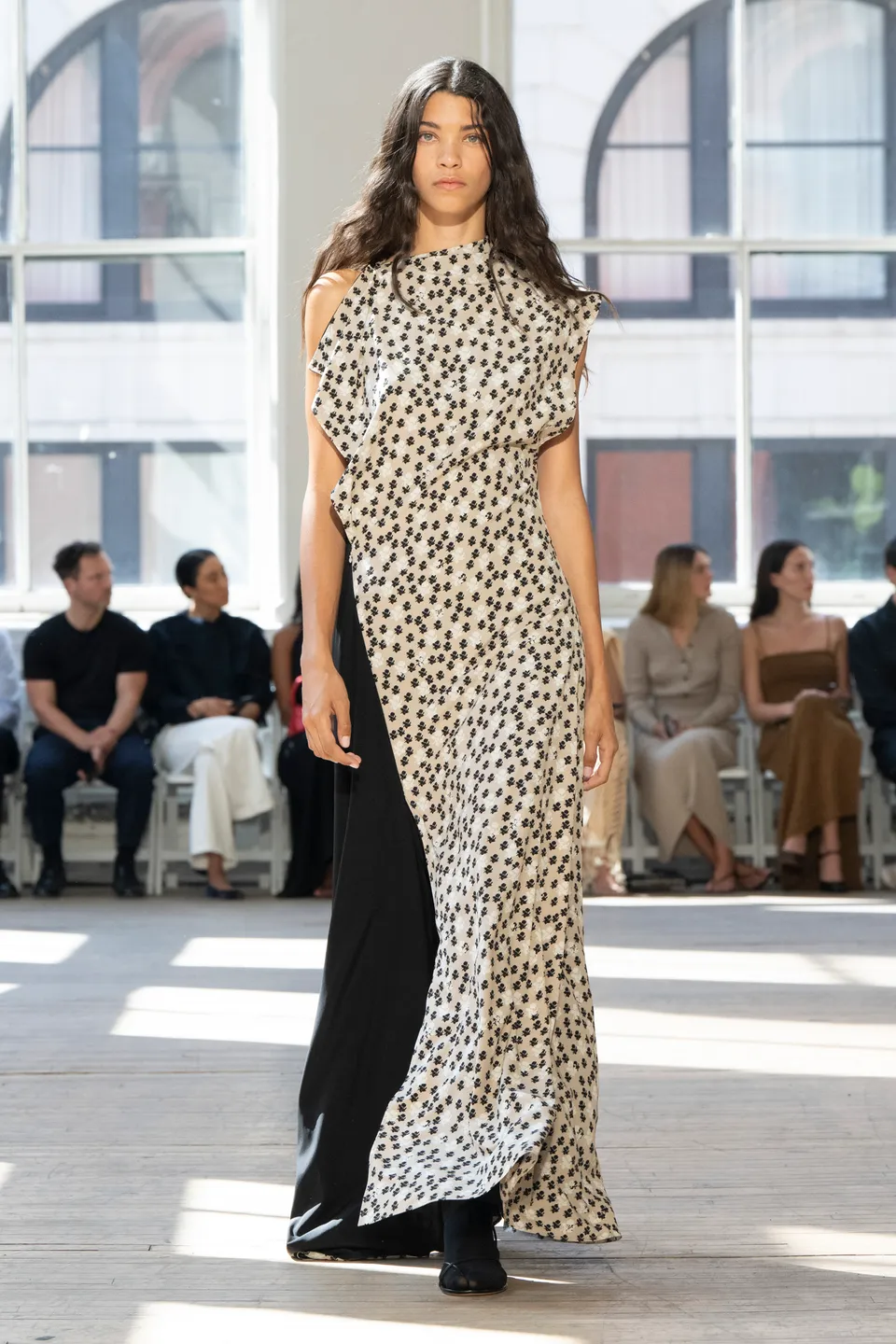
Proenza Schouler Spring 2025
Proenza Schouler approached asymmetry with an intellectual cool, their off-kilter skirts and slanted sleeves carried a kind of soft urban ease, imbalance translated into a rhythm that felt perfectly in step with modern life.Across these hands, asymmetry was not decoration but necessity, the one winning formula that allowed fashion to step out of its comfort zone and into its most diverse expressions.
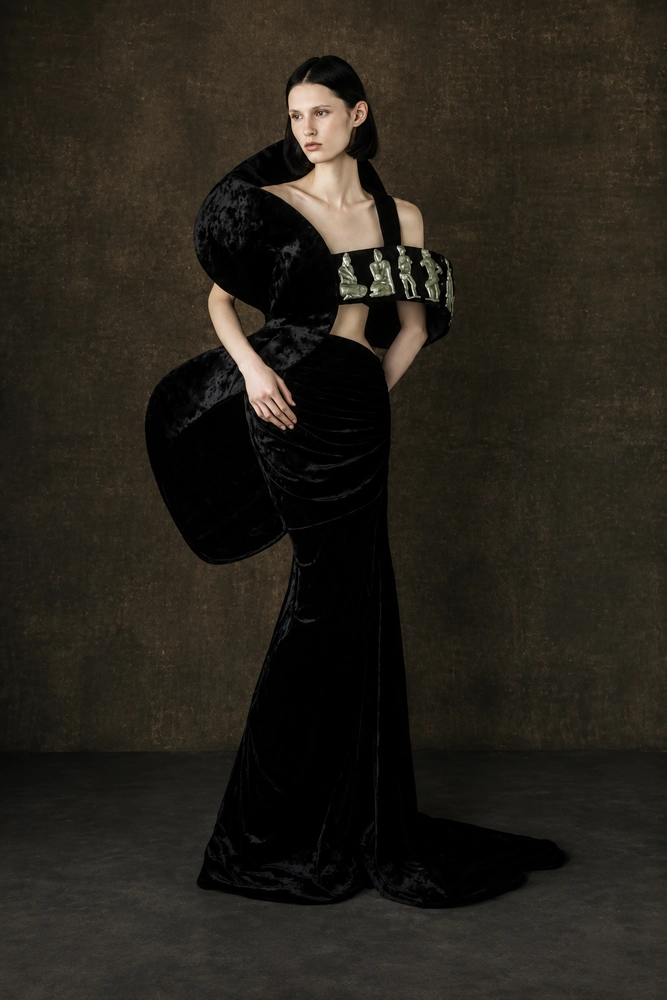
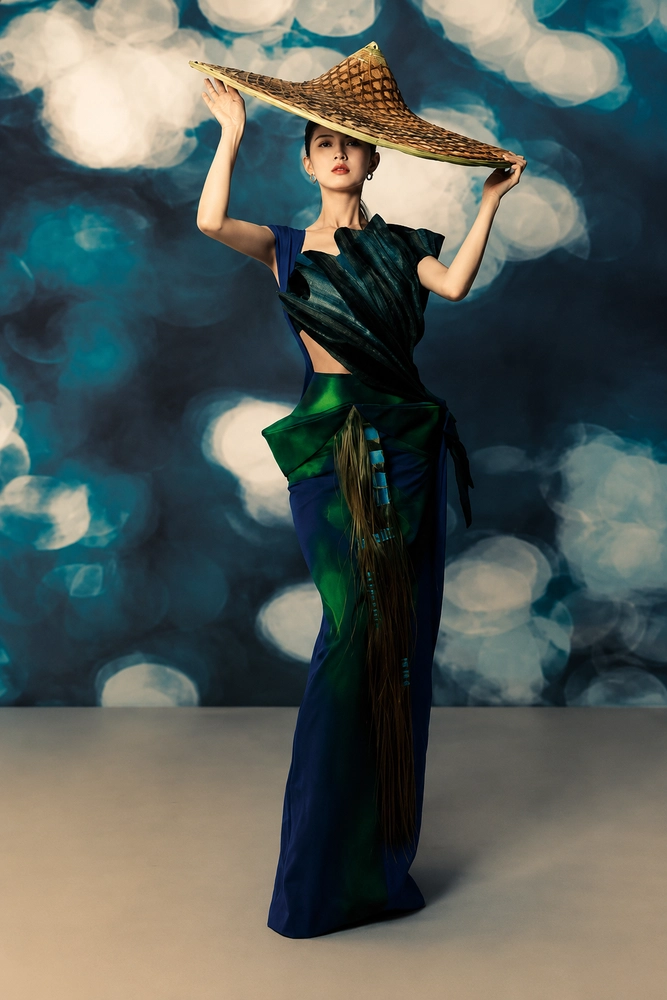
Perhaps the greatest strength of the asymmetric silhouette is its versatility. It can be ancient and timeless, as in a toga-inspired gown; it can be futuristic and experimental, as in deconstructed Japanese tailoring. It can flatter a petite frame by elongating it or dramatize a tall figure with sweeping proportions. It requires little embellishment, for the line itself is ornament enough. In casual wear, it offers effortless cool; in evening wear, it guarantees drama. Few silhouettes can claim such universal adaptability. That is why asymmetry will never go out of inspiration: it is not a trend but a principle, a way of designing that taps into something primal in our perception of beauty.
Still, asymmetric silhouette has always carried misconceptions. Some dismiss it as unbalanced or unwearable, forgetting that imbalance is its very point. Others see it only as evening wear, ignoring its presence in T-shirts, skirts, and even coats. Some fear it does not flatter all bodies, when in fact its diagonal lines often flatter more than symmetry ever could. What these critiques reveal is not the weakness of asymmetry but our cultural attachment to order. We are trained to desire balance, so asymmetry at first unsettles us. But that unease is precisely what makes it powerful.
If fashion is about expression, asymmetric silhouette will always remain because it offers endless possibilities for expression. Asymmetric silhouette speaks of order, tradition, safety. An asymmetrical garment speaks of individuality, dynamism, risk. And fashion, at its core, thrives on risk. No other silhouette has proven as versatile, as enduring, and as symbolically charged. It has been toga, fishtail, bias-cut gown, disco jersey, deconstructed jacket, red-carpet gown, streetwear hoodie. It has been ancient, modern, and futuristic. It has been elegance and rebellion, subtlety and spectacle. And it will continue to be, because the asymmetrical silhouette is not a fashion detail, it is a philosophy, a reminder that beauty often lies not in perfection but in the places where balance breaks.
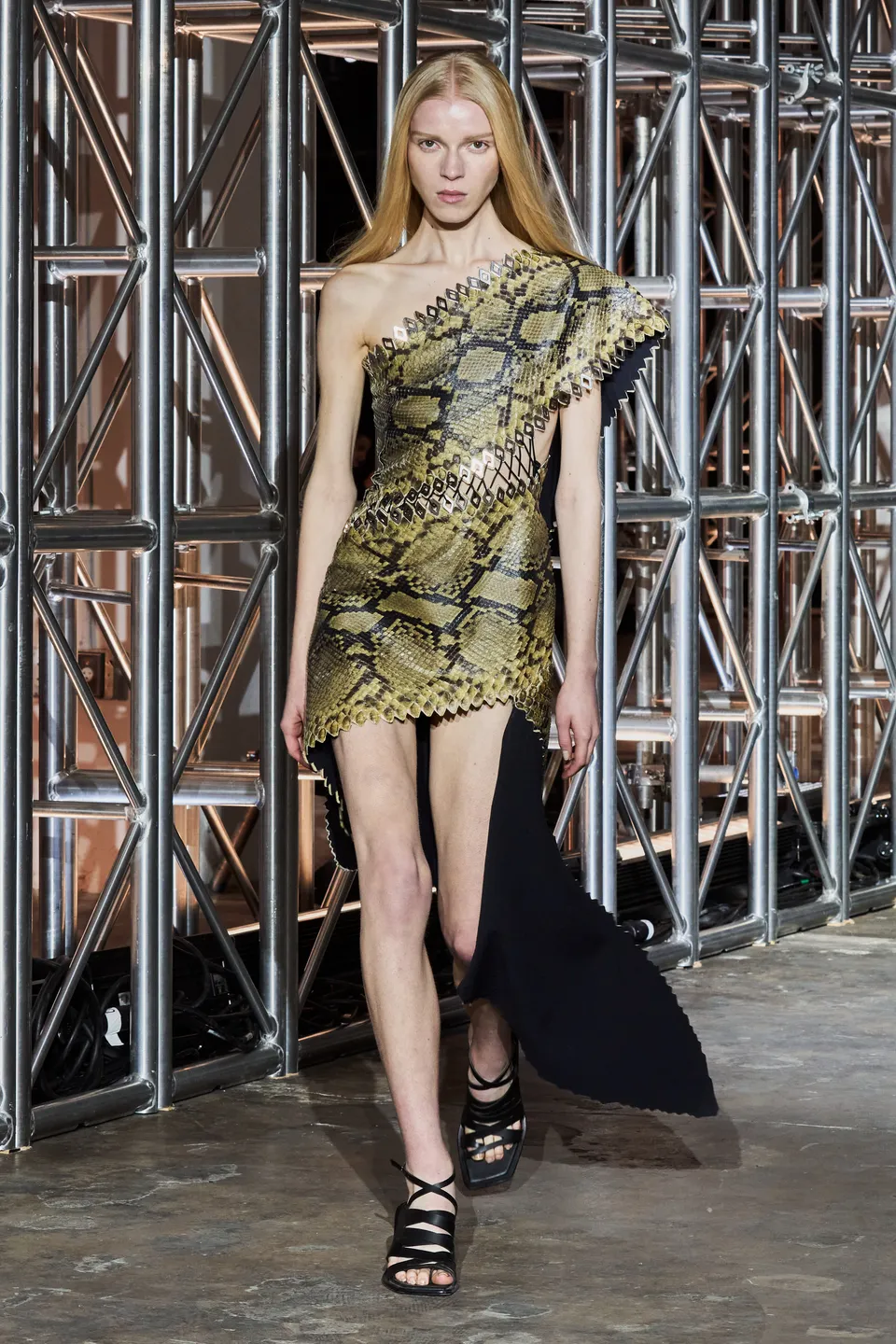
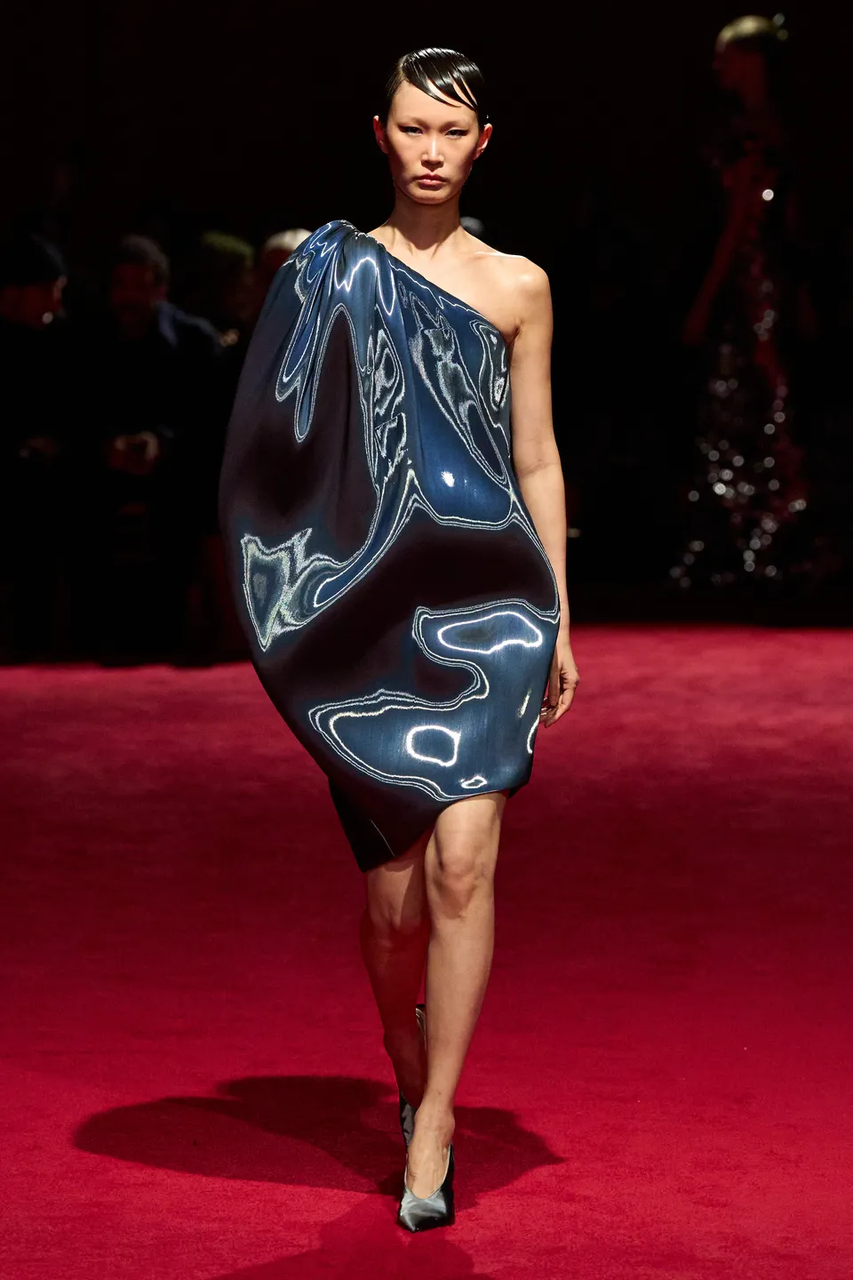
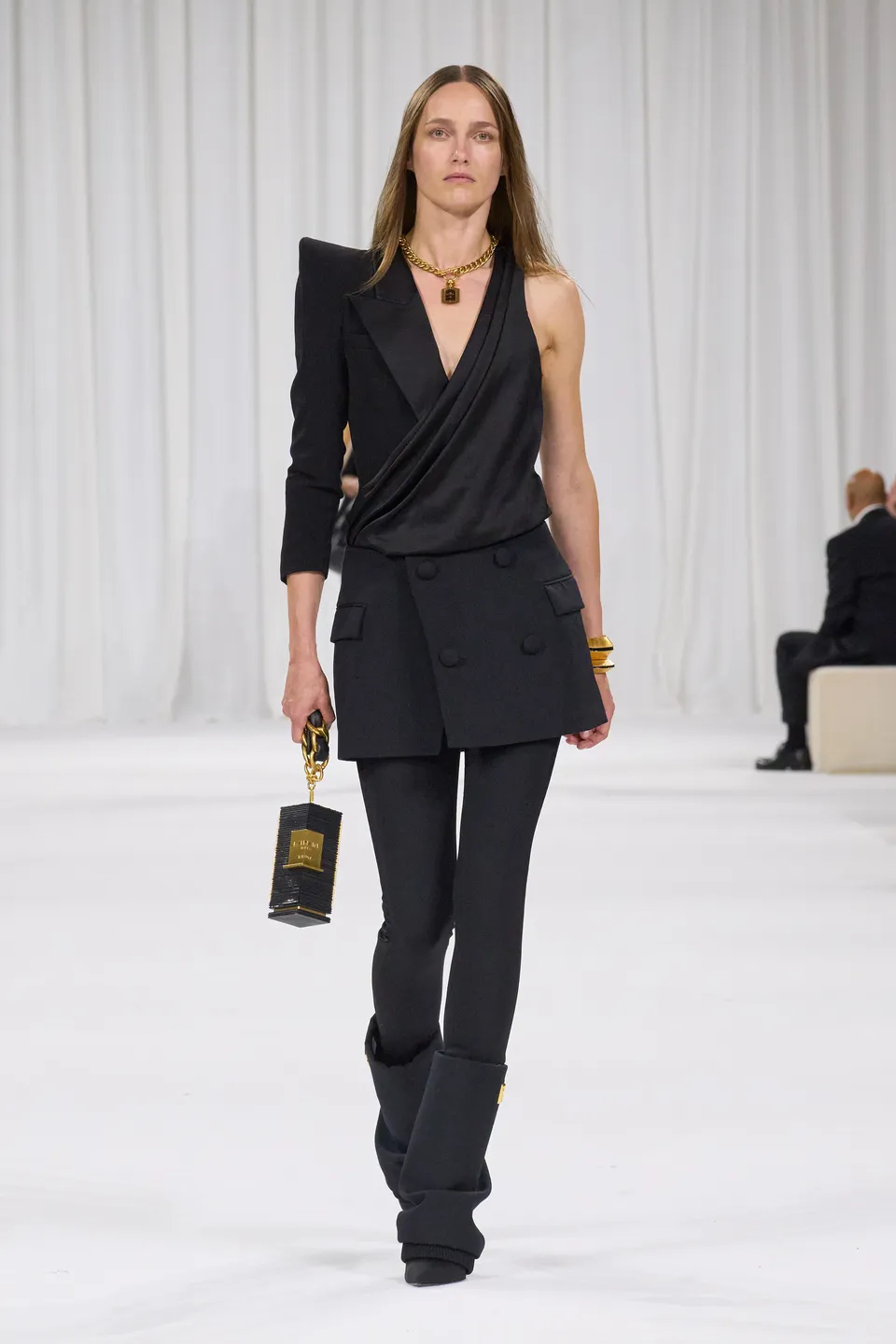
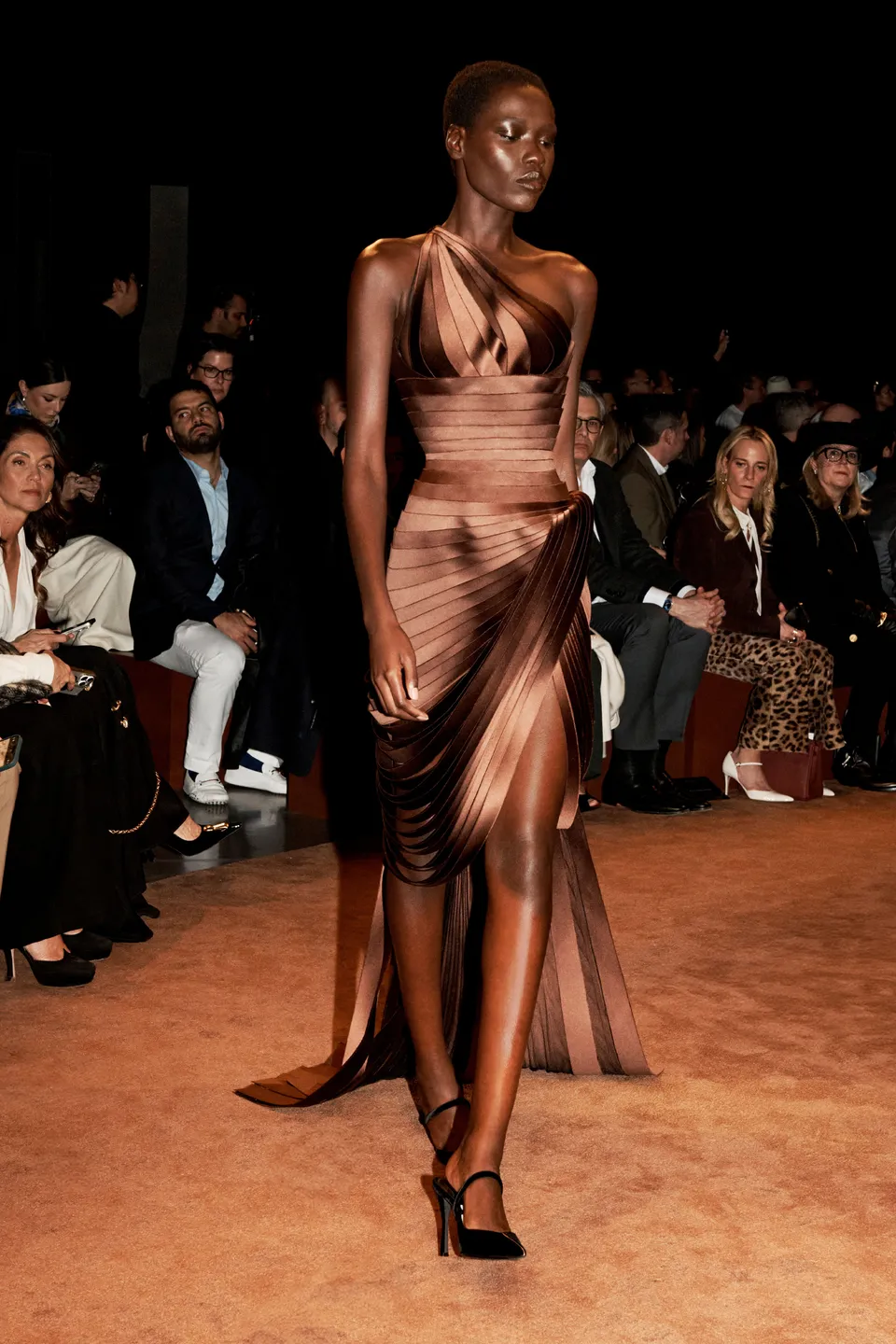
To understand asymmetry is to understand fashion’s most radical promise: that clothing can reimagine the body, disrupt expectations, and create harmony out of imbalance. The asymmetric silhouette is not a trend that comes and goes, but a current that runs through fashion history like a diagonal slash across a fabric. It is timeless not because it is safe, but because it is never safe. It is versatile not because it conforms, but because it refuses to. And it will never go out of inspiration because designers and wearers alike will always crave the thrill of that uneven line, that tilted hem, that single shoulder, that deliberate imperfection that makes a garment unforgettable. Asymmetry is not about breaking rules for the sake of chaos. It is about showing that imbalance can be just as beautiful as balance, perhaps even more so. It is the silhouette that moves, that lives, that insists on difference. It is the silhouette of freedom.
Advertisement