MENU
Close





There is a strange seriousness inside a princess dress once the fantasy grows up. Princess line keeps the dream, but gives it stillness and a kind of elegance that seems almost untouchable.
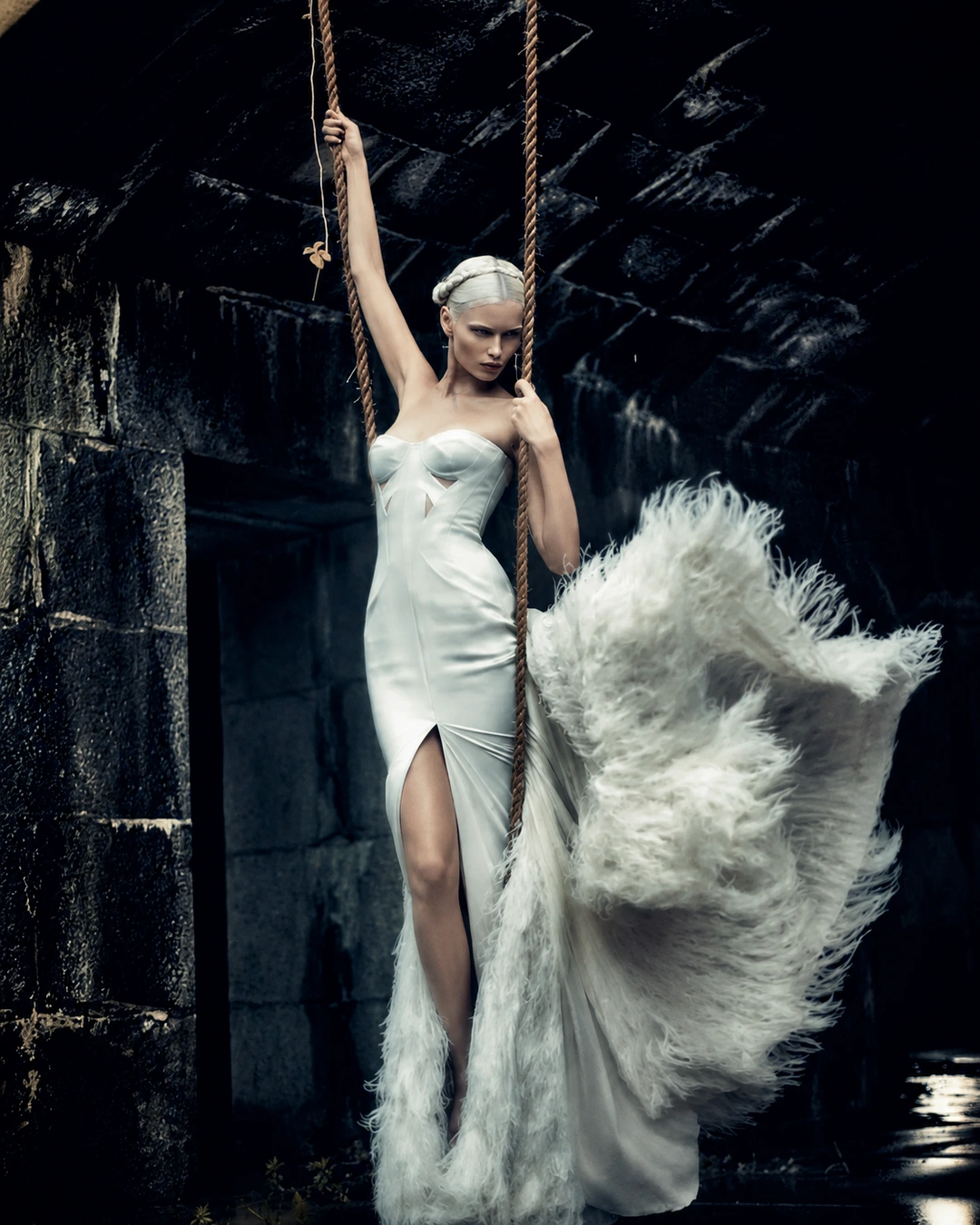
There is a strange seriousness inside a princess dress once the fantasy grows up. Princess line keeps the dream, but gives it stillness and a kind of elegance that seems almost untouchable.
July 6, 2026
Advertisement

Advertisement


A princess dress first arrives as a promise. In childhood, it belongs to the kind of dream where a gown can make the body feel newly important, taller in spirit, almost protected by its own glow. The fantasy is about the moment a figure enters a room and the air around her seems to change.
The princess line keeps that old enchantment, then gives it a sharper construction. Its magic lives in long vertical seams that travel through the garment with quiet control, shaping the body through length instead of interruption. The waist becomes part of one continuous descent, and the dress appears to fall as a single thought from upper body to hem.
The silhouette still carries the dream of the ball gown, but its romance is disciplined by tailoring. It does not need obvious drama to feel regal; the line itself creates the ceremony, drawing the figure into something poised, elongated, and composed.
A princess dress may live in imagination, but the princess line belongs to fashion’s more intelligent kind of fantasy. It turns longing into structure, softness into precision, and the idea of a gown into a body drawn with quiet authority.
The name sounds like a fairy tale, yet the princess line belongs first to the discipline of cut. Its romance does not come from a crown, a castle, or a fantasy of excess, but from the way fabric is divided into long panels that travel down the body with almost invisible control. A princess line dress is shaped through vertical seams that move from the shoulder or armhole, pass through the bust and waist, then continue toward the hem without a separate horizontal break at the waist.
This continuous descent gives the silhouette its quiet authority. The body is drawn downward in one composed movement, allowing the eye to read length before it reads decoration. The seam becomes a kind of hidden architecture, shaping the bust, narrowing the waist, following the hip, and pulling the whole garment into a cleaner, taller line.
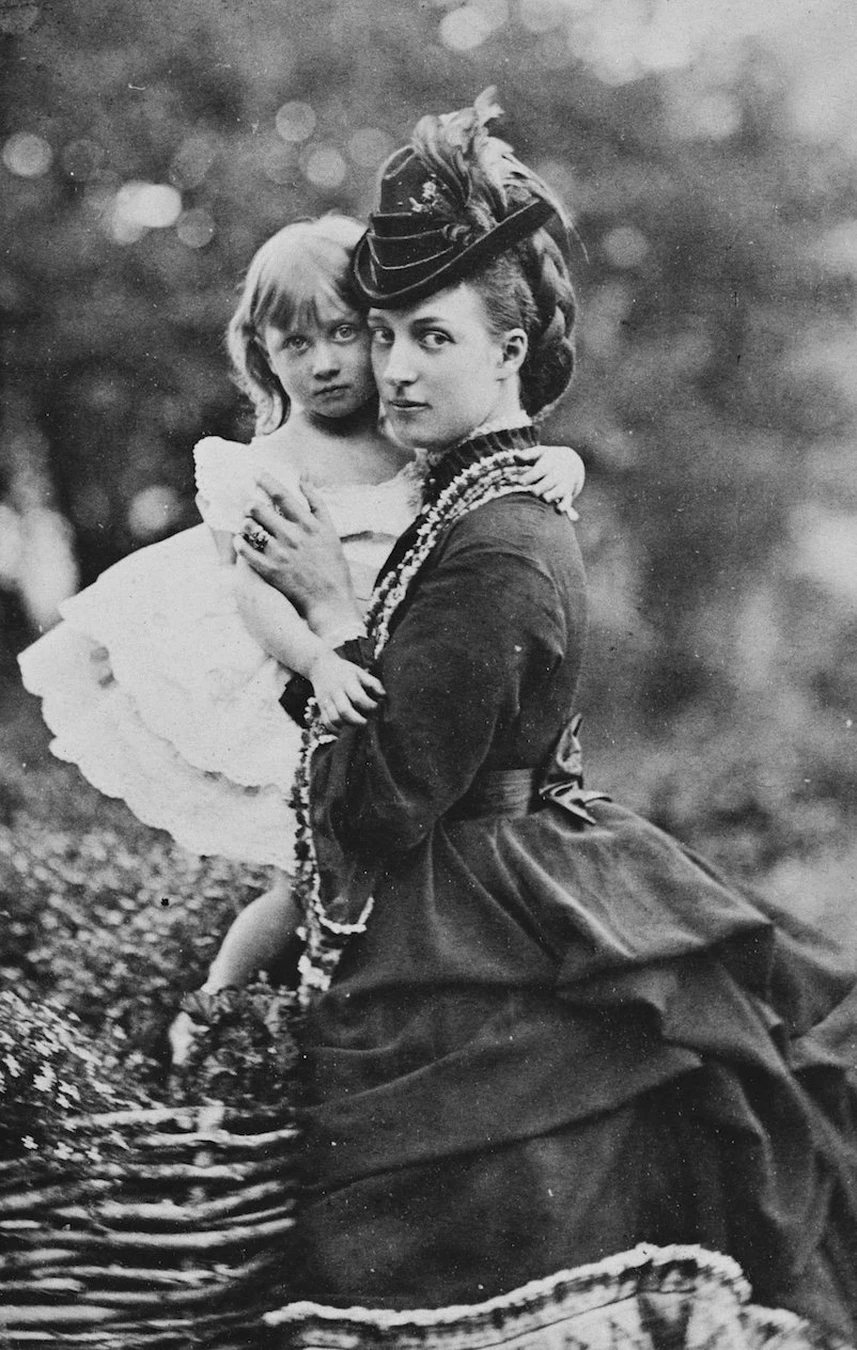
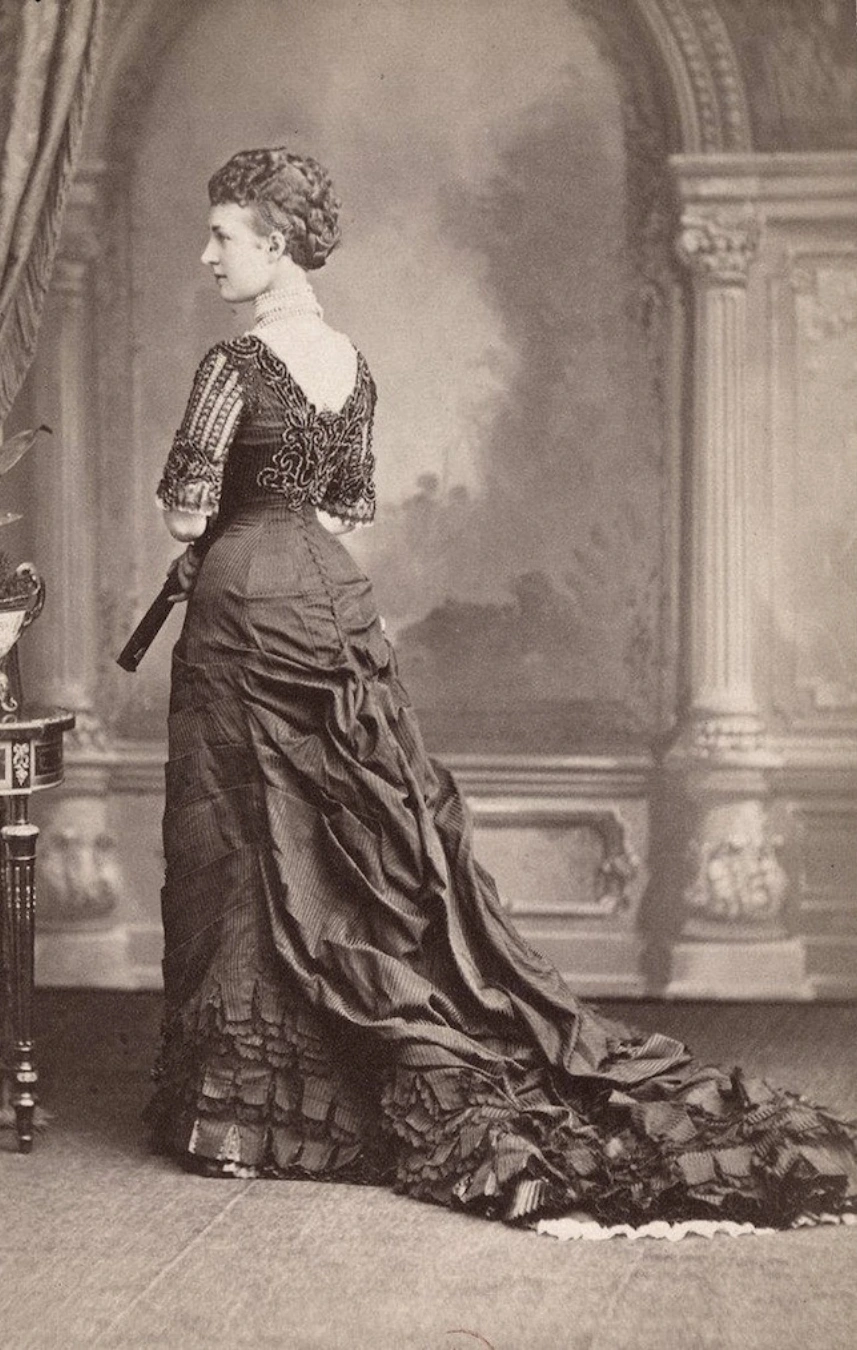
Its royal name carries the atmosphere of late nineteenth-century couture, when dressmaking was learning how to turn fantasy into controlled form. Around Charles Frederick Worth and the late nineteenth-century world of couture, where dressmaking was turning fantasy into a more controlled visual language. The line was named in connection with Princess Alexandra of Wales, whose elegance helped give the silhouette its cultural aura. In that period, the princess dress offered a striking alternative to forms that depended on a clear waist seam, using uninterrupted vertical cutting to make the figure appear more elongated and refined.
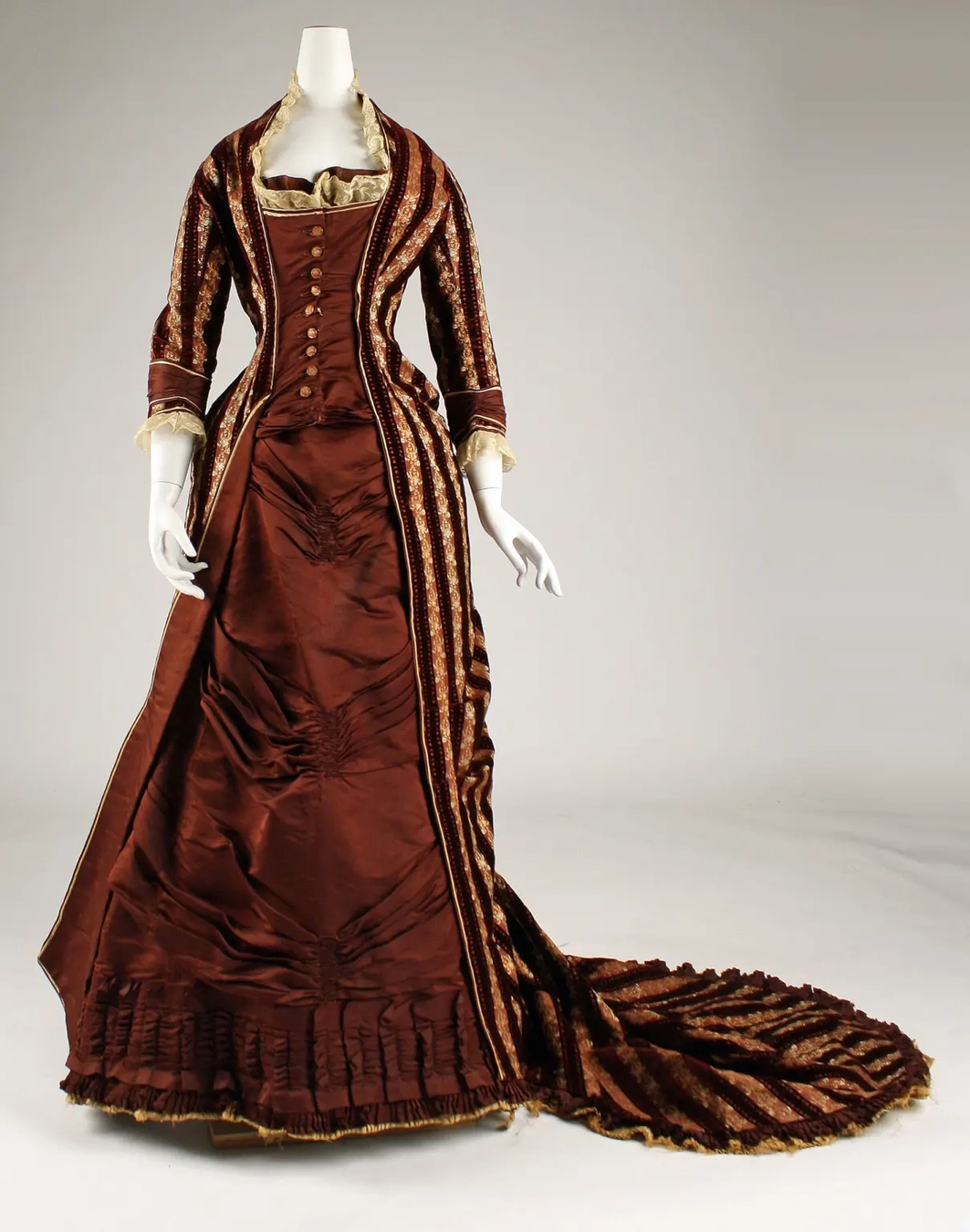
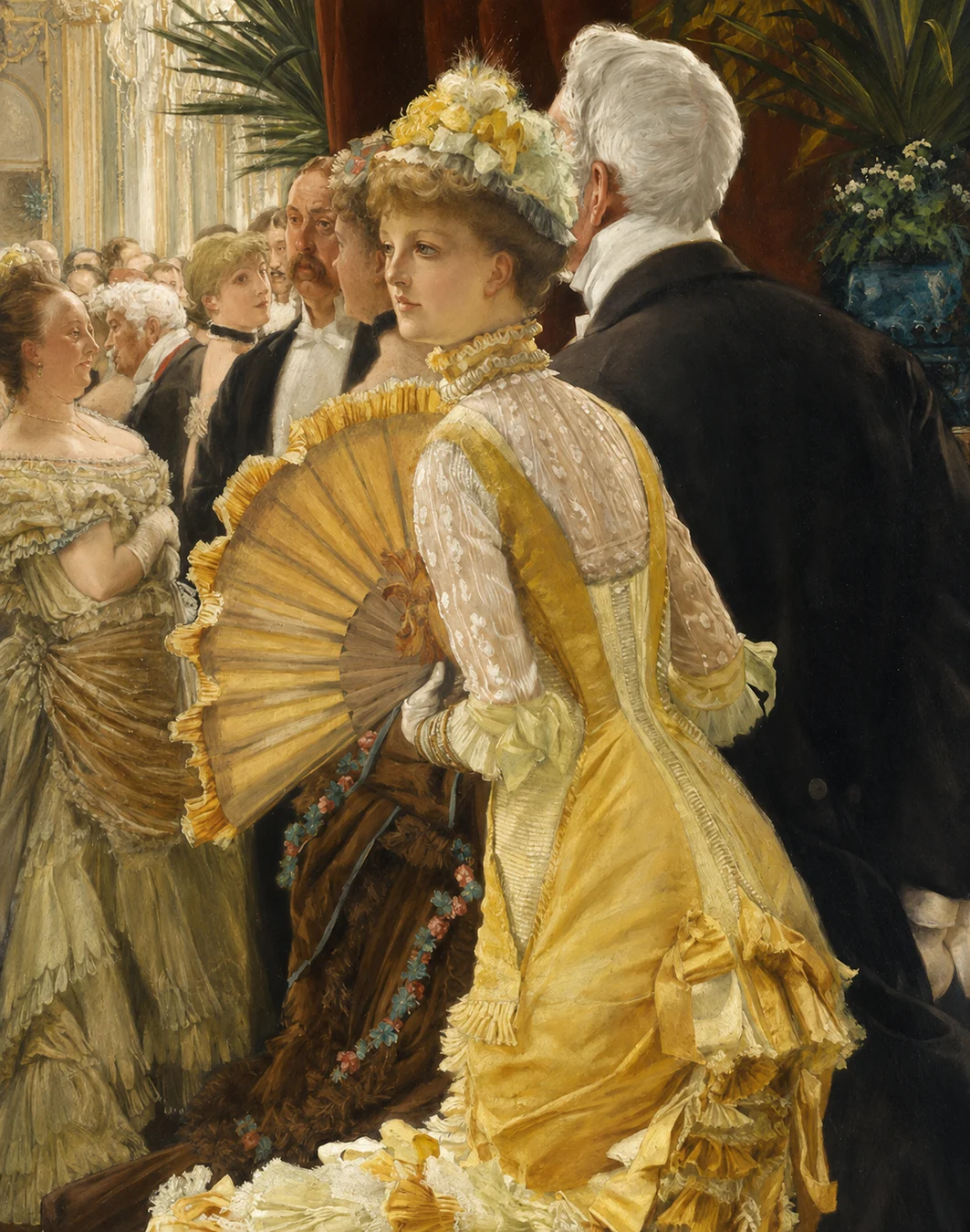
The power of the princess line lies in that meeting point between dream and construction. It keeps the idea of a princess dress, but removes the ordinary childish sweetness from it. What remains is a gown built through length, seam, and restraint: a body shaped whether fantasy had learned to posture or not.
Look closely at the front of the dress, and the secret usually appears as two long lines running down the body. They may begin near the shoulder with a more classical grace, or slip from the armhole with a cleaner modern feeling, then pass over the bust, narrow through the waist, and continue toward the hem. This is the signature of the princess line: the body is shaped by vertical seams that keep moving.
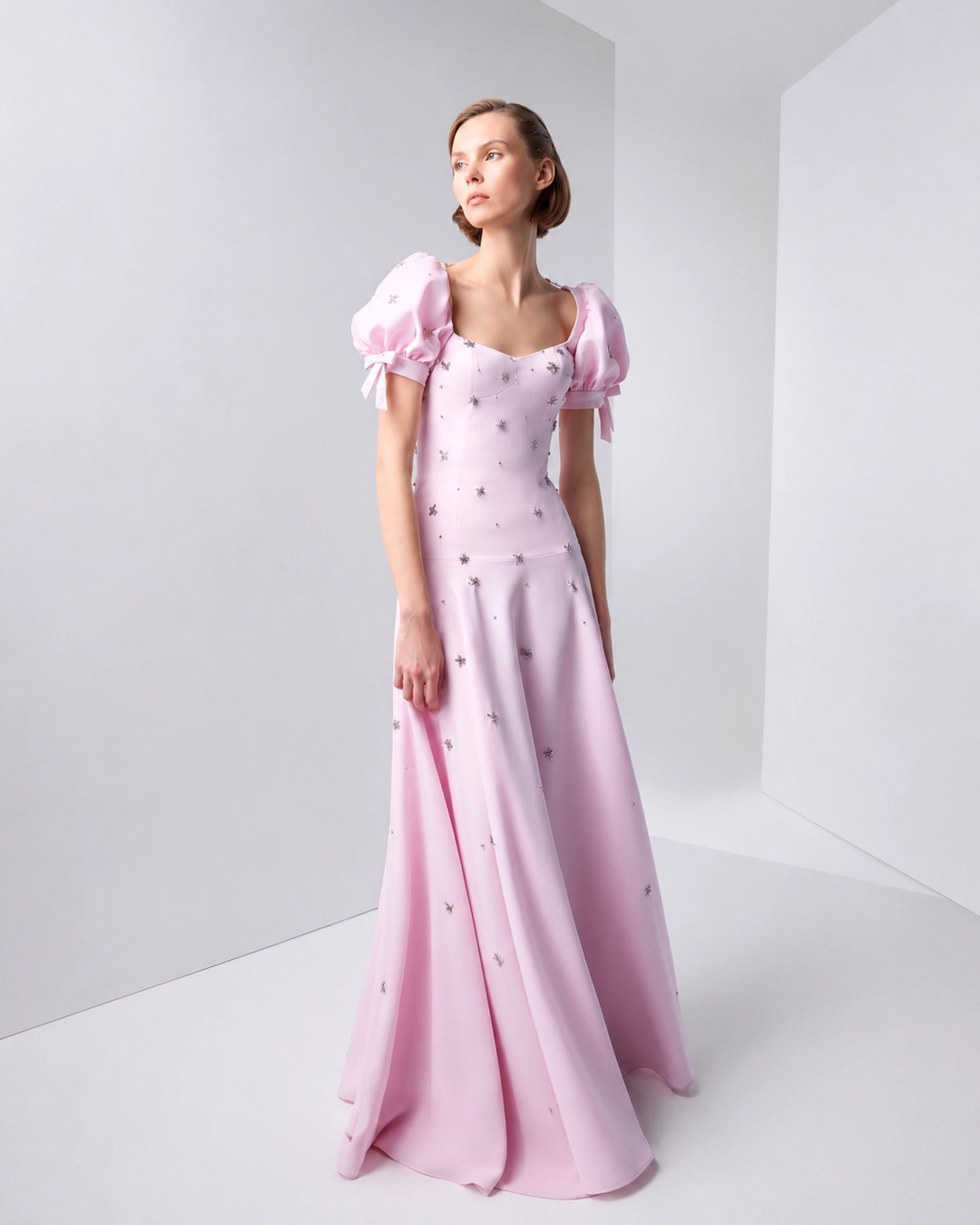
The easiest way to recognize it is to search for continuity. A princess line dress rarely announces the waist with a strong horizontal break. The bodice and skirt seem to belong to the same downward movement, as if the garment has been drawn on long panels instead of separate parts. Those seams are doing the work that darts, belts, or waist seams might do elsewhere, but with quieter and more elegant control.
Inside that quietness, the cut is precise. Each panel must meet the next at exactly the right curve, because the seam has to shape the bust, skim the ribcage, define the waist, and release over the hip without making the dress look interrupted. The construction is visible enough to guide the eye, yet subtle enough to feel like part of the body’s own line.
A princess seam can give a gown its regal bearing without asking for extra drama. It lengthens the figure by refusing to stop halfway, pulling the eye from upper frame to floor in one smooth descent. In heavier fabrics, the line becomes sculptural and almost ceremonial; in softer fabrics, it loosens into a gentler rhythm, as if structure were dissolving into grace.
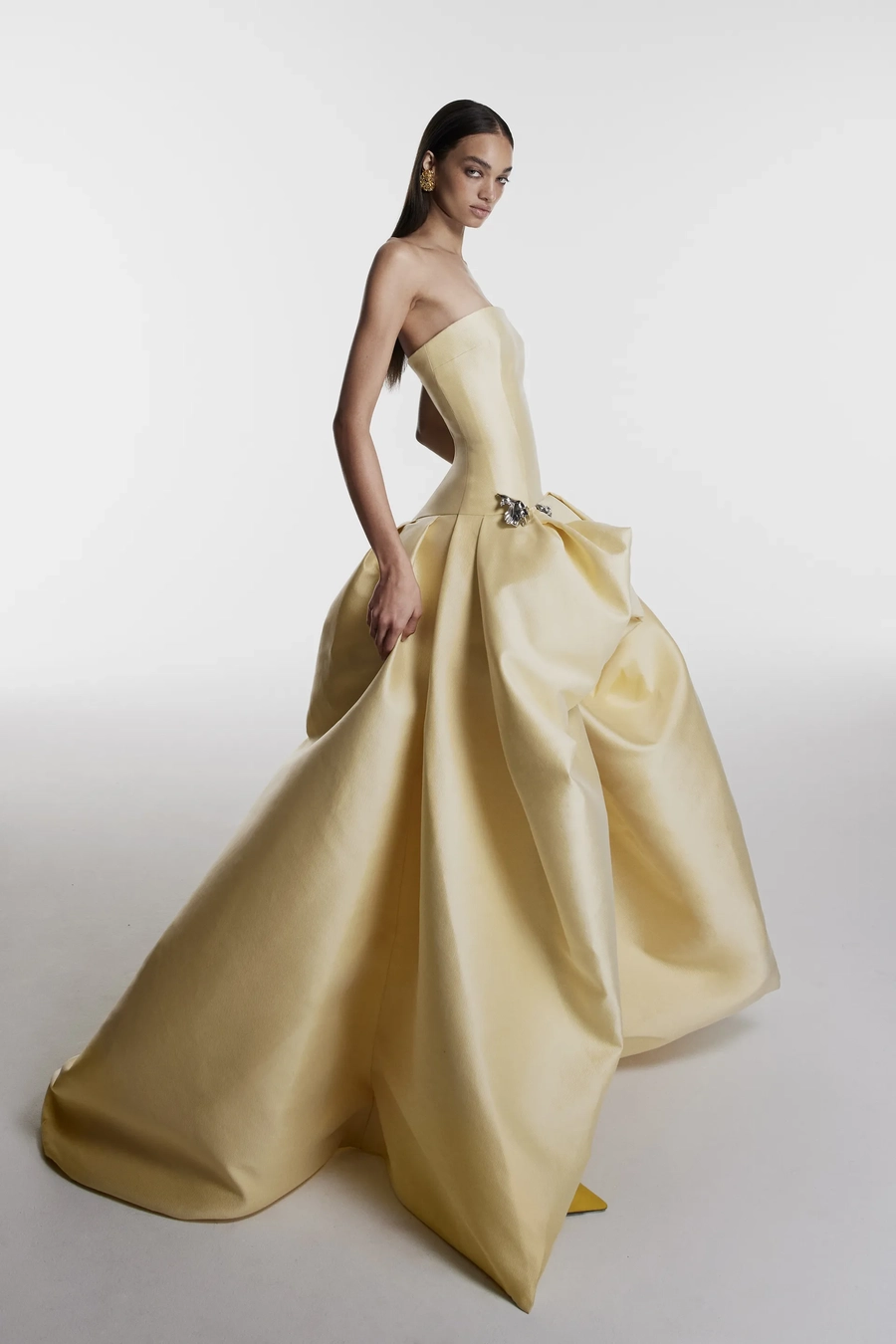
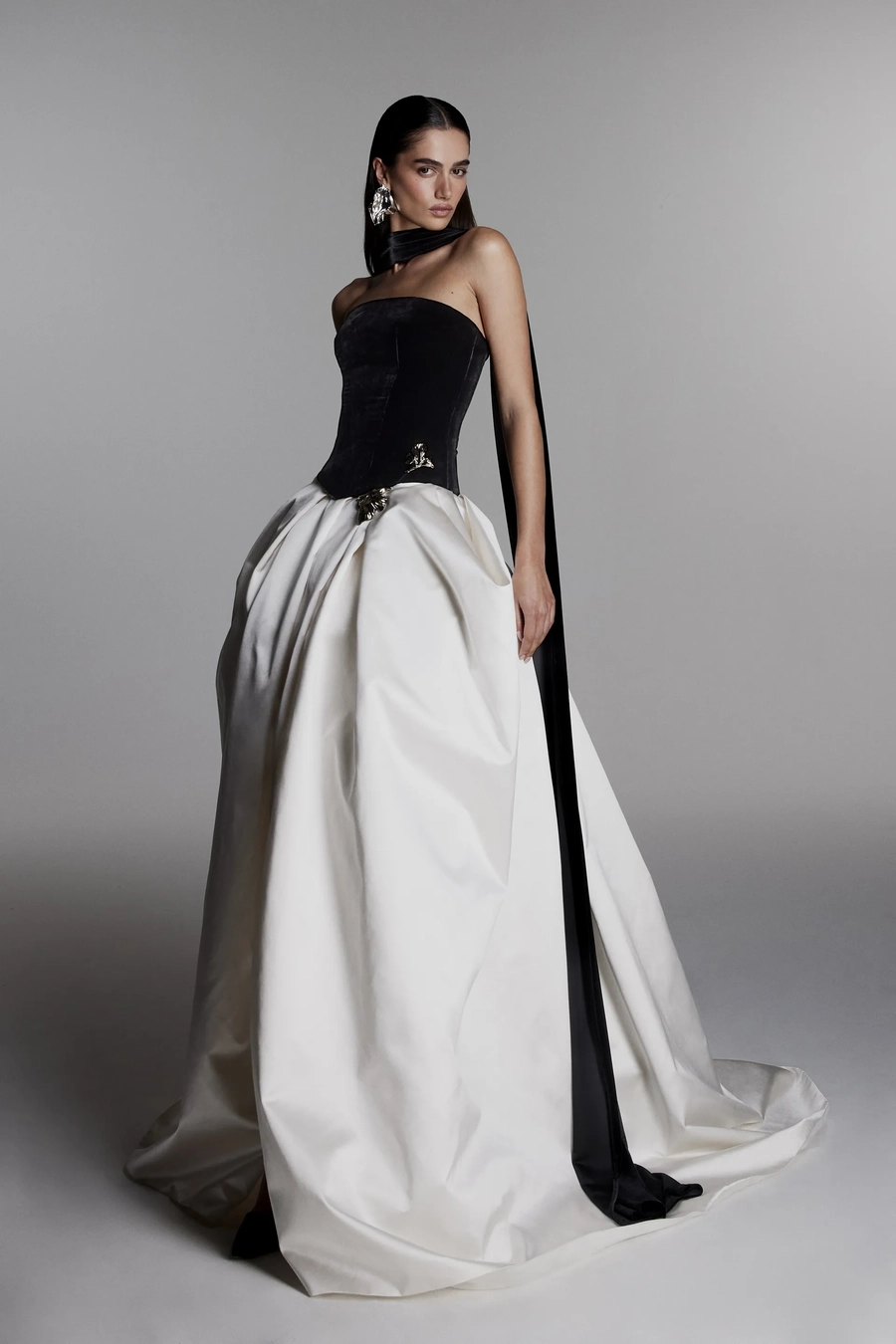
A seam may look quiet on the surface, yet everything depends on its exactness underneath. In princess line, that hidden discipline is what makes the body appear taller, calmer, and more composed, turning a technical line into the very thing that holds the dream together.
The old dream never leaves the dress completely. It returns as posture, as a slower step, as the strange hush that follows a woman when the room has noticed her before she speaks. Childhood once imagined the princess dress as escape; fashion turns it into entrance.
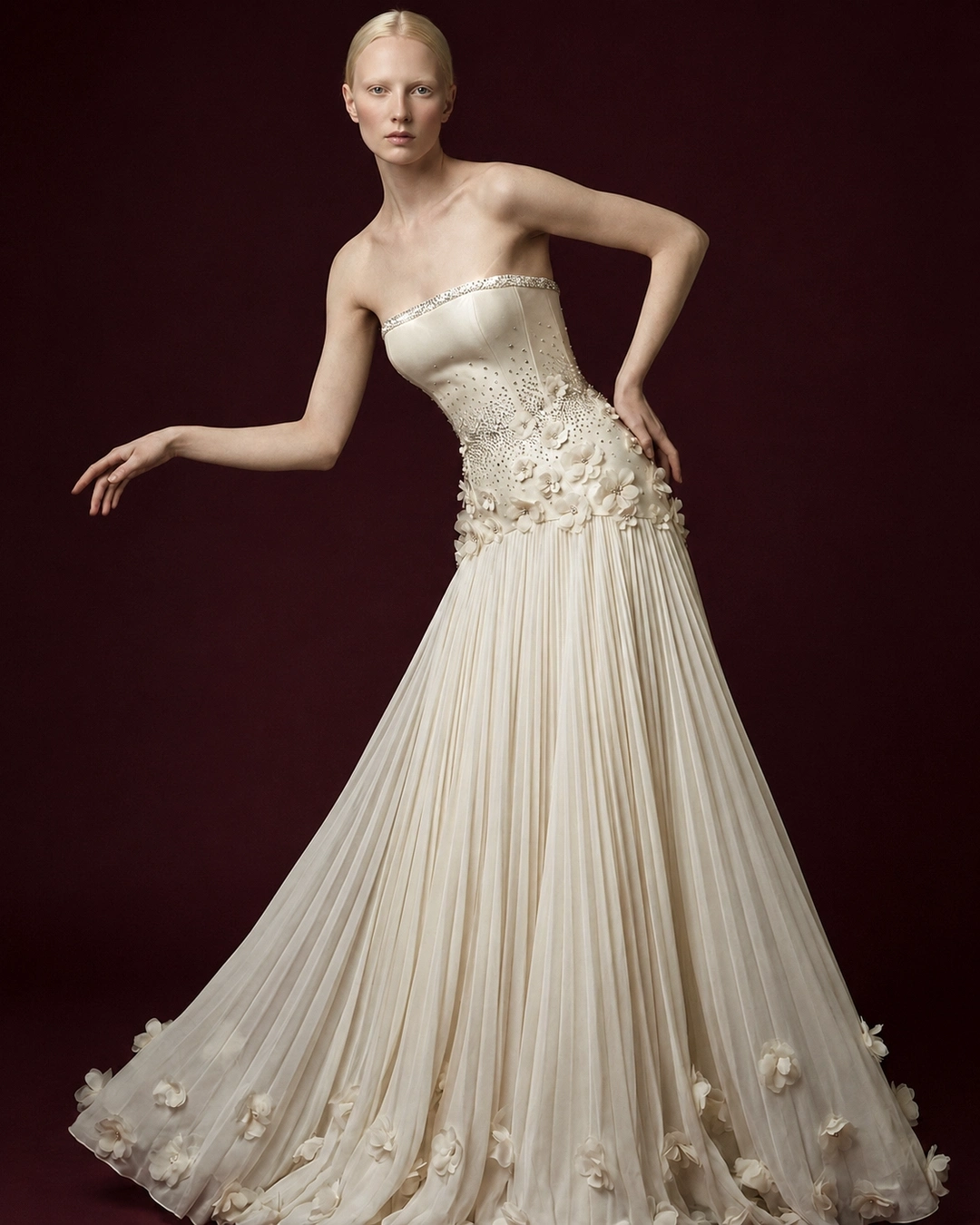
In the princess line, the fairy tale grows taller. Sweetness falls away, but the longing remains, stretched into a vertical grace that makes the body seem calmer and more distant, as if the wearer had stepped out of a story and decided to keep only its authority.
A line descends, and the whole mood changes. The gown can simply draw the figure upward by moving down. That quiet contradiction gives the silhouette its strange elegance, part ceremony, part spell, part woman refusing to be made small.
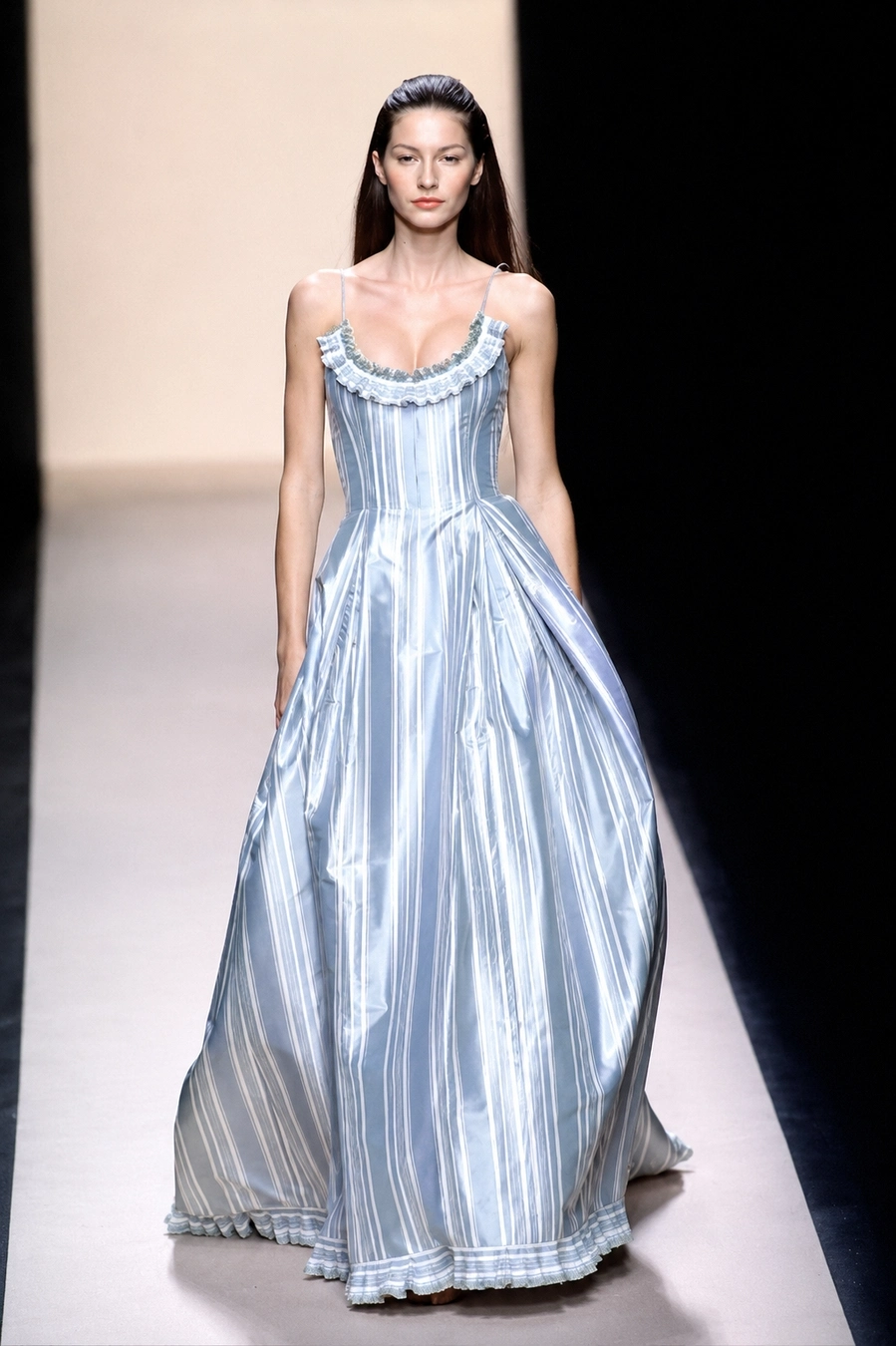
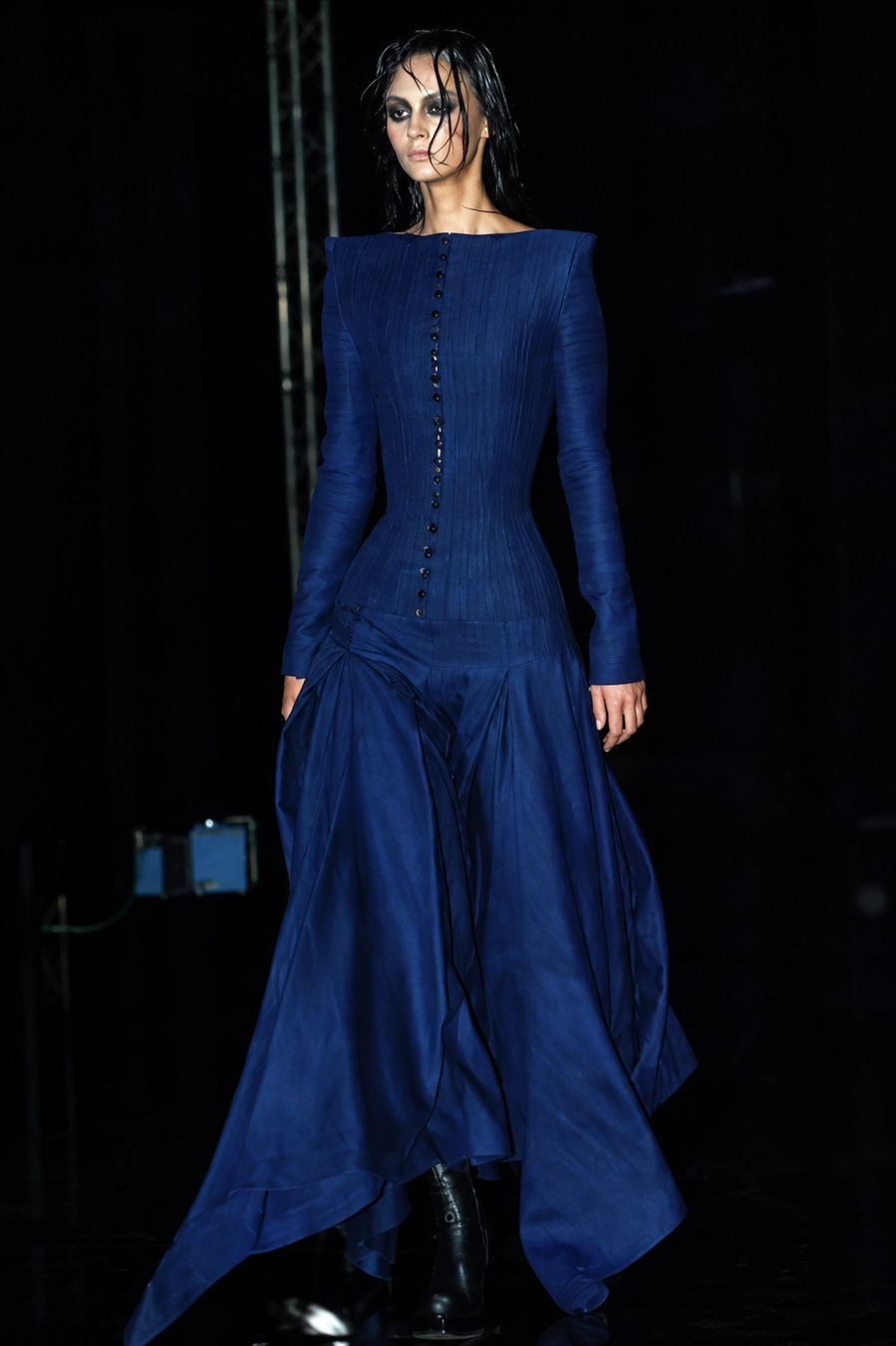
The romance here is not innocent. It has learned stillness, length, and control. A princess dress may belong to fantasy, but this line belongs to the moment fantasy becomes self-possession: a woman held in one continuous gesture, almost untouchable, already arriving.
The first sign is often quiet: a dress falls cleanly, the waist disappears into one downward movement, and the body seems taller before the eye knows why. Under fashion’s brightest light, the princess line works best when construction hides inside fantasy, leaving only a figure drawn with calm authority.
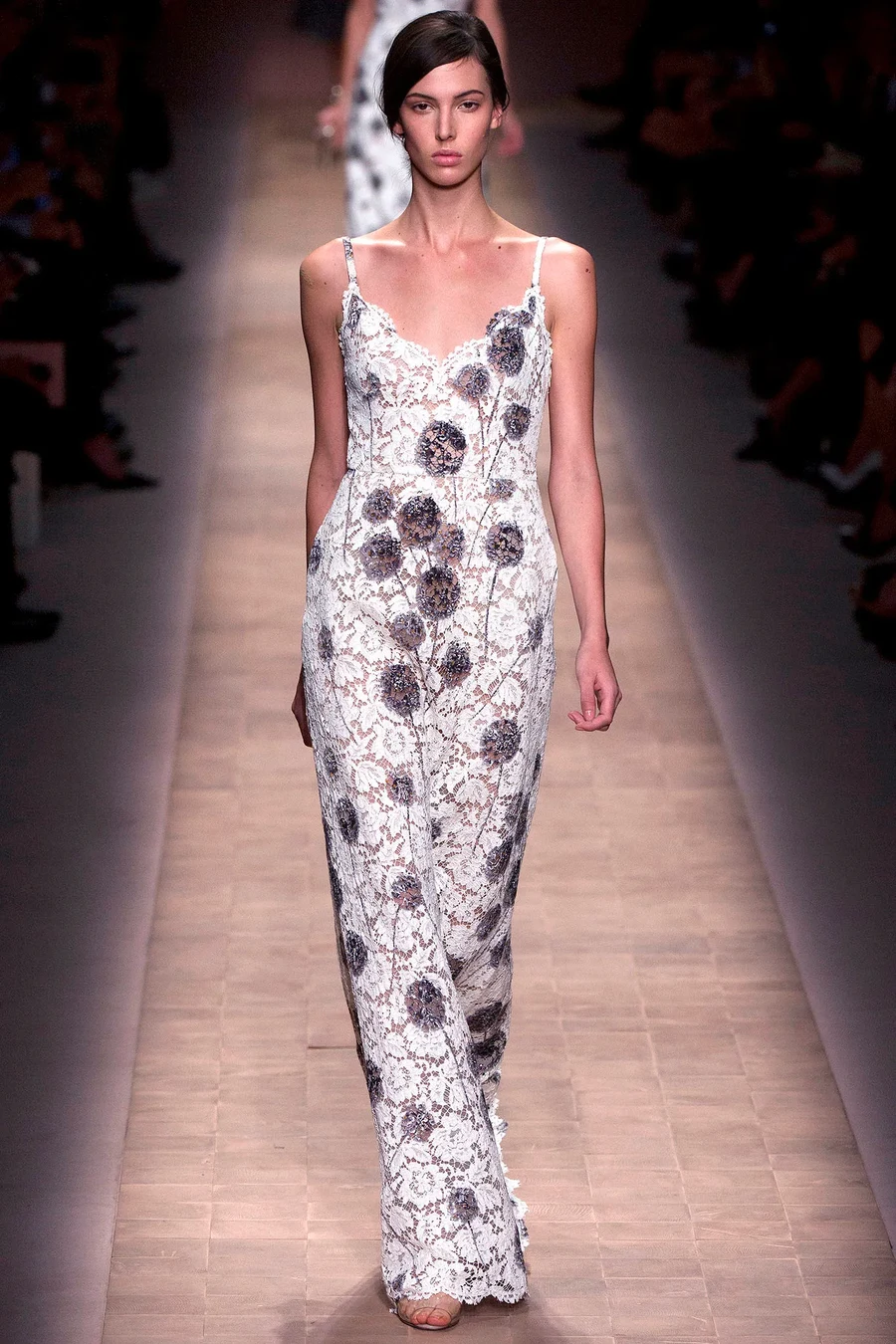
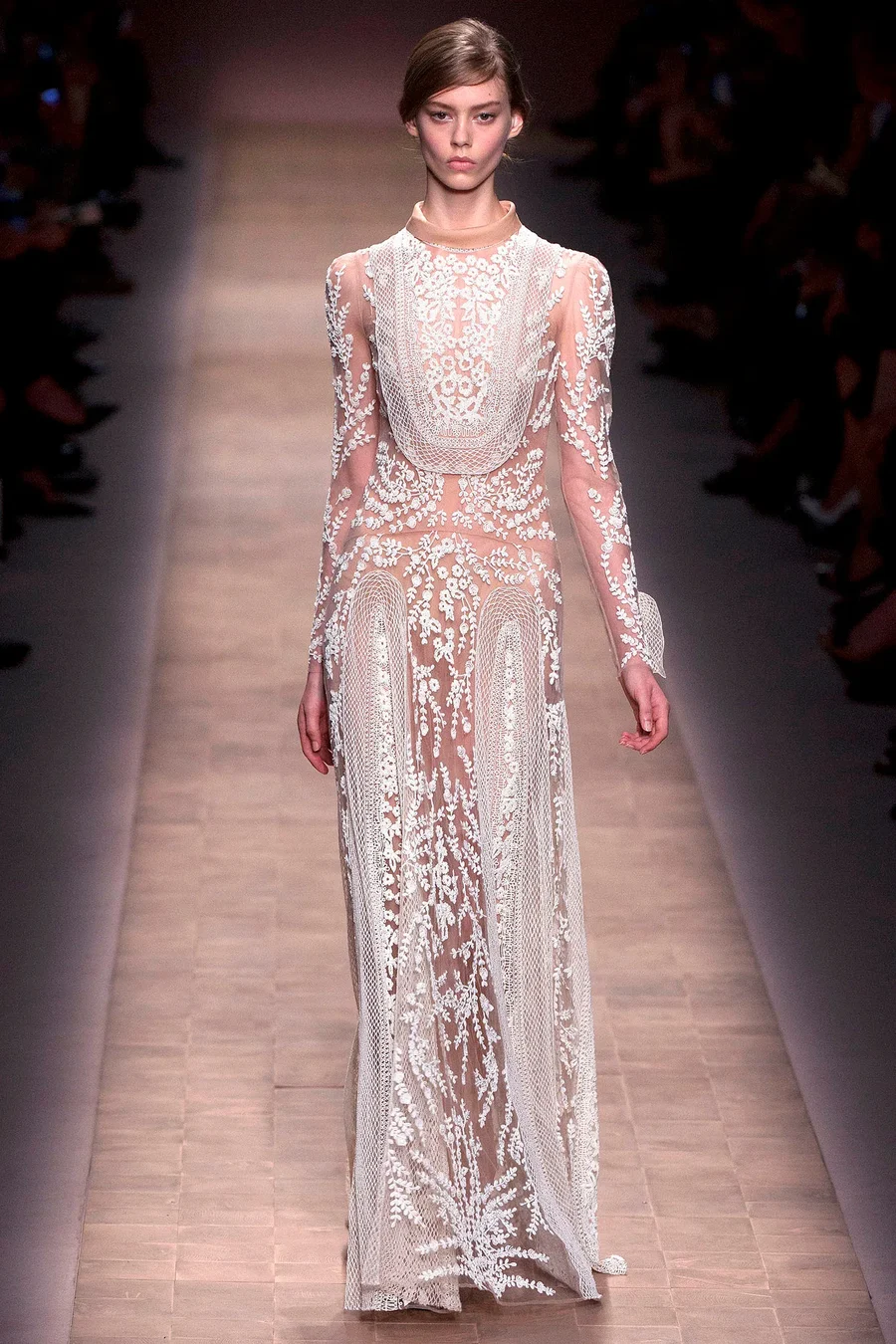
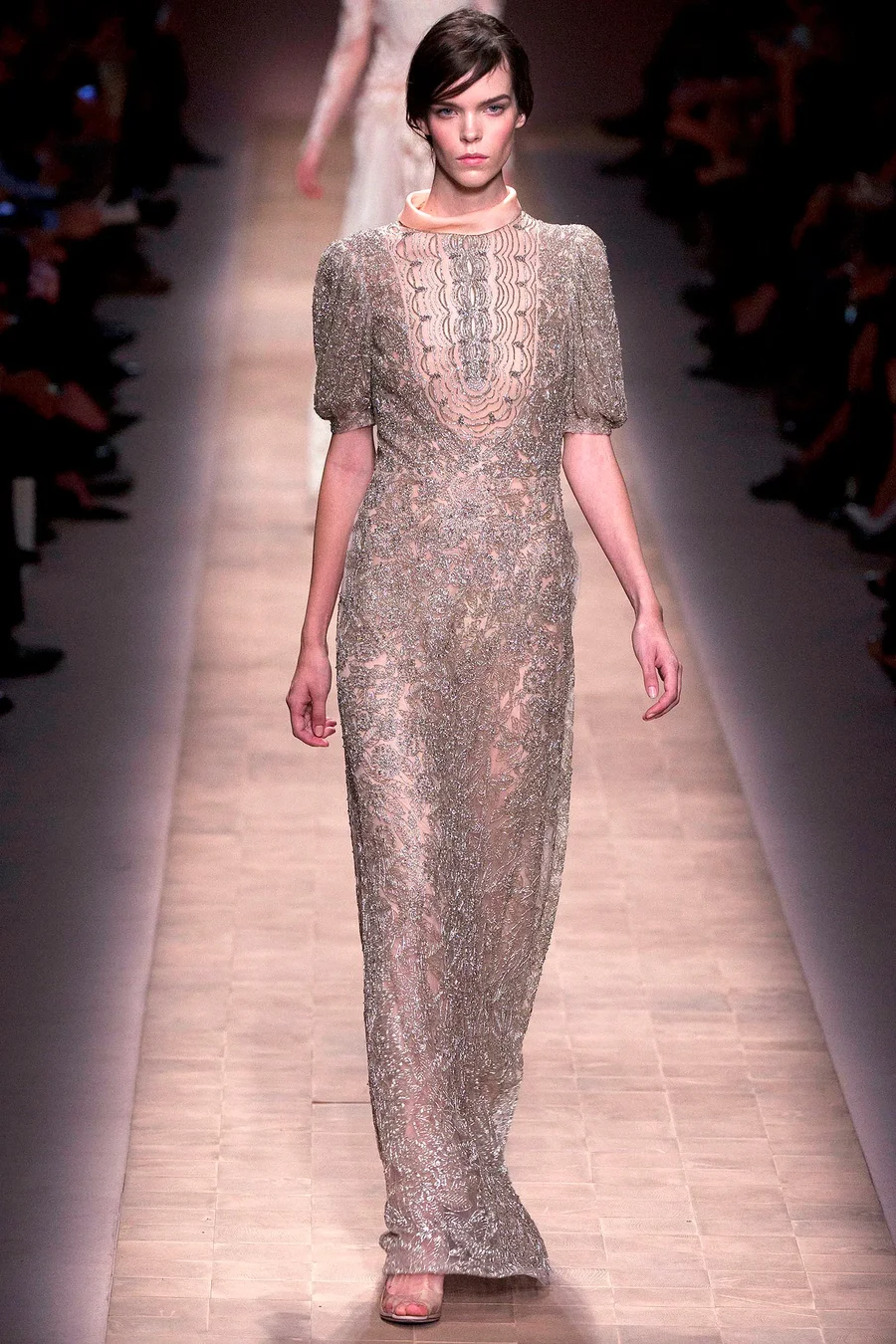
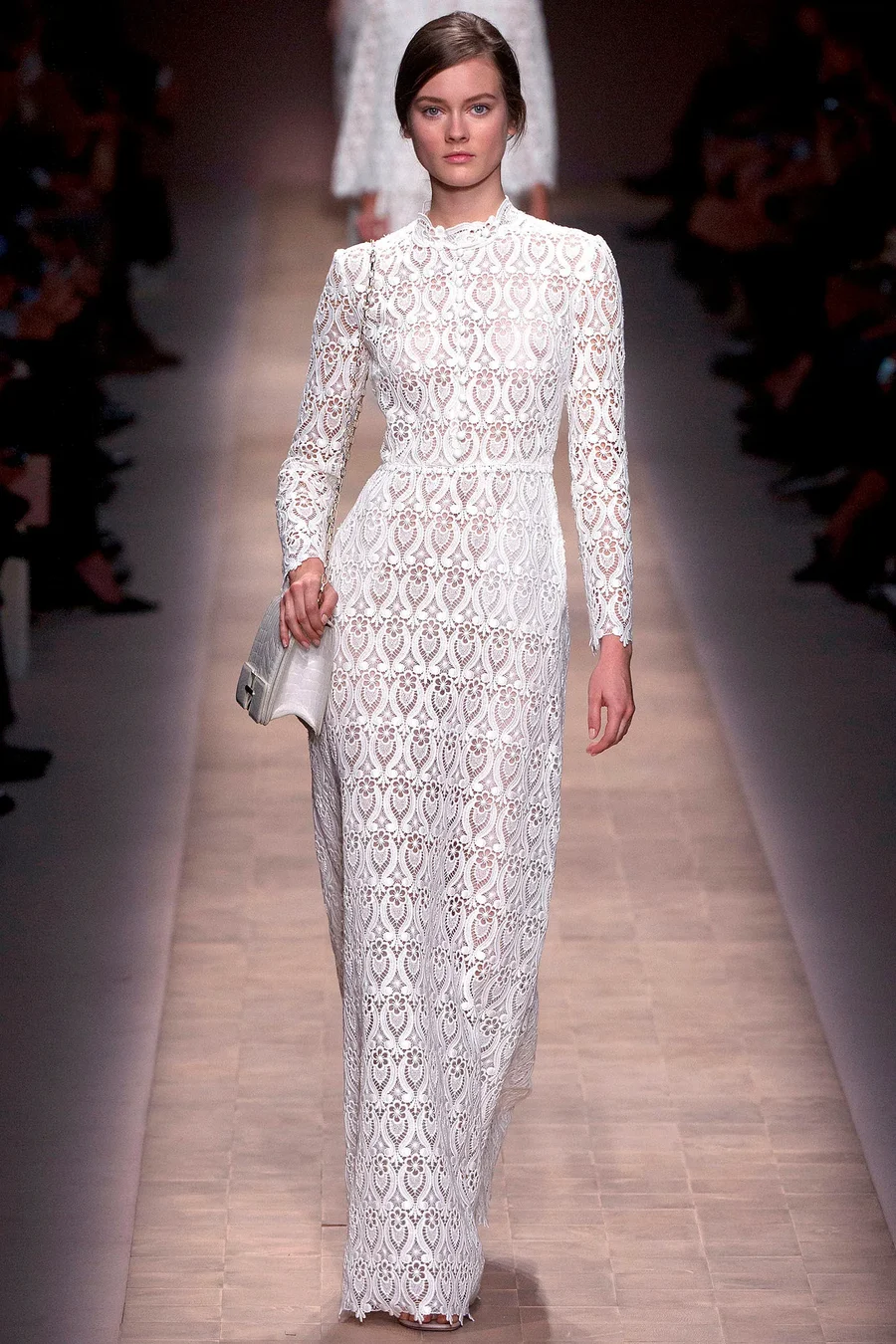
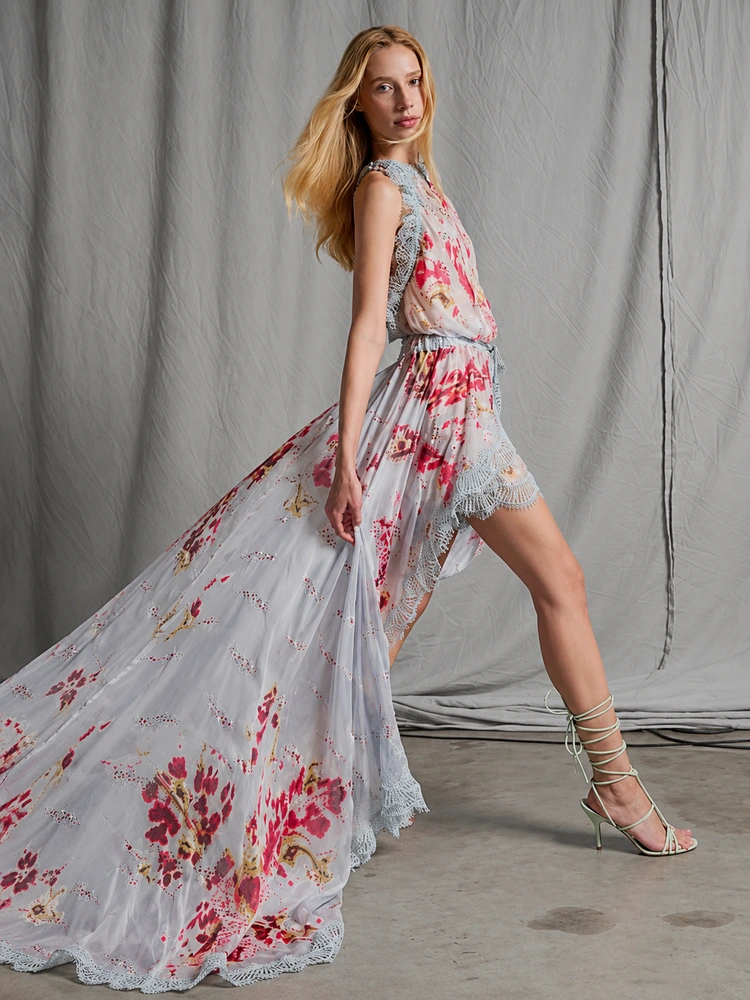
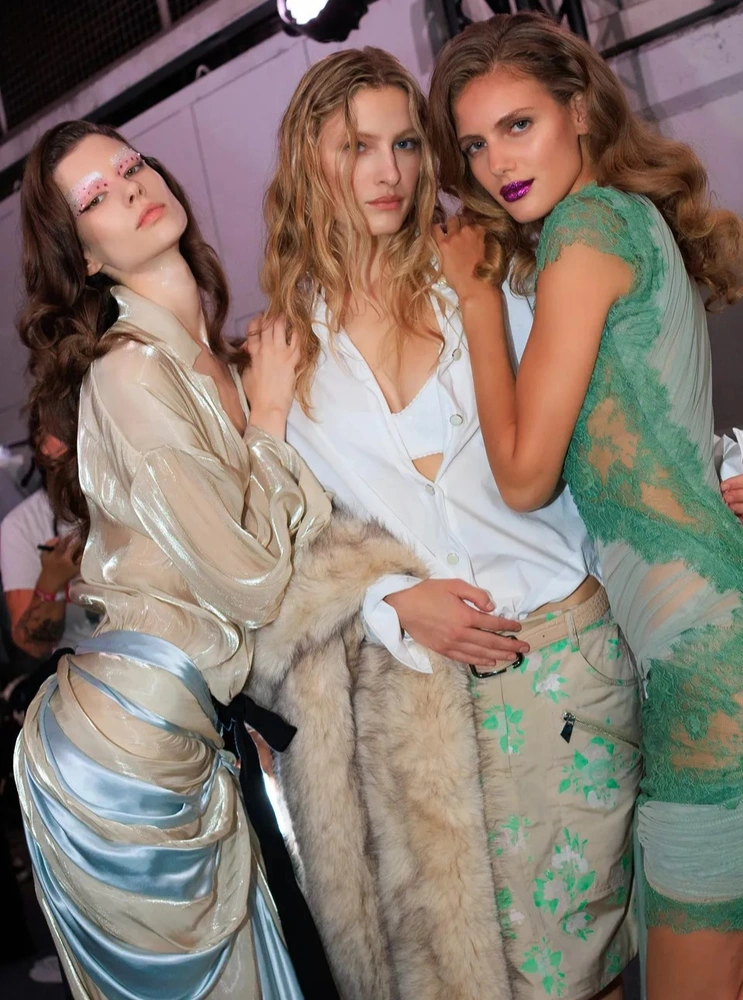
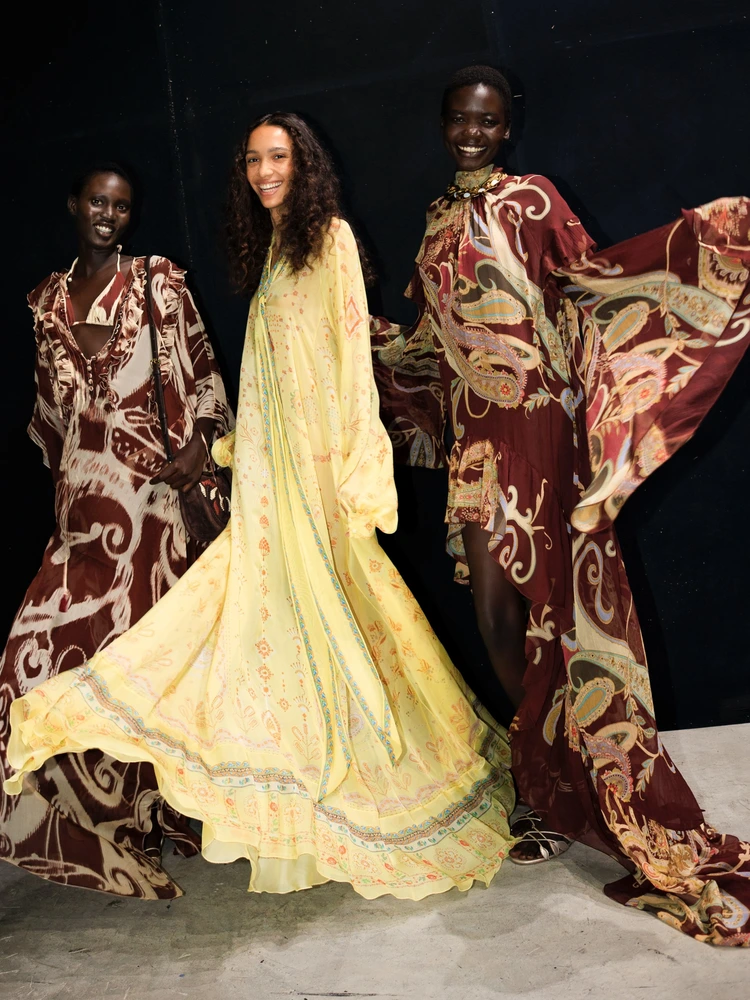
At Valentino, the line becomes almost devotional. The selected looks use seams and long panels with a softness that never turns loose, allowing romance to appear disciplined, pale, and quietly sacred.
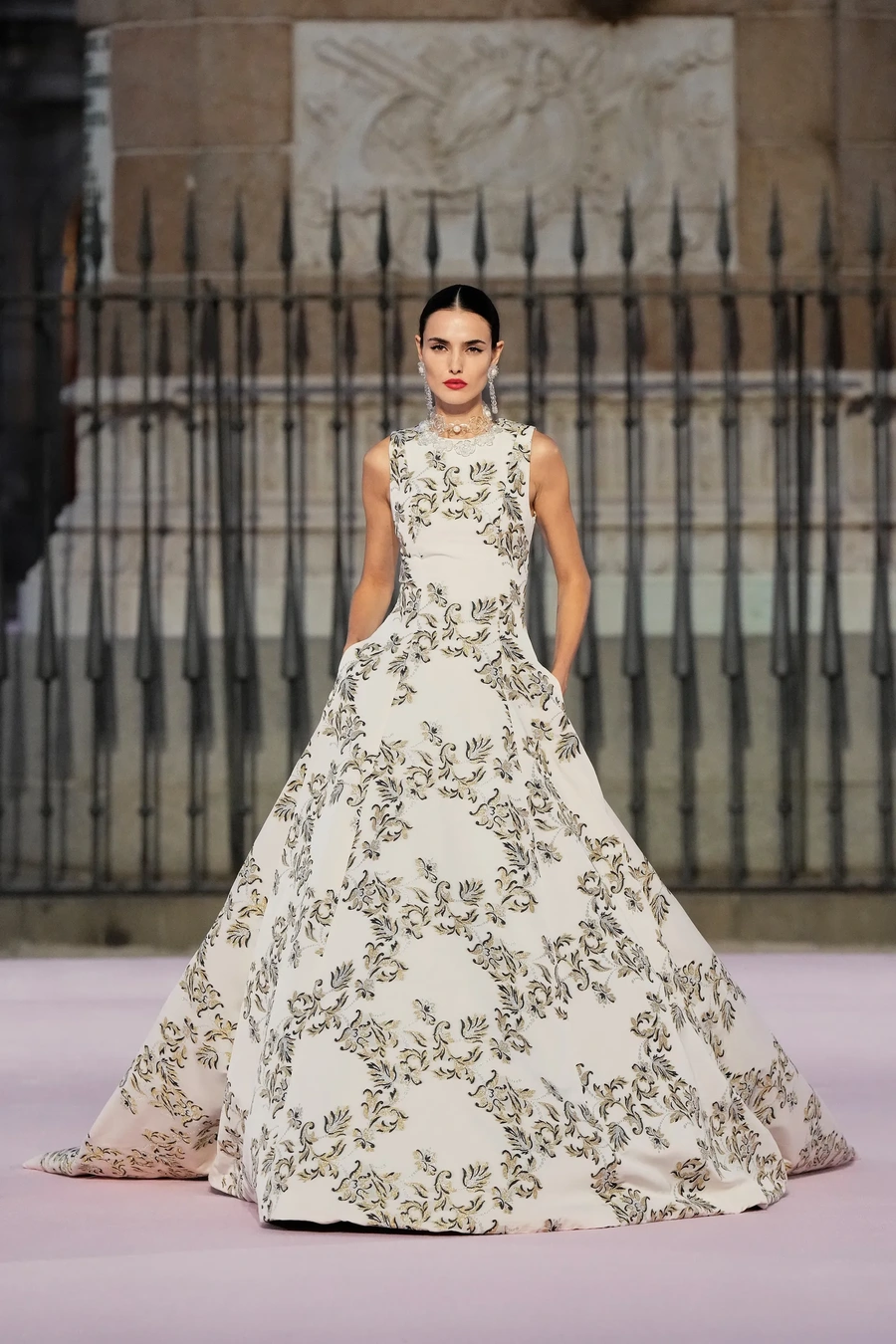
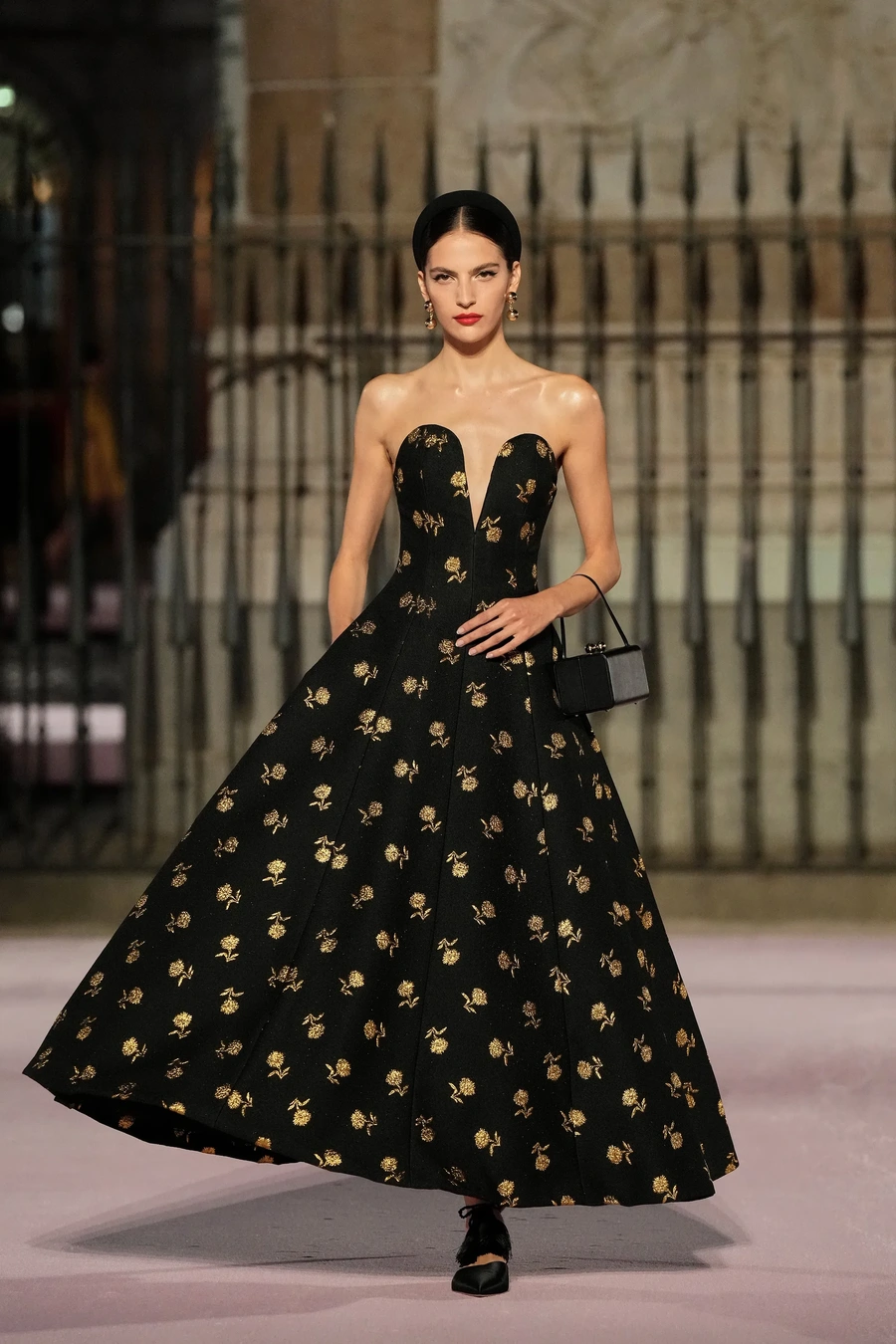
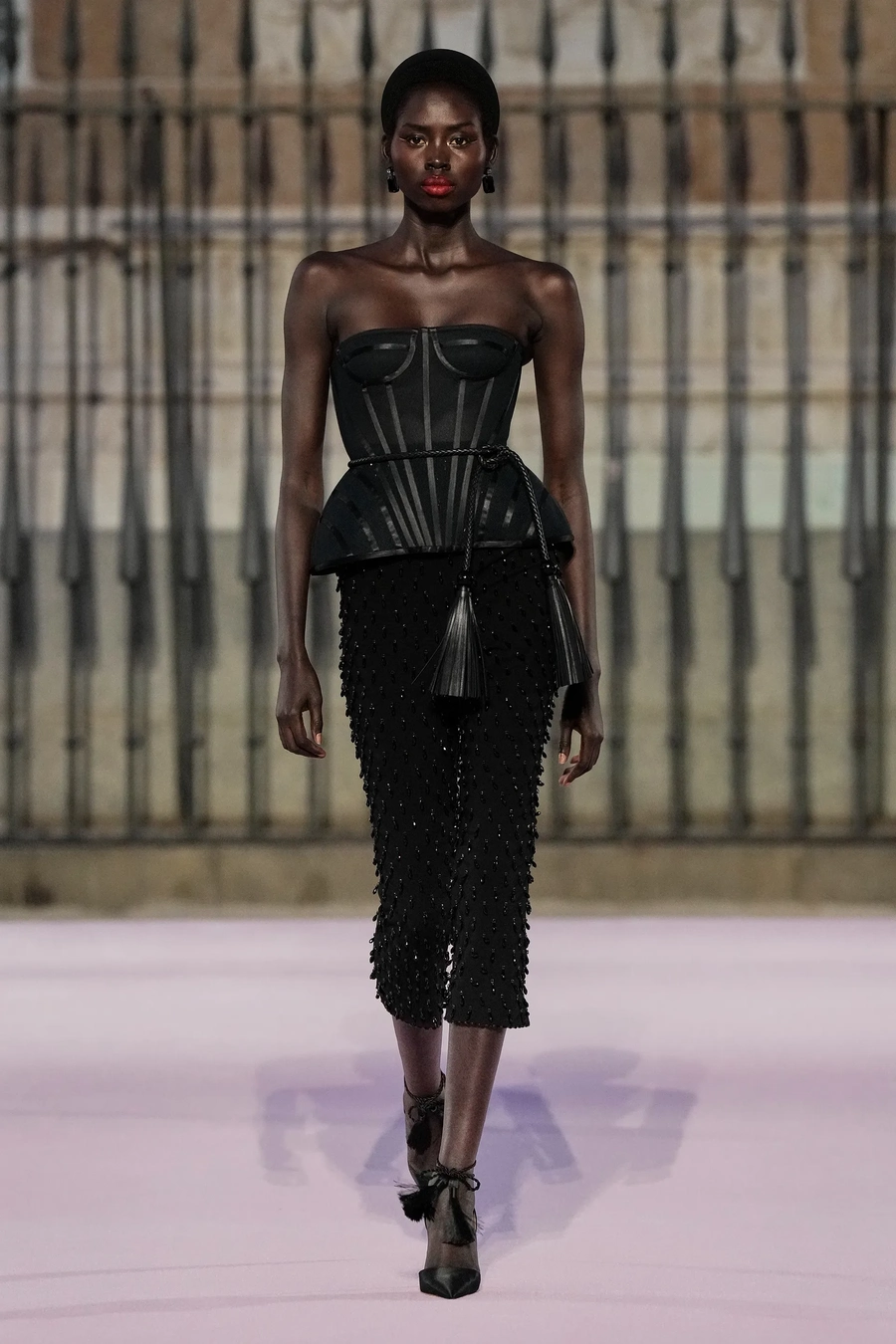
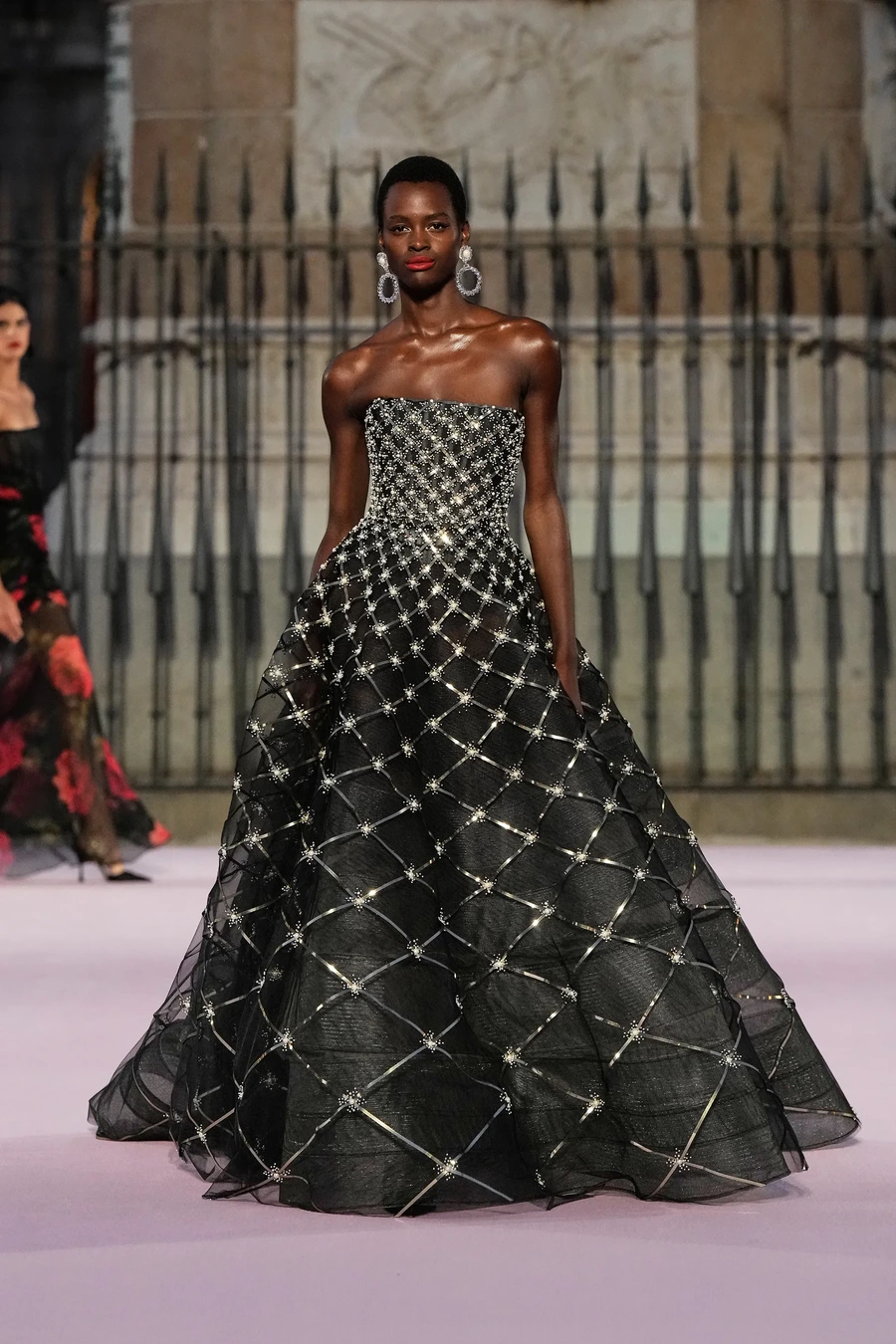
Carolina Herrera gives the silhouette a brighter polish. Her version belongs to ceremony in daylight: fitted bodices, clean length, and a kind of social elegance that makes the princess idea look modern, composed, and unmistakably grown-up.
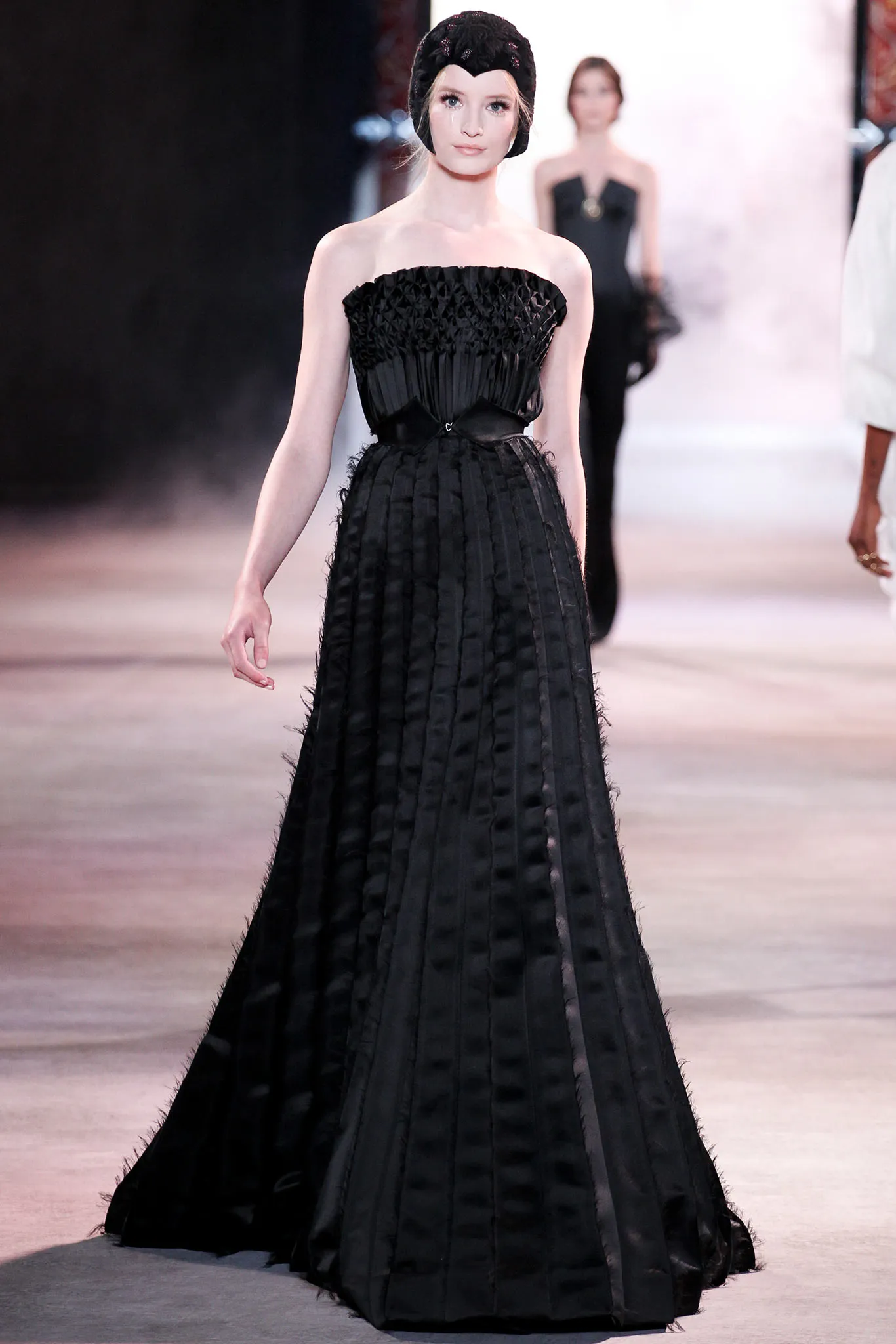
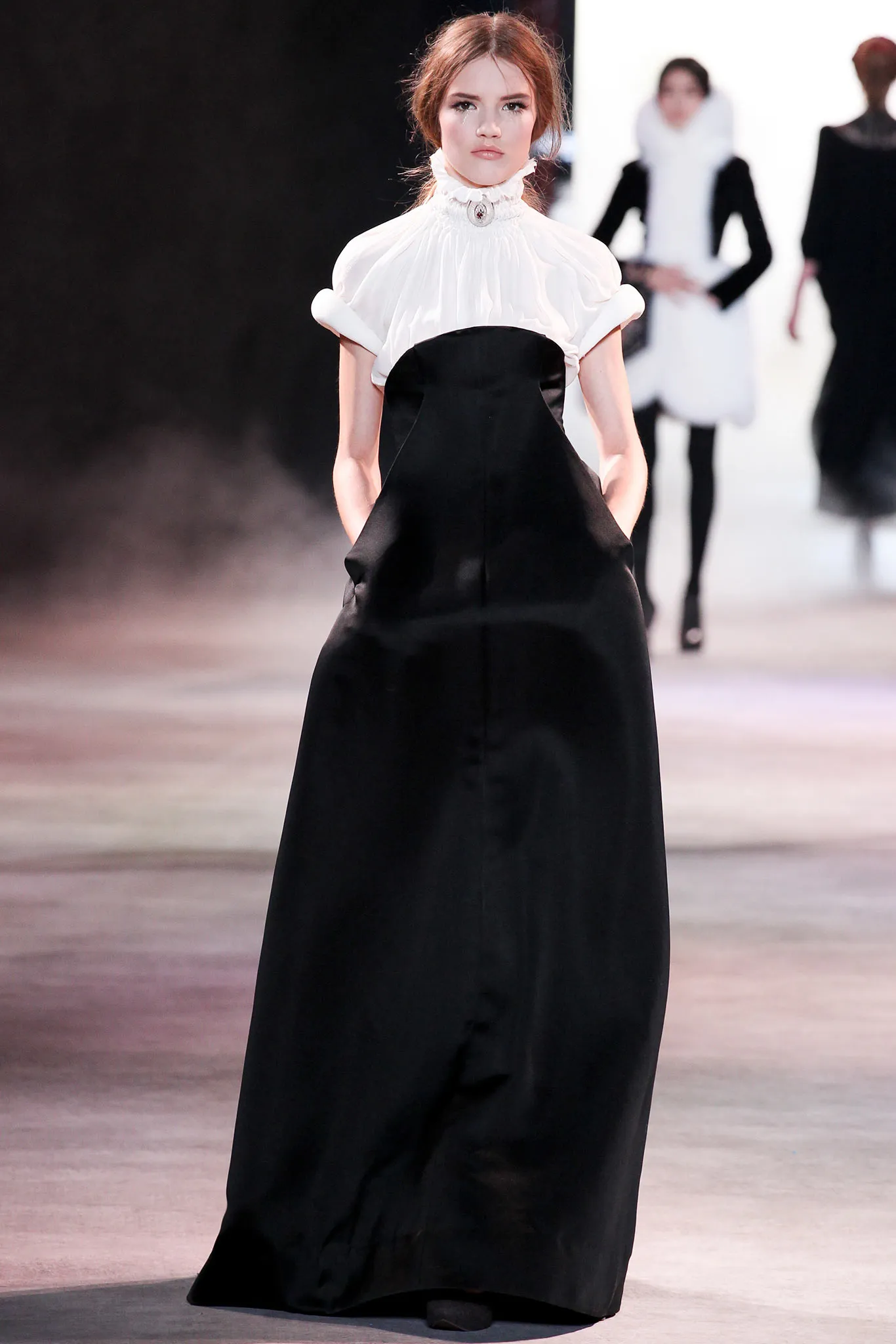
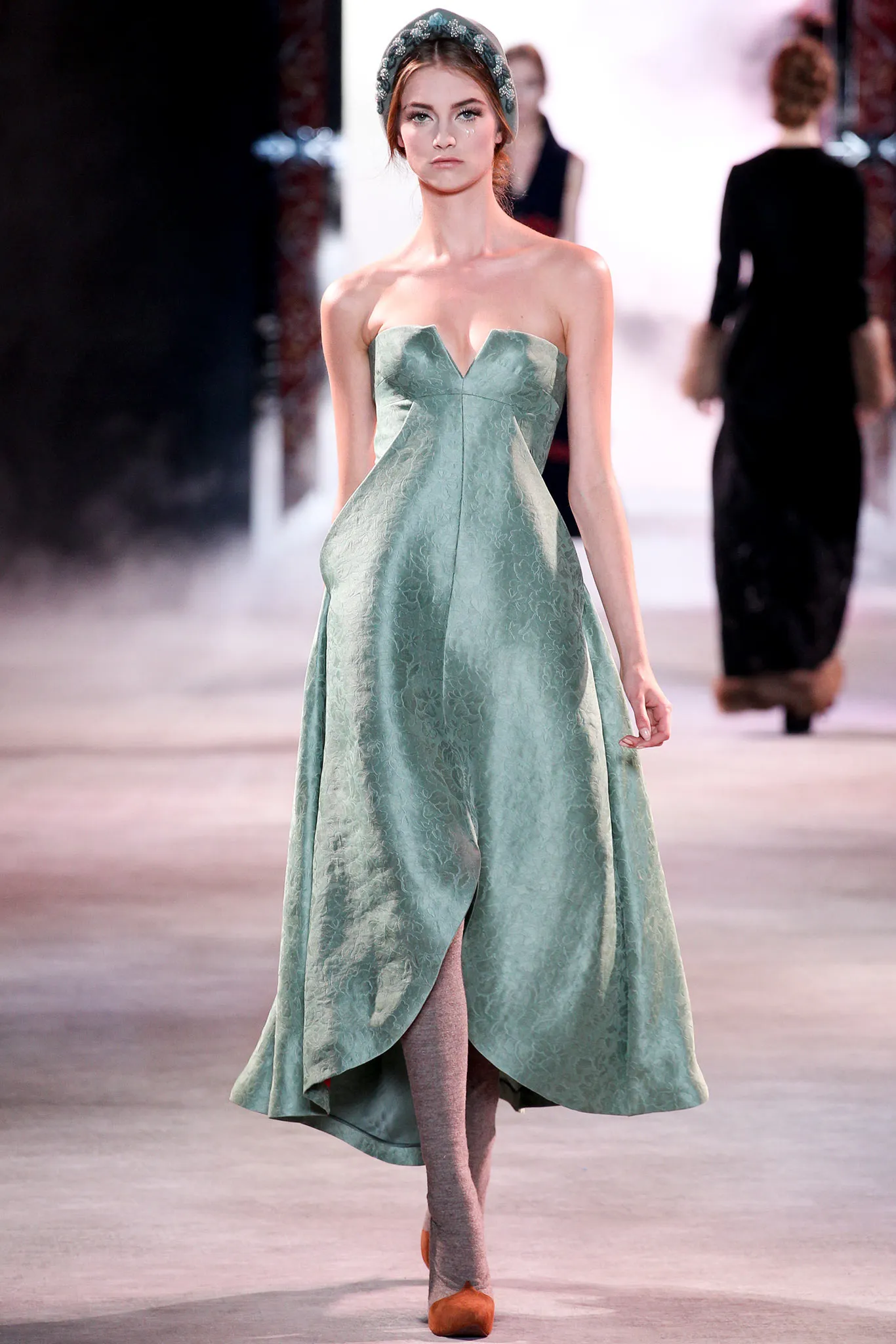
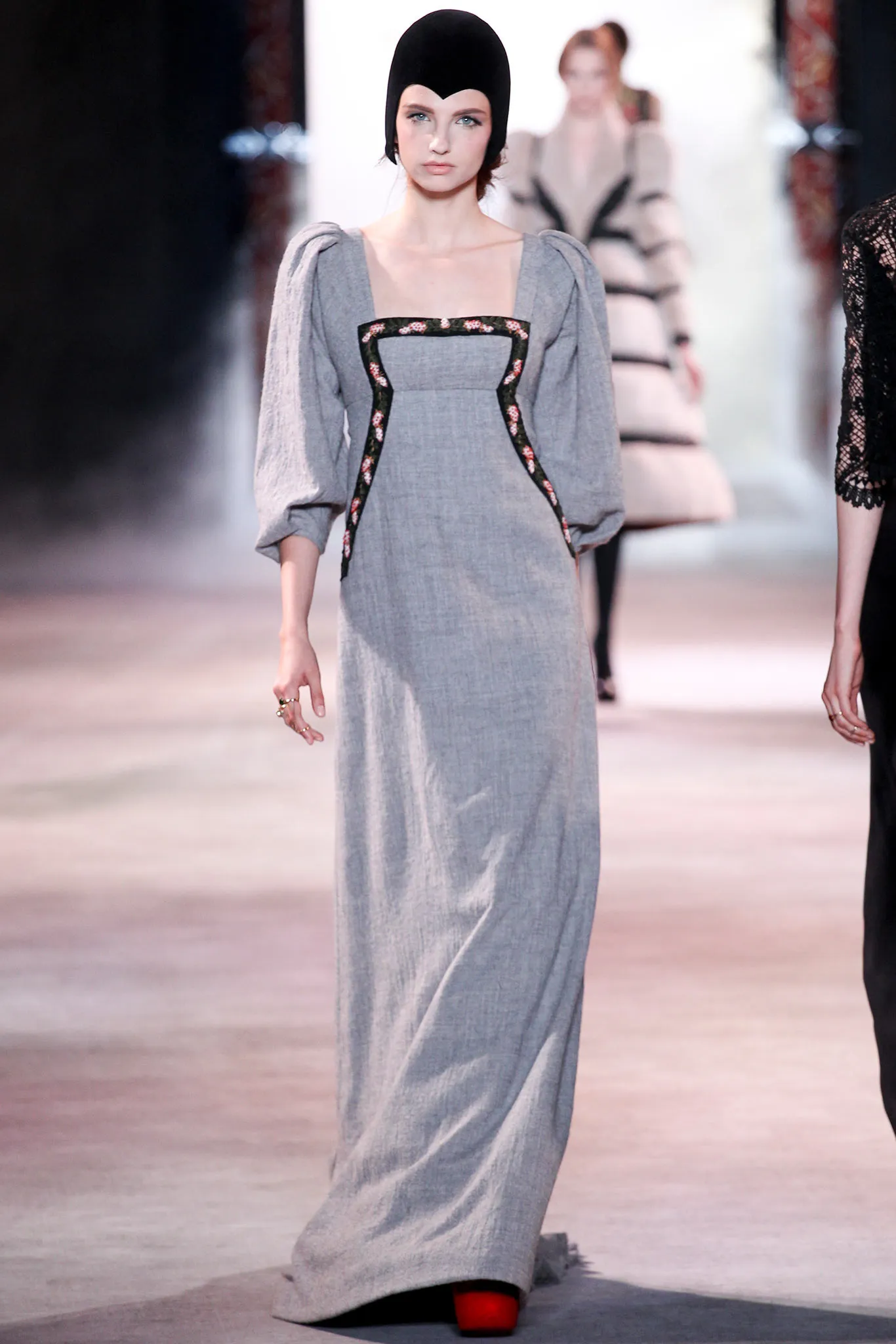
With Ulyana Sergeenko, the dream turns older and more severe. The chosen looks carry the memory of portraits, palaces, and ceremonial dress, placing the body inside a storybook world that is romantic without becoming innocent.
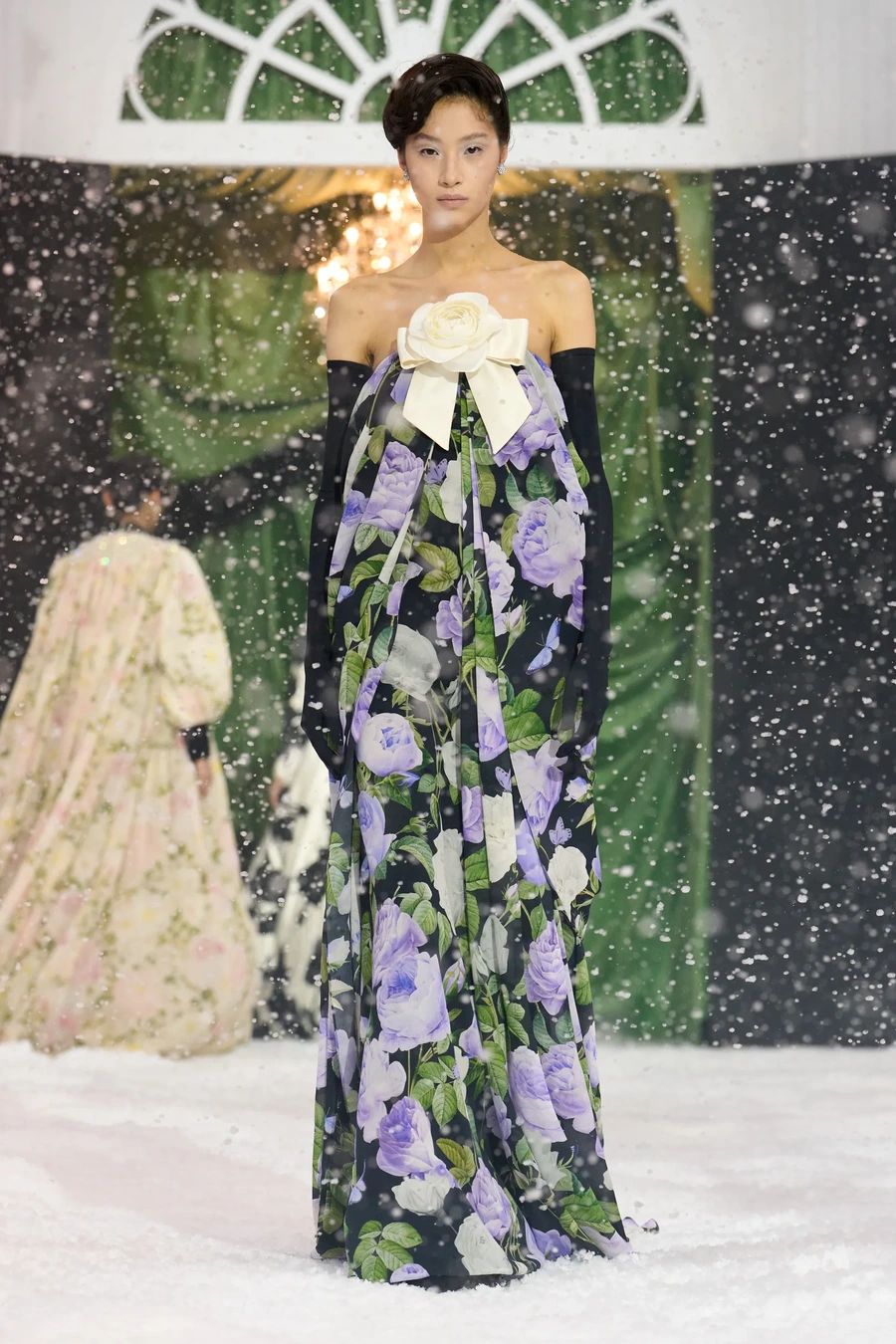
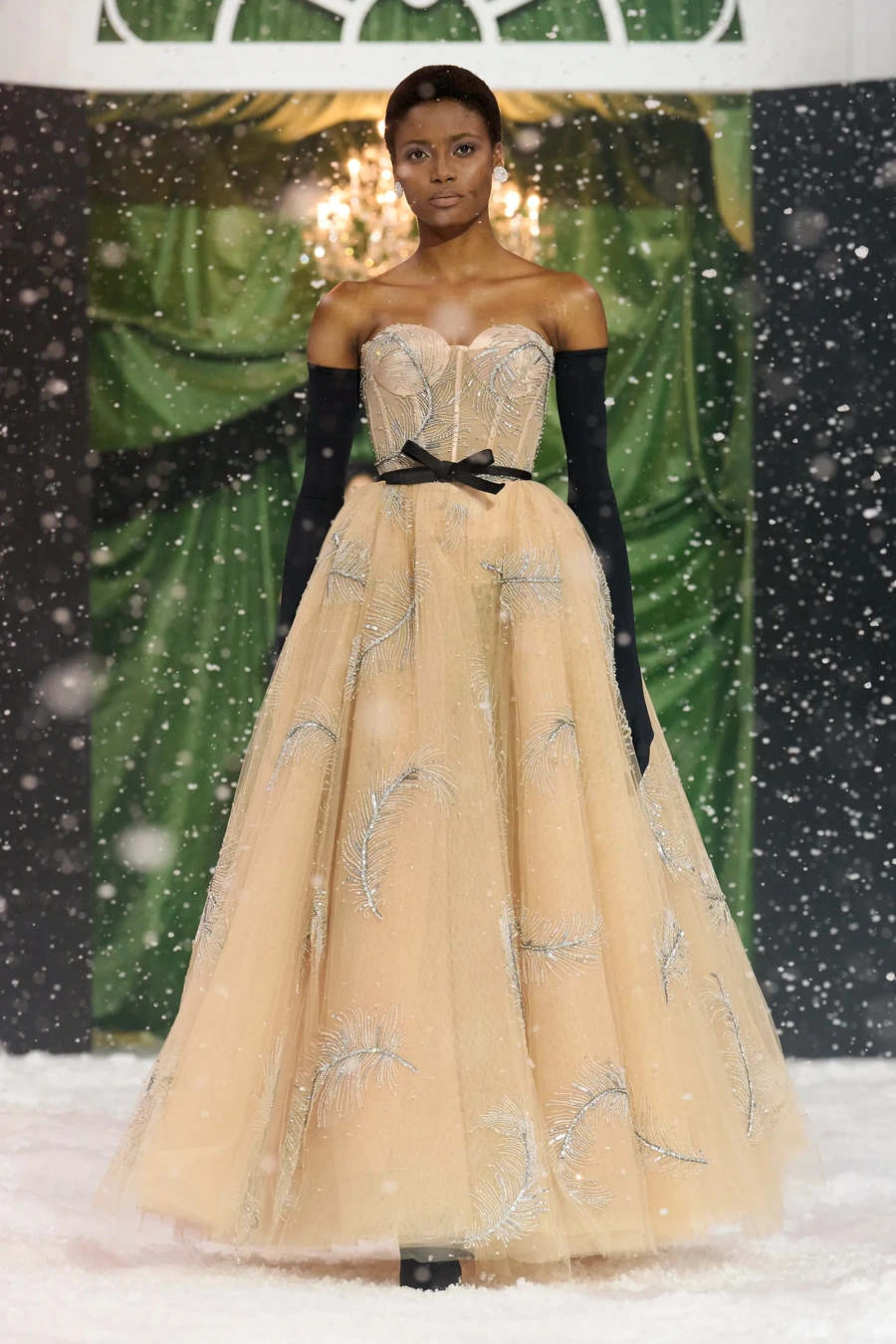
Richard Quinn makes the line theatrical through nostalgia. His strongest looks hold the memory of mid-century formality, where the princess shape appears polished, staged, and slightly unreal, like a ball gown preserved under brighter light.
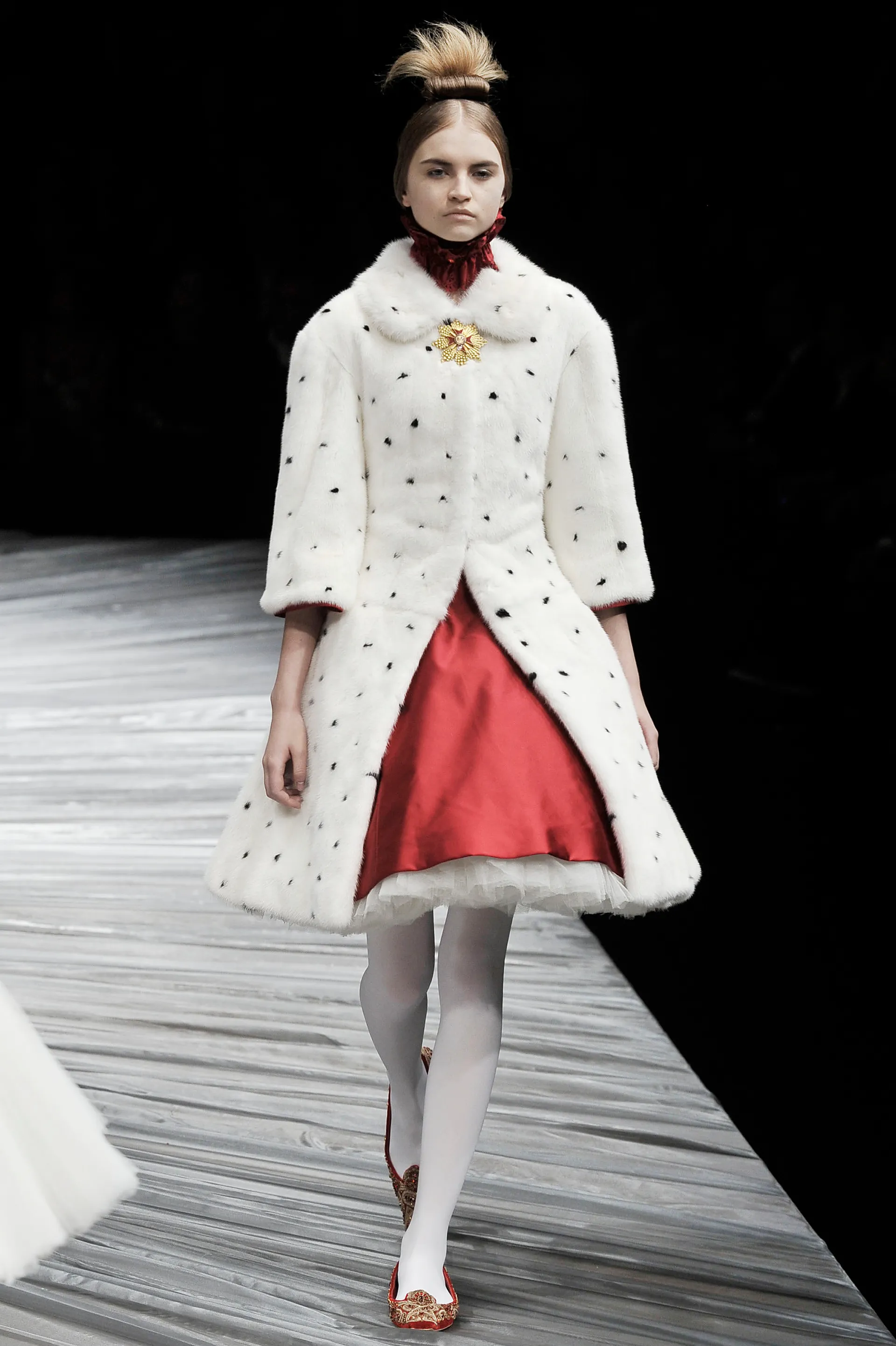
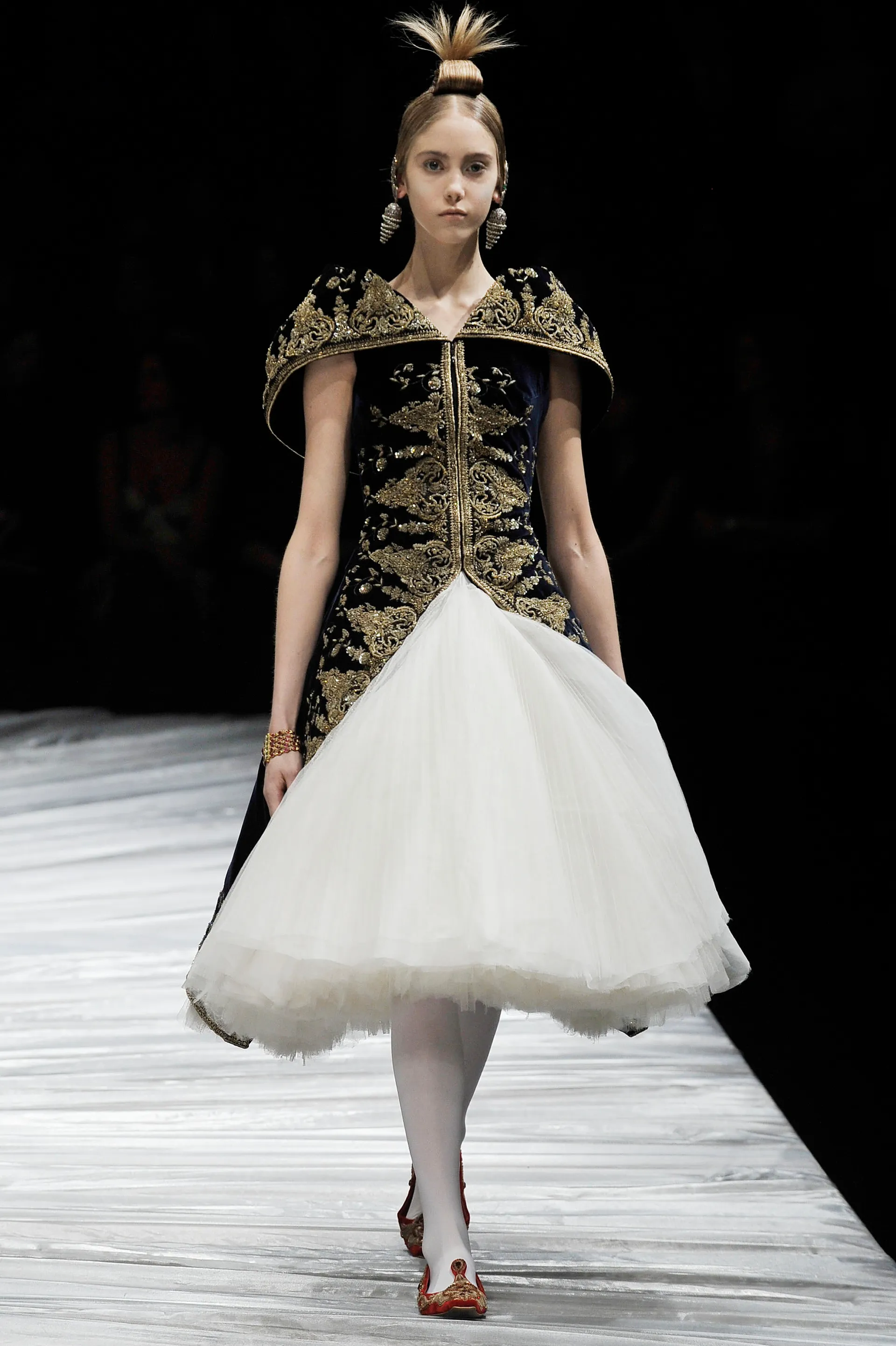
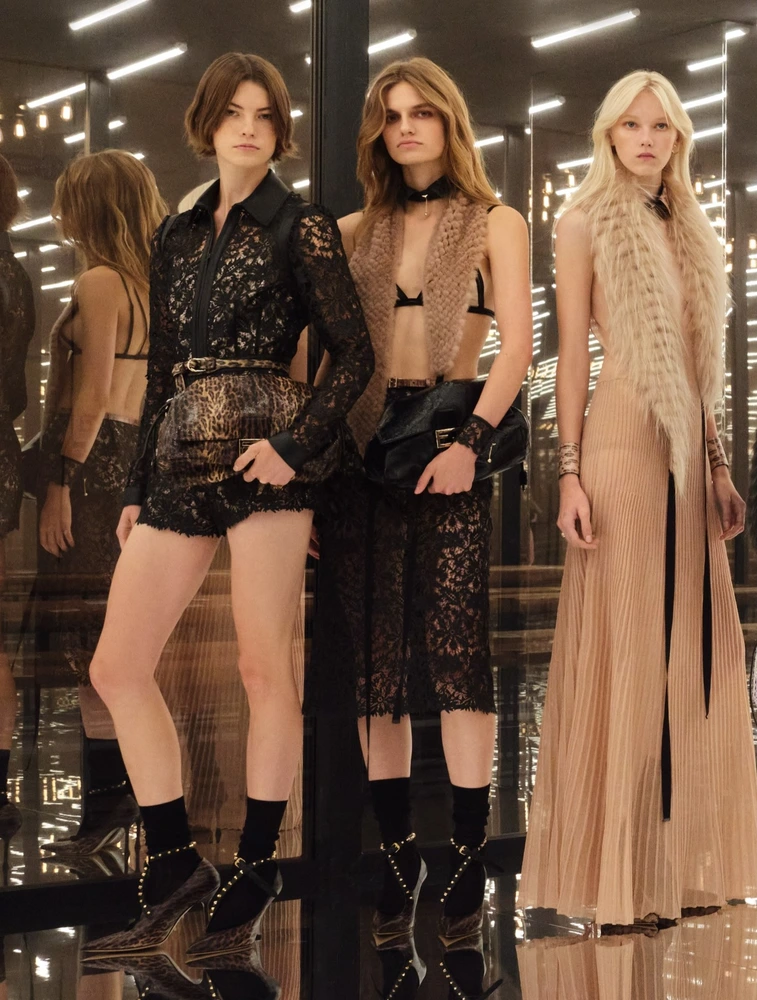
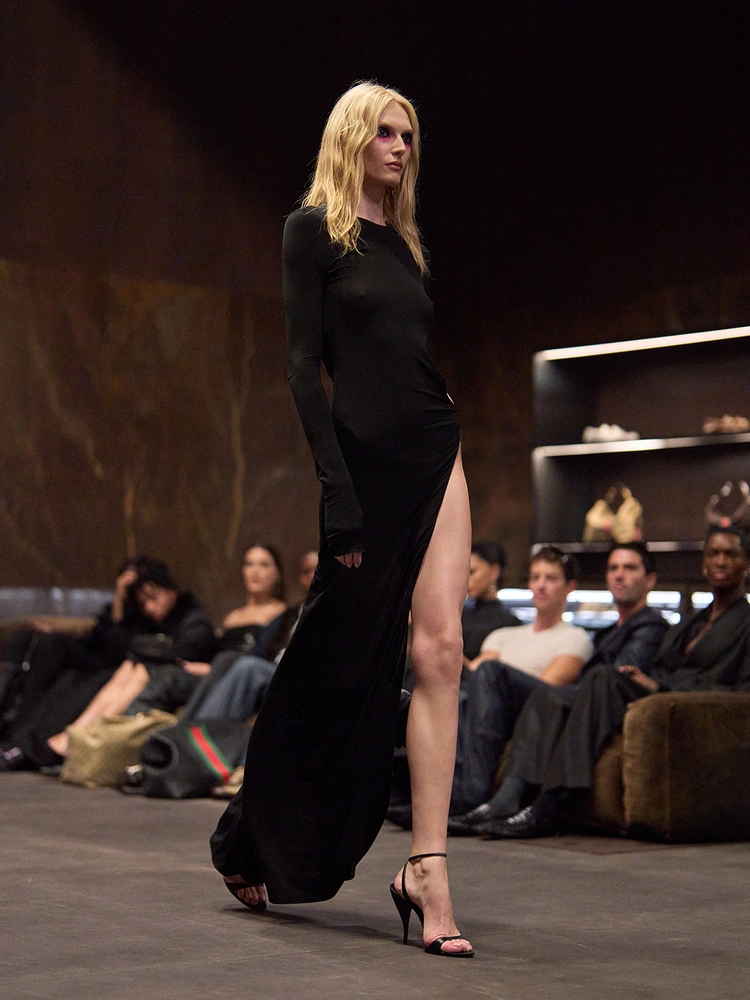
Alexander McQueen pulls the silhouette into a darker kingdom. Length and structure give the body distance, turning the princess into something closer to myth: less sweetness, more exile, armor, and strange ceremony.
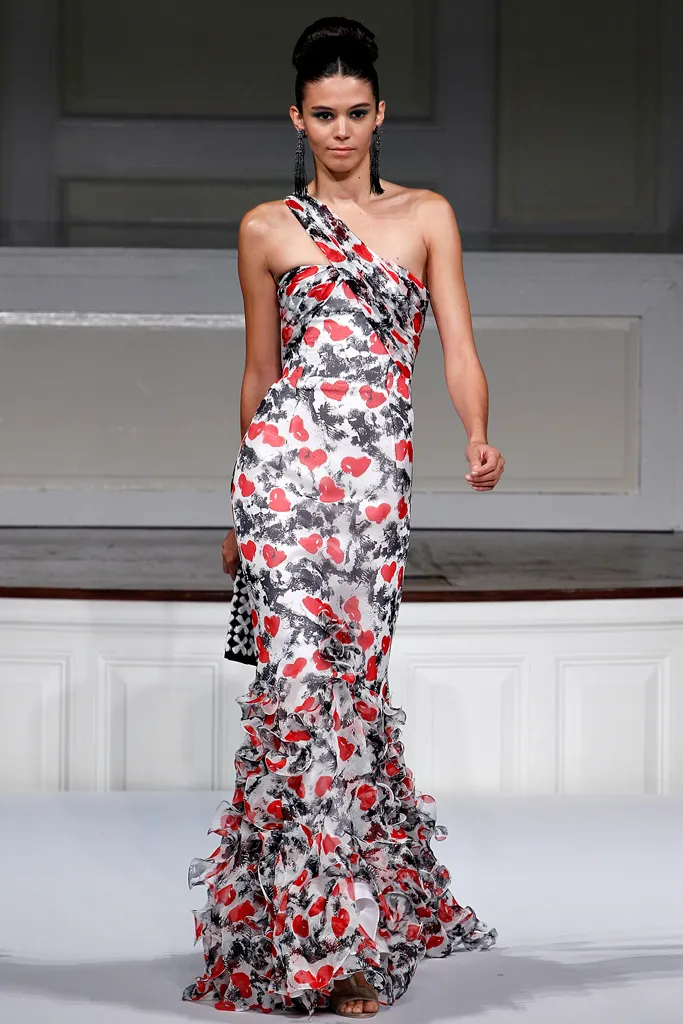
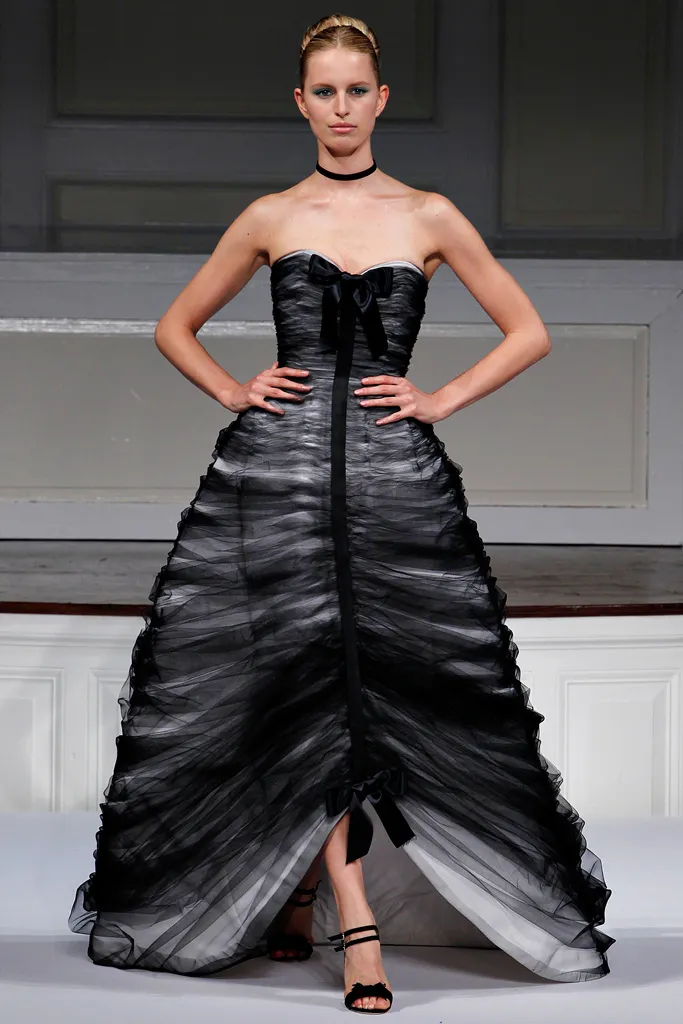
Oscar de la Renta keeps the fantasy close to society. His strongest looks speak in the language of evening entrances, shaped bodices, and public romance, where the princess line becomes elegant, fluent, and beautifully aware of the room.
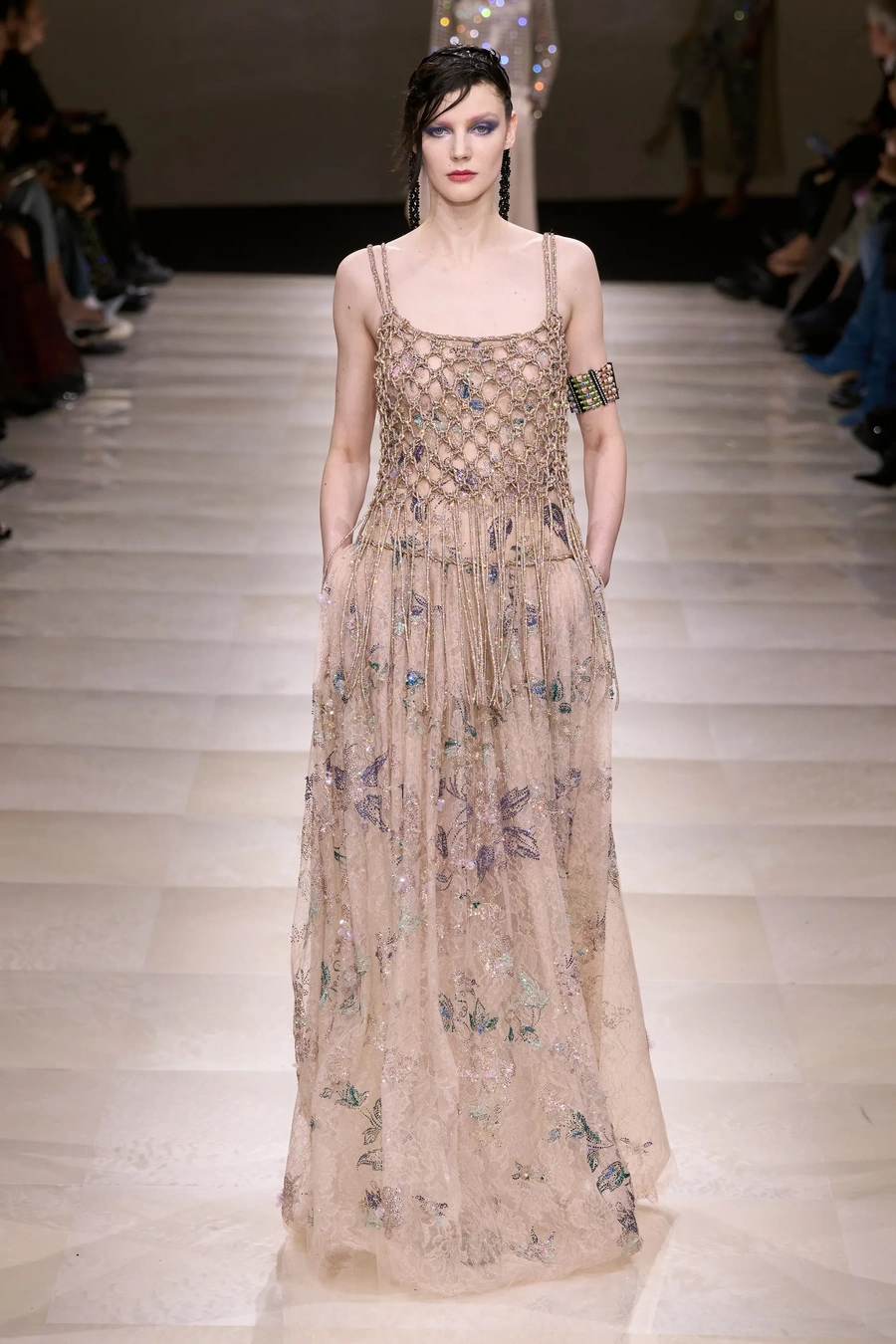
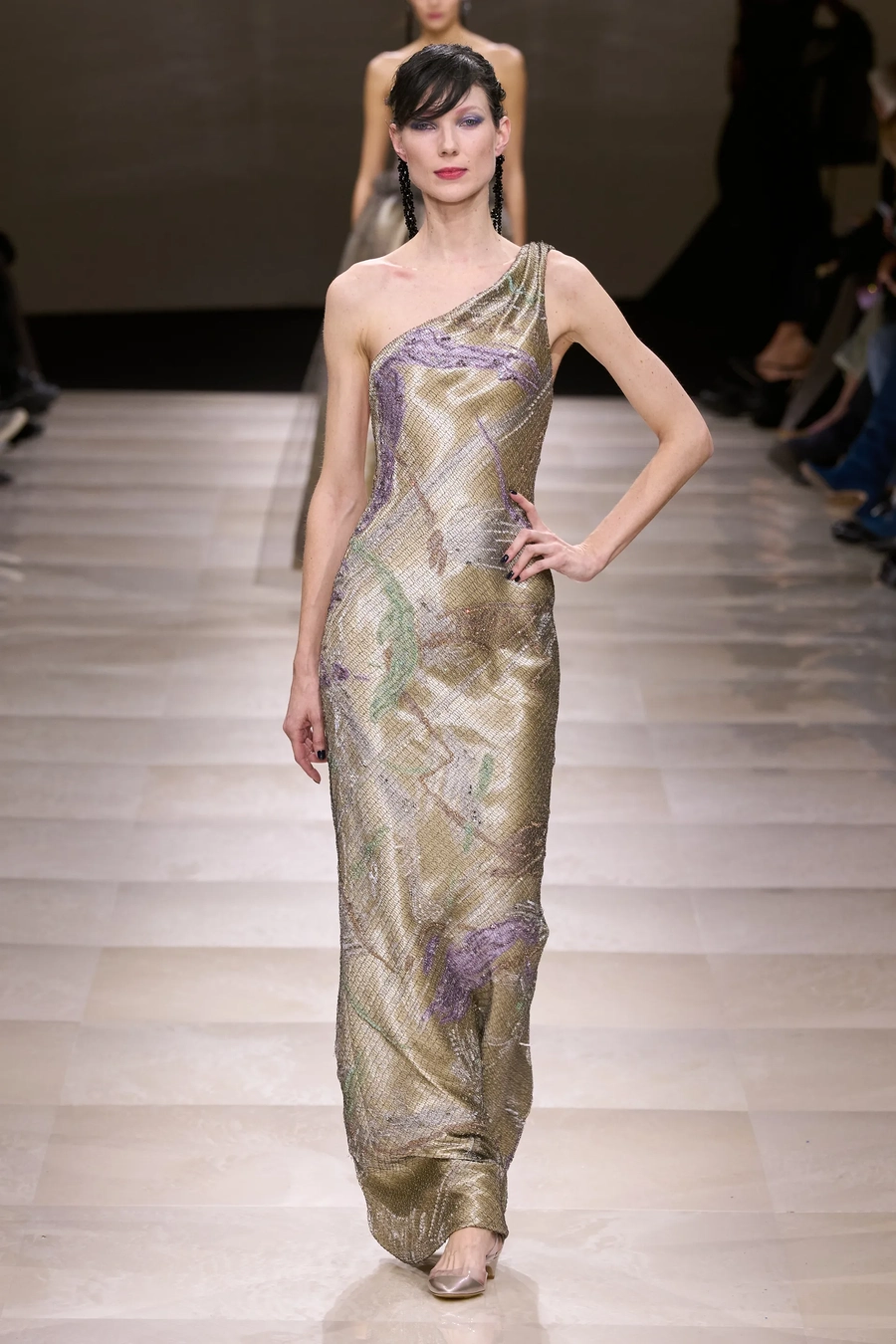
At Armani Privé, the line becomes almost silent. Surface, proportion, and vertical calm replace obvious fantasy, reducing royalty to poise and letting the body appear composed through restraint.
Across these houses, the princess line keeps returning to one quiet truth: a long seam can change the way a body enters space. It stretches fantasy into posture, removes interruption, and turns the old dream of a gown into something held upright by construction.
A princess dress can fade back into fantasy. The princess line stays with the seam, with the quiet line that teaches the body how to rise without announcing itself.
It keeps the old dream of the, then removes the excess until only posture remains.
A long seam can do something strangely powerful. It can make romance stand straighter, make softness look composed, make a woman appear as if she has entered the room from a story she no longer needs to explain.
The fairy tale does not disappear here. It grows taller. What remains is a body drawn in one continuous gesture, held between childhood wonder and adult command.
A gown no longer waiting for a crown, because the line has already made its own authority.
Advertisement