MENU
Close





Was Marc Bohan hired as Dior’s human insurance, or was he the only person who truly understood how fragile a couture house could be?
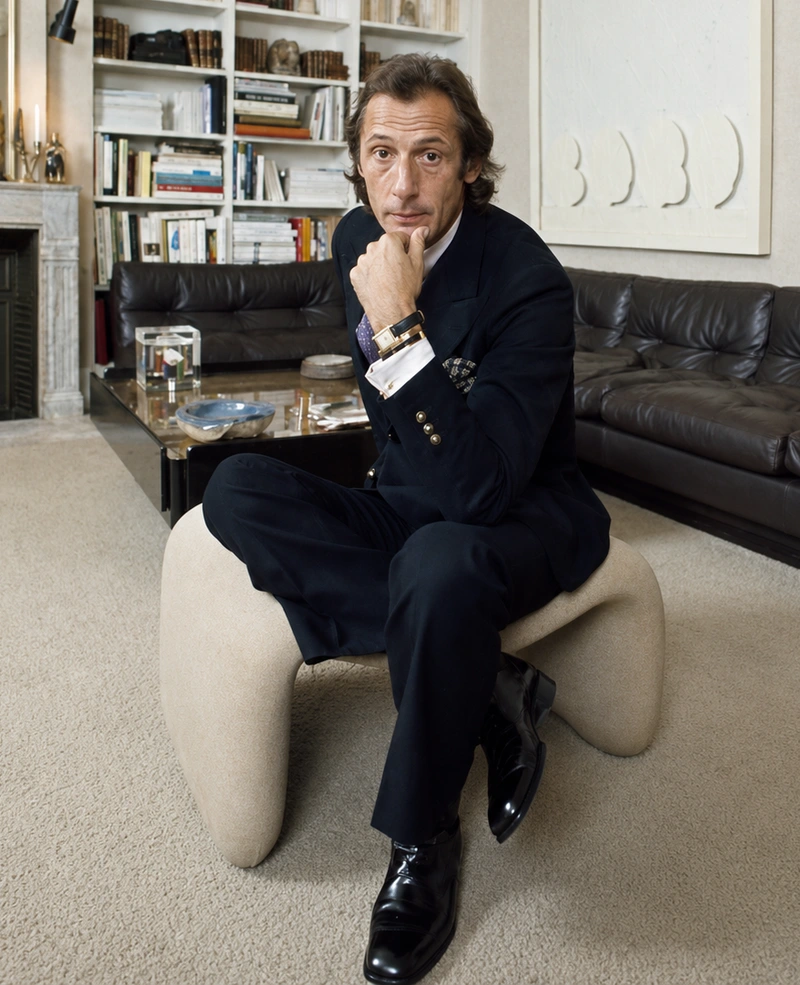
Was Marc Bohan hired as Dior’s human insurance, or was he the only person who truly understood how fragile a couture house could be?
July 6, 2026
Advertisement

Advertisement



History often reserves its loudest applause for the revolutionaries, the provocateurs, and the tragic geniuses who burn brightly and fade fast. The fashion industry, with its insatiable appetite for spectacle, is particularly guilty of this bias. Yet, the true survival of a legendary house rarely rests on the shoulders of the avant-garde. It rests on the steady, meticulous, and profoundly perceptive shoulders of the pragmatists. Designer Marc Bohan at Dior, who steered the monolithic House of Dior for an unprecedented three decades, recently passed away at the age of 97. He was not a rebel who sought to dismantle the establishment, nor was he a tortured artist consumed by his own mythos. Instead, Bohan was the gentle titan of Parisian haute couture, a discreet visionary who spent thirty years proving that true elegance whispers rather than shouts.
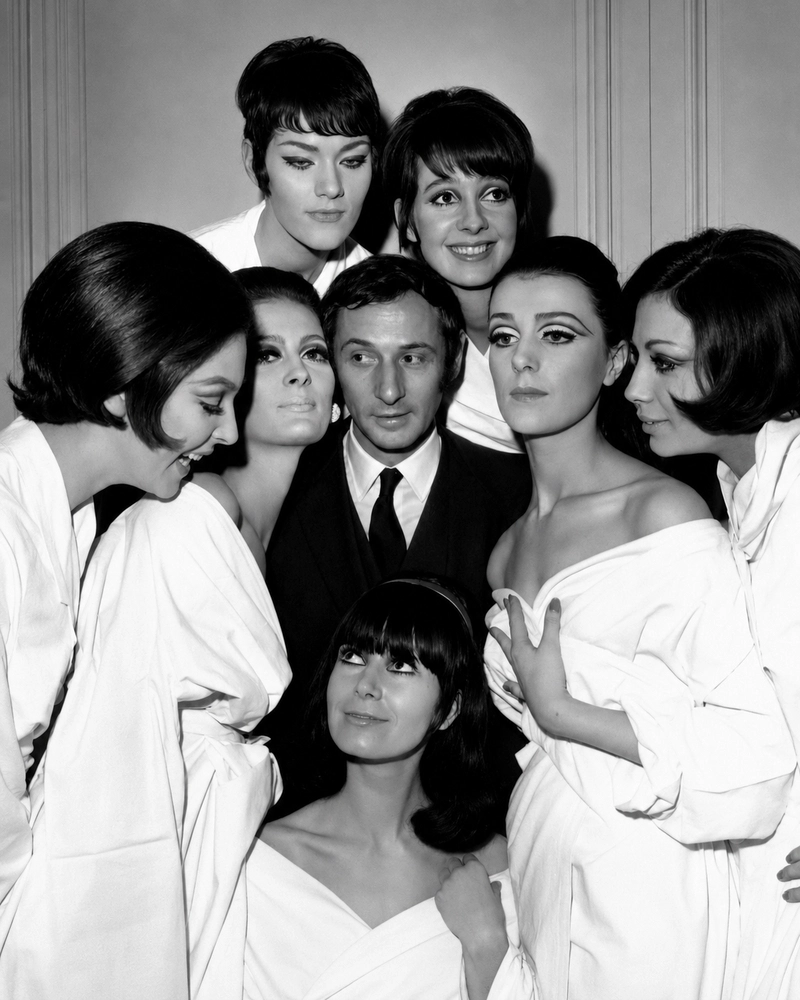
From 1960 to 1988, Bohan served as the chief creative officer of Christian Dior. In an era that witnessed the seismic cultural shifts of the swinging sixties, the bohemian seventies, and the opulent eighties, Bohan provided an unwavering anchor of grace. He was the last surviving figure of the mid-century golden age of French haute couture, dedicating himself to the pursuit of bespoke perfection for a discerning clientele of a few thousand women each year. More importantly, from an analytical standpoint, it was Bohan’s consistent, wearable creativity that safeguarded the brand’s reputation. His ability to maintain a fiercely loyal customer base directly enabled the lucrative licensing deals for accessories, perfumes, and merchandise that, at the time, generated an astounding eighty percent of Dior’s revenue. To understand Marc Bohan at Dior is to understand the foundational economics of modern luxury: without the aspirational dream he quietly sustained on the runway, the global commercial empire of Dior could not have survived its most vulnerable transitional years.
Roger Maurice Louis Bohan was born on August 22, 1926, in Sceaux, a quiet, leafy southern suburb of Paris. This slightly removed perspective, close enough to the epicenter of global style to feel its pulse, but distant enough to avoid its myopic hysteria, would define his entire career. As a child, his artistic inclinations were gently nurtured by his mother, a talented seamstress who introduced him to the intimate architecture of garments. From her, he learned that clothing was not merely a sketch on paper, but a tactile, demanding craft requiring discipline and an acute understanding of textiles.
Interestingly, Bohan’s initial foray into the professional world was not through the atelier, but through the ledger. After graduating from a public high school in the Parisian suburbs, he briefly pursued studies in finance. This analytical foundation granted him a unique advantage in an industry notoriously rife with financial ruin and artistic whimsy. Bohan was, fundamentally, a philosophical and deeply rational man. He recognized early on that talent alone was insufficient; fashion was a high-wire act of risk, and survival required both aesthetic intuition and commercial viability.
In 1945, Marc Bohan stepped into the Parisian fashion ecosystem, training under Robert Piguet, a legendary mentor who also guided the hand of Christian Dior himself. Bohan then moved to the house of Edward Molyneux, refining his understanding of restrained, aristocratic elegance. His early ambition led him to open his own boutique, but it swiftly went bankrupt due to a lack of operational capital. This failure was a masterclass in the brutal realities of the business. It humbled him, stripped away any illusions about the romance of struggling for art, and prepared him for a subsequent, grounding role at Jean Patou. By the time destiny called him to the House of Dior, Bohan was not a naive prodigy; he was a battle-tested designer who understood that an empty cash register was the ultimate enemy of creativity.
The story of Marc Bohan at Dior is a fascinating study in corporate anxiety and the tension between art and commerce. The house’s legendary founder, Christian Dior, possessed a gift for striking, paradigm-shifting designs that had single-handedly revived the global fashion economy post-World War II. Yet, even at the zenith of his reign, Dior recognized the need for continuity and handpicked a successor: a fragile, brilliant young man named Yves Saint Laurent. Hired as an apprentice in 1955 and promoted to assistant in 1957, Saint Laurent was positioned as the heir apparent. When Dior suddenly died of a heart attack later that year, the twenty-one-year-old Saint Laurent ascended to the throne, initially achieving spectacular critical success.
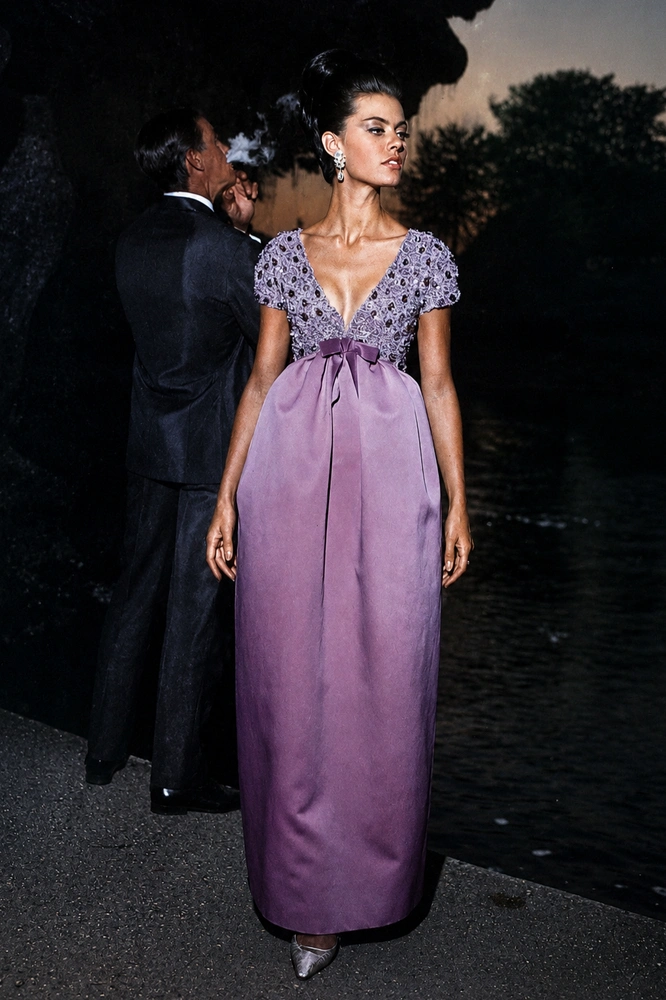
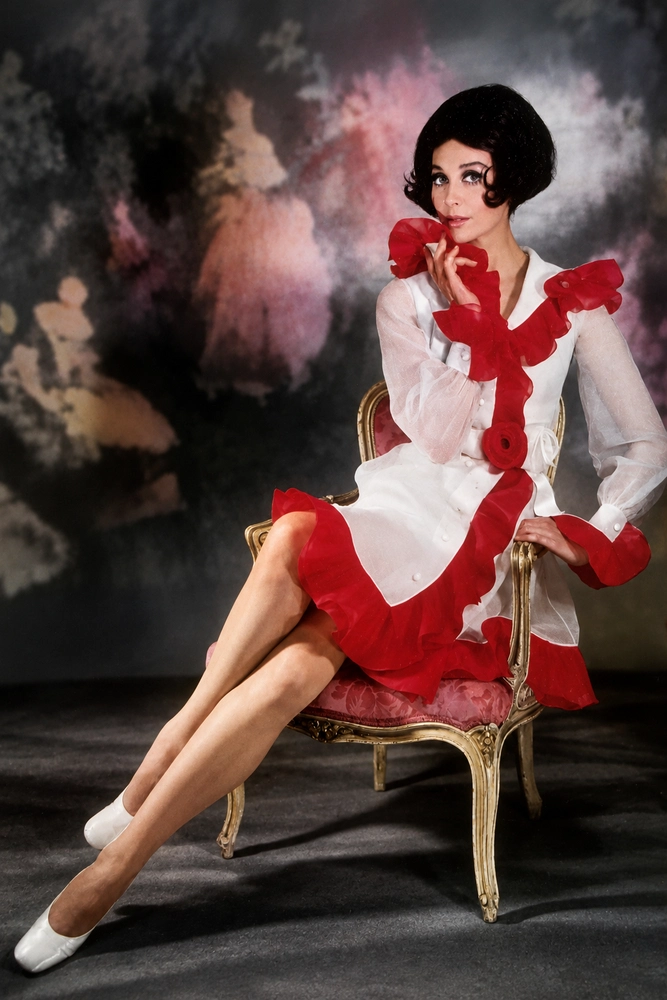
However, the boardroom dynamics were far more precarious. Marcel Boussac, the ruthless cotton tycoon who was the financial muscle and co-founder of the Dior brand, harbored profound doubts about this new arrangement. Boussac was a businessman who sold fabric; he viewed haute couture as a vital marketing tool to move his textiles. He found the young Saint Laurent to be emotionally brittle and, more alarmingly, artistically radical. As Saint Laurent’s designs began to skew heavily toward the youthquake of the era, alienating the wealthy, mature women who actually purchased high fashion, Boussac’s anxiety peaked. In an act of corporate hedging, Boussac hired Marc Bohan in 1958 on a two-year contract. Bohan was brought in quite literally as "human insurance."
At that juncture, Marc Bohan had been working in the Parisian trenches for thirteen years. He intuitively understood something that eluded the avant-garde: clothing must flatter the paying customer, whose body rarely mirrored the elongated, impossible proportions of a runway model. Initially sent to manage Dior’s London operations, Bohan was recalled to Paris when Saint Laurent’s final collection in July 1960, a Beatnik-inspired manifesto featuring knitted turtlenecks, black leather jackets, and street-culture references, sent shockwaves of horror through Dior’s conservative clientele. When Saint Laurent was subsequently drafted into the French Army during the agonizing Algerian War of Independence, the temporary vacuum allowed Boussac to make a permanent shift.
Polite, reserved, and impeccably dapper, the thirty-four-year-old Bohan was officially appointed the artistic director of the House of Dior in late 1960. While Saint Laurent suffered a nervous breakdown during his military service and eventually departed to launch his own legendary eponymous label with Boussac’s settlement money, Bohan quietly went to work. The House of Dior, under his stewardship, would continue to cast a massive shadow, but in a tragic twist of fashion history, Bohan’s name would rarely appear on the marque. The labels simply read "Christian Dior," effectively erasing the man who was keeping the legend alive.
The pressure on Bohan’s shoulders in the winter of 1960 was insurmountable. He had to assuage the fears of a nervous boardroom, satisfy a hostile press loyal to Saint Laurent, and win back a clientele that had felt alienated by recent radicalism. Boussac’s belief that Bohan could restore the house’s supremacy was immediately vindicated. In January 1961, Bohan presented his debut collection for Dior, introducing the "Slim Look." It was a masterstroke of diplomatic design.
Marc Bohan later recalled the atmosphere of that show in a 2007 interview, noting that people were waiting with knives in their hands, licking their lips in anticipation of his failure. Instead, the skeptics were silenced. Carrie Donovan, the formidable fashion editor of The New York Times, definitively declared the collection, with its subtle nod to the liberated 1920s, a huge hit. Marc Bohan redefined the female silhouette for a new decade, stripping away the rigid, corseted architecture of the 1950s in favor of fluid asymmetrical dresses, relaxed drop-waists, and garments that allowed a woman to move with unencumbered grace.
The response was immediate and overwhelmingly commercial. Elizabeth Taylor purchased dozens of dresses from the collection, including a stunning piece she wore to the Academy Awards. Grace Kelly, the Princess of Monaco, cemented her status as a lifelong client, passing her loyalty down to her daughters, Caroline and Stéphanie. Bohan had successfully stabilized the ship by proving that modernity in fashion did not require the sacrifice of elegance or wearability.
Because Marc Bohan operated in an era before fashion morphed into the hyper-accelerated mainstream entertainment complex it is today, Bohan’s vision was rooted in an intimate dialogue with his clients. He possessed an uncanny ability to absorb the cultural zeitgeist and translate it into garments that felt relevant but never costume-like. For decades, amidst constant scrutiny and tumultuous trend cycles, he remained resolutely uninterested in grandiose, performative creations that looked spectacular in a magazine but absurd in a drawing room. He openly stated that he did not design for photographs, nor to stroke his own ego; he designed for a woman who simply wanted to look her absolute best.
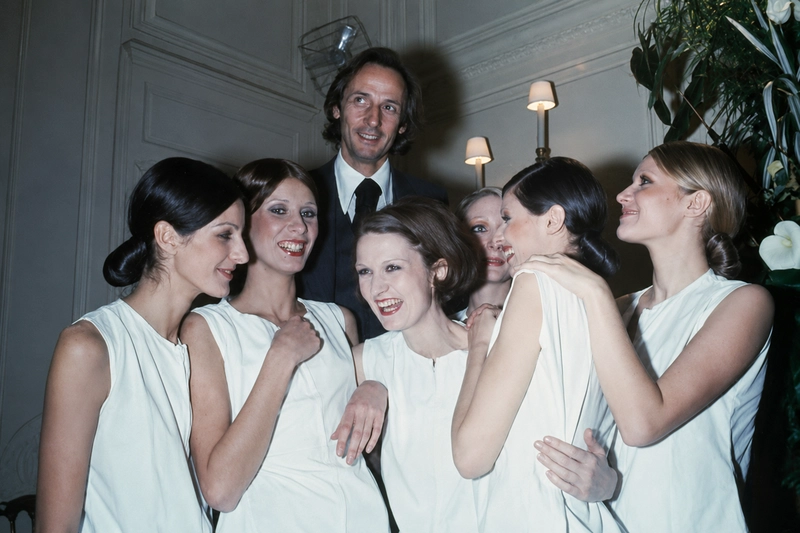
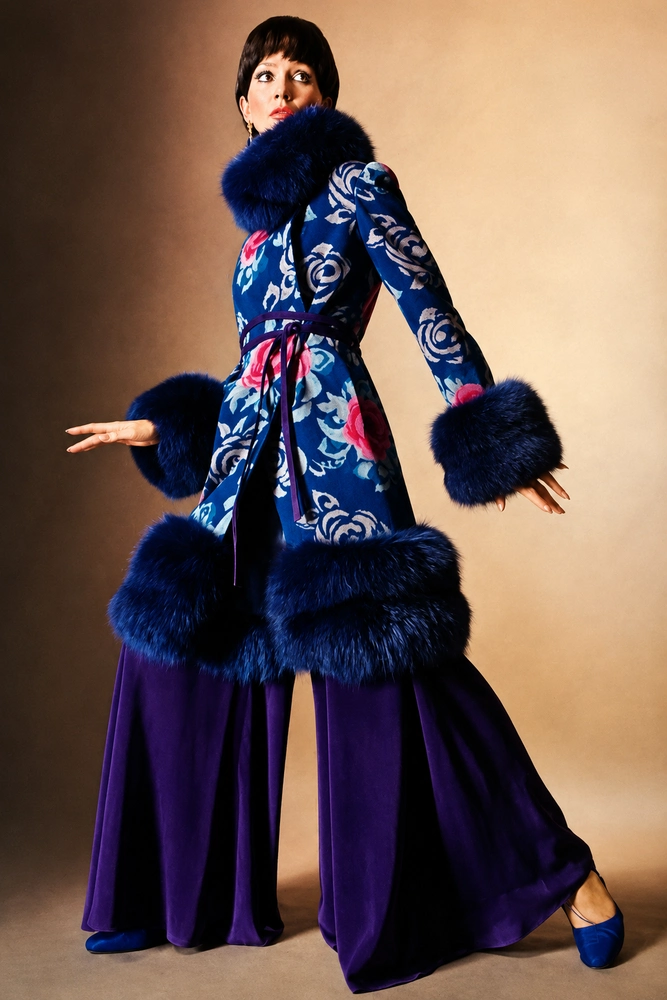
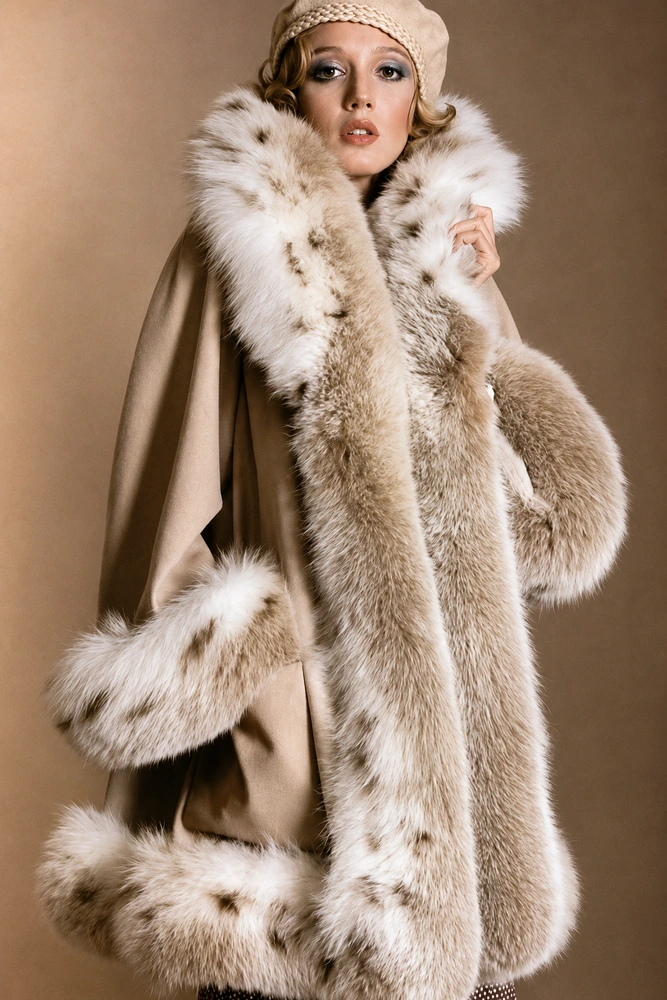
This empathetic approach allowed him to gently guide Dior through the wild stylistic swings of the 1960s and 1970s. While maintaining a quiet, private lifestyle, often seen working in his atelier in a crisp white cotton trench coat reminiscent of Christian Dior himself, Marc Bohan proved he was not immune to the intoxicating energy of pop culture. He simply refined it. His celebrated 1966 collection was deeply influenced by the sweeping cinematic romance of the film Dr. Zhivago. Featuring luxurious fur-trimmed coats, sophisticated military tailoring, and sleek high boots, the collection demonstrated Bohan’s acute grasp of the cultural shift. He masterfully bridged the gap between the stark, space-age minimalism of the mid-sixties and the encroaching romanticism of the decade's end.
Marc Bohan was also capable of pushing boundaries, proving he was no mere conservative traditionalist. His January 1970 collection stirred the pot of fashion criticism with its lavish, unapologetic use of exotic skins. He sent out coats and dresses aggressively trimmed with strips of cobra skin, accessorized with horsehair necklaces, amber, and bold belts. While some critics found the raw, tribal energy startling, comparing the accessories to shaving brushes, it proved Bohan could command the feral, bohemian energy of the seventies.
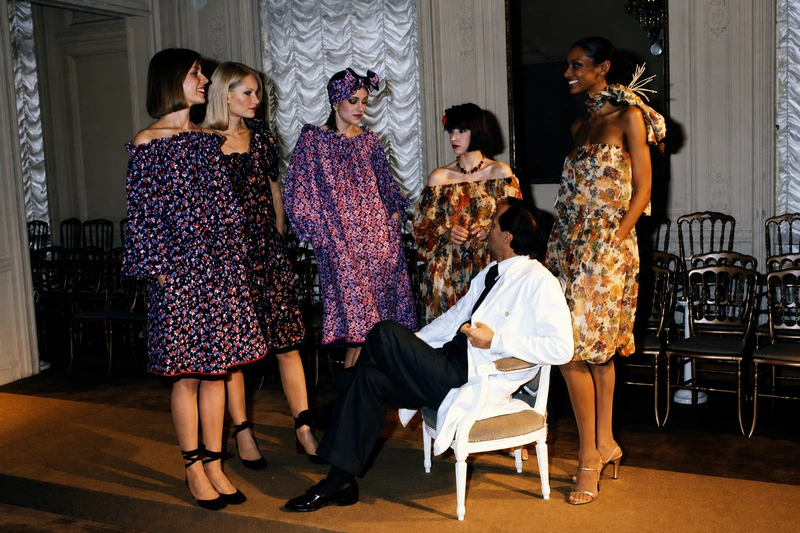
By 1974, his aesthetic had evolved to meet the demands of a modern, liberated woman. The Times critic Bernadine Morris famously likened his collection that year to a "bomb," but in the most complimentary sense. She drew a direct parallel between Bohan’s wide, calf-length dresses, featuring daring, revealing cutouts at the bodice, and Christian Dior’s original, earth-shattering 1947 New Look. Morris noted that Bohan was offering the New Look with modern comfort, effectively reviving the prestige of haute couture at a moment when the industry was rapidly losing ground to the democratized ready-to-wear market.
Bohan’s philosophy of fashion can be distilled into a masterclass on the true nature of luxury. In an industry increasingly obsessed with loud branding and visual shock value, he maintained a rigid standard of subtle refinement. Marc Bohan articulated this perfectly when he noted that everything must appear simple, but never cheap. His ultimate goal was the creation of pure quality, a manifestation of taste that resided in subtlety and elegance. To Marc Bohan, true luxury was inherently unflashy, an intimate secret shared between the garment's creator and its wearer. He lamented that very few people truly understood this distinction, especially as the fashion world hurdled toward the logomania of the late twentieth century.
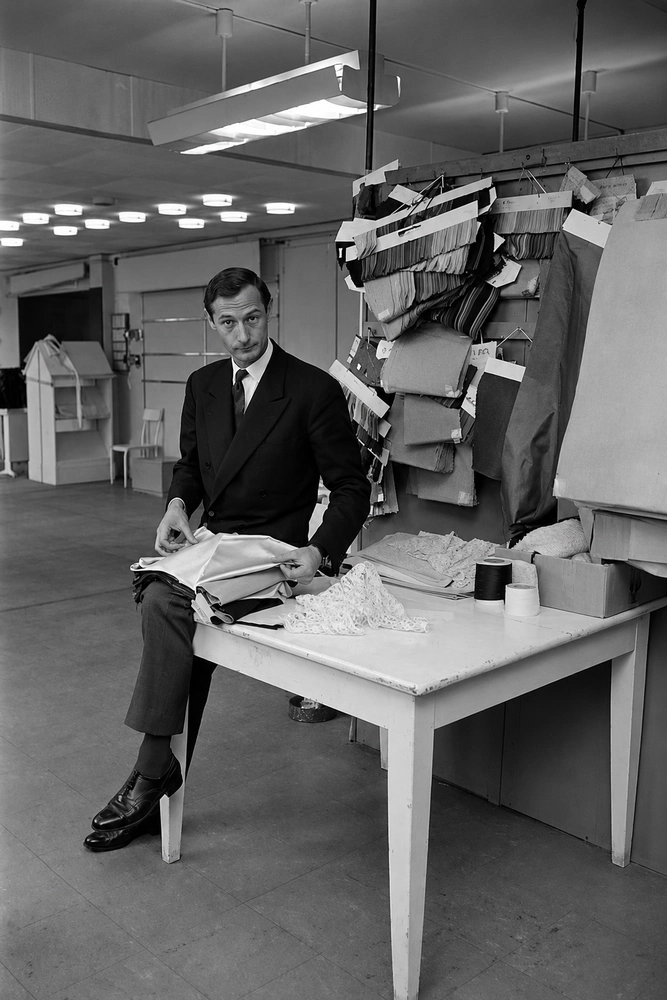
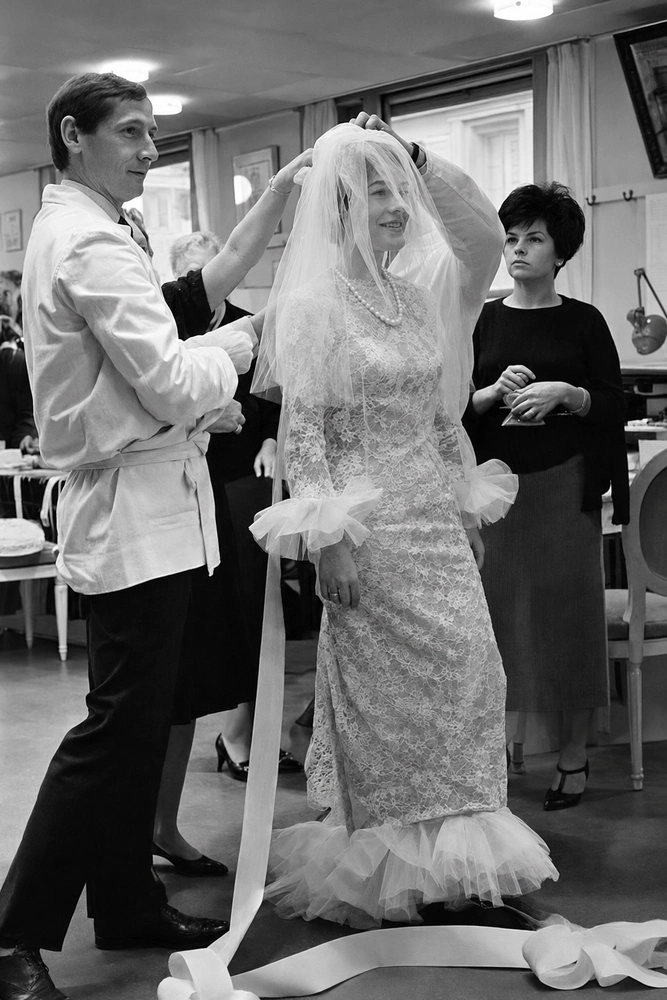
This steadfast dedication to quiet quality resulted in a continuous string of triumphs throughout the decadent 1980s. While other designers chased neon trends and exaggerated power silhouettes, Marc Bohan focused on peerless construction and sumptuous fabrics. The industry’s governing bodies recognized his enduring mastery, awarding him the prestigious Golden Thimble Award, given by international fashion journalists for the most beautiful and innovative collection of the season, in both 1983 and 1988. Even in a decade defined by excess, Bohan proved that restraint was the ultimate form of confidence.
Despite Bohan’s aesthetic triumphs and massive commercial success, including an astonishing 650 million dollars in sales in the United States alone in 1987, equivalent to nearly 1.7 billion dollars today, the tectonic plates of the global fashion business were shifting beneath his feet. The old guard of textile tycoons was dying out, replaced by a new breed of aggressive corporate financiers. Marcel Boussac’s once-mighty cotton empire had been struggling against cheap foreign imports for years. To raise capital, Boussac sold the highly profitable Parfums Christian Dior to the Moët Hennessy group in 1968, severing the lucrative fragrance arm from the couture house.
By 1978, the Boussac conglomerate filed for bankruptcy. The House of Dior, despite its individual profitability, became a pawn in a massive corporate liquidation. It was acquired by Agache-Willot, a textile group that subsequently also collapsed, forcing the French government under François Mitterrand to intervene. Amidst this terrifying instability, Bohan kept his head down, working quietly in the atelier, producing collections that kept the cash flowing, waiting for an influx of investment that never arrived.
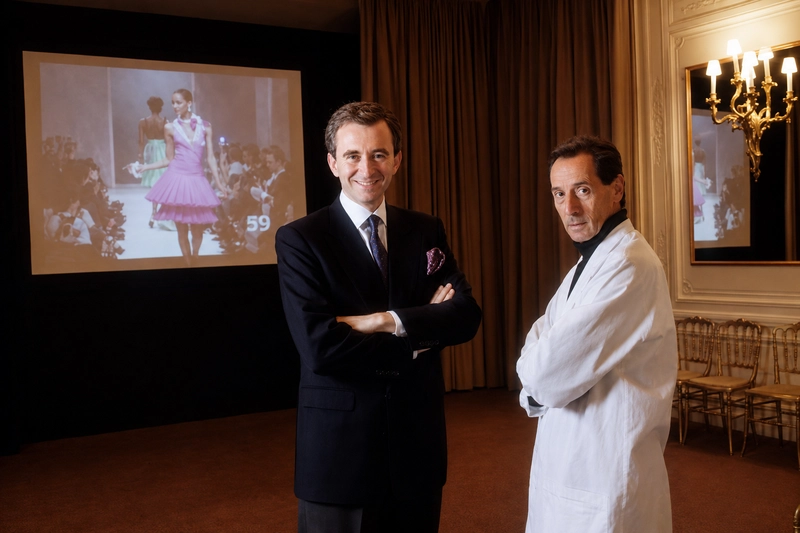
Salvation, and ultimately his downfall, arrived in the form of a young, ruthlessly ambitious businessman named Bernard Arnault. In 1985, Arnault leveraged his family’s wealth and massive bank loans to acquire the Boussac assets, specifically targeting Dior as the crown jewel for what would become his luxury super-conglomerate, LVMH. Arnault did not view fashion merely as the business of selling bespoke dresses; he envisioned a global machinery driven by explosive marketing, provocative runway spectacles, and massive ready-to-wear expansion.
Bohan’s discreet, client-focused approach was suddenly deemed a relic of the past. In 1988, in a move that shocked the Parisian establishment, Arnault fired Marc Bohan. To add insult to injury for the fiercely proud French industry, Marc Bohan was replaced by Gianfranco Ferré, an Italian designer known for architectural bombast. The decision sparked outrage, prompting Yves Saint Laurent’s business partner, Pierre Bergé, to publicly decry the appointment of a "foreigner" as an insult to the French creative spirit. But the die was cast. The era of the designer as a quiet craftsman had ended; the era of the designer as a global superstar had begun.
Bohan’s dismissal was the brutal byproduct of an industry pivoting toward a new economic reality. Critics like Woody Hochswender of The Times observed that while Bohan had brilliantly maintained Dior as the world's premier purveyor of bespoke haute couture, his foray into ready-to-wear in 1968 had never captured the explosive, youthful energy required to dominate the new retail landscape. Behind every corporate coup in fashion, there is a mandate to move merchandise on a massive scale, and Bohan’s subtle designs lacked the aggressive, instantly recognizable visual identity that the new conglomerate era demanded.
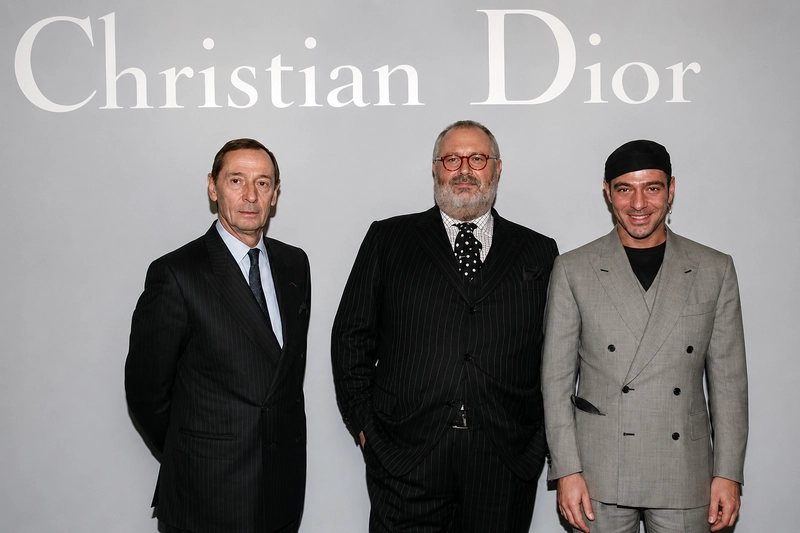
Following his departure from Dior, Marc Bohan spent two years in London attempting to revive the struggling house of Norman Hartnell, the traditional dressmaker to the British Royal Family. He subsequently designed under his own name, but the shifting tides of the 1990s were largely incompatible with his philosophy of quiet grace. He eventually retired, living out his years far from the glaring flashbulbs of the industry he had once quietly ruled.
Today, despite his monumental thirty-year tenure and the billions of dollars of revenue his work generated, Marc Bohan remains tragically under-recognized outside the insular circles of fashion historians. He operated under the belief that haute couture was a laboratory for style, a discipline that would survive only as long as it respected the women who paid for it. He eschewed the cult of personality, insisting until the end that success in fashion is never the result of one person alone. Marc Bohan at Dior may not have rewritten the vocabulary of fashion with the radicalism of his predecessor or his successors, but he did something far more difficult: he kept the language alive, ensuring that the poetry of Christian Dior could be spoken flawlessly for a generation.
Advertisement