What if Marc Bohan at Dior was the house’s most human rhythm where couture became warm enough, tender enough, emotional enough to feel like care?
Marc Bohan At Dior Taught Garments To Hold A Body Gently
What if Marc Bohan at Dior was the house’s most human rhythm where couture became warm enough, tender enough, emotional enough to feel like care?
June 4, 2026


Marc Bohan at Dior always feels so endearing to revisit. His work reminds us that softness can be intelligent, that restraint can be erotic, that continuity can be radical when it protects a house from becoming hollow. In his hands, Dior became a living atmosphere, a place where grandeur learned to inhale and exhale with the woman inside it. He did not chase modernity as a bright new costume; he let it enter slowly, warmly, almost like sunlight moving across an old room. Through him, couture became more about teaching the gaze how to be tender.
Marc Bohan Entered Dior With The Instinct Of A Couturier Who Knew How To Listen
Marc Bohan’s Dior story came from the old couture world, that vanished republic of fittings, ateliers, patronage, etiquette, whispered approvals, and ruthless proportion, where fashion was learned through the hand before it became spectacle, through the client before it became image, through social instinct before it became theory. Bohan’s early passage through Robert Piguet, Edward Molyneux, Madeleine de Rauch, Jean Patou, and eventually Dior’s London operation gave him an education in the deeper machinery of elegance: the choreography of a sleeve, the moral weight of a seam, the diplomatic temperature of a neckline, the way a dress could protect a woman’s composure while sharpening her presence in a room that already believed it knew her.
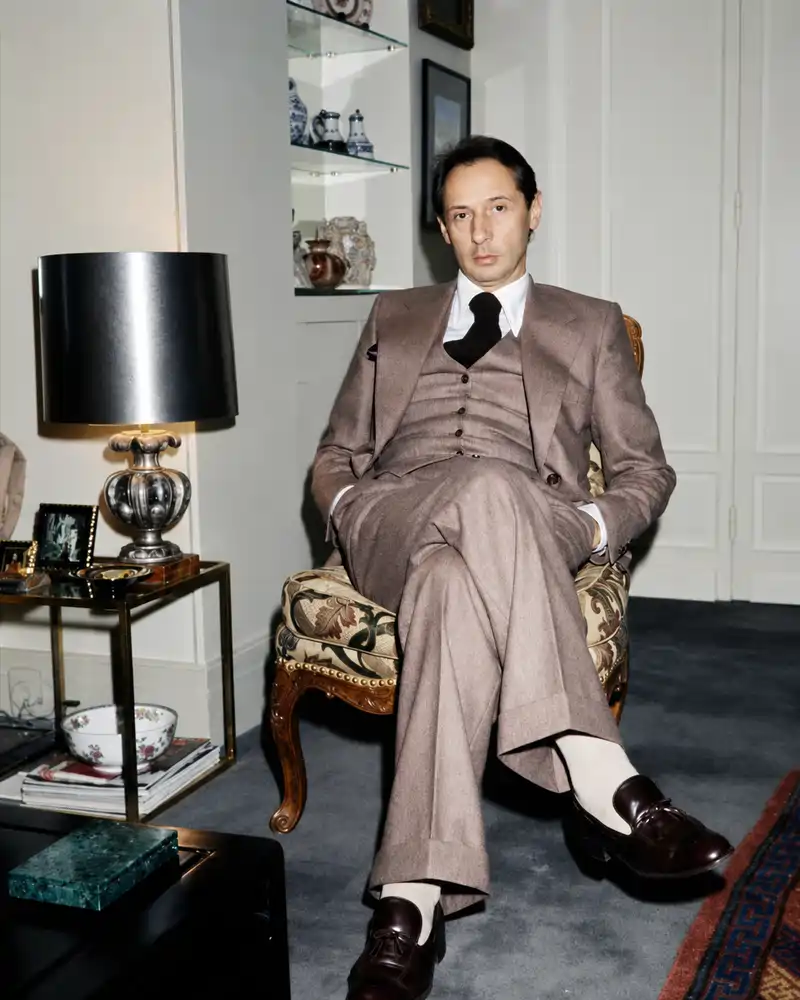
This early formation matters because Marc Bohan’s Dior career was never the fantasy of a designer descending upon a great house with the hunger to stamp his name across every surface. His power was more alchemical. He entered fashion through the knowledge that couture is a form of social anthropology as much as decorative art. A couturier observes how women sit, how they receive compliments, how they carry fatigue, how they step from cars, how they negotiate ceremony, how they age inside public attention, how they desire beauty and authority at once. In that sense, Bohan’s greatest material was the woman’s own life, treated as a sacred and complicated textile.
To understand Marc Bohan for Dior, one must begin with this instinct of listening. Marc Bohan did not listen passively. He listened like an architect measuring an invisible building. The woman came to him with a public role, a body, a private mythology, a fear of exposure, a hunger for allure, a need for correctness, a wish for transformation, a schedule full of dinners, premieres, charities, coronations, embassies, yachts, salons, and afternoons that required clothes able to move across different registers of power. Marc Bohan’s genius lay in reading all of this and translating it into silhouettes that seemed less imposed than discovered. The garments appeared to come from the woman herself, as though Dior had found the exact visual language already waiting beneath her skin.
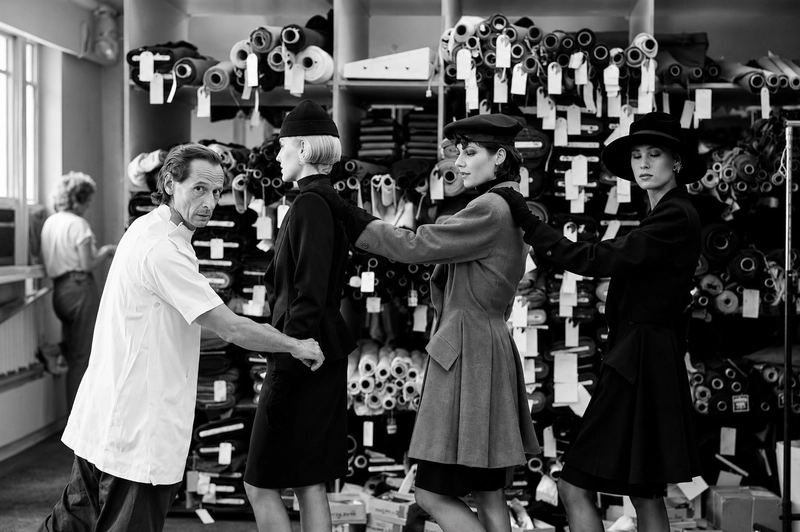
His often remembered principle, “N’oubliez pas la femme,” deserves to be read as an entire aesthetic system. It means that fashion begins with the woman rather than with the designer’s ego; it means that the garment receives its highest meaning through the body and situation it serves; it means that modern couture can remain exquisite while gaining psychological accuracy. At Dior, this principle became a form of creative ethics. Marc Bohan respected the woman enough to let her remain legible. He gave her beauty, ceremony, and polish, yet he allowed her own temperament to breathe through the garment.
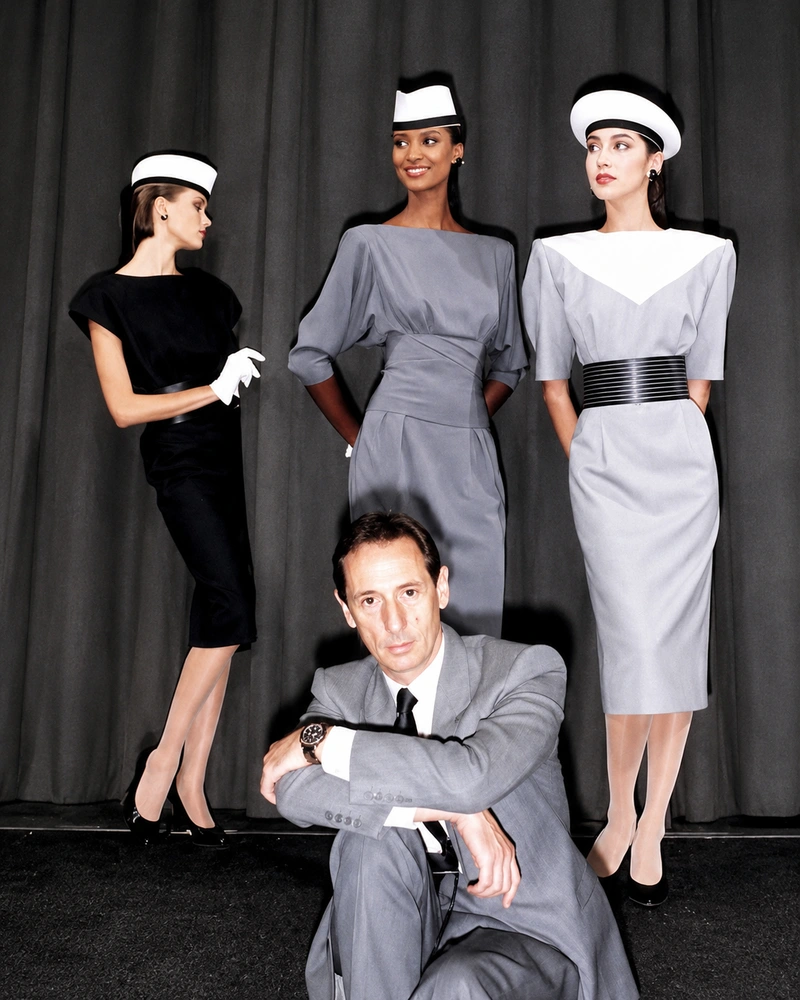
His arrival at Dior London in 1958 sharpened this gift of translation. London taught him how a Parisian house could move through another social climate, another clientele, another rhythm of consumption and public taste. It gave him distance from Paris and intimacy with Dior at the same time, a rare double vantage point. He could see the house as an inheritance and as an exportable language, as a couture temple and as a living business with different thresholds of access. This experience would later become essential, because Marc Bohan’s long Dior reign was never confined to the sacred inner chamber of haute couture. He expanded the house through ready-to-wear, menswear, logo, boutique culture, and the wider vocabulary of modern luxury. London prepared him to understand Dior as a world.
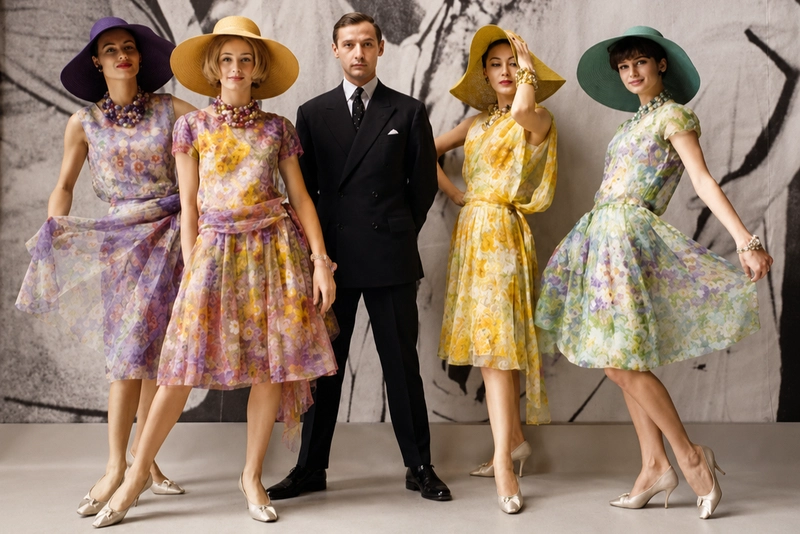
When Marc Bohan moved into the Paris creative chair, he carried an unusual calm. Christian Dior had created a postwar myth so powerful that every later gesture at the house had to converse with it. Yves Saint Laurent had brought an electric young sensitivity, a charged fragility, a sense of generational rupture. Bohan entered with another kind of voltage: cultivated permanence. His personality as a designer was neither theatrical withdrawal nor noisy conquest; it was exacting, courtly, lucid, and almost botanical, like a gardener who understands that a rose house survives through pruning as much as blooming. He saw which parts of Dior needed preservation, which parts needed air, which parts could be grafted into the new decade, and which parts could grow quietly until the entire institution became more resilient.
That is why his work resists superficial readings of quiet elegance. Quiet, in Marc Bohan’s hands, was a complex technical register. Quiet meant controlled seams, moderated volume, a disciplined shoulder, an intelligently placed ornament, a dress with enough grace to enter a palace and enough humanity to be worn beyond the photograph. Quiet meant the designer could retreat just enough for the woman to advance. It meant the house could modernize without theatrical self-announcement, could seduce through continuity, could build long-term desire through trust.
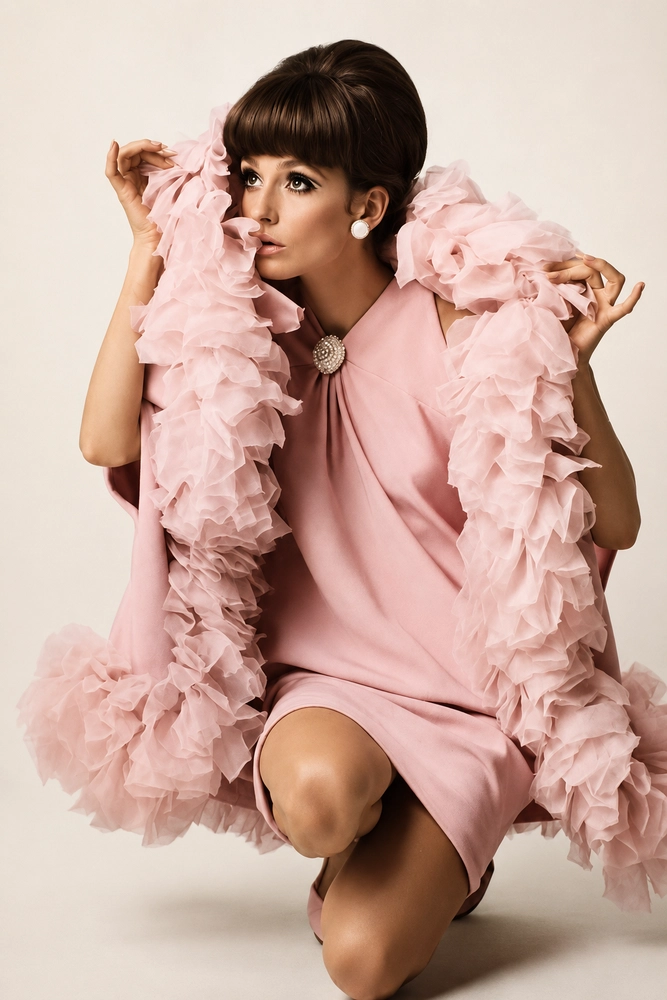
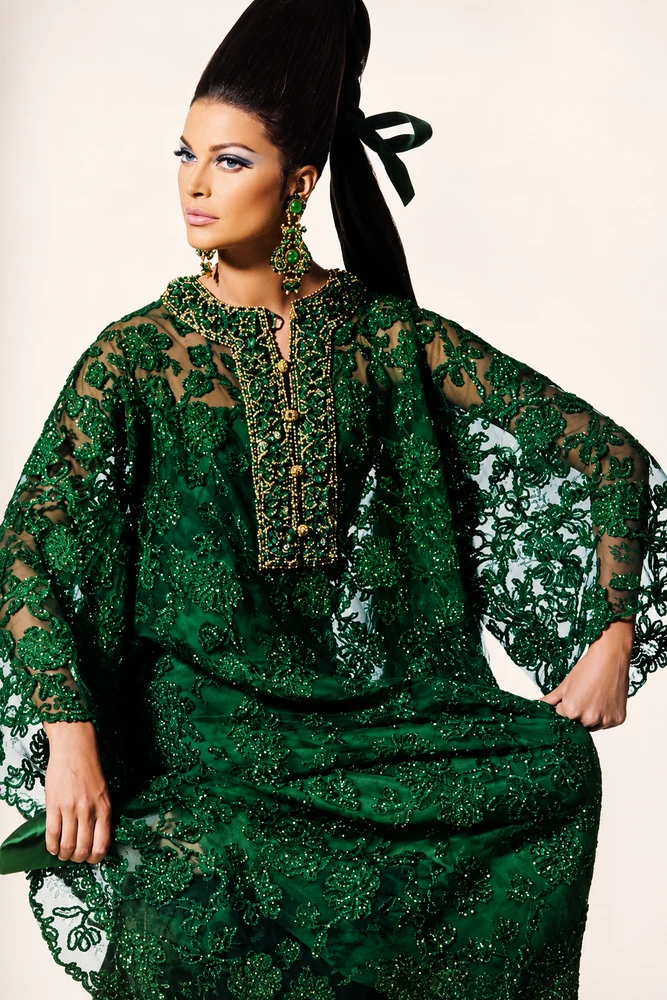
His clothes did not sit on the woman like monuments; they settled around her like an atmosphere. They gave her a form of elegance that felt cultivated over years, as though the body had been trained by music, etiquette, books, gardens, travel, and memory. In an era that increasingly rewarded disruption, he cultivated the far more difficult art of inevitability. A Marc Bohan look often feels as though it could only exist in that exact proportion, that exact fabric, that exact social temperature. The dress becomes fate made wearable.
The Long Dior Reign Turned Creative Succession Into Institutional Seduction
Marc Bohan’s reign at Dior stretched from 1961 to 1989, nearly three decades of creative stewardship that transformed the house’s history from a sequence of brilliant episodes into a sustained architecture of elegance. Duration, in fashion, can sound like a bureaucratic measurement, yet inside couture it becomes something more intimate and formidable. A long reign allows a designer to shape the house’s internal weather. Marc Bohan influences the atelier’s reflexes, the client’s expectations, the rhythm of fittings, the commercial imagination, the acceptable margins of novelty, the emotional contract between brand and woman. Marc Bohan’s Dior existed through this slow accumulation of trust, season after season, hem after hem, collection after collection, until his presence became less a chapter than a climate.
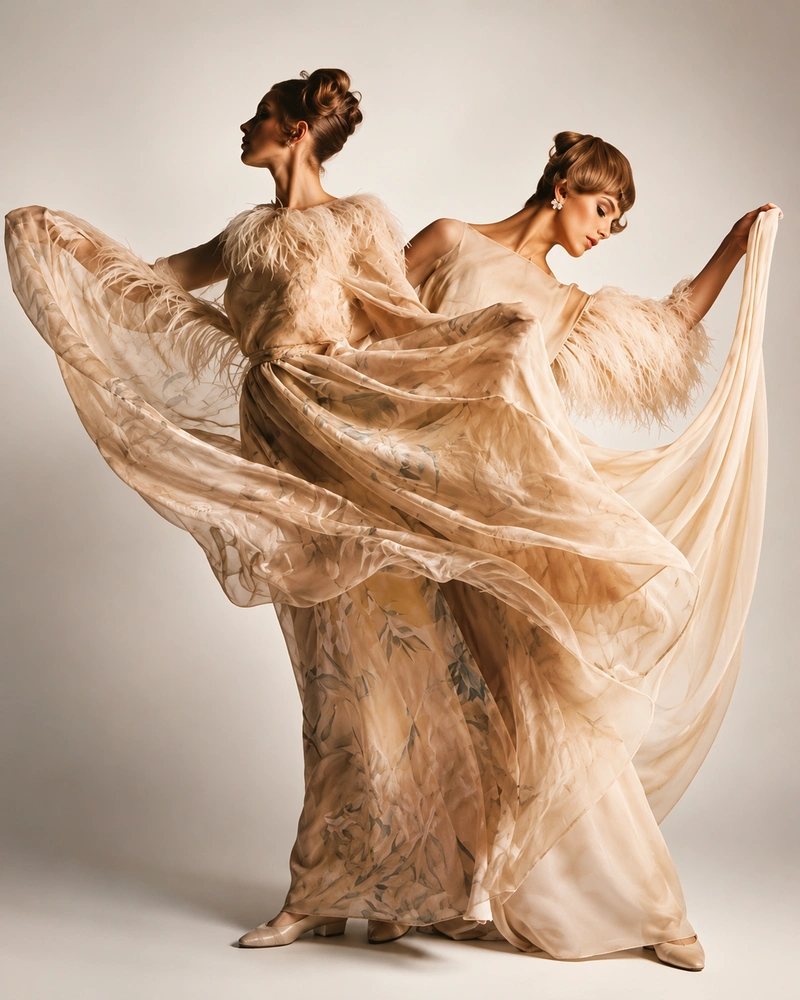
The beginning of this reign came from delicate succession. The house had already experienced the shock of Christian Dior’s death and the volatile brilliance of Yves Saint Laurent’s early leadership. When Marc Bohan assumed command, Dior required more than a designer with taste. It required someone who could calm the institution, steady the clients, respect the atelier, answer the press, preserve the house’s symbolic capital, and guide the brand into a world where couture’s old certainties were beginning to shift. Marc Bohan entered the role with the rare understanding that survival at a great house depends upon emotional continuity as much as aesthetic invention.
Yet Bohan’s expansion was never crude multiplication. It had grammar. Couture remained the sacred center, the site where Dior’s highest symbolic authority was renewed. Around it, he allowed other expressions to grow, each one carrying a different emotional function. Ready-to-wear offered immediacy and modernity. Menswear extended Dior’s sartorial address into masculine elegance. Baby Dior turned the house into inheritance, family, tenderness, and generational taste. Dior Oblique translated the house name into pattern, rhythm, recognition, and almost hypnotic repetition. These gestures made Dior more structurally complex while preserving the perfume of refinement that defined the brand’s myth.
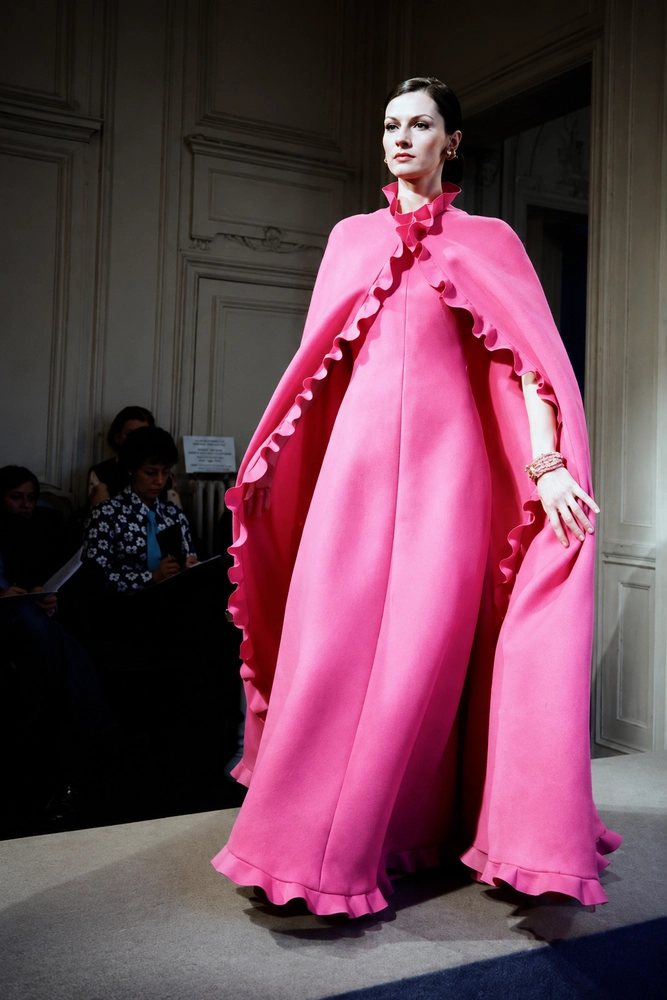
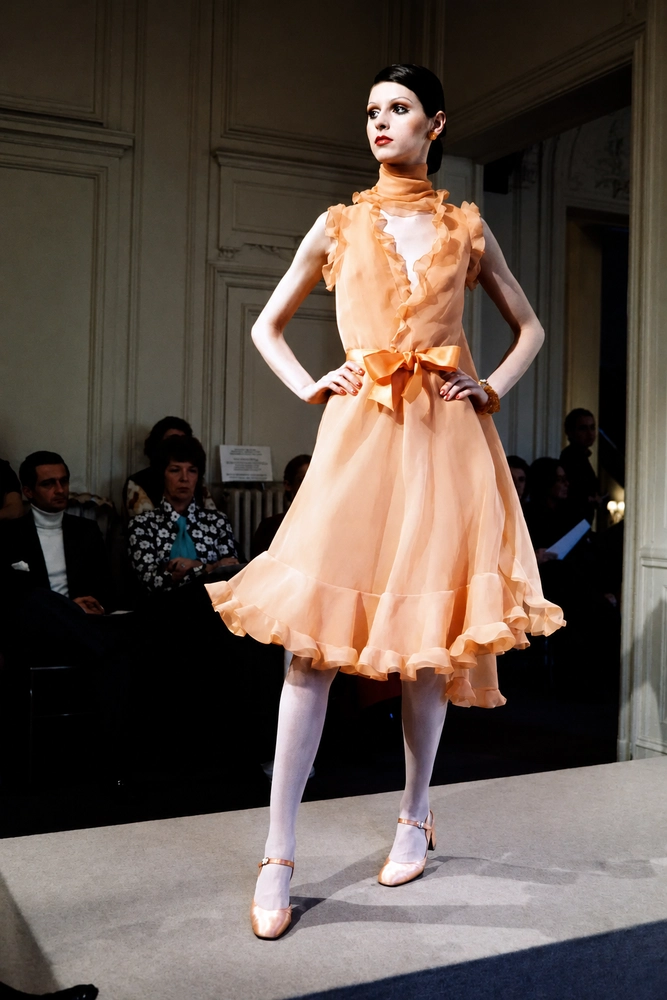
His long tenure also gave Dior the luxury of seasonal memory. Fashion houses often speak of heritage, yet heritage becomes convincing only when it has been actively maintained through time. Marc Bohan maintained Dior through repetition with variation, through continuity with new inflections, through garments that acknowledged the life outside the atelier while preserving the rigor inside it. Marc Bohan knew that a house code survives when it can be touched by a changing era without dissolving. This knowledge became especially vital during the 1960s and 1970s, when the cultural body of fashion was moving faster, loosening class rituals, shortening distances between street and salon, giving young women a greater claim to visibility and movement.
The couture world around him was undergoing deep mutation. The older image of the private client, seated in controlled expectation inside the couture salon, now existed beside boutique culture, photography, magazine acceleration, youthquake silhouettes, and the rising prestige of ready-to-wear. Marc Bohan absorbed this transformation with remarkable composure. Marc Bohan treated it as a current that could be filtered through Dior’s own language.
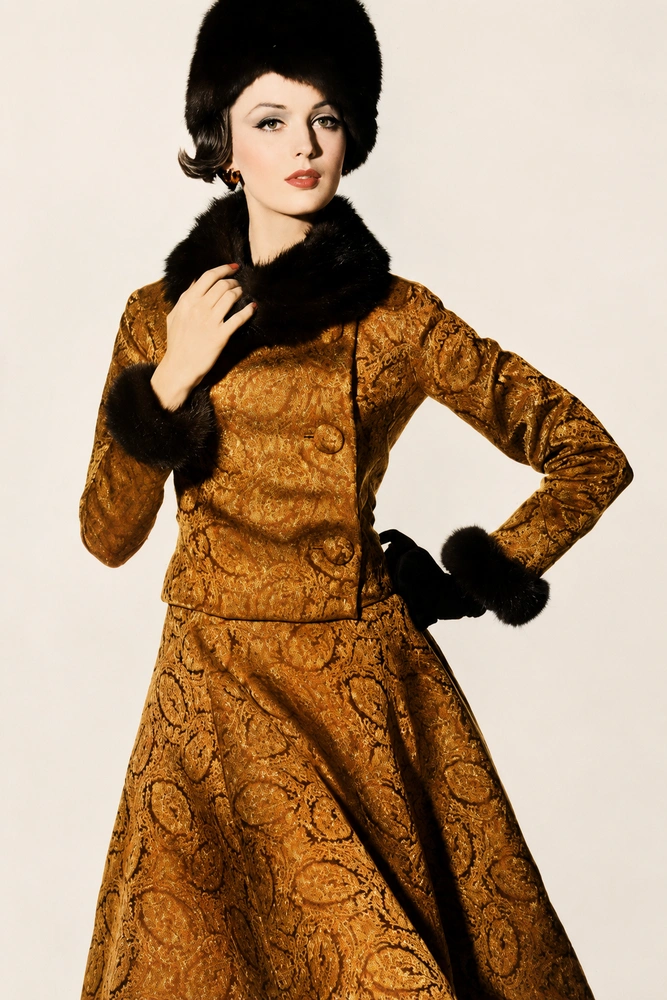
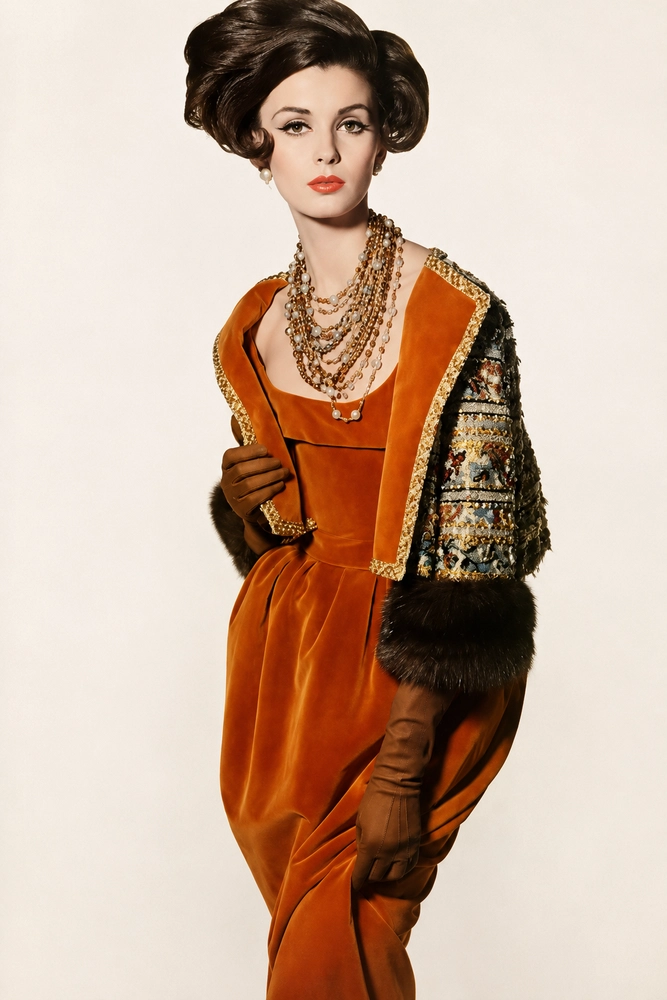
This ability to metabolize change explains why Bohan’s reign feels increasingly important in today’s luxury landscape. Contemporary fashion often worships archive, logo, heritage, creative continuity, and multi-category expansion. Marc Bohan understood these forces early. He worked before luxury fully became the global megasystem we know today, yet his Dior contained many of its later principles: the house as ecosystem, the archive as emotional capital, the logo as portable mythology, ready-to-wear as cultural bloodstream, couture as symbolic crown, and the client as the living proof of value.
The Slim Look Became A Theory Of Modern Femininity
The Slim Look, introduced through Bohan’s first Dior couture collection in 1961, should be treated as a philosophical gesture as much as a silhouette. It was his answer to a central question: how could Dior’s flower-woman inheritance enter the modern decade with vitality, grace, and psychological truth? The answer came through line. Bohan narrowed, refined, softened, and clarified. Marc Bohan drew the eye upward and downward rather than outward. He made the body feel longer, the garment more mobile, the presence more self-possessed. Where Dior’s earlier postwar abundance had bloomed with architectural fullness, Bohan’s Slim Look carried a more urbane tension, a vertical elegance touched by youth, intelligence, and control.
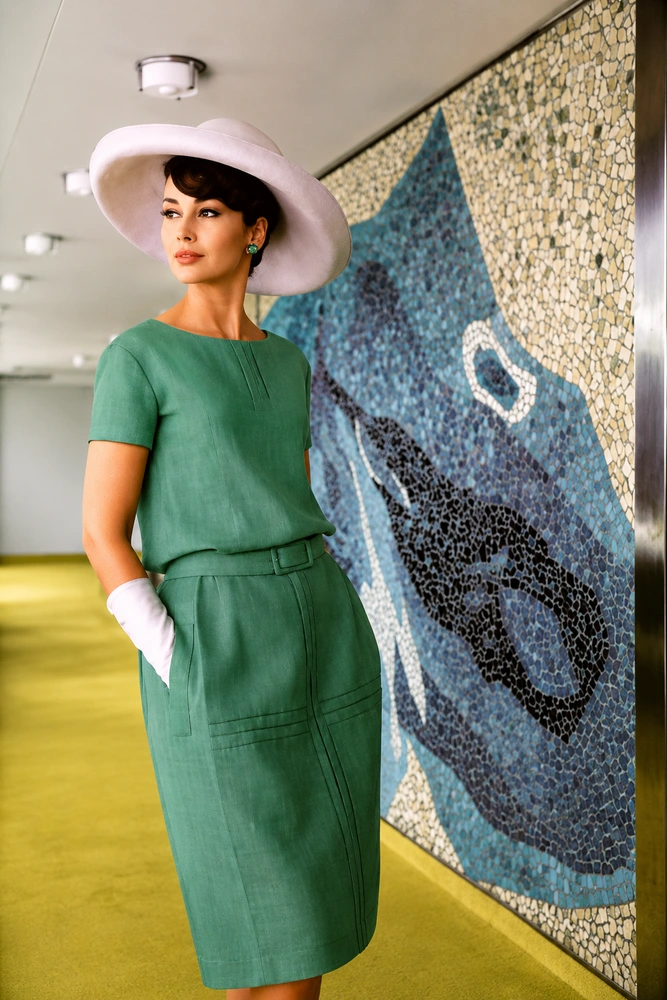
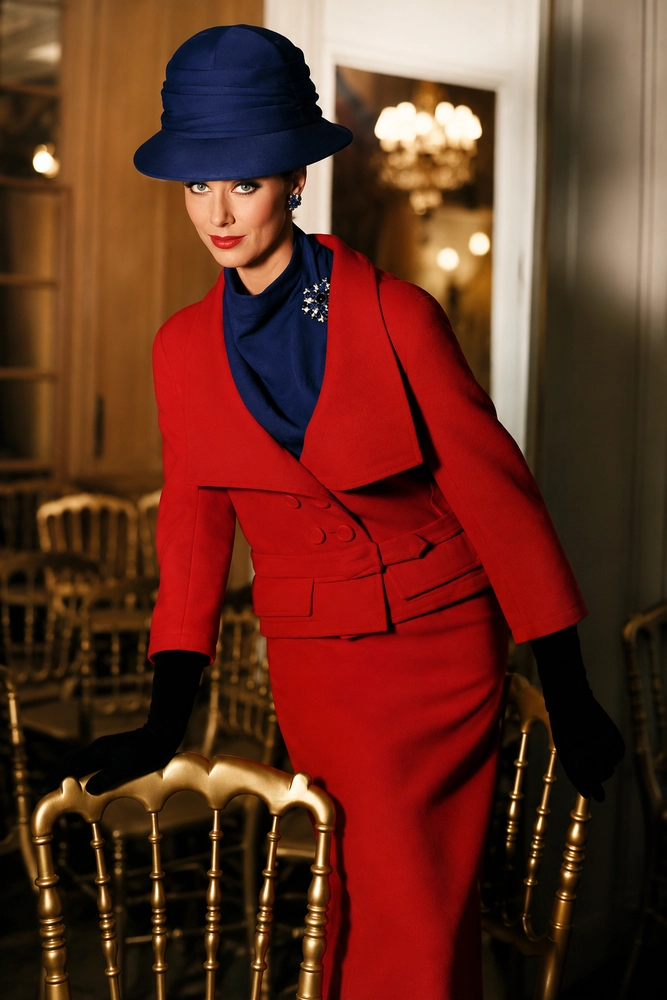
This was modern femininity as edited splendor. The woman of the 1960s was moving through a world charged by new freedoms, new professions, new images, new appetites, new speeds of communication, and new anxieties of public life. She needed clothes that could preserve elegance while giving her movement. She needed a dress with air inside it, a suit that could sharpen without imprisoning, a coat that could carry the dignity of couture into the kinetic space of the city. Bohan’s Slim Look answered that need by transforming Dior’s grandeur into a more navigable form.
His control of proportion gave the look its authority. The shoulder in Bohan’s Dior often behaved like a diplomatic instrument, softened enough to flatter, shaped enough to command. The skirt carried discipline. The waist remained important as memory and suggestion, yet it became less tyrannical, less theatrical, more integrated into the whole movement of the body. This difference gives his work its rare intimacy. Bohan’s garments seem to understand that the modern woman desires beauty that cooperates with her life.
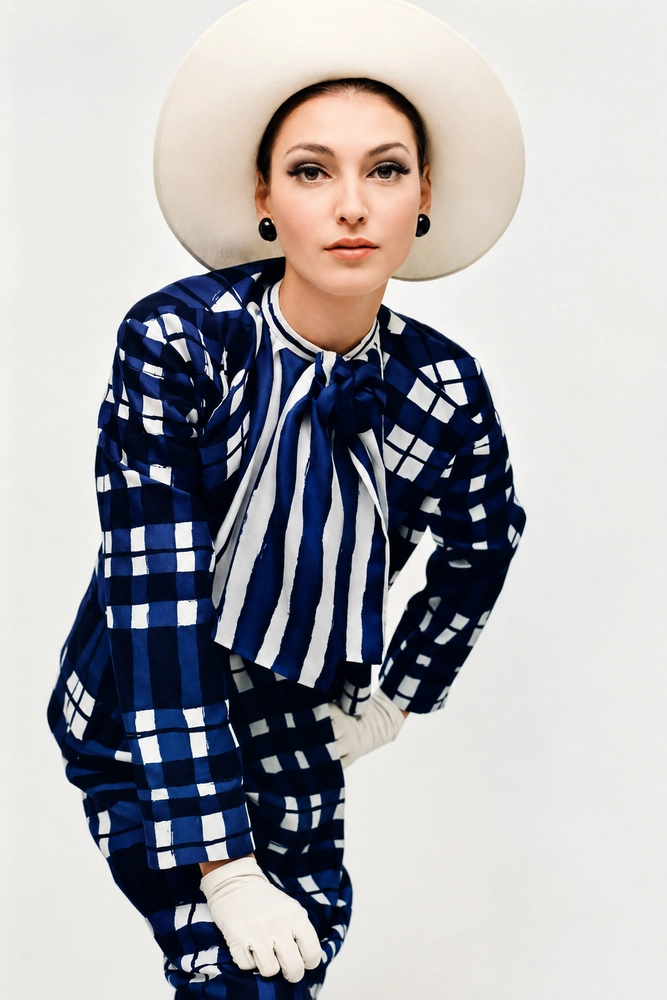
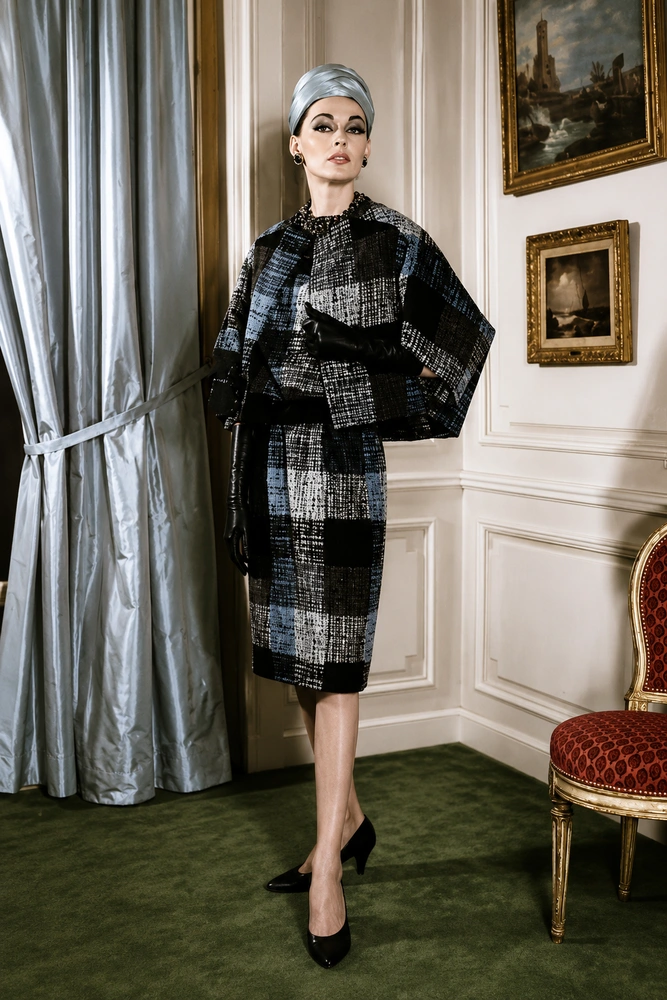
In academic terms, the Slim Look can be read as a negotiation between couture’s symbolic capital and the changing semiotics of feminine modernity. The garment had to signify Dior, refinement, Paris, atelier, class, allure, while also signifying contemporary relevance. Marc Bohan achieved this through subtle structural shifts rather than iconoclastic rupture. Marc Bohan allowed the Dior woman to become more linear, more agile, more socially mobile, while preserving the visual codes that made her legible as Dior.
The seduction of the Slim Look lies in its restraint. Restraint, in Bohan’s hands, was charged with pleasure. Marc Bohan understood that the removal of excess can heighten desire, because the eye begins searching more intensely for the small event: the angled neckline, the controlled flare, the sudden gleam of satin, the exact fall of a sleeve, the button placed like punctuation, the skirt line that turns movement into music. His clothes drew the viewer closer. They rewarded concentration. They made elegance an experience of attention.
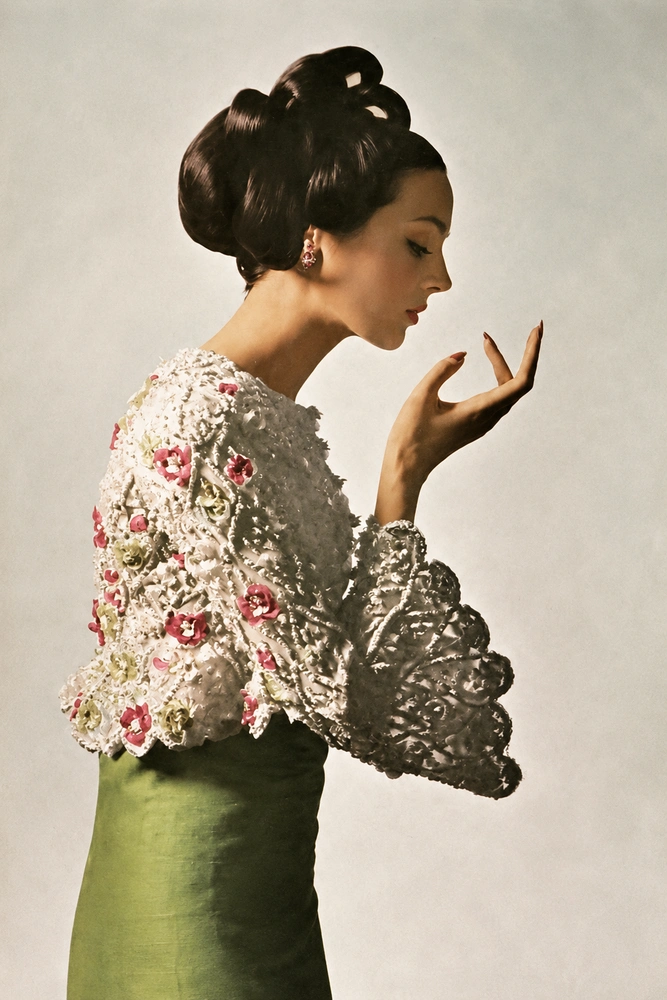
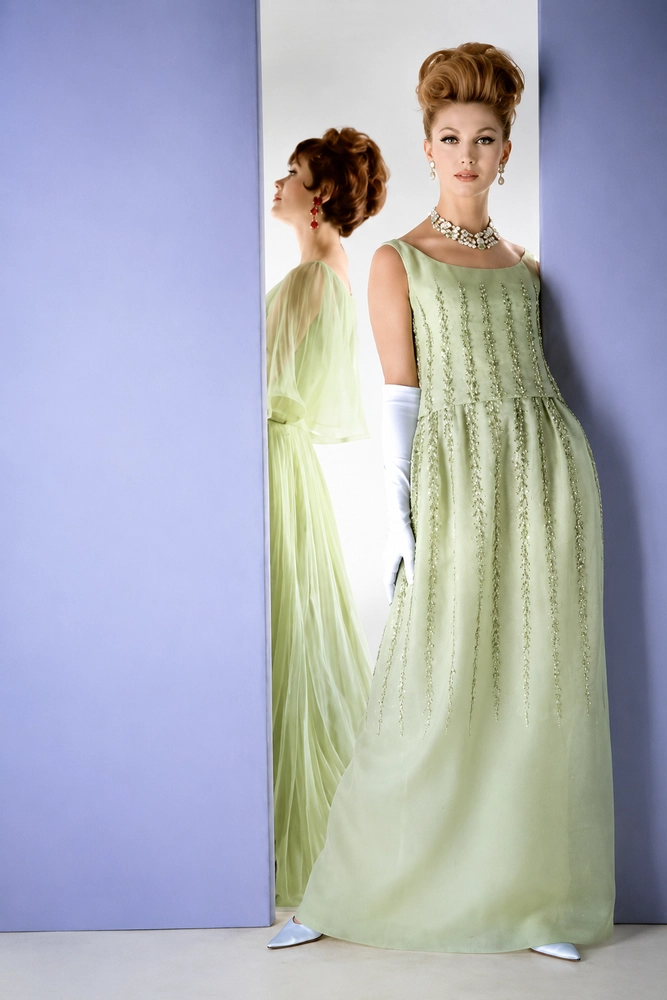
His eveningwear deepened this argument through radiance. He could make a gown opulent while keeping it readable, regal while keeping it alive, formal while allowing the woman inside to remain vivid. Embroidery under Bohan catches the eye in measured pulses, creating an effect of ceremonial light. This made his gowns especially powerful for women whose public images required poise under extreme visibility.
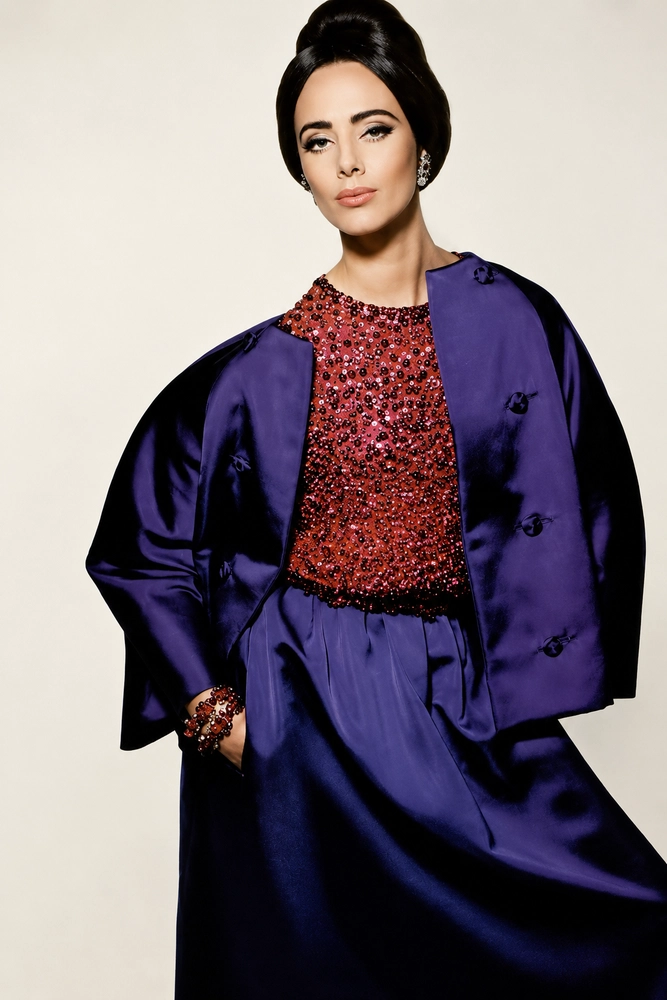
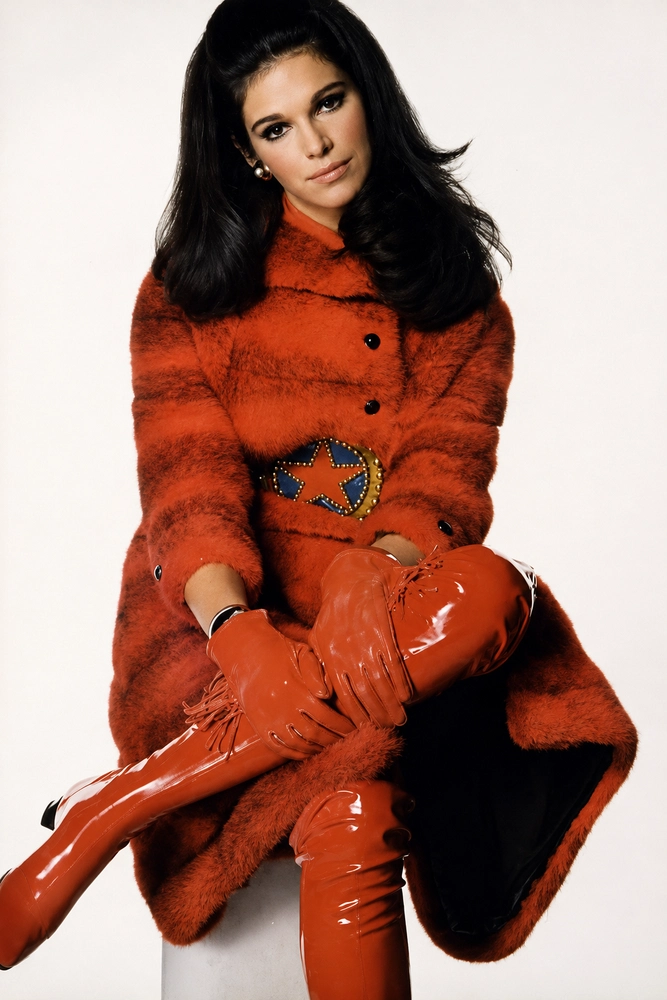
His daywear deserves equal attention. The day dress is often where a couturier’s intelligence becomes most exposed, because the garment must manage utility, charm, proportion, and social meaning with little theatrical assistance. Bohan’s day dresses, suits, and coats reveal his sensitivity to lived elegance.Bohan’s relationship to modernity was never limited to hemline or youthfulness; it also appeared in the way he allowed pattern, surface, and silhouette to absorb new visual energies. He was classical in his respect for proportion and modern in his understanding of visual circulation.
He seemed to ask: what does this woman need to become more exact in the eyes of the world? What pressure should the garment absorb on her behalf? What line will give her greater ease? What ornament will serve her presence instead of overwhelming it? These questions give his Dior a humanist dimension. The clothes are beautiful because they are attentive.
Marc Bohan Turned The Maison Into A Living Luxury System
Marc Bohan helped transform Dior into a system of desire, a house capable of speaking through couture, boutique, ready-to-wear, menswear, children’s wear, fragrance associations, accessories, logo, and lifestyle. This expansion did not dilute the house’s aura; it multiplied the ways that aura could be encountered. Bohan’s Dior became a world with thresholds at different levels of intimacy and access.
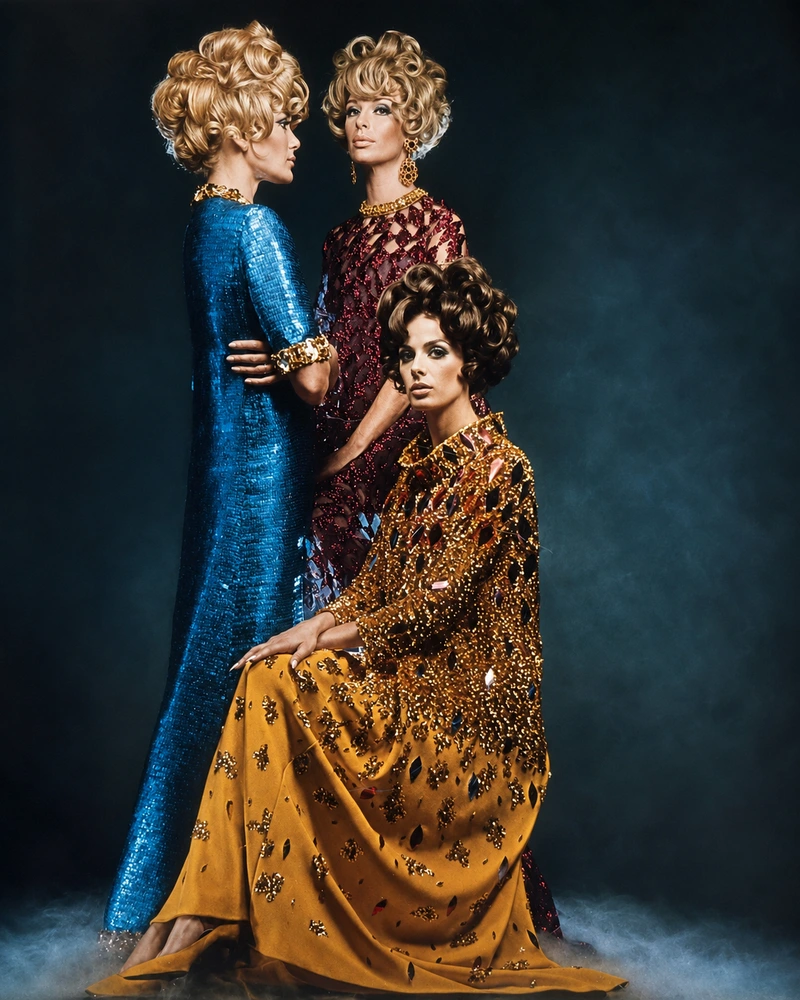
Miss Dior, launched as a ready-to-wear line in 1967 under Bohan’s authority, marks one of the clearest turning points in this transformation. The name already carried emotional perfume through the Dior universe, yet the ready-to-wear project gave it a new cultural body. Miss Dior spoke to a younger woman, a woman touched by the tempo of the 1960s, a woman who wanted Dior with a more immediate rhythm. She wanted clothes that could enter life faster, garments with boutique energy, silhouettes with movement, pieces carrying the house’s polish through a less ceremonial mode of dressing. Through Miss Dior, Bohan allowed Dior to step into modernity with elegance intact.
The importance of Miss Dior lies in its translation of couture values into a more circulating form. Haute couture is singular, intimate, and ceremonially slow; ready-to-wear is social, repeatable, distributed, and image-friendly. By supporting this shift, Bohan recognized that Dior’s future depended upon the creation of new forms of proximity. A woman might dream of couture, wear ready-to-wear, buy into the mythology through a boutique, recognize herself in the name, and participate in the house without entering the old couture economy. This was luxury becoming modern through gradation, through layers of access, through a subtle widening of the dream.
The line also suggests Bohan’s sensitivity to generational identity. Miss Dior carried youth, motion, curiosity, and a changing relation to public life. Her clothes needed wit, velocity, and urban charm.
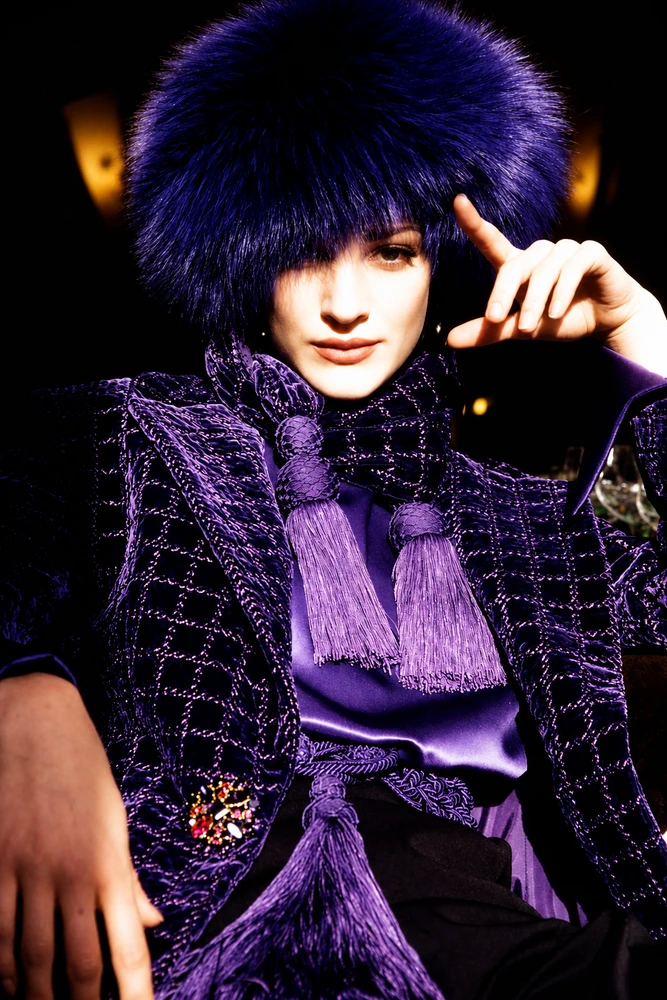
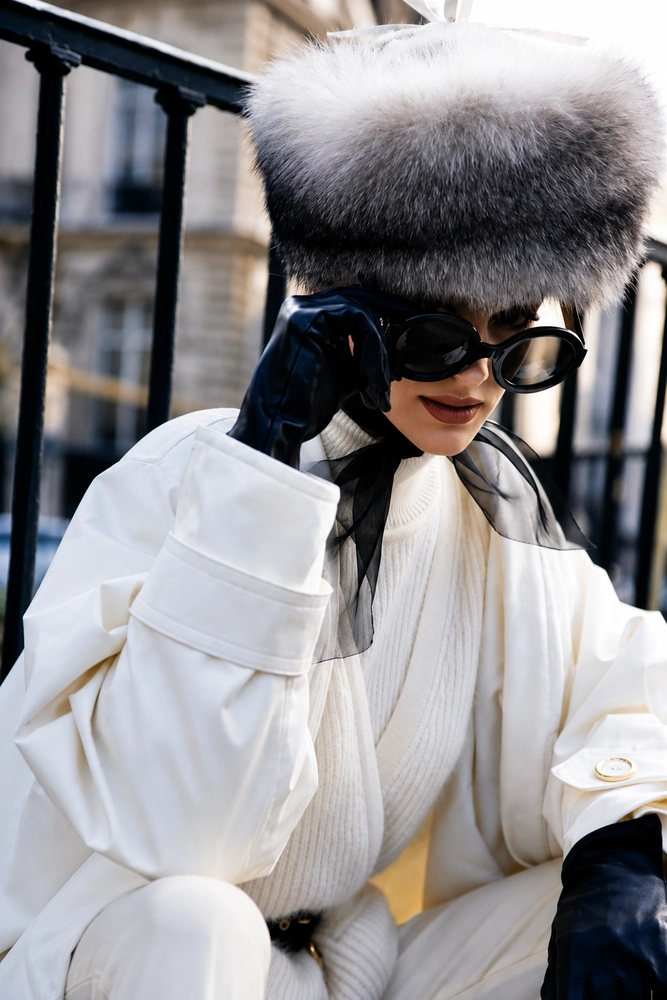
Christian Dior Monsieur, developed during his reign and associated with the Spring-Summer 1970 Boutique Monsieur collection, opened another field of meaning. Menswear brought Dior’s elegance into masculine presentation, allowing the house to broaden its sartorial authority. The creation of a men’s line under Bohan reveals a designer attentive to the complete social world around Dior, not merely the woman’s wardrobe in isolation. Men’s elegance, boutique culture, tailoring, and lifestyle all became part of the house’s expanding vocabulary.
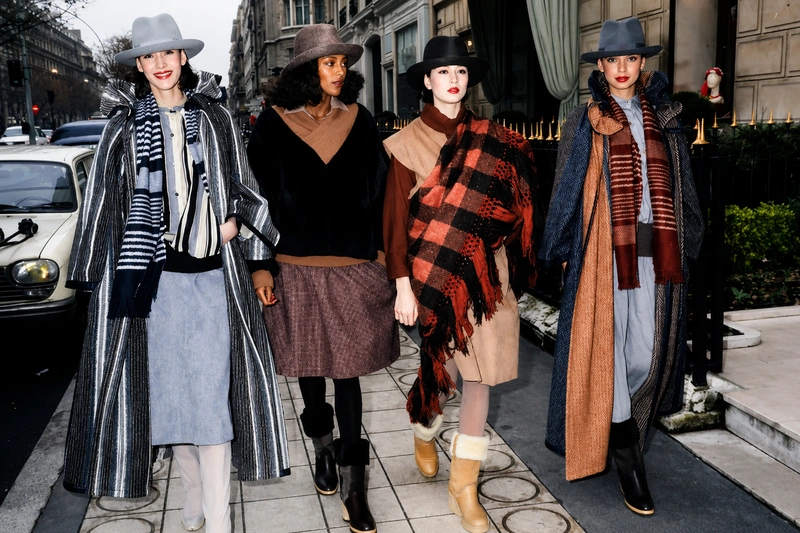
Then comes Dior Oblique, conceived by Bohan in 1967, one of the most important and visually durable ideas of his period. Oblique deserves serious analysis because it reveals the commercial clairvoyance inside Bohan’s supposedly discreet sensibility. A repeated logo motif transforms a name into pattern, a pattern into recognition, recognition into desire, and desire into portable identity. Oblique gave Dior a visual system that could travel across surfaces and decades. It anticipated the later luxury economy in which monograms, archive motifs, and house signatures would become objects of cultural fascination.
Oblique is especially interesting because it creates a counterpoint to Bohan’s restrained couture. His clothes often whispered through line, while Oblique spoke through repetition. Together, they show the range of his understanding. He knew the intimate codes of the salon and the public codes of the market. He could make a gown for the singular body and a motif for collective recognition. He could serve a woman in private fitting and speak to a global audience through graphic identity. This dual intelligence makes his Dior reign astonishingly modern.
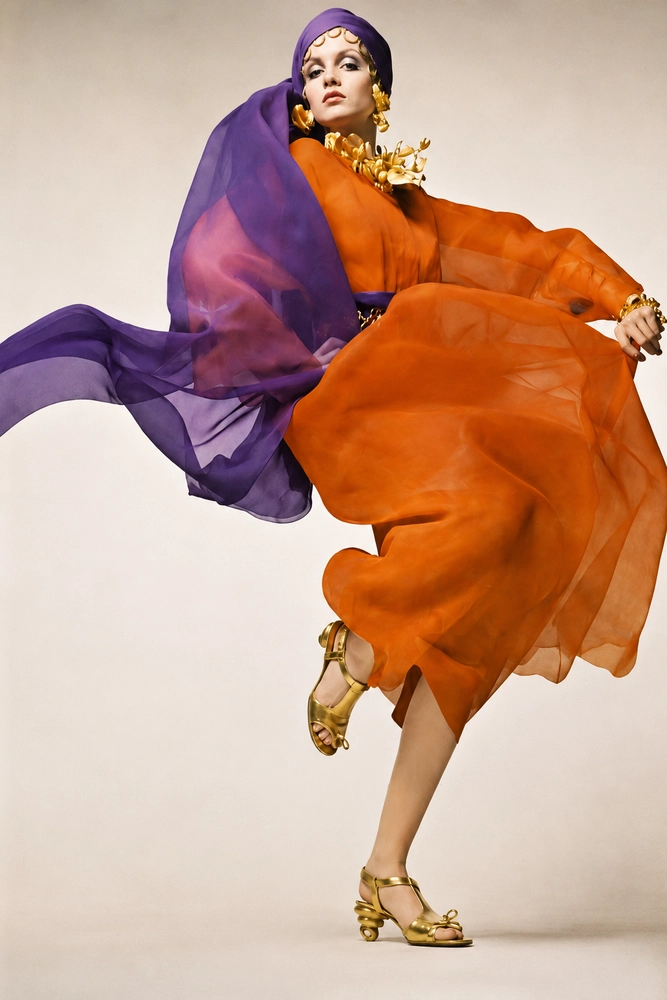
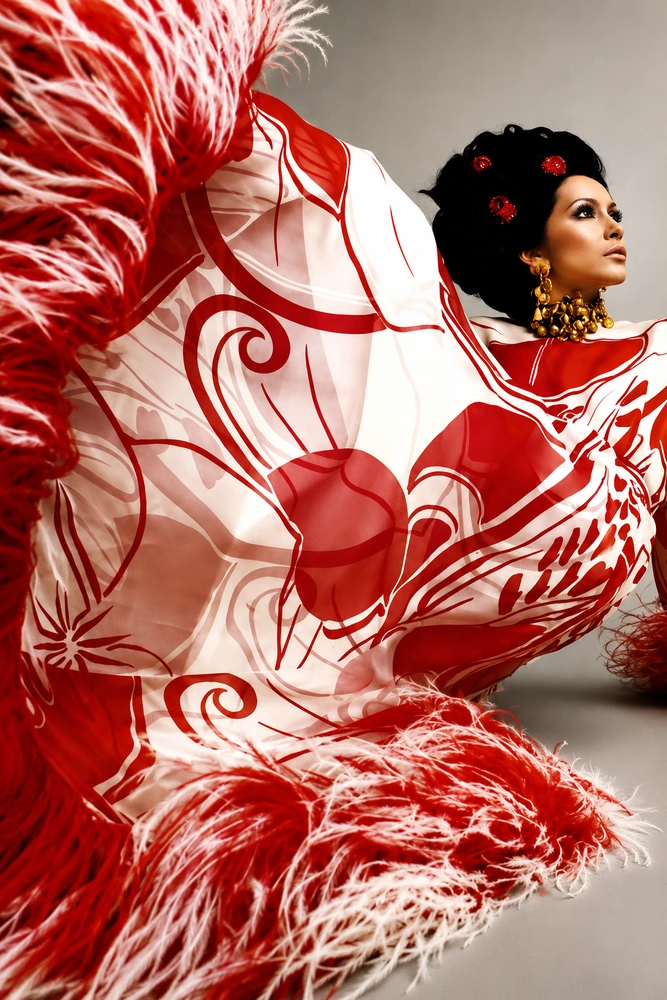
The house retained its hierarchical center in haute couture, yet it developed peripheral categories that created economic resilience and cultural reach. The couture salon produced legitimacy; ready-to-wear produced relevance; menswear produced expansion; children’s wear produced continuity; logo produced visibility. Bohan’s leadership allowed these elements to coexist within the Dior aura. He helped the house become plural without losing its ceremonial spine.
Today, major luxury houses operate as ecosystems of image, product, archive, hospitality, celebrity, craft, runway, fragrance, accessories, and digital circulation. Bohan’s Dior prefigured this logic with remarkable elegance. He understood that the modern maison needed more than magnificent gowns. It needed routes of participation. It needed recognizable signs. It needed categories that could transform admiration into ownership and ownership into loyalty.
Bohan’s achievement here feels almost architectural. He built corridors, salons, boutiques, nurseries, wardrobes, and surfaces inside the Dior imagination. He made the house larger while keeping it composed. He gave Dior multiple voices, each one speaking in the accent of elegance. This is why his legacy can feel hidden in plain sight. Many of the mechanisms that later became central to luxury fashion already shimmered inside his reign.
His Clients And Muses Reveal A Master Of Public Femininity
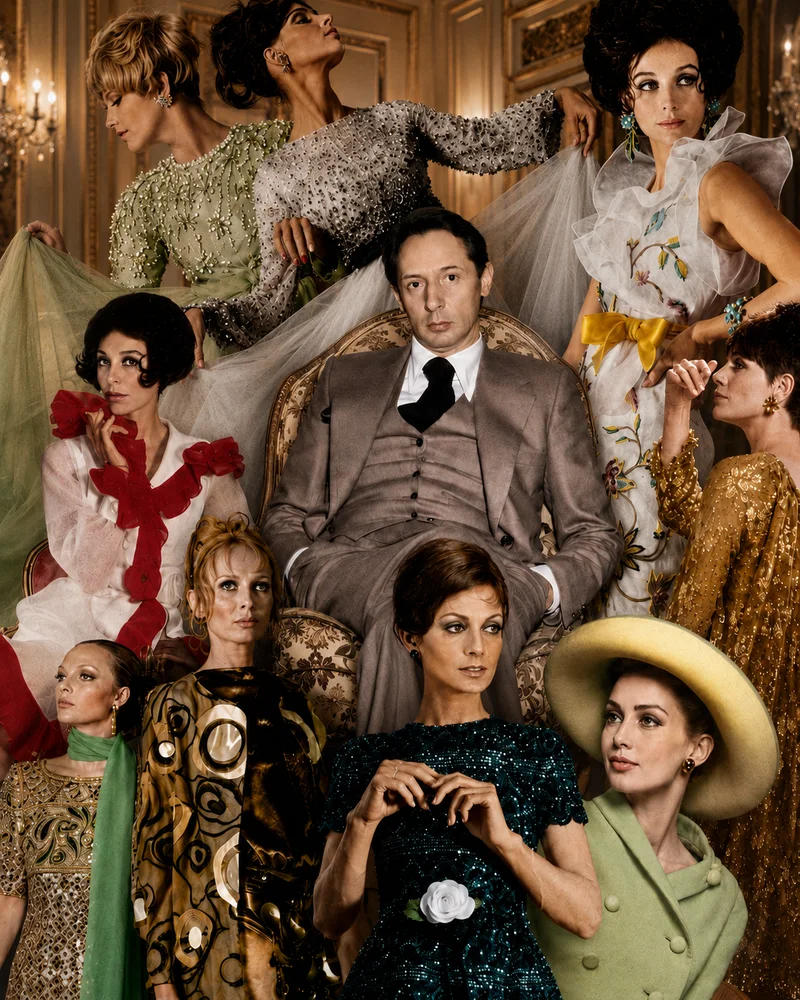
The women who wore Marc Bohan’s Dior offer one of the richest keys to his talent. Grace Kelly, Elizabeth Taylor, Sophia Loren, Lauren Bacall, Farah Diba, and other high-profile clients were far more than glamorous names attached to a couture archive. They were living tests of Bohan’s intelligence. Each woman carried a different mythology, a different public temperature, a different form of feminine authority, and Bohan’s clothes had to understand those distinctions with almost diplomatic precision.
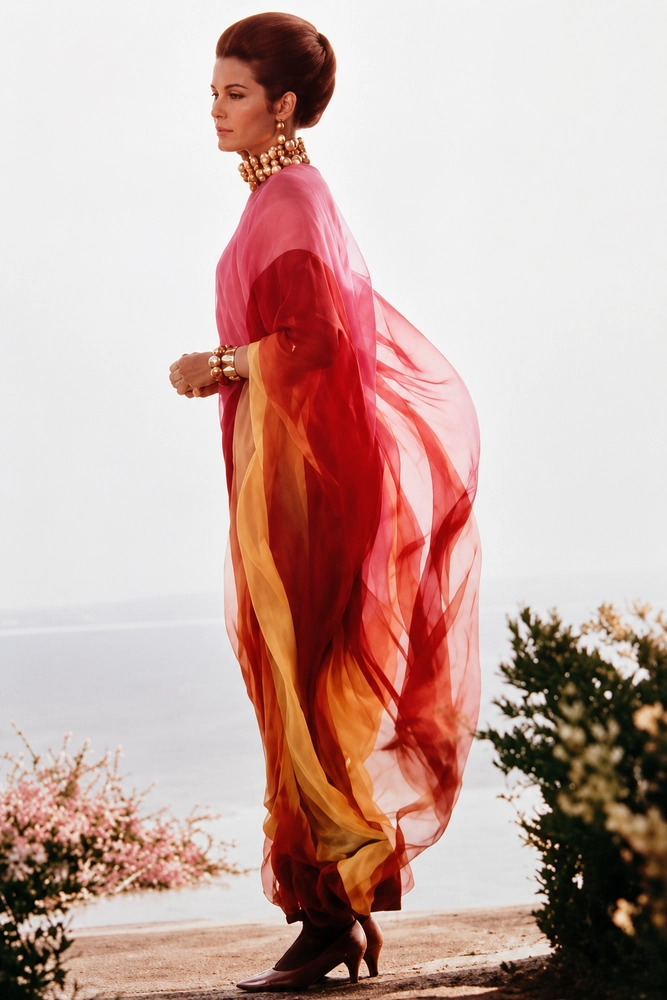
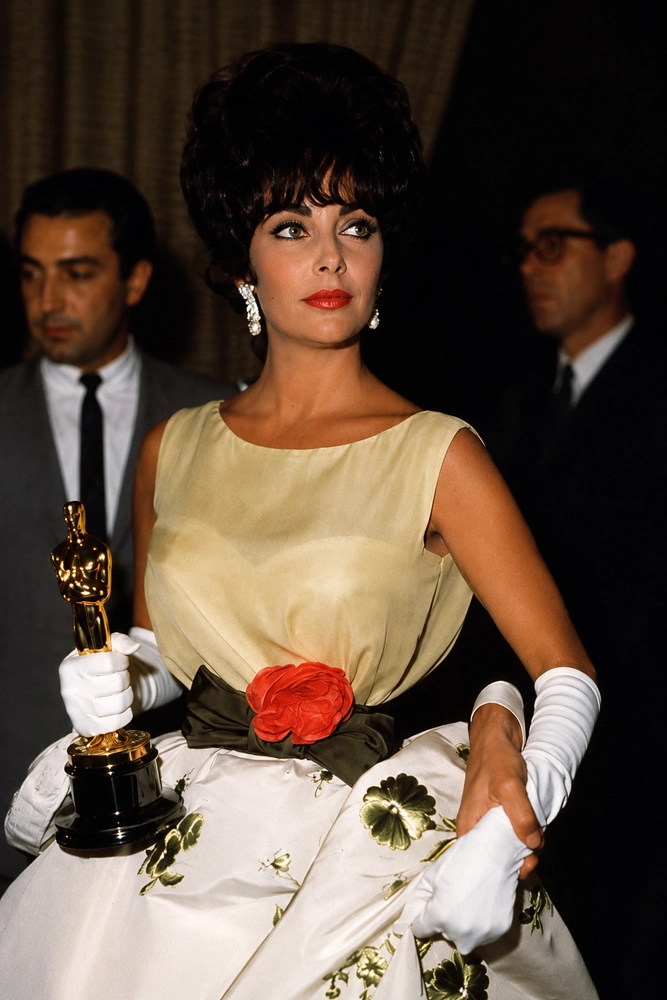
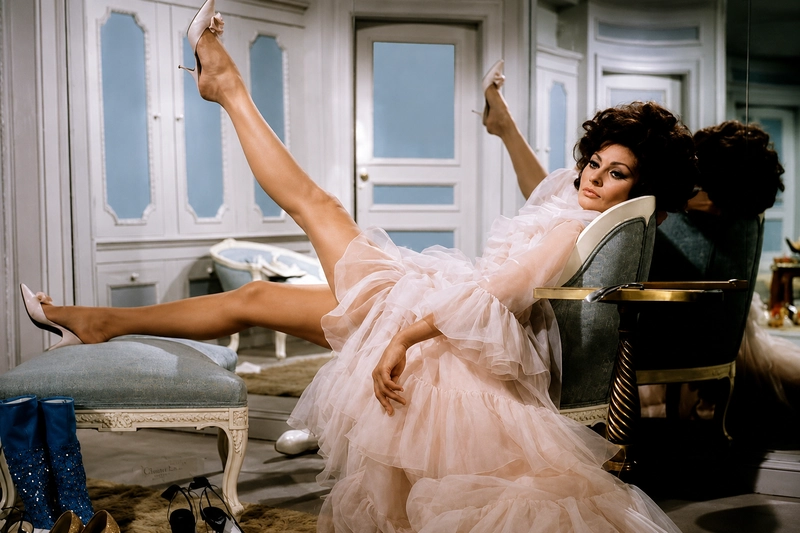
This elasticity is central to his greatness. He did not produce a single model of femininity and ask every client to inhabit it. He created a Dior language that could absorb multiple forms of womanhood: royal composure, film-star blaze, diplomatic majesty, aristocratic ease, mature glamour, youthful charm, and private confidence. His clothes gave each woman a heightened version of herself. That is the highest compliment a couturier can offer.
The couture client relationship also reveals Bohan’s deeper creative method. In haute couture, the garment is the material result of a complex relationship among body, house, atelier, and world. The client brings desire; the designer brings vision; the atelier brings technical genius; society brings expectation. Bohan understood how to conduct this quartet. His clothes suggest a man who knew when to lead and when to yield, when to correct the body and when to honor it, when to ornament and when to allow silence to become the most luxurious detail.
The emotional force of Bohan’s work lies precisely here. He designed for women whose lives were heavily staged, yet he gave them clothes with inner calm. He dressed women surrounded by cameras, protocol, gossip, history, and expectation, yet his garments created a zone of composure around them. This is an extraordinary achievement. The dress became a private room carried into public space. The gown became protection disguised as radiance. The suit became authority softened by grace. The coat became a moving architecture of self-possession.
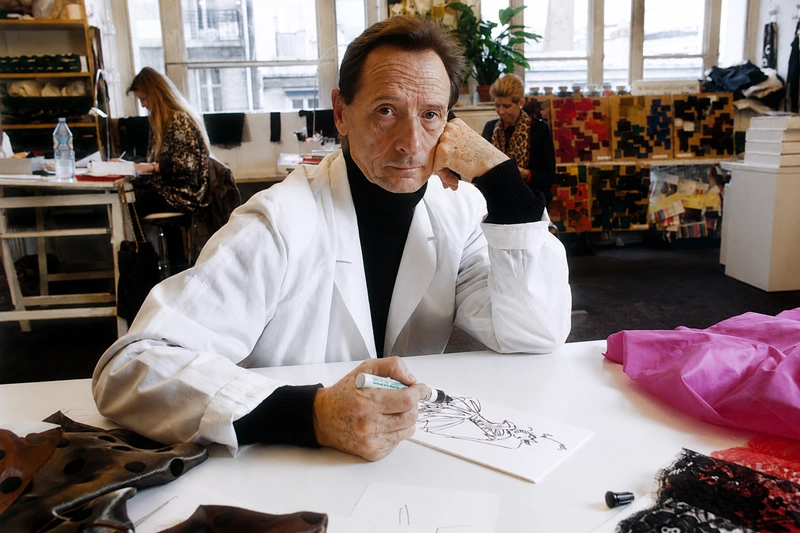
His legacy is a complete theory of how a great house treats the woman as its sovereign center. He modernized Dior by listening to women’s changing lives, by expanding the brand’s doors, by refining the silhouette, by preserving the atelier’s sanctity, and by translating elegance into multiple forms of access and visibility.
His work continues to resonate because luxury today remains obsessed with the questions he answered so fluently. How can a house preserve heritage while entering modern life? How can a logo carry emotion rather than mere recognition? How can ready-to-wear inherit the aura of couture? How can a designer expand a brand while protecting its soul? How can a garment make a woman more visible and more herself at the same time? Marc Bohan offered a sustained, luminous response.