MENU
Close





Behind every iconic runway moment lies haute couture atelier - a quiet world of artistry and precision, where devoted hands shape fabric into garments that whisper of rarity and perfection.

Behind every iconic runway moment lies haute couture atelier - a quiet world of artistry and precision, where devoted hands shape fabric into garments that whisper of rarity and perfection.
November 27, 2025
Advertisement
Advertisement
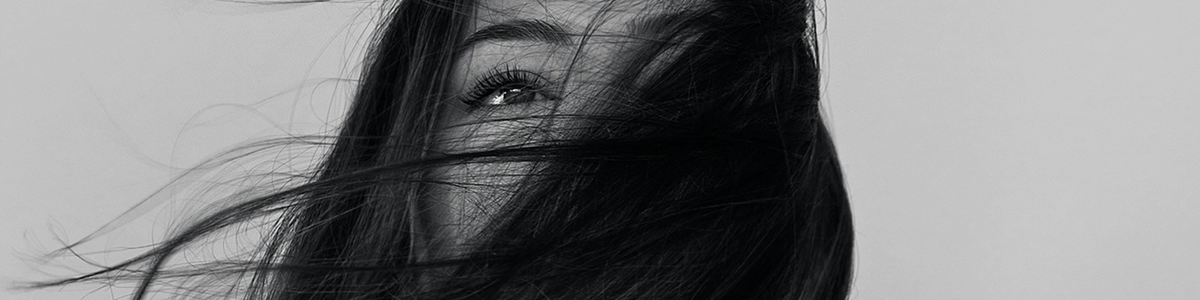


Just as a composer’s symphony begins in silence before swelling into music, a fashion house’s heartbeat begins within its atelier. It is the sacred chamber where whispers of silk and murmurs of thread become garments that speak louder than words. It is here, behind the curtain of glamour, that the quiet labor of artisans gives rise to the grandeur seen on the runway. To step into an atelier is to witness the birthplace of couture - a realm where vision and craft entwine, and where fabric becomes not just clothing, but legacy.
In the heart of France's fashion is an atelier, not merely a workshop, but a sanctuary of craftsmanship where fabric transforms into wearable art. These hallowed spaces serve as the creative nucleus for haute couture, where master artisans (pattern-makers, tailors, embroiderers, and seamstresses) breathe life into a designer's vision through meticulous handwork. Each stitch tells a story of precision, each seam a testament to perfection, as they craft garments tailored to the millimeter for discerning clients.
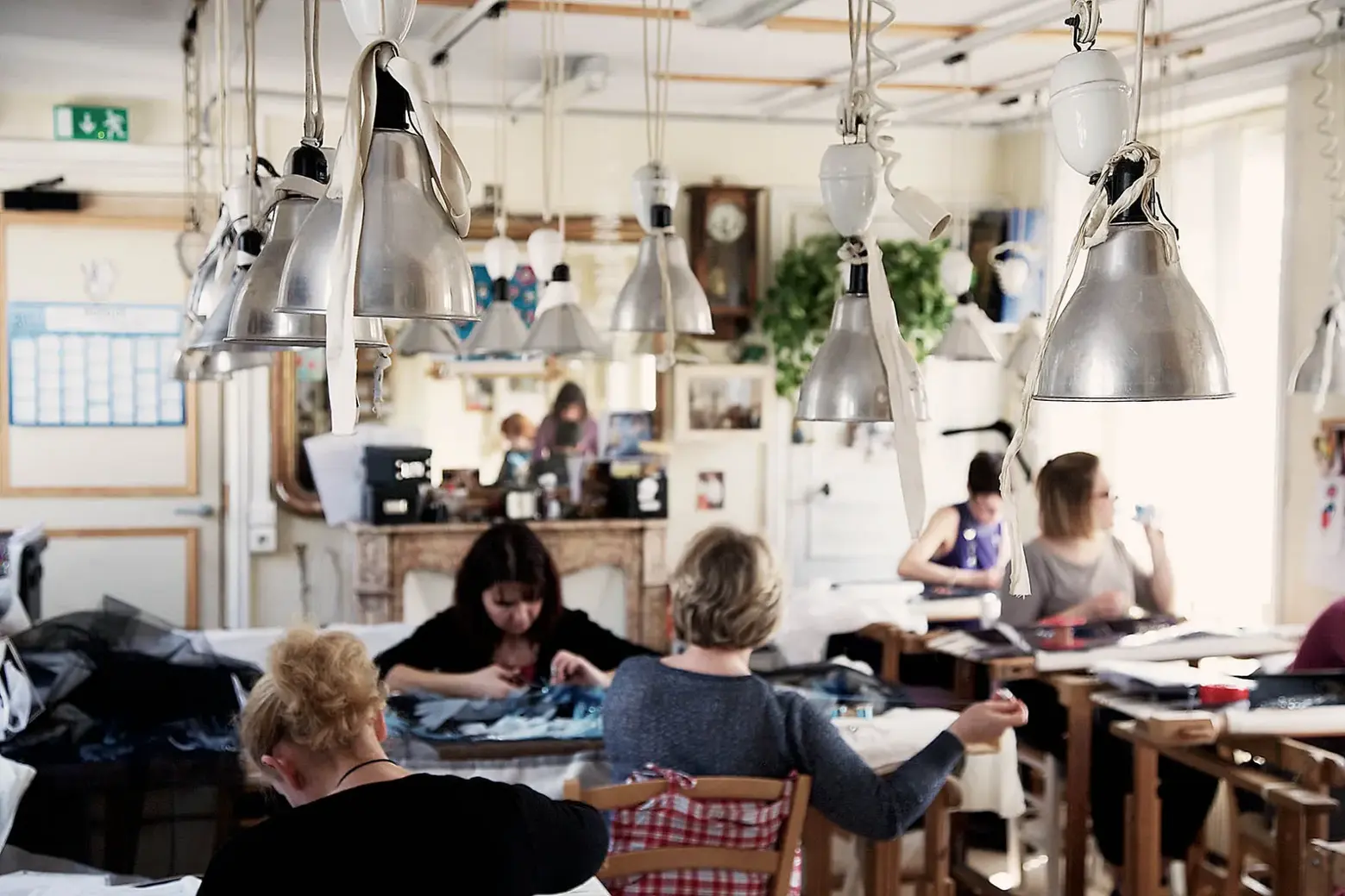
What sets an atelier apart is its devotion to the art of creation over mere production. Unlike factory assembly lines, these studios hum with specialized expertise: draping artists sculpt fabric on mannequins, pattern-cutters engineer flawless blueprints, and embroiderers weave fantasies with needle and thread. This ecosystem of talent enables designers to push boundaries with innovative techniques, rare materials, and extraordinary details that define true couture.
Paris remains the undisputed capital of this rarefied world, with legendary houses like Chanel, Dior and Valentino maintaining ateliers that represent centuries of accumulated knowledge. Here, artisans undergo years of rigorous training to master techniques passed down through generations. Even independent designers establish ateliers to create their bespoke collections, proving that in an age of mass production, there will always be those who cherish the singular beauty of handcrafted excellence.
Inside an atelier, every role is vital. From the visionary designer to the precision-driven pattern maker and meticulous tailor, these artisans transform creative concepts into garments that embody couture’s highest standards.
The Lead Haute Couture Designer is a sartorial sorcerer - conjuring creative visions and sketching bespoke brilliance for discerning clients. They meticulously oversee every stitch, transforming fabric into fantasy while upholding haute couture’s sacred trinity: exclusivity, artistry, and an obsessively perfect fit.
Few embodied this alchemy of vision and precision more than Christian Dior, known as the quintessential haute couture Lead Designer. Founding his legendary house in 1946, he swiftly imposed a deliciously radical creative vision, declaring war on wartime drabness. His "New Look" drew inspiration from historical femininity-think Victorian corsetry meets Baroque grandeur-to champion ultra-feminine silhouettes: soft shoulders, wasp waists, and gloriously voluminous skirts, sculpting an opulent hourglass figure.
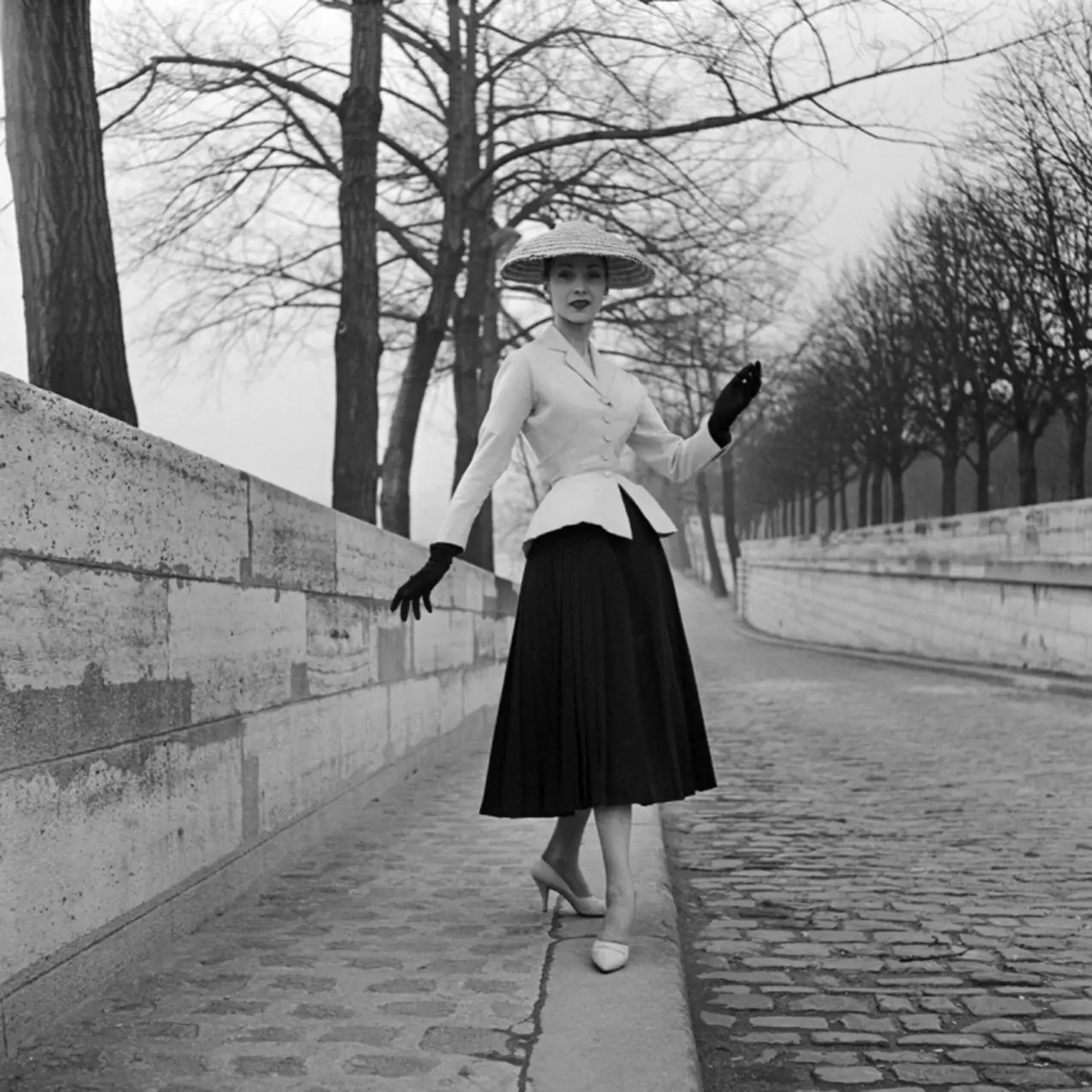
Collection spring 1947 debut featured designs such as Corolle and En 8, where every petal-like drape and figure-eight curve was precisely rendered through structured tailoring and luxurious fabrics. Dior then became the ultimate conductor in his atelier, collaborating intensely with his famed petites mains. The iconic "Bar" suit exemplifies this: its padded hips, nipped waist, and exquisite hand-stitched details, like self-covered buttons, showcase the obsessive craftsmanship demanded.
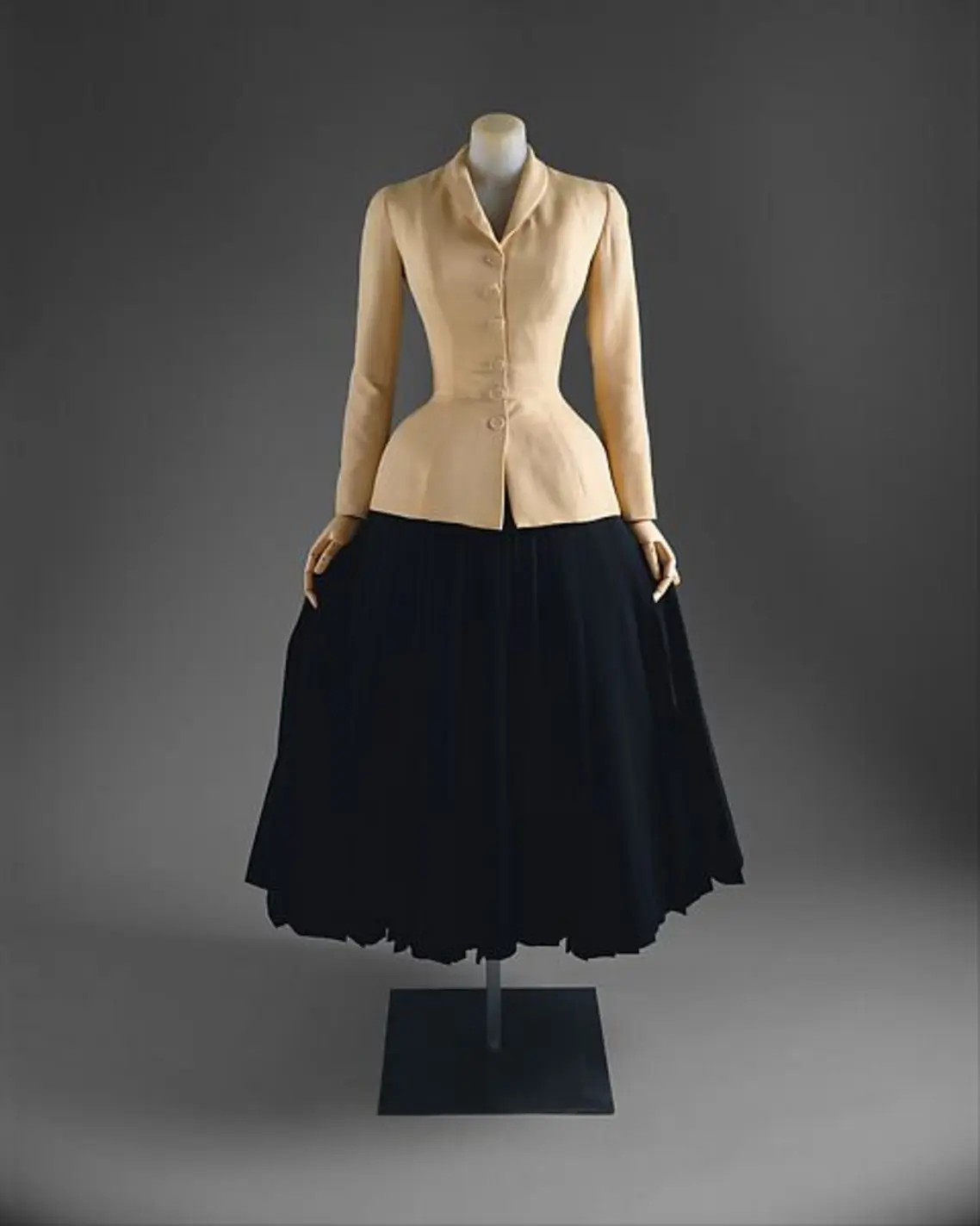
Beyond the spectacle, true haute couture resided in personalized perfection. Dior ensured exclusivity through multiple fittings and bespoke tailoring for each client. The result? More than just reviving Parisian fashion, Dior set enduring standards: exclusivity, artistry, and creative leadership, from sketch to sublime final stitch. A masterclass in the role, indeed.
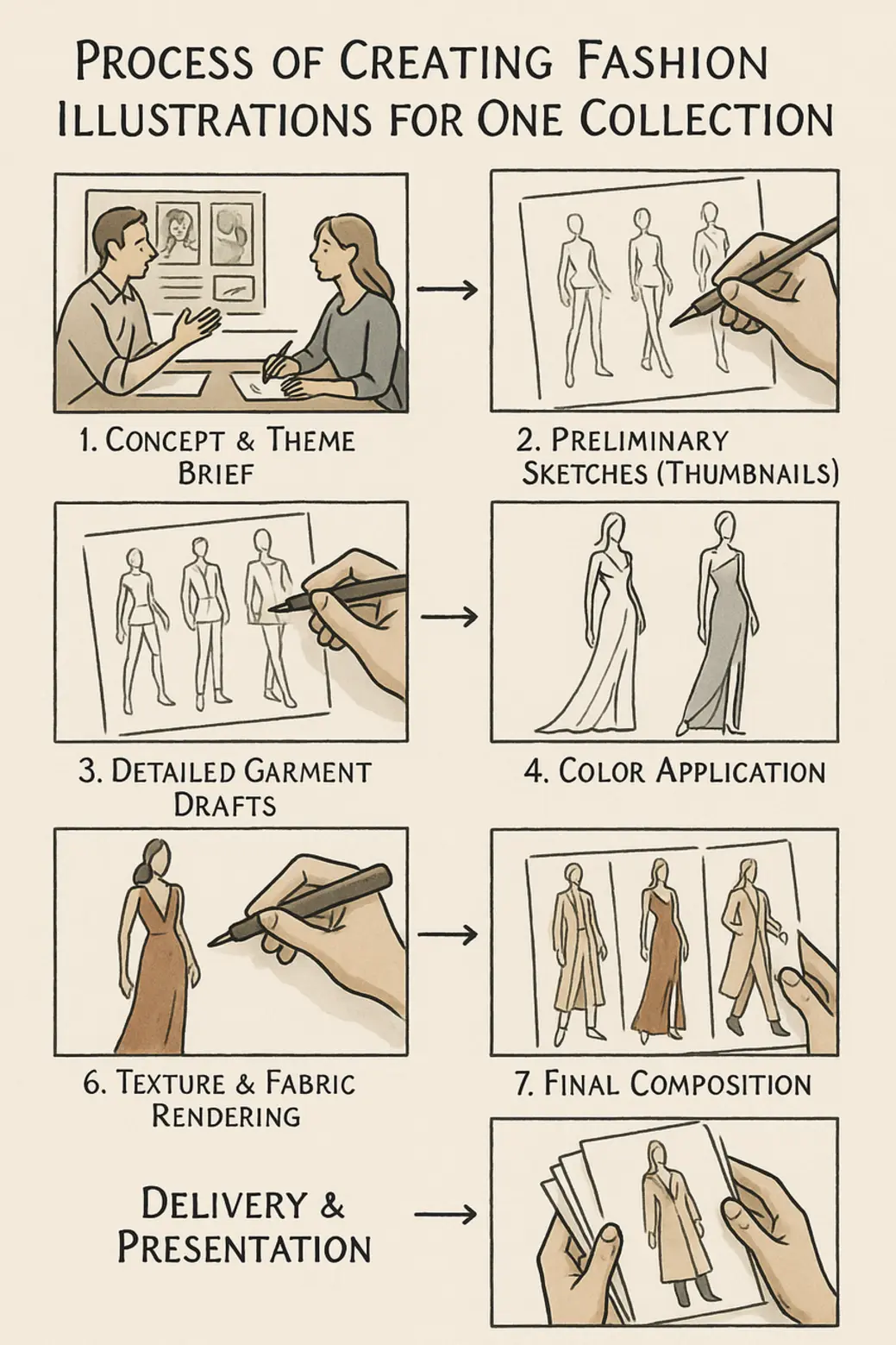
Now working with fashion illustrators, who remain the vital first spark in design’s journey. They translate nebulous ideas into compelling visual stories, capturing not just a garment’s silhouette but its very essence—how silk cascades, how wool holds structure, how light dances on sequins. Beyond guiding ateliers, their work fuels marketing magic and immortalizes collections in brand archives.
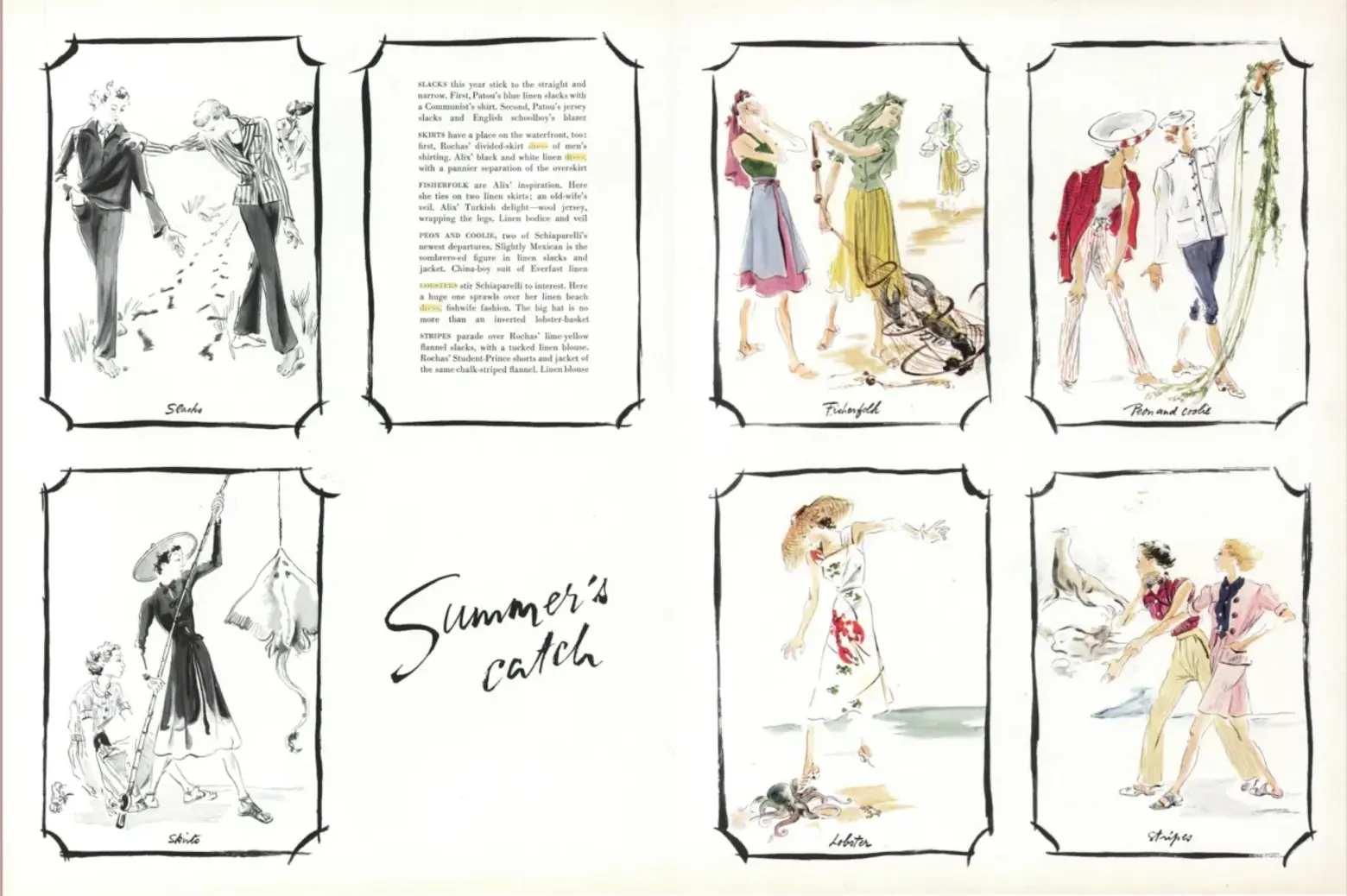
Their craft unfolds in deliberate stages: absorbing the designer’s mood and fabrics; sketching rapid thumbnails to explore compositions; refining details like ruching or embroidery on elongated croquis; then rendering textures and colors with almost alchemical precision. The final step is sequencing illustrations to narrate the collection’s story - a prelude to the runway’s reveal.
While lead designers or creative director traditionally helm illustration and ideation, luxury houses now embrace AI to accelerate creativity. Take Moncler’s collaboration with AI designer Lulu Li: algorithms analyze archives and trends to generate patterns, which human designers then refine into wearable art. This synergy expands possibilities while preserving artistic control. Tools like AI fashion generators transform rudimentary sketches into photorealistic renderings overnight, acting as tireless digital apprentices. LVMH champions this augmented approach, using AI to accelerate workflows without diluting brand DNA.
“As the leader in our industry, we have a responsibility to promote uses of AI that are both ethical and judicious, meaning centered on people,”- LVMH Chief Omnichannel and Data Officer in LVMH Innovation Award.
When finishing the idea and concept, this stage will transfer to pattern makers, who are fashion’s unsung architects, the alchemists who transmute sketches into wearable art. Where designers dream in color and silhouette, pattern makers mastermind geometry: translating creative visions into precise blueprints that dictate fit, drape, and movement. Without their mathematical wizardry, couture’s promise of perfection collapses.
Their work starts with the designer’s vision. Using sketches and measurements, they draft an initial pattern. Next, a test garment (toile) is sewn in simple fabric (muslin prototypes) and fitted on a model. Adjustments are marked, patterns are refined, and only then is the final fabric cut. This cycle repeats for every piece in a collection - meticulous, iterative, and vital.
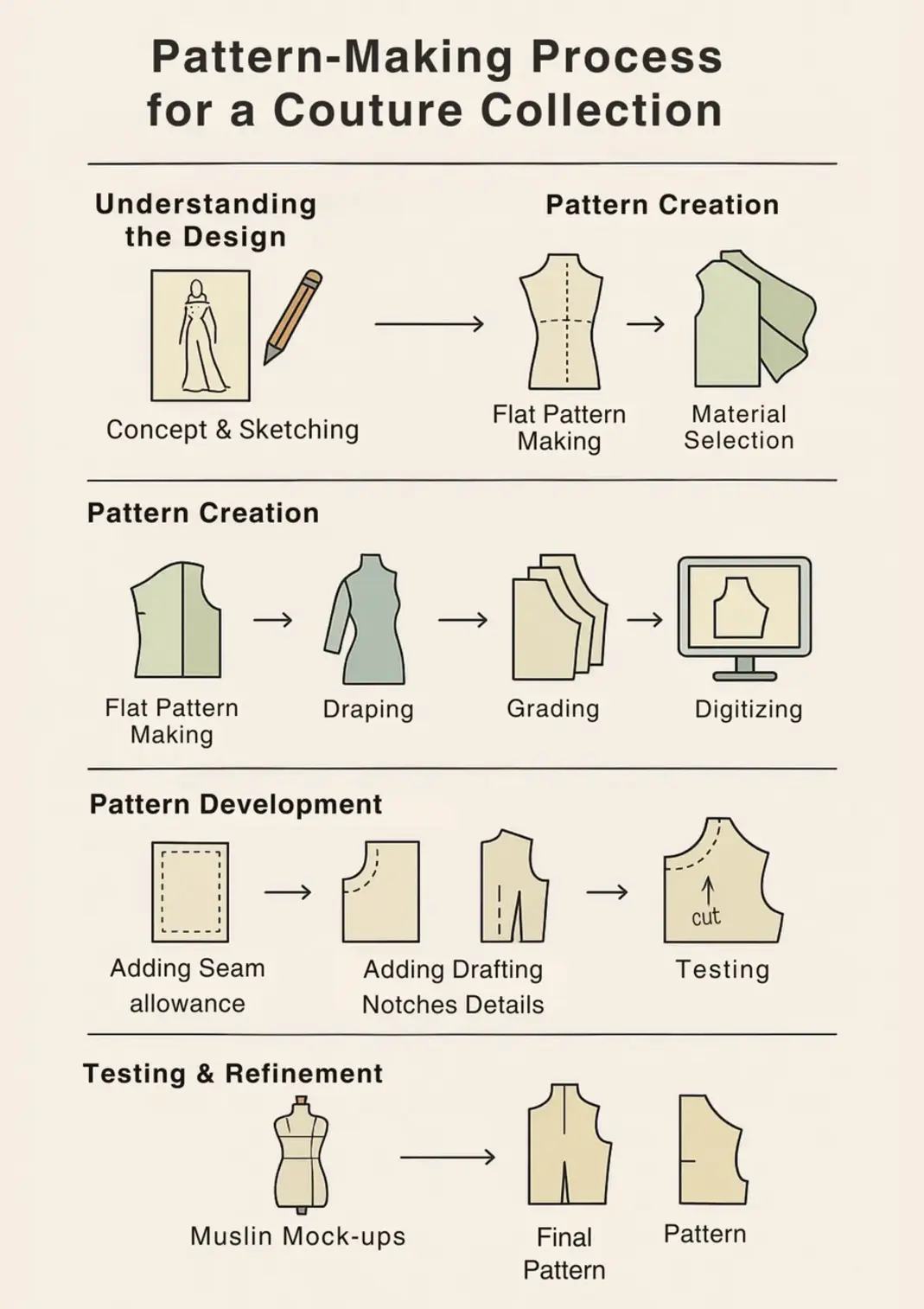
Pattern makers solve problems before they happen. They adapt creative ideas to physical realities, prevent costly errors, and ensure consistency across sizes. Their archived patterns also preserve a fashion house’s legacy, allowing iconic designs to be recreated decades later. Simply put: they turn imagination into reality. Designers dream of it; pattern makers build it. Everything else follows.
The most painstaking and decisive moment for the soul of a collection, is when a tailor starts their work. Haute couture tailors are the essential builders of luxury fashion, turning a designer’s sketches into reality through skill, precision, and craftsmanship. They interpret complex designs with mathematical accuracy, creating patterns that define a garment’s shape and structure. Every step is deliberate: fabrics are cut by hand, seams are adjusted to perfection, and the fit is refined over multiple fittings to ensure the garment feels as good as it looks.
Their work extends far beyond sewing. They coordinate with artistan such as embroiderers, beaders, and other specialists, making sure every detail, from a single crystal to a row of stitches, which meets couture’s strict standards while staying true to the designer’s vision. A fashion house may own or co-own different ateliers, each specializing in a particular area such as embroidery, pleating, feathers, shoes, hats, or jewelry. This dedication is why a single piece can demand hundreds, sometimes thousands, of hours.
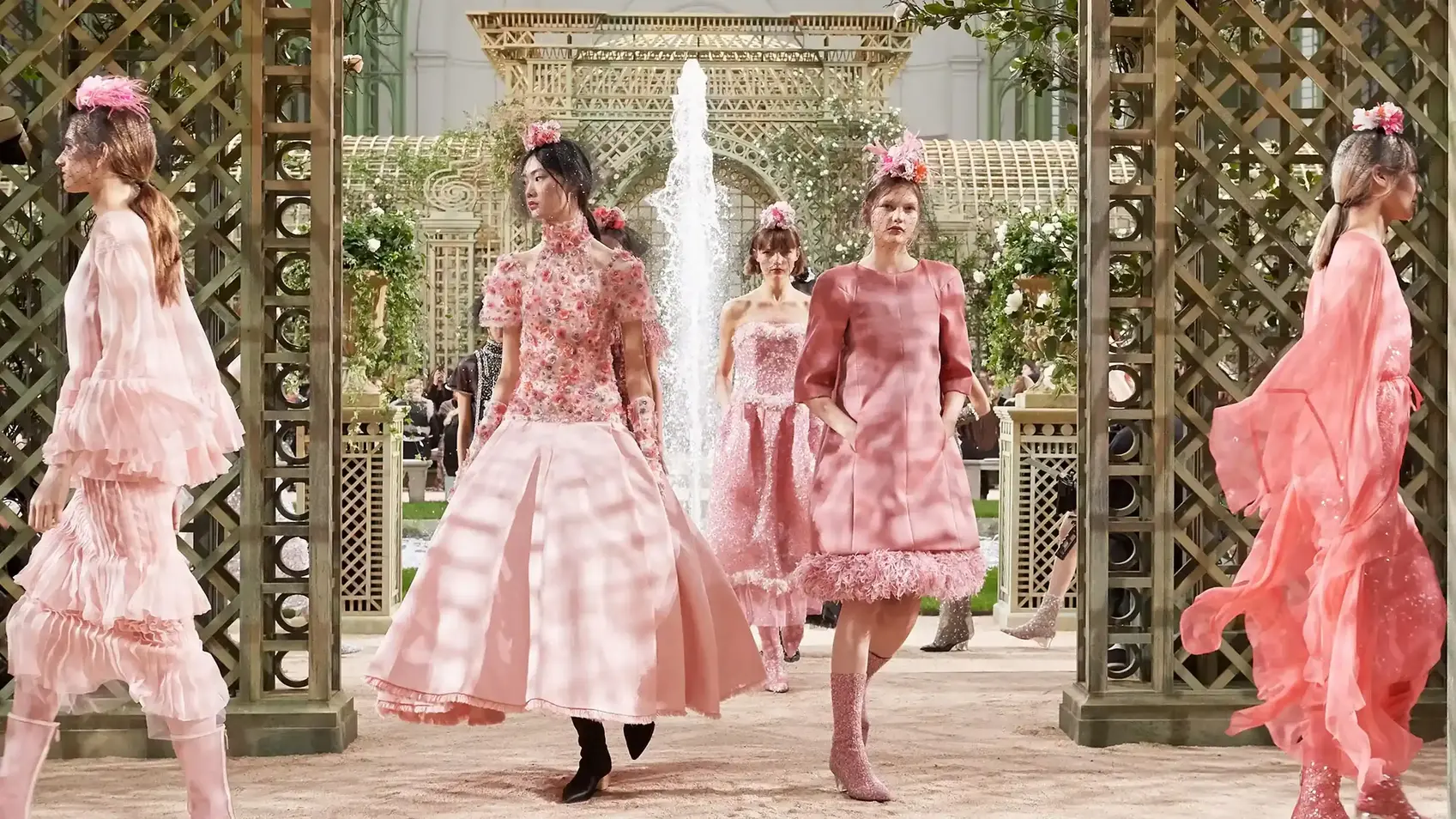
The Chanel Spring/Summer 2018 Couture show is one such example. It recreated another intricate look over 1,150 hours - 750 for a feathered dress and 400 for the waistcoat, trousers, and cape - crafted by two ateliers using rooster and ostrich feathers, 550 silk organza camellias, and 450 plastic camellia petals.
Elie Saab’s intricate gown involved over 2,000 sewing professionals, more than 1,300 pieces of colored glass, and 4,400 gray pearls, all assembled on a transparent tulle base over 700 hours of work, almost a month for a single dress.
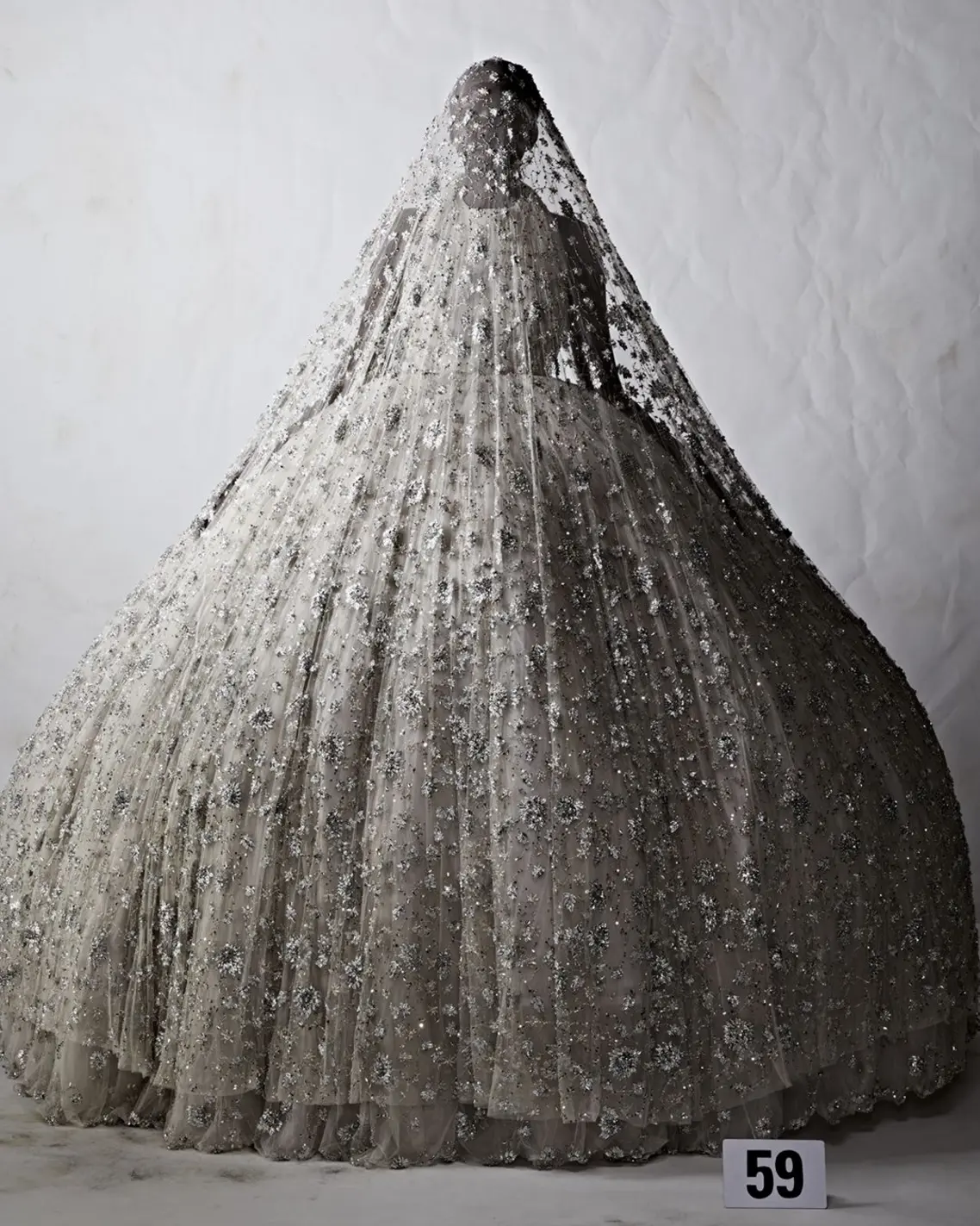
The record goes to Balenciaga with a transparent wedding dress from the 51st Couture Collection made of 250 metres of tulle. The embroidery took 7,500 hours and included 70,000 crystals, 80,000 silver leaves and 200,000 sequins.
Some projects push the limits of artisanal embroidery. The Chanel Fall/Winter 2021 Couture required 2,525 hours, over 105 days, with Maison Lemarié (renowned for craftsmanship in feathers, flowers, couture sewing, and pleating, in Parisian complex Le9M) dedicating 2,200 of those hours solely to the jacket’s embroidery.
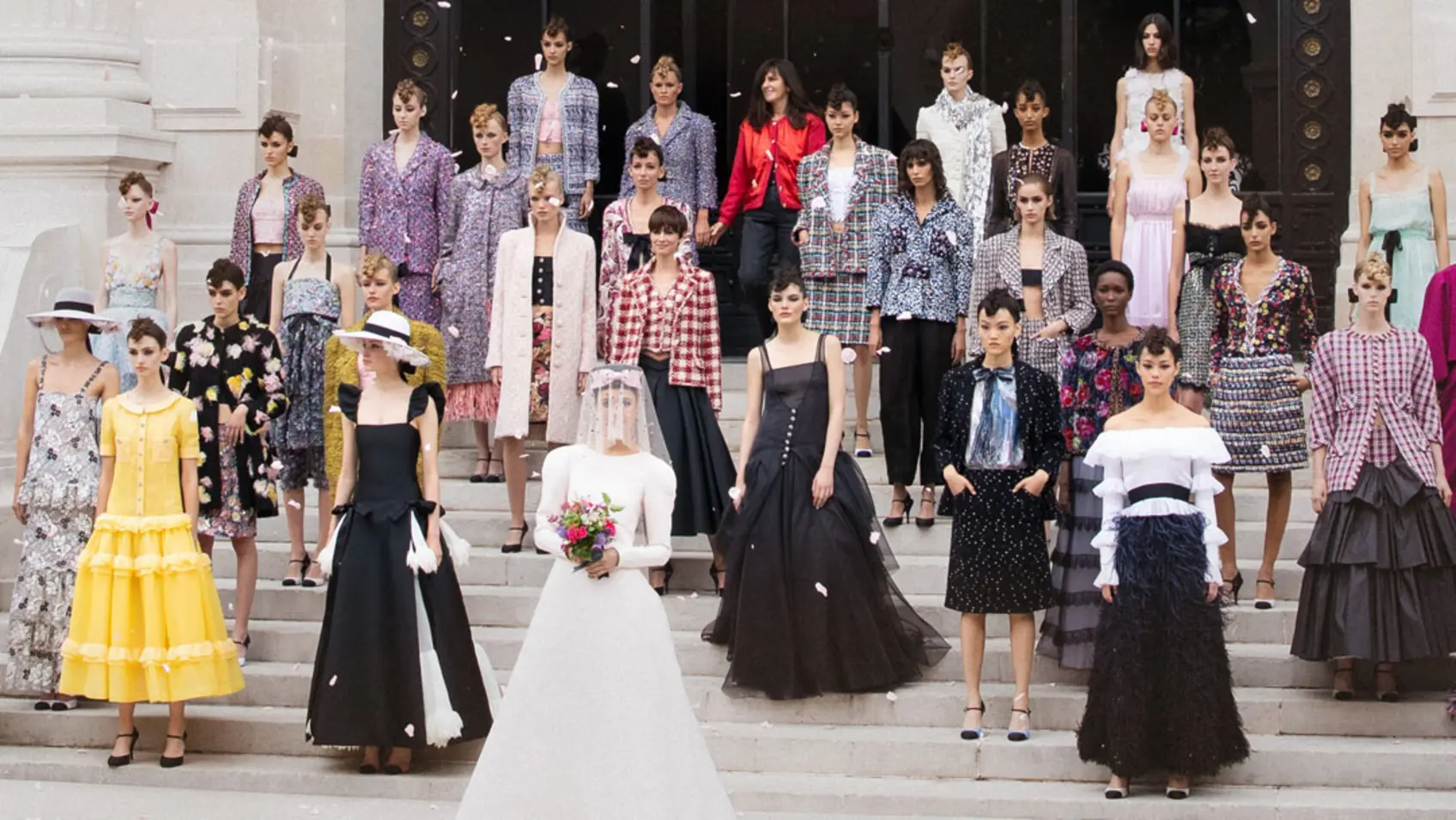
Another example from Chanel, imagine a garment so intricate it took 1,000 hours to complete. For Chanel's Haute Couture SS21 collection, that was look 21. The experts at Maison Lemarié transformed it into a garden of hand-painted blooms, meticulously glittering with more than 10,000 pearls.
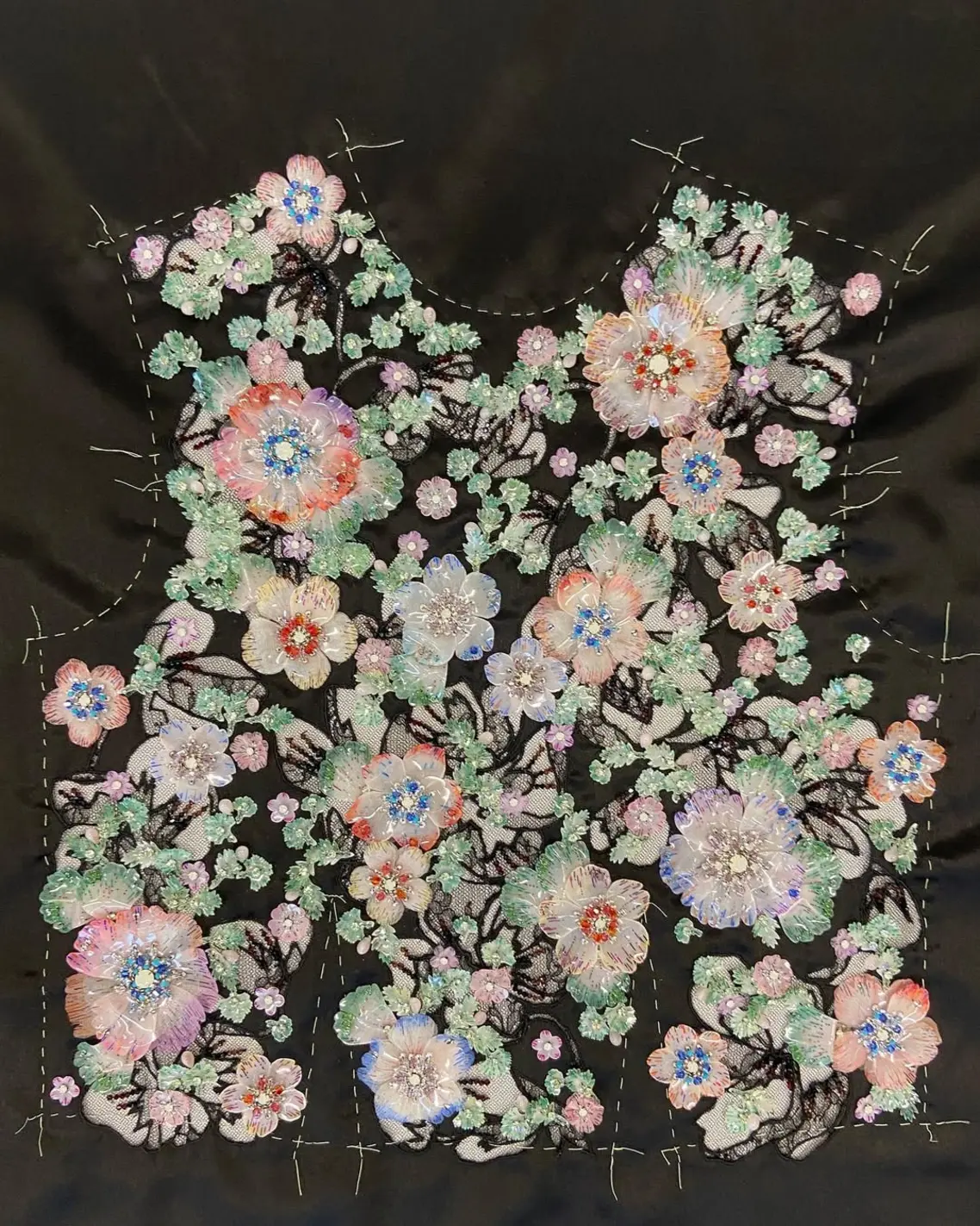
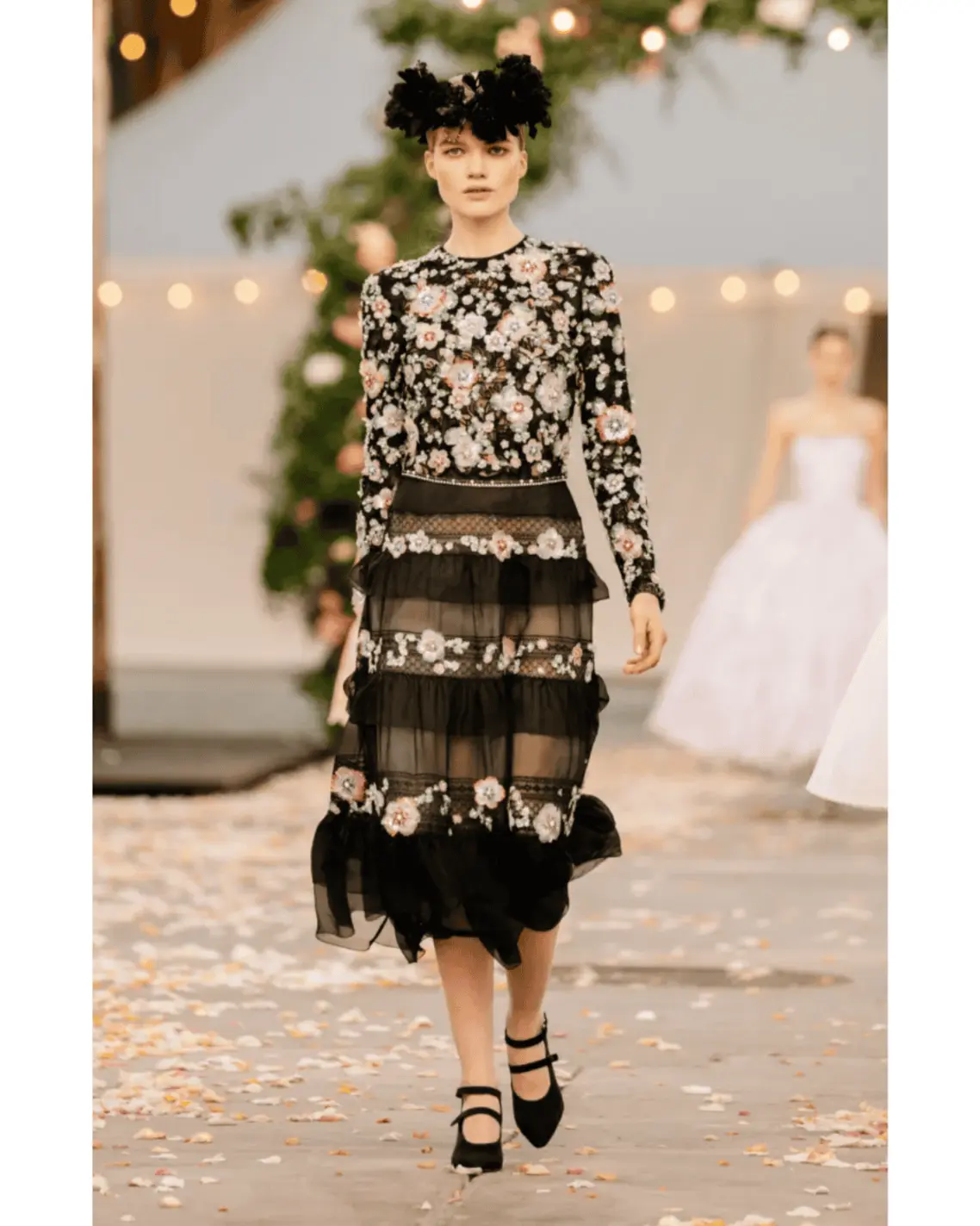
The magic of Look 11 in Dior's SS25 Couture collection was in the details. Each element of the ivory silk tulle cape was applied by hand: delicate organza petals were meticulously shaped and combined with a dazzling array of over 4,800 individual embellishments: 3,000 beads and 1,800 crystals by the expert artisans at Lesage.


Innovation blends with tradition in Iris van Herpen’s work in Spring 2018 Couture Collection. Her look number 1 took 260 hours, using PolyJet 3D printing technology to produce ultra-thin fabrics, with a parametric model translating 2D patterns into precise 3D structures.
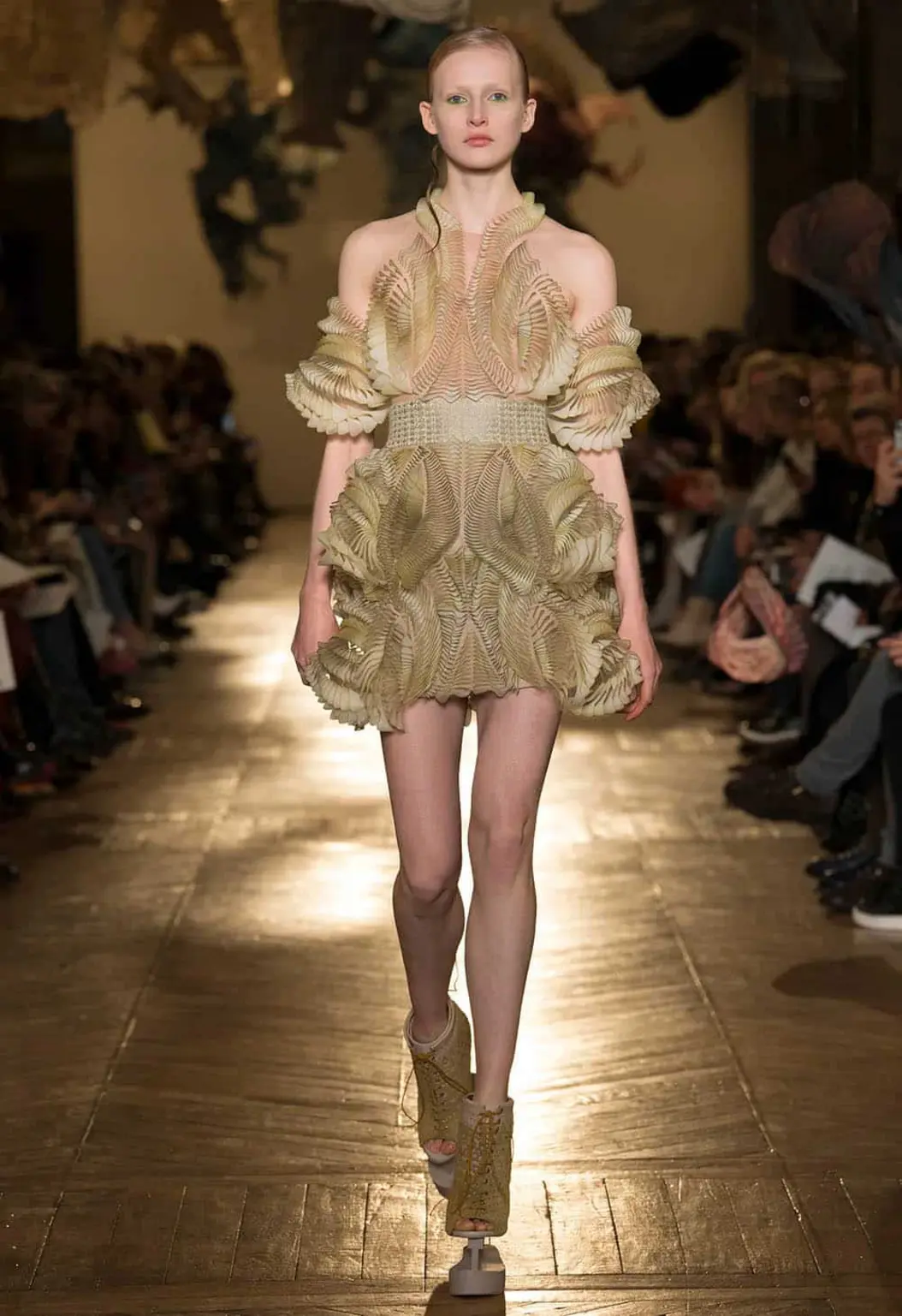
In a world driven by speed, these creations prove that true luxury is measured not by price tags but by the time, skill, and dedication invested. Every stitch is a pact between tradition and innovation, turning ambitious designs into garments that will never be replicated.
An atelier is more than a workspace. It is the soul of a fashion house, where human touch transforms imagination into form. Within its walls, artistry is preserved, innovation is nurtured, and every creation carries the imprint of countless devoted hands. Here, time slows, allowing ideas to mature into treasures that transcend seasons. In an era of instant gratification, the atelier reminds us that true beauty is not rushed. It is built, stitch by stitch, into something timeless.
"In a machine age, dressmaking is one of the last refuges of the human, the personal, the inimitable." - Christian Dior
Advertisement