MENU
Close





Can heritage branding still sell the romance of time when a rival house asks where that time truly begins?

Can heritage branding still sell the romance of time when a rival house asks where that time truly begins?
June 22, 2026
Advertisement

Advertisement



In luxury, time is the ultimate currency. Brands do not merely sell objects; they sell a curated slice of eternity, a promise that the item in question is the distilled essence of generations of undisturbed expertise. For decades, this narrative was woven through editorial campaigns, embossed onto heavy cardstock, and whispered by sales associates in wood-paneled salons. It belonged to the realm of mythmaking, a beautifully staged theater where dates like 1853, 1792, or 1849 served as poetic orientation points.
However, a profound shift is occurring beneath the velvet surface of the industry. The romantic invocation of the past has collided with the rigid, literal-minded world of intellectual property law. What was once considered an editorial mood has transformed into an explicit economic claim, and with that transformation comes unprecedented legal risk. The modern luxury house can no longer treat its history as a flexible canvas; it must treat it as an audited balance sheet. This is the new pressure point of heritage branding.
The contemporary luxury market operates on a paradigm where history is directly correlated with economic premium. When a maison places a founding date beneath its logo, it is doing far more than decorating a storefront; it is sending an intentional commercial signal to a highly discerning market. This signal carries heavy, immediate assumptions about the product’s quality, the structural integrity of its craftsmanship, and its place within the hierarchy of global prestige. The recent intellectual property conflict between Goyard and Fauré Le Page illuminates exactly how high the stakes have become when a date, a place name, and a house narrative transcend branding and enter the domain of legal accountability. In this dispute, history ceased to be a passive marketing backdrop and became the central battlefield for market dominance.
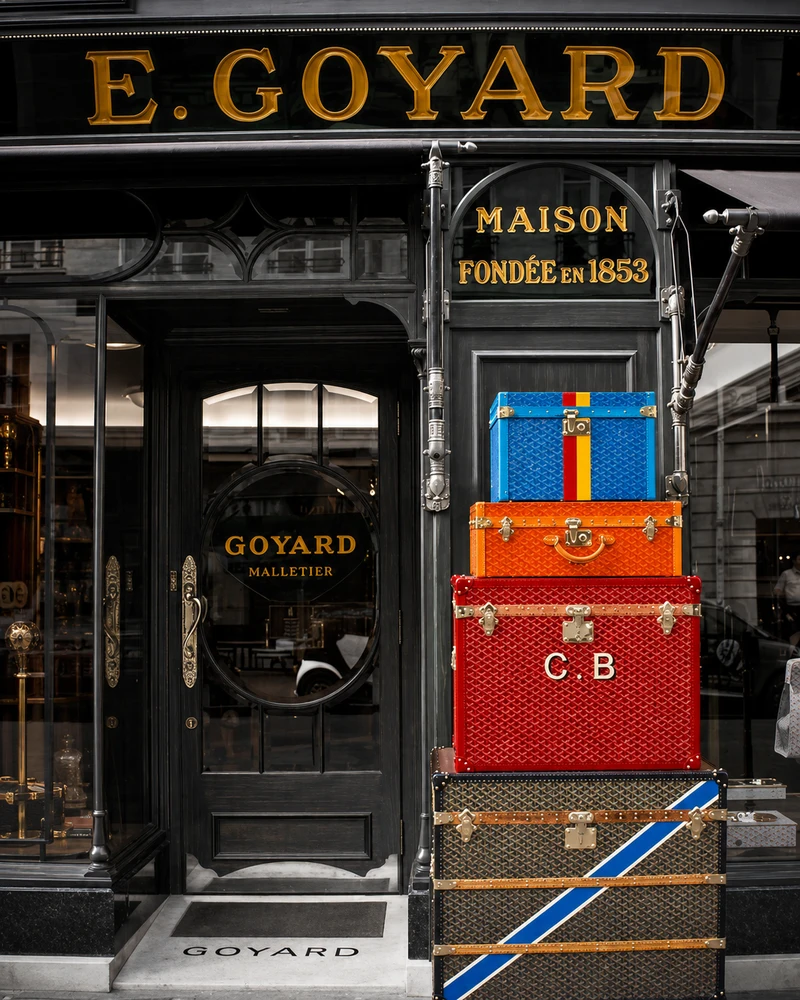
At the heart of the legal discourse, specifically within the framework explored by the Court of Justice of the European Union, was the integration of the date “1717” into the trademarks of luxury leather goods. The court’s analysis underscored a crucial reality of modern consumer psychology: historical dates are not neutral numbers. To the luxury buyer, a date is a shorthand guarantee of long-standing know-how, a testament to survived crises, and an insurance policy on the item’s enduring value. Because these numbers dictate consumer behavior and justify astronomical pricing structures, they fall squarely under the jurisdiction of regulatory frameworks designed to protect market integrity.
Article 3(1)(g) of the European Union trademark law explicitly addresses marks that are capable of deceiving the public, particularly regarding the nature, quality, or geographical and historical origin of goods. When a brand uses a historical milestone, the law increasingly demands that the milestone reflect an authentic economic reality rather than a clever marketing fiction.
In the luxury sector, history is the primary engine behind pricing power and secondary market resilience. It is the mechanism that transforms a leather handbag from a utilitarian container into an investment vehicle. When a brand can credibly point to centuries of existence, it inoculates itself against the volatility of trend cycles, offering consumers a sense of permanent trust. This trust is not merely emotional; it is a measurable economic asset that reduces customer acquisition costs and sustains high profit margins.
Consequently, when the law interrogates a heritage claim, it is not merely policing advertising copy; it is regulating the very infrastructure that allows luxury brands to command value far beyond the material cost of their products. The business issue at hand is the profound transformation of collective memory into quantifiable brand equity, an evolution that demands historical claims be treated with the same precision as financial reporting.
The legal tension between Goyard and Fauré Le Page fundamentally redefines how the luxury industry must evaluate its past, turning the abstract concept of continuity into a critical operational question. The core of the argument rests not on whether a history exists in old registry books, but whether a modern corporate entity can credibly and continuously connect its current manufacturing processes, design philosophies, and physical goods to the historical maison that originally generated the prestige. When a brand falls dormant and is subsequently revived by new capital, the thread of continuity is strained, creating a complex grey area where creative storytelling can inadvertently cross into legal liability.

The historical facts of the Fauré Le Page narrative present a classic case study in luxury resurrection. The original Maison Fauré Le Page possessed deep, undeniable roots in the early eighteenth century, earning renown as a master firearms manufacturer to royalty and historic figures. However, its original operational lineage drew to a close in the late twentieth century. In 2009, the current Fauré Le Page Paris corporate entity was registered under new ownership, embarking on a brilliant repositioning strategy that shifted the brand’s focus from historical weaponry to luxury leather goods, travel trunks, and handbags.
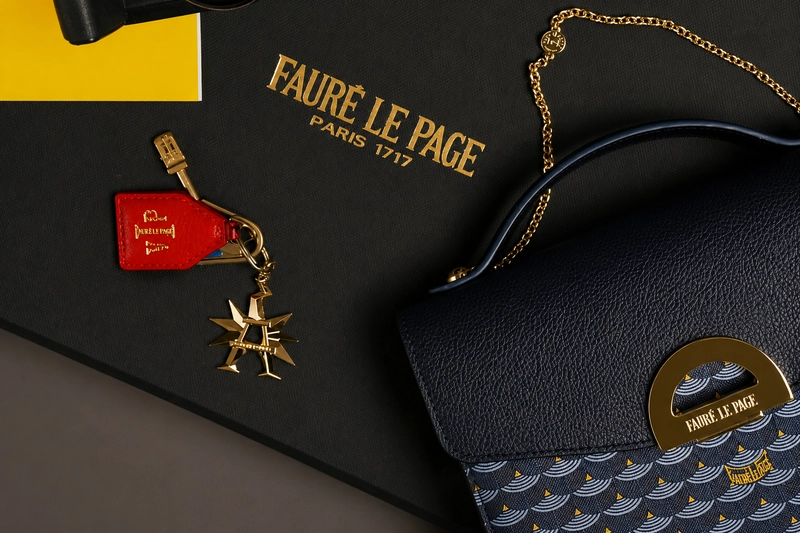
When the new entity filed trademarks in 2011 incorporating the phrase “Fauré Le Page Paris 1717,” Goyard launched a legal challenge in 2012. Goyard’s position was clear and strategically precise: by prominently displaying the date 1717 on modern luxury handbags, the revived house was creating an artificial impression of continuous expertise and uninterrupted prestige in a product category it had only recently entered.

This dispute forces a necessary separation between three distinct business concepts that are too often blurred in heritage branding: the legal ownership of a trademarked name, the acquisition of archival memory, and the operational continuity of physical craft. A luxury conglomerate or private investor can easily purchase the legal rights to an ancient name, and they can buy up vintage catalogs and artifacts to fill a pristine brand museum.
Yet, as this legal challenge demonstrates, the commercial and legal validity of heritage depends heavily on how much technical knowledge, production tradition, and product lineage can actually be proven to connect the past to the present. Continuity has emerged as the ultimate due-diligence question for the luxury industry. A revived house can no longer rely entirely on the romance of its ghost; it must construct a transparent chain of evidence that accounts for its historical gaps, honors the evolution of its technical expertise, and maintains honest communication with a consumer base that is increasingly cynical of manufactured legacies.
The evolving jurisprudence surrounding luxury trademarks places the perception of the average consumer at the absolute center of corporate strategy. The legal question is no longer confined to the technicalities of font choices or structural similarities between logos; instead, it looks at how the relevant public synthesizes a mark as a holistic message. When an ancient date, a prestigious geographical location like Paris, and high-end artisanal language appear simultaneously on a luxury product, they create a compound narrative. The law recognizes that consumers do not read these elements in isolation. They absorb them as a singular, powerful statement of fact, meaning that a brand’s strategic exposure is entirely dependent on how its audience decodes its institutional architecture.
When the Paris Court of Appeal deliberated on the matter, its reasoning cut directly to the heart of luxury semiotics. The court observed that the phrase “Paris 1717” did not merely function as an aesthetic design choice; it actively evoked the specific origin and founding era of the historic maison, thereby strongly implying a continuous line of operations to the modern viewer.



Crucially, the court explicitly noted that for the average consumer of luxury leather goods, the perception of centuries-old know-how is not a trivial detail. It is an active ingredient in the decision-making process, directly influencing the consumer’s willingness to pay a premium. The CJEU framework echoes this by requiring national courts to evaluate a trademark as a whole, assessing the total communicative impact that the combination of numbers, names, and visual signifiers exerts on the public.
From a strategic perspective, this shifts the role of the consumer from a passive recipient of advertising into an active interpreter of heritage branding. In the luxury marketplace, buyers use founding dates, historic workshop addresses, and archival motifs as empirical signals of intrinsic value. They believe these elements offer proof that the object in their hands has been touched by an unbroken lineage of master craftspeople.
The legal and reputational danger arises when there is a significant gap between what the brand intends as a poetic, atmospheric reference and what the consumer interprets as a historical fact. If a consumer believes they are purchasing the fruit of three hundred years of continuous leatherworking tradition, but the brand’s actual continuous operation in that category is less than two decades old, that gap becomes a major point of vulnerability. It transforms an elegant marketing strategy into a legitimate legal liability, threatening both the brand's trademark protection and its long-term consumer trust.
As the boundaries of intellectual property law tighten around the luxury sector, the traditional reliance on pure narrative romance must give way to a rigorous governance model for heritage storytelling. The era when marketing departments could operate independently from legal counsel to invent or exaggerate historical lineages is drawing to a close. To mitigate the risk of trademark cancellation and reputational erosion, modern luxury houses must build what can be termed a proof architecture. This requires that every historical assertion, every vintage logo revival, and every chronological claim be backed by verifiable data, disciplined archiving, and seamless communication across all operational silos of the enterprise.


The warnings embedded in current legal precedents are clear: when a brand uses historical longevity to imply an unbroken lineage of prestige that does not align with its operational reality, it faces severe regulatory and competitive pushback. The EU Intellectual Property Helpdesk and broader industry legal analyses continually emphasize that references to historical longevity within public-facing trademarks must be grounded in verifiable continuity. Because national courts will conduct highly fact-specific, granular assessments of a brand's history during a dispute, an organization must treat its past as an asset subject to strict compliance standards. This means luxury brands must perform comprehensive internal audits of their entire communication ecosystem, reviewing not just their primary trademarks, but also their website timelines, showroom scripts, press releases, social media campaigns, and internal retail training manuals.
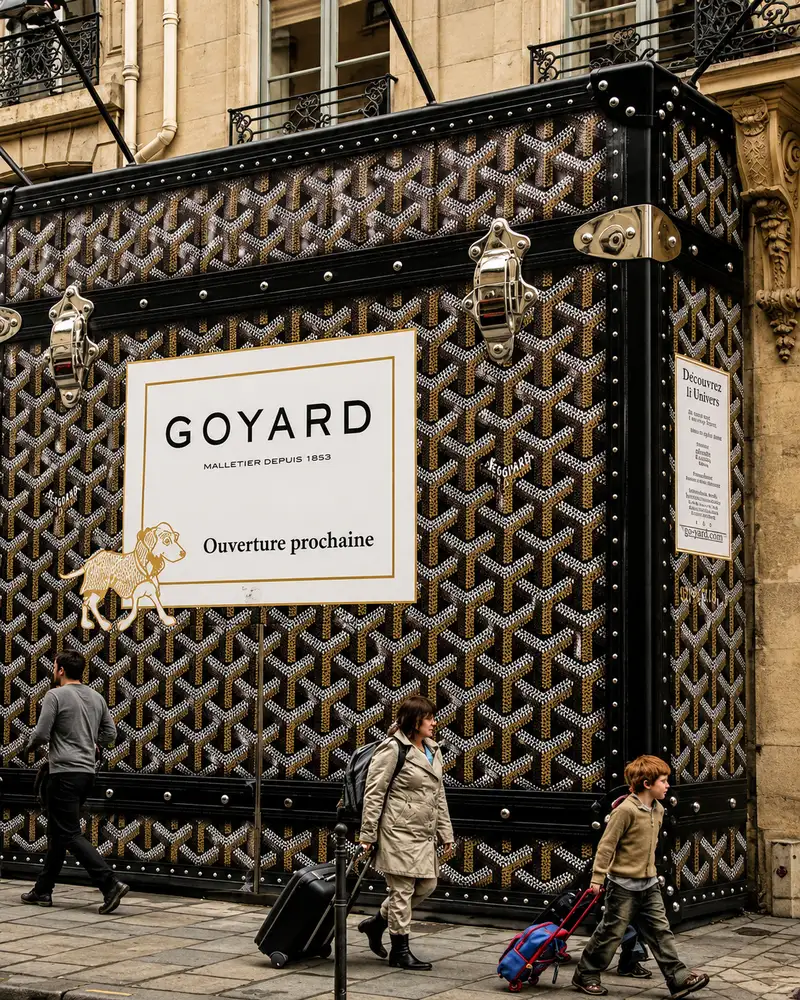
Ultimately, the strongest and most resilient luxury houses of the future will be those that treat their heritage as accountable data rather than mutable myth. Every signal of historical authority must be anchored to a clear documentation trail, whether that involves preserving original pattern books, mapping the lineage of master artisans, or providing transparent commentary when a historic house is being authentically revived after a period of dormancy.
By shifting from a culture of romantic embellishment to one of documented value, luxury brands can successfully protect their intellectual property while deepening their connection with an increasingly sophisticated consumer base. The future of heritage branding does not belong to the loudest storyteller, but to the organization that can prove its relationship with time, ensuring that its history remains a source of immense commercial strength rather than a sudden legal liability.
Advertisement