MENU
Close





Pick your color, prepare roughly $12,000 and keep still for about 25 minutes. Modern eye surgery can handle the pigment; courage decides whether you ever see the world through it.
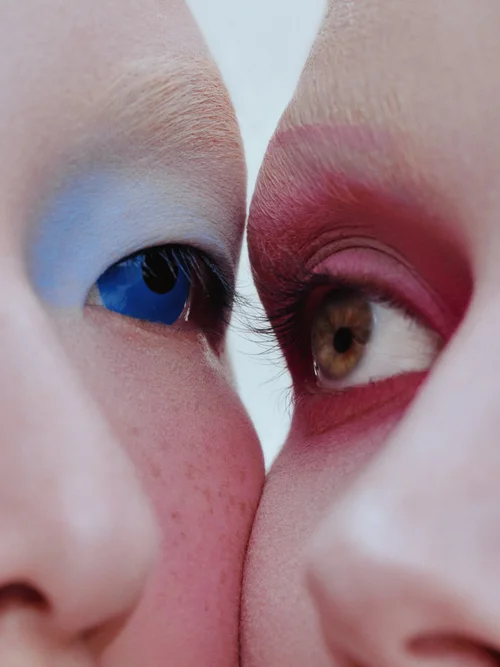
Pick your color, prepare roughly $12,000 and keep still for about 25 minutes. Modern eye surgery can handle the pigment; courage decides whether you ever see the world through it.
August 12, 2026
Advertisement

Advertisement



For centuries, brown, blue, green and grey arrived with the body and stayed under the jurisdiction of inheritance. Colored contact lenses eventually gave beauty a temporary workaround. Then lasers entered the cornea, pigments entered ophthalmic surgery, and a feature once treated as biological fact started appearing on consultation screens under names such as Honey Gold, Jade and Space Grey. Eye color surgery has entered aesthetic medicine, and the scientific questions surrounding that entrance are getting harder to dismiss.
The technological story starts inside the cornea, the transparent tissue covering the iris. Physicians have used forms of corneal tattooing for centuries to improve the appearance of injured or diseased eyes. Modern ophthalmology supplied an entirely different level of precision through the femtosecond laser, a device capable of creating controlled channels inside corneal tissue.
That advance changed the possibilities. Surgeons could create an annular tunnel within the corneal stroma and place micronized mineral pigment inside it. The natural iris remains behind this artificial layer. A brown iris can therefore still be biologically brown while the observer sees green, grey or gold. Modern keratopigmentation changes the apparent color of the eye, a distinction that sounds semantic until one realizes how radical the optical trick actually is.
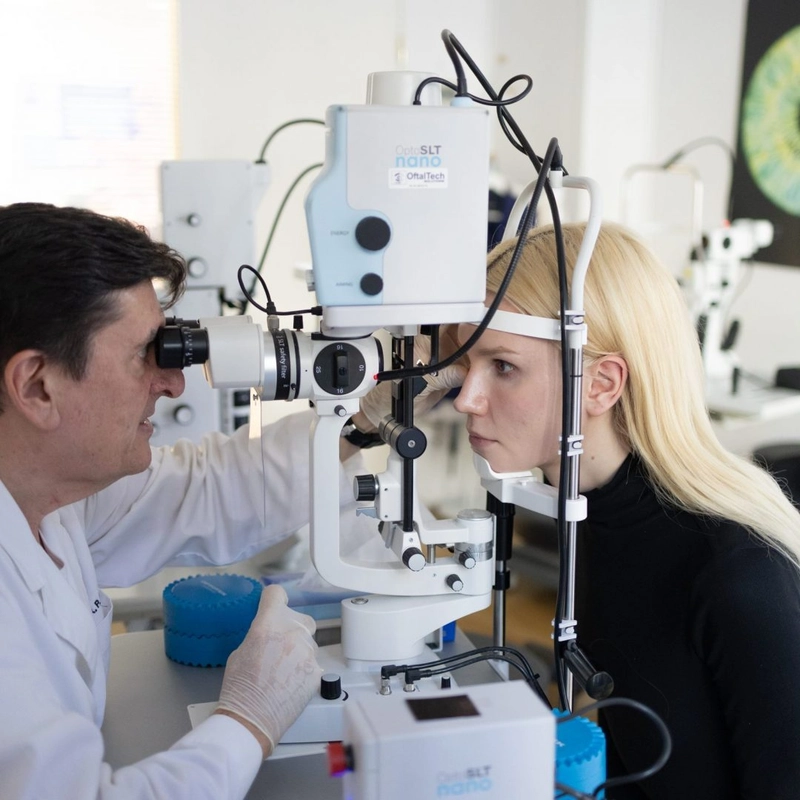
Medicine had developed a way to place color inside living transparent tissue. Cosmetic demand supplied the next question: If surgeons could restore the appearance of an abnormal eye, why should a healthy eye remain outside aesthetic design?
That boundary started dissolving during the 2010s. French ophthalmologist Dr. Francis Ferrari became one of the key figures in that transition, using femtosecond-assisted keratopigmentation to move corneal pigmentation into elective cosmetic territory. In December 2013, he performed the procedure on a middle-aged French woman who wanted her naturally dark-brown eyes changed to a muted hunter green, a case Ferrari describes as the first cosmetic laser eye-color change.
A 2025 clinical review led by ophthalmologist Francesco D’Oria of the University of Bari and Jorge L. Alió of Vissum, the Miranza Group and Universidad Miguel Hernández in Alicante divides permanent eye-color alteration into three principal surgical routes: cosmetic iris implants, laser iris depigmentation and cosmetic keratopigmentation. Their distinction matters because each technology interferes with a completely different anatomical layer of the eye, creating three very different relationships between aesthetic control and medical risk.

Cosmetic iris implants pursued the most literal solution. A colored artificial structure was placed inside the eye to cover the natural iris. Serious complications including glaucoma, corneal endothelial loss and permanent visual impairment accumulated around the procedure. Medical literature now treats cosmetic implantation into healthy eyes as the deeply problematic branch of this history.
Laser iris depigmentation chose another route: attack the color already present. A Q-switched Nd:YAG laser targets melanin within the anterior iris stroma, progressively reducing brown pigment and exposing a lighter appearance. The procedure turns eye-color change into subtraction.
One of the largest datasets comes from ophthalmologist Pedro Grimaldos Ruiz at Eyecos Clinic in Barcelona, who published results from 1,176 eyes belonging to 588 patients treated with photoablative cosmetic iridoplasty. Women represented 53.7% of the group and men 46.2%. The authors reported efficacy of roughly 87% to 95% in their series.
Then an individual eye can puncture the comfort of a percentage.
In 2023, Jiaru Liu, Salim Korban, glaucoma specialist Marlene R. Moster, Marc-André Rhéaume, and Qianqian Wang reported the case of a 32-year-old woman who reached emergency care after four bilateral cosmetic iris-laser sessions in Turkey. She later reached emergency care with visual acuity of 20/150 in her right eye and counting fingers in her left. Intraocular pressure measured 50 mmHg and 42 mmHg. Severe pigmentary glaucoma led to urgent surgery in both eyes, followed by persistent visual-field defects and significant glare.
Keratopigmentation makes the third bet. It leaves the iris in place and creates color inside the cornea. Current reviews position it as the strongest candidate among the three approaches because surgeons can control shade, distribution and intensity while working within the corneal stroma. The same reviews also emphasize limited long-term evidence and the need for broader studies.
Honey Gold sounds like hair color. Jade could sit inside an eyeshadow palette. Space Grey belongs easily on a technology product. They are also names offered to people considering permanent eye color surgery.
That vocabulary reveals the commercial transformation of keratopigmentation. A procedure becomes a beauty category when technical capability develops a consumer interface. Patients receive simulations. Pigment intensity becomes adjustable. Surgeons discuss compatibility with skin tone, hair and pupil visibility. Social-media feeds turn postoperative eyes into transformation content. Financing moves a five-figure procedure into monthly-payment logic.
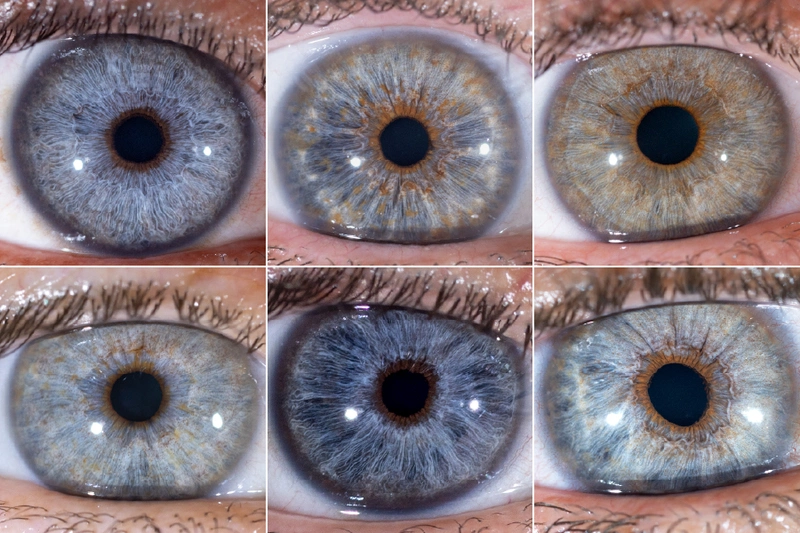
In the United States, Dr. Alexander Movshovich's KERATO practice in Manhattan and Miami says he has performed more than 1,800 keratopigmentation cases since entering the field, charging around $12,000 for each case. Across the country, Dr. Brian Boxer Wachler's Boxer Wachler Vision Institute in Beverly Hills markets its own keratopigmentation service under the name ColorEyes.
Risk becomes psychologically easier to package when the decision begins with a color menu. A consumer can spend ten minutes debating Olive and Magical Grey while the deeper decision concerns laser-created corneal tunnels, long-term pigment behavior and future ophthalmic care.
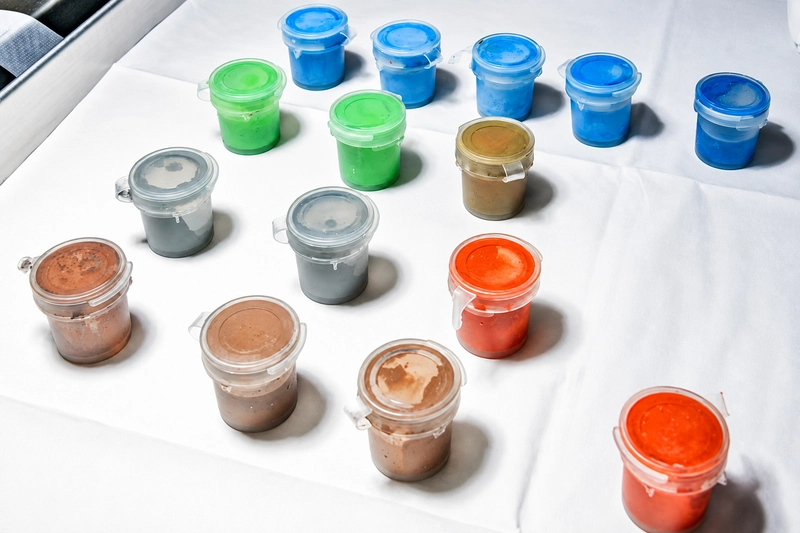
Brian Boxer Wachler described discovering cosmetic keratopigmentation through the questions arriving from his own TikTok audience before eventually offering the procedure himself. Patient curiosity therefore participated in expanding the medical market. The usual sequence of research, clinical adoption and public demand became culturally tangled.
Demand can now help tell medicine which aesthetic frontier deserves development.
A short eye color surgery creates a seductive sense of containment. Twenty-five minutes has a beginning and an end. Corneal biology has a much longer calendar.
More encouraging evidence for keratopigmentation itself came in 2025 from a prospective investigation led by Jorge Alió, working with Azad Sanginabadi, Amir Theodore Hojabr and Behzad Jafari. The team followed 166 cosmetically treated eyes operated between 2021 and 2023.
Those findings deserve neither panic nor complacency. They demonstrate why binary language around cosmetic surgery can become scientifically lazy. A patient can retain excellent conventional vision while subtler physiological or optical changes emerge. Safety is therefore layered.
There is immediate surgical safety. There is postoperative stability. Then there is lifetime compatibility.
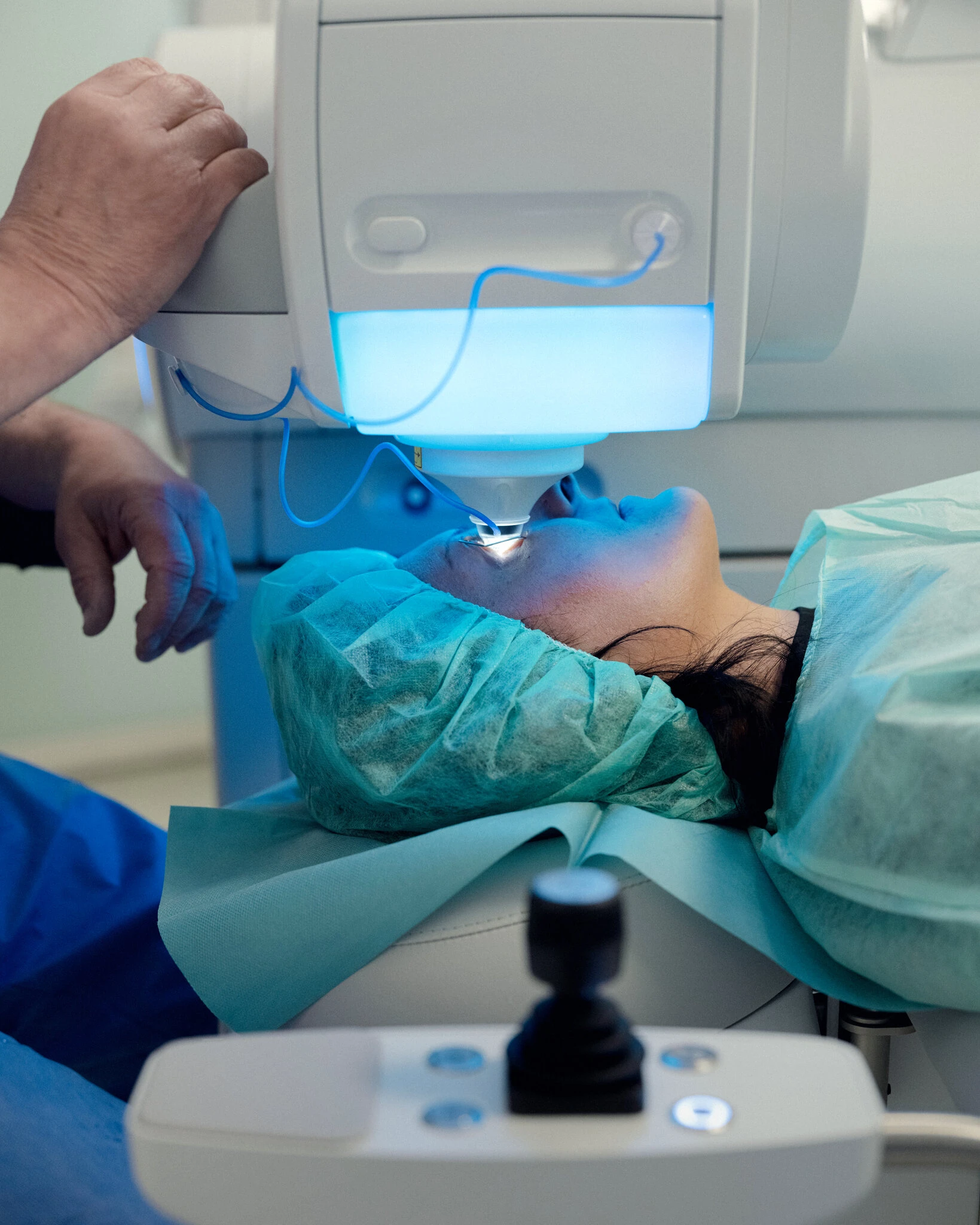
What does a cosmetically altered cornea look like after thirty years of aging, medication, disease and additional eye surgery?
In 2026, ophthalmologists Hassan Hashemi, Ali Hadavandkhani and Mehdi Khabazkhoob, working through research units including Noor Eye Hospital in Tehran, documented something the first cosmetic patients could barely have generated evidence for: what happens when an altered eye meets another sophisticated ophthalmic intervention. Their 62-year-old female patient had undergone aesthetic annular keratopigmentation and six months later received bilateral femtosecond-assisted cataract surgery with AcrySof PanOptix multifocal intraocular lenses. At three months, distance vision was reported at 20/20 in both eyes, with no glare or halos reported.
One patient provides possibility, not a lifetime guarantee. Her case matters because an aesthetic procedure finally encountered the ordinary medicine of aging.
Today’s 25-year-old eye color surgery patient could eventually require cataract treatment, glaucoma monitoring, retinal imaging or corneal intervention. The cosmetic decision may survive several generations of ophthalmic technology.
Pigment introduces another clock. Colors can fade, migrate or evolve. Surgeons have already discussed stability problems with particular formulations, including older versions of Honey Gold that reportedly shifted toward yellow.
That makes permanent eye color surgery familiar to the beauty industry. Formulation stability, color fidelity and revision suddenly matter inside a cornea.
Then came the next technological consequence.
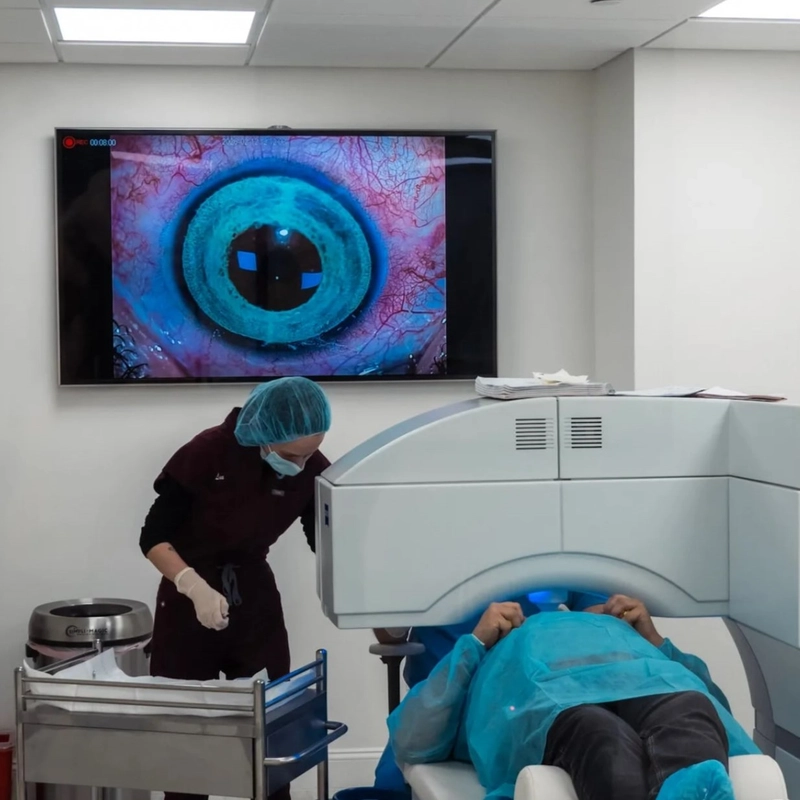
In December 2025, Tacir Clinic at Teknon Medical Center in Barcelona, published a case that pushed the technology in the opposite direction. Their 53-year-old male patient had developed poorer visual quality, increased corneal aberrations and reduced acuity following bilateral cosmetic femtosecond keratopigmentation. The team created a corneal flap with a femtosecond laser, then used an excimer laser to ablate pigment-containing stromal tissue across an 8.5-mm optical zone. They reported improved corneal transparency, architecture and visual acuity afterward.
The procedure designed to make eye color permanent had already generated a procedure designed to remove it.
When reversibility becomes the innovation frontier, what exactly did permanence mean in the original sales promise?
This is where the eye color surgery story becomes larger than an unusual cosmetic trend. Aesthetic medicine has reached a stage where inherited anatomy can enter the same commercial cycle as other beauty decisions: visualization, selection, intervention, maintenance, revision and reversal. Hair had dye. Skin acquired lasers. Faces acquired injectables. Eye color now has surgical technologies competing over where pigment should sit, whether melanin should remain, how artificial color should age and how a future surgeon might remove it.
Advertisement