MENU
Close





Fashion has repeatedly celebrated Olivier Theyskens, questioned his commercial value, then called him back when its own imagination began to run thin.

Fashion has repeatedly celebrated Olivier Theyskens, questioned his commercial value, then called him back when its own imagination began to run thin.
August 11, 2026
Advertisement

Advertisement



After Nina Ricci, Olivier Theyskens entered the most revealing phase of his career. The prodigy had already been praised, hired, awarded and displaced. Fashion kept calling him back because it could never quite replace what he offered. It also kept exposing how uncertain the industry becomes when singular talent demands patience.
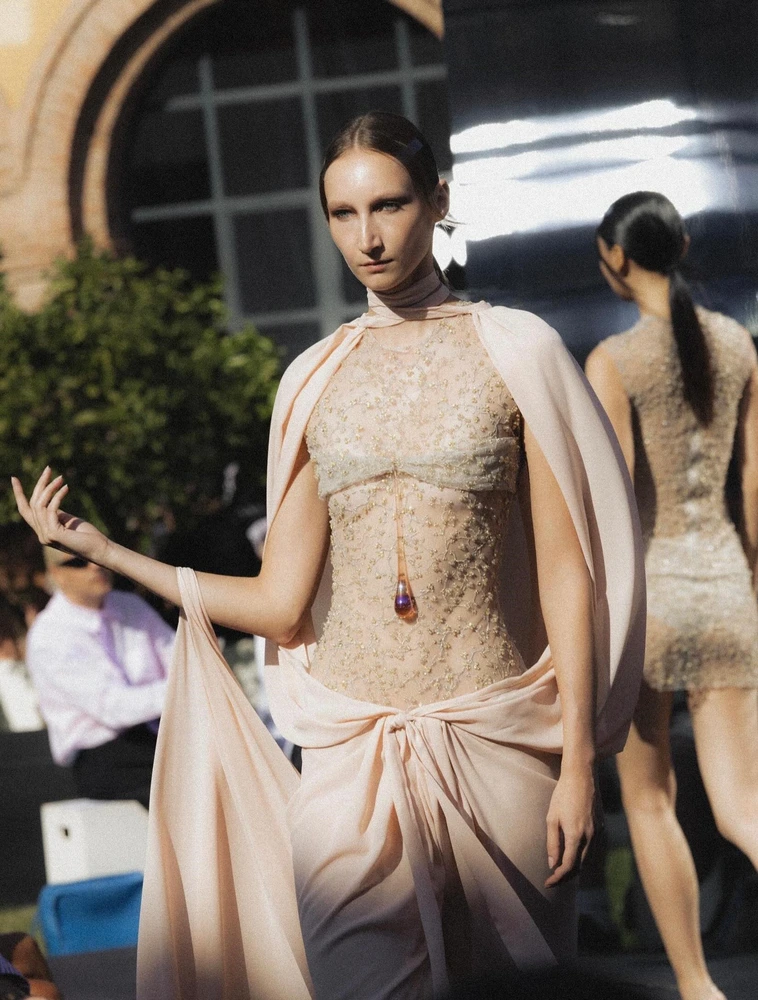
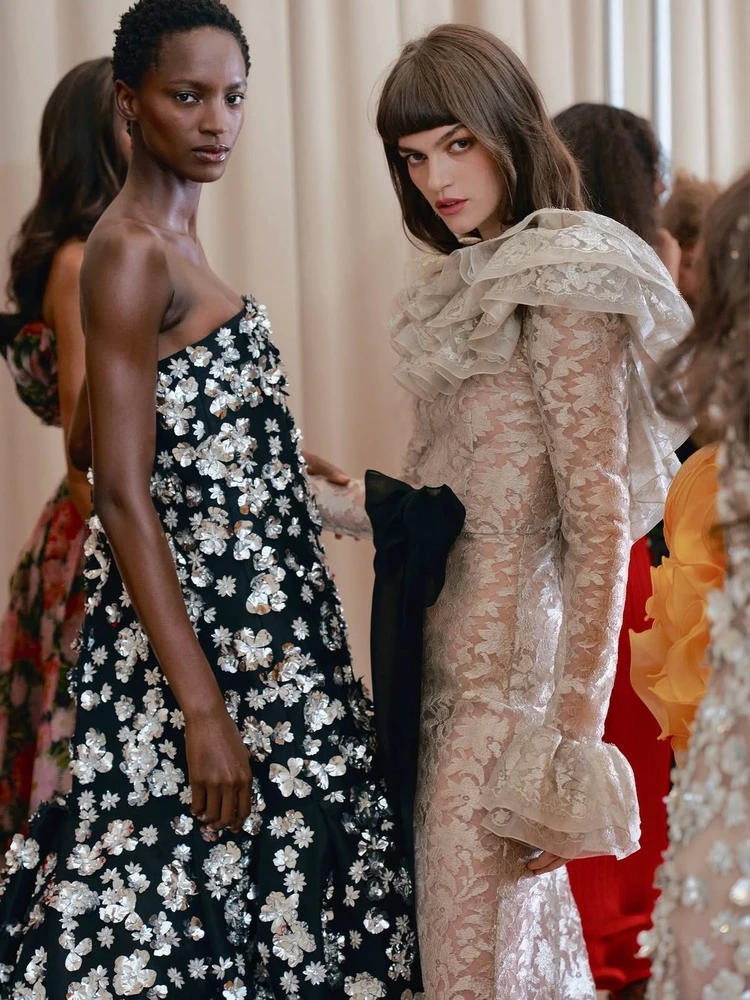
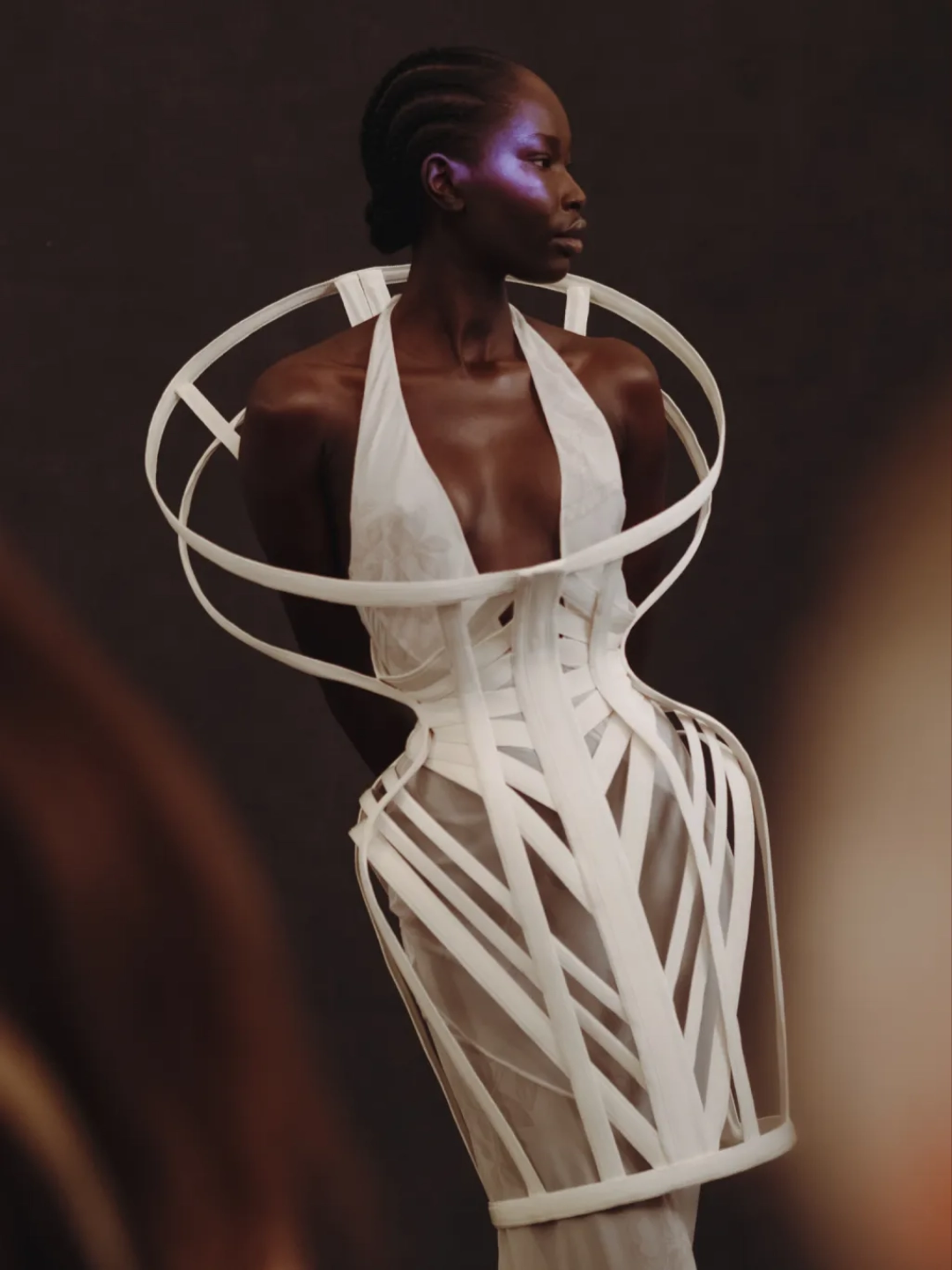
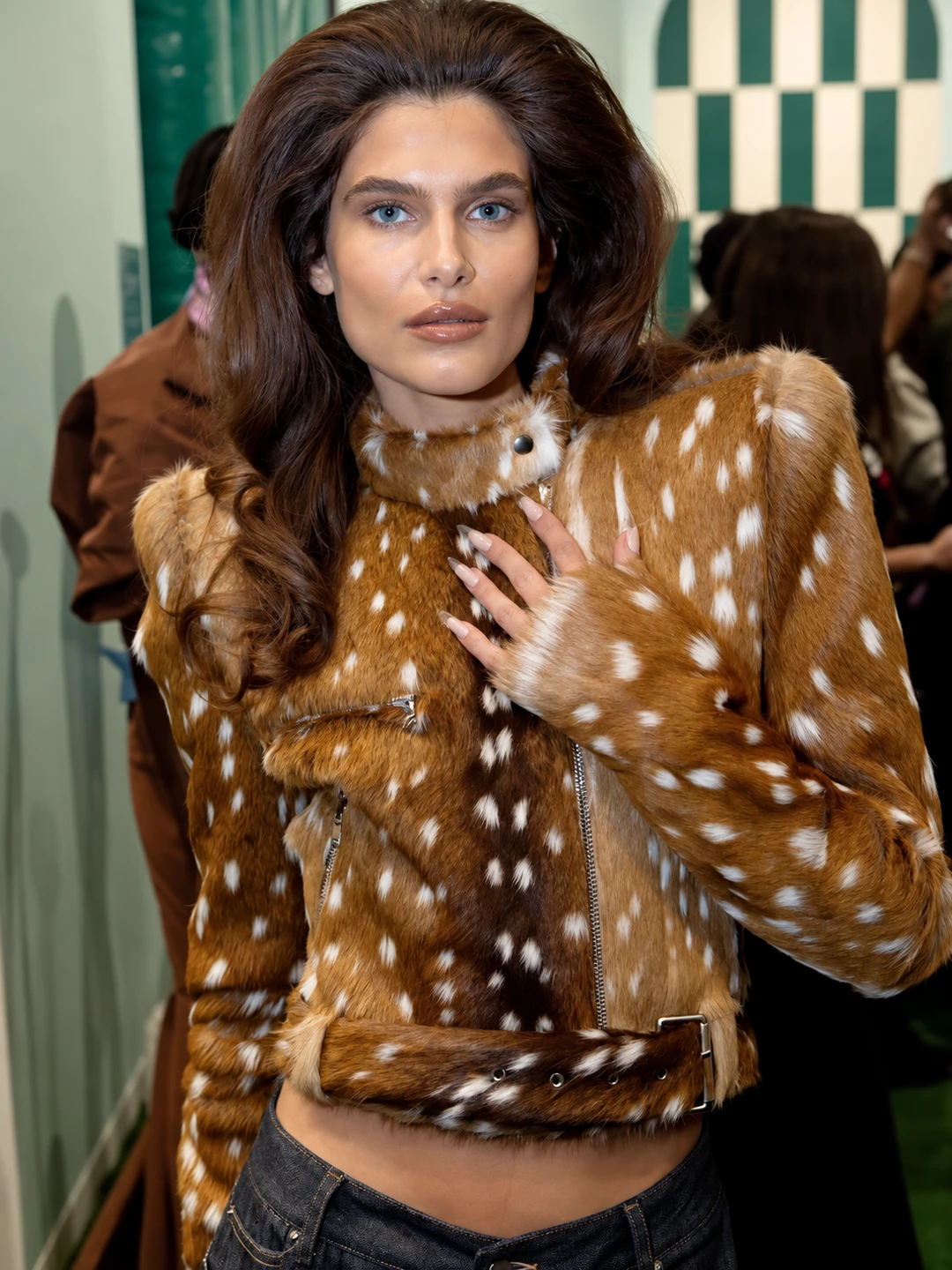
On July 5, 2026, Olivier Theyskens returned to a Paris runway with Boloria. He was forty-nine, presenting a new Antwerp-based house on the eve of Haute Couture Week. The collection, titled Le Monde Flottant, joined womenswear and menswear inside a world of elongated bodies, suspended volumes, softened tailoring and historical references that seemed to drift between centuries.
The scene contained the accumulated weight of his career. Olivier Theyskens had spent years reconstructing other houses, then years protecting a small label carrying his own name. Boloria offered another proposition.
Calling this a comeback would flatten the story. Olivier Theyskens had already returned too many times.
Olivier Theyskens left Nina Ricci in March 2009 with a rare kind of power. His work at Rochas and Nina Ricci had become part of the visual history of the decade. He had proven his authority over silhouette, atmosphere and construction. His final Nina Ricci collection delivered one of the most discussed fashion images of the period: models raised onto extreme heelless platforms, their bodies pulled into long, nocturnal lines.
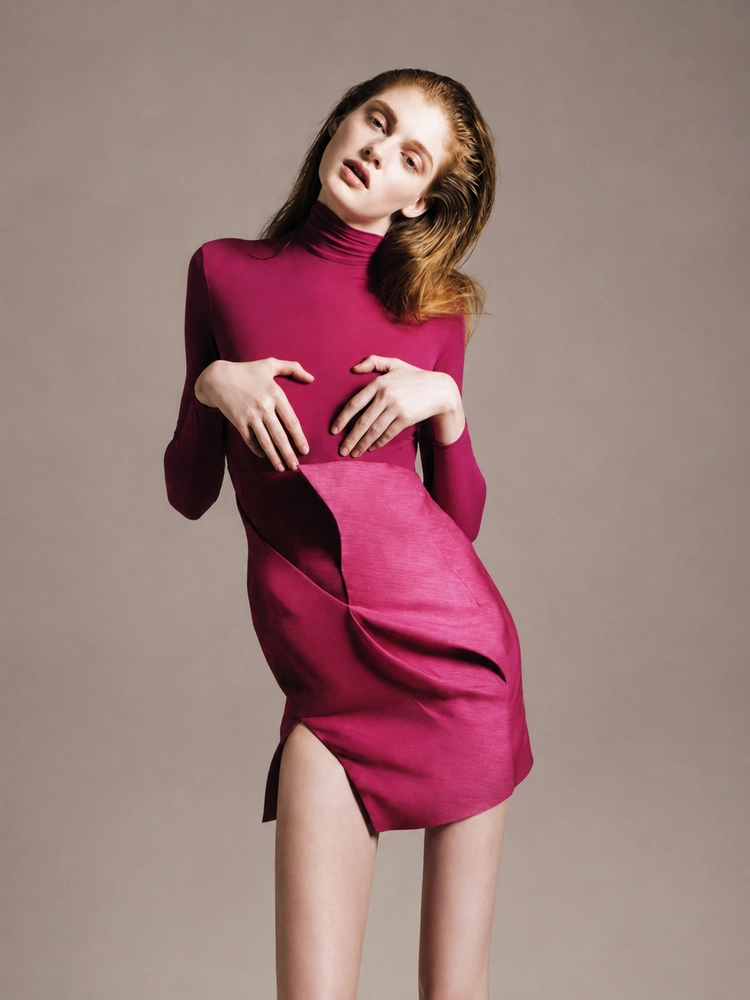
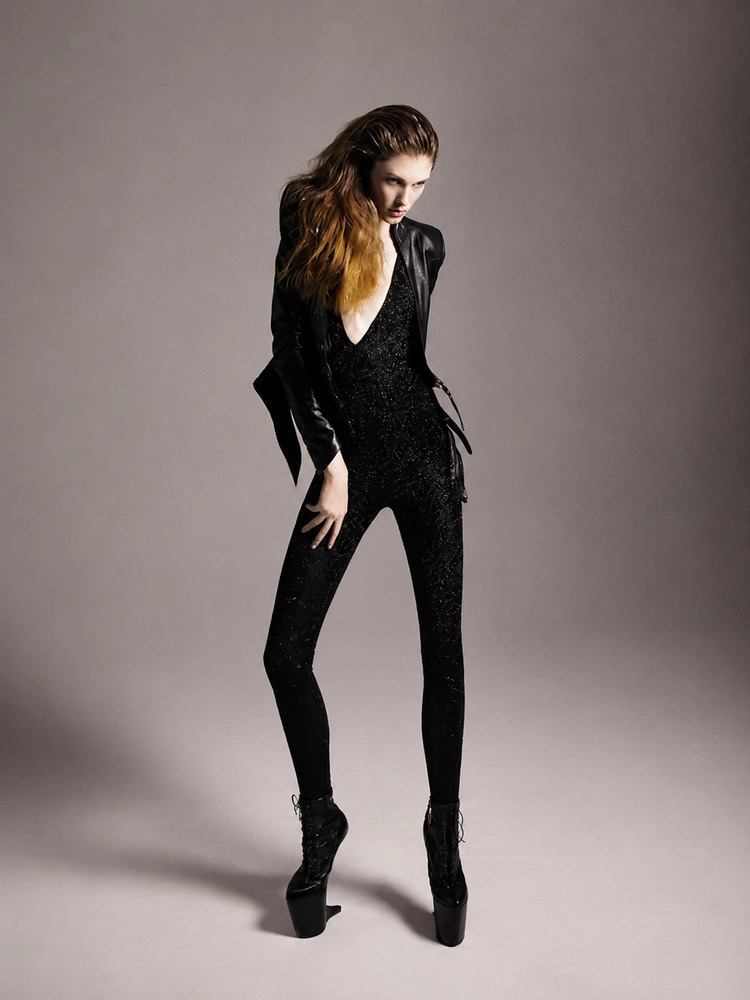
Yet acclaim had failed to secure continuity. Rochas fashion had closed under Procter & Gamble. Nina Ricci had praised his work while moving toward a more commercially direct future. Two heritage houses had gained extraordinary cultural value through his presence, and neither relationship had produced the stable position his reputation appeared to promise.
That history made Olivier Theyskens desirable and complicated. A couture house seemed an obvious destination, though few such roles existed. Another revival risked repeating the pattern of hiring him for transformation while denying him the time, capital or product structure required to convert attention into durable business. Relaunching his own label demanded financing after the collapse of its first chapter.
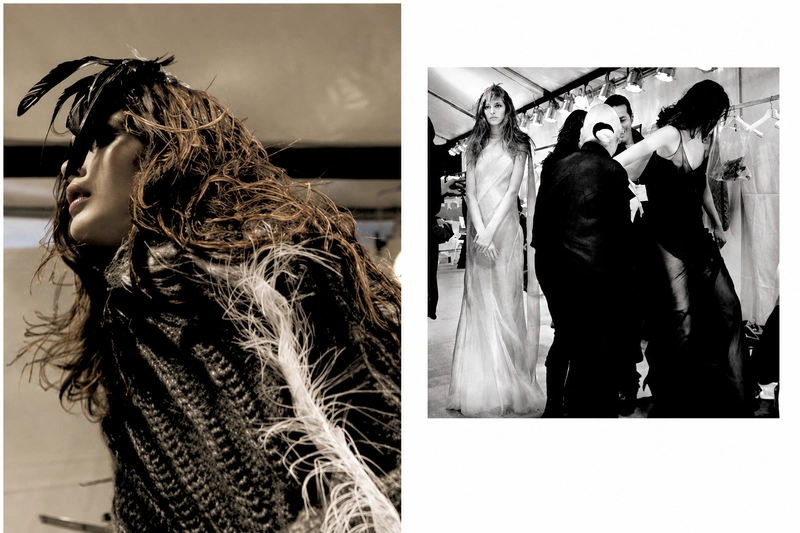
In February 2010, he launched Olivier Theyskens: The Other Side of the Picture, a book created from his long collaboration with photographer Julien Claessens. The project preserved the private architecture of his work: fittings, backstage tension, unfinished garments, bodies in motion. It also revealed an uncomfortable shift. At thirty-three, Olivier Theyskens was already being archived as a major designer while the industry remained unsure where to employ him next.
Fashion frequently confuses historical importance with professional security. Olivier Theyskens was learning the distance between them.
The next chapter appeared improbable enough to sound almost corrective. In September 2010, Olivier Theyskens presented a capsule created with Theory, the New York company associated with contemporary workwear, stretch trousers and the functional wardrobe of urban professionals.
Olivier Theyskens had built his authority through elongated gowns, intricate surfaces and clothes that carried the visual intensity of demi-couture. Theory operated through repetition, accessibility and daily use. The collaboration placed his identity inside garments expected to survive offices, pavements, taxis and crowded wardrobes.
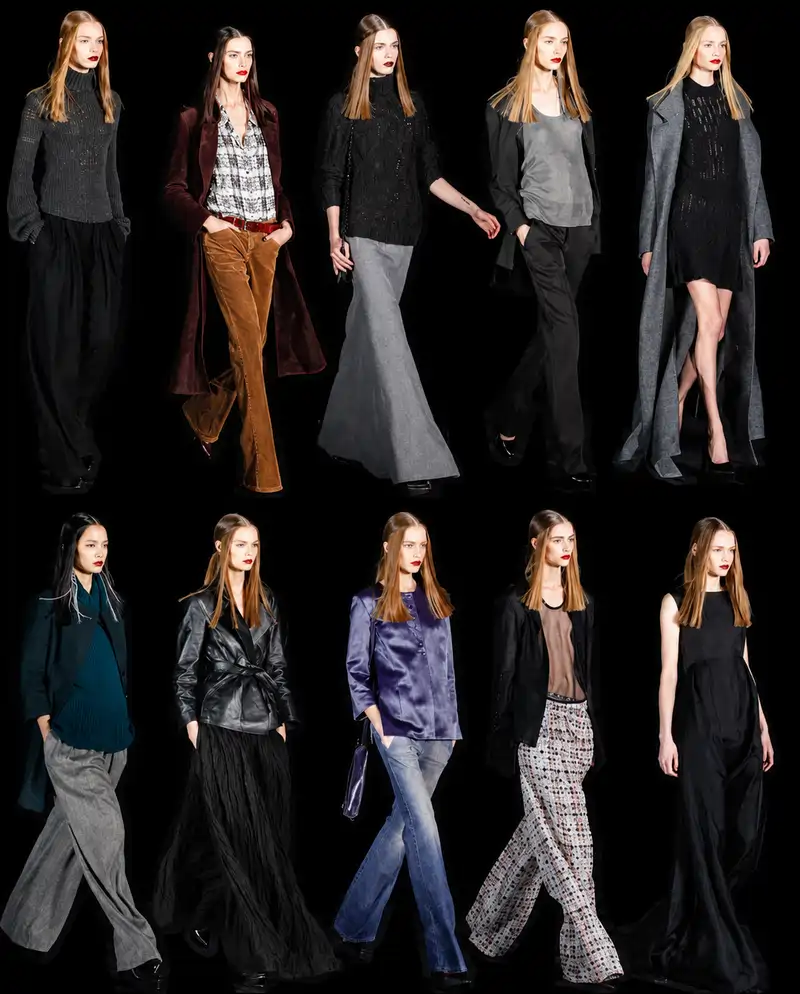
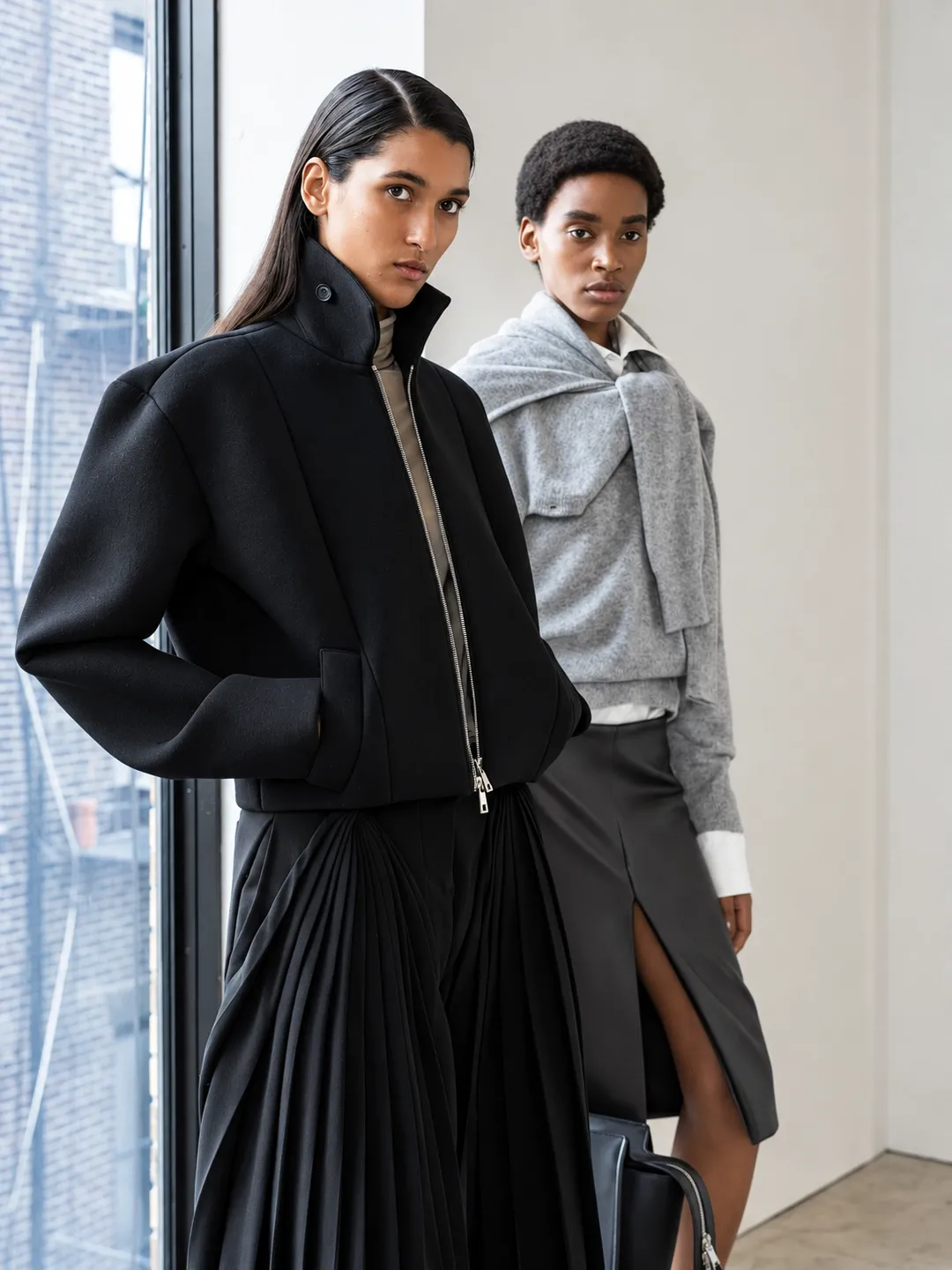
The clothes proved that his signature had never depended entirely on gothic ornament. Beneath the lace and historical references was a precise understanding of proportion. Theory stripped away the scenery and made that intelligence easier to see. His leather jackets curved forward around the torso. Denim sat low and lengthened the body. Tailoring held a slightly displaced attitude, as though conventional sportswear had been stretched into a more restless form.
The response arrived quickly. On October 25, 2010, Theory appointed Olivier Theyskens artistic director with full design responsibility. The capsule had functioned as a commercial test and a cultural event; its success gave him authority over the broader brand.
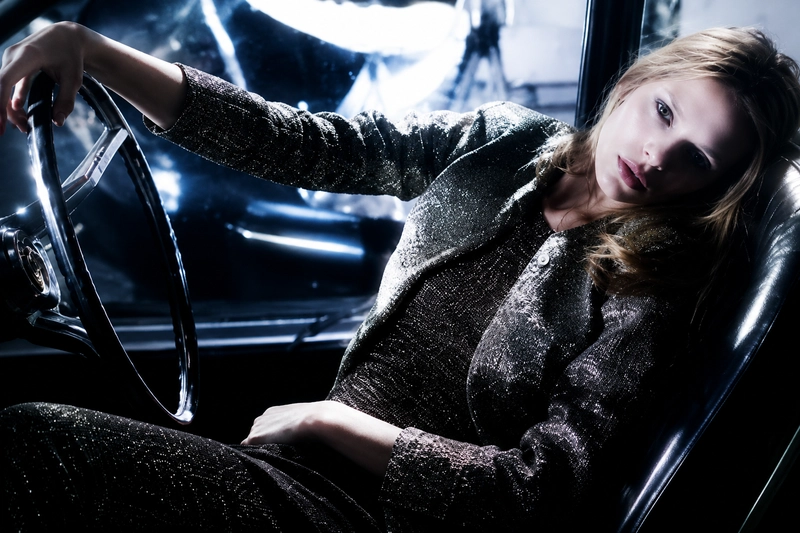
New York became an education in scale. Olivier Theyskens entered a business with wider categories, larger teams and customers whose lives placed specific demands on clothing. At Rochas and Nina Ricci, his central task had involved rebuilding desire around historic identities. Theory required him to understand volume, price, category development and the practical rhythm of American dressing.
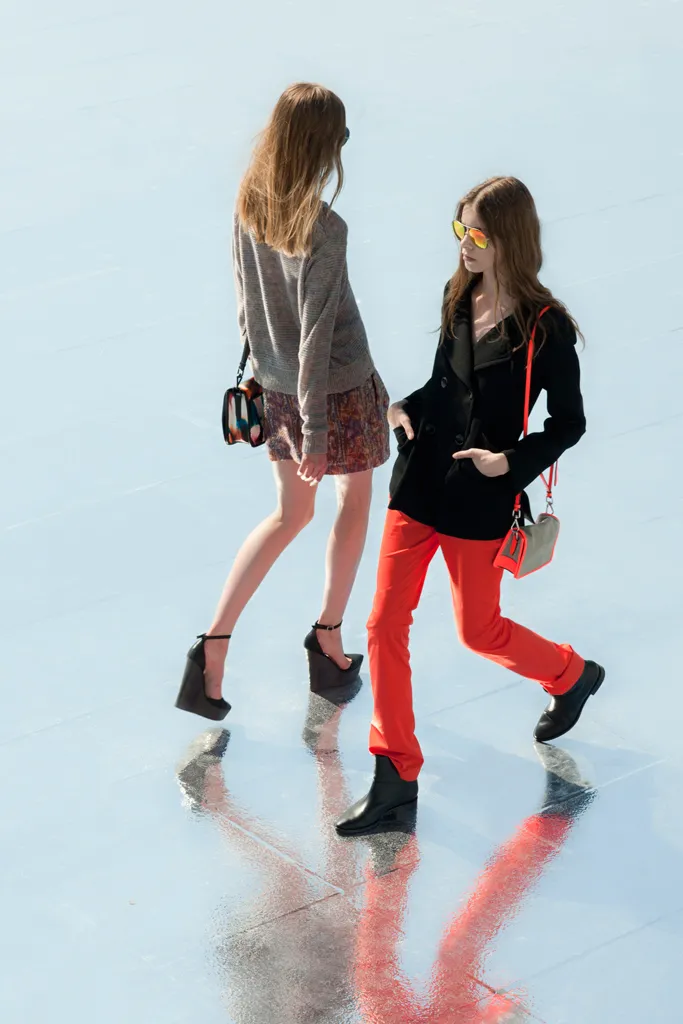
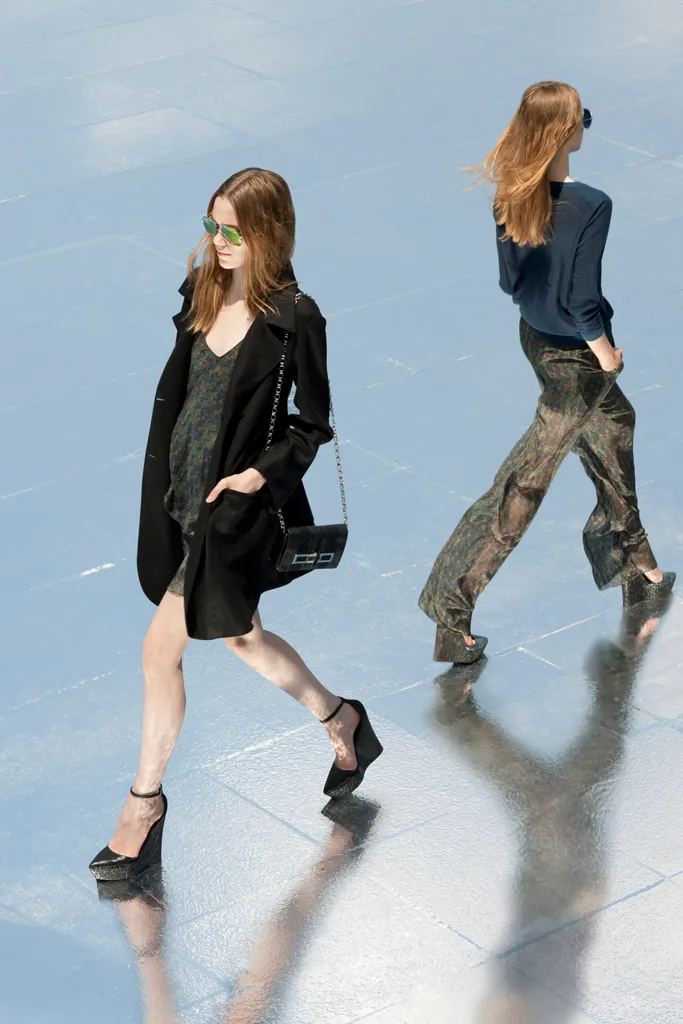
This period changed the way the industry could speak about him. The familiar criticism, that he made extraordinary clothes for imaginary lives, became harder to sustain. He developed tailoring, knitwear, denim, fitness clothing and accessible separates. His work entered closets far beyond the narrow audience able to purchase a hand-finished Rochas gown.
Theory also showed how easily “commercial” becomes a lazy word in fashion criticism. A wearable garment still requires ideas. The difference lies in where the design intelligence is placed. Olivier Theyskens moved it into cutting, fit and proportion, areas less visible in a runway photograph and more important after months of wear.
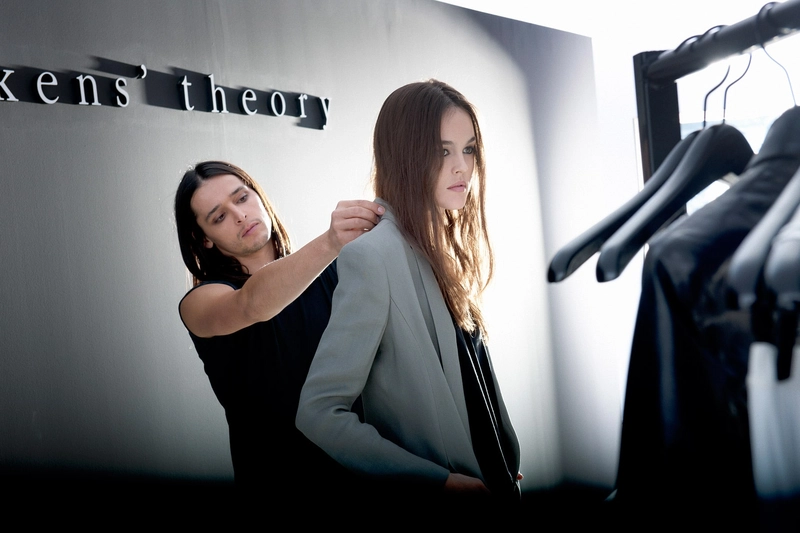
Economically, the capsule generated enough confidence to produce his expanded appointment. His name gave Theory a new level of editorial attention and turned its show into one of New York Fashion Week’s closely watched events. Customers could buy clothing connected to Olivier Theyskens without entering the four-figure world of his Parisian work. Company leadership later credited him with expanding the brand’s possibilities. Public revenue figures, however, never isolated the financial value of his contribution. The available evidence supports increased attention, product ambition and market distinction; it cannot prove a measurable profit transformation.
By late 2013, the separate Theyskens’ Theory line was discontinued and folded back into Theory. The change suggested that his name had succeeded as an engine of excitement while proving harder to maintain as a permanent sub-brand. The removal of that label also reduced the visible ownership of the design language he had introduced.
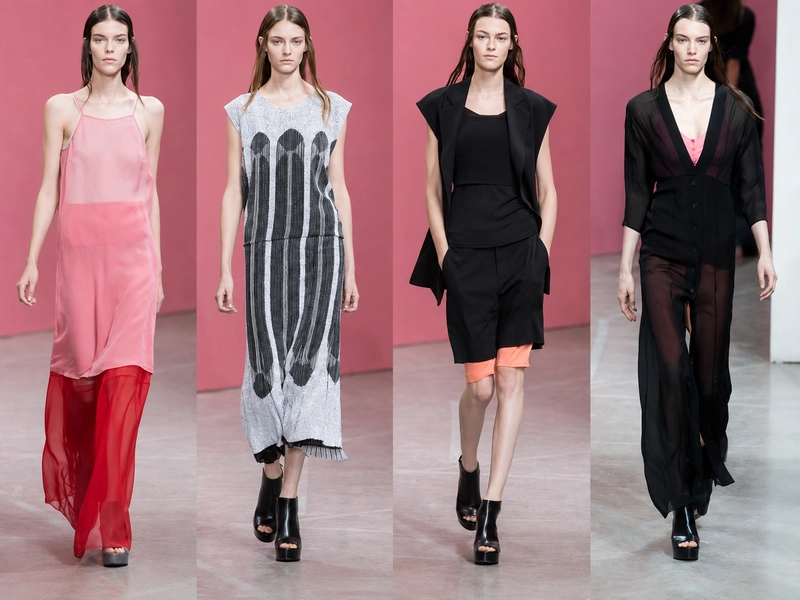
On June 17, 2014, his departure was announced after three and a half years. Andrew Rosen described his contribution as extraordinary and expressed confidence in what the internal team would carry forward. The language was respectful. It also belonged to a pattern Olivier Theyskens knew well: a house absorbed the value of his work, retained the vocabulary developed under him and continued without the person whose name had generated the transformation.
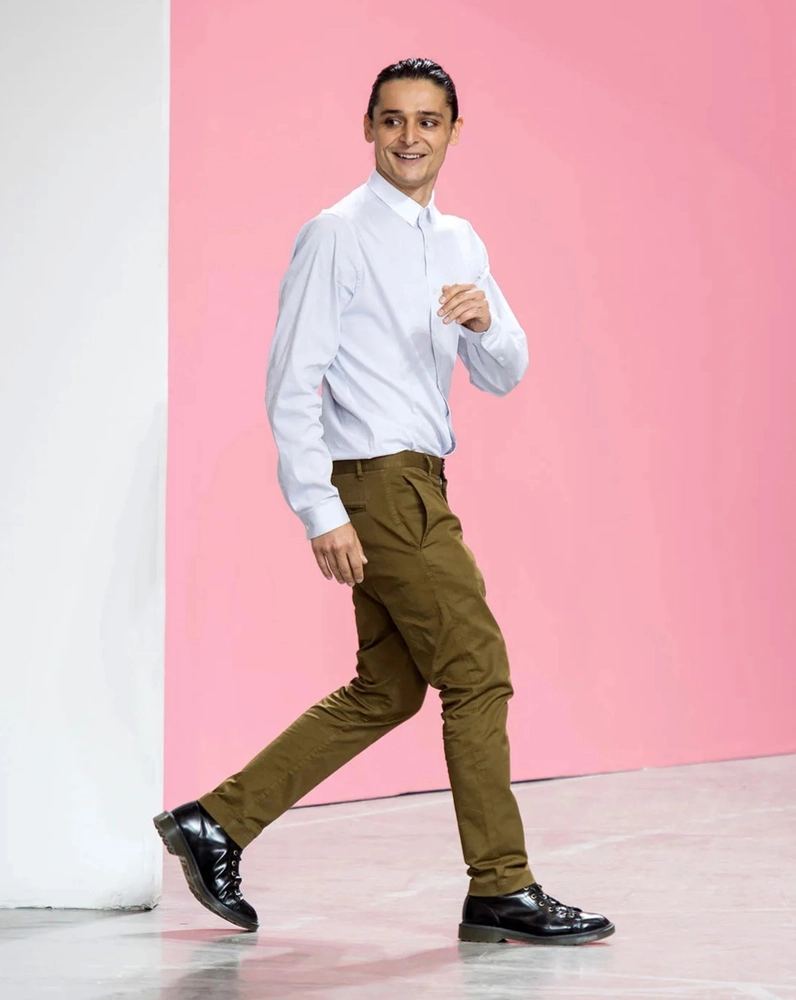
Theory expanded Olivier Theyskens as a designer. It offered no permanent answer to where he belonged.
After Theory, the industry began discussing Olivier Theyskens through the language of bankability. In August 2014, the question appeared openly: could he still produce enough commercial value to justify another major appointment?
By thirty-seven, Olivier Theyskens had worked across independent design, French heritage luxury and American contemporary sportswear. He understood ateliers, archives, corporate teams, wholesale expectations and the psychology of the runway. In a rational industry, this range would increase his value.
Fashion often assigns a different meaning to experience. Each completed tenure becomes evidence to interpret. Each departure creates suspicion. Younger designers can be framed as potential because their failures remain unwritten. A mature designer carries a record, and the industry may treat that knowledge as risk.
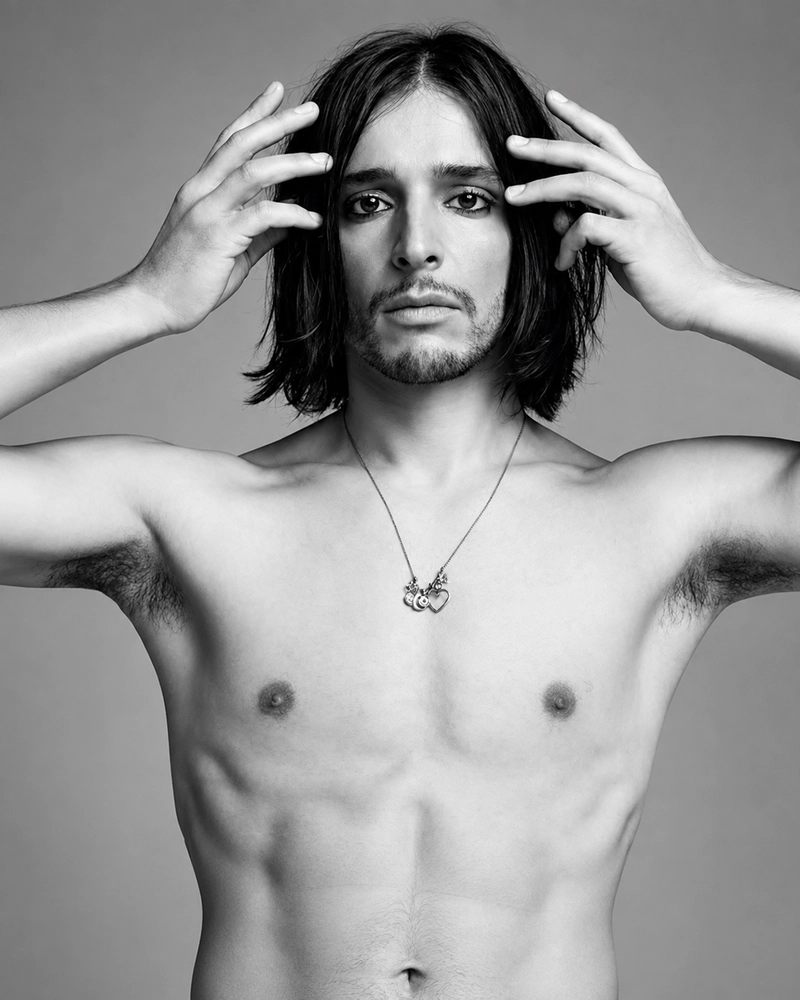
Retail voices complicated the idea that Olivier Theyskens lacked commercial ability. Julie Gilhart, formerly of Barneys New York, argued that his clothes had sold and that customers followed him across labels. Ken Downing of Neiman Marcus credited Theory with broadening his sportswear vocabulary. Their comments exposed the weakness of the myth surrounding him. Olivier Theyskens had never been simply an artist incapable of understanding a customer. His career had been shaped by mismatches between creative ambition, corporate strategy, production cost and the patience of ownership.
For roughly two years, he worked toward another answer. He returned to Paris, partnered with executive Maximiliano Nicolelli and prepared to revive his own house. The task carried personal and financial consequences. A namesake label promises authorship. It also places the designer closer to every vulnerable part of the business.
On July 8, 2016, Olivier Theyskens announced the relaunch of his label. The new company planned two collections each year and operated through a small Paris structure with selective distribution. The ambition was controlled from the outset. This was no attempt to imitate the expansion model of a global luxury house.
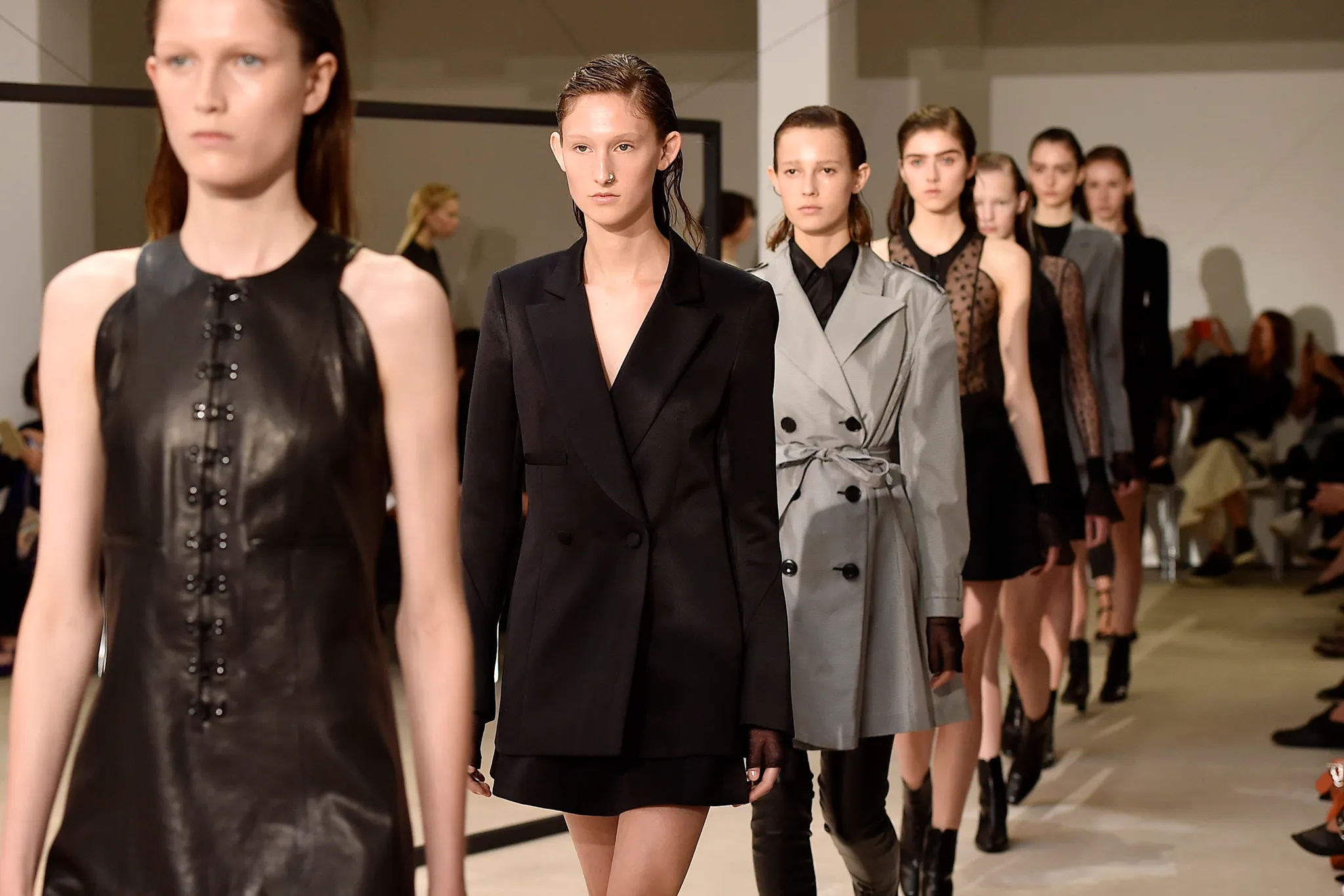
On September 27, he presented Spring 2017 to around eighty guests. The backstage area occupied his apartment across the street from the venue. That detail captured the scale of the operation more clearly than any business statement could. A designer whose work had once animated large corporate houses was rebuilding his name through proximity: close to the clothes, close to the team, close enough to see every compromise.
The collection restored several recognisable codes. Hook-and-eye fastenings traced the body. Long dresses fell through bias cutting. Corseted structures created tension beneath apparently fluid surfaces. Shoulders remained precise, backs extended, and lingerie construction returned as both engineering and psychological language.
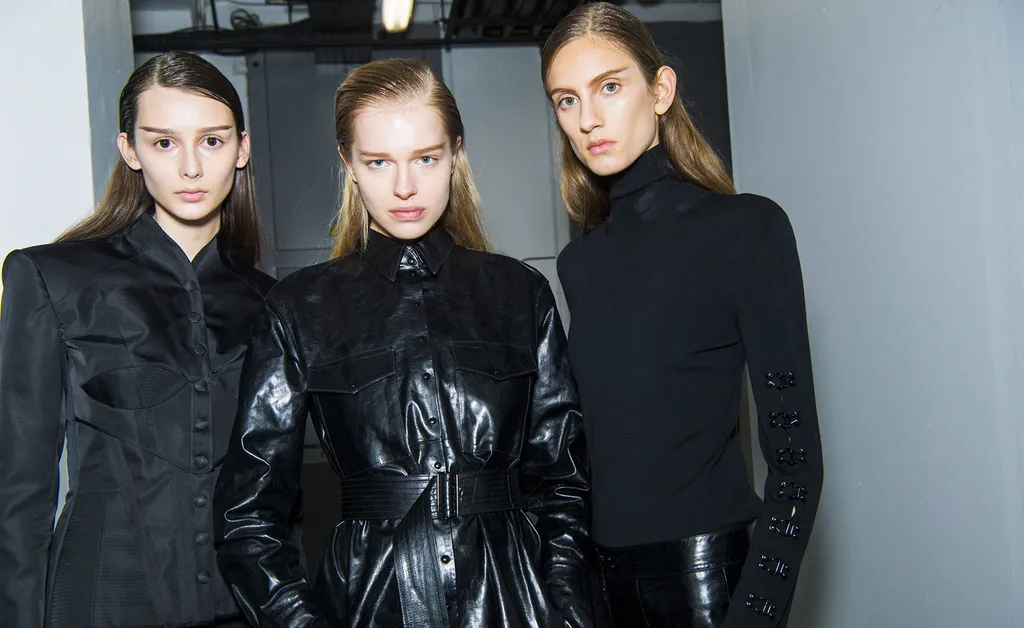
Yet the relaunch carried the experience of Theory. These clothes considered the person wearing them with greater directness. Olivier Theyskens had spent four years studying how women use garments repeatedly. His return avoided empty nostalgia because he understood that the customer, production system and designer had all changed.
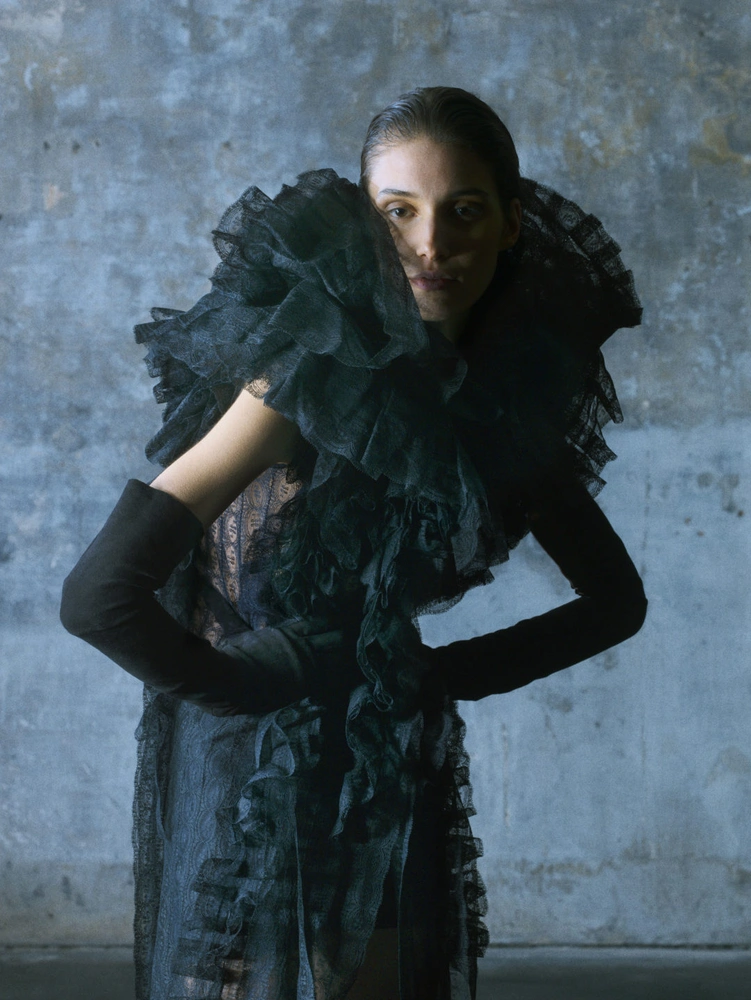
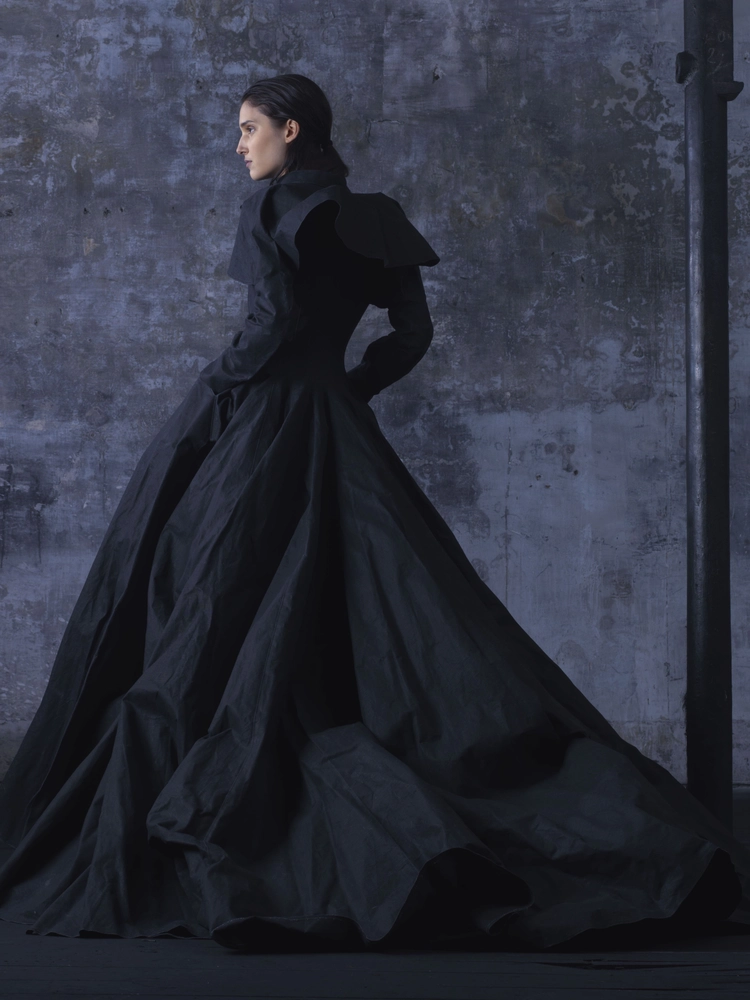
The past remained active as a resource. Olivier Theyskens has always designed through memory, though memory in his work rarely behaves like quotation. He extracts a pressure, a gesture or a construction principle. A historical sleeve becomes an altered shoulder. An antique fastening becomes a modern line across the torso. The emotional residue survives while the garment belongs to the present.
From October 12, 2017, to April 15, 2018, MoMu Antwerp presented Olivier Theyskens: She Walks in Beauty. The exhibition traced twenty years across his own label, Rochas, Nina Ricci and Theory, establishing his work within the institutional history of fashion.
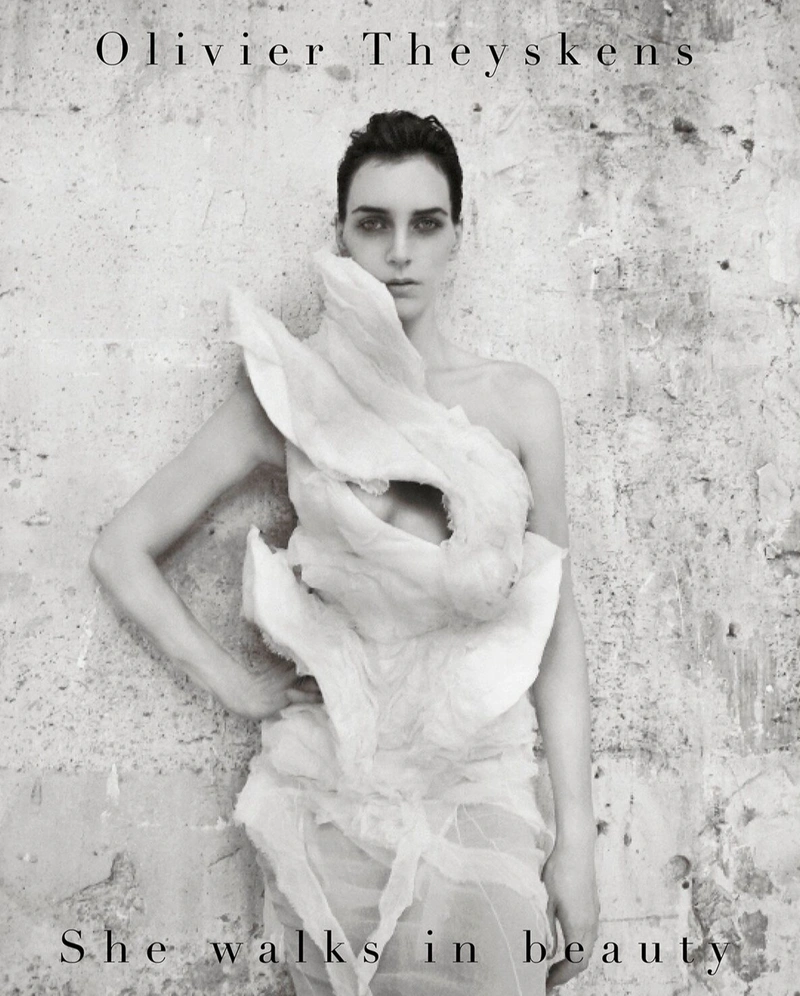
The timing contained another contradiction. His archive was receiving the treatment of a canonical body of work while his revived company remained a startup with limited resources. Museum recognition creates permanence around objects. It does little to finance fabric orders, salaries, samples, distribution or accessories development.
The relaunch succeeded in recovering authorship. Olivier Theyskens could once again determine the pace, tone and construction of the clothes carrying his name. Its economic reach remained narrow. Public figures offer no evidence that the house developed into a profitable global operation. The absence of extensive accessories, retail infrastructure and broad product categories restricted growth. Those same limits protected the work from dilution.
Creative control came through accepting commercial scale, not conquering it.
In early February 2020, Azzaro appointed Olivier Theyskens artistic director across women’s and men’s haute couture, ready-to-wear and accessories. He could continue his namesake label while working with the house’s ateliers on Rue du Faubourg Saint-Honoré. His first collection was scheduled for the July couture period.
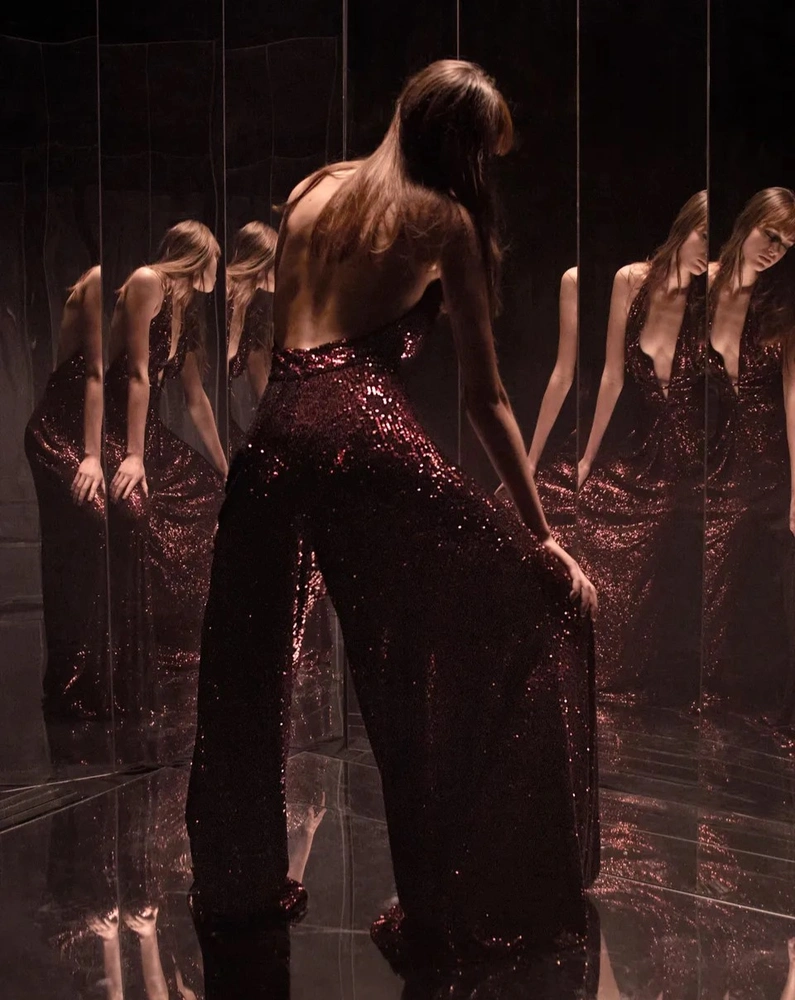
The appointment made intuitive sense. Olivier Theyskens had spent years producing couture-minded clothes without holding a formal couture position. Azzaro offered technical resources and a heritage built around sensual eveningwear, crystals, exposed backs and the nightlife glamour of the 1970s.
It also asked him to work outside the severity associated with his own identity. At Azzaro, he could pursue shine, ease and direct seduction. Sequins and metallic surfaces replaced some of the aged lace and distressed textures of his personal work. His long line remained, though it became softer and more body-skimming. Construction receded beneath an impression of fluidity.
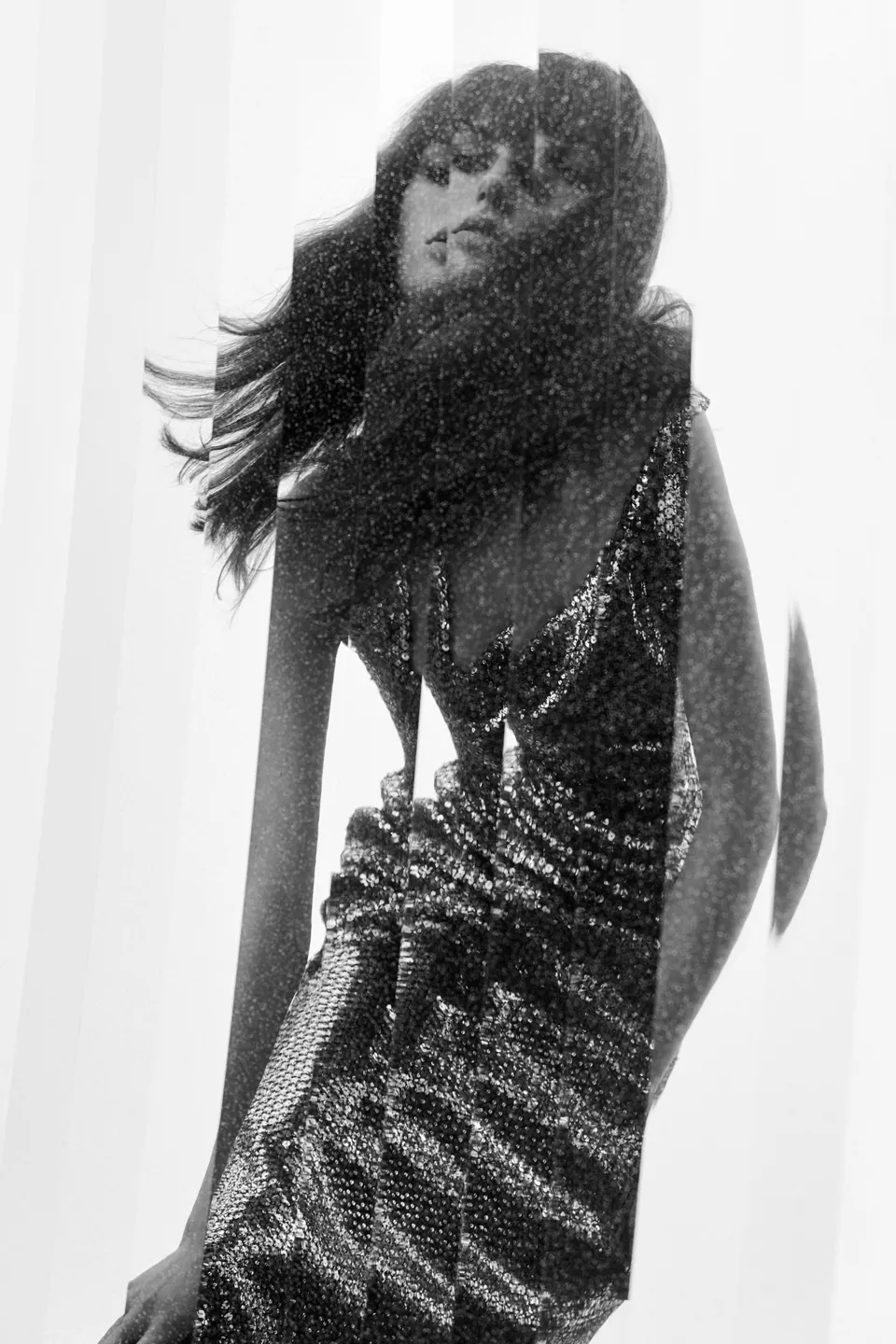
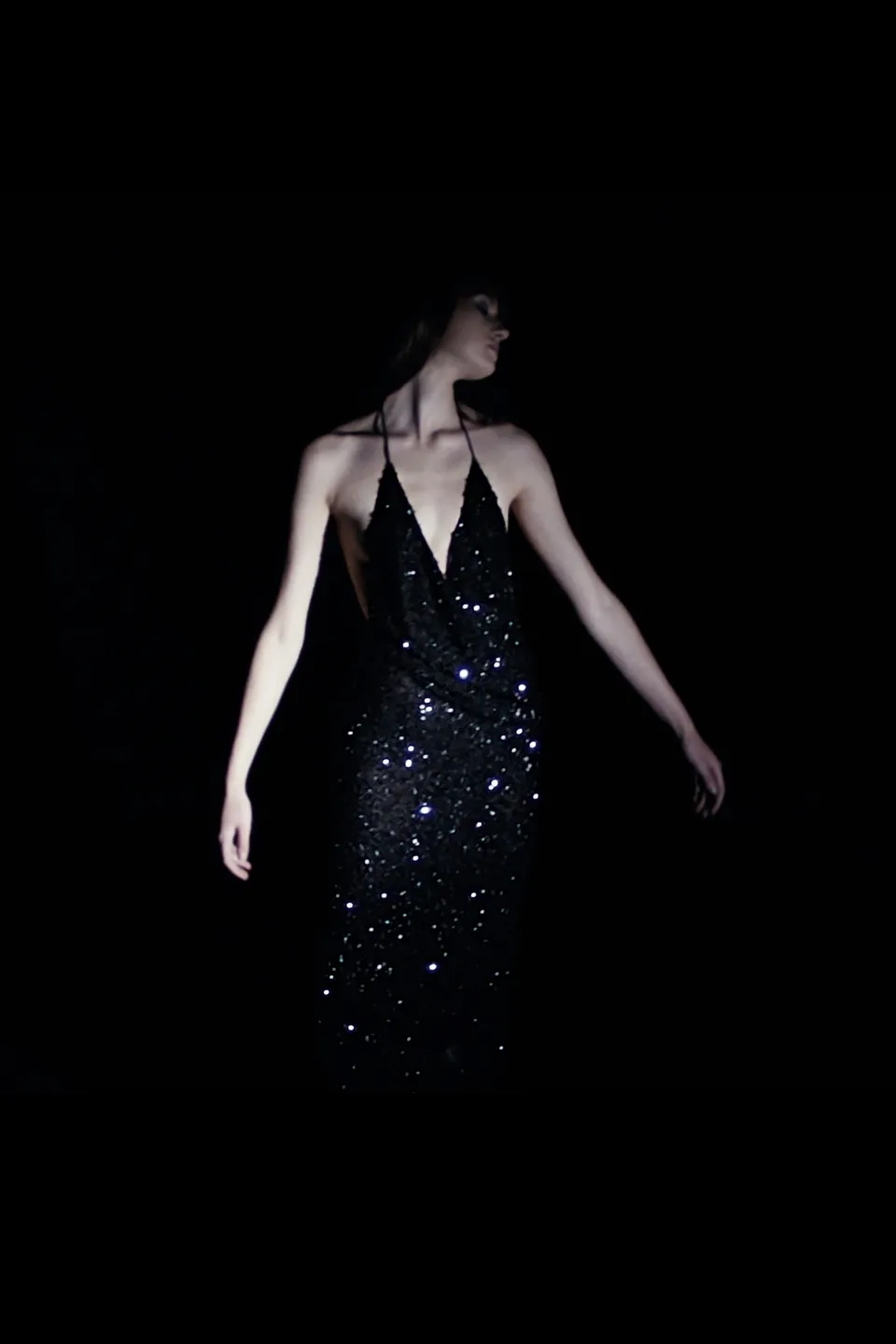
Menswear gave the appointment another purpose. Olivier Theyskens had long understood the power of narrow tailoring, yet previous chapters had centred overwhelmingly on women. Azzaro allowed him to dress men through sparkle, elongated jackets and a sensuality that escaped conventional formalwear.
Then the pandemic arrived.
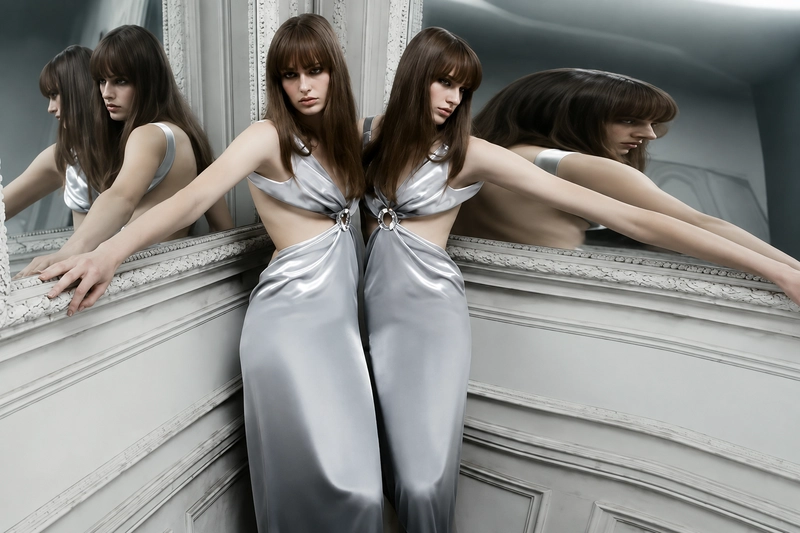
His debut unfolded during a couture season stripped of its usual social machinery. Red carpets vanished. Events contracted. Fashion films and private appointments replaced the public circuit that Azzaro’s evening clothes were designed to inhabit. A role built around visibility began in a period defined by absence.
The interruption slowed the commercial opportunities of the appointment, yet it gave Olivier Theyskens deeper access to the atelier and archive. He learned the culture of the craftspeople already inside the house. This approach reflects one of his strongest professional qualities. He enters a company by studying its knowledge instead of imposing a ready-made identity upon it.
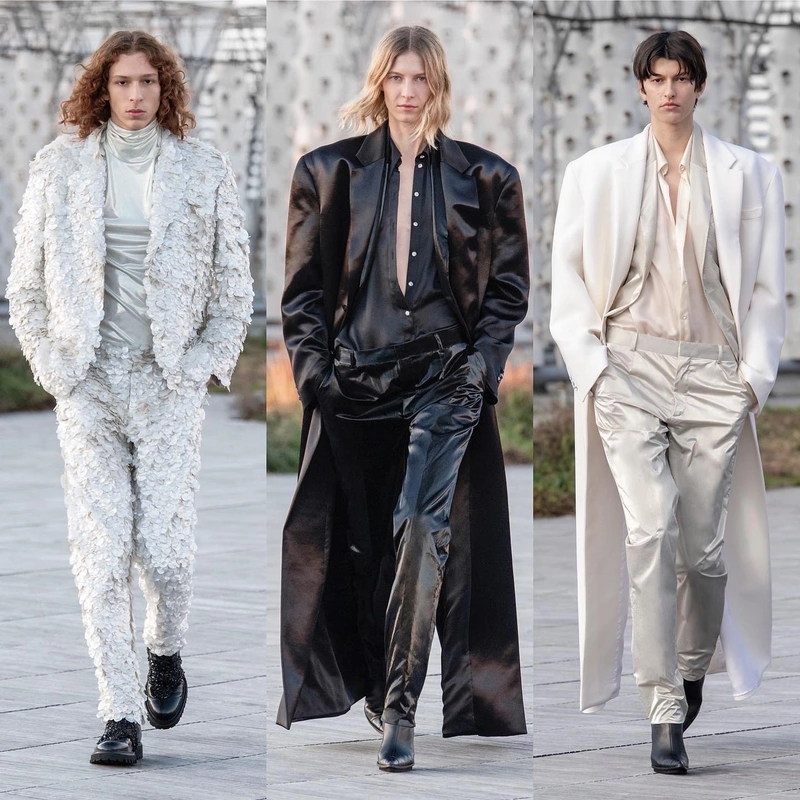
By Spring 2022, Azzaro reported particular response to menswear, made-to-measure appointments and client requests for archival reproductions. These signals indicate renewed engagement, especially in categories suited to small-scale luxury service. They remain insufficient for claims of broad financial recovery. No audited figures reveal the effect of Olivier Theyskens’s tenure on revenue or profit.
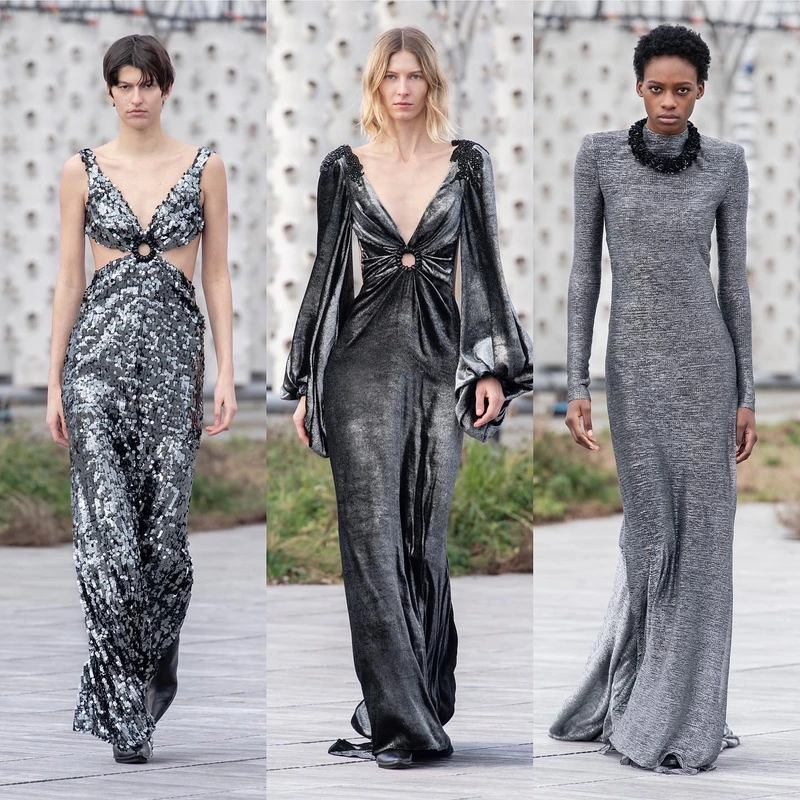
Spring 2022 Couture is the last collection under his direction. Azzaro issued no widely available formal announcement fixing the precise end of his appointment. The visible chapter simply receded, another Olivier Theyskens tenure fading without the ceremonial clarity usually granted to designers whose arrivals had been treated as events.
While working at Azzaro, Olivier Theyskens began reducing the scale of his own label. The pandemic had exposed the fragility of seasonal production and wholesale dependence across the industry. For him, it prompted a more personal judgement: what purpose did his company serve when growth pulled him farther from making?
Spring 2022 included labour-intensive one-off pieces whose production resisted large department-store orders. By Fall 2022, his reduced team created patchwork dresses from fabric remnants. Some required around a week of work. Bias-cut panels met straight-grain sections, aged surfaces and bands of lace or crochet. The garments demanded the kind of technical attention that industrial expansion usually eliminates.
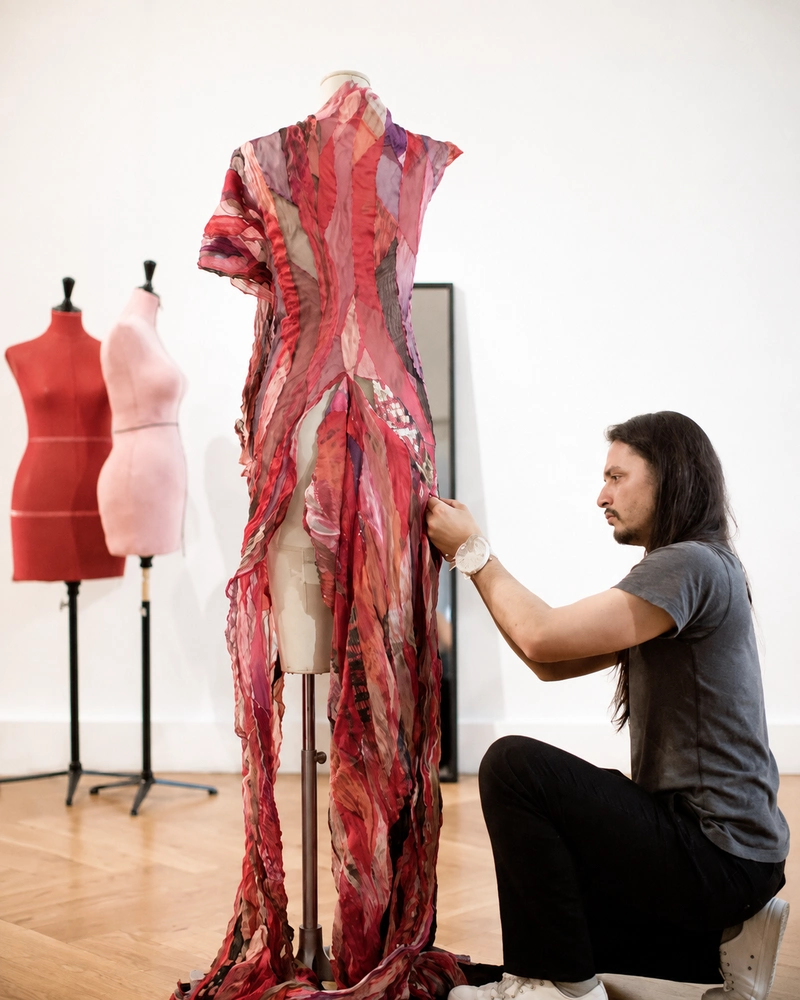
Olivier Theyskens described his intention as rescaling the business. The word matters. Fashion’s dominant language equates health with volume: more doors, more categories, more drops, more visibility. Olivier Theyskens chose contraction so that the company could return to its central competence.
This was an economic limitation and a creative position. A dress requiring days of handwork cannot support conventional wholesale volume. Its cost narrows the customer base. Yet producing simplified merchandise merely to sustain the appearance of growth would have turned his name into a logo detached from the skills that gave it value.
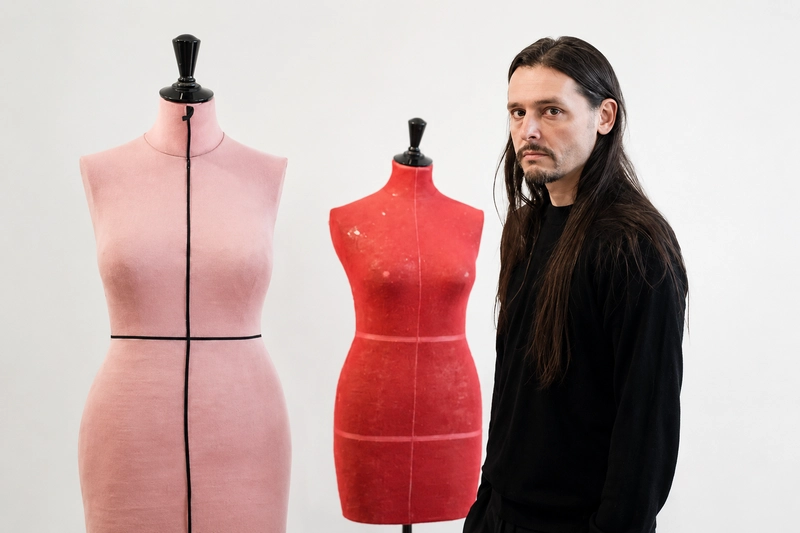
Spring 2023, presented on October 3, 2022, became the last regular seasonal collection currently documented under his namesake runway line. The show appeared modest beside Paris’s corporate spectacles. Its scale exposed a wider failure of luxury: conglomerates frequently search for authenticity while independent designers carrying genuine technical authority struggle to fund its continuation.
Olivier Theyskens had spent years learning the systems of fashion. Rescaling suggested he had also learned when those systems deserved refusal.
Boloria emerged publicly in 2025 as an Antwerp-based house developed with WEAREONE.world. Its first campaign involved Belgian photographer Willy Vanderperre, placing the project immediately inside the visual culture that had shaped Olivier Theyskens from the beginning.
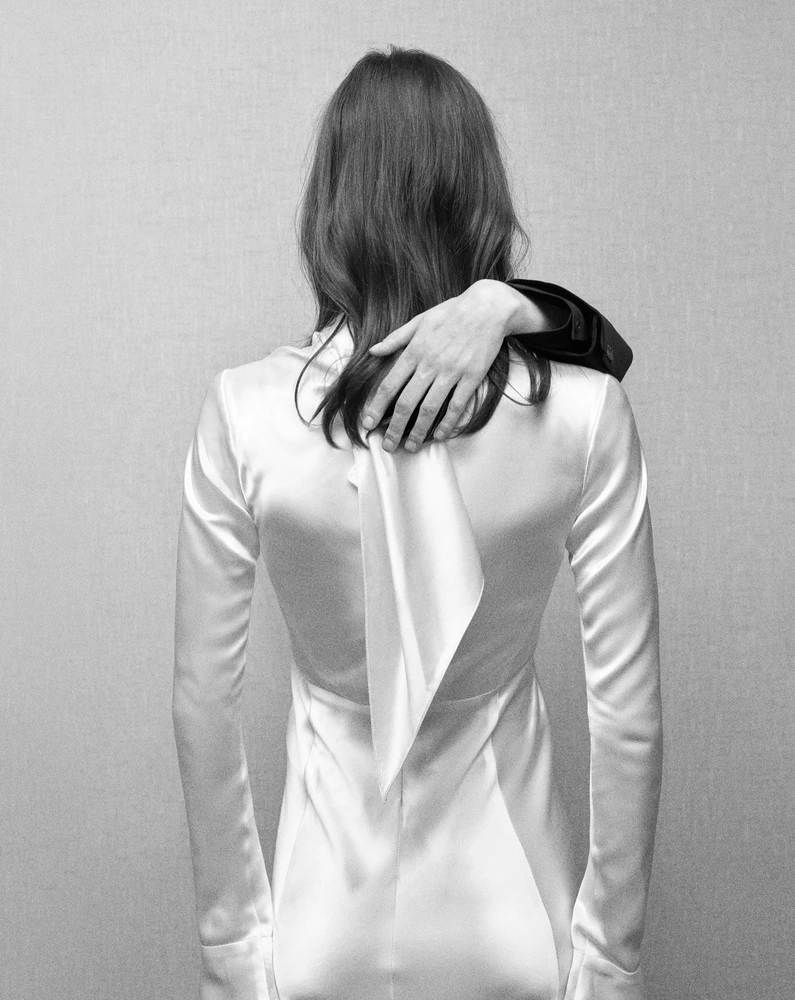
Boloria Spring 2027 runway show would took place in Paris on July 5. The timing, directly before couture week, carried symbolic precision. Olivier Theyskens would return close to the world of artisanal fashion, though through a new brand created outside the traditional heritage-house cycle.
Le Monde Flottant gathered the lessons of every previous chapter without becoming a retrospective exercise. The elongated body remained central. Volumes floated around women, while men appeared in relaxed tailoring shaped by a designer visibly energised by the category. Victorian references, and Belgian urban restraint met rural goth style, bourgeois control and the strange emotional weather that has always separated Olivier Theyskens from straightforward romanticism.
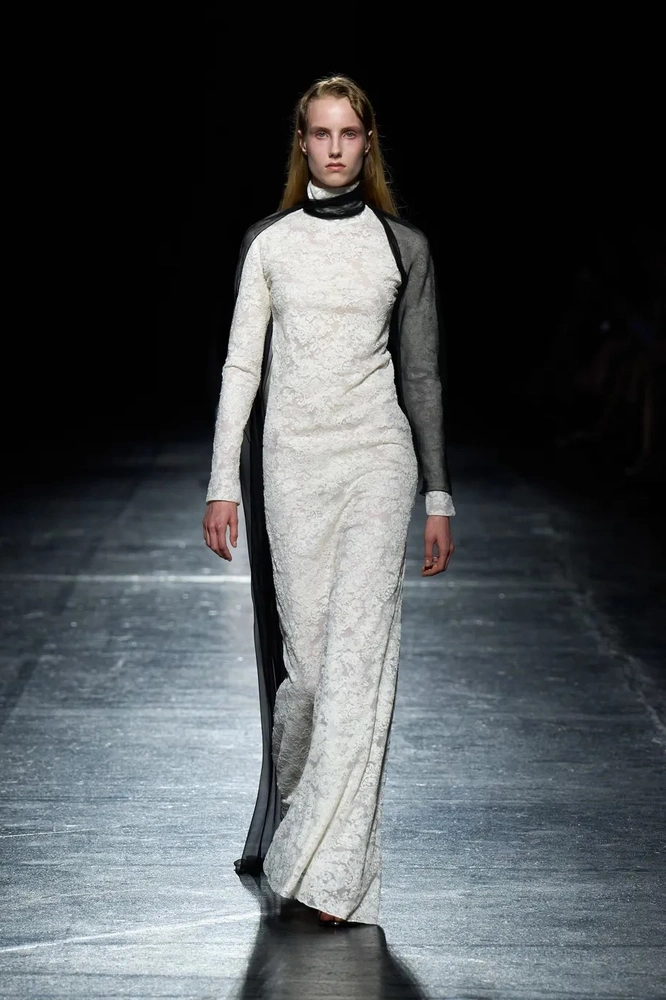
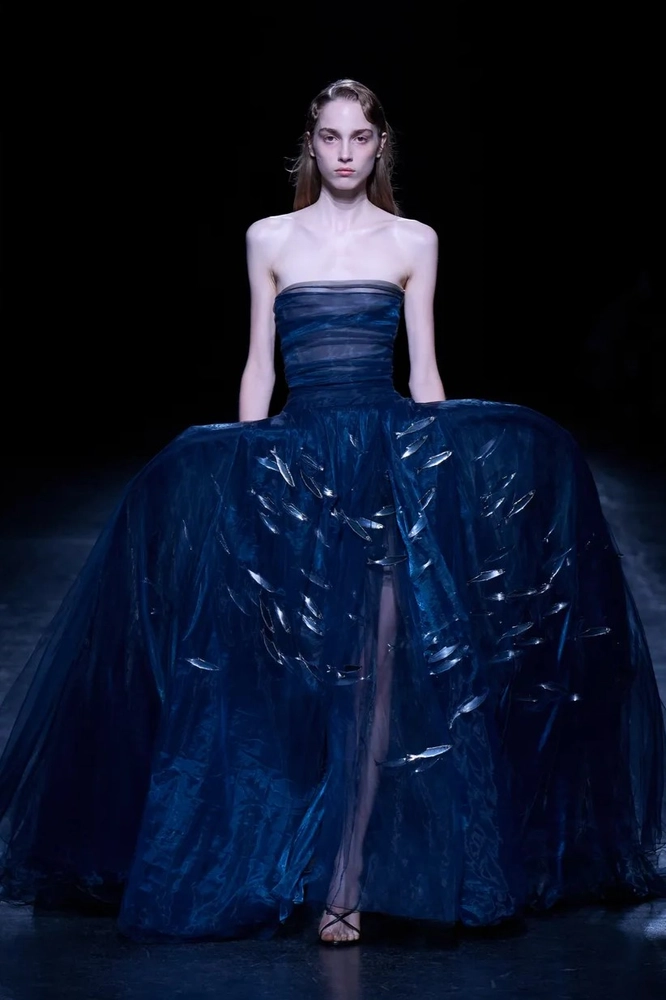
Commercial judgement remains premature. Boloria has yet to establish sales growth, customer retention or profitability. Its partnership offers resources and organisational backing that his small namesake structure could rarely provide. Whether that support will protect his vision or gradually demand its simplification will determine the real meaning of the project.
Backstage on July 5, 2026, Olivier Theyskens stood inside a house with no inherited founder hovering behind him, no faded couture archive requiring rescue and no American basics business waiting to test his adaptability. Boloria had started with his way of seeing.
After nearly three decades, the industry had finally given Olivier Theyskens another beginning. This time, the structure would have to prove itself worthy of the designer.
Advertisement