Inside a Manhattan warehouse, a cobalt-blue dress interrupted the quiet procession of sharply tailored suits. Its fringes moved freely around the body, introducing an unexpected exuberance to an otherwise disciplined wardrobe. For Veronica Leoni at Calvin Klein, the moment seemed to promise another chapter of creative discovery. Instead, it became part of a story whose ending arrived just as its direction began to emerge.
Veronica Leoni at Calvin Klein: An Unfinished Vision
Inside a Manhattan warehouse, a cobalt-blue dress interrupted the quiet procession of sharply tailored suits. Its fringes moved freely around the body, introducing an unexpected exuberance to an otherwise disciplined wardrobe. For Veronica Leoni at Calvin Klein, the moment seemed to promise another chapter of creative discovery. Instead, it became part of a story whose ending arrived just as its direction began to emerge.
November 3, 2026


When Calvin Klein himself returned to the front row of his namesake house in February 2025, the occasion carried significance beyond another fashion debut. Seven years had passed since the American label last presented a runway collection, and the presence of Kate Moss and Christy Turlington recalled an era when its understated sensuality had helped define an entire generation.
The return was entrusted to an Italian designer whose name remained relatively unfamiliar to the wider public. Veronica Leoni at Calvin Klein promised a fresh perspective on a legacy that had shaped modern American dressing. What followed was a brief, occasionally uncertain, yet increasingly compelling exploration of that inheritance. By the time her departure was announced, the designer had presented just four collections, leaving behind the beginnings of an identity whose future remains impossible to determine.
The Woman Who Brought Calvin Klein Back
Behind the familiar black-and-white advertising campaigns, Calvin Klein had spent years without a high-fashion runway presence. Raf Simons' departure in 2018 brought an end to the ambitious 205W39NYC experiment, leaving the company's luxury collection dormant while its global business continued through underwear, denim, fragrances and lifestyle products. The enduring appeal of its advertising remained unmistakable, yet the design legacy that once positioned Calvin Klein among America's defining fashion names had become increasingly distant from the contemporary runway.
Veronica Leoni arrived in May 2024 with an unusually appropriate background for such an assignment. Having developed her experience at Jil Sander, Phoebe Philo's Céline, Moncler and The Row, she possessed an appreciation for construction, proportion and the complexities hidden beneath apparently uncomplicated garments. Her independent label, Quira, had already introduced a personal vocabulary of architectural tailoring and sophisticated restraint. The appointment also made her the first woman to lead Calvin Klein's creative direction, an important milestone for a house whose imagery had played such an influential role in shaping perceptions of femininity.
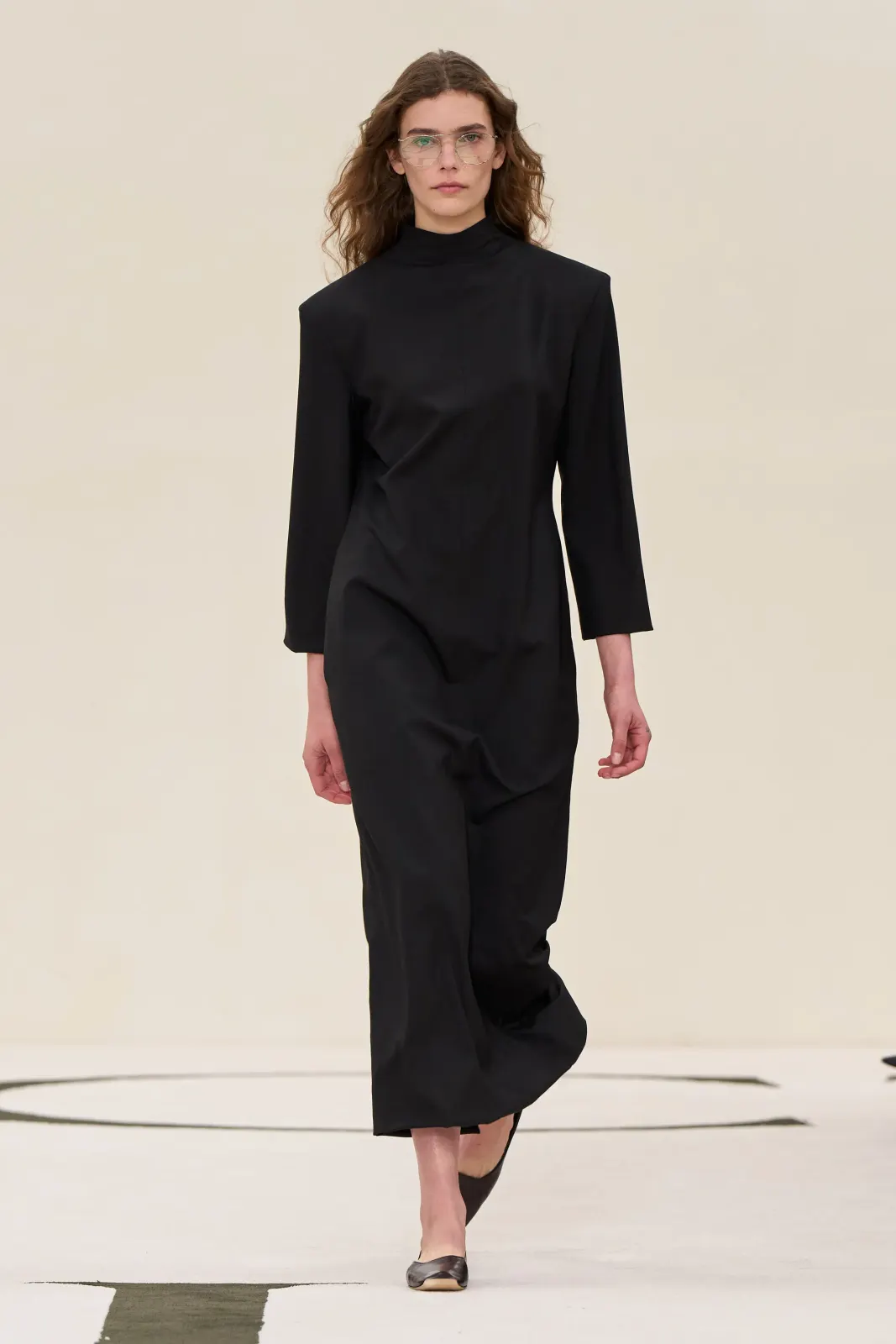
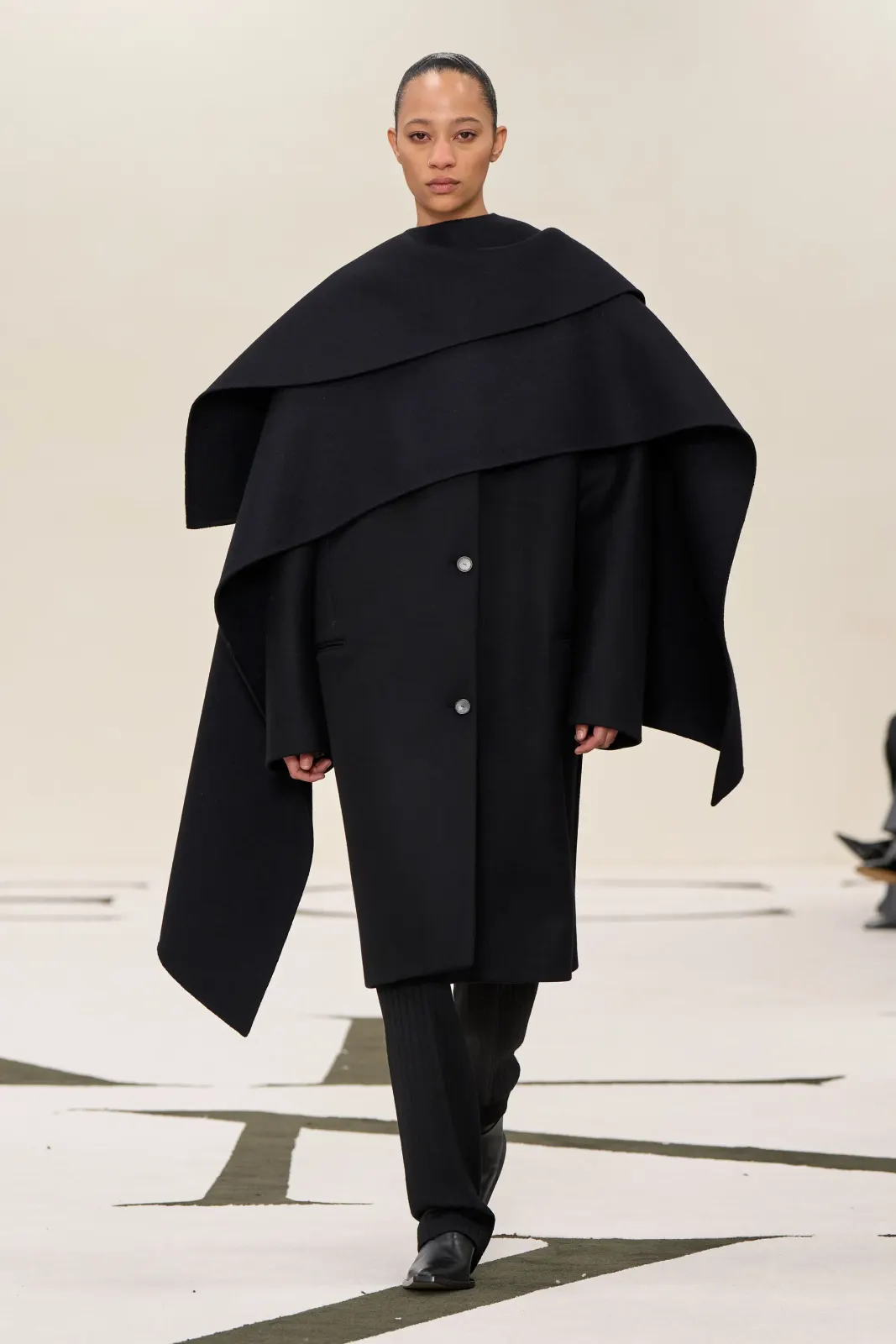
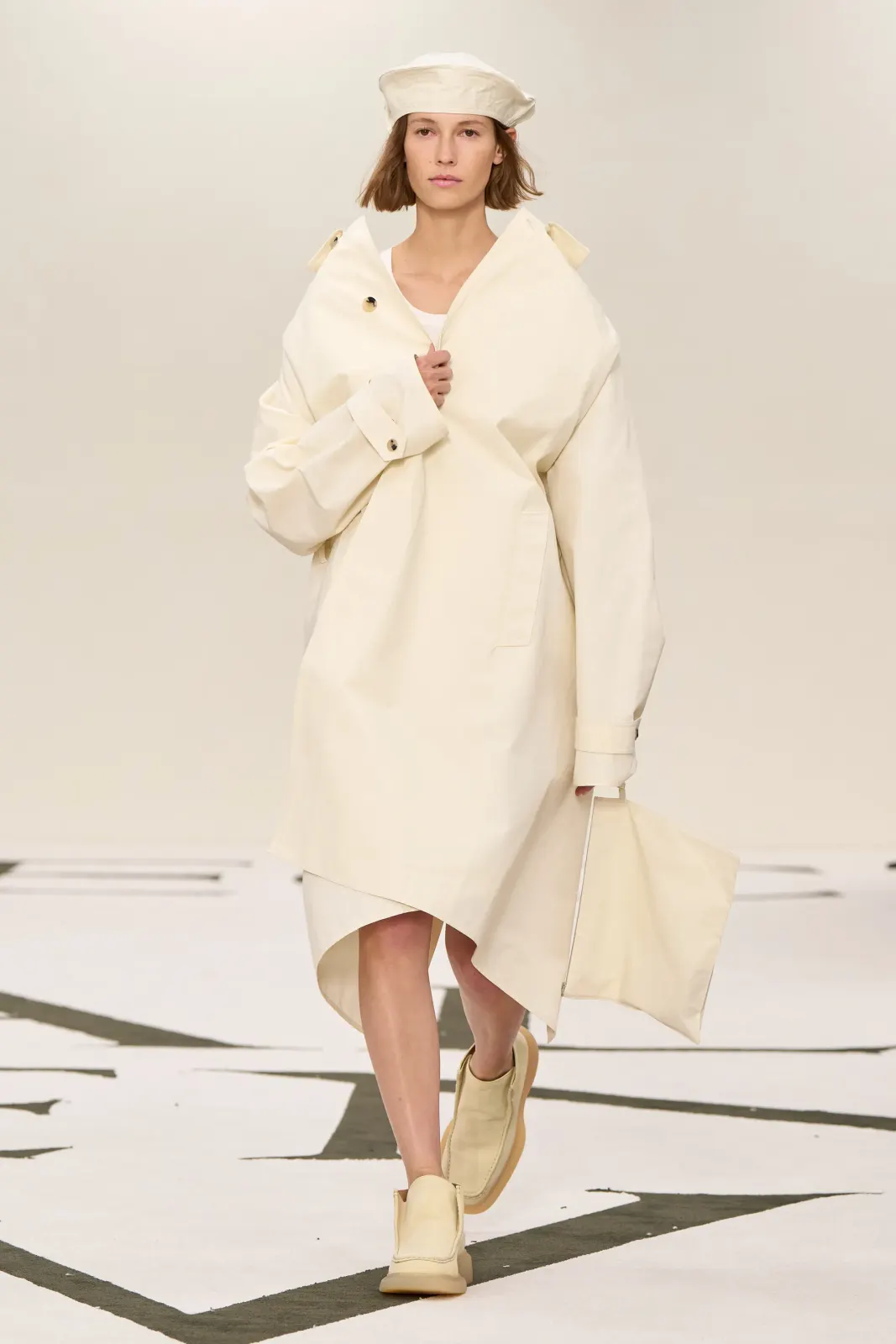
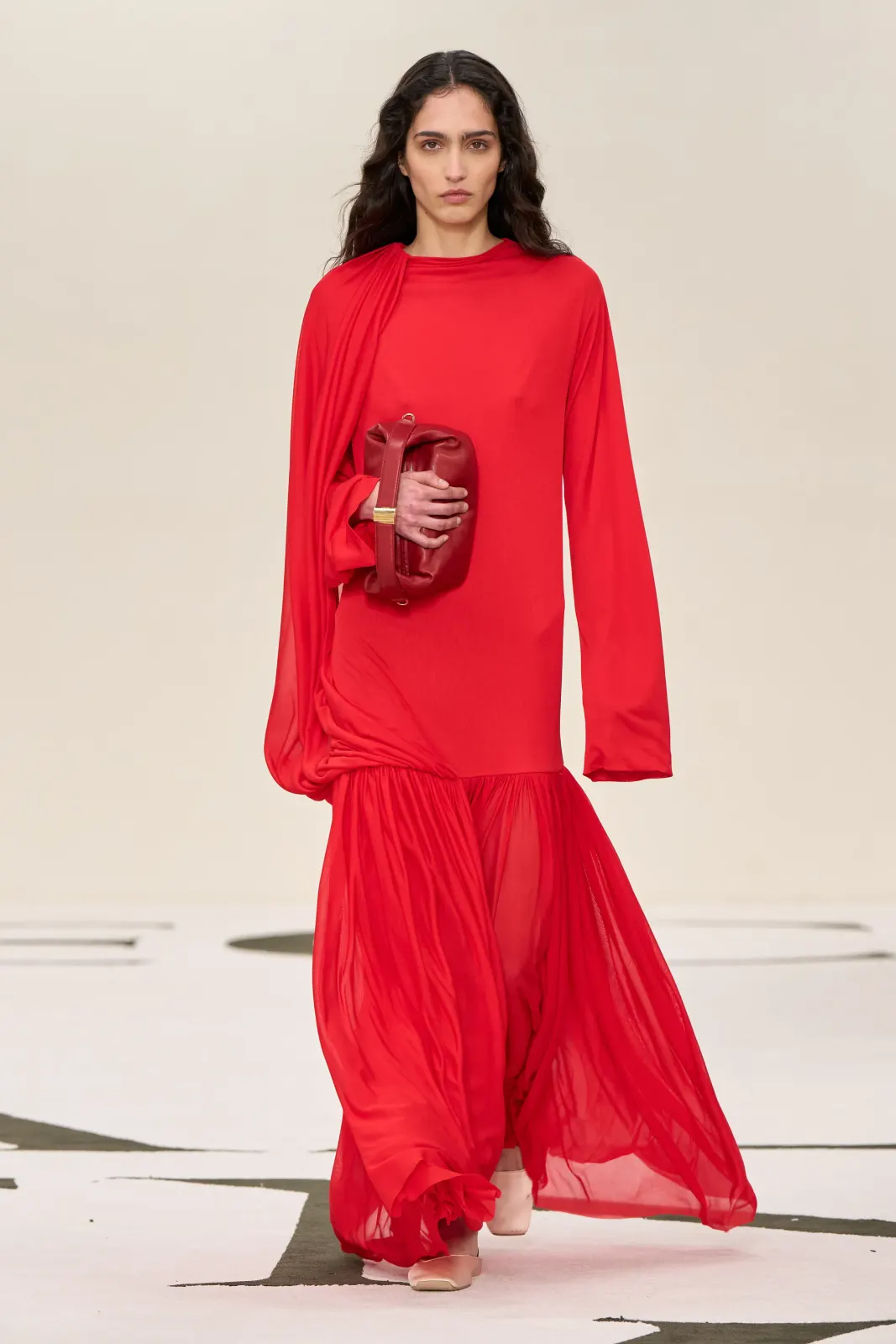
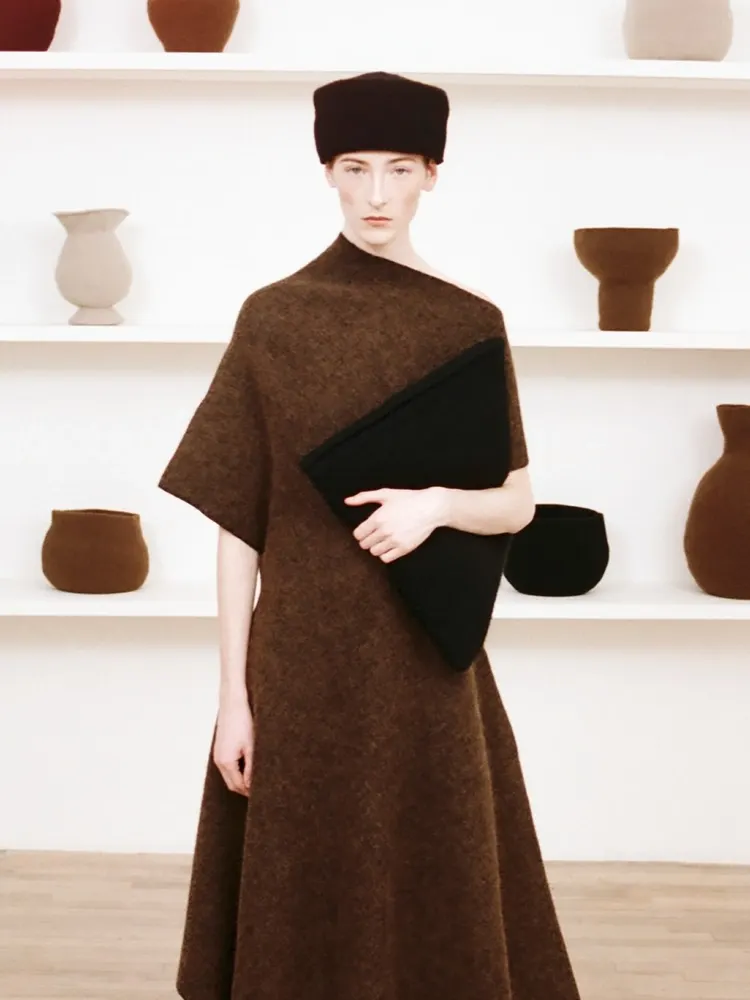
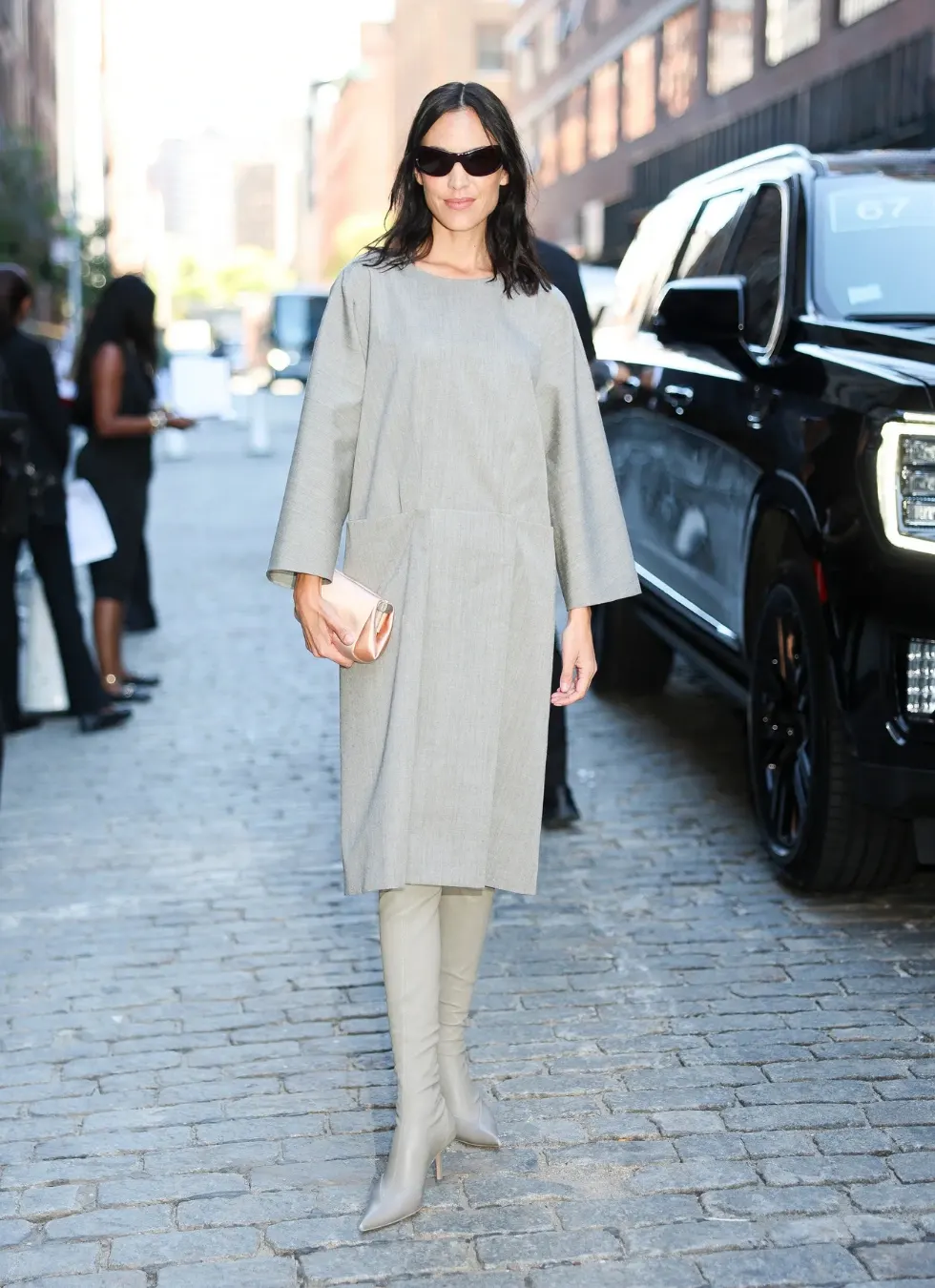
At 205 West 39th Street, where the brand had once presented its collections, her Fall/Winter 2025 debut unfolded against a stark, understated setting. Dove-gray tailoring, enveloping coats, crisp shirts and narrowly cut trousers established a wardrobe rooted in Calvin Klein's familiar minimalist codes. The silhouettes carried Leoni's fascination with precision, particularly in the tension between structured shoulders, controlled waists and generous volumes. Even a CK One perfume bottle was reimagined as an evening clutch, translating an instantly recognizable piece of the brand's cultural history into an accessory.
Yet the collection revealed the difficulties of approaching such an influential aesthetic. Calvin Klein's minimalism had always possessed an undercurrent of provocation, cultivated through the intimate relationship between fabric, skin and the body. In Leoni's hands, the tailoring was accomplished and the clothes carried considerable sophistication, but the sensuality that had once made the brand culturally provocative remained tentative. Certain proportions appeared overly considered, their technical complexity occasionally interrupting the effortless attitude associated with the house.
Still, the debut offered glimpses of an intriguing creative personality. The sculptural outerwear and exacting cuts suggested a designer interested in exploring the architecture of everyday clothing. Her vision had begun taking shape, although its relationship with Calvin Klein's distinctly American character required further development.
Veronica Leoni at Calvin Klein: Finding Her Voice
By the time Spring/Summer 2026 arrived, the severity of Leoni's debut had acquired a mischievous streak. Presented at the Brant Foundation in New York, the collection introduced unexpected gestures into its otherwise restrained wardrobe. Oversized tailoring sat alongside delicate slip dresses, while exaggerated pom-poms brought an almost absurdist quality to certain looks. Crisp menswear shapes appeared deliberately unsettled by displaced details and unusual proportions.
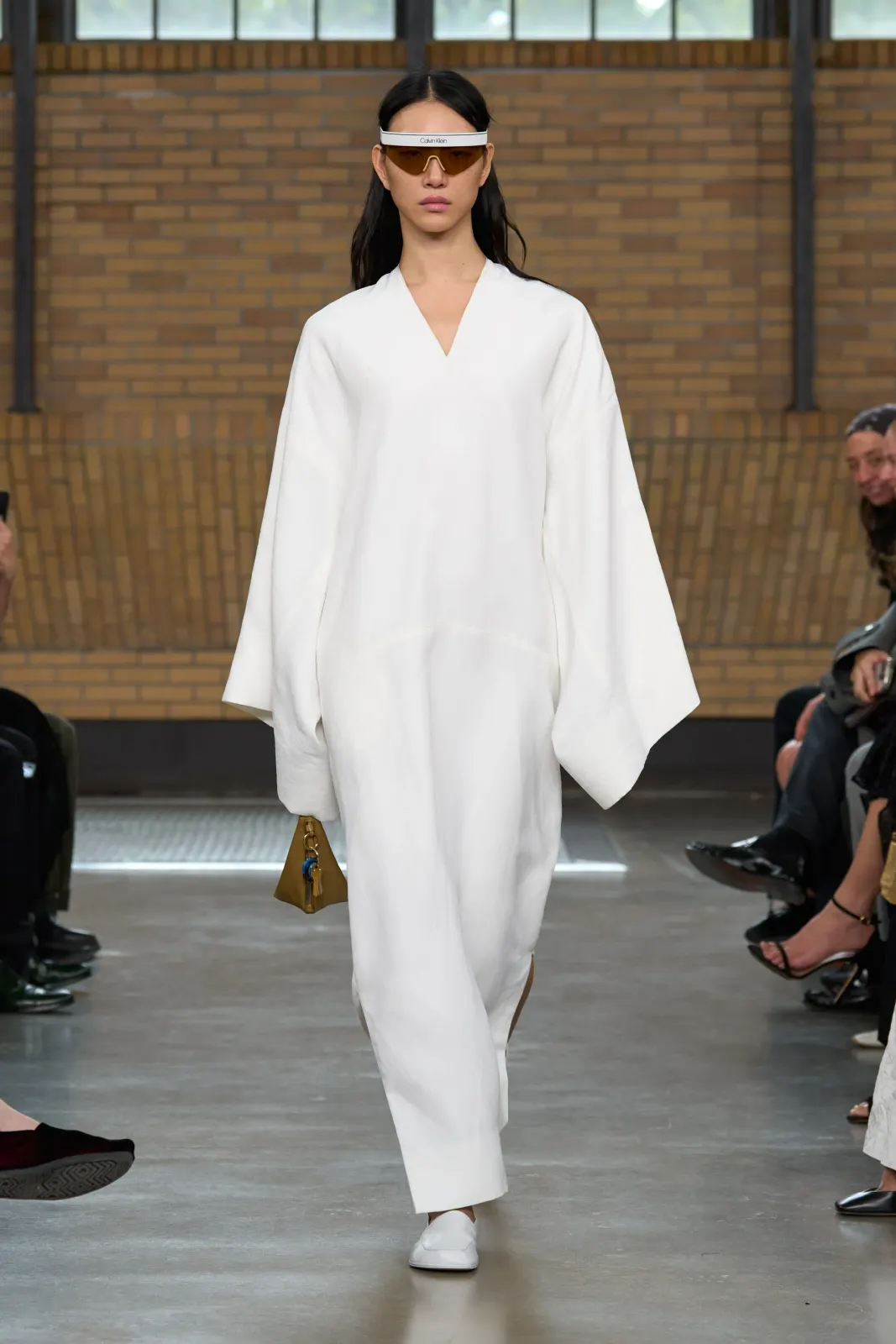
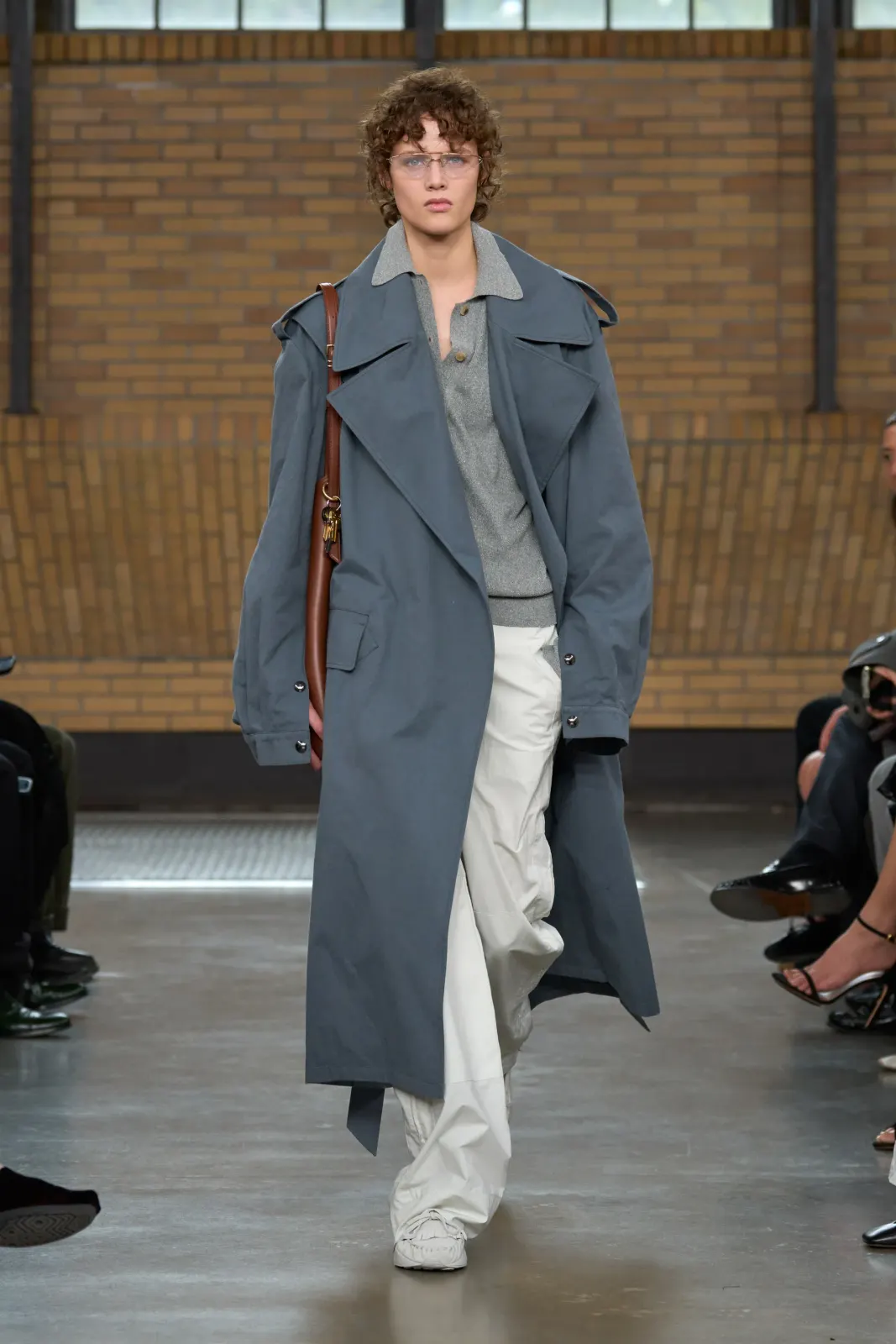
The designer was searching for a relationship between the practicality of American sportswear and her own attraction to conceptual construction. Occasionally, those experiments produced an appealing sense of spontaneity. Elsewhere, the elaborate details appeared detached from the ease that had historically defined Calvin Klein. The collection revealed a creative tension that would continue to shape her tenure: how much intervention could a minimalist wardrobe accommodate before its essential character began to disappear?
Calvin Klein Fall 2026 brought that question closer to the body. Returning to the late 1970s and early 1980s, Leoni examined a period when Calvin Klein's relationship with American physical culture, sexuality and sportswear was becoming increasingly pronounced. Broad-shouldered jackets, exposed lingerie elements and sculptural evening dresses explored the boundary between concealing and revealing the figure. Denim also appeared on the Collection runway, drawing from a 1976 archival design and restoring an essential element of the house's vocabulary to its high-fashion expression.
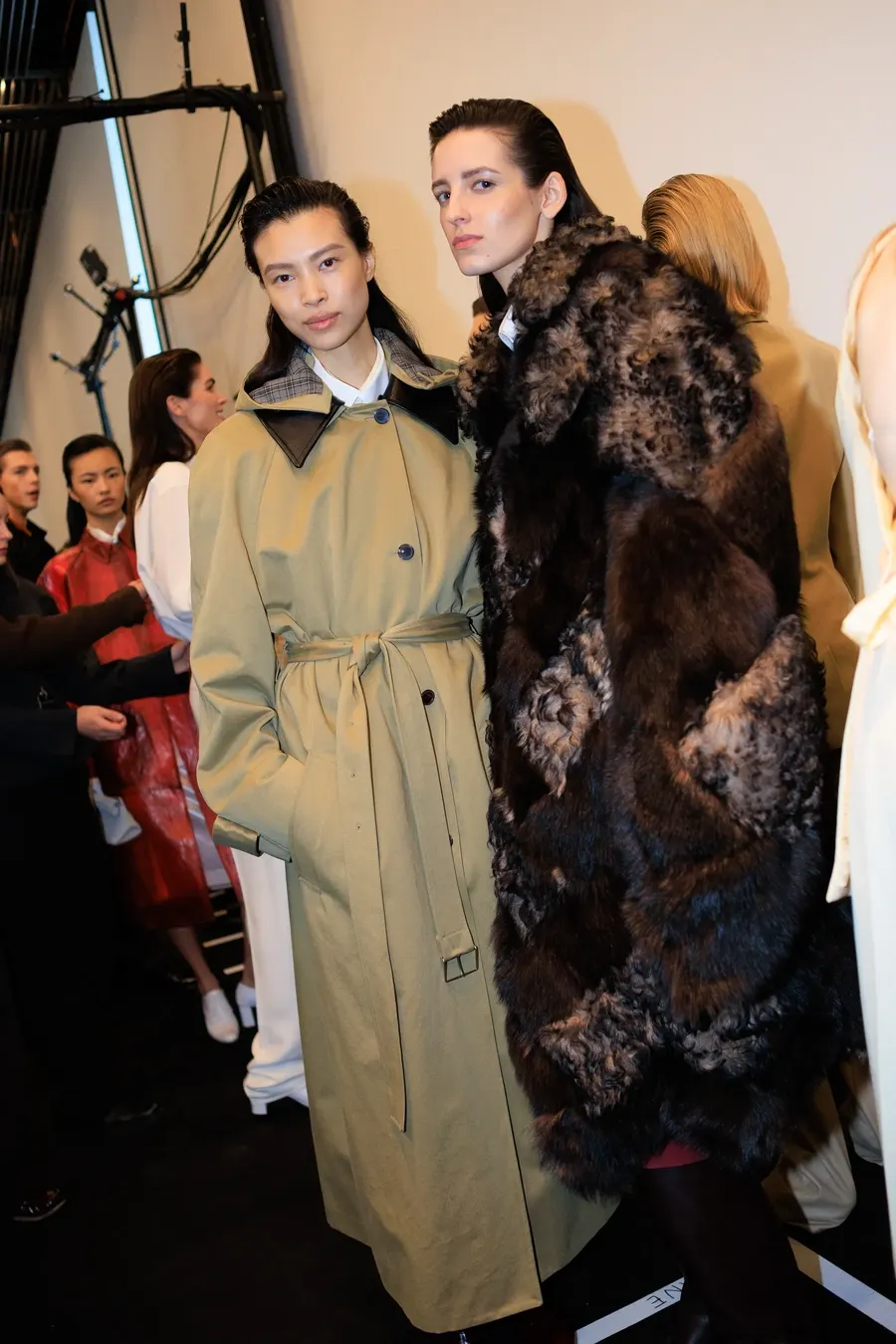
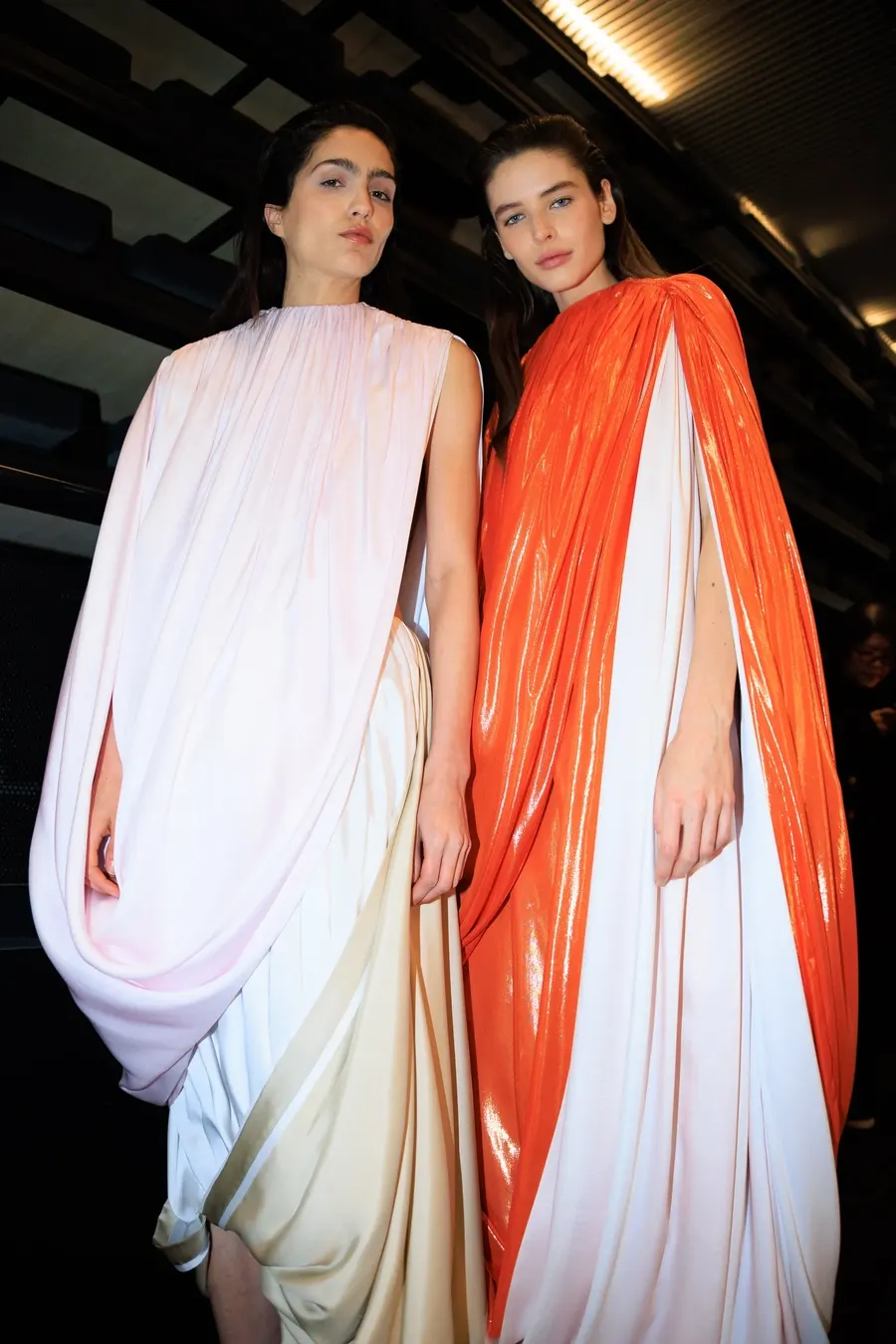
Her interest in the body gradually developed into an investigation of how garments could influence its shape and movement. Fabric gathered around the waist, slipped across the shoulders or traced the contours of the torso with carefully calculated precision. The collection retained moments of excessive construction, but its physicality introduced an intimacy that had been missing from her debut. Sensuality began to emerge through the interaction between material and wearer, giving her architectural sensibility a more convincing relationship with Calvin Klein's heritage.
Then came Calvin Klein SS27.
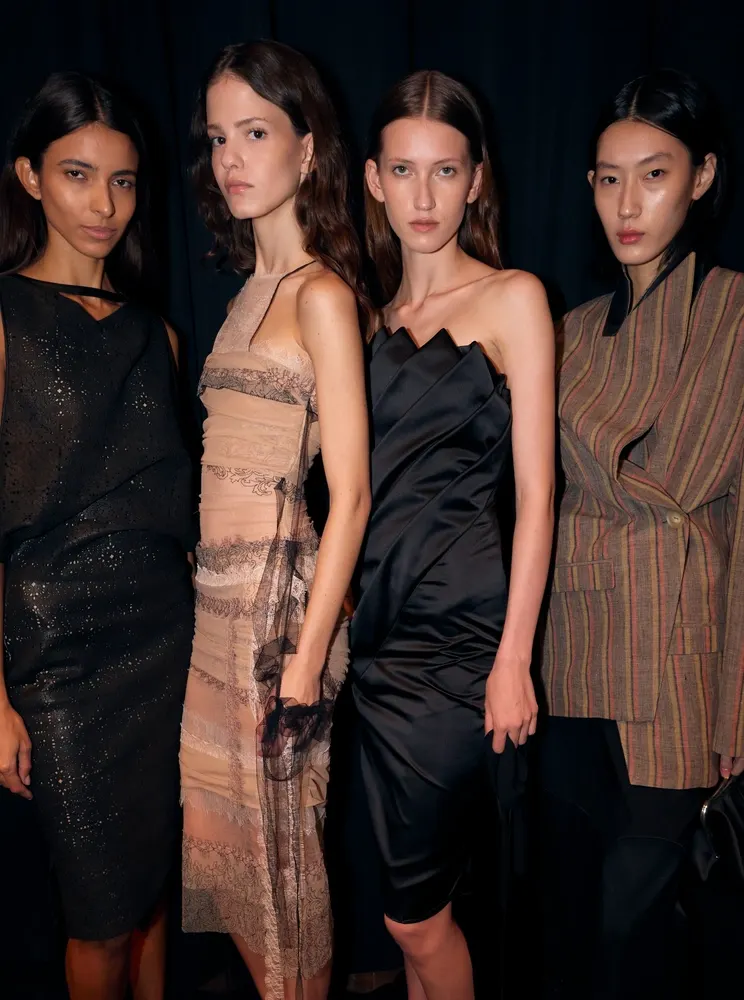
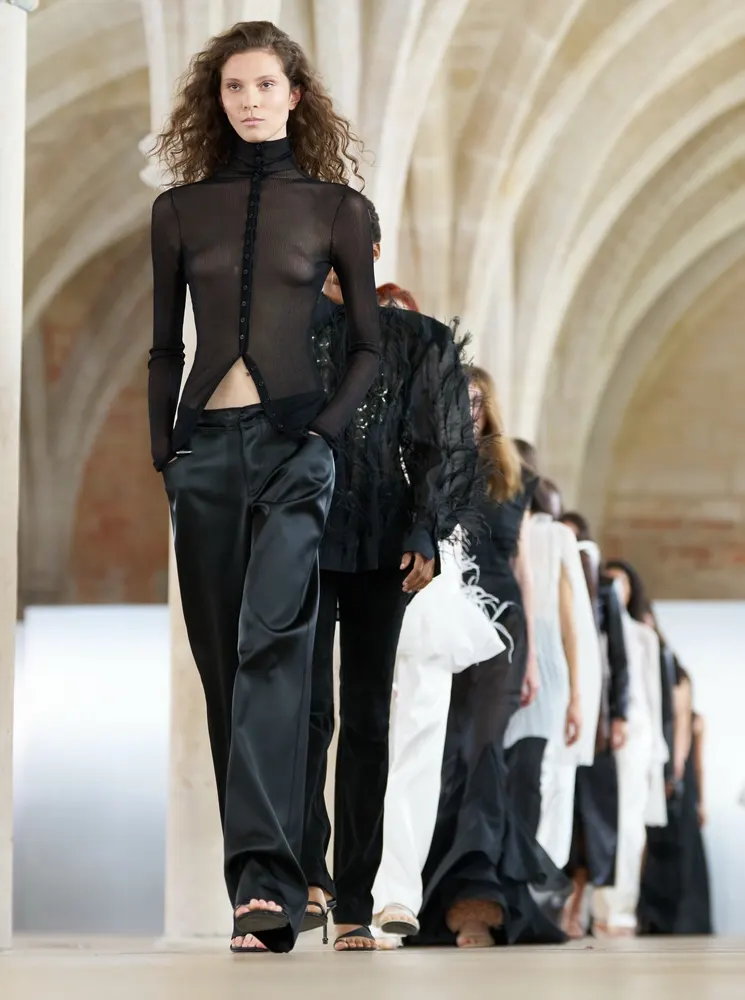
Inside Terminal Warehouse, the severity of American Minimalism found an unusually assured expression. Long, narrow trousers followed the lines of the legs, while tailored jackets carried their structure with an almost casual ease. Slip dresses draped naturally around the body, and lightweight shirts revealed the beauty of proportions that had been refined to their essentials. The familiar Calvin Klein wardrobe appeared newly concentrated, with its restraint giving individual gestures greater significance.
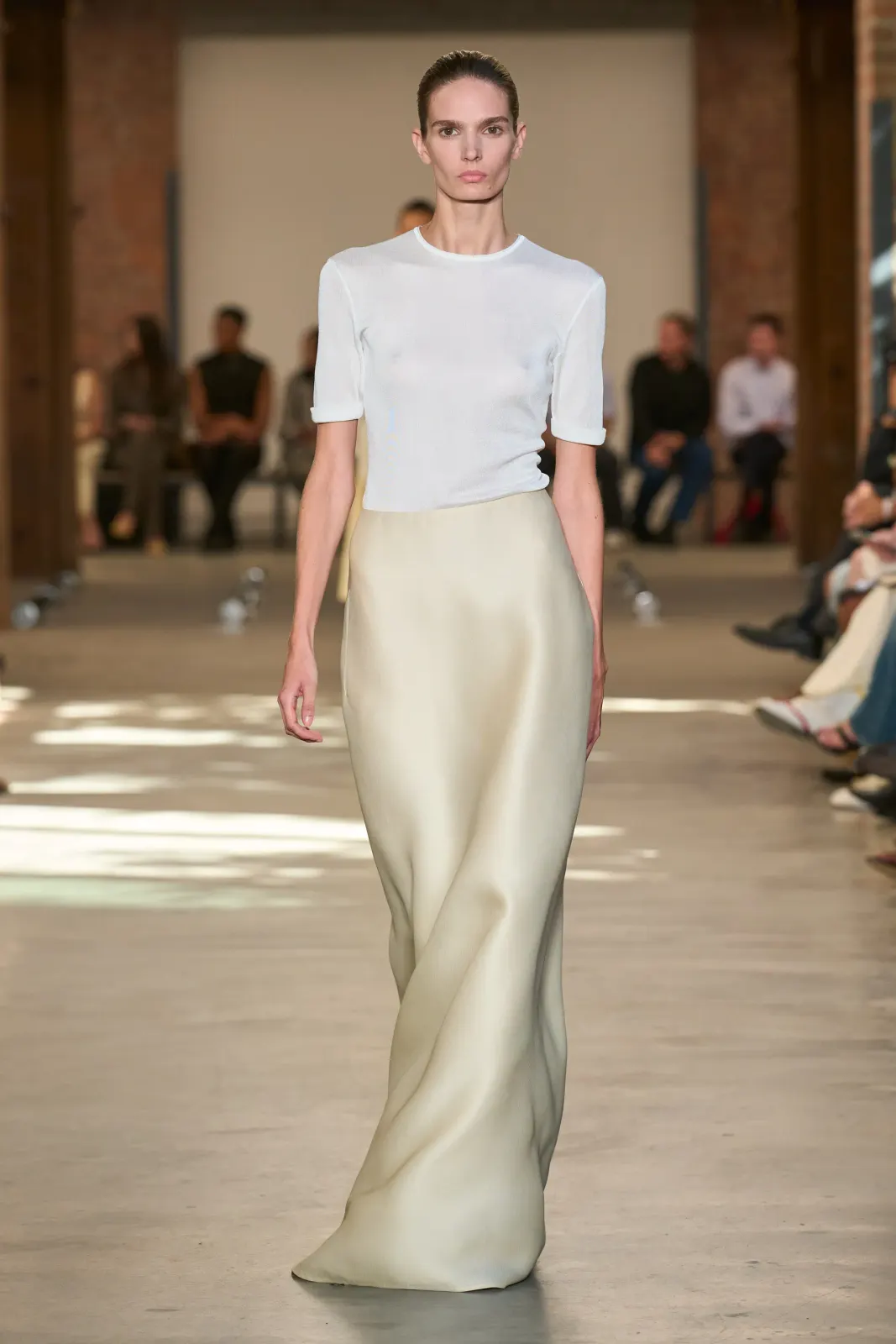
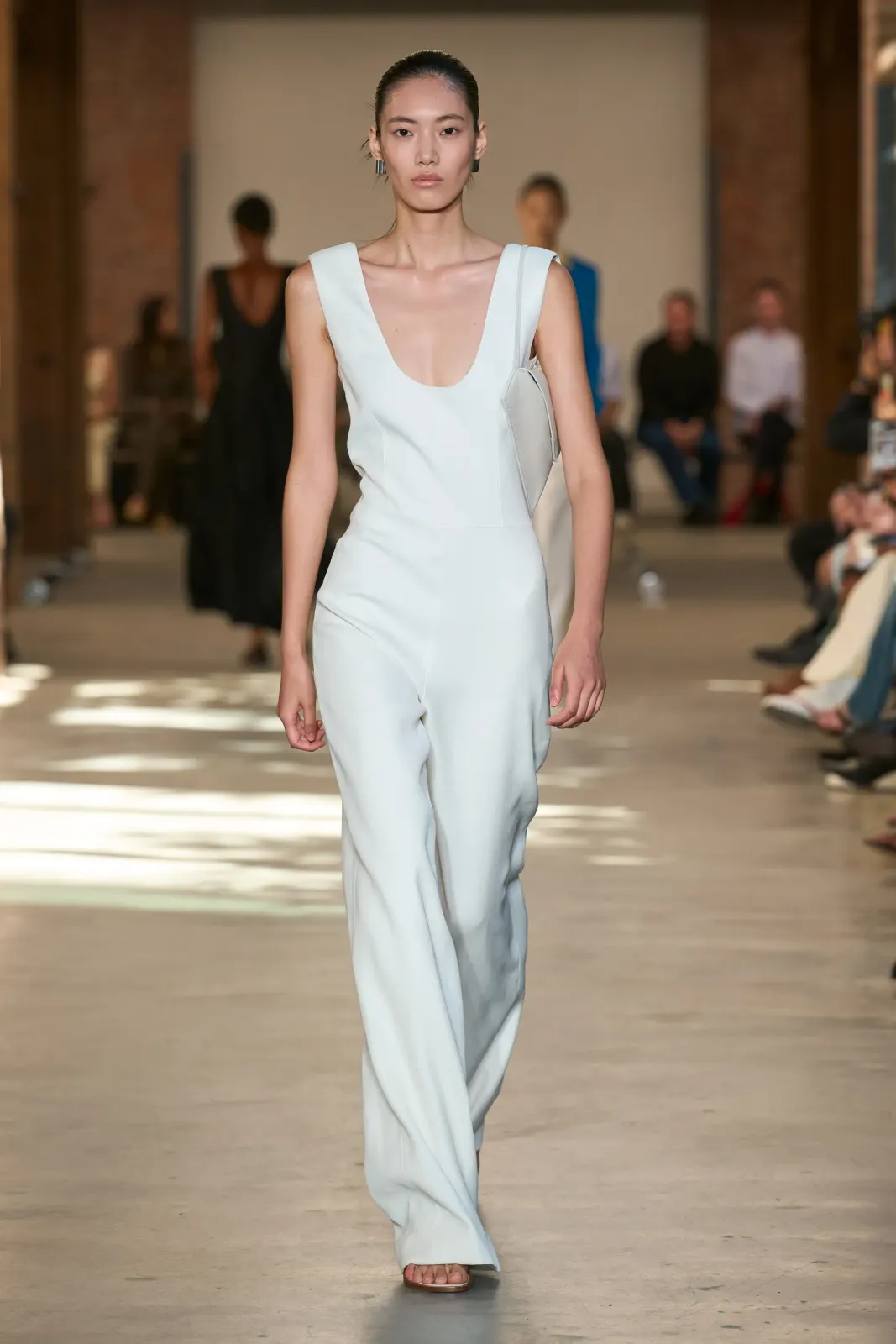
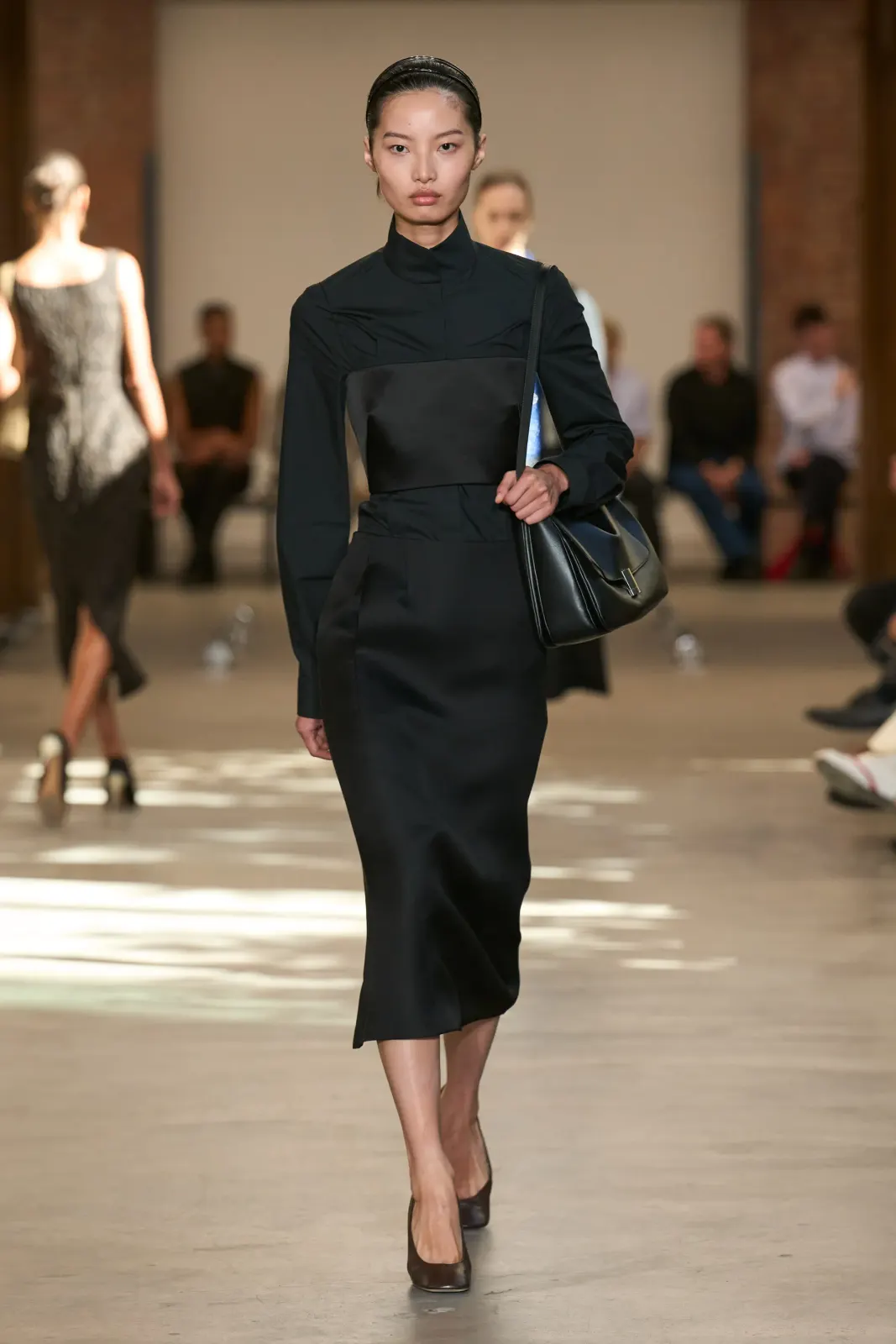
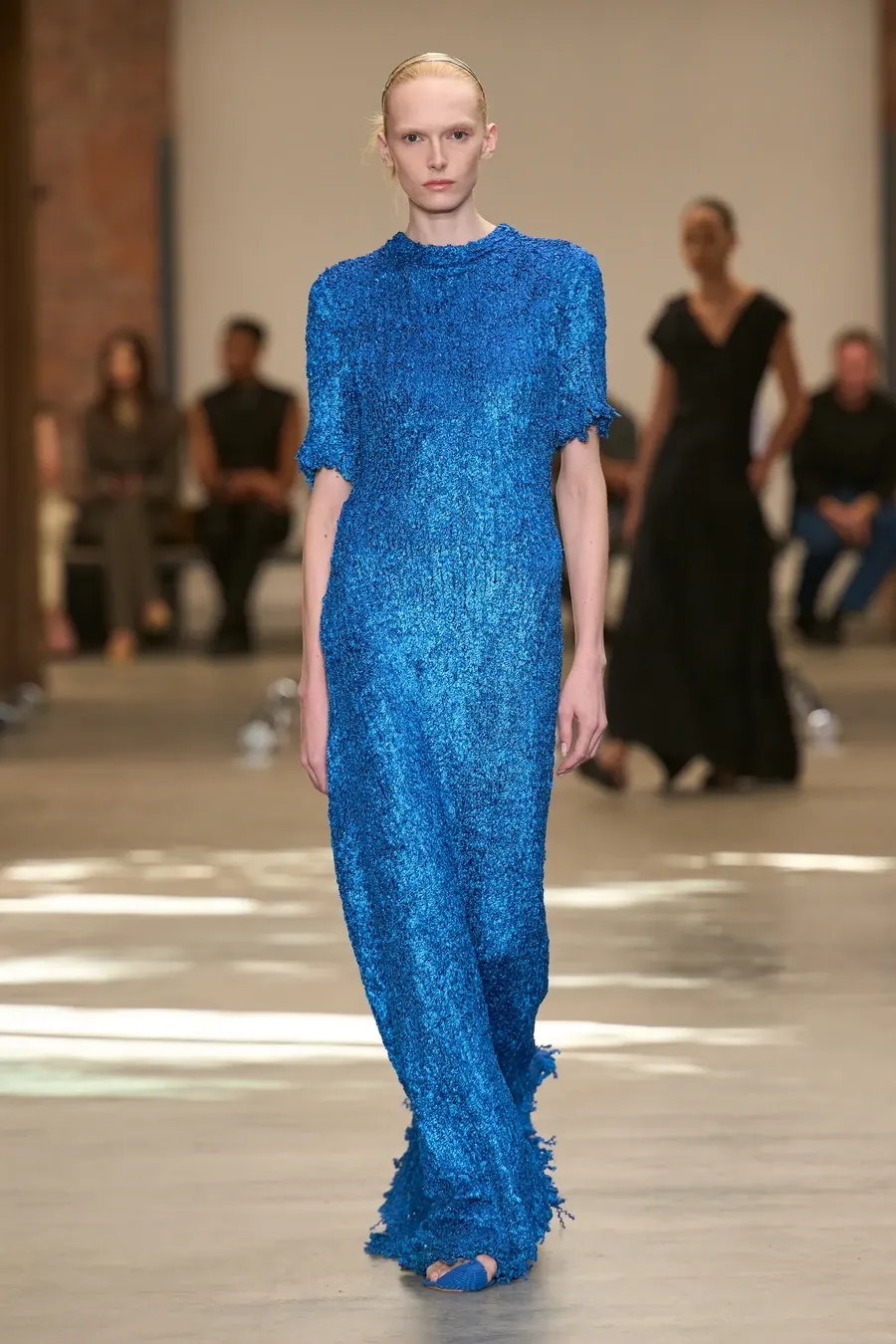
Leoni's personality remained visible in the unexpected details. Cobalt-blue fringes moved across the body with energy that interrupted the measured tailoring. Flashes of scarlet and yellow emerged against the otherwise controlled palette, while oversized bags and origami-like accessories introduced a subtle sculptural tension. Her experiments now appeared integrated into a coherent visual language, allowing eccentricity to coexist with the everyday familiarity of American clothing.
The presence of Walter De Maria's minimalist sculptures throughout the show space reinforced the collection's artistic discipline. Their geometric precision and relationship with the surrounding architecture echoed Leoni's growing interest in the space between fabric, form and movement.
What made SS27 compelling was the clarity with which its elements related to one another. The designer had gradually learned to accommodate her own technical ambitions within Calvin Klein's vocabulary, allowing garments to retain their directness while carrying increasingly distinctive proportions. Following the occasional uncertainty of earlier seasons, the collection offered a persuasive glimpse of a creative identity beginning to find its balance.
It would also become her last.
The Revival That Never Reached Its Full Potential
Outside the runway, Calvin Klein was already reclaiming its place in contemporary fashion through celebrity campaigns and renewed public fascination with its nineties imagery. Leoni's responsibility occupied a different position within that wider revival. Collection was intended to serve as the house's most elevated creative expression, giving substance to a name whose commercial reach had long extended into almost every corner of the modern wardrobe.
While Calvin Klein's global identity remained closely associated with jeans and underwear, Leoni sought to develop a sophisticated wardrobe capable of standing independently within the luxury market. Her tailoring, eveningwear and accessories gradually introduced an identity that could be recognized through construction and proportion, without requiring the familiar CK monogram.
Her influence also extended into the brand's wider visual culture. The Spring/Summer 2026 campaign, photographed by Juergen Teller, captured models in motion against the subdued atmosphere of the runway, emphasizing the relationship between clothing and individual presence. Beyond editorial imagery, her designs appeared on figures including Jennie, Jenna Ortega and Sadie Sink, introducing Calvin Klein Collection to audiences familiar with the brand's mainstream campaigns.
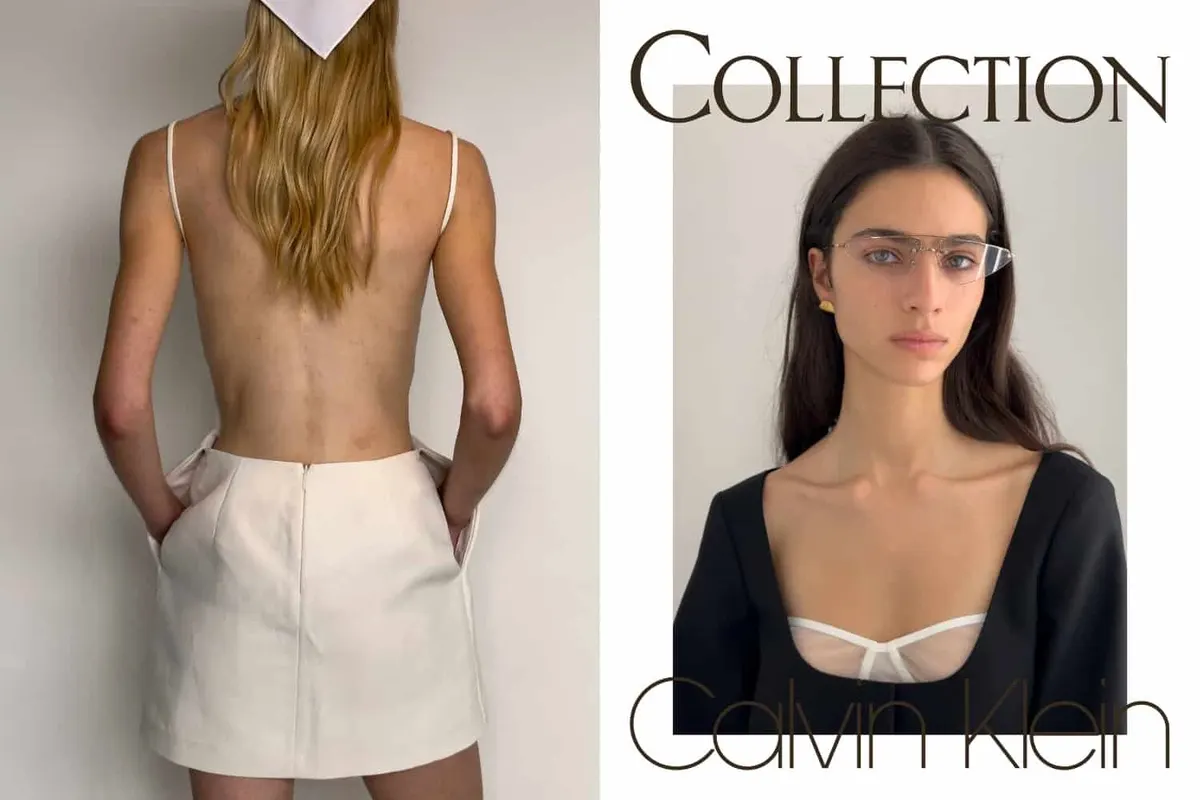
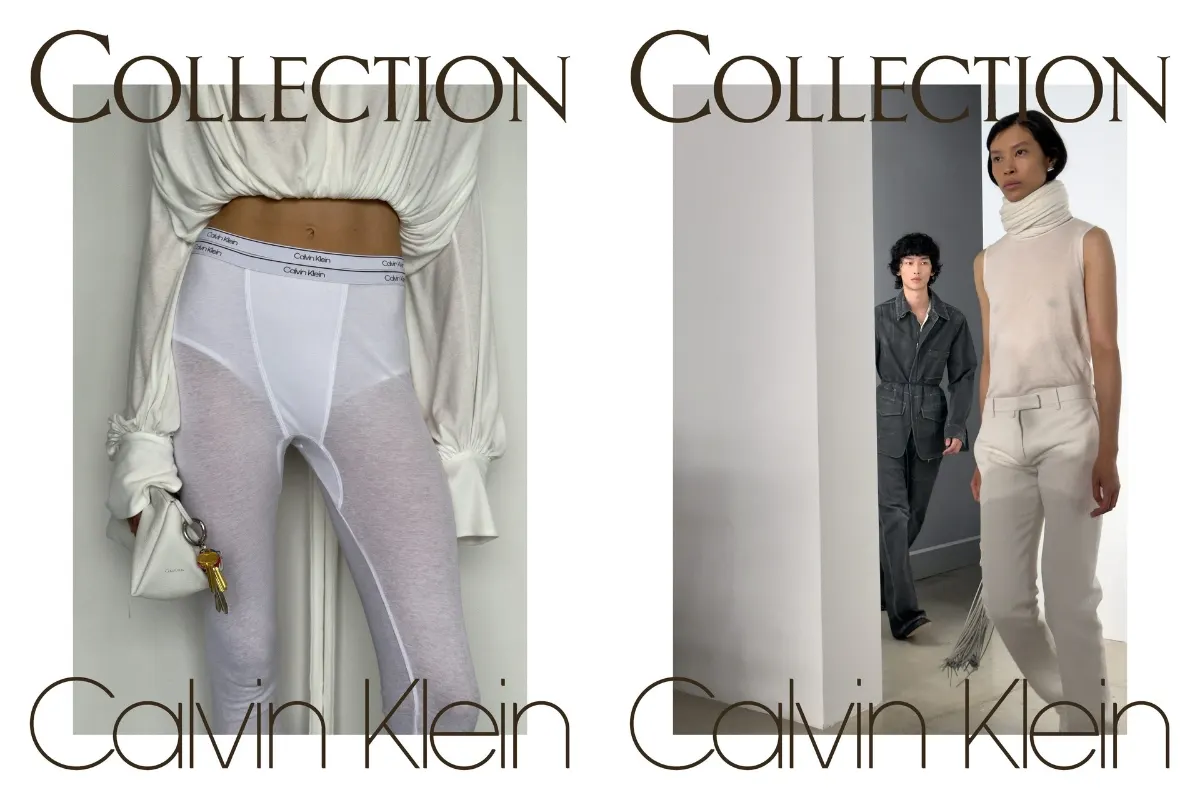
Yet the commercial implications of this creative renewal remain difficult to quantify. PVH reported approximately $9 billion in global retail sales of Calvin Klein products in 2025, encompassing the wider brand and its extensive international distribution. Separate financial results for Collection have not been publicly disclosed, leaving no reliable basis for determining its independent commercial performance.
Meanwhile, the executive structure surrounding Leoni was changing. Eva Serrano, the Global Brand President who had overseen her appointment, departed Calvin Klein in May 2025, only three months after the designer's runway debut. The subsequent leadership transition introduced a different corporate context for a creative project that was still in its infancy. No public evidence establishes that this executive change directly caused Leoni's departure, but the chronology illustrates how much can shift within a fashion company during the development of a new creative direction.
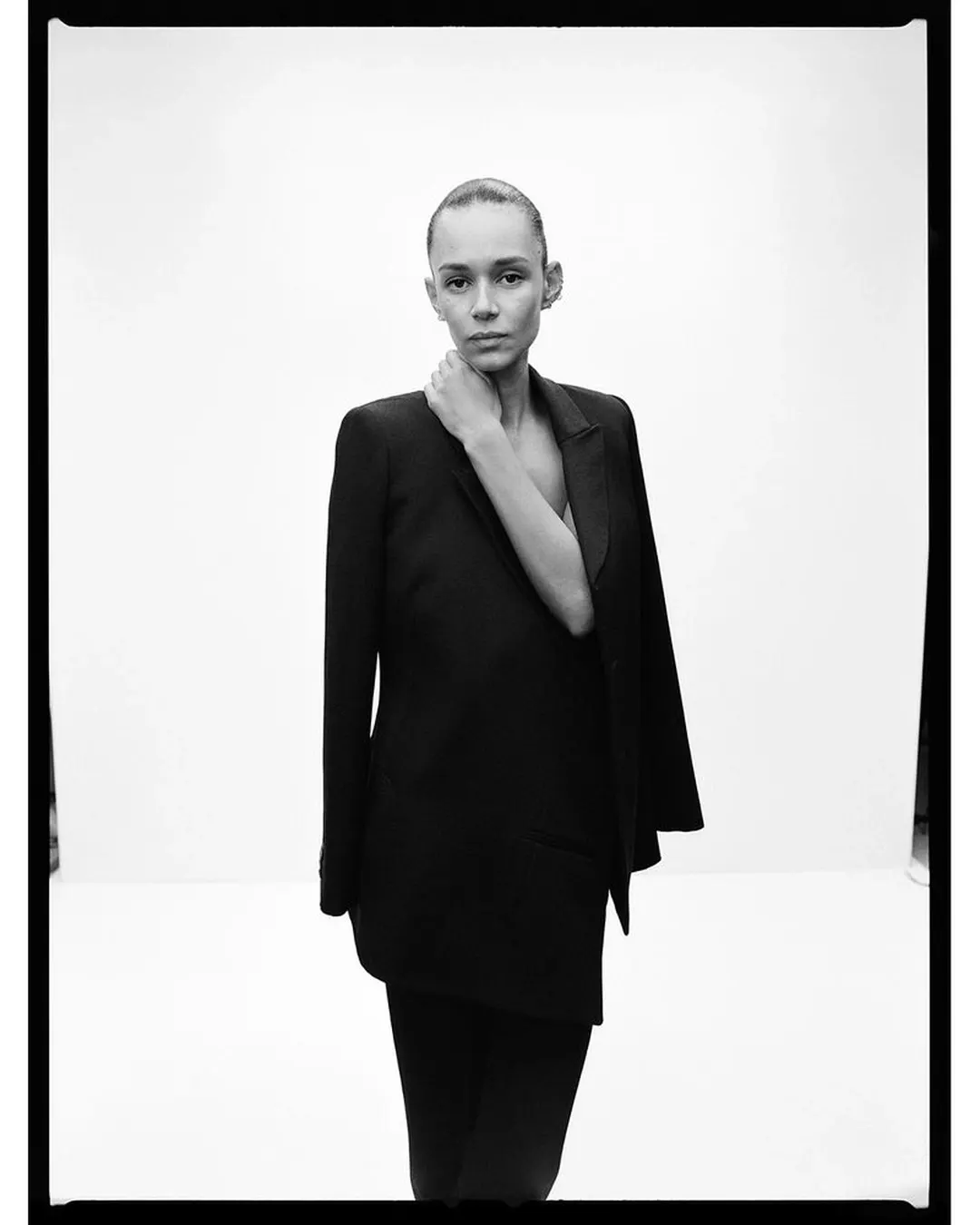
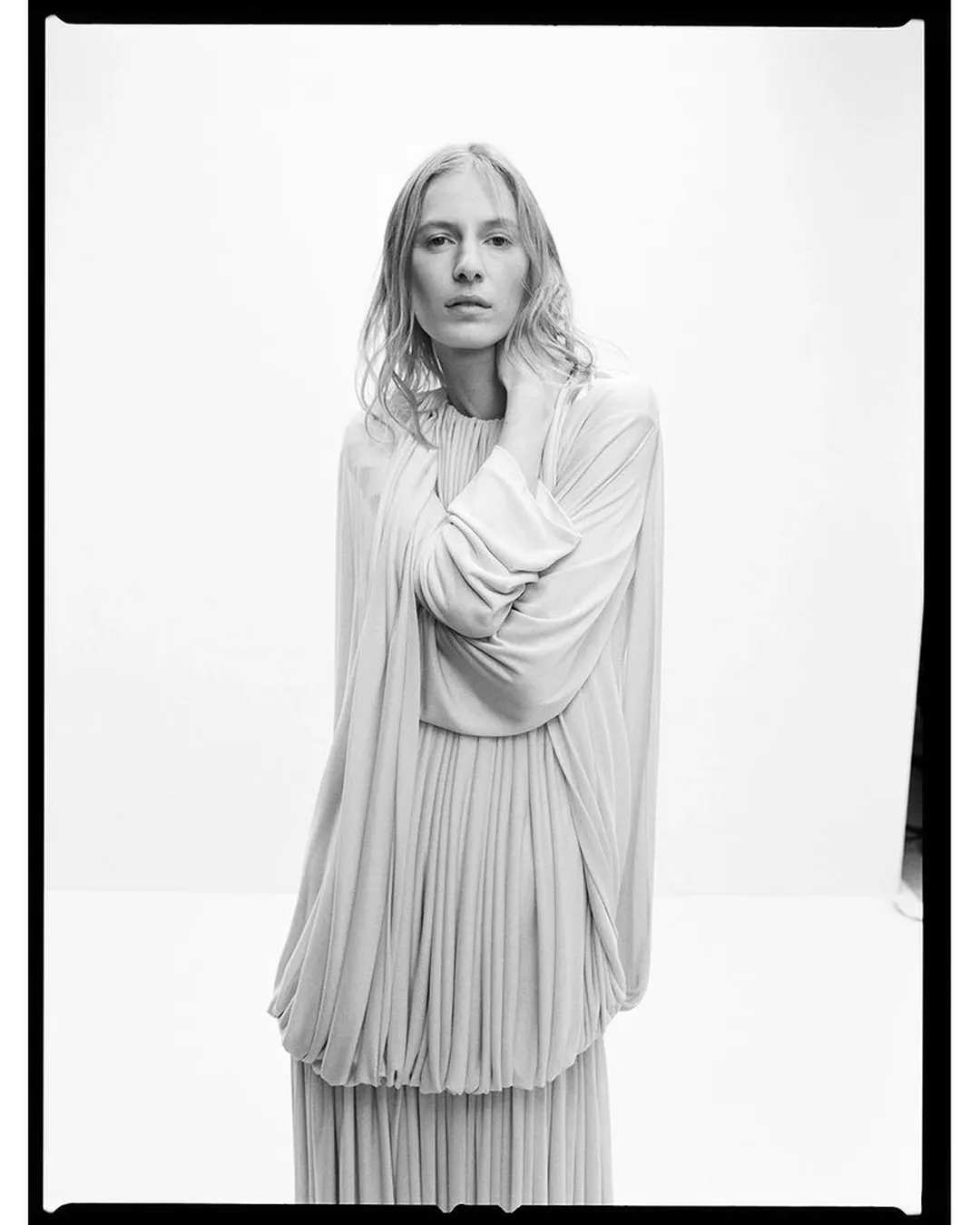
When Calvin Klein announced the conclusion of their collaboration on October 15, 2026, the official statement acknowledged Leoni's contribution to restoring Collection's runway presence and generating renewed visibility. The company also reaffirmed its commitment to Collection as an important part of its long-term strategy.
Those acknowledgments leave an interesting contradiction. The creative project had regained momentum, its designer had begun establishing a clearer aesthetic identity, and the company intended to continue developing the business. Yet the person responsible for its reintroduction would no longer participate in the next stage.
The progress visible across Leoni's four collections remains meaningful, although its eventual commercial and cultural potential will remain untested. SS27 provided evidence of a promising direction, with enough coherence to invite anticipation for what might follow. It offered no guarantee of a lasting legacy, only the possibility that one was beginning to emerge.
What Could Have Been?
In the weeks following New York Fashion Week, that cobalt-blue fringe dress acquired unexpected significance. Its movement had briefly disrupted the disciplined silhouettes surrounding it, revealing a designer who had begun to accommodate spontaneity within her rigorous approach to minimalism. There was still room for refinement, for further experiments and for the occasional misjudgment that accompanies the development of any creative identity.
None of those possibilities would have the opportunity to unfold under Leoni's direction at Calvin Klein.
The timing of her departure also belonged to a wider period of instability in fashion's creative leadership. On the same day Calvin Klein confirmed the end of its collaboration with Leoni, Kering announced that Seán McGirr would leave Alexander McQueen after approximately three years. Both announcements followed Anthony Vaccarello's departure from Saint Laurent earlier that month, drawing attention once again to the increasingly frequent changes at the helm of major fashion houses.
Corporate decisions inevitably involve commercial considerations that extend beyond the reception of runway collection. Appointing a creative director represents an investment in a particular vision, but maintaining that commitment also requires confidence from the executives responsible for a brand's long-term direction. The difficulty arises when the development of creative identity and the expectations of corporate management operate according to different timelines.
Fashion demands originality, yet originality often emerges through repetition, revision and occasional failure. Designers require the freedom to discover which ideas deserve to survive beyond a single season, and which should be abandoned. The process becomes particularly complicated when a house expects its new creative director to demonstrate an immediate transformation while simultaneously preserving decades of established identity.
Leoni's four collections revealed a designer willing to reconsider her decisions. Each season carried evidence of her evolving relationship with the house. That willingness to edit and reconsider may ultimately have been her most promising quality.
Still, a promising collection is not proof of a successful creative direction. The unanswered questions surrounding Leoni's tenure deserve to remain unanswered. There is no certainty that additional seasons would have produced a defining Calvin Klein aesthetic, just as the limitations of her earlier collections do not establish that such an achievement was beyond her reach.
The greater concern lies in what happens when fashion begins treating the period of creative discovery as an expendable stage of the business. Every appointment arrives accompanied by promises of a new era, yet an era requires the very continuity that repeated changes can undermine.
Veronica Leoni leaves Calvin Klein with four collections and an emerging design language that had only recently acquired a convincing sense of direction. Her contribution belongs to the history of the house, but the significance of that interrupted development reaches into a much larger conversation about contemporary fashion.
Perhaps the question worth carrying forward concerns the expectations placed upon the next designer who takes her position. Will they be given the freedom to experiment, make mistakes and gradually establish an identity of their own? Or will the anticipation surrounding another new beginning once again become inseparable from the possibility of an early departure?
The tragedy of an unfinished creative vision lies in its uncertainty. Fashion will never know what Veronica Leoni's fifth collection might have revealed, and that absence may prove more revealing about the industry than any garment she left behind.