Lacoste SS27 turns Roland-Garros clay, sweat and tennis ritual into a polished study of movement, wear and modern sports luxury in Paris this season.

Lacoste SS27: When Tennis Whites Hit the Clay
Lacoste SS27 turns Roland-Garros clay, sweat and tennis ritual into a polished study of movement, wear and modern sports luxury in Paris this season.
October 29, 2026


At Lacoste, tennis has always provided more than heritage; it offers a complete system of movement, etiquette, repetition and instinct. For Spring/Summer 2027, Pelagia Kolotouros returned to that foundation with Dress Code: No White Required, a collection staged on Philippe Chatrier court at Roland-Garros, where red clay became both setting and design vocabulary. An infinity-shaped runway cut through the terre battue while piles of clay rose around the court, creating a landscape that felt raw, physical and deeply connected to the reality of play.
Across 55 looks, Lacoste explored what happens once tennis dress leaves the pristine image of the clubhouse and encounters heat, exertion, dust and movement. White fabric absorbed ochre tones, tailoring softened, polos changed scale, and sportswear entered a broader wardrobe of city dressing, outerwear and polished daywear.
Lacoste Turns Roland-Garros Into Material
The historical starting point reaches back to two acts of practical rebellion. Suzanne Lenglen played in a calf-length pleated skirt without a corset, allowing the body greater freedom on court, while René Lacoste shortened his shirt sleeves in pursuit of speed and comfort, eventually helping shape the polo shirt into one of modern sportswear’s defining garments.
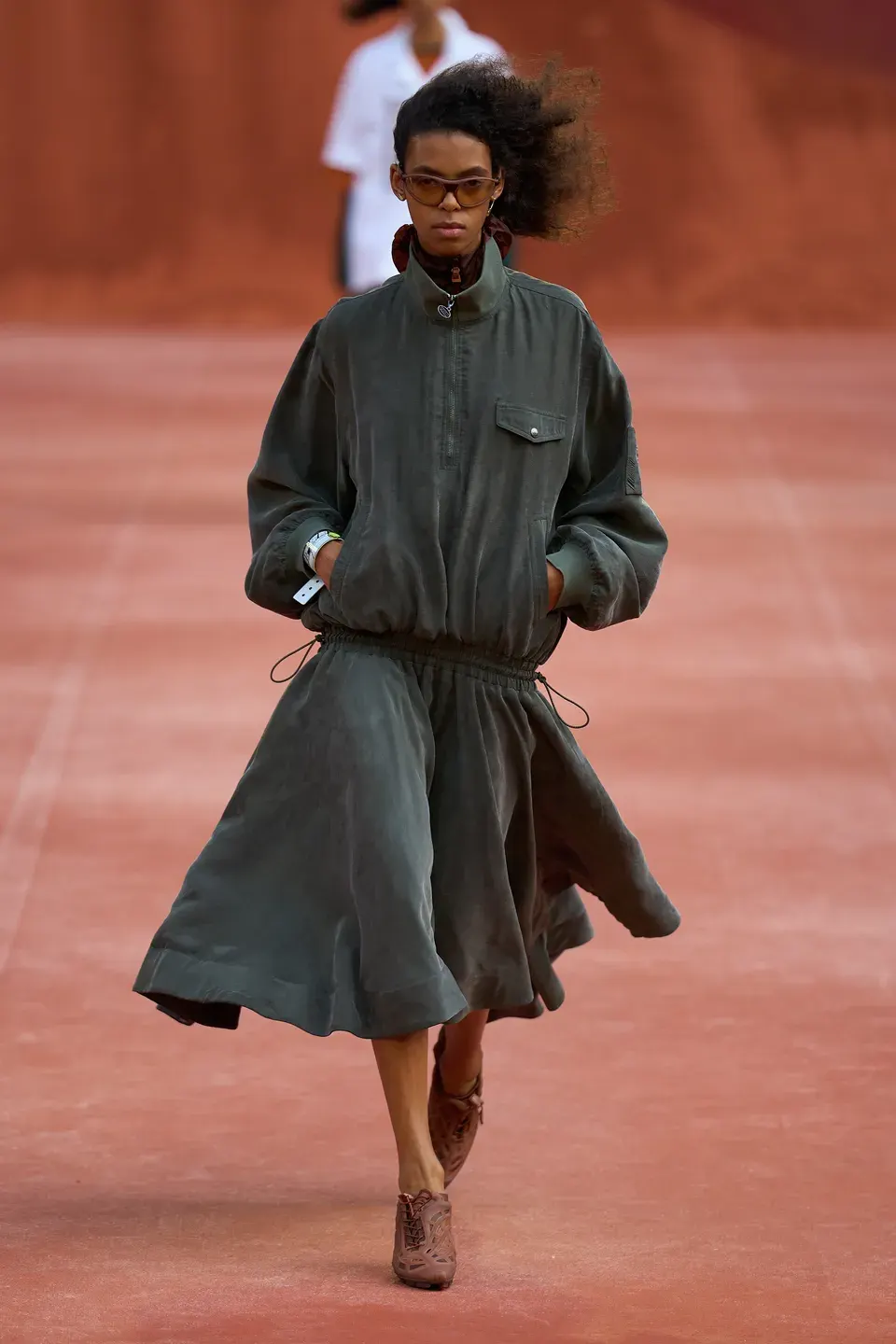
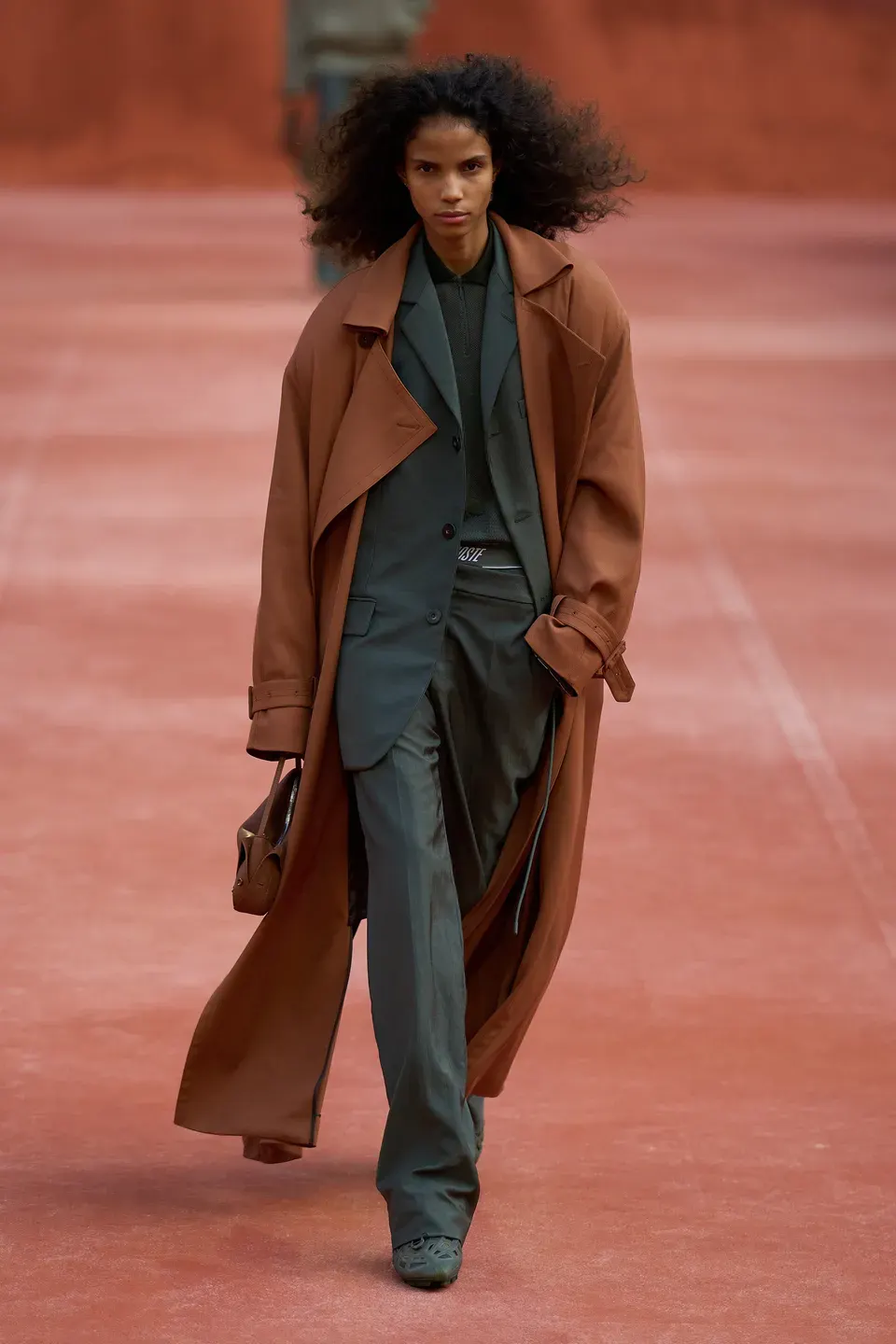
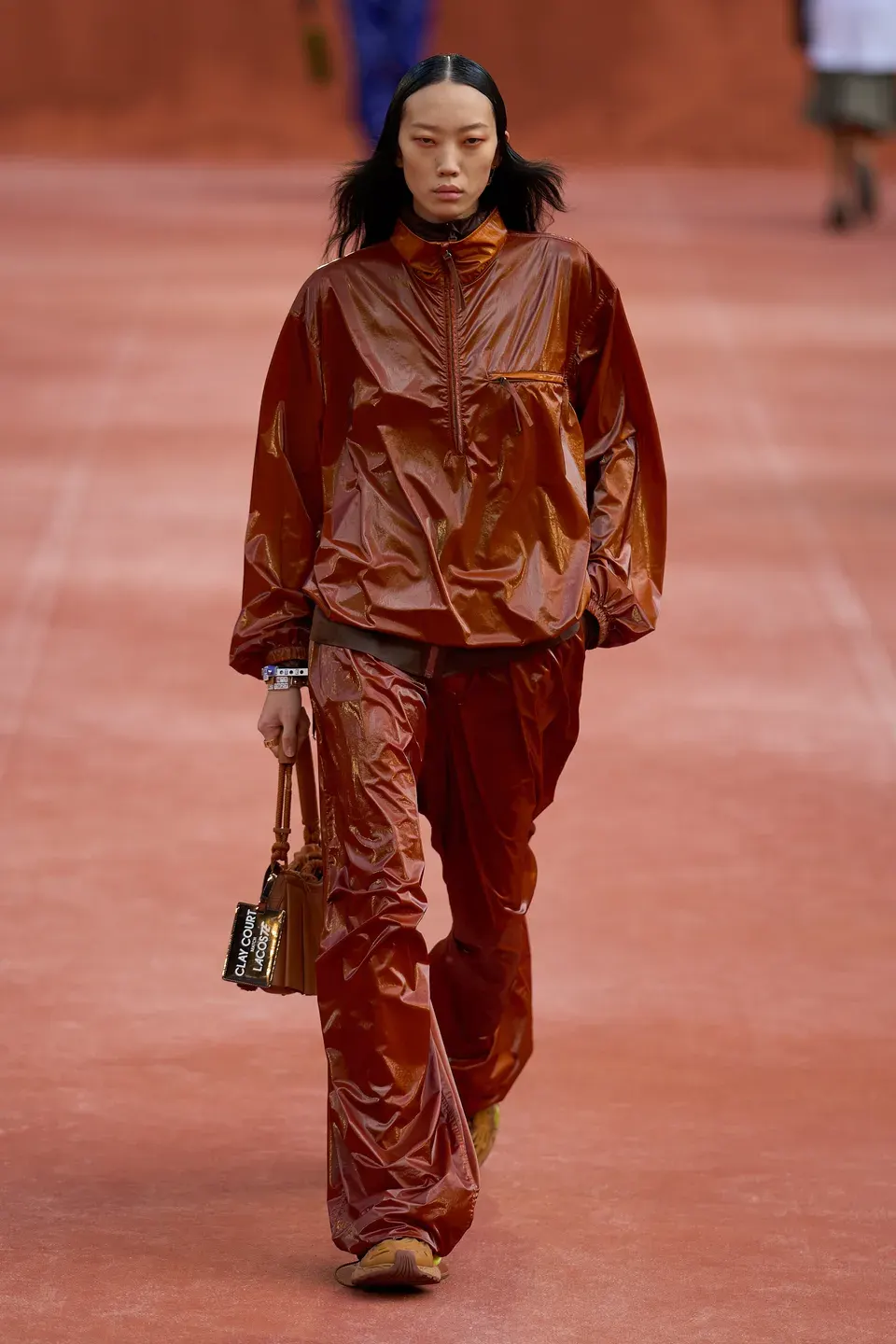

Kolotouros treats these gestures as design principles. Movement comes first, and elegance grows around it. That philosophy shaped the entire runway. Philippe Chatrier became more than a symbolic tennis venue because the actual qualities of clay entered the clothes. Court lines blurred under foot traffic, dust settled across pale fabrics, and red earth supplied much of the palette. The show connected sport with physical consequence, giving Lacoste a way to revisit tennis codes through the evidence left by the body.
The set also referenced the factory where Roland-Garros clay is produced, bringing the material culture of the tournament directly into the presentation. Clay therefore operated as colour, texture, landscape and memory at once.
One of Lacoste SS27’s strongest technical ideas came from the appearance of sweat itself. White polos, T-shirts, shorts and denim carried permanent puckering that resembled fabric compressed and darkened through exertion. Kolotouros achieved the effect by layering fabric with tulle and fusible material, then applying hot steam so the surface shrank into controlled wrinkles.


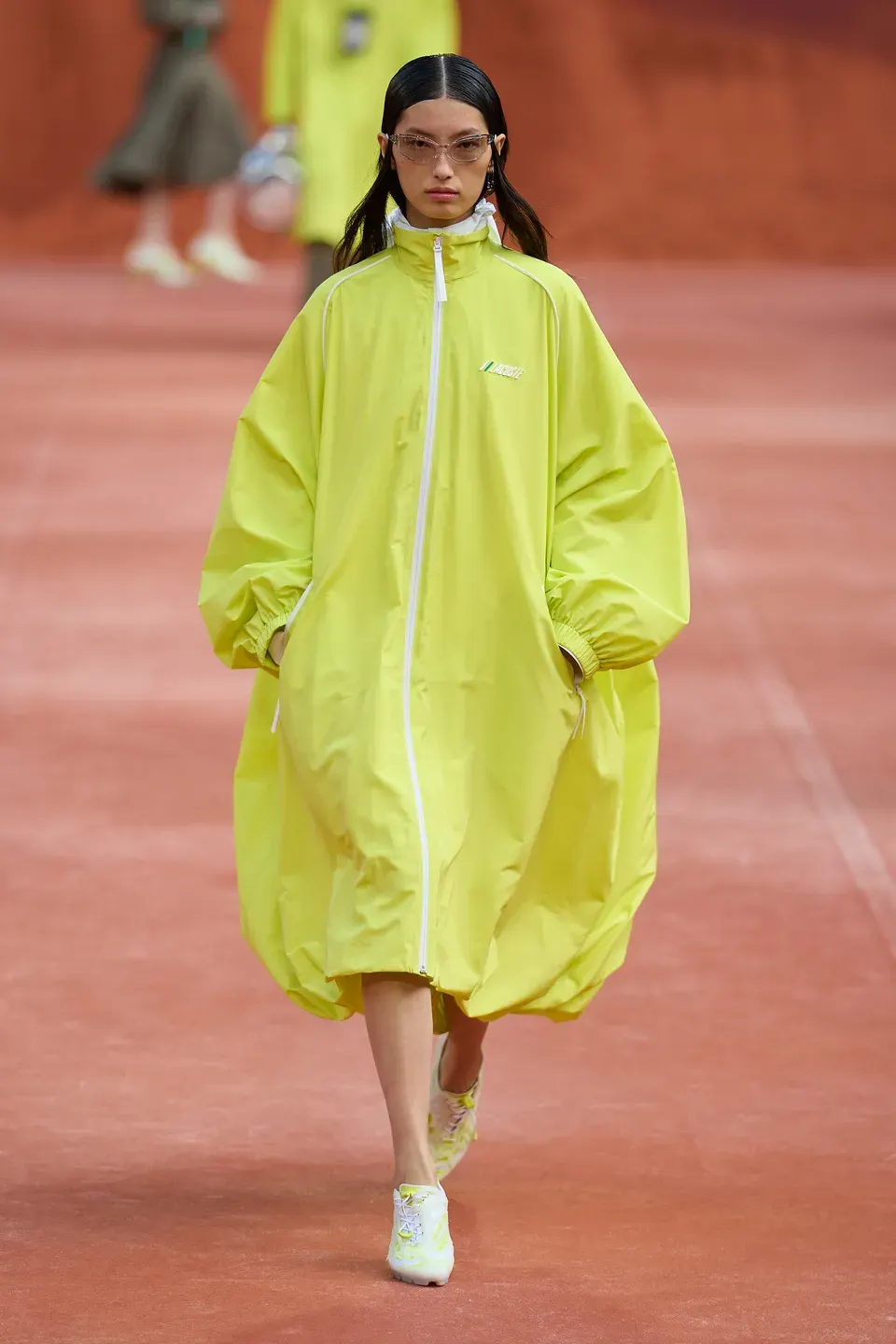
The technique gave familiar wardrobe staples an already-lived quality. Cotton was garment-dyed, enzyme washing softened structure, tropical wool became looser and more fluid, while washed silk developed a more relaxed hand. Technical fabrics entered where breathability and movement carried functional value.
The closing white looks received clay-stained treatments that made them appear pressed directly into the court. These marks turned wear into design information and allowed the collection to treat effort as part of the garment’s visual identity.
For Lacoste, this approach feels especially relevant because sport already carries an intimate relationship with repetition and use. SS27 makes that relationship visible at surface level, allowing physical activity to shape colour, texture and finish.
The Polo Escapes Its Uniform
The silhouette section gives Lacoste its clearest expansion beyond traditional tennis dressing. Shrunken polos sit close to the torso, while oversized polo dresses extend the familiar shirt into a loose, elongated form. Sleeveless technical tops expose the shoulder line, short tennis skirts keep the leg active, and narrow mini dresses sharpen the athletic body through compact proportions.
Tailoring moves through long H-line blazers, wide-leg trousers and relaxed suiting, allowing the collection to enter city dressing with greater authority. Fluid trench coats add movement over straighter silhouettes, while track pieces and elongated jersey tops preserve the sports foundation.
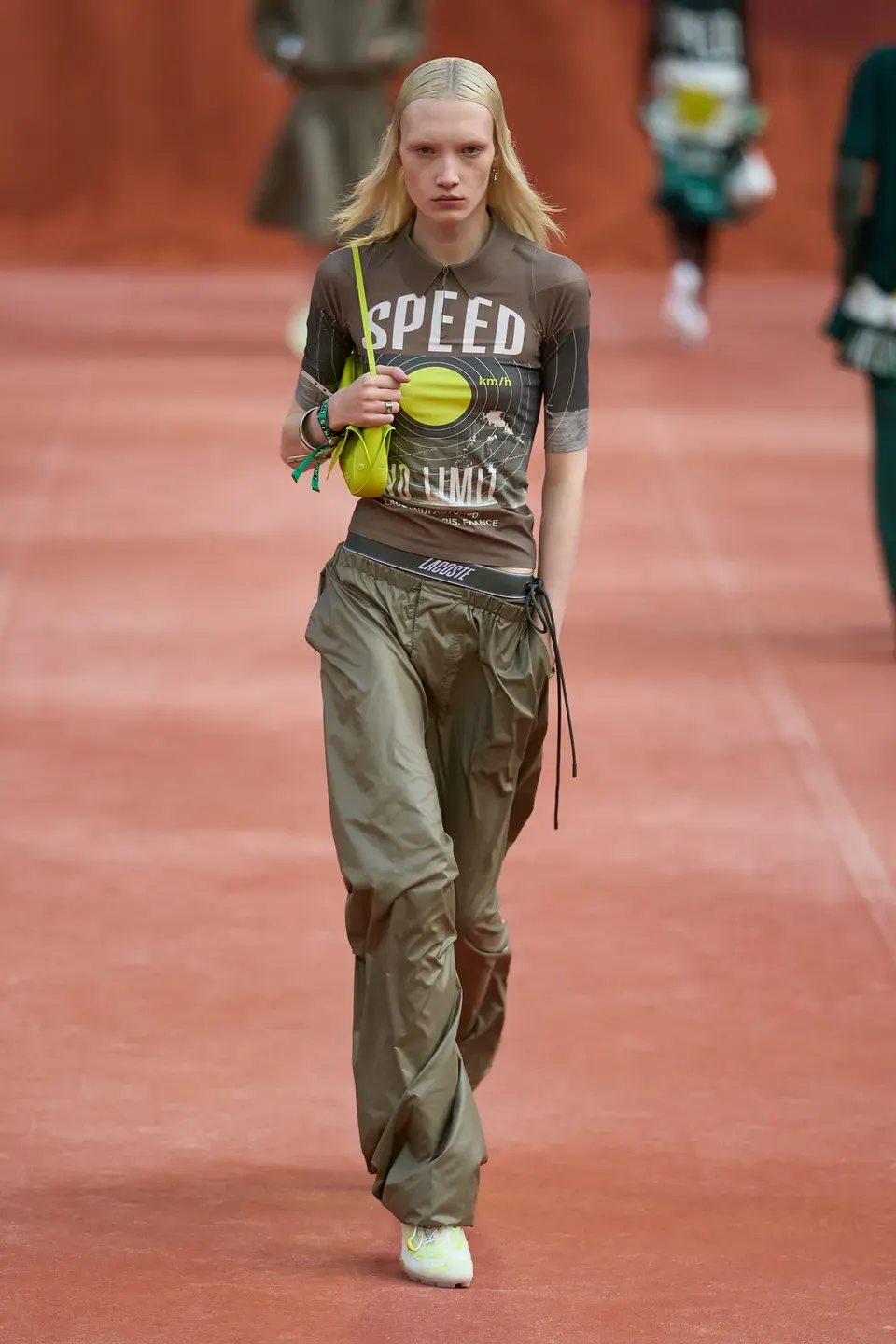
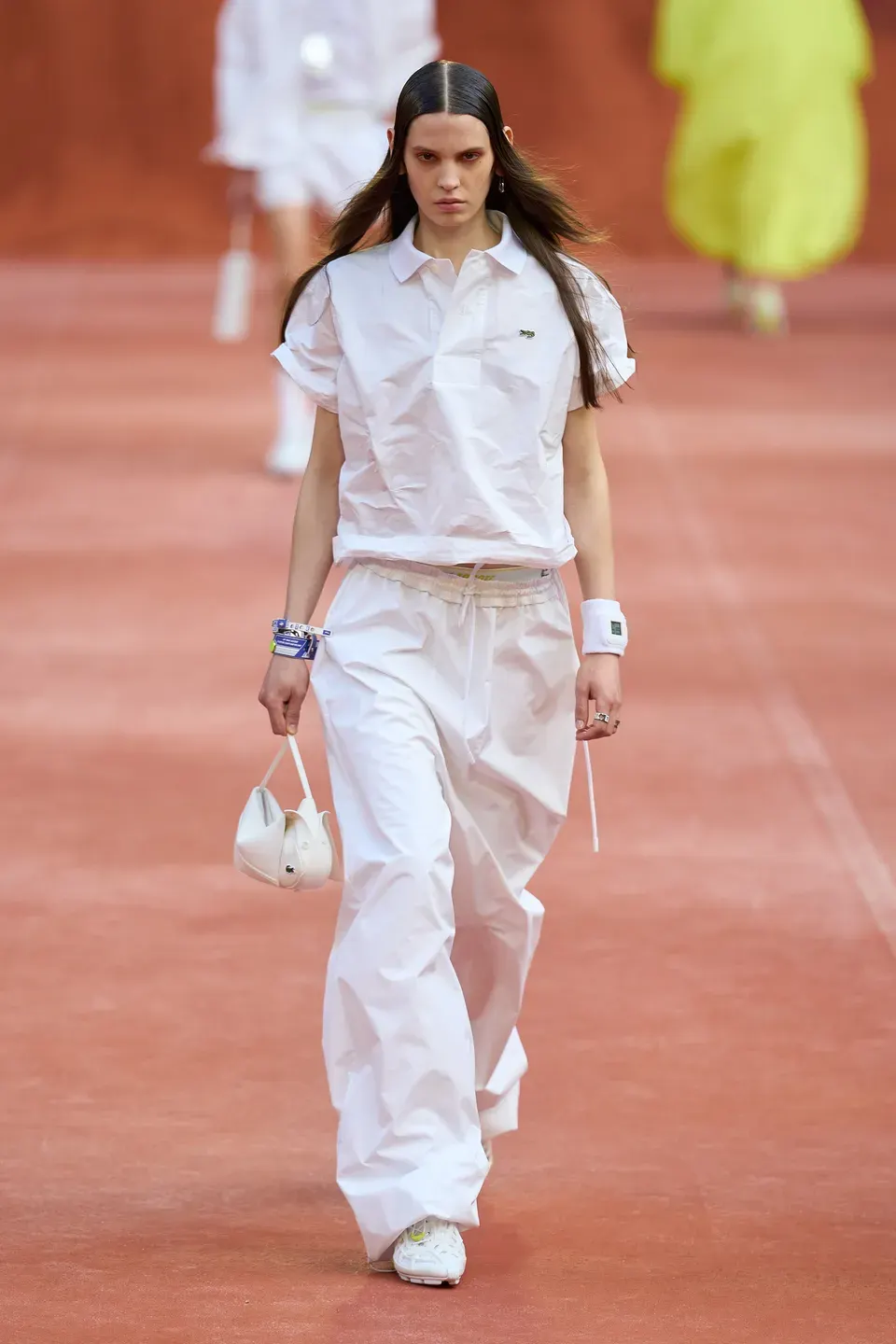
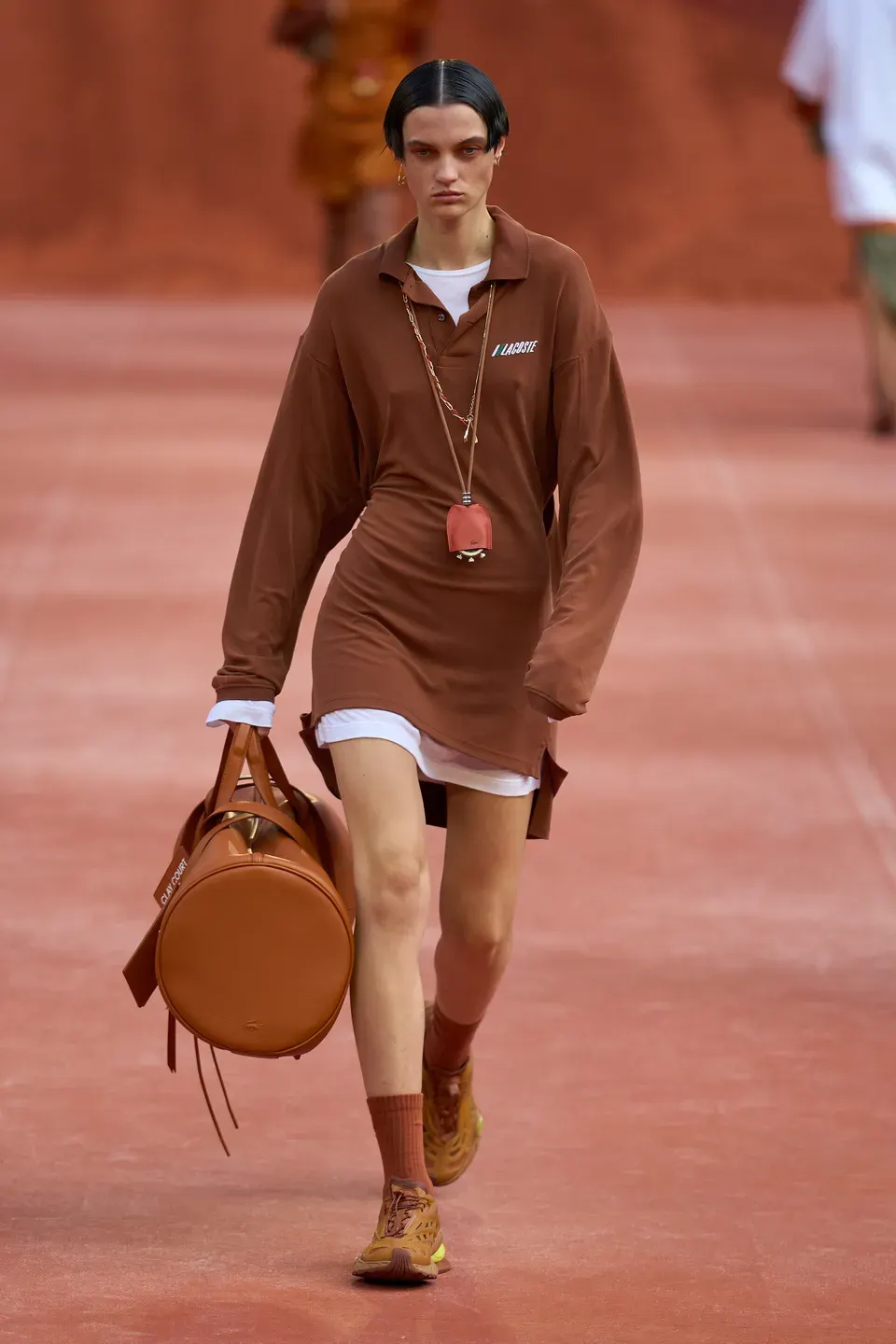
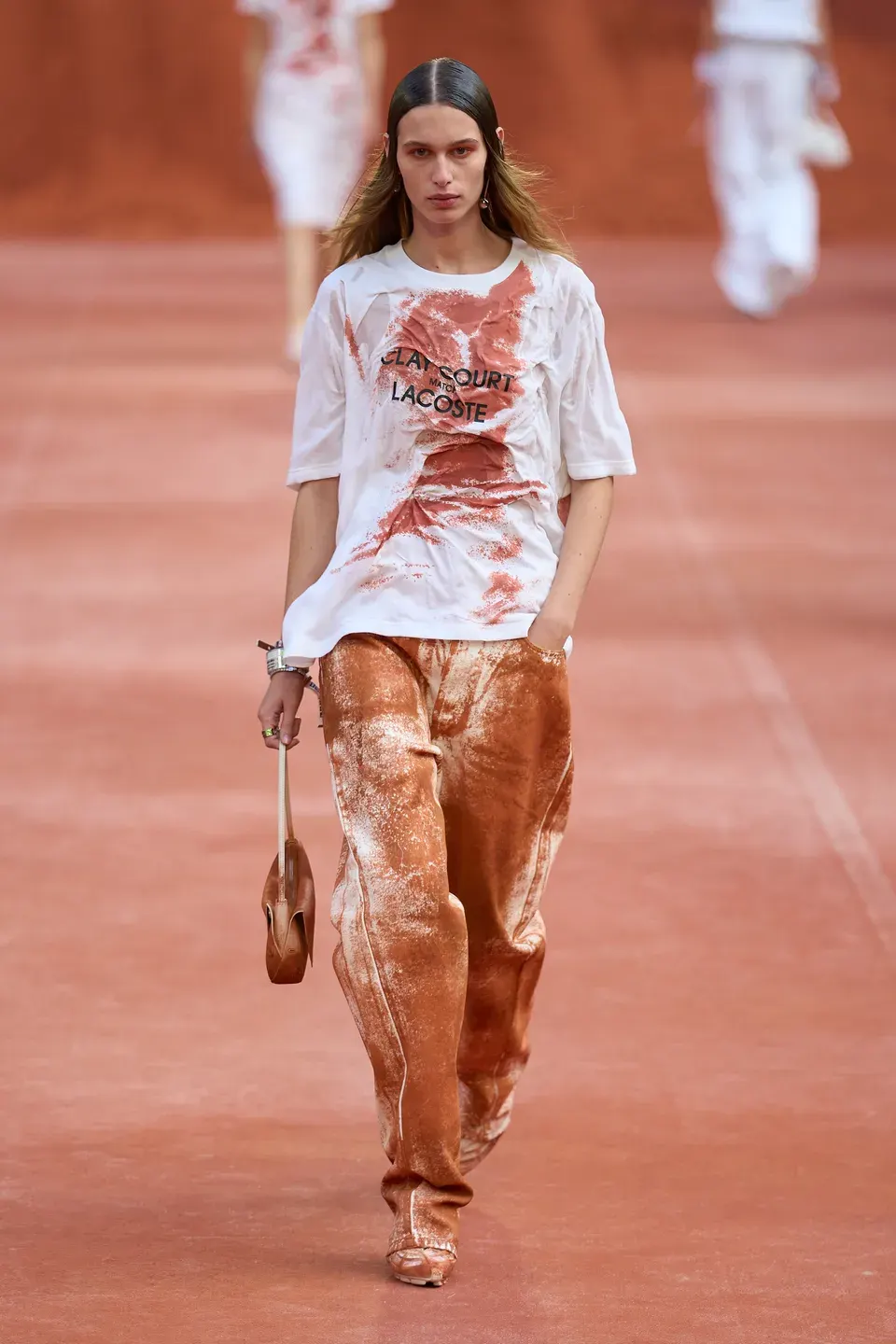
One oversized brown polo dress layered over a white underpiece became a strong example of this shift, using scale to transform a recognizable Lacoste code into something softer and more architectural. Elsewhere, a grey tailored suit beneath a clay-toned trench showed how the brand can move naturally between sport and polished urban dressing.
The H-line appears repeatedly through straight jackets and trousers that create a clean vertical frame, while wide-leg shapes open movement through the lower body. Shorter skirts and cropped shorts keep the silhouette energetic and exposed, giving the collection a clear physical rhythm.
Tennis Hardware Becomes Styling Language
Wristbands, circular pouches, tinted eyewear and compact leather bags sit close to the body, while technical sneakers maintain the athletic connection throughout the runway. Whistle-like pendants and chain necklaces give familiar sporting objects a more decorative role.
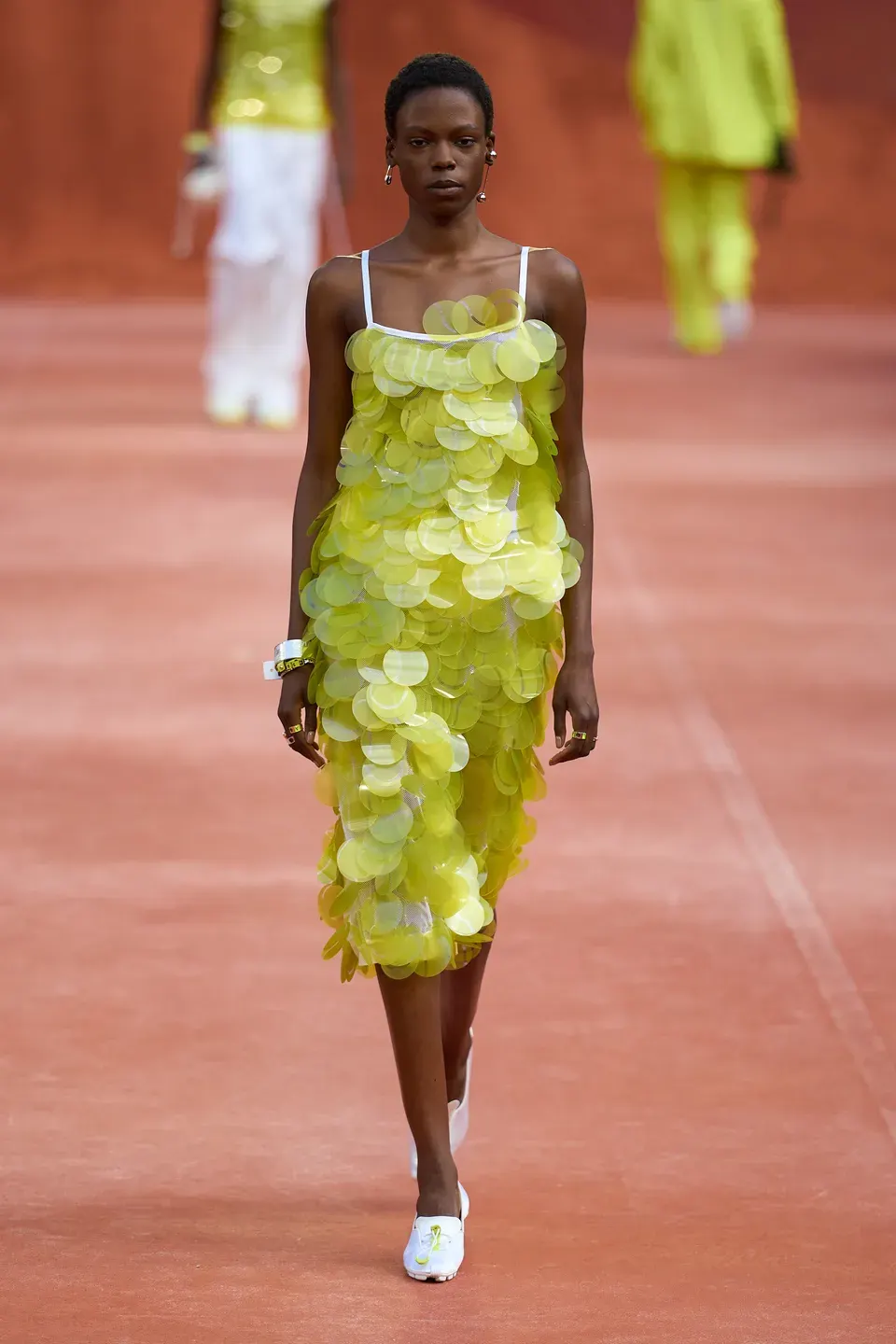
Large circular appliqués appear across sculptural skirts, recalling the geometry of tennis balls through repetition and scale. Citrine and acid-yellow accents punctuate clay brown, olive, grey and white, introducing the sharp visual energy associated with equipment and court markings.
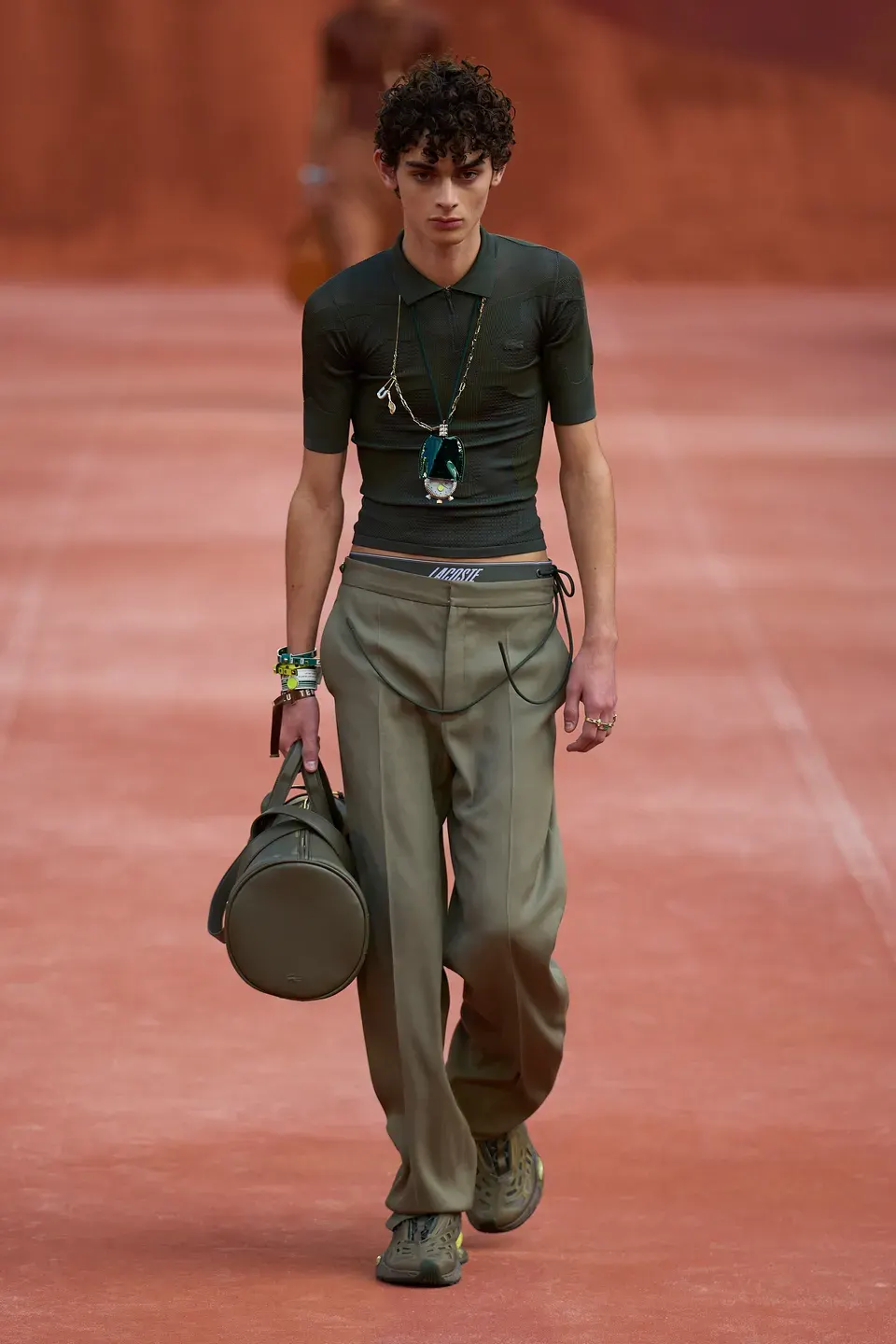
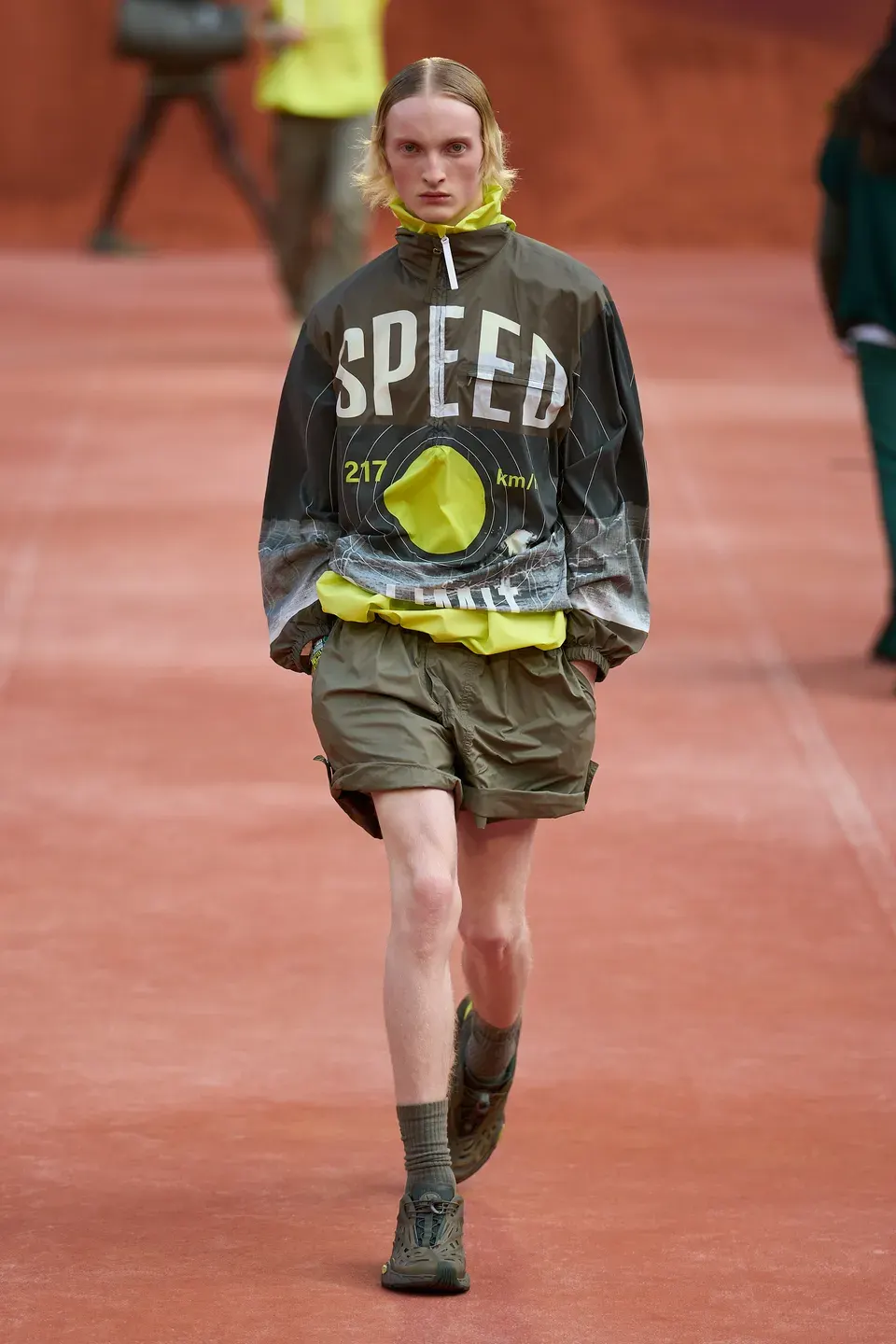
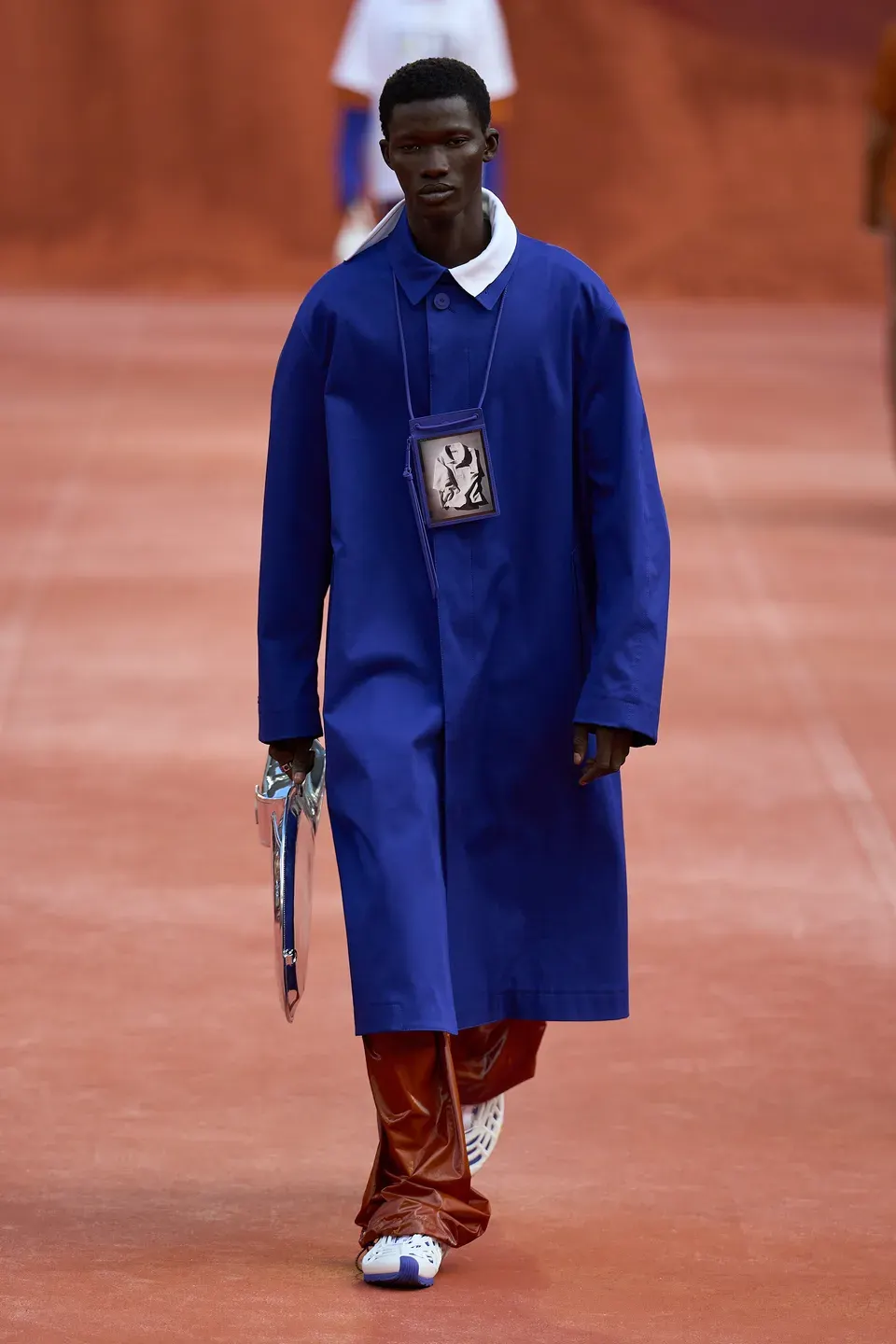
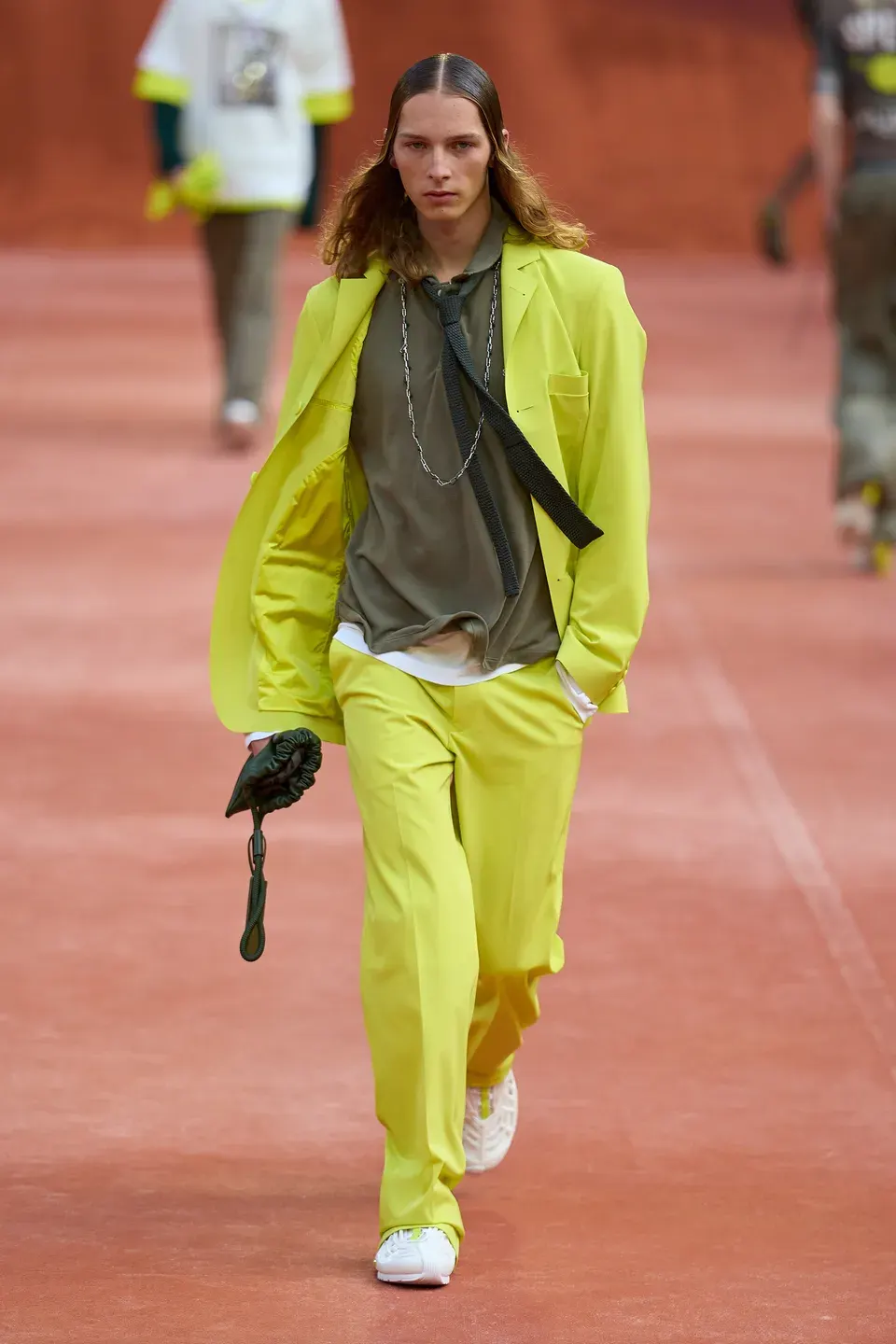
The final white garments provide the most memorable colour story. Ochre traces spread across the cloth, allowing pristine tennis white to absorb the physical environment around it. The effect gives Lacoste a direct way to reinterpret one of the sport’s most recognizable dress conventions through use.
Lacoste Pushes Further Into Premium Sports Luxury
SS27 arrives during a major strategic period for Lacoste. Pelagia Kolotouros has led the creative studio since 2023, with responsibility across collections and a mandate to strengthen the brand’s fashion credibility while keeping sport at the core of its identity.
That creative direction sits inside a wider premiumisation strategy. Lacoste has been sharpening retail presentation, expanding higher-value categories and building a more elevated global image around its tennis heritage. Thierry Guibert returned to the CEO role in 2026, while the company continues working toward a long-term sales target of roughly €4 billion by 2028–2030.
The collection expands the polo into dresses, tailoring and outerwear, gives technical treatments a stronger fashion role, and brings tennis directly into the language of modern luxury.
For Lacoste, the red clay of Roland-Garros becomes more than heritage scenery. It becomes a working material for the next phase of the brand, where sport, fashion and premium positioning share the same court.