A tape measure, a perfectly cut jacket, and a private wish to move someone: Arashi Yanagawa reveals the human instincts beneath his commanding designs.
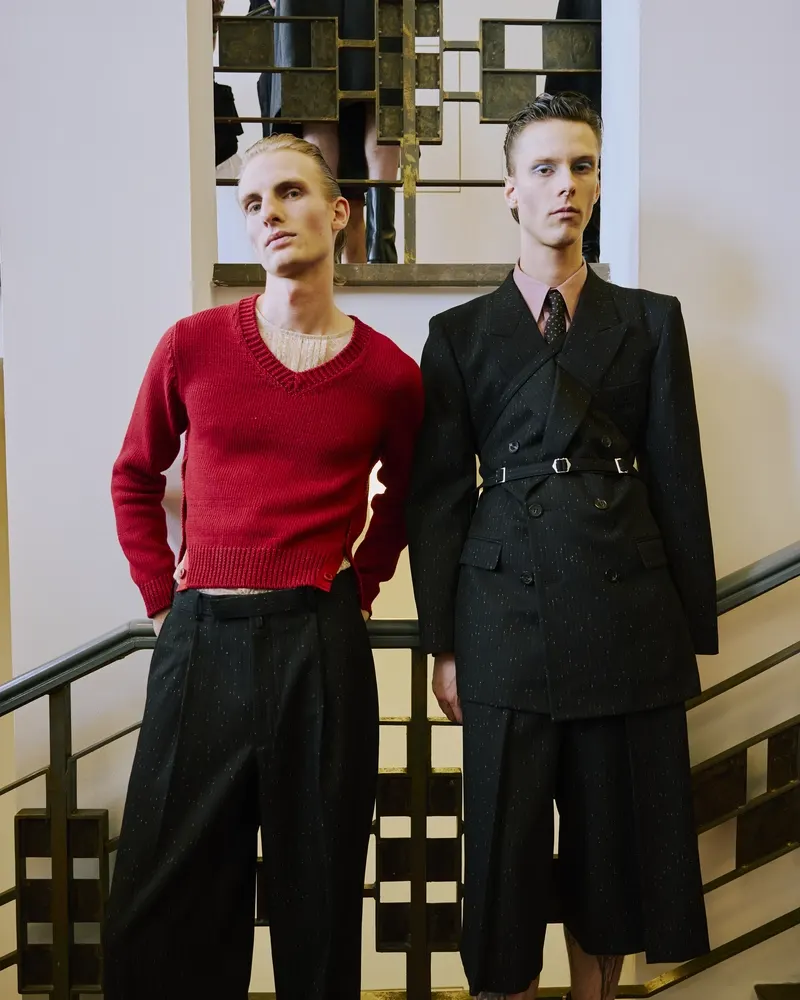
Arashi Yanagawa: Why Five Millimeters Matter
A tape measure, a perfectly cut jacket, and a private wish to move someone: Arashi Yanagawa reveals the human instincts beneath his commanding designs.
October 27, 2026


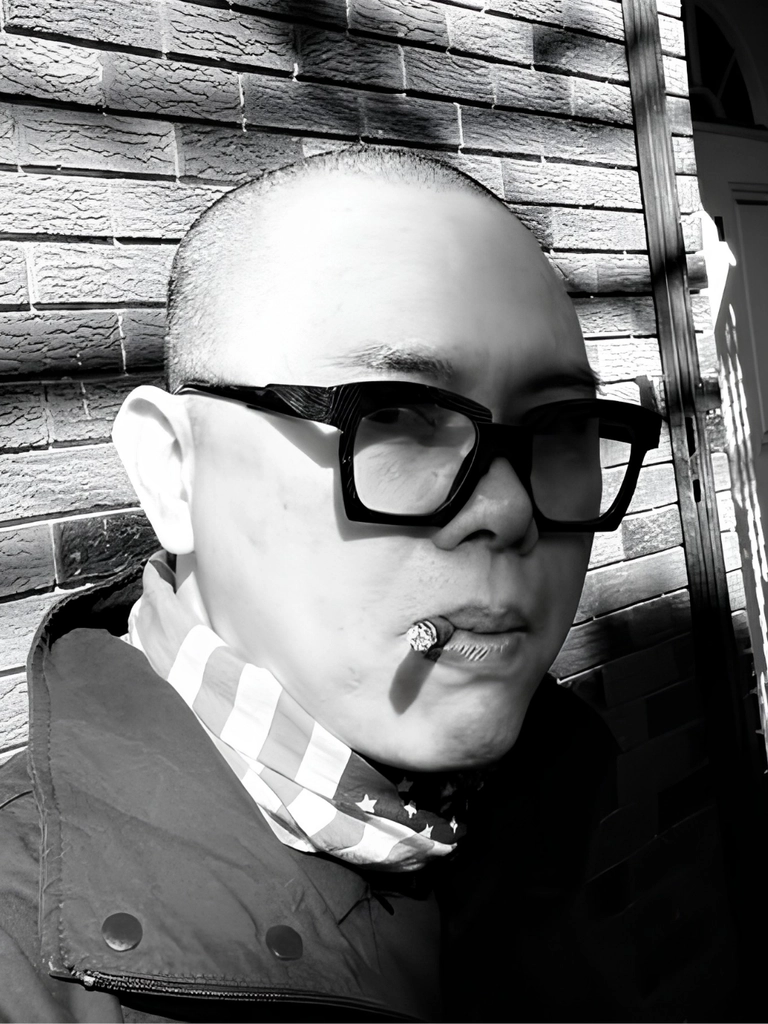
Five millimeters can occupy Arashi Yanagawa's thoughts for an astonishing amount of time. The designer behind JOHN LAWRENCE SULLIVAN, whose clothes communicate such formidable confidence, admits to Jessica Van De Camp, fashion editor of PAVE Magazine, that he carries a tape measure everywhere. Whatever catches his attention might warrant closer examination. A centimeter can become a surprisingly consequential concern.
“People often assume from my collections that I’m bold and instinctive, but when it comes to making clothes, I’m very particular about the details,” he explains. Every shoulder, lapel and carefully placed seam passes through this exacting scrutiny. The resulting visual authority emerges from someone willing to question the smallest measurements.
Yet after more than two decades of collections, Yanagawa's greatest concern before a presentation lies beyond anything he can measure. “Every time I present a new collection, I wonder whether it will move the people who see it.” The admission introduces a fascinating contradiction. He can determine a garment's proportions with extraordinary precision; the emotional response belongs entirely to someone else.
JOHN LAWRENCE SULLIVAN: Learning the Language of Power
Long before fashion became his profession, Yanagawa was already fascinated by clothing. Growing up in Hiroshima, he encountered fashion magazines through his older sister, developed an affection for leather shoes and learned about garments through conversations with shop staff. Alongside those interests, he pursued boxing with remarkable dedication, winning national amateur titles before entering the professional ring.
His athletic career eventually ended, while its influence survived in the name JOHN LAWRENCE SULLIVAN, established in 2003 and named after the nineteenth-century American heavyweight champion.
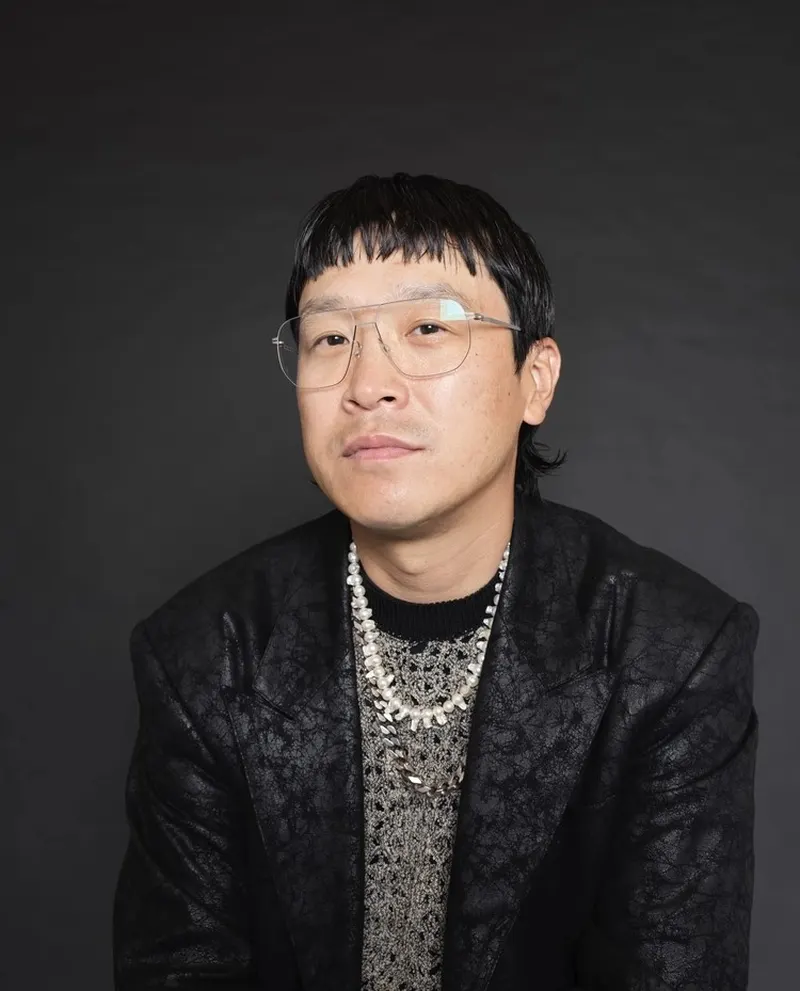
London provided another education. Yanagawa began purchasing vintage garments during visits to British markets, arranging for a friend to sell them in Japan. He has recalled the peculiar sadness of watching a carefully assembled selection lose its visual coherence as customers bought individual pieces.
The episode reveals an early fascination with fashion's relationship to authorship. He could arrange garments into an aesthetic composition, yet ownership transferred their meaning into other people's lives. Designing clothes offered an opportunity to develop that vision from the beginning.
His cinematic references illuminate another dimension of this interest. When Jessica asks which film wardrobes have stayed with him, Yanagawa names The Godfather, Scarface and Quadrophenia. Across these films, tailoring communicates social position, ambition, allegiance and rebellion. The suit acquires meaning through the character wearing it and the circumstances surrounding that character.
Clothing, Yanagawa understands, participates in how people construct their public identities. His own practice approaches that relationship through the physical mechanisms of tailoring, where subtle alterations in proportion can dramatically change the impression a body makes.
JOHN LAWRENCE SULLIVAN: What the Eye Cannot See
“Almost every season, the collection begins with tailoring,” Yanagawa tells Jessica.
The jacket provides his starting point. Shoulder width, garment length and overall silhouette establish the direction of a collection before individual details enter consideration. He then refines what he calls the garment's visual center of gravity, examining how the lapel relates to the shoulders and how different proportions distribute attention across the body.
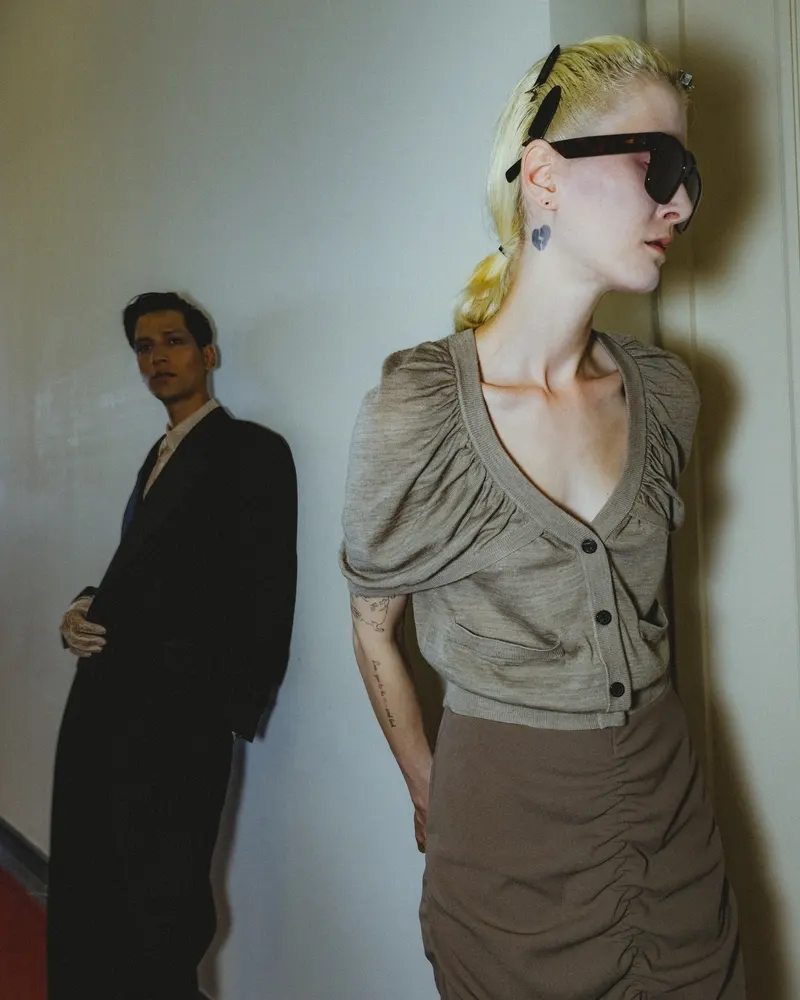
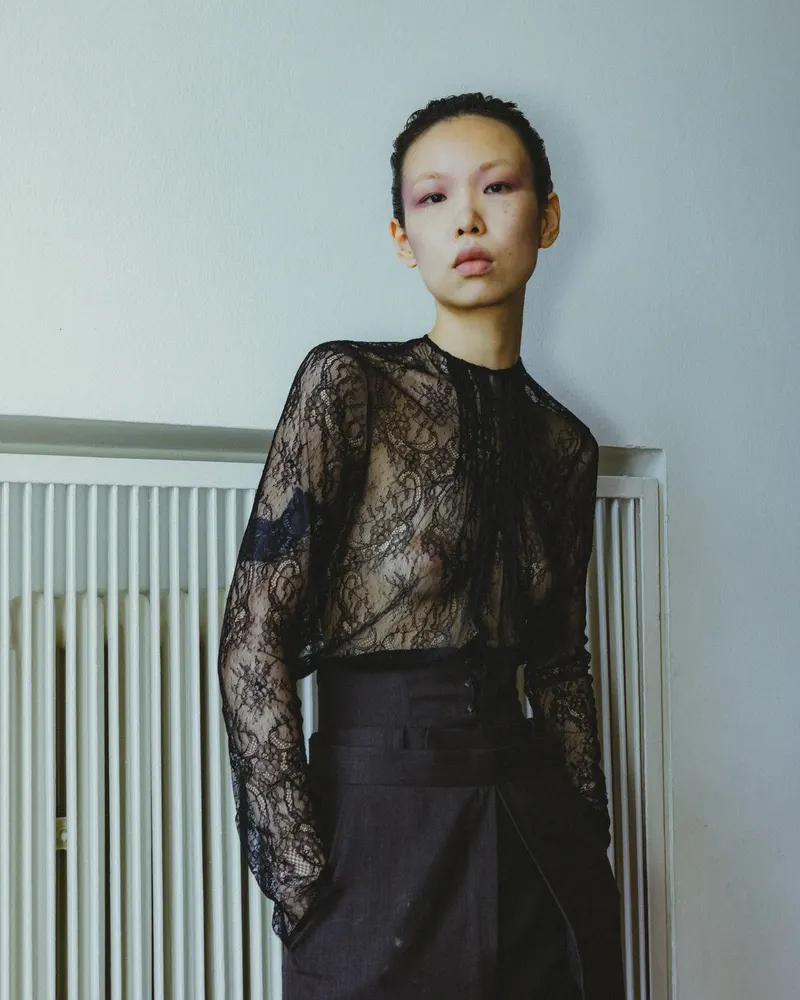
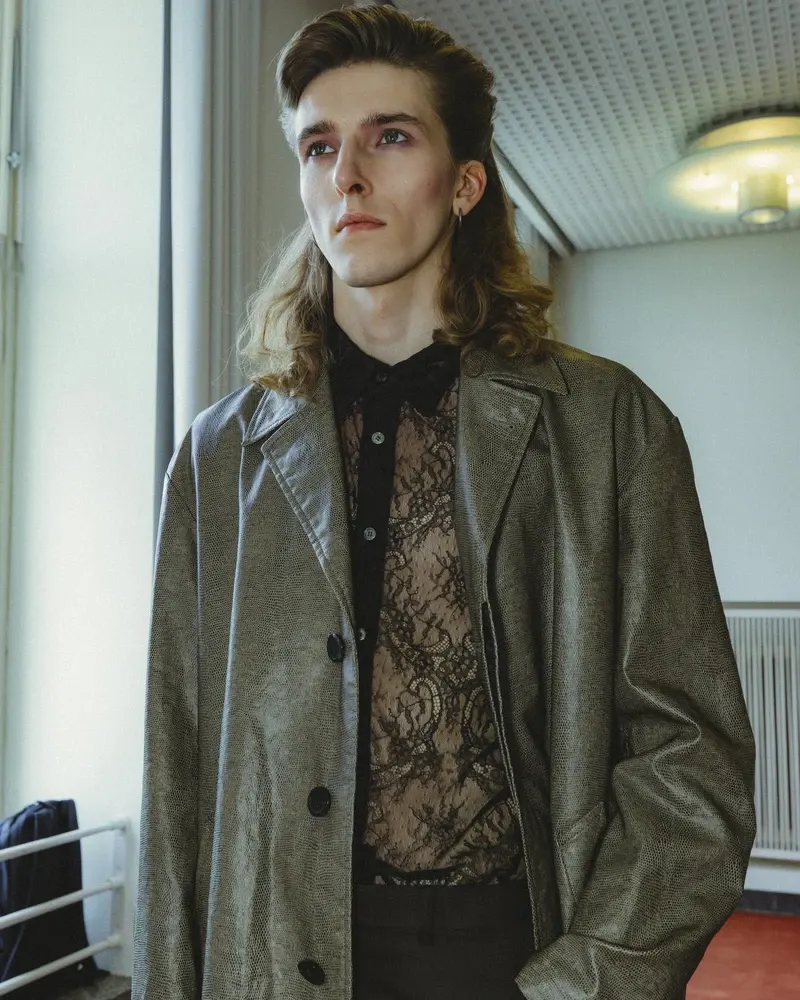
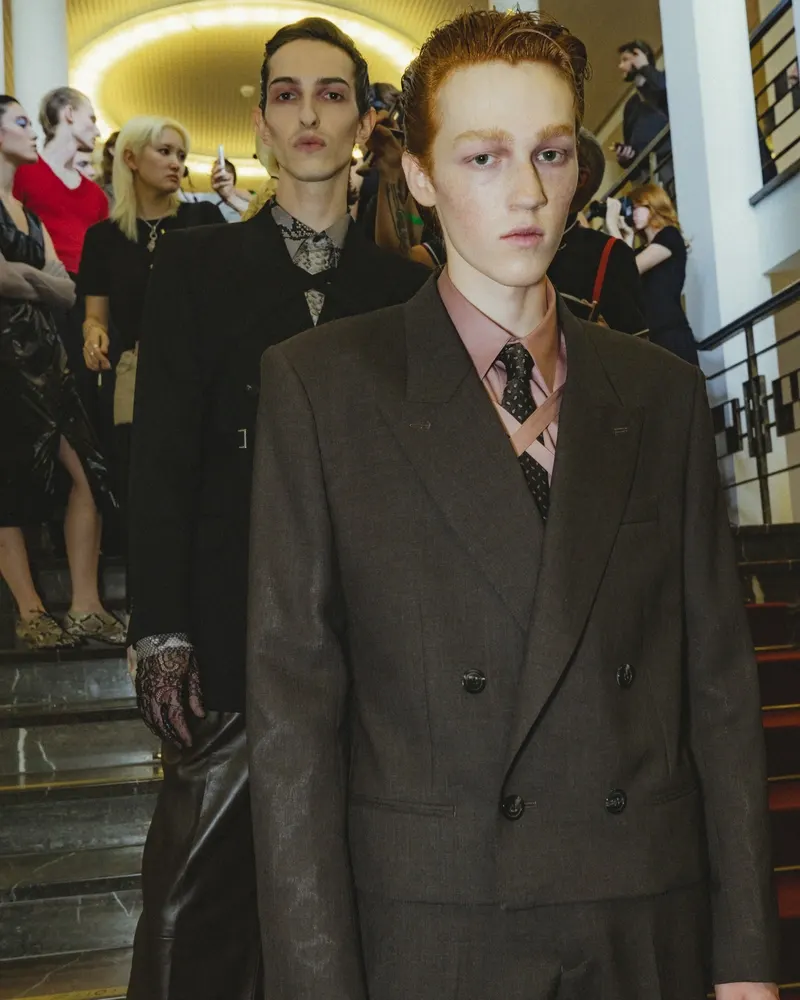
These calculations influence the wearer's perceived presence. An extended shoulder can establish authority through width, while changes to the waist or jacket length alter the relationship between torso and legs. Yanagawa constructs visual strength through decisions that often escape conscious recognition.
Some of his most important work remains hidden inside the garment.
“Whenever possible, we use full-canvas construction for our tailored jackets,” he explains, describing the internal layer that supports the outer fabric and helps establish the jacket's three-dimensional form.
“I value the three-dimensional form the canvas creates from within, and the distinctive presence it gives the jacket.”
He also mentions daiba-style interior finishing and functional cuff buttonholes, details requiring considerable technical care. Their influence can be experienced through the garment's construction, handling and movement.
This conviction extends to his engagement with Japanese textile manufacturers, including mills in Bishu, whose expertise contributes to the development of distinctive fabrics. The finished silhouette reflects an intricate relationship between material, patternmaking and specialized labor.
There is considerable intelligence in designing an effect that someone can experience without necessarily identifying its source. The wearer encounters the result of decisions embedded within the garment itself.
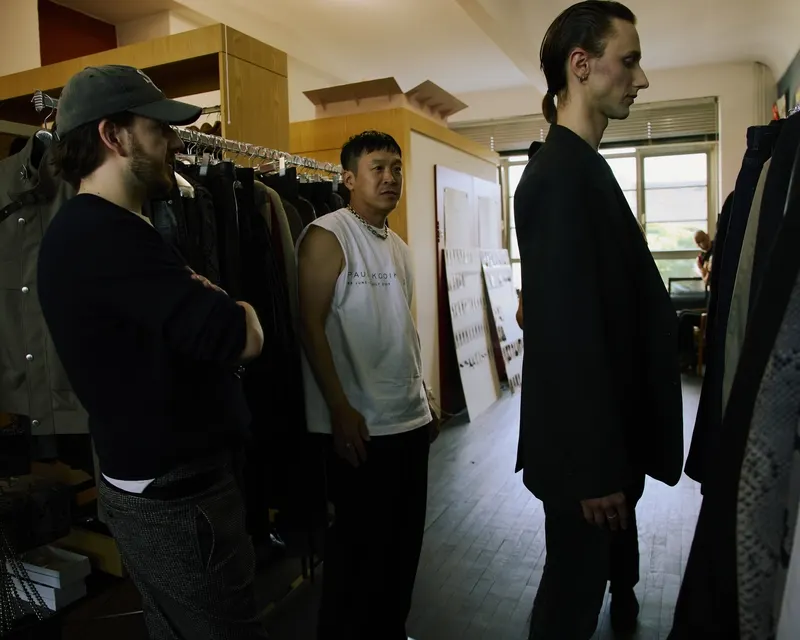
After decades of tailoring, Yanagawa remains particularly curious about those hidden systems. He wants to experiment with canvas, lining and structural techniques, exploring the silhouettes that might emerge when familiar constructions are altered or applied to other clothing categories.
His mastery has made the rules of tailoring increasingly interesting to challenge. In Spring/Summer 2027, that fascination acquired another dimension through a Japanese concept concerned with restriction itself.
JOHN LAWRENCE SULLIVAN: The Body Beyond the Rules
A cigarette rests between Leslie Winer's lips in a portrait from Bettina Rheims's Modern Lovers. Yanagawa remembers her commanding presence, describing “a strength and beauty in her presence that transcended gender.”
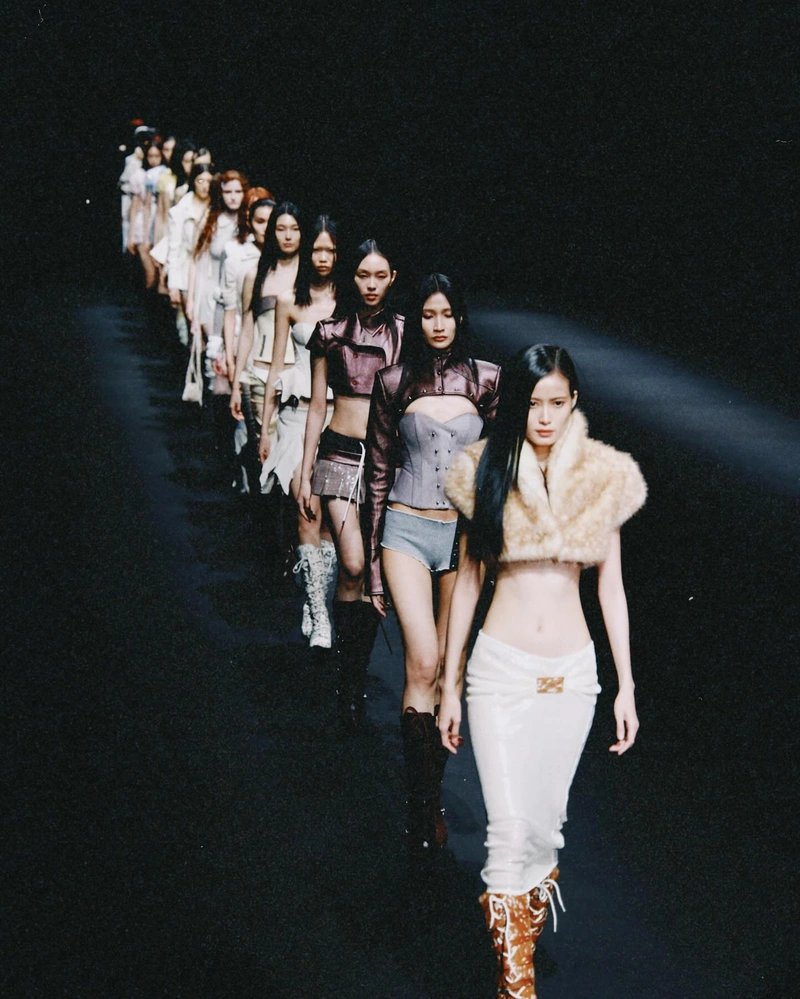
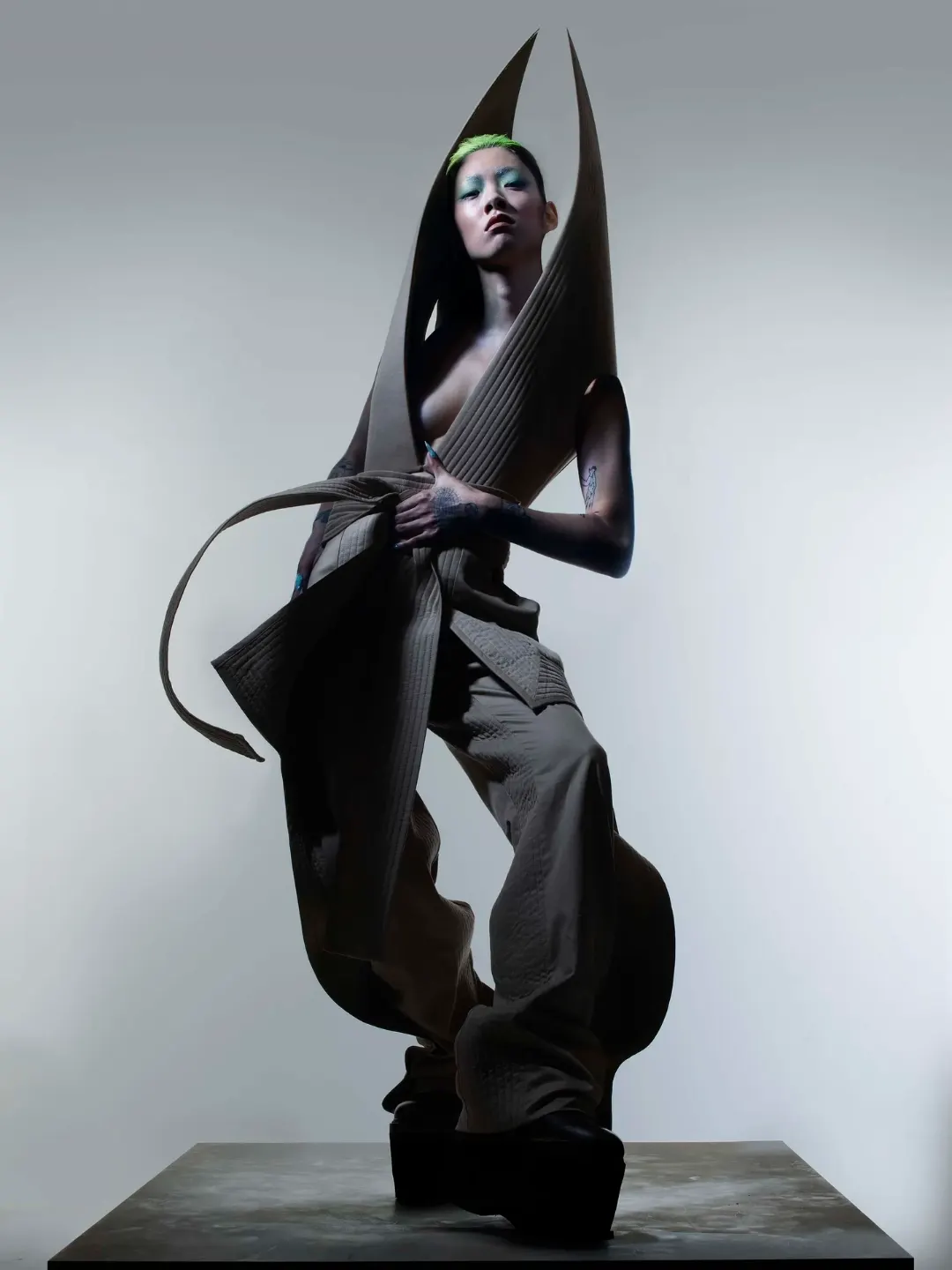
The photograph became a foundational reference for JOHN LAWRENCE SULLIVAN Spring/Summer 2027, titled Androgyny. Its influence spread through the collection's atmosphere, encouraging Yanagawa to investigate how familiar masculine and feminine design codes might coexist within an individual silhouette.
One formative experiment involved footwear. His team developed a custom last combining elements of men's Oxford shoes and women's heels. Because the last determines the shoe's fundamental shape, the exploration began within its construction. On the runway, slender heels emerged beneath dramatically flared trousers, becoming apparent through movement.
A related question informed the peplum bomber jacket. The traditionally feminine peplum entered a garment associated with masculine utility, requiring careful pattern adjustments to balance its effect on the overall silhouette.
“I didn’t want it to look like men wearing women’s clothes, or women wearing men’s clothes.”
That distinction reveals the complexity of his approach. A design can reference gendered conventions while allowing the wearer to inhabit the result as an individual. Achieving that balance depends on proportion, construction and the relationship between garment and body.
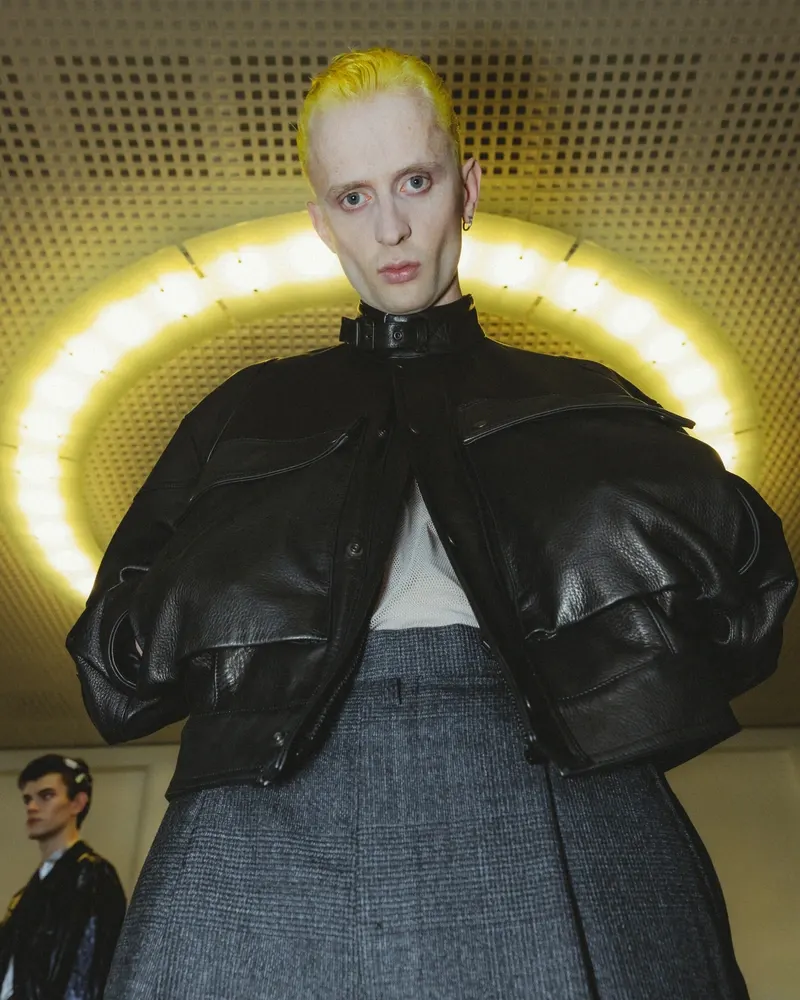
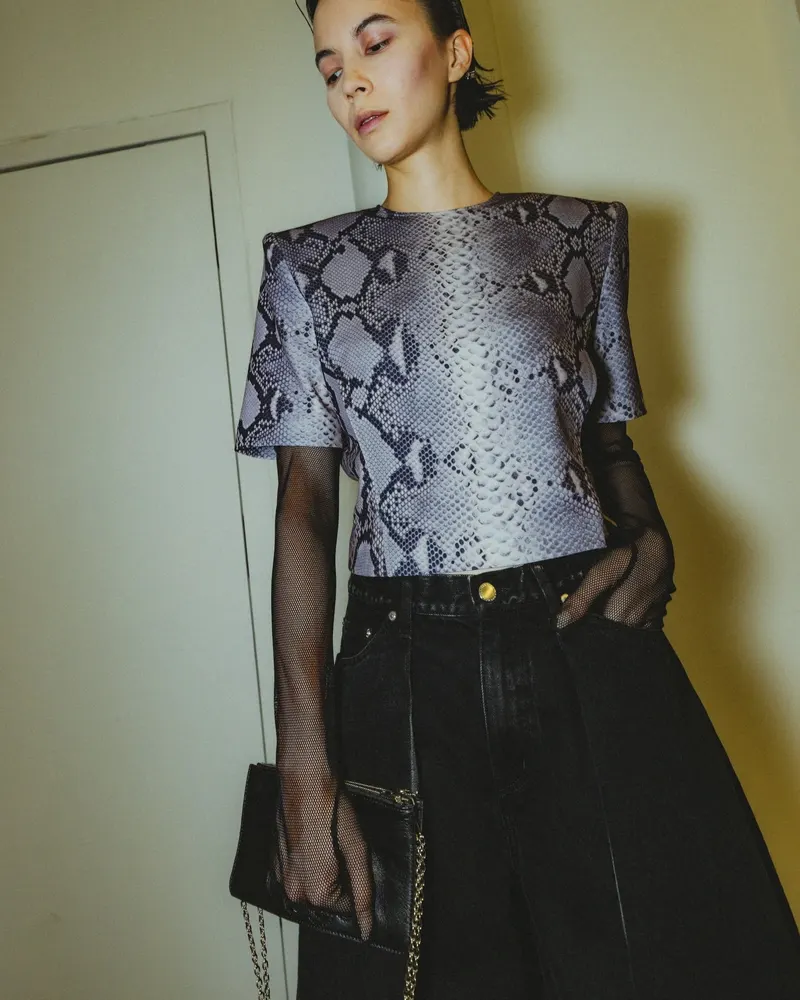
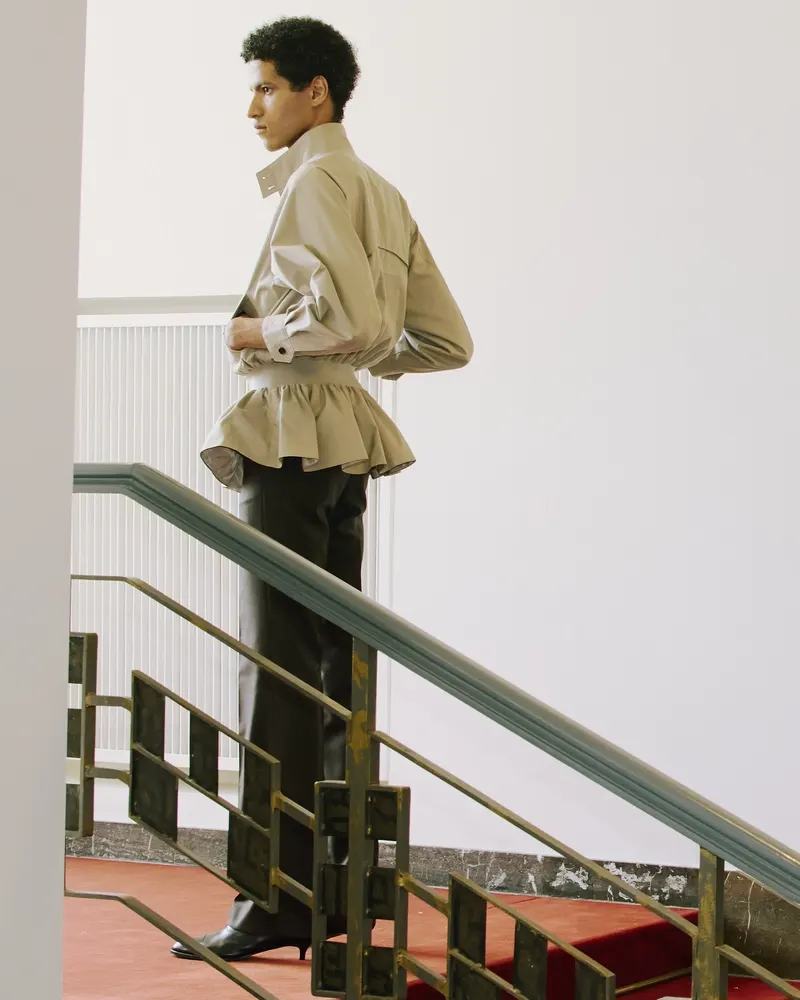
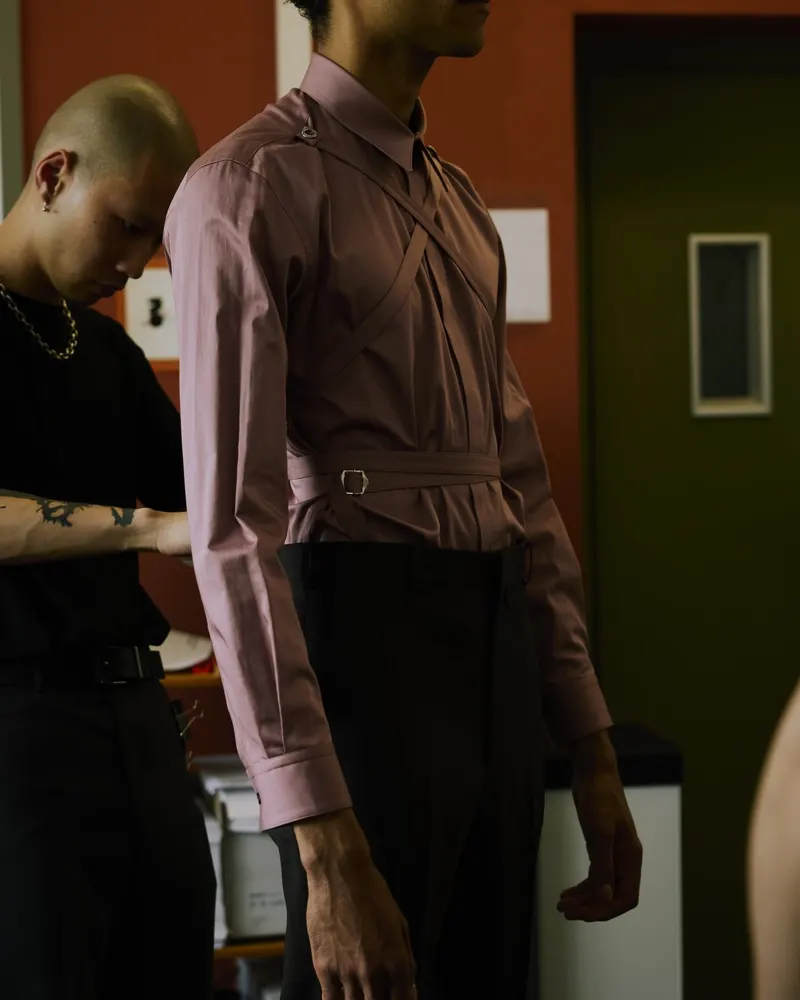
The collection's shibari-inspired details introduce a further complication. Jessica asks whether binding and restraint challenge conventional expressions of masculine power. Yanagawa responds by examining the language itself.
“In Japanese, it can refer both to physically binding the body and to restrictions or rules.”
Tailoring, he observes, also operates according to precise rules governing construction and sewing. Bringing these systems together allowed him to experiment with details that bind and reshape the body.
Straps cross tailored jackets, encircle torsos and reorganize familiar silhouettes. Their presence exposes a mechanism already fundamental to clothing: fabric is continuously controlled through seams, tension and internal support.
Within Androgyny, those mechanisms become visible elements of expression. Restraint creates shape, while the resulting silhouette offers possibilities for individual interpretation.
Snakeskin imagery extends that relationship between clothing and identity. Yanagawa describes the snake's shedding as a metaphor for personal evolution.
“Wearing clothes is also a way of discovering and expressing new aspects of ourselves.”
The observation gives the collection a particularly human dimension. Its garments emerge from Yanagawa's artistic convictions, yet their meanings continue developing through the people who wear them.
That process also raises a practical question. An experimental silhouette must eventually travel beyond the runway, enter commercial production and find its place within someone's wardrobe. For an independent label, that journey is fundamental to sustaining the work.
JOHN LAWRENCE SULLIVAN: When Conviction Meets Commerce
“As an independent brand, we need to make the business work alongside our creative ambitions, so we develop essentially every piece with the intention of putting it into commercial production.”
Yanagawa's answer to Jessica's question about runway pieces reveals the commercial discipline underlying his artistic freedom.
Elaborate construction must be achievable through manufacturing. Materials require sourcing, complex patterns demand specialist expertise, and retailers must communicate unfamiliar designs to customers whose daily wardrobes may follow entirely different priorities.
Yanagawa acknowledges that Japanese buyers often request pieces that integrate easily into everyday dressing. Yet, as he explains, “We rarely change our design direction to accommodate those responses.”
This introduces one of the central challenges facing an independent fashion house. A distinctive aesthetic attracts attention precisely because it possesses an identifiable character. Commercial success then requires translating that character into garments customers can realistically incorporate into their lives.

For JOHN LAWRENCE SULLIVAN, tailoring provides a powerful foundation. Its recognizable proportions, craftsmanship and material intelligence can inform both demanding runway designs and familiar wardrobe categories.
The balance requires continual judgment. Creative integrity establishes the label's identity; production and distribution give that identity a sustainable existence.
International presentations introduce another level of complexity. Yanagawa's interest in German culture long preceded his recent Berlin Fashion Week appearances. German architecture, music and industrial design have informed his work for years, making Berlin an appropriate environment for developing those references.
His Autumn/Winter 2026 collection, presented at Kraftwerk, revisited boxing through forward-leaning silhouettes and the severe atmosphere of black-metal subcultures. Spring/Summer 2027 subsequently explored androgyny through the precision of his established tailoring vocabulary.
The collections reveal a designer capable of revisiting longstanding interests through changing cultural and artistic questions.
When Jessica asks about the reactions of international audiences, Yanagawa recalls how frequently people describe his clothes as beautiful.
“What has stayed with me is how often people outside Japan describe the clothes as ‘beautiful.’”
He also remembers a review recognizing the consistency and commitment of his creative expression.
The response seems especially meaningful given the years he has spent refining his aesthetic. International recognition carries another kind of significance when audiences identify the values that have guided a designer across decades.
Yet those audiences inevitably bring their own cultural associations. The formidable silhouette created in Tokyo may communicate different emotions in Berlin, where Yanagawa has encountered a particularly open approach to personal expression.
His admiration for that attitude reveals an unexpected tenderness within his understanding of strength.
JOHN LAWRENCE SULLIVAN: The Freedom to Be Seen
Away from fashion, Yanagawa has recently developed an enthusiasm for cooking. What began with recipes discovered through social-media videos evolved into an interest in kitchen equipment, balancing flavors and arranging colors. He now prepares meals for his partner and friends, encouraged by their enjoyment.
“Through cooking, I’ve realised once again how much I enjoy creating something, sharing it with others, and seeing their reactions.”
The sentiment returns us to his thoughts before a runway show. Both experiences involve meticulous preparation followed by the anticipation of another person's response. His pleasure in creating extends beyond the object itself into the relationship it establishes.
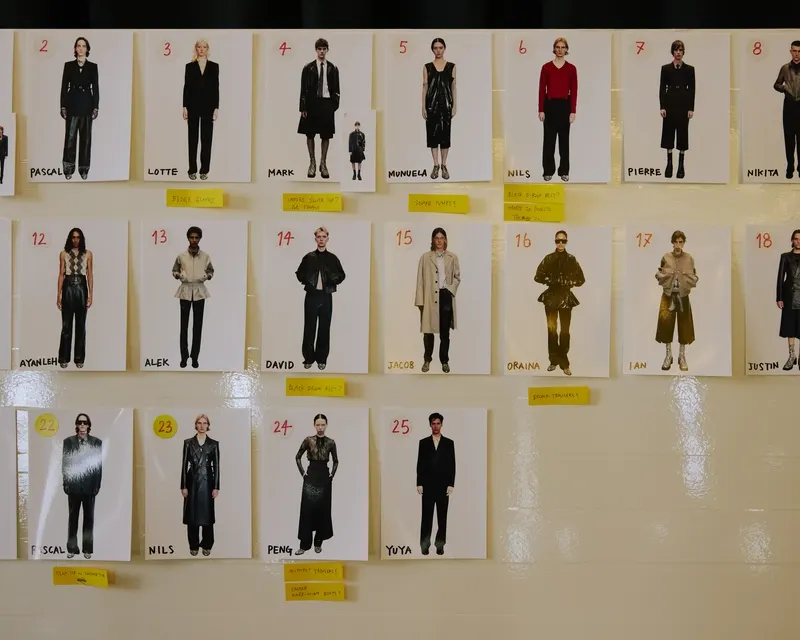
That human connection also shapes his admiration for Berlin. When Jessica asks how people express themselves through clothing in Tokyo and Berlin, Yanagawa reflects on differences he has observed in social expectations. He admires the confidence with which many Berliners communicate their musical tastes, values and sexuality through dress, while acknowledging the diversity present in both cities.
“I see strength in living without hiding who you are.”
Coming from a former boxer whose fashion house is named after a heavyweight champion, the declaration carries unusual resonance.
Through boxing, Yanagawa experienced strength as a physical discipline. Through tailoring, he developed its visual expression. His exploration of androgyny examines the relationship between that strength and the freedom to inhabit identities beyond familiar conventions.
His final wish is for people to trust their own instincts, embracing what they love and expressing how they want to live through clothing.
The tape measure will presumably remain close at hand. Five millimeters will continue demanding his attention, and every shoulder and lapel will receive its careful examination. Those decisions give a garment its presence, its precision and its unmistakable character.
Yet the person who eventually wears it brings an entire life into the equation, with desires and convictions beyond the designer's calculations.
Yanagawa can determine the exact shape of a jacket. What someone finds the courage to express inside it remains beautifully their own.