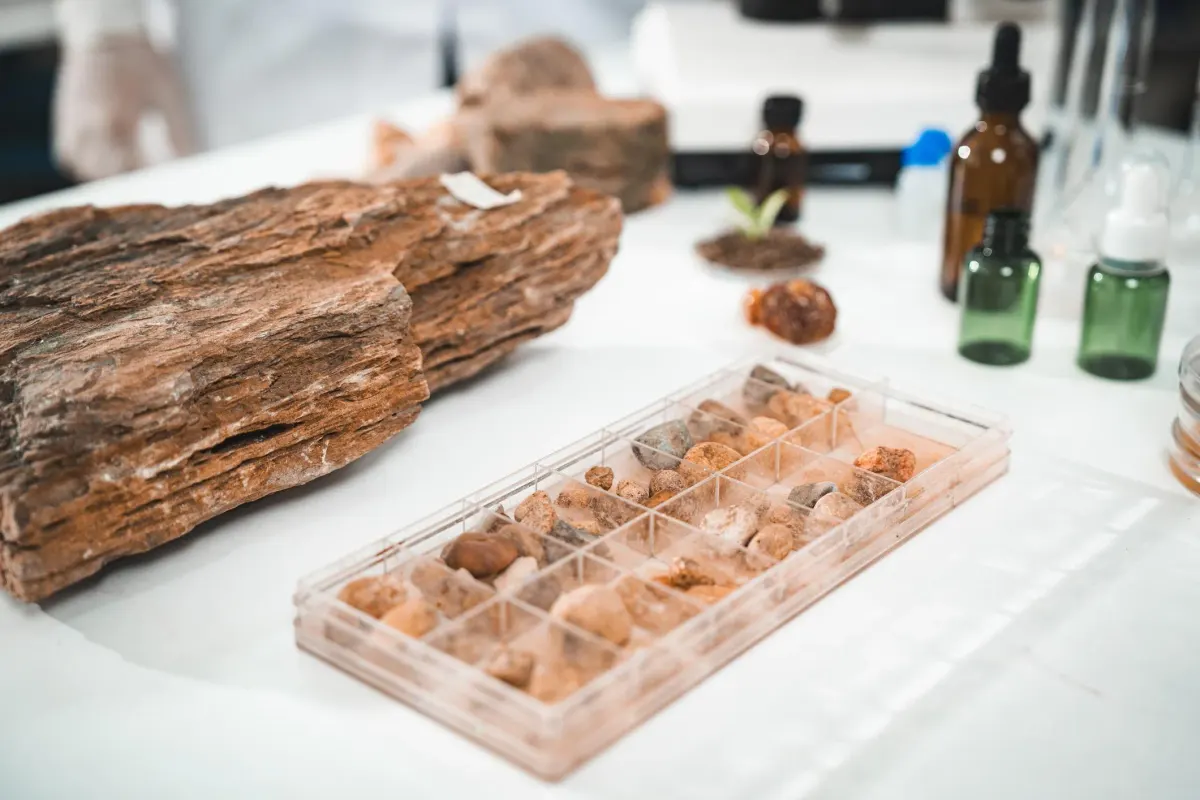
Artificial intelligence and biotechnology are beginning to recreate the fragrances of endangered plants - and even flowers that have disappeared from the Earth. But if science can preserve the scents of nature without preserving the organisms that produce them, are we witnessing a triumph of conservation, or simply learning how to consume a world we no longer need to keep alive?

Can AI Recreate the Lost Scent of Extinct Flowers?
Artificial intelligence and biotechnology are beginning to recreate the fragrances of endangered plants - and even flowers that have disappeared from the Earth. But if science can preserve the scents of nature without preserving the organisms that produce them, are we witnessing a triumph of conservation, or simply learning how to consume a world we no longer need to keep alive?
October 27, 2026


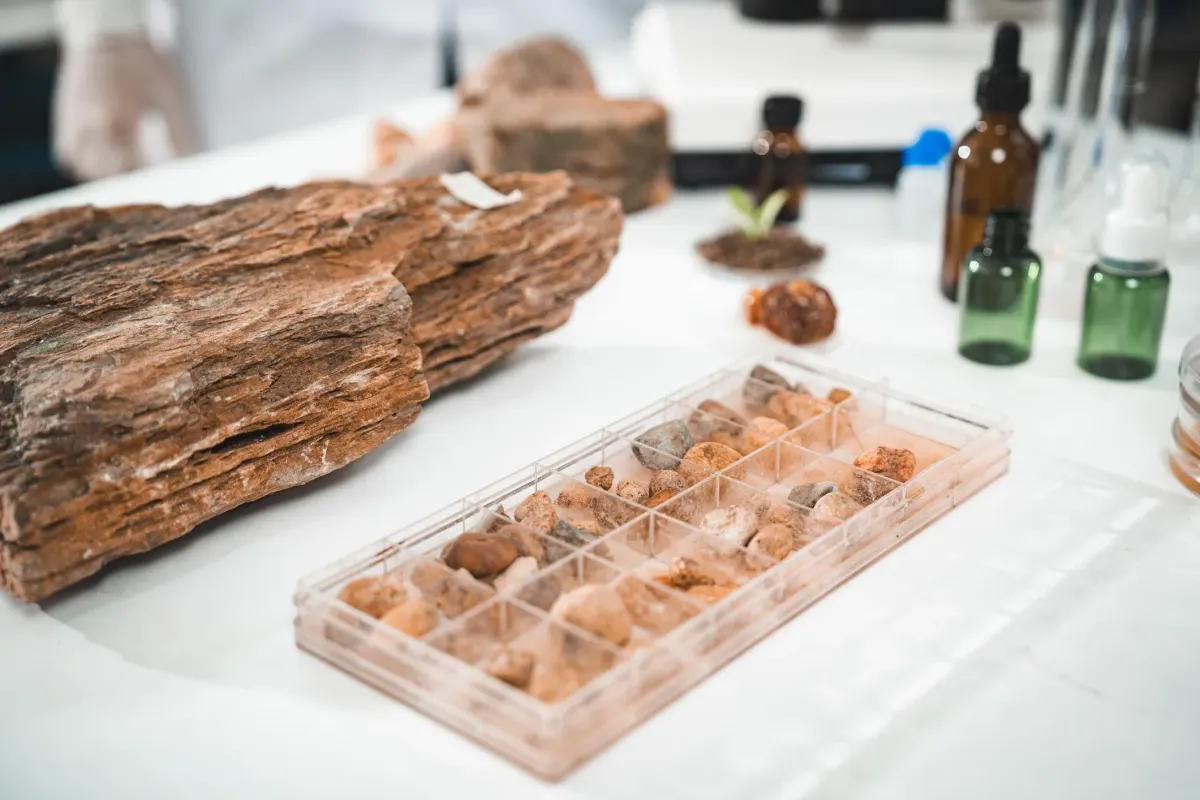
Some of the world's most precious perfume ingredients are born from wounded trees. When certain species of Aquilaria are damaged or exposed to microbial activity, they can produce a dark, aromatic resin that eventually gives rise to agarwood, better known in perfumery as oud. Revered for centuries in religious ceremonies, traditional cultures and luxury fragrances, agarwood can command extraordinary prices depending on its quality and provenance. Yet the very qualities that make it desirable have also contributed to the decline of wild Aquilaria populations. Trees are felled in search of a substance that may have taken years to develop, sometimes yielding little or none of the coveted resin.

Now, a new generation of technology companies believes it can change that economic equation. Rather than searching tropical forests for trees that have accumulated fragrant resin, scientists can analyse the molecular composition of a scent, use artificial intelligence to predict how particular compounds will smell, and develop ways of reproducing them in laboratories. Biotechnology offers another possibility: cultivating plant cells capable of producing valuable botanical compounds without repeatedly harvesting the original organisms. At first glance, the proposition seems an unequivocal victory for science and conservation. If consumers can enjoy something resembling the fragrance of oud without another tree being cut down, why should the world's forests not benefit? Yet beneath this apparently straightforward argument lies a far more unsettling possibility. Science may eventually allow humanity to enjoy certain products of nature without depending on the continued existence of their original biological sources.
But does saving the fragrance of a plant necessarily mean saving the plant itself?
The Laboratory That Remembers Nature
In 2023, researchers affiliated with Google Research, the Monell Chemical Senses Center and Osmo published a study in Science demonstrating how artificial intelligence could be used to predict the perceptual characteristics of odour molecules. Using graph neural networks, the researchers developed what they called a principal odour map, a computational representation connecting molecular structure with human olfactory perception.
In a prospective test involving 400 molecules outside the model's training data, the system's descriptions of odour quality more closely matched the average assessments of a trained human panel than those of the median individual panellist. The achievement did not mean a machine had mastered the human sense of smell, nor that it could reproduce any natural fragrance perfectly. But it represented an important advance in predicting how molecules might be perceived before they had been extensively evaluated by human noses.

Alex Wiltschko, the founder of Osmo, a company spun out of Google Brain in 2022, believes such advances could transform the discovery and manufacture of fragrance ingredients. By October 2026, Osmo had reportedly raised approximately $130 million to develop its approach to olfactory intelligence. The company also says its research draws on more than five million human annotations of smells, building a substantial dataset connecting chemical characteristics with human perception.
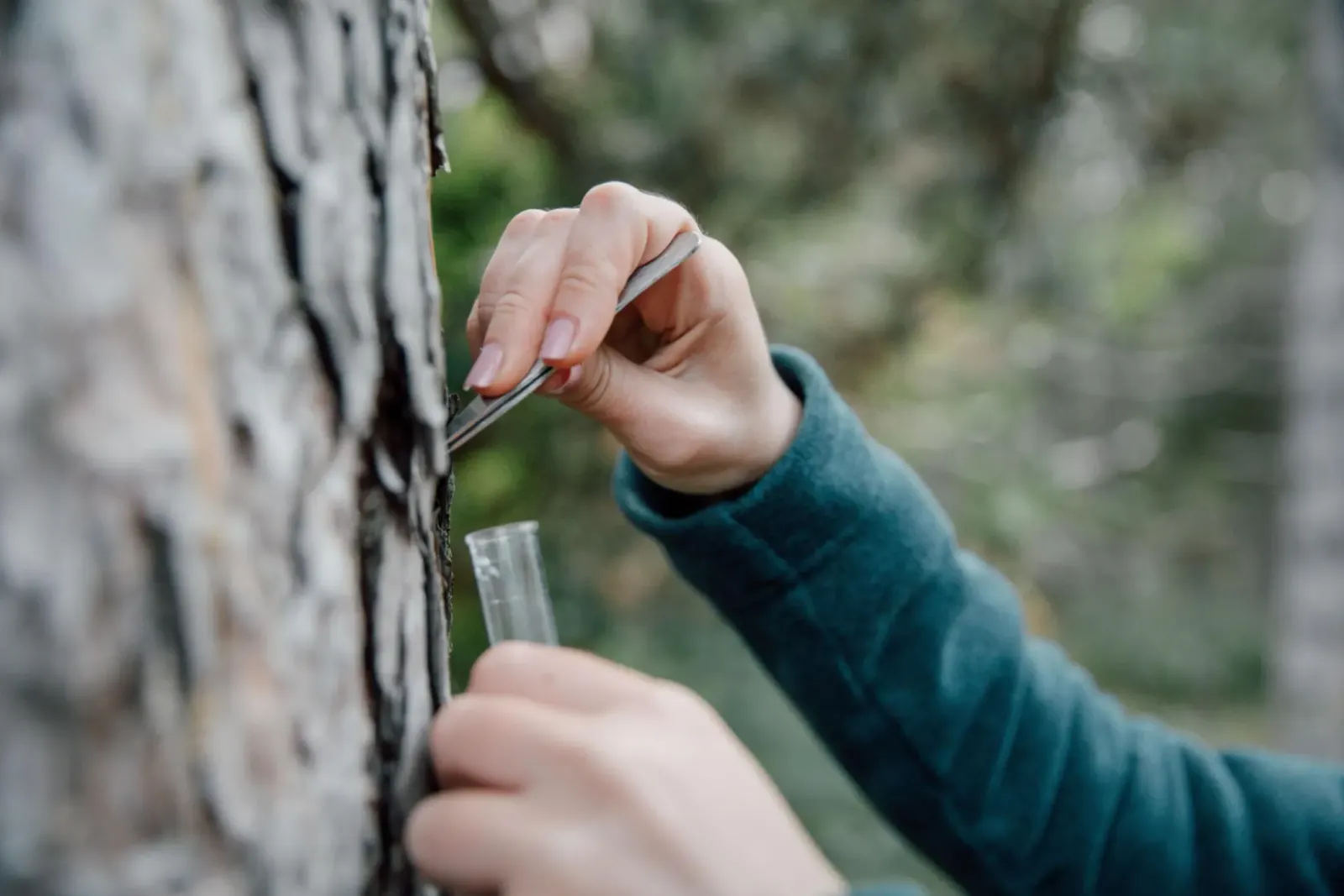
In an interview with The Guardian in October 2026, Wiltschko described how Osmo had used a small sample of bark from a rare tree to analyse and recreate its scent in the laboratory. The achievement, as described, is a company-reported result rather than an independently established demonstration that the complete natural fragrance of the original tree has been reproduced.
What makes this approach different from conventional analytical chemistry is not simply the ability to identify molecules. Instruments have been capable of detecting many fragrance compounds for decades. The greater challenge has always been understanding what happens when those compounds interact with human perception.
Smell does not operate like a simple chemical inventory. A natural fragrance may contain hundreds of compounds whose effects depend on concentration, proportion, molecular interactions and the sensitivity of an individual's olfactory receptors. The same molecule can contribute different impressions depending on the composition in which it appears. Even subtle variations may change whether a fragrance seems fresh, floral, woody, animalic or unpleasant. Artificial intelligence promises to reduce some of the uncertainty involved in discovering new fragrance materials. Rather than synthesising and testing every conceivable molecule individually, researchers can use computational predictions to identify candidates worth investigating. Human perfumers remain essential, however, because predicting the odour of individual molecules is not the same as anticipating the full emotional and sensory experience of a finished perfume. While Osmo is exploring the relationship between molecular structure and olfactory perception, BioHarvest Sciences is pursuing a different technological route.

In August 2026, BioHarvest announced a manufacturing and supply agreement with a fragrance customer based in the United Arab Emirates, involving a high-value botanical ingredient associated with a rare plant threatened by overharvesting and habitat loss. The company has not publicly identified the plant for commercial reasons. It should therefore not be assumed that the material is agarwood or that the plant belongs to the Aquilaria genus. BioHarvest uses a proprietary botanical cell-cultivation platform designed to produce selected plant compounds in controlled environments. According to the company's regulatory filing, the agreement supports an anticipated programme involving approximately 20 tonnes of fragrance composition over two years, with limited production potentially beginning in the first half of 2027. These figures describe a planned commercial programme, not an output already achieved.


Nevertheless, the implications are striking. Traditionally, the economic value of a botanical ingredient has been tied to where its source plant grows, the land available for cultivation, climatic conditions, yields and the time required before harvesting. If selected compounds can instead be produced through controlled cell cultivation, some of that value could migrate from agriculture and natural resources towards biotechnology, proprietary processes and industrial production capacity.
And that raises a question extending well beyond perfumery.
If valuable botanical compounds no longer need to be produced where their source organisms grow, will the countries that possess the original biological resources retain their advantages within the value chain? Or could much of the commercial value shift towards companies capable of analysing, cultivating and manufacturing those compounds elsewhere?
A Perfume for a Flower That No Longer Exists
The ambition to reconstruct fragrance does not end with endangered plants. Scientists and artists have also attempted to recover traces of the scents of flowers that humanity can no longer encounter in the natural world.
In February 2019, an installation titled Resurrecting the Sublime was presented at the Centre Pompidou in Paris. The project brought together artist Alexandra Daisy Ginsberg, scent researcher and artist Sissel Tolaas, and an interdisciplinary team at biotechnology company Ginkgo Bioworks led by Christina Agapakis, with support from International Flavors & Fragrances.


Using tiny quantities of DNA extracted from preserved specimens in Harvard University's herbaria, the researchers employed synthetic biology to predict and reconstruct gene sequences that might encode enzymes involved in producing fragrant molecules. Biological systems, including engineered yeast, could then be used to investigate compounds associated with those reconstructed genetic sequences. Drawing on the scientific findings, Tolaas created olfactory interpretations using identical or comparable scent molecules.
This work should not be confused with the application of artificial intelligence alone. It depended primarily on genetic analysis, synthetic biology and the interpretative work of a scent artist. Nor was it an attempt to bring an extinct organism back to life. The project sought to recreate fragments of its lost olfactory identity.

One of the plants studied was Hibiscadelphus wilderianus, a species native to the volcanic slopes of Maui, Hawaii. Its forest habitat was devastated by the expansion of cattle ranching during the colonial period. The last known tree was found dying in 1912.
More than a century later, scientists and artists could offer audiences something resembling traces of the fragrance that its flowers might once have produced. But nobody could establish with certainty that the reconstruction matched the scent of the living flower.
That uncertainty is central to the project. Researchers could infer some of the compounds the plant might have produced, but not necessarily their original proportions, concentrations or variation throughout its life cycle. Nor could they reproduce the soil, temperature, climate, surrounding vegetation and ecological relationships that shaped the living organism.

What visitors encountered, therefore, was not the resurrection of an extinct flower. It was an encounter with fragments of a vanished existence.
The relationship between scientific reconstruction and commercial fragrance development became more visible with Future Society, a perfume brand that has drawn inspiration from research into extinct flowers.
In 2026, the company introduced Cloud Reverie, a fragrance developed from research involving microorganisms collected from the atmosphere. According to Future Society, its team made two flights in a small aircraft in 2021 to collect living microbes from clouds. Subsequent genetic analysis identified 13 distinct microorganisms and genetic indications associated with 57 scent molecules. Those findings informed the creative brief given to perfumer Daniela Andrier.


Cloud Reverie is not the literal smell of a cloud captured and bottled. It is a composed fragrance informed by research into microbial life in the atmosphere. The brand's description of the scientific process does not establish that every identified molecule was directly extracted from the airborne organisms and incorporated into the finished perfume.
Yet that distinction makes the project no less thought-provoking. Scientific research has turned biological traces almost entirely beyond ordinary sensory experience into an aesthetic concept, a creative brief and ultimately a commercial product.
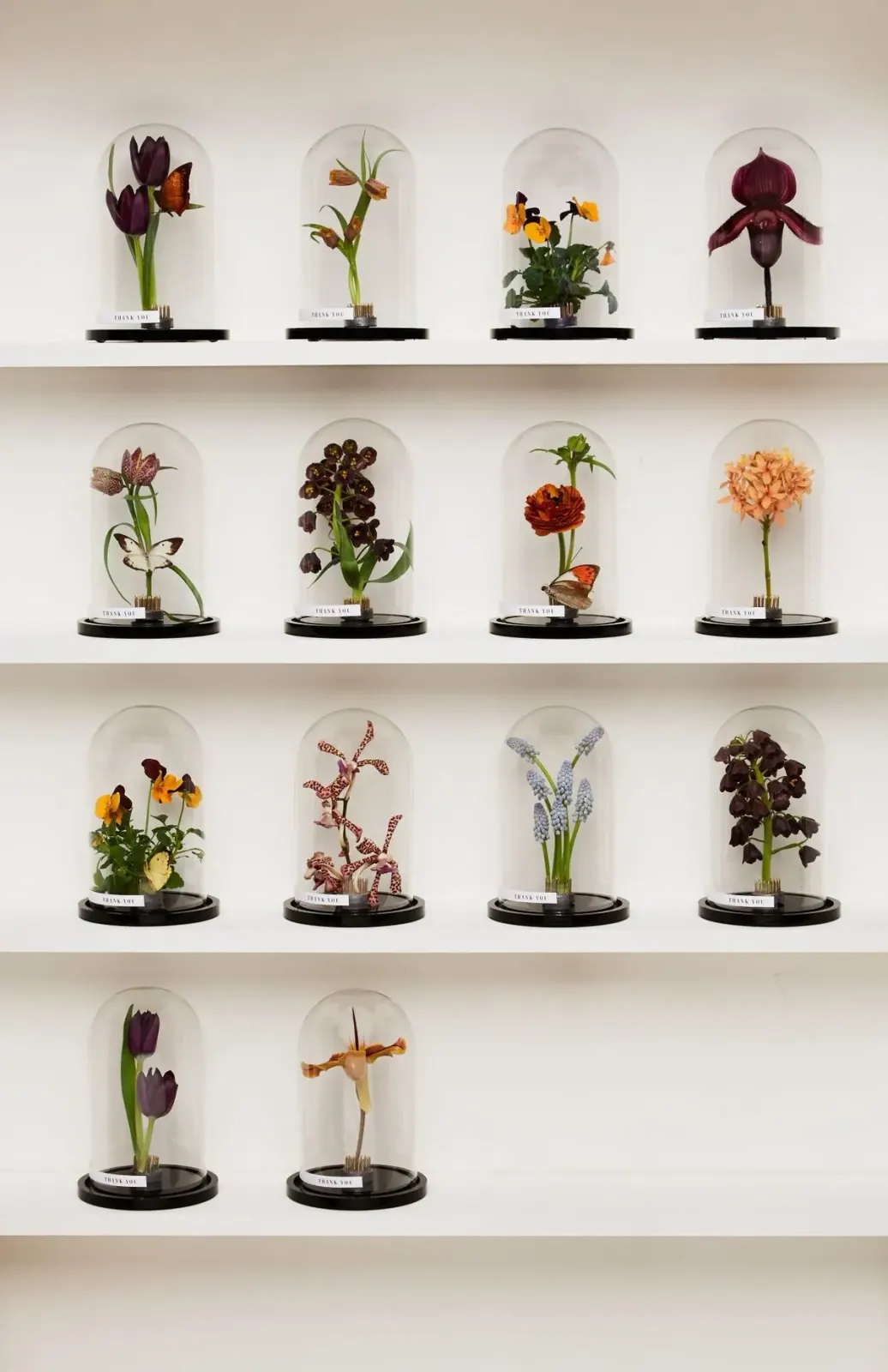

A flower that no longer exists can inspire a perfume. Microorganisms living in clouds can become the starting point for another. Science, in these cases, does more than investigate nature. It gives the market new ways to imagine, interpret and commercialise nature.
And perhaps that is where the story begins to move beyond the chemistry of fragrance.
If the biological traces of extinct or inaccessible organisms can be transformed into commercial products, what exactly are consumers purchasing? A smell? A scientific discovery? An interpretation of a vanished world? Or the seductive suggestion that modern technology can bring back something humanity has lost?
Saving the Scent Is Not Saving the Species
Not everyone in conservation or perfumery accepts the proposition that technological substitutes automatically benefit biodiversity.
Mandy Aftel, a pioneering natural perfumer and founder of the Aftel Archive of Curious Scents, has challenged the assumption that recreating the smell of a threatened plant constitutes conservation. In The Guardian, she argued that making a synthetic equivalent of a plant's fragrance does not, by itself, save the original species.
Rhian Smith of the Royal Botanic Gardens, Kew, has expressed a related concern. In the case of agarwood, an alternative fragrance ingredient may reduce demand in some parts of the market, but naturally sourced material can remain highly desirable.


This distinction matters particularly in the world of oud. Demand for agarwood does not come exclusively from perfumers seeking a particular olfactory effect. The material also possesses religious, ceremonial and cultural significance. Its desirability can depend on provenance, age, rarity, tradition and beliefs surrounding authenticity.
A laboratory-produced compound may reproduce an aspect of oud's aromatic character without reproducing the cultural value that some buyers attach to naturally formed agarwood.
In other words, at least two kinds of value exist simultaneously: the sensory value of a fragrance and the perceived value of its origin.
Technology may be capable of recreating the first without necessarily replacing the second.
In an optimistic scenario, laboratory-produced fragrance ingredients become sufficiently convincing and affordable to reduce demand for material harvested from endangered plants. Combined with effective law enforcement, habitat protection and sustainable livelihoods for local communities, this could relieve pressure on wild populations.


But another scenario deserves consideration. As manufactured alternatives become commonplace, some consumers might place an even greater premium on the authenticity and scarcity of naturally sourced materials. The market could then divide into two segments: relatively accessible industrial fragrance ingredients on one side, and increasingly expensive natural materials on the other.
This is an economic hypothesis, not an established prediction about the future of the agarwood trade. Nevertheless, it illustrates why developing a substitute does not automatically guarantee the survival of the species from which the original material was obtained. Conservation is also far more complicated than reducing demand for one ingredient. Wild plant populations can decline because of habitat destruction, illegal harvesting, land conversion, agricultural expansion and broader ecological degradation. Even if the perfume industry stopped purchasing a particular natural material altogether, its source species might continue to disappear if the forests supporting it were still being destroyed.

The international trade in Aquilaria and Gyrinops species is regulated under Appendix II of the Convention on International Trade in Endangered Species of Wild Fauna and Flora, or CITES. The IUCN Red List classifies Aquilaria crassna, a species native to parts of Southeast Asia including Vietnam, as Critically Endangered in an assessment published in 2018. That assessment estimated a decline of more than 80 per cent across the preceding three generations, largely associated with exploitation for agarwood.
Trade regulation, cultivated production, research into substitutes and protection of natural forests may reinforce one another, but none should be mistaken for a complete replacement for the others.
If a technology company claims its fragrance innovation is helping to conserve endangered plants, the relevant measure cannot simply be how many tonnes of ingredient are produced without harvesting trees. We must also ask whether demand for wild material actually declines, whether natural populations recover, whether habitats are protected and whether local communities gain sustainable economic alternatives.

There is an environmental question on the production side, too. Does manufacturing a botanical compound through biotechnology necessarily have a smaller ecological footprint than obtaining it through agriculture or carefully managed cultivation? Or might the process transfer some of the environmental burden from forests to electricity, water, chemicals, industrial equipment and production facilities?
The answer requires credible life-cycle assessments. The words biological, natural, synthetic and laboratory-grown are not environmental performance indicators in themselves.
The distinction is fundamental: reducing the need to consume a species is a potential tool of conservation, but it is not the same thing as conserving the species.
Who Owns Nature's Code?
If artificial intelligence and biotechnology create new opportunities for the fragrance industry, they also raise questions about ownership and the distribution of economic value.
Consider a rare plant growing in a Southeast Asian rainforest. Local communities may have known its properties, uses and distinctive scent for generations, while the surrounding ecosystem has supported its continued existence. A research company might lawfully obtain biological material, analyse genetic information and develop a production method for commercially valuable compounds in a laboratory thousands of miles away.

If successful, that company could control proprietary manufacturing processes, product formulations, technological know-how, brands and other commercial assets derived from its research.
But should some of the resulting economic value be shared with the countries and communities associated with the biological resource from which the research began?
This is no longer simply an ethical question. It has become an issue in international biodiversity governance.
In February 2025, the Cali Fund was launched under the Convention on Biological Diversity to support the fair and equitable sharing of benefits arising from the commercial use of digital sequence information on genetic resources, commonly abbreviated as DSI.
The mechanism is intended to encourage contributions from large companies in sectors that benefit commercially from genetic information, including pharmaceuticals, biotechnology, cosmetics and other relevant industries. Its published contribution guidance uses reference rates of 0.1 per cent of annual revenue or 1 per cent of annual profit for qualifying large entities.

These are not universally enforceable taxes imposed on every company that uses biological information. The mechanism depends on its agreed framework, relevant thresholds and participation by commercial users.
Half of the fund's resources are intended to support priorities identified by Indigenous peoples and local communities, recognising their roles in safeguarding biodiversity.
Yet the difference between the promise of the mechanism and its financial performance has been striking.
On 22 October 2026, The Guardian reported that the Cali Fund had received commitments totalling just $10,656, of which $7,085 had actually been deposited, despite ambitions to mobilise as much as $1 billion annually. The report focused particularly on the pharmaceutical industry and disputes surrounding contributions. These figures do not establish that any particular fragrance company has failed to meet an applicable obligation. They do, however, reveal how difficult it can be to translate the principle of sharing commercial benefits from biodiversity into meaningful financial resources.

The contrast is difficult to ignore. Companies are developing technologies that may generate significant commercial value from biological information, while an international mechanism intended to return some of that value to biodiversity conservation has, so far, attracted only a fraction of its ambitions.
The existence of the Cali Fund reflects an emerging recognition: when economic value can be created from genetic information rather than directly harvesting an organism, traditional arrangements for sharing the benefits of biological resources may need to evolve.
A company may no longer need to cut down a tree or harvest a flower, but its commercial activities can still depend on information derived from a natural organism and the evolutionary processes that produced it.
For perfumery, this could change the meaning of natural-resource ownership.
Historically, access to a valuable botanical ingredient was linked to land, cultivation rights, harvesting permissions, agricultural expertise and supply chains. In the future, a growing share of the competitive advantage may lie in datasets, cell lines, research infrastructure, patents and technologies capable of producing selected compounds independently of the original biological supply.

This could create substantial opportunities for scientific innovation. It could also shift economic power towards companies that control the means of interpreting and manufacturing nature's chemical products. But if economic value moves from the forest into the laboratory, we should ask more than how much money technology can save its owners.
Who should benefit from the biological information that millions of years of evolution have produced? And how can some of the wealth generated from that information be returned to the ecosystems on which it ultimately depends?
These questions are not arguments against scientific progress. Biotechnology may become an important means of reducing extraction, improving resource efficiency and expanding scientific understanding.
But if humanity is beginning to transform biological information into a new industrial resource, the institutions governing the benefits of that resource deserve scrutiny as serious as the science itself.
The Fragrance of a World That No Longer Exists
There is another dimension to reconstructed fragrance, one that reaches beyond technology, economics and biodiversity policy.
It concerns the possibility that scientific progress may alter humanity's emotional relationship with extinction.
In the past, when a flower disappeared completely, much of its olfactory world disappeared with it. Preserved botanical specimens might retain physical structures, fragments of genetic material and evidence of the organism's historical existence. But they could not preserve the complete experience of encountering a flower opening in its natural environment.

Biotechnology is now offering a way to recover traces of that lost sensory world.
Resurrecting the Sublime allows visitors to experience fragments of fragrances associated with extinct flowers. Yet the emotional power of the installation does not come simply from amazement at what science has made possible. It also comes from confronting what can never be recovered.
A visitor may smell a reconstruction inspired by a flower that vanished more than a century ago. But that visitor cannot walk through the original forest, witness the insects and other organisms that interacted with the flower, or experience how its fragrance changed with the temperature of a particular morning.
The missing world is as important as the recovered scent.
Indeed, the project's creators acknowledge that there is no single exact fragrance to be recovered. The quantities and combinations of the original molecules have been lost along with the organisms themselves. The installation, therefore, does not intend to reverse extinction. It invites people to experience the boundary between what biotechnology can reconstruct and what nature has irreversibly lost. But when similar scientific discoveries become commercial fragrances, their cultural meaning may change.
A perfume inspired by an extinct flower can be marketed as a celebration of scientific discovery, imagination and the ability to overcome the limitations of nature. It can also offer the seductive feeling of possessing a fragment of a vanished world.
Extinction, in such a case, becomes both an ecological tragedy and a potential source of commercial fascination.
This creates a paradox that is difficult to resolve.

If technology eventually allows people to enjoy fragrances associated with species that no longer exist, might the sense of loss become less immediate? Could the continued availability of a smell make the disappearance of its original source seem less consequential?
Or might the opposite happen? Could experiencing a fragment of a vanished flower make people more conscious of what has been destroyed, encouraging greater concern for the species and ecosystems that remain?
There is no reason to assume that either outcome is inevitable.
A reconstructed fragrance may inspire genuine conservation interest. It may also become an ordinary consumer product whose origins receive little attention once the bottle reaches a dressing table. The result may depend on how the scientific achievement is communicated, what the company does with the commercial value it generates and whether the experience encourages any meaningful action beyond consumption. This is why the debate over AI in perfumery should not end with the question of how closely synthetic materials resemble natural fragrances. Sensory similarity is only one part of the story. A scent may resemble the chemical or perceptual characteristics of a natural original without possessing the same history, provenance or ecological significance. A photograph may preserve the appearance of a forest, but it cannot replace the ecological functions performed by that forest.
Likewise, the continued existence of a plant species matters for reasons far beyond the pleasure humans derive from its fragrance. A living organism belongs to a network of ecological and evolutionary relationships, many of which we may not yet fully understand.
For more than a century, synthetic materials have demonstrated that compelling perfumes need not consist exclusively of molecules extracted directly from plants and animals. They have expanded the creative vocabulary of perfumers and made possible compositions that would have been difficult, expensive or impossible to produce using natural materials alone.
Artificial intelligence and biotechnology may now extend that vocabulary even further. They could help discover new molecules, explore traces of vanished life and reduce dependence on selected ingredients derived from threatened biological resources.
These are genuine scientific opportunities.

But science cannot determine by itself what those opportunities will ultimately mean for nature. That remains a matter of choices made by companies, researchers, consumers, local communities and policymakers. Perhaps one day laboratories will be able to reproduce fragrances closely resembling those of countless plants that have disappeared from the Earth. Scientific collections may become olfactory archives of landscapes that humanity can no longer visit. We might be able to experience the perfume of a flower that never blooms again, or wear a fragrance inspired by a forest that no longer exists.
Yet the ability to reconstruct nature's products does not necessarily restore humanity's relationship with nature itself.The decisive question may therefore be less about whether AI can recreate a scent than about what we will choose to preserve once it can.
Will such technologies make us more determined to protect the living world, allowing humanity to reduce exploitation while gaining a deeper appreciation of biodiversity?
Or will they gradually encourage us to accept the disappearance of nature, provided the things we wish to consume remain available?
If one day the forests disappear while their fragrances continue to be sold in beautiful bottles, will that represent the ultimate triumph of science — or the moment we realise that humanity has learned to live without nature without feeling that anything has been lost?