




On October 25, 2026, the French manicure reaches its 50th anniversary year with an origin story that remains wonderfully misleading. Its pale base and crisp white tip may suggest Parisian restraint, but the look was developed in Los Angeles as a practical fix for Hollywood productions where actresses were losing valuable time changing nail colour every time their costumes changed.

The French Manicure Was Never Really French
On October 25, 2026, the French manicure reaches its 50th anniversary year with an origin story that remains wonderfully misleading. Its pale base and crisp white tip may suggest Parisian restraint, but the look was developed in Los Angeles as a practical fix for Hollywood productions where actresses were losing valuable time changing nail colour every time their costumes changed.
October 25, 2026


ORLY founder Jeff Pink was supplying beauty products to Hollywood studios when directors approached him with a problem in 1976. Nail polish took time to remove and repaint, creating delays whenever an actress changed wardrobe and complicating continuity when scenes were filmed out of sequence. Pink needed a manicure neutral enough to survive every costume.

His solution paired a flesh-toned or sheer pink base with an opaque white tip, borrowing from the clean effect some customers were already creating with white pencils underneath their nails. White polish itself was unusual enough that Pink had to persuade a manufacturer to produce it. ORLY initially called the finished concept the Natural Nail Look, a name that described exactly what it was supposed to do: polish the hand without competing with the clothes.
The French part came later. ORLY’s own history places the Natural Nail Look in 1977 and Pink’s trip to the Paris runways in 1978. After seeing the manicure work on models there, he returned to America with a more memorable name: the French manicure. The irony has survived for almost half a century.

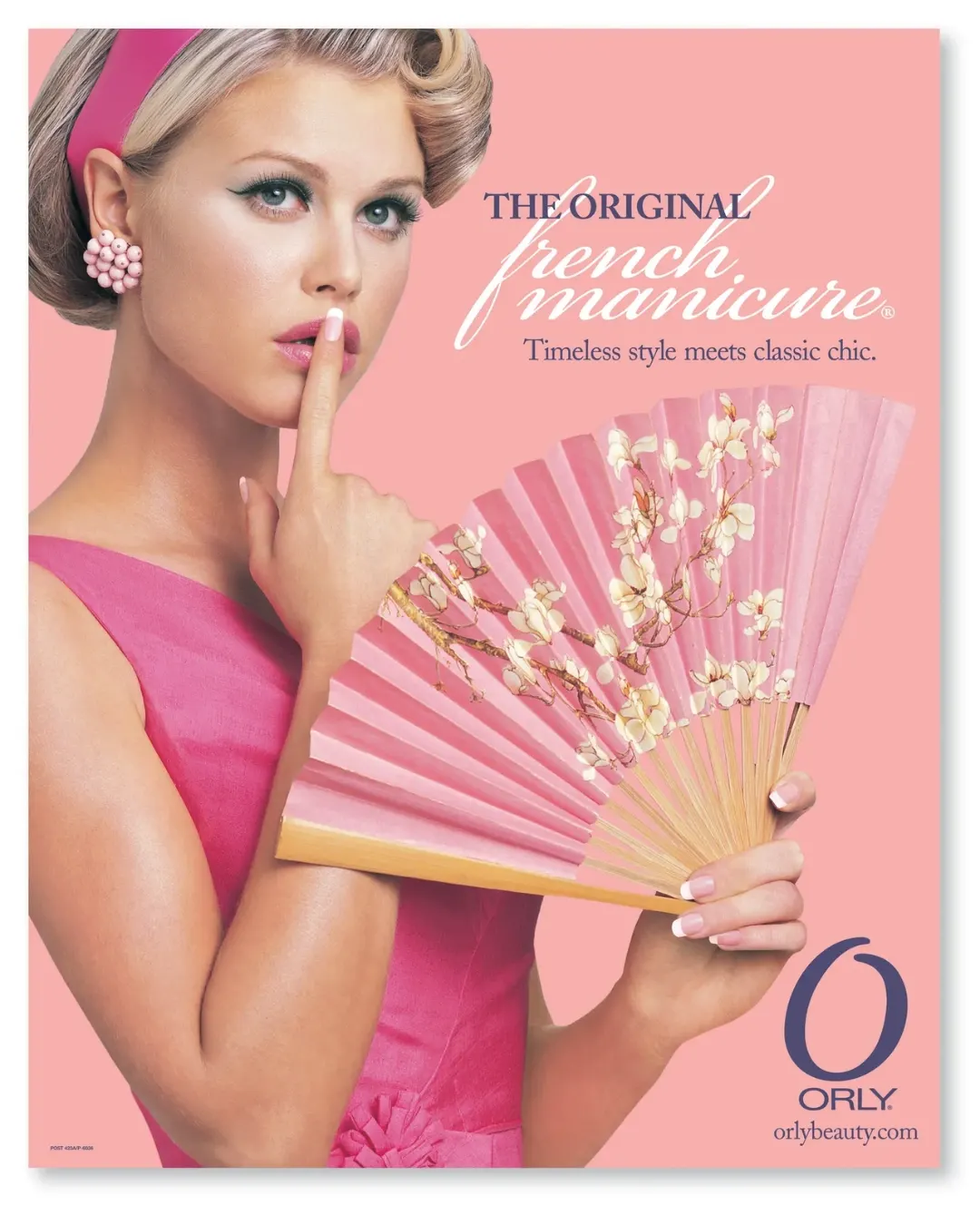
The look did not become an instant phenomenon. Pink estimates it took more than five years to gain serious momentum, helped by celebrities including Cher and Barbra Streisand wearing it on American television. ORLY eventually sold more than one million French Manicure kits during the product’s first five years on the market.
Its greater achievement, however, may be how easily the basic formula escaped the company that created it. Nail artists widened the tips, shrank them into micro lines, flipped them into reverse French designs and replaced white with neon, chrome, crystals and every imaginable colour. ORLY’s White Tips remains its best-selling individual SKU, while contemporary searches and runway manicures continue to reinterpret the same two-part structure.
That adaptability explains why a solution invented to make costume changes faster never disappeared when Hollywood no longer needed it for that purpose. The design is neutral enough to survive changing taste, but defined enough to remain recognisable after endless reinvention.
Fifty years on, one of beauty’s most famous pieces of supposed French elegance remains an American Hollywood invention with an unusually durable name: the French manicure.