On October 18, 1966, Elizabeth Arden died in New York at 81. Sixty years later, many of the rituals that define modern beauty still carry traces of the business she built: skincare treated seriously, makeup presented respectably and the beauty counter transformed into a place where women could be taught how to use what they bought.

Elizabeth Arden Helped Invent the Beauty Industry
On October 18, 1966, Elizabeth Arden died in New York at 81. Sixty years later, many of the rituals that define modern beauty still carry traces of the business she built: skincare treated seriously, makeup presented respectably and the beauty counter transformed into a place where women could be taught how to use what they bought.
October 18, 2026


Born Florence Nightingale Graham in Canada, Arden opened her first Red Door salon on Fifth Avenue in 1910, at a time when visible cosmetics could still carry associations with theatrical performers or social impropriety. Her business helped shift that perception by presenting beauty as a disciplined routine connected to skincare, grooming and personal presentation.


By 1916 and 1917, the company had introduced full skincare and colour cosmetic lines alongside travel-size products. Arden also pioneered the makeover and trained travelling demonstrators and saleswomen, helping turn product education into part of the beauty-shopping experience. Her philosophy placed science beside glamour: the company describes her as an early advocate for scientifically informed skincare formulations and for products designed to benefit the skin instead of merely covering it.
That approach gave beauty something it increasingly depends on today: ritual. A lipstick or cream was no longer only an object. It belonged to a routine, a consultation and an entire vocabulary of self-maintenance.
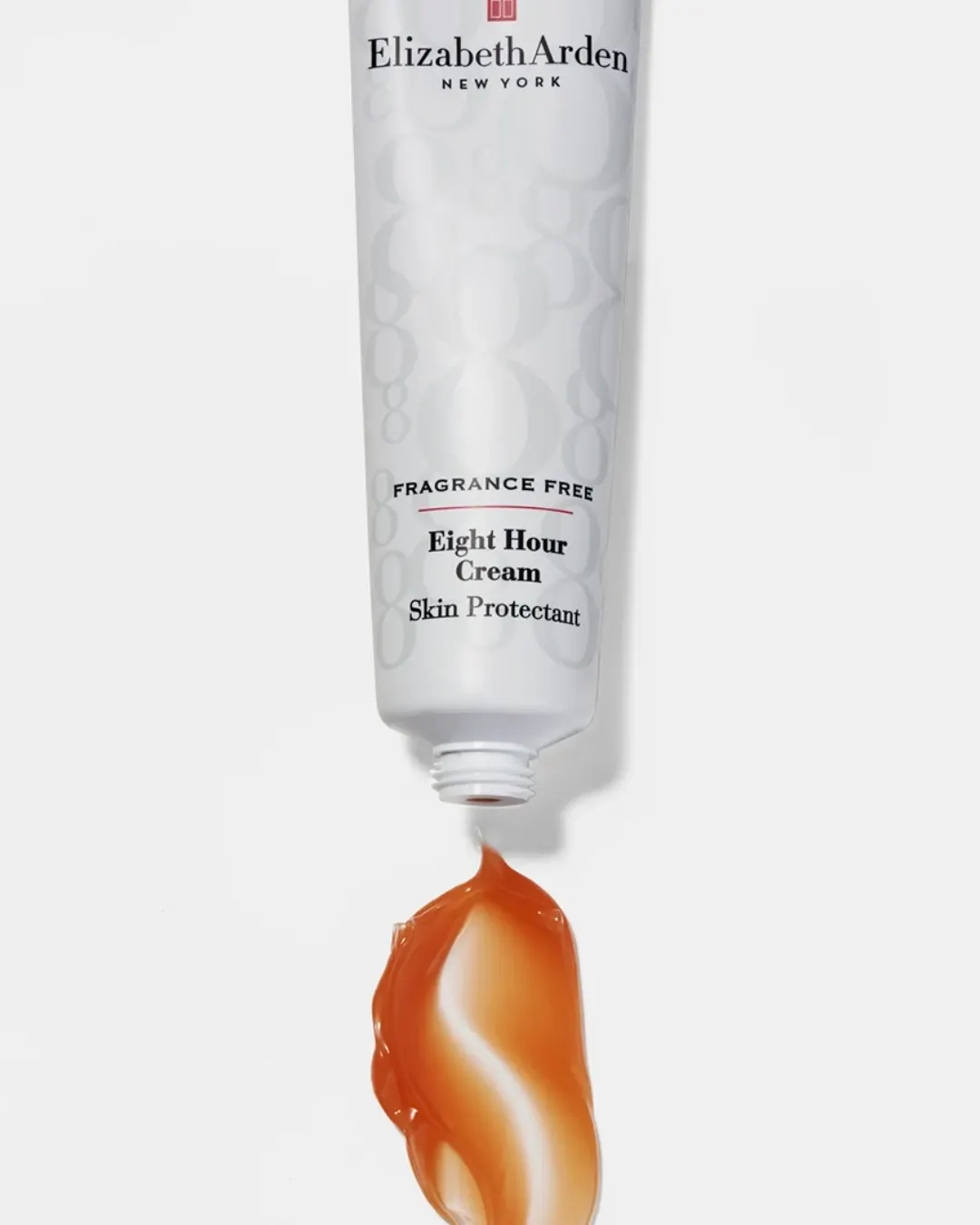
Few products capture that thinking better than Eight Hour Cream, introduced in 1930. The apricot-coloured balm was designed as a multipurpose skin protectant and became useful far beyond its original brief, eventually finding a place on lips, cuticles, dry skin and inside professional makeup kits. The formula remains part of Elizabeth Arden’s range nearly a century later.

Its longevity also exposes what Arden understood unusually early: a beauty brand could become part laboratory, part service business and part cultural identity. The Red Door was not only a logo. It represented an environment in which expertise and aspiration were sold together.
Sixty years after her death, beauty has become a global industry of routines, counters, clinics, tutorials and endless product categories. Many of those structures now look ordinary precisely because pioneers once had to establish them. Few did more to turn that emerging system into a recognizable business than Elizabeth Arden.