MENU
Close





In Berlin, an evening at the opera can unfold in three entirely different ways. Behind the velvet curtains and experimental stages lies a city that has made musical theatre an extraordinary part of its cultural identity, offering a compelling luxury travel destination for those who appreciate the performing arts.

In Berlin, an evening at the opera can unfold in three entirely different ways. Behind the velvet curtains and experimental stages lies a city that has made musical theatre an extraordinary part of its cultural identity, offering a compelling luxury travel destination for those who appreciate the performing arts.
October 14, 2026


Paris has the Palais Garnier, Milan has La Scala, and New York has the Metropolitan Opera. Each possesses an institution whose architectural grandeur and artistic reputation have become inseparable from the city's cultural identity. Berlin operates according to a different philosophy.
The German capital sustains three major publicly funded opera companies, each maintaining its own artistic leadership, resident ensembles, and distinctive approach to musical theatre. Their coexistence creates an unusually diverse cultural landscape, where productions of Mozart, Wagner, and Verdi share the calendar with contemporary premieres and radical theatrical interpretations.
For the culturally curious traveler, Berlin offers an opportunity to experience opera as an integral part of the city's daily life. Performances unfold across different neighborhoods, buildings, and artistic traditions, allowing visitors to discover the remarkable plurality of European opera culture within a single destination.
This abundance has deep historical roots. Berlin's divided twentieth-century history helped shape parallel opera institutions, each developing its own identity under different political and cultural circumstances. Following reunification, the city retained these traditions, ultimately bringing its three companies under the Stiftung Oper in Berlin, established in 2004.
Few cultural institutions embody Berlin's relationship with classical music as elegantly as Staatsoper Unter den Linden. Founded in 1742 under Frederick the Great, the opera house belongs to the architectural and intellectual heritage of Prussian Berlin.
Situated along the historic Unter den Linden boulevard, the building retains the formal grandeur associated with European court theatres. Its neoclassical exterior offers a restrained introduction to an auditorium characterized by elegant balconies, gilded details, and carefully balanced proportions.
The institution's musical identity is closely connected to the Staatskapelle Berlin, an orchestra whose history stretches back to the sixteenth century. This long-established ensemble tradition contributes to the house's reputation for orchestral refinement, particularly within the German Romantic repertoire.

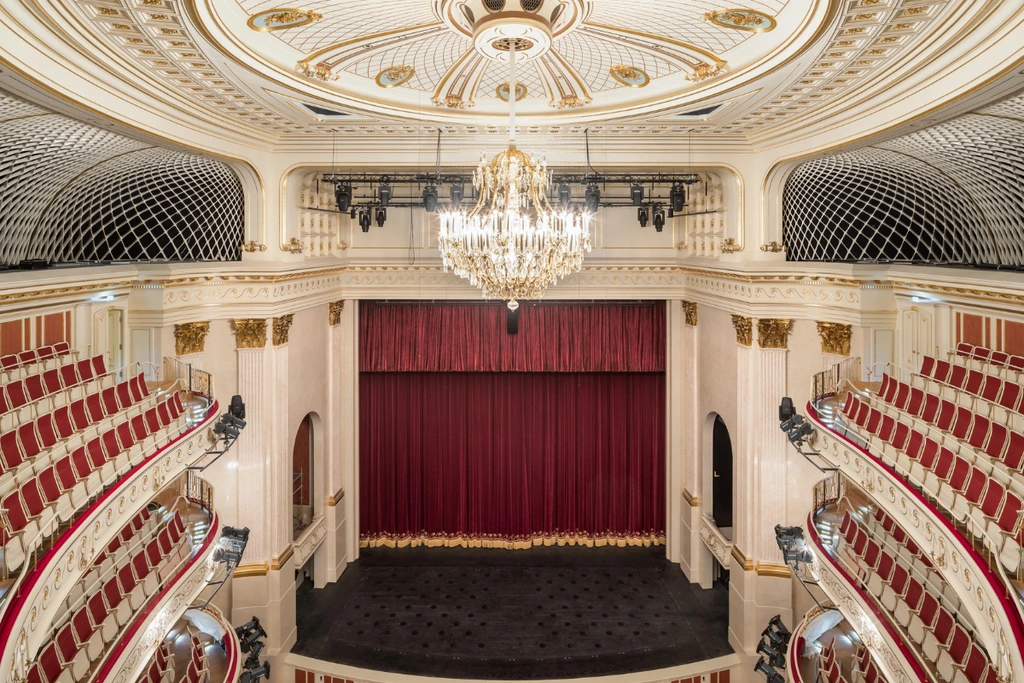
Under General Music Director Christian Thielemann, the company's programming places significant emphasis on composers such as Richard Wagner and Richard Strauss, alongside a substantial repertoire of Italian and French opera. For the 2026–2027 season, its programme includes Tristan und Isolde, Tannhäuser, and Königskinder, alongside its annual Barocktage festival.
For travelers drawn to the historical grandeur of European opera, Staatsoper offers an experience in which architecture, music, and cultural heritage remain closely intertwined.
Across the city, Deutsche Oper Berlin reflects a different chapter of Berlin's cultural history. Founded in 1912 and established in its present modernist building in 1961, the company developed into one of Germany's major opera institutions, with particular strength in large-scale productions.
Its auditorium, accommodating more than 1,800 spectators, replaces the ornamental vocabulary of traditional opera architecture with a disciplined modernist interior. Warm wood surfaces, carefully designed acoustics, and an expansive stage emphasize the physical and musical scale of the performance.
The house is particularly well equipped for monumental works requiring substantial orchestras, large choruses, and complex theatrical machinery. Wagner's operatic dramas and the psychologically intense compositions of Richard Strauss find an appropriate setting here, supported by the institution's considerable technical resources.
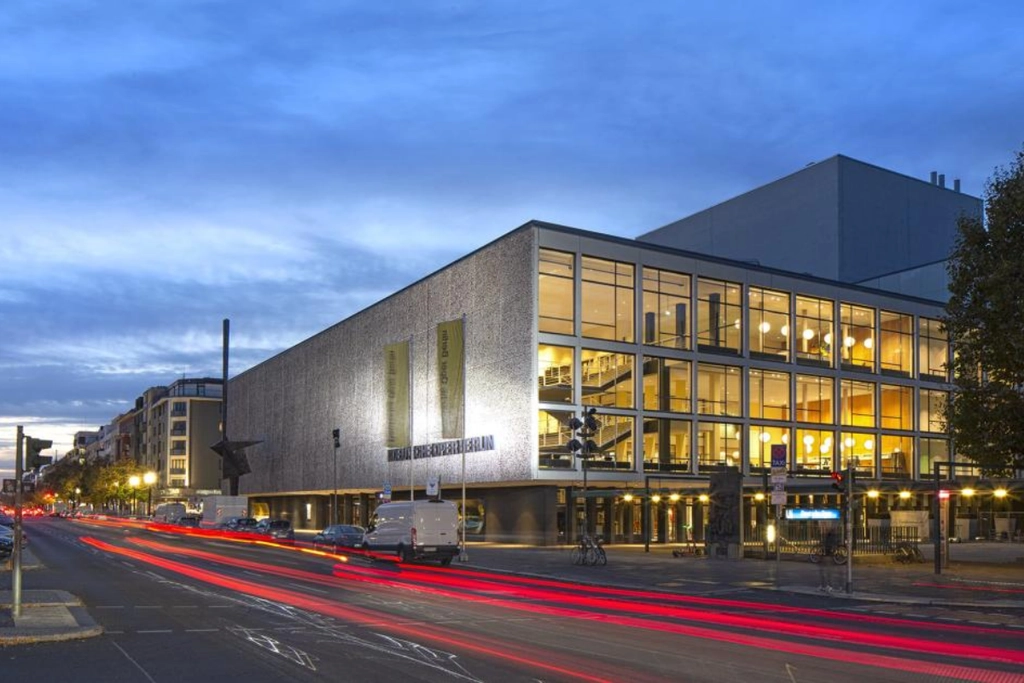

Yet Deutsche Oper's artistic identity extends into contemporary experimentation. Its 2026–2027 season includes Karlheinz Stockhausen's Mittwoch aus Licht, directed by Susanne Kennedy, and a new production of Wagner's Der fliegende Holländer, directed by Milo Rau.
The combination of modernist architecture and ambitious productions makes this institution particularly compelling for visitors interested in opera's relationship with contemporary performance practice.
The youngest of Berlin's three major opera institutions, Komische Oper Berlin, established its identity around a radical proposition: opera should communicate with the immediacy of theatre.
Founded in 1947 under Walter Felsenstein, the company emphasized dramatic coherence, expressive acting, and the close integration of musical and theatrical performance.
Its productions frequently employ striking visual language, theatrical humor, and unconventional interpretations of familiar compositions. During Barrie Kosky's influential artistic leadership, the institution gained international recognition for inventive stagings that combined musical sophistication with the imaginative possibilities of contemporary theatre.


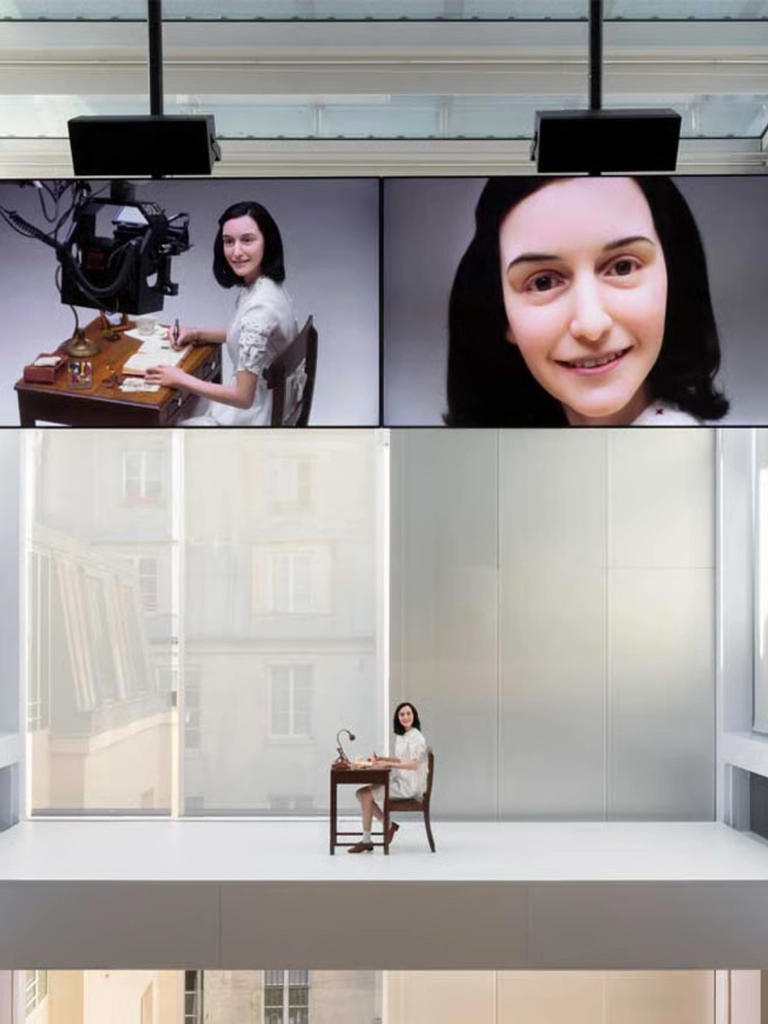
The company's celebrated production of Mozart's The Magic Flute, created with British theatre company 1927, exemplifies this sensibility. Combining live performers with animated projections inspired by silent cinema, the production transformed a familiar opera into an extraordinarily inventive visual experience.

This experimental spirit continues through a repertoire encompassing operetta, musicals, twentieth-century compositions, and new productions. The 2026–2027 season includes Aribert Reimann's Lear and George Gershwin's Porgy and Bess.
The institution's historic home on Behrenstraße is currently undergoing extensive renovation. Performances have temporarily relocated primarily to the Schillertheater in Charlottenburg, with additional productions presented at other venues across Berlin. This arrangement has introduced another dimension to the company's identity, bringing opera into unconventional urban spaces.
Berlin's remarkable concentration of opera institutions depends upon a distinctive approach to cultural funding.
The Stiftung Oper in Berlin coordinates the three opera companies alongside Staatsballett Berlin and a shared stage-services organization. Each institution retains artistic autonomy, while certain administrative functions and technical resources operate within the foundation's wider structure.
This arrangement provides both organizational continuity and considerable creative independence. The three companies can pursue different artistic directions while benefiting from a broader publicly supported cultural infrastructure.
For the 2026 financial year, the foundation reports a grant of €174.2 million from the State of Berlin, supplemented by €10 million from the German federal government. These funds support an extensive institutional network involving resident artists, orchestras, technical departments, workshops, and cultural administration.


Public investment also supports a degree of ticket accessibility unusual for institutions of such scale. Although prices vary according to productions and seating categories, Berlin's opera houses offer discounted opportunities for younger visitors and audiences seeking more affordable performances. Deutsche Oper's 2026–2027 Operntage, for example, offer selected performances at €34 for adults and €10 for children and teenagers.

This funding philosophy treats opera as a continuing public cultural resource. Internationally prestigious productions coexist with performances intended for local audiences who return throughout the season.
The distinction is important for visitors accustomed to treating opera as a singular, expensive event. Berlin's institutional structure encourages a different relationship with the art form, one based on repeated encounters and artistic variety.
Berlin's cultural influence also extends into the artistic interpretation of opera itself. The German tradition of Regietheater, or director's theatre, gives stage directors considerable freedom to reinterpret familiar works through contemporary visual, political, and psychological perspectives.
Within this approach, a nineteenth-century opera might unfold in a modern apartment, an industrial landscape, or an abstract theatrical environment. Historical costumes can give way to contemporary fashion, while traditional scenery is replaced by installations and symbolic stage constructions.


Such reinterpretations frequently provoke debate. Audiences may encounter productions that challenge their expectations of a composer's original intentions, placing the director's conceptual argument at the center of the theatrical experience.
Berlin's opera institutions have been particularly receptive to these experiments, helping sustain a culture in which canonical works remain open to fresh artistic readings.
For visitors interested in contemporary art, fashion, and scenography, this tradition creates a compelling intersection between musical performance and visual culture. Stage design becomes an active form of artistic authorship, allowing opera to engage with the wider creative concerns of the present.
Another defining feature of Berlin's opera culture is the repertoire system. Under this model, opera houses retain multiple productions that can alternate throughout a season, supported by permanent orchestras, choruses, technical teams, and ensembles.
A visitor might encounter Mozart on one evening, Puccini the following night, and an unfamiliar contemporary composition later that week. The 2026–2027 Staatsoper season alone includes 23 repertoire productions in its main auditorium.
This flexibility transforms the experience of planning a cultural journey. Travelers can select performances across several institutions, encountering contrasting musical and theatrical traditions without coordinating their visit around a single major premiere.
It also requires an impressive infrastructure behind the curtain. Scenery must be assembled and dismantled with extraordinary efficiency, costumes maintained for numerous productions, and performers prepared to move between vastly different musical languages.
The apparent effortlessness of an evening at the opera conceals an intricate system of craftsmanship and institutional expertise.


For a short cultural visit, the three opera companies offer a natural framework for discovering the city. Travelers should consult each institution's performance calendar before arranging their itinerary, particularly as Komische Oper continues to operate across multiple venues during its renovation.
Berlin also offers an opportunity to reconsider the very idea of cultural luxury. Its opera culture has been sustained through public commitment, extensive artistic infrastructure, and a willingness to experiment. Prestige exists alongside accessibility, with artistic excellence treated as part of the city's civic life.
A compelling luxury travel destination is ultimately defined by the quality of experiences it makes possible. Berlin offers something particularly valuable: the freedom to return to the same art form night after night and discover an entirely different interpretation of its possibilities.