




Beyond the Pacific coastline of Baja California, Valle de Guadalupe has quietly emerged as an unexpected luxury travel destination, yet its extraordinary appeal reaches far deeper than architectural beauty. Here, design as a way of living has been shaped by centuries of migration, cultural exchange, and an enduring relationship with the land.

Valle de Guadalupe: Where Design Becomes a Way of Living
Beyond the Pacific coastline of Baja California, Valle de Guadalupe has quietly emerged as an unexpected luxury travel destination, yet its extraordinary appeal reaches far deeper than architectural beauty. Here, design as a way of living has been shaped by centuries of migration, cultural exchange, and an enduring relationship with the land.
November 17, 2026


Design is more than an aesthetic pursuit; it is a reflection of how people inhabit, interpret, and connect with the world around them. In Valle de Guadalupe, Mexico, design as a way of living emerges through an extraordinary dialogue between architecture, agriculture, gastronomy, and cultural heritage. Shaped by Indigenous traditions, waves of migration, and a new generation of creative visionaries, this sun-drenched valley has evolved into a destination where buildings grow from the landscape, cuisine celebrates its natural abundance, and everyday experiences become expressions of place. Beyond its celebrated vineyards and boutique retreats, Valle de Guadalupe offers a compelling example of luxury travel destination – one rooted not simply in beautiful surroundings, but in a deeper appreciation of cultural events, craftsmanship, and the art of living in harmony with nature.
A Valley Built by Many Cultures
Long before vineyards became the valley's defining landscape, the Kumeyaay, also known as Kumiai, inhabited the region through seasonal settlements and sophisticated knowledge of its natural resources.
They called the area Ojá Cuñurr, meaning “painted rock,” in reference to a granite formation associated with ancestral pictographs. Their communities developed ways of living adapted to the valley's limited water, oak woodlands, and seasonal variations. Acorns, native plants, and locally available materials supported everyday life, while knowledge of the landscape passed between generations.
Today, the Kumeyaay community of San Antonio Necua continues to preserve its cultural heritage through traditional practices, community activities, and initiatives involving Indigenous foodways, basketry, and environmental knowledge.
The arrival of European missionaries introduced another chapter, although colonial occupation was frequently marked by conflict.
In 1834, Dominican missionary Félix Caballero established the Misión de Nuestra Señora de Guadalupe del Norte, the final Dominican mission founded in the Californias. Its agricultural activities included cultivating grapes, wheat, fruit trees, and raising cattle.
The mission survived only six years. In 1840, Indigenous resistance led by Jatñil forced its abandonment, reflecting the wider tensions generated by colonial expansion and religious coercion. Remains of the mission can still be interpreted through the area's archaeological history.
A more unexpected migration followed in the early twentieth century.
Beginning in 1905, Russian Molokan families, members of a pacifist Christian movement who had fled religious persecution and military conscription in the Russian Empire, settled in Valle de Guadalupe.
Approximately 104 families arrived over the following years, establishing an agricultural colony distinguished by whitewashed adobe houses, communal traditions, and the cultivation of wheat, orchards, and vineyards.
Their cultural presence survives in the town of Francisco Zarco, where the Museo Comunitario Ruso, housed in a building dating from 1905, preserves photographs, clothing, and objects associated with the settlers' lives.
These overlapping histories established a cultural landscape in which different communities developed their own relationships with the same terrain.
The valley's contemporary identity, with its emphasis on agricultural experimentation and architectural creativity, continues to evolve within this much older history.

The Renegades Who Reinvented Mexican Wine
By the late twentieth century, Valle de Guadalupe remained relatively unfamiliar to international travelers. Its transformation began through a generation of winemakers who recognized the potential of the region's Mediterranean-influenced climate and unusual agricultural conditions.
Among them, Hugo D'Acosta became particularly influential.
A winemaker committed to expanding access to wine production, D'Acosta helped establish La Escuelita, formally known as the Estación de Oficios El Porvenir, in the early 2000s.
The school welcomed small landowners, aspiring producers, and individuals without formal backgrounds in winemaking, introducing them to cultivation, fermentation, and practical production methods.
Established around 2003–2004, La Escuelita helped cultivate an independent winemaking culture in which experimentation could flourish outside the rigid traditions associated with established European wine regions.
Boutique wineries subsequently expanded the valley's reputation, exploring different grape varieties, small-batch production, and distinctive approaches to regional identity.
This spirit of experimentation also encouraged architects, chefs, and hospitality entrepreneurs to reconsider the possibilities of the landscape.
The contemporary valley grew through the intersection of these disciplines. Winemaking provided an agricultural foundation, while architecture and gastronomy introduced new ways of experiencing the region.

When Architecture Follows the Landscape
At Encuentro Guadalupe, twenty compact cabins designed by Gracia Studio occupy a rocky hillside, raised above the terrain on slender steel supports.
Their dark rectangular forms contrast with the enormous granite formations surrounding them. The elevated construction reduces direct interference with the underlying landscape, while panoramic windows turn each room into an intimate observation point.
Completed in 2011, the project remains an influential example of architecture responding to natural topography. Elsewhere, Banyan Tree Veya Valle de Guadalupe introduces a more expansive interpretation of contemporary hospitality.
Private villas incorporate plunge pools, outdoor showers, and generous terraces, creating fluid transitions between enclosed interiors and the surrounding hills. Its wellness-oriented atmosphere encourages guests to experience the landscape through daily rituals, from a quiet morning overlooking the vineyards to evenings spent outdoors.


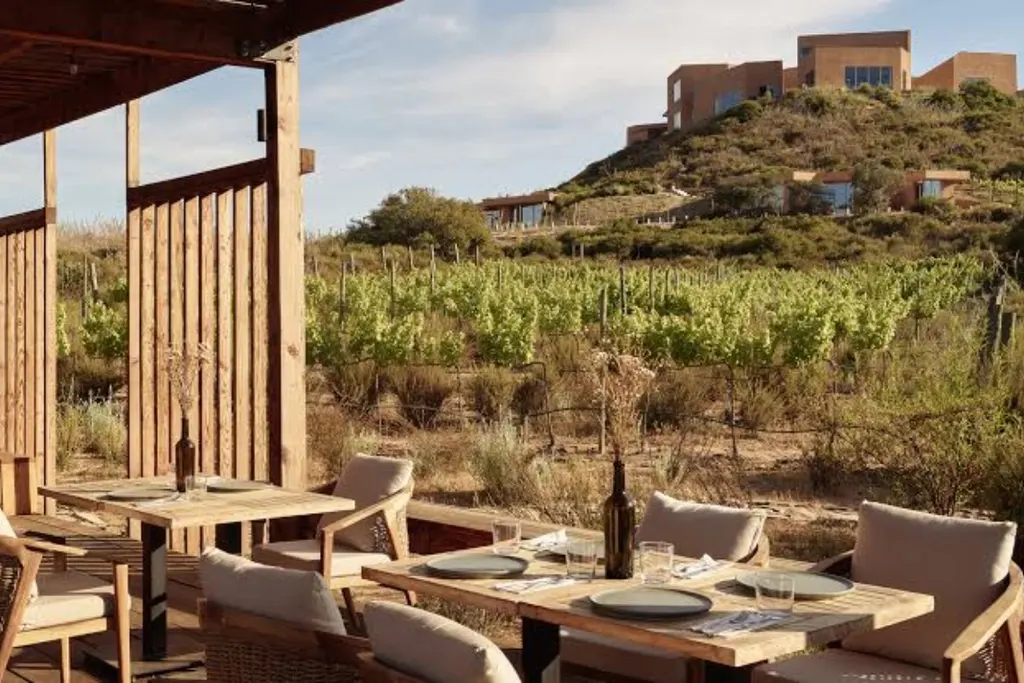
At Bruma Wine Resort, the architectural relationship becomes almost sculptural.
The winery, designed by Alejandro D'Acosta, incorporates reclaimed materials, concrete, and a reflecting water surface into a structure partially embedded within the terrain. A mature tree becomes the visual center of the composition, while the surrounding architecture responds to its presence.
Across these properties, design as a way of living takes different forms. Industrial minimalism, wellness architecture, and experimental material construction all emerge from a shared interest in the surrounding environment.
The experience begins with the building, yet its lasting impression comes from everything visible beyond it.


Where Art, Wine, and Agriculture Meet
The region's agricultural history becomes a cultural narrative at the Museo de la Vid y el Vino.
Opened in 2012, the museum explores the development of winemaking in Baja California, from early agricultural settlements to the growth of contemporary Mexican wine. Historical exhibits, artworks, and educational displays connect the region's changing cultural identity with the cultivation of its land.
At Decantos Vinícola, visitors encounter a different expression of design through production. The winery uses a gravity-flow system that allows wine to move between stages of fermentation and processing with reduced reliance on mechanical pumping.
The architecture consequently follows the practical requirements of winemaking, revealing how industrial processes can influence the organization and aesthetic of a building.
Other wineries, including Monte Xanic, offer vineyard experiences shaped by the relationship between agriculture and the surrounding hills.
For travelers interested in cultural events, these spaces also become gathering points for tastings, culinary collaborations, exhibitions, and seasonal celebrations.
The valley's creative character emerges through encounters between people whose practices share the same physical environment. Agricultural knowledge, architecture, craftsmanship, and contemporary culture develop through continual exchange.


Gastronomy as a Celebration of the Land
Beneath the enormous branches of an ancient oak tree, Animalón offers one of the region's most atmospheric dining experiences.
Chef Javier Plascencia's restaurant celebrates regional ingredients through seasonal menus, combining contemporary culinary techniques with the agricultural and maritime resources of Baja California.
At dusk, discreet lighting transforms the tree into a natural dining room, while the surrounding landscape remains an essential part of the experience.


Nearby, Primitivo embraces the elemental pleasures of open-fire cooking. Flames, cast-iron vessels, and wood smoke become central to the preparation of ingredients, creating a dining experience grounded in direct interaction with heat and material.
At Damiana, chef Esteban Lluis develops seasonal tasting menus featuring regional produce, seafood, and ingredients sourced from nearby farms.
These restaurants reflect the broader influence of Baja Med cuisine, which brings together Mexican culinary traditions, Mediterranean influences, Pacific seafood, and locally cultivated ingredients.
The appeal lies in how the landscape enters the experience through flavor, preparation, and setting.
For this emerging luxury travel destination, gastronomy provides another way to encounter regional identity through the senses.
The Cultural Events That Follow the Harvest
Every August, Valle de Guadalupe enters its most celebrated season.
The annual Fiestas de la Vendimia brings together winemakers, chefs, musicians, and visitors for a calendar of vineyard gatherings, tasting experiences, concerts, and collaborative dining events.
In 2026, its thirty-sixth edition took place from August 5 to 30, featuring more than thirty activities. The program included winery visits, gastronomic celebrations, live performances, and the traditional paella competition at Viña de Liceaga.
These cultural events reveal an important dimension of the valley's identity. Wine production becomes an opportunity for communal celebration, connecting visitors with the agricultural traditions that sustain the region.
Smaller vineyard dinners and special tastings also take place throughout the year, although their availability depends upon individual producers.
Beyond the festivities, the seasonal rhythm remains visible in the changing vineyards. Spring introduces new growth, summer brings increasing activity, and autumn gradually returns the landscape to a quieter atmosphere.
For travelers, each season offers a different experience of the same place.

The Future of Design as a Way of Living
Valle de Guadalupe's rise as a luxury travel destination has introduced difficult questions about the relationship between growth and environmental responsibility.
Water scarcity, climate variability, and increasing pressure from tourism present significant challenges to the region's agricultural future.
The 2026 Fiestas de la Vendimia addressed these concerns through its official theme of sustainable viticulture and wine tourism, emphasizing the need to protect natural resources and support local communities.
Such challenges give the valley's architectural experimentation a broader significance.
The decision to preserve an existing tree, elevate a structure above vulnerable terrain, or incorporate reclaimed materials reflects an understanding that design begins with the conditions of a place.
Yet the region's future will depend upon how these principles extend into water management, land use, and responsible development.
The valley's Indigenous communities offer a particularly important perspective, reminding visitors that relationships with the landscape existed long before its contemporary transformation into a destination for wine and architecture.
As the evening light fades across the granite hills, the most memorable quality of Valle de Guadalupe becomes apparent. Its beauty emerges from the coexistence of different histories, disciplines, and ways of inhabiting the land.
The region's creative energy is rooted in the knowledge accumulated by generations of people who have cultivated, adapted to, and interpreted this demanding environment.
Design as a way of living acquires its deepest meaning here, where architecture participates in a much larger cultural landscape. The most inspiring spaces invite people to consider how they might live with greater awareness of their surroundings, and what responsibilities accompany the privilege of experiencing such extraordinary places.