




We asked Nguyễn Phúc Tuấn about everything. He answered with memories, laughter, and surprising candour, until one question made him keep something to himself.

Nguyễn Phúc Tuấn on the Art of Making Rain
We asked Nguyễn Phúc Tuấn about everything. He answered with memories, laughter, and surprising candour, until one question made him keep something to himself.
November 15, 2026


Hot chocolate before coffee. Flowers before fashion. Somewhere in his garden, Nguyễn Phúc Tuấn is admiring the morning light while an extraordinary gown exists only as a possibility in his imagination. Soon there will be drawings, workshop visits, discussions with artisans and another trip to the fabric market. The gym occupies its appointed place in the afternoon. By evening, the designer will probably have returned to his sketchbook.
There is something wonderfully disarming about his routine. The man responsible for some of Vietnam's most elaborate sculptural gowns speaks with the enthusiasm of someone who has never quite recovered from falling in love with making things. He remains devoted to pencil and paper, carrying both wherever he goes. In spring, a few narcissus flowers appear on his desk.
In an exclusive conversation with Jessica Van De Camp, fashion editor of PAVE Magazine, Nguyễn Phúc Tuấn reveals an artistic world in which small pleasures can acquire extraordinary significance.
“For me, drawing on paper preserves the most sincere form of an emotion. There is something about the intimacy between a pencil and a sheet of paper that allows an idea to emerge in its purest form, before it becomes a garment.”


His affection for drawing reveals a remarkable aspect of his creative personality. A collection may eventually require months of construction, intricate embellishment and the combined expertise of numerous craftspeople. Its earliest existence, however, belongs to a private moment between hand and paper.
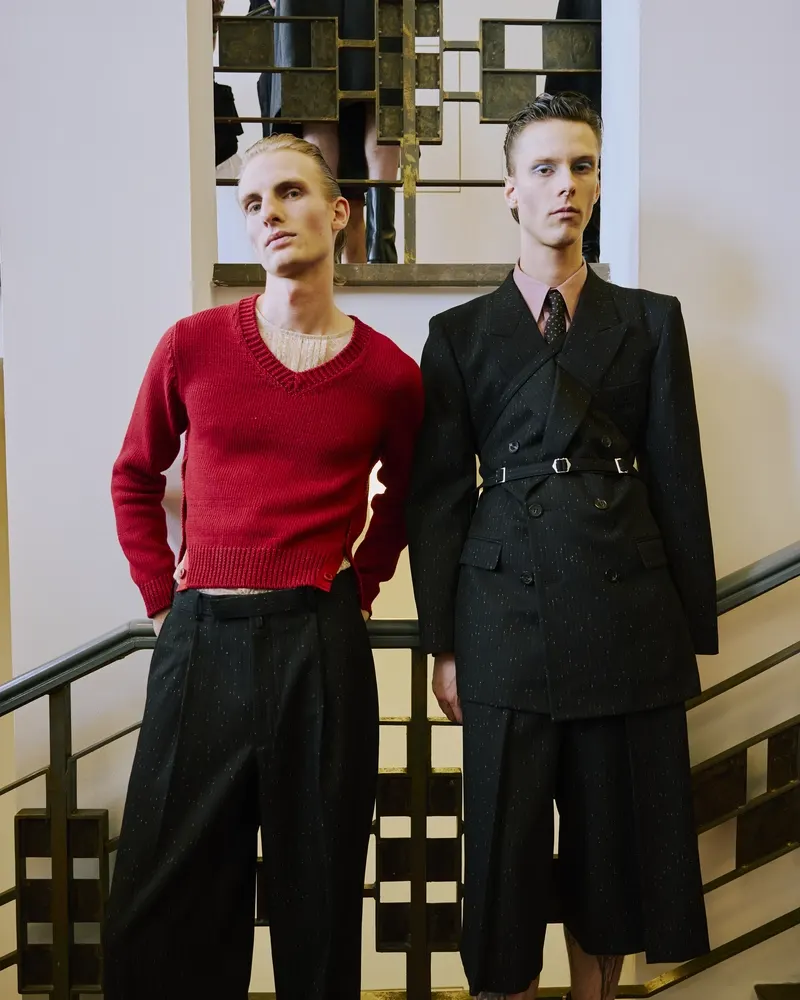
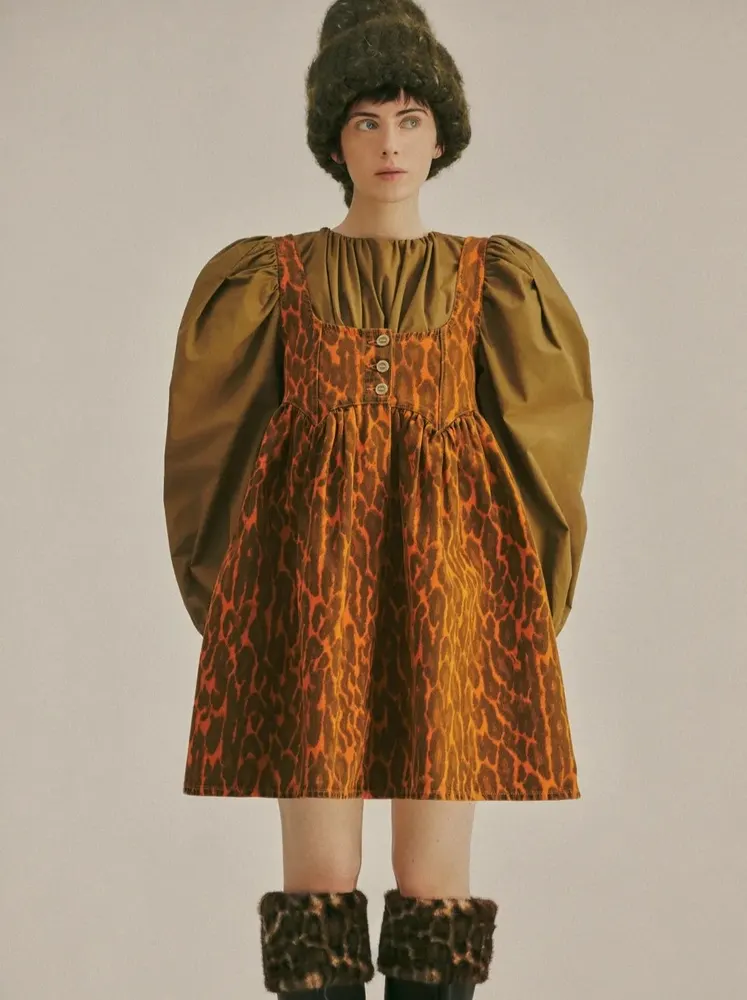
That contrast between intimacy and spectacle runs throughout his work. The designer who spends his mornings observing flowers recently presented Numéro 6: Vũ Khúc Cố Đô in Paris, a collection of architectural silhouettes inspired by the rain, atmosphere and memories of his hometown.
And the most unexpected inspiration was something his mother once wore.
Somewhere Between Huế and Paris
Huế has a particular scent when the first cold rains arrive. Nguyễn Phúc Tuấn remembers how the dampness settles into its alleyways, mingling with the landscape and the atmosphere of the city. The memory has remained with him long after the childhood experiences that produced it.
He also recalls cycling home from school beside the Perfume River, watching sunset transform the water into overlapping bands of color. Those daily encounters shaped his sensitivity to light, atmosphere and the emotional qualities of a landscape.
“These memories may seem ordinary, but they have stayed with me for years. They are part of how I perceive colour, atmosphere and emotion. When I design, I do not necessarily set out to reproduce a particular landscape. Instead, I try to translate the feelings it has left within me into something tangible.”
His explanation offers a useful distinction. Cultural inspiration can operate through recognizable images, architectural references and traditional objects. Tuấn is equally fascinated by experiences whose physical forms are difficult to preserve: the smell of rain, the movement of air, the particular shade of a familiar sunset.


Numéro 6, presented at Maison de l'Amérique Latine during Paris Fashion Week in September 2026, became an ambitious attempt to give those sensations a physical structure.
Developed over nearly two years, the collection unfolded through three movements: Khởi Vũ, Chính Vũ and Quang Vũ. Its progression from white and pale tones into storm-cloud darkness, followed by more luminous colors, followed the emotional rhythm of a rainstorm.
The palette also revealed Tuấn's enduring relationship with painting. Pastel purples reminiscent of Monet's work became associated with the colors of Huế after rainfall. Light, atmosphere and color developed together, giving the collection a visual continuity extending beyond individual garments.
But one childhood image proved particularly important.
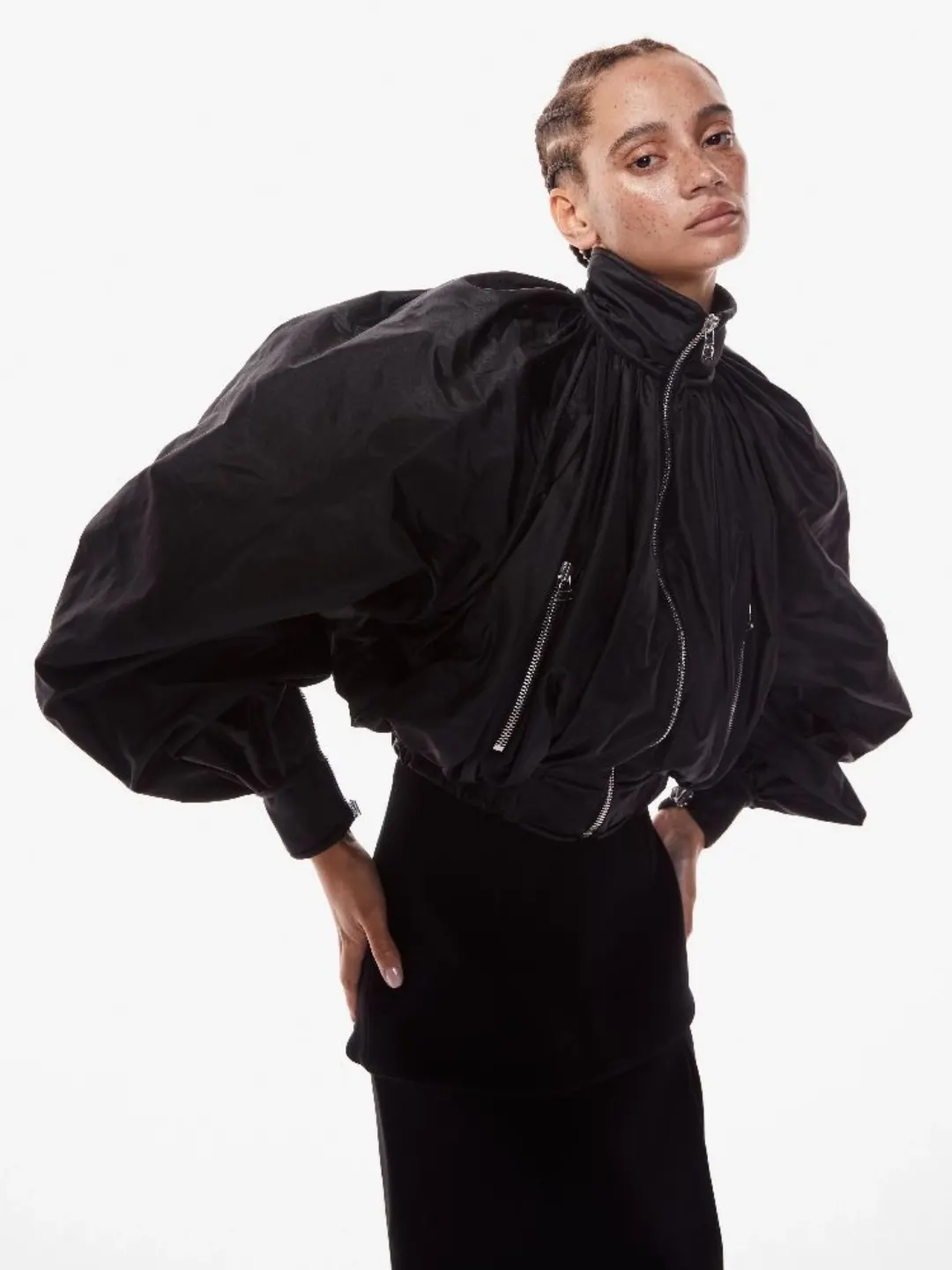
“One of the most personal references was my mother's raincoat. When the wind catches it, the material inflates and expands, creating an unexpected volume. I was fascinated by this ordinary object and the way it transforms through its interaction with the natural elements.”
Imagine a blue raincoat suddenly filling with air. Its loose surface expands away from the body, creating a temporary structure determined by wind, movement and the behavior of fabric.
A raincoat inflated by the wind produces volume through forces that constantly change. Translating that effect into fashion requires a structure capable of suggesting the same expansion while maintaining balance, movement and wearability.
Tuấn approached the challenge through architectural silhouettes, layered surfaces and textiles capable of holding sculptural shapes.

His preference for Bảo Lộc silk taffeta is particularly revealing. He has loved the material since the beginning of his career, attracted to its luminous silk surface and crisp, almost paper-like body. Those qualities make it suitable for projecting folds, shaping volume and supporting the structural ambitions of his designs.
Yet his interest extends beyond monumental gowns. He also wants to explore how the same textile can create subtle handcrafted details, discovering different expressions through scale and construction.
That curiosity suggests a designer increasingly interested in understanding materials deeply enough to expand their possibilities.
Across Numéro 6, white feathered structures, translucent layers and architectural forms evoke clouds, rainfall and the shifting atmosphere of Huế. The opening áo dài establishes a connection with Vietnamese dress before the collection develops into increasingly sculptural propositions.

The garments are most compelling when their construction communicates the original sensation. Billowing shapes make the memory of wind physically understandable, while carefully arranged layers suggest the changing density of clouds.
Some elaborate surfaces would benefit from greater visual editing, allowing the underlying architecture to claim more attention. Tuấn's strongest ideas already possess considerable emotional force; they become especially persuasive when a clear silhouette allows the material to express them.
Interestingly, the final collection differed almost entirely from his earliest vision.
“An initial idea gives you a starting point, but the work must continue to develop until it becomes something that feels necessary and relevant in its final form.”
The decision to present in Paris became another turning point, prompting Tuấn to reconsider elements of the collection and refine its artistic direction.
His willingness to revisit decisions is significant. The memory may remain constant, yet its interpretation can evolve through research, technical experimentation and the changing ambitions of its creator.
Eventually, nearly two years of work had to become something much more immediate: a few minutes of models walking before an audience.
Nguyễn Phúc Tuấn and the Sound of “Bravo!”
The word had fascinated him long before anyone in Paris directed it toward him.
As a French-language student, Nguyễn Phúc Tuấn remembered hearing bravo and finding something memorable in the expression. Years later, during the closing moments of his Paris debut, it returned under circumstances he could scarcely have imagined.
He walked onto the runway holding a model's hand. Around them, the audience applauded, calling out the familiar word. For someone who had worried about attendance, reception and the considerable expectations surrounding an international debut, the moment carried enormous personal significance.

Tuấn admits that he had wondered whether people would come at all. Seeing the room filled with guests was already overwhelming; their enthusiastic response brought a different kind of reassurance.
The experience, however, became particularly moving after the show.
“I was also deeply touched by the women from the press who came to speak with me after the show. Some of them were older, and they stayed until the very end to talk with me and ask for photographs together.”
He remembers their warmth and the pride conveyed through their gestures. They reminded him of mothers and grandmothers watching a child accomplish something meaningful. For a moment, he felt almost as though his own mother were standing beside him.
There is a beautiful continuity between this recollection and the childhood raincoat that helped shape Numéro 6. His mother appears first as part of the collection's creative memory, then as the emotional presence through which he experiences an international milestone.
Yet Tuấn's enthusiasm contains a demanding instinct for self-evaluation.
“My feelings after the show were a mixture of satisfaction and the awareness that there were still things I could have done better. At that moment, I wanted to have presented a collection that would satisfy the audience even more completely.”
Such a response reveals a designer whose ambition extends beyond receiving recognition. He clearly cherishes the experience, but his attention soon returns to what the collection has taught him.
The pressure of revising a nearly two-year project for Paris, the demands of presenting his work internationally and the immediate response of the audience have all become part of his creative education.
The Body, the Character and the Craftsman
Architecture explains one part of Nguyễn Phúc Tuấn's imagination. Cinema reveals another.
Before presenting Numéro 6 in Paris, he established a career involving elaborate costumes for Vietnamese films and major performances. Projects such as Gái Già Lắm Chiêu V and Bộ Tứ Báo Thủ introduced the designer to the creative demands of storytelling through clothing.
Rather unexpectedly, he continues studying acting himself. His interest suggests a fascination with the relationship between the person wearing a garment and the story that garment helps communicate. An actor's costume must respond to character, movement, staging and the emotional atmosphere of a scene.
“You have to understand the person, the character or the moment you are creating for, then push yourself to deliver something distinctive.”
The influence of cinema can be recognized in Tuấn's attraction to strong visual moments. His designs frequently possess a theatrical presence, using architectural volume and elaborate surfaces to create silhouettes that command attention.
The challenge is particularly fascinating where architecture and performance intersect.
A sculptural garment occupies space, but the person wearing it changes that space through movement. Fabric shifts, proportions alter, and the silhouette becomes part of a physical performance.


Tuấn's most convincing designs acknowledge both sides of that relationship. They create drama through construction while preserving the wearer's ability to inhabit the garment naturally.
This demands close collaboration with people whose technical knowledge complements his artistic ambition.
He speaks with particular affection for Vietnam's textile and craft traditions, including Bảo Lộc silk, Lãnh Mỹ A, the crafts of A Lưới, Huế embroidery and Thanh Tiên paper flowers.
The contribution of artisans extends into the development of individual designs.
“I believe working with artisans is a dialogue. A designer may begin with a vision, but the people who understand a material or technique intimately can open up new possibilities.”
This understanding of craftsmanship is especially valuable. Skilled makers possess knowledge gained through years of handling materials, recognizing their limitations and discovering how they behave under different conditions.
Their contributions can change decorative details, construction methods and even the final expression of a garment.
For a designer whose ideas frequently involve ambitious forms, that relationship is central to the creative process. The finished work develops through exchanges between imagination and practical expertise.
Jessica's question about the historical figure he would most love to dress offers another glimpse into his artistic world.
Tuấn chooses Empress Nam Phương, the last empress consort of Vietnam's Nguyễn dynasty.
The choice seems especially appropriate for someone whose visual imagination remains closely connected to Huế. Yet he approaches the imagined commission with considerable seriousness. Before developing a gown, he would research her life, personality and historical circumstances.
Only then would he begin translating those discoveries into a design expressing his own aesthetic.
The imagined garment would be magnificent, he says, while remaining sensitive to the empress's historical identity.
Here, his interests in costume, architecture, historical research and craftsmanship converge. Dressing someone becomes a creative act involving the interpretation of identity, extending beyond the construction of a beautiful object.
The Business Behind the Beautiful
There is something refreshing about how readily Nguyễn Phúc Tuấn moves from discussing the poetry of Huế's rain to the practical difficulties of international fashion.
The elaborate gowns may dominate the photographs, but his ambitions extend toward building a business capable of supporting such work across markets and successive collections.
Jessica asks what prevents more Vietnamese independent designers from developing internationally.
His answer is exceptionally clear.
“I believe the greatest practical obstacle lies in building a strong operational structure.”
He expands the point through marketing, communications, logistics, business operations, international standards and the importance of creating systems that function consistently.
For Tuấn, creative talent provides an essential foundation. Sustained international development requires an organization capable of supporting that talent.

A runway presentation can introduce a designer to editors, stylists, prospective clients and industry professionals. The longer commercial relationship depends on product development, reliable communication, manufacturing coordination and the ability to deliver on the expectations created by that initial encounter.
Pricing introduces another challenge. Vietnamese labels entering international markets face competition from established European houses whose histories, distribution networks and customer relationships have developed over decades.
For a designer working with intricate textiles and labor-intensive construction, pricing must communicate the value of craftsmanship while remaining appropriate for the market he hopes to serve.
The issue deserves particular attention given Tuấn's background in costumes and custom creations. Those projects involve intensely individual relationships between designer and wearer, often producing garments for singular performances or significant public appearances.
An international fashion house may eventually need more standardized systems alongside that bespoke expertise, especially when developing relationships with different customers, commercial partners and markets.
The distinction between creating an exceptional garment and building a lasting business is something Tuấn clearly recognizes.
His approach to cultural identity is similarly assured.
Asked whether he feels pressured to present recognizable Vietnamese references internationally, he explains that he has never understood his heritage as an obligation. He sees the relationship between national craftsmanship and contemporary fashion as a natural source of creative opportunity.

European designers frequently draw upon their countries' textile histories and traditions. Tuấn believes Vietnam possesses an equally rich artistic inheritance deserving exploration.
Yet his curiosity remains open to other subjects. An unfamiliar source of inspiration could become the foundation of a future collection if it produces a sufficiently strong emotional response.
“Cultural identity is an important part of who I am, but it does not have to define the boundaries of what I can create.”
The statement reveals confidence in his developing artistic language. His heritage shapes the perspective through which he observes the world, while his imagination remains free to investigate new territories.
That philosophy also informs his understanding of success.
Paris offered an extraordinary professional milestone. It brought his work into conversation with an international audience and demonstrated the possibilities of his creative vision.
Yet he tells Jessica that his fundamental definition of success remained unchanged after the debut.
He continues to value personal conviction, creative development and the satisfaction of translating ideas into garments that genuinely reflect his imagination.
The ambition is admirable precisely because it involves responsibilities beyond the applause. International recognition creates opportunity, while the work of establishing a sustainable fashion business determines how that opportunity can develop.
For Nguyễn Phúc Tuấn, the challenge now concerns the relationship between the spectacular and the sustainable: how to protect the creative freedom behind his most ambitious garments while developing the practical foundation that allows him to keep making them.
Things He Keeps to Himself
Somewhere between the silence of his studio and the elaborate world of a Paris runway, Nguyễn Phúc Tuấn has developed an unusually intimate relationship with imagination.
His ideas emerge through observation, memory, drawing and the pleasure of working with materials. They may begin with a flower, a familiar landscape or the movement of an ordinary garment caught in the wind.
The journey from those observations to finished fashion requires patience and considerable technical determination. It also depends on the curiosity to pursue ideas whose final forms remain uncertain.
The evolution of Numéro 6 demonstrates that process clearly. Nearly two years of development transformed an initial concept into something dramatically different, shaped by research, construction, collaboration and the ambitions surrounding an international presentation.
Paris brought recognition, while the experience also encouraged Tuấn to examine his work more closely.
He seems especially interested in what another collection might allow him to discover. There are further possibilities within Bảo Lộc silk, new relationships between architecture and clothing, unfamiliar artistic subjects and the continuing dialogue between Vietnamese craftsmanship and contemporary fashion.
His imagination remains expansive, though his daily pleasures retain an appealing simplicity. The sketchbook, the garden, the flowers, the hot chocolate and the familiar routines of his workshop still occupy an important place in his world.
After a conversation filled with detailed memories, ambitious ideas and remarkably generous reflections, Jessica asks one final question.
Is there a personal story or emotion he has always wanted to express through fashion but has yet to find the right way to communicate?
For once, the designer who has so enthusiastically shared his creative world chooses to withhold an answer.
“I would prefer to keep that a secret for now. If I revealed it, it might lose some of its intrigue.”
Perhaps this is the most charming admission of all. An artist whose work translates intensely personal memories into public experiences still wants to preserve something for himself. The imagination that transformed his mother's raincoat into a sculptural proposition has other stories waiting somewhere beyond the sketchbook.
And given how much beauty Nguyễn Phúc Tuấn has discovered in a little rain, his next secret seems worth waiting to see.