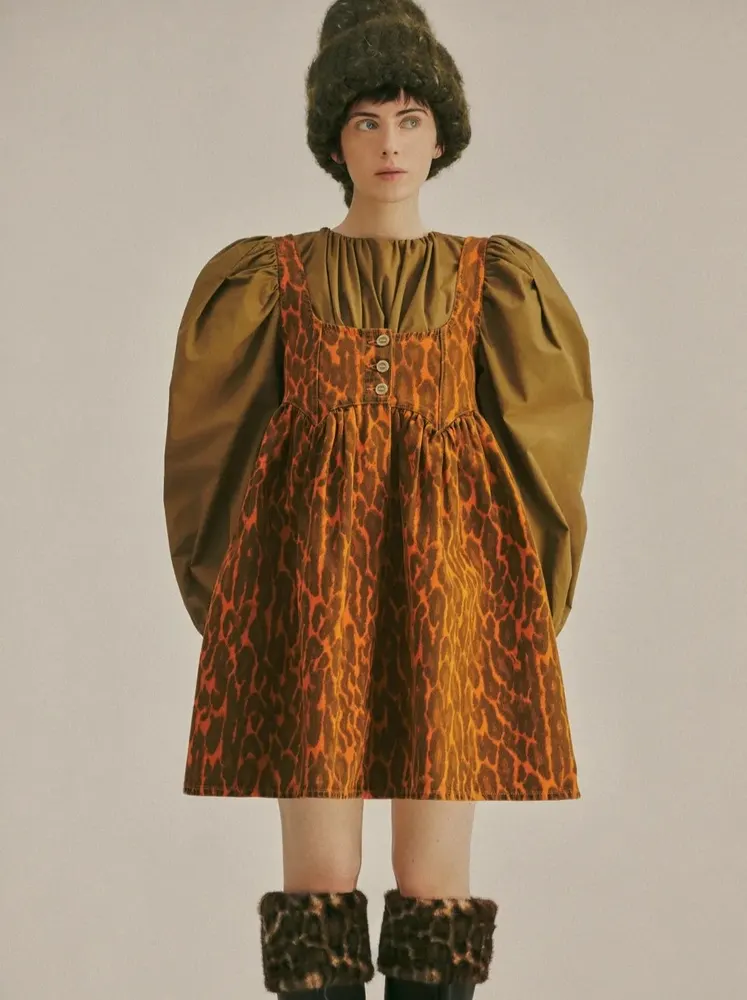
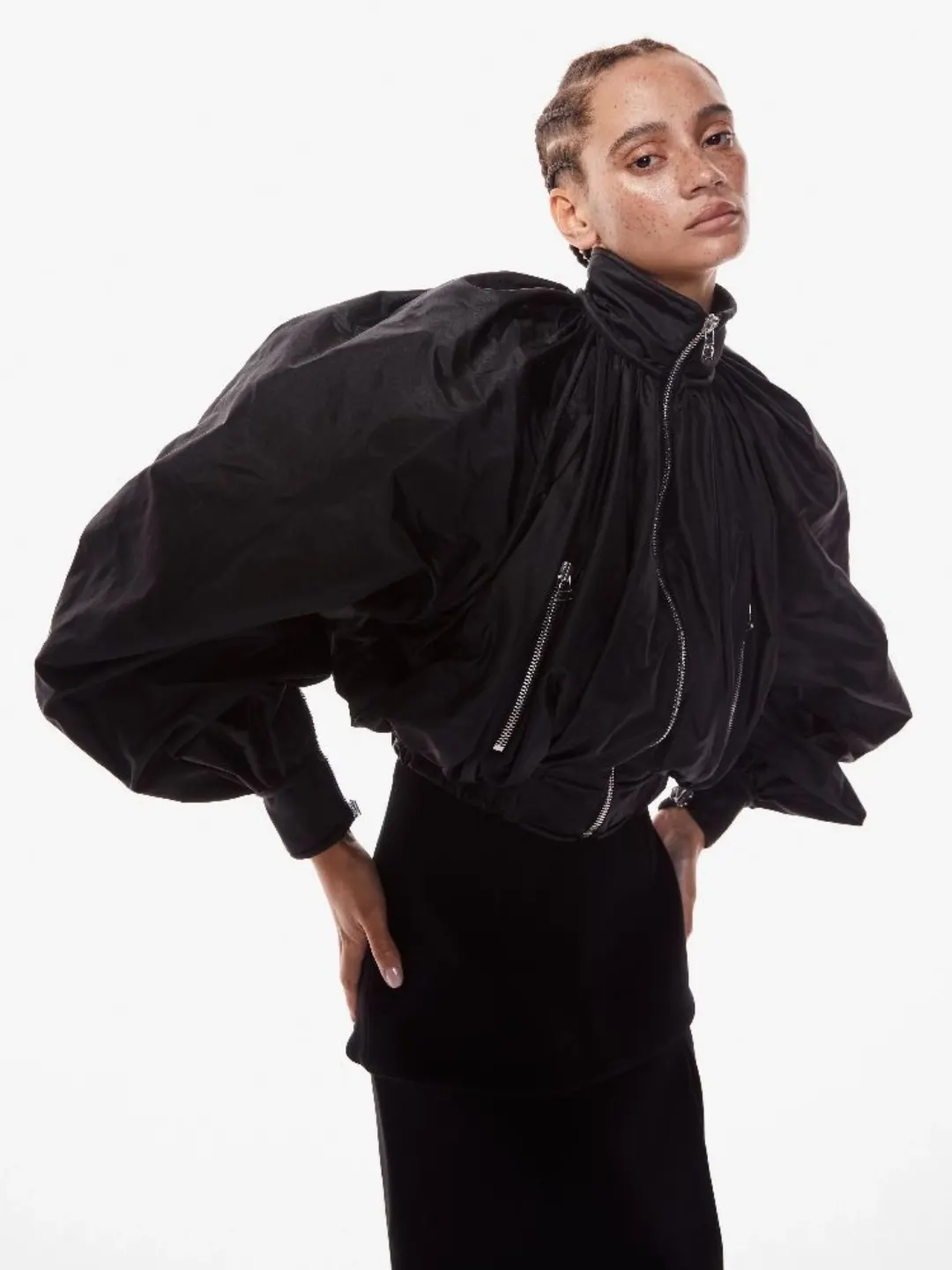
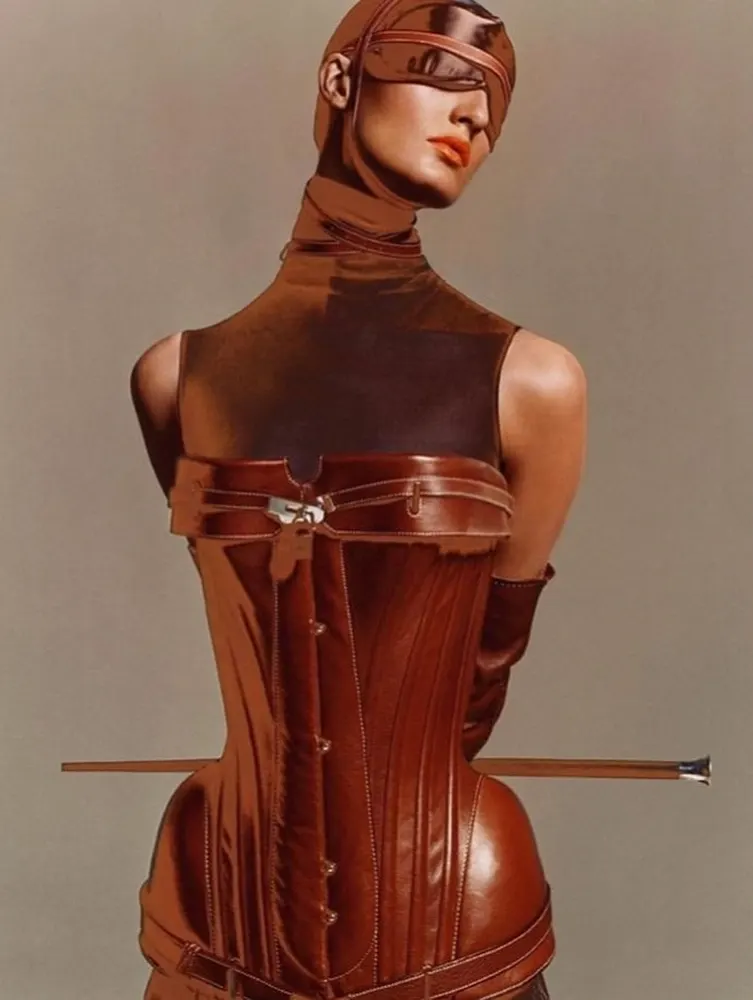
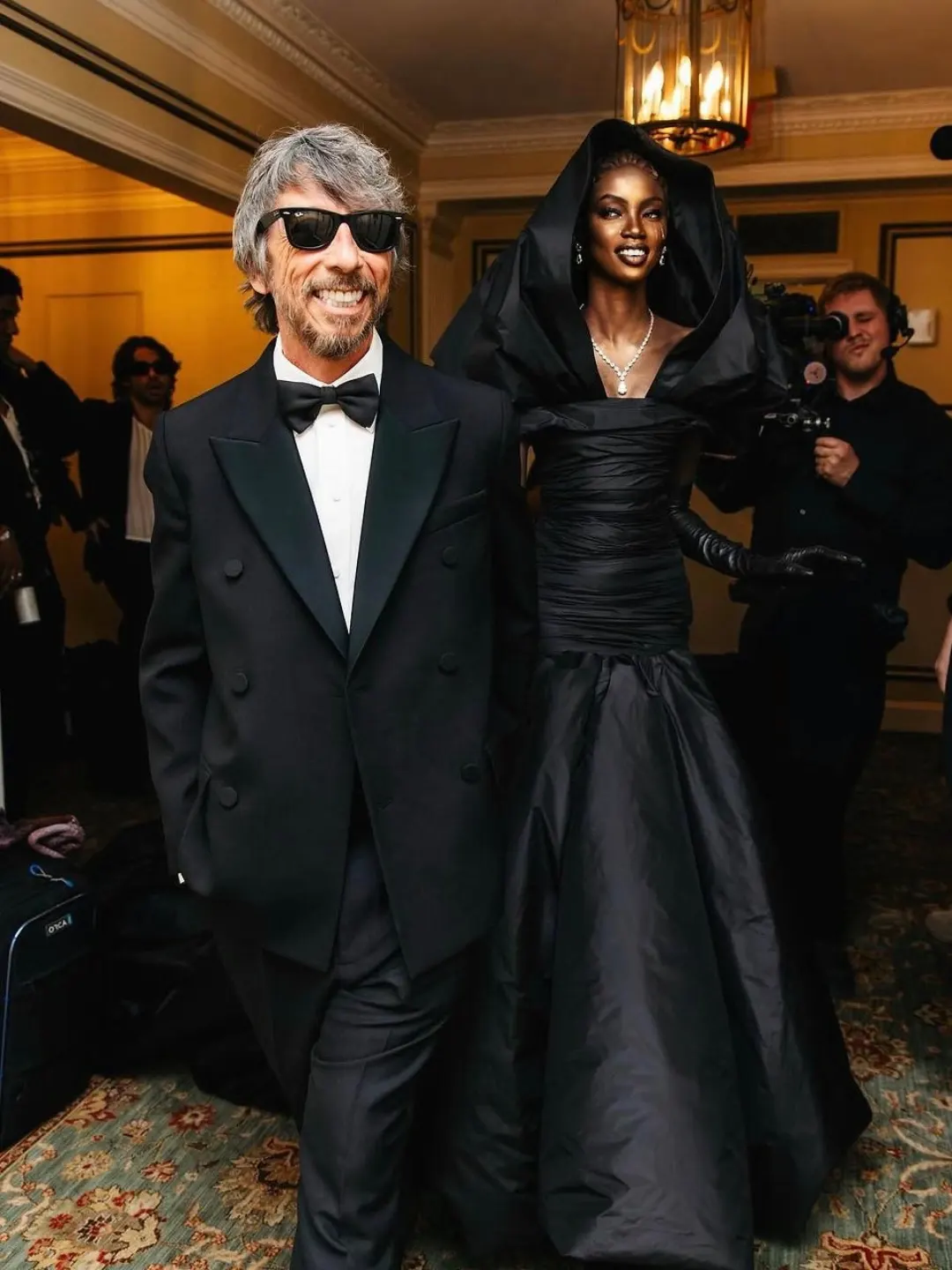
At Dubai Fashion Week SS27, roses bloom on corsets, capes swell into sculptures, and animal prints run wild. How much personality can a silhouette carry?

Dubai Fashion Week SS27: Wild at Heart
At Dubai Fashion Week SS27, roses bloom on corsets, capes swell into sculptures, and animal prints run wild. How much personality can a silhouette carry?
November 11, 2026


On October 25, Dubai Fashion Week welcomed six runway presentations exploring the expressive possibilities of contemporary womenswear. From architectural couture and Mediterranean nostalgia to Caribbean-Indian craftsmanship and experimental corsetry, the fourth day brought diverse creative perspectives to Dubai Design District.
Across the collections, designers manipulated fabric, proportion and ornament to develop distinctive interpretations of femininity, each revealing a different relationship between imagination and construction.
Lili Blanc: Power Dressing Takes a Holiday
Architectural tailoring met relaxed summer dressing in Lili Blanc's SOLEIL D’ÂME, presented at Dubai Fashion Week through sharply power shoulders, asymmetric construction and fluid textiles. The collection travelled through light blue, mint green, peach and lilac before entering the house's familiar black-and-white territory.


A pale-blue suit featured an elongated blazer with squared shoulders, a plunging neckline and carefully shaped waist, accompanied by relaxed wide-leg trousers. The contrast between the structured upper body and flowing trouser legs created an elongated, commanding silhouette.
Another turquoise ensemble featured a sleeveless wrap top with extended angular shoulders and overlapping front panels. A self-tie belt defined the waist, while a matching skirt introduced movement through its high slit.
Eveningwear developed these proportions through sheath gowns, transparent tulle and asymmetric draping. Black dresses combined narrow bodices with sheer skirts, occasionally incorporating sparkling embellishments, opera gloves and veiling.


The collection's appeal emerged through its understanding of proportion. Structured shoulders established authority, while fluid fabric softened the resulting silhouette. Lili Blanc imagined power dressing as an adaptable wardrobe, allowing formal tailoring and expressive eveningwear to share a consistent architectural foundation.
ONORI: Roses, Ruffles and a Mediterranean Romance
A cluster of pink roses interrupted the waist of a black strapless dress as ONORI made its Dubai Fashion Week debut. Emirati designer Sharifa Al Hashemi drew inspiration from Sardinia and 1950s femininity, translating Mediterranean nostalgia into pastel colours, floral embellishments and playful proportions.


The black dress combined a closely fitted bodice with detached sleeves and a pale-pink gathered skirt. Sculpted roses outlined the dropped waist, turning a structural transition into a decorative focal point.
Elsewhere, a blush strapless gown featured horizontal ruching across the bust and torso, creating texture within a narrow column silhouette. An ivory gown carried dimensional fabric flowers and dangling fringe beneath a transparent floor-length veil.


Capri trousers, babydoll tops, balloon pants and duster-inspired dresses expanded the collection beyond eveningwear. Lustrous satin, hand-beaded embellishments, gathered fabric and delicate floral embroidery contributed to its romantic atmosphere.
Al Hashemi's strongest designs balanced nostalgic references with precise placement of volume. Roses marked the hips, ruching defined the torso, and balloon shapes introduced a mischievous quality to classic feminine dressing.
Shoma: Two Cultures, One Colourful Wardrobe
Indian heritage and Caribbean identity intertwined in A Thread Across the Waters, presented by Trinidad-born designer Shoma Persad at Dubai Fashion Week SS27. Inspired by ancestral migration and cultural memory, the collection combined sari-influenced draping, expressive prints and contemporary resort silhouettes.


A cropped pink velvet blouse featured puffed shoulders, fitted cuffs and front buttons, paired with a cobalt-blue skirt. Rose-coloured fabric gathered diagonally around the hips, creating a draped sash reminiscent of traditional Indian saree.
Another ensemble combined a mustard strapless corset with sculpted rose appliqués and a small peplum. Its fitted velvet bodice contrasted with a silver skirt animated by long metallic fringe.


Hand-painted florals and tropical landscapes appeared across tailored separates, while jhumka earrings and jutti-inspired footwear reinforced the collection's cultural dialogue.
Persad's most compelling pieces allowed contrasting traditions to coexist within individual garments. Draping articulated the waist, velvet supplied structure, and painted textiles introduced personal narrative, transforming cultural heritage into a contemporary design vocabulary.
Kuni: Architecture Learns to Dance
Jordanian designer Sara Mousa brought her architectural background to Dubai Fashion Week with Kuni, presenting 20 looks across five chapters. The collection explored the transition from rigid construction towards fluid couture, treating volume as an essential component of design.

A narrow nude-toned sheath gown decorated with blue floral embroidery appeared beneath an oversized sky-blue cape. Lustrous fabric gathered into enormous folds around the shoulders, framing the fitted dress with sculptural volume.
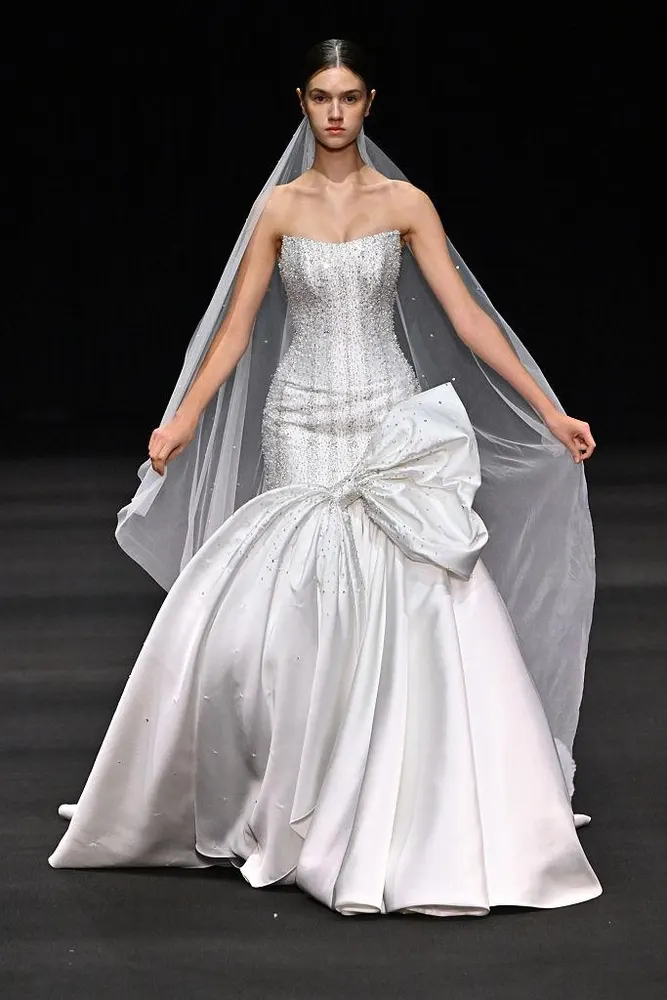
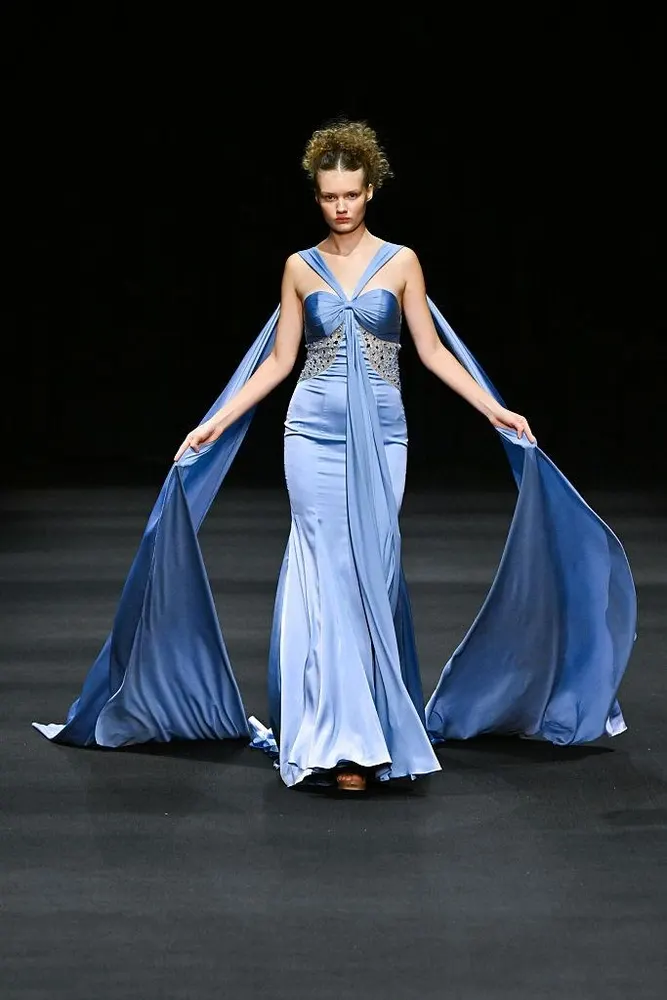
A pale-blue halter gown introduced diagonal draping secured around the shoulder and waist, allowing lightweight fabric to fall freely. Elsewhere, a strapless bridal gown featured a crystal-covered bodice and an inflated skirt dominated by an oversized bow construction.

Plum hooded gowns, transparent embroidered mesh and beaded fringe introduced further variations in texture and movement.
Mousa's strongest creations translated architectural thinking into wearable form. Capes established spatial boundaries, fitted bodices controlled proportion, and draped textiles introduced movement around their structural foundations.
Weinsanto: Fashion Unleashes Its Wild Side
French designer Victor Weinsanto closed Dubai Fashion Week with AUDACE, an unapologetically theatrical collection exploring corsetry, animal imagery and experimental surface treatments.
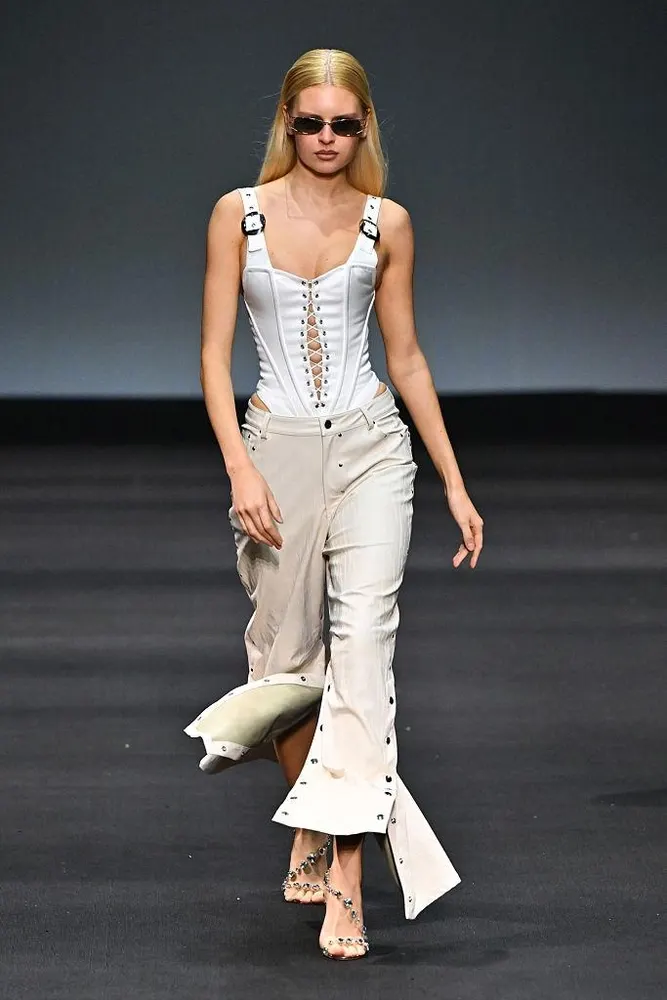

A black corset minidress featured prominent vertical seams that compressed the waist and accentuated the hips. Zebra print fabric swept diagonally across another corseted design, creating an asymmetric overlay that interrupted its pale foundation.
Metallic corsetry followed the body's contours, while leopard print sequins introduced shimmering animal markings. Particularly striking were reptilian textures developed through three-dimensional textile treatments, giving fabric a raised, skin-like appearance.


Weinsanto transformed animal imagery into an exercise in artificial texture and exaggerated anatomy. Rigid corsets manipulated the hourglass silhouette, while unconventional surfaces introduced a provocative, almost creature-like dimension.
At Dubai Fashion Week, Imagination Found Its Shape
The fourth day of Dubai Fashion Week suggested that creative identity emerges through the decisions hidden within construction. A rose can define a waist, a cape can transform the body's proportions, and a familiar animal print can become an entirely new surface. The strongest garments gave imaginative references a physical purpose, allowing the silhouette itself to communicate the designer's point of view.