MENU
Close





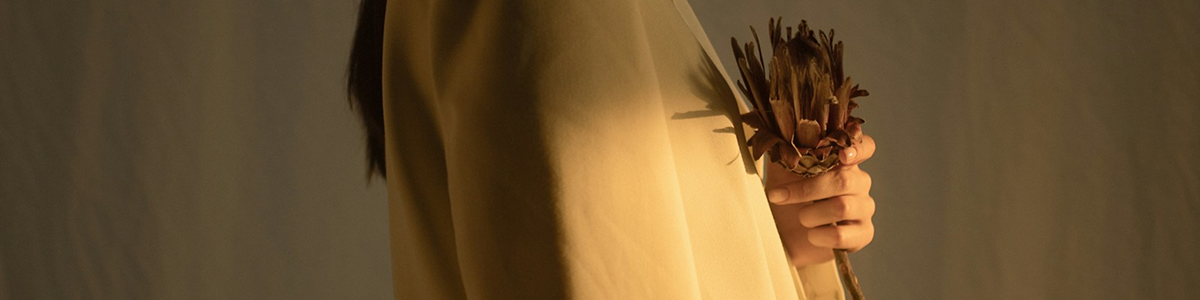
Touch velvet fabric once and the surface remembers it, leaving behind darker trails, brighter patches and a small reminder that some textiles are designed to be seen in motion.
Touch velvet fabric once and the surface remembers it, leaving behind darker trails, brighter patches and a small reminder that some textiles are designed to be seen in motion.
August 11, 2026
Advertisement
Advertisement


A hand leaves a visible path across velvet. A fold can turn burgundy close to black, then release a flash of red as the cloth moves again. Few fabrics make their surface so responsive to the space around them.
That effect begins with something extremely small. Thousands of short fibres rise above the base cloth, creating the dense pile that gives velvet fabric its softness and unusual depth. Their direction changes with pressure, movement and gravity, so the textile is constantly reorganising the way it catches light.
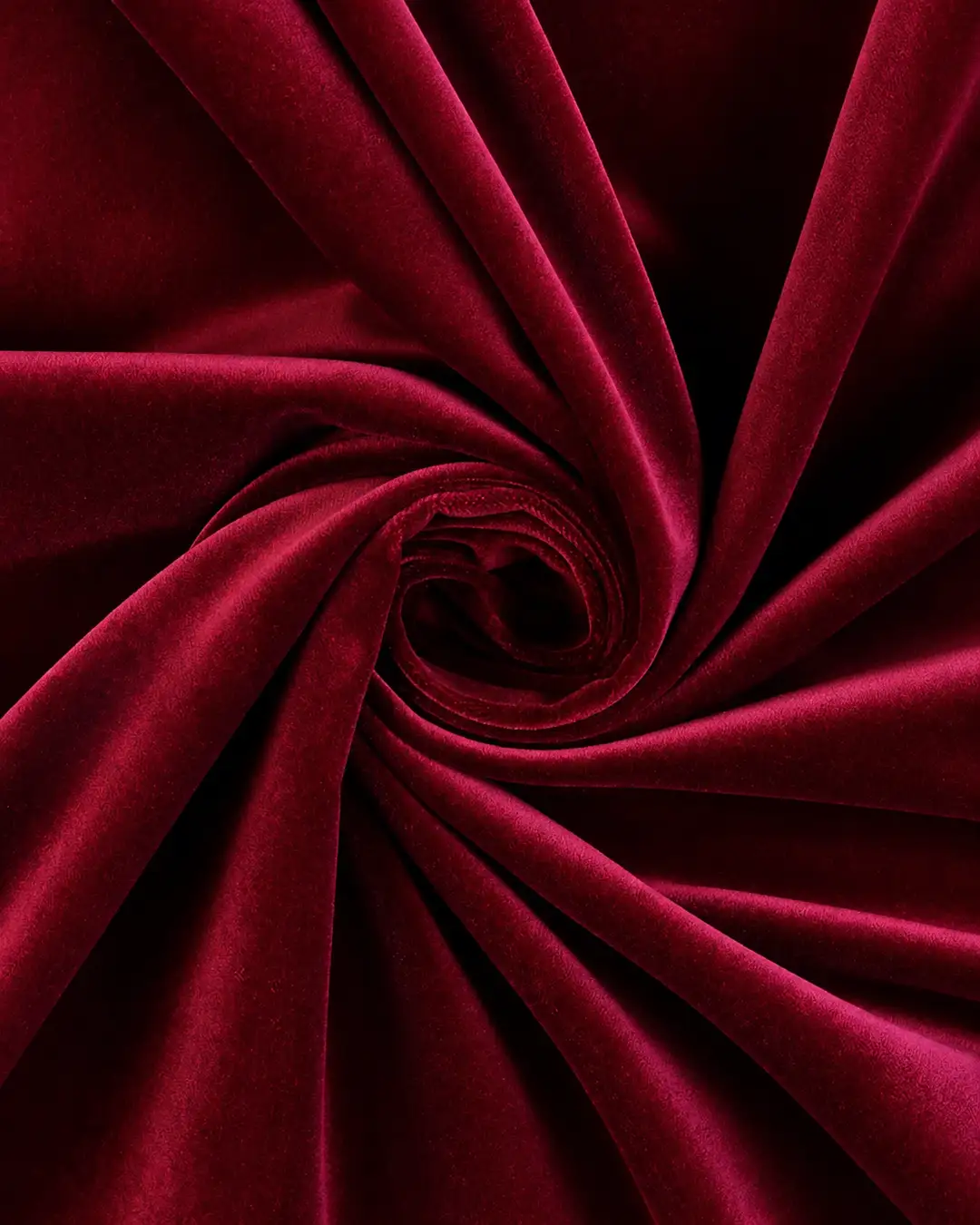
Velvet has carried this visual richness through court dress, eveningwear, tailoring and interiors for centuries. The fibres used to make it have expanded far beyond silk, yet the principle behind its appearance remains remarkably consistent: a fabric whose character lives above the weave, in a layer only a few millimetres high.
Softness may be the first clue, but the real signature of velvet sits a few millimetres above the cloth itself. Velvet fabric is a pile of textile, built with a dense layer of short fibres rising from a woven or knitted ground to create its plush surface.
Those fibres form what is known as the pile. Unlike a flat weave, where yarns lie mostly within the same plane, velvet adds a vertical dimension. Light enters between the tiny fibres, hits them at different angles and creates the deep shadows and flashes of brightness that make the fabric appear richer than its actual colour.
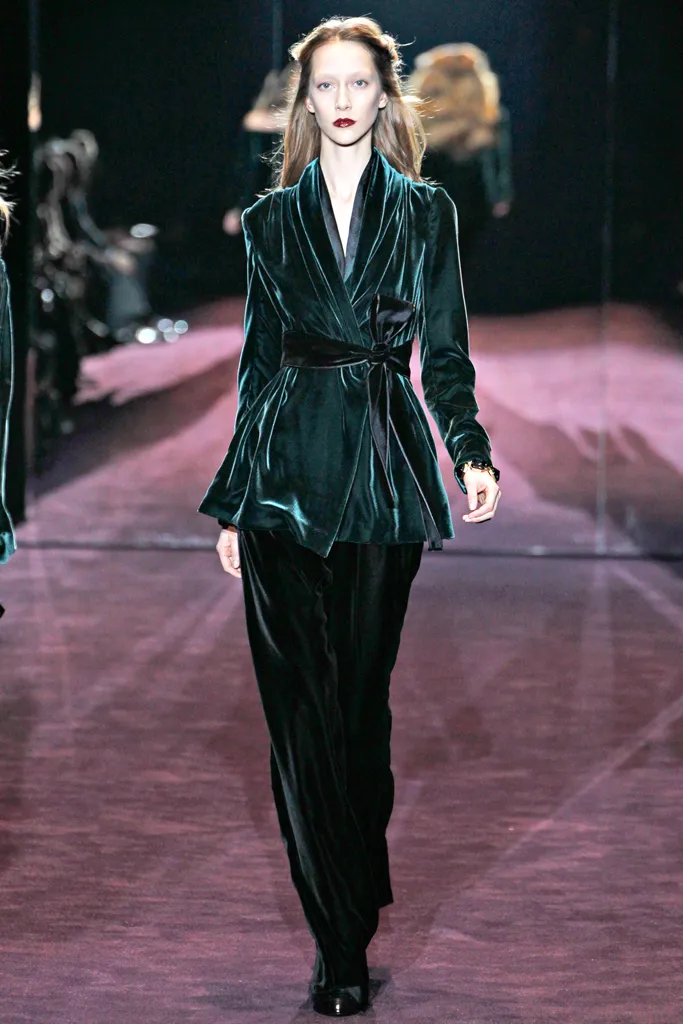
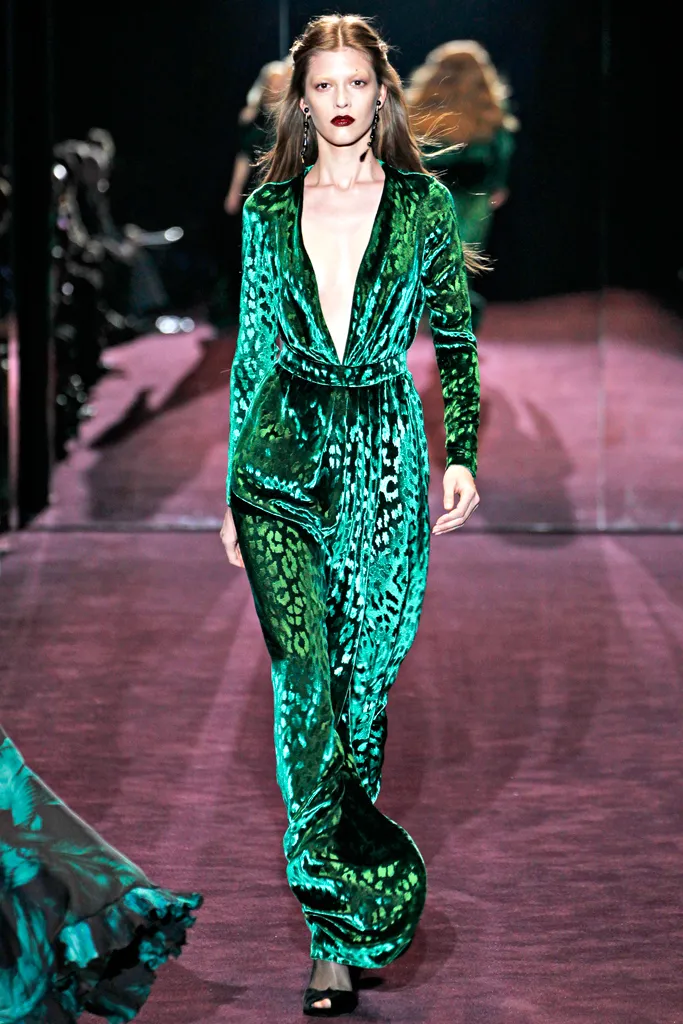
Velvet also has a clear nap, meaning the pile naturally leans in one direction. Brushing it with or against that direction changes the way the surface reflects light, which explains why two pieces cut from the same bolt can appear like slightly different shades when their naps face opposite ways.
The name describes the construction, not the fibre. Historically, luxury velvet was closely associated with silk, while contemporary versions can be made from multiple variations: cotton, viscose, rayon, polyester, nylon or blends. Fibre choice changes the drape, weight, sheen and hand, yet the raised pile remains the feature that makes velvet recognisable.
Velvet’s story starts long before the European courts that later made it famous. Pile textiles existed in ancient Egypt, where looped surfaces were already being woven thousands of years ago. True silk velvet developed much later, most likely in China by at least the 13th century, introducing the dense raised pile that would become central to the fabric’s identity.


Trade carried the technique westward, and by the Renaissance, velvet had found an extraordinary stage in Italy. Workshops in Venice, Florence and Genoa pushed silk weaving into increasingly elaborate territory, combining deep piles with metallic threads, contrasting pile heights and areas where the ground cloth was deliberately exposed. Between the 15th and 16th centuries, these textiles travelled widely through Europe and the Ottoman world.
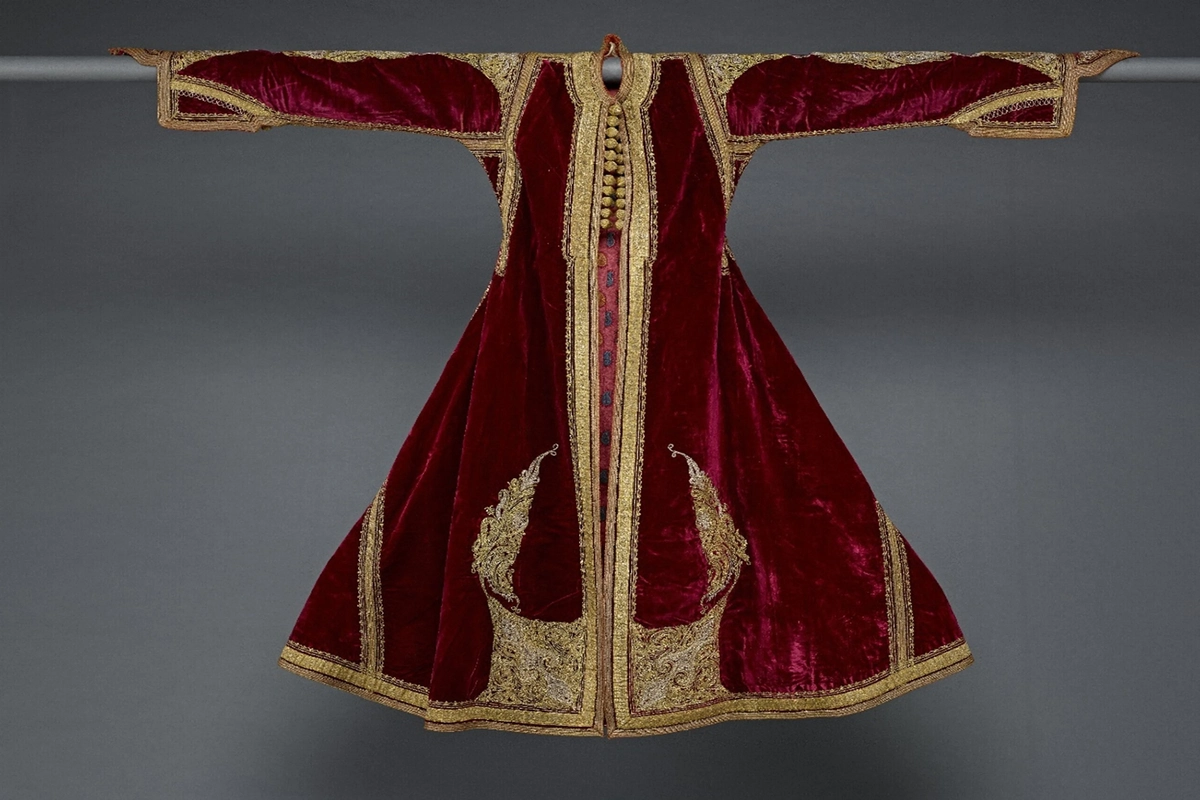
The expense came from more than silk alone. Velvet required extra warp yarn to create its pile, specialised weaving skills and substantially more time than a flat textile. Designs could become even more demanding when gold or silver-wrapped threads entered the weave. A length of patterned velvet could therefore function almost like portable wealth, appearing in court dress, ecclesiastical vestments, ceremonial furnishings and diplomatic gifts.
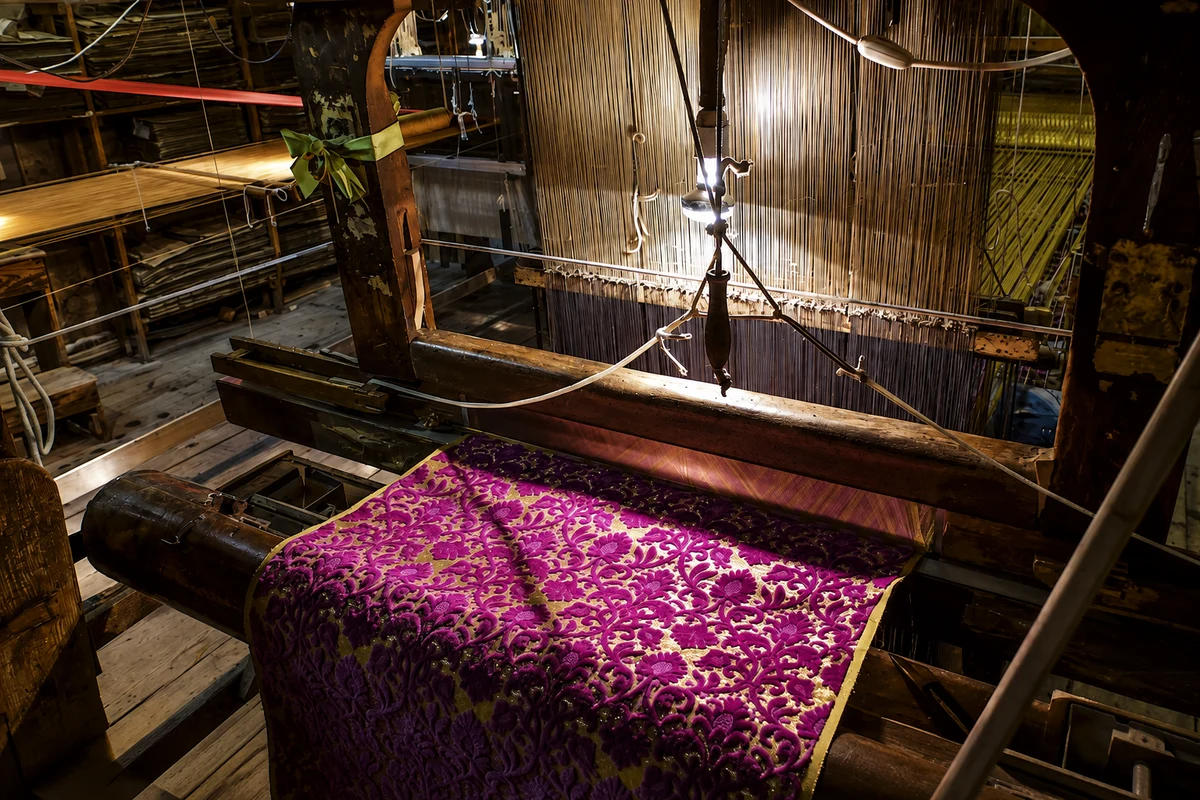
Its surface also became a language of status. Renaissance velvets used enormous pomegranate, palmette and artichoke-like motifs, while some 16th century examples created pattern simply by changing the height of the velvet pile. Crimson velvet was even associated with the robes and sashes of Venetian senators. Velvet had moved beyond softness by then. A few millimetres of raised silk could communicate rank, money and authority before the wearer said a word.
The extra dimension of velvet begins on the loom. Alongside the yarns forming the ground cloth, another set of yarns is introduced specifically to create the pile, giving velvet fabric the raised surface that separates it from flat woven textiles.
In traditional production, these pile yarns are lifted over fine rods or wires inserted across the width of the fabric. Once a row is secured into the ground weave, the loops sitting over the rods can be sliced open. Each cut releases two short yarn ends that stand above the base cloth, gradually building the dense, soft face associated with velvet. Leaving selected loops intact can also create patterned effects and differences in texture.
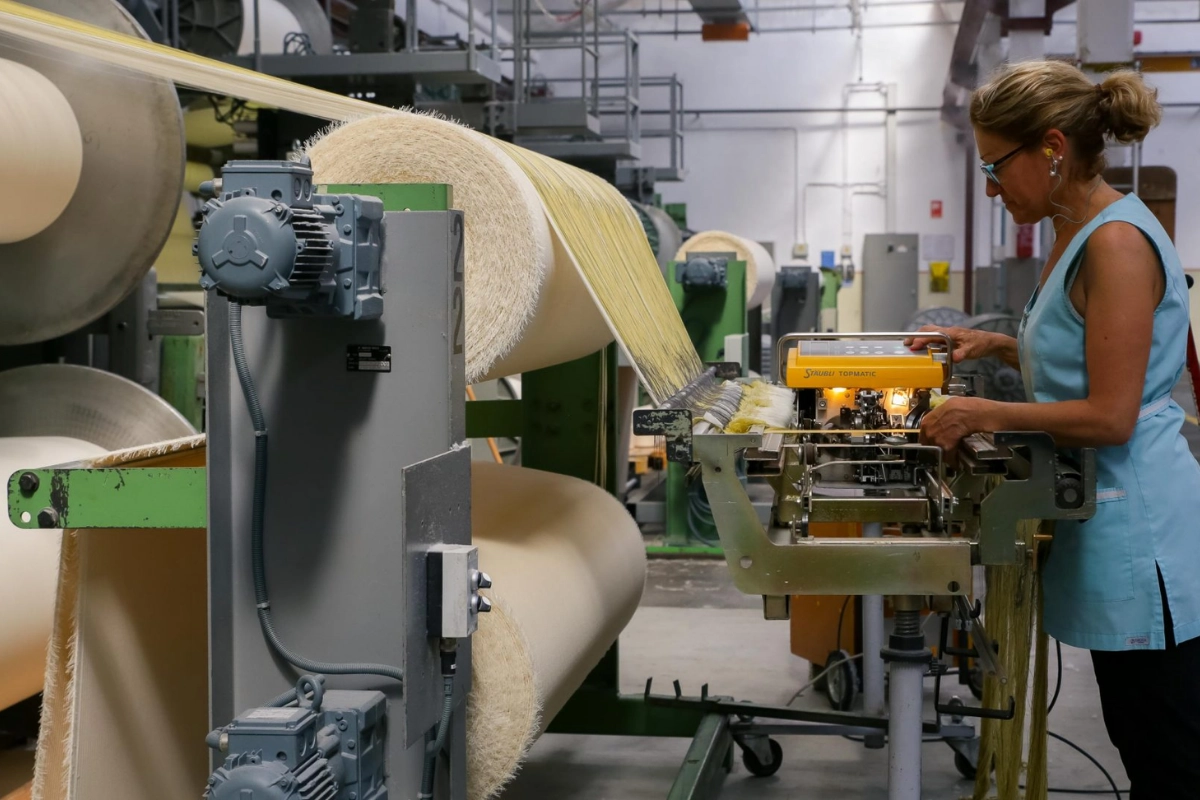
Modern mills often use a double-cloth or face-to-face method. Two layers of ground fabric are woven at the same time, connected vertically by pile yarns running between them. A blade then passes through the centre of those connecting yarns, separating the construction into two pieces of velvet. The freshly cut ends become the pile surface on each side.
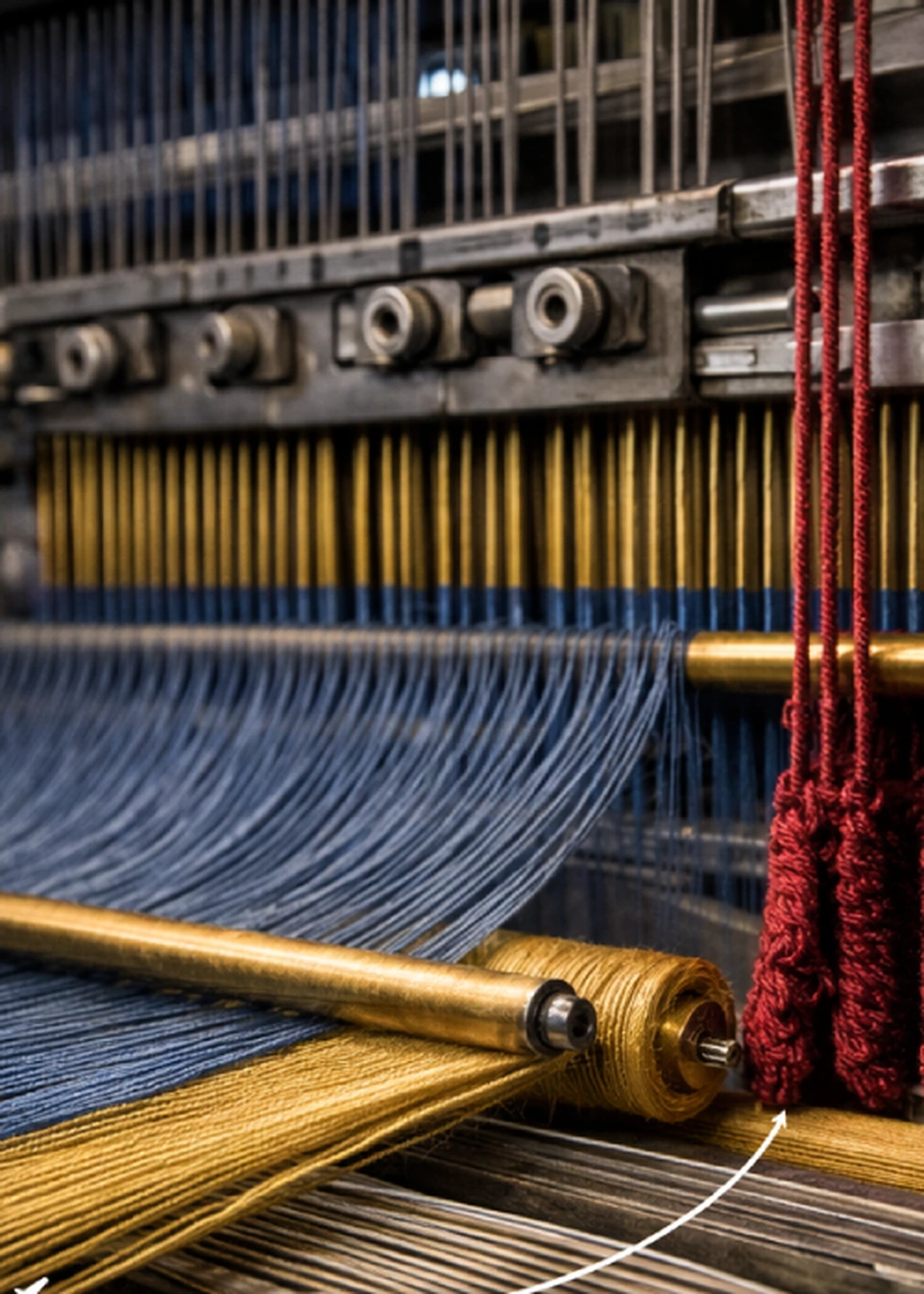
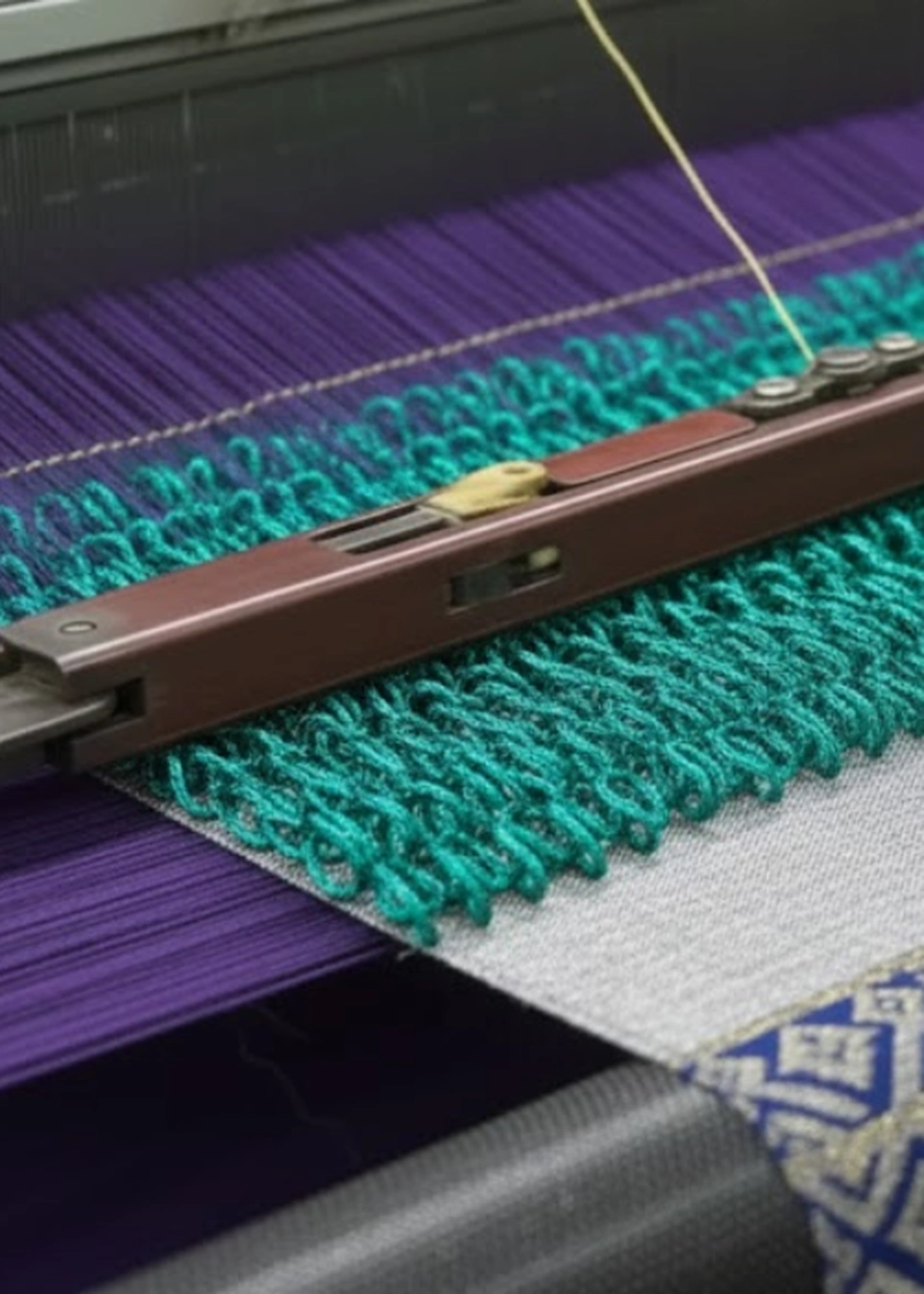
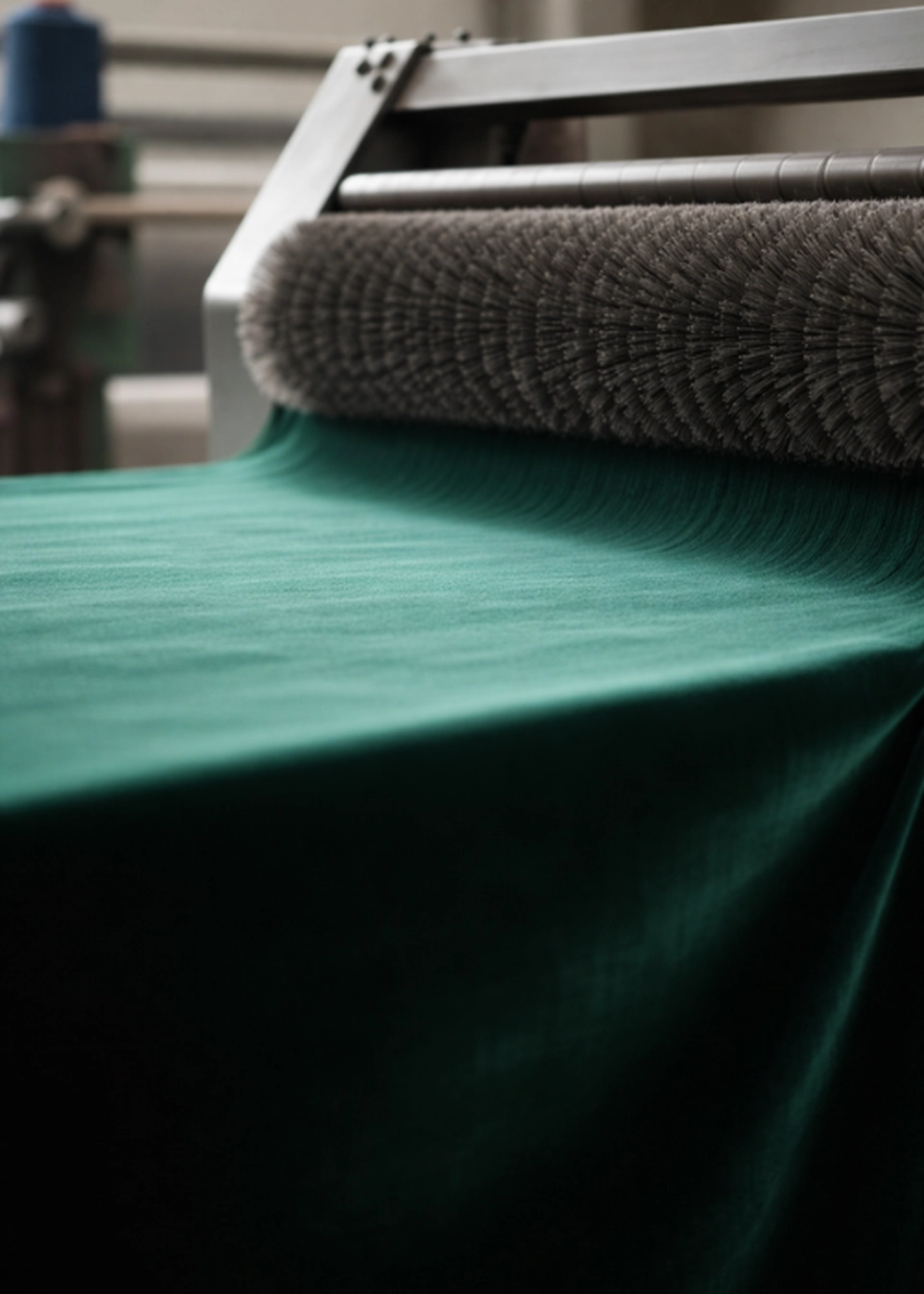
The cloth still needs considerable finishing once it leaves the loom. Uneven piles can be sheared to a consistent height, brushed into one direction and steamed to settle the nap. Pressure, heat or chemical treatments can then reshape that surface further, producing crushed, embossed or devoré effects. Much of velvet’s final character therefore appears after the basic weave is already complete.
Velvet names can become confusing because they do not all describe the same thing. Some identify the fibre used to create the pile, while others describe how that pile has been treated or patterned. A piece of viscose velvet, for example, can also be crushed velvet at the same time.
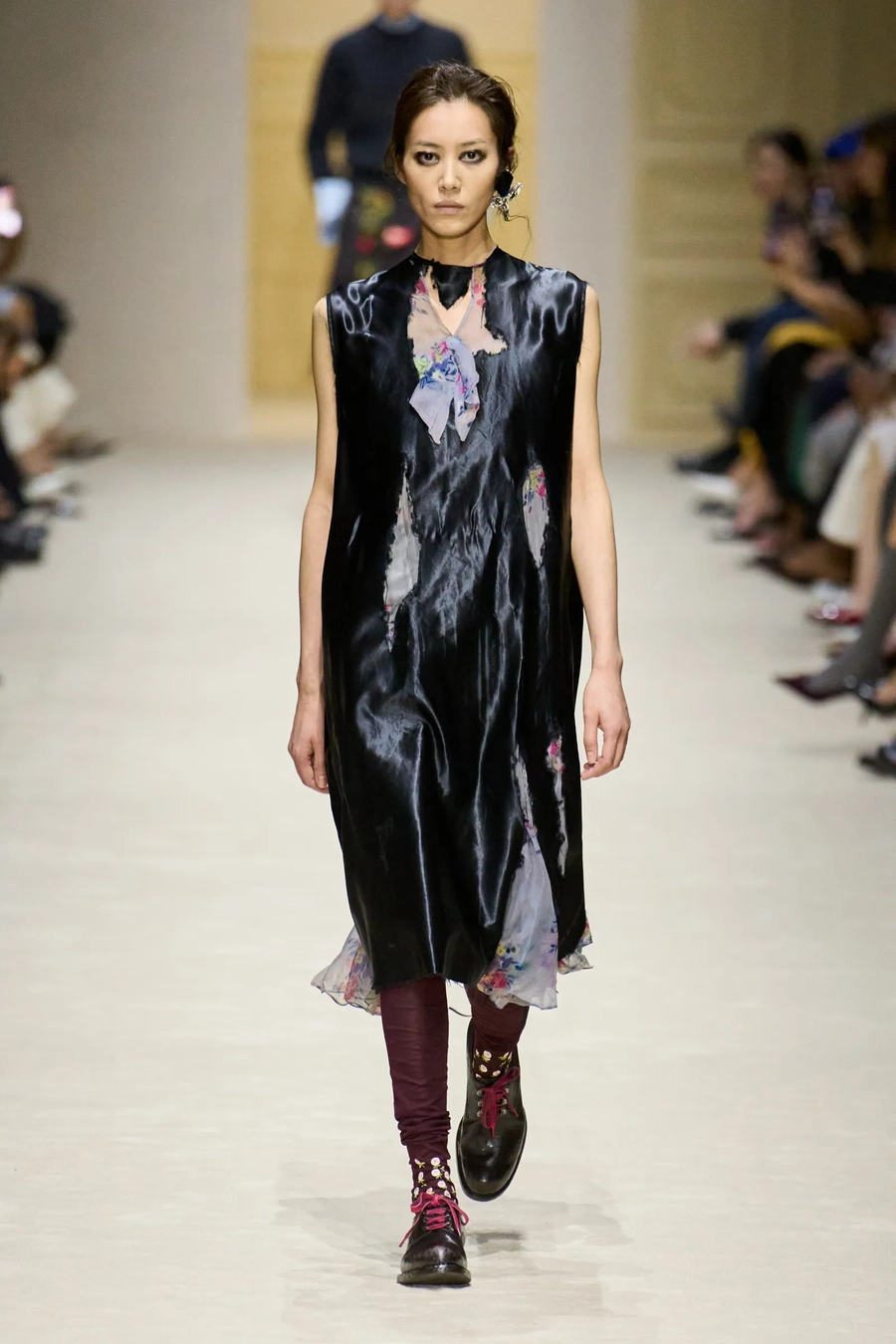
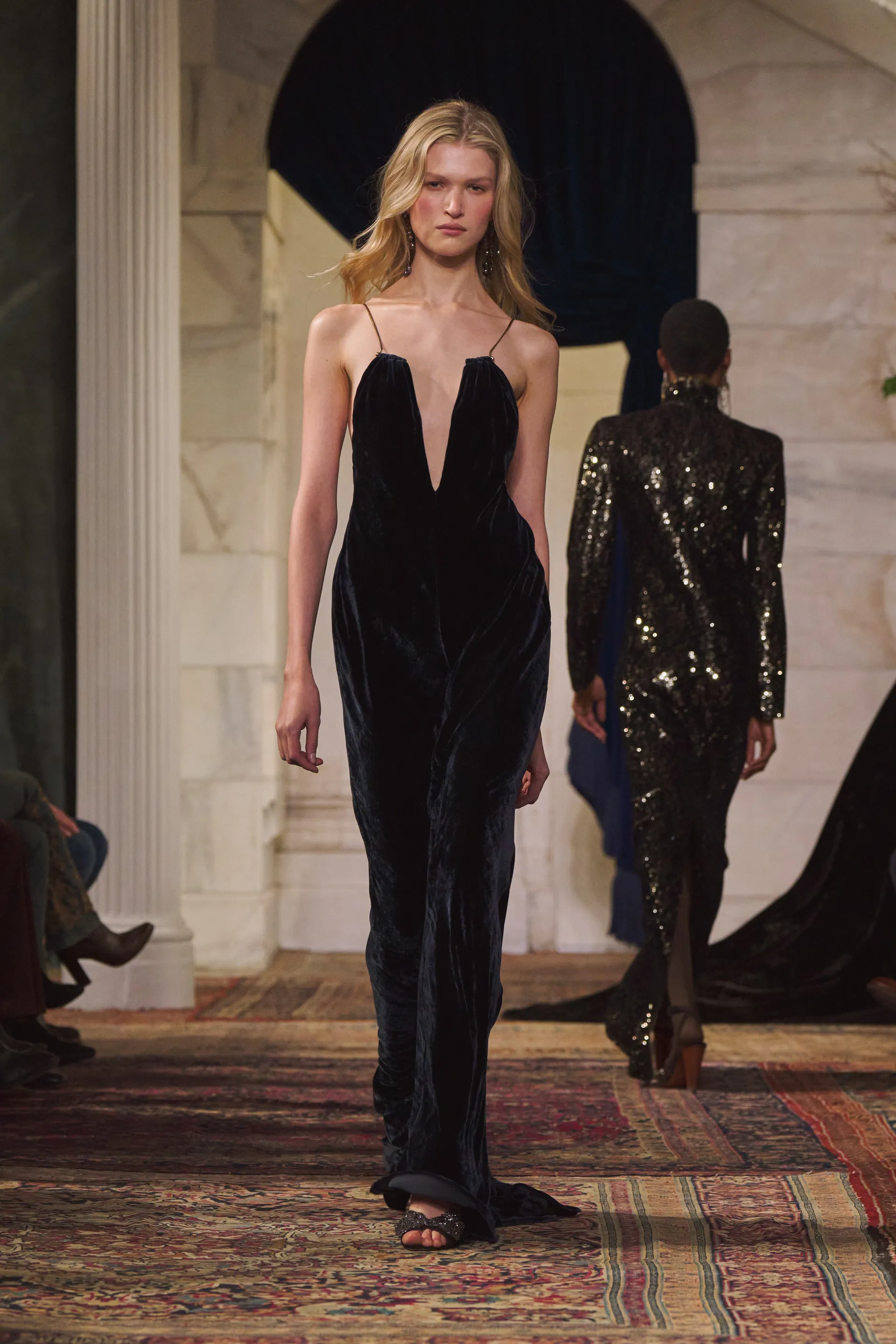
True silk velvet is increasingly rare and expensive, and many fabrics sold simply as “velvet” use silk only as part of a blend. The fine pile catches light sharply while the cloth falls into soft, heavy folds, producing the almost liquid appearance historically associated with evening dress and luxury tailoring. By eye, silk velvet usually has a softer, less glassy shine than polyester and moves easily when lifted.
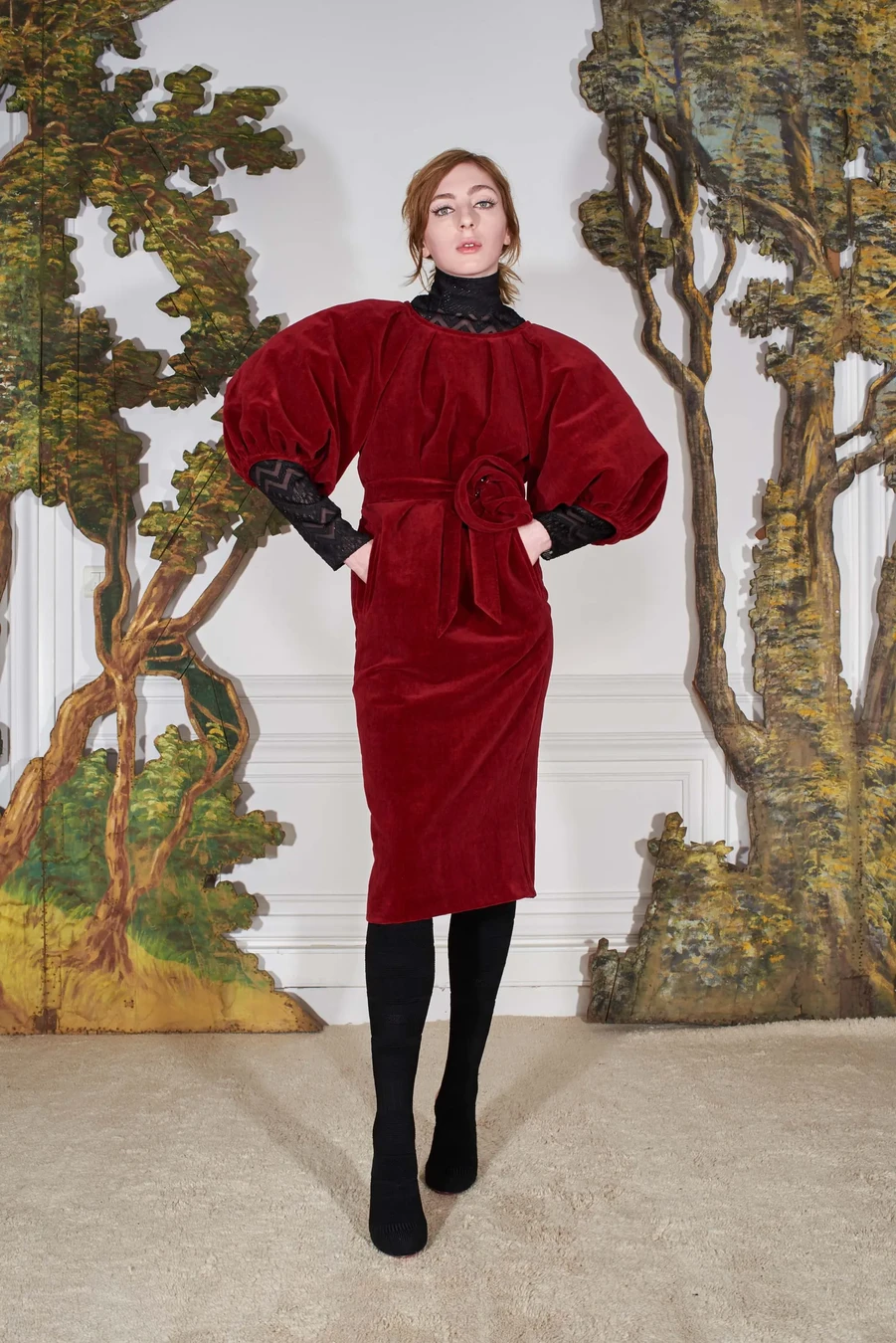
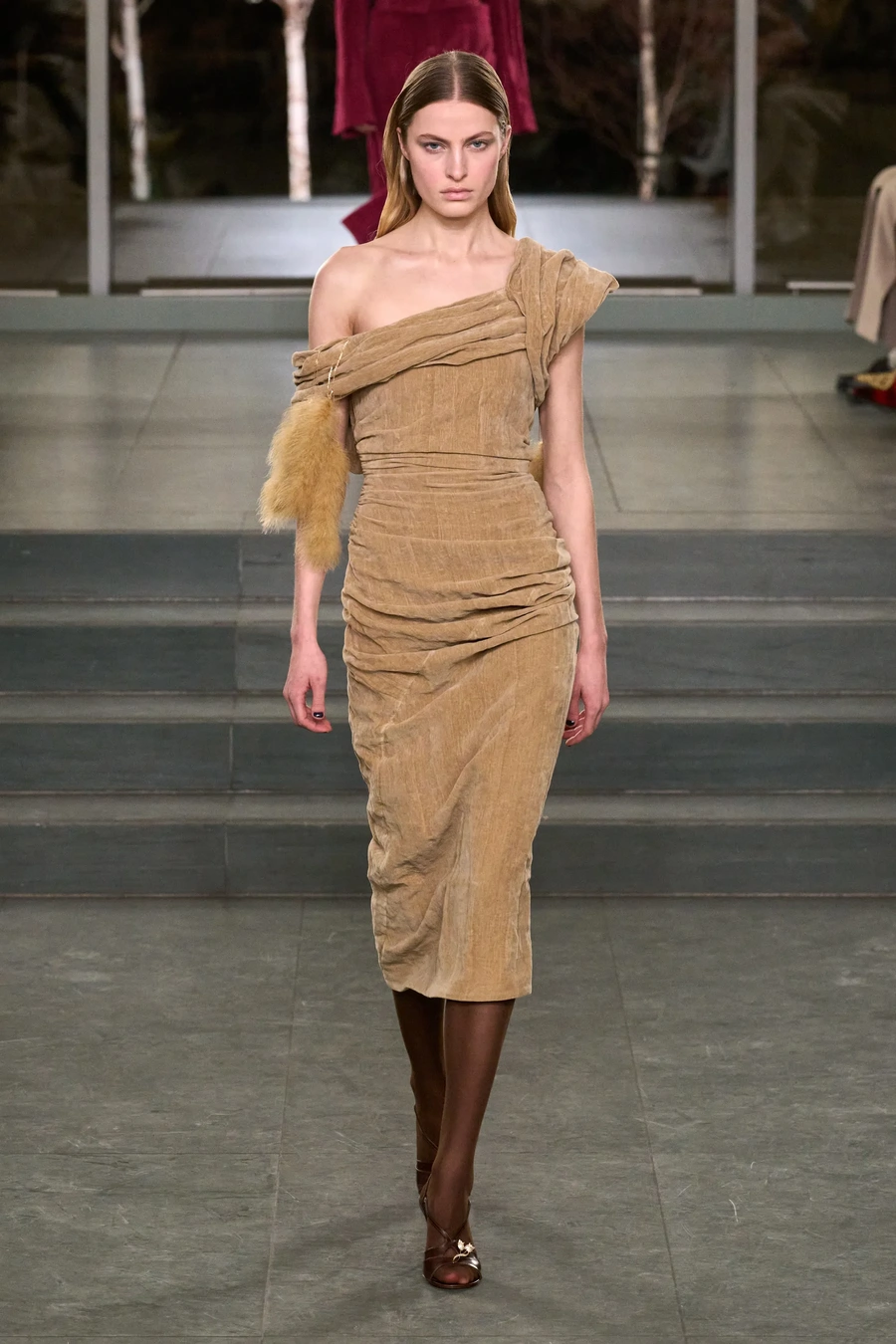
Cotton shifts velvet toward a denser, more structured character. Its surface tends to absorb more light, creating rich colour with a comparatively matte finish. If silk velvet seems to pour around the body, cotton velvet is more likely to hold the shape placed into it.
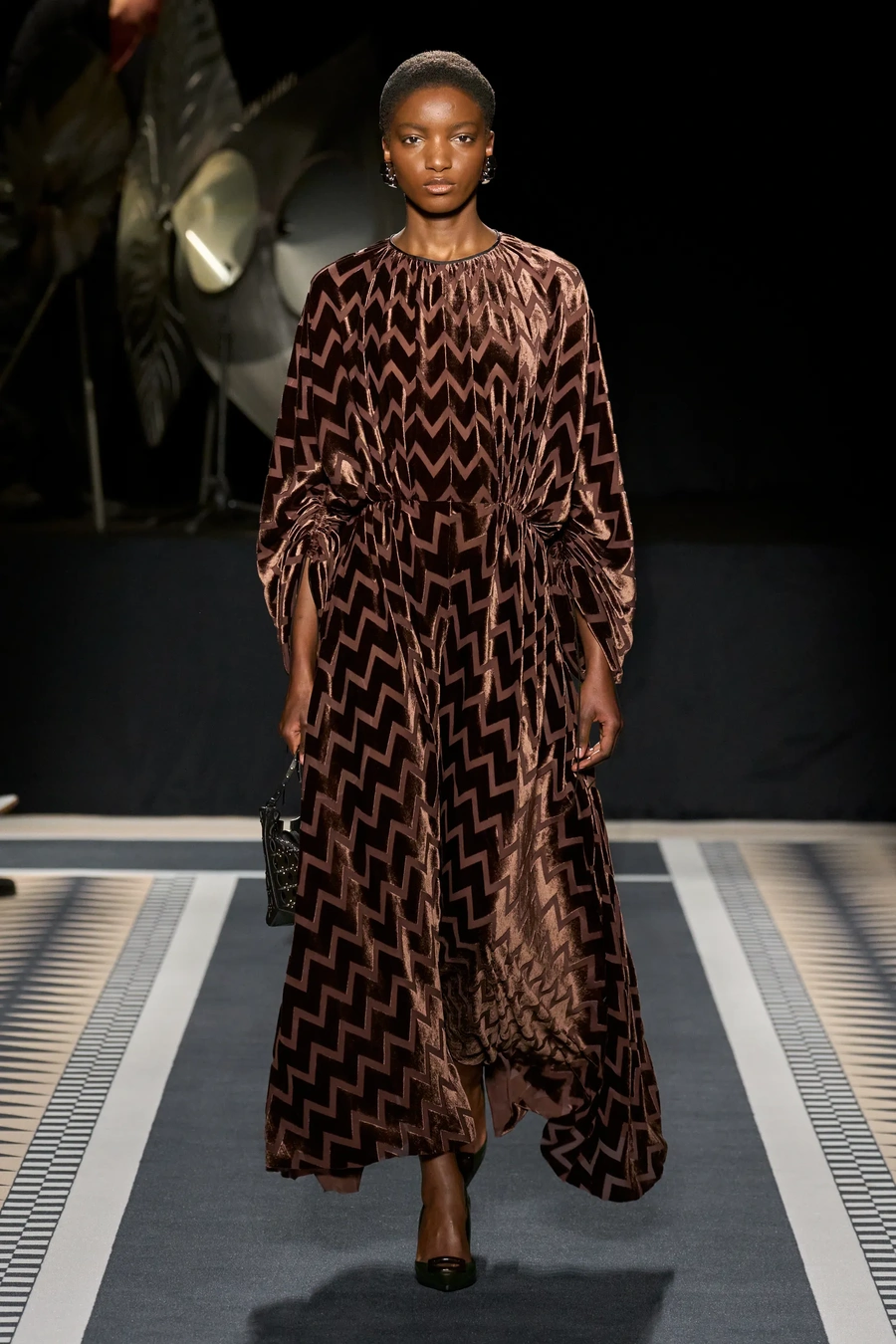

Viscose velvet combines a pronounced sheen with substantial drape. Its regenerated cellulose fibres create a pile that can look exceptionally deep and saturated, especially in jewel tones. This is one of the easiest velvets to mistake for silk in photographs. A useful clue is its weight: viscose velvet often hangs heavily and forms long, soft folds while maintaining a strong reflective surface.
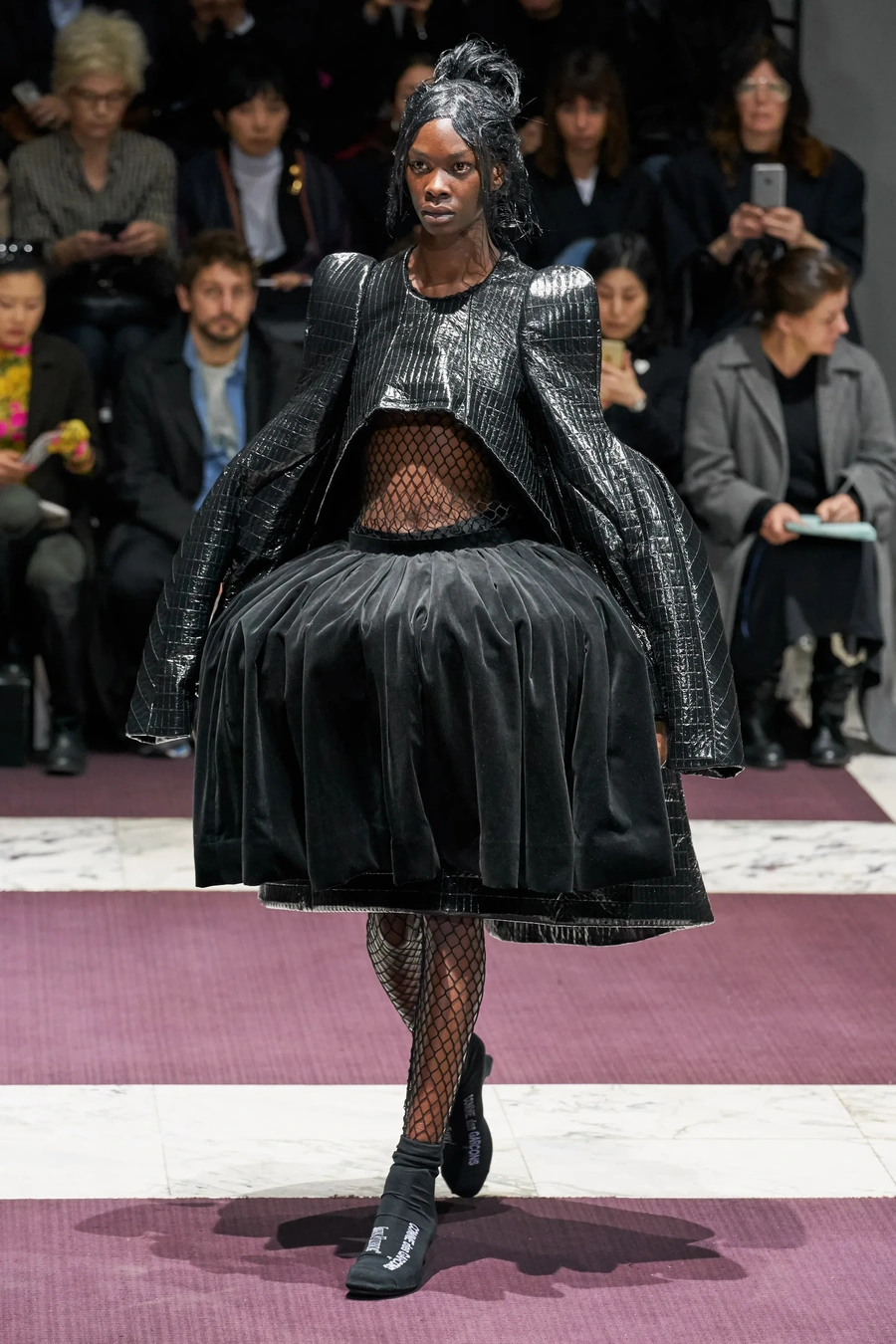
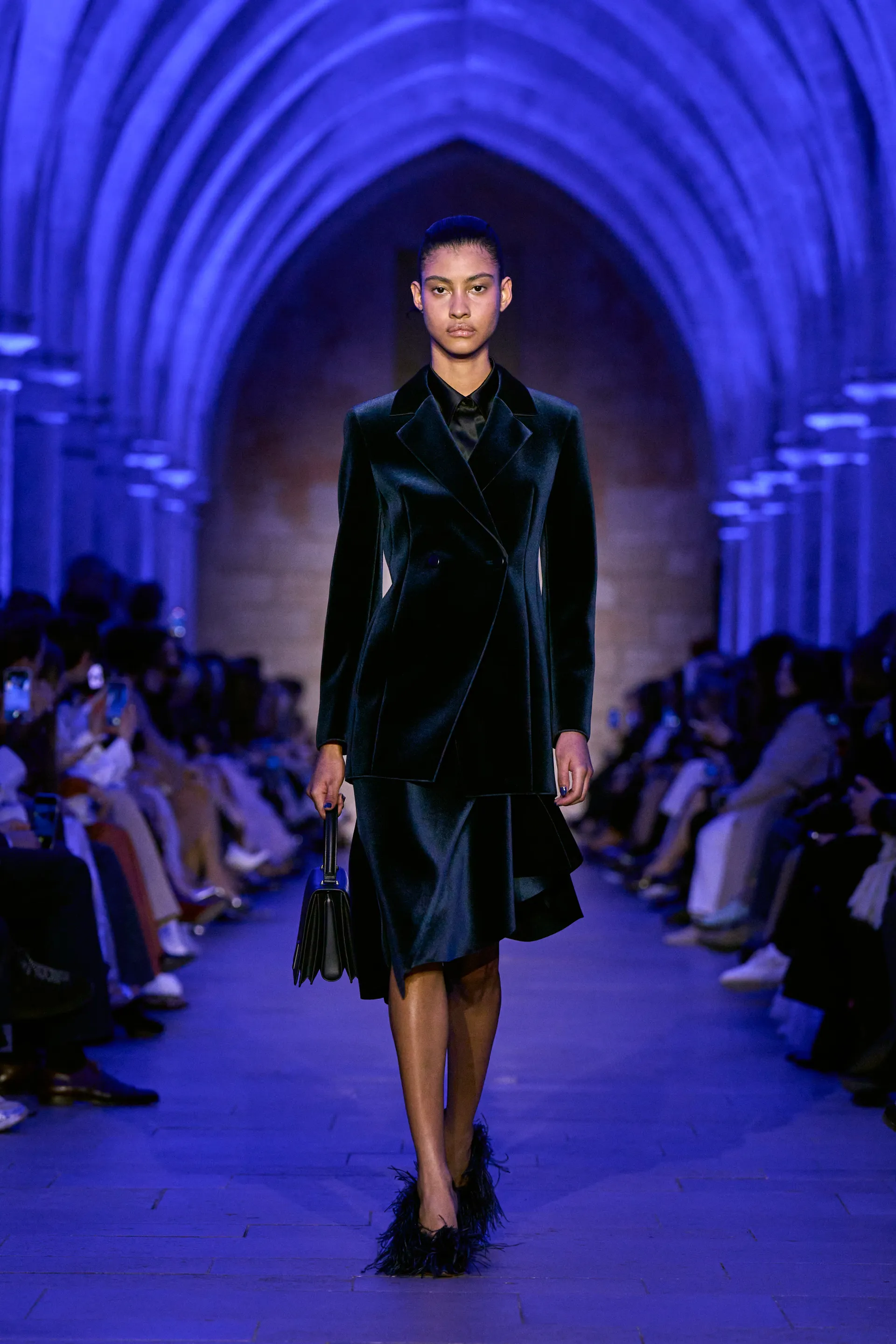
Polyester allows velvet to appear across a much wider range of prices, weights and finishes. Its pile can be engineered to look smooth, highly glossy or comparatively matte, while the synthetic fibre gives the cloth greater resistance to wear and easier maintenance. Under strong light, cheaper polyester velvet can develop a more uniform, almost plastic shine. Higher-quality versions can be much harder to distinguish visually from viscose blends.

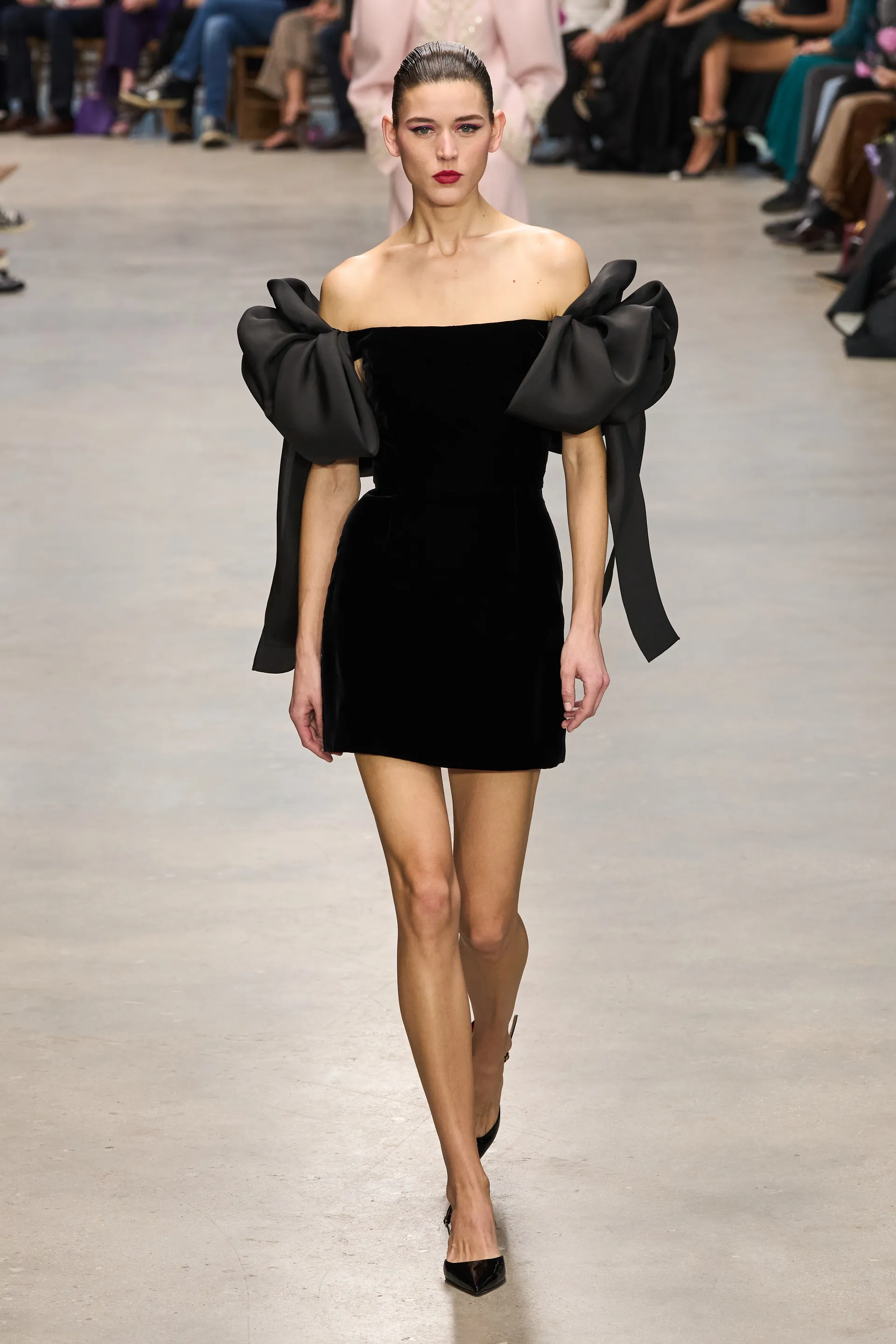
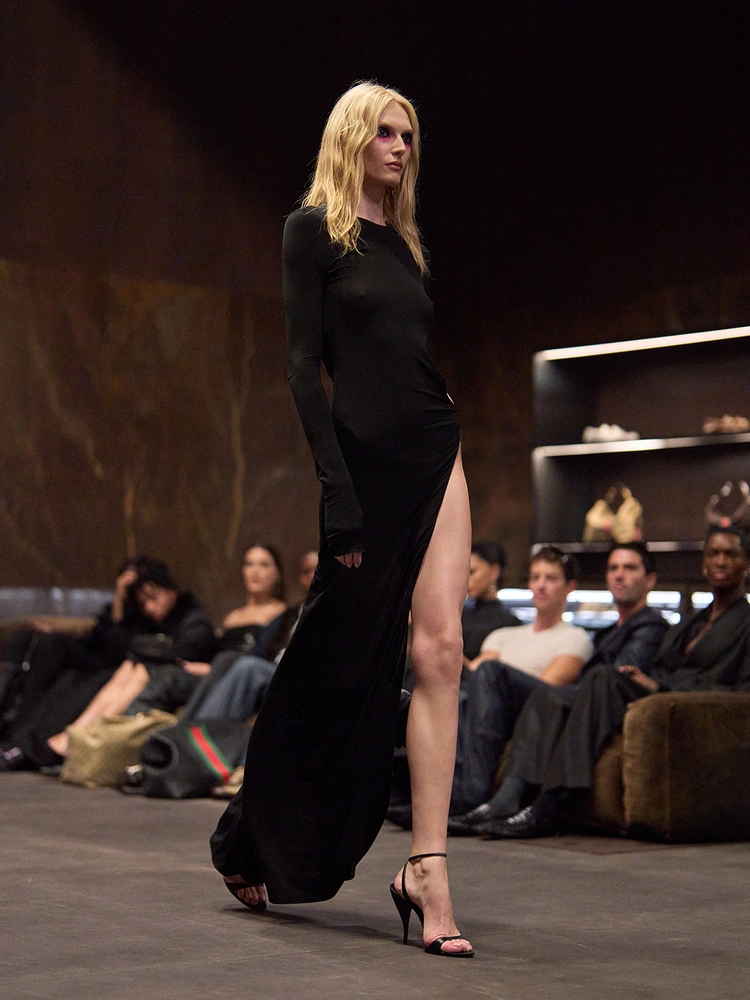
A fitted silhouette often signals another construction entirely. Stretch velvet commonly combines polyester or another fibre with elastane and is frequently made on a knitted base. It follows the body closely and springs back after movement, making it common in bodycon dresses, catsuits, dancewear and performance clothing.
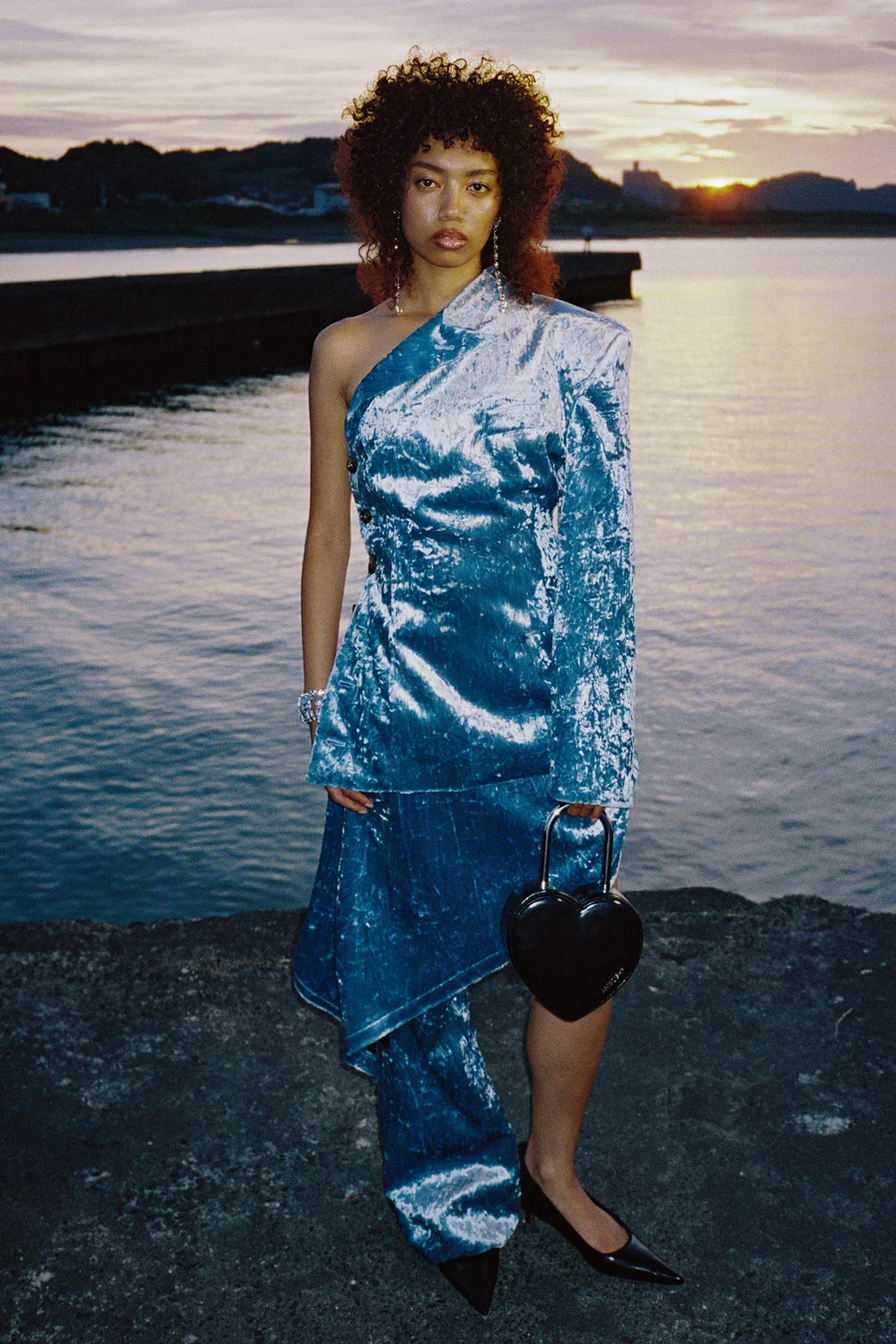
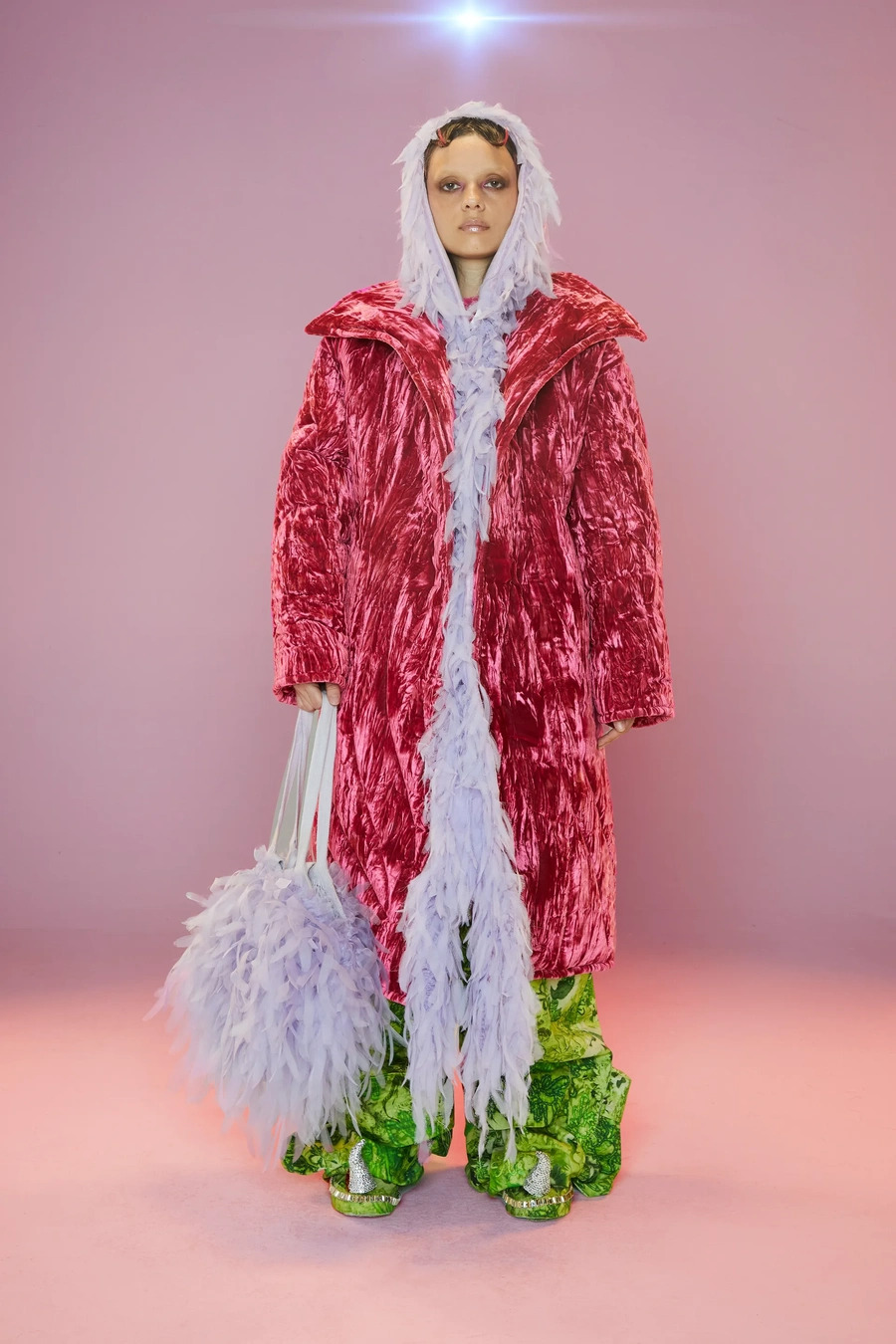
Crushed velvet gets its irregular appearance from manipulating the pile after weaving. Pressure, twisting or mechanical treatment pushes the fibres in different directions, creating scattered patches of light and shadow. Plain velvet usually changes tone in broad areas according to the nap, while crushed velvet already looks mottled and rippled even when laid completely flat.
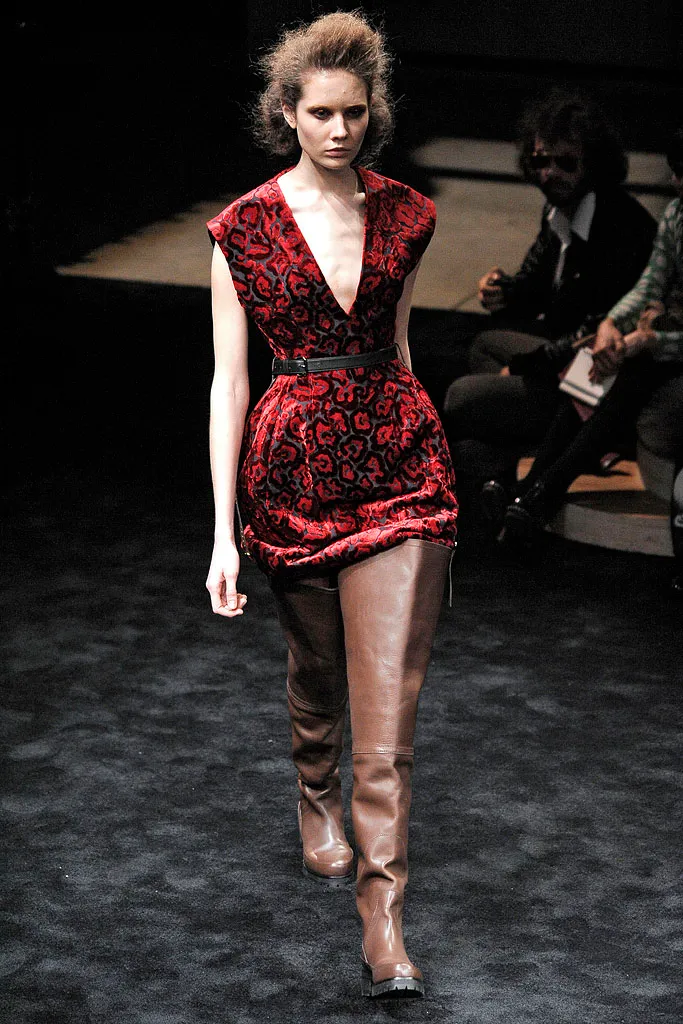
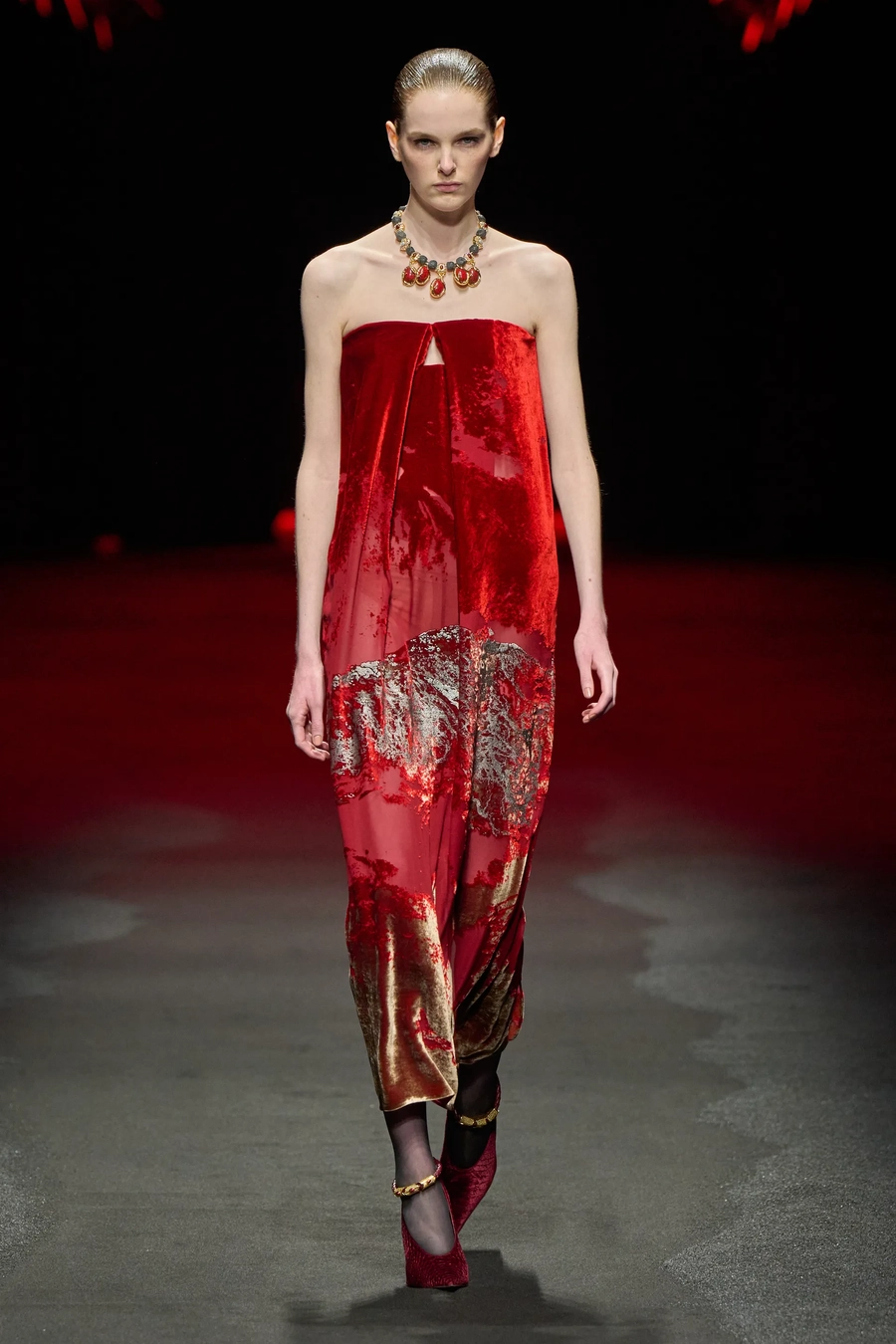
Devoré, also called burn-out velvet, uses chemistry as part of the design. A velvet made from a suitable fibre blend is treated so selected areas of pile dissolve away, exposing a translucent ground beneath. It is particularly common in dresses, blouses and evening pieces where the contrast between plush pile and transparency becomes part of the garment.
Velvet is often described simply as soft, yet its hand changes considerably once fibre, pile height and density come into play. A dense pile creates that familiar cushioned surface, while finer yarns can make the fabric feel almost fluid beneath the fingers.
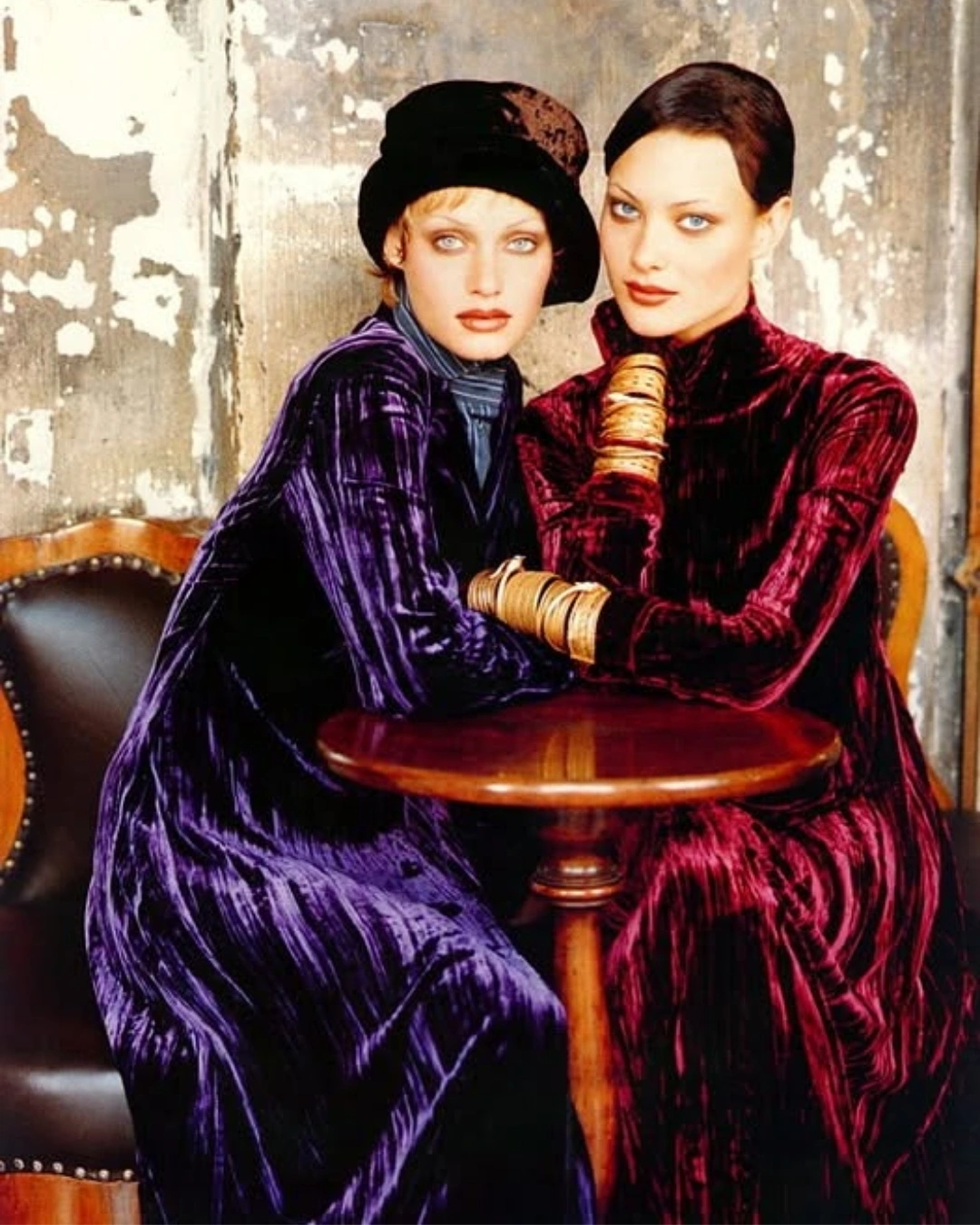
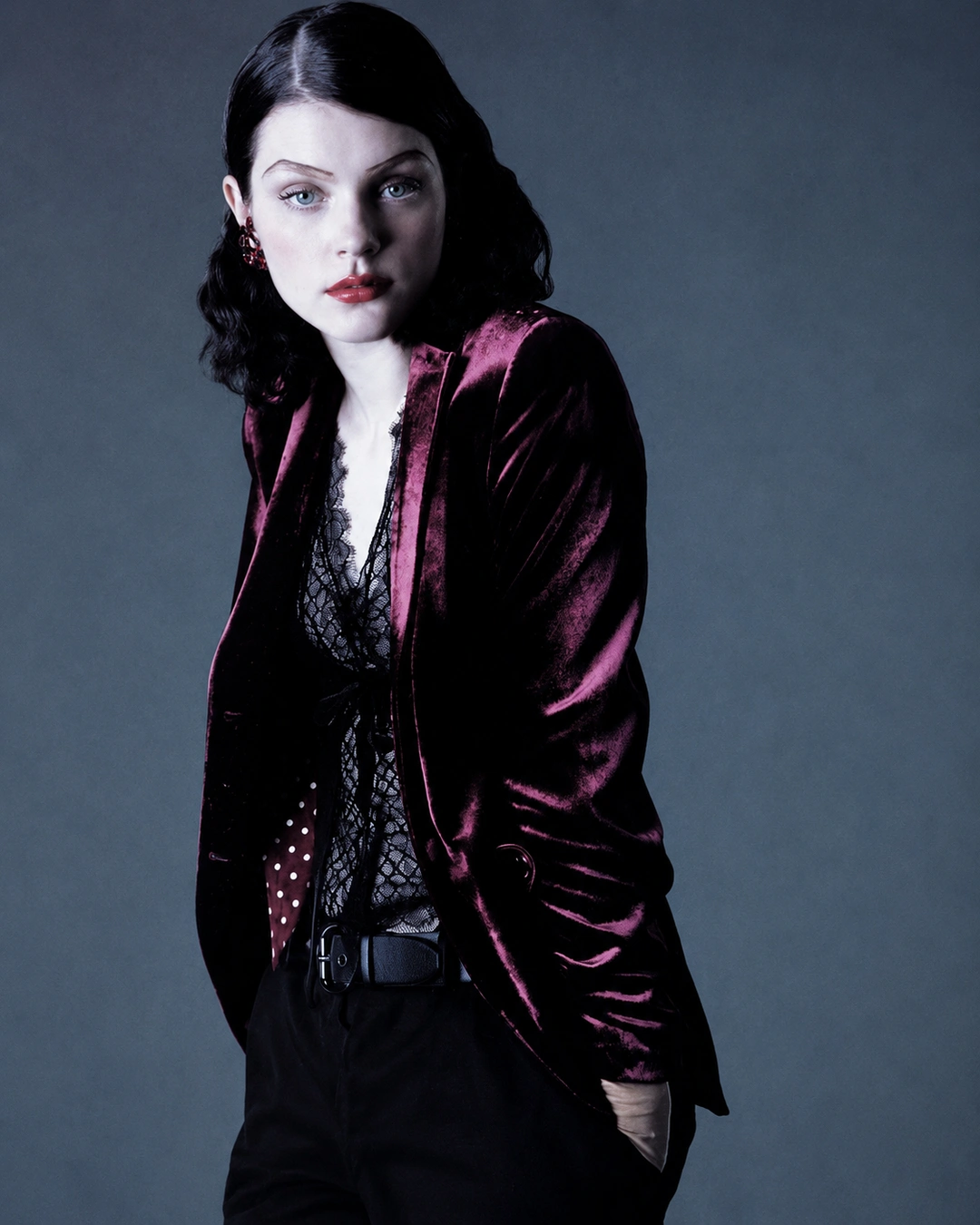
The most distinctive sensation comes from the nap. Stroke velvet fabric in one direction and the surface feels smooth and settled. Move against it and the fibres resist slightly, standing more upright beneath the hand. That directional quality is also what creates the darker and lighter streaks visible after touching the cloth.
Weight varies just as widely. Silk and viscose velvet can fall with a heavy, liquid drape, allowing folds to collapse closely around the body. Cotton velvet tends to feel firmer and more substantial, while stretch velvet follows the body with far more elasticity. Pile density can make two fabrics made from the same fibre behave very differently.
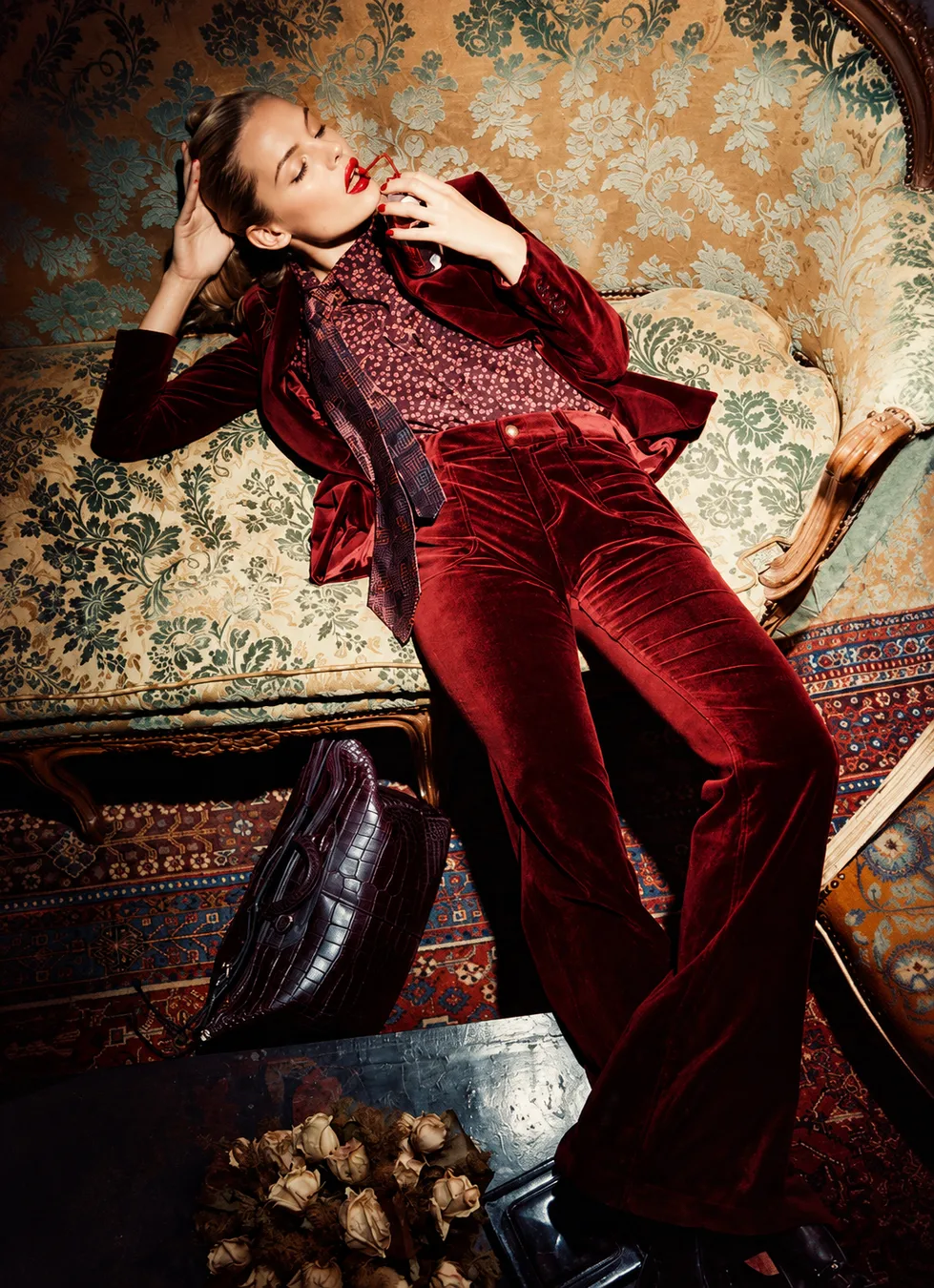
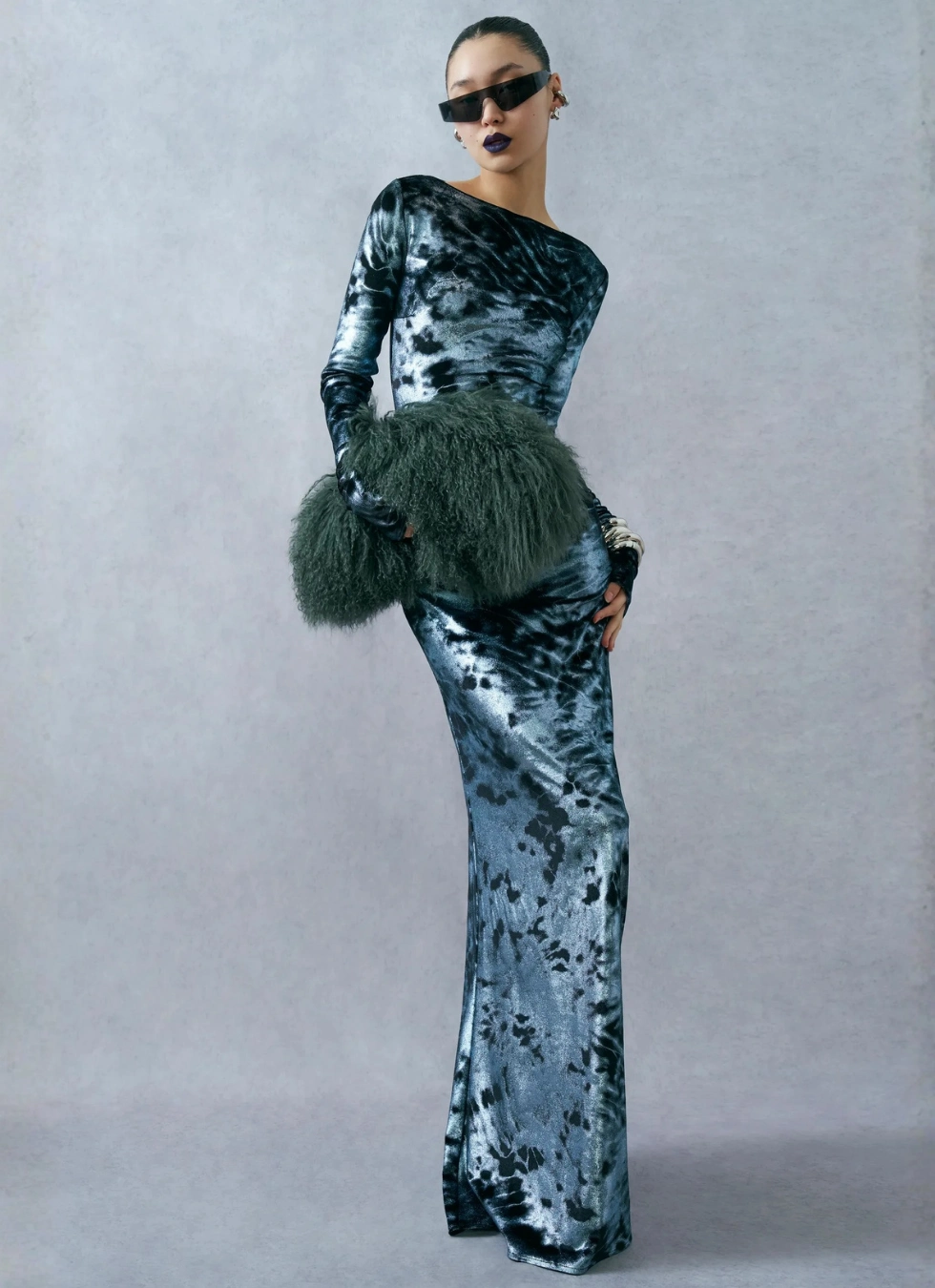
Velvet also has a noticeable sense of warmth. The raised fibres trap a thin layer of air close to the surface, giving the fabric more insulation than many flat weaves of similar weight. This is one reason velvet appears so naturally in autumn and winter wardrobes, especially in jackets, dresses and eveningwear.
Its surface remains sensitive to pressure. Folding, sitting or pressing can temporarily flatten the pile and leave visible marks where the fibres have changed direction. In velvet, touch becomes part of the appearance almost immediately.
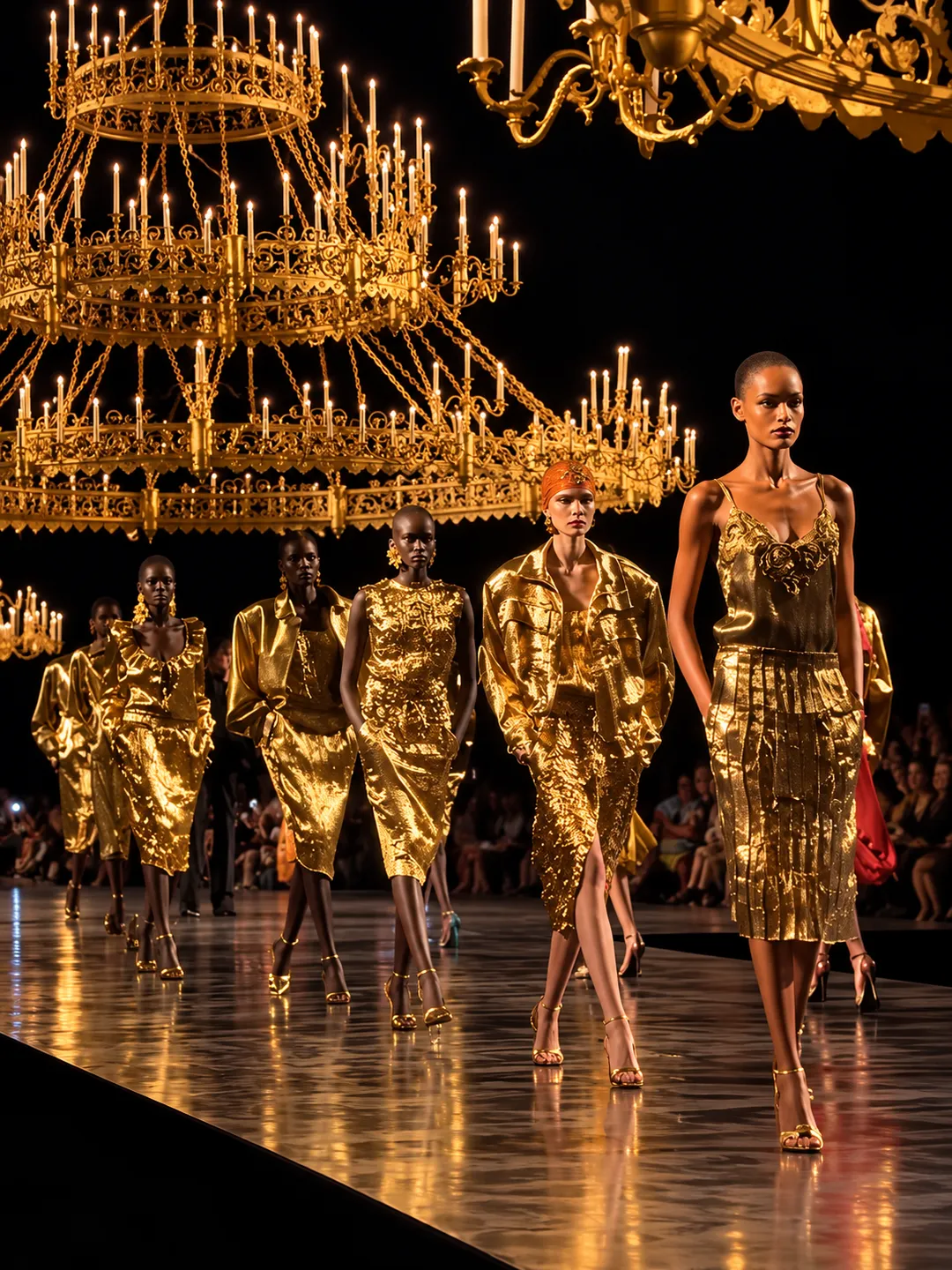
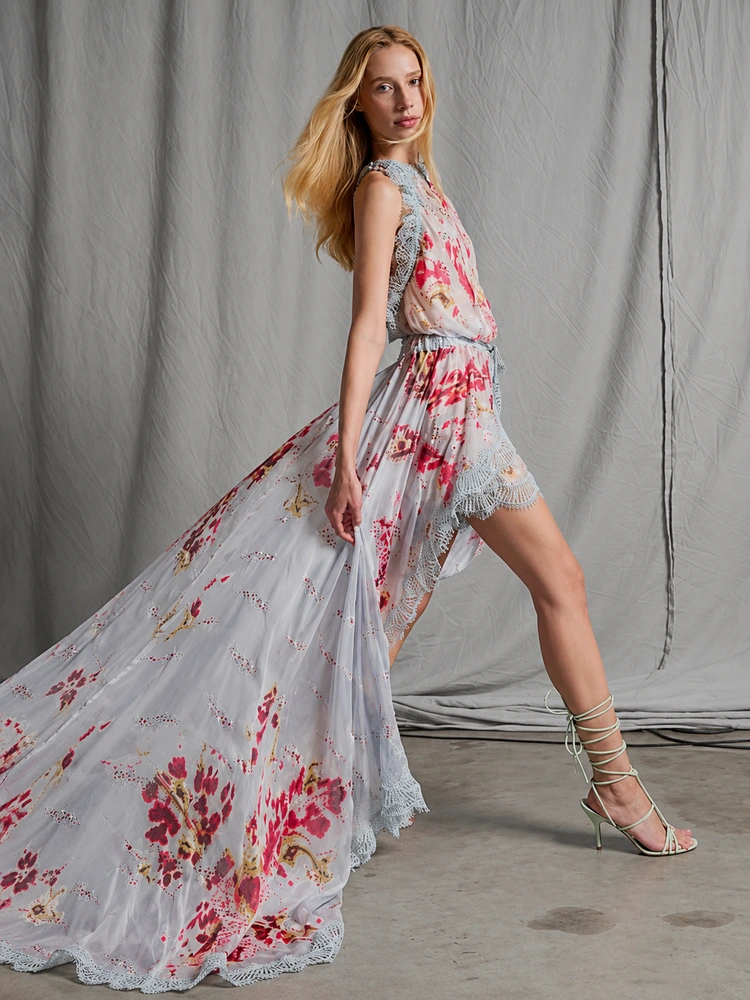
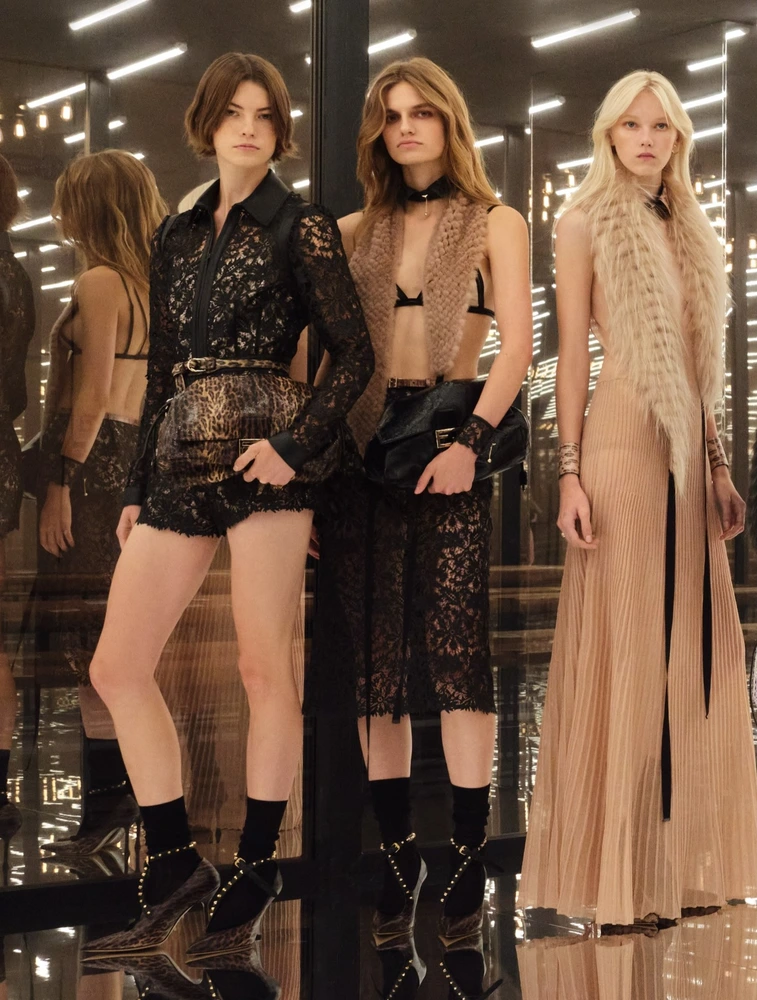
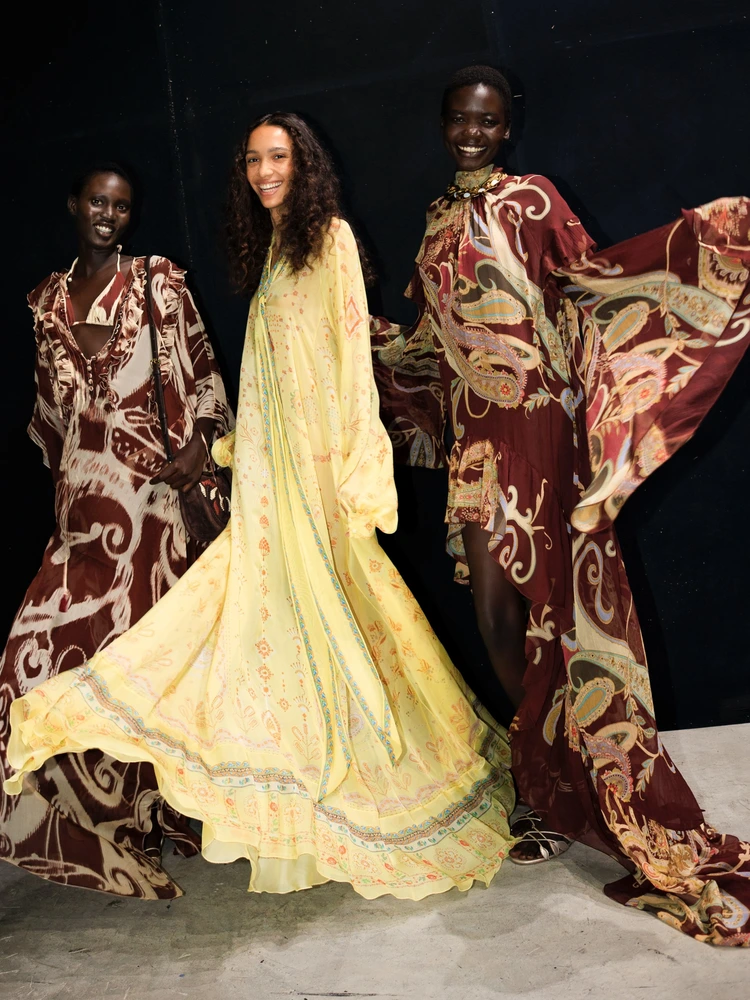
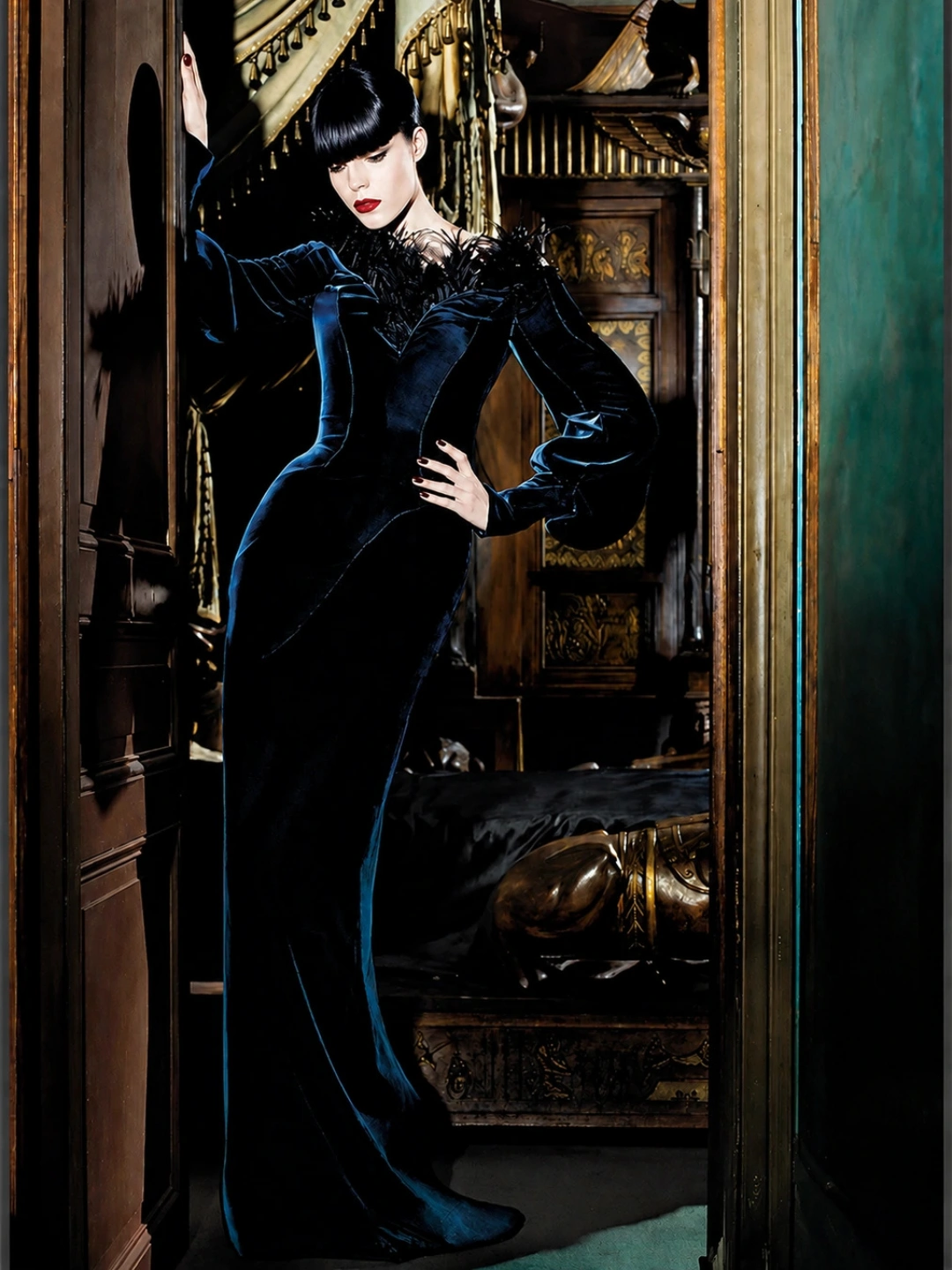
Velvet becomes most expressive when a garment gives the pile enough room to react to movement. Long dresses, bias-cut gowns and fluid skirts let light travel continuously across folds, so one colour can break into several visible shades as the wearer walks.
Tailoring brings out a different side of velvet fabric. On blazers, tuxedo jackets or sharply cut trousers, the softness of the pile sits against precise seams and structured shoulders. The fabric adds visual weight without requiring elaborate surface decoration, which is why even a relatively simple velvet suit can carry a strong evening presence.
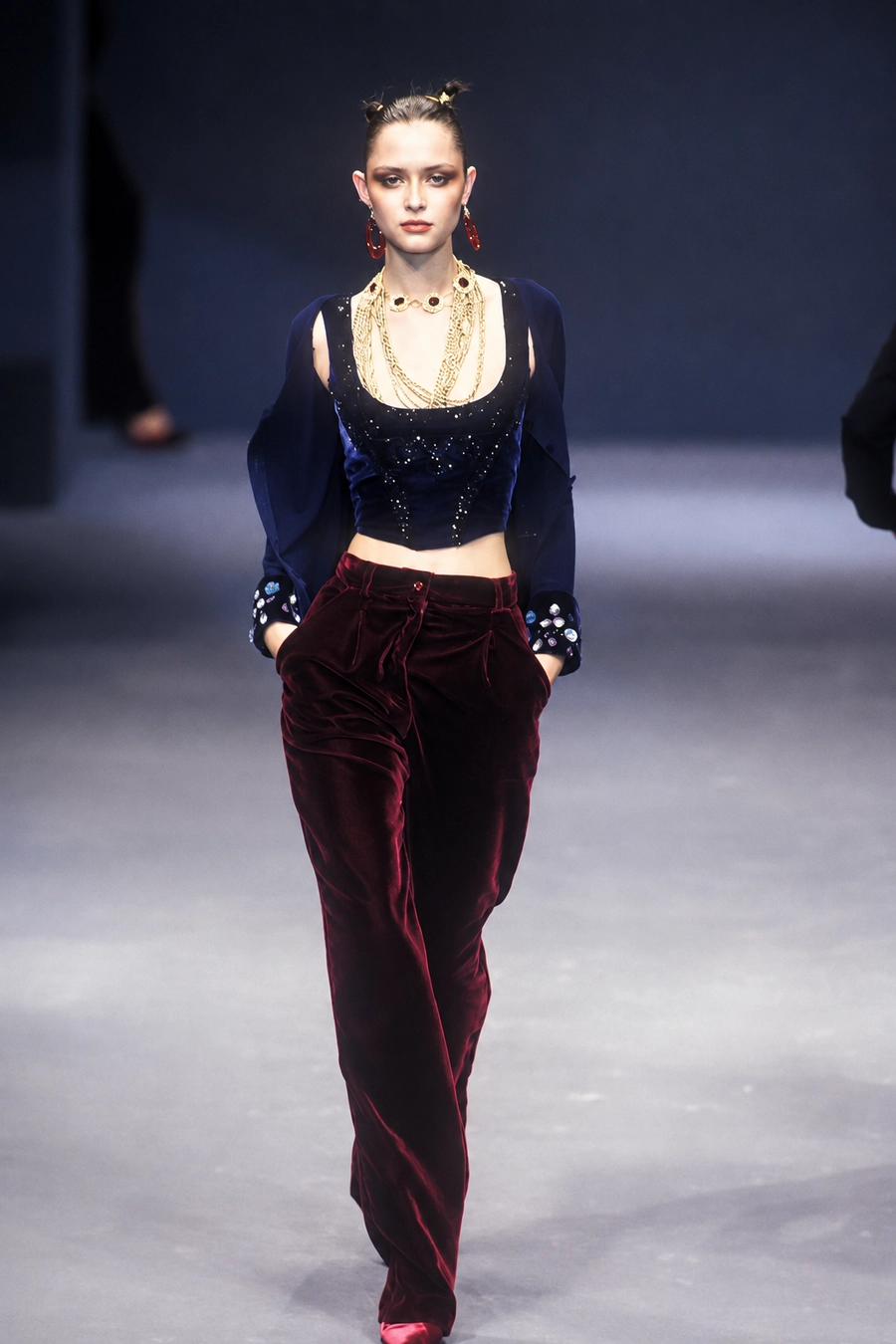
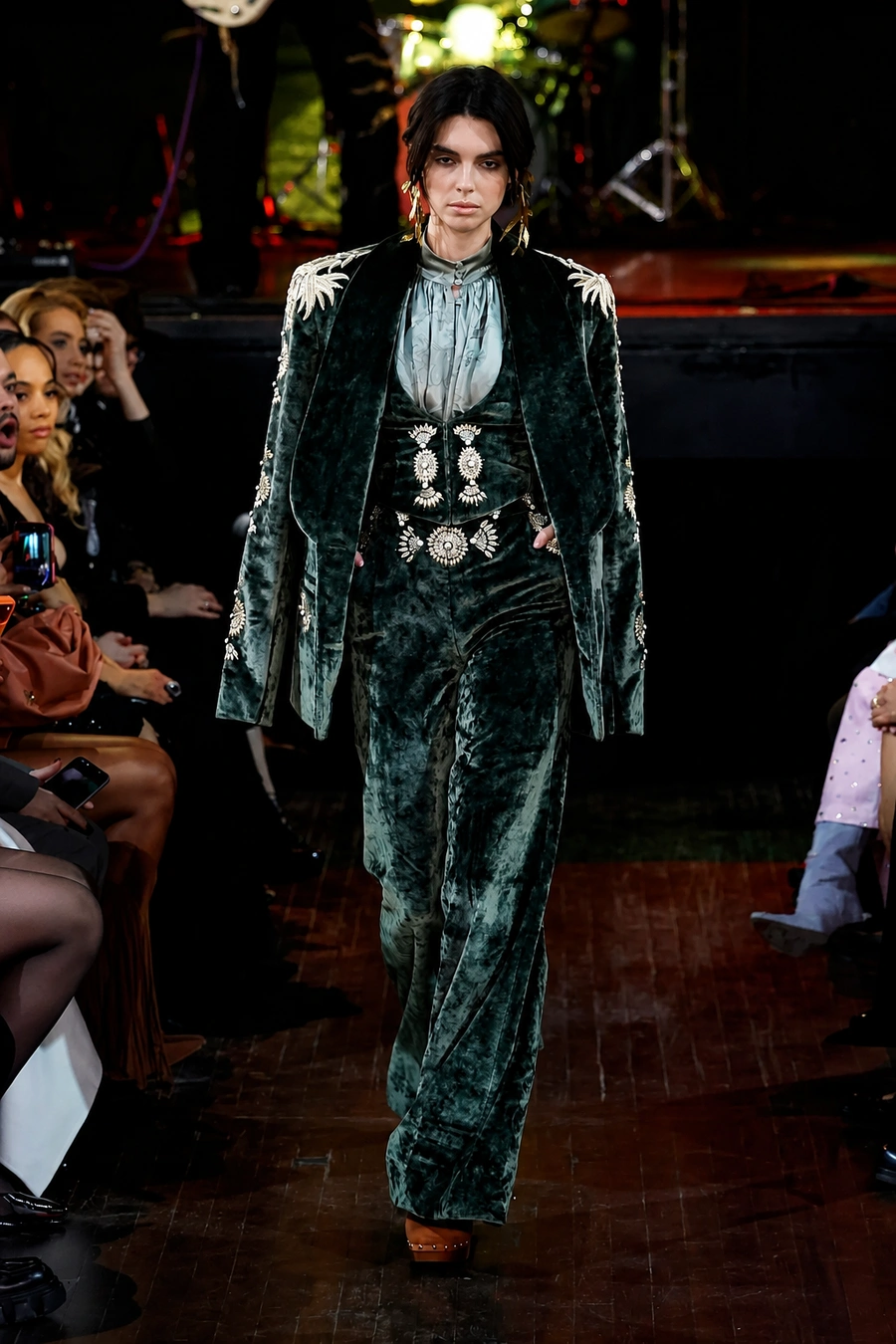
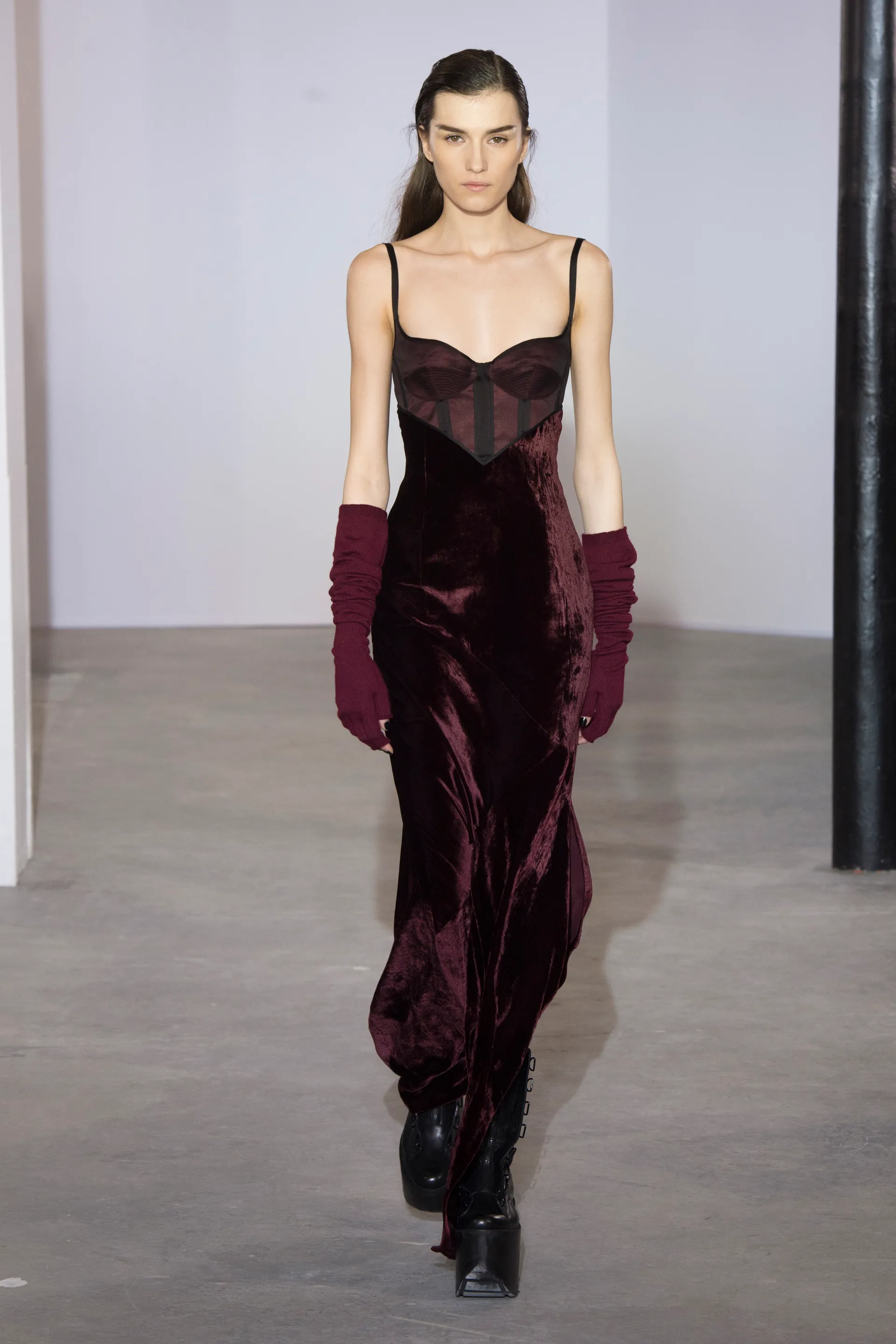
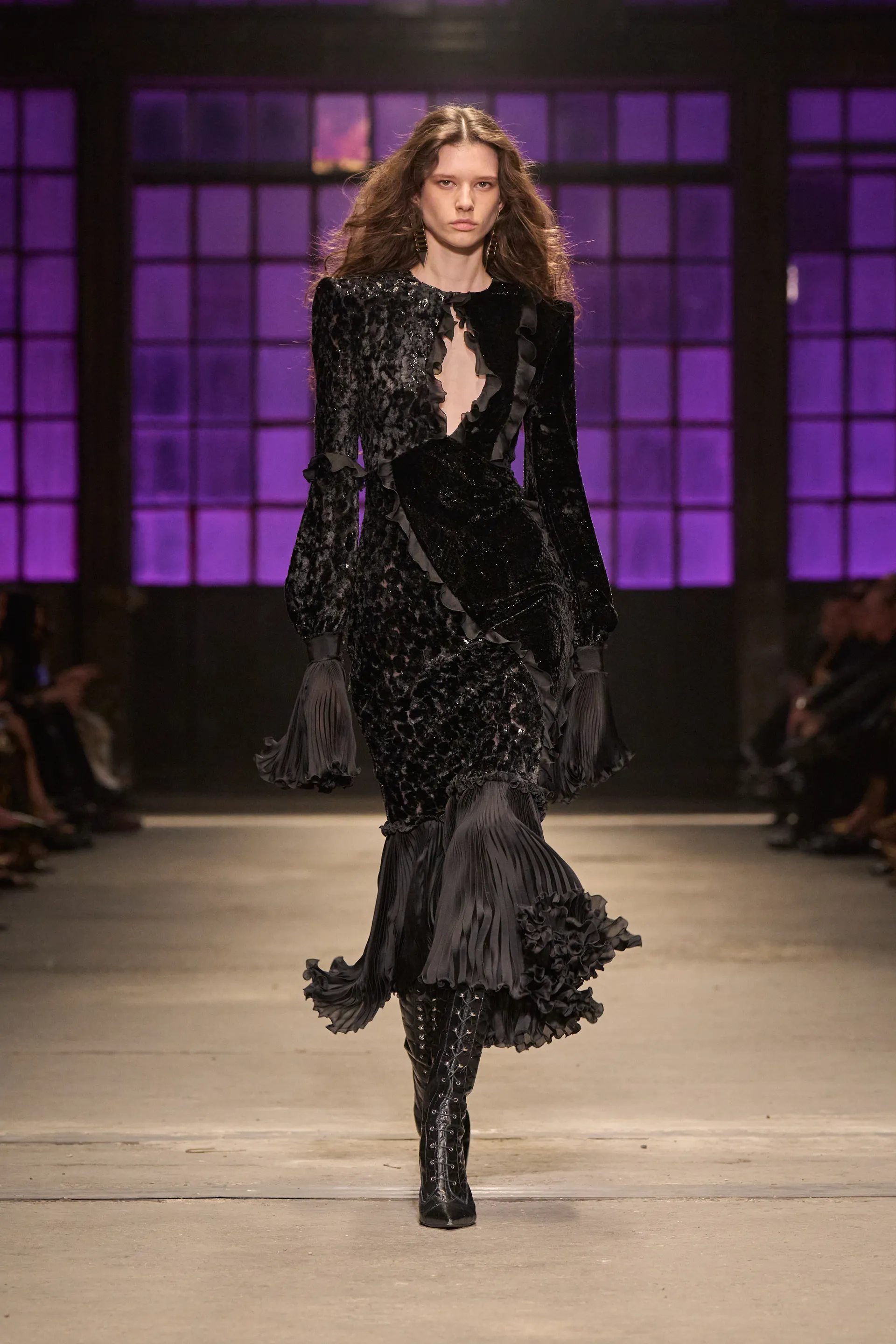
Designers also use velvet to concentrate texture into smaller areas. Collars, lapels, ribbons, shoes, handbags and hair accessories can introduce the richness of pile without covering an entire look. In these cases, velvet works almost like an accent material, catching light differently from wool, satin, leather or chiffon around it.
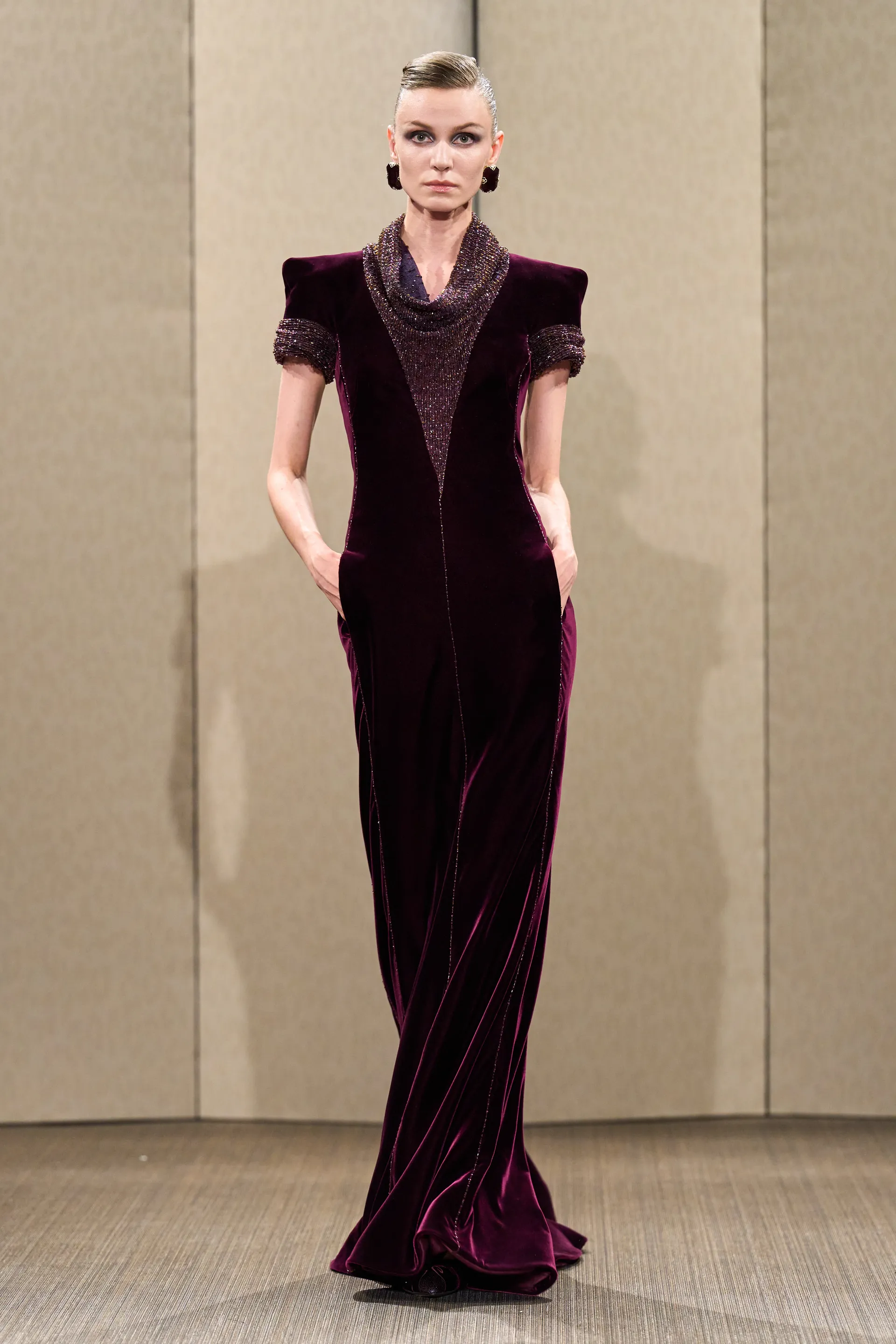
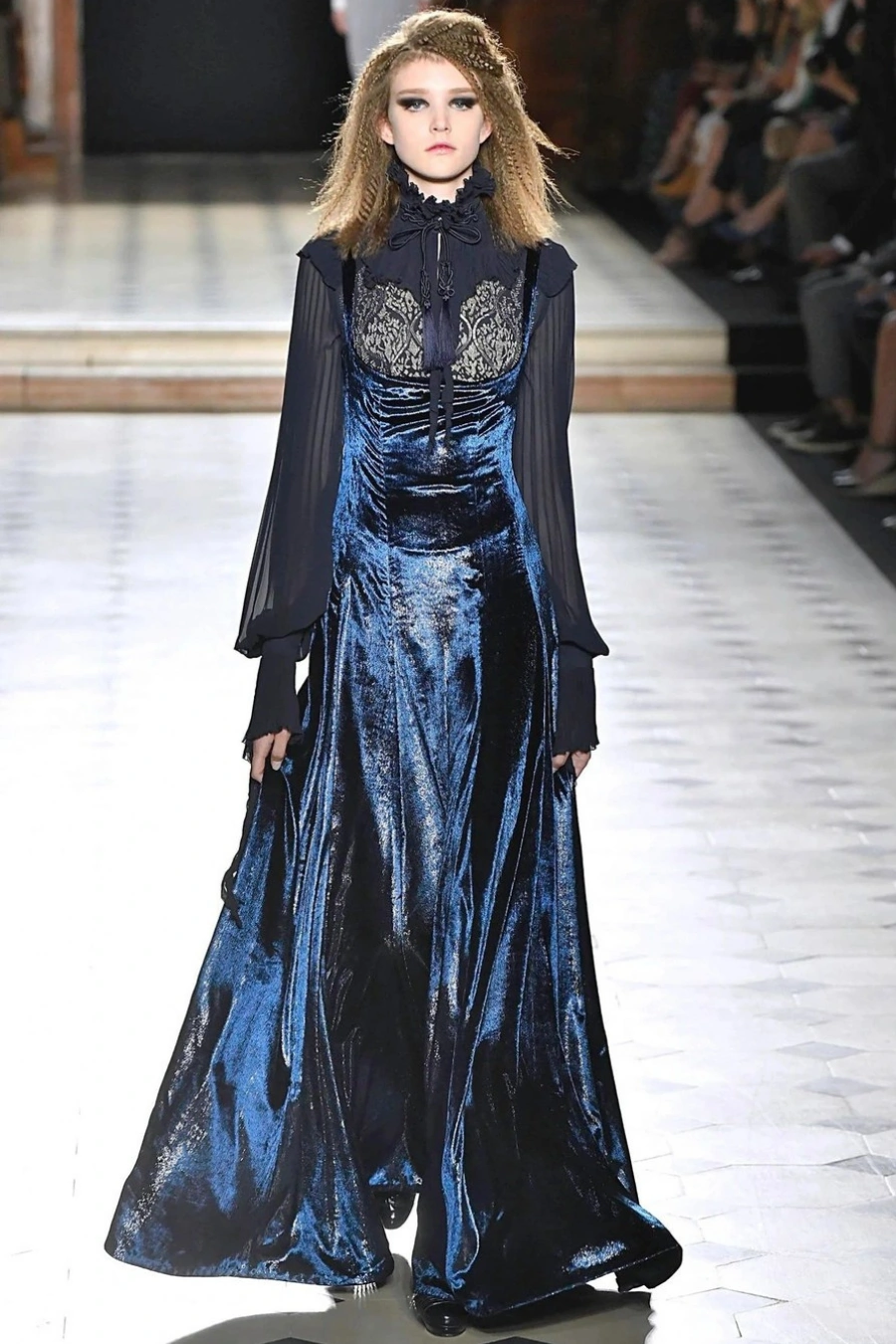
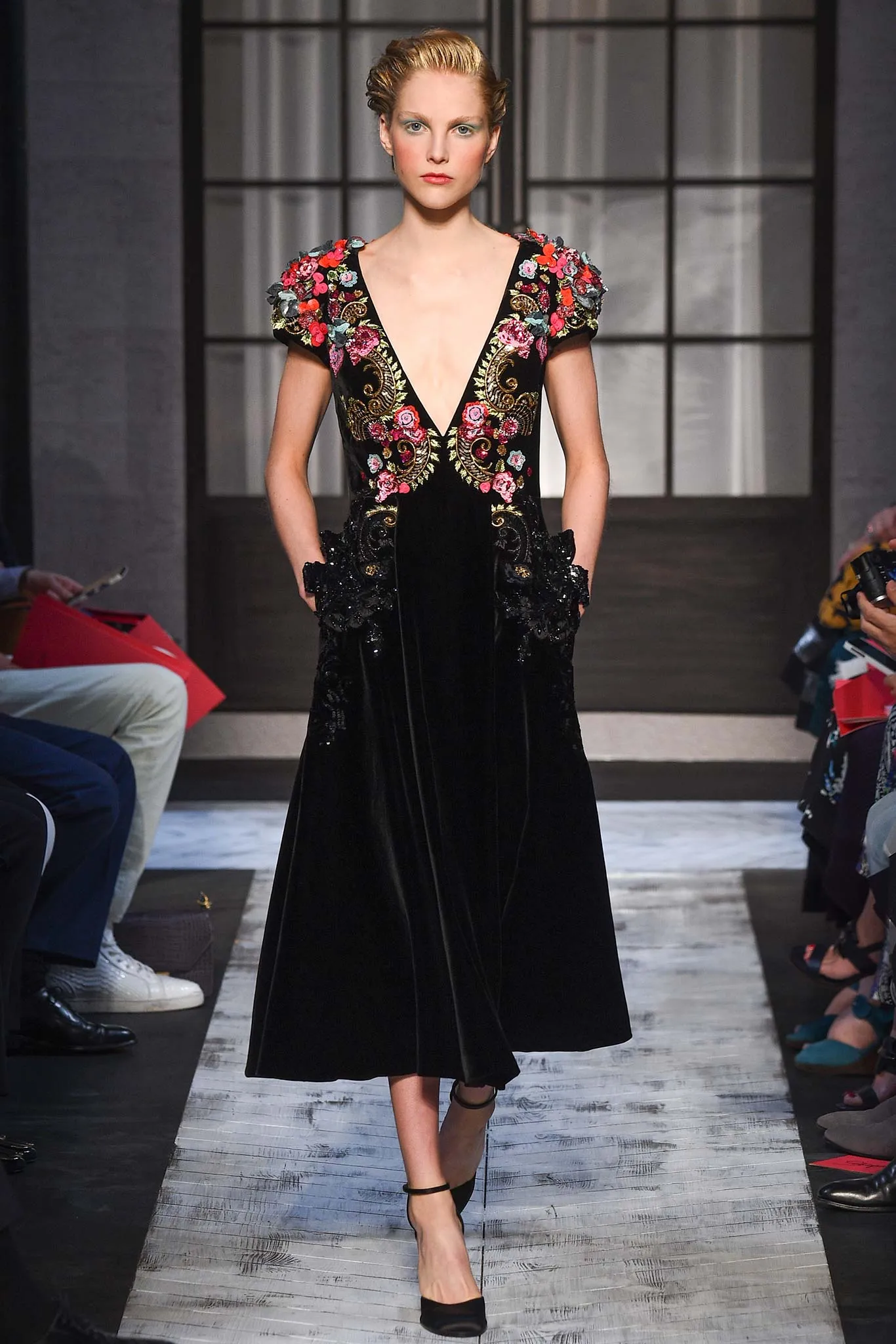

Patterned versions open another route. Devoré velvet creates sheer sections through removed piles, while crushed velvet scatters shine across an irregular surface. Embossed and ciselé techniques can build motifs directly into the textile itself. Each treatment changes how much of velvet’s identity comes from colour and how much comes from texture.
Its strongest association still sits with eveningwear and colder seasons, yet contemporary fashion often pulls velvet into less expected shapes. Mini dresses, relaxed trousers, corsetry, sporty separates and even footwear show how far the material can move once its historical formality is stripped away.
Velvet remembers pressure almost as easily as it remembers touch. The same pile that creates its depth can flatten under weight, trap marks from folds and lose its even nap when exposed to excessive heat or friction.
Care therefore starts with fibre content. Silk and viscose velvet usually require more delicate handling, while cotton and synthetic versions may tolerate gentler home cleaning depending on their construction and care label. Structured garments also bring linings, interfacings and tailoring into the equation, so the outer fabric alone rarely determines the safest cleaning method.

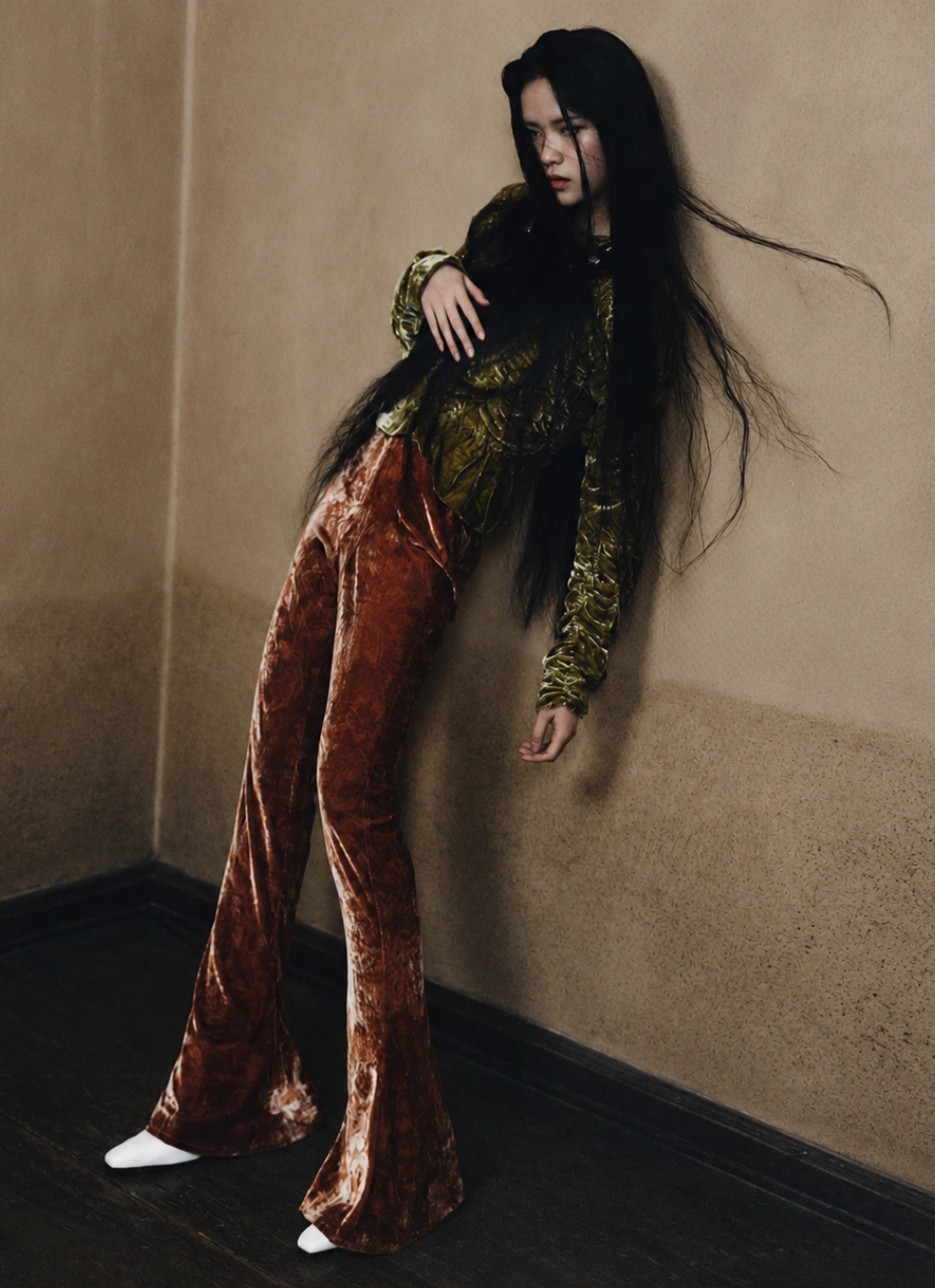
Direct ironing is particularly risky for velvet fabric. Pressing a hot iron onto the face can crush the pile and leave shiny flattened patches that are difficult to restore. Steam is generally more suitable for relaxing creases, ideally applied without pressing the pile against a hard surface.
Storage can alter the surface too. Heavy folds may leave persistent lines, while tightly packed wardrobes can press neighbouring garments into the nap. Hanging velvet pieces with enough room around them helps the fibres retain their shape, especially for dresses, jackets and trousers.
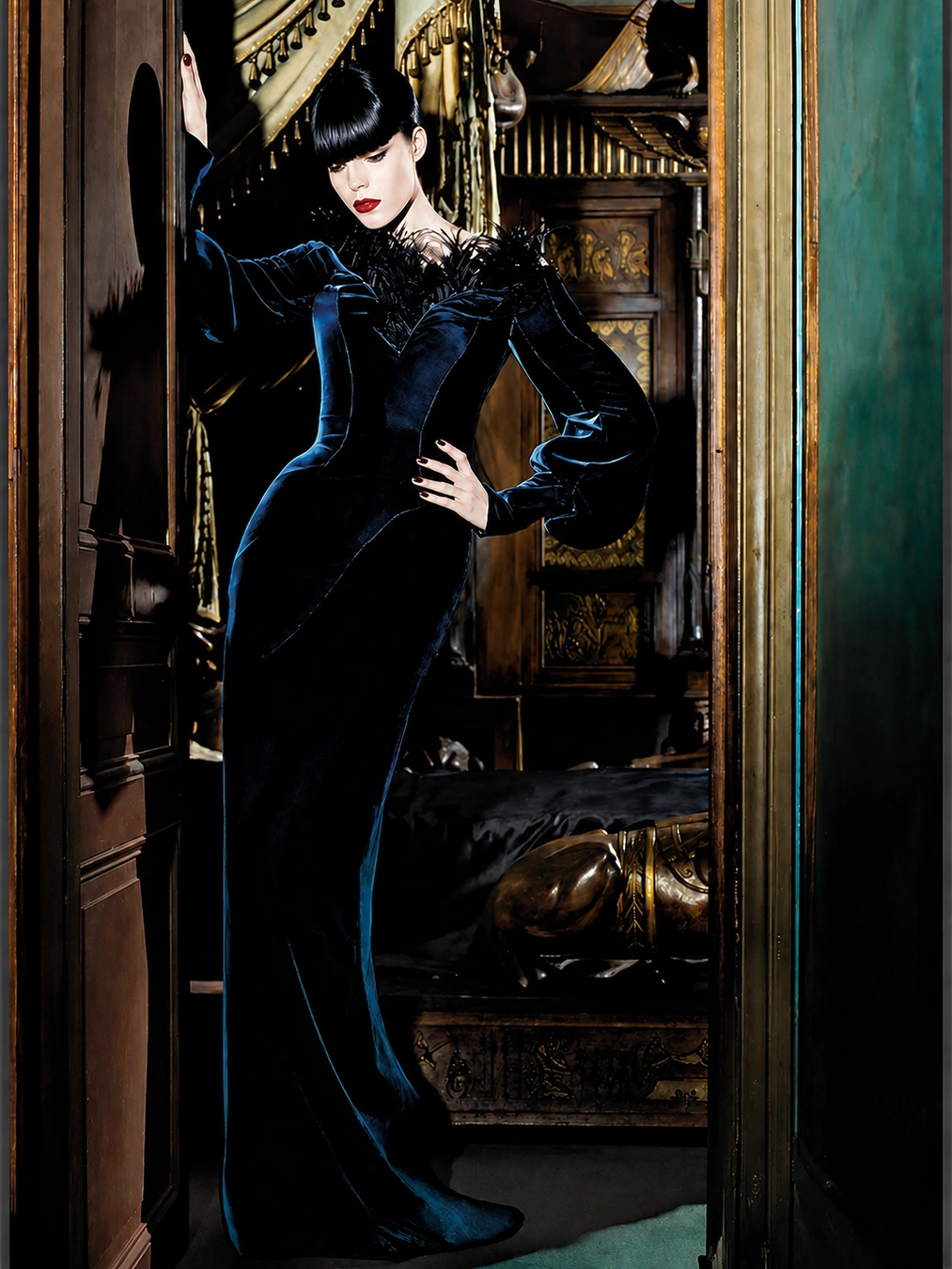
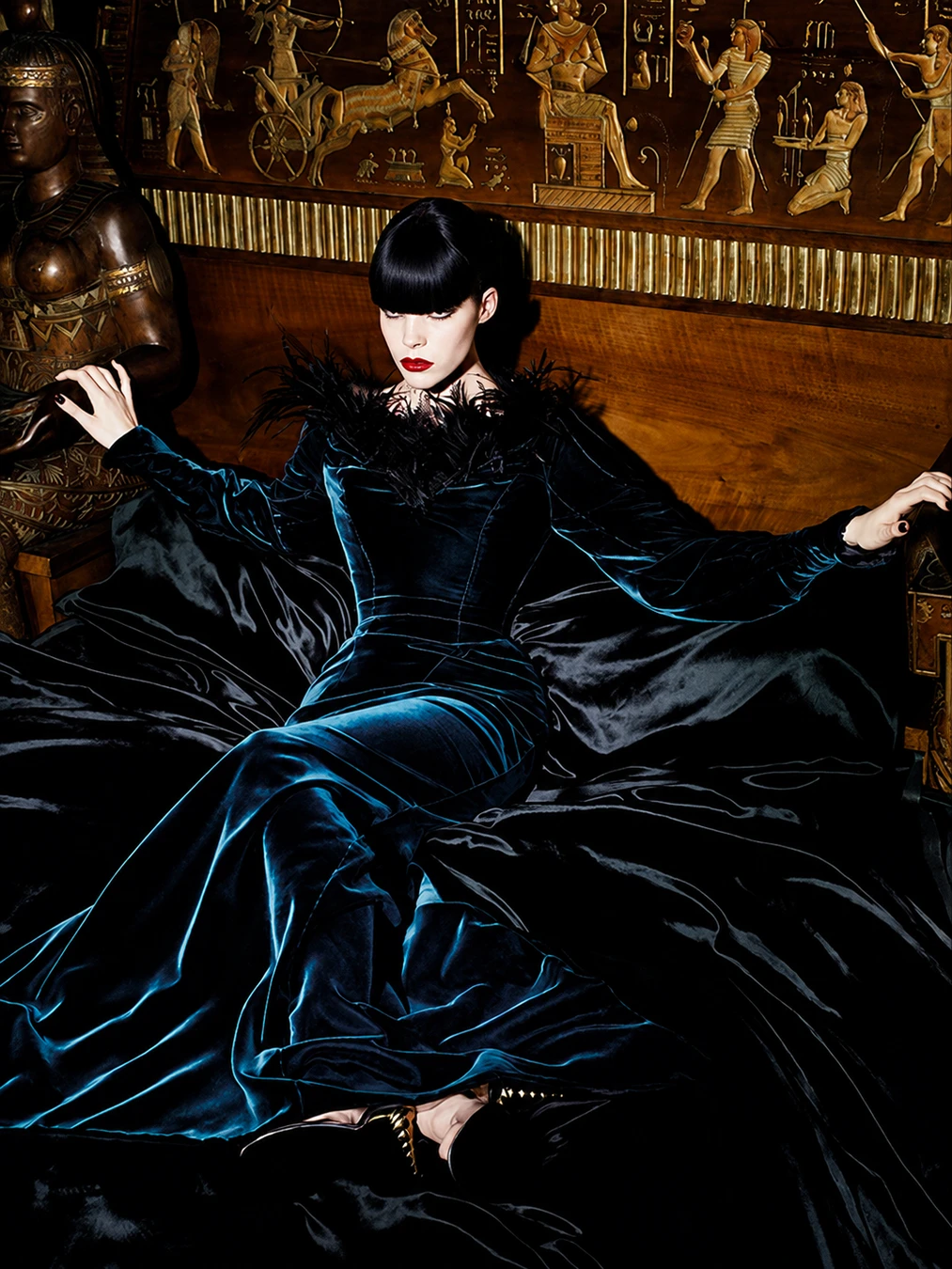
When the pile becomes slightly disturbed, gentle steaming followed by careful brushing in the direction of the nap can help lift it again. The essential rule is simple: velvet responds beautifully to movement, yet sustained pressure is another story.
Few fabrics make light and touch so visible. A fold deepens the colour, a hand changes the nap, and movement keeps redrawing the surface.
That responsiveness has kept velvet fabric relevant far beyond its historical associations with court dress and eveningwear. Fibres, finishes and silhouettes continue to change, while the raised pile still gives velvet its unmistakable depth.
Advertisement