At Shanghai Fashion Week SS27, even a twisted tie came with a story. But could clothes make their case on their own?

Shanghai Fashion Week SS27: Every Stitch Has a Story
At Shanghai Fashion Week SS27, even a twisted tie came with a story. But could clothes make their case on their own?
November 17, 2026


Traditional Chinese instruments accompanied the opening runway beside Taiping Lake on October 8. Against the familiar skyline of Shanghai's Xintiandi district, silk garments carried fragments of a history that had travelled across continents centuries before the existence of fashion weeks. HEMU had been selected to inaugurate the Spring/Summer 2027 season, setting an appropriately contemplative tone for the days ahead.
Under the official theme Renewed Radiance, Shanghai Fashion Week SS27 returned with an expansive calendar running through October 16. The opening two days at Xintiandi brought together established independent labels and emerging creative voices, each working within a fashion industry increasingly attentive to cultural identity, commercial viability and the demands of contemporary life. The relationship between clothing and the individual wearing it would soon become an unexpectedly contentious subject.
HEMU Followed the Threads of the Silk Road
The Hexi Corridor and the Buddhist grottoes of Dunhuang supplied the historical foundations for Silk Road, HEMU's opening collection. Founder and creative director Yang Fengrui revisited the ancient textile traditions that developed through centuries of cultural exchange, translating their decorative richness into contemporary silhouettes.
Working with Jin Wen, a nationally recognised inheritor of Nanjing yunjin craftsmanship, HEMU incorporated yunjin and Song brocades, kesi silk tapestry, embroidered textiles and traditional dyeing techniques. The collection drew upon surviving fabric fragments, with their intricate compositions providing the basis for its ornamental language.

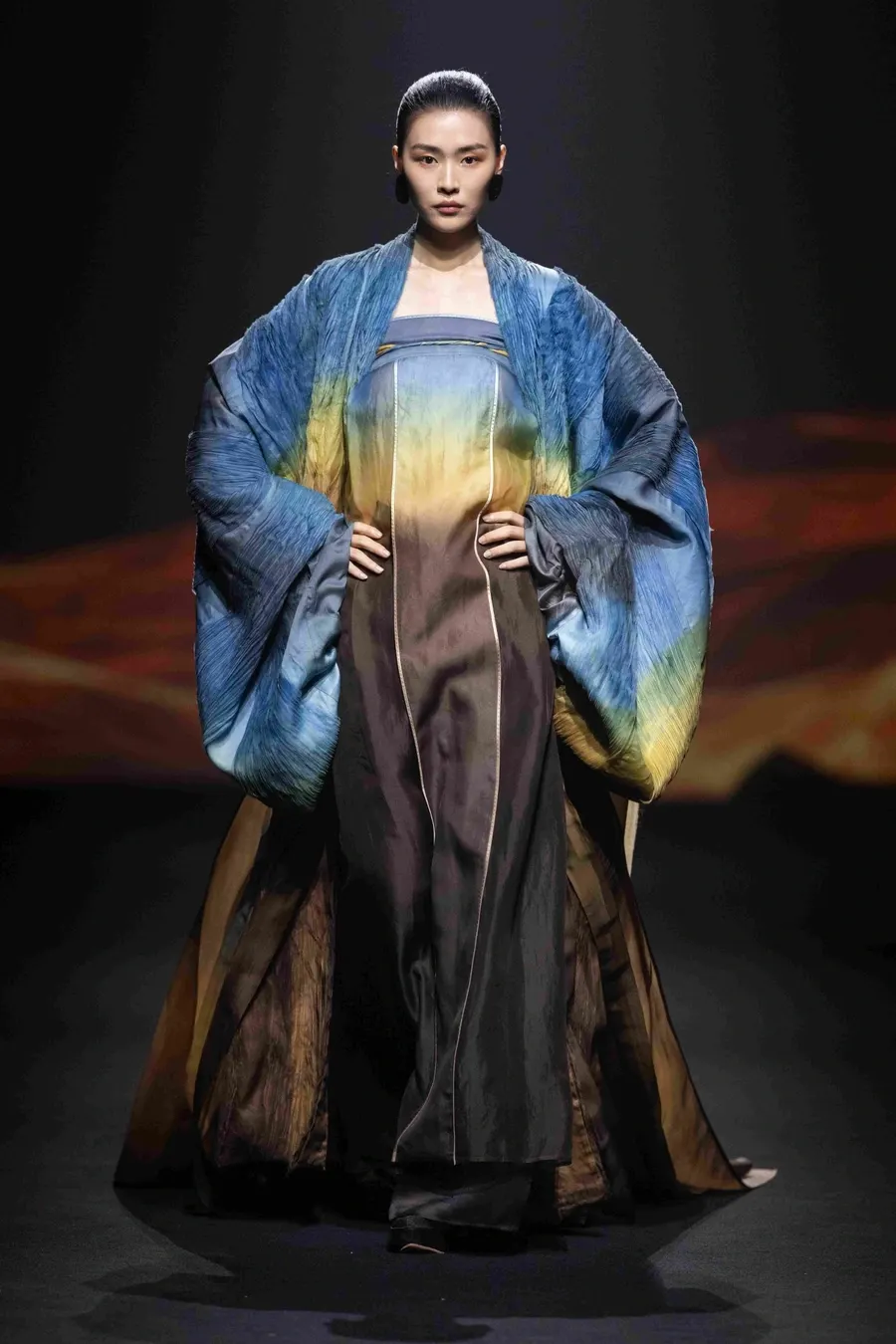
Earthy ochres and muted blues appeared across generously draped garments, while pleating and layered constructions introduced movement into substantial textile surfaces. Elaborate embroidery occupied the centre of several designs, giving the fabrics an almost architectural presence.
Yet the relationship between material and silhouette proved especially revealing. The most convincing garments allowed traditional craftsmanship to determine their construction, giving historical techniques an active role in contemporary design. Elsewhere, the decorative richness threatened to overwhelm the clothing beneath it, turning the body into a supporting structure for the textile.
HEMU's fifteenth appearance at Shanghai Fashion Week arrived with considerable technical ambition. Its engagement with Chinese heritage was unmistakable, although the collection also demonstrated how demanding that inheritance could become. The challenge lies in allowing the techniques themselves to evolve, giving the garments an identity that extends beyond the historical significance of their materials.
XIAOLI Took a Fish Around the World
A small fish became the unlikely protagonist of XIAOLI's Beyond Blue, presented the following afternoon. Designer Li Xiao imagined its journey through oceans, islands and coral reefs, allowing the creatures and landscapes encountered along the way to inform an unusually romantic Spring/Summer wardrobe.
The collection translated marine textures into lace jacquards and delicate cutwork. Shells, coral formations and schools of fish emerged through patterned surfaces, while layered lace allowed light to pass through the garments. Warm sand orange, sunset lavender and ocean blue established a gentle palette, accompanied by airy dresses and decorative bows.

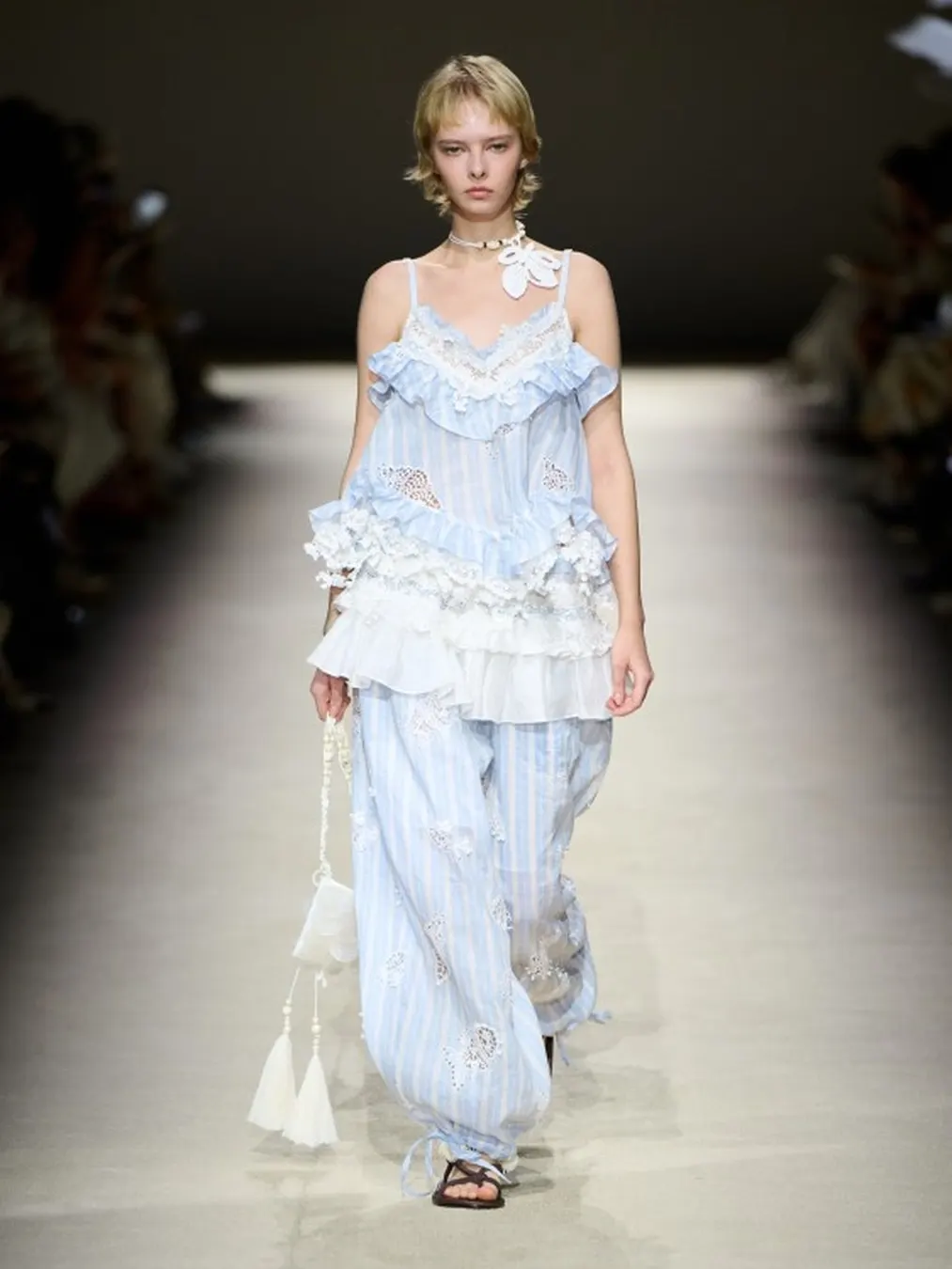
The oceanic references aligned naturally with XIAOLI's established expertise in experimental knitwear. Material manipulation has remained integral to the brand's identity, making the collection's emphasis on intricate surfaces particularly appropriate. The collaboration with footwear brand Daphne extended its romantic language into shoes featuring ribbons and lace.
Yet the journey carried an environmental warning. Plastic pollution and discarded materials entered the narrative as the fish encountered the consequences of human activity beneath the water.
The collection's delicate aesthetic made that message an intriguing proposition, although its visual language remained firmly attached to the beauty of the natural world. XIAOLI demonstrated considerable sensitivity towards textile detail, but the environmental argument would gain strength from a deeper material investigation. The story of ocean conservation becomes compelling when its implications reach the processes through which the clothes themselves are made.
STAFFONLY Had No Duty to Be Cute
An ordinary job interview took an uncomfortable turn when STAFFONLY presented No Duty to Be Cute. The Shanghai-based label transformed its runway into a casting exercise, drawing parallels between the treatment of animals in captivity and the expectations imposed upon people entering the modern workplace.
Models initially appeared as individual candidates, each carrying a distinctive physical manner. As the presentation progressed, their behaviour became increasingly regulated, culminating in a sequence of occupational uniforms and numbered white squares. The performance examined the gradual transformation of personal identity into something suitable for institutional approval.
The clothing gave that process a particularly effective visual language. Shirts featured displaced plackets, ties twisted away from their conventional positions and sleeves accumulated repeated creases. Malleable metal wires preserved the appearance of fabric that had been manipulated or compressed, while laser cutting and folded constructions exposed unexpected layers.


These disturbances carried a clear relationship to STAFFONLY's longstanding fascination with organisational structures. The label has frequently approached contemporary dressing through the absurdities of office culture, examining the peculiar rules that govern professional appearance.
Here, the manipulation of familiar garments was especially persuasive. A distorted shirt communicated the collection's argument through its construction, allowing the viewer to recognise the conventions being challenged. The theatrical staging reinforced that message, although the clothes retained enough independence to sustain the idea beyond the performance.
The collection's most unsettling suggestion concerned the ordinary compromises people make to appear employable. Every corrected collar and carefully arranged tie became part of a broader negotiation between individuality and acceptance.
PANTTERFLY Framed a Different Kind of Garden
Through the carefully positioned windows of a traditional Chinese garden, the surrounding landscape becomes a succession of compositions. A wall interrupts the view, a doorway introduces another perspective and an architectural opening determines which elements of nature the visitor encounters.
Designer Pan Rong approached this principle of framed scenery for PANTTERFLY's SS27 presentation, translating the spatial organisation of Chinese gardens into contemporary womenswear vocabulary.
Geometric openings and structured cutouts established relationships between the garment and the body beneath it. Layered fabrics introduced depth, while carefully arranged proportions evoked the architectural boundaries through which the original landscapes were viewed.
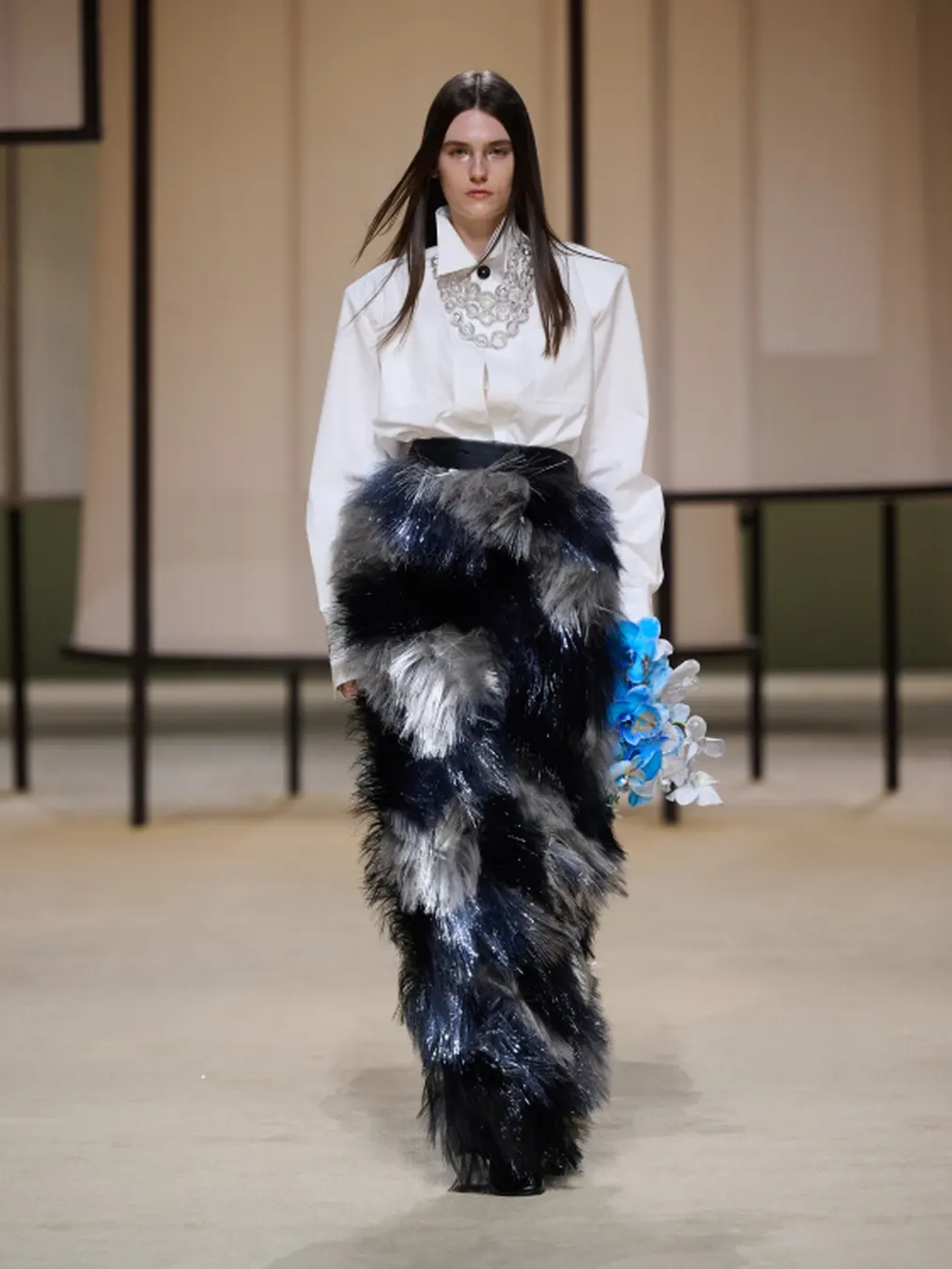
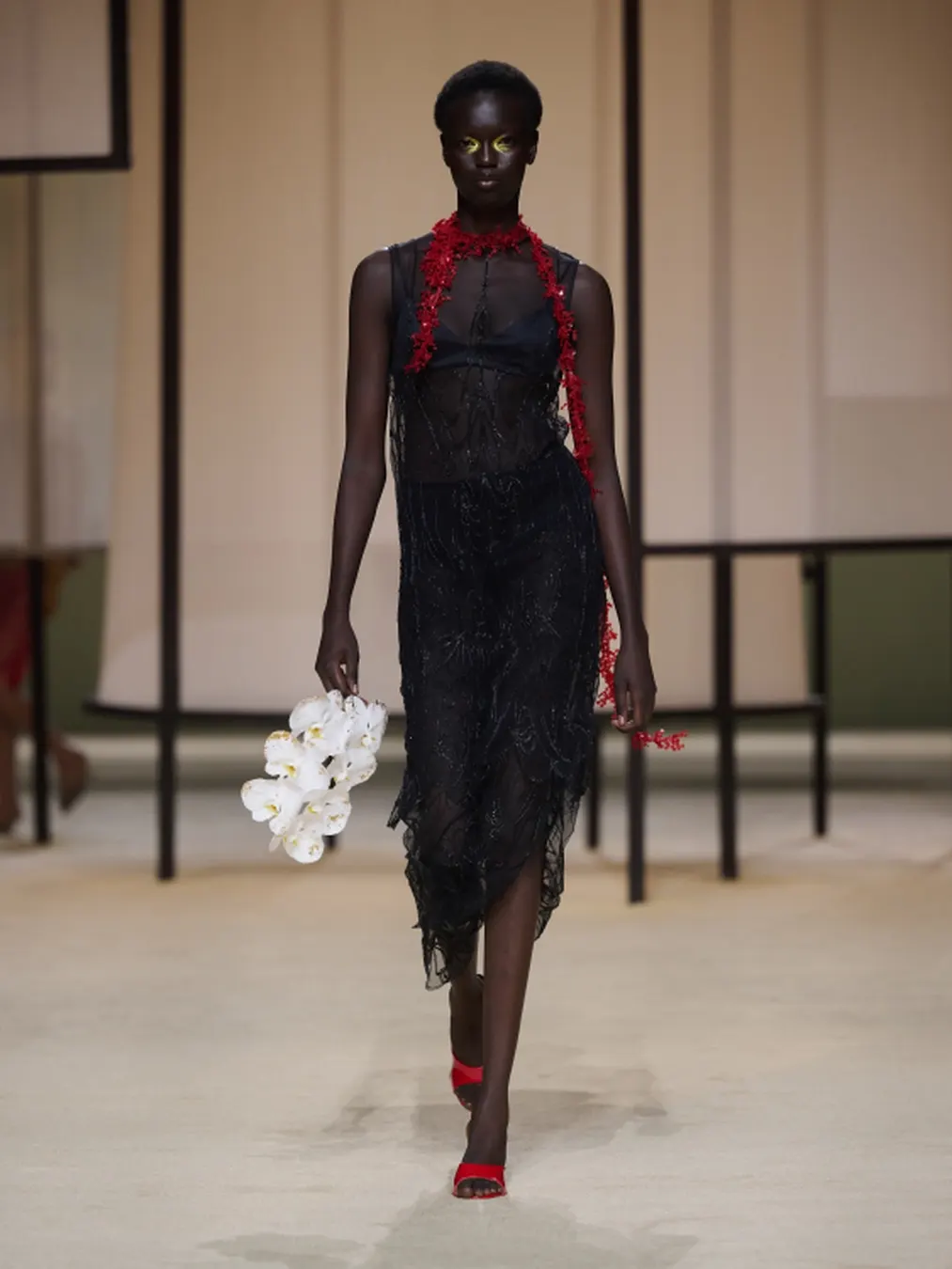

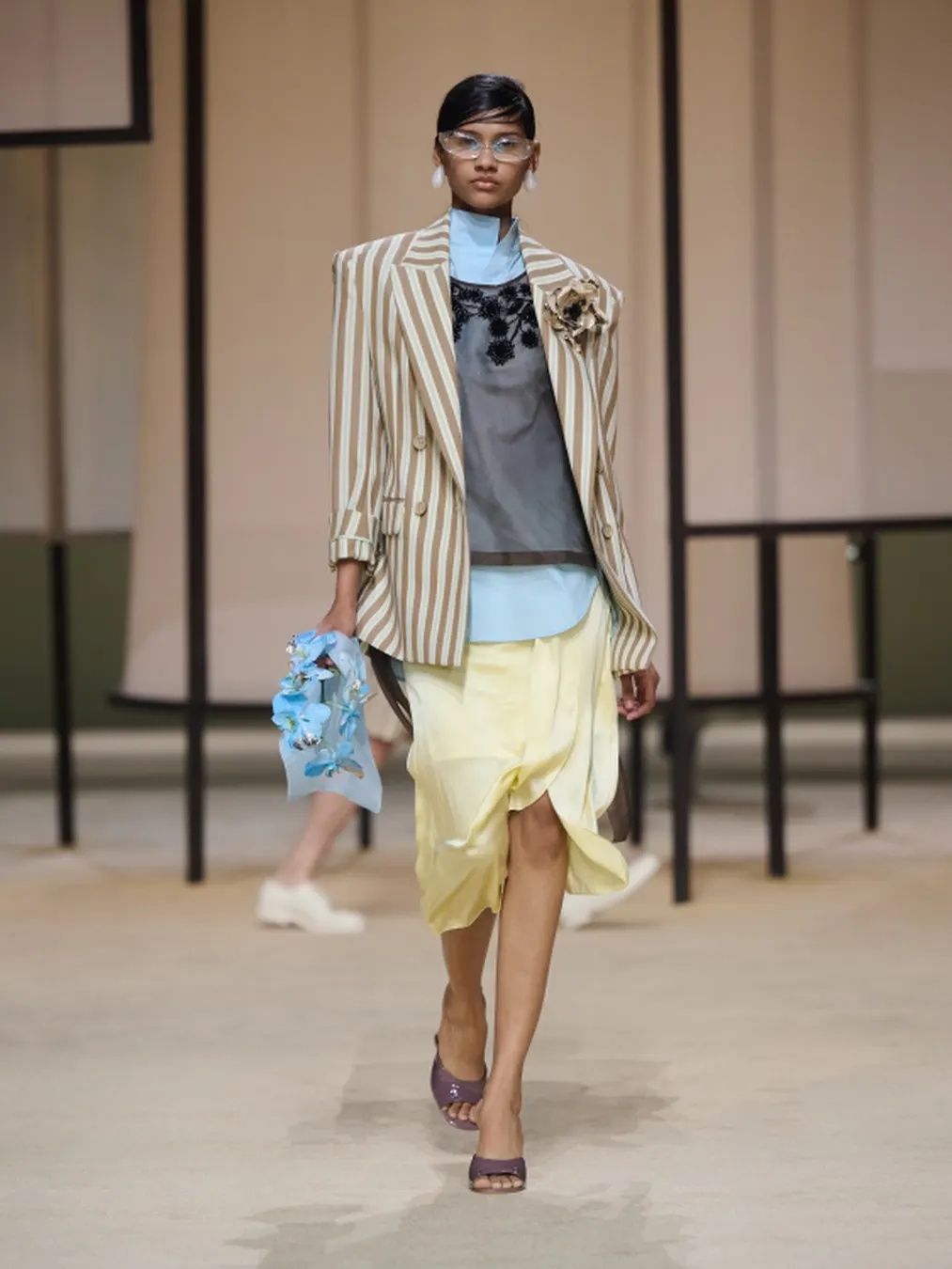
The collection extended PANTTERFLY's established interest in combining refined construction with decorative craftsmanship. Its visual language retained a sense of elegance, while the architectural references encouraged experimentation with the placement of surfaces and the exposure of the body.
The garden provided an interesting foundation because its beauty emerges through control of perspective. Every opening directs attention towards a particular view, creating a relationship between what is revealed and what remains concealed.
Applied to clothing, the principle offered possibilities for reconsidering how a garment frames the human figure. PANTTERFLY's interpretation was particularly effective where the architectural reference influenced the actual construction. Decorative motifs could communicate inspiration, but the manipulation of space gave the concept its relevance to fashion.
J RUREMINDS Turned Another Page
The final presentation at Xintiandi on October 9 brought the audience into a world of folded paper and accumulating memories. J RUREMINDS drew upon the structure of books and the passage of time, translating their visual qualities into a collection concerned with the evolution of personal identity.
Pages, folds and overlapping surfaces informed the garments' construction. Relaxed silhouettes gave the body room to move, while layered fabrics created a sense of depth. The familiar rigidity associated with paper gradually acquired the softness necessary for clothing.
The approach continued the brand's exploration of deconstruction and contemporary tailoring. J RUREMINDS has long treated garments as practical companions, with its design philosophy emphasising confidence through the interaction between structure and wearability.


Here, the paper references offered a restrained foundation for that investigation. A fold introduces a change in direction while preserving the continuity of the original surface. When translated into clothing, this principle can influence the placement of seams, the movement of panels and the relationship between volume and the body.
The collection's relaxed forms suggested an interest in confidence expressed through ease. Its conceptual foundation was familiar, although the translation into wearable proportions gave the garments a degree of accessibility.
Following an evening increasingly concerned with philosophical questions and the relationship between the individual and the surrounding world, J RUREMINDS provided a fitting conclusion. Its strongest proposition emerged from the suggestion that clothing acquires meaning gradually, through use and the experiences of its wearer.
Has Storytelling Gone Too Far at Shanghai Fashion Week SS27?
A folded shirt can communicate an entire philosophy of individuality. An embroidered surface can carry centuries of cultural history. Contemporary fashion has become extraordinarily skilled at giving garments intellectual significance, transforming even the smallest construction detail into evidence of a broader creative argument.
Yet the increasing sophistication of runway storytelling presents a peculiar challenge. Designers have become accustomed to explaining their collections through elaborate narratives, historical research and carefully constructed performances. These frameworks can enrich the clothing, although they also create expectations that the finished garments must fulfill.
Shanghai Fashion Week SS27 arrives at a moment when Chinese independent fashion has developed considerable confidence in its cultural and creative identity. The industry has moved well beyond the expectation that Chinese designers must rely upon recognisable national symbols to establish their relevance. Its emerging voices are engaging with contemporary society through increasingly personal and experimental approaches.
A compelling concept should provide the foundation for a collection, while the garments themselves must ultimately demonstrate the strength of the designer's thinking.
Runway audiences encounter clothing through carefully choreographed narratives, but consumers experience those garments through movement, repetition and the ordinary circumstances of daily life. The ideas must survive that transition.
Perhaps the next stage of Shanghai's creative development will be defined by designers who become comfortable allowing their clothes to speak without extensive explanation. The ambition to produce meaningful fashion is valuable, but meaning can also emerge from the precision of a silhouette, the intelligence of a construction technique or the unexpected pleasure of wearing something beautifully made.
A successful collection should reward the audience for knowing its story. It should remain compelling when that story is forgotten.
That may be the most demanding test for a generation of designers already fluent in the language of creative expression.