Watch a flower take shape without a brush in sight. Jacquard fabric lets colored threads unfold into sumptuous patterns, each detail woven into place.

Jacquard Fabric: When the Loom Begins to Bloom
Watch a flower take shape without a brush in sight. Jacquard fabric lets colored threads unfold into sumptuous patterns, each detail woven into place.
November 4, 2026


Jacquard fabric refers to a patterned textile produced using a specialized weaving mechanism that controls individual warp threads or selected groups of threads. Its defining characteristic is the integration of decorative patterns directly into the fabric's construction. Through carefully arranged yarns and weaving structures, manufacturers can produce intricate imagery, dimensional textures, and contrasting surface finishes.
The term originates from Joseph Marie Jacquard (1752–1834), a French inventor whose work revolutionized patterned textile production during the early nineteenth century. His development of a programmable weaving mechanism enabled manufacturers to reproduce complex designs through a system of punched cards.
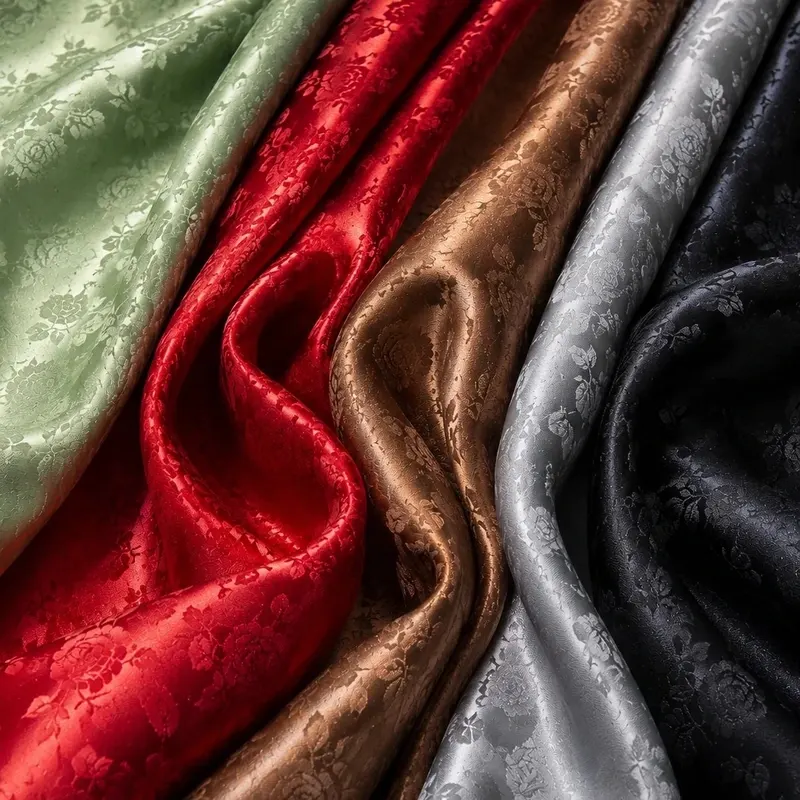
Jacquard fabric can incorporate numerous fibers, including silk, cotton, wool, viscose, polyester, and blended yarns. Consequently, its physical characteristics vary considerably according to the selected materials and weaving techniques.
The distinctive appearance of jacquard fabric frequently comes from subtle changes in texture and light reflection. Some designs feature pronounced raised motifs, while others reveal their patterns through delicate contrasts between matte and lustrous surfaces. This versatility has established jacquard as a sophisticated medium for textile design.
What Are the Main Characteristics of Jacquard Fabric?
The distinctive qualities of jacquard fabric originate from its combination of complex woven structures and diverse fiber compositions. These characteristics determine its appearance, performance, and suitability for different garments.
Intricate woven patterns represent its defining feature. Jacquard fabric can incorporate elaborate floral arrangements, geometric compositions, and ornamental imagery directly into its construction. The precision of the weaving mechanism enables detailed patterns with considerable variation in scale and complexity.
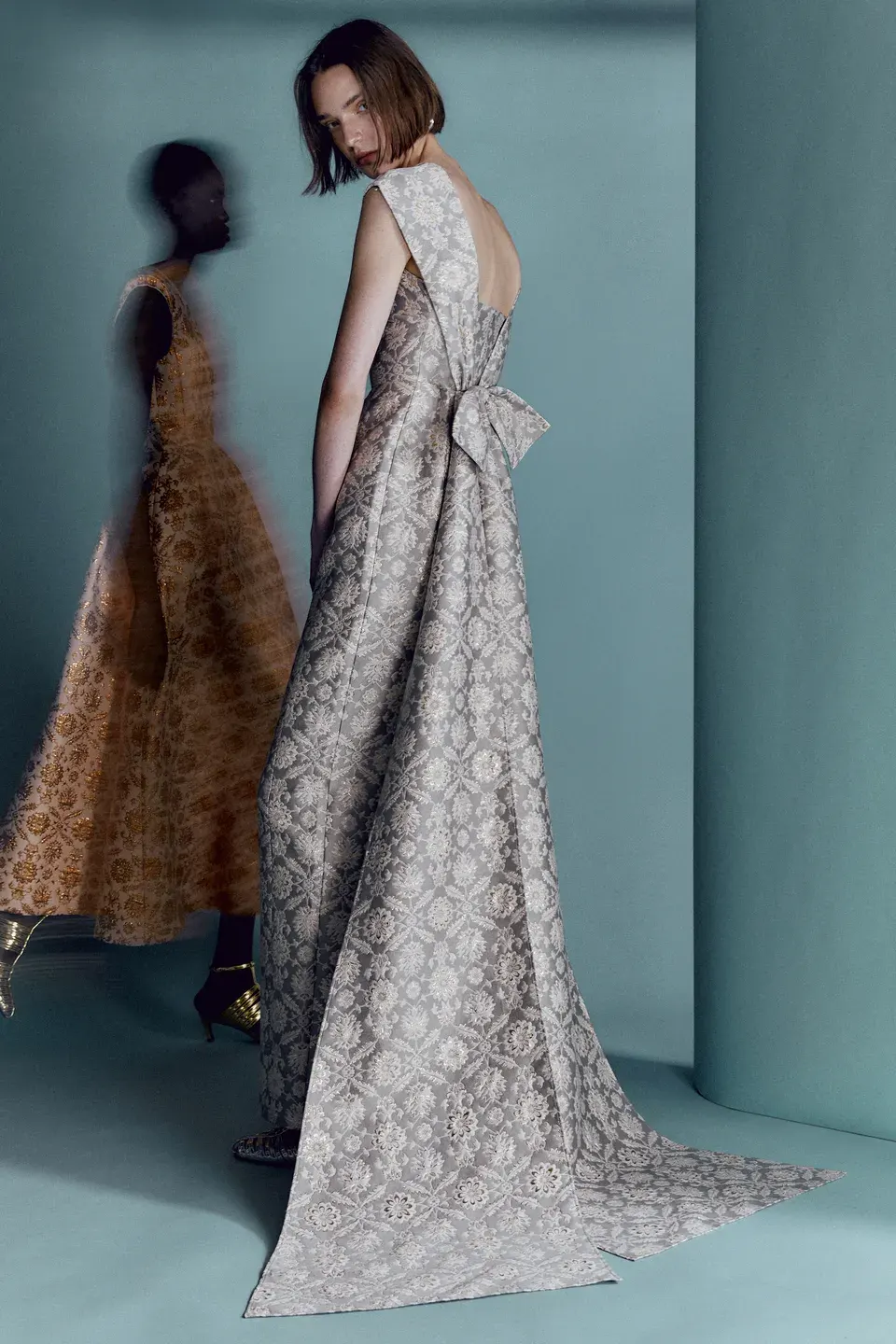
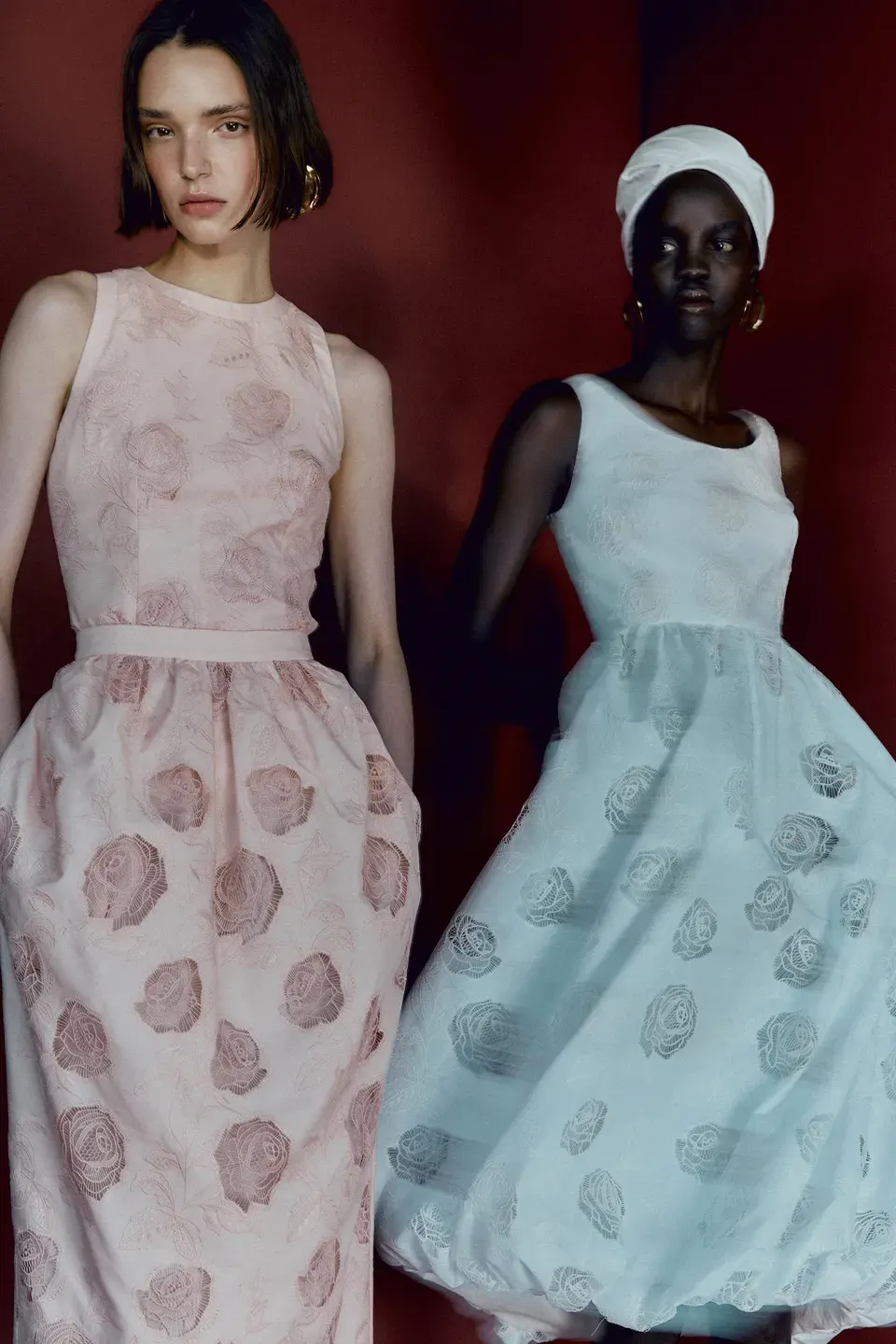
Surface texture provides another important characteristic. Different weaving structures create areas of varying thickness, relief, and density. Certain jacquards exhibit pronounced raised motifs, while others maintain smooth surfaces with subtle decorative effects.
The interaction between yarn structure and light also contributes to the fabric's visual appeal. Satin-based weaving arrangements, for example, can produce lustrous areas alongside relatively matte sections. This creates patterns that become increasingly visible as the viewing angle changes, particularly in silk jacquard fabric.
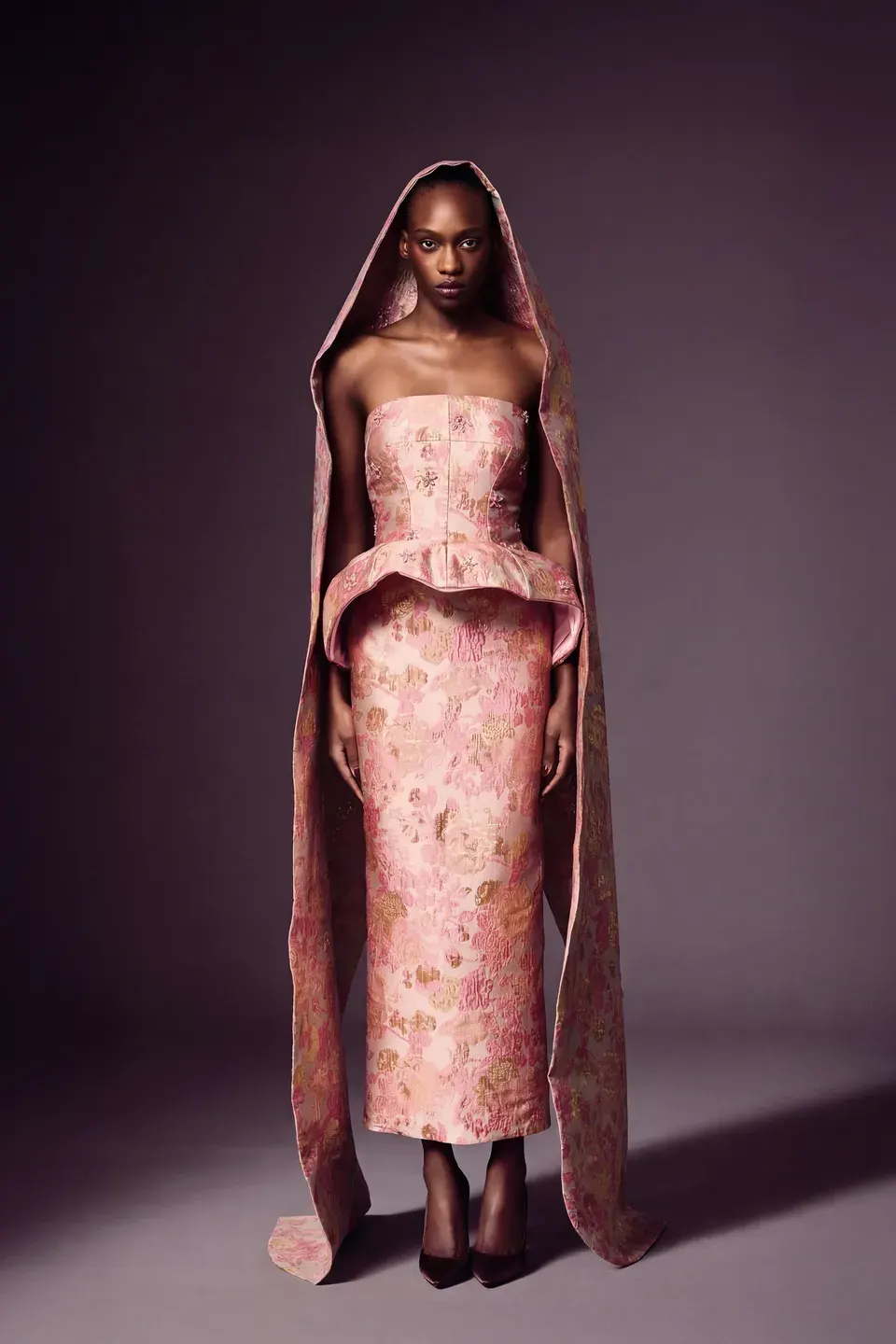
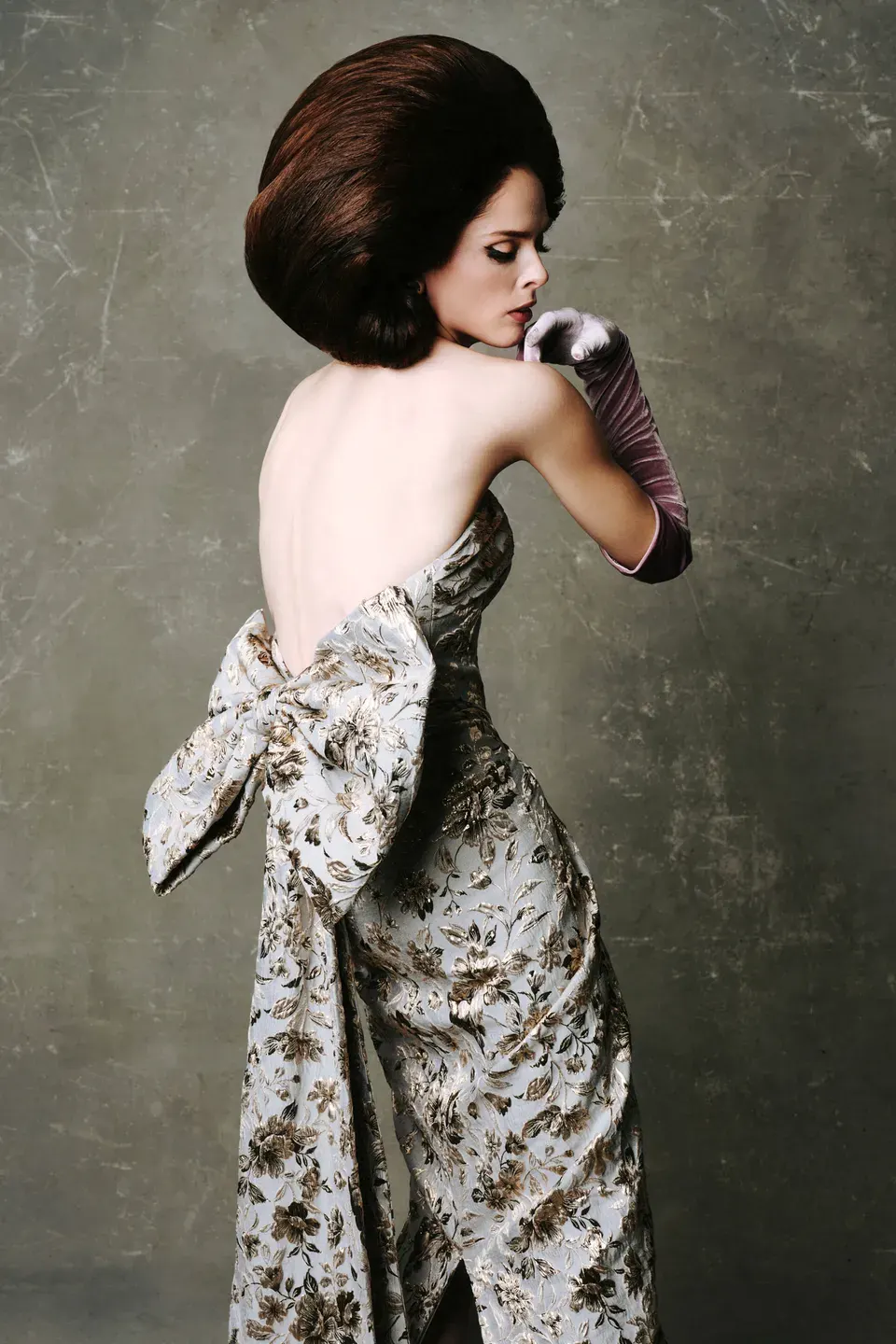
Drape and structural stability depend on the fiber composition and weaving density. Lightweight silk jacquards can produce elegant, flowing silhouettes, while heavier constructions support defined shapes and architectural tailoring. Dense brocade jacquards are particularly appropriate for garments requiring volume and structural presence.
Durability varies according to yarn quality, weave construction, and finishing treatments. The incorporation of patterns into the textile structure contributes to their visual permanence, while long floating yarns and delicate decorative elements may require additional care.
Some jacquard fabrics also exhibit reversible patterns. Contrasting weave structures can create complementary motifs on opposite sides, allowing different visual effects within the same material.
What Are the Two Main Types of Jacquard Fabric?
Jacquard fabric can be divided into two principal categories according to its method of construction: woven jacquard and knitted jacquard.
Woven jacquard fabric is produced through the interlacing of warp and weft yarns on a loom equipped with a Jacquard mechanism. This construction allows the creation of intricate patterns with precise variations in texture, color, and surface structure.
Its characteristics depend on the selected yarns and weaving density. Lightweight silk jacquard may offer fluid drape and subtle sheen, while densely woven constructions can produce substantial body and sculptural volume.
Damask features patterns created through contrasting weaving structures, frequently producing elegant variations between matte and glossy surfaces.
Brocade incorporates elaborate decorative motifs, sometimes using supplementary patterning yarns or metallic threads to achieve pronounced ornamental effects.
Matelassé produces raised, padded-looking surfaces through specialized weaving structures, creating the appearance of quilted textiles.
Knitted jacquard fabric employs a different construction principle. Patterns are formed through controlled needle selection during the knitting process, creating decorative arrangements within interconnected yarn loops.
This structure generally provides greater flexibility and elasticity, depending on the yarn composition and knitting method.
Knitted jacquard frequently features multicolored geometric patterns, repeating motifs, and graphic compositions. Wool, cotton, acrylic, polyester, and blended yarns are common materials.
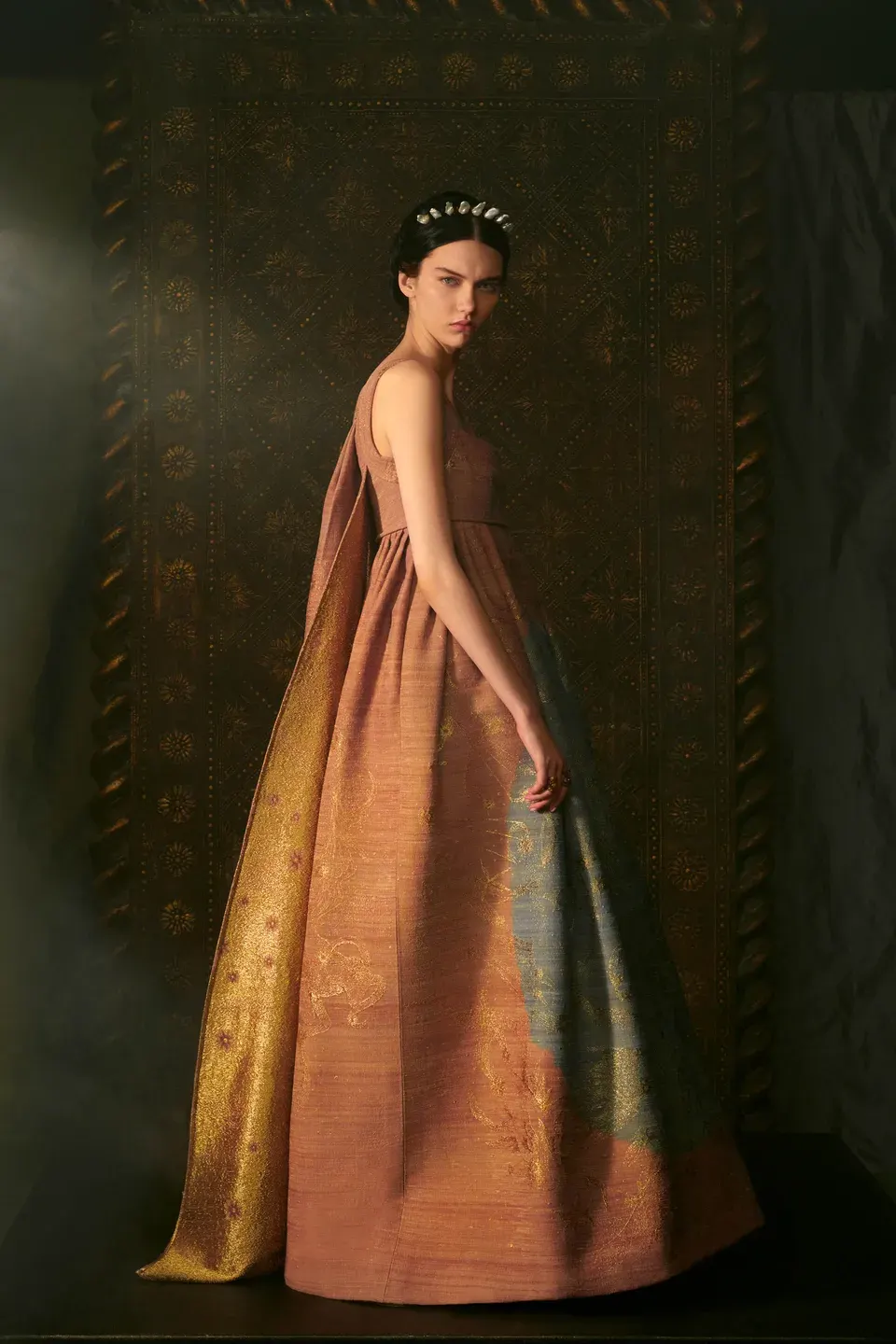
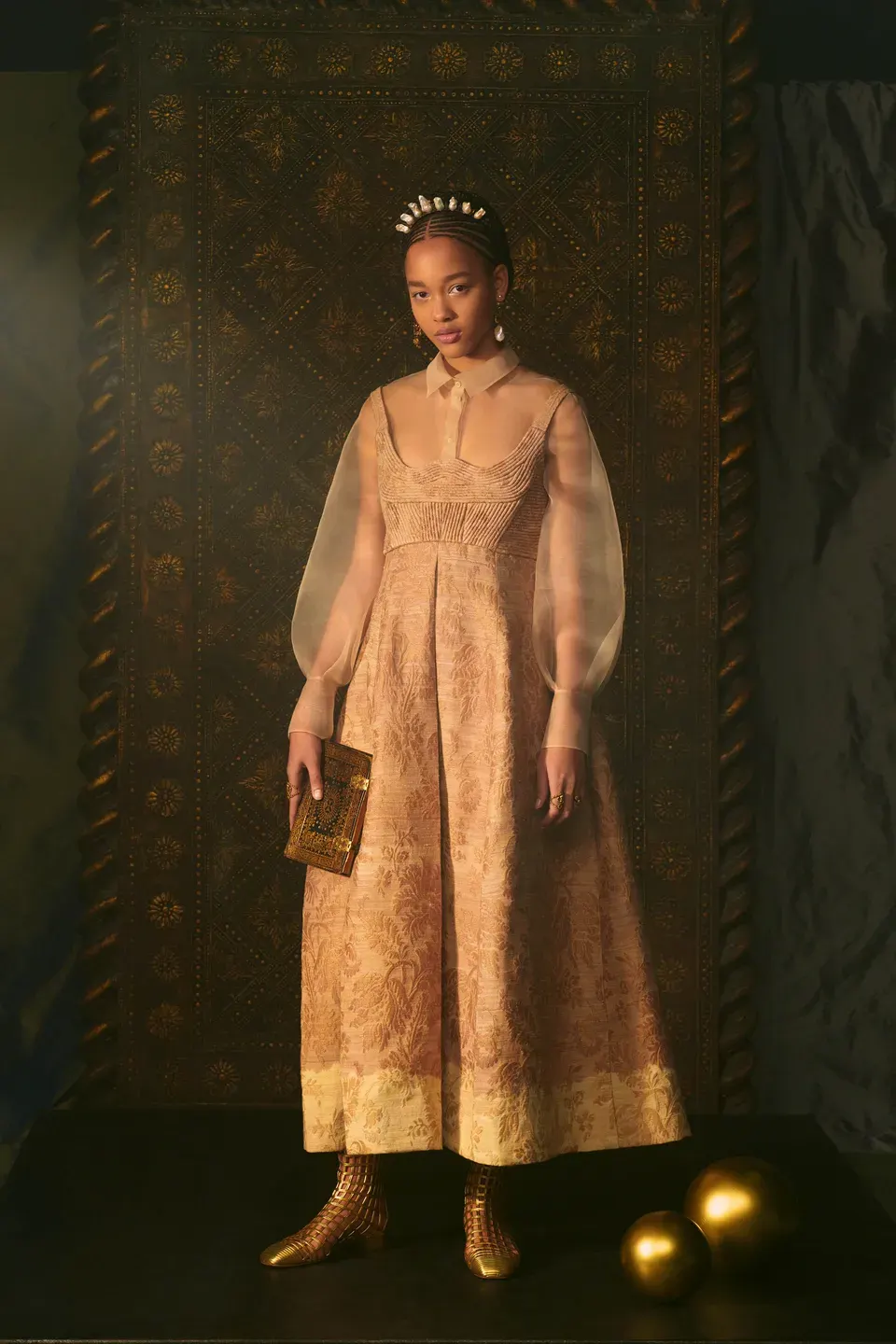
How Is Jacquard Fabric Used in Fashion?
In tailoring and outerwear, dense woven jacquard fabric provides an effective foundation for structured jackets, blazers, and coats. Carefully selected constructions can support defined shoulders, sculptural sleeves, and architectural silhouettes. Elaborate woven motifs introduce decorative depth while preserving the precision associated with tailored clothing.
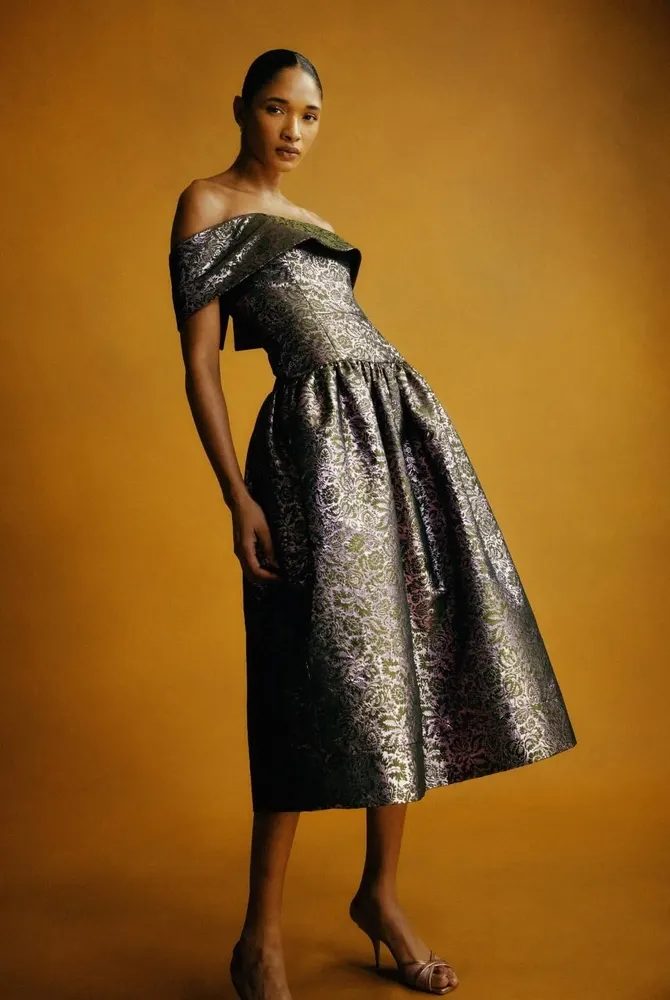
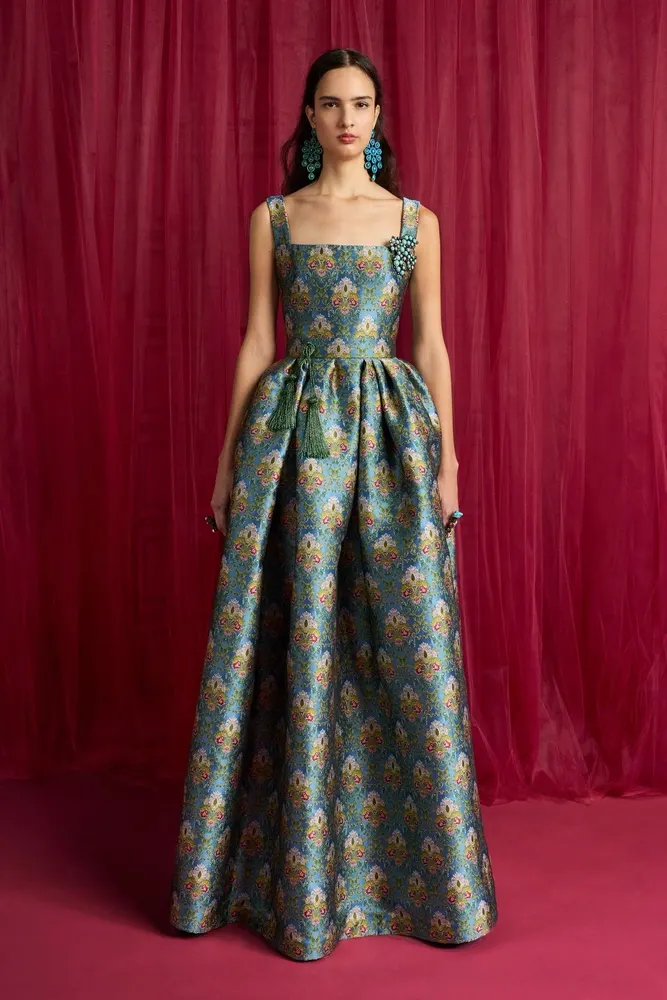
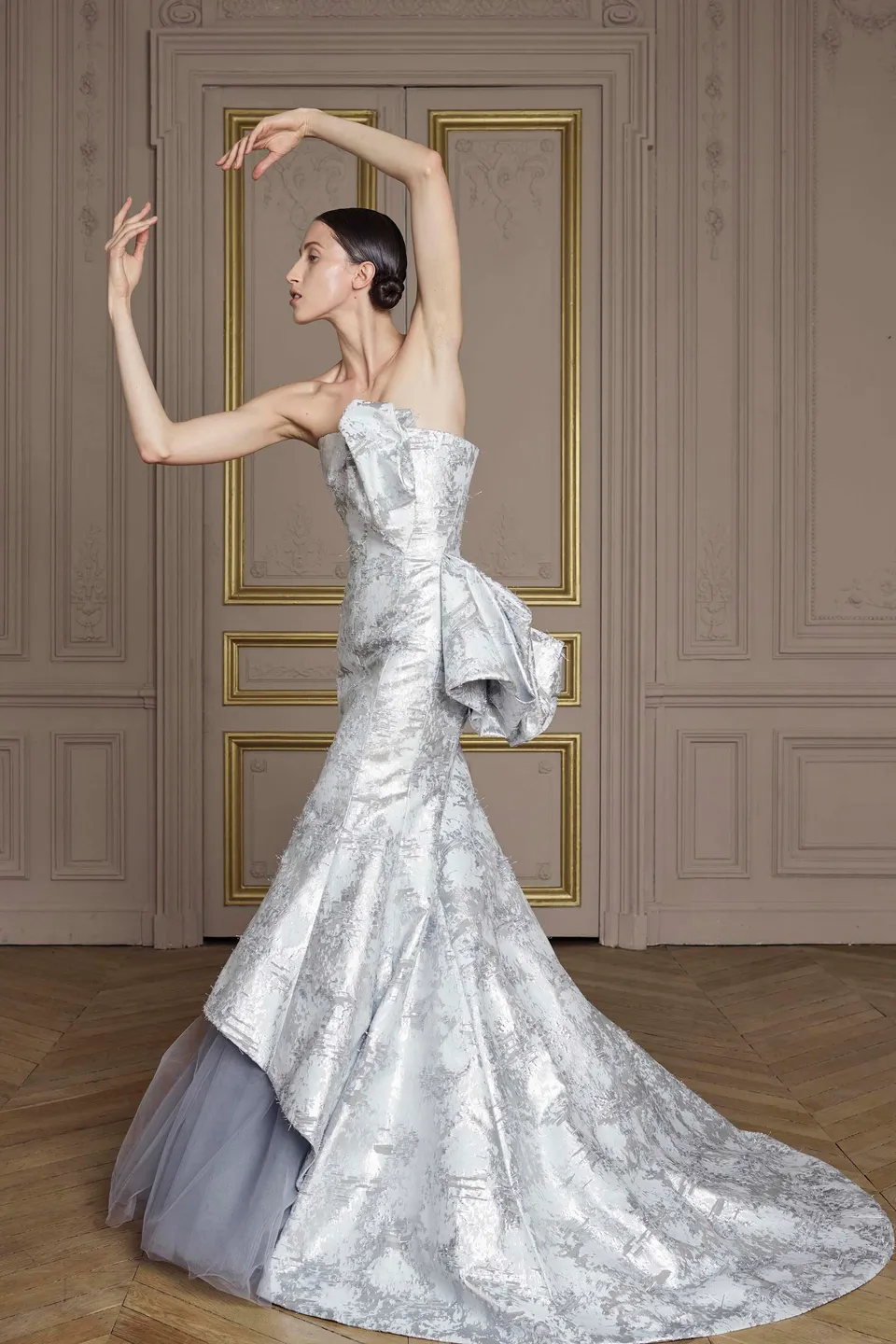
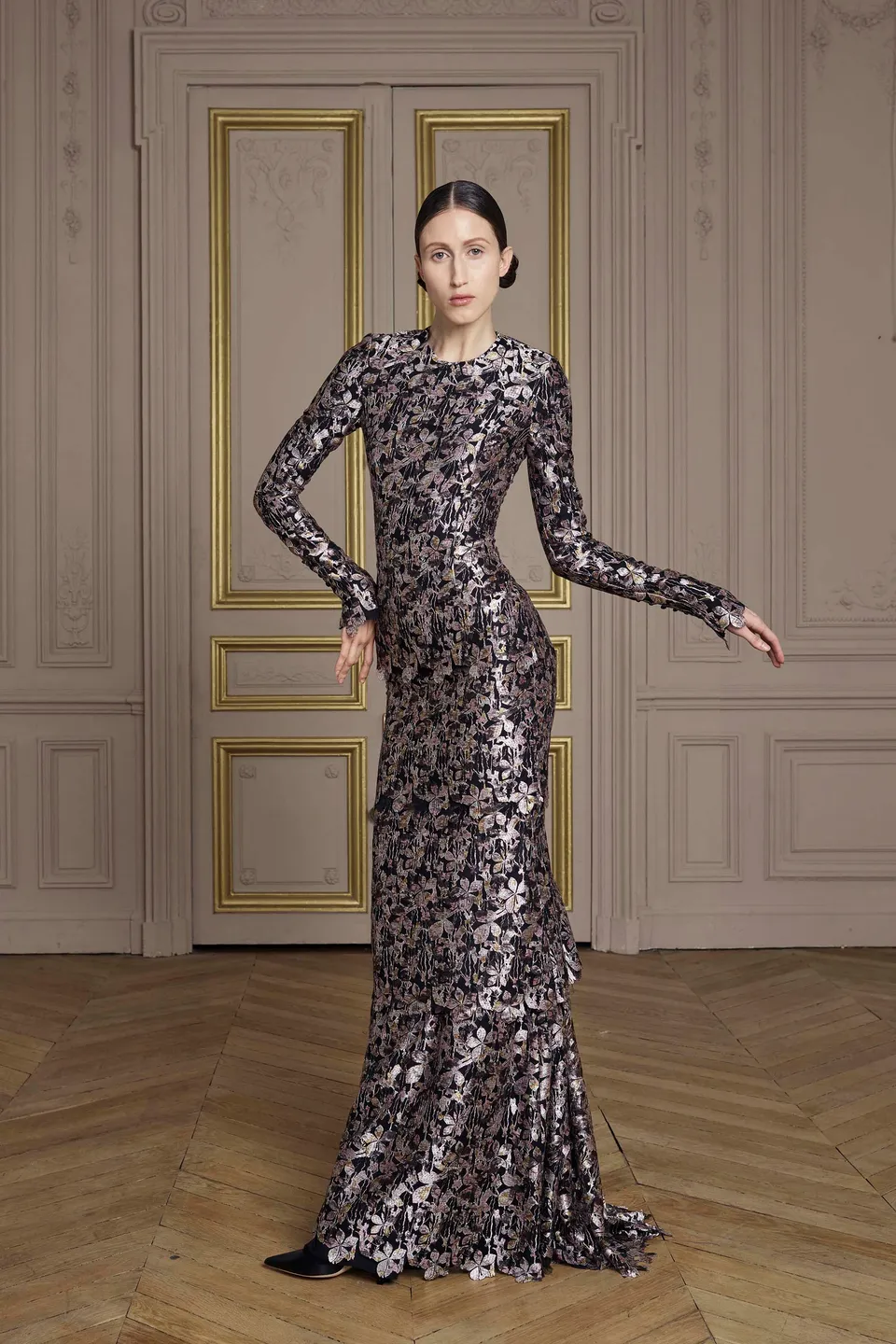
Eveningwear represents another important application. Silk jacquard and brocade textiles frequently appear in gowns, cocktail dresses, and occasionwear. Their intricate patterns and reflective surfaces contribute to luxurious visual effects, while structured constructions allow the creation of voluminous skirts and sharply defined silhouettes.
Within haute couture, jacquard fabric becomes a medium for specialized textile craftsmanship. Fashion houses may collaborate with weaving manufacturers to develop exclusive patterns, combining carefully selected yarns, customized color palettes, and intricate weaving structures.
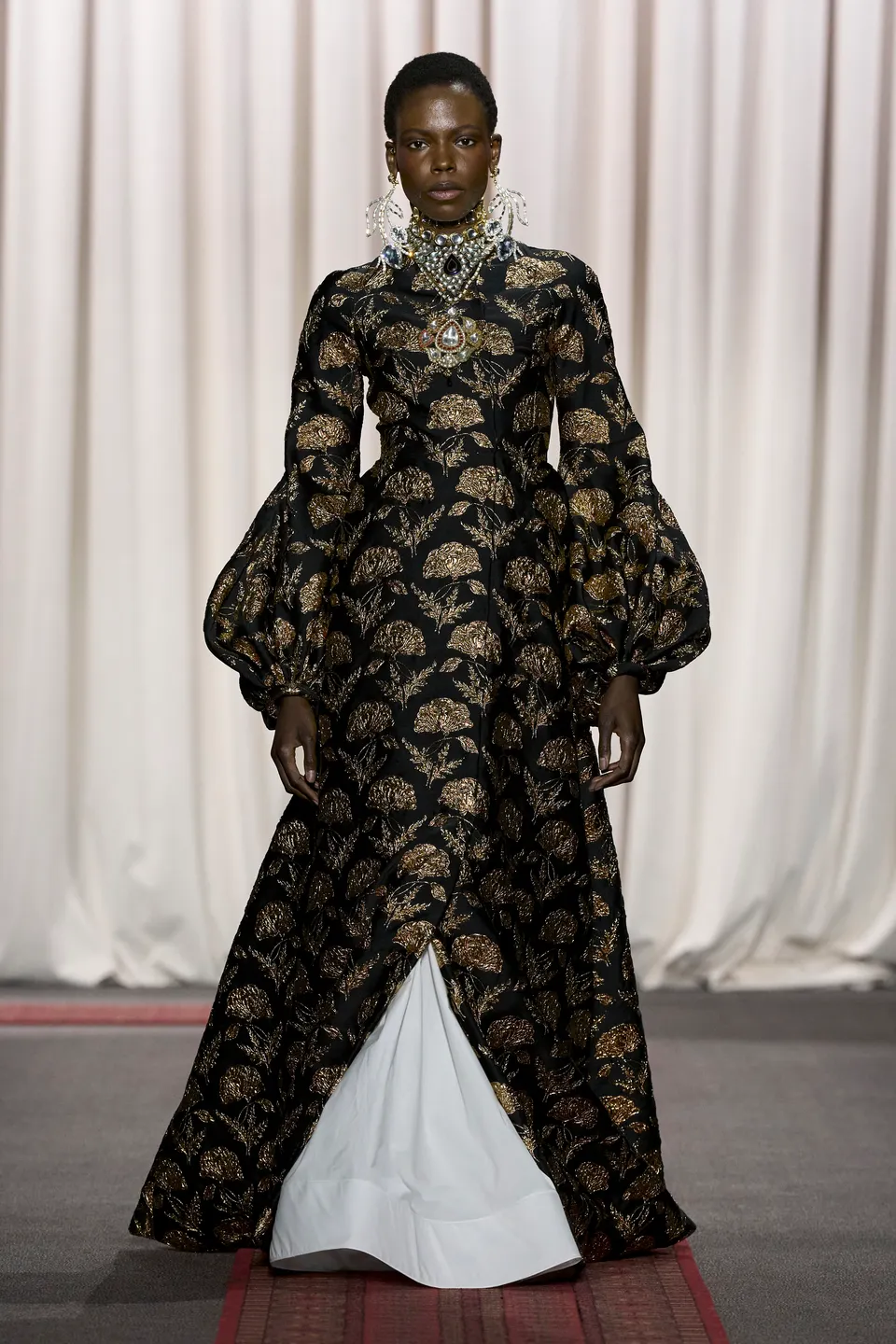
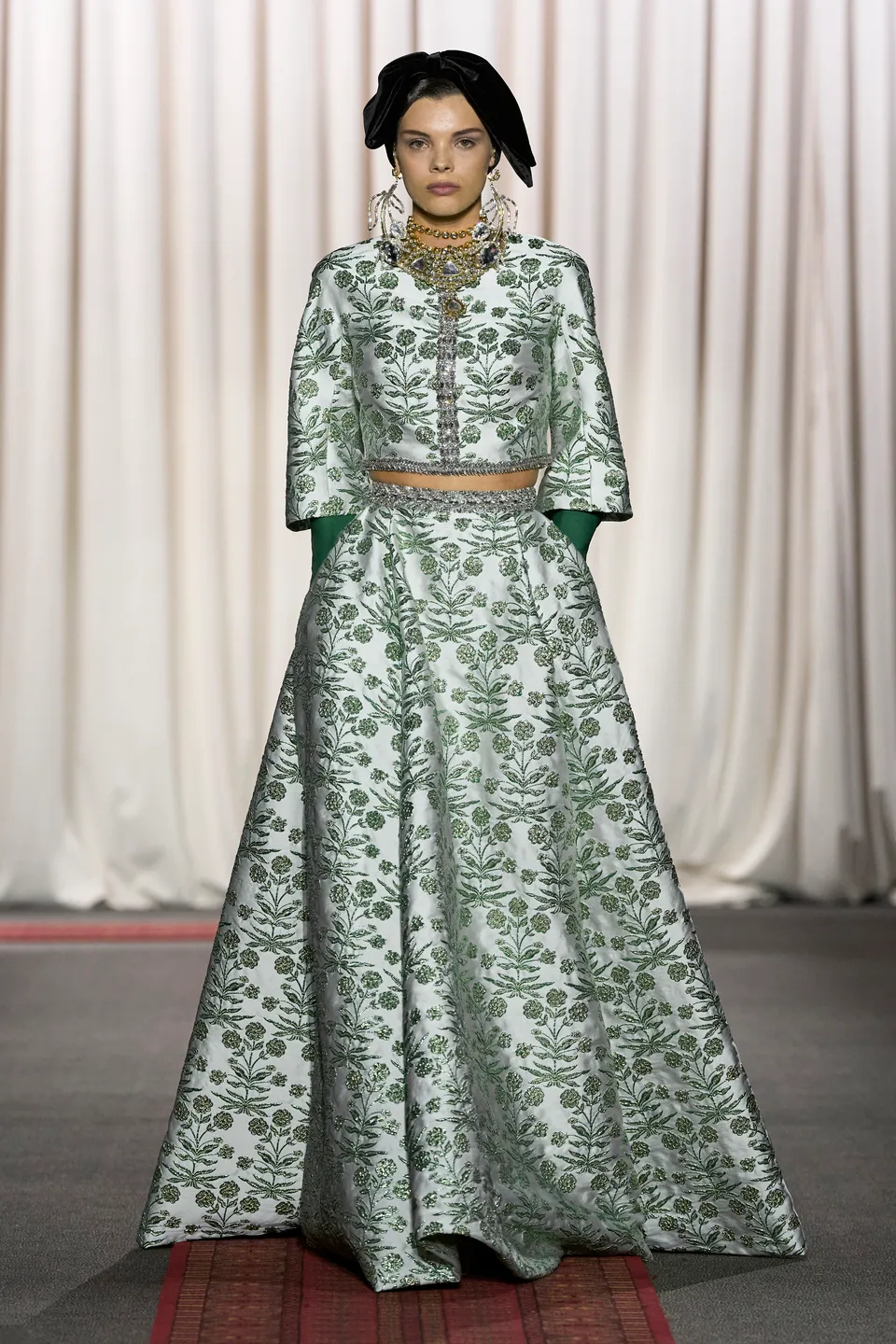
These textiles can also serve as foundations for additional embroidery, beadwork, or appliqué, creating elaborate surfaces that unite multiple decorative techniques.
Knitted jacquard introduces patterned construction into everyday fashion. Sweaters, cardigans, coordinated sets, and knitted dresses incorporate complex motifs while retaining the flexibility associated with knitwear.
Accessories provide further opportunities for jacquard fabric. Handbags, neckties, scarves, footwear, and decorative panels can incorporate woven patterns, including geometric compositions and recognizable brand motifs.
The ability to integrate decorative imagery directly into the textile structure remains central to jacquard's appeal. It allows designers to consider pattern as an essential component of garment construction, giving fabric development a significant role in the creative process.
How to Identify, Buy and Care for Jacquard Fabric
Identifying jacquard fabric begins with examining how its patterns are constructed. In woven jacquard, decorative motifs emerge from the arrangement of yarns, often revealing changes in weave direction, texture, or light reflection.
The reverse side may provide additional evidence. Depending on the construction, patterns can appear reversed, accompanied by floating yarns or contrasting woven structures. Knitted jacquard, meanwhile, displays the interconnected loop structure characteristic of knitted textiles.
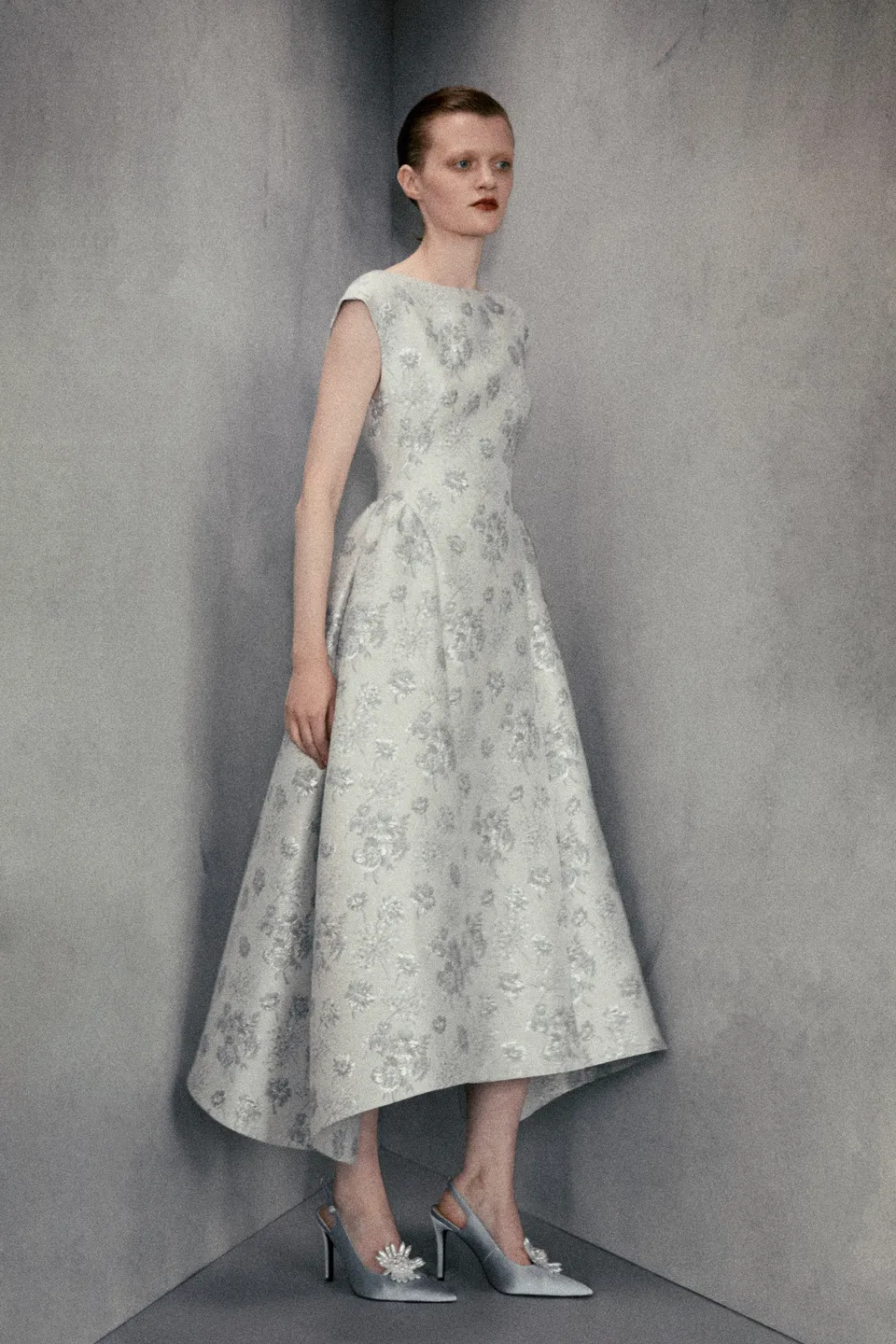
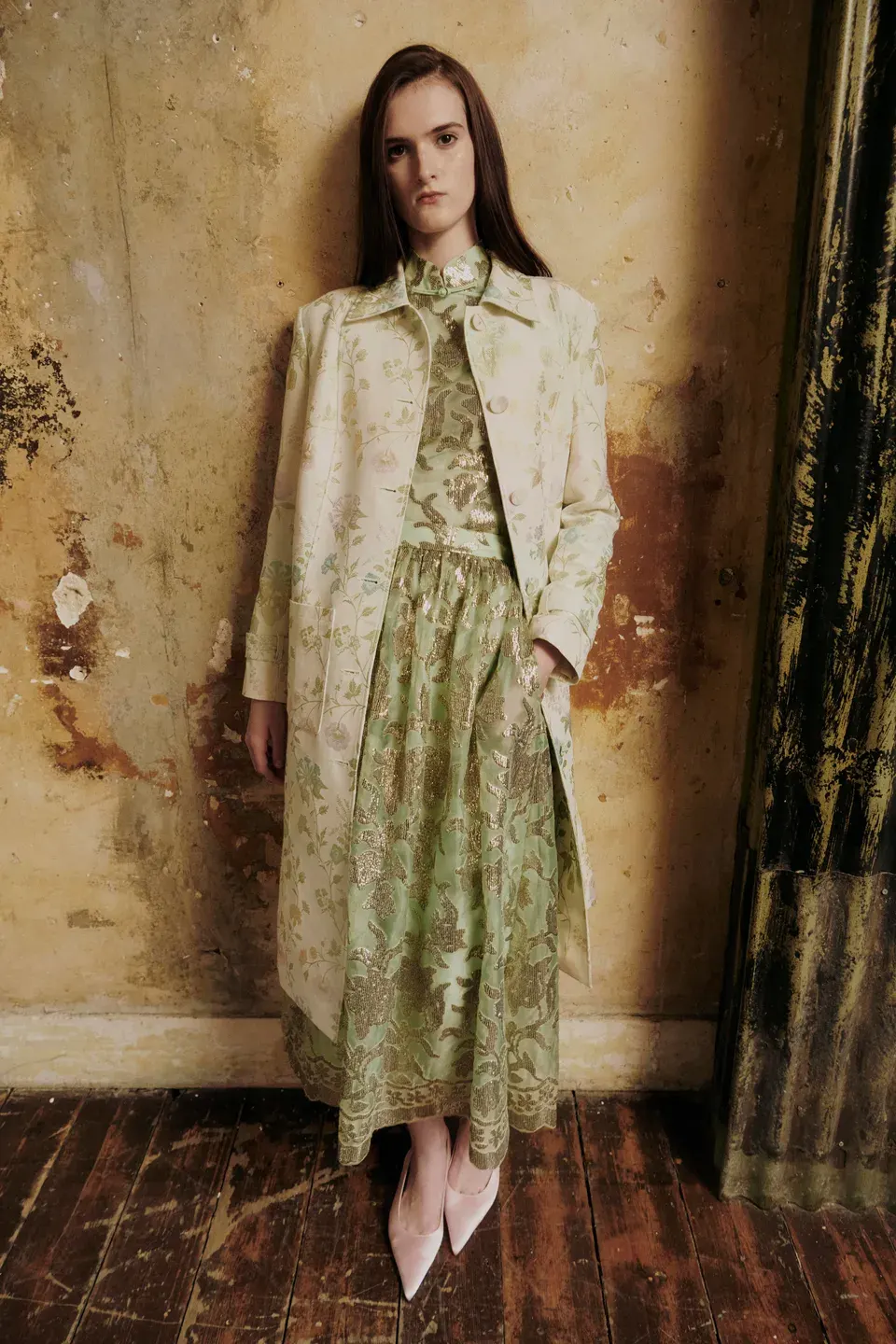
When purchasing jacquard fabric, fiber composition should be considered alongside weight, drape, and weave density. Silk jacquard may suit lightweight garments and elegant eveningwear, while heavier cotton or blended constructions can support structured tailoring.
Buyers should also examine pattern consistency, surface condition, and the length of floating yarns. Large decorative motifs may require additional fabric for accurate pattern matching during garment construction.
Proper care depends primarily on fiber composition and finishing treatments. Some cotton and polyester jacquards can accommodate gentle machine washing, while delicate silk textiles, metallic brocades, and structured garments may require specialist cleaning.

Pressing temperatures should correspond to the fabric's fiber content. Raised patterns and lustrous surfaces benefit from careful handling, with protective pressing cloths used where appropriate.
For storage, garments should be supported according to their weight and construction. Protection from prolonged friction, excessive moisture, and sharp accessories helps preserve delicate woven surfaces.
Jacquard fabric continues to occupy a distinctive position in textile design, bringing together artistic precision and technological ingenuity. From the workshops of eighteenth-century France to contemporary computerized looms, its development reflects an enduring relationship between craftsmanship and innovation. Every intricate motif carries the legacy of a manufacturing technology that transformed woven patterns into a sophisticated language of fashion.