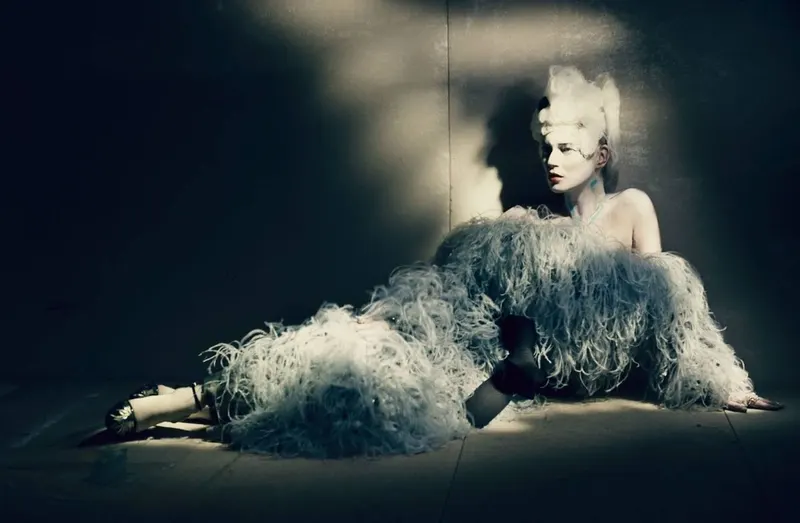
Soft as a whisper and light as air, feathers lend fashion an ethereal elegance, where every gentle movement reveals the poetry of delicate craftsmanship.
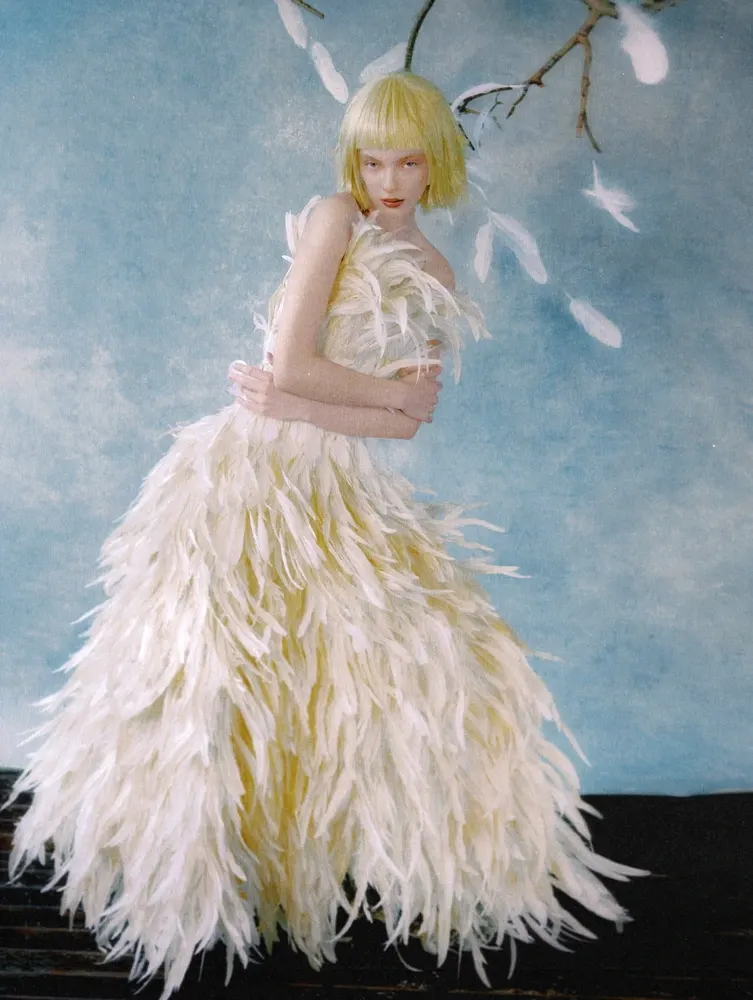
Feathers: A Flight of Delicate Extravagance
Soft as a whisper and light as air, feathers lend fashion an ethereal elegance, where every gentle movement reveals the poetry of delicate craftsmanship.
November 4, 2026


The transformation of natural feathers into fashion materials involves several specialized processes, collectively associated with the French craft of plumasserie. Practiced by artisans known as plumassiers, this discipline combines material knowledge, precision cutting, coloring, and intricate assembly.
How Are Feathers Manufactured for Fashion?
Production begins with sourcing. Feathers used in fashion commonly originate from domesticated birds, including ostriches, chickens, turkeys, ducks, and geese. Some enter the supply chain as by-products of poultry processing, while others are sourced from farms supplying ornamental feathers. Species, origin, and collection methods influence the material's quality, commercial value, and traceability.
Following collection, feathers undergo cleaning and preparation. Washing removes dirt, oils, and other impurities, while controlled drying helps preserve their structure. Industrial facilities processing down and small feathers may incorporate mechanical dust removal, washing, hygienic treatment, and sorting. Decorative plumes require handling methods suited to their delicate branches.
The next stage involves grading. Craftspeople examine each feather's length, width, curvature, shaft strength, softness, and natural coloring. Consistency is essential when producing uniform trims or complex decorative surfaces. Longer feathers may be selected for dramatic accessories, while softer specimens are appropriate for delicate embellishments.
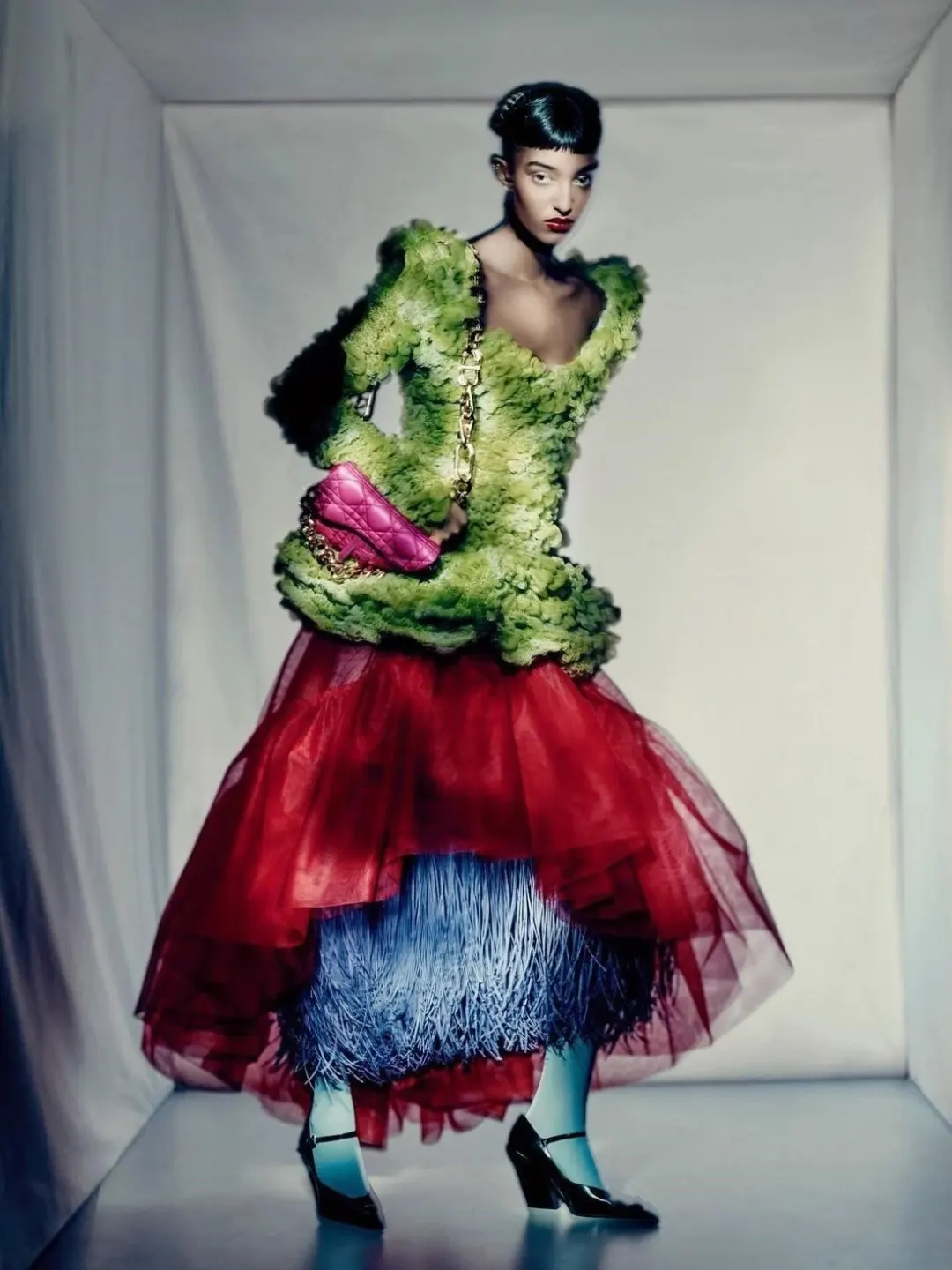
Coloring expands the material's aesthetic possibilities. Feathers can be dyed into saturated hues, pastel shades, or subtle gradients. Specialist ateliers may also paint individual specimens, introducing intricate patterns and tonal effects.
Once prepared, feathers enter the shaping process. Cutting determines their proportions, while curling introduces controlled movement and curvature. Artisans may adjust the branching fibers to create rounded plumes, compact surfaces, or fine ornamental details.
Among the most sophisticated techniques is feather marquetry, which involves cutting feathers into precise shapes and assembling them into decorative compositions. The resulting surfaces can resemble geometric textiles, botanical patterns, or miniature pictorial mosaics.
Feather embroidery incorporates individual feathers into textile foundations through stitching and specialized attachment techniques. The material can be combined with beads, sequins, and other embellishments to build elaborate three-dimensional surfaces.
At Maison Lemarié, artisans also create feather rosettes, sculptural arrangements, and patterned surfaces through curling, cutting, coloring, and intricate assembly. Founded in Paris in 1880, the house has preserved these practices across generations.
During final construction, feathers are attached individually or assembled into strips before application. Fabrics such as tulle, organza, and mesh frequently provide the structural foundation. The direction and density of attachment determine the garment's finished silhouette and movement.
The History and Origins of Feathers in Fashion
The relationship between feathers and human adornment extends far beyond the establishment of European fashion houses. Across different civilizations, feathers have carried associations with spiritual authority, social position, ceremonial identity, and craftsmanship.
Archaeological discoveries at Fumane Cave in northern Italy suggest that humans were deliberately removing feathers from birds during the prehistoric period, potentially for ornamental purposes. In pre-Columbian Mesoamerica and the Andes, elaborate featherwork developed into a sophisticated artistic tradition. Feathers were incorporated into ceremonial garments, headdresses, shields, and objects associated with political or religious authority.
In ancient Egypt, the ostrich feather held particular symbolic significance through its association with Ma'at, the goddess representing truth, justice, and cosmic order. Its meaning belonged to a larger religious system in which natural forms carried complex spiritual associations.
Within European dress, decorative feathers became increasingly prominent during the fifteenth and sixteenth centuries. Courtly and military headwear incorporated plumes as expressions of distinction, wealth, and fashionable identity. During the seventeenth century, elaborate feathered hats became recognizable elements of aristocratic masculine dress.
By the eighteenth century, feather ornamentation had established a visible presence in fashionable women's accessories. In 1783, Élisabeth Vigée Le Brun depicted Marie Antoinette wearing a hat adorned with ostrich plumes in Marie-Antoinette with a Rose. The portrait illustrates the relationship between feather decoration, fashionable elegance, and aristocratic representation.
The nineteenth century witnessed significant commercial expansion. European millinery relied increasingly on international supply networks providing feathers from different bird species. Paris emerged as an important center of specialist craftsmanship, with artisans preparing plumes for hats, boas, and decorative accessories.
In 1880, Palmyre Coyette founded a Parisian feather workshop that later became Maison Lemarié. Its early activities involved preparing ornamental feathers for milliners, including cutting, curling, and shaping plumes for fashionable headwear.
Between approximately 1890 and 1915, feathered hats reached extraordinary proportions. During the Belle Époque and Edwardian periods, fashionable millinery incorporated long ostrich plumes, elaborate wings, and preserved birds. This growing demand contributed to intensive international trade and severe pressure on wild bird populations.
The resulting conservation movement became an important turning point in fashion history. In 1889, British campaigner Emily Williamson founded the Society for the Protection of Birds to challenge the destructive trade in ornamental plumage. She later joined forces with campaigners including Eliza Phillips and Etta Lemon.
Across the Atlantic, Harriet Hemenway and Minna B. Hall helped establish the Massachusetts Audubon Society in 1896, mobilizing opposition to the use of wild birds in fashionable headwear.
In 1904, the British society received its Royal Charter, becoming the Royal Society for the Protection of Birds. The passage of the Importation of Plumage (Prohibition) Act in 1921 marked a significant legislative achievement, restricting the importation of specified bird plumage.
Meanwhile, fashionable applications continued to evolve. During the 1920s, ostrich-feather fans, boas, and eveningwear became associated with Jazz Age glamour. Art Deco aesthetics encouraged elaborate arrangements, theatrical proportions, and decorative movement.
Hollywood reinforced the appeal of feathers during the 1930s through the 1950s. Feather-trimmed robes, extravagant headpieces, and eveningwear contributed to the visual language of cinematic glamour.
In 1946, André Lemarié assumed management of the family workshop and expanded its expertise into fabric flower-making. By the 1950s, the house had become a valued collaborator for couture houses including Dior, Balenciaga, and Yves Saint Laurent.
Throughout the late twentieth century, designers increasingly explored feathers as sculptural materials. In contemporary haute couture, feather continues to evolve through embroidery, marquetry, precise surface manipulation, and experimental construction.