MENU
Close





Embossed leather starts where natural grain ends, using pressure to give a familiar hide an entirely new surface identity.

Embossed leather starts where natural grain ends, using pressure to give a familiar hide an entirely new surface identity.
October 13, 2026
Advertisement

Advertisement



Smooth calfskin can suddenly carry crocodile scales. Fine leather may take on the dotted rhythm associated with ostrich or the compact geometry of lizard skin. At first glance, these surfaces appear to belong to different materials altogether. Look closer and the transformation comes from pressure: the original hide remains underneath, while its visible character has been rewritten.
Embossed leather appeal sits somewhere between material and image, using leather material as a base while allowing texture to become part of the design itself.
Embossed leather is leather whose surface has been mechanically pressed to create a raised or recessed pattern. The technique can strengthen an existing grain, reproduce the appearance of another skin or introduce a motif with no natural reference at all.
Croc-effect is among the most recognisable examples, but the category is much broader. What unites these materials is the way texture is physically impressed into the surface instead of simply printed over it.

This distinction also separates croc-embossed leather from genuine crocodile skin. A real crocodile carries scales formed by the animal itself, with natural variation in size and placement. Croc embossing recreates that visual language on another hide, commonly calfskin or cowhide. Synthetic materials can be embossed in a similar way, although technically they should be described as embossed faux leather rather than embossed leather.
Once leather has been prepared and tanned, it can be placed beneath an engraved plate or passed through patterned rollers. Heat makes the surface more receptive to shaping, while pressure transfers the design into the hide. The balance between the two determines how sharply the relief holds.
Depth matters. Stronger embossing creates deeper recesses and more pronounced raised areas, giving light more surfaces to move across. Shallower impressions remain subtler and can soften more quickly as the leather bends.


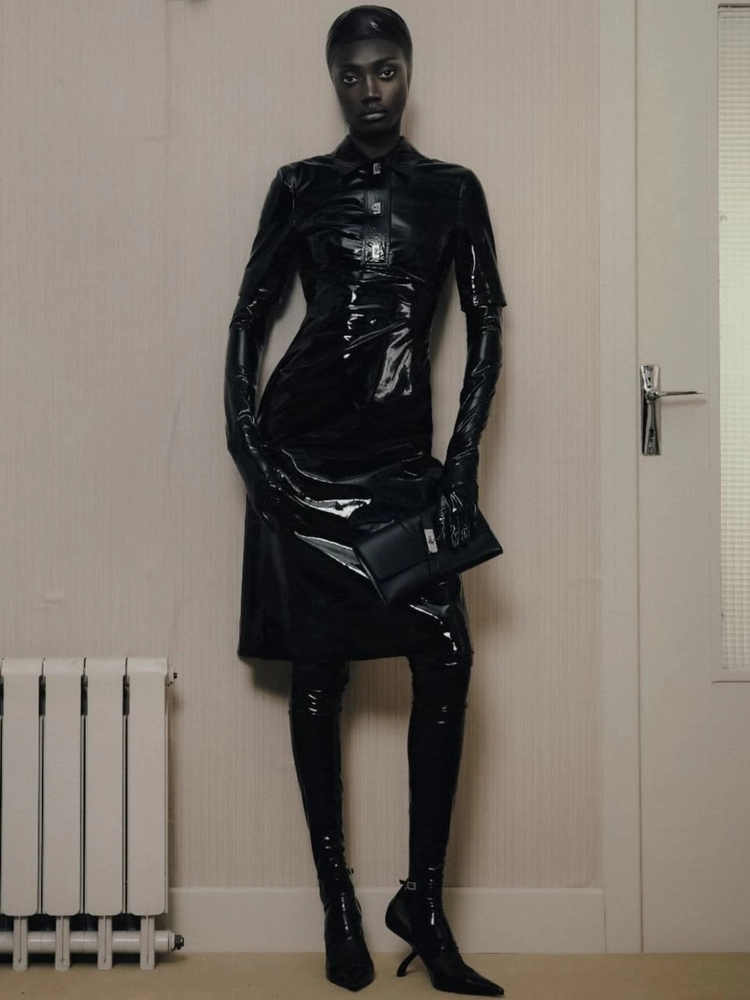
Finishing then changes the character again. Dye often settles differently around recessed sections, sharpening the pattern through tonal variation. Polishing can bring light toward the raised surface, while matte treatments keep the relief quieter. When a glossy coating is added, reptile embossing can acquire the lacquered intensity associated with exotic leather.
Underlying leather still controls how the finished material behaves. Supple hides let the pattern move with the body; firmer ones preserve a sharper impression and stronger structure.
Long before industrial embossing, leatherworkers altered surfaces through stamping, carving and tooling. Mechanised pressing expanded those possibilities by allowing detailed patterns to travel across larger areas with far greater consistency.


Reptile effects became especially important because they transferred a familiar luxury code onto more accessible hides. Crocodile-inspired scales could be reproduced on calfskin while retaining much of calf leather’s own weight and flexibility. Once designers could control the dimensions of those scales, imitation gradually opened into experimentation.
Scale no longer had to correspond closely to nature. It could expand across an entire panel, shrink until it resembled grain or become regular enough to approach geometry. Embossing had moved from reproducing a surface to designing one.
Embossed leather can carry almost any surface pattern, but reptile and exotic-skin effects remain among its most recognisable forms. Each one changes the scale, spacing and depth of the relief, giving the same base leather a distinctly different visual character.


Croc-embossed leather is usually recognised by broad scales separated by pronounced channels. Better examples avoid rigid repetition, using subtle changes in scale size and shape to create depth. Larger patterns read strongly across coats and broad panels, while smaller croc embossing can sit closer to the visual scale of conventional leather grain.


Lizard-embossed leather carries a much finer pattern. Small, closely packed scales create continuous texture instead of large individual units, so the material often reads as detailed from a distance and reptilian only at closer range. Its compact pattern also follows curved or fitted forms without overwhelming their shape.

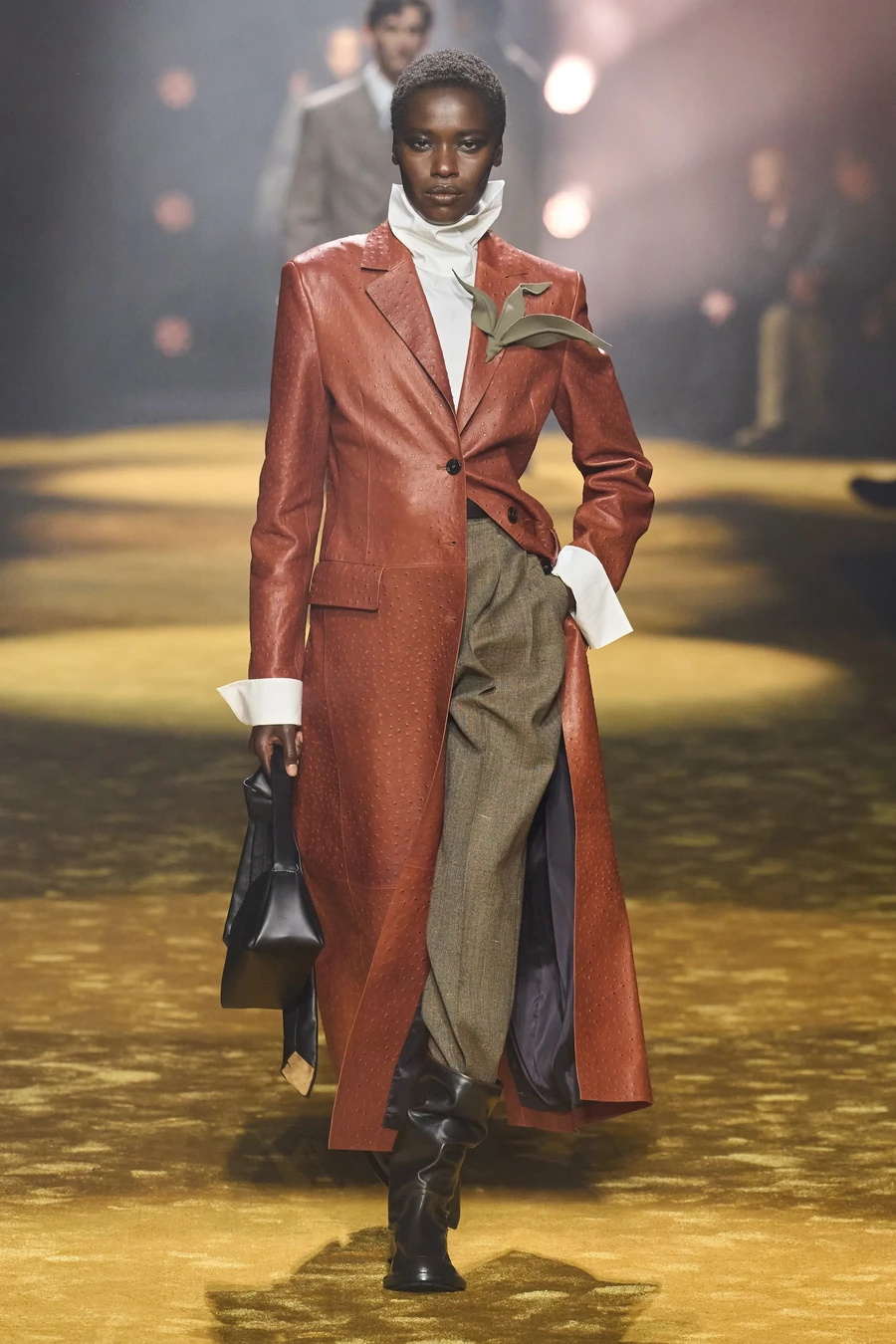
Ostrich-embossed leather shifts away from scales altogether. Raised follicle-like points interrupt a smoother ground, creating texture through small changes in height. Convincing versions rely on irregular spacing and restrained relief, since perfect repetition can quickly expose the mechanical origin of the pattern.
Embossing gives leather visual depth before additional surface treatment is needed. Light moves across peaks, settles into recessed lines and changes as the garment bends, allowing relatively clean silhouettes to carry considerable texture.
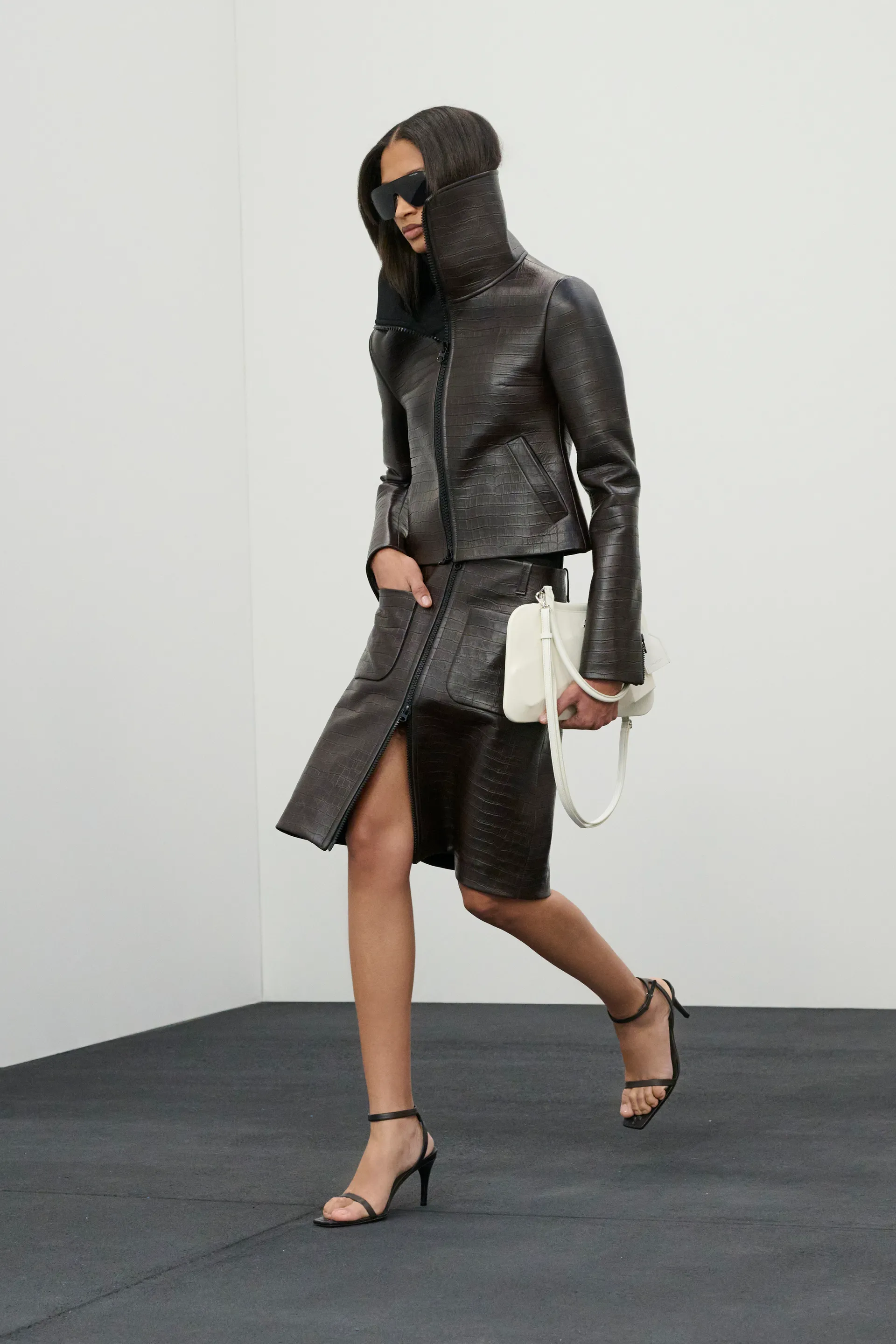

Pattern size can alter the proportion of a garment as much as colour or seam placement. Broad croc scales divide a large coat into visible sections, while finer embossing creates detail without breaking its overall line. On fitted pieces, the relief bends with the body and disrupts reflection in small increments, giving the surface a sense of movement.


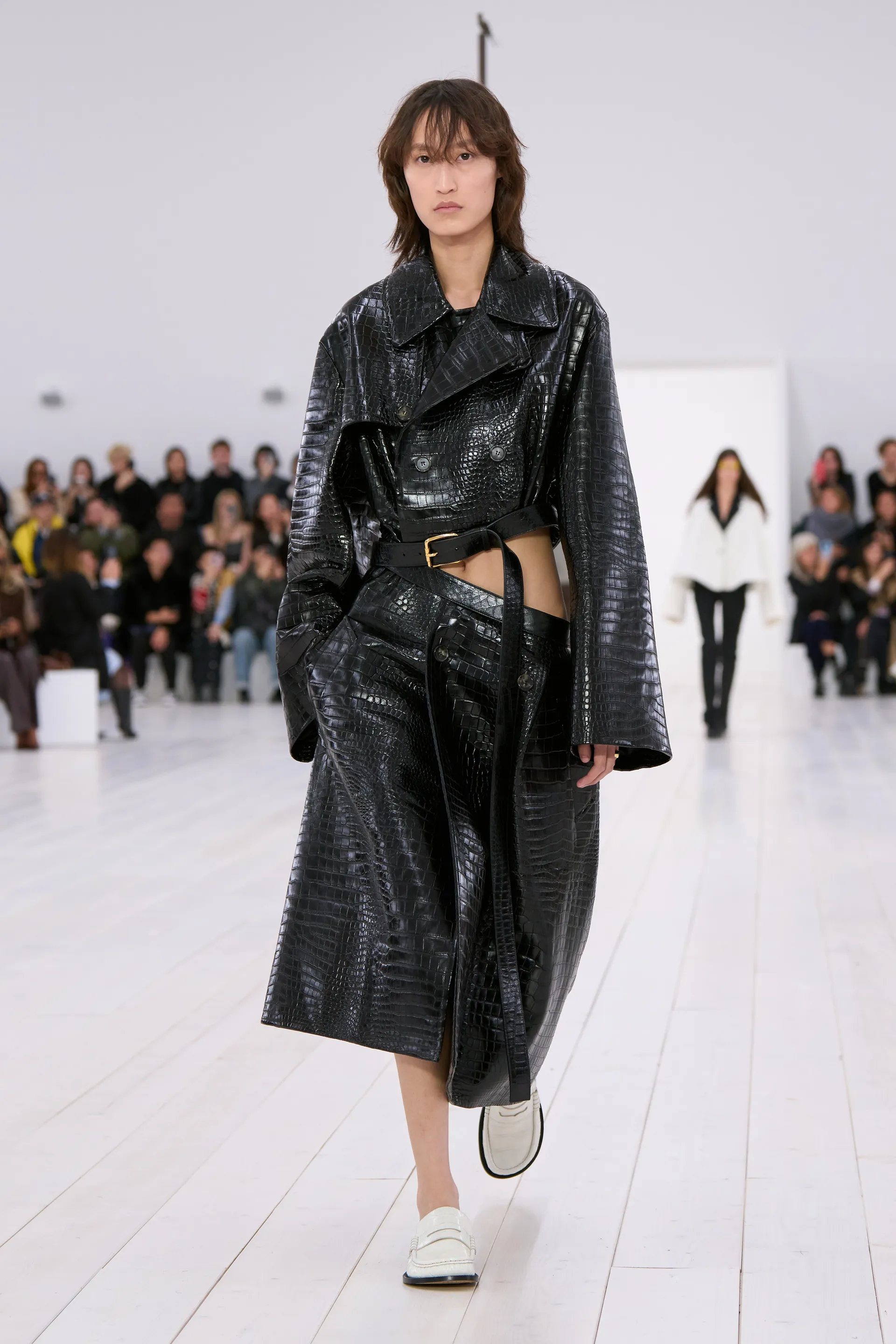

Fashion has also pushed embossed leather further away from literal imitation. Scale can become oversized, colour can detach it from any natural reference, and gloss can exaggerate relief until the surface reads almost graphically. Once this happens, the animal reference becomes secondary to the pattern itself.
Good embossing should retain definition when the leather bends gently. Recessed lines need enough depth to remain visible, while raised sections should feel integrated into the hide instead of sitting like a superficial print. For naturalistic reptile effects, slight irregularity usually creates a more convincing surface than perfect repetition.


Pay particular attention to folds and high-friction areas. Deep relief and heavy finishes can show wear first along raised edges, especially when the leather is frequently compressed. Softer embossed leather moves more comfortably, while firmer versions tend to preserve sharper texture.
Care should stay simple. Dust can settle inside recessed patterns, so gentle wiping with a soft cloth works better than aggressive rubbing. Prolonged pressure may flatten the relief, and products designed for one leather finish may behave differently on another. Enough space in storage helps the pattern keep the depth that gives the material its character.

Embossing may begin by borrowing another surface, yet its strongest expressions move beyond imitation. Once designers can determine depth, scale and finish, texture becomes something they can construct with almost the same freedom as silhouette.
The hide remains familiar underneath, while its visible identity has been deliberately rewritten. That ability to make surface carry the design is what continues to give embossed leather its relevance.
Advertisement