MENU
Close





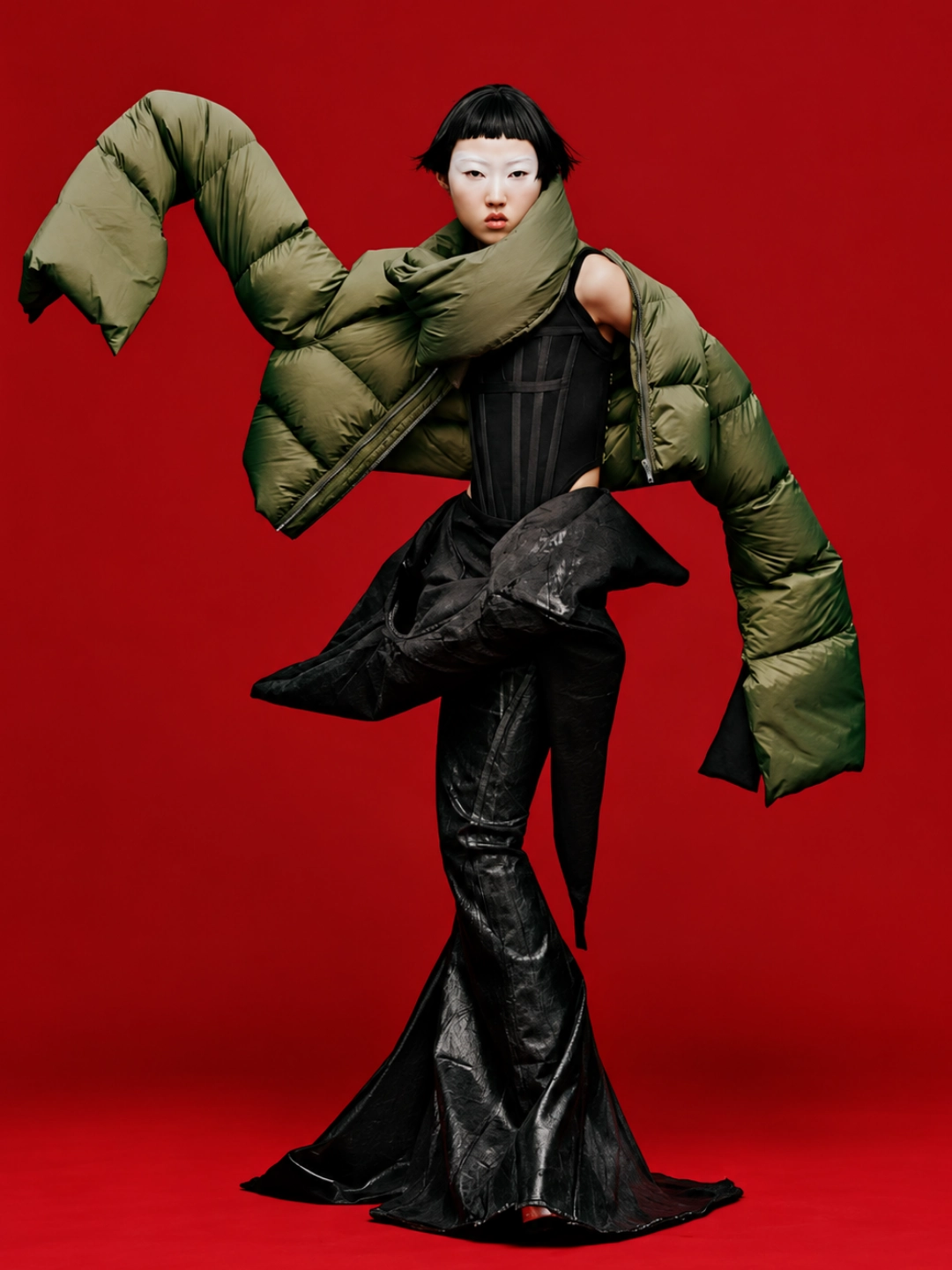
Matières Fécales SS27 begins with a number that sounds almost too large to hold a face. Ninety-nine percent. A majority so vast it risks becoming abstract, until fashion asks who is actually allowed to stand inside that number, and who still gets left outside the frame.

Matières Fécales SS27 begins with a number that sounds almost too large to hold a face. Ninety-nine percent. A majority so vast it risks becoming abstract, until fashion asks who is actually allowed to stand inside that number, and who still gets left outside the frame.
October 13, 2026
Advertisement

Advertisement



Paris has always known how to make power look beautiful. At Place de la République, Matières Fécales chose a different kind of spectacle: ninety-nine bodies occupying the same ground, each carrying a history that luxury fashion has rarely allowed to stand at the centre.
The 99 Percent unfolded beneath the Monument à la République, with 99 models of colour occupying a public square historically associated with collective assembly and protest. It came with family, migration, religion, survival and the long distance between being seen as an outsider and finally being given a platform. Matières Fécales SS27 begins somewhere in that distance.
What follows is not a portrait of one community, or even one version of struggle. It is a crowd that refuses to become anonymous.
Before class, religion or rebellion, someone has to carry you into the world.
Babies and pregnant bodies open the collection amid white draping, long hems and cloth whose softness repeatedly meets Matières Fécales’ familiar rawness. The beginning carries an almost ritual calm. White could easily suggest innocence, yet here it holds something heavier: domestic spaces, expectations and sacrifices from which identity first takes shape. Bhaskaran connected the section to memories of his mother and to the modest fabrics surrounding his childhood.


Motherhood consequently avoids becoming sentimental imagery. Within an immigrant story, care can also mean endurance. Families nurture and construct another life while carrying histories that rarely become visible inside the finished image of success. The collection does not romanticise hardship into beautiful suffering. Its draping retains tenderness while frayed hems keep the surface from becoming immaculate.
Beauty here has usually arrived scratched, pierced or disturbed. Matières Fécales SS27 reveals that the same instinct can operate emotionally. Something can be precious without being pristine.

The first act eventually closes with Bhaskaran beside his mother Grace, his sister Shandeal and his niece Vihannna. The gesture could have collapsed into runway autobiography, yet its scale gives it another resonance. A child once dependent on his family now uses the apparatus of Paris Fashion Week to place that family within the picture fashion records.
Success is usually photographed at the point of arrival. Matières Fécales keeps the people who made arrival possible inside the frame.
Long before identity becomes self-expression, it often arrives as instruction.
Bhaskaran grew up moving through several religious environments, and Matières Fécales SS27 carries that plurality without reducing faith to a catalogue of symbols. Covered bodies and ritual severity suggest belief as something absorbed early, before it becomes a choice. Faith appears here as an inherited structure, capable of offering belonging while also shaping the limits a person may later need to test.


Veiling becomes particularly charged when transferred onto male bodies. Covering the face removes the confidence with which masculinity usually expects to be seen. The body is still present, sometimes imposing, yet identity becomes harder to read. Bhaskaran has connected this gesture with the masks produced by patriarchal expectations around manhood.
Such ambiguity keeps the religious imagery from collapsing into provocation for its own sake. Matières Fécales has used crosses, ritual clothing and almost clerical silhouettes for years, but SS27 gives those recurring codes a biographical root. Religion is neither sacred object nor easy villain. It can provide community and structure while also defining the boundaries a person later struggles against.


Fabric covers, protects and occasionally obscures. Severe columnar forms grant dignity while concealment threatens anonymity. Dark veils can resemble mourning, devotion or defence depending on the body beneath them.
Identity in The 99 Percent is therefore never imagined as something born fully formed. Before a person finds a tribe of their own, they first inherit somebody else’s rules.
Then the surface starts fighting back.
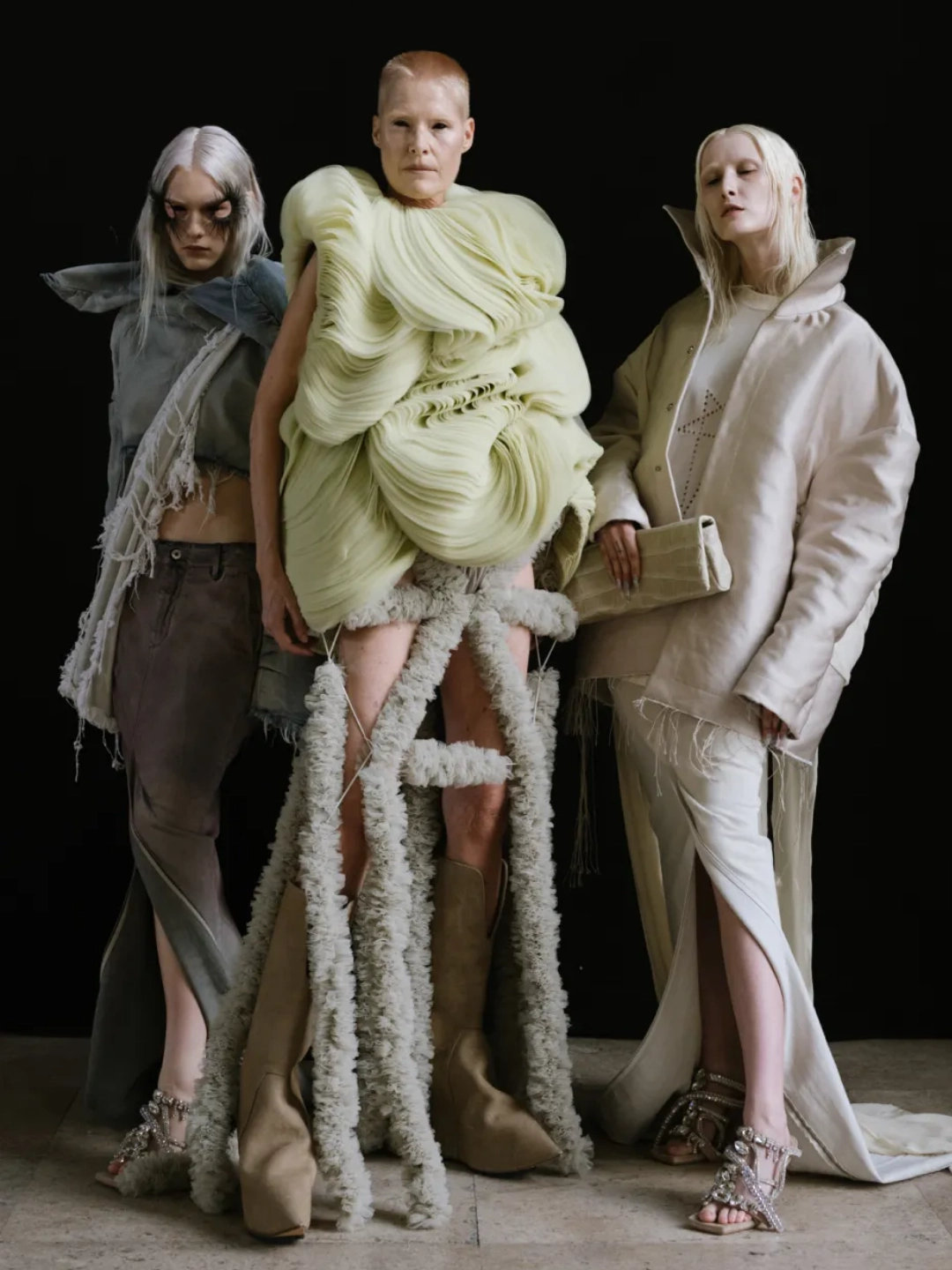
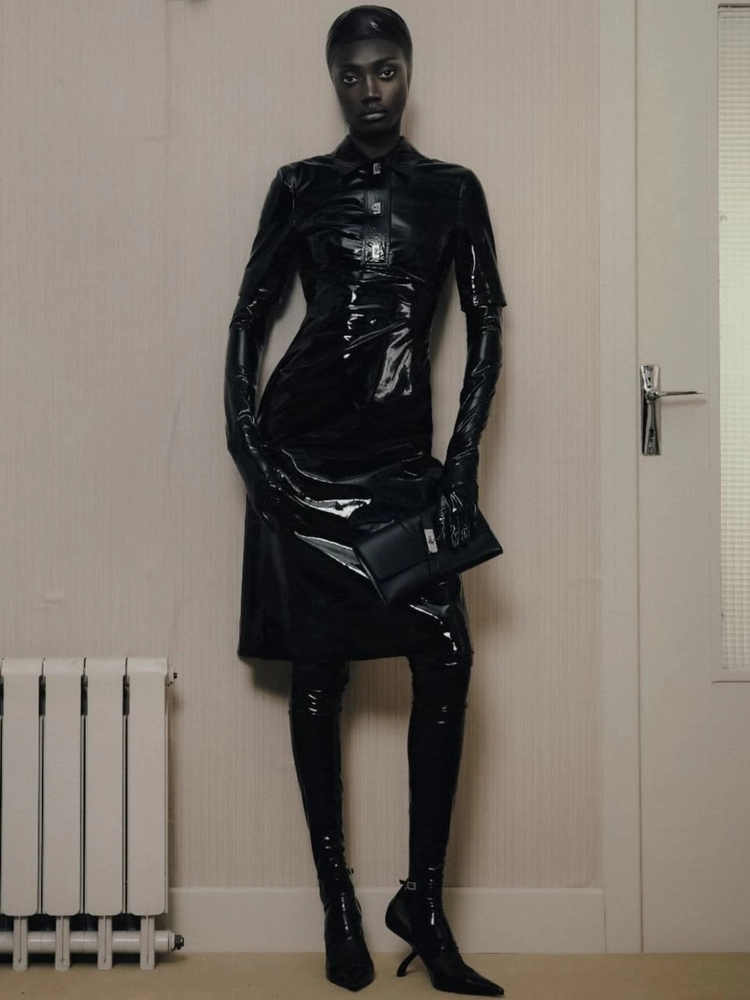
Leather tightens around bodies, denim appears distressed and damaged, flesh acquires spikes and strange augmentations, while familiar garments are dragged toward goth, punk, metal and club culture. The transformation belongs to the second act of the show, rooted in the alternative scenes Bhaskaran encountered after leaving home in Montreal. Those communities offered a place where people already considered strange elsewhere could become ordinary among one another.


The word outsider becomes unstable once enough outsiders stand together.
Fashion often packages subculture through its most convenient signs. Leather jacket means punk. Black makeup means goth. Piercing means rebellion. Matières Fécales has enough lived proximity to extreme self-presentation to push beyond that shorthand. Body modification here carries the instinct that defined the designers long before Paris Fashion Week, when shaved heads, prosthetics and alien makeup allowed Steven Raj Bhaskaran and Hannah Rose Dalton to construct identities outside conventional beauty.


Matières Fécales SS27 scales that private transformation into a crowd.
Bodies differ in age, shape, gender presentation and background, yet visual extremity gives them shared electricity. The runway stops asking the outsider to become acceptable before granting visibility, but instead lets oddness remain odd.
Belonging can become strangely conservative once acceptance is treated as the final goal. Fashion love stories in which marginal figures are polished enough to enter the establishment. Matières Fécales proposes another possibility: inclusion without sanding away the qualities that once caused exclusion.
The cult around the brand has grown from precisely that promise. Its world offers glamour without requiring normality first.
A community eventually discovers that recognition alone changes very little.
The second act pushes personal rebellion into public language. RESIST appears across garments, Marianne is pulled into metal imagery, national symbols are distorted, and the French tricolore becomes something worn across the body instead of raised neatly above it. Place de la République makes those gestures impossible to separate from the history beneath the models’ feet.


National identity is treated with suspicion because the collection’s cast complicates the question of who gets to embody a nation in the first place. France appears here through Black and brown bodies, immigrants, alternative communities and figures whose visual identities sit far outside bourgeois respectability. The flag stops functioning as proof of unity and starts exposing the negotiation hidden inside that word.
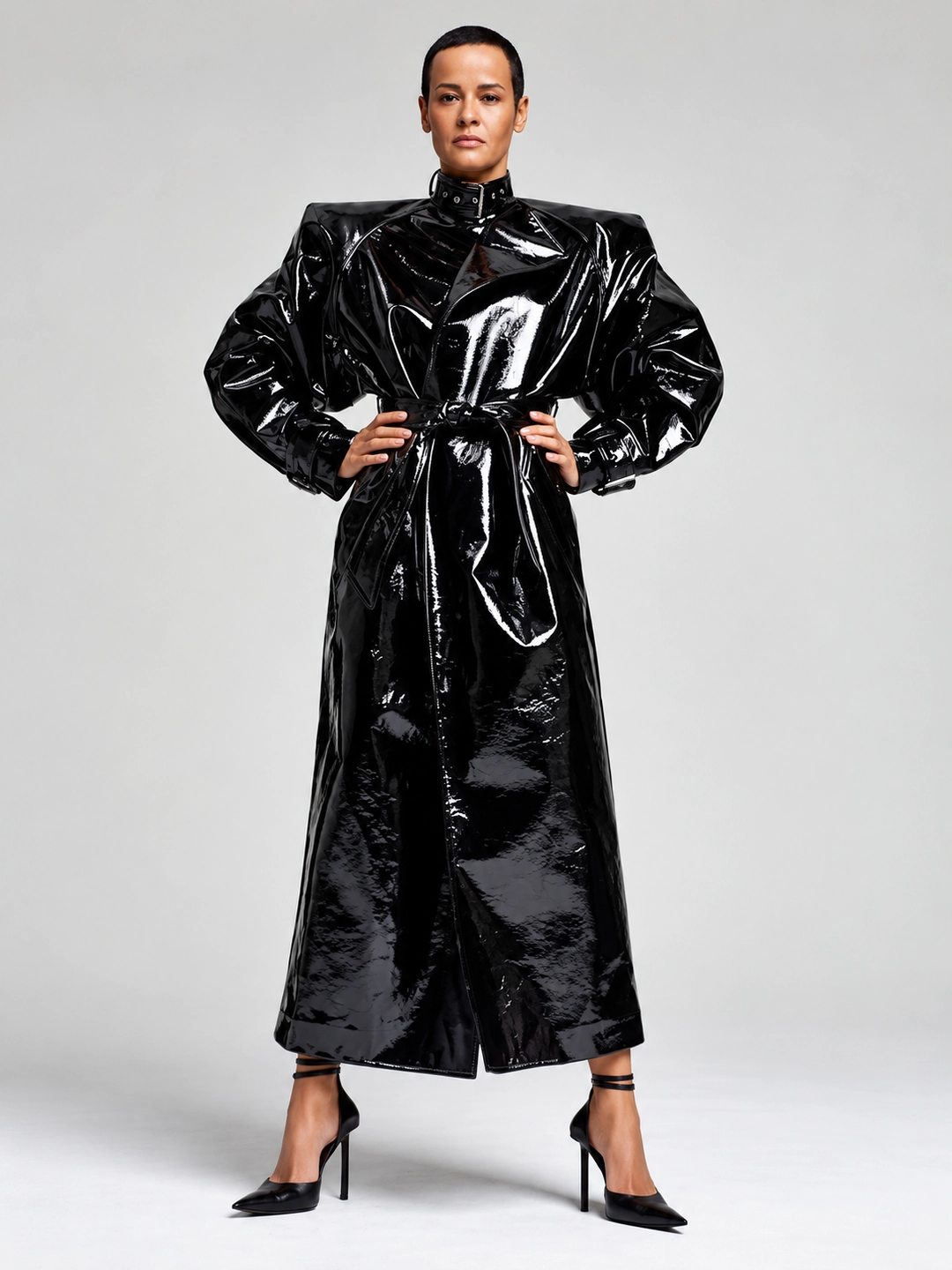
Graphic slogans are the bluntest element of the collection, occasionally so direct that clothes risk becoming carriers for a message already understood. Matières Fécales is more persuasive when resistance moves through the body itself: a concealed face, an aggressive gait, distorted denim, a silhouette refusing the etiquette expected of Parisian luxury.


Yet bluntness has its place in protest vocabulary. Protest rarely has the luxury of perfect ambiguity.
The setting deepens the contradiction. A collection dedicated to 99 percent still required barricades around a public square for an invited fashion audience, even though members of the public were also brought inside. The designers recognised that tension from the beginning.
Luxury fashion cannot erase its gatekeeping merely by staging resistance inside it. Matières Fécales SS27 becomes richer once that contradiction remains unresolved. Power has always been easier to criticise from outside the room. Matières Fécales is now inside, with attention, celebrity visibility and luxury pricing. Resistance from that position carries opportunity and compromise at once.
Couture has always known how to manufacture divinity.
Scale lifts the wearer away from ordinary bodies. Volume creates distance. Rare craft turns labour into something viewers are encouraged to perceive as magic. Fashion history then selects a few faces, dresses and designers to become permanent while countless hands supporting them disappear into the footnotes.
The final act redirects that machinery.


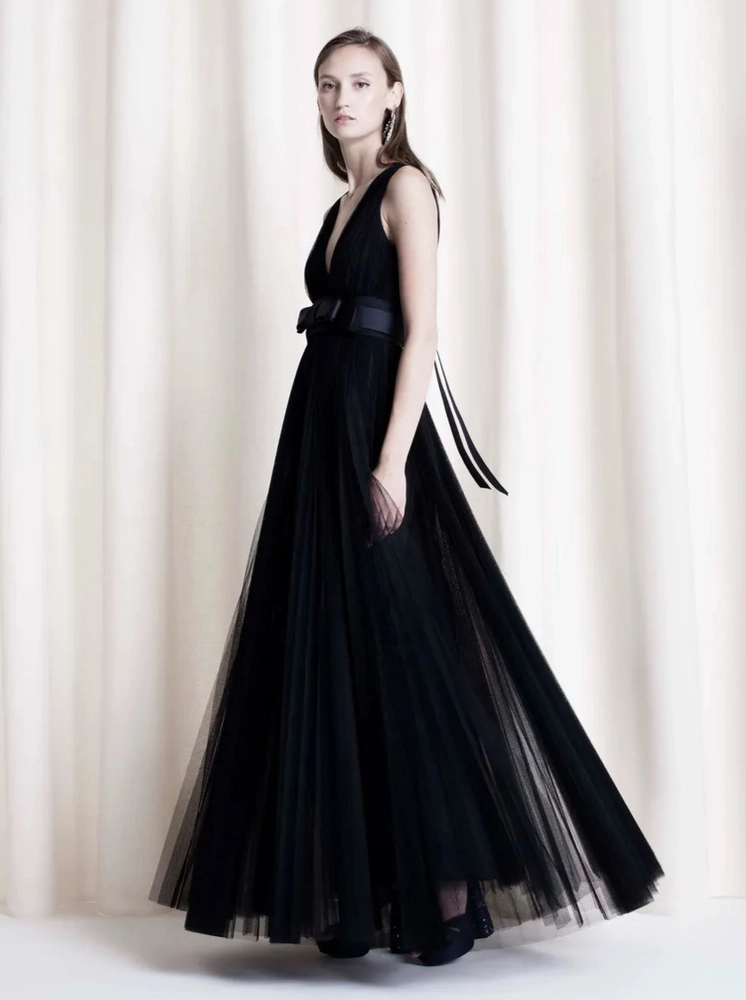
Craft also travels beyond the conventional borders of Paris. Textiles woven in Varanasi are transformed into couture-scale forms, while handwoven cotton from Burkina Faso moves into corseted eveningwear. One silhouette required hundreds of metres of tulle. The point extends past multicultural referencing. Techniques and textile traditions frequently treated as peripheral to the Western fashion canon are allowed to participate in the production of grandeur itself.
Opulence changes ownership.
Such gestures carry their own danger. Global craft can easily become another luxury resource extracted from the places that produce it. Cultural origin remains visible enough to resist complete absorption into anonymous Parisian fantasy. The fabric is allowed to arrive with geography attached.
Then the hierarchy turns physical.


The final figures carry hyperreal sculptures of wealthy white men whose eyes are covered with dollar bills, created by Sarah Sitkin. Bodies traditionally pushed toward the edge of fashion’s image literally bear the old symbols of economic power across their shoulders.
It is an unsubtle image, and subtlety would almost weaken it.
The 1% had allowed wealth to occupy the centre as grotesque protagonist. The 99 Percent reduces that power to dead weight.
For twenty minutes, The 99 Percent occupies the centre of luxury fashion. Bodies usually pushed toward their margins become monumental, their histories enlarged through couture scale, theatrical craft and the kind of visibility Paris knows how to manufacture so beautifully.
Then the runway ends.
Much of the debate surrounding Matières Fécales SS27 begins at precisely that moment. A collection built around 99 percent belongs to a luxury economy that much of that same population could never realistically access. The easy criticism writes itself: how can fashion claim to represent working-class lives while turning those experiences into objects priced for an entirely different economic class?
Calling the clothes couture does not dissolve the contradiction. In some ways, it sharpens it. Couture can function as symbolism, and art has never required its subject to afford the object depicting them. Steven Raj Bhaskaran also has every right to transform his own history into ambitious, expensive work. Growing up around scarcity should never sentence an artist to producing only what people from the same economic background can buy.

Yet representation and access remain two separate forms of power.
The 99 percent can become the image of luxury without gaining ownership of luxury itself. They can be photographed, celebrated, turned into saints, mothers, rebels and gods, while the economic structures surrounding those images continue largely unchanged. Once a collection speaks about empowerment, visibility alone begins to carry a heavier burden.
Matières Fécales has succeeded in making people historically excluded from fashion’s centre impossible to ignore. The harder question sits beyond the runway: whether being seen inside luxury can eventually alter who is allowed to participate in it, profit from it and shape what it values.
For now, the 99 percent have been invited to become the symbol.
The real provocation begins when we ask who still gets to own it.
Advertisement