MENU
Close





Through the hands of the twentieth century’s most inventive artists, high jewelry acquired an entirely different purpose, becoming a miniature universe of artistic experimentation.

Through the hands of the twentieth century’s most inventive artists, high jewelry acquired an entirely different purpose, becoming a miniature universe of artistic experimentation.
October 9, 2026


The history of jewelry is inseparable from the history of art. Ancient civilizations fashioned precious ornaments into symbols of divinity and authority, while Renaissance goldsmiths approached their craft with the same artistic ambition as painters and sculptors. Yet the twentieth century introduced a peculiar development. Artists who had already established themselves through painting, sculpture and conceptual experimentation began treating jewelry as an independent artistic medium.
Under the broad designation Bijoux d’Artistes, or artist's jewelry, these creations challenged familiar ideas about preciousness, craftsmanship and the relationship between an object and the human body.
Two figures exemplify the movement's extraordinary creative range. Alexander Calder approached jewelry as a direct extension of sculpture, hammering and bending metal into expressive wearable forms. Salvador Dalí pursued an elaborate world of gemstones, anatomical fantasies and mechanical illusions through collaborations with accomplished goldsmiths.
Their approaches helped define a fascinating artistic territory, subsequently explored by figures including Man Ray, Meret Oppenheim and Max Ernst. Within their creations, the boundaries between fine art and high jewelry grew increasingly fluid.
For Salvador Dalí, jewelry provided a compelling opportunity to materialize the impossible.
His Surrealist paintings had already established an elaborate vocabulary of melting forms, distorted anatomy, religious symbolism and dreamlike transformations. When translated into precious objects, these motifs acquired an extraordinary physical immediacy.
Dalí developed his most celebrated jewelry creations from the late 1940s, collaborating with Argentine-born goldsmith Carlos Alemany in New York. The artist prepared detailed designs specifying materials, colours and forms, while Alemany translated these visions into meticulously constructed objects.
Their partnership exemplified a different approach to luxury craftsmanship, with artistic conception and specialized fabrication occupying distinct yet complementary roles.
Among Dalí's most astonishing creations is The Royal Heart (1953), a gold and gemstone composition featuring a ruby-encrusted heart with a mechanical centre that appears to beat. Precious stones evoke the visceral character of living tissue, while the motorized mechanism introduces a disturbing illusion of biological life.
Movement becomes a form of psychological theatre.


Elsewhere, The Eye of Time transforms the human eye into a jeweled watch, connecting the physical act of seeing with the passage of time. Diamond-set anatomical imagery turns familiar bodily features into objects of contemplation, charged with Dalí's characteristic fascination with mortality and perception.
His jewelry also employed religious and mythological references, including crosses, celestial forms and fantastical animals. Gemstones became instruments for communicating meaning, their colour and optical qualities contributing to elaborate visual narratives.
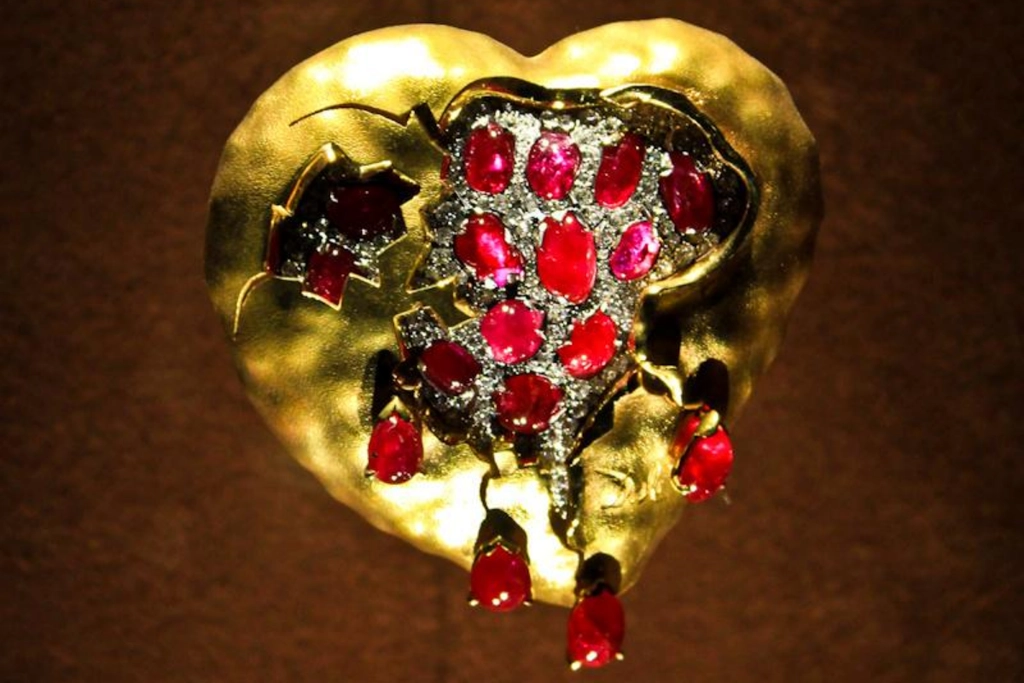

The collection now preserved by the Gala-Salvador Dalí Foundation in Figueres encompasses 39 jewels and associated preparatory drawings, offering an exceptional record of his approach.
Dalí demonstrated that high jewelry could function as an autonomous Surrealist artwork, capable of provoking wonder, discomfort and intellectual curiosity through objects traditionally associated with personal adornment.
For Man Ray, the relationship between an object and its expected function was a particularly fertile source of artistic experimentation.
His photographic practice frequently transformed familiar subjects through unexpected framing, manipulation and juxtaposition. Jewelry offered another opportunity to challenge everyday perception.
Working with Italian jeweler GianCarlo Montebello, founder of GEM Montebello, Man Ray developed a series of limited-edition objects translating his visual language into precious metal.
Optic-Topic, developed during the 1970s, remains among his most memorable creations. Constructed from gold-plated silver, the mask replaces ordinary lenses with perforated metallic surfaces. Tiny openings alter the wearer's field of vision, while the rigid structure evokes both protective eyewear and an enigmatic theatrical disguise.
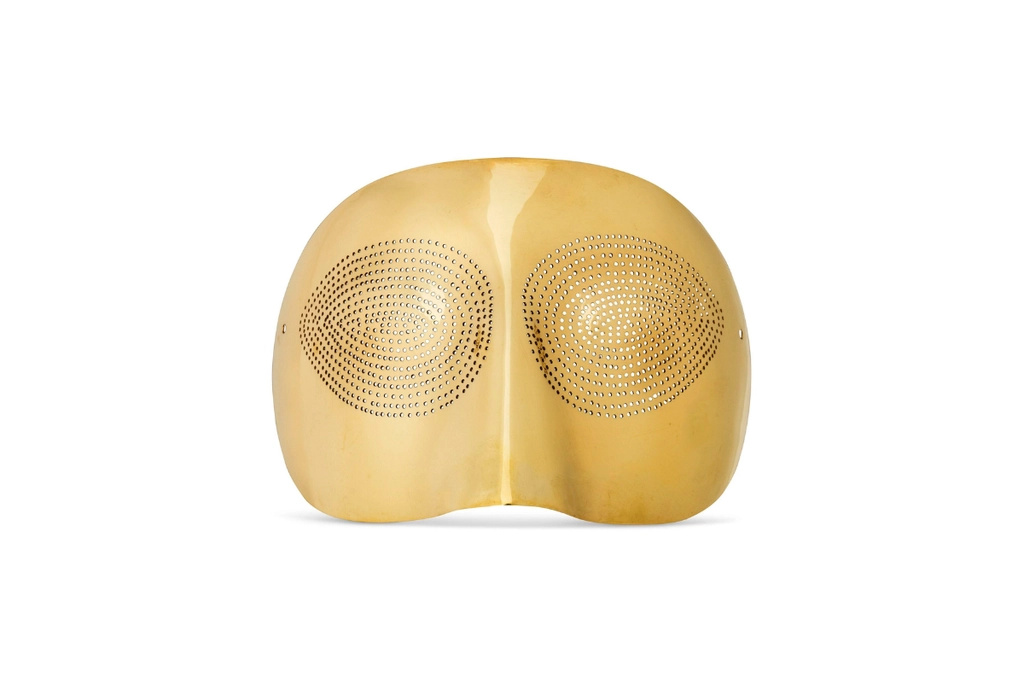
Its curious appearance reflects Man Ray's enduring interest in the instability of perception. An accessory associated with improving sight becomes a means of questioning how sight operates.
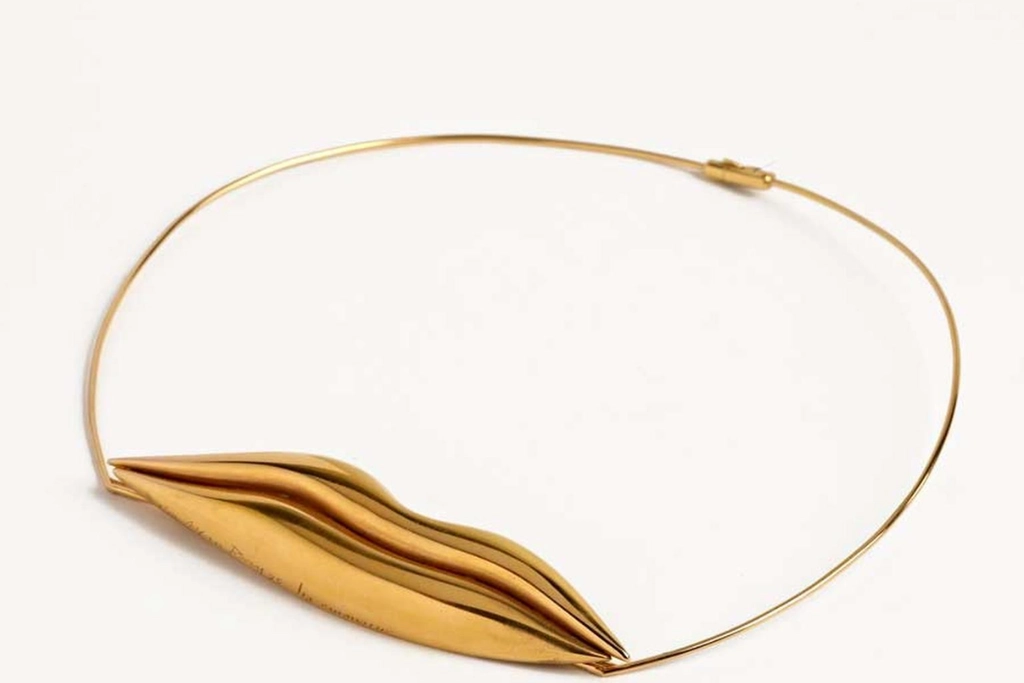
In Les Amoureux, executed as jewelry in 1973, the artist revisited the enlarged lips appearing throughout his Surrealist imagery, most famously in his painting À l'heure de l'observatoire: Les Amoureux. The familiar floating mouth acquired a new existence as a sculptural gold necklace.
Transferred from painting to jewelry, the lips develop an intensely intimate relationship with the wearer's own body. Their association with sensuality, desire and physical presence becomes impossible to separate from the experience of wearing them.
Man Ray approached jewelry through visual paradox, giving the medium an intellectual playfulness that remains remarkably contemporary.
Few artists approached the sensory possibilities of ordinary materials with the audacity of Meret Oppenheim, the pioneering female voice of Surrealism.
Her celebrated fur-covered teacup, Object (1936), remains one of Surrealism's defining images. Yet the conceptual origins of that creation are closely connected to jewelry.
During the mid-1930s, Oppenheim designed a brass bracelet covered in fur, an accessory that challenged the conventional relationship between material and function. Metal suggested solidity and permanence, while the fur introduced softness, warmth and unmistakable associations with the animal body.
The bracelet became connected with Elsa Schiaparelli's experimental fashion world, where Surrealist ideas were already disrupting conventional ideas of elegance.
According to the work's frequently recounted origin story, Oppenheim wore the bracelet during a meeting with Pablo Picasso and Dora Maar at a Paris café. Their conversation about covering everyday objects in fur subsequently contributed to the creation of her famous teacup.


Another remarkable experiment was the Sugar Ring, conceived in 1936. Its gold-plated silver setting accommodates an ordinary sugar cube, elevating an inexpensive, disposable substance to the position normally reserved for a precious gemstone.
The cube could be removed and replaced, introducing the possibility of deterioration and consumption into an object associated with permanence.
Later editions have included alternative inserts, such as synthetic corundum or other stone substitutes, further exploring the relationship between preciousness and perceived value.
Oppenheim's jewelry reveals the conceptual potential of material itself. A single unexpected substitution can destabilize an entire system of aesthetic and social expectations.
The jewelry of Max Ernst possesses an intriguing archaeological quality. His creations frequently resemble ancient amulets or ritual objects recovered from an imagined civilization.
Throughout his career, Ernst explored hybrid beings, birds, masks and mythological figures, developing a personal visual language that brought elements of the subconscious into contact with ancient cultural imagery.
During the late 1950s and early 1960s, his collaboration with French goldsmith François Hugo enabled these ideas to acquire a new material existence.
Hugo was especially accomplished in producing artist-designed objects through traditional goldsmithing techniques. Working with Ernst, he created medallions and pendants whose substantial forms retained the expressive irregularity of sculptural relief.
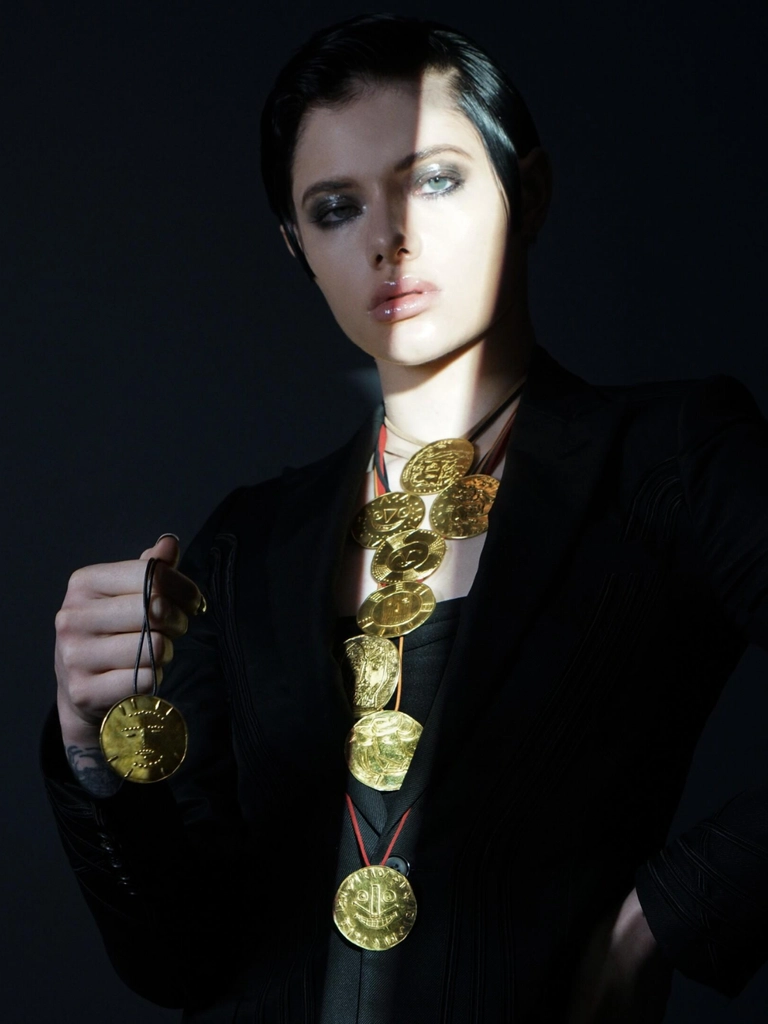
Tête à Cornes, a horned-head pendant, exemplifies their approach. Its abstract facial structure and projecting horns evoke an archaic figure, suggesting the visual authority of a ceremonial mask.

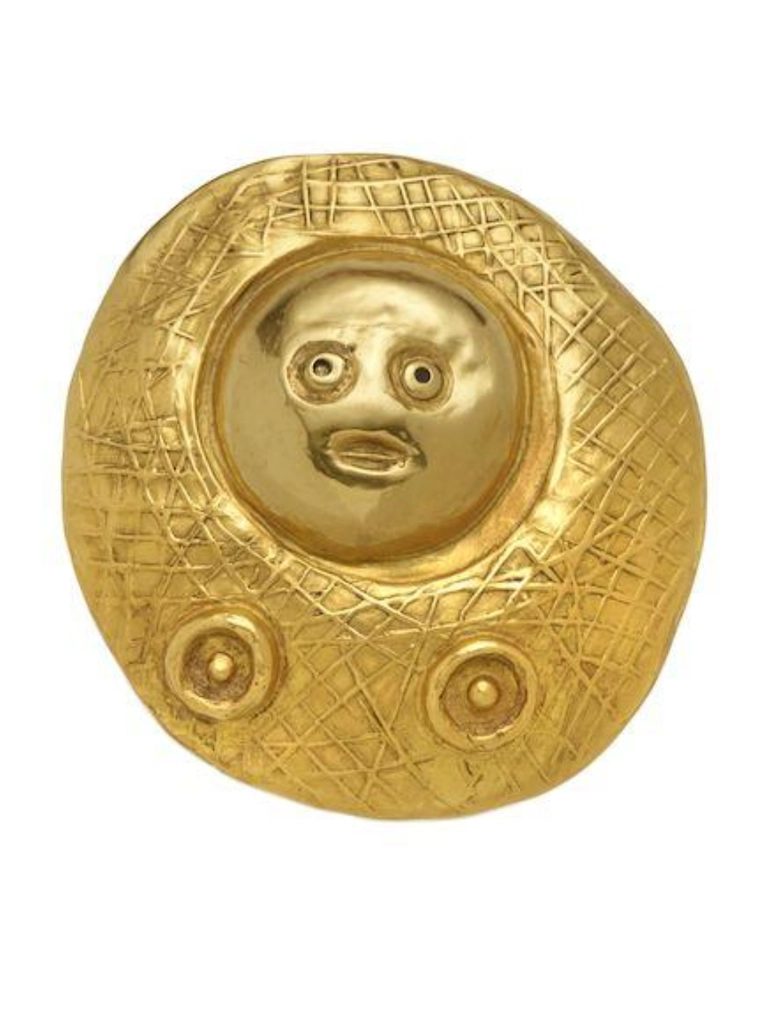
The precious metal enhances the work's physical presence, while its textured surface reveals an interest in the relationship between illumination and shadow.
Ernst's Masque and Grand Masque compositions further developed this vocabulary, translating ambiguous faces into substantial gold forms. Their surfaces suggest an imaginary history, as though the objects belonged to an ancient symbolic system.
Within the tradition of Bijoux d’Artistes, Ernst contributed a distinctive sense of ritual and mythology. His jewelry suggests that the impulse to wear symbolic objects remains deeply connected to humanity's earliest artistic practices.
The enduring significance of artist-designed jewelry lies in its unique relationship with the human body. A sculpture occupies architectural space, while a painting establishes its own visual territory. Jewelry inhabits a particularly intimate environment, accompanying the gestures, movements and daily experiences of its owner.
The artist's imagination consequently acquires a living context.
This intimacy also raises questions about authorship, reproducibility and value. A hand-hammered Calder necklace preserves the direct intervention of its maker, while the collaborative creations of Dalí, Man Ray and Ernst reveal how artistic ideas can be realized through exceptional specialist craftsmanship.
Their different production methods resist a single definition of what artist's jewelry ought to be.
More importantly, these objects invite us to reconsider the conventional distinction between art that is collected and art that is worn. A gold pendant can operate simultaneously as an intimate possession, an aesthetic experiment and an important cultural artifact.
Within this tradition, high jewelry acquires an extraordinary freedom. Its future remains open to artists willing to question the familiar meanings of material, beauty and the human body. The gallery wall may preserve an artwork for contemplation, but the person wearing it introduces a possibility that no pedestal can entirely provide: art participating in life itself.