MENU
Close





Paris received a distant rain from Huế for SS27. Nguyễn Phúc Tuấn carried the memory of an ancient capital across continents, gathering its mist, architecture, river light and quiet grandeur into a procession steeped in Vietnamese romance.
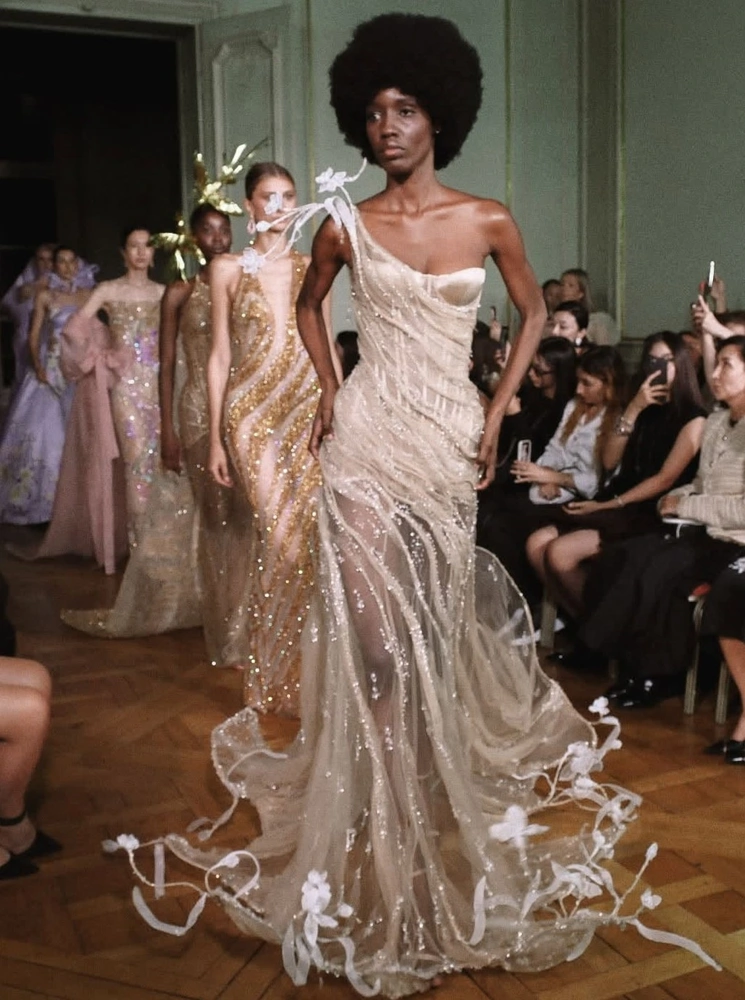
Paris received a distant rain from Huế for SS27. Nguyễn Phúc Tuấn carried the memory of an ancient capital across continents, gathering its mist, architecture, river light and quiet grandeur into a procession steeped in Vietnamese romance.
October 7, 2026
Advertisement
Advertisement


Rain in Huế carries its own temperament. It can veil the Imperial City in silver, soften the Perfume River into a muted horizon, blur Trường Tiền Bridge and linger long enough for architecture, landscape and memory to melt into one atmospheric image.
For Nguyễn Phúc Tuấn, that rain became the beginning of Numéro 6: Vũ khúc Cố đô, his Spring/Summer 2027 collection presented on September 30 at Maison de l’Amérique Latine in Paris.
The title already contains a small piece of poetry. “Vũ” evokes both rain and dance in Vietnamese, allowing Vũ khúc Cố đô to suggest a dance of the ancient capital as much as a choreography of rainfall. Across 31 looks, the designer gave that double meaning a physical rhythm.
Huế carries personal weight for Tuấn. He studied architecture there, absorbing a city where Nguyễn-dynasty heritage sits beside rivers, gardens, bridges and long seasons of tropical rain. Those memories have followed his practice for years. In Paris, they developed into an entire visual system.
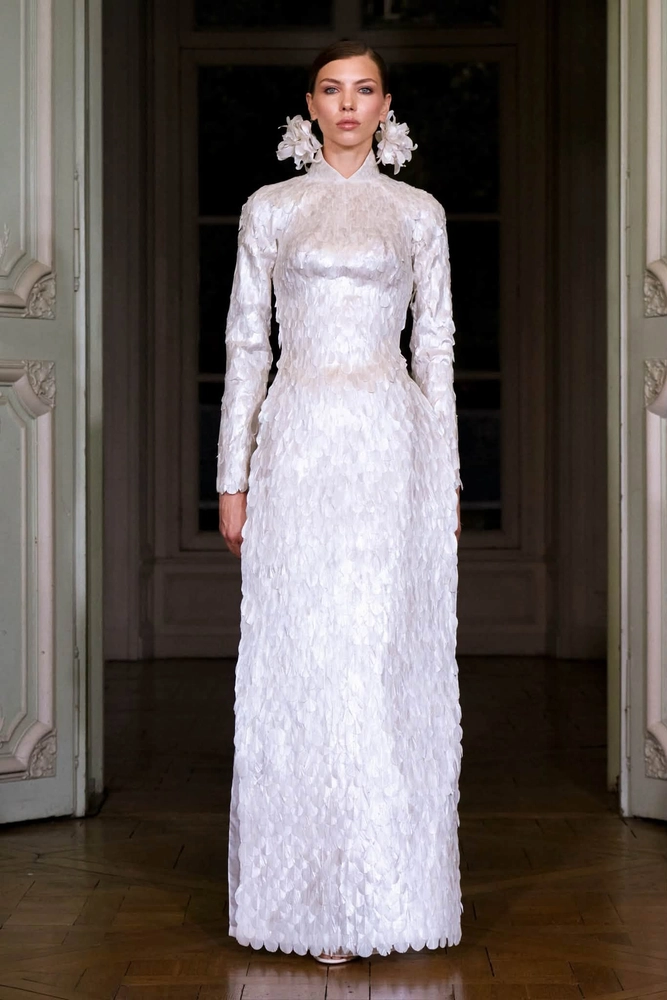
Nguyễn Phúc Tuấn divided the runway into three movements: Khởi Vũ, Chính Vũ and Quang Vũ. Together they traced the life of a rainstorm, from its first breath through its fullest intensity and finally toward clear light. Khởi Vũ opened in white.
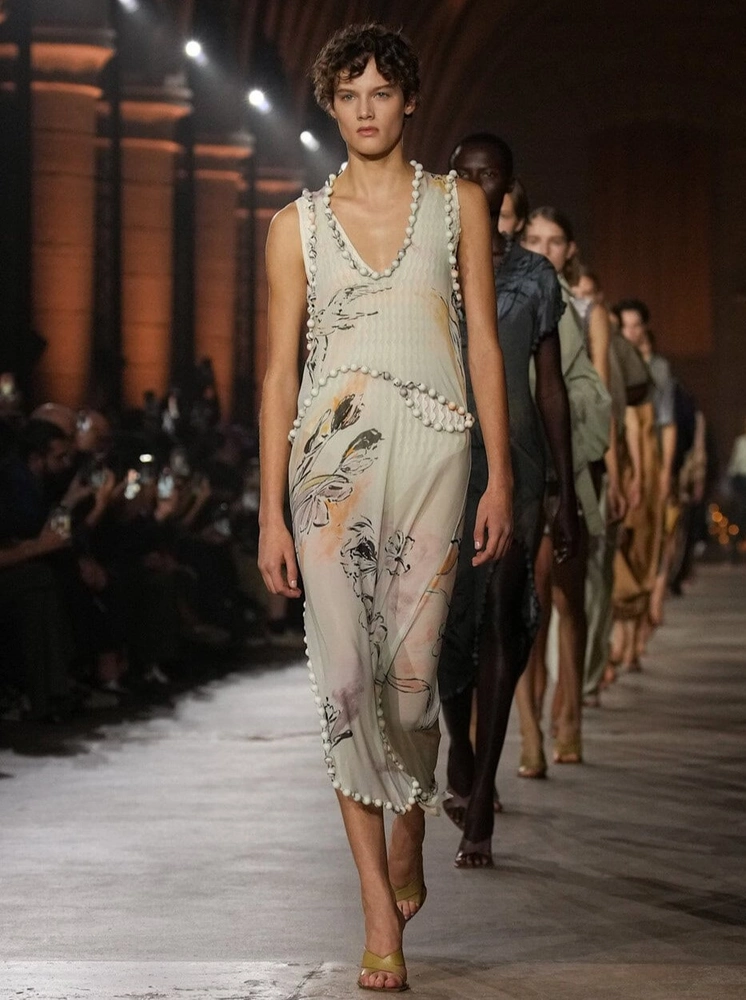
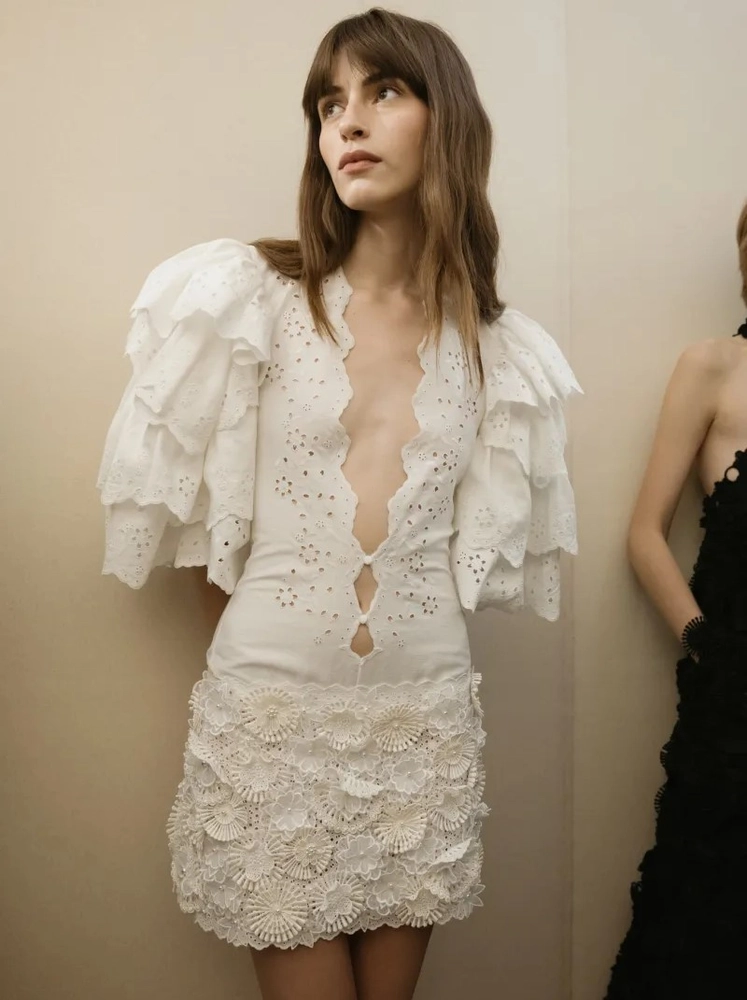
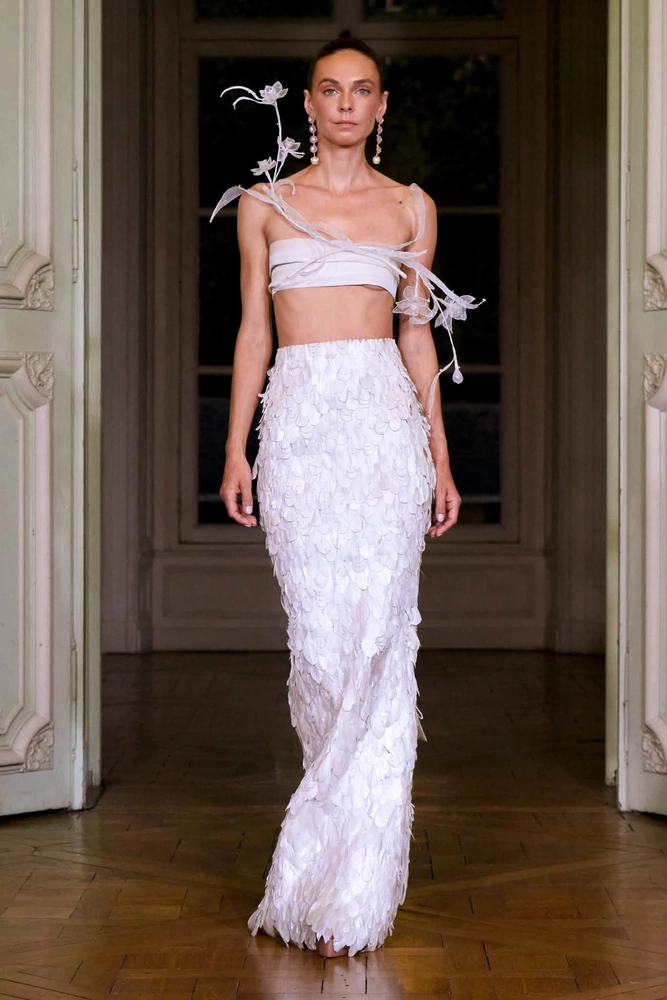
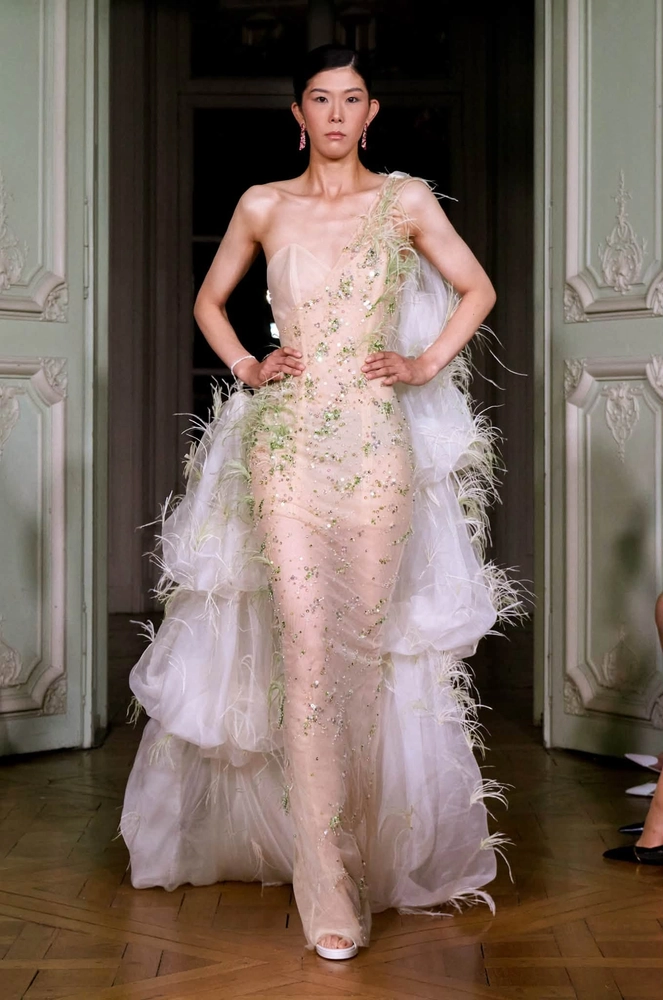
The first look carried the memory of the áo dài into a far more ethereal territory. An elongated form rose through translucent Bảo Lộc organza, while layers of feather-like work and three-dimensional narcissus flowers gathered around the neckline. Familiar Vietnamese proportions seemed to pass through mist, their outlines softened by transparency and movement. White here held the stillness before rain.
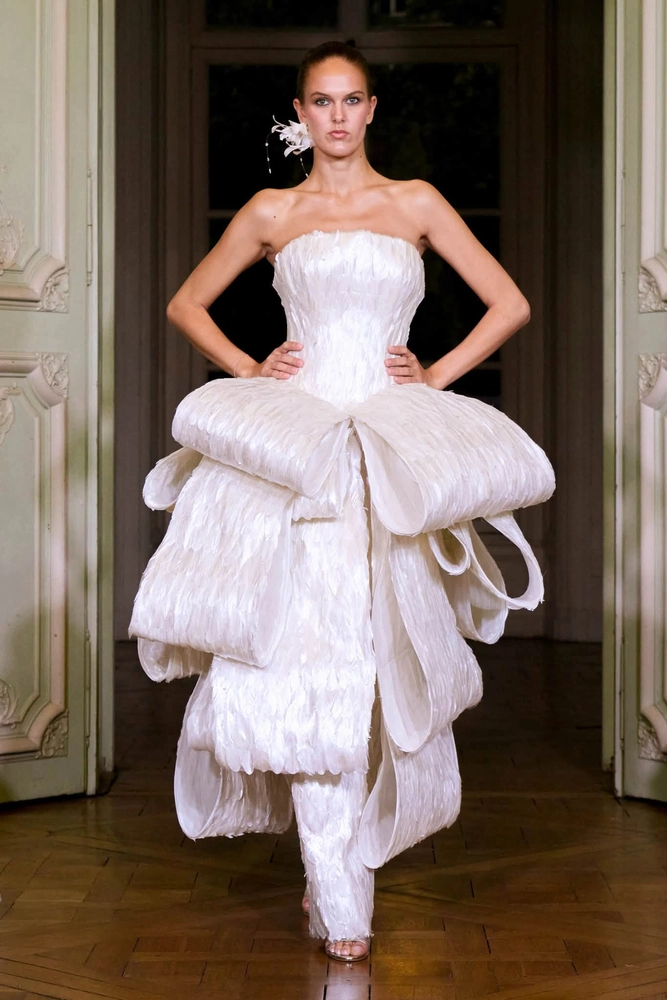

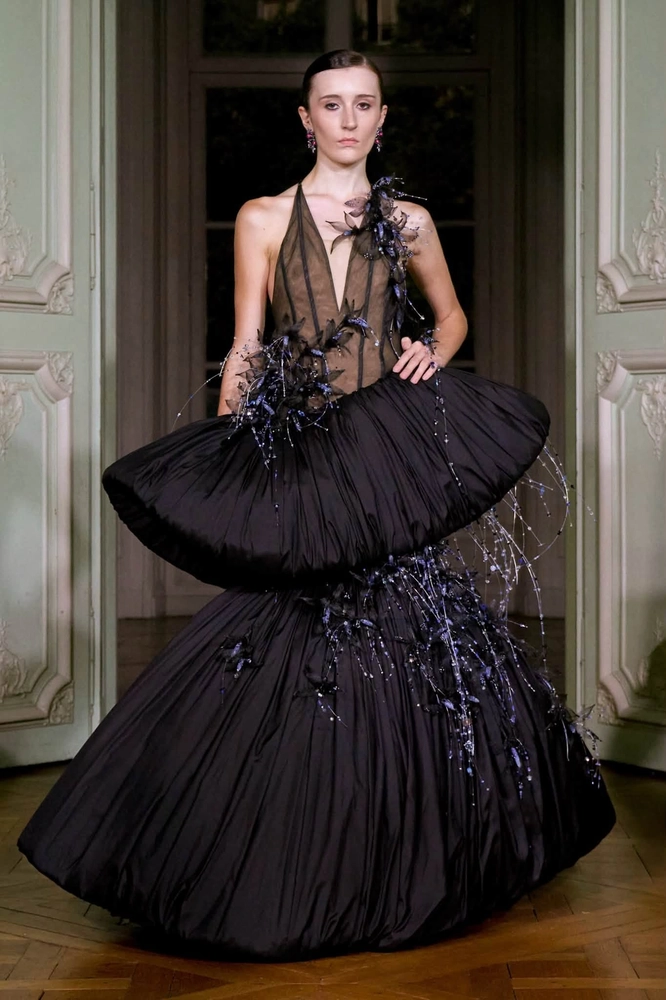
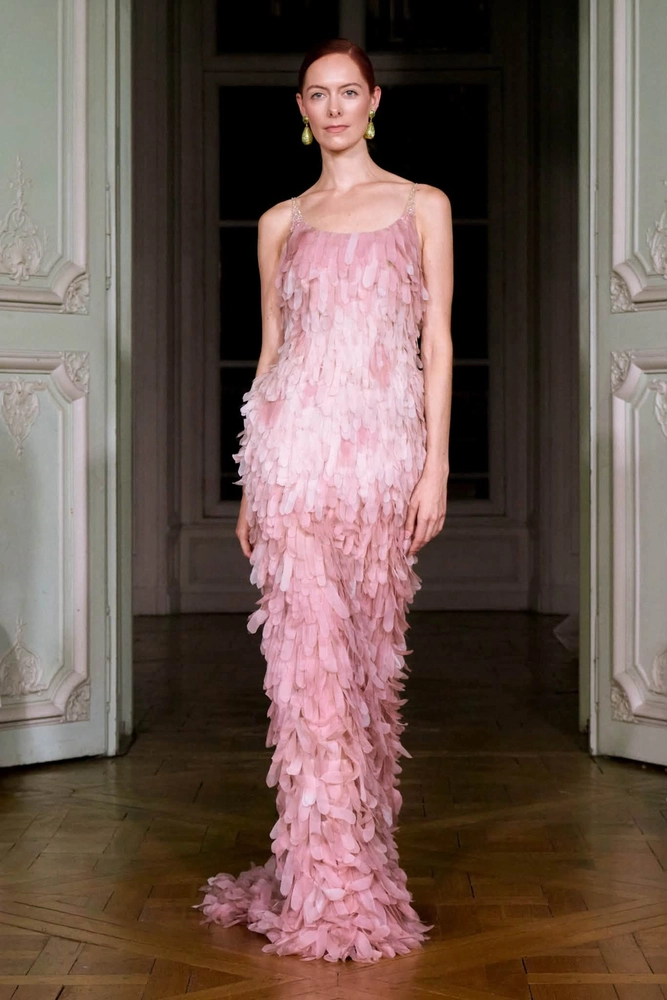
As Chính Vũ took over, the atmosphere deepened. Greens and blacks spread through the runway, surfaces became denser and silhouettes gathered greater volume. Curled three-dimensional elements multiplied across garments, creating the impression of rain becoming so heavy that the landscape itself starts to disappear.
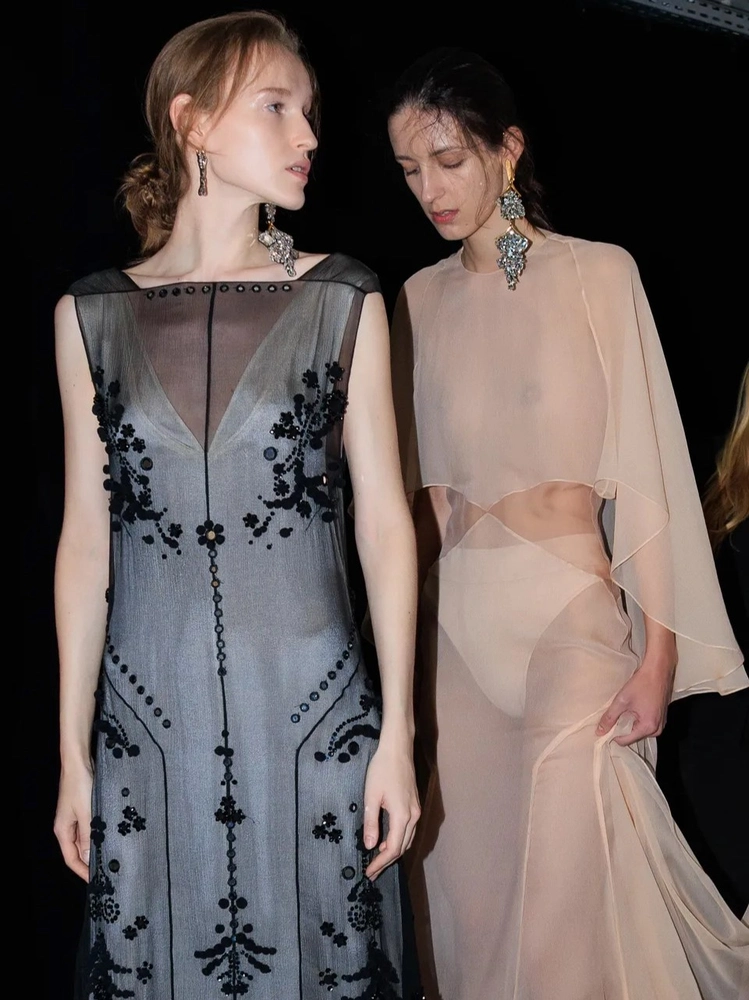
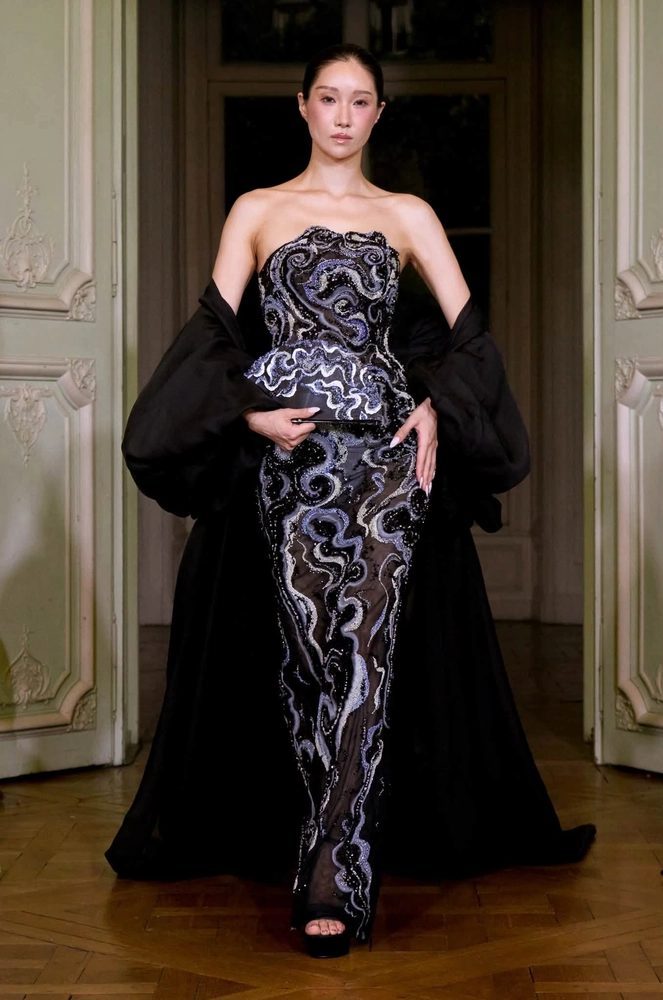
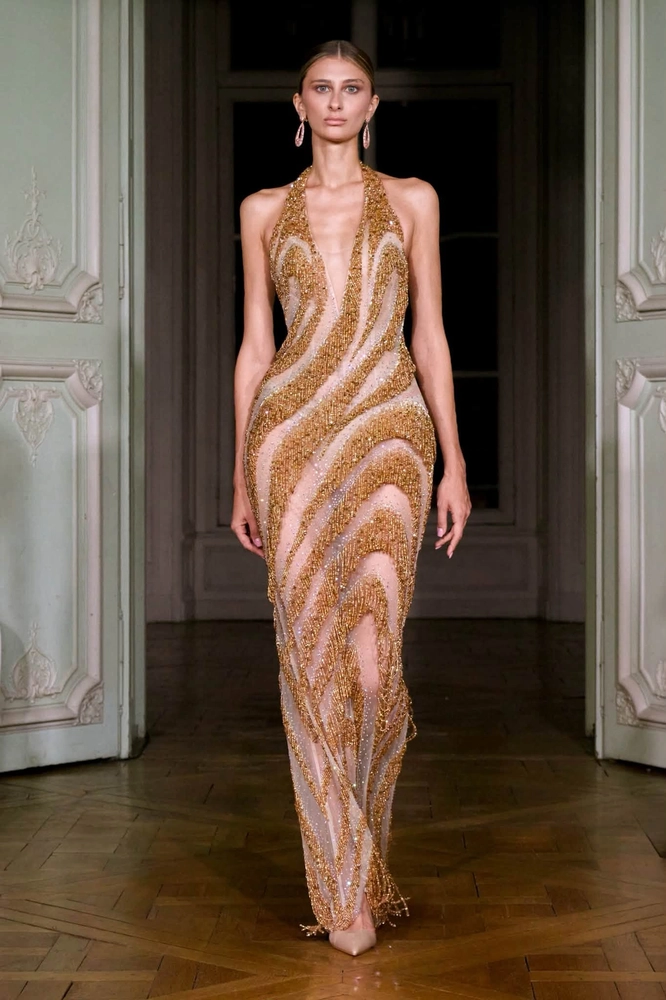
The visual rhythm grew increasingly lavish. Thousands of beads and crystals caught the light across voile and mesh. Layers swirled around tightly controlled corsetry. Colour appeared blurred and washed, recalling the way pigment seems to run when viewed through a wet window.
Tuấn approached the storm through accumulation. Embellishment, texture and volume gathered gradually until garments seemed almost saturated with weather.
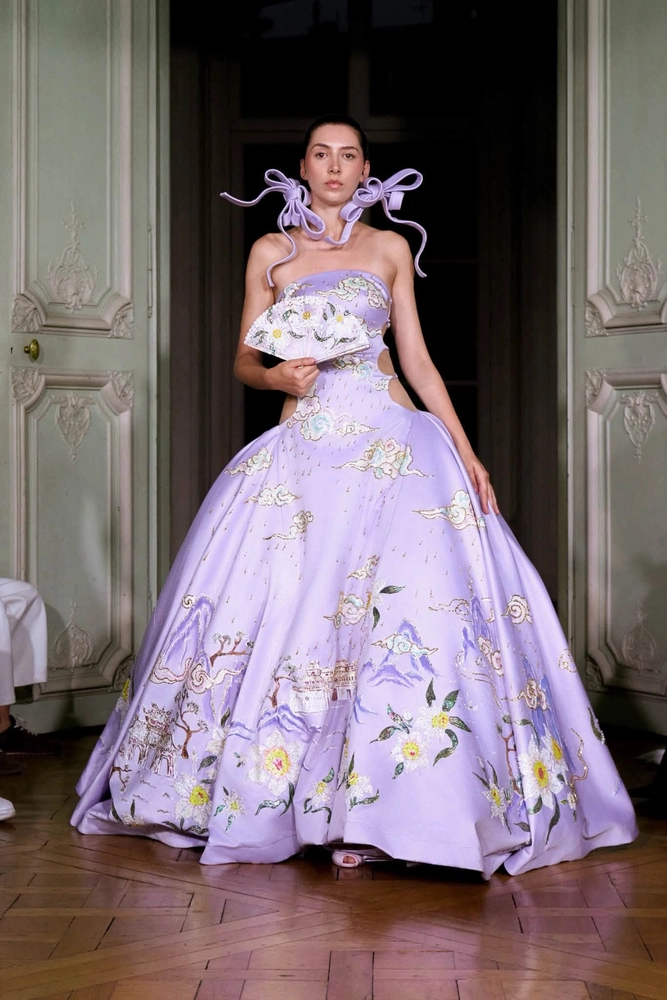
Then came Quang Vũ. Violet, luminous neutrals and white began opening the runway again. The tension of the storm softened. Shapes gained air. Light returned.
The entire sequence gave the show an unusually clear emotional architecture: anticipation, abundance, release.
Beneath the romance sits a highly structured way of working.
Before fashion, Nguyễn Phúc Tuấn studied architecture, and traces of that discipline remain visible in the way he builds clothing. Proportion carries enormous importance. Volume is considered around the body almost as an architect considers mass around empty space. Surface work follows an underlying structure capable of holding it.
For SS27, that architectural instinct met one material above all others: Bảo Lộc silk.
The Vietnamese silk runs throughout the collection, giving Tuấn a material capable of carrying several personalities at once. It can float, gather, glow, hold transparency or acquire greater physical presence through construction and layering. As models moved, light travelled across its surface, echoing the collection’s fascination with rain and changing atmosphere.
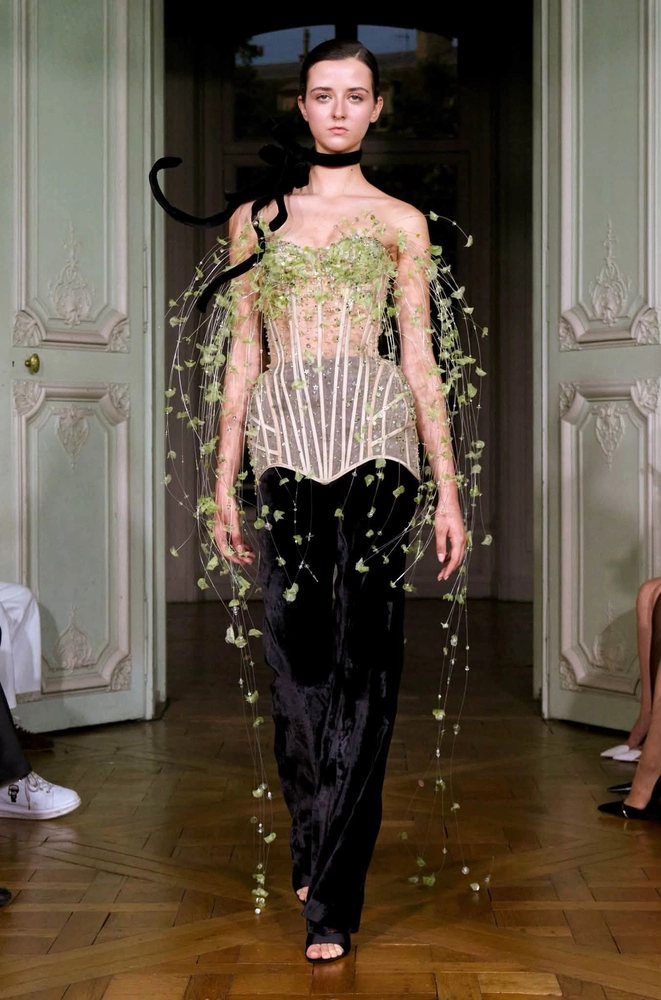
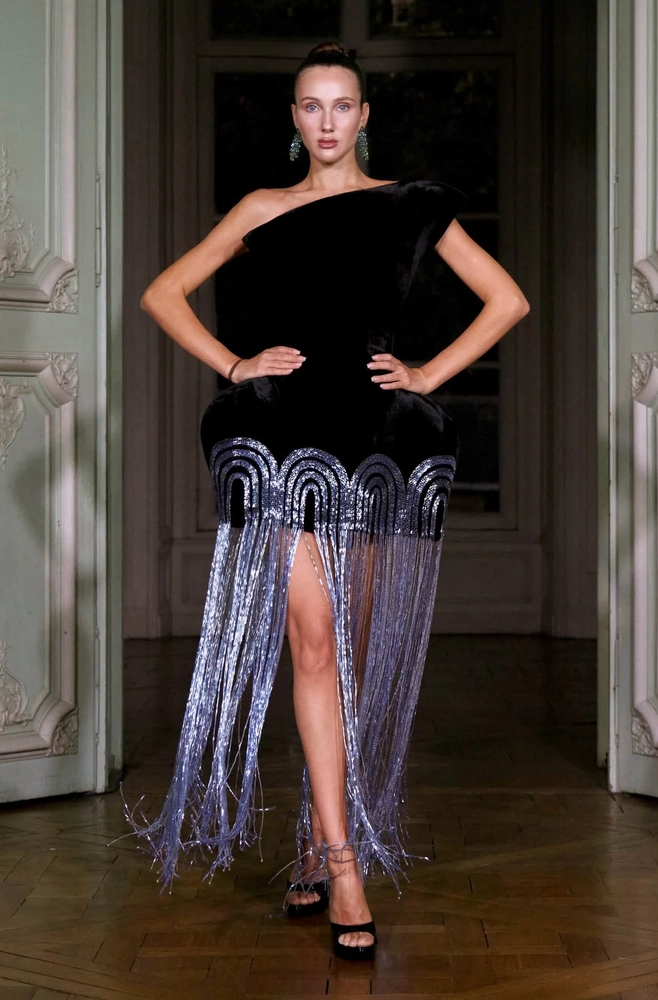
The designer allowed the nature of the textile to influence the clothes themselves. Several pieces reportedly passed through two or three complete remakes as his team pursued the exact movement required.
Such persistence reveals something important about the way Tuấn operates. Craft serves an image, and the image depends upon motion.
Bias-cut allowed fabric to follow the body diagonally. Layering created depth beneath transparent surfaces. Pleating introduced rhythm. Hand-cut voile generated feathered textures, while separate pieces were curled and formed individually before being assembled into larger surfaces.
Painting entered the process too. Colour spread across silk in irregular gradations, producing the haziness of a landscape seen through rainfall.
Elsewhere, beads and crystals were mounted through elaborate handwork, with stainless-wire structures supporting areas that required dimensional form.
For a collection about something as fleeting as rain, an extraordinary amount of physical labour went into making the illusion appear effortless.
The most compelling passages of Nguyễn Phúc Tuấn SS27 allow cultural memory to inhabit construction itself.
The opening áo dài provides an immediate example. Its Vietnamese identity survives through proportion and movement even as its traditional vocabulary is transformed through transparency, flowers and dimensional surface work.
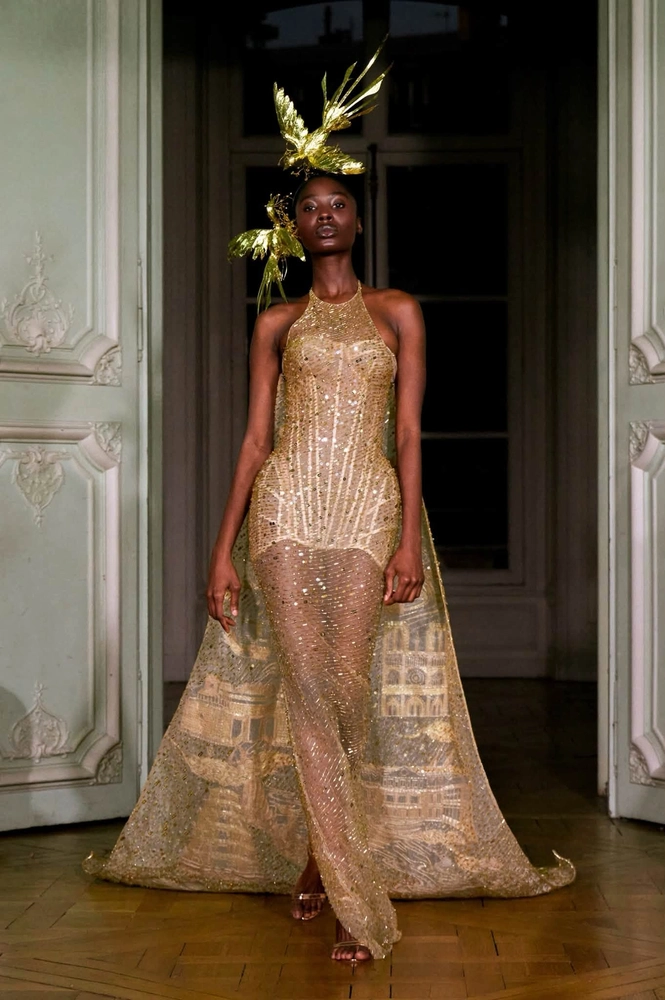
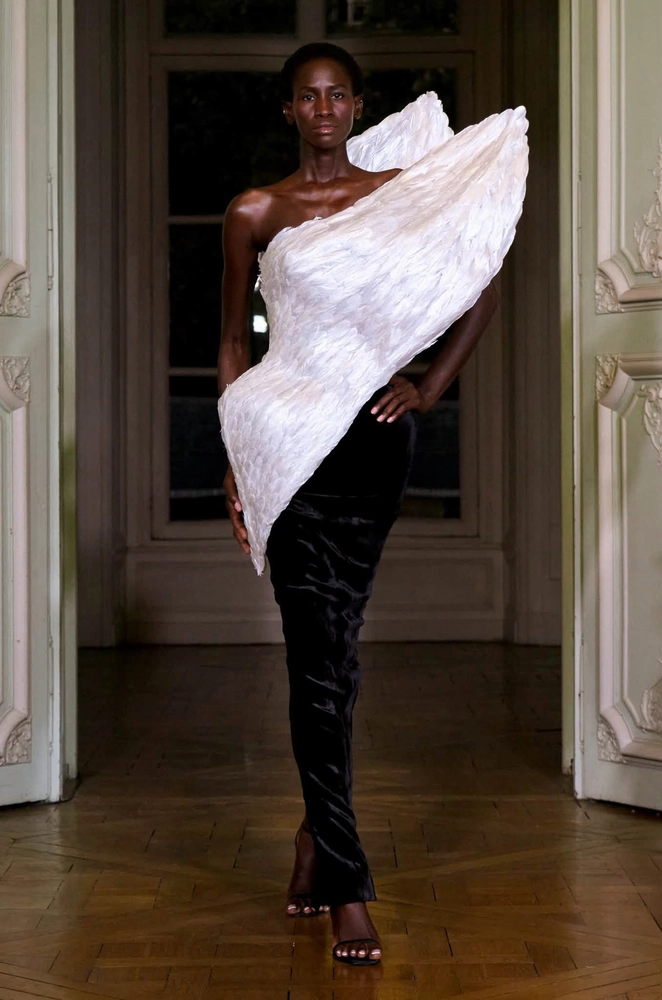
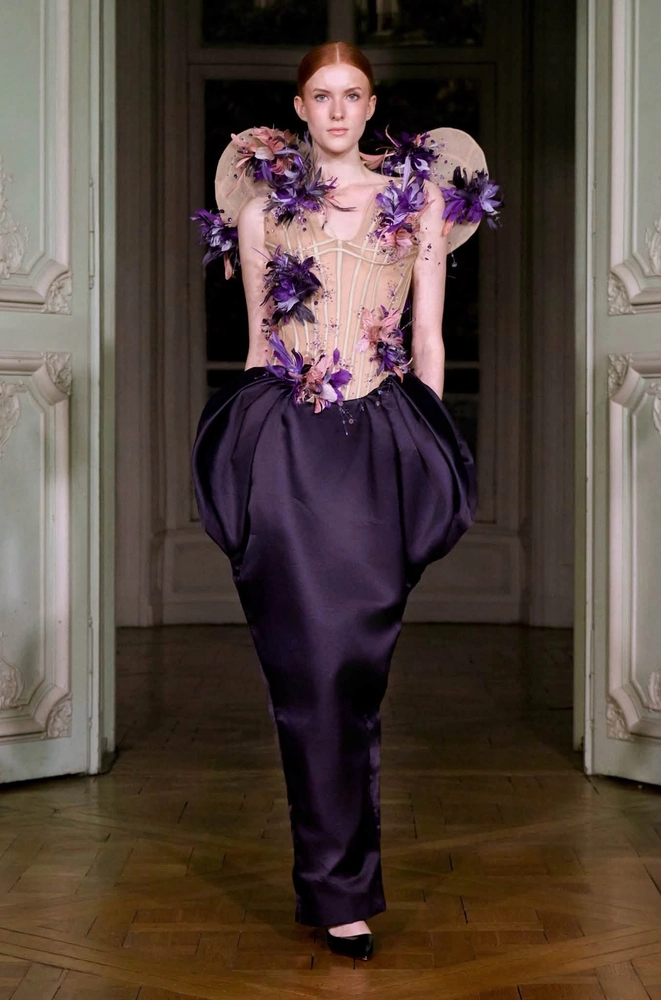
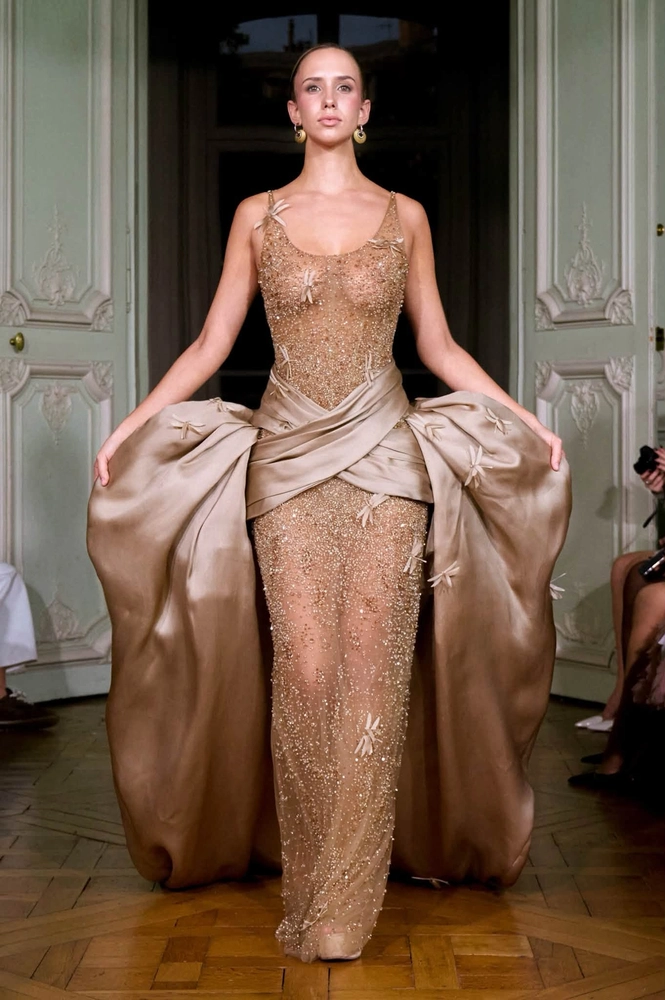
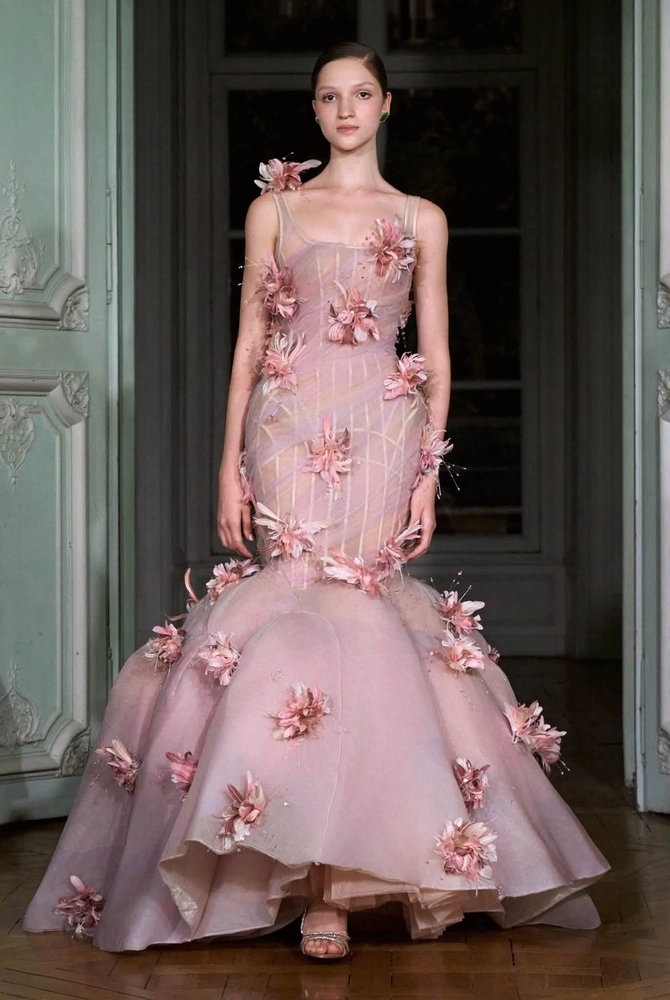
Elsewhere, the body becomes the stable centre of increasingly expansive forms. Column dresses appear beside generous outer structures, creating silhouettes built around a dialogue between containment and release. Nguyễn Phúc Tuấn SS27 embraces dramatic volume through extravagant mermaid silhouettes, balloon forms, bell silhouette constructions, peg-top hips and sweeping ballgown shapes. Each shifts the body differently, moving between sculptural control, ceremonial grandeur and the fluid drama of a storm in motion.
During the darker Chính Vũ passages, curled elements engulf dresses in thick, restless surfaces. They resemble feathers, leaves, petals and rainfall simultaneously. Their ambiguity enriches the collection. Nature appears through sensation rather than illustration.
Painted voile offers another of the runway’s most evocative ideas. Colour seems to dissolve through the textile, recalling the subdued greens, greys and violet shadows of Huế during the rainy season. The technique turns a piece of fabric into atmosphere.
Toward the final movement, the collection becomes more explicit in its cultural storytelling.
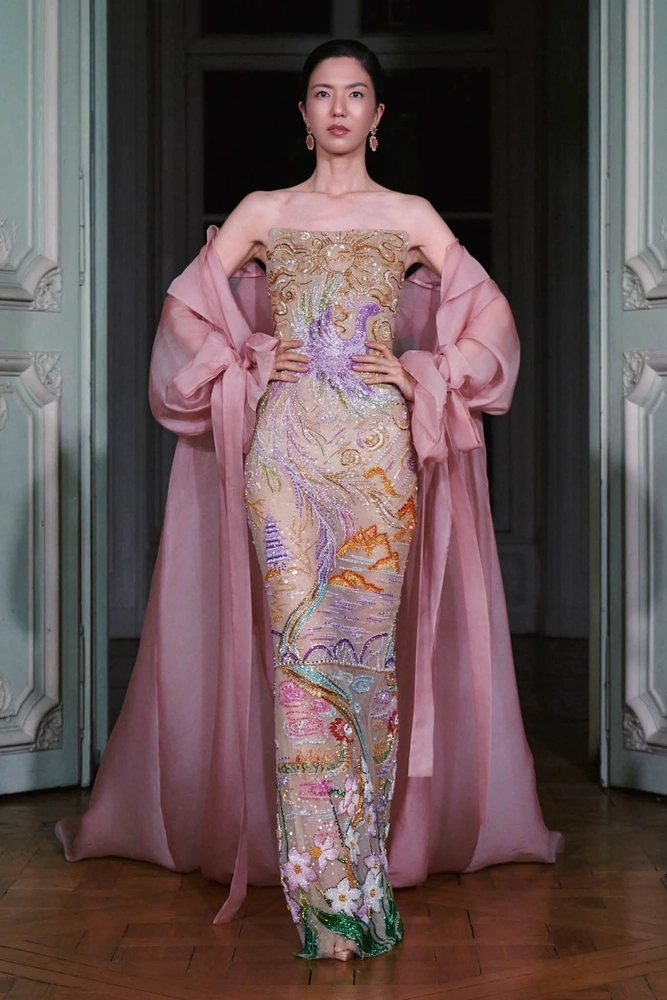
One of the most elaborate pieces, known as “Merci Paris,” brings Huế and Paris together across a single surface.
The form draws from the Vietnamese yếm, while its embellishment maps a meeting between two cultural landscapes. Trường Tiền Bridge and Thiên Mụ Pagoda appear alongside the Eiffel Tower and Versailles, assembled through crystals, sequins and intricate embroidery.
The workmanship reportedly occupied around two months. Here, the collection briefly moves from atmospheric memory into visual declaration. Huế gains landmarks. Paris gains landmarks. Their meeting becomes legible across the garment itself, almost like a richly embroidered postcard written from one cultural capital to another.
There is an appealing sincerity to the gesture. Paris represents far more than a runway location for an emerging designer. It remains one of fashion’s most symbolically loaded stages, carrying generations of mythology around couture, luxury and international recognition. Tuấn answers that mythology by placing the visual heritage of his own country directly beside it.
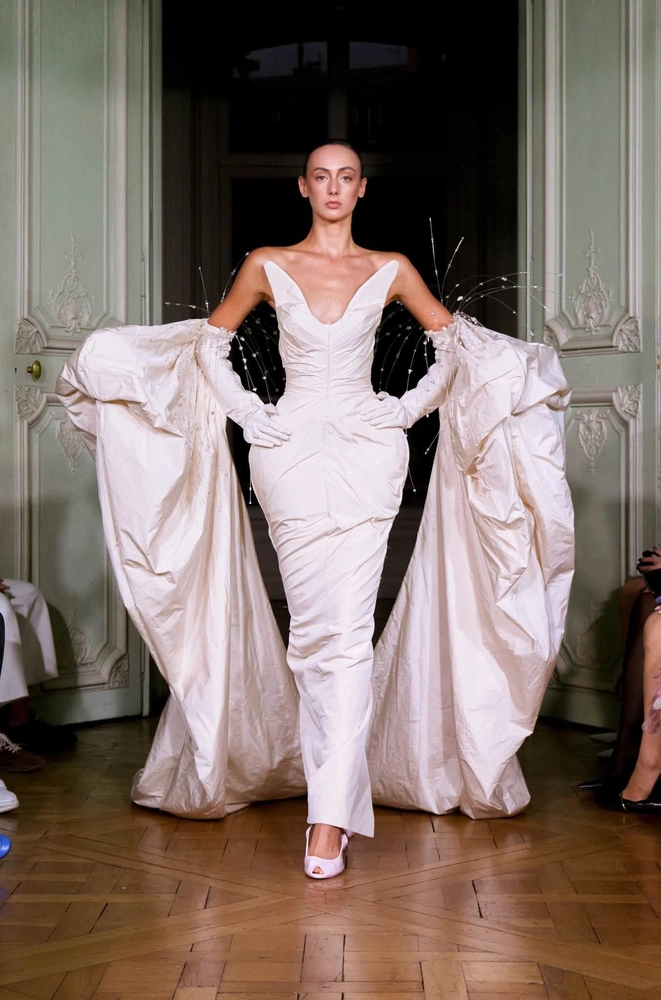
The storm eventually clears into white. For the finale, Nguyễn Phúc Tuấn presented a voluminous bridal creation in Bảo Lộc silk taffeta. Its scale brought ceremony back into the collection after the turbulence of Chính Vũ, closing the journey with brightness and expansion.
The return to white creates a circular rhythm. At the opening, white belonged to anticipation, mist and the first gathering of rain. At the close, it carried purification and clarity. The same colour had travelled through an entire emotional cycle.

That bridal conclusion also suited the collection’s underlying romanticism.
Tuấn embraces glamour wholeheartedly. His world welcomes sweeping volume, crystals, embroidery, dramatic femininity and ceremonial gestures. Even his references to landscape carry a sense of spectacle. Huế emerges as a place of rivers and rainfall, imperial memory and soft light, filtered through the sensibility of a designer attracted to richness.
Numéro 6 represents a significant chapter for a label founded in 2019. Across six collections, Nguyễn Phúc Tuấn has developed a vocabulary around Vietnamese silk, three-dimensional flowers, hand embellishment, draping and sculptural volume. Paris brought those signatures together on an international runway with a narrative large enough to contain them.
Even the collection’s scale reveals the designer’s ambition. The presentation reportedly began with plans for 25 looks before expanding to all 31 pieces, preserving the complete rhythm of the story.
The runway was followed by a Paris showroom presentation, extending the project from cultural statement toward the commercial work required of a fashion house seeking an international audience.
Yet the true milestone lies within the clothes themselves. Vietnamese fashion has frequently reached global audiences through immediately recognisable symbols: áo dài, embroidery, traditional craft and historical iconography.
Paris gave Nguyễn Phúc Tuấn a prestigious address for SS27, while Vũ khúc Cố đô gave Paris something deeply rooted elsewhere. In Paris, Nguyễn Phúc Tuấn allowed that rain to fall once more. This time, it fell in silk, crystal and light.
Advertisement