




The distance between the pavement and the front row has never seemed so short. Luxury streetwear, once a challenge to the industry's established hierarchy, now occupies some of its most prestigious creative positions. But as underground culture becomes part of the luxury establishment, can its rebellious spirit survive the weight of corporate expectations?

Luxury Streetwear and the Business of Being Cool
The distance between the pavement and the front row has never seemed so short. Luxury streetwear, once a challenge to the industry's established hierarchy, now occupies some of its most prestigious creative positions. But as underground culture becomes part of the luxury establishment, can its rebellious spirit survive the weight of corporate expectations?
November 19, 2026


Luxury houses have long drawn creative energy from worlds beyond the atelier, where cultural movements develop their own visual identities before entering the mainstream. Over the decades, luxury streetwear has transformed that exchange into an increasingly influential creative force, reshaping established ideas of exclusivity, craftsmanship and everyday dress.
Its influence now extends to the highest levels of creative leadership. Designers who built their reputations through independent labels and underground communities are being entrusted with some of the industry's most celebrated names. Their arrival reflects a shifting understanding of cultural authority, particularly at a moment when heritage alone can no longer sustain desirability.
Martine Rose's appointment at Balenciaga on November 6, 2026, brought that transformation into focus. Following Pierpaolo Piccioli's brief tenure, the French house selected a designer whose influence emerged from London's underground cultural landscape. The decision arrived amid a broader reassessment of how historic fashion houses cultivate desirability, particularly as slowing luxury demand places renewed pressure on their commercial strategies.
Across the portfolios of Kering and LVMH, the influence of streetwear has become embedded in the way luxury brands communicate, develop products and establish relationships with younger audiences. Its significance now extends far beyond the popularity of sneakers or oversized clothing. The conversation increasingly concerns the cultural authority behind the garments and the commercial possibilities that follow.
Luxury Streetwear Has Entered the Establishment
When Louis Vuitton collaborated with Supreme in 2017, the partnership was treated as a defining encounter between luxury and streetwear. The following year, Virgil Abloh's appointment as Artistic Director of Louis Vuitton menswear helped institutionalize a cultural shift that had been developing for decades. His work demonstrated how streetwear's relationship with music, contemporary art and youth culture could operate within a heritage house while influencing the broader vocabulary of luxury.


Nearly a decade later, that once-provocative combination has become an established part of the industry. The language of streetwear now informs the creative identities of houses whose historical foundations lie in couture, tailoring and leather craftsmanship. Its influence appears through casting, styling, collaborations and the increasingly elaborate cultural environments surrounding fashion shows.
The changing landscape also reflects the conditions in which luxury brands operate. According to LVMH's financial results for the first nine months of 2026, its Fashion & Leather Goods division recorded a 2% decline in organic revenue, including a 5% decline in the third quarter. Kering reported a 6% comparable revenue decline at Gucci during the same quarter. These figures illustrate the uneven recovery of luxury consumption, particularly as brands compete for consumers whose purchasing decisions have become increasingly selective.

Cultural visibility has consequently acquired considerable strategic importance. A designer with an established following can introduce a house to communities that may have previously regarded traditional luxury as distant or irrelevant. Their influence carries an existing network of associations, from musicians and artists to independent retailers and digital audiences.
The attraction is understandable. A heritage house possesses decades of institutional credibility, but its historical significance alone cannot guarantee contemporary desirability. Cultural figures bring another form of authority, developed through participation in communities that shape current tastes.
The challenge begins when that authority becomes part of a corporate strategy. Streetwear's credibility has traditionally depended upon its proximity to authentic cultural experiences, while luxury houses must translate creative attention into commercially sustainable businesses. Reconciling those priorities requires considerable sensitivity.
NIGO and the Cultural Language of Kenzo
Long before his appointment at Kenzo in 2021, NIGO had already developed a remarkably influential creative universe. His work with A Bathing Ape and Human Made connected Japanese street culture with vintage American clothing, music and collectible design, establishing an aesthetic whose influence reached far beyond Tokyo.
At Kenzo, that sensibility encountered the legacy of Kenzo Takada, another Japanese creative figure whose arrival in Paris had transformed European fashion through color, cultural exchange and unconventional approaches to dress. The relationship offered NIGO an opportunity to examine heritage through an identity already shaped by international cultural connections.


His Fall/Winter 2022 debut drew upon Takada's archival sketches and floral motifs, introducing them alongside varsity jackets, workwear and relaxed tailoring. The familiar vocabulary of contemporary streetwear became a means of interpreting the founder's exuberant spirit, allowing references from different periods and cultures to coexist within a coherent wardrobe.
Subsequent collections have continued developing that relationship. For Fall/Winter 2026, NIGO presented a collection inspired by the atmosphere of Takada's former Parisian home, drawing on intimate interiors, Japanese traditions and decorative motifs. The Kenzogram appeared across graphic knitwear, while comfortable silhouettes and accessories emphasized the ease of everyday dressing.


His appointment also reflects a broader recognition of cultural influence as an established creative discipline. In 2026, London's Design Museum dedicated a major retrospective to NIGO, tracing his contributions across fashion, music, design and craftsmanship. The exhibition presented over 700 objects, examining how his creative practice helped shape the relationship between streetwear and contemporary luxury.
Kenzo illustrates how a designer's cultural background can offer a fresh interpretation of a house's established identity. NIGO's significance extends into the network of references he brings with him, expanding the ways in which a European luxury brand can engage with global culture.
Pharrell Williams and the Fashion House as a Platform
When Pharrell Williams presented his debut Louis Vuitton menswear collection on Paris's Pont Neuf in June 2023, the spectacle carried the atmosphere of a cultural celebration. Music, celebrity and fashion converged around a historic Parisian landmark, demonstrating his ambition to position the house within a creative universe extending across multiple disciplines.
Williams arrived with a background developed through decades of work in music, design and collaborative projects. His influence within streetwear had already been established through Billionaire Boys Club, his partnership with NIGO and longstanding relationships with figures across fashion and contemporary culture.
At Louis Vuitton, those connections acquired a new institutional scale.
His collaboration with NIGO for Fall/Winter 2025 offered a particularly revealing example. Presented at the Cour Carrée du Louvre, the collection revisited the creative relationship between two figures whose contributions helped define the intersection of streetwear and luxury during the early 2000s.


Workwear, Japanese references and denim appeared alongside sophisticated tailoring and the house's established leather craftsmanship. Their shared history was also reflected in the return of the Millionaires 1.0 sunglasses, originally introduced through their 2004 collaboration with Louis Vuitton.
Williams has continued expanding the creative environment surrounding Louis Vuitton menswear. For Fall/Winter 2026, a futuristic residential structure developed with NOT A HOTEL became part of the runway setting, connecting fashion with architecture and contemporary concepts of living. Meanwhile, the collection explored functionality, material innovation and the evolution of traditional menswear.
Through these projects, the fashion show becomes a platform for cultural exchange, with clothing forming one element of a broader artistic proposition.

The commercial appeal of this approach lies partly in its ability to engage audiences across different creative fields. Yet Williams' work also reveals a tension that increasingly shapes luxury fashion: the elaborate cultural production surrounding a collection can acquire an identity of its own, raising questions about the relationship between spectacle and the garments presented.
The challenge for Louis Vuitton is to preserve the significance of its craftsmanship while cultivating the expanding cultural universe that has become central to its menswear identity.
Martine Rose and the Power of Belonging
At a Martine Rose presentation, the characters occupying the runway often appear to have emerged from the surrounding city. Football shirts, distorted tailoring, unconventional footwear and casually assembled outfits evoke the social codes of London nightlife and its diverse communities. Familiar clothing acquires unexpected proportions, revealing the peculiar beauty of garments shaped by everyday experience.
Rose's creative language has developed through nearly two decades of independent work. Her collections draw from music, football culture and the visual identities of different social groups, transforming those references through an experimental approach to construction.


Her collaboration with Nike and her designs for performers, including Kendrick Lamar, have expanded that influence across fashion and popular culture. Yet her work retains a distinct relationship with the communities that helped establish its identity.
Her arrival at Balenciaga represents another stage in the institutional recognition of subcultural creativity. Having previously worked as a menswear consultant during Demna's tenure, Rose returns with the resources and visibility of a global luxury house. Kering has emphasized her ability to connect with younger audiences and contribute to Balenciaga's continuing cultural evolution.
The appointment naturally evokes the history of streetwear's influence at Balenciaga, although Rose's creative vocabulary possesses its own particular character. Her work frequently explores identity through the irregularities of ordinary clothing, allowing garments to retain traces of the environments from which their inspiration emerged.
Her success at Balenciaga will depend upon how those instincts develop within an institution whose commercial expectations, production capabilities and audience reach differ dramatically from those of an independent label.
The opportunity is considerable, as is the responsibility of translating subcultural influence into a sustainable creative identity. Her first Balenciaga collection remains ahead, leaving its eventual direction open to interpretation.
The Price of Cultural Relevance
The growing authority of luxury streetwear arrives at an uncomfortable moment for the industry. Creative directors are increasingly expected to command cultural attention while delivering commercially convincing results, often within remarkably compressed timelines. The ability to build communities, generate online engagement and produce recognizable products has become an attractive proposition for conglomerates seeking to restore momentum. Yet whether this represents a sustainable creative strategy or another attempt to accelerate consumption remains uncertain.
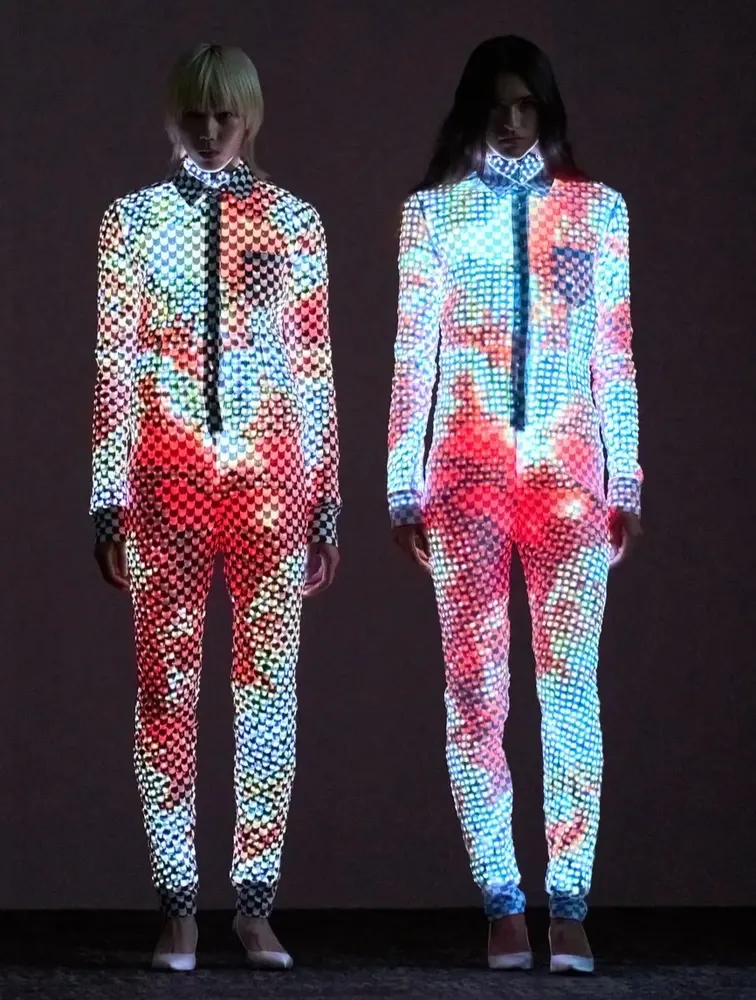
For independent designers, the consequences of such expectations can be particularly severe. On November 4, 2026, Coperni announced it would cease operations following an unresolved dispute with its majority shareholder and distributor, Tomorrow. Founded by Sébastien Meyer and Arnaud Vaillant, the Parisian label had developed a reputation for technological experimentation, from Bella Hadid's spray-on dress to robotic dogs accompanying models on the runway. Its creative ambitions had generated international attention, yet the company's financial difficulties and conflicts surrounding ownership ultimately brought its operations to an end.
Coperni's closure cannot be reduced to a failure of creativity or consumer demand. Its circumstances involved disputed payments, financial instability and the complicated relationship between independent designers and external investors. Nevertheless, the outcome exposes a vulnerability within an industry that celebrates innovation while requiring the financial structures supporting it to remain commercially viable. Cultural recognition can establish a designer's reputation without guaranteeing the resources necessary to sustain their work.
The contradiction becomes especially striking when considering the legacy of Lee Alexander McQueen. His collections frequently challenged the boundaries of taste, spectacle and conventional beauty. Highland Rape in 1995 provoked fierce criticism, while the theatrical experimentation of No. 13 and Voss expanded the possibilities of the runway into performance and psychological confrontation. The controversy surrounding his work formed part of his career even as those collections eventually became celebrated chapters of design history.
Imagine those collections arriving in today's accelerated commercial environment, subjected to immediate online judgment, shifting audience expectations and the pressure to demonstrate financial returns. Would their creative ambition have been allowed to develop through years of experimentation, criticism and occasional failure? Or would the uncertainty surrounding such an uncompromising vision encourage an earlier change of direction?
The answer remains unknown. Yet the question exposes how easily the celebration of artistic freedom can become disconnected from the conditions required to sustain it.
Streetwear itself offers no guarantee of rapid profitability. Its cultural credibility depends upon relationships and creative identities that often take years to establish. When those qualities are recruited into corporate strategies designed to deliver immediate relevance, the danger lies in treating a complex cultural language as a repeatable commercial formula. The resulting products may generate attention, but their ability to sustain desirability depends upon what the designer is permitted to develop beyond that initial excitement.
Perhaps the industry's current enthusiasm for streetwear will lead to a lasting transformation of luxury, expanding its creative vocabulary and opening prestigious institutions to voices historically excluded from them. The appointments of Martine Rose, NIGO and Pharrell Williams certainly suggest that cultural authority is being reconsidered.
But the ultimate significance of this transition will be determined by the freedom those designers retain once their cultural influence has been incorporated into the business.
If luxury's future belongs to those capable of generating the quickest returns, what happens to the creative minds whose greatest contributions can only emerge through years of uncertainty?
And if every experiment must justify its existence before it has the opportunity to mature, perhaps the industry risks sacrificing the very originality it claims to pursue.