MENU
Close





Denim fabric seems to remember more than most textiles do. A trace appears where the body bends, another where a hand returns to the same pocket, until an ordinary blue surface starts carrying something strangely personal.
Denim fabric seems to remember more than most textiles do. A trace appears where the body bends, another where a hand returns to the same pocket, until an ordinary blue surface starts carrying something strangely personal.
August 25, 2026
Advertisement
Advertisement


Before denim became almost inseparable from jeans, it was simply a cloth built to endure. Dense cotton yarns, a diagonal twill and an unusually persistent blue gave it the practical toughness demanded by bodies at work.
Then something unexpected happened. Wear stopped looking like damage and became part of denim's beauty. Creases grew paler, seams sharpened into streaks of blue and every abrasion began recording the person inside the garment.
Look closely at a pair of classic blue jeans and a tiny diagonal landscape begins to appear. Those slanting ribs are the visible signature of denim fabric, traditionally a sturdy cotton textile woven as a warp-faced twill. The coloured warp yarns dominate the face, while lighter weft yarns sit more visibly on the reverse, creating the familiar blue exterior and paler interior. Classic constructions commonly use 2/1 or 3/1 twills, with 3/1 especially associated with substantial jeans denim.
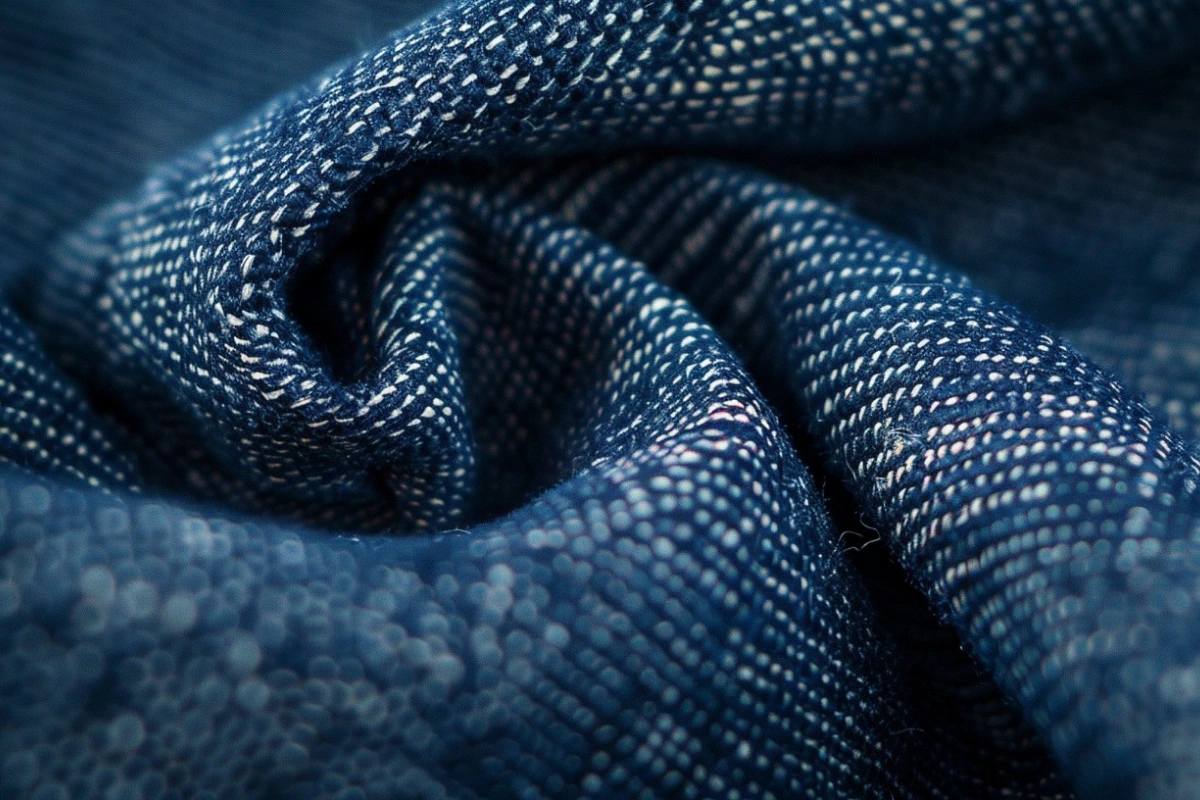
Denim and jeans belong to the same story, although the words describe different things. Denim is the fabric. Jeans are garments, historically trousers, made from them. The distinction reaches deep into textile history: earlier “jean” fabrics were related workwear textiles with their own constructions and fibre mixtures, while modern blue jeans became closely associated with denim. The Fashion Institute of Design & Merchandising traces “jean” to textiles connected with Genoa, whose French name, Gênes, helped shape the English word.
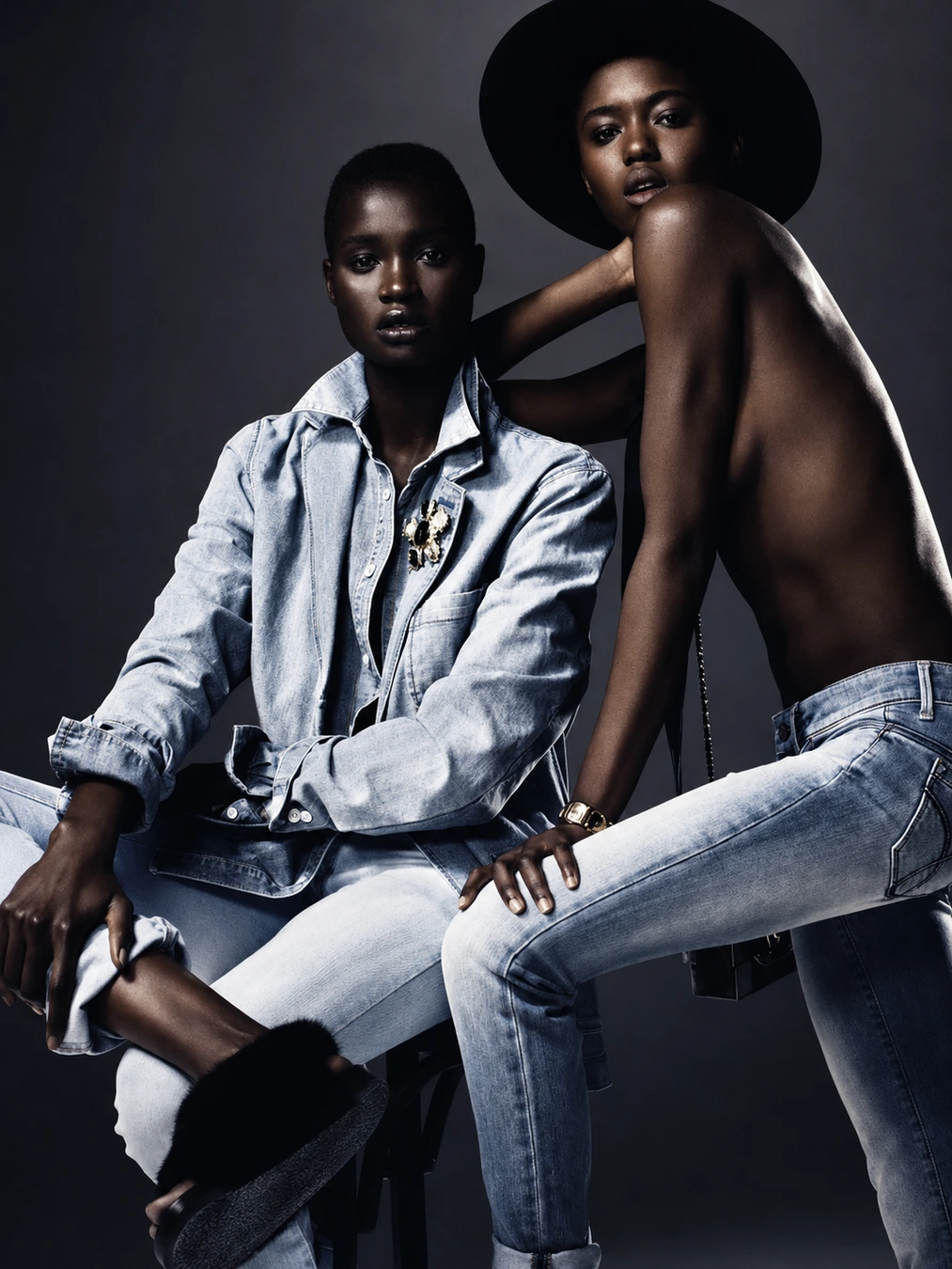
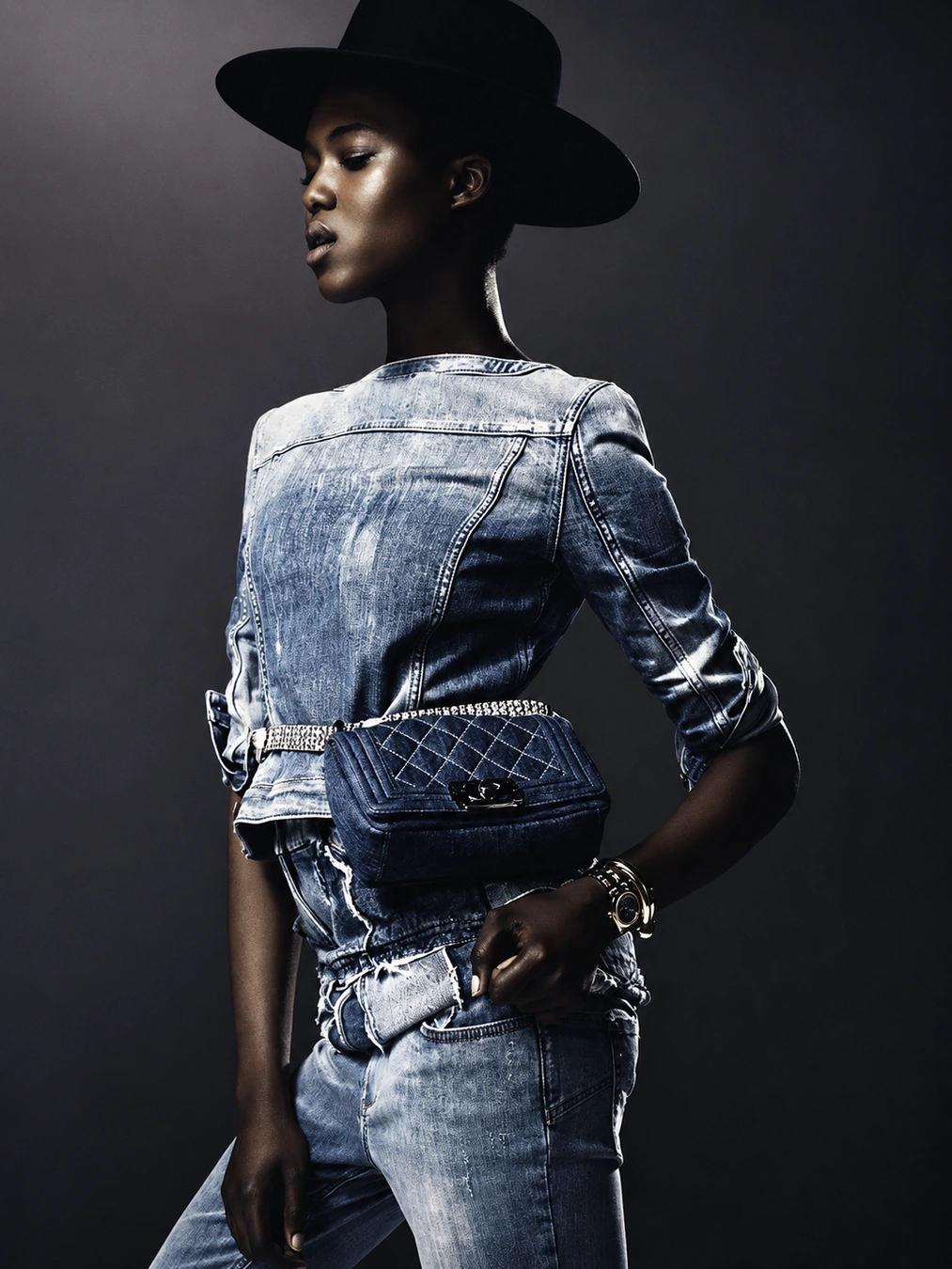
Cotton remains the classic fibre because it supports denim's combination of strength, absorbency and gradual softening. Contemporary mills can introduce elastane for stretch, polyester for dimensional stability, or other fibres to alter drape, recovery and weight. The resulting cloth can move from crisp, heavyweight raw denim to supple shirting weights and fluid fashion denim while retaining the twill structure that gives the family its recognisable character.
A spool of cotton yarn seems far removed from the dark, rigid cloth stacked inside a denim mill. The transformation begins by preparing separate sets of warp and weft yarns. In traditional blue denim, the warp receives the colour while the weft usually retains its natural or pale tone. Once woven, the higher visibility of those coloured warp threads gives the face its concentrated blue appearance.
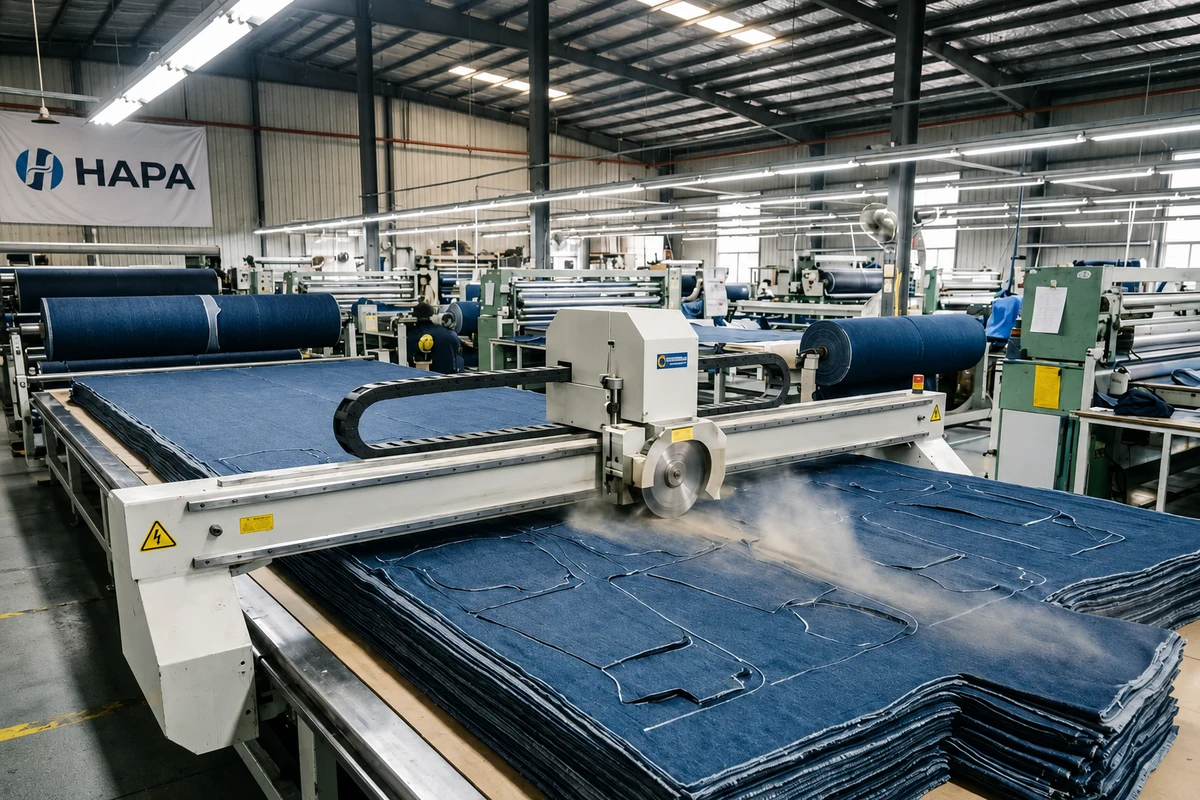
Indigo creates one of denim fabric's most unusual relationships with colour. During conventional industrial denim dyeing, warp yarns pass through repeated dyeing and oxidation stages. Indigo develops its blue colour as the yarn meets the air, while much of the colour remains concentrated toward the yarn surface. As wear gradually abrades that outer layer, lighter cotton beneath becomes visible. Every whisker at the hip and pale line along a seam is therefore connected to the construction of the yarn itself.
Rope dyeing is especially associated with denim prized for pronounced ageing. Groups of warp yarns are gathered together, repeatedly dipped into indigo and exposed to air between immersions before being separated again for weaving. Industrial production may also use continuous sheet or slasher dyeing systems, allowing warp yarns to move through the dyeing process in a flat formation.
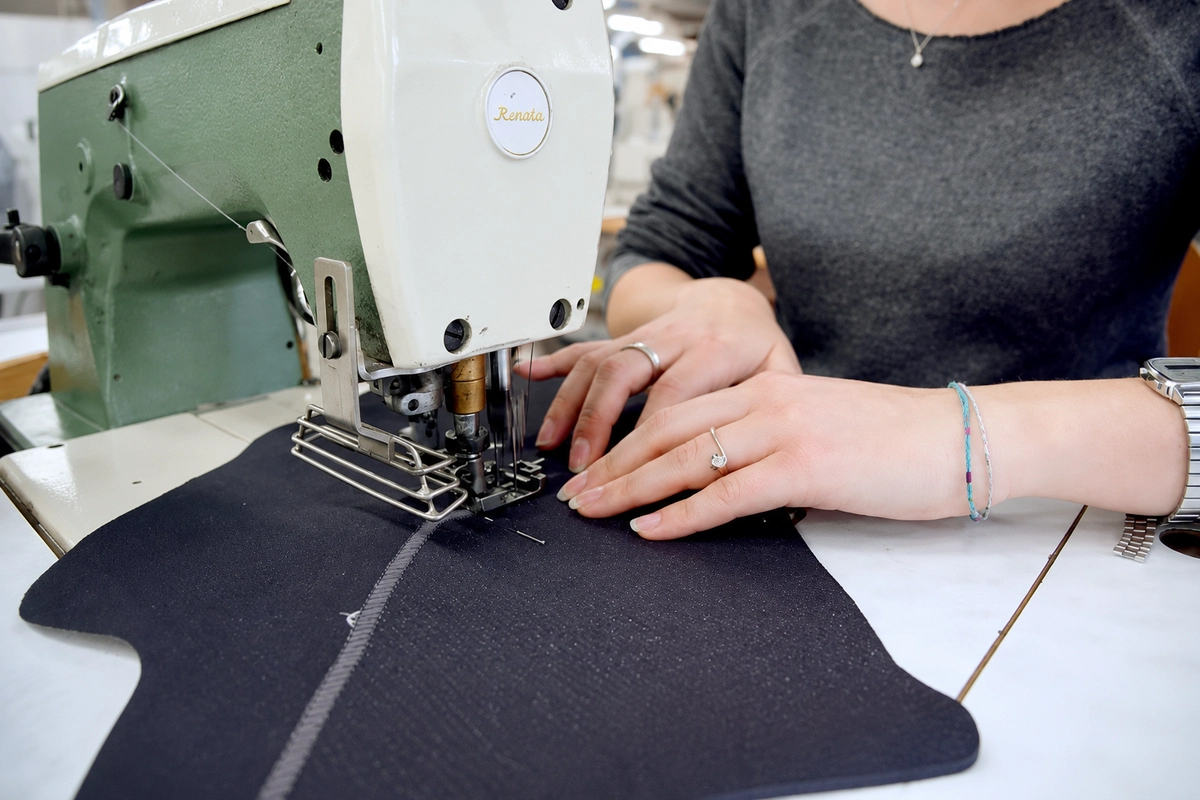
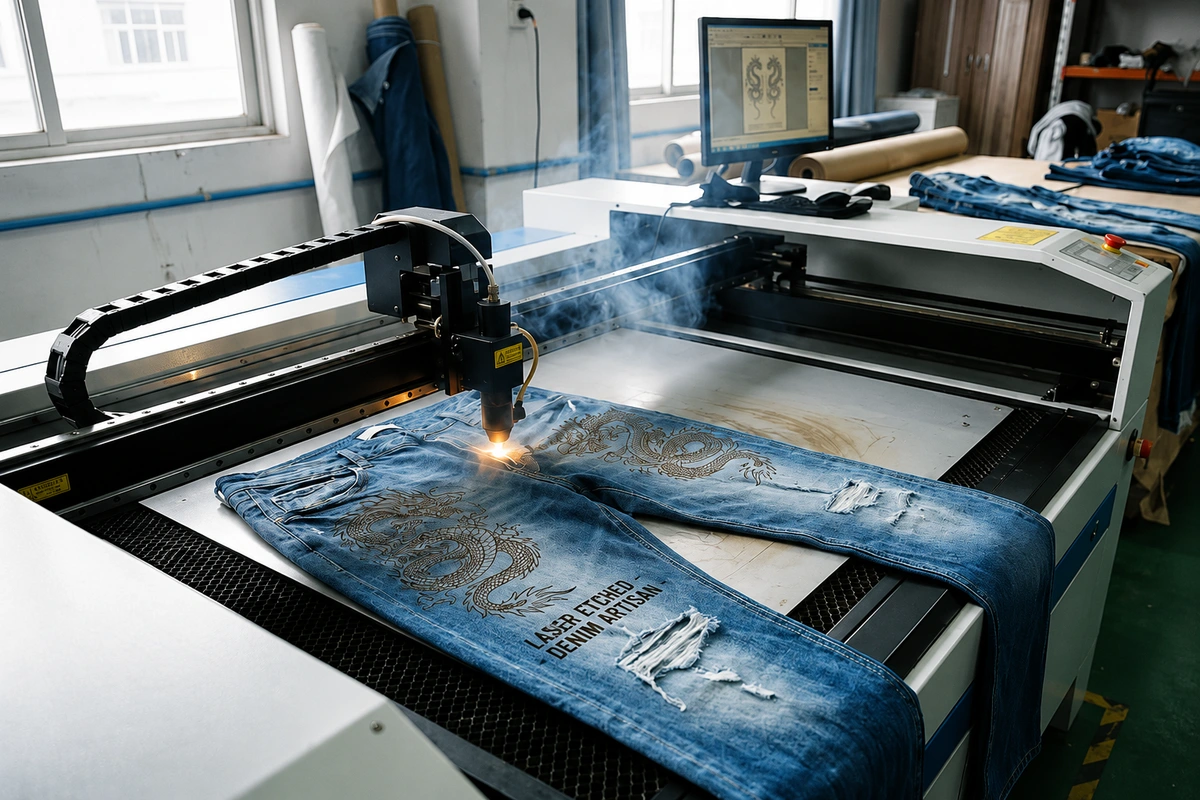
At the loom, warp and weft begin forming denim's diagonal rhythm. In a 3/1 construction, for example, the interlacing allows the warp to dominate the face of the fabric, producing a firm surface with visible twill lines. Right-hand twill has long been common, while left-hand and broken twills alter the direction or interruption of that diagonal structure and can influence the way a finished cloth looks and handles.
Fresh denim can then travel through another vocabulary of finishing. Desizing removes compounds used to protect warp yarns during weaving. Washing softens the cloth. Enzymes can abrade cotton fibres, while stonewashing historically uses pumice to accelerate surface wear. Other treatments may lighten, soften, coat, tint or distress the material before it ever reaches a wearer.
Run a hand across rigid denim and its first impression can feel almost architectural. Dense yarns and a close twill construction give many denim fabrics considerable body, abrasion resistance and dimensional presence. Lighter versions bend more easily, while heavyweight denim can hold a silhouette with a stiffness approaching soft structure.
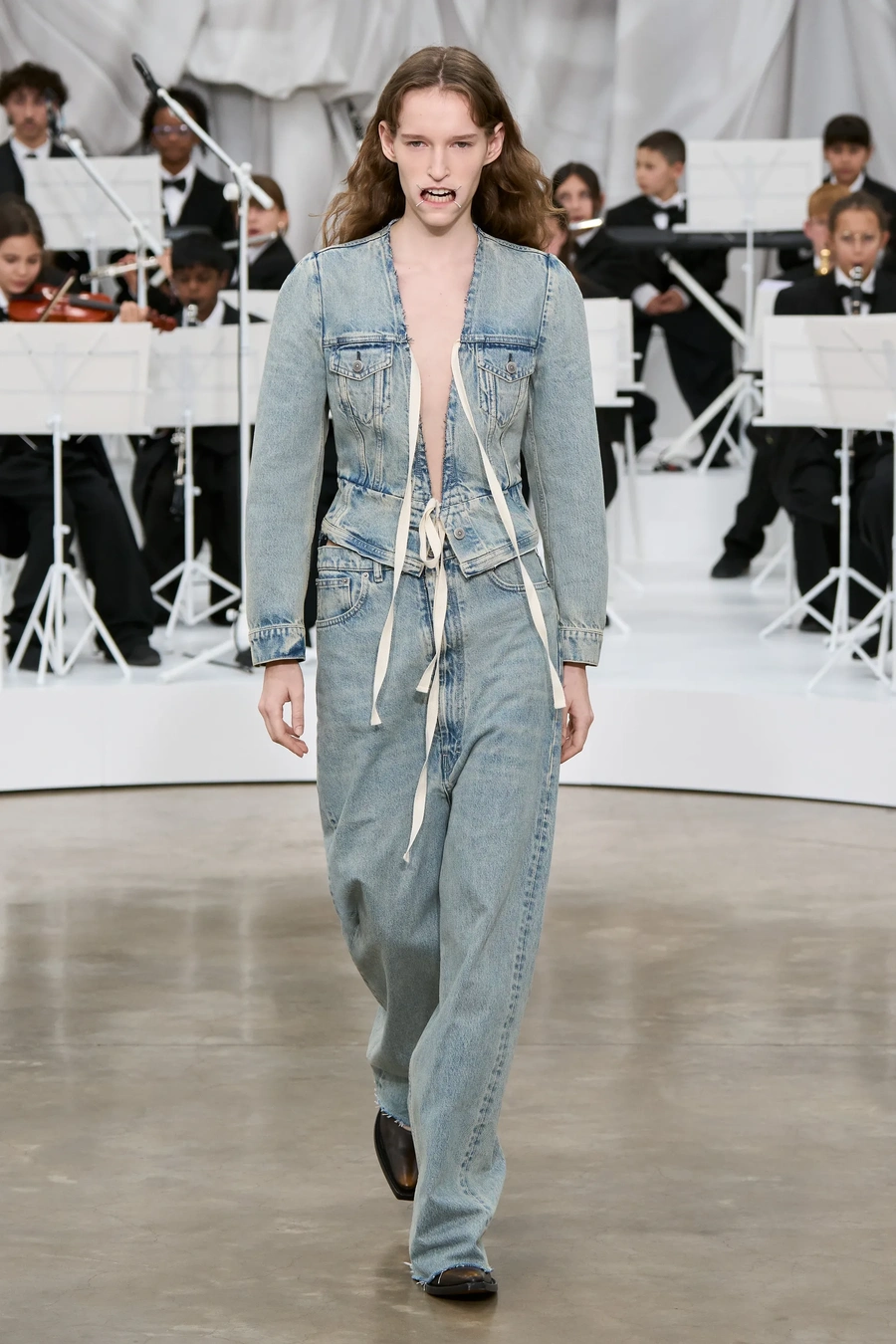
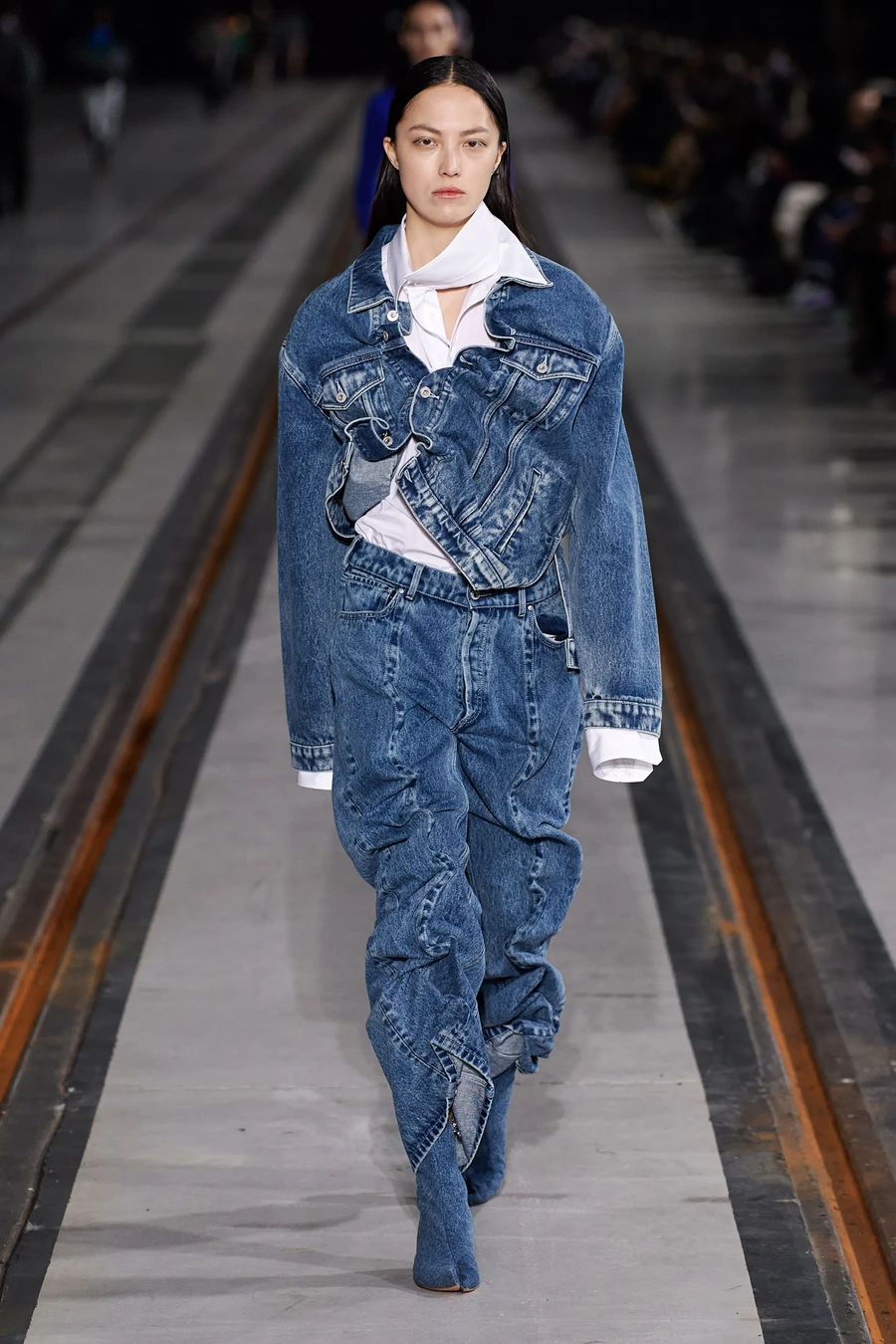
The diagonal surface changes the way light moves across the textile. On dark indigo cloth, twill lines can appear almost black from one angle and electric blue from another. Pale weft yarns flicker between the coloured warp, preventing the surface from appearing completely flat.
Time introduces another layer. Indigo denim can form an individual pattern of wear as friction repeatedly touches certain zones. Creases around the lap may produce horizontal “whiskers”; movement behind the knee can create honeycomb-like lines; hems, pockets and seams gradually brighten along their edges. The garment begins with an industrial weave and slowly acquires something closer to a personal topography.
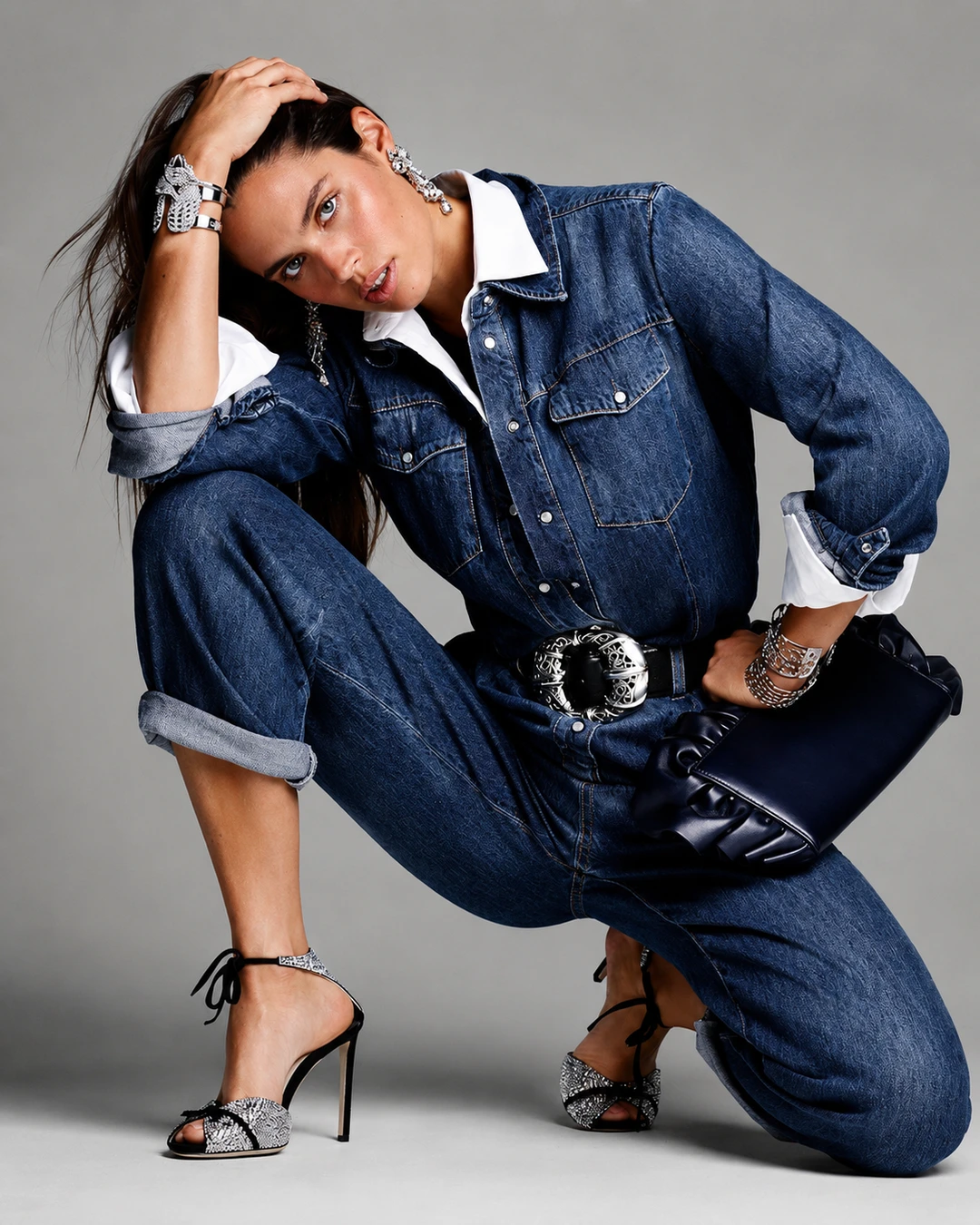
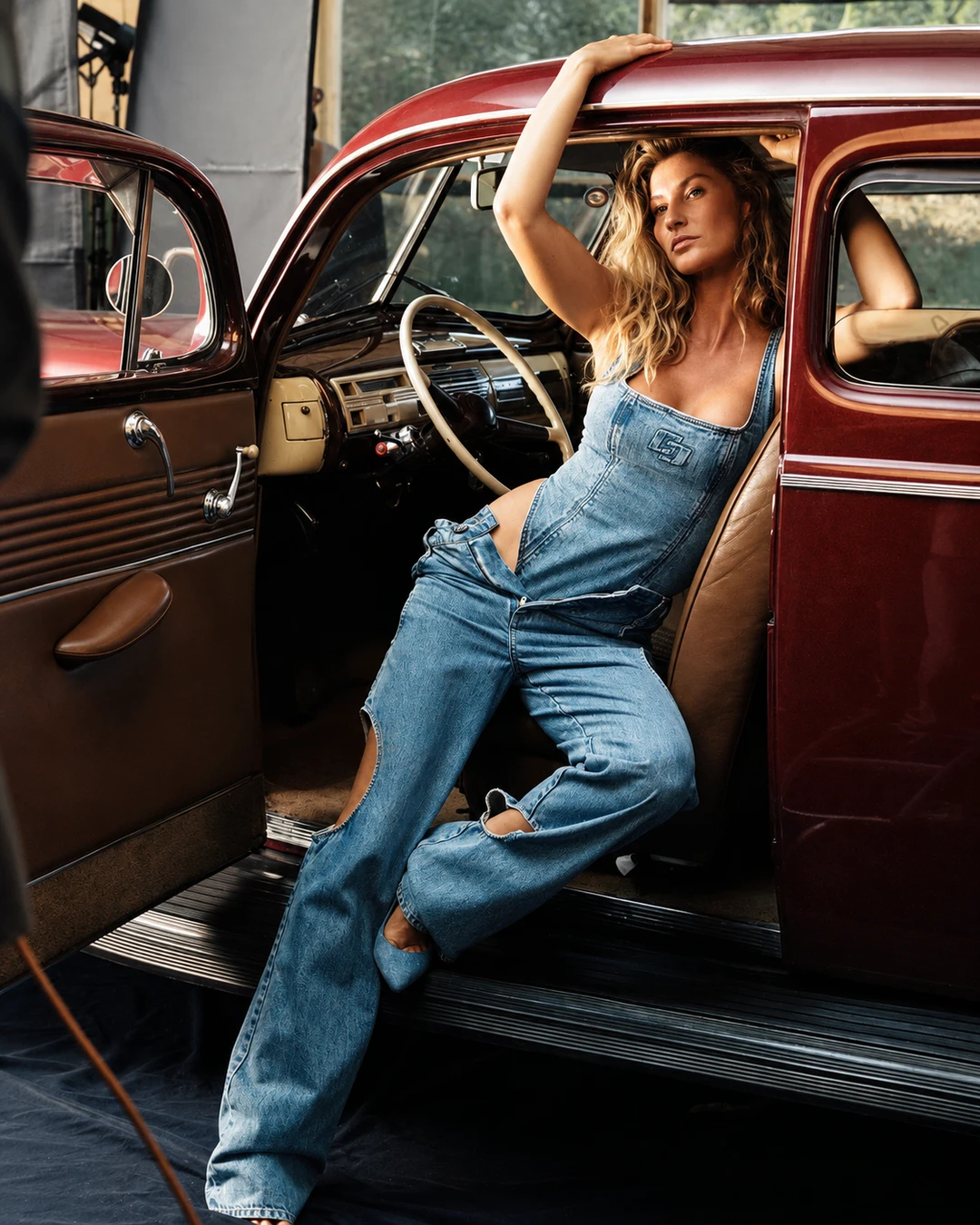
Weight also shapes the experience of denim fabric. Ounces per square yard are commonly used in denim culture to describe cloth weight. Lightweight denim can work for shirts, dresses and warm-weather pieces, medium weights cover much of everyday jeanswear, while heavier fabrics give jackets and trousers a more rigid, substantial hand. Fibre composition, yarn size, weave density and finishing all influence how a given weight actually behaves.
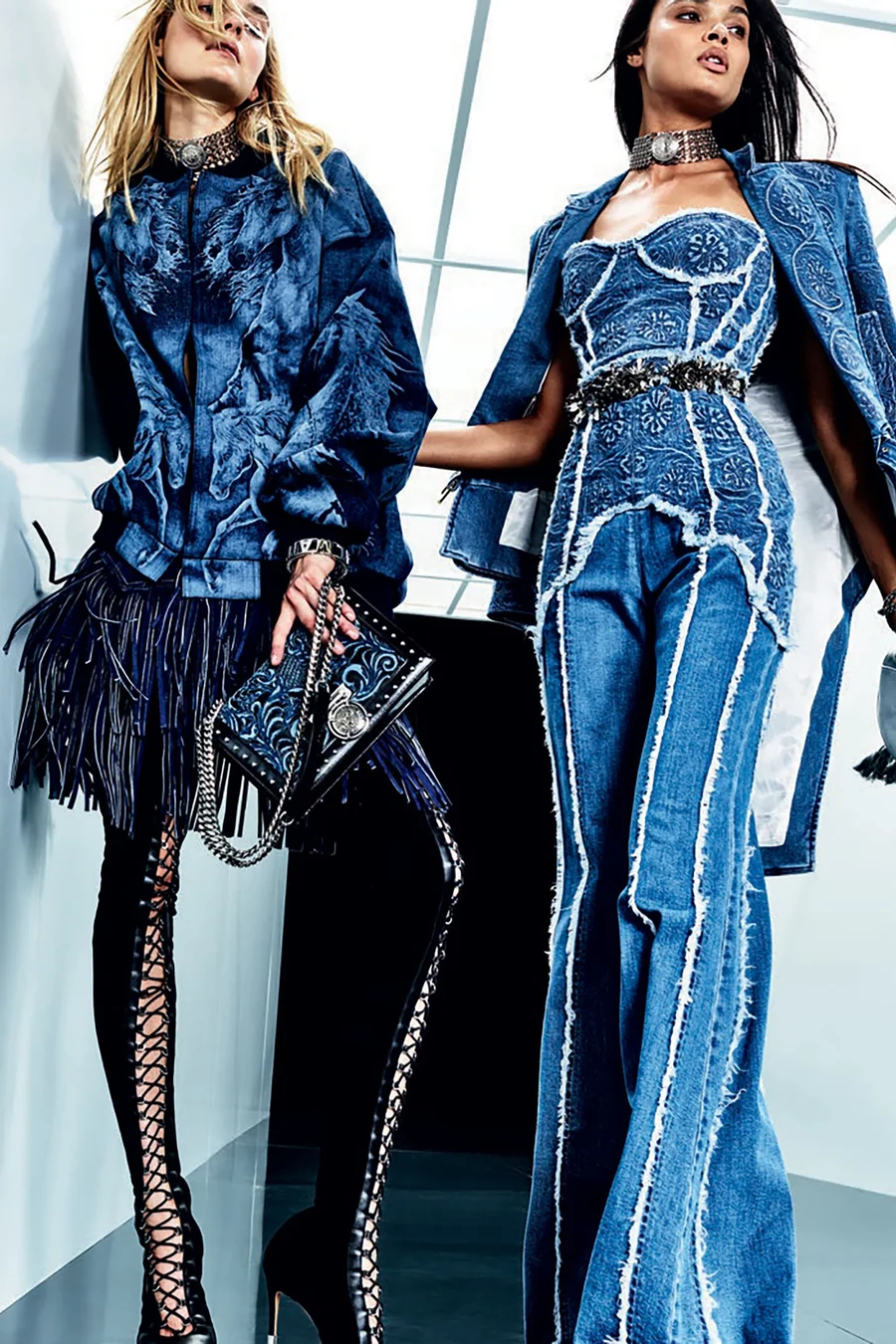
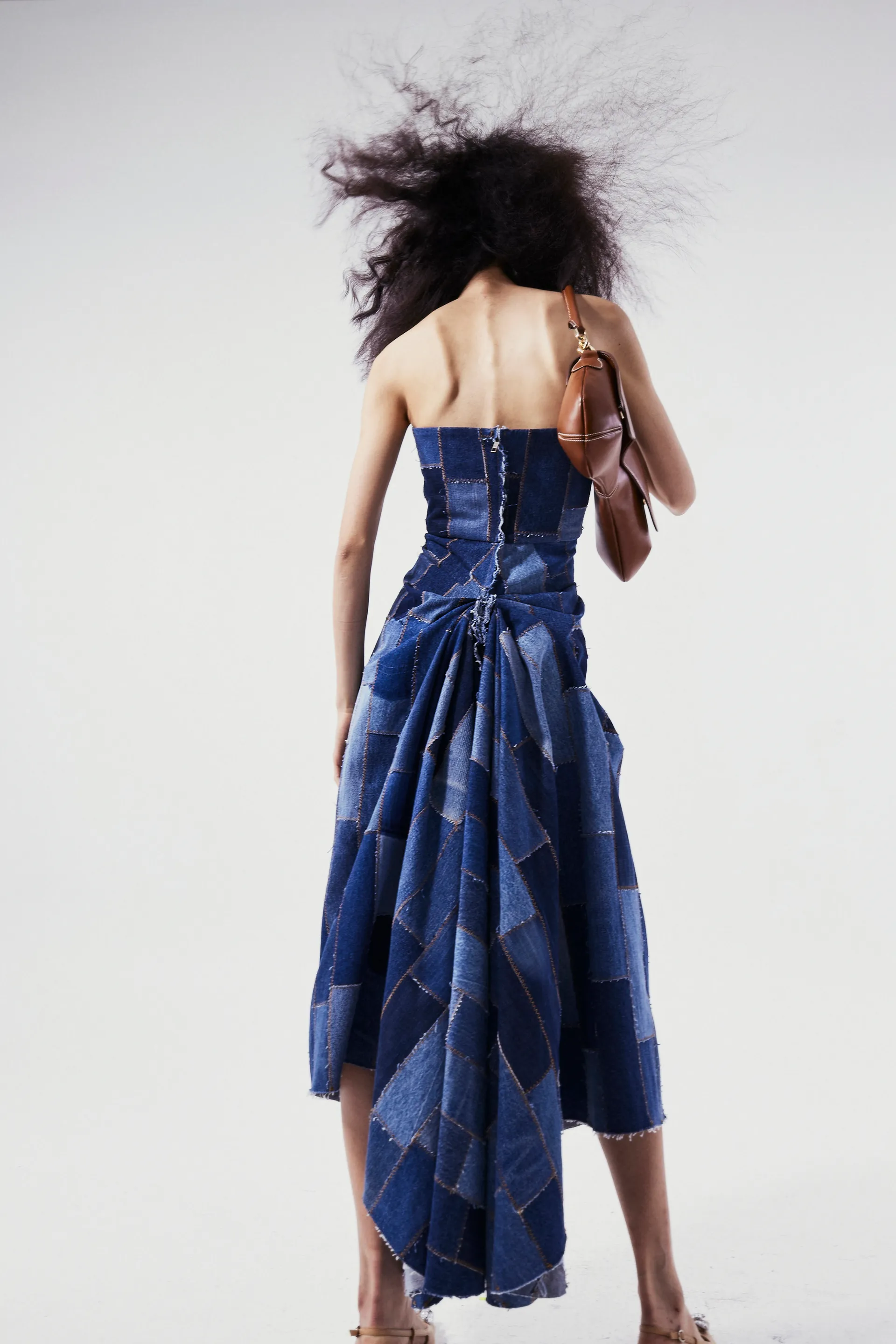
Stretch changed this tactile language further. A small percentage of elastane can allow close-fitting denim to follow the body and recover after movement. Higher-stretch constructions can become considerably softer and more flexible, while traditional all-cotton denim retains the slower process of breaking in through repeated wear.
Long before a copper rivet entered the story, blue working textiles were already moving between European ports, workshops and bodies. Genoa had a history of sturdy textiles associated with labour, while Nîmes in southern France developed its own celebrated textile industry. The familiar explanation linking “denim” with serge de Nîmes remains influential, although textile historians treat the exact etymological path with caution. Surviving fabrics called serge de Nîmes also differed in fibre composition from the later all-cotton denim that became globally familiar.
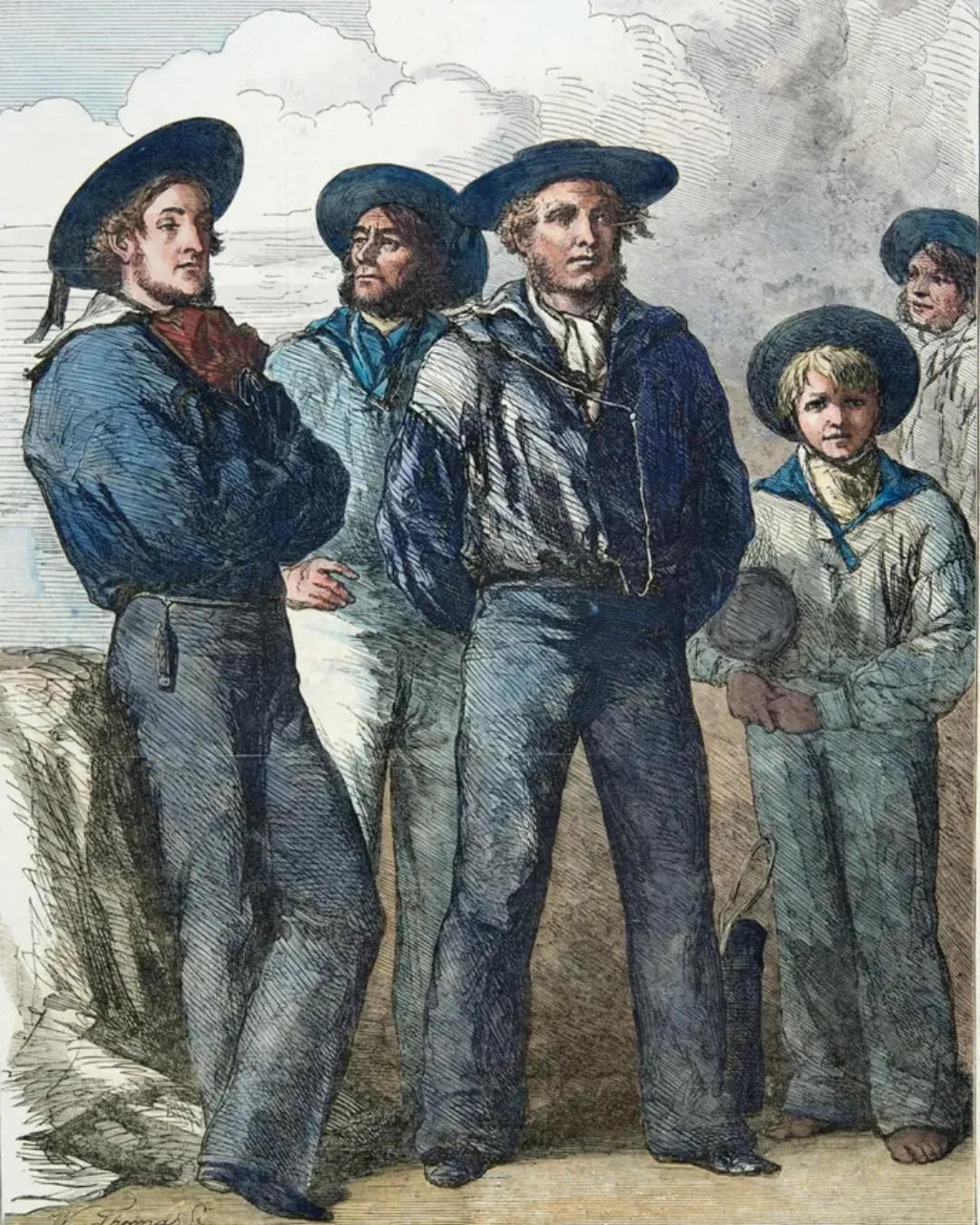
Across the Atlantic, denim found an ideal environment in nineteenth-century American workwear. Its strength suited garments expected to endure hard physical labour, and mills in the United States were already manufacturing the cloth by the time it became connected with the most famous chapter in jeans history. Levi Strauss & Co.'s archival research identifies New Hampshire's Amoskeag Manufacturing Company as the supplier of denim used for early riveted waist overalls.
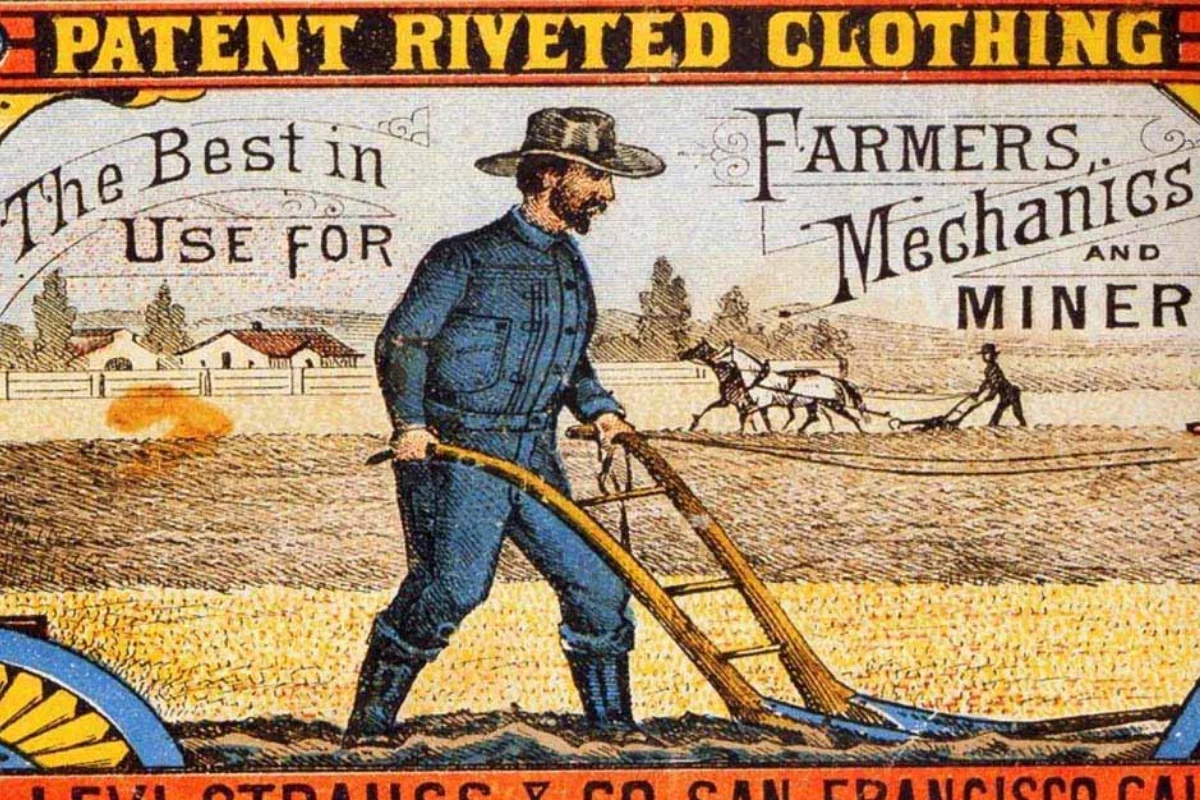
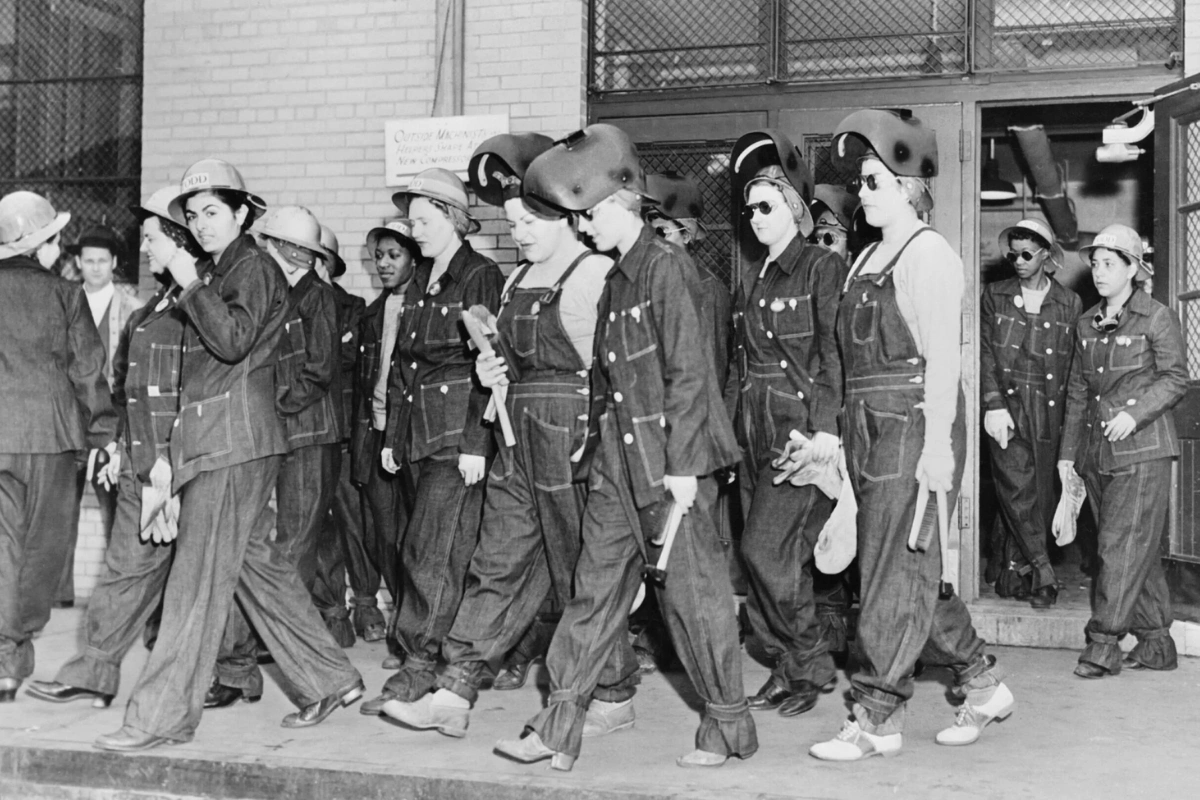
A letter sent in 1872 changed the garment built from that fabric. Reno tailor Jacob Davis had begun reinforcing points of strain on work trousers with metal rivets and approached dry-goods merchant Levi Strauss about becoming his business partner. On May 20, 1873, Davis and Strauss received U.S. Patent No. 139,121 for their improvement in fastening pocket openings. The patent marks the birth of the riveted blue jean as we recognise it today.
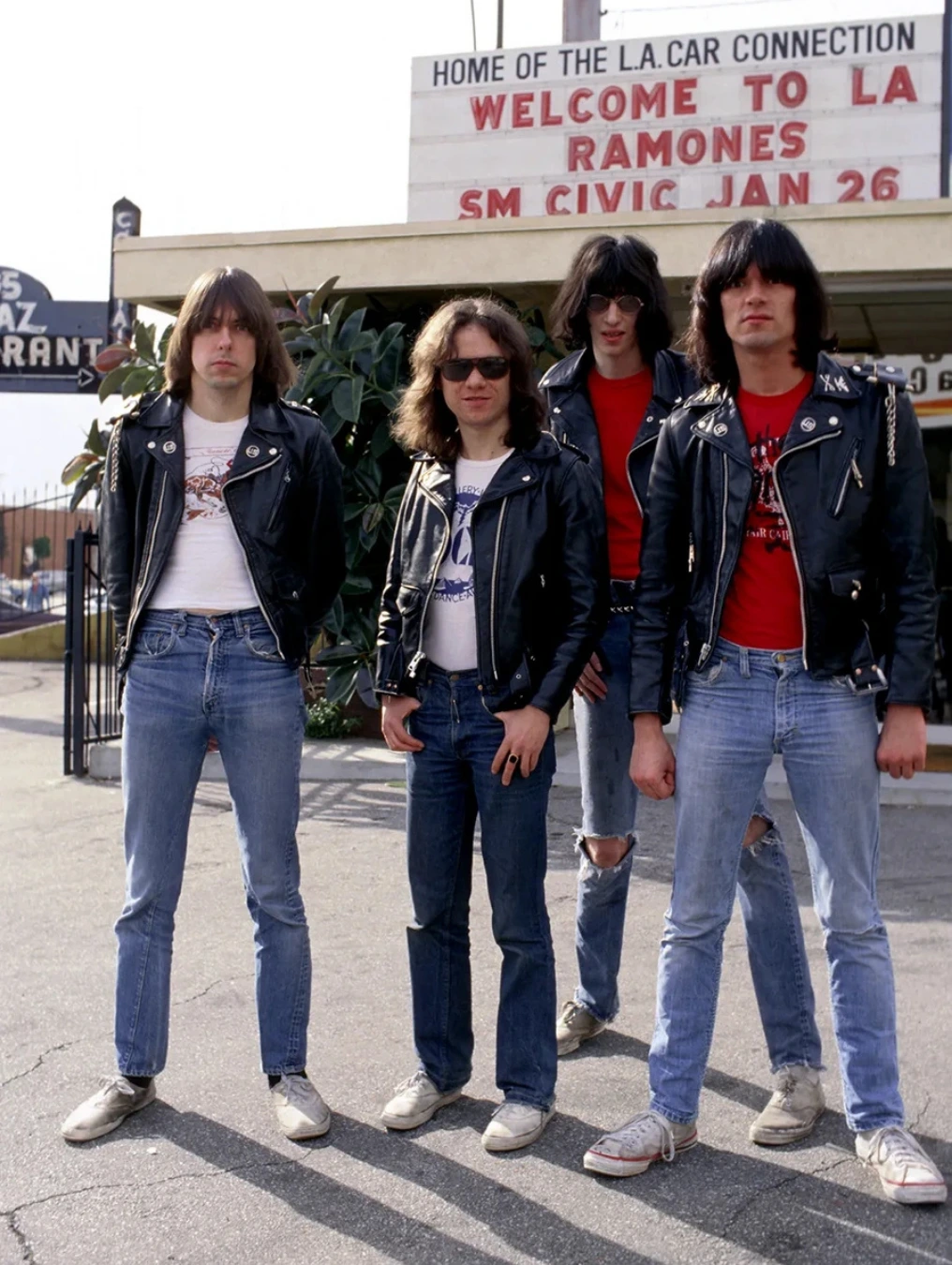
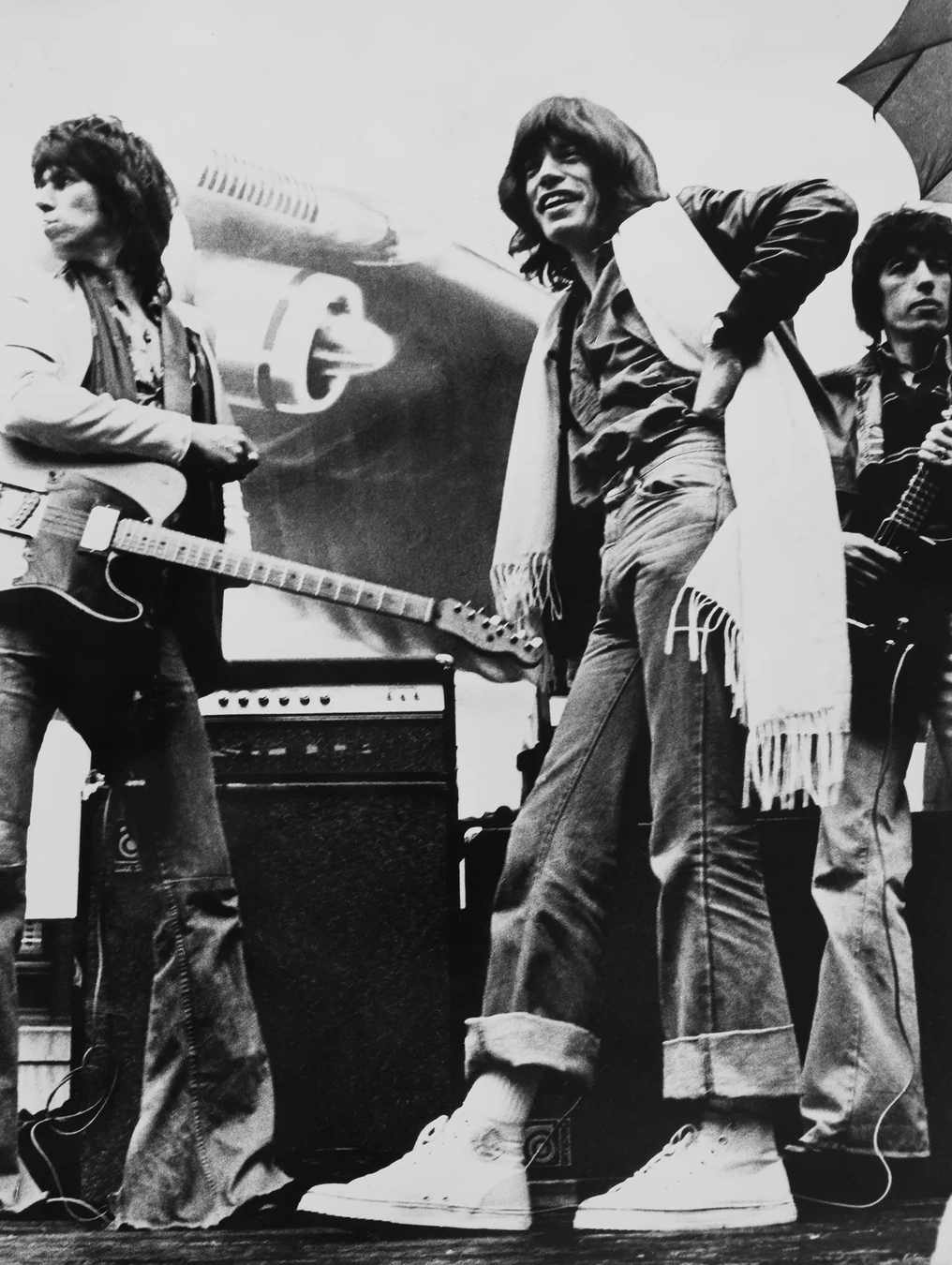
By the twentieth century, denim had travelled far beyond its workwear origins. Western imagery helped connect jeans with cowboys and American frontier mythology; cinema later placed denim on bodies that represented youth, rebellion and informality. Its cultural meaning continued changing as musicians, artists, subcultures and designers adopted the material. A cloth originally valued for surviving physical labour could now signal everything from anti-establishment cool to carefully constructed luxury.
Denim has a habit of becoming something else in every pair of hands it passes through. The same familiar blue cloth can arrive sharp and almost untouched, or emerge softened, faded and strangely delicate. Somewhere between those extremes, its many identities begin to appear.
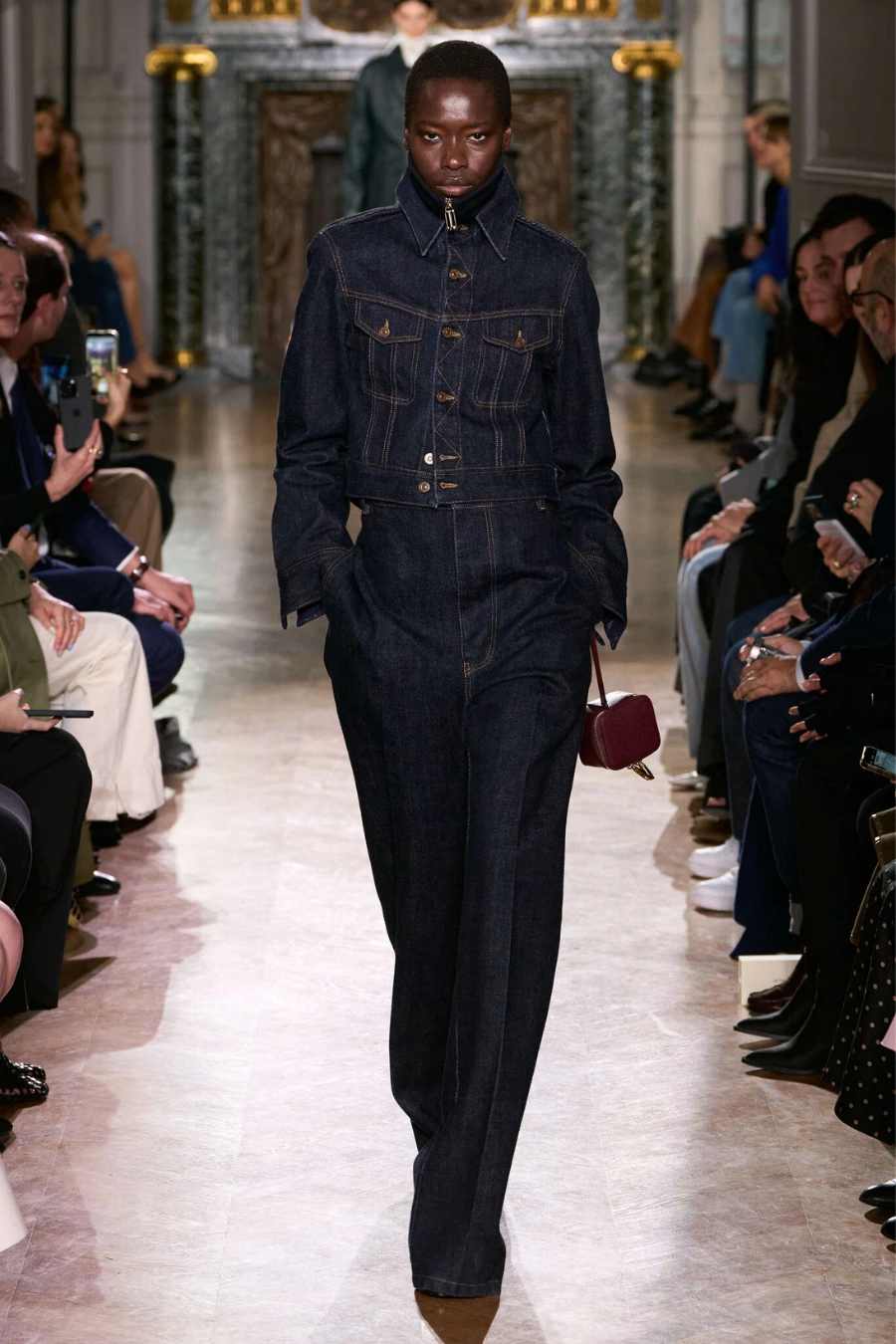
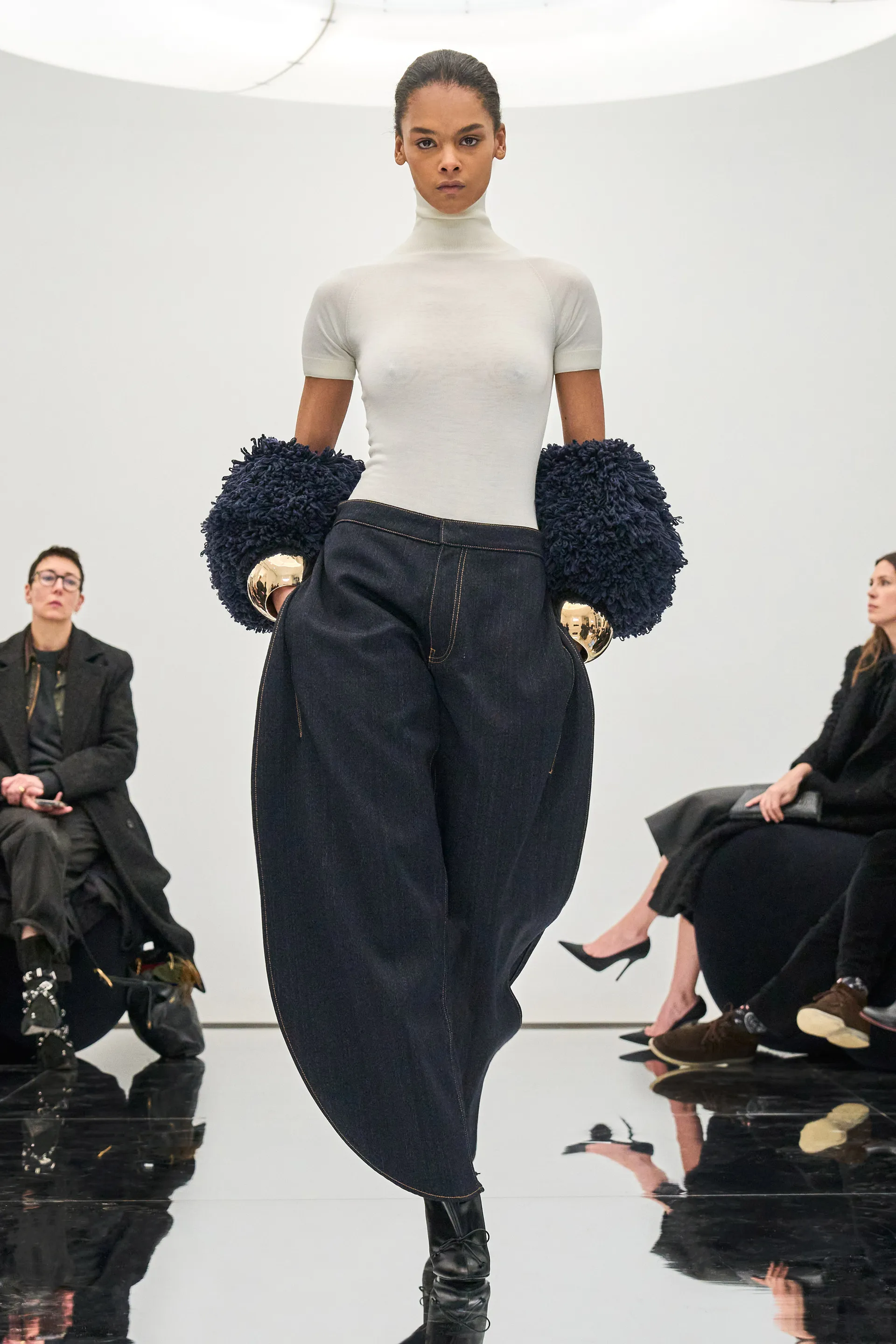
Raw denim reaches the wearer with little or no washing after dyeing. Its deep indigo surface usually feels crisp at first, then gradually softens and develops fading around creases, seams and areas of repeated movement.
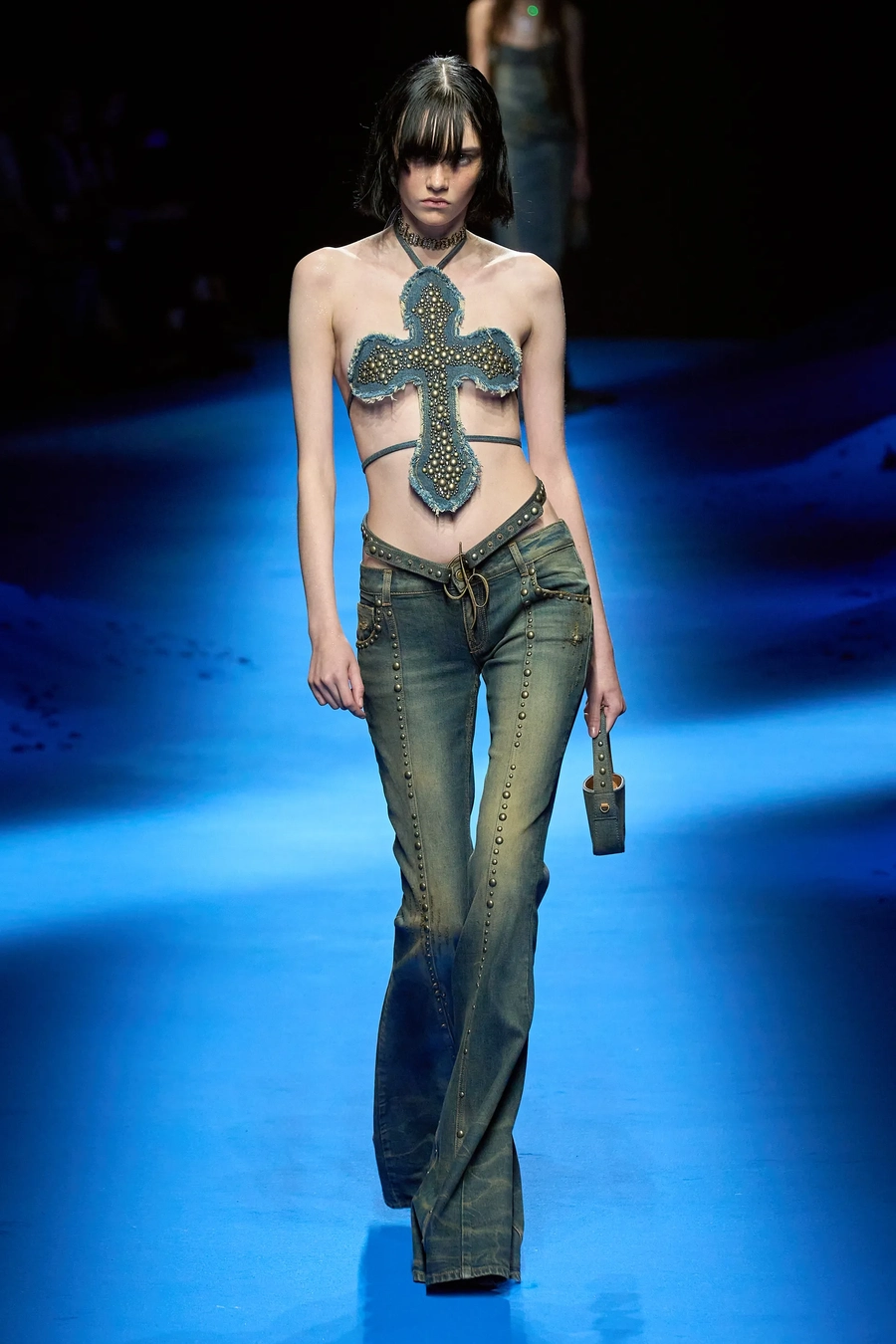
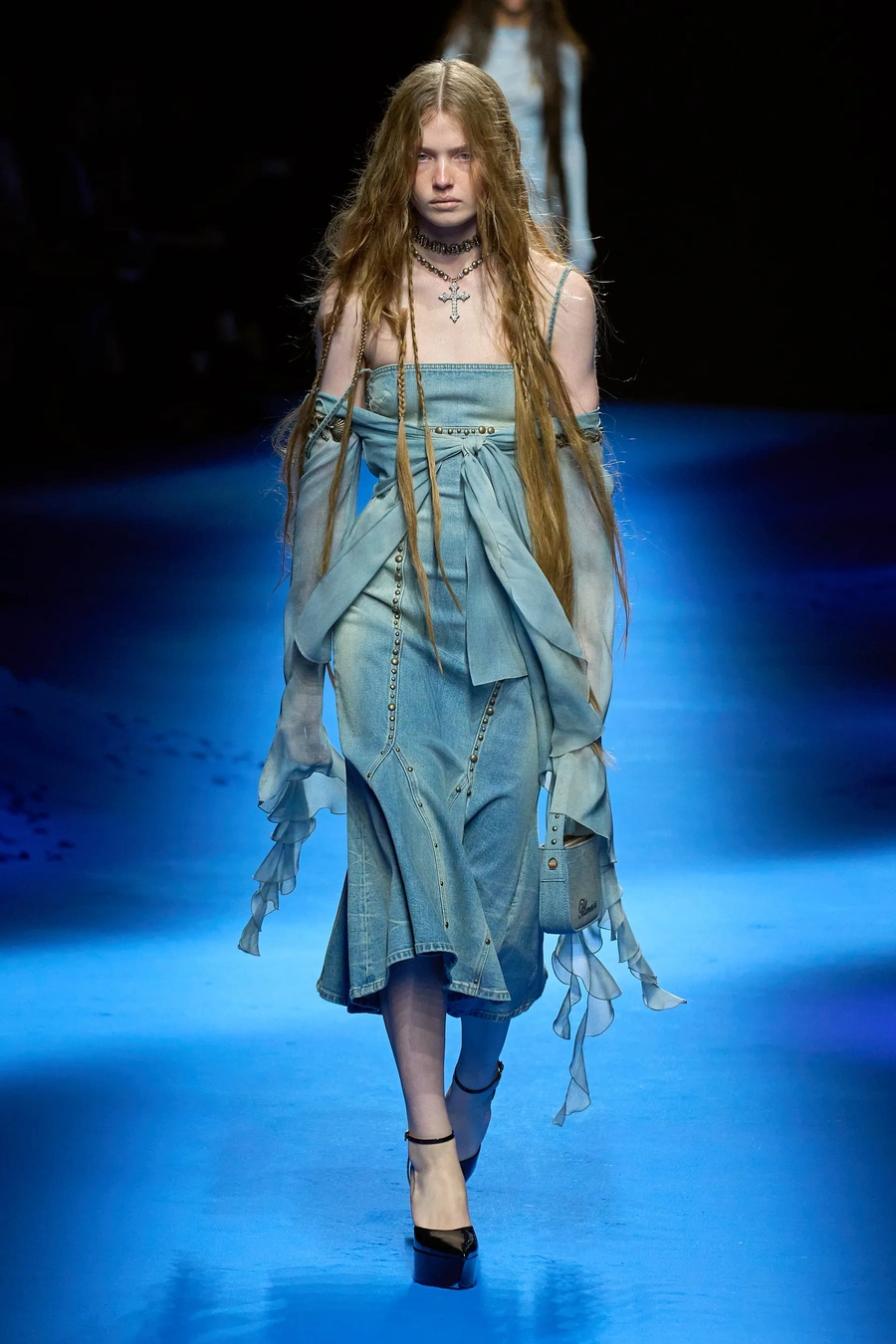
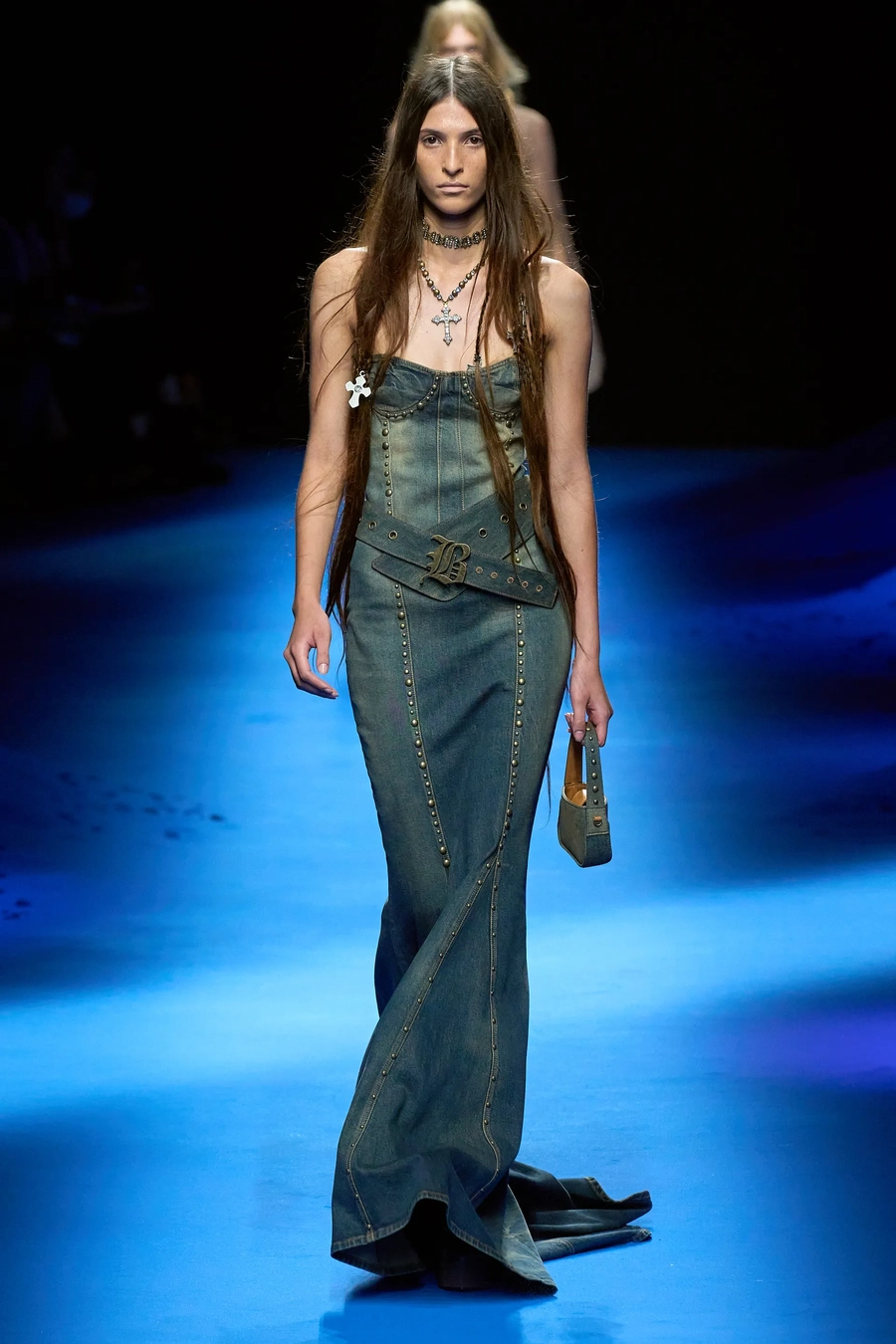
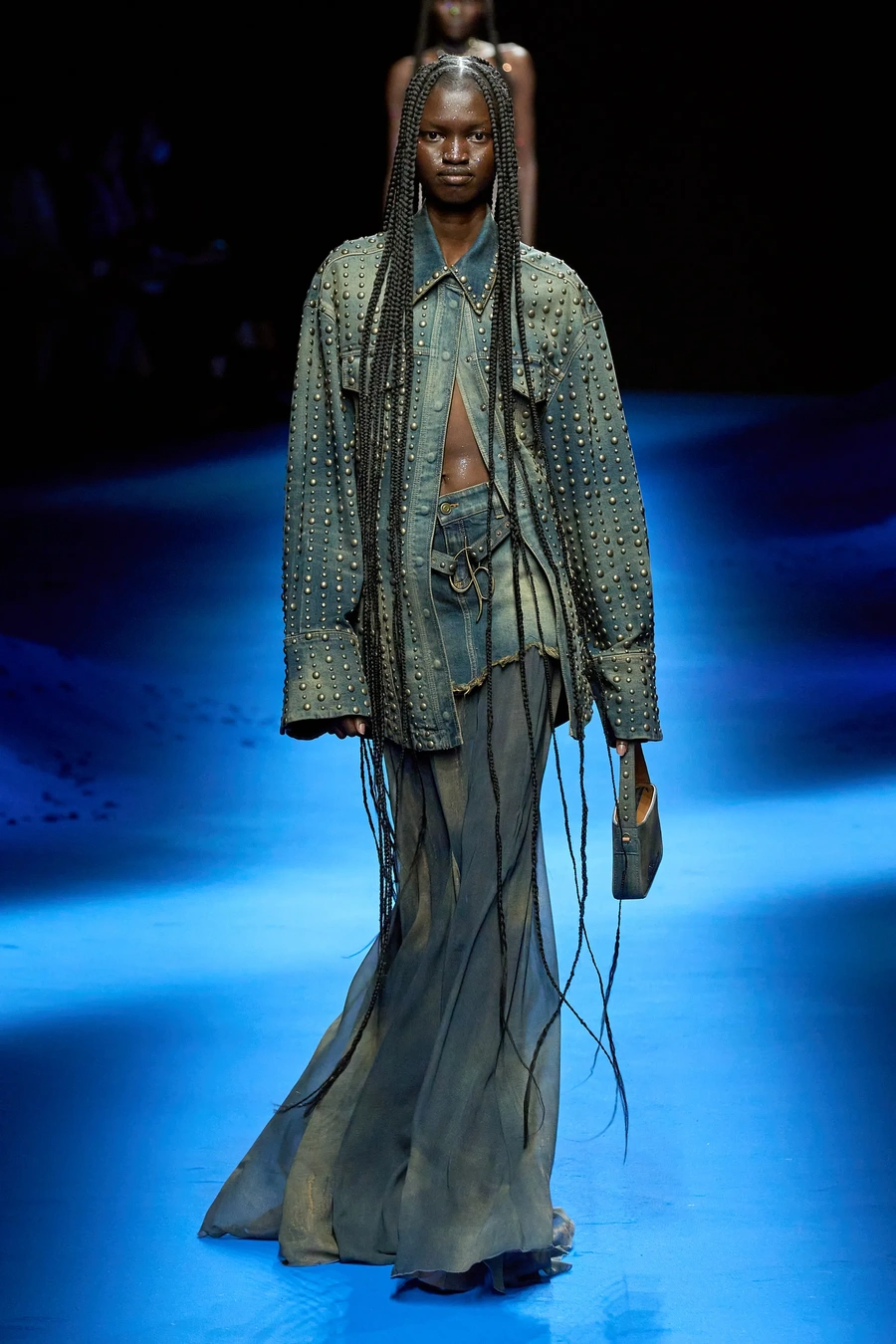
Washed denim has already begun ageing before it reaches the wardrobe. Different finishing processes can soften the hand, lift the indigo and create anything from gentle fading to a visibly worn, almost sun-bleached surface.
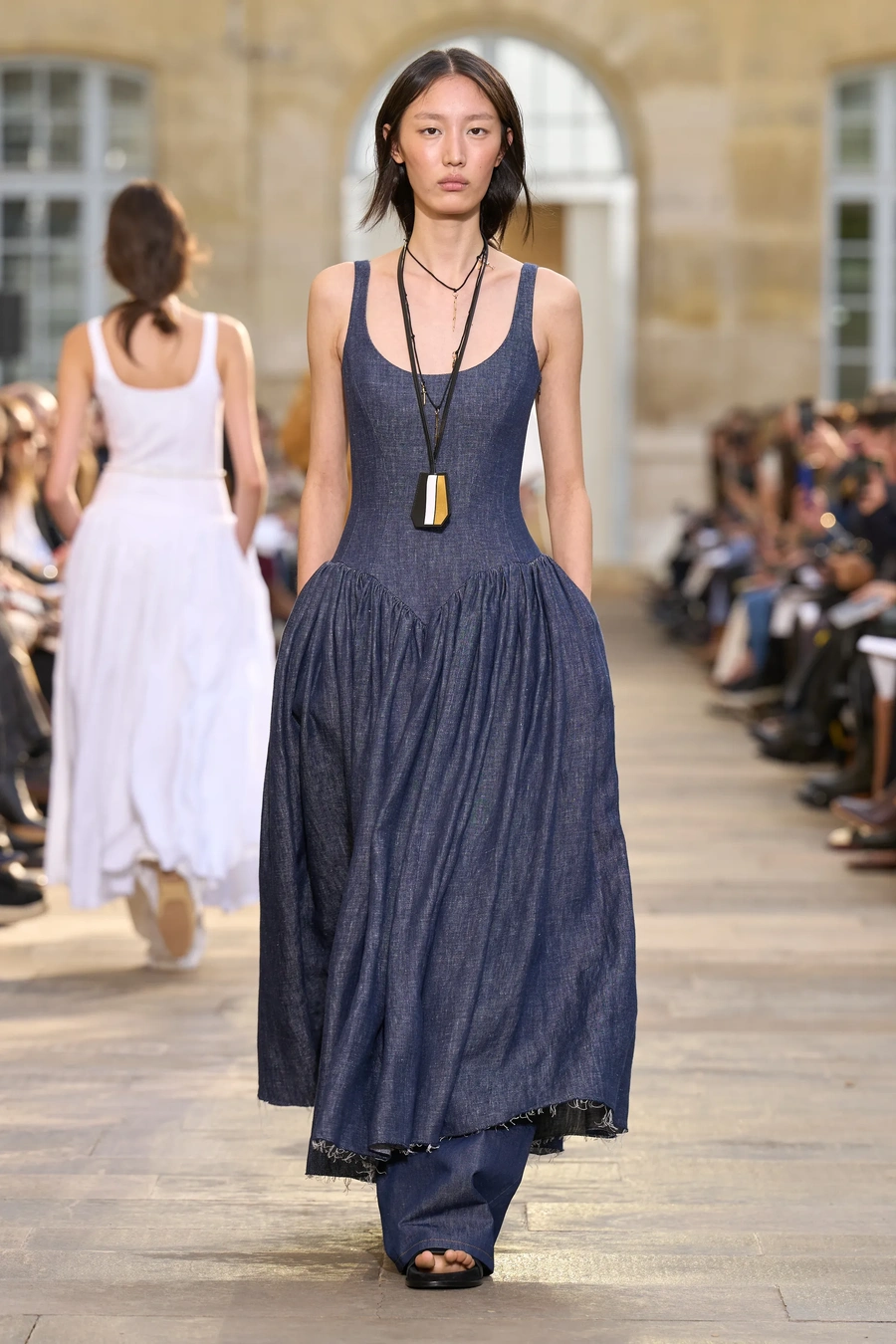
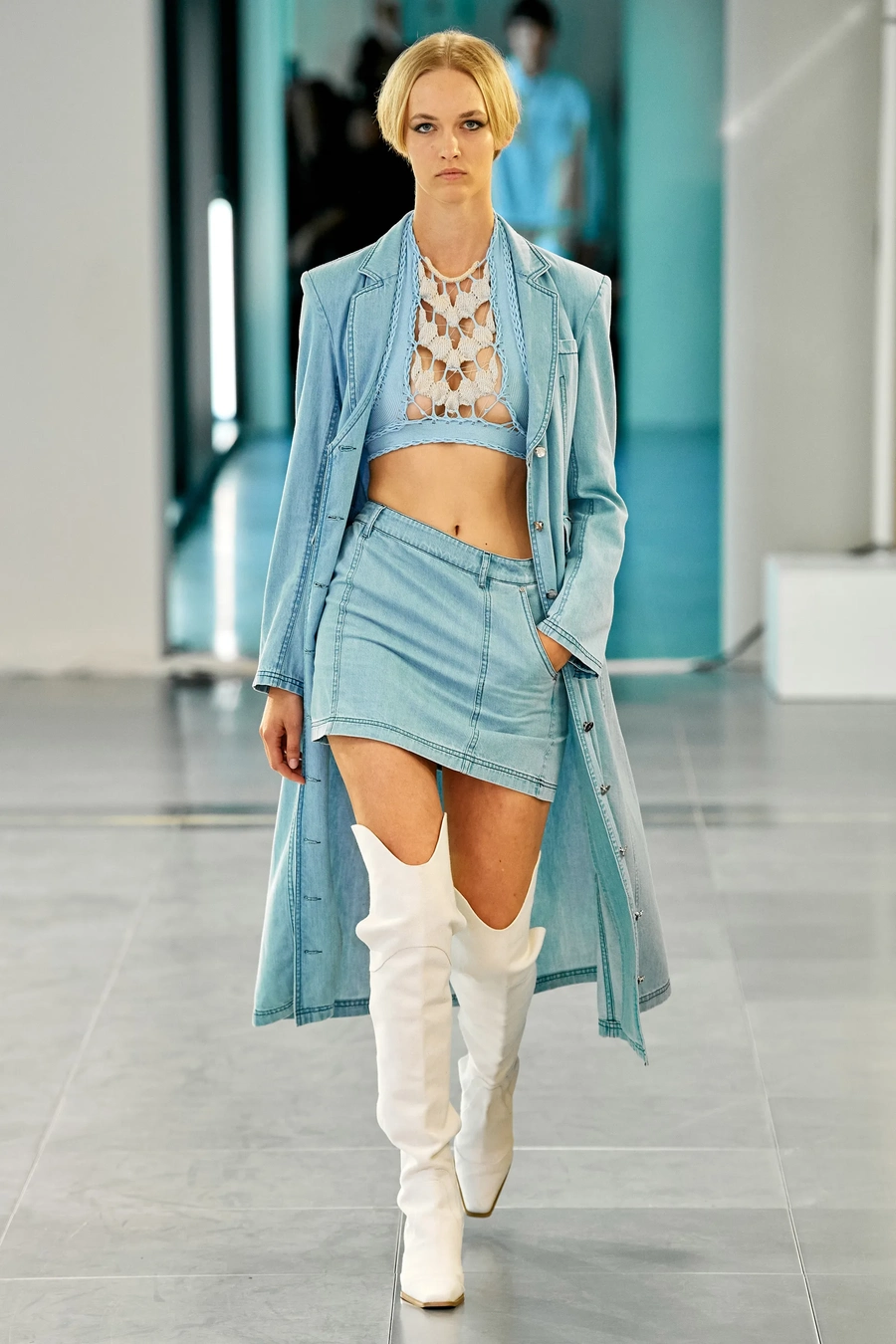
Lightweight denim reduces the density normally associated with classic jeans, giving the fabric a softer fall and greater movement. It can move easily into shirts, dresses and relaxed silhouettes while still keeping the twill structure that identifies it as denim.
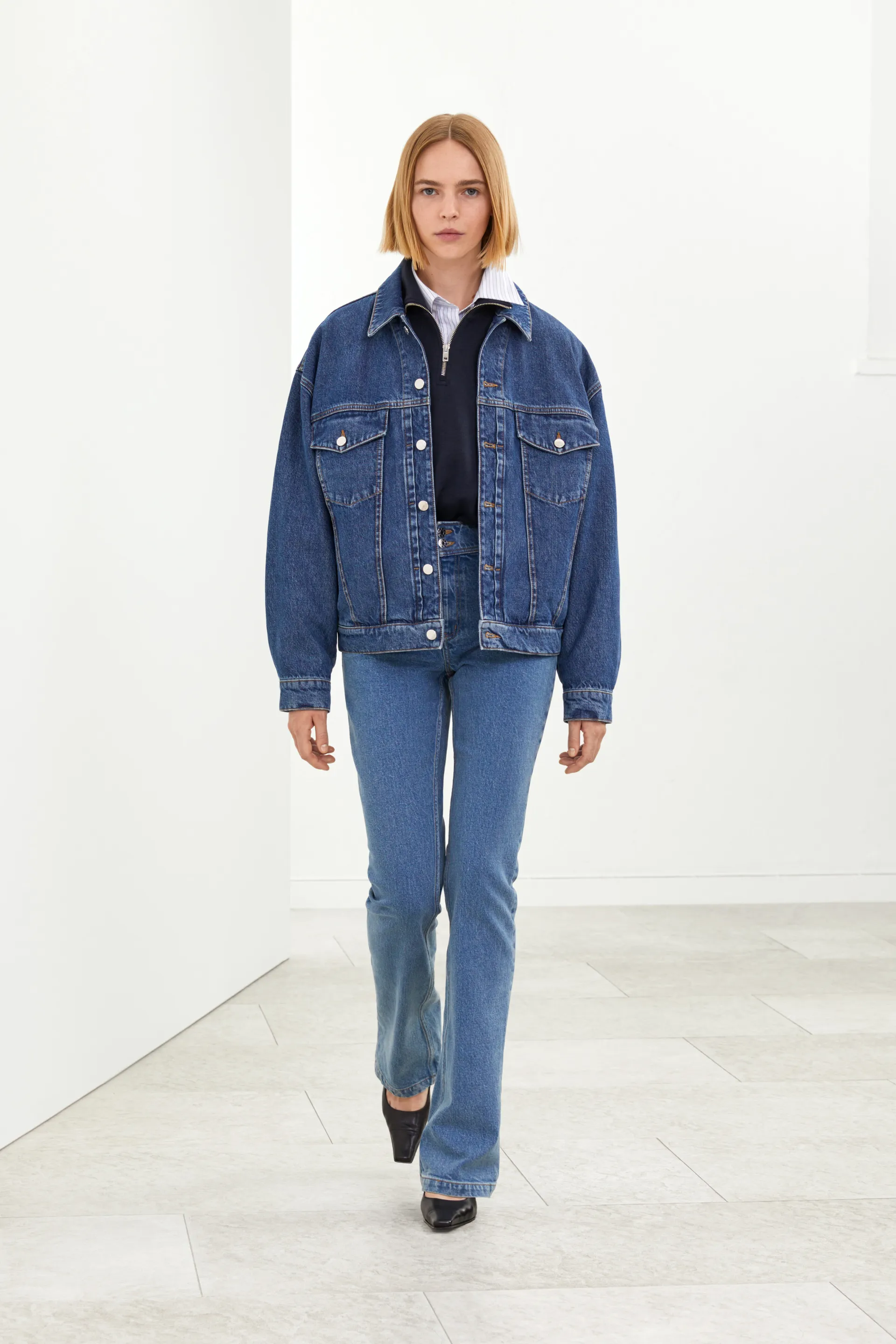
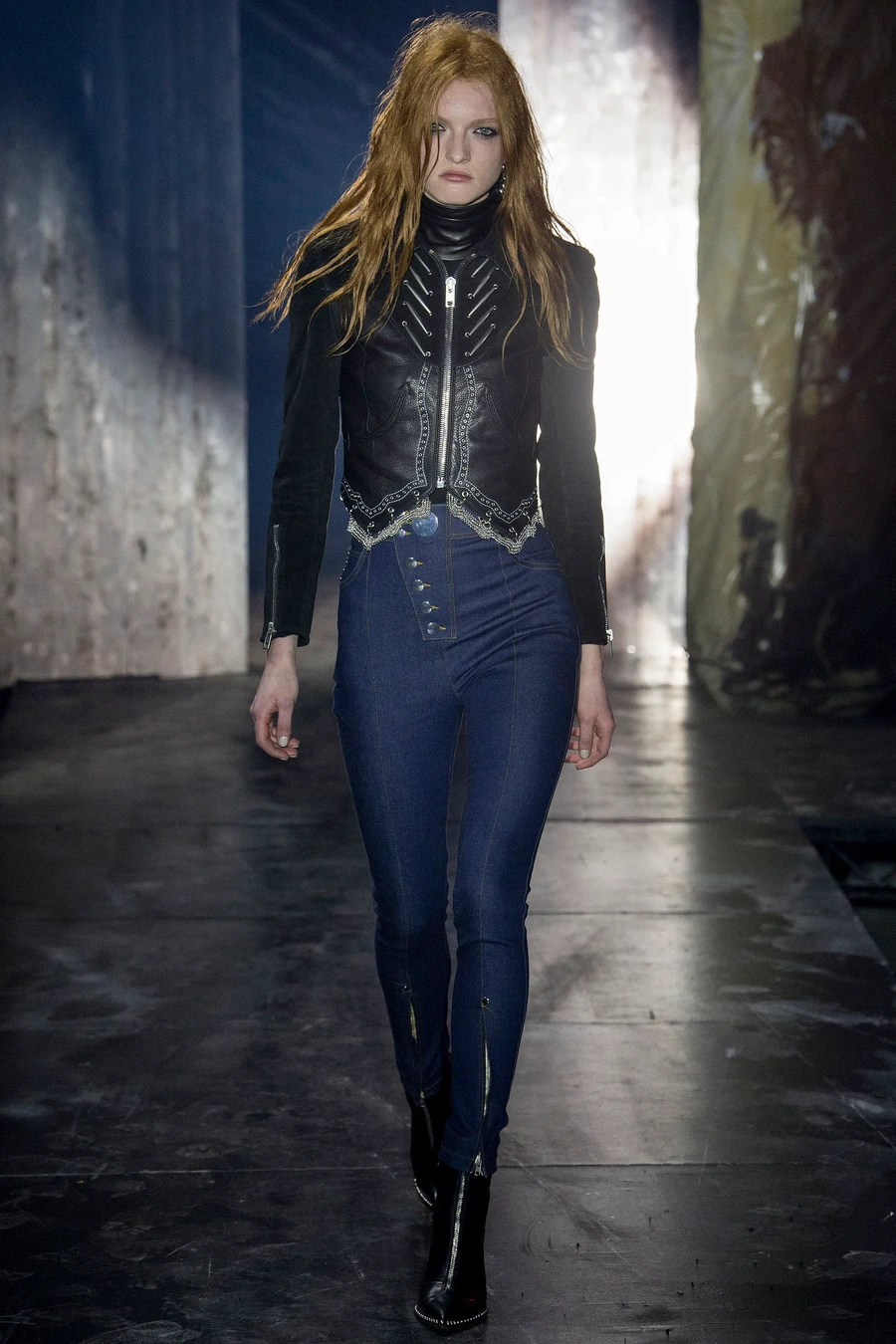
Stretch denim introduces elastic fibres into the construction, allowing the cloth to follow the body more closely and recover after movement. The result is a more flexible version of denim that suits fitted jeans, dresses and sculpted silhouettes.
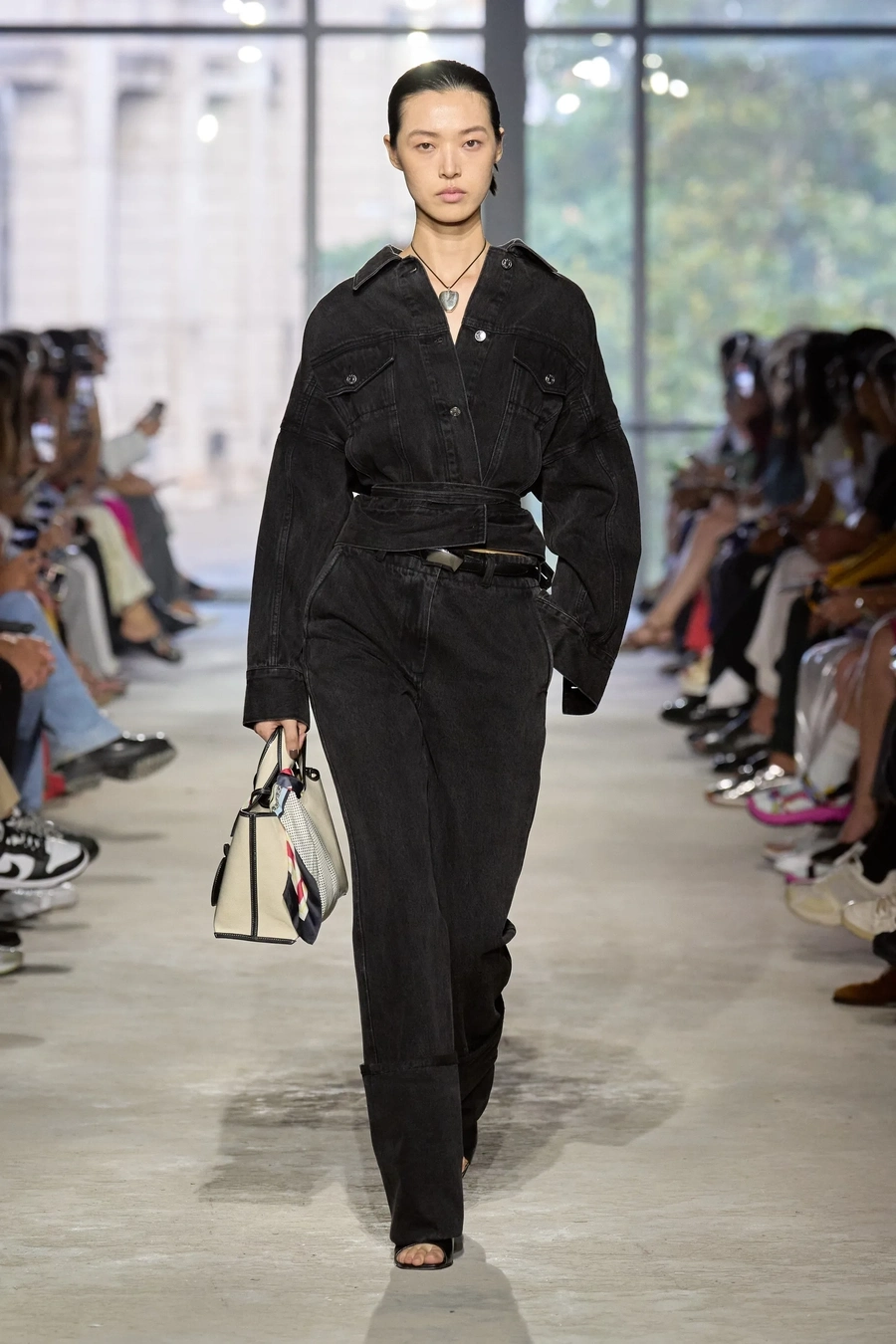
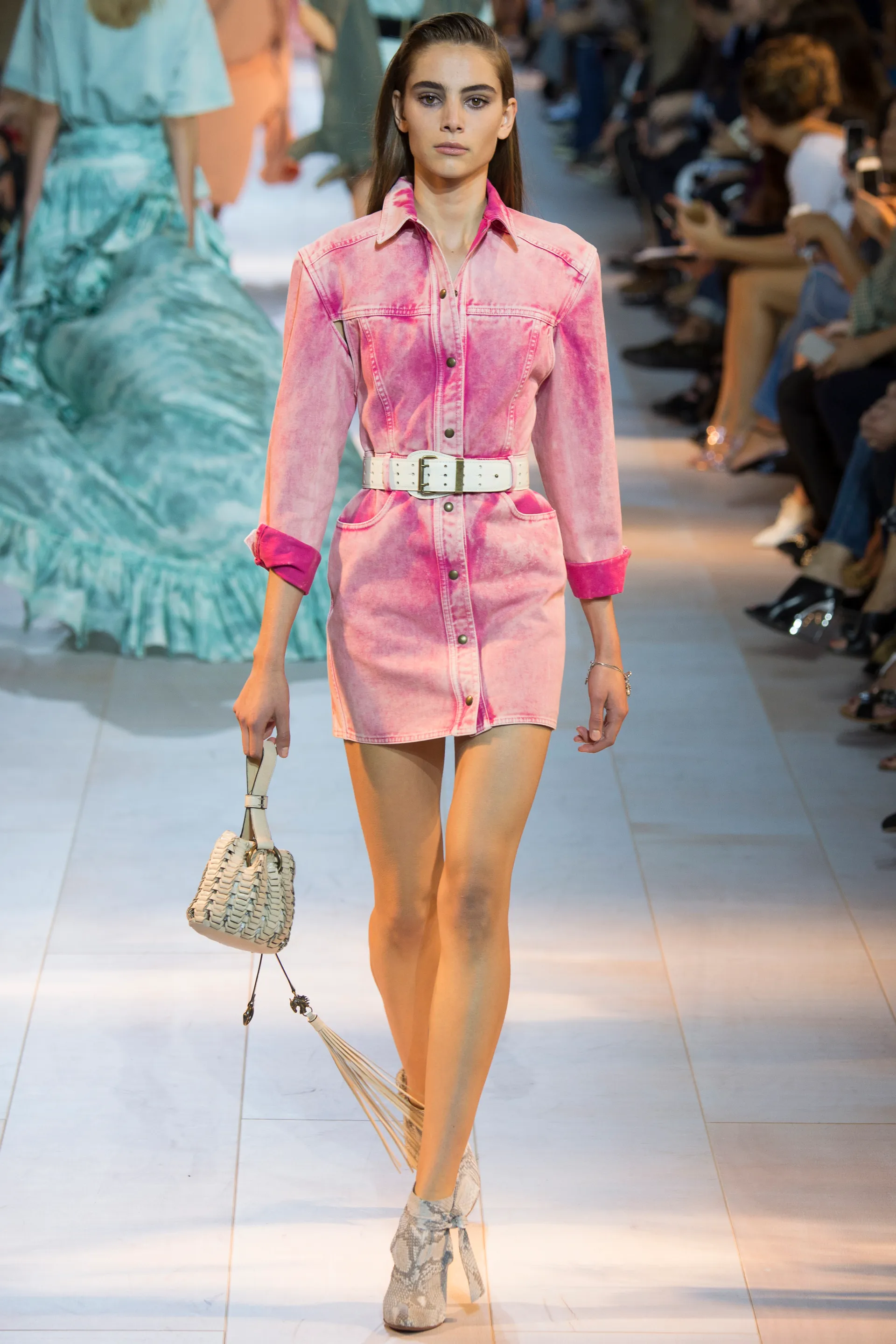
Black denim and coloured denim move beyond the familiar indigo palette while preserving denim's characteristic twill construction. Deep black, ecru and overdyed shades can shift the mood of the fabric completely without losing its recognisable texture.
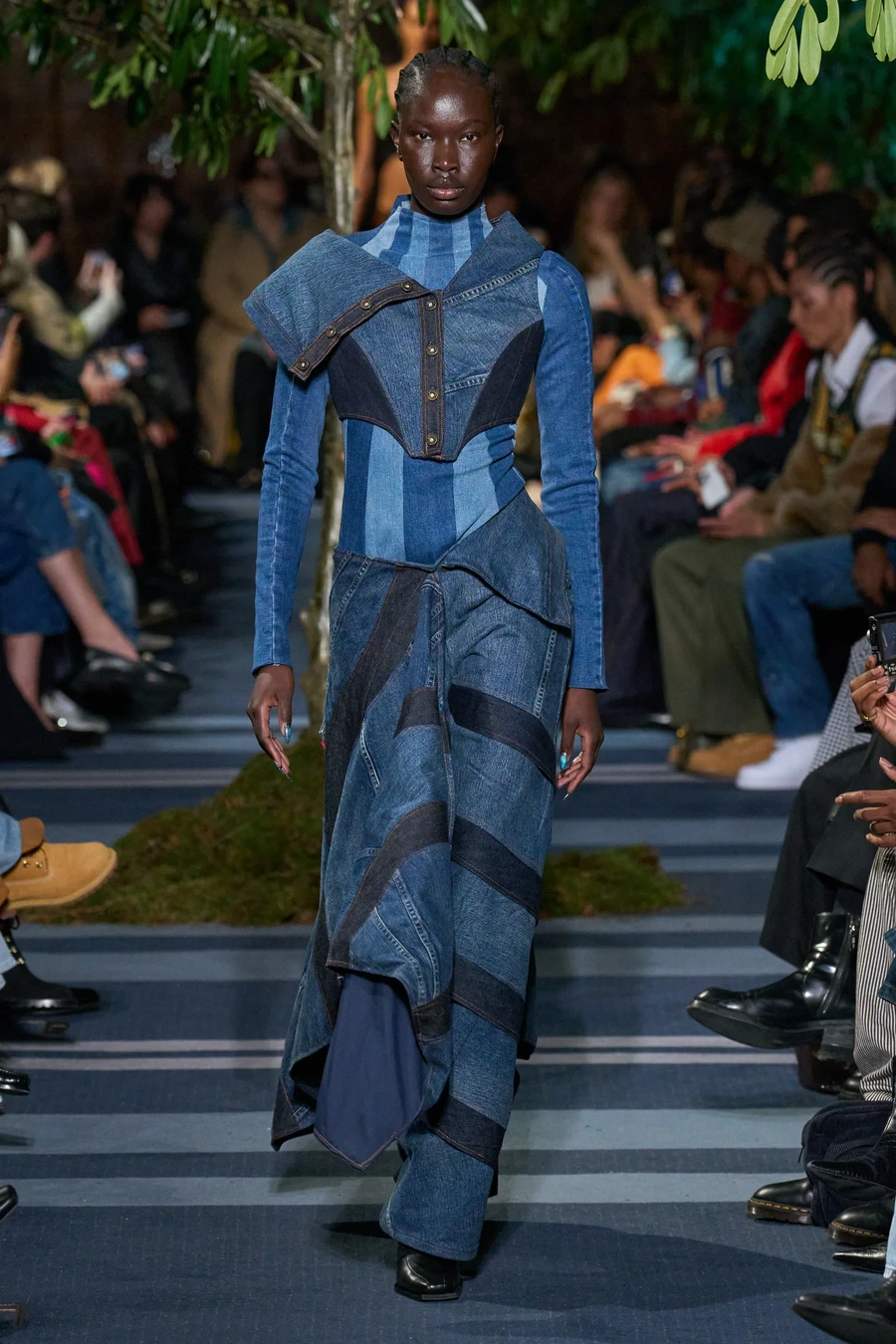
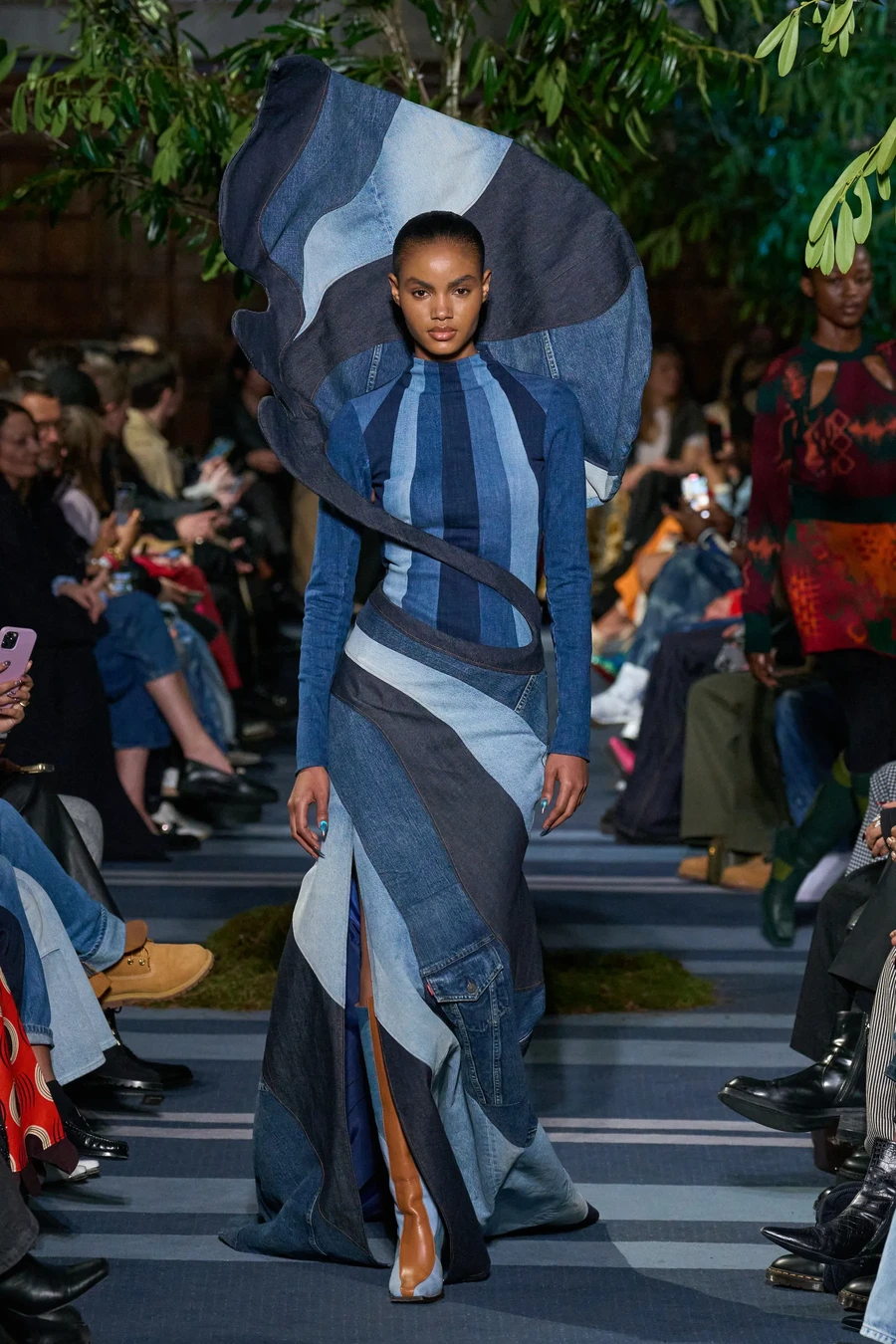
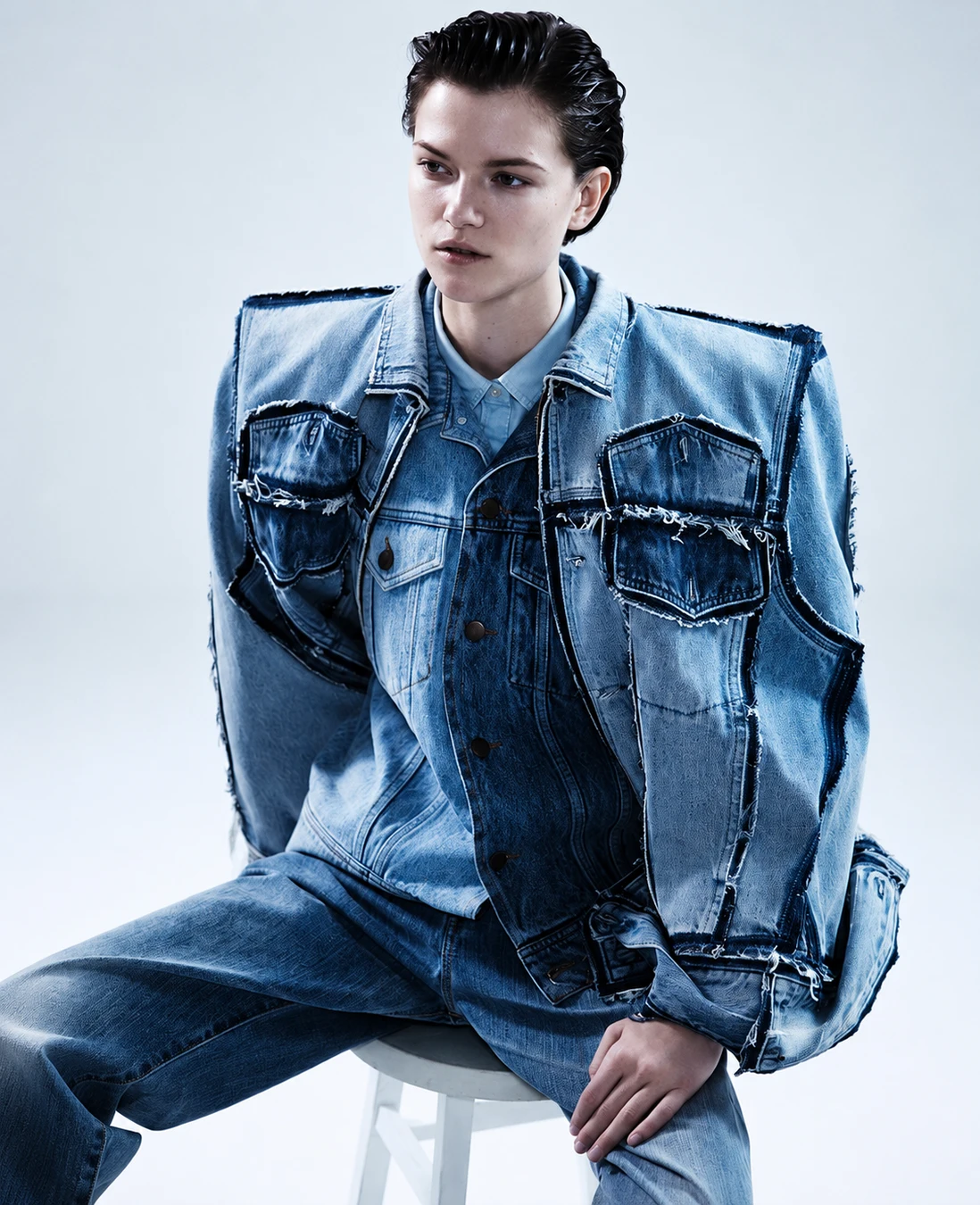
Patchwork denim and reworked denim begin with fabric that has already been cut, worn or separated into fragments. Contrasting washes, irregular seams and reconstructed panels turn those traces into part of the new surface, giving denim another life through visible transformation.
A denim jacket can carry remarkably different social lives depending on its cut. Boxy trucker forms still echo utilitarian history, while a sharply waisted jacket can behave almost like tailoring. Designers exploit denim's density because seams, darts and panels remain visually legible, giving construction itself a graphic quality.
Jeans remain the most expansive laboratory. Straight, bootcut, flare, barrel, skinny, carpenter and wide-leg silhouettes repeatedly cycle through fashion, with changes in wash and weight transforming the same underlying shapes. Dark rigid denim can give a trouser-like severity; heavily washed cloth immediately introduces softness and age.
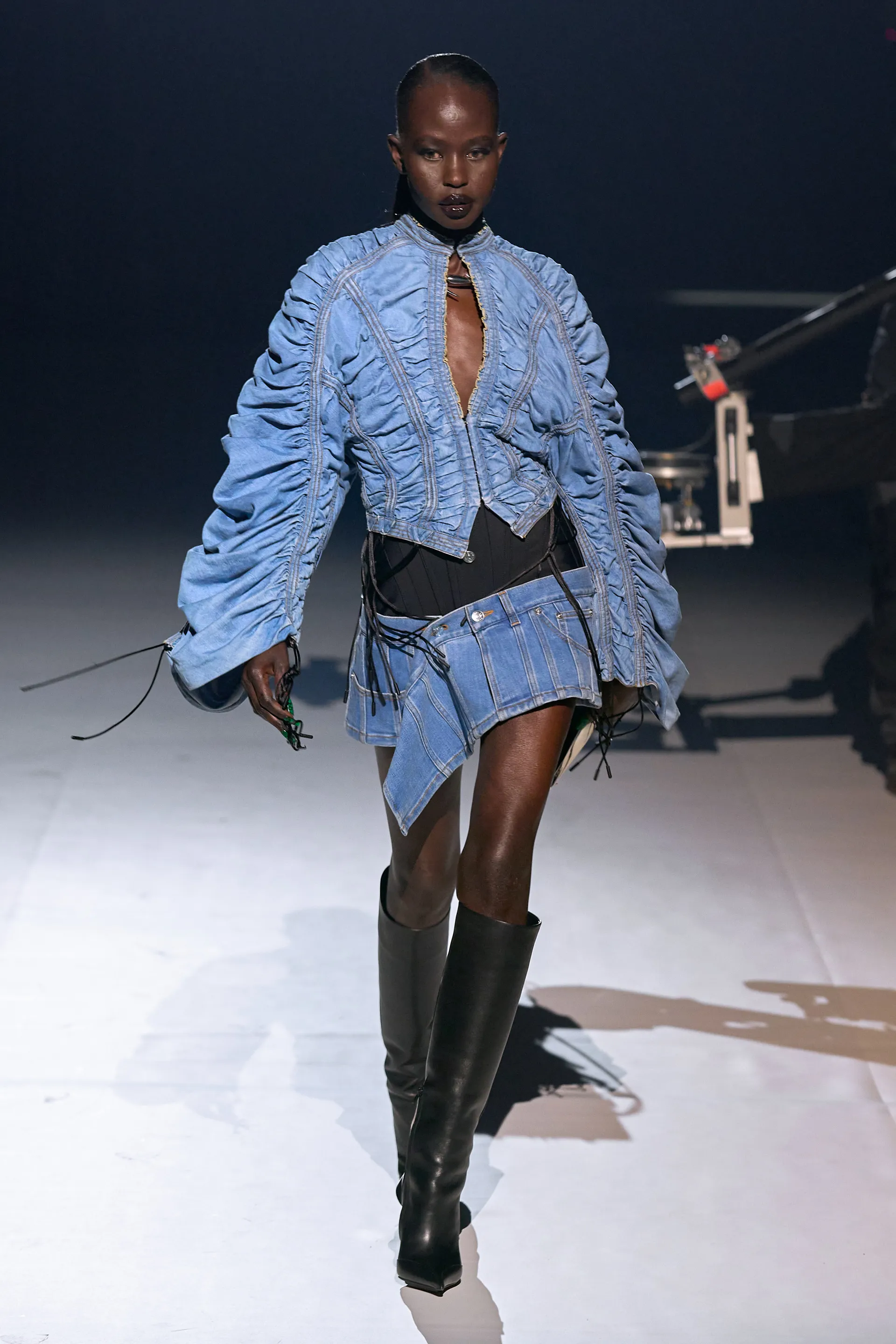
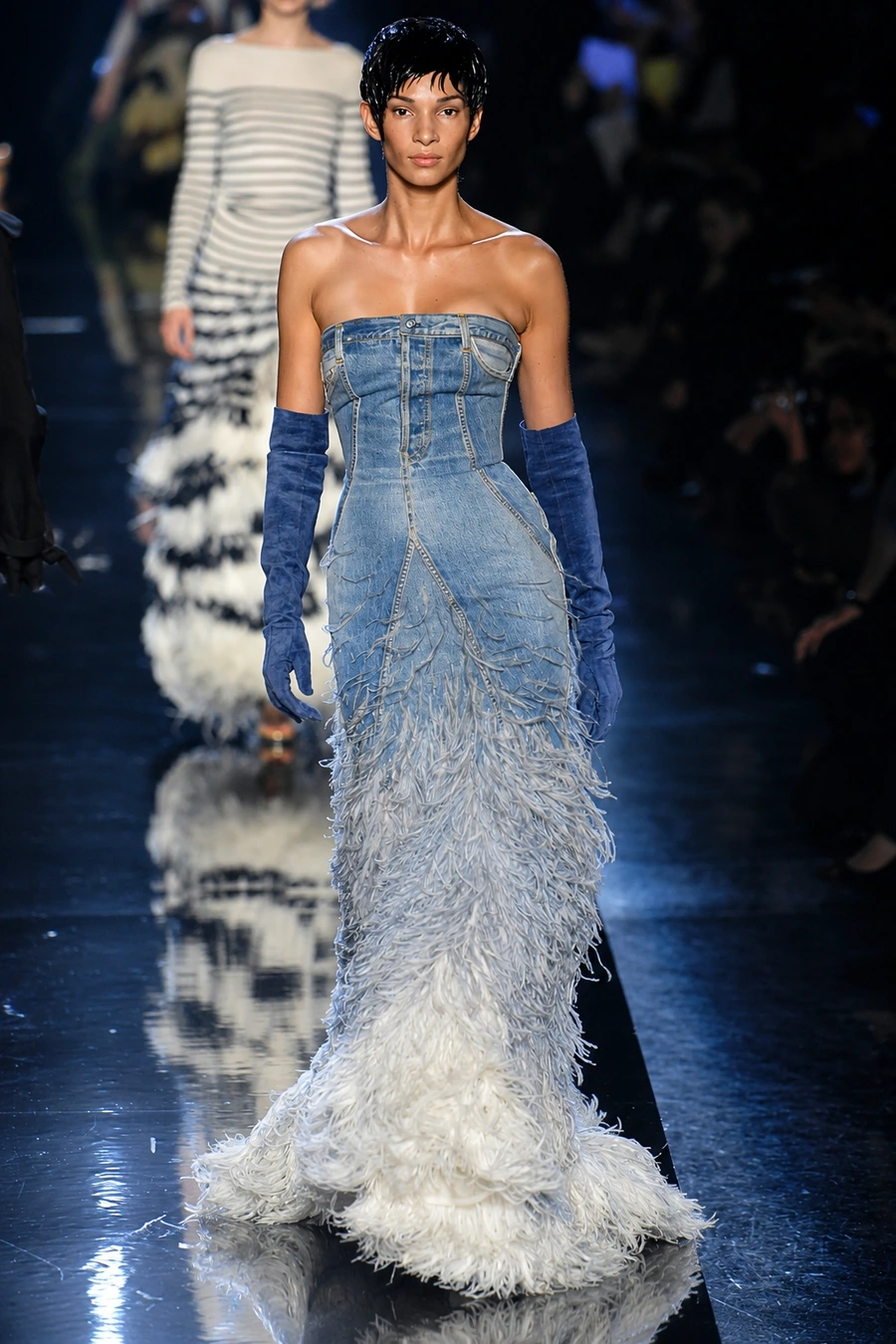
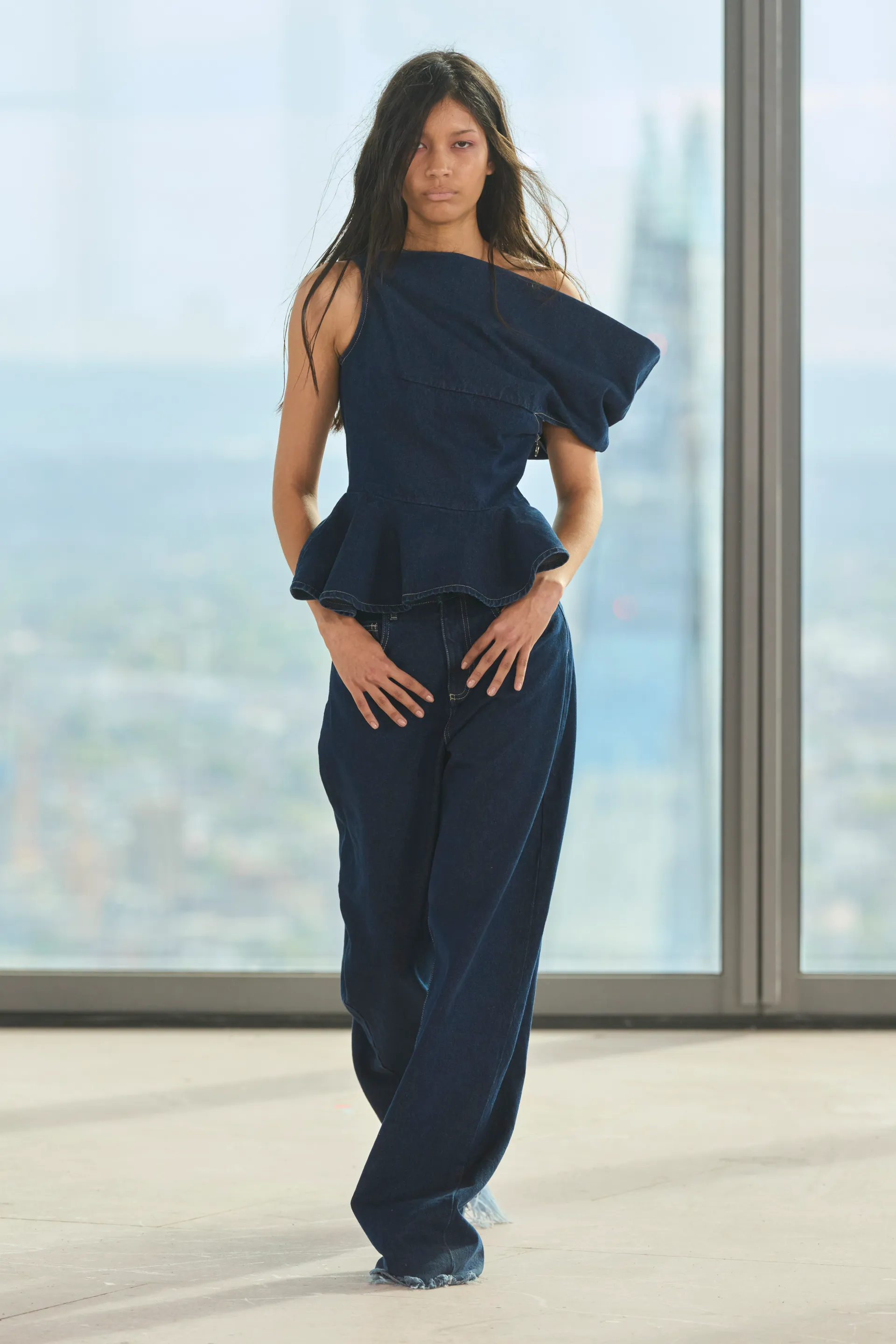
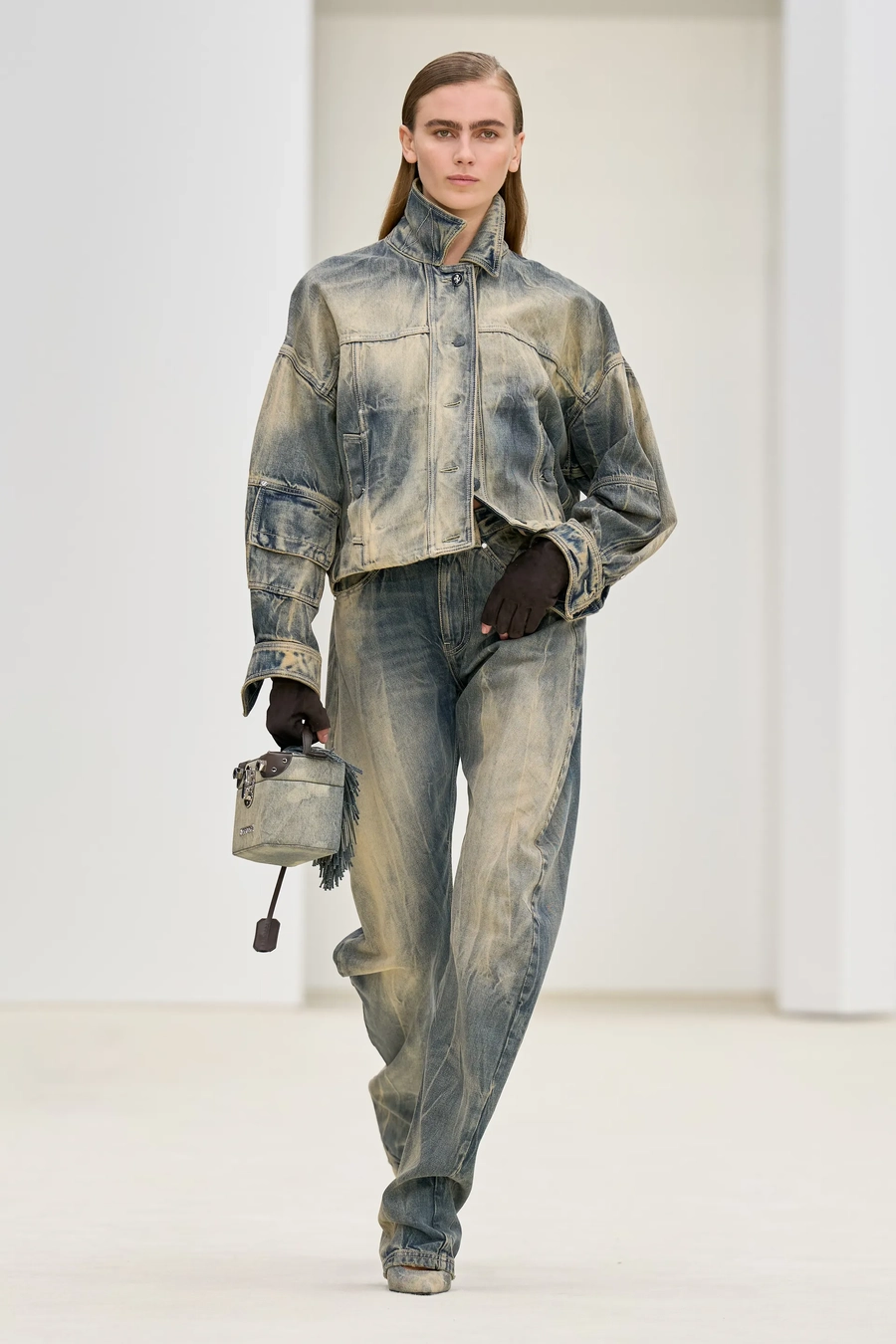
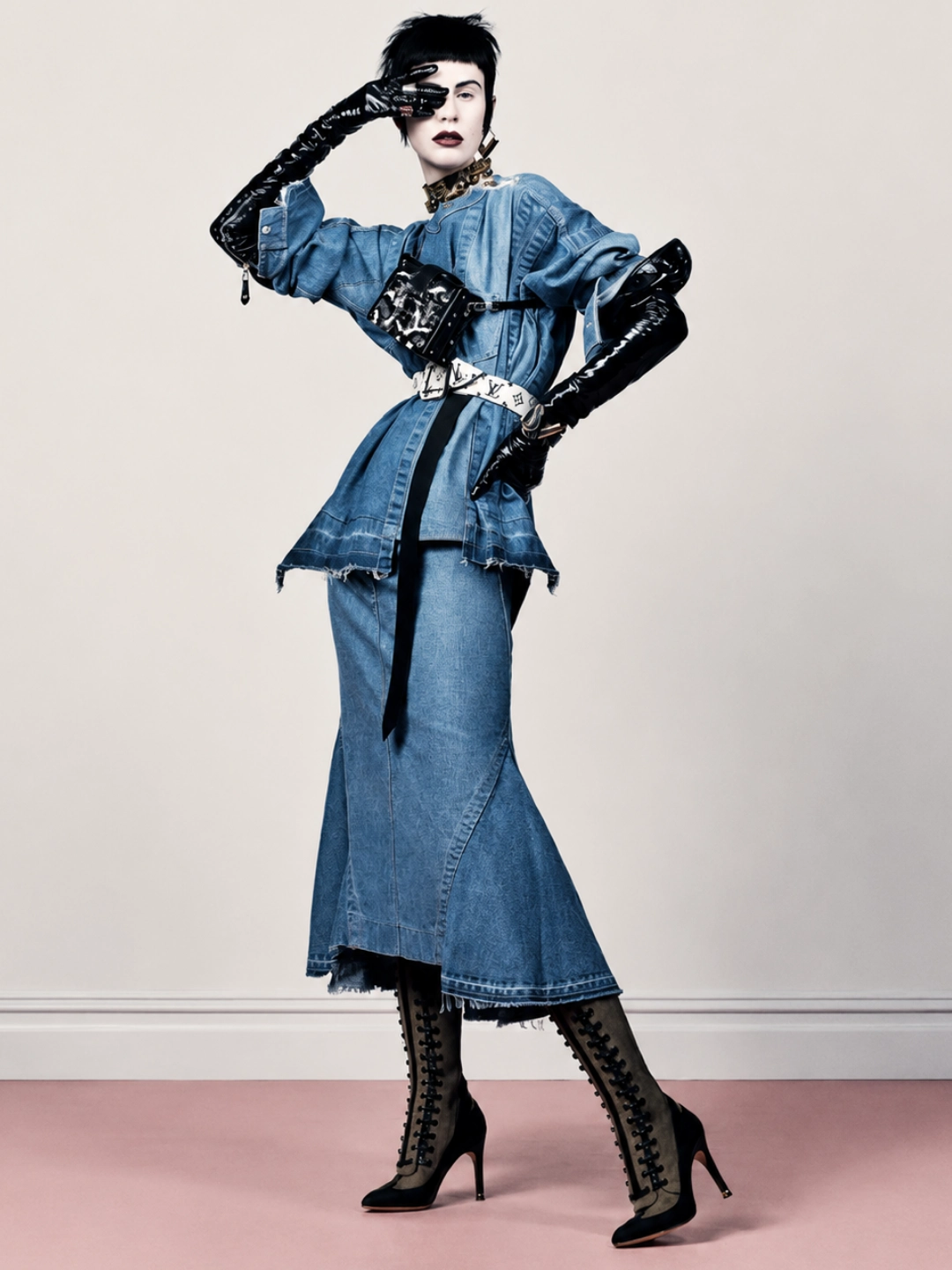
Beyond trousers, denim has become increasingly sculptural. Corsets use its density to emphasise panel construction. Column skirts turn the fabric's weight into controlled vertical volume. Dresses can splice dark and pale washes into patchworks, while oversized coats magnify denim until familiar workwear begins reading as outerwear architecture.
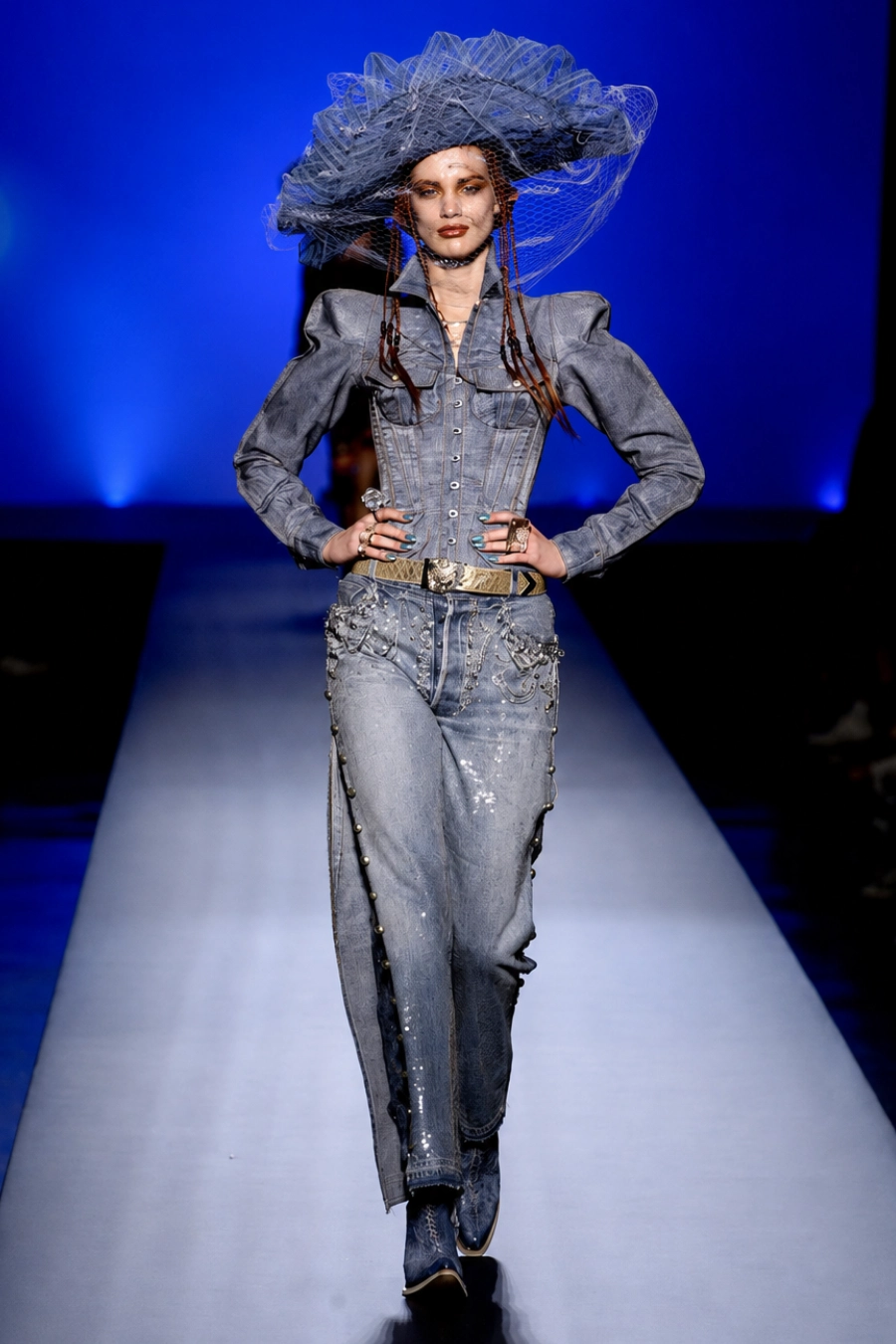
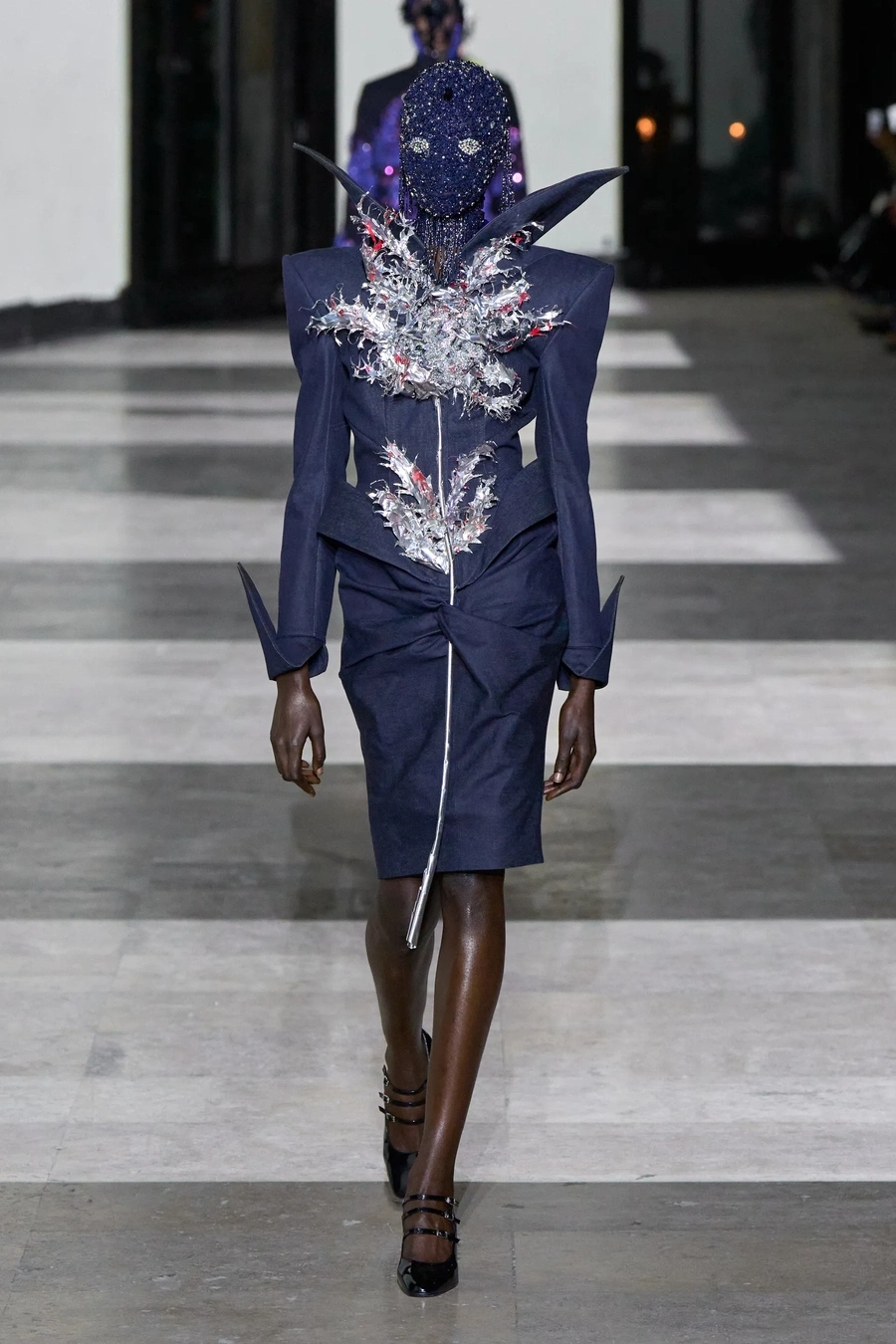
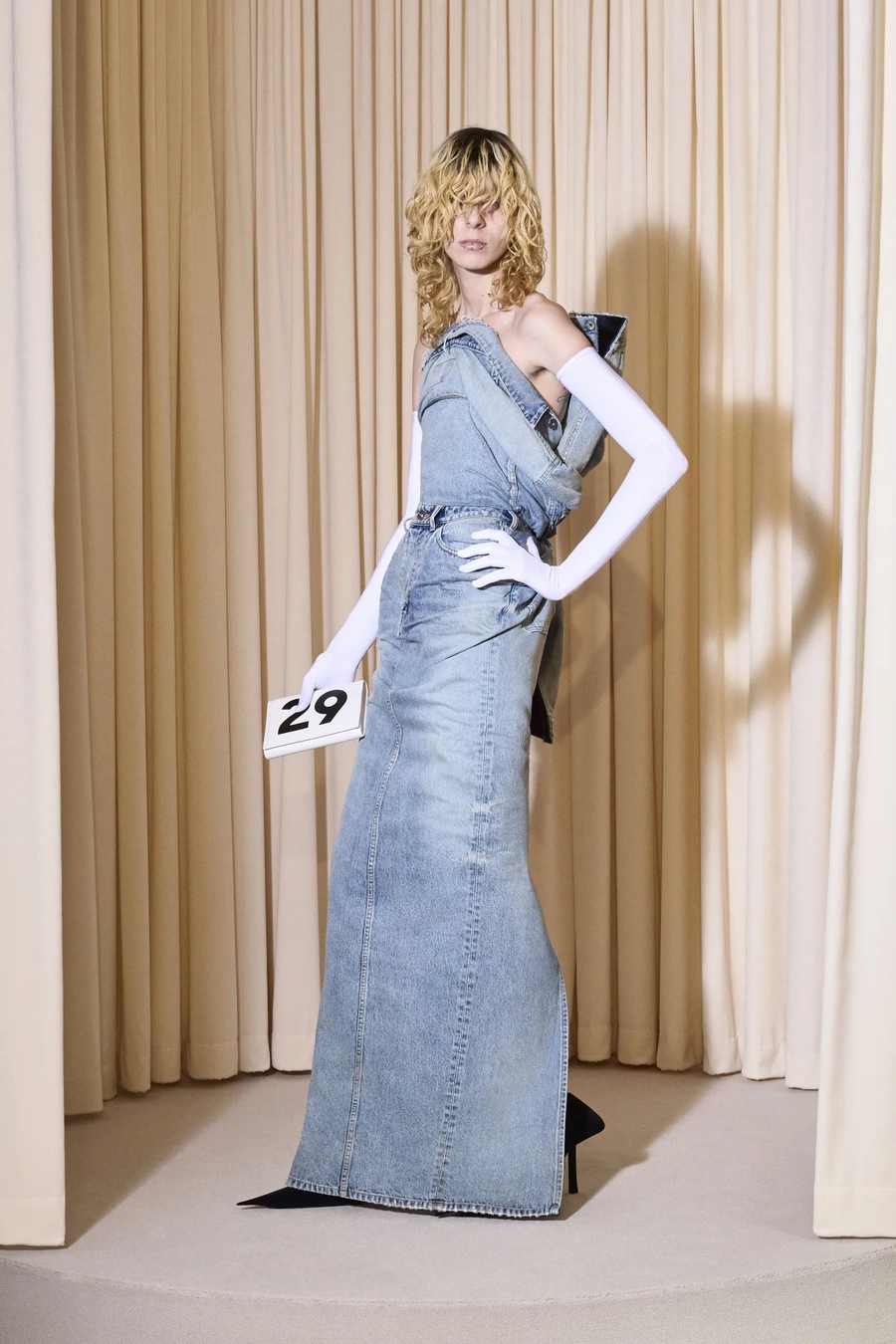
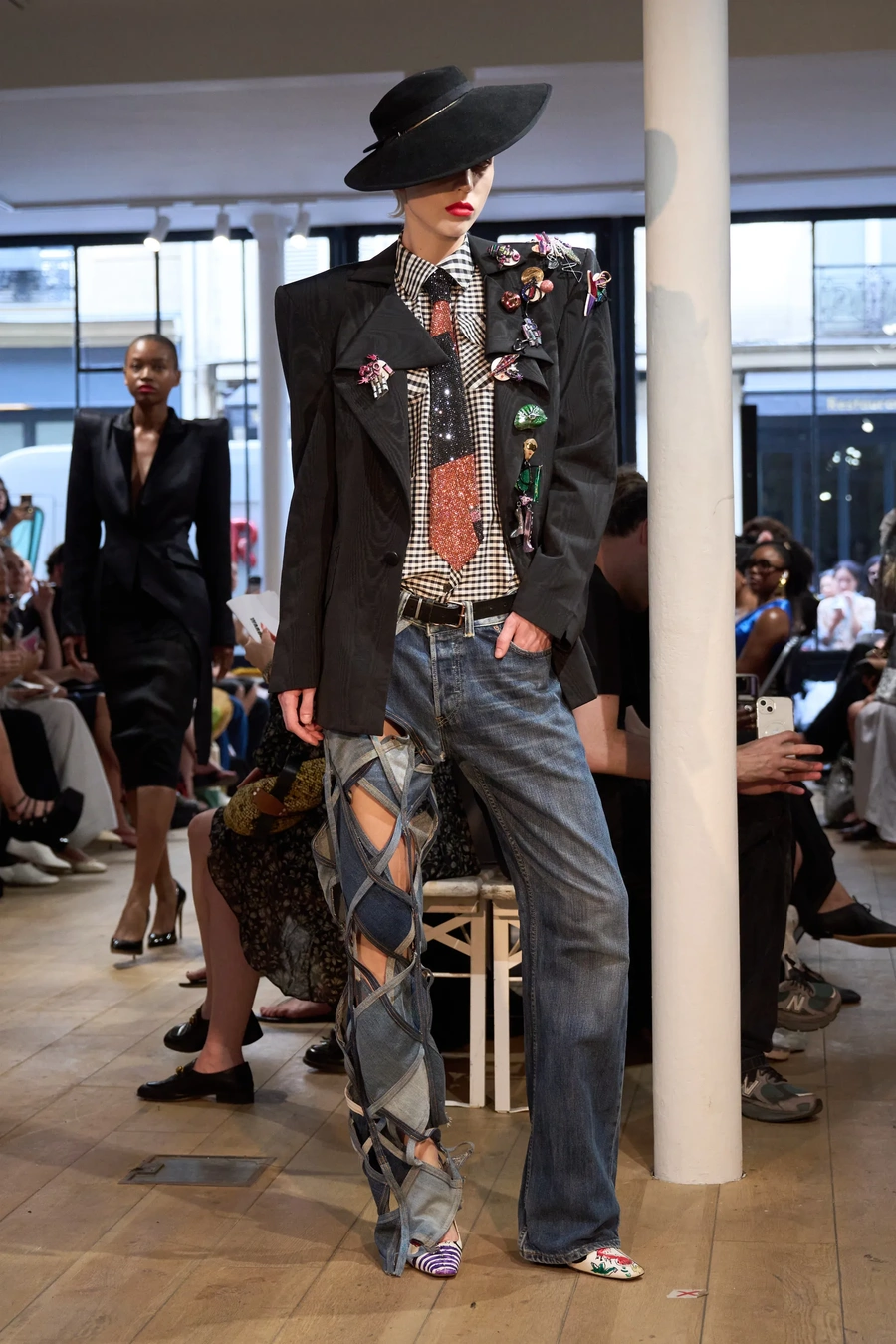
Luxury fashion also enjoys the tension created by placing denim inside highly constructed contexts. Embroidery, crystal work, laser treatments, appliqué and couture-scale pattern cutting can sit over a material still culturally linked with everyday wear. Its familiarity gives designers something recognisable to manipulate, while its physical stability allows elaborate surfaces and shapes to retain definition.
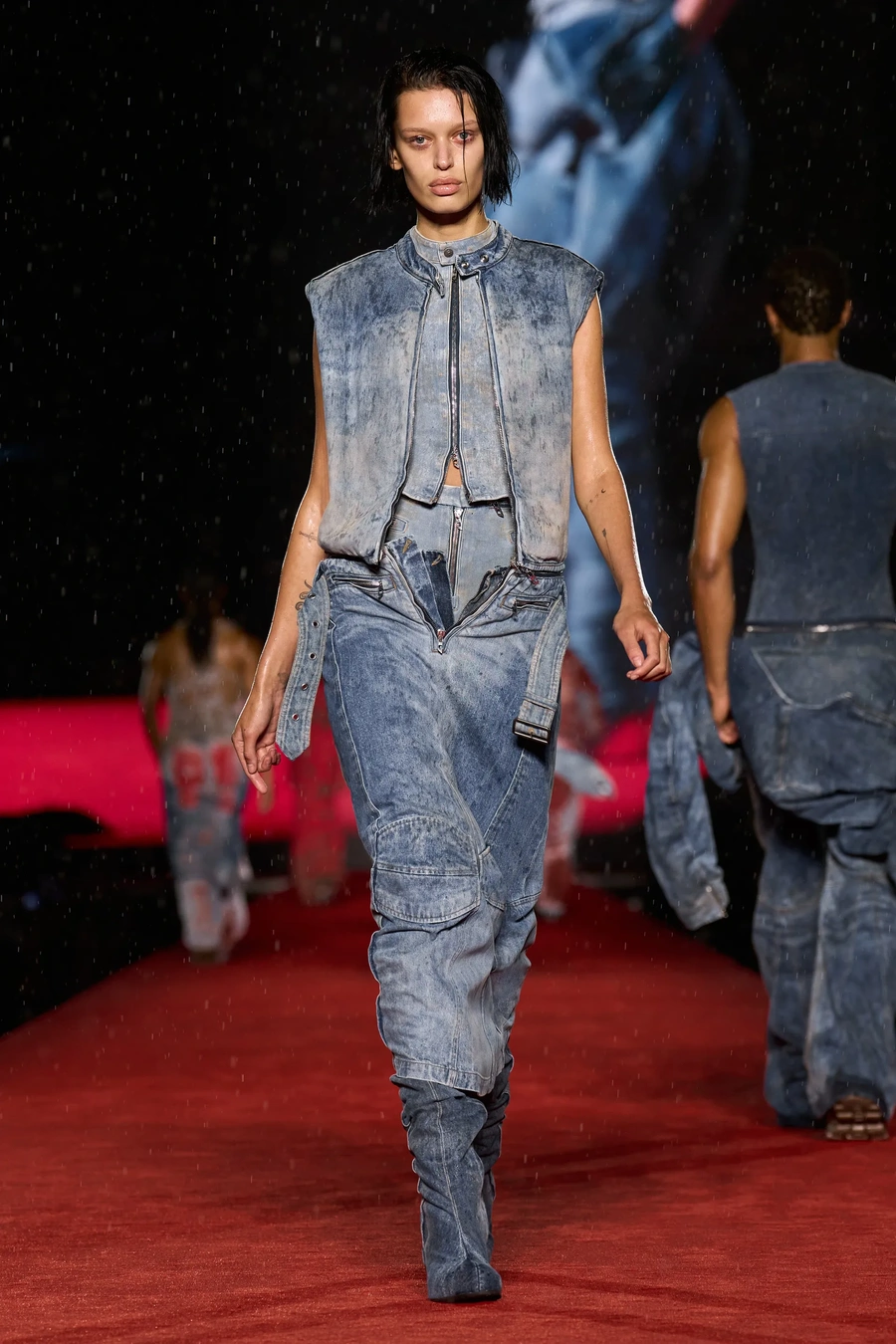
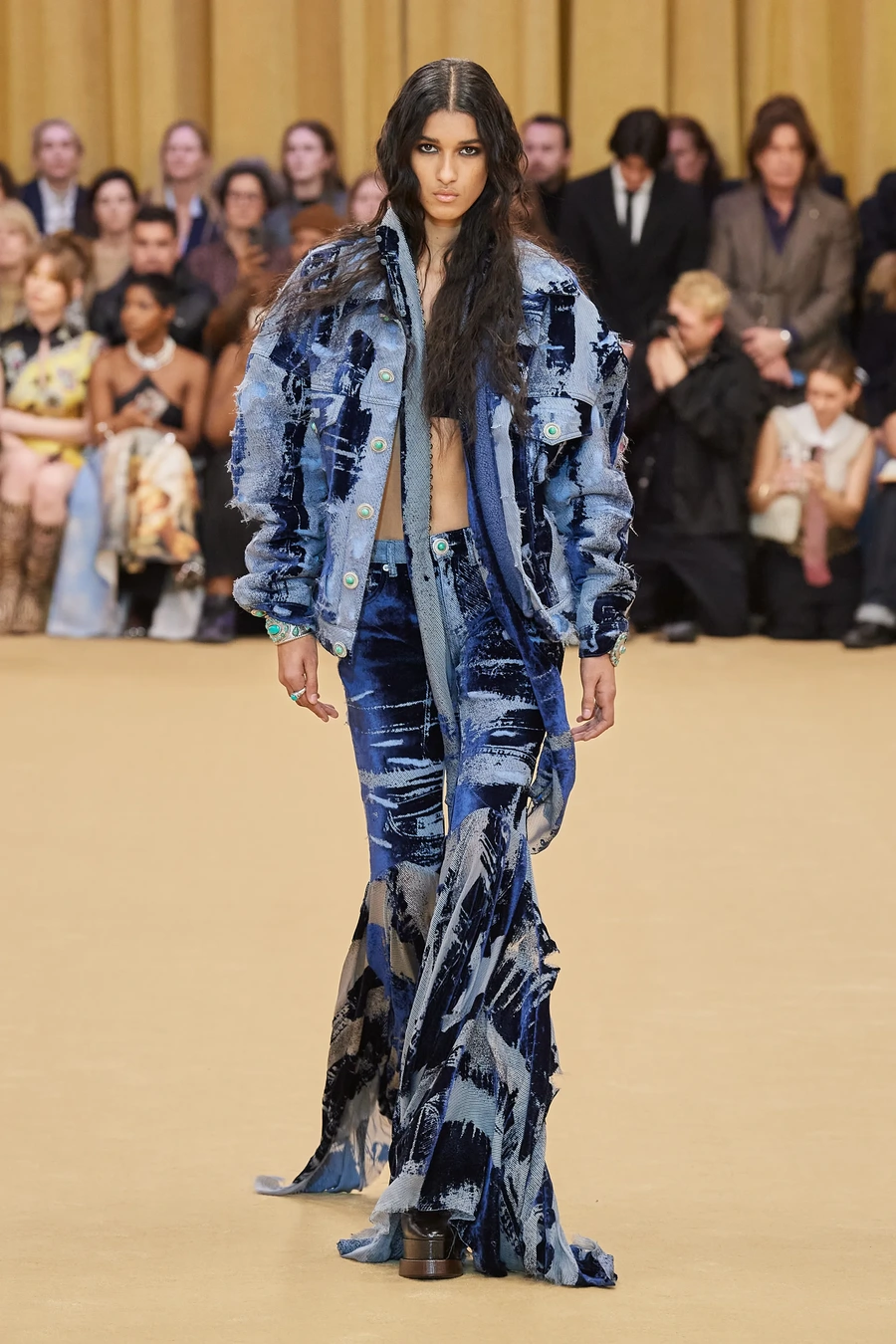
The fabric's accumulated associations remain unusually broad. Denim can still belong to a ranch, a punk club, a 1990s street photograph, a Japanese selvedge workshop or a Paris runway. Few textiles move between those worlds with the same ease.
Turn a piece of denim over before judging it from the colour alone. Classic indigo denim usually reveals a darker, warp-dominant face and a considerably lighter reverse where undyed weft yarns become more visible. The diagonal twill should also be easy to spot under close inspection.
Touch can reveal the next clues. Dense all-cotton denim tends to feel firmer and develops its flexibility through wear, while stretch compositions yield when gently pulled across the width. A fabric label provides the clearest guide to fibre content, especially when a garment relies on elastane, polyester or newer cellulose-based blends.
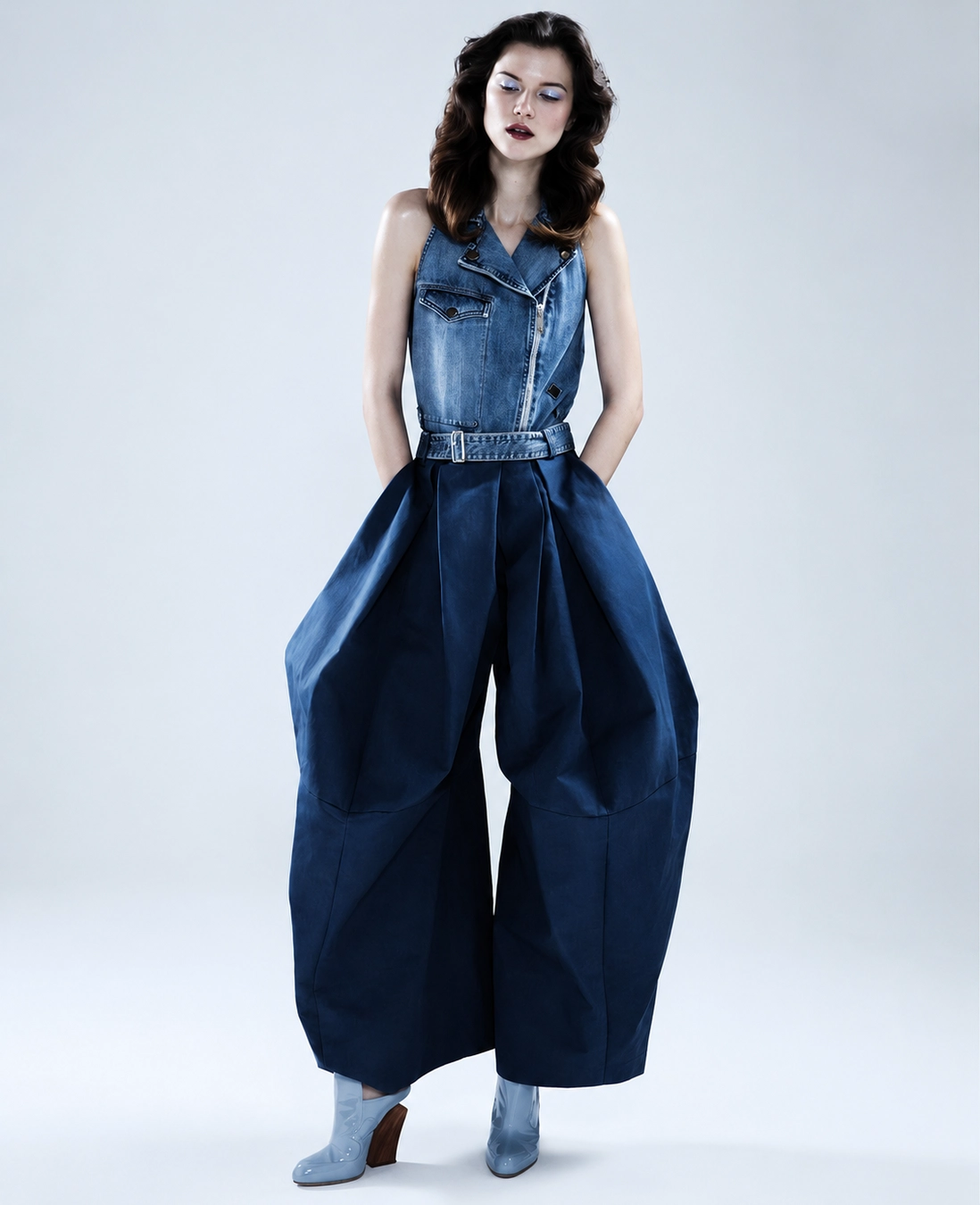
Weight should follow the intended garment. Shirts and fluid dresses benefit from lighter denim; everyday jeans generally need enough substance to retain shape while allowing movement; jackets and structured trousers can support heavier cloth. Raw or rigid denim brings a longer break-in process, while prewashed denim begins with immediate softness.
Indigo deserves some patience at home. Dark denim may release colour through rubbing and washing, particularly during its early life. Turning garments inside out, using cool water and reducing unnecessary washing can help preserve both shade and fibre. Care labels remain the final authority because stretch fibres, coatings, embellishments and special finishes can change what the cloth tolerates.
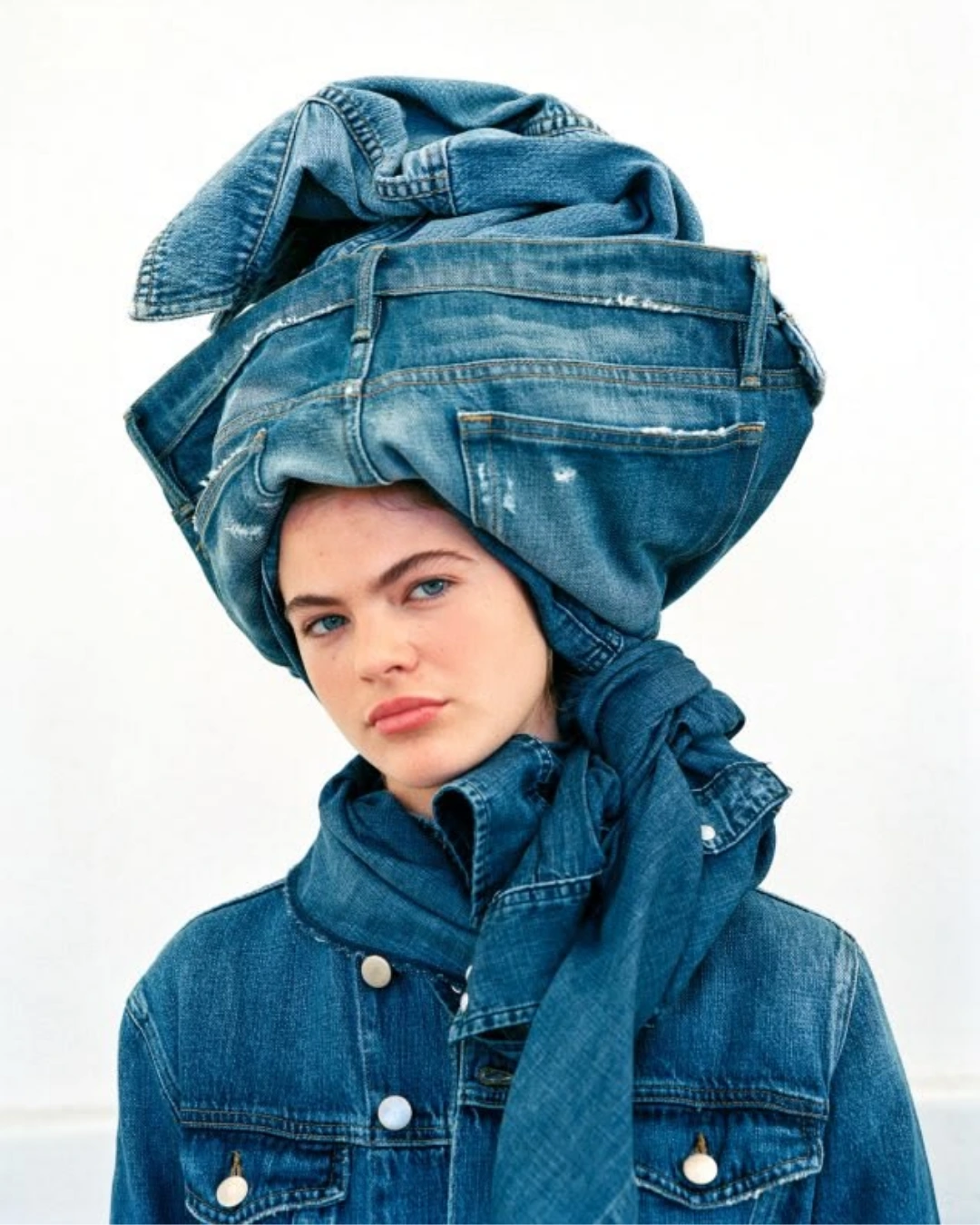
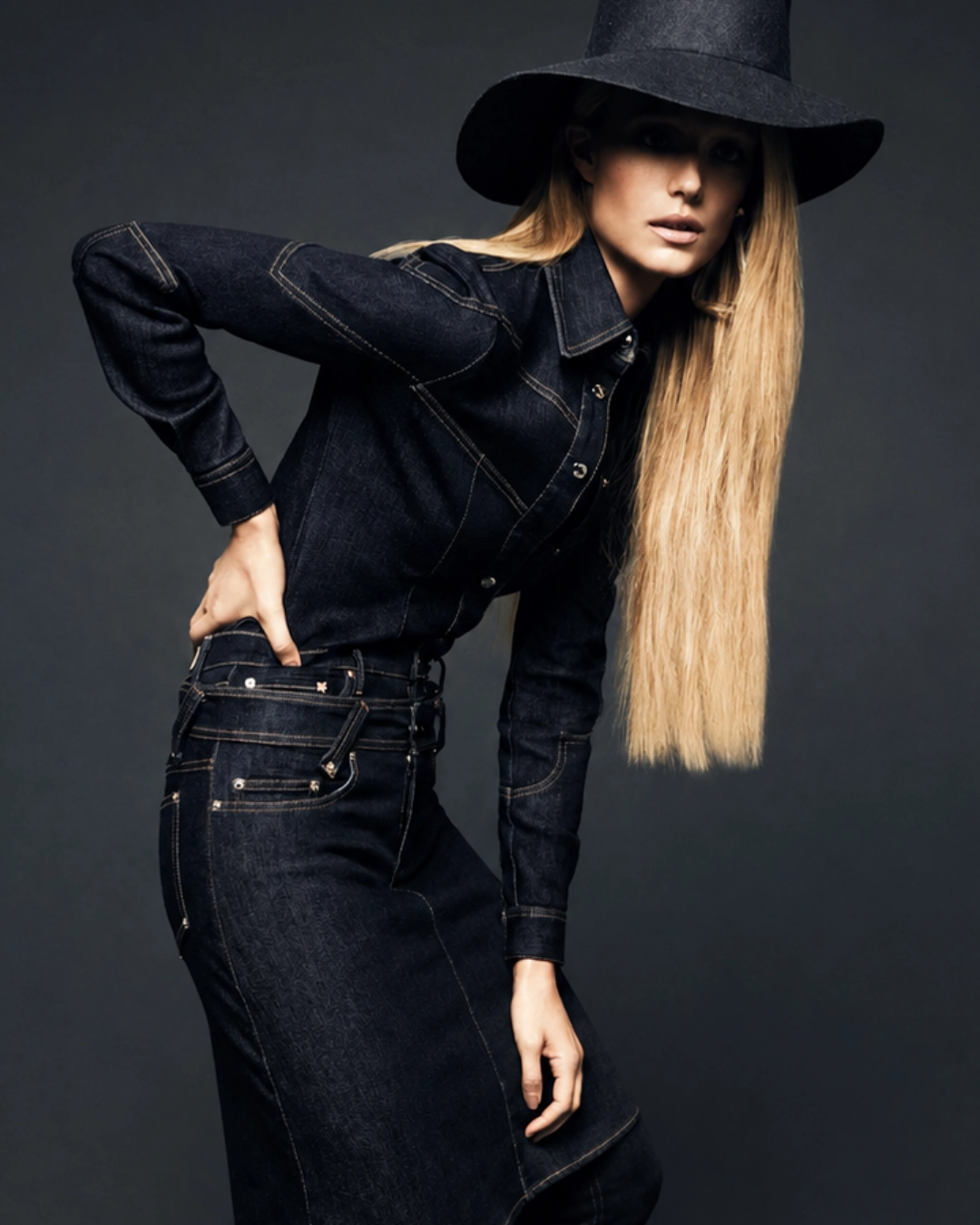
Heat deserves particular attention with stretch denim. Excessive temperatures can gradually affect elastic fibres and alter recovery, so gentle washing and air drying can extend the garment's original fit. Heavy raw denim benefits from its own slower rhythm, where care becomes part of the ageing process and each wash changes the surface incrementally.
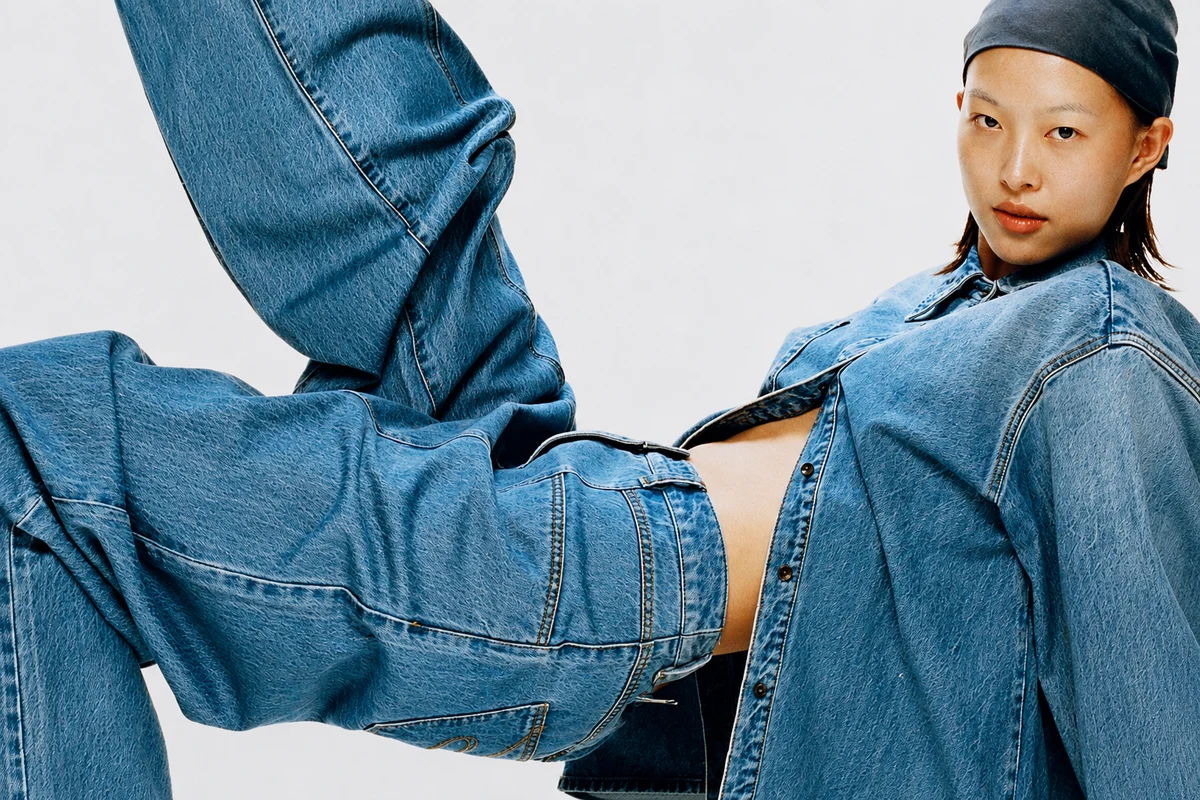
Eventually, the deepest indigo becomes blue, blue becomes powdery around the seams, and stiffness gives way to folds shaped by the body. Denim fabric rarely stays exactly as it entered the wardrobe.
Denim endures because it has never belonged to a single era, subculture or silhouette. It keeps returning in new washes, proportions and constructions, yet familiarity never disappears. Across wardrobes around the world, a pair of jeans remains one of fashion’s closest things to a universal piece, ordinary enough for everyday life and adaptable enough to be reinvented again and again.
Advertisement