MENU
Close





How much history can a nearly invisible textile hold? Silk mesh fabric has traveled through centuries of invention and craftsmanship, leaving its mark on the very fabric of fashion.

How much history can a nearly invisible textile hold? Silk mesh fabric has traveled through centuries of invention and craftsmanship, leaving its mark on the very fabric of fashion.
October 9, 2026
Advertisement

Advertisement



The delicate surface of silk mesh fabric conceals a remarkably sophisticated process. Every opening, intersection, and movement of thread must be carefully considered, beginning with the silkworm cocoon and continuing through the work of textile makers. Across centuries, this pursuit of precision has connected ancient weaving traditions with mechanical inventions and the ateliers of European couture.
The production of silk mesh fabric involves a sequence of specialized operations, beginning with the cultivation of silkworms and progressing through fiber preparation, yarn formation, fabric construction, and finishing.
The process starts with sericulture, the cultivation of silkworms for silk production. Domesticated Bombyx mori larvae feed primarily on mulberry leaves before secreting continuous silk filaments to construct their cocoons. Each filament contains two fibroin strands surrounded by sericin, a natural protein that binds the strands together.


During conventional silk production, harvested cocoons are treated with warm water to soften the sericin and facilitate reeling. Several delicate filaments are drawn together to form a continuous silk thread suitable for textile manufacture. Yarn thickness and twist are carefully controlled because they affect the strength, texture, and visual consistency of the finished material.
A significant stage is degumming, the removal of sericin from the silk fibers. This process exposes the fibroin filaments, producing the familiar softness, flexibility, and natural luster associated with finished silk. Manufacturers use controlled aqueous treatments, sometimes involving soap, alkaline agents, or enzymes, to achieve the desired degree of sericin removal. The treatment can occur at the yarn or fabric stage, according to the intended production sequence.
Once prepared, silk yarns are organized into an open textile structure. Several methods are available.
In open weaving, longitudinal warp threads and transverse weft threads intersect while maintaining intentional spaces between them. The arrangement creates a lightweight fabric with visible openings. Yarn tension and density determine the stability and dimensions of these spaces.
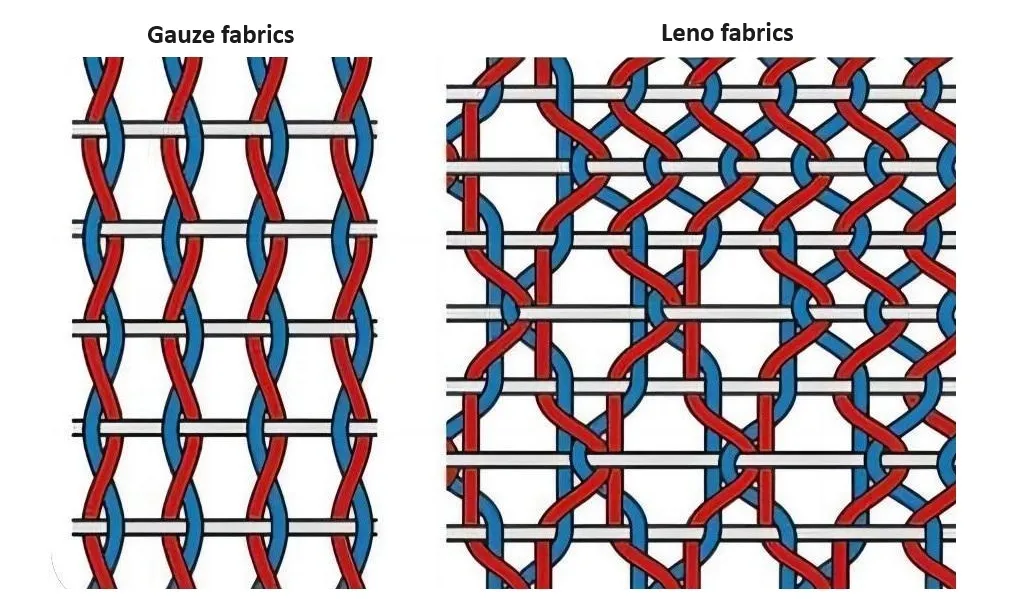
Leno weaving introduces an additional structural mechanism. Pairs of warp threads cross around the weft threads, securing their positions and forming stable openings. This technique is particularly associated with traditional silk gauze and allows fabric makers to maintain an open surface while controlling yarn movement.
Knitted silk mesh is produced through interconnected loops of yarn. The geometry of these loops permits mechanical extension, allowing the fabric to respond flexibly to movement. Specialized net-making techniques, including bobbinet production, create regular mesh structures through controlled thread twisting.
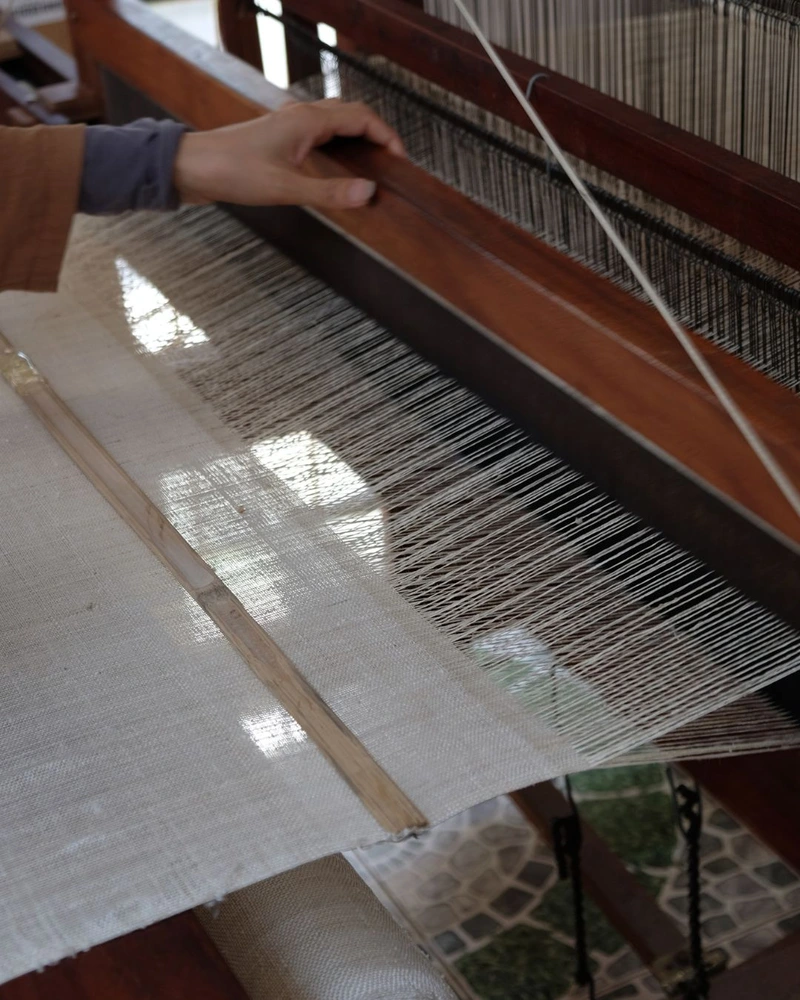
The final stages involve dyeing, washing, drying, and finishing. Softening treatments can encourage fluid draping, while controlled stiffening supports defined shapes and volume. Fabric stability, surface appearance, and the intended garment application guide these finishing decisions.
The history of silk mesh fabric spans several textile traditions, beginning with open-structure silk weaving in ancient Asia and extending through the industrial development of European net-making.
Chinese silk production developed sophisticated weaving practices during antiquity, including methods that produced lightweight fabrics with controlled openings. During the Han dynasty (206 BCE–220 CE), silk weaving supported complex textile structures used in clothing and ceremonial contexts. Archaeological material from the Tarim Basin, including gauze fragments associated with Loulan, provides evidence of early open silk weaves.
A distinguishing technique involved twisting paired warp threads around the weft, securing their positions while preserving an open textile structure. This method corresponds to the principle of leno weaving.

During Japan's Nara period (710–794), textile production incorporated specialized silk structures associated with courtly and religious material culture.
The Metropolitan Museum of Art preserves an eighth-century Japanese textile fragment dating to the Nara period, specifically the Tempyō era (729–749). Its recorded material is silk in a gauze weave, providing surviving evidence of the use of open silk constructions during this period.
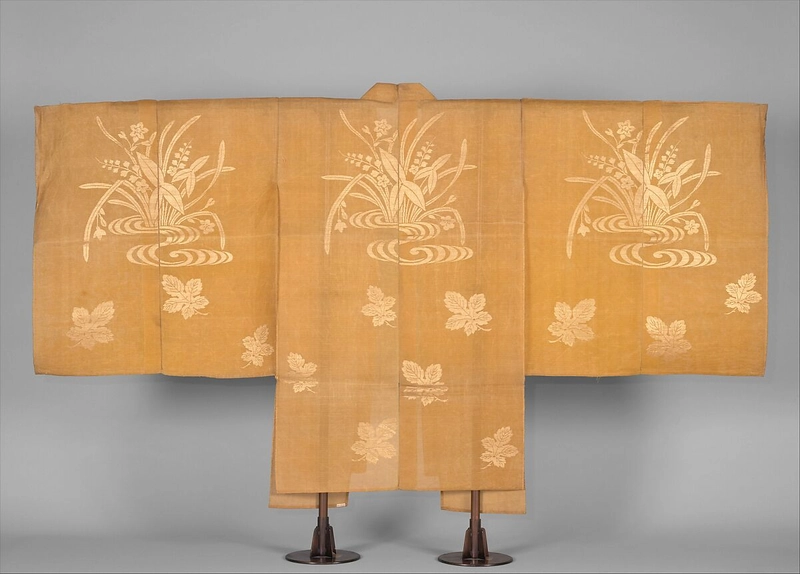
The Japanese weaving traditions known as sha, ra, and ro developed distinctive approaches to open silk structures. These textiles subsequently found applications in formal clothing, theatrical costume, and garments adapted to seasonal conditions.
By the Edo period (1615–1868), silk gauze was used in elaborate Noh costumes. An eighteenth-century chōken preserved by The Met features silk gauze with metallic-thread brocading, demonstrating how lightweight open structures could support sophisticated patterning.
European textile manufacturing experienced an important development through the work of English inventor John Heathcoat (1783–1861). In 1808, during the threshold of Regency era, Heathcoat patented a machine designed to reproduce regular net structures using a mechanical system. An improved patent followed in 1809. His bobbinet machine employed moving bobbins that carried threads around longitudinal yarns, forming a consistent network of openings. The machinery enabled the industrial production of fine net grounds used in lace manufacture and dressmaking.
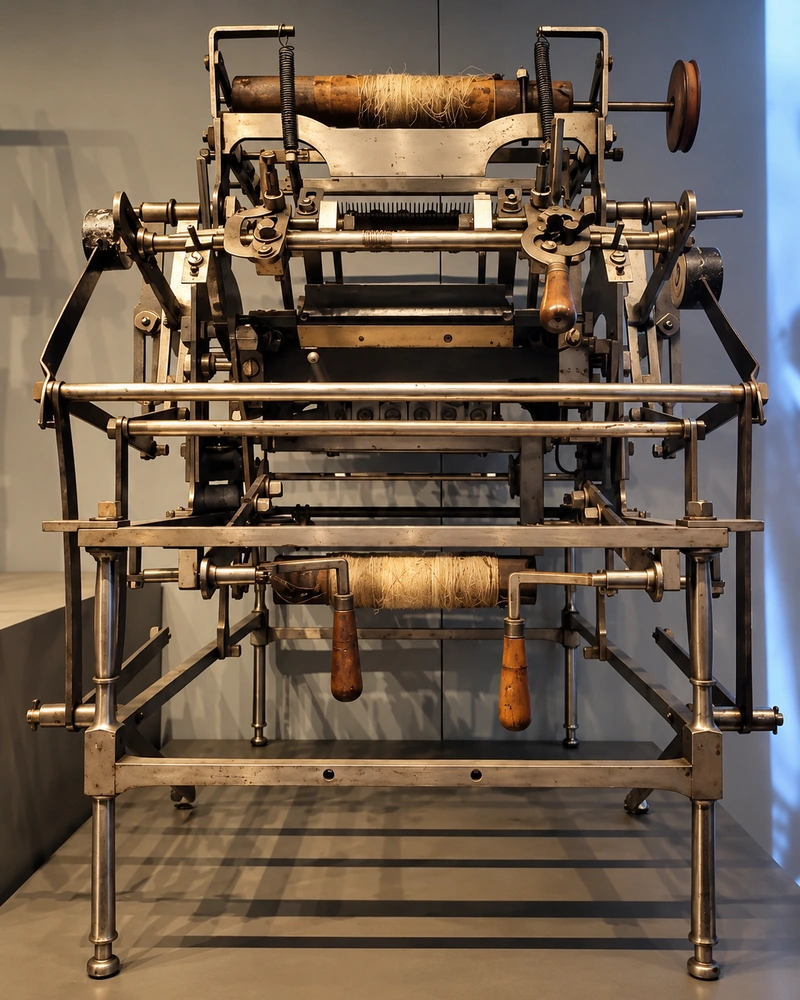
This development contributed to the expansion of machine-made net textiles, including silk net for fashionable clothing and accessories. Later innovations in lace machinery supported additional patterns and increasingly elaborate textile surfaces.
By the mid-nineteenth century, fine silk net had become an established material for veils, dress trimmings, and delicate accessories.
A French veil dating to approximately 1850, preserved by The Metropolitan Museum of Art, is catalogued as silk machine net. The surviving object demonstrates the application of mechanized net-making techniques to lightweight fashionable accessories. During the nineteenth century, fine net also provided a suitable ground for lace-inspired treatments, embroidery, and layered dress constructions.
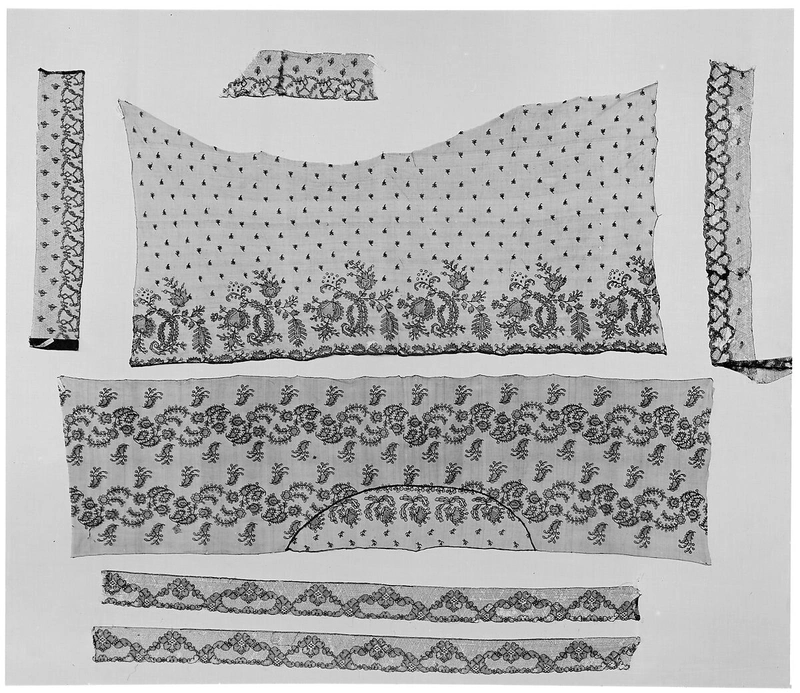
During the early twentieth century, Parisian couturiers developed elaborate techniques involving silk tulle, fine net grounds, and dimensional embellishment.
In 1928, during the flapper era, Jeanne Lanvin created La Traviata, a dress featuring taffeta petals applied to a silk tulle foundation. The arrangement gave the skirt a light appearance while supporting its carefully organized surface treatment.
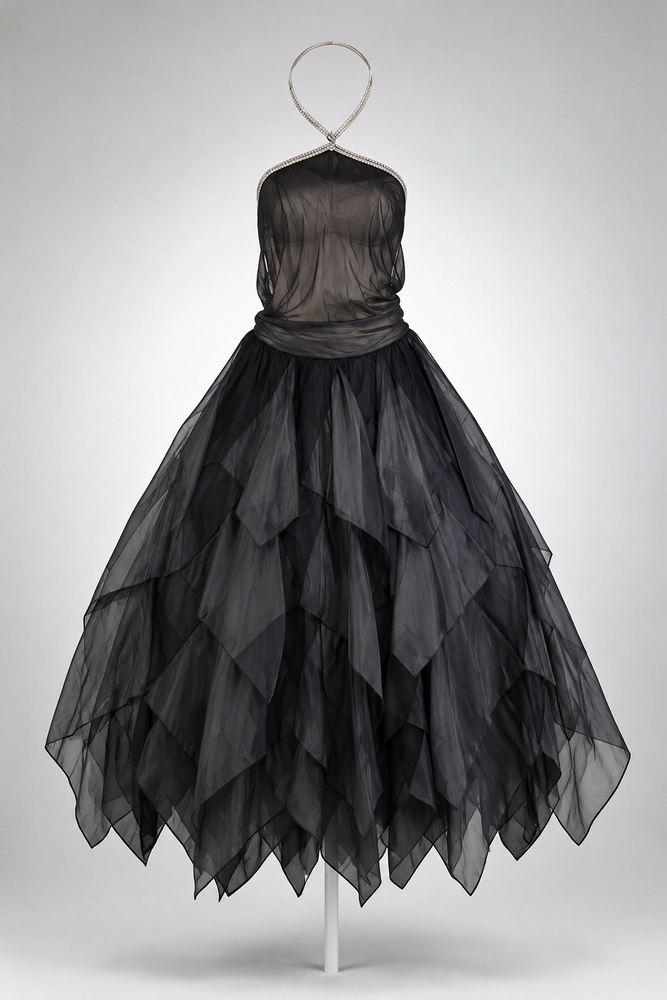

These examples demonstrate the growing importance of silk net as a structural foundation within luxury dressmaking, particularly for elaborate hand-applied embellishments.
By the twentieth century, silk mesh had acquired a remarkable place in couture, supporting intricate embroidery, elaborate evening gowns, and increasingly ambitious experiments with transparency. Its evolution also reveals something about fashion history itself: innovation often grows from techniques developed centuries earlier, carried forward by craftspeople who continue to reinterpret their possibilities.
From the ancient looms of China to the ateliers of Paris, the story of silk mesh fabric is ultimately one of human ingenuity, sustained through the smallest movements of a thread.
Advertisement