MENU
Close





Courreges SS27 arrives with a difficult inheritance: a house whose vision of the future became so iconic it hardened into a stereotype. Drew Henry had only months to shape his debut. The question is how far he can disturb that image without losing Courrèges itself.

Courreges SS27 arrives with a difficult inheritance: a house whose vision of the future became so iconic it hardened into a stereotype. Drew Henry had only months to shape his debut. The question is how far he can disturb that image without losing Courrèges itself.
October 8, 2026
Advertisement
Advertisement


Taking over Courrèges came with an unusual difficulty. Drew Henry inherited a house already returned to cultural relevance, its codes sharpened during Nicolas Di Felice’s five-year tenure into a language of sensual minimalism, nightlife and young bodies in motion. Henry relocated from London to Paris in May and presented his first collection on September 30, leaving only a compressed period in which to establish another direction.
Speed could easily have produced a cautious debut built around recognisable signatures. Courreges SS27 moved in the opposite direction. He looked at the familiarity surrounding those signatures and started testing how much of it belonged to André Courrèges himself, and how much had been hardened by decades of repetition. The white mini, vinyl, geometric boots and Space Age imagery remain impossible to separate from the house, yet the archive offered another Courrèges beside them: colour, eccentric accessories, playful proportions, softness and occasional oddity.
For his debut, Drew Henry is not staging a rebellion against heritage but rather arguing with the abbreviated version of heritage that fashion remembers.
White has served Courrèges extraordinarily well. It carried André Courrèges’s vision of modernity with almost architectural force, stripping clothing towards geometry and helping turn the body into part of a gleaming technological future. Eventually, such clarity became a trap of its own. Fashion history condensed an expansive house into a handful of immaculate images, until Courrèges could almost be summoned through a white mini dress and a pair of boots alone.
Henry pushes against that reduction with colour that seems almost too cheerful for the stereotype. Orange burns beside pink, greens turn acidic, blues become crisp and artificial, while softer pastels interrupt the expected severity. None of it reads as an arbitrary seasonal palette. Archive research had already revealed the house to be far more colourful than its later mythology suggested, and Henry has spoken about wanting to recover the eclecticism he found there.


Colour consequently acts as historical correction. Courrèges remains visible in the economy of the silhouettes and the control of proportion, yet the emotional temperature changes. Space Age futurism traditionally promises cleanliness, order and the excitement of technological progress. These colours carry wit instead. They make the clothes slightly cheekier, even mischievous, without turning the collection nostalgic for the 1960s.
More importantly, they expose how narrow our shorthand for a fashion house can become. Heritage often survives through its most photogenic fragments, repeated until the fragment starts impersonating the whole. Henry seems alert to that danger. His Courrèges can still wear white, but white has lost its monopoly over the future.
One of the collection’s most compelling archival encounters came from an object damaged by time. Henry discovered a futuristic Courrèges cloche that had spent decades crushed inside a hat box. When he traced its history, the original had largely survived through black-and-white imagery. For the runway, its distorted state was preserved and multiplied instead of corrected.
The story could almost stand as a metaphor for his entire debut.
Courrèges itself has spent decades inside another kind of box, carefully packed into fashion history as the house of the Space Age. Henry opens that container and finds that time has altered what is inside. The silhouette still carries the memory of a helmet or flying saucer, but its geometry buckles and collapses. Futurism survives in a form that has aged.The hat also reconnects the house with eccentricity largely erased from its popular image.

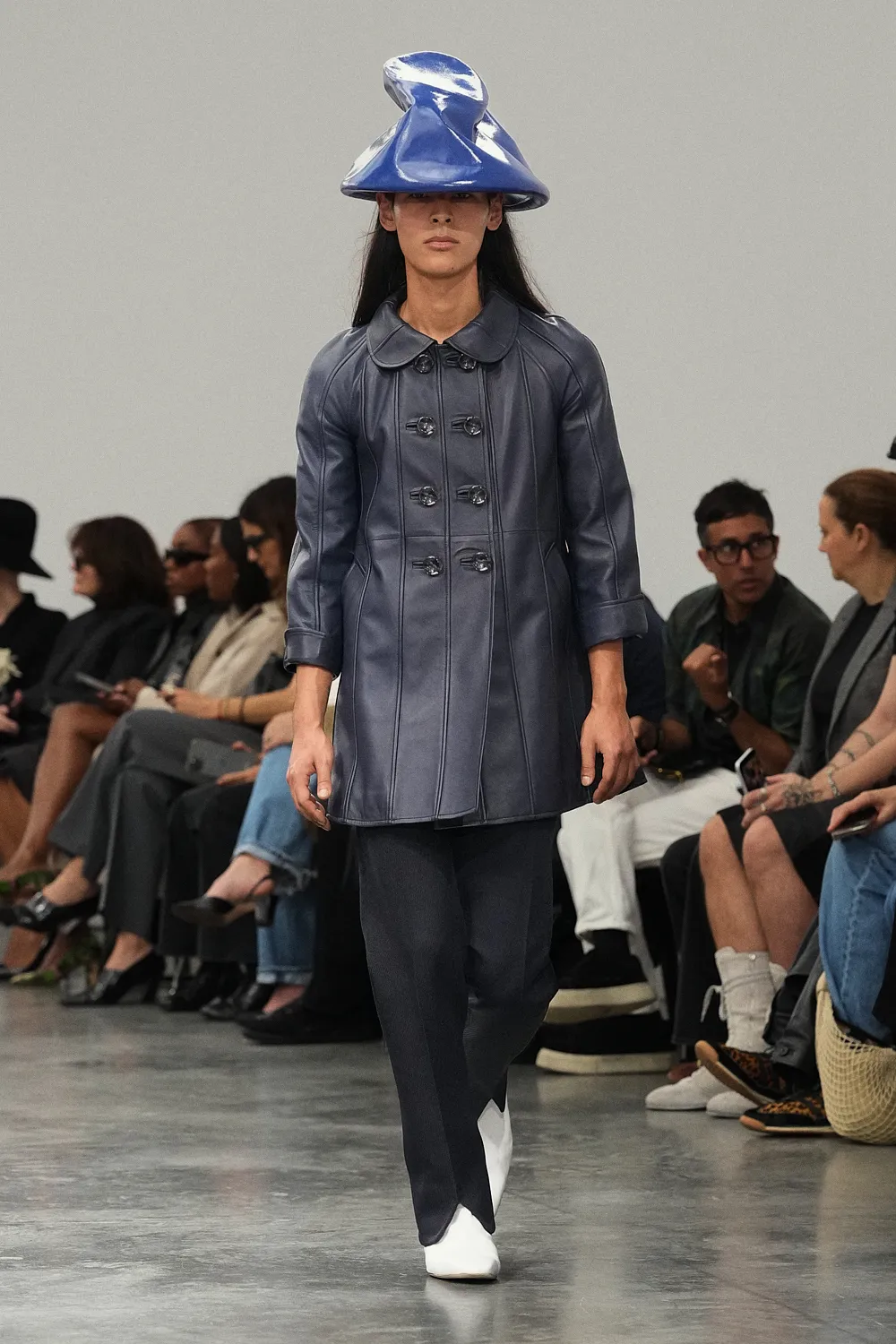
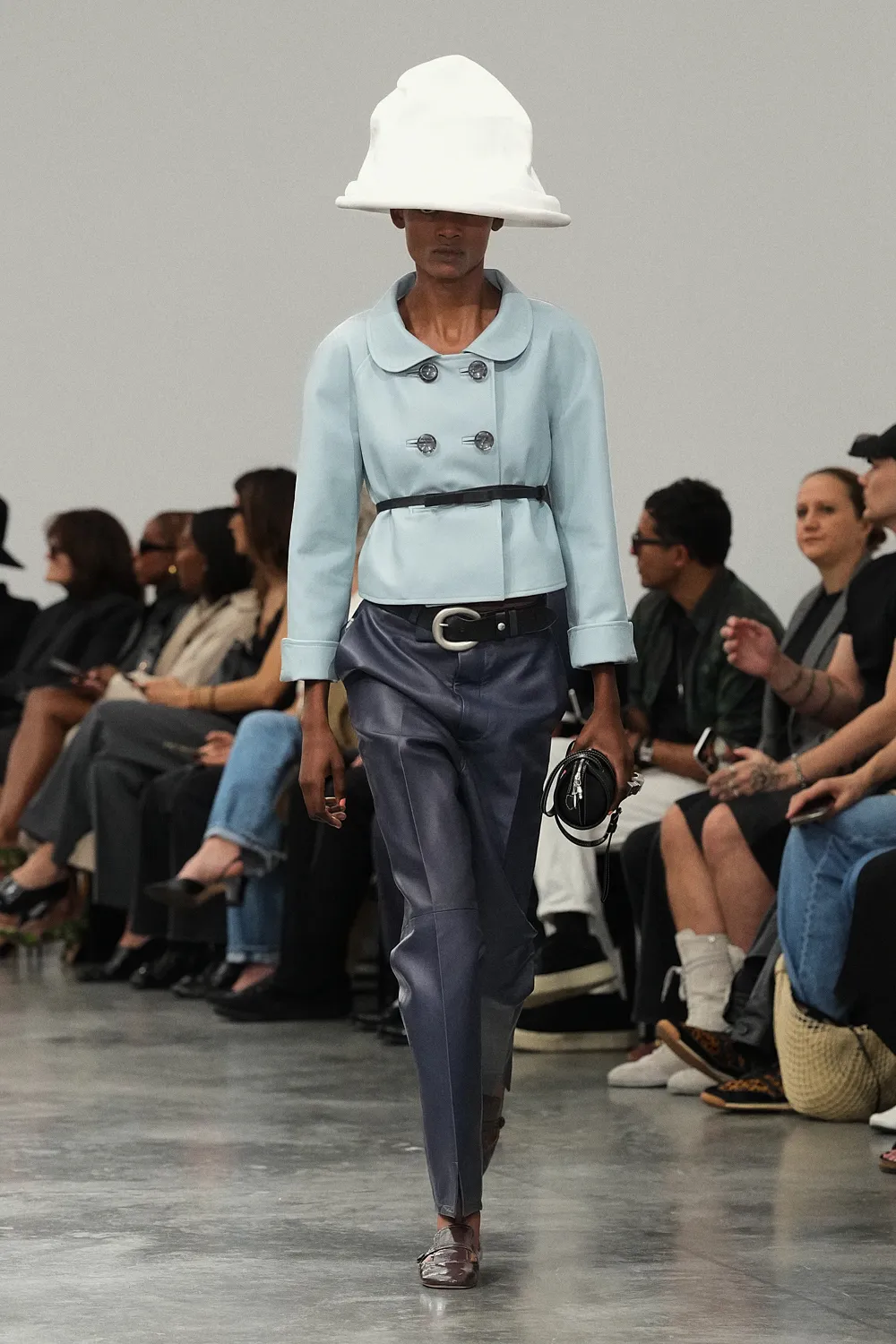

Reverence can become restrictive when every historical object must be restored to an ideal state. Here, deterioration carries information. Compression, storage and ageing have written another chapter onto the object, and Henry accepts that chapter into the design.
History appears neither pristine nor frozen. It bends. It accumulates accidents. Objects survive with scars. In Henry’s hands, those scars start to look like authorship shared between André Courrèges, the archive and time itself.
Courrèges once made the future look seamless. Smooth surfaces, decisive cuts and geometric clarity gave its clothing the confidence of something engineered. Henry approaches that perfection with visible suspicion.
Edges begin to fray. Straps escape from their expected positions. Fastenings become conspicuous. Pieces that could have formed continuous surfaces are separated into narrow components, leaving gaps through which construction itself comes into view. The collection keeps a disciplined silhouette, yet its finishing repeatedly undermines any impression of absolute control.

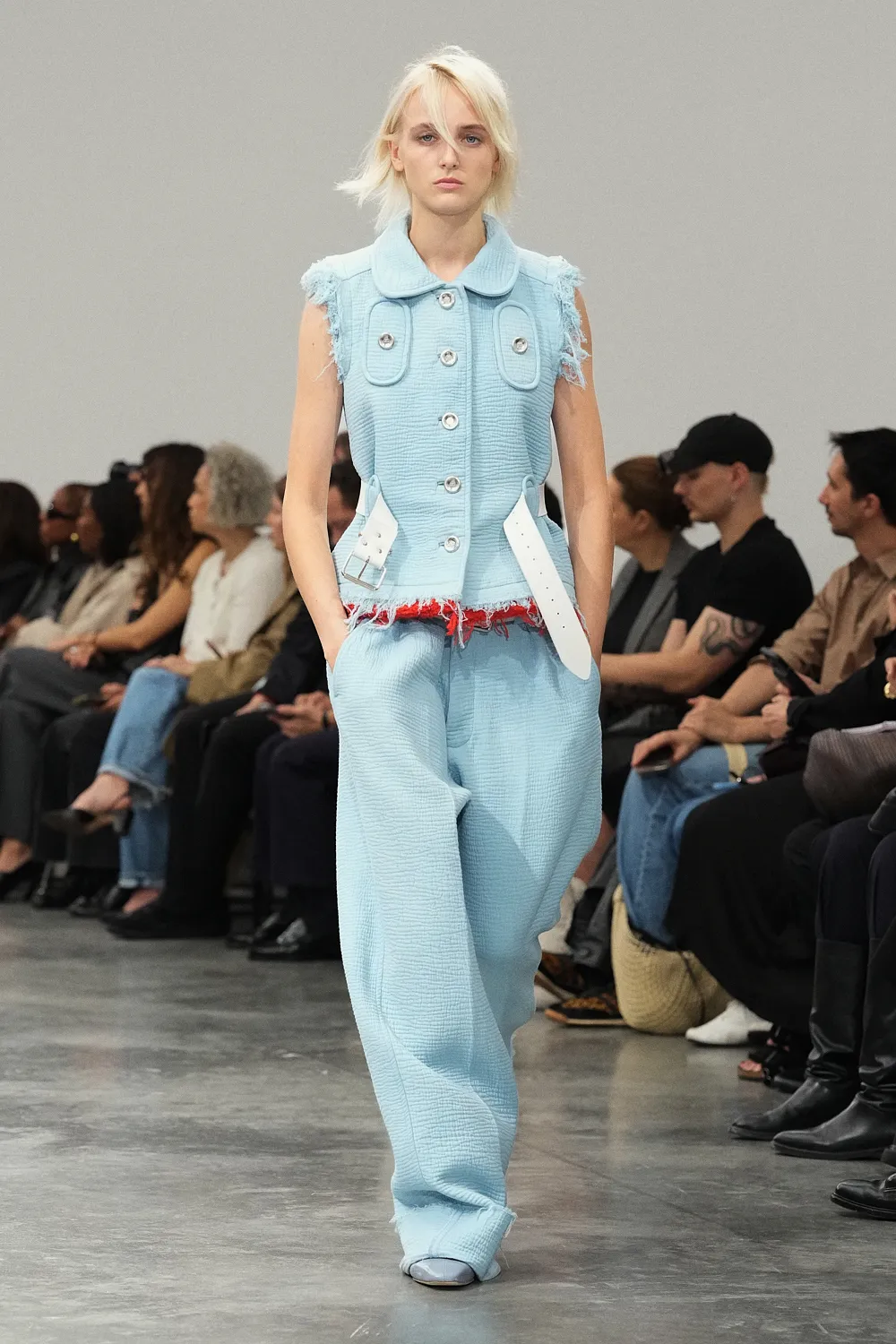
Henry has acknowledged his discomfort with the extreme neatness historically associated with Courrèges and his interest in finding a softer side of the house. His answer, however, avoids obvious softness. He does not flood the runway with romantic drapery or dissolve the body beneath fabric. Instead, hardness is weakened at the seams.
Unravelling could easily become a stylistic gesture pasted onto familiar shapes. Here it challenges one of the deeper assumptions surrounding Courrèges: that futurism must look finished.
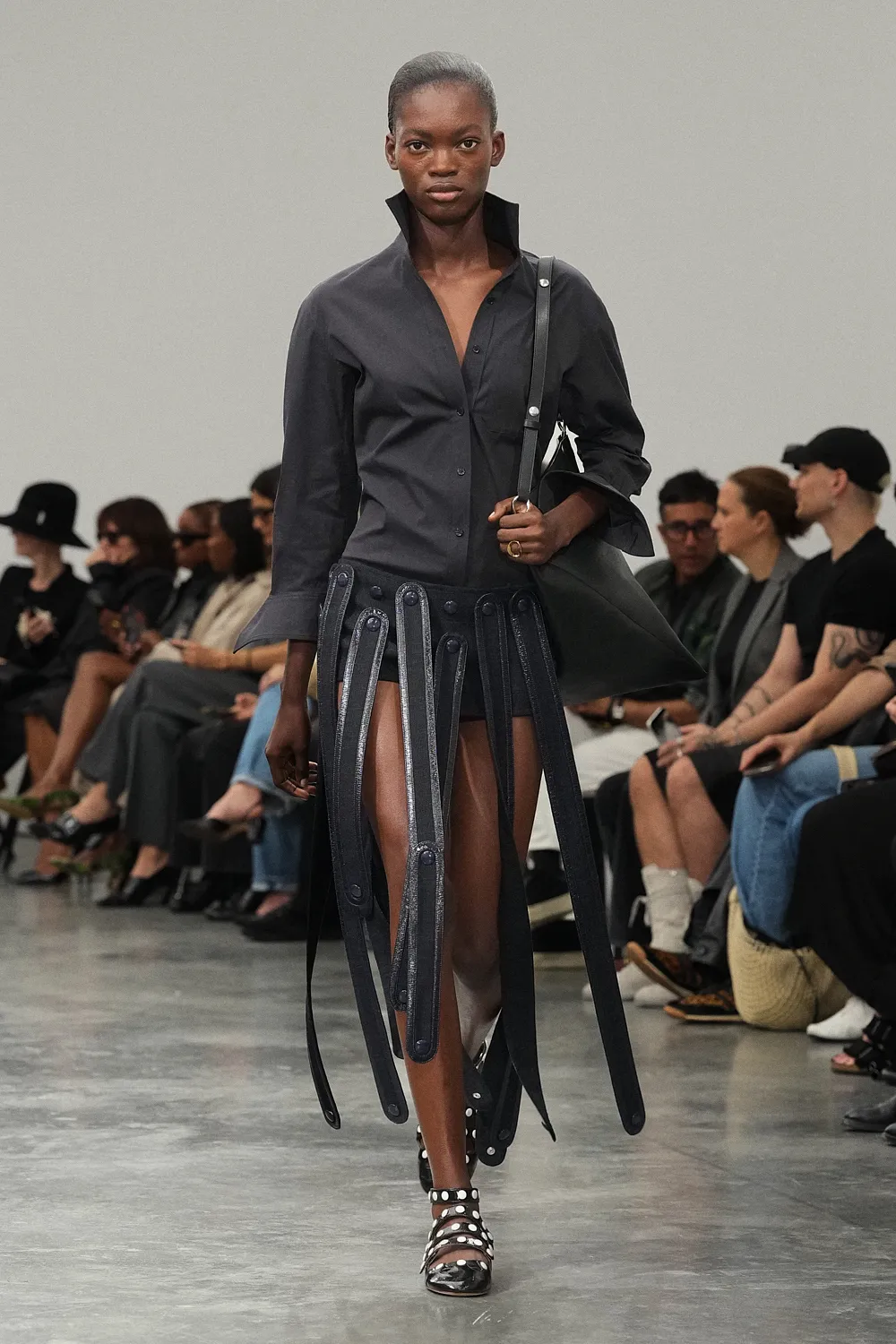
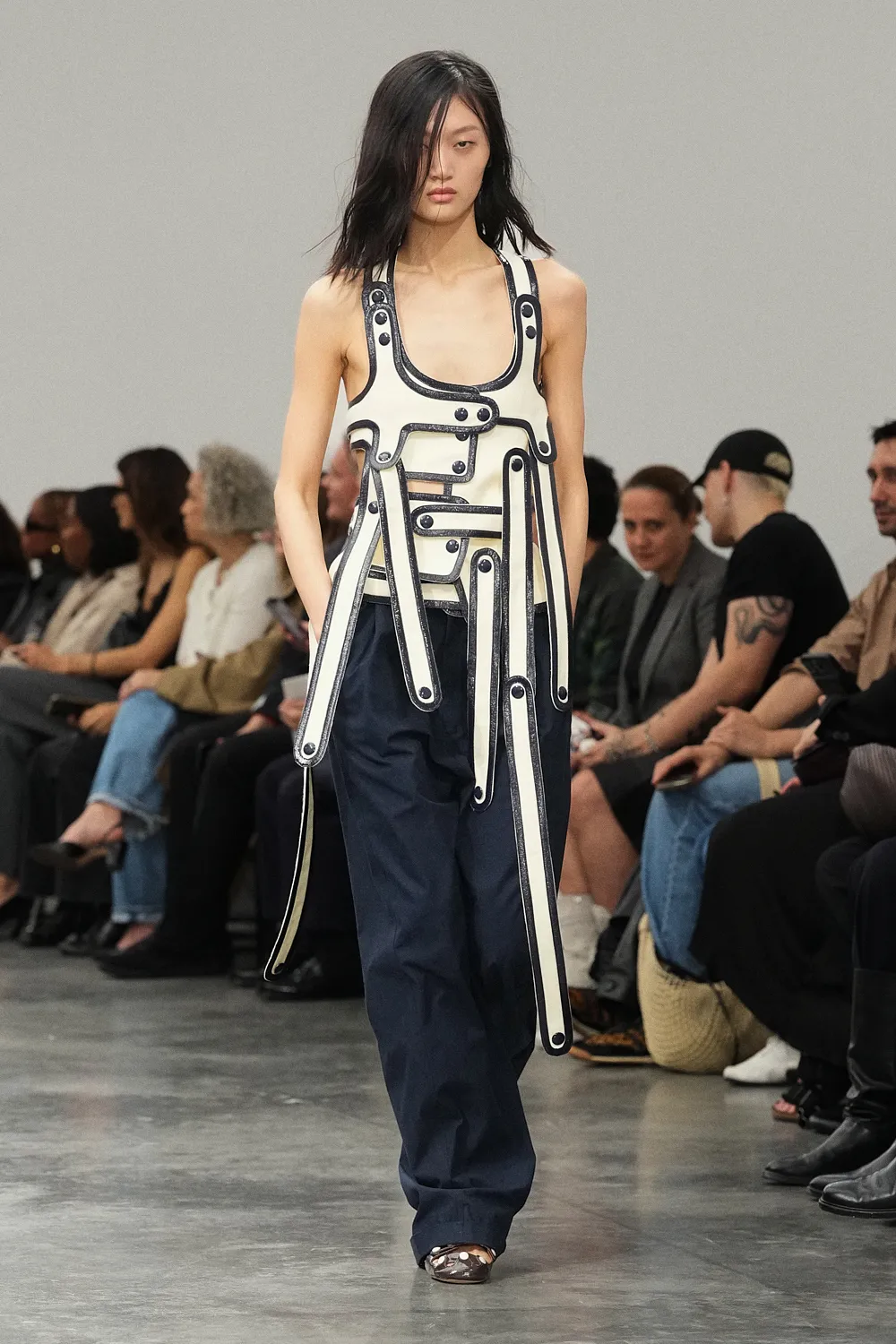
Several white constructions expose this most clearly. Their graphic restraint still belongs to the house, yet the eye is invited towards the points where garments connect, open and almost come apart. Black outlines, eyelets, strips and closures make the clothes resemble diagrams translated onto the body. The wearer occupies something between finished garment and prototype.
Such incompleteness that Drew Henry can be read as a useful new form of minimalism. Nothing requires excessive volume or elaborate embellishment to look experimental. The intervention lies in revealing what conventional polish usually hides. Construction becomes surface. The garment carries evidence of its own assembly.
Sixty years ago, Courrèges projected the future through immaculate certainty. Henry inherits a world far more accustomed to seeing technology exposed, updated, dismantled and rebuilt. His future carries screws on the outside.
Futurism becomes more convincing when it stops announcing itself.
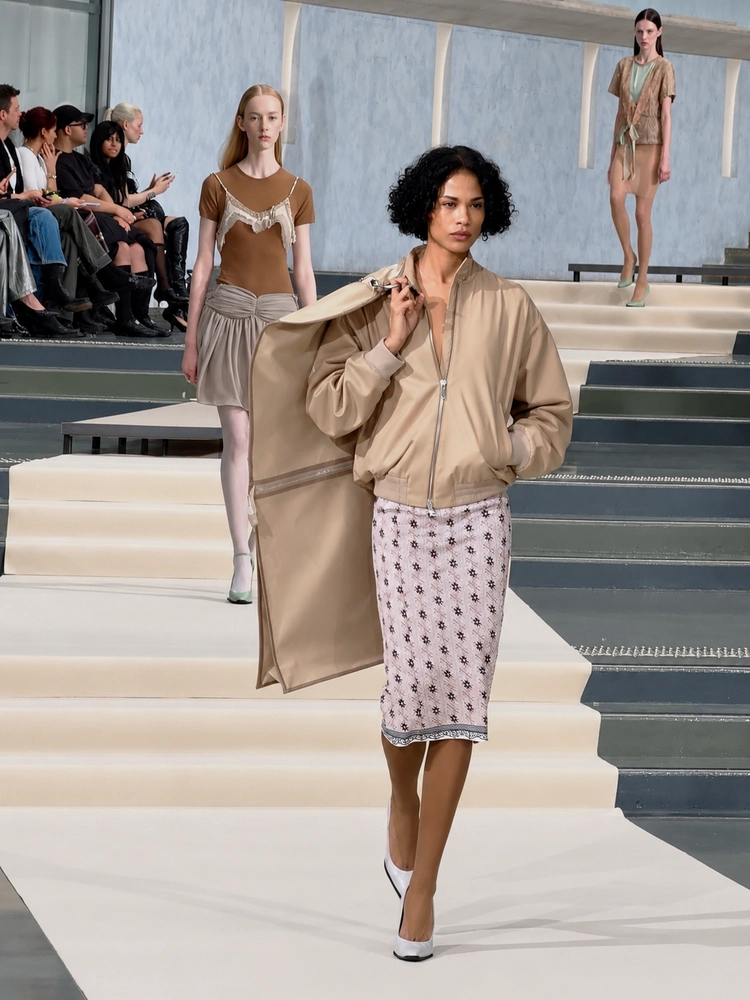
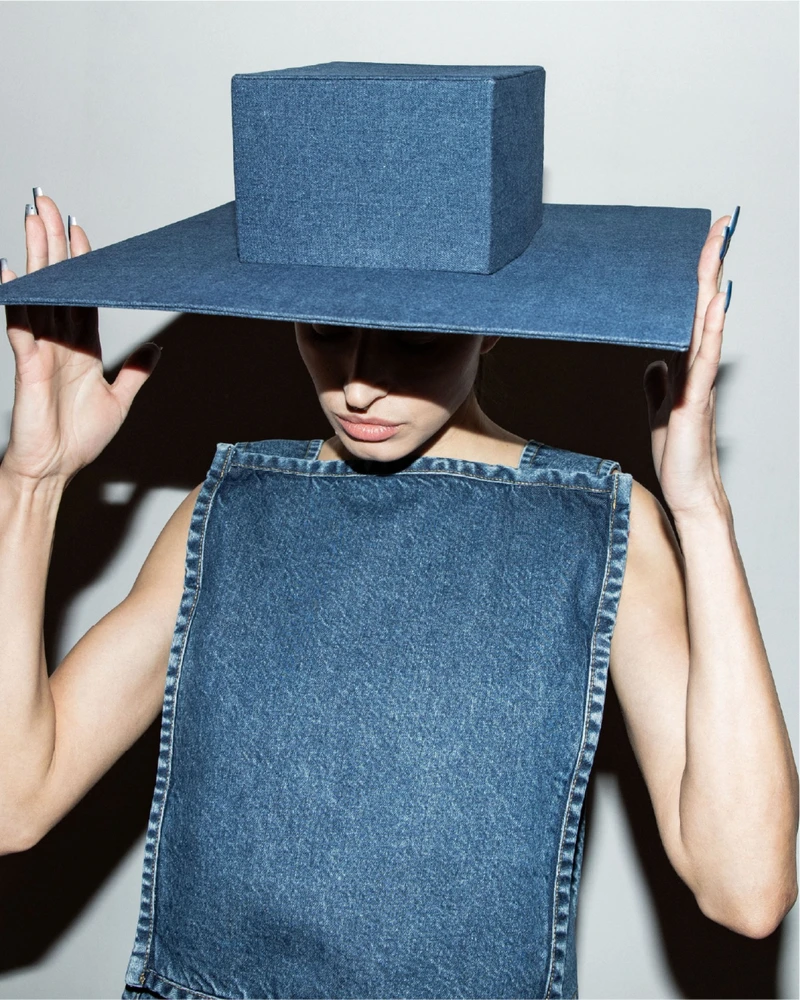
Some of Courreges SS27’s quietest propositions move through shirts, trousers, denim and compact outerwear whose impact depends on proportion more than spectacle. Their familiarity pulls the house away from retro-futurist costume without abandoning the discipline that made Courrèges distinctive. Clean lines remain. Movement remains. The body still appears unusually free inside controlled clothing.
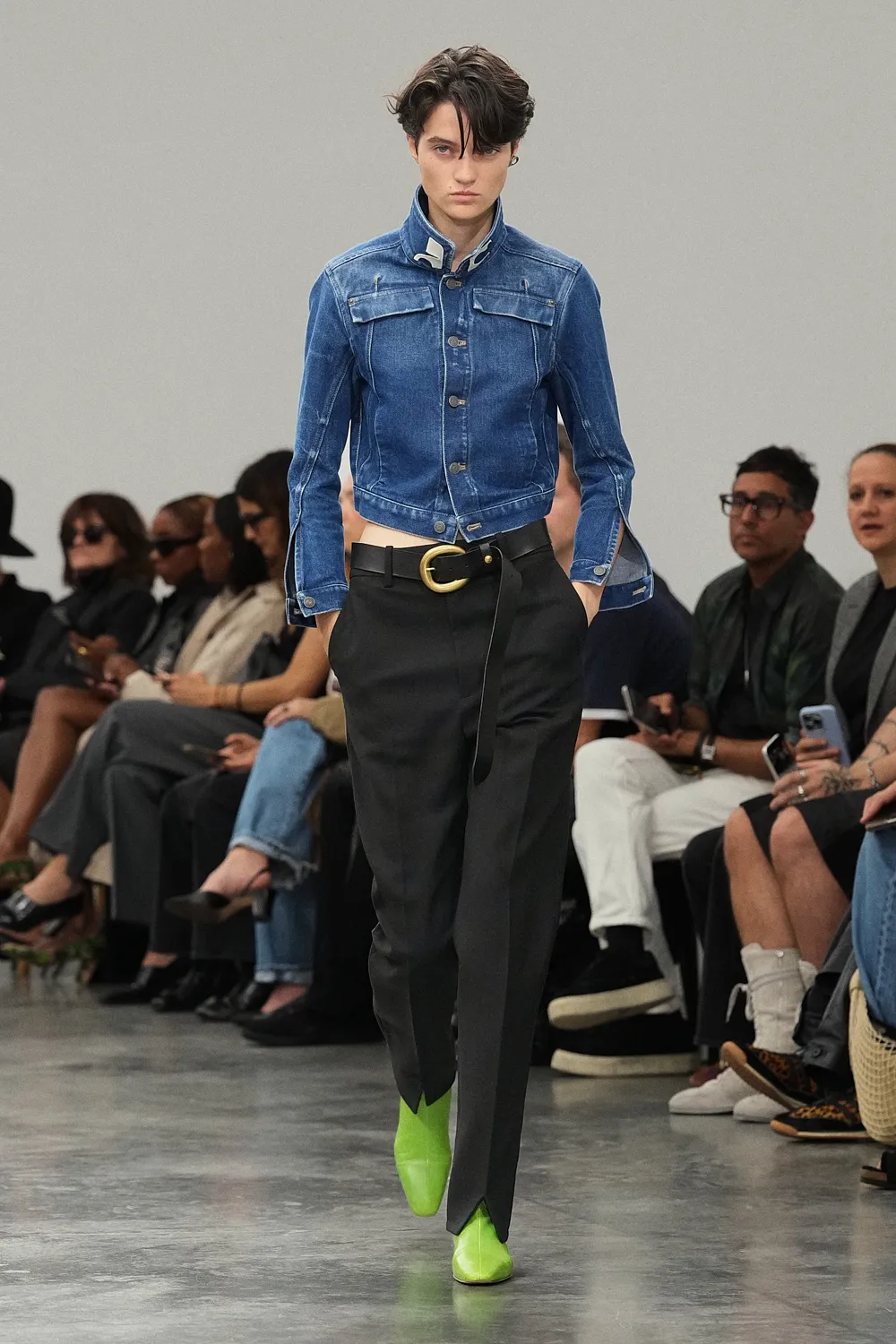

It brings the original radicalism of André Courrèges into sharper focus. The importance of his work was never confined to clothing that resembled costumes for space travel. Modernity also came through mobility, shorter lengths, practical separates and a rejection of older restrictions around how women were expected to dress. Returning only to the iconography of spaceships would preserve the image while missing part of the impulse behind it.
Henry seems more interested in translating that impulse into present-day wardrobe logic. Denim gains precision through cropped proportion. Straight trousers sharpen around strategic openings. Shirts sit comfortably beside pieces carrying stronger house signatures. Even the iconic white mini can appear slightly disturbed at its edges, as though a historical template has been worn long enough to belong to the present.
Then the collection closes in white again. Only this time white has changed.

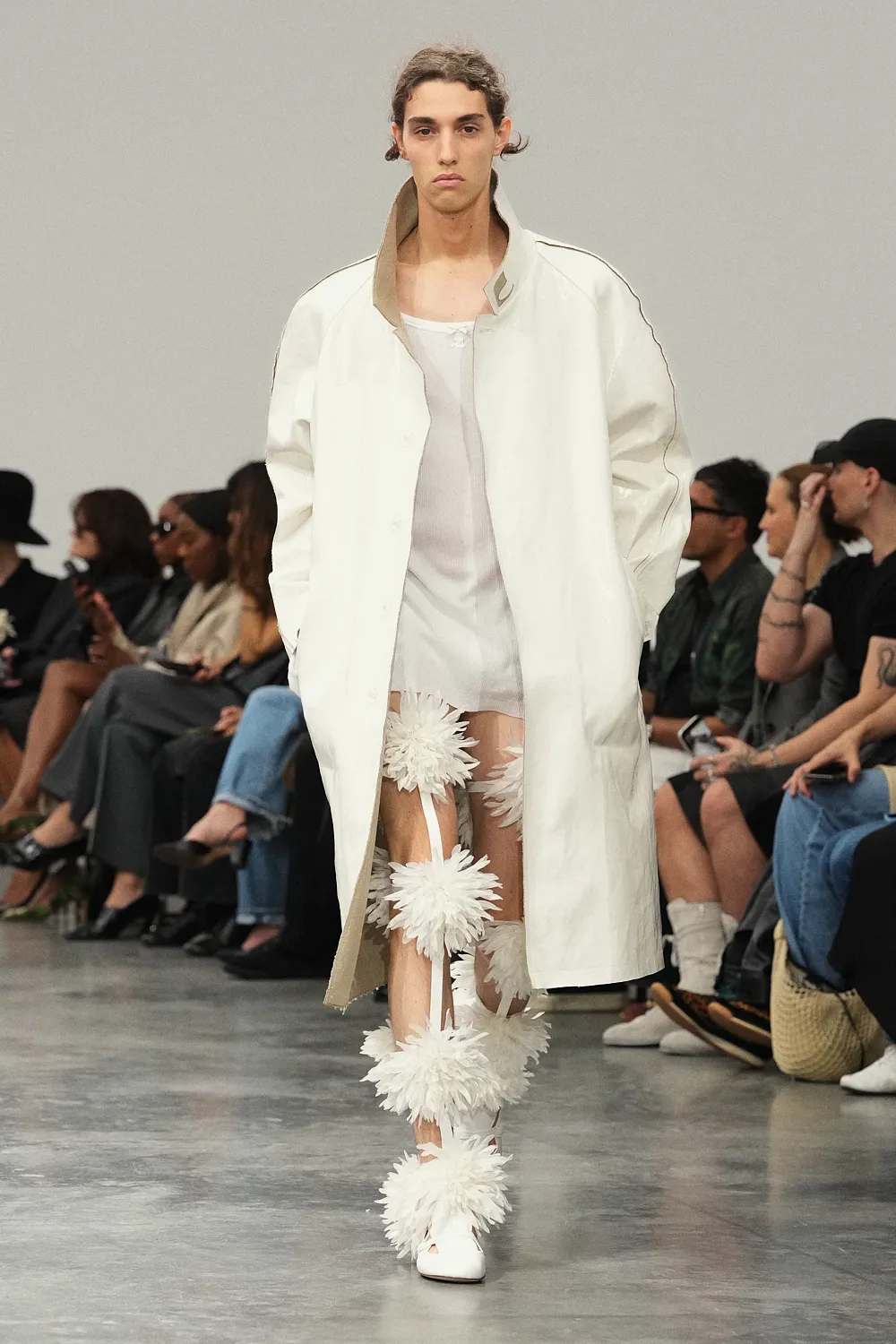
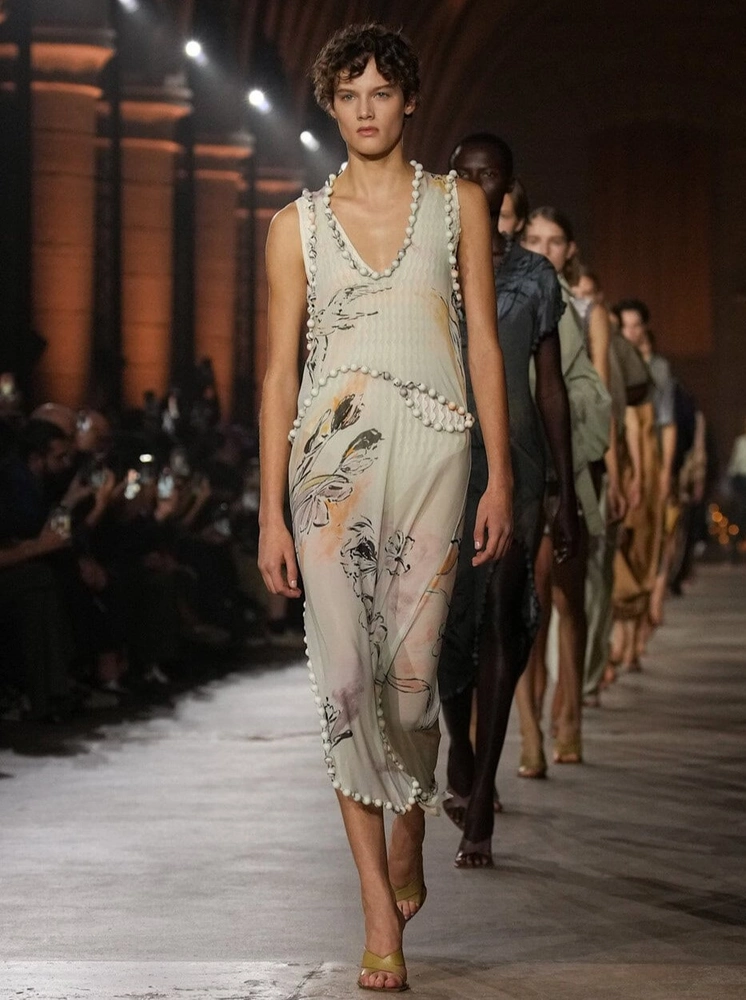
Three-dimensional flowers climb across the body beneath a long, controlled outer layer, introducing organic irregularity into a colour once synonymous with Courrèges’s technological purity. Against all that whiteness, their presence is almost tender. They resemble life growing across the surface of an old idea of the future.
The image also pushes Henry’s minimalism away from sterility. He lets them coexist with something fragile and strange. Perhaps contemporary Courrèges no longer needs to imagine the future as an untouched environment. It can accommodate weathering, humour, flowers, denim and ordinary life.
Debuts produced under severe time pressure often reveal instinct before strategy. Courreges SS27 carries that quality. Certain ideas remain unresolved, and Drew Henry has yet to establish the kind of unmistakable visual authorship that several seasons can build. That incompleteness works in his favour for now.
Trying to replace Nicolas Di Felice with another perfectly defined Courrèges universe, this quickly might have produced a louder collection and a weaker proposition. Henry instead attacks the certainty surrounding the house. He seems suspicious of anything that makes Courrèges too easy to explain, even when that clarity has enormous commercial and cultural value.
The risk is obvious. Blur the codes too aggressively and one of fashion’s most identifiable maisons could drift into generic contemporary eclecticism. Colour, frayed finishing and quirky styling alone cannot sustain a house whose history rests on genuinely radical ideas about the body and modernity. Future seasons will need a stronger Henry vocabulary beneath archival discoveries.
Still, his debut earns its optimism precisely because Courrèges remains visible after being pulled apart.
The house can tolerate more disturbance than its immaculate mythology suggested. Its identity survives a crushed hat, an unfinished seam and a pair of ordinary trousers. That resilience may be the most useful thing Henry has discovered in six months. If he keeps pushing, the strongest version of his Courrèges will not come from designing another image of the future.
It may come from making the house impossible to trap inside one again.
Advertisement