




How much is seduction worth? For Haider Ackermann, the answer has always been written in fabric, even when the industry demanded it in numbers.

Haider Ackermann Knows What Desire Looks Like
How much is seduction worth? For Haider Ackermann, the answer has always been written in fabric, even when the industry demanded it in numbers.
November 20, 2026


When Haider Ackermann unveiled his first Tom Ford collection in Paris, the mirrors looked weathered, as though countless glamorous evenings had already passed through the room. A model crossed the floor in immaculate tailoring; another revealed skin beneath a fluid evening dress.
The clothes seemed familiar with desire, yet their composure belonged unmistakably to Haider Ackermann. For him, sensuality has always begun with precision. For years, Haider Ackermann's admirers had followed an exceptionally personal vision through independent runways and brief appointments.
Now that sensibility had entered a house whose name was virtually synonymous with seduction. The meeting carried an intriguing possibility: perhaps Haider Ackermann had finally found a business large enough to accommodate his imagination.
1994–2000: Haider Ackermann Learns to Follow the Fabric
Born in Bogotá in 1971 and adopted by French parents, Haider Ackermann grew up moving between countries, including Ethiopia, Algeria and the Netherlands. His childhood offered changing landscapes and cultural encounters, but it was clothing's capacity to reshape a silhouette that eventually captured his attention. Antwerp beckoned in 1994. At its Royal Academy of Fine Arts, the young Haider Ackermann encountered a rigorous culture of experimentation, although he left before graduating.

The discipline Haider Ackermann would develop was intensely personal. After gaining experience around John Galliano's theatrical world, Haider Ackermann became fascinated by garments that appeared to move according to their own logic.
2001–2015: Haider Ackermann's Independent Language of Desire
The Haider Ackermann label emerged in the early 2000s, with a first presentation in 2002. Paris soon encountered clothing that demanded attention through proportion rather than spectacle. Silk gathered diagonally around the torso, jackets stretched the figure, and unexpected layers made even familiar garments difficult to categorize.


An invitation to work with Italian leather specialist Ruffo Research broadened Haider Ackermann's command of materials. Recognition followed in 2004 when he won the Swiss Textiles Award, accompanied by €100,000 intended to support business development. Belgian entrepreneur Anne Chapelle subsequently backed the Haider Ackermann label through her fashion company, allowing his intricate work to reach a growing international audience.


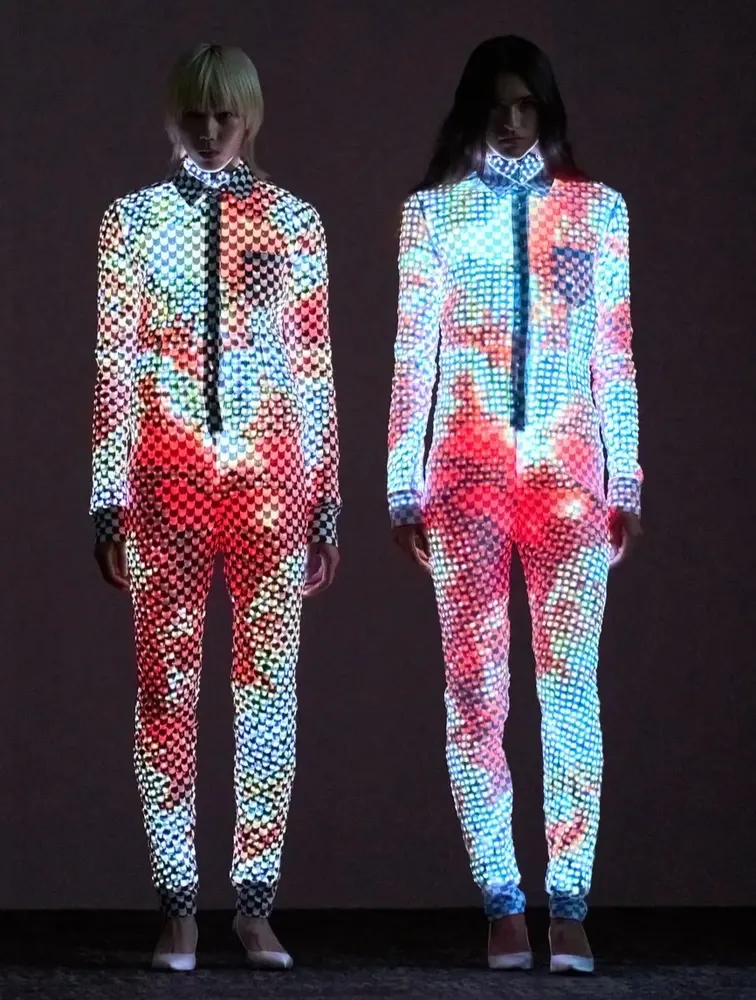
The Haider Ackermann Fall/Winter 2011 collection captured what made that investment so enticing. Emerald and wine colored satin twisted around the body beneath assertive jackets; slender trousers extended the silhouette, and glossy surfaces shifted with every step.
By Haider Ackermann Fall/Winter 2014, his manipulation of volume had become even more assured, with long coats and precise tailoring framing richly draped dresses. The clothing was sensual without relying on a single formula for exposure.


Menswear became another outlet for Haider Ackermann's instincts. His elongated suits and easy layering attracted figures such as Tilda Swinton, whose longstanding friendship with Haider Ackermann gave his androgynous elegance a particularly compelling public presence. Yet devotion among editors, performers and collectors could sustain cultural prestige more readily than a costly independent business. The distinction would become painful.

2016–2018: Haider Ackermann Loosens Berluti's Collar
Berluti offered Haider Ackermann a new canvas in 2016. As creative director of the LVMH menswear house, Haider Ackermann inherited a reputation built around impeccable shoes, fine leather and polished masculine codes.
His first runway collection, for Fall/Winter 2017, loosened those conventions. Velvet jackets sat against fluid trousers; long coats swung over slim silhouettes, and jewel tones interrupted the expected formality. A man dressed this way could be elegant without looking entirely obedient.

The appointment placed Haider Ackermann's instincts inside a business where footwear and leather goods mattered as much as runway excitement. His collaboration ended in March 2018 after three seasons.
What remained was a persuasive demonstration that masculine luxury could accommodate vulnerability, softness and theatrical color. Timothée Chalamet would later carry that attitude onto red carpets, helping turn Haider Ackermann's tailoring into a recognizable language of contemporary male glamour.
2019–2023: When Haider Ackermann's Atelier Went Silent
Back at his own house, the financial arrangement supporting Haider Ackermann's freedom was deteriorating. In 2020, Haider Ackermann ended his contractual relationship with the company behind his label amid a breakdown over payments and management.

Collections stopped. The silence was striking for a designer whose work retained such passionate admiration, and it exposed an uncomfortable truth: an influential aesthetic could still lack the stable commercial structure required to keep producing it.
Then came an invitation that required almost no introduction. Jean Paul Gaultier asked Haider Ackermann to design the house's Spring/Summer 2023 guest couture collection. Haider Ackermann answered with severe shoulders, impossibly controlled folds and gowns whose sculptural shapes seemed to hold their breath.

Tailoring acquired the precision of sculpture, while saturated colors flashed through an otherwise disciplined presentation. The collection drew acclaim because it made Gaultier's provocative heritage unmistakably Haider Ackermann's own. After years of uncertainty, the runway once again offered Haider Ackermann a stage on which technical mastery carried the entire story.
2024–2026: Haider Ackermann's Unexpected Journey Into Snow
Canada Goose's appointment of Haider Ackermann as its first creative director in May 2024 initially sounded improbable. His reputation rested on silk and evening tailoring; the Canadian company made its name protecting people against severe weather. Yet both worlds depended on understanding the body and what fabric could do around it.
For Snow Goose Fall/Winter 2024, Haider Ackermann developed more than 60 pieces spanning parkas, knitwear, separates and accessories. Proportions grew expressive, colors became adventurous and practical layers acquired an unfamiliar elegance.

Technical requirements remained central, but the clothing invited a new audience to see performance outerwear as design. The collaboration opened a commercial category far removed from Haider Ackermann's former atelier without demanding that he abandon his eye for silhouette.
2024–2026: Haider Ackermann Enters Tom Ford
The Haider Ackermann appointment at Tom Ford, announced that September, returned him to the kind of sensual luxury he knew intimately. It also brought a different scale of responsibility. Estée Lauder owns the Tom Ford brand, while Zegna operates its fashion business under license.


Haider Ackermann's collections therefore entered a network of retail stores, merchandising decisions and financial targets that an independent designer could scarcely replicate.
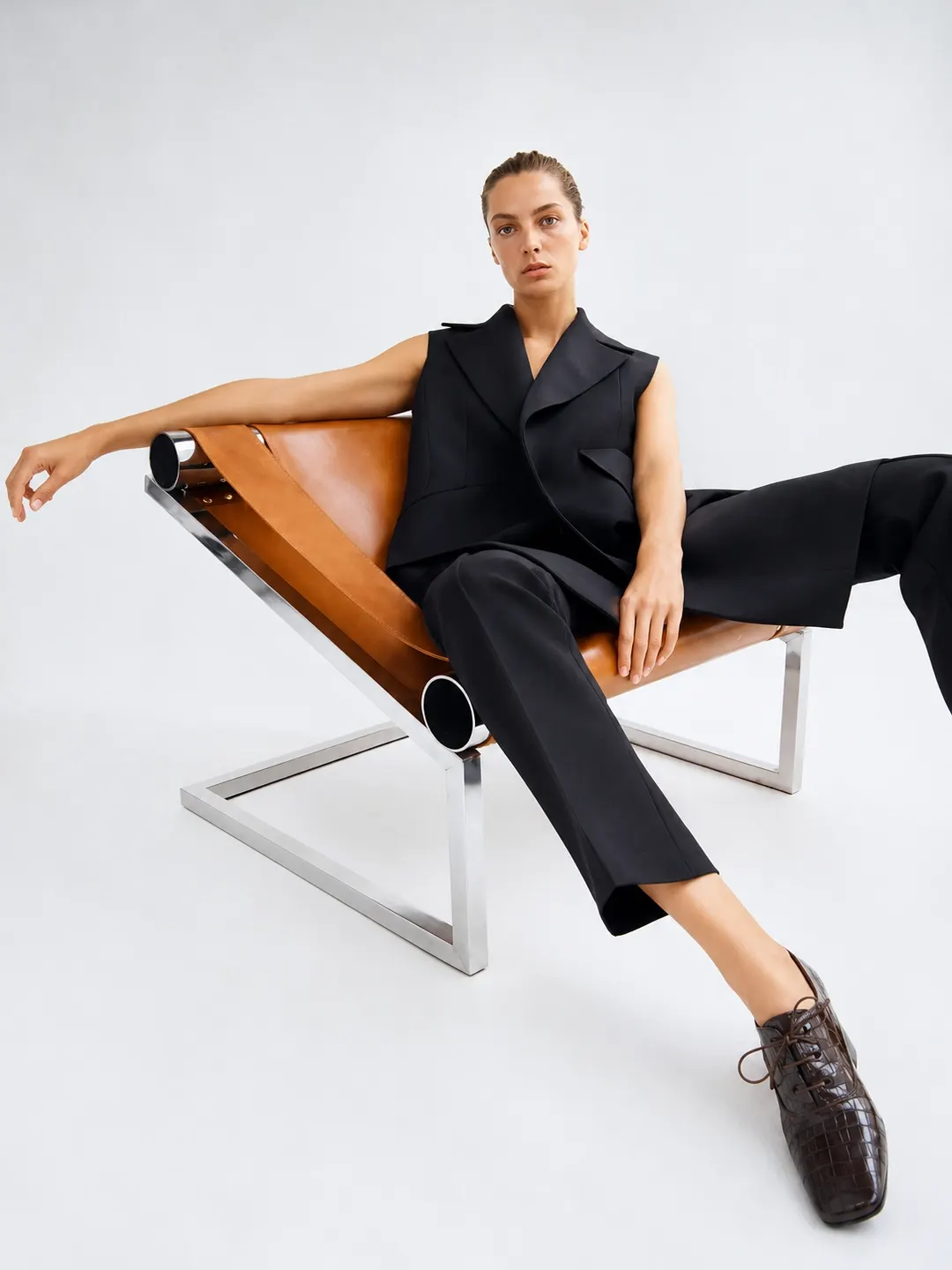
Haider Ackermann's Fall/Winter 2025 debut balanced sharp suits, polished leather and controlled revelations of skin. Subsequent collections refined the conversation between the founder's unapologetic glamour and Haider Ackermann's instinct for quieter tension. Spring/Summer 2027 ventured into sheerness and swimwear, testing how far the house's invitation to desire could extend.

The commercial record offers perspective. Tom Ford Fashion reported €317.1 million in 2025 revenue, an increase of just 0.8%. During the first nine months of 2026, sales reached €226.4 million, up 3.5%, with organic growth of 6.1%. These figures reflect distribution and management as well as creative direction; they suggest progress rather than a transformation already secured.
Haider Ackermann now has the resources once missing from his own label, alongside obligations that could constrain its most adventurous instincts. His next achievement may depend on turning the intimacy of a perfectly cut jacket into a wardrobe customers return to season after season.