MENU
Close





Like a theatrical ringmaster, John Galliano transformed Dior’s runway into a decade of breathtaking spectacle, where fashion became fantastical, provocative theatre.
Like a theatrical ringmaster, John Galliano transformed Dior’s runway into a decade of breathtaking spectacle, where fashion became fantastical, provocative theatre.
November 28, 2025
Advertisement
Advertisement
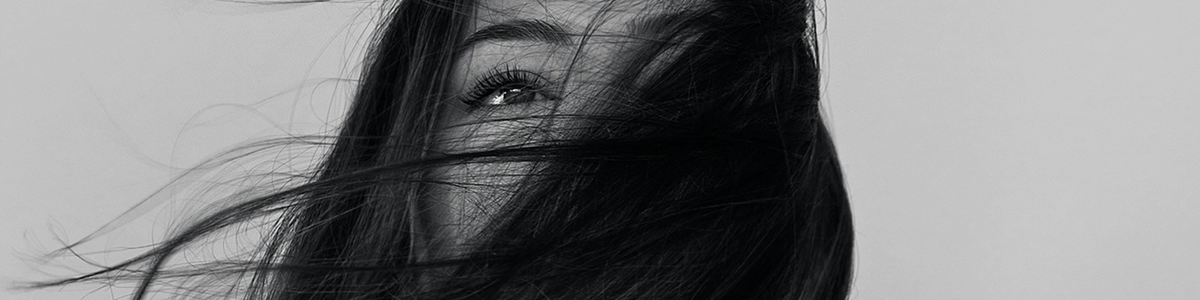


In the often-serious ateliers of high fashion, a magician arrived in 1997. John Galliano, a name whispered with a mix of awe and apprehension, took the helm of the house of Christian Dior. What followed was not merely a series of clothing collections but a decade and a half of breathtaking, provocative, and utterly magnificent theatre. To revisit Galliano’s Dior is to open a storybook where every chapter is more fantastical than the last, a testament to a vision so potent it could eclipse scandal and redefine beauty itself. This is the story of that vision, from its tumultuous beginning to its haunting, triumphant return.
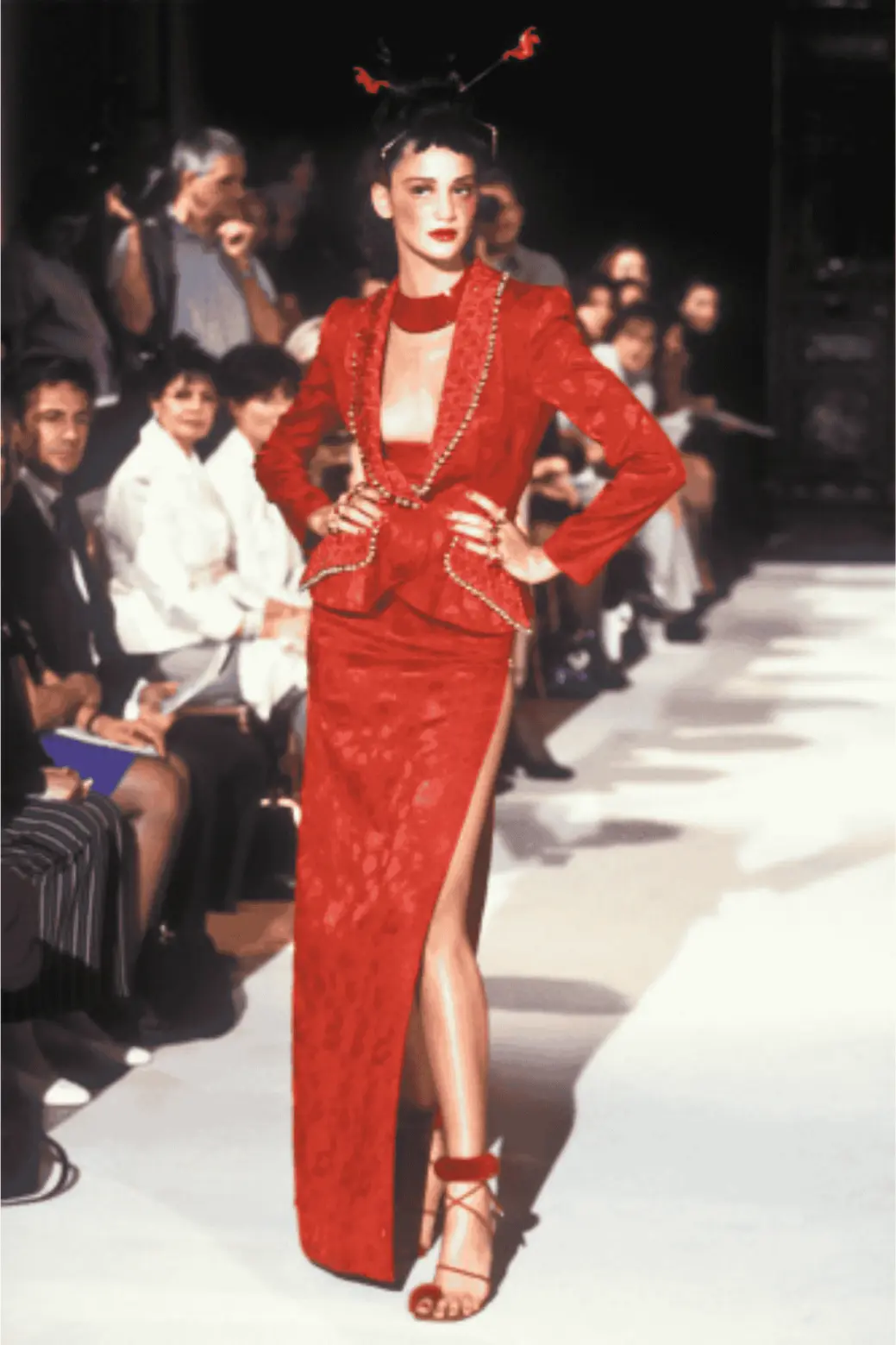
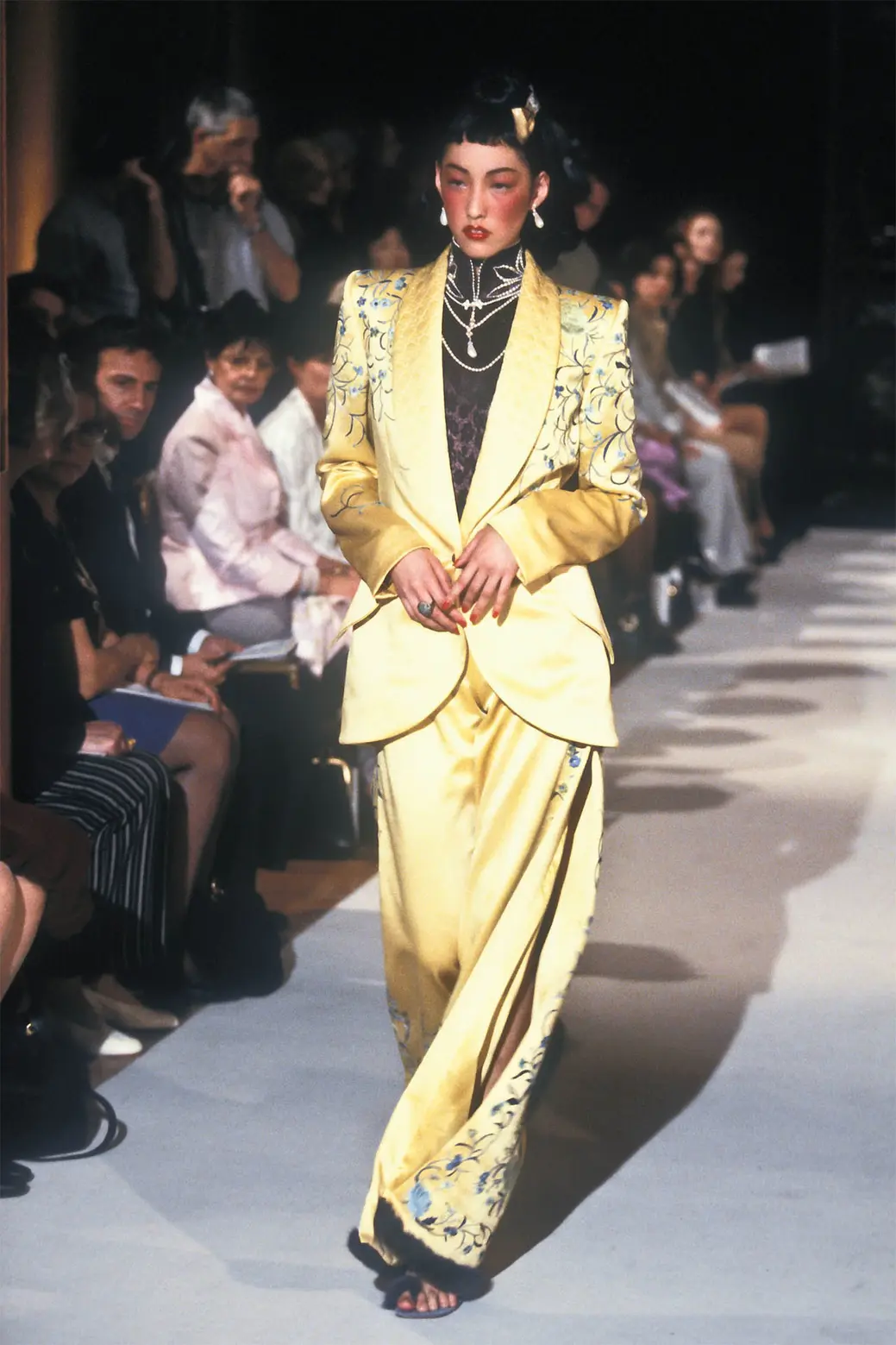
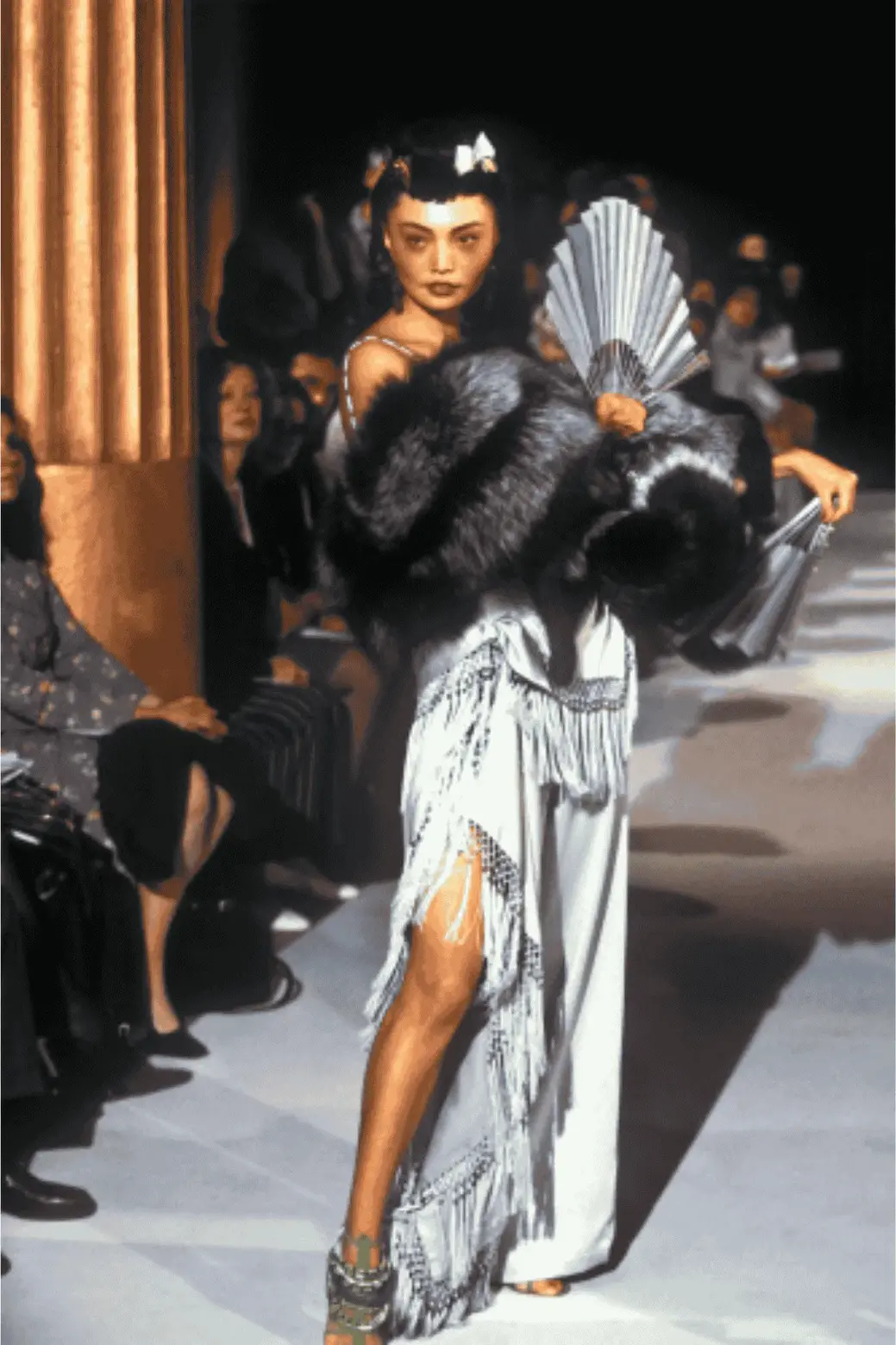
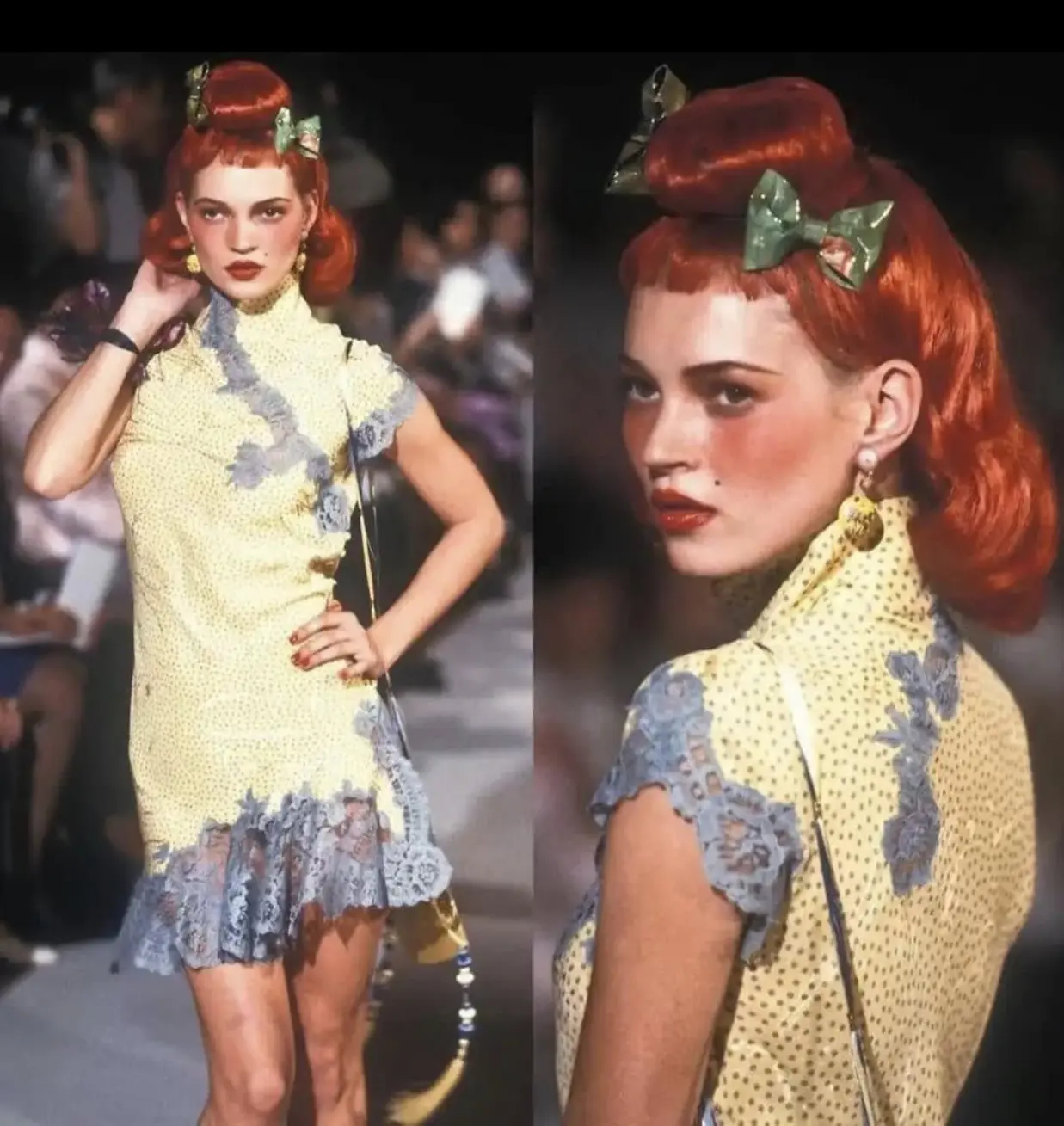
In 1997, the fashion world held its breath. Galliano’s first collection for Christian Dior was more than a debut. It was a coronation. The Fall/Winter 1997 collection was a cultural storytelling. In a move both audacious and respectful, he drew inspiration from Anna May Wong, recreating the prosperous, decadent spirit of 1930s Shanghai. The traditional cheongsam was reimagined through a high-fashion lens: elegant, supremely sexy, and crafted from luxurious silks, satins, and velvets. It was a tribute that felt not like appropriation, but like admiration, a theme he would return to with relentless curiosity.

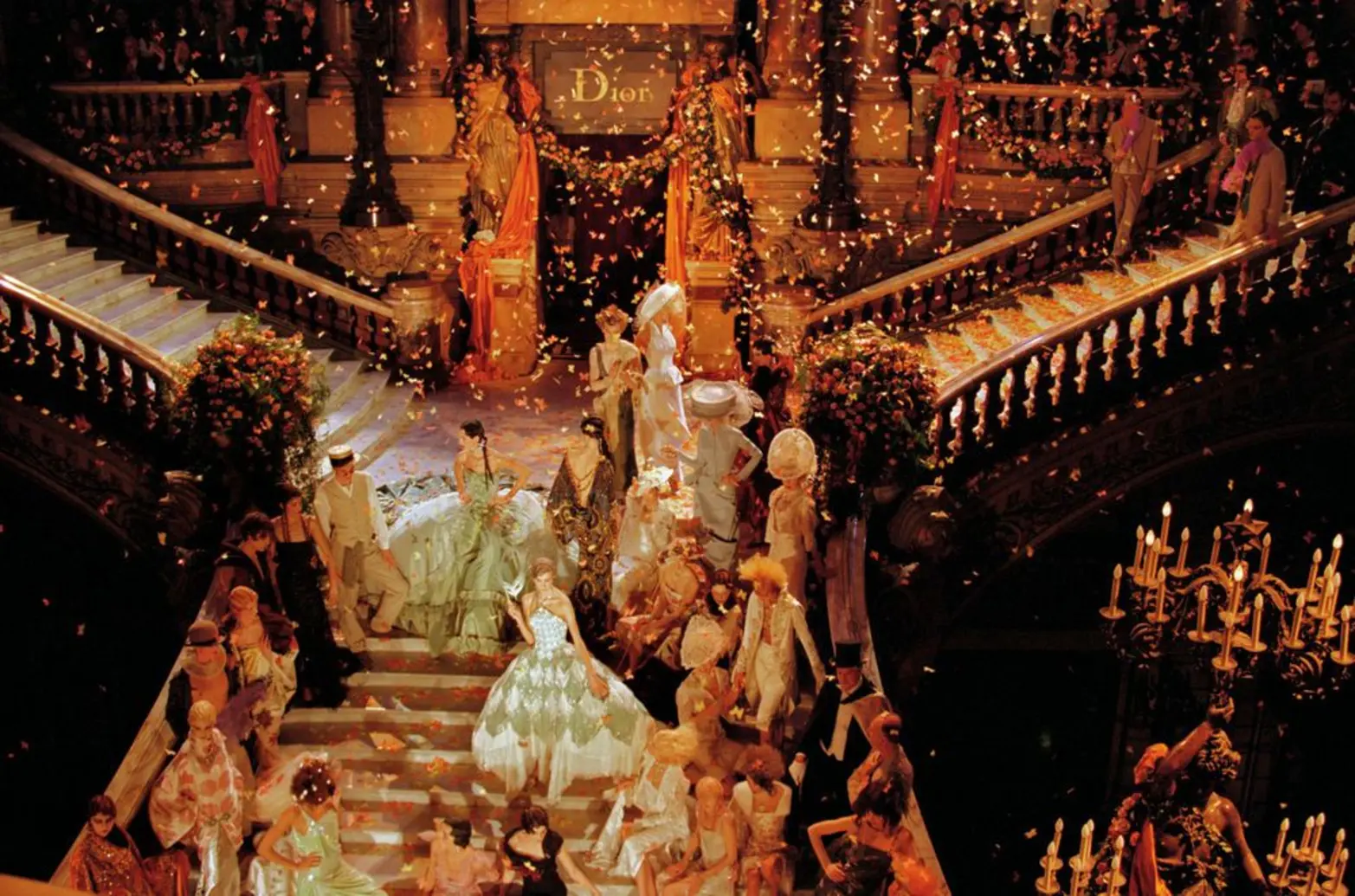
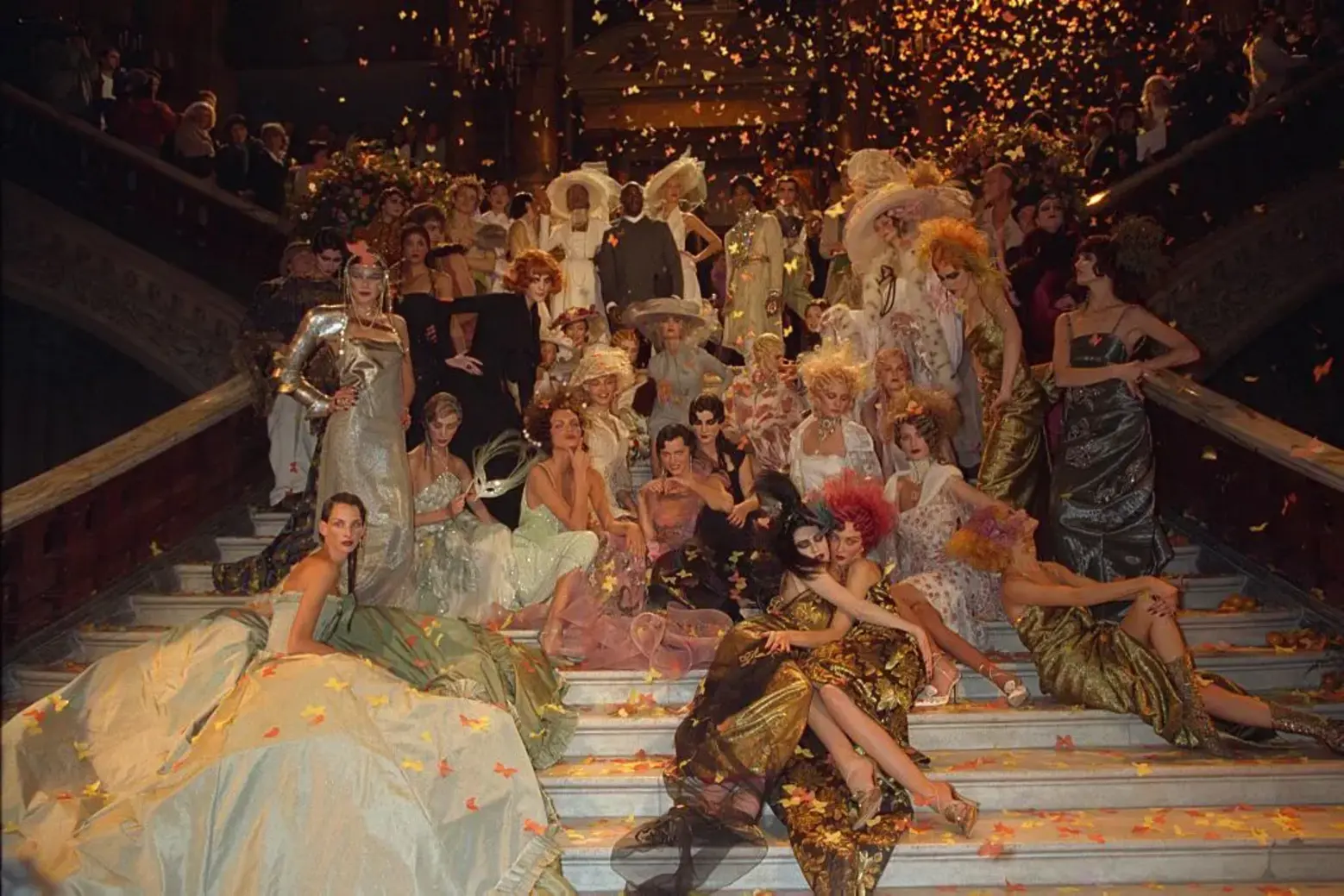
If 1997 was the announcement, 1998 was the confirmation that Galliano’s Dior would be a permanent revolution. The year began with a bang at the Opera Garnier for the Haute Couture Spring 1998 show. In a typically Galliano-esque stroke, he transformed the venue’s majestic marble staircase into a runway for designs inspired by the fabulously eccentric Marchesa Casati - eccentric Italian heiress, famous for wearing snakes as jewelry. Velvet gowns, lavish mink coats, and waist-cinching silhouettes paraded by, culminating in a finale where thousands of paper butterflies rained down upon the audience. A moment of pure unadulterated magic.
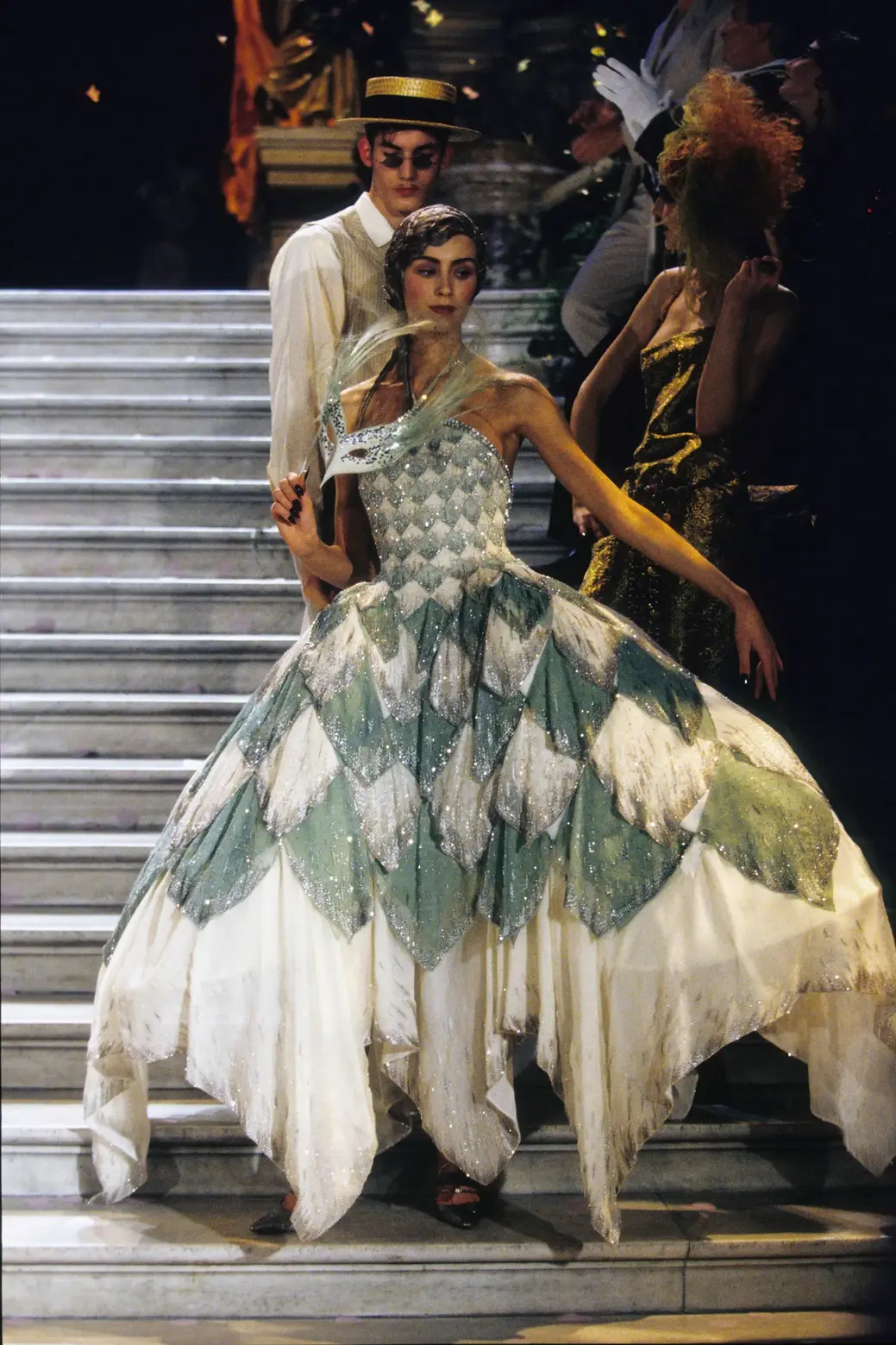
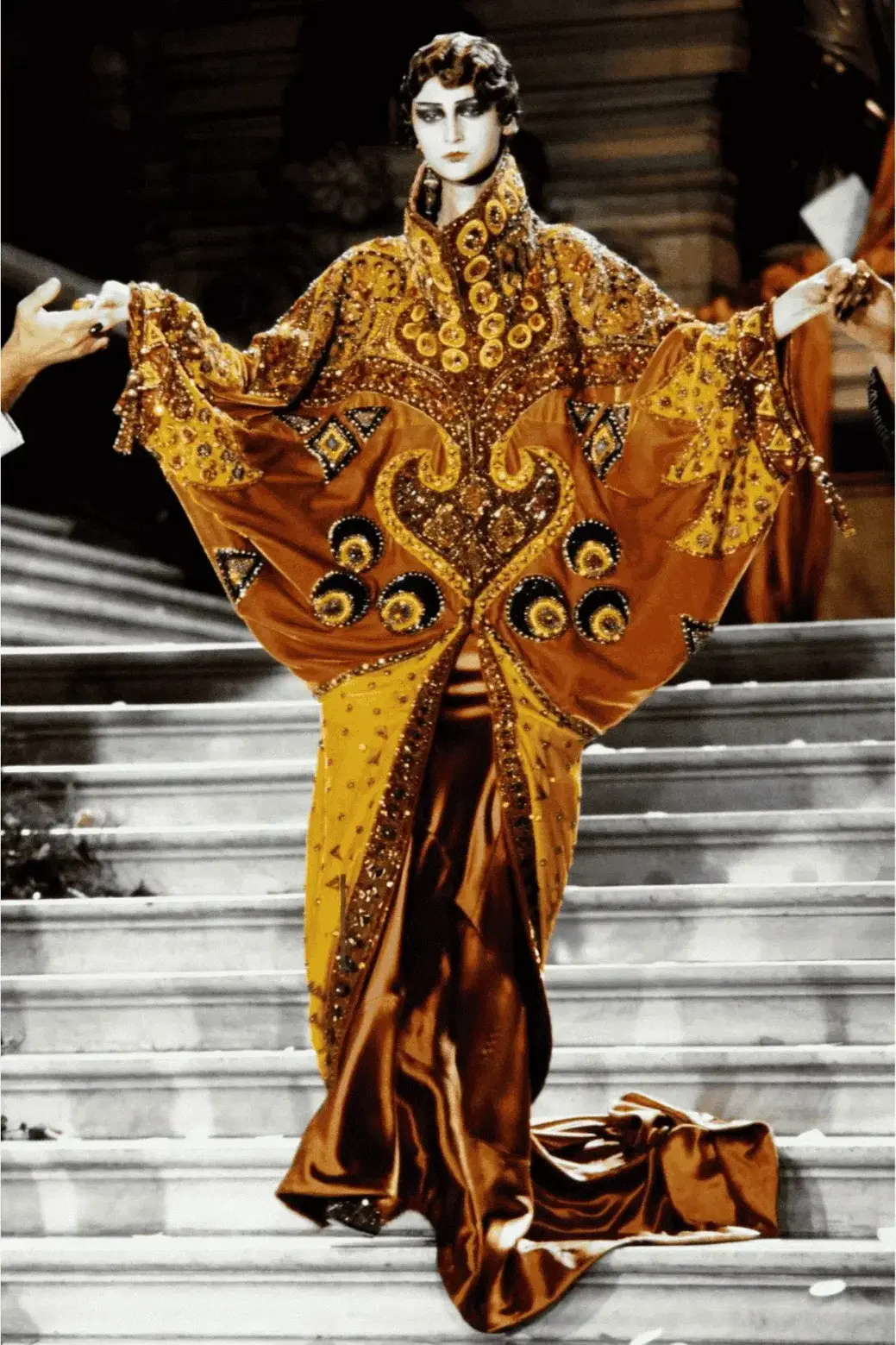
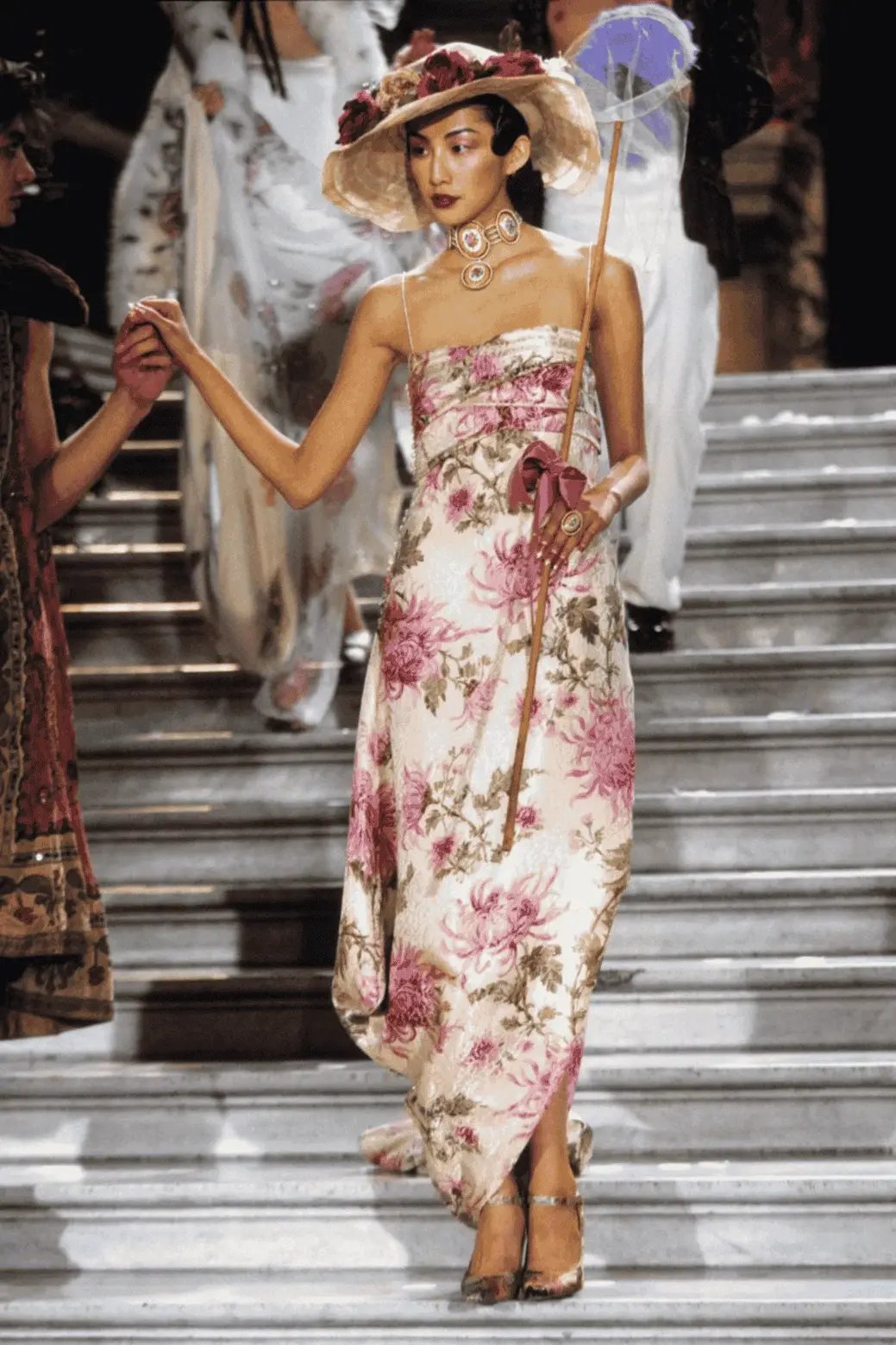
His Ready-to-Wear collections for the season were brought to life by the era’s defining faces. Carolyn Murphy radiated as his muse, embodying a strength fused with grace in designs that combined soft twill silks, sheer chiffons, and artful draping with corsets and ruffles. Meanwhile, Shalom Harlow shone, perfectly capturing the collection’s blend of historical inspiration: lingerie details, soft silk dresses and modern, seductive beauty. Galliano was directing a moving painting, with each model a vital character in his story.
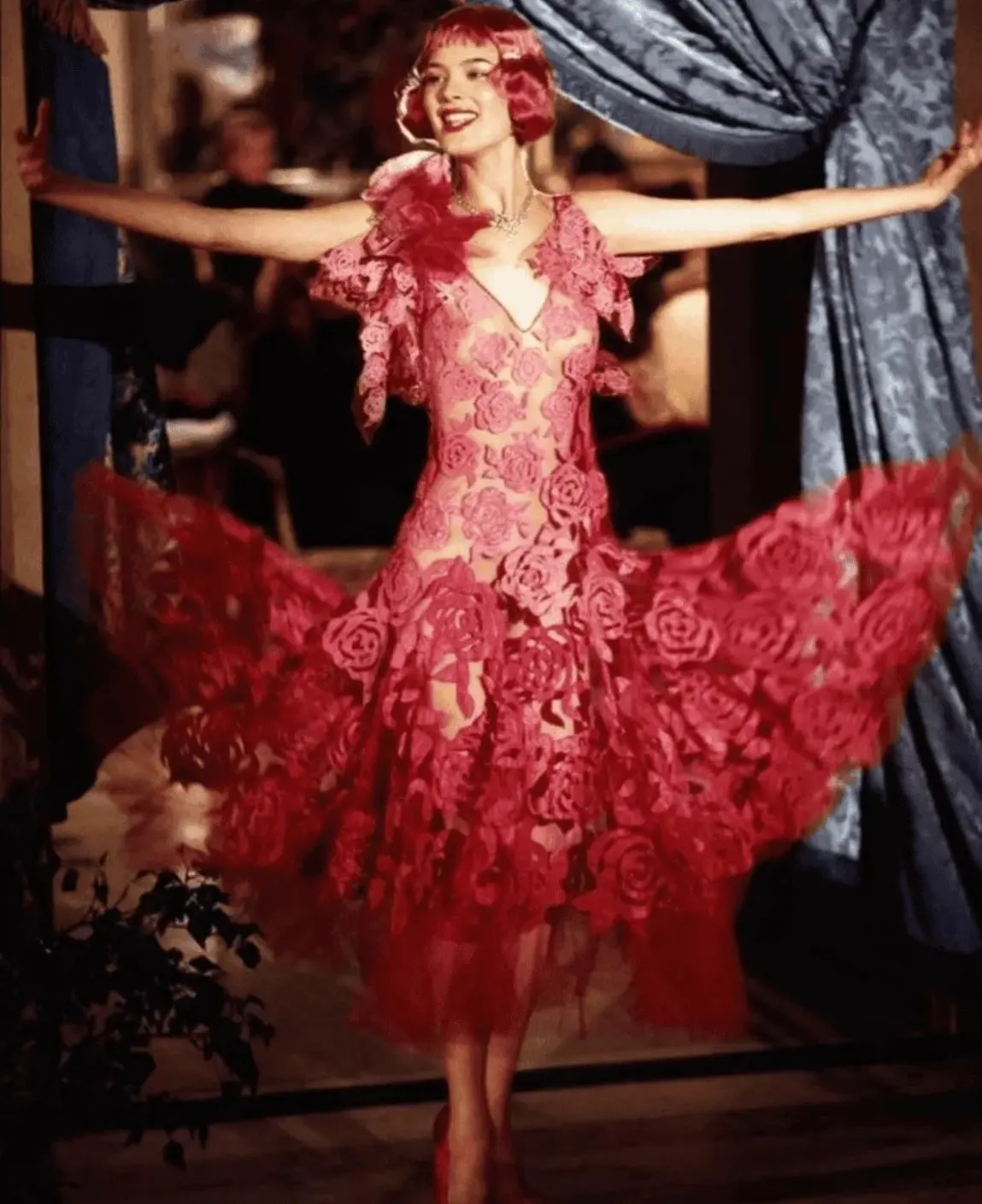
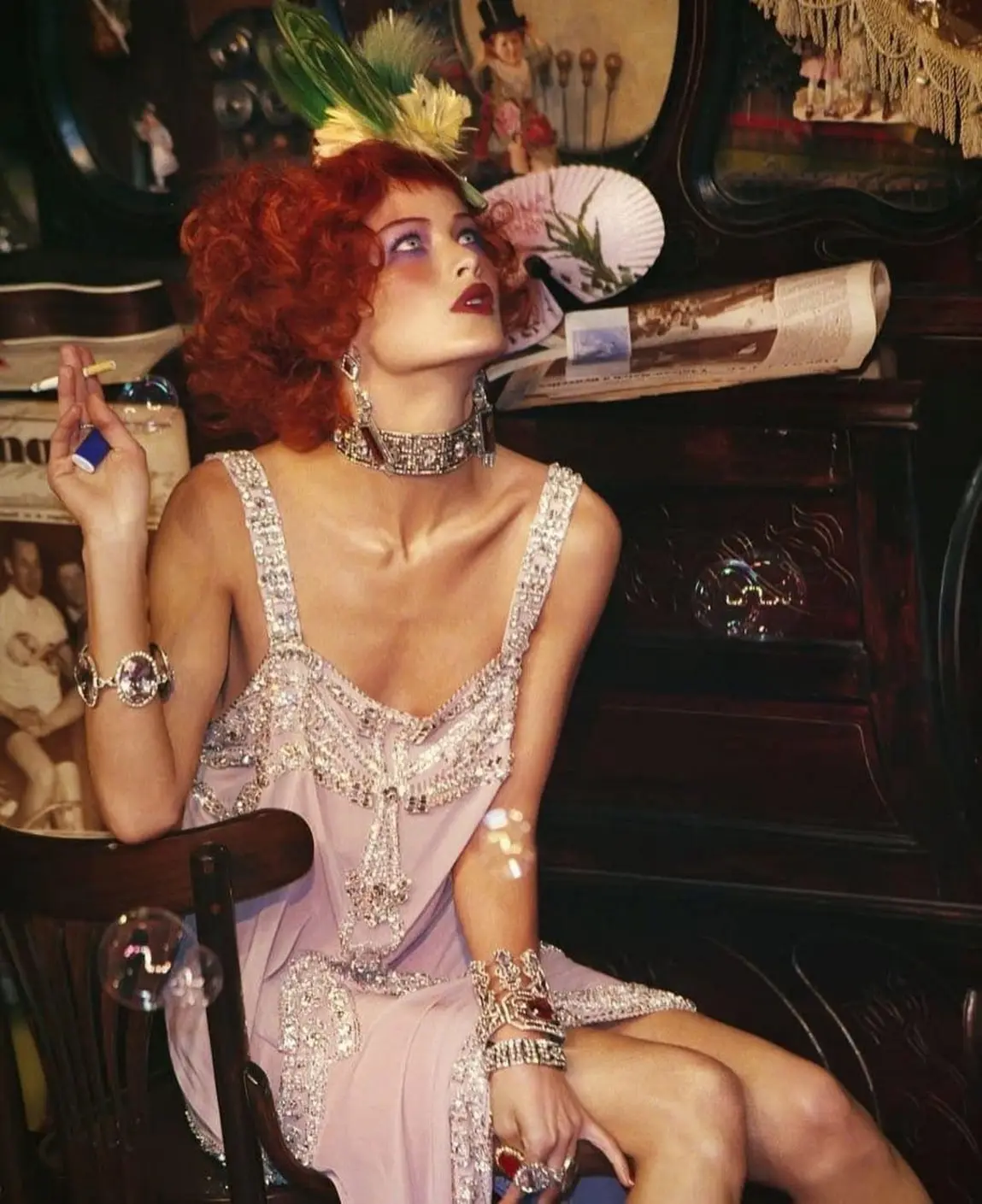
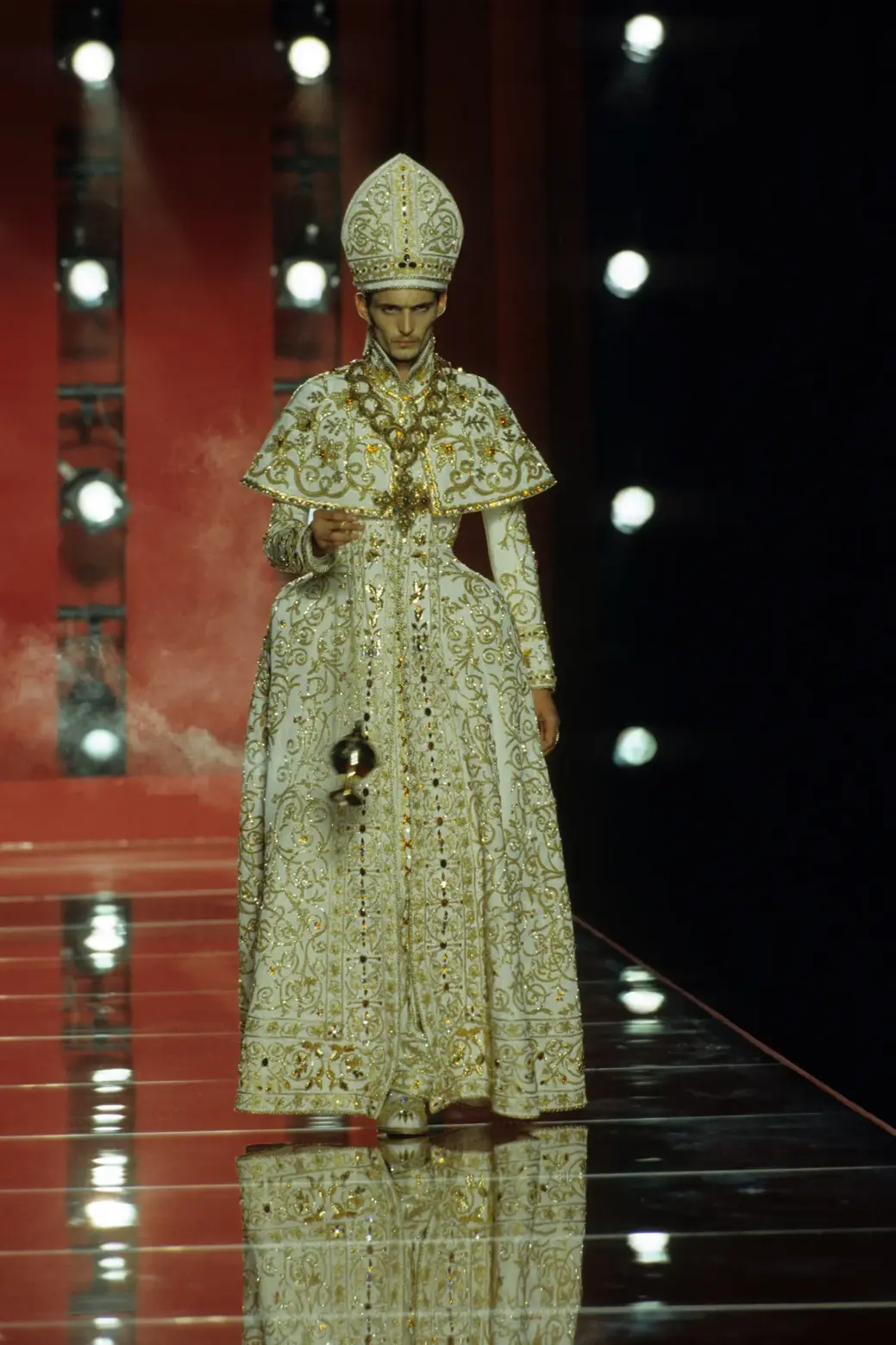
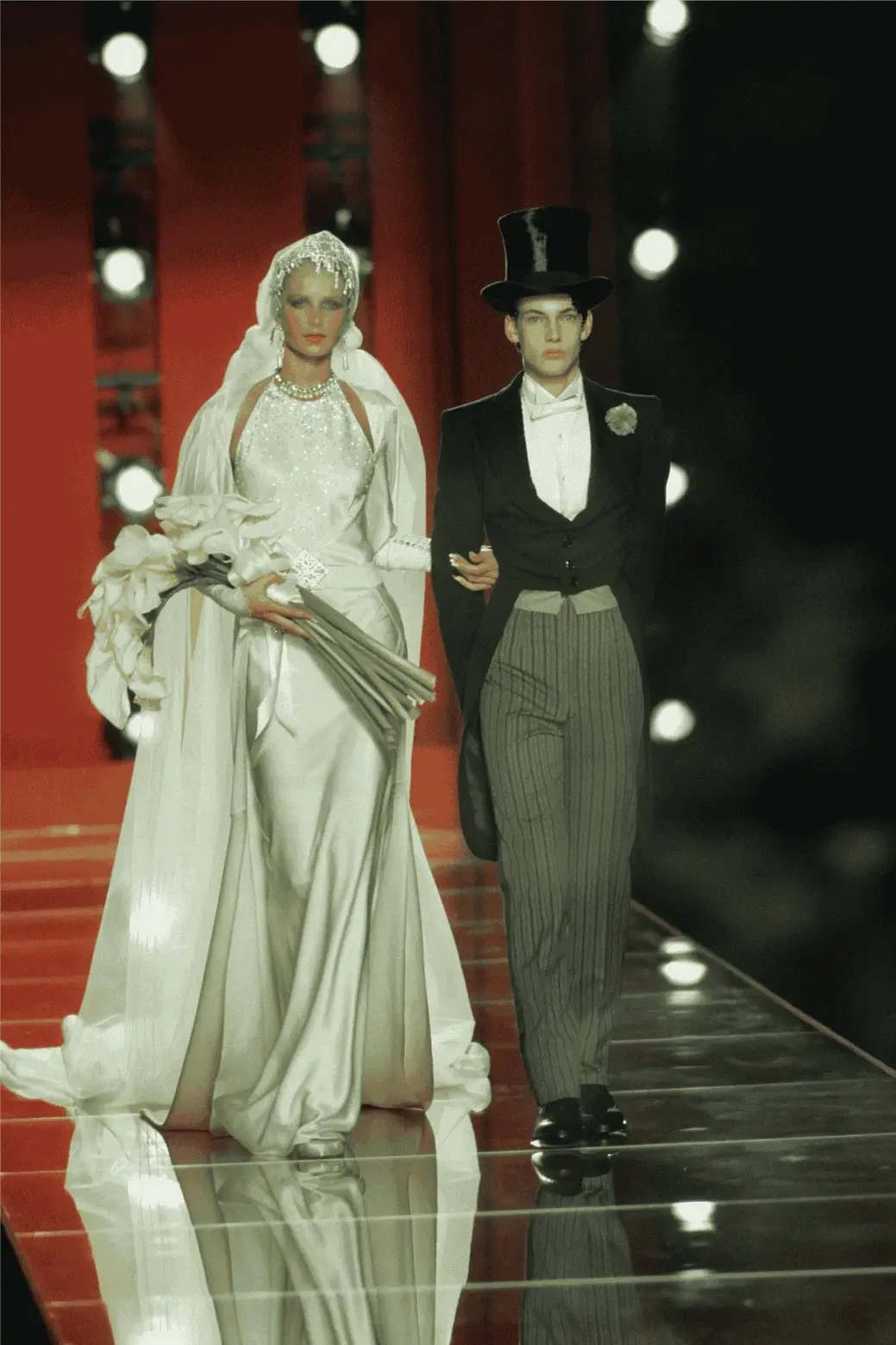
It was the Fall 2000 Haute Couture show that truly showcased his role as fashion’s chief provocateur. Inspired by the opulence of the Belle Époque and the elegance of haute couture’s golden age, Galliano brought together dramatic silhouettes, lavish fabrics, and exaggerated embellishments. Titled an “Unstable Wedding,” the show was a masterful, shocking commentary on social, religious, and gender norms. It opened with a model parodying the Pope in a tight corset, swinging a censer. The “groom” sported a blue flower while the “wedding guests” represented a spectrum of marital emotions: joy, suffering, endurance through grotesquely beautiful designs. The show featured voluminous gowns, tailored jackets, and intricate details, all while maintaining Galliano’s signature flair for storytelling on the runway.
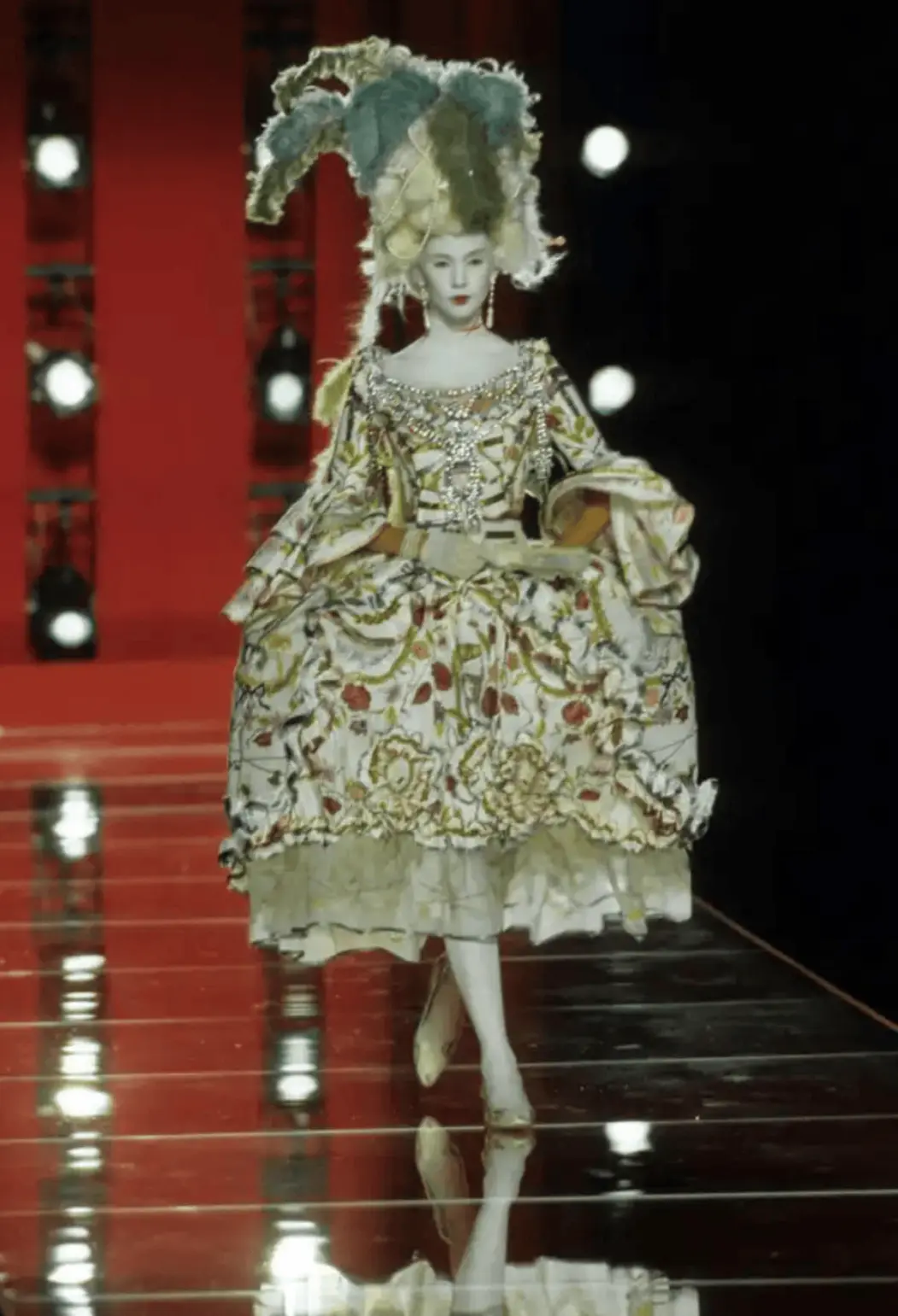
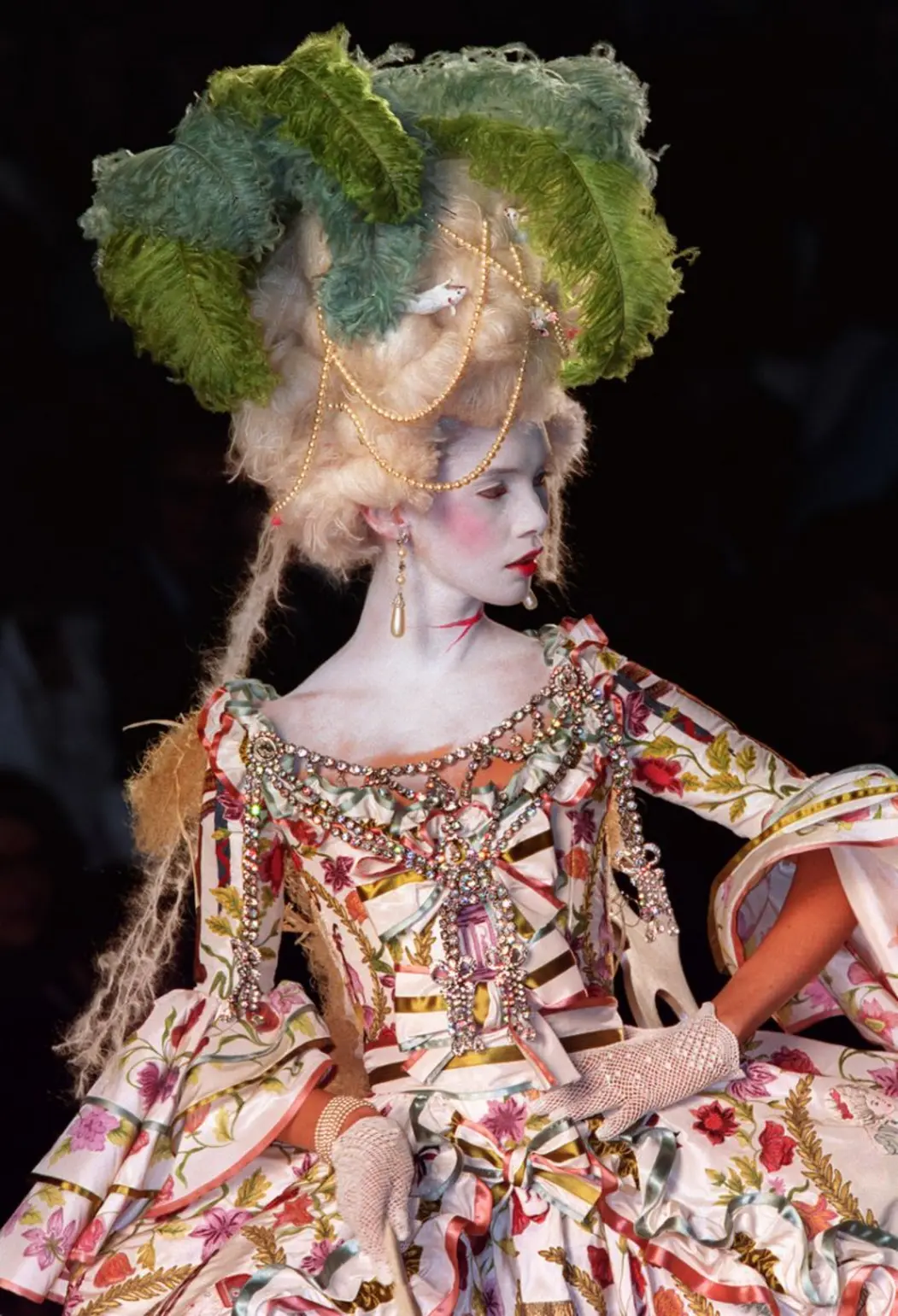
This collection also showcased Galliano’s mastery of theatricality, as models embodied characters that reflected the elegance and drama of Versailles. It was a continuation of Galliano’s storytelling approach to haute couture, cementing his reputation for blending history, fantasy, and modernity in a way that remains timeless and influential in fashion history.
Galliano’s insatiable wanderlust became the central theme of his mid-2000s collections. In 2002, returning from 3 weeks of traveling in Japan and China, John Galliano debuted a performance inspired by unique cultural experiences in the East. The Haute Couture Spring/Summer 2003 show, “A Cultural Walk,” was a direct result of his travels through Asia. Inspired by a moment of spontaneous cultural exchange in Tibet, trading his denim jacket for a local’s coat, he created a spectacular “circus” of a show. Kung fu fighters somersaulted down the runway before models adorned as Geishas in layers of brocade and taffeta. It was a vibrant, respectful, and boundless celebration of Asian craftsmanship and Dior’s luxury, complete with huge pleated skirts and gold-trimmed coats.
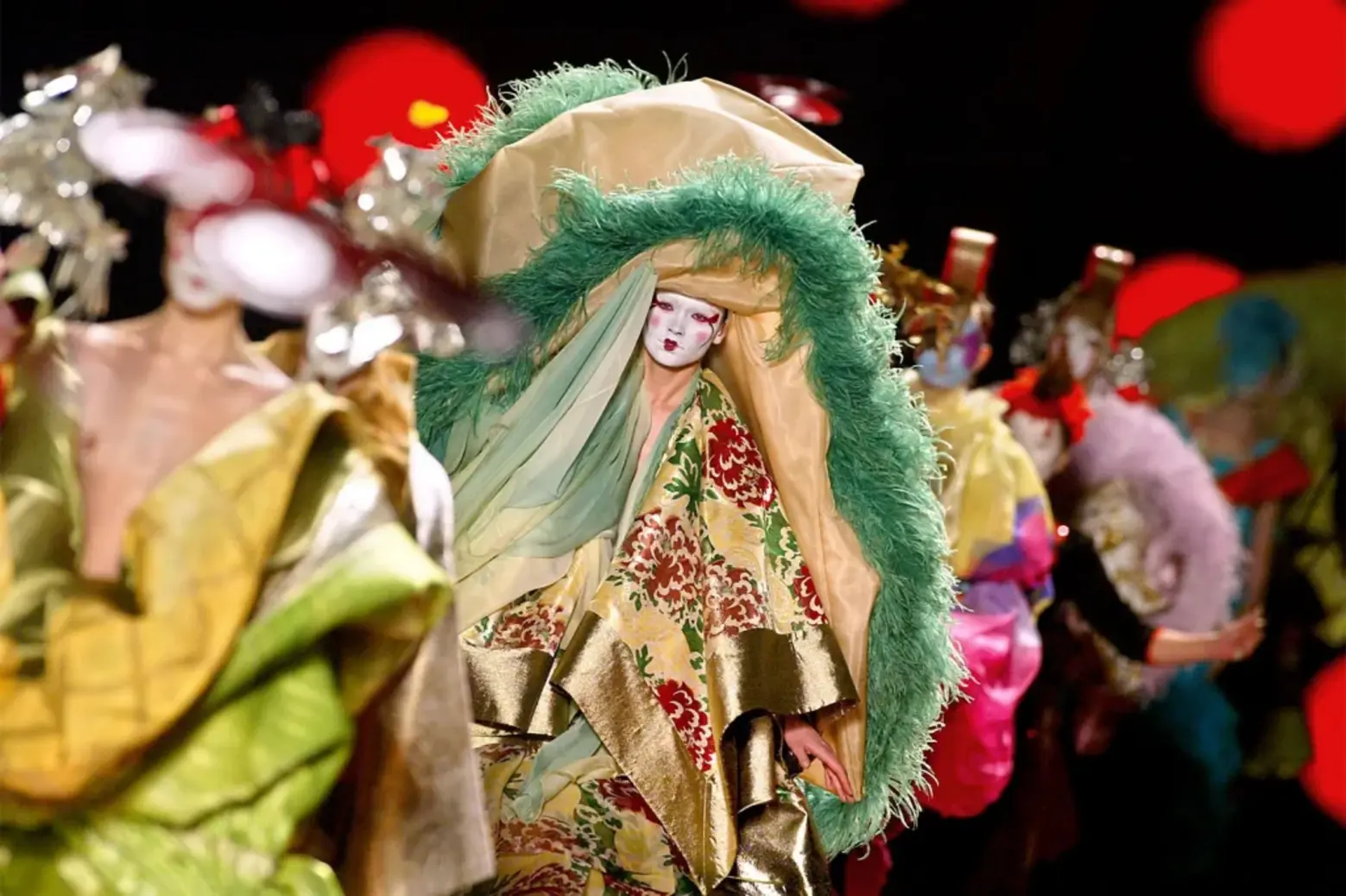
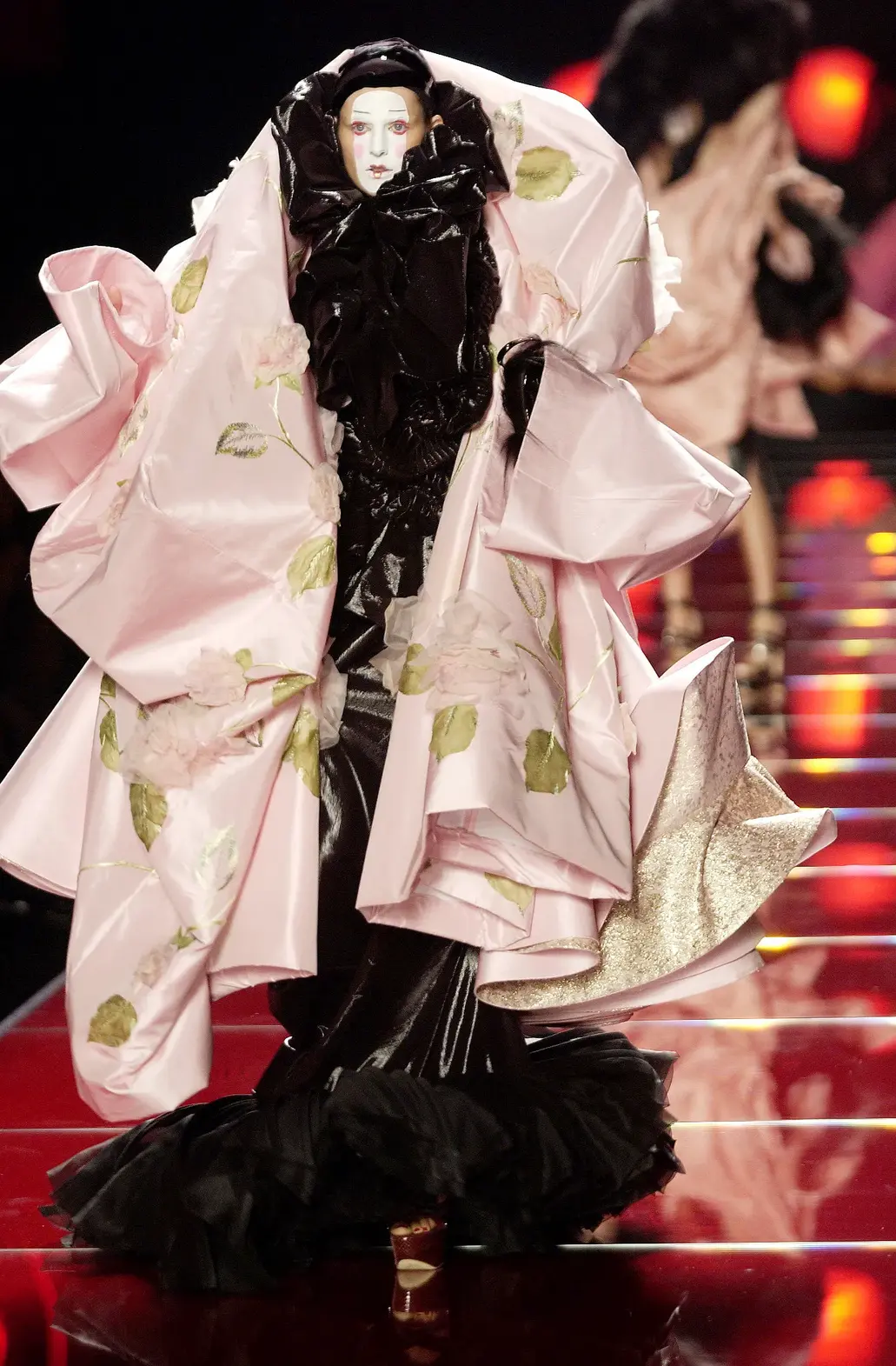
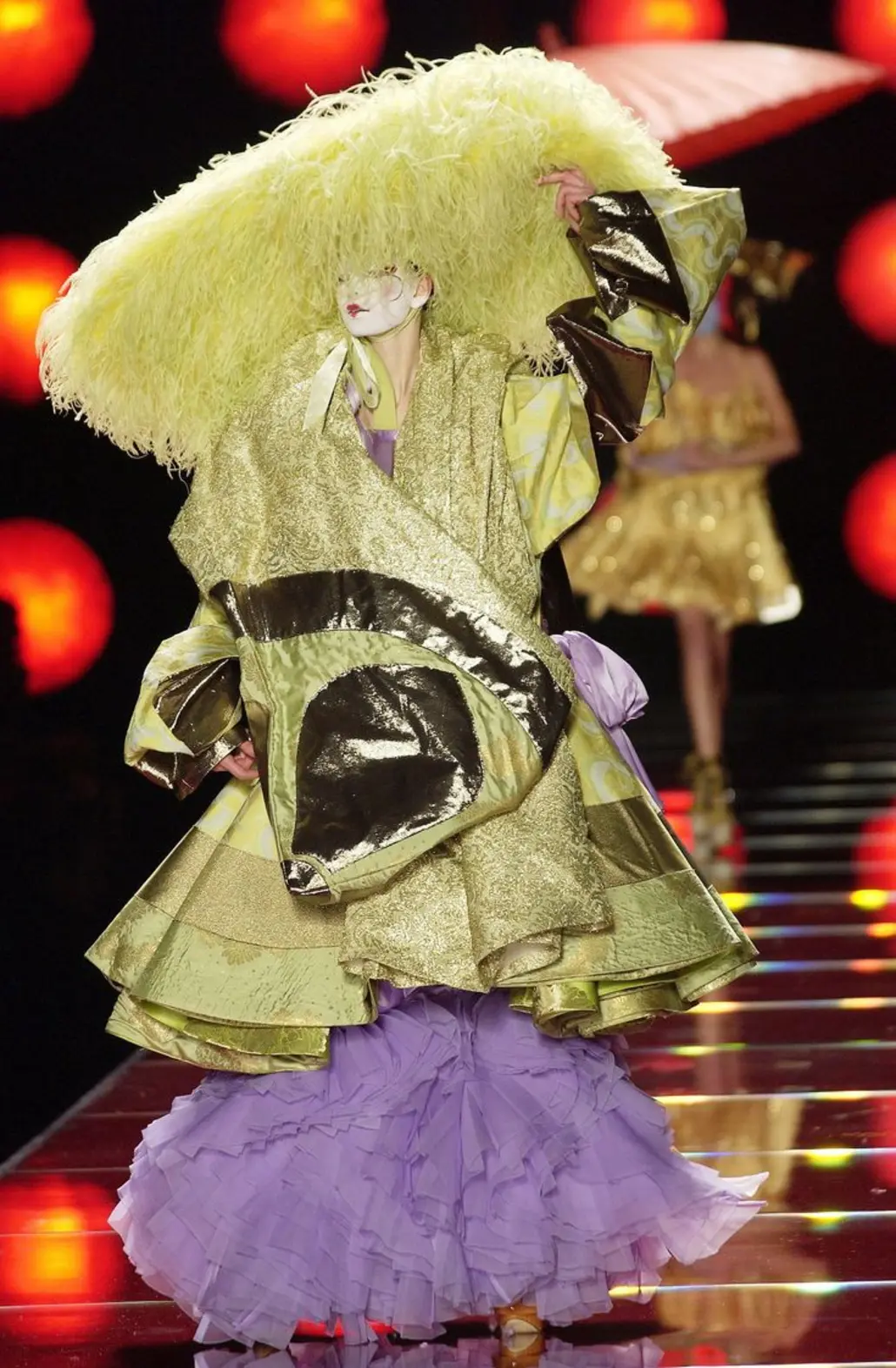
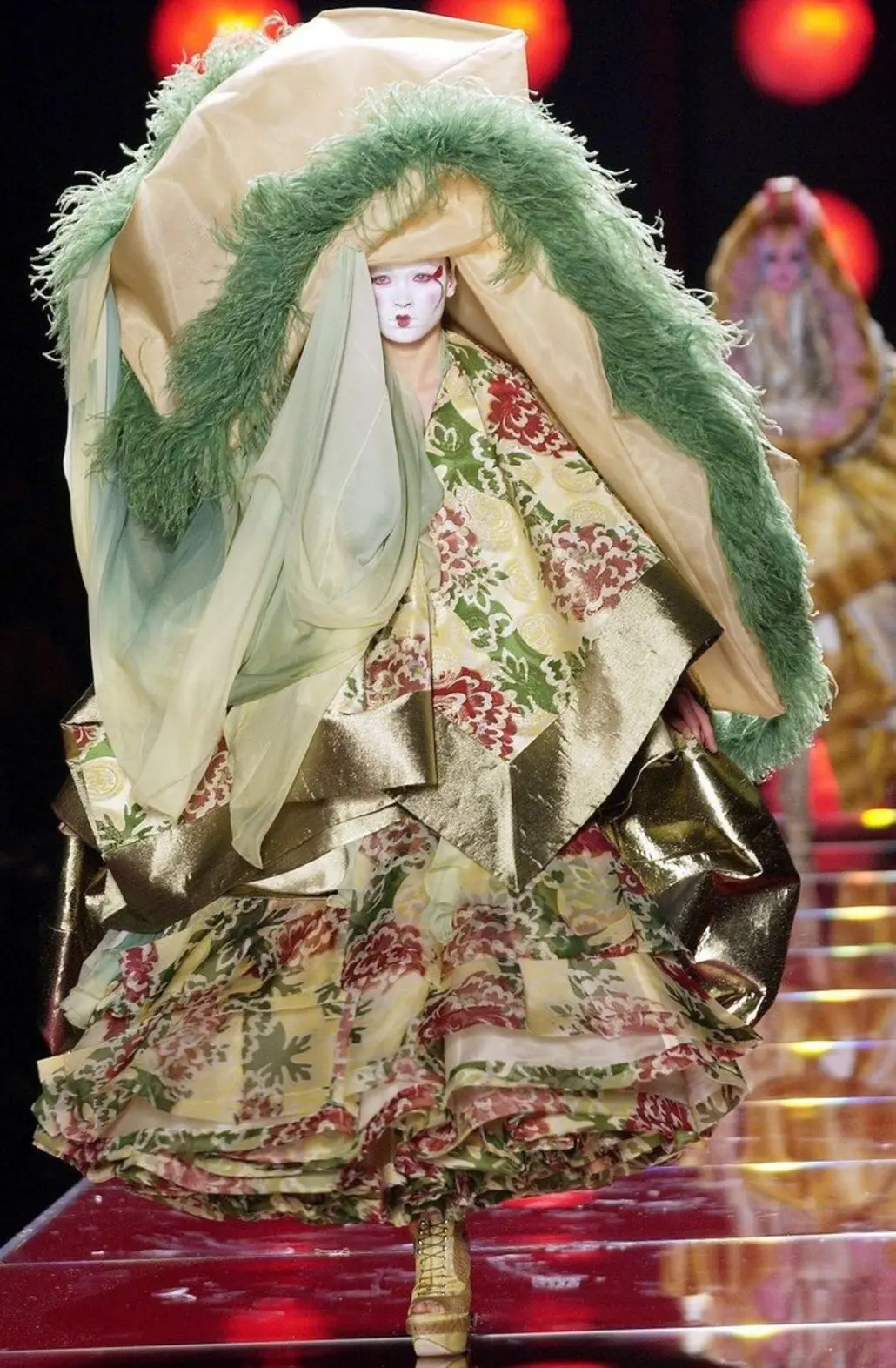
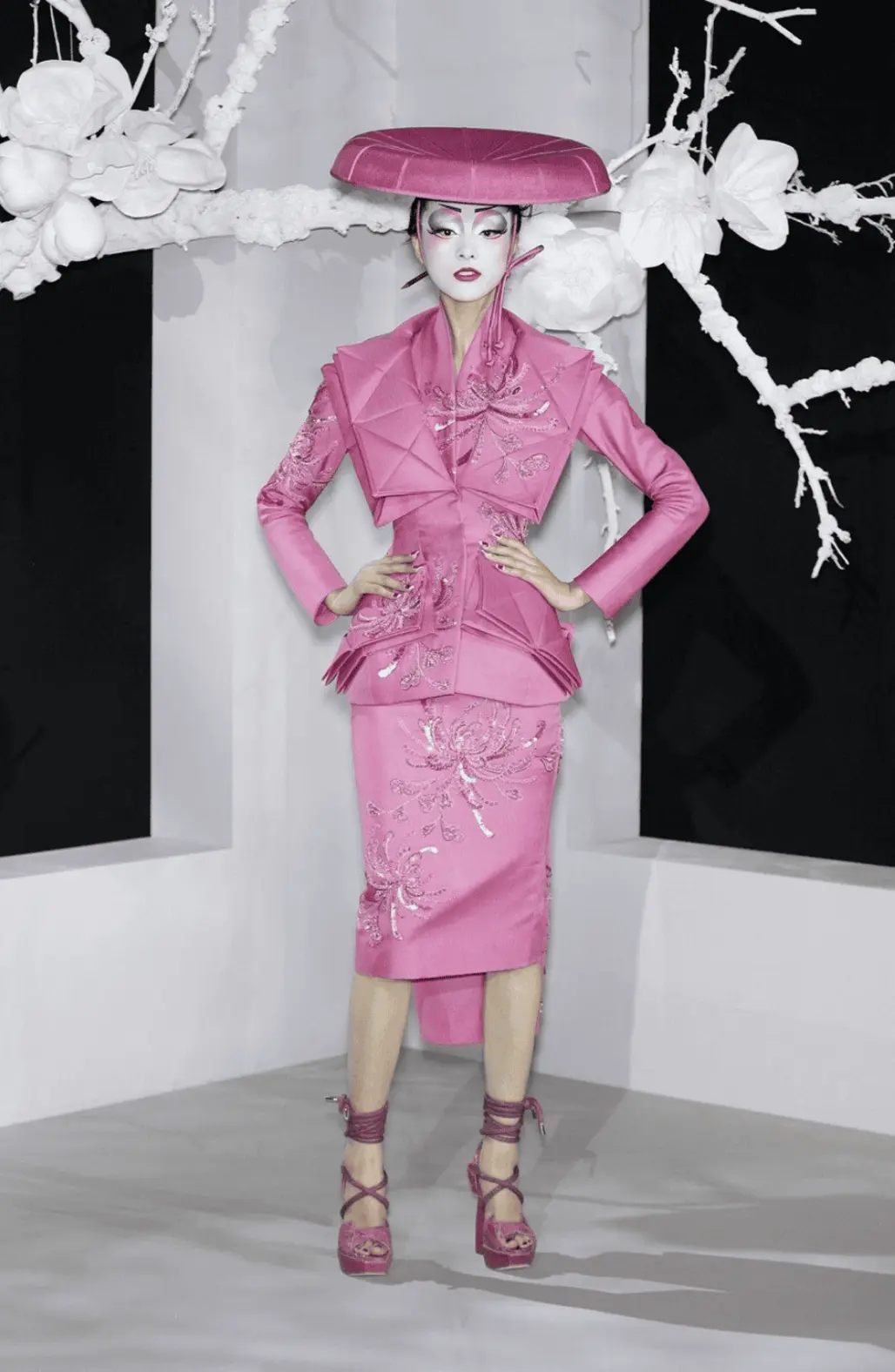
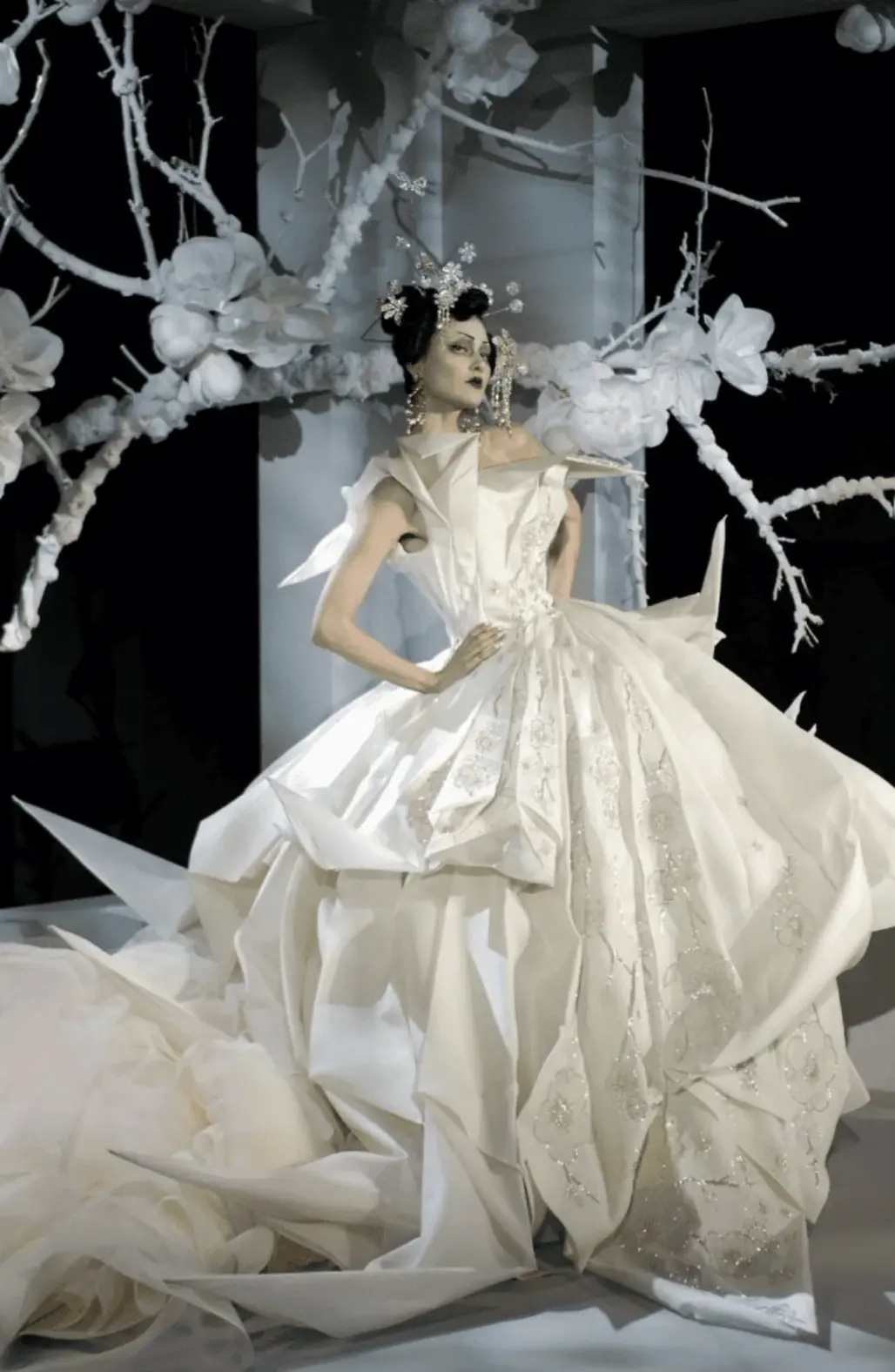
Next came the Spring-Summer 2007 Couture collection "Madame Butterfly" refracted through Dior’s prism: kimonos, obi belts, and models in geisha makeup; origami folds, ceramic motifs, ikebana logic mapping shape and space. The colors swung from bright pinks and blues to wine red, purple, and black like arias rising and falling. The finale, Shalom Harlow as a luminous “paper-crane” bride, the ultimate Galliano - haiku delicate, architectural, and unforgettable.
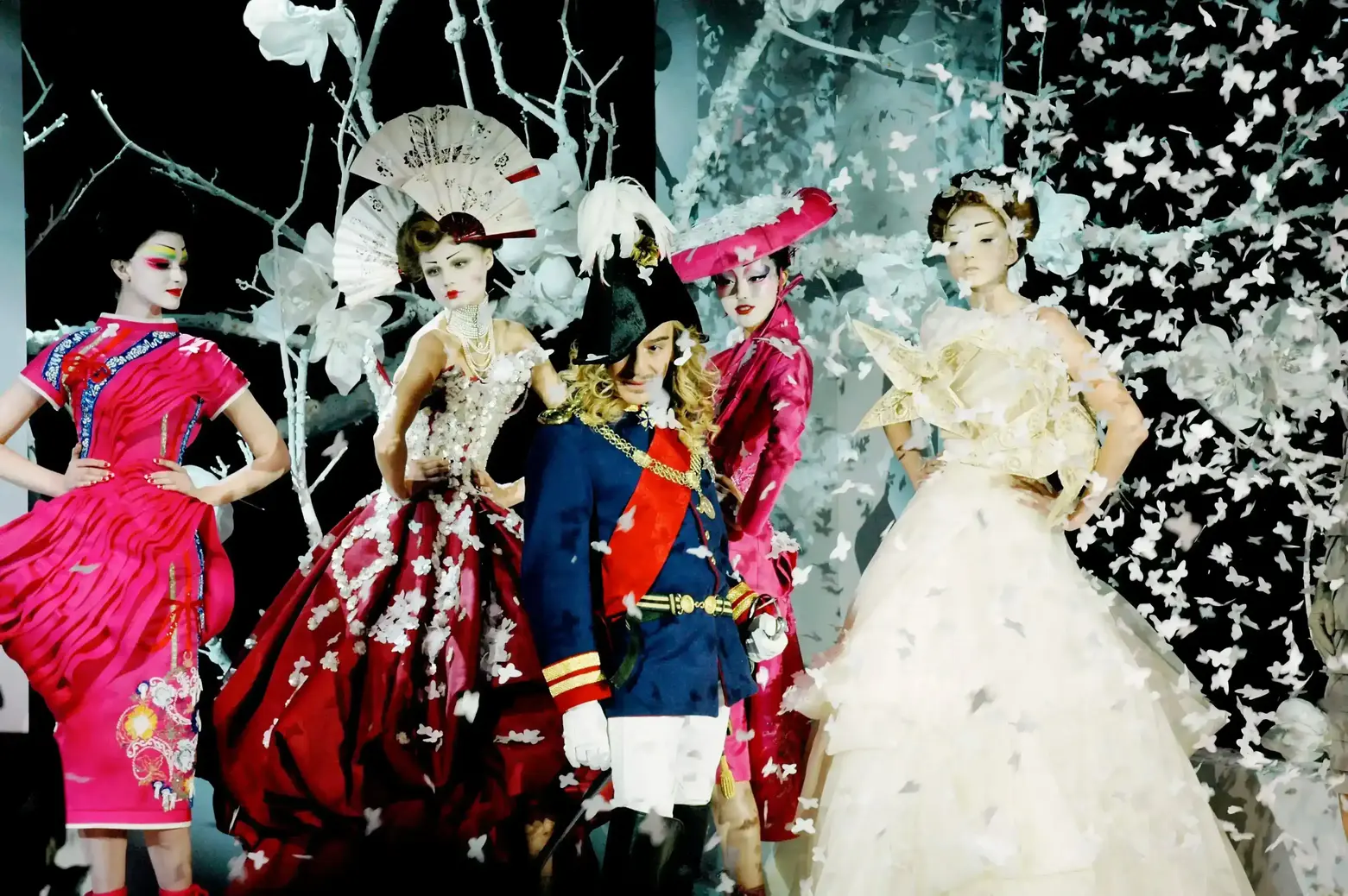
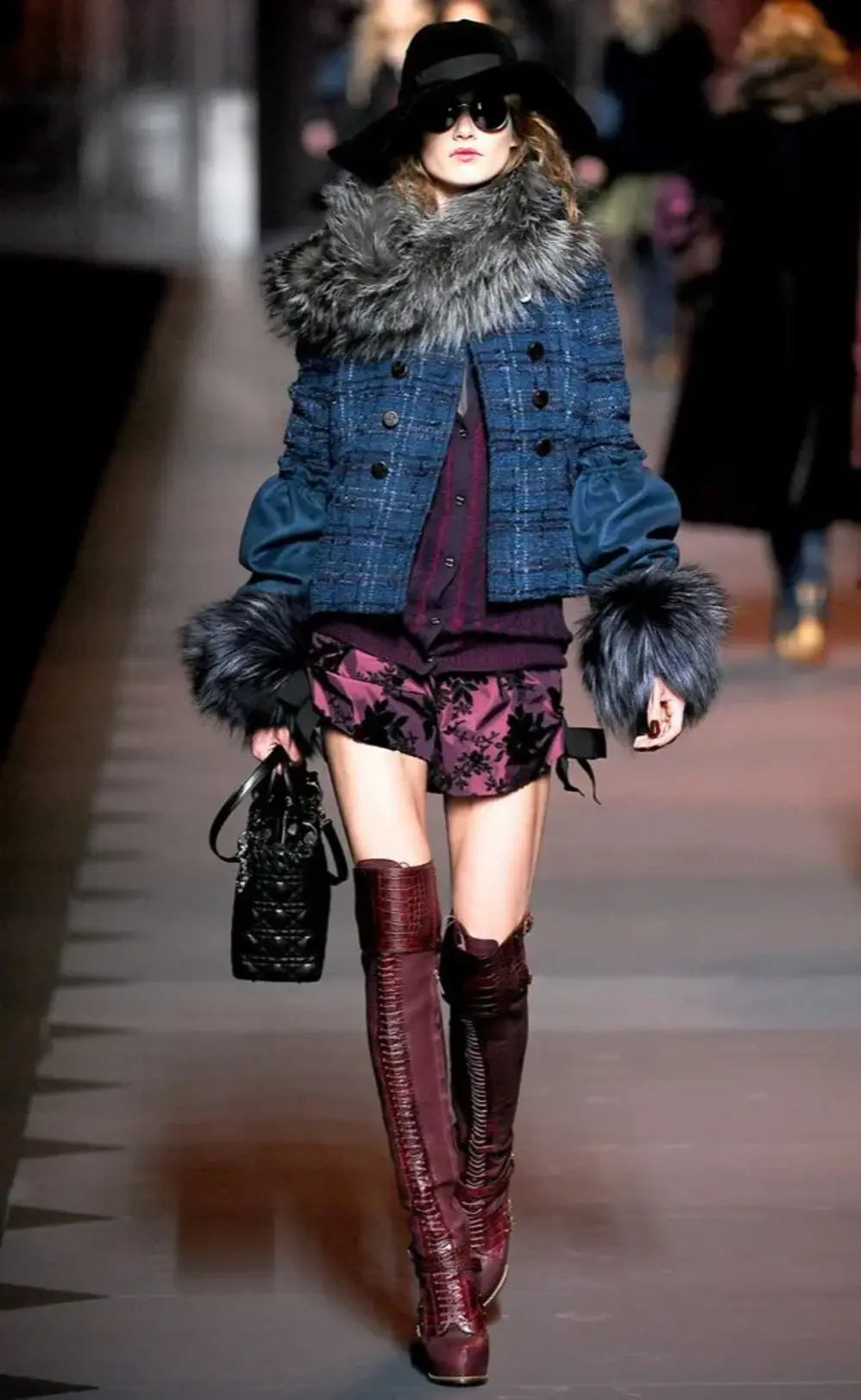
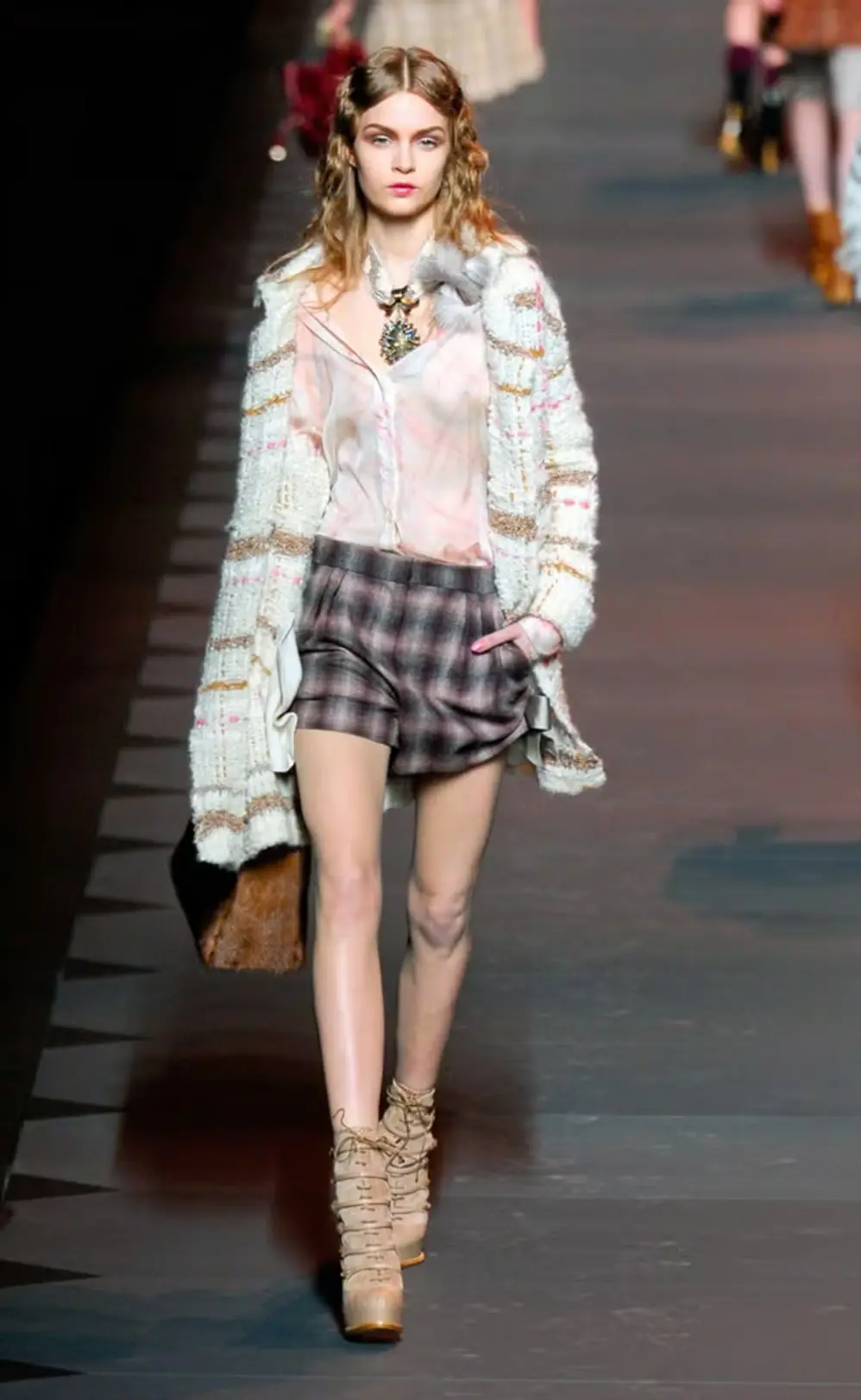
Every grand opera must end. Galliano's reign at Dior ended abruptly in 2011 amidst scandal. The House’s first show without him, was presented by Bill Gayttenfor Fall 2011, felt like a poignant epilogue. While hints of Galliano's romanticism lingered in swirling capes and elaborate gowns, the collection notably pivoted towards practicality. It presents a charming, diverse wardrobe of cashmere waistcoats, mousseline blouses, and faille shorts, designed for the real world. The show culminated in a metaphor for the end of an era: the model stood still and blew a kiss as if sending a sweet goodbye to the talented designer.
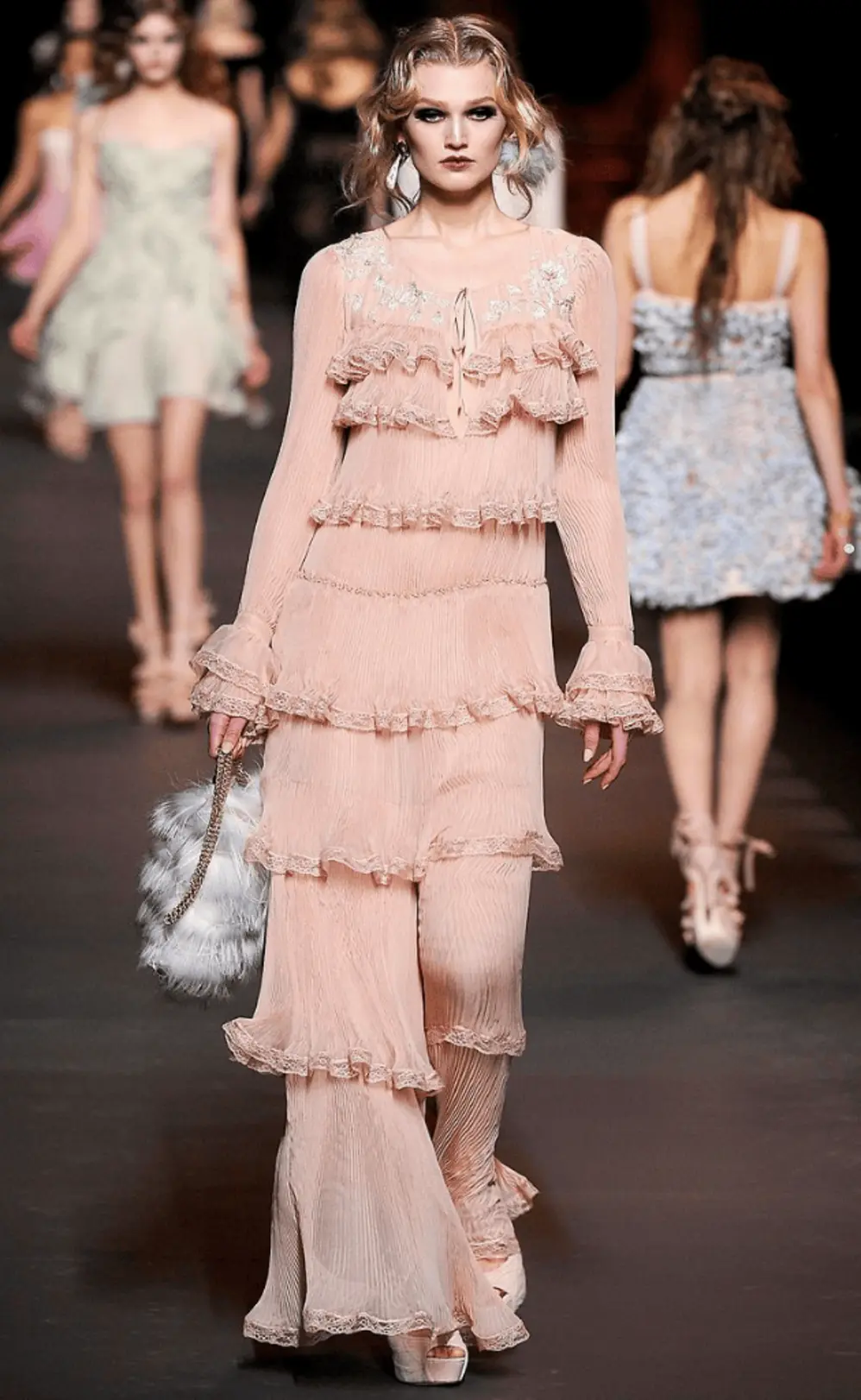
His work at Dior operated on multiple levels simultaneously. Surface beauty. The embroidery, the bias cuts, the theatrical makeup attracted immediate attention. But beneath lay deeper investigations: cultural identity, historical memory, social transformation. A wedding became commentary on religious authority and sexual identity. A collection inspired by Shanghai explored colonialism and cultural exchange. Belle Époque became meditation on tradition versus modernity.

The controversy surrounding cultural appropriation in his work remains unresolved. Did his Japanese and Chinese-inspired collections celebrate or commodify? Did his theatrical presentations elevate or diminish the cultures they referenced? These questions persist because Galliano's work resisted simple categorization. He was neither purely respectful nor carelessly appropriative but existed in the complex space between.
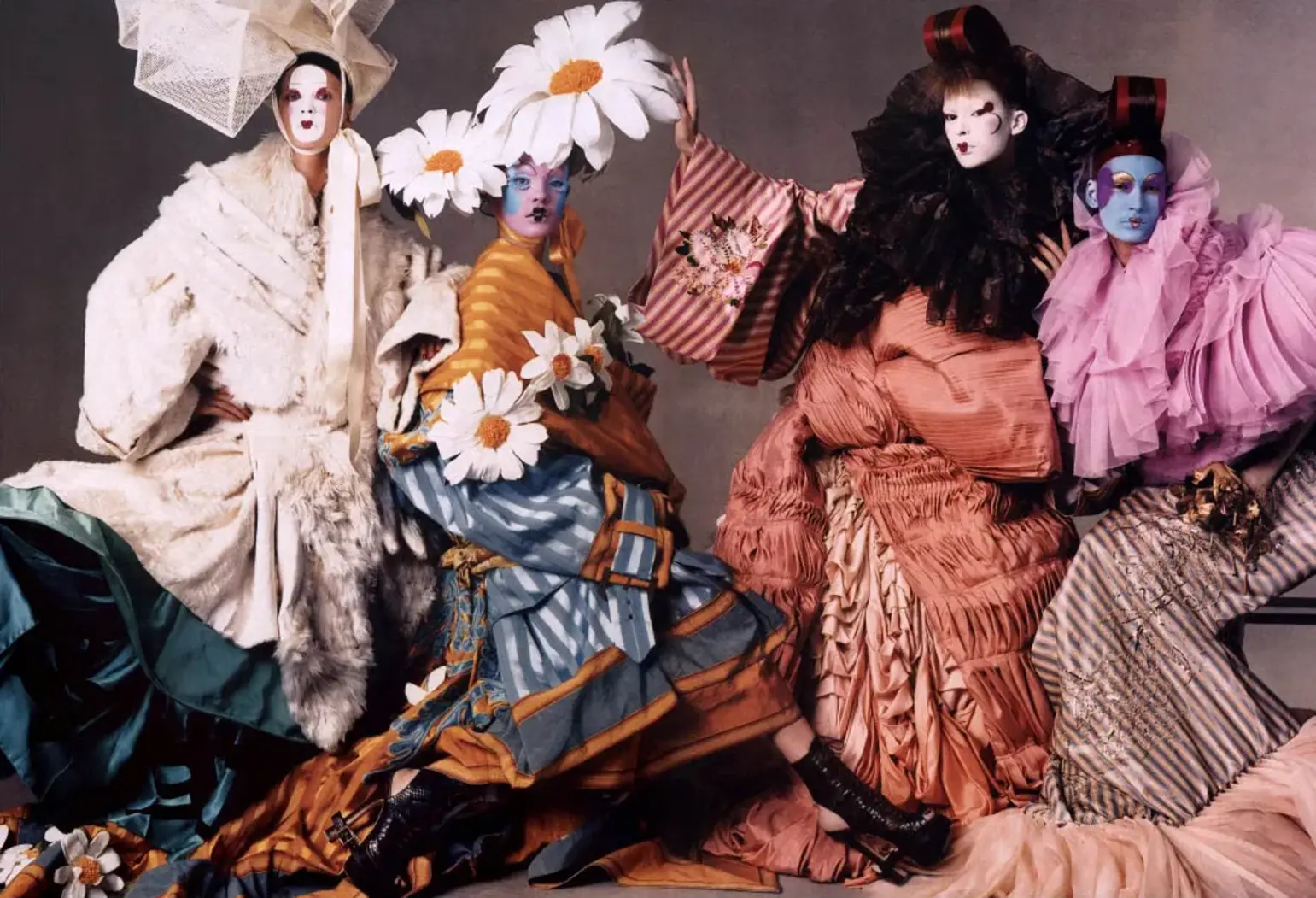
John Galliano's Dior years represent fashion at its most ambitious. He treated the maison not as museum but as laboratory, using its prestige to fund his experiments in beauty, narrative, and cultural dialogue. That some experiments failed, that some offended, that ultimately the creator himself imploded, does not diminish the achievement. For a brief, brilliant period, fashion was not about clothes but about possibility itself. In Galliano's hands, Dior became not just a fashion house, but a dream factory, producing visions that haunted, delighted, and occasionally disturbed, but never—never—bored.
https://drive.google.com/drive/folders/10ntDCzsNuZrl2SsXQ0jb9I3uPZu9P8wR?usp=drive_link
John Galliano’s Marie Antoinette-inspired design for Christian Dior’s Fall 2000 Haute Couture collection was a striking example of his ability to reimagine history through a modern lens. The collection drew on the decadence and grandeur of 18th-century French court fashion, featuring exaggerated silhouettes, corseted bodices, and intricate detailing like bows, lace, and embroidery. True to the aesthetic of Marie Antoinette, the designs emphasized opulence and excess, while adding a provocative, avant-garde edge characteristic of Galliano’s work.
Galliano used the collection to explore themes of luxury, power, and rebellion, alluding to Marie Antoinette’s status as a symbol of both extravagance and vulnerability. This collection also showcased Galliano’s mastery of theatricality, as models embodied characters that reflected the elegance and drama of Versailles. It was a continuation of Galliano’s storytelling approach to haute couture, cementing his reputation for blending history, fantasy, and modernity in a way that remains timeless and influential in fashion history.
Link image 1: https://drive.google.com/file/d/1ZFNdW7IJpU5YKH7n2hImPJXqpwmV3UKg/view?usp=sharing
Link image 2: https://drive.google.com/file/d/1VFI8rMyLl8veR69EdHVnW0w11Hwu62W9/view?usp=sharing
Advertisement